
Recently I attended a flash booksale at a small local English library, donating a bag of books and picking up a few temptations, despite going with the intention of not buying.
New Daughters of Africa
I was remarkably restrained and only bought four books, one of which is more of a reference book, but one that introduces many other authors. I’m talking about the New Daughters of Africa by Margaret Busby, her second anthology of over 200 women writers of African descent, the follow up to the original landmark anthology, Daughters of Africa (1992).
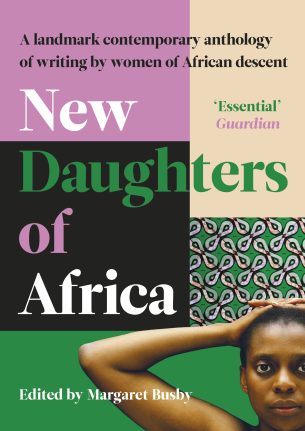
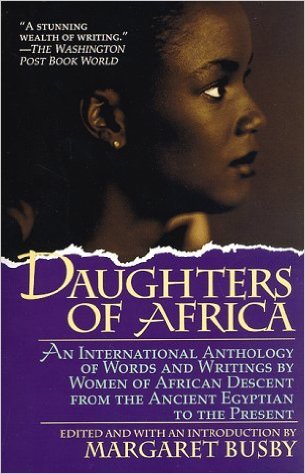
This new companion volume brings together fresh and vibrant voices that have emerged more fully in the last 25 years, but looks back over all the decades of the 1900’s. It does not duplicate any of the authors from that first anthology, but updates it and included more contemporary authors.
I enjoy reading unique African women voices, whether of Africa or the Caribbean, or Francophone and it is helpful to have a repository of those voices in one collection.
It is from Margaret Busby’s earlier list of authors that I discovered and have read/reviewed authors like Buchi Emecheta (Nigeria/UK), Mariama Ba (Senegal), Ann Petry (US), Nella Larsen (Danish Caribbean/US), Zora Neale Hurston (US), Simone Schwartz Bart (Guadaloupe), Tsitsi Dangarembga (Zimbabwe), Gayl Jones (US), Audre Lorde (US), Octavia Butler (US), bell hooks (US), Wangari Maathai (Kenya) and the late, great Maryse Condé (France/Guadalupe)
Now in this second anthology, among others we find Leila Aboulela (Sudan/Scotland), Ayọ̀bámi Adébáyọ̀ (Nigeria), Chimamanda Ngozi Adichie (Nigeria), Edwidge Danticat (Haiti), Yvvette Edwards (UK), Nawal El Saadawi (Egypt), Aminatta Forna (Sierra Leone), Bernadine Evaristo (UK), Maaza Mengiste (Ethiopia), Afua Hirsch (UK), Andrea Levy (UK/Jamaica), Imbolo Mbue (Cameroon), Marie NDiaye (France), Chinelo Okparanta (Nigeria), Yewande Omotoso (Sth Africa/Barbadoes), Namwali Serpell (Zambia), Warsan Shire (Somali/Kenya/UK), Zadie Smith (UK), Jesmyn Ward (US).
Literary Travel and Insight
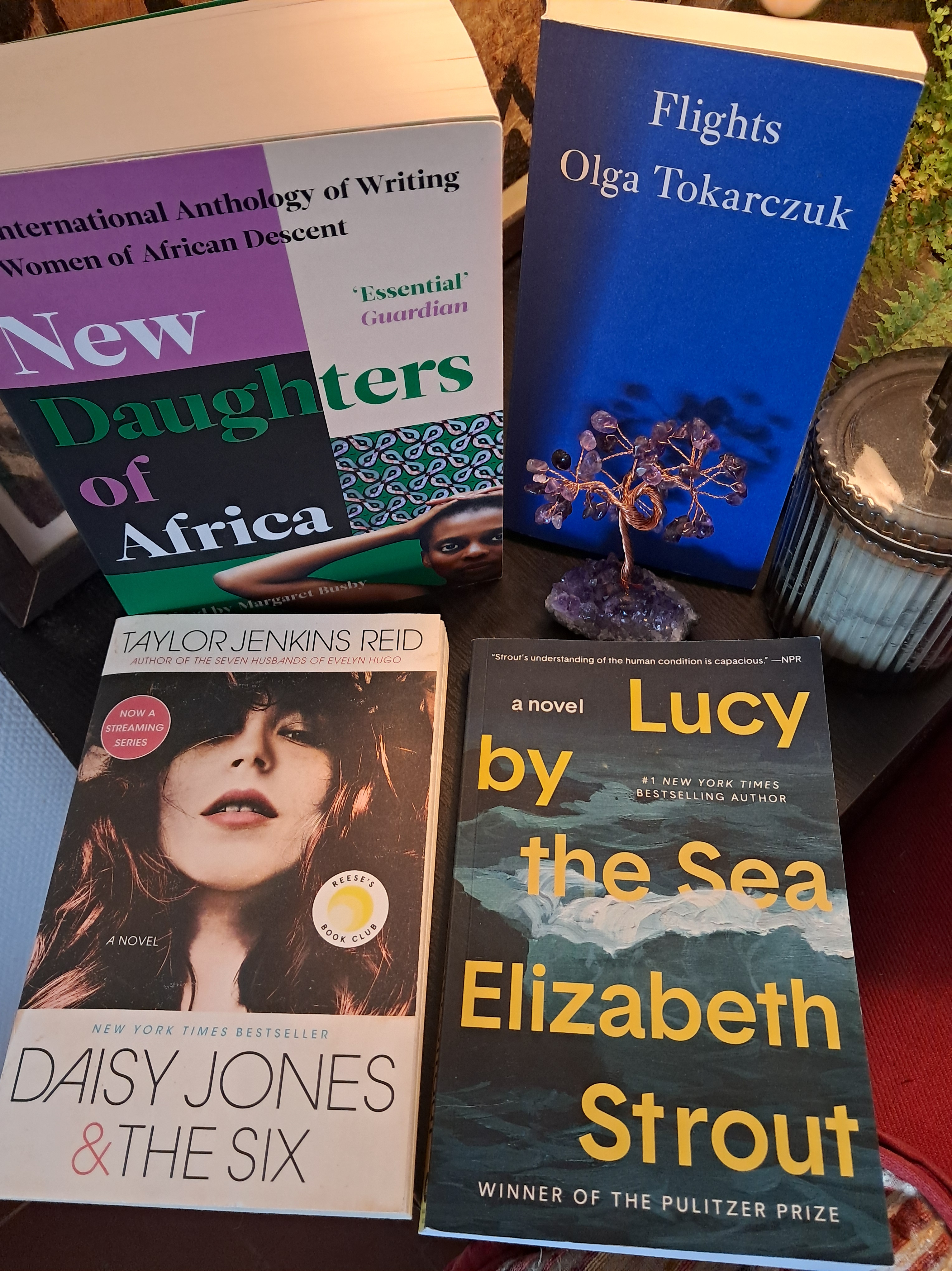
As well as this great find, I also picked up a copy of Flights by Olga Tokarczuk, the brilliant Polish author and winner of the Nobel Prize for Literature in 2018, the same year that she won the International Booker Prize for this fragmentary novel Flights, a book based on some of her own experiences as a traveller that she describes as a constellation novel, constructed from small fragments. The judges said:
‘We loved the voice of the narrative – it’s one that moves from wit and gleeful mischief to real emotional texture and has the ability to create character very quickly, with interesting digression and speculation.’
I recall buying it as a gift for a family member, but I did not read it myself. I did read and adored Drive Your Plow Over the Bones of the Dead by Olga Tokarczuk tr. Antonia Lloyd-Jones and it was my One Outstanding Read of 2022, so I am keen to explore more of her work, despite knowing it can be quite complex.
Here’s a description of the novel:
Olga Tokarczuk’s unique novel interweaves reflections on travel with an exploration of human anatomy – examining life and death, motion and migration.
In the 17th century, the Dutch anatomist Philip Verheyen dissects and draws pictures of his own amputated leg. On to the 18th century, where a North African-born slave turned Austrian courtier is stuffed and put on display after his death. Next stop is the 19th century, as we follow Chopin’s heart making the covert journey from Paris to Warsaw. Final destination is the present, with the harrowing story of a young husband whose wife and child mysteriously vanish on holiday on a Croatian island.
A Comfort Read and a Musical Drama
The other two I picked up were Lucy By the Sea (2022) by Elizabeth Strout, which is a follow on novel in the Amgash, Illinois Series, to My Name is Lucy Barton (2016), Anything is Possible (2017), Oh William! (2021), and Tell Me Everything (2024). I haven’t read the third in the series, but I see they have a copy in the library. Strout is great comfort read, immersing into her characters’ lives is perfect for winter.
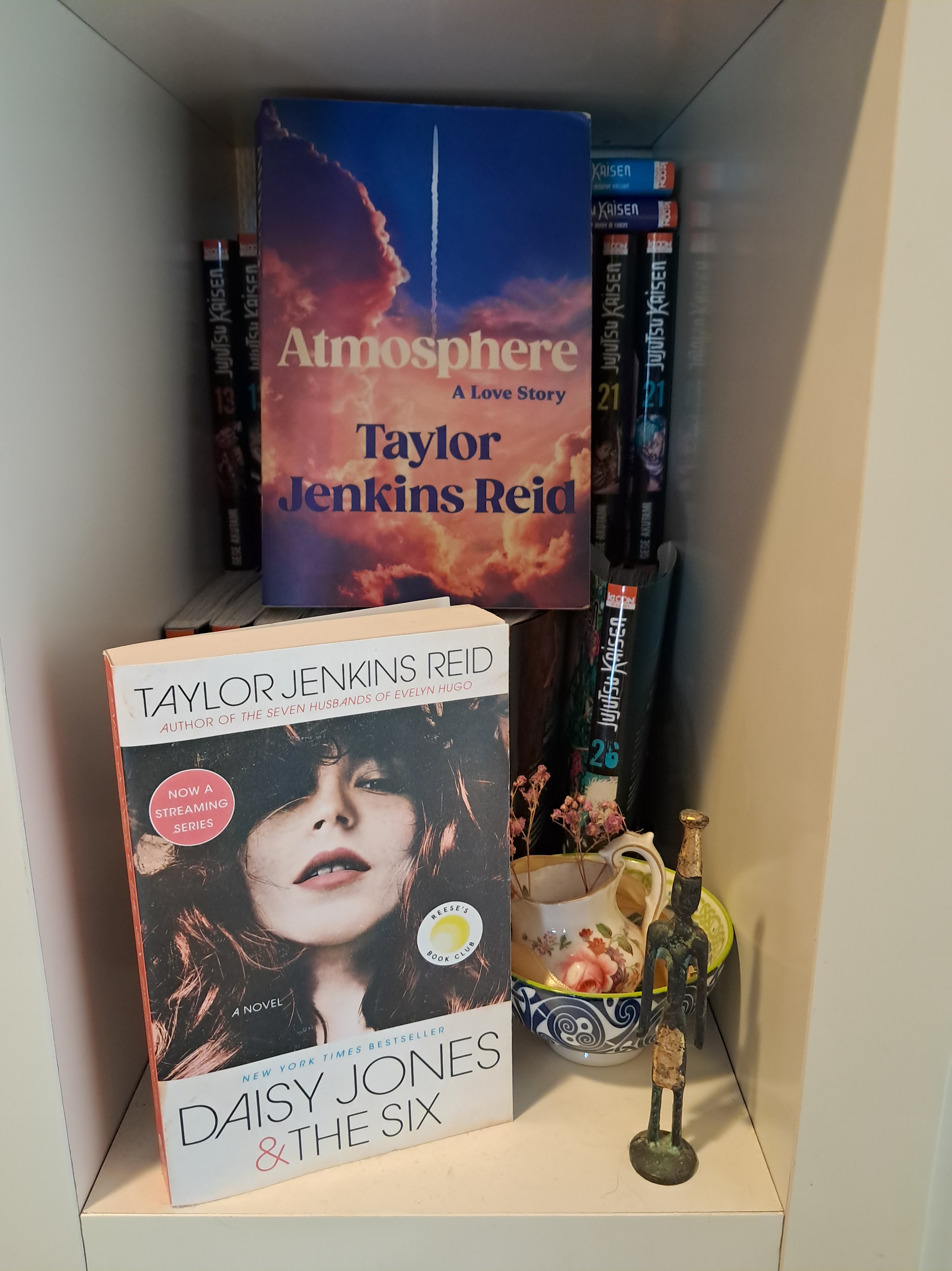
And finally I picked up Daisy Jones and the Six (2019) by Taylor Jenkins Reid, a novel about the rise and implosion of a 1970’s rock band (loosely based on Fleetwood Mac and the volatile dynamics between Stevie Nicks and Lindsey Buckingham) and now a TV series, because I like musical dramas and would like to read the book first.
I have her latest novel Atmosphere (2025), a space novel, which I might read first, because I don’t think it is as good, so I’d rather save the best for last.
She is well known for her emotionally immersive storytelling and readable plotlines, her debut historical fiction novel, The Seven Husbands of Evelyn Hugo (2017) about a reclusive Hollywood icon was a runaway bestseller.
Mood Reading and Library Obligations
So that’s it, watch out for reviews of these coming in 2026, I’ve started the year somewhat randomly, but aware that library books have to be returned, so I’ll be sharing those soon, the first one I have already reviewed was Intermezzo by Sally Rooney.
Have you read any of the books or authors I shared here? Let us know what you recommend or if you enjoyed any of these three novels I picked up in the sale.
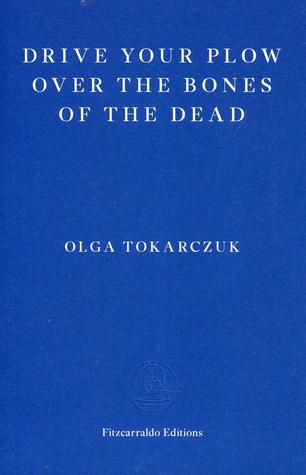 Somewhere on a plateau above a small forested village in Poland, near the border with the Czech Republic, lives Janina, except she doesn’t like that name, she insists on being called Mrs Duszejko.
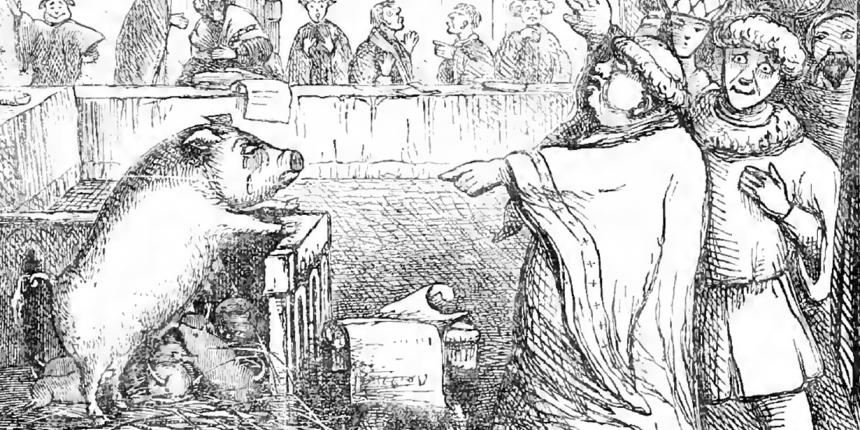 Dizzy, a former student, now her 30 year old friend, helps with the Blake translations, though is unconvinced by some of her theories concerning astrology and the revenge of animals, bolstered by her having discovered real animal trials, which peaked in 14th to 16th century Europe.
 When he challenges her for going around telling people about those Animals, concerned for her reputation, she is outraged.
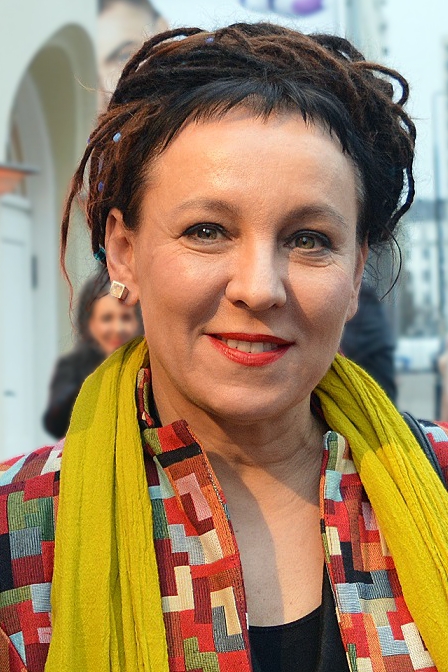 Olga Tokarczuk is an Aquarian, a Psychologist and Jungian expert, a Polish essayist and author of nine novels, three short story collections and her work has been translated into forty-five languages.
 Word by Word