
 Maria in the Moon intrigued from the moment I looked at its beautiful cover and read the title, wondering what the significance of it was. This tender novel hooked me from its opening pages and never let go until I heard that chant ‘maria in the moon’ and understood.
We meet Catherine-Maria as she is recalling her beloved Nanny Eve who chose her name and used to call her in a sing-song voice, we read about the Virgin Mary statue passed down from mother to daughter, and become aware of a memory block in childhood.
But one day she stopped singing.
She stopped calling me the long, pretty name she’d chosen when I arrived.
I try now to remember why, but I just can’t.
I think it was winter; I think the sun no longer had the strength to kiss our heads.
I know I’d accidentally smashed the Virgin Mary.
Something stopped all the singing in their house and when she tries to remember all she sees are the shattered porcelain pieces of Pure Mary spread across the floor.
 The story is set in Hull 2007, after their wettest summer on record, when 8,000 homes and 1,300 businesses were flooded.
Catherine has had to move out of her home into temporary accommodation and decides to volunteer at the local Flood Crisis helpline, an occupation she already has experience in. Here she remembers her first call at a Crisis Centre.
I’d learned well on the course; I was non-judgemental, patient, gentle. My first caller was a fifty-year-old man who’d been married for thirty years, but had always been desperately in love with his friend Jim.
‘What should I do?’ he’d asked.
It wasn’t for me to tell him, only to listen, ask the right questions, and let him figure out his own feelings. I was shaking when the call ended but felt empowered.
Going to work at the Flood Crisis Centre, taking calls and getting to know others who volunteer to do this kind of work through this novel was fascinating and felt real, it reminded me of reading Eleanor Oliphant and her work environment and interactions, there is a similar feeling of closeness to the characters and an awareness of the character’s underlying solitude, as expressed in this quote from Olivia Laing’s book, The Lonely City:
“…loneliness is hallmarked by an intense desire to bring the experience to a close; something which cannot be achieved by getting out more, but only by developing intimate connections. This is far easier said than done, especially for people whose loneliness arises from a state of loss or exile or prejudice, who have reason to fear or mistrust as well as long for the society of others.”
Her first shift at the Flood Crisis Helpline runs smoothly, and she begins to develop a close connection with her mentor Christopher, however something about this new experience triggers an awakening of her childhood memories, and more disturbingly brings back a recurring dream.
Over the weeks that follow, from the Sunday lunches with her extended family, her conversations with work colleagues and her flatmate Fern, she gains clarity around her own personal mystery and in a dramatic denouement confronts her past and puts a few ghosts plaguing her mind to rest.
 Maria in the Moon is one of those books you want to get back to every chance you can, it was gripping until the end, and even the quiet and mundane parts I found riveting. I loved going to work with Catherine and listening to her handling calls, the characters were well formed and contributed to a deeper understanding of the dynamics surrounding her, but also raised questions.
There came a time – and I’m not sure when it was – that I fell out of love with her. Maybe it was after Dad died. She changed. But so did I. Where she had treated me well (but a little coolly) during his lifetime, she now grew impatient, was less willing to talk. Perhaps it was during my forgotten ninth year that I stopped trying to please her and no longer wanted to copy her elegant style. Instead, I did all I could do to oppose and annoy and argue.
I wanted to know more, to ask her how she coped growing up without knowing her Mum, her attachment to Mother (stepmother); there’s an unselfish compassion within her, masking the ache of losing both parents at a young age and her response to it is to stay close to the family she’s been left with, despite the friction, claiming it as her own.
With Louise Beech, there is always depth, there are layers to unfold, there are stories beneath stories. I have my own personal story of a mystical experience while reading her debut novel How to Be Brave (review linked below) and I learned that Maria in the Moon has also inspired a story song, created by singer Carrie Martin, you can read more about its creative inspiration here at Louise Beech – Making Magic With Words.
What more can I say, I’ll read everything Louise Beech writes, she’s entertaining and an inspiring author who writes from the heart and one who’s open to the magic and the mystical.
Buy a Copy of One of Louise Beech’s novels here
Further Reading
My review of her debut novel How To Be Brave
My review of her second novel The Mountain in My Shoe
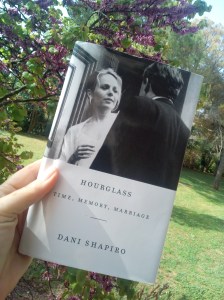 I’ve not read any of Dani Shapiro’s previous works, this short book was passed to me by a friend and read in an afternoon. I enjoyed reading it, though I couldn’t say I related to it. It’s a very personal observation of a marriage, of the passage of time, a woman observing herself change, reflecting on her inclinations and trying to understand herself, her husband and their evolving relationship. As the title indicates, it’s a reflection on time passing, on memory and on marriage.
It’s full of nostalgia for moments passed, brought back to life as she picks up journals from girlhood and her earlier life and quotes from them, in particular, from her honeymoon spent in France. She wonders about the woman she was then.
She worries about the lack of a plan, despite being in her fifties and her husband almost sixty. She shares these anxious moments, as she begins to lose a little faith in the words her husband has uttered in the past, words that gave her reassurance “I’ll take care of it”.
Anyone who has lived with that kind of comfort will likely relate, but inherent within it lies a deep vulnerability, a fissure, a unassuageable fear of loss. It is here her words pierce the fabric of living, when they illuminate the cracks in the facade, opening a small window into that anxiety-inducing perception of reality that sees itself as separate.
It is that undercurrent of misplaced fear that disconcerts me, for there is no hint of resolution, little evidence of a desire to go within and face the abyss, to heal it. She remains focused on that which is external and therein perhaps lies the problem. Maybe that is a memoir still to come, when she will embark on the inner journey and learn to listen to her own guidance, to the whispers of her soul that are capable of reassuring her more than anyone or anything on the outside. Something that marriage appears to protect us from, at least until menopause, a subject she doesn’t mention but one that can also unravel our perceptions of the life structures we’ve created in our minds.
I’ve not read any of Dani Shapiro’s previous works, this short book was passed to me by a friend and read in an afternoon. I enjoyed reading it, though I couldn’t say I related to it. It’s a very personal observation of a marriage, of the passage of time, a woman observing herself change, reflecting on her inclinations and trying to understand herself, her husband and their evolving relationship. As the title indicates, it’s a reflection on time passing, on memory and on marriage.
It’s full of nostalgia for moments passed, brought back to life as she picks up journals from girlhood and her earlier life and quotes from them, in particular, from her honeymoon spent in France. She wonders about the woman she was then.
She worries about the lack of a plan, despite being in her fifties and her husband almost sixty. She shares these anxious moments, as she begins to lose a little faith in the words her husband has uttered in the past, words that gave her reassurance “I’ll take care of it”.
Anyone who has lived with that kind of comfort will likely relate, but inherent within it lies a deep vulnerability, a fissure, a unassuageable fear of loss. It is here her words pierce the fabric of living, when they illuminate the cracks in the facade, opening a small window into that anxiety-inducing perception of reality that sees itself as separate.
It is that undercurrent of misplaced fear that disconcerts me, for there is no hint of resolution, little evidence of a desire to go within and face the abyss, to heal it. She remains focused on that which is external and therein perhaps lies the problem. Maybe that is a memoir still to come, when she will embark on the inner journey and learn to listen to her own guidance, to the whispers of her soul that are capable of reassuring her more than anyone or anything on the outside. Something that marriage appears to protect us from, at least until menopause, a subject she doesn’t mention but one that can also unravel our perceptions of the life structures we’ve created in our minds.


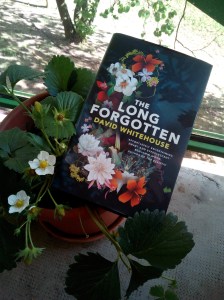 Apart from being a brilliant, unputdownable read, I continuously referred back to that image on the cover with total pleasure trying to deduce which flower it was we were tracking down next.


 A woman working in an asylum centre as a translator is called to fill in for an interview. She utters the word she has all but banished from her vocabulary. Yes.
 Human Acts is the author Han Kang’s attempt to make some kind of peace with the knowledge and images of the Gwangju massacre in South Korea in 1980.
 Human Acts, which seems to me to be an interesting play on words, is divided into six chapters (or Acts), each from the perspective of a different character affected by the massacre and using a variety of narrative voices.
 I believe in reason and in discussion as supreme instruments of progress, and therefore I repress hatred even within myself: I prefer justice. Precisely for this reason, when describing the tragic world of Auschwitz, I have deliberately assumed the calm, sober language of the witness, neither the lamenting tones of the victim nor the irate voice of someone who seeks revenge. I thought that my account would be all the more credible and useful the more it appeared objective and the less it sounded overly emotional; only in this way does a witness in matters of justice perform his task, which is that of preparing the ground for the judge. The judges are my readers.


 Word by Word