
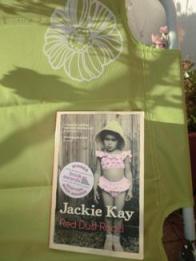
 I discovered Red Dust Road after reading a feature about Jackie Kay in the Guardian’s A Life in Writing series coinciding with the release of her short story collection Reality Reality. Upon reading the interview I learned that she had also recently published a memoir focusing on the story of her adoption by a Scottish couple and her subsequent attempt to find her Scottish birth mother and Nigerian birth father. I ordered both books, keen to discover this writer’s work, particularly as she is also a renowned poet and I am drawn to writers who already have poetry resonating within their voice, and I couldn’t wait to jump into the memoir, more for personal reasons, since I have been on a similar journey myself.
While her brother Maxie said he couldn’t remember not knowing he was adopted, for Jackie, the realisation was one she remembered clearly after watching a cowboy and Indian film and feeling sad because the Indians had lost again and she wanted them to win. After observing that the Indians had her colouring which was not the same as her mother, she asked why. The revelation that followed came as a shock, she cried and worried that ‘not real’ meant her mother was somehow going to disappear or dissolve. But she had been gifted with a loving and sensitive mother, an honest, straightforward and intelligent woman, who clearly loved both her children unconditionally as Jackie Kay displays in her warm, appreciative depiction of the characters involved in this remarkable and exhilarating story.
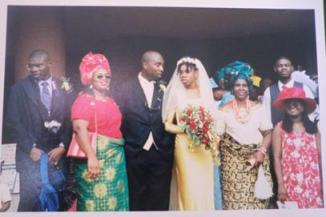
My Friend’s Wedding in Lagos
‘Betrothed’, she told me ‘your father met your mother in the Highlands of Scotland and they fell in love. He was from Nigeria – look, here it is in the atlas – and she was from the Highlands – look, here’s where she was from, Nairn. They were madly in love and they made you, but he was betrothed and had to return to Nigeria to marry a woman he maybe had never met. They do that there, you know. Hard, Jackie, must have been hard’.
In no rush to piece together the puzzle, but knowing that she will, Jackie finds occasion with her work to be in certain places where she can do a little investigative work, she visits Nairn, where he birth mother grew up and Milton Keynes where she lives now; Aberdeen where her father was at university and Nigeria, that supposed foreign land of her ancestors that she had no connection to in her daily life, but has dreamed of and imagined and experiences a kind of coming home when she visits the ancestral village of her father.
Recounting her visit to the village and in particular meeting one of the family members, left pools of liquids in my newly prescribed reading glasses, tears of joy and recognition as acknowledgement is realised. I don’t want to say too much, because there is too much good in reading this for the first time and not knowing what will occur, but this is a wonderful story, narrated without sentimentality, putting the reader right in her shoes, almost experiencing it first-hand.

Hanging Out in Lagos, Nigeria
Like so many adoption stories and as depicted so well in Mike Leigh’s ‘Secrets and Lies’, there remains much mystery and secrecy around so many of the stories. For those who have buried that episode in their lives somewhere deep, there is a reluctance to risk the turbulence they perceive it may cause, and even when acknowledged by the parent adoptees are often kept from the rest of the family. This can be one of the greatest risks of pursuing genetic ties, the risk of rejection as an adult with full consciousness, unlike that of a baby; although much research suggests that a baby does indeed have awareness of the separation.
Many doctors and psychologists now understand that bonding doesn’t begin at birth, but is a continuum of physiological, psychological, and spiritual events which begin in utero and continue throughout the postnatal bonding period. When this natural evolution is interrupted by a postnatal separation from the biological mother, the resultant experience of abandonment and loss is indelibly imprinted upon the unconscious minds of these children, causing that which I call the “primal wound”. Nancy Verrier, The Primal Wound, Understanding the Adopted Child
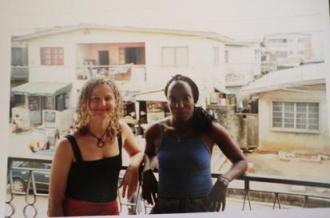
The balcony from where the children sang to me
I laughed when she talked about the experience of being called Oyibo (white person) in the village, causing quite a sensation with her paler skin. She mentions returning to Lagos which she describes as more cosmopolitan and where one is unlikely to hear that word.
I have to say that I too know that word, from my visit to Lagos in 1999, when I visited for marriage of a very dear friend. In the quarter where I was staying, I was a bit of an anomaly and not only did the children come to stand outside the house in case they caught a glimpse of the Oyibo, they even had a song they sung, which my friend laughed at, remembering she too used to sing it as a child, something about ‘white man, eat more pepper (the very hot pepper soup for breakfast), make your face go redder’, I guess it’s true, we do have an unusual capacity to change the colour of our face when eating something very hot or becoming embarrassed!
There are so many extracts I could paste and talk about from Red Dust Road, the reaction of her own son, the discovery of names, the reading through old archives, visiting buildings from another past, the importance of the imagination and the importance of a true friend, but I would prefer that you read the book and enjoy your own journey and reactions to this wonderfully humane and important story that we are privileged to share.
*
Below, I share a few photos from my visit to Lagos, Nigeria in 1999, an unforgettable experience it was indeed.

Preparing for the Native Ceremony, bride wearing her family ensemble

View from a rear window

Bride with her brother, wearing an outfit from the husband’s family

The theatrical Native ceremony in full swing
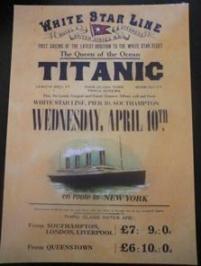 There are so many untold tales and now 100 years on from the Titanic tragedy, stories continue to be retold and others narrated for the first time, linked to the events that unfolded in the wake of the tragedy. Not only do we read accounts of those who were on the boat, but the event is used in fiction, a convenient device for eliminating a character such as the loss of the cousin and heir in Julian Fellowes Downton Abbey series, this event triggering the inheritance crisis that is at the centre of this drama. I read that if all the characters from fictional novels were indeed on the Titanic, it would more than triple the number of passengers she carried and sink it for sure.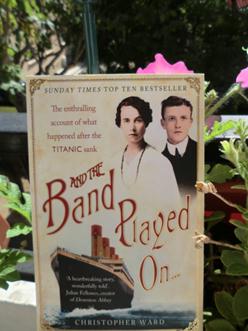
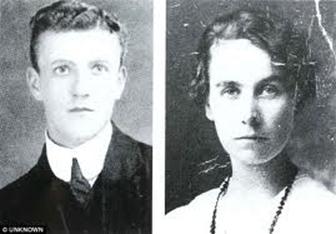
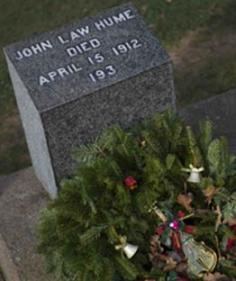 When it was no longer possible to stand, they strapped their instruments to their chests and jumped into the freezing cold waters together. None of the band members survived, however two of their bodies were recovered, Band Master Wallace Hartley (his violin case still strapped to him) and Jock Hume. Hours after the Titanic sank, White Star Line commissioned the Mackay-Bennett to recover the bodies of victims. Of the 209 bodies they brought back, 150 were laid to rest at three Halifax cemeteries. Jock Hume was buried in the Fairview cemetery, a site where visitors still pay their respects today.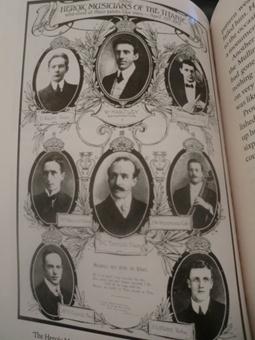
 Originally known as the Booker, it used to have just one criterion – that the prize would be for ‘the best novel in the opinion of the judges’. That remains one of the criteria and we know there have been some off years, it is a unique award, not what you would call popular fiction, it is what the organisers refer to as quality fiction to attract ‘the intelligent general audience’ – sounds a little book snobbish to me, but then judging book prizes is subjective and often sparks a great debate and sometimes even bad behaviour.
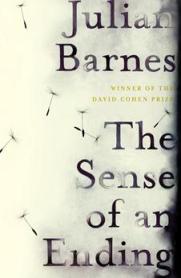 Last year’s winner was Julian Barne’s Sense of an Ending, which I admit that I have not read yet, Barnes’ being a novelist I’ve started and stopped a couple of times, but will persevere and read before too long.
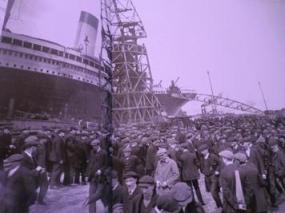 The significance of the Titanic continues to intrigue, or I should say has begun to intrigue me more since a visit to Belfast, Northern Ireland, the city in which it was built, a city which itself grew on the back of the growing shipyards and connected industries associated with it. Between 1851 and 1901 the city’s population increased from 87,000 to 350,000 and was the fastest growing city in the British Empire during that time.
 Turning the last pages of Walter Lord’s ‘A Night to Remember’ I read in the end chapter Facts About the Titanic that she was launched at the Belfast shipyards of Harland and Wolff on 31 May 1911. The date rings a bell and I look in my diary and see that my daughter and I arrived in Belfast on 31 May 2012, exactly 101 years on from that auspicious date.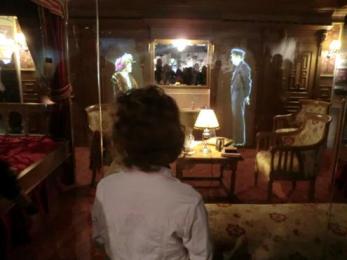


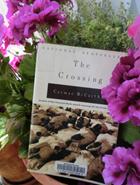 Mexico to find work where they endure numerous perilous adventures including prison, first love, betrayal and death. Quite possibly the least bleak of McCarthy’s work, which may account in part for why I enjoyed it so much, but even his more downbeat work has much that I admire linguistically.
 The first trip he attempts to return an injured, pregnant wolf he has trapped. Rather than kill her, he tries to return her to the mountains where she came from. The second journey with his brother Boyd is an attempt to retrieve stolen horses and the final crossing Billy makes alone
  to find his missing brother and bring him home.
 within reach of his homestead and away from the troubles that lie in wait of the restless, idealistic man on a dubious if well-intended mission.
 His short novel ‘The Pearl’ is based on a Mexican folk tale about Kino and Juana, a young couple who live a basic existence, their joy of a first baby threatened when it suffers the sting of a scorpion.
 So into the bag it goes.

 appear for the one season that is missing but I am open to suggestions, is there a title that comes to mind for Autumn, the Fall? I am sure one must exist.


 Word by Word