Stet, an Editor’s Life Diana Athill

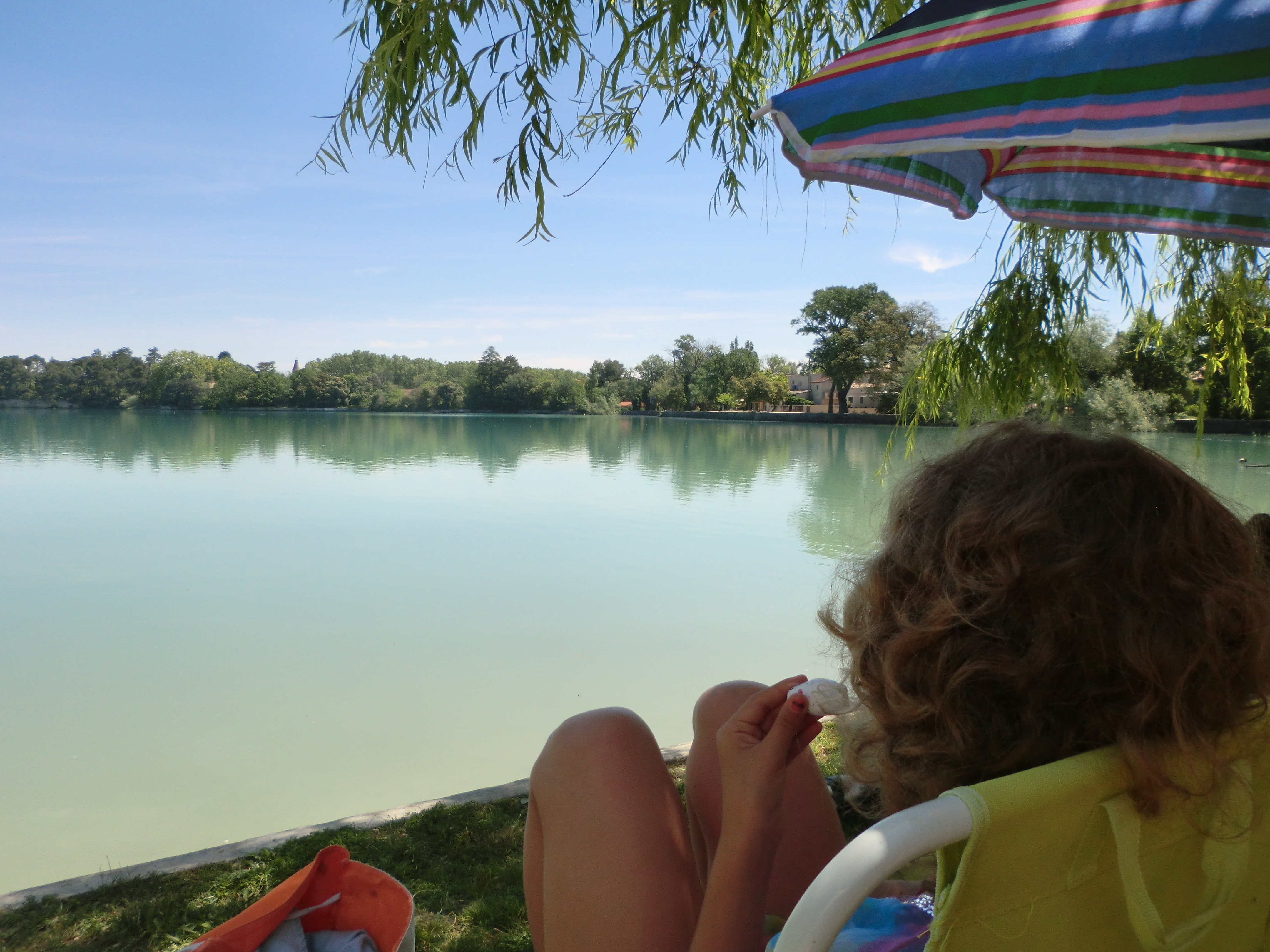
LakesideI read most of Diana Athill’s book in two afternoons, sitting under a willow tree beside the lake L’étang de la Bonde as the children swam continuously, refusing to get out until it was time to leave. Despite the fact that we were outdoors, I felt as if I had just spent two days in Athill’s living room, listening to her share this particular segment of her life, that as Editor at André Deutsch, the publishing house where she worked for four decades.

Stet is not a common word and I am perhaps only familiar with it because, back in the old days, when I was a 23-year-old Market Research Assistant without typing skills, I used to write reports and had a secretary to type them. I even had my own office with a door that could be closed. Using the word stet meant I’d changed my mind after I’d crossed something out, wanting it left in. The Concise Oxford Dictionary tells us :

Not the first of Athill’s memoirs, but the one I was attracted to, since it offers a glimpse inside an Editors office. I had already read and reviewed Betsy Lerner’s The Forest For the Trees, which this book made me recall, you could say they complement each other in a certain respect, though they are very different books, as one might expect when comparing the perspective of an English Editor to that of an American Editor. Both equally interesting and insightful in their own way.

In Part One, Athill shares how she fell into publishing as a career, knowing she would have to find a job, while her great-grandparents generation had made or married into money, her father’s generation had lost it and she talks about many aspects of the job, the decisions that were made, the dramas that were lived and worked through.

“The story began with my father telling me: ‘You will have to earn your living.’ He said it to me several times during my childhood (which began in 1917), and the way he said it implied that earning one’s living was not quite natural. I do not remember resenting the idea, but it was slightly alarming…Daughters would not, of course, have to earn their livings if they got married, but (this was never said) now that they would have to depend on love unaided by dowries, marriage could no longer be counted on with absolute confidence.”

Diana Athill

Diana Athill

The start to her career was disrupted by the onset of the Second World War, however she was fortunate to have a friend working in the recruitment office of the BBC and found an information/research position in the Overseas News Department. She and a friend lived in a small apartment in London and had a good social life, at one of the parties she met the young Hungarian intellect André Deutsch, the start of a lifelong friendship and she would eventually leave her job to join him as a shareholder and working Director when he decided to start his own publishing firm.

Not the easiest of employers, Athill shares some interesting insights about working for an often disagreeable and intolerant man whom she respected despite his deficiencies. She is also quick to point out her own flaws and it is perhaps the counterbalance of their personalities that made them such a successful pair and helped keep the publisher in business for as long as it was able. She also shares her continued love of literature, reading and writing.

Stet“They brought home to me the central reason why books have meant so much to me. It is not because of my pleasure in the art of writing, though that has been very great. It is because they have taken me so far beyond the narrow limits of my own experience and have so greatly enlarged my sense of the complexity of the life: of its consuming darkness, and also – thank God – of the light which continues to struggle through.”

In Part Two, she expounds on her relationship with a small selection of writers, providing a chapter each and very frank accounts of what transpires between Athill, the publishing house and the following authors: Mordecai Richler and Brian Moore, Jean Rhys, Alfred Chester, V.S.Naipul and Molly Keane. One is left with the impression that there was a lot more drama and pandering to personalities in the past than there can be in today’s less nurturing publisher – author relationships. Eye opening indeed!

As I mentioned in the Man Booker Prize longlist post, Diana Athill won the Costa Prize for her most recent memoir Somewhere Near the End in 2009, which she wrote in her nineties, a book which is sure to be equally enlightening and one I look forward to indulging, knowing as I did with this book, it is bound to offer delightful company for future afternoon reading.
CIMG4553

Man Booker Prize Longlist 2013

Man Booker 2013 logoToday judges announced the Man Booker Dozen that have made it onto the long list for 2013. Last year Hilary Mantel won it for the second time and with a sequel, Bring Up the Bodies, which is the 2nd book in the Thomas Cromwell trilogy.

StetI have just finished reading Diana Athill’s excellent book Stet, An Editor’s Life arguably the person with the longest active memory of the history of books and publishing today, she won the Costa Prize for her most recent memoir Somewhere Near the End in 2009, when she was 93 years old. Stet, she wrote at the sprightly age of 80 shortly after retiring.

In the book she mentions the launch of the Booker Prize, mentioning that in the sixties, it was becoming more and more costly and less profitable to publish books and to compete against the bigger publishing houses. It was becoming difficult to sustain a publishing house that appealed to the more literary reader. She describes the two kinds of reader that existed, still relevant today:

People who buy books, not counting useful how-to-do-it books are of two kinds. There are those who buy because they love books and what they can get from them, and those to whom books are one form of entertainment among several. The first group, which is by far the smaller, will go on reading, if not for ever, then for as long as one can forsee. The second group has to be courted. It is the second which makes the best-seller, impelled thereto by the buzz that a particular book is really something special; and it also makes publishers’ headaches, because it has become more and more resistant to courting.

The Booker Prize was instigated in 1969 with the second group in mind: make the quality of a book news by awarding it an impressive amount of money, and hoi polloi will prick up their ears.

WBN 2013It worked for the books named, but the underlying aim to convert more people to reading did not. Not much has changed. The latest attempt to convert the population into reader, we could say is World Book Night, where publishers print thousands of books for free and they are given out on one night in the year, to people who don’t really read. Has that worked? Unlikely I think.

But onto the prize for 2013, this year’s long listed titles and authors are:

Eleanor Catton, The Luminaries

Jim Crace, Harvest

Eve Harris, The Marrying of Chani Kaufman

Jhumpa Lahiri, The Lowland

ColmTóibín, The Testament of Mary

Colum McCann, TransAtlantic – my review here

Donal Ryan, The Spinning Heart – my review here

NoViolet Bulawayo, We Need New Names – my review here

Tash Aw, Five Star Billionaire

Richard House, The Kills

Alison MacLeod, Unexploded

Charlotte Mendelson, Almost English

Eve Harris, The Marrying of Chani Kaufman

Ruth Ozeki, A Tale for the Time Being

Congratulations to all those authors and good luck to anyone hoping to read the list, I’ve only read one and I do have The Spinning Heart, so I guess that will next.

The shortlist will be announced on 11 September and the winner on 16 October.

Time to get reading!

Shoes Hair Nails, Fragments of the Whole

In October 2012 a pair of Marie Antoinette silk slippers were put up for auction on the anniversary of her execution.

Marie Antoinette silk slippers

Marie Antoinette silk slippers

I knew about it because I use BBC News texts rewritten for learning purposes to teach English to mature French students; it keeps the lessons interesting and relevant, no more “Brian is in the kitchen” or “Michelle is at the swimming pool”, now we can introduce rich new vocabulary such as guillotine, opulent, goes under the hammer, scaffold, artefacts and tyranny and more importantly, improve competence and confidence in the art of conversation and communication.

Knowing that the author Deborah Batterman had written a collection of short stories with Shoes in the title, I tweeted her a link to the Marie Antoinette story. She offered me a copy of her book and though I warned her shoes, hair and nails weren’t my thing, if she was willing to risk sending me her book, I’d read it. While I was keen to read the stories, I admit that I hesitated at the Cinderella type image on the cover, which may explain why in my reading, I began to rename the stories as I went, partly to help remember them, but also to reclaim them and give them the credit I believe they deserve.

Shoes Hair NailsThe stories are like vignettes, fragments, captured moments in time and life that feel familiar, even if the experiences are not what we know. Because in reading we inhabit the character and Batterman has a cathartic way of writing that puts us in the shoes of her protagonist, we understand implicitly what it was like to be there and to live through that experience.

She articulates instinctive, feminine sensitivities, fears, and concerns we will all recognise and yet struggle to put into words ourselves, and why bother when one can sit back with this gentle, funny and considerate collection of stories which take us to those places without the struggle to explain ourselves and may even help us feel better about facing similar issues.

Here is a glimpse into a few of the stories:

Vegas or as I think of it Last Trip to Vegas – Not wishing to acknowledge, even less to accept that Norman is at the stage where he needs care other what he can provide himself, his son Kevin takes him and the family off for a weekend trip to Las Vegas, hoping that the familiar experience will reignite those no longer charging cells in his decrepid body and somehow turn back the clock.

“Kevin argues with the doctors, reminds them of studies showing how physical stimulation helps not only the body, but the mind too. He knows Norman cannot live with us, refuses to think of any alternative. Except this one. He will take his father to Las Vegas, the place he loved more than any place on earth. The place that bombards the senses every which way you turn, every hour of the day… If the body has memory, Kevin reasons, this is the place to bring it back.”

It’s an entertaining trip and not on account of the expected offering of the casino city. It’s like Norman’s last stand and he has a whale of a time, as his family come to the realisation that they have up until now been avoiding. That there is no going back, the body is not a machine we can put in reverse, or slow motion, or pause. I loved this story and think it would make a better movie than that one about those three blokes who go to Vegas – and anyone experiencing mixed emotions with their parents going through the ageing process will appreciate the laughs and the stark realities of this tale.

kittens learningCrazy Charlotte – I think of this story as The Innocents, about a girl who wants to befriend a family living outside accepted social circles, who are the subject of gossip. She is intrigued by them all, Charlotte the mother is unlike anyone she has ever met and wants to give her children a broader education even if that means occasionally keeping them at home so they can visit an exhibition or see the birth of kittens. Charlotte isn’t crazy, but she allows one little girl to see the world through different eyes.

Nails, I think of as The Unfortunate Inheritance and it is appropriate that it also features in the title, because it is a deeply memorable story that reads like a novel and one that I could easily have kept turning the pages for and delved even deeper into all those characters with their Shimmering Reds or Deathless Velvet or whatever it was they wore on their nails, the references to nails actually reminded me a little of that “Where’s Wally?” character, the way they turned up in the most unlikely places, with regular consistency.

The protagonist moves on from a relationship and into an apartment on the 8th floor, already populated by complex, interconnected characters, whose lives and jealousies and pasts we begin to learn something of. Everyone arrives or is already ensconced with their baggage, physical and emotional, created or inherited, a stray dog, a piano, memories of a previous relationship, a past job. And sometimes an inheritance doesn’t make life any easier at all, in fact it can be lethal.

Deer Crossing2In Defensive Driving or as I recall it, Lesson 1 : The Many Effects of Deer, a woman and her husband find themselves in a random group of people, some of whom are there for similar reasons to their own, others because they have no choice. Regardless of their reasons, they all bring their many perceptions, which will be altered significantly by what occurs in lesson 1.

An inspiring collection of stories I recommend.  And even though I said I’m not into shoes, this post inspired me to seek out another book I’m going to revisit and share with you soon, more about shoes as art and inspiration, coming soon…

TransAtlantic Journeys, Real and Imagined

Colum McCann’s latest novel did well to live up to my raised expectations and has now become a symbol of a path on the journey of this blog itself. I was always keen to read McCann’s next novel, after the hype of Let the Great World Spin, which I enjoyed although I wouldn’t class it as one of my all-time favourites. TransatlanticHowever, TransAtlantic became a “must read” after I received a hardback copy in the post, in recognition of one of my reviews being profiled on The Guardian’s online book pages, where I occasionally post extracts of reviews and comment under the pseudonym RedBirdFlies. The review that was acknowledged, was Zadie Smith’s NW and you can read what the Guardian had to say about it here.

So thank you to The Guardian Books team for sending me a copy of TransAtlantic, a welcome surprise and wonderful to know that a few of these “word by words” have flown the page and landed elsewhere to an appreciative audience.

Vickers Vimy with Alcock and Brown aboard departs-Newfoundland 14 June 1919

Vickers Vimy with Alcock and Brown aboard departs Newfoundland 14 June 1919

TransAtlantic is a hybrid novel (is that an oxymoron?), in which McCann takes real historical figures, all of whom made a transatlantic journey which subsequently had a bearing on the story of Ireland and re-imagines a part of their story, interspersing the narrative with fictional characters.

He starts with Alcock and Brown in 1919, who ditched their bomb carriers, modifying the Vickers Vimy by taking war out of flight and adding more fuel than had ever been strapped to an aircraft in their attempt to cross the Atlantic non-stop.

The names sounded familiar, but I didn’t know as I began to read who they were, so looked them up and was startled to see Alcock’s date of birth and then death, the same year in which he makes this attempt – are they going to make it I asked? And is it cheating to look up a historical figure in the midst of reading a novel? Brown dies many years later, so I settle back into reading, content they are going to make it. Until I read that Alcock couldn’t swim.

Their preparation and journey are captured by a journalist Emily Ehrlich and her photographer daughter Lottie, who reappear in later chapters, two women whose family have made the crossing many times, the first family member to do so Lily, inspired by meeting Frederick Douglass, who we meet in the second chapter. In a chance encounter with Brown, Lottie asks if he will carry a letter written by her mother to an address in Cork. A letter that survives this entire novel.

Frederick Douglass 1847 by Samuel J Miller (wikipedia)

Frederick Douglass 1847 by Samuel J Miller (wikipedia)

Frederick Douglass visits Ireland while in the throw of becoming a free man, he is spreading the word against slavery, a young abolitionist, a charismatic presence, in awe of how he is received, as an equal, yet disturbed by what he sees outside the warm, accepting rooms of his well-off hosts, the onset of famine in Ireland, people living in more dire conditions, than what he has left, though they are free. It is a humbling experience, as it is for anyone meeting those worse off than they, no matter how tragic one’s own circumstance.

“He thought he knew now what had brought him here – the chance to explore what it felt like to be free and captive at the same time. It was not something even the most aggrieved Irishman could understand. To be in bondage to everything, even the idea of one’s peace.”

A young maid, Lily Duggan is inspired by his presence to abandon her employ and take a ship to America, where she meets mixed fortune, her descendants equally inspired to search for new shores, leading them back full circle to that island of her birth Ireland. It is through the women characters that the threads of narrative are interwoven and connections are made across the years, witness to, or affected by the consequences of those significant events that the men of those first three chapters represent.

These characters might represent us, the population, those that stay in a country generation after generation, some harbouring seeds of revenge, and those who leave, immigrate, seeking utopia, hoping that there does exist, a place where men and women of any race, class, religion or persuasion have an equal chance at bettering their lives.

And as McCann himself says in the interview with Jeffrey Brown:

“Women, as we know, get the short shrift in history.

It’s been largely written and dictated by men, or at least men believe that we own it, and women have really been in those quieter moments at the edge of history. But, really, they’re the ones who are turning the cogs and the wheels and allowing things like the peace process to happen.”

There is something alluring in the novelist who takes on a historical figure and imagines their past, it can bring the past to life in a more animated way; in the present when the media delves into the personal life of an important political or scientific or literary figure, it is deemed an invasion of their privacy, the cult of the celebrity. When a novelist looks back and intertwines the narrative of their accomplishment and the context of their life, their loves, and their thoughts beyond the significant reason that they have become known, it makes them whole and they become characters that we might even relate to.

Entrance to Titanic Museum, Northern Ireland

Past in the Present
Entrance to Titanic Museum, Northern Ireland

“I am partial, still, to the recklessness of the imagination. The tunnels of our loves connect, coming to daylight at the oddest moments, and then plunge us into the dark again. We return to the lives of those who have gone before us, a perplexing Möbius strip until we come home, eventually, to ourselves.”

Whist many authors safely inhabit the lives of historical figures from a distance, many years or centuries after their death, dwelling in the safety of already published and authenticated research, McCann goes one step further by taking as his third character the US Senator, George Mitchell, effectively channeling his thoughts during the day that he journeys to Northern Ireland to broker the Good Friday Peace Agreement. Clearly, this was no mean feat, as the interview comments quoted attest, but he succeeds in creating the man behind the politician, without it seeming like an invasion of his privacy.

McCann’s prose style often reduces to the minimum, he sometimes dispenses with conventions of grammar, reducing his phrases to only the words that describe or evoke the scene or emotion and it is compelling reading. He doesn’t strip beauty from language; if anything he accentuates it by removing the accessories.

I don’t wish to make comparisons, but the only other writer whose prose has that kind of addictive effect on my reading is Cormac McCarthy. They don’t strum their words in the same way, but if they were musicians, they’d both be on my playlist. They possess talent worth dwelling within.

“It is one of their beauties, the Irish, the way they crush and expand the language all at once. How they mangle it and revere it. How they colour even their silences.”

Strangford Lough, Northern Ireland

Strangford Lough, Northern Ireland

London Literature Festival #londonlitfest

Late last week I was working in London and had a free Saturday to enjoy the delights of the city.

Providores

The Providores + Tapa Room

I was meeting a friend for brunch in Marylebone High Street, ironically it is London’s French quarter, many of the shops and cafés and boulangeries are very familiar; however we weren’t heading for a French café, we couldn’t help but be tempted by one of New Zealand’s greatest exports, chef Peter Gordon and his restaurant The Providores with its excellent downstairs Tapa Room, the all-day restaurant, café and wine bar.

London's South Bank Centre

London’s South Bank Centre

Before heading out, a quick google search “literary events London” informed me that the London Literature Festival was on, I couldn’t believe it!

So after a terrific brunch, off I went to the South Bank Centre and the Royal Festival Hall, always a hive of activity at the weekend, and hive  an apt metaphor, as the festival was using the image of a bee and honeycomb in its publicity.

Don’t you just love those sun loungers outside Foyles bookshop. Bliss!

To my delight and surprise, the American essayist and writer of non-fiction Rebecca Solnit, was speaking in the late afternoon, so I avoided the pull of Foyles to buy a ticket and then decided to check out The Spectacular Translation Machine, a collaborative attempt to translate an entire book from French into English.

CIMG4524The book On Les Aura! was the private diary of a French solider written in 1914 , which the renowned illustrator Barroux discovered and published in France, adding his line drawings to bring the story to life. It has never been translated into English, so each illustration along with the short paragraph of text was hung on a line around a room in the Royal Festival Hall and members of the public invited to choose an image and attempt the translation.

I chose an illustration of the solider lying in bed and a steaming cup of coffee beside him. The paragraph underneath the illustration read:

Je m’éveille après une bonne nuit de sommeil et je trouve un bol de café fument. Quel changement ! J’écris a ma chère femme pour la rassurer et lui envoyer mon adresse. Vers 10 heures, le Major passe la visite.

Along with children, a couple of students, a woman who could speak 15 languages and anyone else wanting to give it a go, we sat at the table and worked on our translations in a wonderful community approach. Such fun!

From there, a quick scout of the bookshop Foyles where I picked up a copy of Chinua Achebe’s Things Fall Apart and a copy of The Artist’s Way.

CIMG4528Then on to the Queen Elizabeth Hall for an inspiring talk by Rebecca Solnit, author of The Faraway Nearby, hosted by the literary critic Alex Clark. Solnit’s book was already on my list and downloaded to the kindle to read, but jumped to the top of the pile after an engaging talk about apricots, Alzheimer’s, Iceland and the significance of stories in our lives. A very poised and engaging speaker with scores of anecdotes and quotes that she repeats without hesitation.

It must be the season for book readings, because I am back in Aix and today we have had Jonathan Coe participating in an excellent and well hosted and translated discussion. More on that soon!

*

CIMG4522

Women’s Prize for Fiction Winner Announced

CIMG4526Excellent timing, the women’s prize for fiction is announced during the London Literature Festival at the Royal Festival Hall on the South Bank, which I had the opportunity to visit on Saturday (more on that excitement later!).

A strong list, and some equally strong and divided opinions about the books that made the list and a bit of a surprise result, it has to be said.

So to remind you, the six shortlisted authors and their books were:

*

In the opinion of the judges the book chosen mostly ably fulfilled the criteria of the award, being originality, accessibility and excellence.

And the winner was:

May We Be Forgiven by AM Homes

A first book award for her 10th book, a career spanning 25 years and a dream fulfilled at last. The author paid tribute to her father who sadly passed away a month ago, knowing that his daughter had made the short list and also to her grandmother who lent her the money for her first typewriter and made sure she paid it back.

“… this book really struck all the judges, partly because of just the pure quality of its writing, it has this incredible energy, at times its very vicious and very bleak, but it also has this warmth that comes through at the ending… it is one of those books that speaks to people in different ways and really is something that begins conversations and begins thoughts…” Natasha Walter, Judge

The new sponsor has also been announced and there was plenty of the beige drink being served from all accounts, so from next year expect to hear about the Bailey’s Women’s Prize for Fiction

Well done AM Homes, up against strong contenders, including the almost invincible Hilary Mantel.

Let’s hope that it’s a good omen for her publisher Granta, after the rapid departure of most of their management team, the publisher/magazine currently having to rebuild itself from scratch.

Looks like I have yet another book to add to the list!

The Dervish by Frances Kazan

DervishSo what is a dervish you might ask? And why does Frances Kazan use it as her book title?

“Are the Sufis and the dervishes the same?” I asked.

“The two are like the threads on a loom. She replied. “Different colours, varying textures interwoven together to make a single carpet of immeasurable beauty.”

Perhaps it symbolises the unknown aspect, that thing just beyond our rational ideas, the reason we do certain things that can’t be explained. Not quite insanity, but on the way towards it and yet it is also that part of our nature that makes us feel most alive, that promises to make life interesting. When we choose not to indulge it, our lives, in consequence are more predictable, more balanced and much less exciting.

The protagonist of Frances Kazan’s novel Mary is an artist who lives in New York and is looking back on that period in her life just after she became a young widow, her husband was killed in France in WWI in the Battle of the Somme. Restless in New York, she responds to her sister’s invitation to join them in Istanbul where Connie’s husband works for the American consulate. In the last days of her time in Istanbul, the dervish becomes her sole subject to draw and paint, something about these mystical humanists resonating within her psyche and manifesting in her drawings.

220px-Edib_Halide

Halide Edib

The story is set in the dying days of the Ottoman Empire post World War I, the country is occupied by the British which has spawned the establishment of the Turkish Nationalist movement. While the Americans are Allies of the British, they aren’t directly involved and therefore must exercise cautious diplomacy with whom they make friends. They have tentative relations with Turkish nationalists, but political tensions in the city are high and the two sisters have been warned to stay close to the consulate.

Unlike her sister who listens to that advice, Mary refuses to stay behind the protective walls of the embassy; a new city that embraces so many languages and cultures beckons her. These daring excursions result in her becoming witness to the murder by a British officer of the young son of Turkish Nationalist and to her being wanted for questioning by the British Army.

This encounter is a turning point in her visit, after which she befriends the Turkish novelist and feminist political leader Halide Edib Adivar who supported Mustafa Kemal (later Ataturk) in the resistance against the occupation of their country by a foreign power and she will also meet and more than befriend the father of the young man who was killed.

“I was born in the harem, in the same room as my mother and her mother before her. Once upon a time we felt safe within those old walls; I fear we dwelt in illusion.”

Mary’s is with Halide and her husband Dr. Adnan, who has been appointed as Minister of Health in recent elections, when they hear there is to be a coup d’etat, which put them all in danger and forced them to flee. It also resulted in a warrant for Mary’s arrest and set her off on an overland adventure with her friends.

Mustafa Kemal Ataturk

Mustafa Kemal Ataturk

France Kazan has written this story around a subject that is clearly one of her passions in life, the history of the Ottoman Empire and many of the characters are real historical figures themselves. Not just a scholar of Turkish studies and an admirer of Halide Edib, but her late husband the film-maker Elia Kazan, was born in Istanbul. In his book and film by the same title, America America, he tells how, and why, his family left Turkey and moved to America.

It is an entertaining read, not too burdened with political and historical recounting. I found it a little difficult to believe the somewhat complicated relationship between Mary and Mustafa Pasha, and her decision to stay when her sister and husband decided to leave. Perhaps grief makes us less sensitive to risk and more inclined to reckless adventure.

And those whirling dervishes? I will leave the last words to Rumi:

Rumi, the founder of the Mevlevi Order in the 13th century said the dancing dervishes represent the solar system and the planets that revolve around the sun. At the same time that they are immersed in their own microcosmos, they create new worlds and make contact with eternity.

The fact that humans can join the choreography of the cosmos by dancing to its rhythm is an awareness that humanity has had since ancient times. One can say that all dance, in a certain way, is yielding the body to the earth’s movement. Slowly, as the body sways and the blood rhythm changes, consciousness also changes. With the revolution paralleling that of the cosmos, the mind assumes a freedom from the earthly bondage. It would be as though the mind begins to concentrate on the depth of existence on its own, while the body has been given away to the earth.

Note: This book was an Advance Reader Copy (ARC) provided kindly by the publisher via NetGalley.

Istanbul Memories of a City by Orhan Pamuk

IstanbulAlthough I carried the book  to Istanbul and back, there was no inclination to read it while I was there, I started it on the return plane journey, the appropriate occasion to do so, for Pamuk’s Istanbul is laced with more melancholy than the city I visited and I realise with hindsight, the importance of constructing my own unfettered impressions, free of this philosophical consequence of the decline of a grand empire and the inclination of its progeny to feel somewhat bereft at missing out on an era when their prominence was that much greater than it is today.

However, I remain as intrigued about the author now as I did before I started the book, it is a unique form of memoir, more of a nostalgia trip through selective memories of his childhood and his city, sharing anecdotes from both that formed him into the writer he is today.

The imagination features large in Pamuk’s  life from a very young age, when he was five-years-old he was sent to stay with an Aunt on his own and she used to point at a picture of a child and say it was him. He came to know him as the other Orhan and while he knew it was not him, this shadow of himself never left him behind. Neither did he ever leave the city of Istanbul in the fifty years up to writing this book.

CIMG4275“But the ghost of the other Orhan in another house somewhere in Istanbul never left me. Throughout my childhood and well into adolescence, he haunted my thoughts.”

Though he never left the city, he read many works by writers and poets who published impressions of Istanbul, Gustave Flaubert, the poet Gérard de Nerval, Théophile Gautier, Pierre Loti, Edmondo de Amici and laments that in the same period they were writing about the city,  little was written or painted by its own artists and writers, therefore, whilst the work of others is familiar, it remains an outsiders perspective and does not quite capture the essence of how the Istanbullus see themselves.

Pamuk often visualises the city in black and white and throughout the book on nearly every page are photographs depicting the city in monochrome. He spends an entire chapter describing Hüzün, the Turkish word for melancholy explaining how if differs from sadness and finishes by almost convincing the reader that it is something close to a virtue, absorbed with pride and shared by a community.

“the hüzün of Istanbul is not just the mood evoked by its music and its poetry, it is a way of looking at life that implicates us all, not only a spiritual state, but a state of mind that is ultimately as life affirming as it is negating.”

“… hüzün brings us comfort, softening the view like the condensation on a window when a tea kettle has been spouting steam on a winter’s day.”

CIMG4331

Entrance to the Grand Bazaar

I did not come to Istanbul expecting to see sultans, dervishes or crystal chandeliers, though there are traces of them all if you seek them out. I came to see a city that comfortably exists while straddling two sides of a significant divide.

Bosphorus

The Bosphorus with the Castles of Europe and Asia by Thomas Allum

The Bosphorus, that deep channel of powerful surging water and current that separates two continents is deceiving. The reasonably short distance from one side to the other, only 2 to 3 kilometres, the fact that it embraces one city reminds us that there is less than we might think between the people who inhabit each continent.

A deep and powerful separation of continents, yet humanity passes across it with ease. Great divides can indeed be overcome.  The streets of shops and the Grand Bazaar attest to that passage of traders and pilgrims who have entered and passed through the city over hundreds of years.

It takes until the very last chapter before we meet the more mature Orhan who will become a writer, because unlike many born to write, his first love was painting and he shares much through his observation and study of artists who painted his city, something he practiced prolifically in his youth. The demise of this early calling occurred not long after his teenage muse was packed off by her family to Switzerland, his mother’s relentless cautions against pursuing the life of an artist transforming his rebellion against completing his architectural studies into announcing:

“I don’t want to be an artist.” I said. “I am going to be a writer.”

CIMG4495

“I was, as I had begun to discover even then, the sort who could always wear the same clothes and eat the same things and go for a hundred years without getting bored so long as I could entertain wild dreams in the privacy of my imagination.”

A treat for admirers of Orhan Pamuk’s work and those who have had the good fortune to visit his wonderful city, which is not nearly as melancholic to the visitor as it is to a philosophical resident.

Next up, murder at an archaeological dig! Time to leave Istanbul and travel inland with Ahmet Umit.

Ottoman Distractions

Sultanahmet (Blue Mosque)

Sultanahmet (Blue Mosque)

Greetings from a vibrant and bustling Istanbul.

There is too much opportunity to observe, appreciate, participate and marvel at this wonderful city situated where Europe meets Asia and where on every corner there lies evidence of humanity’s incredible vision going back many hundreds and thousands of years, one must put down the books and just dwell in its presence.

So no update on reading, though I do have some reading related pictures to share and I have bought two books to add to my Turkish literature collection. Not far from Sultanahmet (the Blue Mosque) is a bookshop with an enticing window showing off its collection of English translated works, works by Turkish authors written in English and any writer, whose work focuses on the area.

The owner’s brother was quick to recommend Louis de Bernières Birds Without Wings, which I told him was already in my top all-time favourite reads and of course Elif Shafak and Orhan Pamuk’s works are all there.

Portrait of a FamilyHe then handed me Portrait of a Turkish Family and promised with stalwart confidence that this little masterpiece would replace my current favourite. Sales-speak or the truth, I shall soon find out.

PatasanaI was actually looking for a copy of A Memento of Istanbul, by Ahmet Ümit, a writer I have not read before, master of the Turkish thriller and after Turkey’s profile at the London Book Fair, watch out for more from this author. I was interested in this particular book as it is said to highlight seven significant attractions introducing something of the city’s rich culture and history. They only had one book left in English by this writer, Patasana, so A Memento can wait, this is where I shall start. Thrilled already!

Istanbul is a fabulous city to visit and the children and I have totally fallen for the historic part of town. I am sure we will be back and would recommend it to you all if you ever have the opportunity to visit.

Some of the highlights:

The Burgess Boys by Elizabeth Strout

Like many readers, having enjoyed Olive Kitteridge, Strout’s previous book that won a Pulitzer Prize in 2009, I was looking forward to reading her next work. Rather than referencing Olive Kitteridge, which this book has very little in common with, The Burgess Boys arguably has more connections with Strout’s own life, growing up in small towns in Maine, studying law and moving to New York city.

The Burgess BoysJim and Bob Burgess also have little in common except that they both studied law and moved to New York, one achieving notoriety, the other not. Their younger sister Susan never left Shirley Falls, Maine; they are now all late middle age, the trajectory of their lives influenced early on in childhood when Bob(4) and Jim(8) witnessed the death of their father as the car they were in, with their younger sister in the back, rolled forward down the family driveway and killed him.

Two thirds of his family had not escaped, this is what Bob thought. He and Susan – which included her kid – were doomed from the day their father died.

The two boys leave their hometown to pursue careers in New York city and have little to do with their sister, until a thoughtless act by her teenage son Zach, lands him in trouble with the police and the law and looks set to incite racial tension among the citizens of Shirley Falls and their Somali immigrant community.

He thought of all the people in the world who felt they’d been saved by a city. He was one of them. Whatever darkness leaked its way in, there were always lights on in different windows here, each light like a gentle touch on his shoulder saying, Whatever is happening, Bob Burgess, you are never alone.

Prior to the family drama Jim’s star was in the ascendant, he could do no wrong, however an indulged ego wins few favours long term and his good fortune risks changing course.

It is a story of family ties, separation, isolation, of fear and its consequence and the challenges of an evolving community, how newcomers don’t always bring out the best in their hosts, requiring as they do, new understanding and acceptance.

It was an uncomfortable start for me I admit, taking on a story that portrays a small town’s varying and little embracing of an immigrant community and the committing of a disrespectful act against it’s religious beliefs is fraught with danger in itself. Topical perhaps, but difficult to accurately or sufficiently portray balanced points of view.

Somali USStrout presents the family dilemma and while giving them an audible voice, keeps somewhat at a distance from the community Zach Burgess has upset, though at least she does not go so far as to incite the aggrieved community to inflame their response. But the story lacks something for having touched on a community in such an indignant way and failing to give them much of a voice,  the one exception stretching the imagination in authenticity a little too far.

Abdikarim, who had attended only because one of Haweeya’s sons came running to get him, saying his parents insisted he come to the park, had been puzzled by what he saw: so many people smiling at him. To look him straight in the face and smile felt to Abdikarim to display an intimacy he was not comfortable with. But he had been here long enough to know it was the way Americans were, like large children, and these large children in the park were very nice.

Not knowing much about Somali immigration to the US, I found these two articles helpful, particularly the former in it’s comparison between US and European immigrants.

What Makes Somali’s So Different? – an interesting article by Michael Scott Moore on the subject of Somali immigrants to the US.

A ray of hope – Somalia’s Future – an analysis by The Economist in Feb 2012 on the future within Somalia itself.

Note: This book was an Advance Reader Copy (ARC) provided kindly by the publisher via NetGalley.