Whale is a clever satirical novel that is written in a fable-like way, using an all-seeing, all-knowing omniscient narrative voice, along with occasional interjections by the author, as he pauses the narrative and talks to the reader.
Set in a remote village in South Korea,it follows the interconnected lives of a series of unfortunate women, who go through various highs and lows, having experiences that the author tells us depict certain universal laws.
What is supposed to come always ends up coming, even without a harbinger. This was the law of fate.
It begins with Chunhui, a female brickmaker who learned her profession from her stepfather. She could also communicate with an insightful elephant. We learn that a fire burned the brickyard to the ground killing eight hundred souls and that she was charged with arson, imprisoned and tortured. She has just been freed and returned to the derelict site as the story begins.
Cocooned by the morning fog, the town faintly reveled its shape, mike a once prosperous ancient city fallen into ruin. Even at a distance she could see the remnants of the movie theatre looming up among the buildings, resembling a large whale breaching the surface for a breath. This whale-inspired theatre had been designed by Geumbok, Chunhui’s mother.
In effect, we start at the end and the novel then goes back in time, to how the brickyard came to be, starting with a woman who sold her daughter to a passing beekeeper for two jars of honey, another who built a cinema in the shape of a whale and the many reinventions of their lives as they embrace and discard different people, occupations and places, in pursuit of their desires.
Geumbok has a knack for spotting an opportunity, for seeing business potential and no fear of taking risks. Every idea she has makes her and those around her wealthy, until it doesn’t.
Geumbok’s understanding of ideology was very simplistic, but her convictions were firm, as most people’s are. This was the law of ideology.
A satire on Korean history and society, and perceived by some as ‘magical’, I found the relentless abuses and sexism towards the female characters wore me down and slowed the pace of reading. Perhaps it was the ‘knowing’ that things rarely ever come right, that any overcoming of obstacles or even resilience is eventually met with yet another example of tragedy, betrayal, seduction or disappointment.
I did enjoy the novel for the most part and I understand why it might have been a bestseller in Korea in the day (published 20 years ago), however it didn’t fit right for me, reading it in 2023, and had me craving for signs of social justice, improvement or anything that might leave the reader believing in some aspect of humanity.
I think that narratives are beginning to challenge that historical status quo of abuses towards women, the down-trodden and the poor and I find I have less tolerance and patience towards those that do little to redeem it.
‘The characters have the power of archetypes – they’ll haunt your dreams. Geumbok, the protagonist, is an irrepressible entrepreneur and individualist, but with contradictions – she is sly and gullible, loving and violent, dedicated and treacherous. You can’t take your eyes off her. The story, however, really belongs to Chunhui, her daughter, who is a tragic saint and a survivor.’ International BookerJudges
Cathy at 746 Books is hosting the annual 20 Books of Summer challenge, one I have never participated in, but I decided this year that I’m going to try and make space on the bookshelves and donate more books in September to a local vide grenier in Ansouis, Vaucluse, where there is always a large sale of English books.
Below are the 20 books I am will read from this summer, from now until the end of August. I’m predominantly a mood reader, however August is Women in Translation #WITmonth, so I have included a few titles for that. Here are the books on my list:
Other People’s Books, Their Must-Reads
The pile on the left are books that have been lent or given to me by friends, these are books that when I see them on the shelf, I think, I must hurry up and read that, because I need to let my friend know what I thought of it. They are promising, because they were loved by the person who gave it to me! So come on Claire, hurry up and read them, there are potential gems hiding in here!
The title link is to the description in Goodreads, when I’ve finished, I’ll add a link at the end to my review.
Nine Perfect Strangers by Liane Moriarty – I’m starting here today and it’s already given me a few laugh out loud moments. Nine people attend a remote health spa, somewhere north of Sydney, Australia, they’ve all responded to the offer to change their lives in 10 days, but who exactly is this intriguing person who is going to turn their lives around? On verra! – my review
The Maid by Nita Prose – a friend bought this as an airport read and it was the the Goodreads Winner for Best Mystery & Thriller in 2022, it’s described as a locked-room mystery and a heartwarming journey of the spirit, exploring what it means to be the same as everyone else and yet entirely different. – my review
The Tea Girl of Hummingbird Lane by Lisa See – hugely popular author of historical fiction, often connected to China, this novel is set in a remote mountain village tea plantation, exploring the rituals and traditions of the Akha people and the effect of a stranger in their midst. It promises strong and complex female characters and insights into little known aspects of Chinese culture. – my review
All Are Welcome by Liz Parker – this romantic comedy novel was given to me by a friend and it was written by her cousin, got to support family ventures! A darkly funny novel about brides, lovers, friends and family and all the secrets and skeletons in the closet that come with them. Described by one reader as a hybrid ‘beach read’, character-driven, dysfunctional family story.
Purged by Fire: Heresy of the Cathars by Diane Bonavist – a little known work of historical fiction about the struggle of the Cathars of the Languedoc region in Southern France (who rejected the teachings of the Catholic church) in the 13th century, and the papal directive to to root them out as they were deemed heretics, to confiscate property, and burn the unrepentant at the stake. Here is a story of three people trapped in the fatal complicities of that Inquisition.
Dreams of Trespass by Fatema Mernisse – tales of a girlhood harem, this is a memoir of a young girl’s growing up in a French Morroccan harem in Fez, set against the backdrop of WWII.
The Promise by Damon Galgut – this won the Booker Prize in 2021 and was lent to me by a friend, despite me saying I wasn’t going to read it, the premise sounds very much like the incredible South African novel Agaat by Marlene van Niekerk that I read in 2015, but I need to give this back, so…
My Name is Resolute by Nancy E.Turner – this author wrote one of my favourite historical fiction trilogies about a pioneer woman who sought a living in the harsh, untamed lands of the Arizona Territory circa late 1800’s. They were based on the author’s great grandmother Sarah Prine; These is My Words, Sarah’s Quilt, A Star Garden. This new book, begins in 1729, the heartfelt story of a woman struggling to find herself during the tumultuous years preceding the American Revolution.
Women in Translation #WITMonth
The pile on the right are all books I really want to read soon and they are a mix of works by women in translation and other books that I feel will be easy to pick up and get lost in, not overly challenging. I think I may be being rather ambitious as not only am I working throughout the summer, I have visitors coming and going throughout most of July and August. But there is a sense of freedom that summer brings and it is light so late, I’m going to create the list and then just see what happens.
Fresh Dirt From the Grave by Giovanna Rivero (Bolivia) tr. Isabel Adey (Spanish) – gothic short stories from Latin America, this is part of my annual subscription to Charco Press. Six tales of a dark beauty that throb with disturbing themes: the legitimacy of revenge, incest as survival, indigenous witchcraft versus Japanese wisdom, the body as a corpse we inhabit. Rivero’s stories pierce the reader like a wound, but in the end also offer possibilities of love, justice and hope.
Elena Knows by Claudia Piñeiro (Argentina) tr. Frances Riddle (Spanish) – a word of mouth sensation and International Booker Prize shortlist (2022) I’ve been wanting to read this for ages, so added it my 2023 bundle from Charco. The author has another book coming into English in July this year A Little Luck, so I may even get to that title this summer. – my review
Boulder by Eva Baltasar (Spain) tr. Julia Sanches (Catalan) – shortlisted for the International Booker (2023) Eva Baltasar demonstrates her preeminence as a chronicler of queer voices navigating a hostile world― in prose as brittle and beautiful as an ancient saga. – my review
Permafrost by Eva Baltasar (Spain) tr. Julia Sanches (Catalan) – having learned Boulder was #2 of a Triptych, I’ve added #1 to the list. Full of powerful, physical imagery, this prize-winning debut novel by acclaimed Catalan poet Eva Baltasar was a word-of-mouth hit in its own language. It is a breathtakingly forthright call for women’s freedom to embrace both pleasure and solitude, and speaks of the body, of sex, and of the self. There’s a third book Mamut not yet translated. – my review
My Summer Reading
My Fourth Time, We Drowned by Sally Hayden – this non-fiction, journalistic masterpiece is chronicle of the plight of refugees that find themselves in Mediterranean water’s and the implicated political decisions that have made their lives that much worse. I came across this after reading Leila Aboulela’s River Spirit, historical fiction set in Sudan. Sally Hayden has written about the situation in Sudan today. Her book won the Orwell Prize for Political Writing 2022 and is described as a must read. #humanrights – my review
The Coroner’s Daughter by Andrew Hughes – I should have read this in April, it was the One Dublin One Book choice for 2023. Last year we read the excellent Nora by Nuala O’Connor about the lives of Nora and James Joyce, this year it’s historical fiction set in 1816 Dublin, about a young lady sleuth operating at the dawn of forensic science.
Promise at Dawn by Romain Gary – I have this in English and French and my neighbour keeps telling me to read it,I know this is going to be a gem, it is the story of the love for his mother that was his very life, their secret and private planet, their wonderland “born out of a mother’s murmur into a child’s ear, a promise whispered at dawn of future triumphs and greatness, of justice and love.”
Homesick by Jennifer Croft – another title from Charco Press, not translated, but the author is a translator. This is a work of autobiographical fiction, longlisted for the Women’s Prize for Fiction.
The Island of Missing Trees by Elif Shafak – I’ve read 4 of her novels The Forty Rules of Love, The Bastard of Istanbul, Three Daughters of Eve and Honour and one work of nonfiction The Happiness of Blond People – A Personal Meditation on the Dangers of Identity. I’m always interested in the work of Turkish writer Elif Shafak, who writes from the perspective, and comes from, the place where East meets West.
Daughter of the King by Kerry Chaput – set in La Rochelle, France 1661 – historical fiction based on the true story of the French orphans who settled Canada, a story of one young woman’s fight for true freedom.
End of Story by Louise Swanson – and here is the wonderful Louise Beech, whose novel How To Be Brave was such an unforgettable experience; this novel sees her using a new pen name for a different genre, a novel that is making a bit of a splash, it came about after a tweet made by a British politician (now the Prime Minister) suggested that people in the arts ought to retrain.
“This got me trying to imagine about a world without the arts. Without stories.”
Have you read any of these titles above, any recommendations, suggestions as to which to read first? Do you have summer (or winter) reading plans? Let me know in the comments below.
Cold Enough for Snow is a 96 page literary fiction novella set in Japan, that can be read in an afternoon.
Mother Daughter Relationships
It is an intricate, observant story told by a daughter who has arranged to take her mother on holiday to Japan. She recounts their days and interactions and tries to anticipate what her mother might like, knowing that the intersection of their common interests is negligible.
Mother and daughter have been raised in different countries and cultures, additionally the mother was not raised in the same country as her parents, so both have grown up migrants, knowing little about what came before, except that it has influenced the way they would have been raised.
Do We Ever Really Know Our Mother?
There is a void, a vacuity, a kind of absence of understanding that is very present, in terms of the way the daughter tries to feel her way towards guessing what her mother might like, what to propose to her. The mother doesn’t have set ideas or desires regarding what they might do, she is like a stranger, a visitor to the holiday, not exhibiting the same kind of intentionality that the daughter possesses.
Earlier in the year, I had asked her to come with me on a trip to Japan. We did not live in the same city anymore, and had never been away together as adults, but I was beginning to feel it was important, for reasons I could not yet name. At first, she had been reluctant, but I had pushed, and eventually she had agreed, not in so many words, but by protesting slightly less, or hesitating over the phone when I asked her, and by those acts alone, I knew that she was finally signalling that she would come. I had chosen Japan because I had been there before, and although my mother had not, I thought she might be more at ease exploring another part of Asia. And perhaps I felt this would put us on equal footing in some way, to both be made strangers.
It was autumn and though pretty, there had been adverse weather warnings.
The daughter describes the minutiae of their every movement, of taking trains, changing platforms, the places they visit, the flora and fauna, occasionally flashing back to memories to when she travelled with her husband Laurie; wishing that the same excitement of discovery she’d had with him might be present with her mother.
She also recalls how difficult her younger sister was, growing up. Now a mother herself, she is dealing with difficult behaviours that have passed through to her own child, little understanding why she had been so troubled.
Ask Me No Questions, I Tell You No Lies
She tries to engage her mother in conversation, they talk; the daughter asks questions, the mother answers.
I thought about how vaguely familiar this scene was to me, especially with the smells of the restaurant around me, but strangely so, because it was not my childhood, but my mother’s childhood that I was thinking of, and from another country at that. And yet there was something about the subtropical feel, the smell of the steam and the tea and the rain…
It was strange at once to be so familiar and yet so separated. I wondered how I could feel so at home in a place that was not mine.
The daughter has had a particular education that influences the way she observes things, she wants to share that with her mother, she tries, mostly her mother smiles when she shares these perspectives, but it is impossible to tell if she agrees.
Whenever I’d asked her what she’d like to visit in Japan, she’d often said she would be happy with anything. The only question she’d asked once was whether, in winter, it was cold enough for snow, which she had never seen.
Existential Beliefs and Nothingness
One day the daughter desires to visit a church, reportedly a beautiful building designed by a famous architect, in a suburb near Osaka. Though she knew her mother did not believe in that religion, visiting that place was supposed to be a profound experience, it provoked and exchange between the two.
I asked my mother what she believed about the soul and she thought for a moment. Then, looking not at me but at the hard, white light before us, she said that she believed that we were all essentially nothing, just series of sensations and desires, none of it lasting. When she was growing up, she said that she had never thought of herself in isolation, but rather as inextricably linked to others. Nowadays, she said, people were hungry to know everything, thinking that they could understand it all, as if enlightenment were just around the corner. But, she said, in fact there was no control, and understanding would not lessen any pain. The best we could do in this life was to pass through it, like smoke through the branches, suffering, until we either reached a state of nothingness, or else suffered elsewhere.
The novella presents these two women and the things they do, snippets of their one sided conversations, their attempt to bond, to find a connection. They are transparent, one thing they have in common is the inability to pretend, there is no falseness, they are a product of those environments they’ve grown up trying to fit into, familiar yet unfamiliar, known, yet unknown, compelled by life’s circumstance to remain an enigma to each other.
It was an interesting read, that palpable desire to connect, the deep chasm between them, born of something outside their control, yet the human need to try and persevere, to find a way through anyway.
Jessica Au is a writer, editor and bookseller based in Melbourne, Australia.
Cold Enough for Snow won the inaugural Novel Prize in 2022, run by Giramondo, New Directions and Fitzcarraldo Editions, and is set to be published in eighteen countries. Au won both the 2023 Victorian Premier’s Prize for Literature and Victorian Premier’s Prize for Fiction for Cold Enough for Snow.
“Migration is probably the one through line of my family. My grandfather migrated from China to Malaysia, my mother migrated from Malaysia to Australia. So, that’s three generations of migration. When I was younger, I would take my mother’s language and refer to Malaysia as “home”. Where I was living, where I was born, was never “home”. Even after living in Australia for so many years, that idea of home being elsewhere is constant and present. I don’t have a sense of belonging anywhere.” Jessica Au, interview, Bomb Magazine
Brazilian author, Ana Paula Maia’sOf Cattle and Men, was an interesting and confronting story that in parts was hyper realistic in a visceral way, and fable-like in other ways. It is the fourth book I’ve read this year from the Charco Press Bundle 2023.
Set in a place where there is a one-man owned slaughter-house, not far away a hamburger processing plant, the author creates a small world that concerns men and their relationship to meat and their relationship to the beings who provide it.
Two enclosures, one for cattle and one for men, standing side by side. Sometimes the smell is familiar. Only the voices on one side and the mooing on the other distinguish the men from the ruminants.
Humanity has been able to consume meat in part because they are separated from the process of how to turn something sentient into something edible.
Man’s Need for Ritual
Here, we meet Edgar Wilson, stun operator, who has ritualised his occupation and believes that it has an effect on the animal.
Edgar picks up the mallet. The steer comes up close to him. Edgar looks into the animal’s eyes and caresses its forehead. The cow stomps one hoof, wags its tail and snorts. Edgar shushes the animal and its movements slow. There is something about this shushing that makes the cattle drowsy, it establishes a mutual trust. An intimate connection. With his thumb smeared in lime, Edgar Wilson makes the sign of the cross between the ruminant’s eyes and takes two steps back. This is his ritual as a stun operator.
He has a dark history and holds little compassion for men who are carelessly cruel. It brings out his own.
Milo decides to keep quiet. He knows Edgar Wilson’s loyalty, his methods, and he knows that Zeca really was useless. No one had reported him missing, and if anybody came looking for the boy, he would simply say he never showed up for work again. That he doesn’t know where he’s gone off to. Just as no one questions death in the slaughterhouse, the death of Zeca, whose rational faculties were on par with the ruminants, would surely be ignored. Senhor Milo knows cattlemen, he’s cut from the same cloth. No one goes unpunished. They’re men of cattle and blood.
Recently the animals waiting in the holding area have become unsettled and strange, unexplained happenings have been occurring. The men stay up into the night to investigate and try to find the suspected predator that is disturbing the animals and worse.
How Language Eviscerates and/or Exposes
I thought this novella was quite incredible and it evoked all kinds of memories and thoughts, that may not be like many other readers.
Firstly, the realism of the slaughter house. Although this novel concerns what seems like a small scale operation, the attention to detail in its execution and the evocation of all the senses in that environment immediately reminded me of memories I would rather forget.
When I was a university student, one summer I needed to find a job allied to the agricultural industry. I wrote to a family friend who was a ‘stock agent’ asking if he knew of an opportunity. He suggested a “freezing works” (an interesting choice of name used in New Zealand and Australia to describe a slaughterhouse at which animal carcasses are frozen for export) and so I began my summer working in this enterprise’s pay office, transferring data from daily timesheets into a ledger that would eventually be input into a computer to generate their pay. Far from the action, except that one of my roles was to go and collect those time sheets from the different departments. And that is where and how, I witnessed, with every one of my senses, everything.
Secondly, the question of what an animal intuits and feels. Being raised on a 1,600 acre sheep and cattle farm, I can acknowledge that as humans, we are conditioned to accept certain realities and often made to participate in them, until the age of free will. Within childhood, in my case, we occasionally had access to a ‘farm animal’ as a pet – the relationship building that can occur between the human and the animal is undeniable, but equally, not every human will allow that relationship to occur.
Our pet lambs (after the annual school pet day) were put back into the flock; my pet calf, I rescued from one fate (slaughter), to have her destined for another (to become the ‘house cow’), providing daily milk to the family; she could therefore keep her offspring for six months. There was on occasion, an attempt to ‘mother’ one newborn (orphan) onto another, an act that could result in the false mother killing the strange newborn, despite it being dressed in the skin of her own dead lamb.
There is indeed a knowing.
For a few moments, Edgar Wilson yields to the late afternoon sun that has not yet fully set, but that is rushing headlong into a moonless, starless night. He knows how to listen in silence, even when others are just sighing or snorting. Life in the country has made him like the ruminants, and being a cattleman, he is able to strike a perfect balance between the fears of irrational beings and the abominable reverie of those who dominate them. He sinks two fingers into the paint can and marks the foreheads of the four cornered cows.
In Of Cattle and Men, Ana Paula Maia shows man’s inhumanity to man and his denial that an other meat-producing species might have awareness, consciousness or feeling. So the men are confused by what is occurring and they look only towards what they know, that which man is capable of; therefore they suspect other men, each other. They disbelieve what is in front of them, what they see.
Because what if those animals had agency?
Certainly not my usual kind of read, but I read this novella in one sitting, intrigued by the premise and captivated by the writing. Brilliantly portrayed, evocative of place and confronting to humanity’s blindness, I’d definitely read more by Ana Paula Maia.
Ana Paula Maia, Author
Ana Paula Maia (Brazil, 1977) is an author and scriptwriter and has published several novels, including O habitante das falhas subterráneas (2003), De gados e homens (2013), and the trilogy A saga dos brudos, comprising Entre rinhas de cachorros e porcos abatidos (2009), O trabalho sujo dos outros (2009) and Carvão animal (2011). Her novel A guerra dos bastardos (2007) won praise in Germany as among the best foreign detective fiction.
As a scriptwriter she has worked on a wide range of projects for television, cinema and theatre. She won the São Paulo de Literatura Prize for Best Novel of the Year two years in a row: in 2018 for her novel Assim na Terra como embaixo da Terra, and in 2019 for Enterre Seus Mortos.
Shortlisted for the International Booker Prize 2023, Still Born is the fourth novel by Mexican writer Guadalupe Nettel, and one that stood out for me to read. It was a book that once I turned the very first page, I was unable to put it down. A fiercely compelling narrative around a highly emotional subject, told in a neutral linguistic style that demands attention.
To Be or Not to Be
The story covers a short period in the lives of two independent and career-driven women, Laura and Alina, friends who have initially declared they do not wish to have children.
My friends, for instance, could be divided into two groups of equal size: those who considered relinquishing their freedom and sacrificing themselves for the sake of the species, and those who were prepared to accept the disgrace heaped on them by society and family as long as they could preserve their autonomy. Each one justified their position with arguments of substance. Naturally, I got along better with the second group, which included Alina.
Later, Laura, to ensure pregnancy doesn’t occur accidentally, takes the drastic measure of having her tubes tied, forever removing that risk.
It’s not that kids annoy me altogether. I might even find it entertaining watching them play in the park or tearing each other apart over some toy in the sandpit. They are living examples of how we would be as humans if the rules of etiquette and civility did not exist.
Alina changes her mind, now in a committed relationship, she becomes pregnant.
What follows each of these decisions is not what either woman expects.
Laura finds herself increasingly involved with the care and in the company of her depressed neighbour’s son, surprised by the awakening of a protective and nurturing aspect.
Alina is given all kinds of dire expectations from medical specialists who pronounce on her unborn baby, a genetic condition they say will not allow it to live. This causes her and her partner great distress, without reckoning on the will of a tiny life-form that desires against all prediction and preparation otherwise – to exist.
There is a word to describe someone who loses their spouse, and a word for children who are left without parents. There is no word, however, for a parent who loses their child.
The descriptions of the medical encounters are delivered in such a black and white, scientific manner, that we feel profoundly that which is unspoken; the confusion and emotional turmoil of two people who should be feeling ecstatic, being crushed by words delivered as if they were already true. Devastation. Probabilities delivered as facts. In hindsight, lies.
The style of language employed by the writer, in mimicry to the attitudes of the medical staff is neutral, impersonal. Presented as objective, it avoids any personal opinion or emotion. Doctors. Highly trained in precise linguistic delivery, the reader experiences acutely how inhumane it is.
The narrative is so straightforwardly delivered and was so familiar to something I have experienced first-hand, that it felt like I was reading nonfiction. I am sure that any woman who has spent weeks in a post-natal ward will read this and feel a similar sense of deja-vu. I am sure there must be a personal experience(s) wrapped behind this text somewhere.
Brood Parasites
Meanwhile, outside Laura’s apartment a pair of pigeons with two eggs in their nest (a refuge she tried to destroy without success), appear to have been subject to a brood parasite.
Brood parasitic birds such as the cuckoo, lay their eggs in the nests of others, sparing themselves the inconvenience of rearing their own young.
Alina too brings in a young woman as a nanny to help with the needs of her newborn daughter, a woman whose role at times usurps the natural mother, giving rise to both appreciation and resentment.
It is a story of the complexity of birthing and raising offspring and the unconventionality that certain circumstances bring about, that can potentially create hybrid parenting situations, where one steps in for the other. It also highlights the little explored experience of a pregnancy that doesn’t follow expected patterns, that delivers an anomaly, something few imagine or are ever prepared for.
Maternal Instinct & Survival
Choosing Laura as the narrator of the story, one who is often at a distance from the more turbulent and harrowing events that Alina is going through, is another way that the author softens the impact of her experience. We are not close enough to be brought down by it and the urgency of her own situation, from which she is also one step removed, keeps the reader from dwelling too long on any on situation. It is like the maternal, survival instinct. The mother keeps busy and active to avoid the slippery slopes of sadness or despair.
I found this novel stunning, shocking, brilliant and in many ways familiar. It was a riveting read, a visceral encounter of all that surrounds the decision or not to become a mother, a carer and how the most insistent of intentions can mould, evolve and change according to our nature and circumstances.
Guadalupe Nettel was born in Mexico and grew up ‘between Mexico and France’.
She is the author of the international award-winning novels The Body Where I Was Born (2011), After the Winter (2014, Herralde Novel Prize) and Still Born (2020). She has also written three collections of short stories. Nettel’s work has been translated into more than 15 languages and has appeared in publications such as Granta, the White Review, El País, the New York Times, La Repubblica and La Stampa. She currently lives in Mexico City.
Rosalind Harvey is a literary translator and educator from Bristol, now based in Coventry in the West Midlands, UK.
‘Many demands weigh on mothers. They are always compared to an unattainable stereotype, one that has made women feel inadequate. Not to mention those who decide to remain childless, who are rarely represented in literature up to now. To me, Still Born is a novel which affirms female choices and which challenges patriarchal ideas of motherhood and maternal instinct.
‘I would like this novel to help readers realise that human diversity – especially that of children with neurological conditions and women of all kinds – is always beautiful and interesting and that there is no reason to fear or reject it.’ Guadalupe Nettel
How to describe this incredible literary masterpiece. A lyrical elegy of tempo rubato.
A Symphony of Reluctant Grief
A divorced woman, Nora Garcia (a cellist), returns for her deceased ex-husband Juan’s, (a pianist and composer) funeral; back to a Mexican village from her past, through the art and music they played and navigated together.
A lyrical and rhythmic form of elegy that, rather than speak about the person who has passed, we experience something of a past version of that person; they are almost present, seen through the distorted lens of a reluctant, grieving ex. We can almost hear his continuous and relentless explanations to his often-time audience of one.
It felt like listening to a symphony in words, as like with music, thoughts and conversations repeat with slight changes over time.
Revelatory thoughts of the woman who knew a man best, observing the body, imagining the isolation and neglect of a heart, that brought this death about. The incantation going into detail of the functions and dysfunctions of the heart, both as the pump that irrigates the body and the metaphor for feelings of love and neglect.
The heart has impulses that reason doesn’t know.
A Different Kind of Garden Party
The novel is set in the present, on the afternoon that the body is displayed in the coffin in a room, and our narrator is a guest like many others, who aren’t sure to whom, they ought to offer condolences. She overhears snippets of conversations, adding to the cacophony of her own reflections.
Its not like death goes around whispering in our ear, though, does it? It just arrives, suddenly, when we least expect it. Silence falls and I move away – he’s right, I think, death doesn’t whisper in our ear, it just arrives, alone, without warning us in advance. I don’t care how simple dying or anything else is for that matter, even if it was that simplicity that made his heart explode, made it shatter into pieces (mine too), yes, life, the absurd wound that is life, yes, it’s true, the heart is only a muscle that irrigates the body, keeping it alive, a muscle that one day fails us.
Scenes and topics of conversation from the past circulate through her mind as she observes all around her. Much of it is about music, about their preferences, their differences told through how revered pianists played the music of Bach, Beethoven and more.
In her grief, she writes intense descriptions of a person talking to her, observing visual elements, lips moving, facial gestures, drifting off and away, out of her own body, hearing nothing of the tedious chatter. Her thoughts range from music, pianists, the genius castrati voices of eighteenth century Italian opera, to the intricacies and origins of open-heart surgery.
Grief arrives unbidden, tears overflow, the intellect refuses it, reprimands her, convinces her she doesn’t care. The body does not comply. She recalls evenings spent listening to great pianists, their heated arguments, wondering if it was due to their diametrically opposed ways of seeing the world.
Though I don’t profess to know too much about the world of classical music or the work of all the names mentioned – the way Glantz takes the reader on a voyage through these subjects, venturing into them in depth, returning again in brief, then jumping into subjects of the heart – was compelling to read, in a mesmerising way.
Her reassessing of her relationship, observing the many people come to farewell the man she doesn’t know whether she loved or despised, while in the throe of grief, bewilderment and loss, showing us how lives intersect and continue to have a presence in the mind of another, long after separation.
“Life is an absurd wound: I think I deserve to be given condolences.”
Margo Glantz, Author (1930- )
Margo Glantz fused Yiddish literature, Mexican culture, and French tradition to create experimental new works of literature.
A prolific essayist, she is best known for her 1987 autobiography Las genealogías (The Family Tree), which blended her experiences of growing up Jewish in Catholic Mexico with her parents’ immigrant experiences. She also wrote fiction and nonfiction that shed new light on the seventeenth-century nun Sor Juana Inés de la Cruz. Among her many honors, she won the Magda Donato Prize for Las genealogías and received a Rockefeller Grant (1996) and a Guggenheim Fellowship (1998).
Glantz demonstrates tremendous versatility as an individual and as a writer in the creative ways in which she blends her multiple cultural, religious and literary affinities. She unabashedly resists classification or categorisation of any kind and therefore identifies herself neither as a Jewish writer nor as a composer of personal narrative, nor as a Sor Juanista, the term used to refer to those scholars who devote themselves to the study of Sor Juana Inés de la Cruz. Belonging to no single one of these groups or schools of thought, she is an enigmatic amalgam of all of them. Glantz’s multiplicity is what makes her unique, and failure to recognize any component of her being would diminish her diversity.
Despite being one of the most iconic figures in Latin American literature, her work is little known in English. Charco Press now bring her work to a new audience with this excellent translation by Ellen Jones.
The Remains was longlisted for the Warwick Prize for Women in Translation 2023.
Set in Northern Ireland during ‘The Troubles’, in the mid 1970’s, Trespasses began with what seemed like a chance encounter, when a known barrister, Michael Agnew, a married man of the opposite faith, a Protestant, known to provide legal defence to IRA members; a man who had known Cushla’s father, sat at the bar, while she was serving, engaging her in stilted conversation.
There are various types that frequent the pub, that one ought to be wary of, an aura of menace seems never far away. This man Michael asks her questions, coming across initially, to this reader, as a suspicious character. Yet, there is a chemistry between the two.
Cushla, 26 years old, is a teacher of primary school aged children and helps her brother in the family owned bar some evenings due to the deterioration of their mother into alcoholism. Much of her spare time is spent caring for her mother, trying to prevent something more than drunkenness from occurring.
Absent Father, Alcoholic Mother, A Rescuer Desires Love
We know the father has passed on, though we know little of the relationship dynamic he brought to the family, except that he was regarded as having married beneath him. He was a Lavery, a prominent family name. His wife, Cushla’s mother Gina, was always seen as ‘less then’, something Cushla has inherited, grown up with and allowed to define her, without a full appreciation of.
She has a soft spot for one of her pupils, Davy McGeown, she knows his mother is struggling with three small children, a wayward 18 year old son and a troubled husband. Her attempt to cut them some slack, to try and get the school to provide Davy school lunches brings the family unwanted attention. Moved by their need, her instinct is to get involved and help.
Friends and Lovers
Her colleague Gerry invites her out. He seems to be her one true friend, the only person she can rely on. But it is towards the older, in almost every way unavailable, Michael, she yearns.
The novel traces the early days of their doomed affair, displaying all the classic signs of being something to the side of one’s life, except that for her, she desires more. Though he takes her to his Irish conversation social gathering, the way his friends act is less than welcoming. Much of their connection, irrespective of their age and religious differences is frowned upon everywhere, it seems impossible and she wonders if she is just one in a line of other women.
Each chapter begins with a radio news announcement, a politically motivated violent event, a death, a bombing, a recounting of damage, injuries, blame.
Every school day too begins with recounting the news, the children have no chance of not knowing the charged political climate around them, often their school events are interrupted by random police checks, a bomb-scare.
Those Trespasses
There are lines that should not be crossed, there are consequences unseen, random events that require little imagination to see how they might unfold. There are ordinary, dsyfunctional trysts and risky choices of career, that occur in all cultures and societies, but in some the punishment for what another might consider to be a transgression are more severe than others.
The lack of love in Cushla’s life might be what leads her to cross these lines, to defy convention without being the rebellious type. We don’t know much about Michael or why he made the decisions he did; he set out to protect some, which could disturb others, and his choices would make the women in his life suffer.
A Collision Course
Ultimately the connections Cushla has made will collide and demonstrate how easy it can be for one of those radio announcements to no longer be a mere repetition of the way life is, in a country where sectarian violence is normalised.
It is a sad depiction of life and an interesting novel to discuss, as it reinforces the necessity for so many to choose to leave, when their options and opportunities close on them.
Entrance to Titanic Museum, modern day Northern Ireland
In this respect I was reminded a little of Michelle Gallen’s recent novel Factory Girls, where another young woman, in her naivety finds doors closing permanently, as she too leaves Northern Ireland.
I enjoyed how this all came together in the latter part of the novel, when it suddenly picks up pace, energy and suspense; I found the initial two thirds less engaging and too many pages given to the affair that could have more usefully been given to greater character development, that might have evoked greater empathy for some of the characters and the situation.
The depiction of the tense atmosphere and some of the revealing anecdotes that demonstrate the prejudices and slights people have against one another were incredibly well done and somewhat eye-opening, the result of a continued separation of people and a belief in their own self-made differences.
It left me with quite a few questions; however it was a thought provoking read, about an unsettling place and time, that remains something of an enigma to the outside world.
Louise Kennedy grew up in Holywood, Country Down, a few miles from Belfast.
Her stories have appeared in literary journals including The Stinging Fly, The Tangerine, Banshee, Awsfiri and Ambit and she has written for the guardian, Irish Times, BBC Radio 4 and rTE radio 1.
Her work has won prizes and she was shortlisted for the Sunday Times Audible short story award in both 2019 and 2020. Her short story collection The End of the World is a Cul de Sac was published in 2021.
Trespasses has been longlisted for the Women’s Prize for Fiction 2023. It won the An Post Irish Book Awards Novel of 2022 for
Before starting her writing career, she spent nearly 30 years working as a chef. She lives in Sligo with her husband and children.
The International Booker Prize 2023 longlist has been announced. It features work from Africa, Asia, Europe and Latin America, including three writers whose work appears in English for the first time, and books translated from 11 languages.
This Year’s Judges
The panel of judges is chaired by the prize-winning French-Moroccan novelist, Leïla Slimani. The panel also includes Uilleam Blacker, one of Britain’s leading literary translators from Ukraine; Tan Twan Eng, the Booker-shortlisted Malaysian novelist; Parul Sehgal, staff writer and critic at the New Yorker; and Frederick Studemann, Literary Editor of the Financial Times.
The 2023 judges are looking for the best work of international fiction translated into English, selected from entries published in the UK or Ireland between May 1, 2022 and April 30, 2023. The books, authors and translators the prize celebrates, offer readers a window into the world and the opportunity to experience the lives of people from different cultures.
The shortlist of six books will be announced on Tuesday, April 18. The winning title will be announced at a ceremony in London on May 23, 2023.
The Longlist
The list includes one of my favourite authors, Maryse Condé, who was nominated back in 2015 when the prize was for a lifetime of work, I have read eight of her novels and there are more to explore, including her latest below.
The novels that made the list traverse elements of Korean fairy tale, French horror, Caribbean gospel, Indian melodrama, Scandinavian saga – and East Germany’s answer to Trainspotting.
A short description of the book and the judges comment follow, click on the title to read my review:
Boulder by Eva Baltasar (Spain), translated by Julia Sanches (Queer love and Motherhood, Intense)
Eva Baltasar demonstrates her pre-eminence as a chronicler of queer voices navigating a hostile world – in prose as brittle and beautiful as an ancient saga.
Working as a cook on a merchant ship, a woman comes to know and love Samsa, who gives her the nickname ‘Boulder’. When the couple decide to move to Reykjavik together, Samsa announces that she wants to have a child. She is already 40 and can’t bear to let the opportunity pass her by.
Boulder is less enthused but doesn’t know how to say no – and so finds herself dragged along on a journey that feels as thankless as it is alien. With motherhood changing Samsa into a stranger, Boulder must decide where her priorities lie, and whether her yearning for freedom will trump her yearning for love.
“Boulder is a sensuous, sexy, intense book. Baltasar condenses the sensations and experiences of a dozen more ordinary novels into just over one hundred pages of exhilarating prose. An incisive story of queer love and motherhood that slices open the dilemmas of exchanging independence for intimacy. “
Whale by Cheon Myeong-kwan (South Korea), translated by Chi-Young Kim (Epic Adventure-Satire -Fairytale)
An adventure-satire of epic proportions, which sheds new light on the changes Korea experienced in its rapid transition from pre-modern to post-modern society.
Set in a remote village in South Korea, Whale follows the lives of three linked characters: Geumbok, an extremely ambitious woman who has been chasing an indescribable thrill ever since she first saw a whale crest in the ocean; her mute daughter, Chunhui, who communicates with elephants; and a one-eyed woman who controls honeybees with a whistle. A fiction that brims with surprises and wicked humour, from one of the most original voices in South Korea.
“A carnivalesque fairytale that celebrates independence and enterprise, a picaresque quest through Korea’s landscapes and history, Whale is a riot of a book. Cheon Myeong-Kwan’s vivid characters are foolish but wise, awful but endearing, and always irrepressible. This is a hymn to restlessness and self-transformation.”
The Gospel According to the New World by Maryse Condé (Guadeloupe/France), translated by Richard Philcox (Literary fiction -Caribbean influence)
A miracle baby is rumoured to be the child of God. Award-winning Caribbean author Maryse Condé follows his journey in search of his origins and mission.
Baby Pascal is strikingly beautiful, brown in complexion, with grey-green eyes like the sea. But where does he come from? Is he really the child of God? So goes the rumour, and many signs throughout his life will cause this theory to gain ground.
From journey to journey and from one community to another, Pascal sets off in search of his origins, trying to understand the meaning of his mission. Will he be able to change the fate of humanity? And what will the New World Gospel reveal?
“Maryse Condé is one of the greatest Francophone authors and the great voice of the Caribbean. In this book she proves again what a gifted storyteller she is. The narration is lively and fluid, and we feel carried away by this story as we do by the fables of our childhood. She takes liberties, finding references in the Bible as well as in Caribbean myths. The book borrows from the tradition of magic realism and draws us into a world full of colour and life. This is a book that succeeds in mixing humour with poetry, and depth with lightness.”
Standing Heavy by GauZ’ (Ivory Coast), translated by Frank Wynne (French) (Immigrant story – shifting perspectives – Paris)
A unique insight into everything that passes under a security guard’s gaze, which also serves as a searingly witty deconstruction of colonial legacies and capitalist consumption.
Amidst the political bickering of the inhabitants of the Residence for Students from Côte d’Ivoire and the ever-changing landscape of French immigration policy, two generations of Ivoirians attempt to make their way as undocumented workers, taking shifts as security guards at a flour mill. This sharply satirical yet poignant tale draws on the author’s own experiences as an undocumented student in Paris.
“A sharp and satirical take on the legacies of French colonial history and life in Paris today. Told in a fast-paced, and fluently translated, style of shifting perspectives, Standing Heavy carries us through the decades – from the youthful optimism of the decolonisation of the 1960s to the banal realities of daily shift work on the margins of contemporary consumer society – to deliver a fresh perspective on France that is critical, funny and human.”
Time Shelter by Georgi Gospodinov (Bulgaria), translated by Angela Rodel (Alzheimers -Memory-Humour)
A ‘clinic for the past’ offers a promising treatment for Alzheimer’s sufferers: each floor reproduces a decade in minute detail, transporting patients back in time.
An unnamed narrator is tasked with collecting the flotsam and jetsam of the past, from 1960s furniture and 1940s shirt buttons to scents, and even afternoon light. But as the rooms become more convincing, an increasing number of healthy people seek out the clinic as a ‘time shelter’, hoping to escape the horrors of modern life – a development that results in an unexpected conundrum when the past begins to invade the present.
Intricately crafted, and eloquently translated by Angela Rodel, Time Shelter cements Georgi Gospodinov’s reputation as one of the indispensable writers of our times, and a major voice in international literature.
“A wide-ranging, thought-provoking, macabre and humorous novel about nationality, identity and ageing, and about the healing and destructive power of memory. It asks the question: what is our place in 20th century history, when that history seems to be constantly shifting? ‘Nostalgia isn’t what it used to be,’ they say, and this book shows us – in moving, funny and disturbing ways – how and why.”
Is Mother Dead by Vigdis Hjorth (Norway), translated by Charlotte Barslund (Dark suspense – Mother-daughter rship)
‘To mother is to murder, or close enough,’ thinks Johanna, as she looks at the spelling of the two words in Norwegian. Recently widowed, Johanna is back in Oslo after a long absence to prepare for a retrospective of her art. The subject of her work is motherhood and some of her more controversial paintings have brought about a dramatic rift between parent and child.
This new proximity, after decades of acrimonious absence, set both women on edge. Before too long, Johanna finds her mother stalking her thoughts, and herself stalking her mother’s house.
“This is a dark, chilling book. One of its tricks is to rely on a narrator who is an anti-heroine, and who can be annoying because of her narcissism and her malice. That’s what makes her real and what makes us care about her. This novel provides a very fine and cruel understanding of family relationships: the violence of the mother-daughter dynamic, which reminds us of Marguerite Duras; the impossibility of getting to know each other within the same family; family life as a prison of secrets and silence. Vigdis Hjorth manages to create a lot of suspense – a thriller-like tension – and what is amazing is that you never really know whose side you are on.”
Jimi Hendrix Live in Lviv by Andrey Kurkov (Ukraine), translated by Reuben Woolley (Russian) (Black humour – magic realism – borderland city)
Shot through with Kurkov’s unique brand of black humour and vodka-fuelled magic realism, Jimi Hendrix Live in Lviv is an affectionate portrait of one of the world’s most intriguing cities.
Strange things are afoot in the cosmopolitan city of Lviv, western Ukraine. Seagulls are circling and the air smells salty, though Lviv is a long way from the sea. A ragtag group gathers round a grave – among them an ex-KGB officer and an ageing hippy he used to spy on. Before long, Captain Ryabtsev and Alik Olisevych team up to discover the source of the ‘anomalies’.
Meanwhile, Taras – who makes a living driving kidney-stone patients over cobblestones in his ancient Opel Vectra – is courting Darka, who works nights at a bureau de change despite being allergic to money. The young lovers don’t know it, but their fate depends on two lonely old men, relics of another era, who will stop at nothing to save their city.
“The escapades of Kurkov’s loveable eccentrics provide a frame for an intriguing portrait of Lviv in the 2000s, a melancholy borderland city that finds itself recalling a troubled past as it sits on the cusp of an uncertain future. This is a book full of magic that is always grounded, cosiness that is always on the edge of being unsettled, and dark humour that is always affectionate.”
The Birthday Party by Laurent Mauvignier (France), translated by Daniel Levin Becker (Literary Horror – the marginalised – rural France)
This gripping tale of the violent irruptions of the past into the present, from a major contemporary French writer, is a deft unravelling of the stories we hide from others – and from ourselves.
Buried deep in rural France, little remains of the isolated hamlet of the Three Lone Girls, save a few houses and a curiously assembled quartet: Patrice Bergogne, inheritor of his family’s farm; his wife, Marion; their daughter, Ida; and their neighbour, Christine, an artist.
While Patrice plans a surprise for his wife’s fortieth birthday, inexplicable events start to disrupt the hamlet’s quiet existence: anonymous, menacing letters, an unfamiliar car rolling up the driveway. And as night falls, strangers stalk the houses, unleashing a nightmarish chain of events.
“This impressive and fascinating book reconciles two primal feelings: empathy and dread. It is a very scary book, rooted in the traditions of horror. It is as scary as when we listened to stories about ogres and wolves as children. The writing is formidable. The slow rhythm of the sentences creates tension as much as the situation itself. Mauvignier also describes brilliantly an abandoned rural France where there is a sense of marginalisation and humiliation.”
While We Were Dreaming by Clemens Meyer (Germany), translated by Katy Derbyshire (reunification – shattered dreams – hope)
Startlingly raw and deeply moving, this extraordinary debut novel from one of Germany’s most ambitious writers is full of passion, hope and despair.
Rico, Mark, Paul and Daniel were 13 when the Berlin Wall fell in autumn 1989. Growing up in Leipzig at the time of reunification, they dream of a better life somewhere beyond the brewery quarter. Every night they roam the streets, partying, rioting, running away from their fears, their parents and the future, fighting to exist, killing time. They drink, steal cars, feel wrecked, play it cool, longing for real love and true freedom.
“As walls fall and political systems collapse, a group of youngsters in Leipzig are pitched into a helter-skelter world of partying, violence, drugs, crime and techno music. Energetic, blunt and hard-charging, While We Were Dreaming skillfully captures with pathos and anger the sense of what happens when all the certainties of the grown-up world evaporate and the future is up for grabs. The story of German unification as it did not appear on your TV screen.”
Pyre by Perumal Murugan (India), translated by Aniruddhan Vasudevan (Tamil) (Love -Social discrimination – Caste)
Young love is pitted against social discrimination in Perumal Murugan’s powerful and compelling novel, set in the rural Tamil Nadu of 1980s.
Saroja and Kumaresan are in love. And in danger. After a whirlwind romance they marry in a small southern Indian town, before returning to Kumaresan’s family village. But the newlyweds are harbouring a dangerous secret: they belong to different castes, and if the villagers find out they will be in grave peril.
Faced with venom from her mother-in-law, and pointed questions from her new neighbours, Saroja struggles to adjust to a lonely and uncomfortable life. Kumaresan throws himself into building a business, hoping to scrape together enough money for them to start over somewhere new. But as vicious whispers encircle the couple, will their love be enough to keep them safe?
“An intercaste couple elopes, setting in motion a story of terrifying foreboding. Perumal Murugan is a great anatomist of power and, in particular, of the deep, deforming rot of caste hatred and violence. With flashes of fable, his novel tells a story specific and universal: how flammable are fear and the distrust of others.”
Still Born by Guadalupe Nettel (Mexico/France), translated by Rosalind Harvey (Parenting – freedom – relationship compromises)
Guadalupe Nettel’s gripping and insightful fourth novel explores one of life’s most consequential decisions – whether or not to have children.
Alina and Laura are independent and career-driven women in their mid-thirties, neither of whom have built their future around the prospect of a family. Laura has taken the drastic decision to be sterilised, but as time goes by Alina becomes drawn to the idea of becoming a mother.
When complications arise in Alina’s pregnancy and Laura becomes attached to her neighbour’s son, both women are forced to reckon with the complexity of their emotions, in Nettel’s sensitive and surgically precise exploration of maternal ambivalence.
“Two best friends share an aversion to ‘the human shackles’ of motherhood, only to discover that life has other plans. With a twisty, enveloping plot, the novel poses some of the knottiest questions about freedom, disability, and dependence – all in language so blunt it burns.”
A System So Magnificent It Is Blinding by Amanda Svensson (Sweden), translated by Nichola Smalley (Family saga – cult – changelings)
This joyful family saga about free will, forgiveness, and interconnection poses a question: are we free to create our own destinies or are we just part of a system beyond our control?
In October 1989, a set of triplets is born, and it is at this moment their father chooses to reveal his affair. Pandemonium ensues.
Over two decades later, Sebastian is recruited to join a mysterious organisation, where he meets Laura Kadinsky, a patient whose inability to see the world in three dimensions is not the only intriguing thing about her. Meanwhile, Clara has travelled to Easter Island to join a doomsday cult, and the third triplet, Matilda, is in Sweden, trying to escape from the colour blue.
Then, something happens that forces the triplets to reunite. Their mother calls with worrying news: their father has gone missing and she has something to tell them, a 25-year secret that will change all their lives.
“When a set of adult triplets learn that one of them might have been switched in the hospital after their birth, each of them become convinced that they are the changeling. Amanda Svensson’s raucous, sprawling debut takes on the enigmas of our origins, riddles of human consciousness and animal cognition, doomsday cults, and the most bedeviling of mysteries – the minds and choices of our closest intimates.”
Ninth Building by Zou Jingzhi (China), translated by Jeremy Tiang (Cultural Revolution – interconnected stories – shared humanity)
A fascinating collection of vignettes based on the author’s life in China during the Cultural Revolution.
Revisiting his experiences as a boy in Beijing and then as a teenager exiled to the countryside, Zou captures a side of the Cultural Revolution that is seldom talked about – the sheer tedium and waste of young life under the regime, as well as the gallows humour that accompanies such desperate situations.
“A kaleidoscopic and understated collection of interlocking tales of life in an apartment building under the Cultural Revolution – the daily tedium of its inhabitants, lit by brief and tenuous moments of shared humanity.”
This week for Reading Ireland Month 23 the theme is classics. Edna O’Brien’sThe Country Girls is part of the Irish literary canon, a novel (and trilogy) it was an international bestseller when first published in 1960, that initially provoked controversy in Ireland.
More than a Trilogy, A Pillow Book
The trilogy consists of three novels: The Country Girls (1960), The Lonely Girl (1962), and Girls in Their Married Bliss (1964). It was re-released in 1986 in a single volume including a revised ending to Girls in Their Married Bliss and the addition of an epilogue.
While it recounts the three phases in the girls’ lives, childhood, young adult and married women; it is also a commentary on how childhood pain and deprivation can arrest an individual’s development, turning life into a series of repetitive unresolved patterns that mimic the past, rather than providing opportunity for learning, improvement and positive change that new experiences can bring. All this within the context of moving from girl to womanhood in Ireland.
It takes the particular role and perspective of women, who dream of romance, independence and freedom, and then encounter selfish male desire, religious restriction and judgement and oppressive cultural conditioning that deepen the wounds and further diminish hope of rising above them. Through their marginalization, it explores themes of loss, identity and loneliness.
I have depicted women in lonely, desperate, and often humiliated situations, very often the butt of men and almost always searching for an emotional catharsis that does not come. This is my territory and one that I know from hard-earned experience. Edna O’Brien (Roth, 1984, p. 6)
A Transgression of Boundaries, Daring to Expose Home Truths
In the course of creating a frank narrative that mines the girls naivety, flaws and failed attempts to find love and happiness, O’Brien presents her characters openly and honestly, unveiling how situations occur and who is complicit, something the literary establishment and the state abhorred, for Ireland has a history of blaming and incarcerating girls and women for many of her evils. The book(s) risked undermining the nation’s ideal perception of innocent and pious Irish girlhood. They were punished.
The Country Girls was the first of six of O’Brien’s novels that the Irish Censorship Board would judge “indecent and obscene under section 7(a) of the Censorship of Publications Act, 1946.” It would also be banned in Australia and New Zealand, but was nevertheless enthusiastically received elsewhere in the Anglophone world. The book has never been out of print.
The novellas are semi-autobiographical. Edna O’Brien grew up on a farm in County Clare. Her alcoholic father drank away the farm and the family’s money.
Her ambition to write was scorned by her husband, Ernest Gebler, an older screenplay writer and documentary filmmaker. There have been comparisons made to the French author Colette, not least due to the similarity in spousal attitude – initially O’Brien’s husband believed he deserved credit for helping her become an accomplished writer, intensely jealous of her success, Gébler came to believe he was the author of O’Brien’s books.
While in no way salacious, the novels are unsparing in their depiction of cruelty, privation, filth, misery, exploitation, and violence, creating a tapestry of themes for future scholars to delve into, for book clubs and readers groups to discuss, in search of answers to questions of the Irish psyche, identity and inter-generational trauma.
Book #1 The Country Girls
Childhood in the west Irish countryside, early adulthood in a boarding house in Dublin, marriage in London; the three books follow the lives of two girls Caithleen (Kate) and Bridget (Baba), who were neighbours, school friends and boarding house room mates. Though they were not girls who had much in common personality wise, they had a shared history; without that connection, their lives might have been much worse.
She had been nice to me for several weeks since Mama died, but when there were other girls around she always made little of me.
Caitheen loses her mother early on, in a drowning accident and spends time at her friend Baba’s house, due to the drunken binges her father goes on, his erratic behaviour causing them to lose their home and their financial security.
I was never safe in my thoughts, because when I thought of things I was afraid. So I visited people every day, and not once did I go over the road to look at our own house.
A scholarship helps her to attain an education, but Baba’s idea to get them expelled so they can be free, cuts short any opportunity Cait may have had to rise above the shop girl she will become. Though she had the capacity for higher learning, no one encouraged it.
Baba’s home life had been more carefree, her father was the local vet, her mother laid back. She yearned not for much, was used to home comforts and getting her own way. She could be unkind and had little empathy for others, she happily insulted her friend, was shallow, manipulative, less intelligent and avoided trouble unless using it for a specific outcome. She wanted to have fun and be entertained, free of consequence. She was a brazen character that had no issue subverting protocol, religious values and hypocrisy. A ruthless entitled survivor.
Dublin initially provides the girls freedom and excitement, a neon fairyland, it promises much to look forward to.
Forever more I would be restless for crowds and lights and noise. I had gone from sad noises, the lonely rain pelting on the galvanized roof of the chicken house; the moans of a cow in the night, when her calf was being born under a tree.
The first book is their coming-of-age, into this atmosphere of loss arrives one overly friendly neighbour Mr Gentleman, a married man who inappropriately eyes up the vulnerable young Caithleen, offering her a ride into town, buying her lunch, indulging her with first time experiences that attempt to make up for the loss and lack of love she has felt, not realising she is prey, knowing only how the attention makes her feel. It is the beginning of a pattern of disappointments concerning men in her life.
The girls move to Dublin marks the beginning of their search for love, a husband; with little or no guidance or protection than each other, they venture forth like lambs to the patriarchal slaughter.
Book #2 The Lonely Girl
Caithleen meets Eugene, something about him (half foreign, older man) reminds her of Mr Gentleman, whom she hasn’t seen for two years. The girls now live in Joanna and Gustav’s boarding house and become like family in this house, sometimes confiding in Joanna, who struggles to maintain rules and boundaries with the girls.
For once I was not lonely, because I was with someone I wanted to be with.
They have one rough friend Body, who is one of the few they can rely on to escort them to dances. Neither of them are in relationships, but Caithleen yearns for the enigmatic Eugene. News of this ‘dangerous man’ travels to her father in an anonymous letter.
One sadness recalls another: I stood there beside the new, crumpled coat and remembered the night my mother was drowned and how I clung to the foolish hope that it was all a mistake and that she would walk into the room, asking people why they mourned her. I prayed that he would not be married.
He brings her home and she is forced to have an audience with the bishop – to encounter a divorced man is the worst kind of ‘fall’ from grace, thus all kinds of terrible things are going to befall her in the afterlife.
“Divorce is worse than murder,” my aunt had always said- I would never forget it; that and their staring disapproval.
Running towards Eugene brings out all her insecurities and yearnings, her lack of purpose. His age, his independence, career, worldliness, his friends – all are far from her reality. She finds some kind of comfort in his detached way of caring for her. In her immaturity, she desires to be pursued by him, as if to prove his love. It backfires, she will again feel the wound of abandonment, having acted out its consequence, the clingy holding on, the fear of disconnection and imagining potential threats to their relationship. In her pain and deepest wish, she leaves him – wishing to be pursued – only to re-experience rejection inherent in abandonment.
Baba tells Caithleen she is leaving for London, Baba has always been loved, but she does not use this strength to foster good in her relationships. She exhibits an emotional superiority that has inflated her self-esteem. Easily bored she entertains herself through extrovert behaviour and belittling others, she is decisive because she rarely compromises.
Book #3 Girls in Their Married Bliss
Again time passes, so that when we encounter the girls next, they are on the cusp of marriage. Caith (now Kate) will marry the one who abandoned her and Baba, a man who can provide for her in the manner she craves. One desires love, the other security. Sadly, there’s not much in the way of bliss.
The third book has a different feel as it is the only one narrated by Baba, so there is more of distance from Kate, who we view in the third person.
She had plans for them both to leave their husbands one day when they’d accumulated furs and diamonds, just as once she had planned that they would meet and marry rich men and live in houses with bottle of grog opened, and unopened, on silver trays.
The girls drift away from each other and then come back as their lives hit various ups and downs. To some extent Kate is fulfilled by her son, but the disintegration of the relationship with her husband sets up more loss and abandonment in her life.
These are novels written in 1960’s that hold nothing back, they explore the psychological depths of these two young women who grew up in a conservative Ireland, with its social problems and moral expectations, which little equipped young women pushed from the nest into the world of destructive vice and little virtue, in their arrested development.
She said it was the emptiness that was the worst, the void.
I really enjoyed them all and find it astounding that they were banned, they provide such a rich foundation for discussion and understanding the very slowly evolving situation for young women growing up in Ireland.
Edna O’Brien, Author
Edna O’Brien was born in December 1930 in Tuamgraney, County Clare. She has written over 20 works of fiction.
In addition to The Country Girls trilogy, her novels include A Pagan Place (1970), the story of a girl growing up in rural Ireland, winner of the Yorkshire Post Book of the Year Award; Zee & Co (1972); Johnny I Hardly Knew You (1977), a story of love, murder and revenge; Time and Tide (1992), winner of a Writers’ Guild Award, the story of a young wife who faces a crisis when she leaves her husband and is forced to fight for the custody of her sons.
She is the author of a trilogy of novels about modern Ireland: House of Splendid Isolation (1994), she writes about Irish nationalism and sectarian violence; Down by the River (1996), based on the true story of a young Irish rape victim forced to travel to England for a legal abortion; and Wild Decembers (1999), about a farmer, Joseph Brennan, and his sister, Breege, living in an isolated rural community. In the Forest (2002), is based on the true story of a disturbed, abused young man who murdered a young mother, her infant son and a Catholic priest in the west of Ireland in the early 1990s. The Light of Evening (2006) and Byron in Love (2009), Haunted (2010), The Little Red Chairs (2016), Girl (2020), Joyce’s Women (2022).
She wrote Mother Ireland (1976), a travelogue with photographs by Fergus Bourke, and a biography of James Joyce, published in 1999. She is the author of several plays. In 2021 she was awarded the French Ordre des Arts et Des Lettres. She has lived in London for many years.
“I wanted to write from as far back as I can recall. Words seemed and still seem an alchemy, and story the true conductor of life, of lives.”
I absolutely loved reading this, what a discovery! And brilliantly translated by Ann Goldstein.
Transgressive Writing
Valeria Cossati is a 42 year old Italian working wife, married with two children; one Sunday she is drawn to want to purchase a notebook in a local grocery store, a shop that is only permitted to be open on a Sunday, to sell tobacco. This purchase is her first act of transgression, the shopkeeper will allow it, but insists she hide the notebook in her coat.
The FORBIDDEN NOTEBOOK.
As if tainted by this scurrilous act, the notebook becomes something she must hide, for within its pages, she reveals her innermost thoughts, something she has not shared with anyone for years.
A Drawer Of Her Own, A Name of Her Own
From the first day she has the notebook in her home, she no longer feels safe, her husband, or one of her children might find it. She realises there is no place in her home that is private to her. In front of the family she tells her daughter she disapproves of her having a drawer she keeps locked.
Mirella responded energetically that if she studies so much, it’s because she wants to start work, to be independent, and to leave home as soon as she’s of age: then she’ll be able to keep all her drawers locked without anyone being offended.
Asking why she might want a drawer, at the suggestion that perhaps she too might like to keep a diary, the family laugh at her:
“What would you write, mamma?” said Michele.
Michele, her husband, since his mother died, he has started to call Valeria Mamma, a habit she enjoyed at first but increasingly resents.
Now I see it was a mistake; he was the only person for whom I was Valeria.
She writes late at night or at a time when the family aren’t at home, she wills them to leave (buying them tickets to a football match saying it was a gift from clients), so she can have time with her thoughts on the page.
Through her journal entries we discover that the words she speaks aloud to her family are often the opposite of what she is thinking. She never admits to resting, upholding the image of hard-working mother and wife.
I never confess it. I’m afraid that if I admitted I’d enjoyed even a short rest or some diversion, I would lose the reputation I have of dedicating every second of my time to the family. No one would remember the countless hours I spend in the office or in the kitchen or shopping or mending but only the brief moments I confessed I’d spent reading a book or taking a walk.
She criticizes and judges her daughter’s behaviour. Mirella is almost finished her law degree and starts working part time for a prominent lawyer, she is seeing an older, successful and sophisticated man – still a minor, she is reminded so by her mother – yet in the notebook, Valeria admires the independence her daughter is developing, the confidence she exhibits.
Mirella challenges her mother, when Valeria makes her take dinner to her brother who must have been tired after studying all day, she reminds her that they too have been working all day.
When she returned, she said “That is what disgusts me mamma. You think you’re obliged to serve everyone, starting with me. So, little by little, the others end up believing it. You think that for a woman to have some personal satisfaction, besides those of the house and the kitchen, is a fault, that her job is to serve. I don’t want that, you understand? I don’t want that.” I felt a shiver run down my spine, a cold shiver that I can’t get rid of. Yet I pretended indifference to what she said. I asked her ironically if she wanted to start being a lawyer in her own home.
I Am My Own Worst Enemy
In contrast, the lazy son Riccardo, who wants to go to Argentina, who neglects his studies, who speaks to his girlfriend in an authoritative manner, can do no wrong. When he makes an error of judgement, his parents laugh it off. Valeria is resentful when she realises her son is gaining a form of strength from his girlfriend that she couldn’t give him.
I wonder how – with her meager words, her motionless face – she can have bestowed on him such happy confidence…Michele says it’s always like that: the only thing that can spur a man is love for a woman, the desire to be strong for her, to win her.
Meanwhile, when her daughter displays the strength she yearns for in her son, she will have the opposite reaction.
I had to intervene, as when they were children, but, as then, I had the impression that Mirella was the stronger, and for that reason alone I would have liked to hit her.
The manner in which she writes begins to affect her appearance to others, for it injects an atmosphere of fear into her life, it is as if this activity of daring to write her feelings is highly subversive. For someone usually so cool on the outside, so conformist to what a wife and mother in the 1940’s is perceived to be, the act of writing ignites a disturbing consciousness raising of a deep, inner, feminist desire for expression. Daily, she will explore this on the page, it will morph into an increased awareness, understanding and ultimately change her behaviour.
Her domestic discontent, the suppression of her innermost thoughts, having awakened and found a dangerous outlet, will escape their rigid enclosure and infect everything. She will become at odds with herself.
A Slow Rebellion, A Feminist Awakening
It is compelling and strange, the act of writing begins to have an effect on her relationships at home and at work, it precipitates a kind of mid-life crisis. The stirring up of long suppressed emotions and the witnessing of how a new generation of youth are entering adulthood, awakens a wave of desire and revolt that she both resists and can’t hold back, as her dissatisfaction with her life creates a restlessness that threatens to disrupt and erupt their imperfect equilibrium.
It is a subject explored by Virginia Woolf and others, a subject equally important today, the need for a safe space, time, a notebook – for women to connect to that aspect of themselves that isn’t in service to others, to their inner creativity, expression, joy – to arrive at the place of realising that they too deserve that.
Highly Recommended.
Alba de Céspedes, Author
Alba de Céspedes (1911-1997) was a bestselling Italian-Cuban novelist, poet and screenwriter. The granddaughter of the first President of Cuba, who helped lead Cuba’s fight for independence, she was the daughter of a Cuban diplomat and his Italian wife, raised in Rome, Italy. She kept alive her family’s political commitment, often running afoul of Italy’s Fascist regime.
Married at 15 and a mother by 16, she began her writing career after her divorce at the age of 20. She worked as a journalist throughout the 1930’s while also taking an active part in the Italian partisan struggle and was twice jailed for anti-fascist activities, in 1935 and in 1943 after she had joined a resistance radio program, broadcasting from Bari under the pseudonym Clorinda.
By the 1950s, she was known throughout Italy. For years she wrote a popular advice column, tackling questions about marriage, infidelity and love with meditations on art and philosophy. These columns steered readers toward a modern, more secular morality, one that stressed women’s equality.
After the fall of fascism, she founded the literary journal Mercurio and went on to become one of Italy’s most successful and widely translated authors.
The New York Times reviewer called de Céspedes“one of the few distinguished women writers since Colette to grapple effectively with what it is to be a woman.”
Forbidden Notebook was longlisted for the Warwick Prize for Women in Translation 2023.
“While I am writing, I confine myself to occasionally reading books that keep me company not as entertainment but as solid companions. I call them books of encouragement, like those by Alba de Céspedes.” Elena Ferrante
N.B. Thank you to the publisher Pushkin Press for providing me with a review copy.




 It is an intricate, observant story told by a daughter who has arranged to take her mother on holiday to Japan. She recounts their days and interactions and tries to anticipate what her mother might like, knowing that the intersection of their common interests is negligible.

 Brazilian author, Ana Paula Maia’s Of Cattle and Men, was an interesting and confronting story that in parts was hyper realistic in a visceral way, and fable-like in other ways. It is the fourth book I’ve read this year from the
 Later, Laura, to ensure pregnancy doesn’t occur accidentally, takes the drastic measure of having her tubes tied, forever removing that risk.
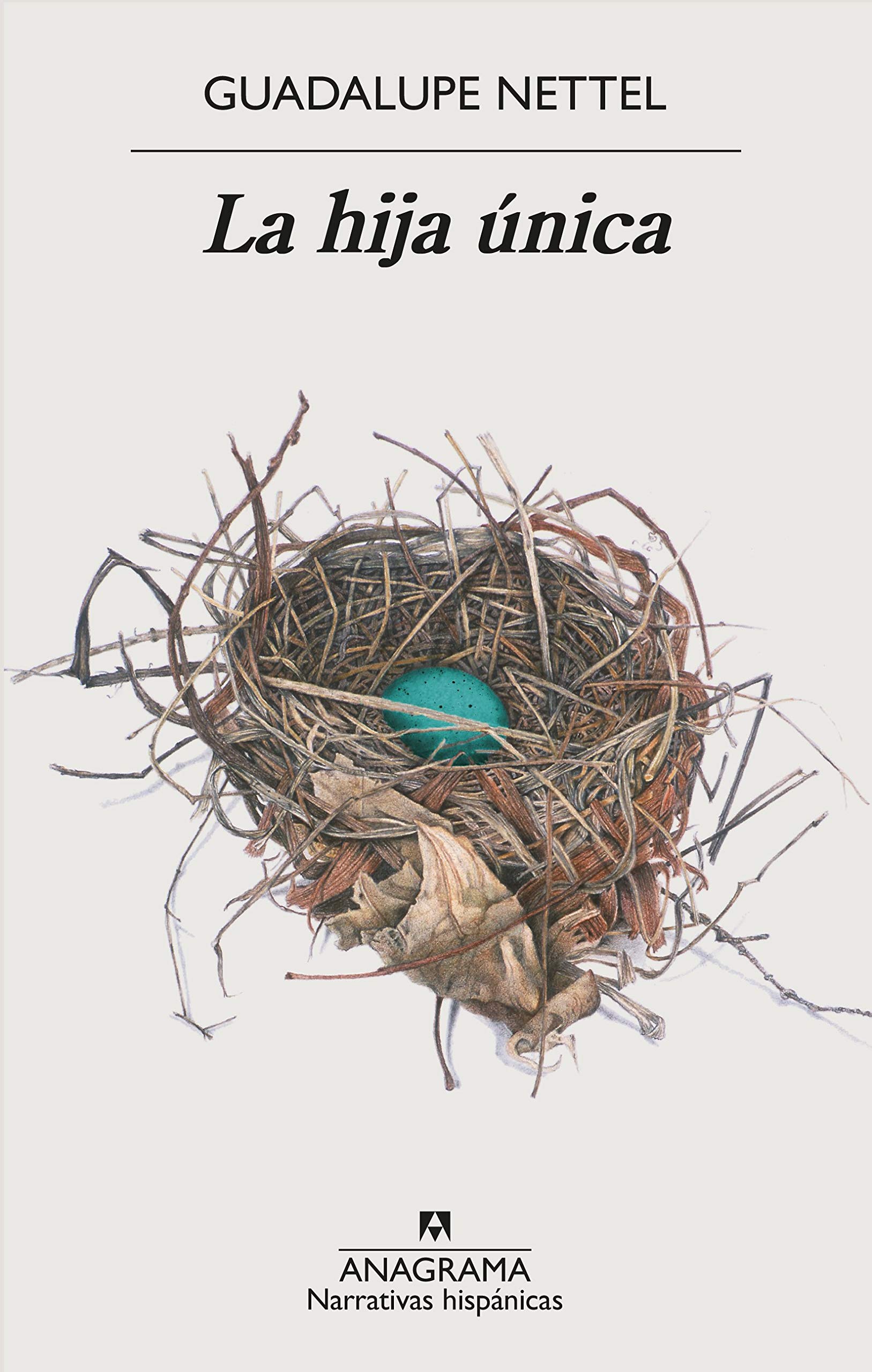 Meanwhile, outside Laura’s apartment a pair of pigeons with two eggs in their nest (a refuge she tried to destroy without success), appear to have been subject to a brood parasite.
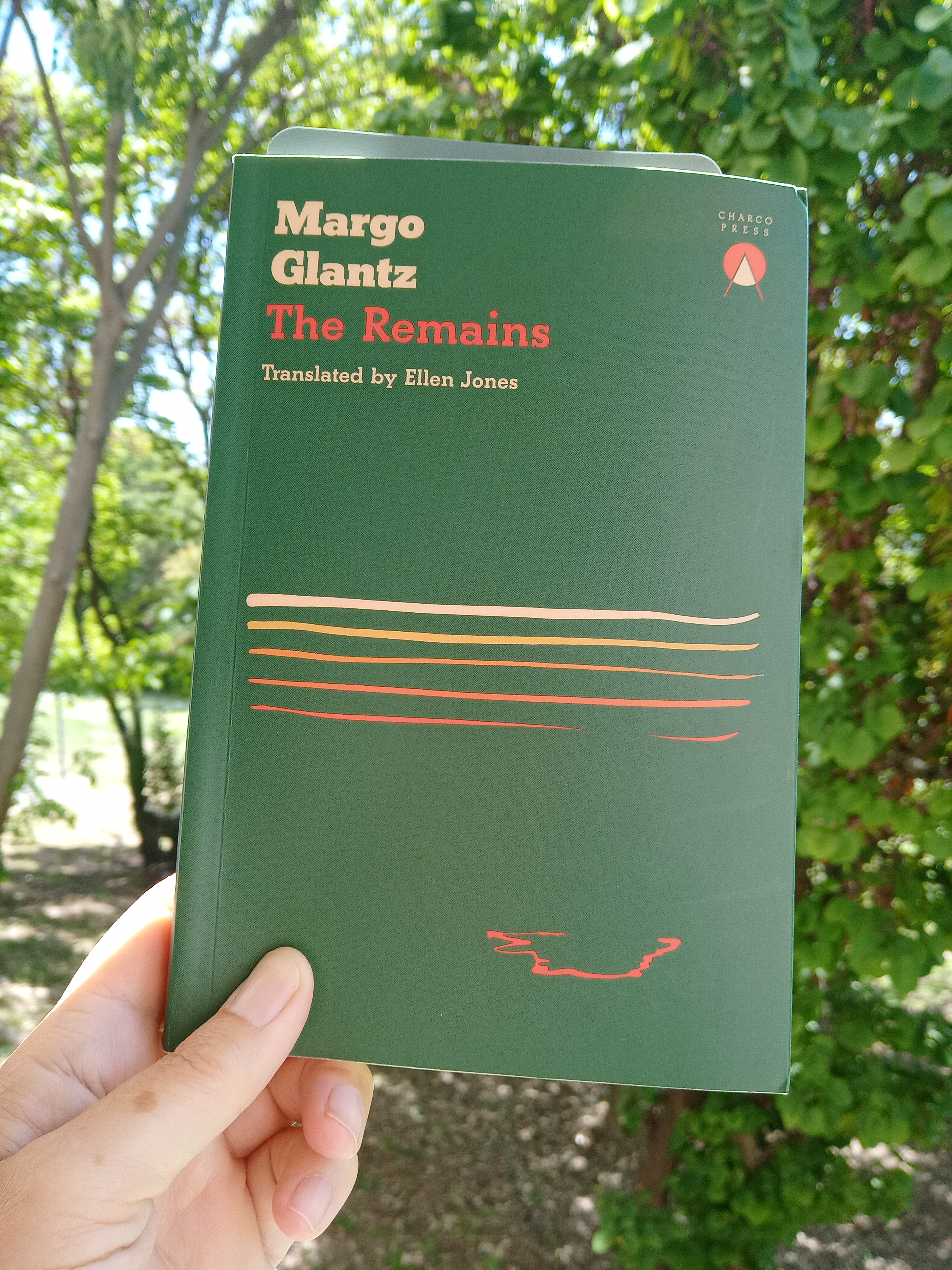 A divorced woman, Nora Garcia (a cellist), returns for her deceased ex-husband Juan’s, (a pianist and composer) funeral; back to a Mexican village from her past, through the art and music they played and navigated together.
 The novel is set in the present, on the afternoon that the body is displayed in the coffin in a room, and our narrator is a guest like many others, who aren’t sure to whom, they ought to offer condolences. She overhears snippets of conversations, adding to the cacophony of her own reflections.
 A prolific essayist, she is best known for her 1987 autobiography Las genealogías (The Family Tree), which blended her experiences of growing up Jewish in Catholic Mexico with her parents’ immigrant experiences. She also wrote fiction and nonfiction that shed new light on the seventeenth-century nun Sor Juana Inés de la Cruz. Among her many honors, she won the Magda Donato Prize for Las genealogías and received a Rockefeller Grant (1996) and a Guggenheim Fellowship (1998).
 Set in Northern Ireland during ‘The Troubles’, in the mid 1970’s, Trespasses began with what seemed like a chance encounter, when a known barrister, Michael Agnew, a married man of the opposite faith, a Protestant, known to provide legal defence to IRA members; a man who had known Cushla’s father, sat at the bar, while she was serving, engaging her in stilted conversation.


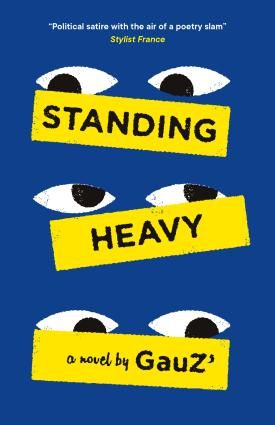


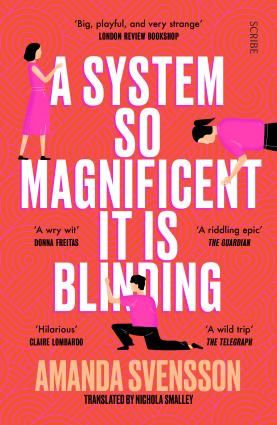


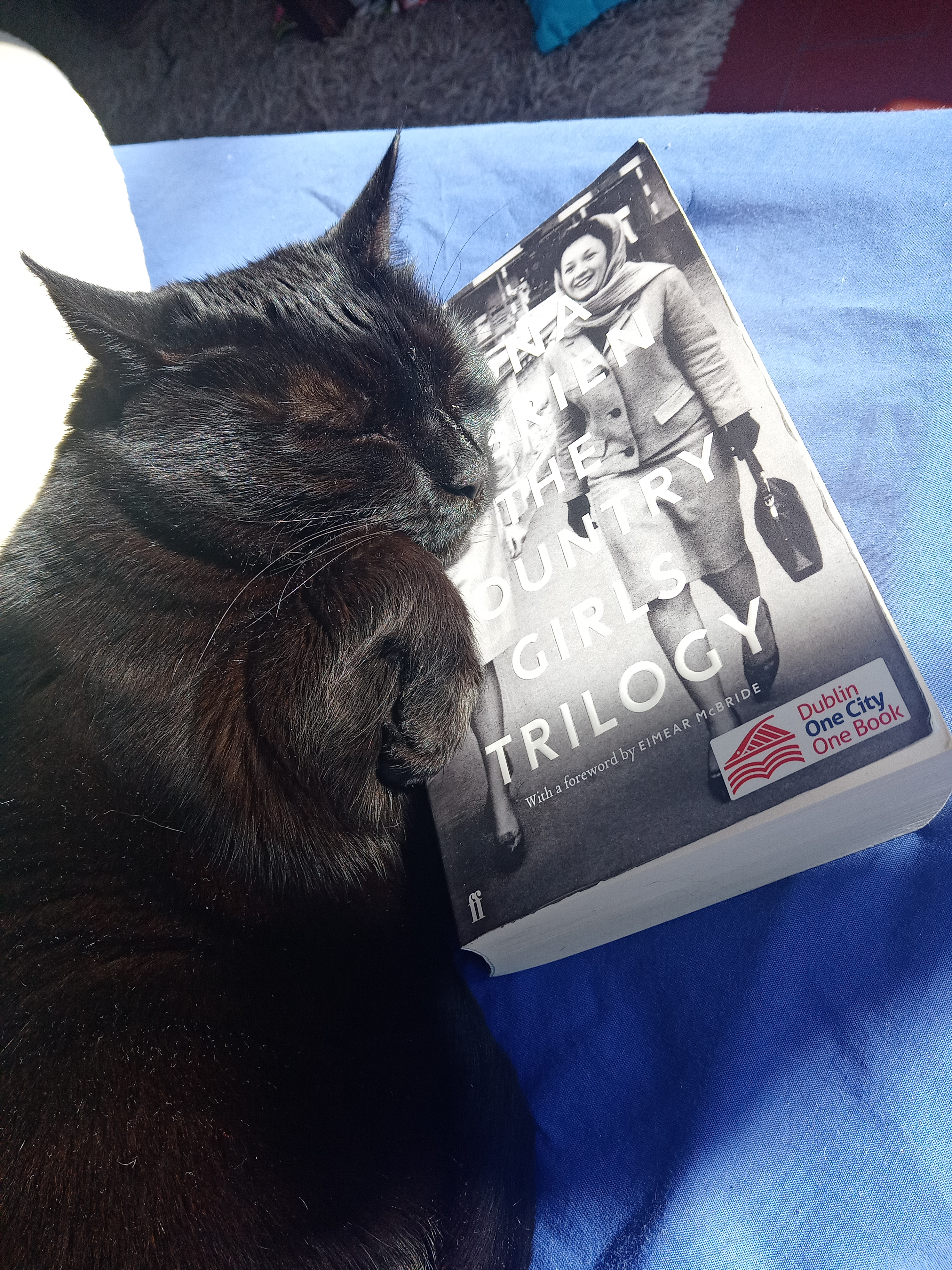

 Childhood in the west Irish countryside, early adulthood in a boarding house in Dublin, marriage in London; the three books follow the lives of two girls Caithleen (Kate) and Bridget (Baba), who were neighbours, school friends and boarding house room mates. Though they were not girls who had much in common personality wise, they had a shared history; without that connection, their lives might have been much worse.
 Caithleen meets Eugene, something about him (half foreign, older man) reminds her of Mr Gentleman, whom she hasn’t seen for two years. The girls now live in Joanna and Gustav’s boarding house and become like family in this house, sometimes confiding in Joanna, who struggles to maintain rules and boundaries with the girls.
 Again time passes, so that when we encounter the girls next, they are on the cusp of marriage. Caith (now Kate) will marry the one who abandoned her and Baba, a man who can provide for her in the manner she craves. One desires love, the other security. Sadly, there’s not much in the way of bliss.
 Edna O’Brien was born in December 1930 in Tuamgraney, County Clare. She has written over 20 works of fiction.
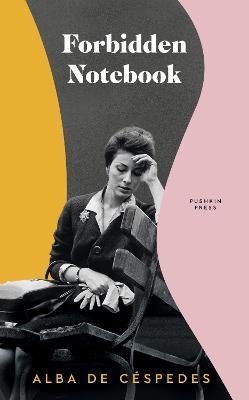 Valeria Cossati is a 42 year old Italian working wife, married with two children; one Sunday she is drawn to want to purchase a notebook in a local grocery store, a shop that is only permitted to be open on a Sunday, to sell tobacco. This purchase is her first act of transgression, the shopkeeper will allow it, but insists she hide the notebook in her coat.

 Alba de Céspedes (1911-1997) was a bestselling Italian-Cuban novelist, poet and screenwriter. The granddaughter of the first President of Cuba, who helped lead Cuba’s fight for independence, she was the daughter of a Cuban diplomat and his Italian wife, raised in Rome, Italy. She kept alive her family’s political commitment, often running afoul of Italy’s Fascist regime.
 Word by Word