
“If life is but a passage, let us at least scatter flowers on that passage.”
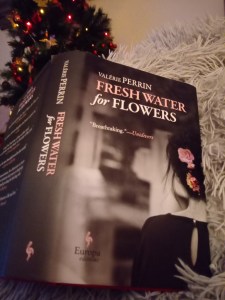 What a refreshing read to end 2020 with, a novel of interwoven characters and connections, threaded throughout the life of Violette Touissant, given up at birth.
When I was born I didn’t even cry. So I was put aside, like a 2.67kg parcel with no stamp, no addressee, while the administrative forms were filled in, declaring my departure prior to my arrival.
Stillborn. A child without life and without a surname.
We first meet Violetteas an adult. Having been a level-crossing keeper she is now a cemetery keeper. She introduces her neighbours and their characteristics in common, they are an intriguing lot, who we are going to get to know better.
Those neighbours she lives among are the dead, while she lives in the heaven of the living, at the mid-range of life having been through plenty of pain and suffering to get there. Now rewarded, she has found her place, her people and those who deserve to be part of it, have found her too.
My present life is a present from heaven. As I say to myself every morning, when I open my eyes.
I have been very unhappy, destroyed even. Nonexistent. Drained. I was like my closest neighbours, but worse. My vital functions were functioning, but without me inside them.
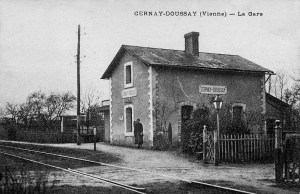
Level Crossing Keeper
The 94 short chapters all begin with a thought provoking quote, the narrative seesaws back and forth to moments in that life, sometimes revisiting the same moments, but seeing them from the point of view of Violette, her husband Philippe and the many other pairs of characters we encounter, through their connection to those dead neighbours of hers.
Since taking on the job of cemetery keeper, after meeting one of the most life-changing characters, Sasha, she has been recording details of the events that take place in the cemetery, making diary-like entries, references that she is able to refer back to when people stop by to have a cup of tea or something stronger, looking for the resting place of someone important to them, not always family, but people with connections that weren’t always able to be fully expressed in life.
Death never takes a break. It knows neither summer holidays, not public holidays, nor dentist appointments…It’s there, everywhere, all the time. No one really thinks about it, or they’d go mad. It’s like a dog that’s forever weaving around our legs, but whose presence we only notice when it bites us. Or worse, bites a loved one.
The narrative returns to her early adult life, at 18, already married, she discovers the 821 page novel L’Oeuvre de Dieu, la part du Diable a French translation of John Irving’s The Cider House Rules, a book known to open minds and hearts, eliciting compassion for a set of circumstances no one really thinks about, making the reader look at the world in a slightly different way.
Which is perhaps what Fresh Water For Flowers does, taking characters in unconventional circumstances and sharing their stories, watching how those stories shock, enlighten, end and change lives.
Violette too will have to deal with death. A death that develops into the more significant mystery at the core of the novel. And with it, innumerable twists and turns, suspicions and revelations.
Life is but an endless losing of all that one loves.
 Every summer she stays in the chalet of her friend Célia, in the calanque of Sormiou, Marseille. A place of refuge and rejevenation, that Perrin too brings alive, eliciting the recovery and rehabilitation this nature-protected part of the Mediterranean offers humanity.
It’s a gentle novel because even though there are moments of tragedy, they are seen through the eyes of the most empathetic character, so even the most villainous, unlikable characters are given a generous, understanding hearing.
The details of the life of a keeper, whether it’s the level crossing or the cemetery are so realistic, evocative and visual, it wouldn’t surprise me to hear that this book may be turned into a series; it’s too long for a movie and with so many interconnecting lives, it feels like it could have continued on, just as life and death does, always someone arriving, someone departing, and someone there to soothe the way through those transitions.
It’s not a book I have heard anything about until now, but it’s going on my list of favourites for 2020 and is one I highly recommend.
Not a day goes by without us thinking of you.
N.B. Thank you to Europa Editions for sending me a copy for review.
 The last nonfiction book I read was also set in Morocco (at the time referred to as the Spanish Sahara) written by a foreign woman living openly with her boyfriend, it couldn’t be more in contrast with what I’ve just read here – although Sanmao does encounter women living within the oppressive system that is at work in this collection.
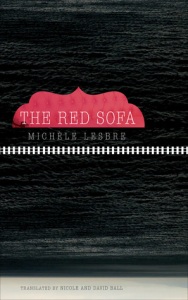
 Passionate French Women Who Faced Death Unflinchingly
 French Literature
 Monsieur Pierre Chauveau (Julien’s great grandfather) gave a witness statement on 16 September 1954, describing what he had seen. His unusual testimony was classified by the police as follows:
 The four of them have various interesting encounters, Hubert with a long lost relative whose charred diary he finds in the apartment he left empty for 24 years, Julien meets the original Harry MacElhone, founder of the bar he works in and Magalie seeks out her now thirty-one-year old grandmother Odette.
 This novel La Tresse by Laetitia Colombani was a birthday gift from a friend, at the time I was given it, it wasn’t available in English, however it has since been translated and published in 2019, available under the title The Braid.
 I hesitated to read this for some time, just because it was in French, but I was pleasantly surprised by how easy it was to read and how little I had to look up new vocabulary. I enjoyed it when I did as I discovered new words and scribbled them in pencil in the margins. And then how I come across those words in the external world, resulting in me thinking I really would enjoy to read more of these works that are available in French but not yet in English.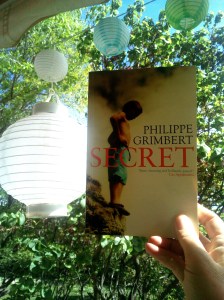
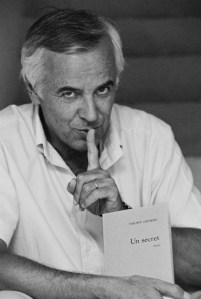 The narrator shares the same name as the author, and though he never knew the exact details of what happened before he was born, except by anecdote, he used fiction to explore and build a narrative that hopefully might have let some of the ghosts he had lived with for many years to rest.
 I’ve been looking forward to picking this novel up, because it’s set in and around the streets and coastal inlets of Marseilles (our local city) and even ventures into Aix-en-Provence and Vauvenargues (the scene of a murder in the novel – though known locally because Picasso lived in the château there). It was originally published in French in 1995, when Izzo was 50 years old, a mere five years before his premature passing.

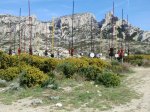

 Jean-Claude Izzo when asked about the phenomenal success of his trilogy, characteristically chose to shine the light on the city he loved:
 Antoine Laurain is one of my go to author’s when I’m in the mood for something short and light and of course, being a French author, there’s going to be the inevitable addition of the little French quirks, the things that one recognises from living here in France for more than 10 years.
 After a series of stressful events overwhelm him, he takes up the habit once more, relieved to find that the ‘urge’ has returned, but shocked to discover that the subsequent ‘pleasure’ that should follow it when he does light up has gone. Angered and determined to have that aspect returned to him, he makes a follow-up appointment with the hypnotist to reverse the procedure, which will lead him down a rocky road towards involvement in a worse crime, in pursuit of that elusive ‘pleasure’ he is determined to retrieve.


 The narrating of family stories, taking us back as far as her great-grandfather Montazemolmolk with his harem of 52 wives, serves to provide context and an explanation for why certain family members might have behaved or lived in the way they did, helping us understand their motives and actions.

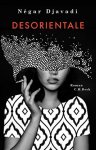
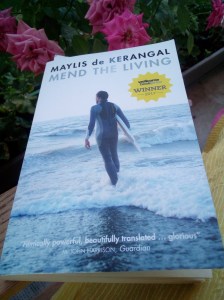 Although I’ve read reviews and seen this book appear often over the last year, and knew I really wanted to read it, I couldn’t remember what is was about or why.
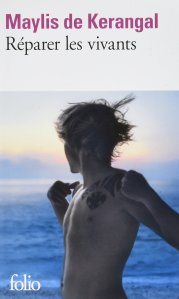 The British translation (by Jessica Moore) is entitled Mend the Living, broader in scope, it references the many who lie with compromised organs, who dwell in a twilight zone of half-lived lives, waiting to see if their match will come up, knowing when it does, it will likely be a sudden opportunity, to receive a healthy heart, liver, or kidney from a donor, taken violently from life.
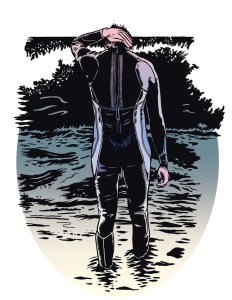 The translator Jessica Moore refers to her task in translating the authors work, as ‘grappling with Maylis’s labyrinthe phrases’, which can feel like what it must be like to be an amateur surfer facing the wave, trying and trying again, to find the one that fits, the wave and the rider, the words and the translator. She gives up trying to turn what the author meant into suitable phrases and leaves interpretation to the future, potential reader, us.
 Word by Word