Orphan Train by Christina Baker Kline

I picked this book up knowing I would likely finish it in a couple of days.  After a period of slow reading, sometimes we need a faster paced book to get us going again. Orphan TrainOrphan Train by Christina Baker Kline was passed to me by my book buddy and I was warned that it had flaws, and I did notice a definite divide among readers on Goodreads between those who loved it and those who couldn’t get past certain criticisms.

It is a fascinating story in part because of its little known historical background, that in the Depression era of the late 1920’s, early 1930’s (and as far back as 1854) thousands of abandoned and homeless children were rounded up in New York and coastal cities and taken by train to the Midwest of America, where preceding their journey, posters had been displayed in towns announcing that the train would be passing through. These children were offered to those interested in providing a home for them and on the day the train passed through the children were paraded in front of an interested adult audience.

While some were welcomed and loved, unfortunately, particularly for the older orphans, many experienced hardship and were destined for servitude, babies were more likely to attract those looking to create a family; older children attracted those looking for cheap labour.

HomesForChldrenChristina Baker Kline had two grandparents who were orphans, whom she says spoke very little about their experiences and her husband’s grandfather and siblings featured in a non-fiction story called Orphan Train inspiring her to research the subject further.

The book follows several months in the life of 17-year-old Molly Ayer growing up in Spruce Harbour, Maine who has been in and out of about 20 foster homes already and is spending 50 hours doing community service in the home of 91-year-old Vivian, assisting her clear up her attic and interviewing her for a school project. Spending time in her home and listening to Vivian talk about her early life opens Molly’s mind when she learns Vivian’s childhood was another version to her own. It generates in her a sense of belonging that she has not experienced since her father died in a car accident and she starts to become interested in filling in some of the gaps in Vivian’s story as this unexpected friendship develops.

“In truth, though she hasn’t admitted it out loud until now, Molly has virtually given up on the idea of disposing of anything. After all, what does it matter? Why shouldn’t Vivian’s attic be filled with things that are meaningful to her? The stark truth is that she will die sooner or later. And then professionals will descend on the house, neatly and efficiently separating the valuable from the sentimental, lingering only over items of indeterminate origin or worth. So yes – Molly has begun to view her work at Vivian’s in a different light. Maybe it doesn’t matter how much gets done. Maybe the value is in the process – in touching each item, in naming and identifying, in acknowledging the significance of a cardigan, a pair of children’s boots.”

orphan trainsIn between Molly’s contemporary narrative, the author switches to Vivian’s historical narrative spanning twenty-three years from 1929 when her family first arrive in New York from Galway in Ireland. While the narrative changes from one timeline to the next, there are parallels that connect the two and keep the book from reading like separate narratives. Because Molly meets Vivian quite early on, the juxtaposition of time actually keeps the thread of the story alive, as if we are reading what Molly is hearing.

My only criticism was provoked by a nagging question I had over why the story wasn’t more emotionally engaging. There are some significant events and turning points in the story that normally create a cathartic effect, as if the reader were actually experiencing them and American writers in particular do this particularly well. However, upon re-reading I noticed that often at the point where the character shares what is happening, rather than continue with the first person narrative and share the characters dramatic reaction, the first person perspective often changes into the third and looks back at the event, rather than staying and engaging with it. It creates a feeling of detachment and prevents the reader from experiencing the drama, it cuts short what we expect to encounter and halts any feeling of empathy we might have been capable of feeling.

Towards the end of the book, Vivian as a young woman makes a decision that I found surprising and difficult to believe. Usually when we have come to know a character well, their decisions are understood and we develop empathy for the character, even when they make a decision that is counter to our own imagination. I was surprised by Vivian’s decision because despite her experiences, her character development hadn’t suggested to me that she would make such a choice.

Rather than detract from the story though, I think this is something that makes an interesting discussion point, was I the only one to think like this for example? Are the choices that people make, in particular orphans, adoptees and children who have had traumatic childhoods, influenced so predictably by their experiences? Can a writer who has not had such an experience inhabit characters like Molly or Vivian with authenticity?

An excellent read and an insightful look into a lost generation of children whose experience is difficult to imagine.
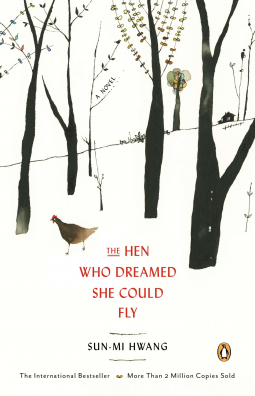
The Hen Who Dreamed She Could Fly by Sun-mi Hwang tr. Chi-Young Kim

This book is proof that it is not just reviews and the recommendations of friends that help us choose which book to read next, that an excellent cover and title coupled with an alluring blurb can suffice to motivate that impulse.

The HenThe cover made me pause and the promise of an inspiring fable in a short piece of internationally acclaimed translated fiction sounded enticing enough, but the discovery that the author Sun-mi Hwang had herself overcome the obstacle of childhood poverty and found a way to educate herself to achieve her dream to read and write sealed it.

Like Margarita Engle’s novel in verse The Wild Book and Tove Jansson’s Summer and Winter Book’s, sometimes a mood enhancing book is just what we need to bring ourselves back to life’s simple values for encouragement and reassurance.

The story revolves around ‘Sprout’, a battery hen frustrated with her caged life laying eggs in a sloping wire cage which causes her eggs to roll away, enabling the farmer to conveniently collect them to sell. She hatches a plan to escape, seeking a life outside the barn where others animals appear to roam free and where she feels it most likely to be able to achieve her dream of nurturing an egg to life.

Along the way we meet the old dog that guards the barn, the rooster who crows in the morning, the yard hen, a community of ducks and the lone hungry weasel.

“Whenever she saw the yard hen, Sprout couldn’t stand it – she felt even more confined in her wire cage. She too wanted to dig through the pile of compost with the rooster, walk side by side with him, and sit on her eggs.”

010113_1257_AMonthinthe2.jpgSprout escapes the coop and directs all her energy into survival. She learns who her friends are and who to be wary of.

She discovers the perceptions that govern the role each animal is set to play.

“Yes, you’re both hens, but you’re different. How do you not know that? Just like I’m a gatekeeper and the rooster announces the morning, you’re supposed to lay eggs in a cage. Not in the yard! Those are the rules.”

No fairy tale, this is fable at its best, confronting the reality of stepping outside the role society has dictated (even if nature has not divined) and showing that while achieving the goal can be possible, it is a route fraught with challenges. Reminiscent of Orwell’s Animal Farm or Adams Watership DownSun-mi Hwang brings us her perception of society through characters that we recognise with our own interpretation and reminds us that even the most far-fetched dreams are worth pursuing, no matter what the odds.

We read with trepidation and a strong desire, not so much for Sprout to succeed in her quest, but to survive. It is a delightful and touching story, deserving of its success.

Note: The book was an ARC (Advance Reader Copy) provided by the publisher via NetGalley.

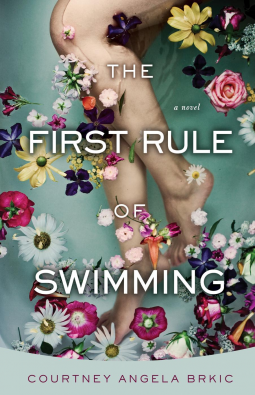
The First Rule of Swimming by Courtney Angela Brkic,

Without planning it, I have just read one book after another set in Croatia, one set in the fictitious village of Gost on the mainland the other on a small island.  Aminatta Forna’s The Hired Man and Courtney Angela Brkic’s The First Rule of Swimming portray different lives and paths, but complement each other in portraying contemporary life, where the past is ever-present and no one likes to speak of those who are absent.

First RuleThis is the first work of Courtney Angela Brkic I have read though I see she has published a noted collection of short stories entitled Stillness and a memoir The Stone Fields, short-listed for the Freedom of Expression Award.

The prologue of The First Rule of Swimming starts on the fictitious island of Rosmarina, Croatia in 1982 when 8-year-old Magdalena is reading a letter from her cousin Katarina, a letter that has clearly been opened and resealed.

“Katarina’s family had left when Magdalena was only two, a shadowy period that she tried hard to recall. But she was never sure if the faces she sometimes pictured were real or simply her imagination.”

When she writes the return postcard, her grandfather writes one as well, gluing it to hers – a message – to which they receive a cryptic reply about a cat, which causes Magdalena some confusion and her grandfather immense physical pain.

The book setting then moves to the present, with Magdalena taking care of her grandparents, her grandfather now in a stroke induced coma, but refusing to let go. Though most of the island’s youth leave to find jobs on the mainland, her strong connection to the island keeps her there pursuing a teaching career and ignoring any pressure to do otherwise, even at the expense of what seems like pending spinsterhood.

NY harbourBut when her sister Jadranka leaves for New York and disappears without trace a few weeks after her arrival, she leaves the security of the island to go after her, followed soon after by her estranged mother.

“It was as if a cord connected her to Rosmarina, and only for Jadranka did she have the will to fight against it. This attachment was both habit and biology. In her childhood a researcher had studied the islanders’ sense of direction. It was a capability he explained in terms of the Inuit in the far-off Arctic, who could find their way even through blizzards.

“It’s a rare genetic gift,” he had explained to her grandfather. The scientist had concluded that not everyone possessed the skill – which he termed innate nautical orientation – but she belonged squarely to the group that did. “

Behind these events is the slow revelation of what happened to certain members of the family including the girl’s Uncle and the truth about their father, something their mother has always kept from them and that appears to be connected to Jadranka’s disappearance. It reveals an era of suspicion, denunciation, false imprisonment and vendetta. Life was dangerous for anyone associated with those who held opinions not deemed favourable.

“Grudges went back generations, and children were judged by things their parents had done, some of them years before their birth. Small wonder, Magdalena sometimes thought, that her sister preferred places where nobody knew her.”

The two girls know little of the past, but will come to learn how much it has affected their present, the journey to New York will help them find answers.

It is a compelling read that like The Hired Man, will leave the reader curious and disturbed about the recent past and that tendency for humanity to brush things under the carpet as if they never happened.

Note: This book was an ARC (Advance Reader Copy) provided by the publisher via NetGalley.

The Hired Man by Aminatta Forna

Aminatta Forna

Aminatta Forna

Aminatta Forna has written two previous novels, The Memory of Love and Ancestor Stones both set in Sierra Leone where she was raised. She has also written an investigative memoir delving into the political events around the seizure and execution of her father on false charges of treason entitled The Devil that Danced on the Water that I plan to read.

After reading The Memory of Love last year and seeing her interviewed, it is clear she is a writer of courage and I knew I would be reading whatever she produced next.

The Hired ManJust as with The Memory of Love which is set in the aftermath of conflict of that disconcerting type where civilians mysteriously disappear and terrible unspoken things happen, in The Hired Man, we find ourselves following in the footsteps of 46-year-old Duro, an unmarried man living alone with his two dogs, his sisters and mother having already fled whatever horror occurred in their home town of Gost, a fictitious town caught between opposing sides in the former Yugoslavia.

“They have taken up a position south of the town opposite the army in the north. In between lies Gost. The army want to reach the coast but we stand in their way. Each side has roadblocks you have to pass through, on the road north and on the rods south out of Gost. Same questions, but different answers to each.”

For much of the early part of the book, we don’t know what has happened there, but Forna a somehow infuses the story with that sense of knowing yet not knowing, creating an underlying, slow building tension and unwillingness to trust any of the characters we come across. The events may be long in the past, but their memories feel as though they are not far from the surface and that anything could happen. And strange things do occur.

Into this undercurrent arrive an English woman Laura and her teenage son and daughter. Seemingly oblivious to the effect of their presence on the local villagers, they hire Duro and set about making improvements to the home they have purchased from with a view to doing it up and selling it on.

“I realised I’d upset the balance of thing. That I was a hired man and she was my employer made Laura relaxed in having me around the house. A mistake to take a day away without explanation: it made her feel she wasn’t the boss.”

Territory that made up the former Yugoslavia

Territory that made up the former Yugoslavia

We read the story through the eyes of the hired man Duro and interestingly Forna has chosen to narrate the story around Laura and her children in the past tense while Duro’s reflection on the past are written in the present even though they occurred many years before. It has that effect of making the past feel more present and could be how she succeeds in creating that tension, we read about the past as if it happened only recently.

“Vinca Pavic is an angry woman and her anger shows in the set of her teeth, the lines around her mouth into which her lipstick bleeds, the way she folds her arms. When she laughs it is to mock and in this she finds an ally in her son. But Anka, Anka was born with joy in her soul, to which they feel she has no right. Behind it all, as with so many things in life and in death, lies envy. In the end it gets the better of them.”

The Hired Man is a brilliant, quiet portrayal of the aftermath of conflict on a community, it goes some way towards explaining the meaning behind the silences, about why some can’t bear to stay and others can not bear to leave. It reminds us that nothing is forgotten and is a warning to outsiders to take care, that ignorance or indifference are sometimes deemed sufficient to warrant punishment.

Additional Reading:  Aminatta Forna: A Life in Writing provides excellent background reading and context to the book.

Note: This book was an Advance Reader Copy (ARC) provided by the publisher via NetGalley.

Unsettled: A Search for Love and Meaning by Neelima Vinod

Neelima Vinod is a poet whose work I have enjoyed reading online at Neel The Muse for a while, so I was intrigued to read her novella when learning that she had been published, wondering how a poet might fill the page when the words and sentences were required to touch both margins of the page continuously. Curious too, as it delves into the supernatural within the context of the story telling heritage of southern India, not quite the same as that contemporary foray into what is we refer to as the paranormal.

UnsettledBeing a novella, it is a relatively quick read and starts out as a love story, or its anti-thesis as it is clear that the relationship between the couple is being threatened by perceived jealousy. To heal their relationship Divya and Raghav seek out the services of Dr Ray, a yogi.

The Doctor sends them on a quest, to retrieve the ancient Scrolls of Love from an old abandoned house about which many stories have been told and which no one wishes to enter, in fear of what it is said to be possessed by. The Doctor’s motives do not appear to be entirely altruistic, a twist in the story that was almost too subtle and had me rereading passages to observe him more closely than I did the first time through.

house-next-door“It is in the one hundred-roomed mansion at Cherakad that the Scrolls of Love were buried during the terrible floods. It nearly wiped the village off the map centuries ago. No one has confirmed it though.

Archaeologists I have talked to have told me that the house lies abandoned. Any one in possession of the Scrolls would understand love’s true secret-folklore at its best.”

Parallel to the contemporary love story, we read a tale of the Royal Court poet Shankara, banished from the kingdom of Cherakad five centuries ago after falling out of favour with one of the King’s concubines Meenakshi. Shankara roams the land in confusion and without purpose until he encounters a woman in white, Thathri, the same woman Divya has been dreaming of, whose story she had been told by her Grandmother when she was a child.

As the book progresses, connections between the tales arise as the mystery unravels, the past and the present become entwined as the couple attempt to conquer their quest and resurrect their struggling relationship.

storytellerWell written, it’s an enjoyable read and one that requires careful attention in order to make the connections clear. I am sure there are things I was not aware of, I even wondered if Shankara was based on a real poet and whether this fable  had connection to stories already told and passed down through families and villages. Sadly, it is a dying art, the gift of oral story telling, threatened more than ever by the technology of today’s modern world.

Its title might suggest romance, but the dark and foreboding cover and spectre like presence within suggest it may be more of an alternative ghost story. Unsettling indeed.

Thank you Neelima for sending me a copy of your e-book.

If you are interested in reading it, you can find a copy at the Indireads Book Store.

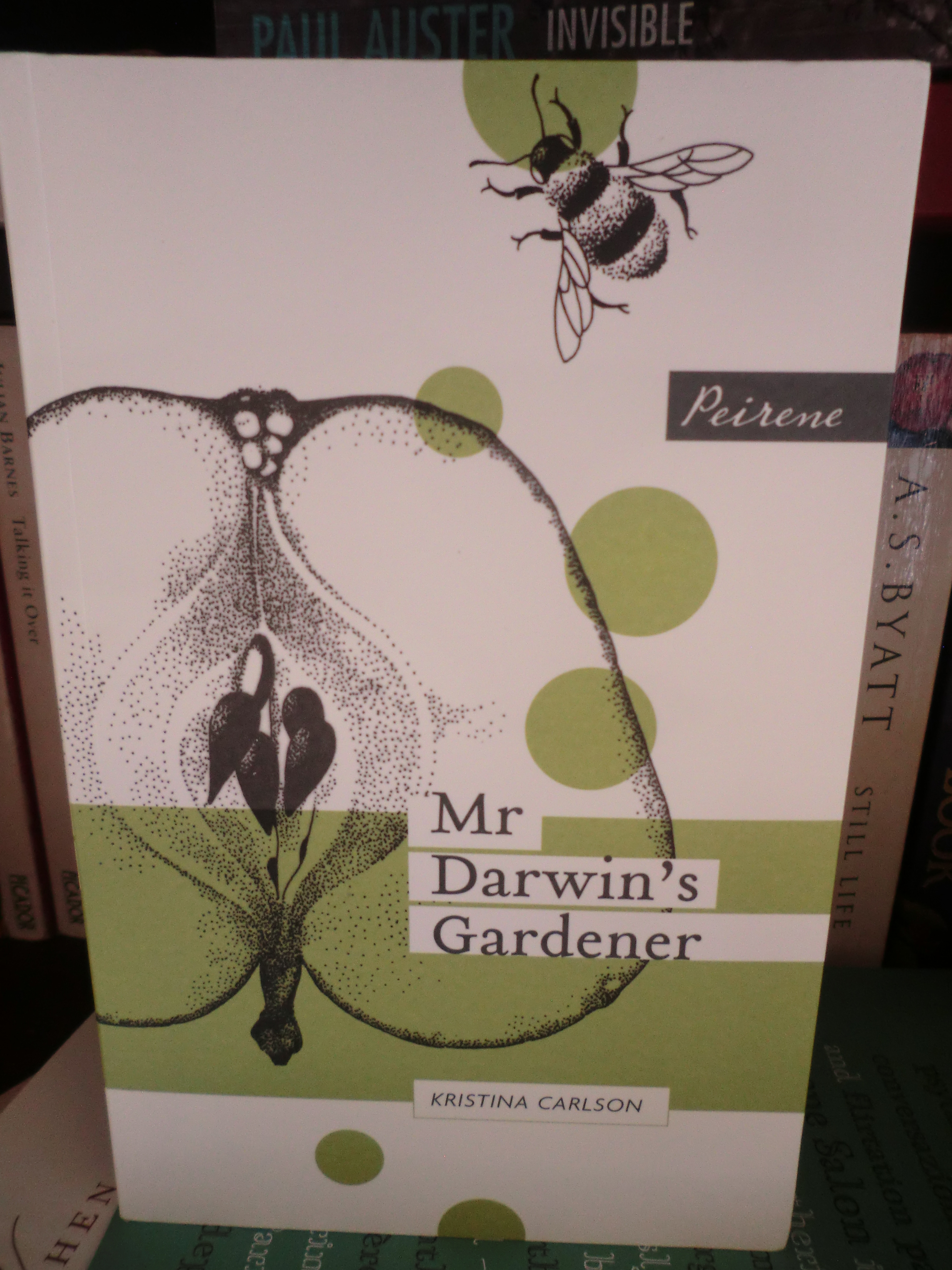
Mr Darwin’s Gardener is Also a Thinker, Kristine Carlson

Darwins GardenerKristina Carlson is a native of Finland and has published 16 books there. Like Tove Jansson, whose work I love, she is known for her children’s stories, but also has a wide adult readership. We are fortunate to be reading the recently published and translated work Mr Darwin’s Gardener thanks to Peirene Press, who describe it as “Peirene’s most poetic book yet“.

“Carlson evokes the voices of an entire village, and through them, the spirit of the age. This is no page-turner, but a story to be inhabited, to be savoured slowly.” Mieke Ziervogel

Less a story than a series of thoughts and observations, though there is one alarming event, it is set in the late 1870’s in the Kentish village of Downe, where Thomas Davies, widower, father of two and the gardener of Charles Darwin, reflects on the dilemma of his life and stays away while the rest of the villagers gather in church.

Just as Mieke Ziervogel suggests, it is a not a book to be absorbed quickly and even when read slowly, it warrants turning back to the beginning and starting over, which is what I did. I read it through twice because once was insufficient for a book whose depth and layers become clearer when we reacquaint with it. To read it once was to see the words on the page and meet the villagers for the first time. To read it again was to begin to understand the collective consciousness of a community and one man who stands outside them, working for another man who is completely out of their reach or comprehension.

Charles Darwin, Author of 'Origin of the Species' Source: wikipedia

Charles Darwin Source: wikipedia

Plants grow, flowers sway, a ray of light streaks through a gap in the clouds, a gardener thinks, women talk, men drink, jackdaws caw, bells ring, a stranger visits and a man writes an article in the newspaper. Like an invisible character hovering over the town, we observe each villager in a random moment just before we inhabit their mind, see what they are thinking and watch what they do, as if we are they. We repeat this sequence from one home to the next and at The Anchor, the local pub where a stranger visits and stays overnight.

The Anchor clinks, clanks, seethes, smokes, susurrates.

The gardener has taken on the role of the village sage,

Though as a rule he barely says good morning.

The tongue is a sort of red carpet. One has to watch what hurries along it.

A gloomy and unhappy man.

But Thomas Davies sits neither in a church pew nor at the bar and he is more often the subject than the purveyor of thoughts, though these are some of his:

Garden at Down House, Darwin's home

Garden at Down House, Darwin’s home

The most beautiful thing about plants is their silence. The second most beautiful thing is their immobility, I wrote when Gywn died. I am reading now, it is evening.

I wrote unscientifically.

Even condolences thundered then, and goodwill would not leave me in peace.

Grief is weighty but it is a stone I bear myself.

Victims of revenge and victims of mercy are in the same position, I believe; other people make their affairs their own.

I may have to read it a third time.

and the Man Booker Prize winner is…

Catton2

The Luminaries by Eleanor Catton

I have just put it aside on page 508 to watch the presentation and I could not be more pleased!

Congratulations to our young and so talented novelist, from whom we will no doubt see much more.

The book is still alive and rather than cower under the threat of the alternative entertainment available to people today, they are taking the book to the masses.

According to the Man Booker Prize website, there is to be a free event at London’s Regent Street Apple Store, where Eleanor Catton will discuss her book and what it means to win the prize.

I hope Apple are offering the books for sale and not just their own devices to read them.

Ok, a big event is about to take place in the book too, so I’m off back there to find out what’s happening.

#ManBookerLive at the SouthBank Centre

Listening to Six Shortlisted Authors Read

Last night the six shortlisted authors of the Man Booker Prize came together at the SouthBank Centre in London’s Royal Festival Hall and thanks to seeing a tweet from someone present I discovered that it was streaming live from the Man Booker website.

So instead of reading another 200 pages of Eleanor Catton’s The Luminaries, I listened to her, NoViolet Bulawayo, Jim Crace, Jhumpha Lahiri, Ruth Ozeki and Colm Tóibín read from their books and answer questions from the host Mark Lawson and the audience.

2013

It was a wonderful evening and risks making us want to read all the books, to see the writers presenting their works and sharing their private anecdotes about the journey to publication.

Today the live event has been uploaded to YouTube, so if you are interested to hear more about these excellent books, before tomorrow evenings announcement of the winner, here is the link to watch it yourself.

The event starts at 28 minutes 20 seconds.

Don’t expect it to help you decide, I think they are all winners and have no idea who the judges will choose. The bookmakers and the BBC are backing  Jim Crace, the quintessential English vote.

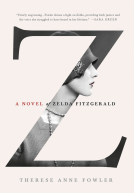
Z: A Novel of Zelda Fitzgerald by Therese Anne Fowler

Zelda_Fitzgerald_portrait

Zelda Sayre

Born with an exotic name that lent itself to bright lights and a spirit that loved nothing more than to dwell under them, it is not surprising that Zelda Sayre’s life was illuminated and became of interest to so many who were less daring themselves but fascinated with her life and antics.

But just as light cannot exist without shadow, she would discover the darker underside of a life lived in the shadow of her husband, when she dared to pursue her own desire to be recognised as a professional in her own right.

ZZ: A Novel of Zelda is an excellent companion novel to The Paris Wife and one of an expanding collection that gathers around that group of artists, writers, wives and hangers-on of the “lost generation“, a term coined by a young French mechanic who was reprimanded for giving insufficient priority to repairs on Gertrude Stein’s Model T Ford and thus complained to his patron that they were all a “generation perdue“, those young people who served in the war, respected little and indulged themselves to immoderate excesses.

Hemingway’s A Moveable Feast is a logical follow on read, having now read the fictionalised accounts of the two wives of these well-known writers and great friends who were in the midst of that post WWI group that sought a kind of writing utopia in Paris.

scott and zelda

Zelda and F.Scott Fitzgerald

While the utopia may have eluded them, their experiences would provide rich material for their writing, even if at the expense of some of their friends and loved ones. It is interesting to note that while their output during those early years was largely even, the Hemingways‘ lived quite frugally with an awareness of their financial struggle, while the Fitzgeralds‘ lived hedonistically in complete denial of theirs.

Zelda was reluctant to be lured away from Montgomery, Alabama by a complete dreamer and in the early days of their courtship actually threatened to dump F.Scott Fitzgerald unless he proved himself worthy and obtained his first serious publishing contract.

“I was so sure of our love then, so determined to prove to Mama and Daddy that we weren’t doing things wrong, just differently. There was no way to know that certainty  would one day become a luxury too.”

save me the waltzWhen Fitzgerald succeeds in getting that commitment  from his publisher to publish This Side of Paradise, she is ready to join him in New York and their life of adventure will begin.

From New York to Paris and the south of France, where Zelda throws herself into her own professional dance ambitions and is rewarded with an offer, which makes this reader wonder, what might have happened if…

“Scott and I both were awed by how cultured all these folks appeared to be, how intact they all were. For a change, Scott listened more than he talked. They spoke of painting and music and dance – their own work as well as other artists’ – with knowledge and candor and passion. If they felt rivalries, they expressed the situations as challenges, not jealousies.”

I came to this novel with no idea about Zelda or the role she played among the writing set of Paris and while much has been written in personal letters and hospital records documenting her mental health challenges and treatments, I find Therese Anne Fowler’s depiction of the character Zelda to be both realistic and sensitive  and portrayed in a way that is compelling to read. It has made me interested to read more about Zelda Fitzgerald and that period in history she was a part of; she was one of, if not the first young women referred to as a “flapper” of the 1920’s, a kind of “it girl” whose rise in society came about alongside a public contempt for prohibition and was described by Dr. R. Murray-Leslie, who criticized

“the social butterfly type… the frivolous, scantily clad, jazzing flapper, irresponsible and undisciplined, to whom a dance, a new hat, or a man with a car, were of more importance than the fate of nations.” Times 5 Feb 1920, p 9

They were a significant step away from accepting the lives of their mothers before them and while they accepted the lesser role in support of their husbands and were not quite suffragettes, they developed an awareness that women could be more outgoing and present in the relationship and even pursue a career, something that usually required marriage to be forfeited for.

highland hospitalThe sad truth was that all that freedom and lack of  meaningful purpose was not good for their mental health and whereas today one might be prescribed medication for depression, bi-polar disorder or spend time in rehab, in the 1920’s/1930’s it was off to the psychiatric asylum for electric shock treatments and a prognosis of hysteria or even worse schizophrenia, if  one showed signs or symptoms of not coping with it all.

If you enjoyed The Paris Wife or A Moveable Feast, this book should certainly be on your list to read. A riveting read and a thought-provoking insight into an exciting and turbulent period of cultural history.

Note: This book was an Advance Reader Copy (ARC) kindly provided by the publisher via NetGalley.

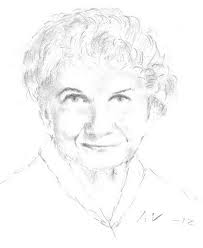
Alice Munro wins Nobel Prize for Literature

Alice MunroShe was a favourite to win the prize, but appears not to have been aware of being nominated, no doubt she has been enjoying her retirement from writing fiction announced earlier this year.

Alice Munro is the 13th women to have won the Nobel Prize for Literature, news to which according to the Guardian, she is said to have responded “Can this be possible? Really? It seems dreadful there’s only 13 of us.”

Not just a resounding win for a short but growing list of women writers finally being recognised, but a victory for readers and writers of the short story, Munroe’s strength and preference.

Could it be a sign that the short story is making a comeback? It is something I wonder about in one of my very first blog posts entitled Why People Don’t Read Short Stories which is a tribute to the form and a reminder of the joy short story collections can bring.

short stories

Alice Munro

aliceBorn: July 10 1931, Wingham, Ontario, Canada

Educated: 1949-51 University of Western Ontario

Books:     1968 Dance of the Happy Shades

1971 Lives of Girls and Women

1974 Something I’ve Been Meaning to Tell You

1978 Who Do You Think You Are?

1983 The Moons of Jupiter

1986 The Progress of Love

1990 Friend of My Youth

1994 Open Secrets

1996 Selected Stories

1998 The Love of a Good Woman

2001 Hateship, Friendship, Courtship, Loveship, Marriage

2004 Runaway

2006 The View from Castle Rock

2009 Too Much Happiness

2012 Dear Life

Further Reading:

Feature Article Alice Munro: Riches of a double life, the Master of the contemporary Short Story, Guardian 2003