The Complete Claudine, by Colette – An Introduction by Judith Thurman tr. Antonia White #WITMonth

Every summer I choose to read one chunkster, a big fat book, and this year knowing August would be the month that many others are reading books by women in translation, I decided to combine the two things and so chose to read a book translated from French to English, a classic, by the renowned author and personality Sidonie-Gabrielle Colette, referred to by her surname and pen name Colette.

The book I chose The Complete Claudine, is in fact four books combined in one volume, however I’ve written them up separately, including this first post, which is an introduction to the extraordinary personality behind the writer.

Introducing Colette

The book begins with an intriguing introduction by Judith Thurman, which I found helpful as I really knew little about Colette which she used as her writing pen-name.

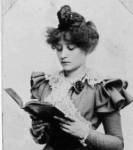
Sidonie Gabrielle Colette by Leopold Reutlinger

She was a colourful, eccentric, driven character, a woman way ahead of her time, who wanted it all and seems to have pretty much lived her life, pursuing that goal, ignoring societal stereotypes and rejecting all labels about who, what and where a woman’s place should be,  attracting as many admiring fans as scathing critics. She detested labels, and while her attitude may be thought of as feminist, she was far from abiding by political correctness or aligning herself with any kind of women’s group.

“Me, a feminist?” she scoffed in a 1910 interview. “I’ll tell you what the suffragettes deserve: the whip and the harem.” She saw no contradiction between supporting conservative positions and living her life as an “erotic militant” in revolt against them. Better worlds and just rewards were of no more consequence to her than the prospect of an afterlife. – Judith Thurman, Introduction

She was born in the Burgundy village of Saint-Saveur-en- Puisaye on January 28, 1873, a countryside upbringing that informs the autobiographical Claudine at School; the first volume in this book. Her own school years were likely more conservative that those expressed in her novel, which was influenced by her husband Willy, the pen name she would use when these books were first published, as it was he who introduced her to avant-garde intellectual and artistic circles while engaging in sexual affairs and encouraging her to do the same. It was he who suggested the idea of  “the secondary myth of Sappho…the girls’ school or convent ruled by a seductive female teacher” (Ladimer, p. 53)

Her mother, “Mme Colette – the splendid earth mother known to Colette’s readers as Sido” came from a family of mixed African and Creole descent from the colonies (Martinique) and:

had boundless ambitions for her youngest daughter and “second self,” Gabrielle, and these never included domestic – or sentimental – drudgery. Sido called marriage, only half-ironically, a “heinous crime,” and would rejoice in Colette’s liaison from 1905 to 1911 with a cultivated and melancholy lesbian transvestite (transgender man), the Marquise de Morny, largely because “Missy’s” generosity and solicitude were so wholesome for Colette’s fiction. Nor was Sido’s “precious jewel,” childless until forty, ever encouraged by her mother to procreate.

She published nearly 80 volumes of fiction, memoir, drama, essays, criticism, and reportage, Gigi the best known to readers in the English language, though unfortunately so according to Judith Thurman as its promise of happiness so misrepresents Colette’s view of love.

The character Claudine was Colette’s invention of the century’s first teenage girl, one who was rebellious, secretive, erotically restless and disturbed, free-spirited and determined to carve her own path. Her rebellion was against convention not family, she had free rein at home, her single parent father poring over his slug manuscript left her to her own devices, though somewhat constrained by the maid who took care of her basic needs.


“It is not a bad thing that children

should occasionally, and politely,

put parents in their place.” Colette
Colette married at twenty(1893) and moved to Paris, separating from Willy in 1906 though with no access to royalties for her books as she had penned them in his name, leading her to a stage career in the music halls of Paris, her experience of that way of life informing her novel The Vagabond (1910).

“a novel that anticipates by ninety years, the contemporary fashion for wry, first-person narratives by single, thirty something career women. Its heroine examines her addictions to men with amused detachment, and flirts, alternately, with abstinence and temptation. Is there love without complete submission and loss of identity? Is freedom really worth the loneliness that pays for it? These are Colette’s abiding questions.”

Her move to Paris heralded the beginning of a public personality, as she would go on to become one of the most notorious and exuberant personalities of fin-de-siècle Paris. Her subsequent divorce and the years working on the stage exposed her to a poverty consciousness she’d not until then experienced and induced in her a steely determination to be independent and earn her own living at all times. After his death, she sued to have his name removed from her earlier books.

“The frugality of Virginia Woolf’s five hundred a year and a room of one’s own had as much allure for her as the ideals of Woolf’s feminism, which is to say, none at all. Colette’s models were never the gentlewomen of letters living on their allowances but the courtesans and artistes she had frequented in her youth, whose notion of a bottom line was fifty thousand a year and a villa of one’s own – with a big garden, a great chef, and a pretty boy.”

She would have a child (a daughter) at forty, though her maternal instinct never developed sufficiently for her to spend much time in the role of mother, allowing her to be raised by a nanny, though she marry the baby’s father Baron Henry de Jouvenel, an influential, flamboyant political journalist in Paris.

Below is a summary of Lessons We Can Learn From Colette, written by Holly Isard on the anniversary of her death, 3 August, do click on the link to read the lessons, they provide an interesting insight into the individualist character Colette was and lived according to. Each lesson has a wonderful anecdote connected to it.

Famous for her free spirit as much her style of writing, Colette was a chronicler of female existence, a precursory feminist who pushed against the bounds of sexuality for women in Paris. To the abhorrence of Parisian society, Colette experimented with androgyny on and off stage. She also frequented the spaces where marginal sexualities were beginning to find some visibility, in the cabarets and pantomimes. Even 142 years after her birth, Colette remains an icon and an indisputably formidable woman. Here, we consider five key lessons we can learn from the great lady herself.

1. Continue on in the face of controversy 

2. Stick with your gut instinct

3. Don’t underestimate a woman’s influence 

4. “Perfect companions never have fewer than four feet.”
 Next Up:

Their Eyes Were Watching God by Zora Neale Hurston

Totally brilliant and original, what a voice, a narrative and an insight into a woman’s desire for fulfilment.

yin_yang_by_fallen_eyeIf you have read or were considering reading Marlon James Booker winning A Brief History of Seven Killings, then this is the Yin to his Yang, this is the feminine yearn to his masculine ambition.
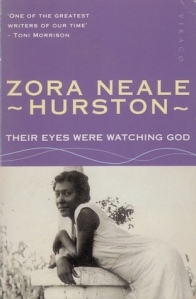
Immersed in the dynamic culture of the American South, its language, traditions and folklore and equally fascinated by it, Zora Neale Hurston had instant access to a rich depth of stories, songs, incidents, idiomatic phrases and metaphors and an adept ear for the rhythm of speech patterns. With her literary intelligence and skill, she brings it together with remarkable power and beauty to the written page.

Their Eyes were Watching God is an American classic, the esteemed author Toni Morrison called her “One of the greatest writers of our time”, though she may be lesser known beyond those shores. There has been much written about her work and of this particular novel, criticized by feminists at the time of publication, yet come to be more appreciated and understood with time.

Alice Walker’s essay, “In Search of Zora Neale Hurston” revived interest in the author and since then there have been numerous new editions published. It was originally published in 1937.

Zora Neale Hurston tells the story of Janie, a girl raised by her Nanny, who was an ex-slave and therefore wanting to protect her daughter and grand-daughter from the things she feared, which amounted to marriage to a man with land or money or to live under the wings of a good, white family.

zoraUnable to protect her daughter, who was raped by her schoolteacher, her focus moves to Janie, whom the daughter leaves her with. As soon as adolescence beckons she arranges for her to marry an older farmer with land. Janie dreams of love and fulfilment and when mentions not finding it in this marriage is reprimanded by her grandmother for her romantic notions.
“There are years that ask questions and years that answer.Janie had had no chance to know things, so she had to ask. Did marriage end the cosmic loneliness of the unmated? Did marriage compel love like the sun the day?”

She moves on and marries Joe Sparks who takes her to a new town in Florida, a town built by black people for black people. It isn’t as Joe expects, so he sets about continuing its creation, getting himself elected as mayor and becoming a wealthy man. Janie becomes his showpiece, working in the shop, however he curtails her interactions with the community, thwarting her ability to be herself, even making her cover her hair due to his jealousy.

“She had found a jewel down inside herself and she had wanted to walk where people could see her and gleam it around. But she had been set in the market place to sell.  Been set for still-bait. When God had made The Man, he made him out of stuff that sang all the time and glittered all over. Then after that some angels got jealous and chopped him into millions of pieces, but still he glittered and hummed.  So they beat him down to nothing but sparks, but each little spark had a shine and a song. So they covered each one over with mud. And the lonesomeness in the sparks made them hunt for one another, but the mud is deaf and dumb. Like all the other tumbling mud-balls, Janie had tried to show her shine.”

Finally, her quest will become fulfilled, though not without its share of life’s ordinary and extraordinary sufferings, when she meets Tea Cake and they manage to ride life’s roller coaster of events and emotions, working together to deal with the demons and living their dream.

“Dis is uh love game.  Ah done lived Grandma’s way, now Ah means tuh live mine.”

The excellent afterword of the Virago edition I read, says the following to explain one of the reasons this novel has attributed such notoriety today and why it is that she achieved something so rare.

Black women had been portrayed as characters in numerous novels by blacks and non-blacks. But these portraits were limited by the stereotypical images of, on the one hand, the ham-fisted matriarch, strong and loyal in the defense of the white family she serves (but unable to control or protect her own family without the guidance of some white person), and, on the other, the amoral, instinctual slut. Between these two stereotypes stood the tragic mulatto: too refined and sensitive to live under the repressive conditions endured by ordinary blacks and too coloured to enter the white world.

Even the few idealised portraits of black women evoked these negative stereotypes. The idealisations were morally uplifting and politically laudable, but their literary importance rests upon just that: the correctness of their moral and political stance. Their value lies in their illuminations of the society’s workings and their insights into the ways oppression is institutionalised. They provide, however, few insights into character or consciousness. And when we go (to use Alice Walker’s lovely phrase) in search of our mother’s gardens, it’s not really to learn who trampled on them or how or even why – we usually know that already. Rather, it’s to learn what our mothers planted there, what they thought as they sowed, and how they survived the blighting of so many fruits. Zora Hurston’s life and work present us with insights into just these concerns.” Sherley Anne Williams

Zora Neale Hurston’s depiction of Janie’s life provides a wonderful insight into the character and consciousness of a woman of her era, drawing from her own experience, though the character of Janie has a different personality to Hurston, providing a look not so much into the experiences, but of the yearnings and emotional life of women, their quest for fulfilment and self-discovery and though it’s not without obstacles, allows a little light to shine on those moments where her life does reach that bitter-sweet destination, leaving wisdom in its wake.

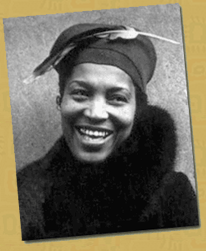
Zora Neale Hurston

Zora Neale Hurston

Zora Neale Hurston (1892-1960) was born in Eatonville, Florida, the first incorporated black town in America. Her life there, nine years of wanderings is described in her book Dust Tracks on the Road. She studied at Howard University and began to write, attracting the attention of the Harlem Renaissance with her essays and short fiction and won a scholarship to Barnard College where she studied Cultural Anthropology, subsequently spending four years researching folklore on the South and publishing another five books including this novel and a collection of tales, songs, games and voodoo practices from the time.

Click Here to Buy a Copy of Their Eyes Were Watching God

Top Reads 2015

If you’ve noticed a lack of reviews recently, please know it’s not from a lack of interest, time or reading, just a temporary technical problem, not yet resolved but should be by mid January.

So, 2015 was a bumper reading year, I surpassed my book a week ambition and actually read 65 books from 26 different countries, a third of what I read was translated from another language, something I seek out in my interest to experience literature and storytelling from within other cultures and not only by those who have access to the English language.

I will create a separate post to talk more about my impressions and attractions of reading outside the main literary cultures and the cultures and landscapes that keep drawing me back for more.

As with previous years, I’ll share my one Outstanding Read and the Top 5 Fiction and Non-Fiction reads, with a few special mentions.

Outstanding Read of 2015

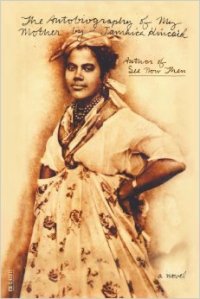
Autobiography MotherThe Autobiography of My Mother by Jamaica Kincaid My first read of the long-established author Jamaica Kincaid (Antigua) and it moved me like no other book had since last years outstanding read, Jennifer Clement’s Prayers for the Stolen.

This is a novel about a young woman growing up without a mother, abandoned for a time by her father and looking back at her life and the thoughts, reactions she had back then, using all the senses.

It is a kind of awakening, a visceral account that is insightful and squeamish both. It was for me too, the beginning of a season of Caribbean reads that were one of the major reading highlights of the year, soon after this I read three books by Maryse Condè (Guadeloupe), Cristina García’s Dreaming in Cuba, Edwidge Danticat’s Breath, Eyes, Memory (Haiti) all of which were 5 star reads.

Top Fiction

Click on the title below to read the review.

1.  The Wall,  Marlen Haushofer a riveting story of one womans survival in the aftermath of a catastrophic event, with only a few animals for companions. A lost classic that was revived years after the death of the writer and one that had me spellbound until the end.

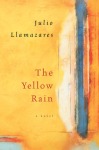
2. The Yellow Rain, Julio Llamazares set in an almost abandoned village in the Spanish Pyrenees, this is a haunting, elegiac account of one man who refused to leave and was witness to the degradation of all that man had contributed as nature reclaimed what was left. Captivating in the way it is written, you will want to slow read it, brief yet unforgettable.

3. Dreaming in Cuban, Cristina Garcia spanning three generations of women from Cuba, told from their differing perspectives, particularly the grandmother who is rooted in her country and culture, it explores separation, identity, the strong bonds of family and the weight of expectation. How these women survive their circumstances. Just brilliant and part of a great collection of literature from the region.

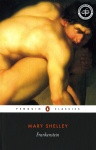
4. Frankenstein, Mary Shelley well it started with listening to the BBC audio broadcasts for learners of English, followed by watching a relayed broadcast of Benedict Cumberbatch in the London National Theatre adaptation, which was brilliant, to finally reading the work itself. I was a little hesitant, old classics aren’t really my thing, but I loved reading Frankenstein and couldn’t help but admire the tremendous achievement of Mary Shelley in creating it. Made all the more fabulous by having seen how it continues to inspire creative direction in the 21st century.

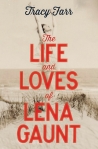
5. The Life and Loves of Lena Gaunt, Tracy Farr I didn’t read a lot of newly published works in 2015, but this one was a standout read for me, I was quickly drawn into the world of Lena Gaunt, an Australian theremin player who was born in Asia and had a few life changing experiences from her encounters there, who lived without much parental guidance or supervision, and developed her musical talents amid an eclectic group of artistic friends, had one true love and faced certain tragedy, all of which is brought to life after a recital she gave in her eighties attracted the attentions of a filmmaker. All the more interesting, for it being inspired by a true legend.

Top Non-Fiction

1. Unbowed: Autobiography of Wangari Maathai the truly inspiring story of Kenyan Nobel Peace Prize winner Wangari Maathai, the work she did, the challenges overcome that gave her a top education and the will to make a real difference, particularly for the lives of women in her country. She empowered others and created enduring projects and movements for all.

2. Under the Sea-Wind, Rachel Carson first in a nature inspired trilogy about the sea and her inhabitants, brought to life in a creative narrative, as seen from the perspective of three sea creatures, part one, the edge of the sea shows the habitat from the point of view of a female sanderling bird, she names Silverbar, part two, the Gulls way, is dedicated to the open sea and navigated by Scomber, the mackerel, and finally part three, river and sea, we follow Anguilla the eel as he travels from his coastal river pool downstream towards the sea and that deep instinctual pull towards the abyss.

3. Tales of the Heart: Stories from my Childhood, Maryse Condé essays, vignettes of childhood, recommended as the place to start in reading the work of this talented and enthralling writer from Guadeloupe. Loved it and was quick to follow-up with Victoire, My Mothers Mother, a book she says is true, though sold as a novel by her publishers due to the tendency of her research subjects to rely on oral stories to pass on their history. Brilliantly told, as she delves into the unknown life of her grandmother to better know and her own mother who died when she was 14.

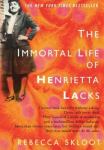
4. The Immortal Life of Henrietta Lacks, Rebecca Skloot (review to come) the background story to the global presence and utilisation of the immortal HeLa human tissue cells, that were discovered to be unique in that they never died, continued to replicate and could be used to do all manner of tests for disease and drugs and how cells respond, something of a revolution for medical science.

HeLa were the initials of the person from whom the samples were taken, as was the procedure at the time. But who was HeLa and what did she or her family have to say about these extraordinary developments thanks to the cells of one woman? Rebecca Skloot spent 10 years researching the life of Henrietta Lacks and the subject of the HeLa cells to bring this extraordinary narrative.

5. Tiny, Beautiful Things: Advice on Love and Life from Dear Sugar, Cheryl Strayed these are letters from the columnist Sugar, who it turned out was Cheryl Strayed, author of the book Wild about her solo journey to trek the Pacific West trail in her twenties.

These letters are written when she is in her forties and though still young, has lived multiple lives and had more than her share of extreme and dysfunctional experiences, from which to draw her own brand of wisdom. It’s a pick up at will kind of book, but her confrontational yet compassionate style is refreshing and thought-provoking, her ability to be very clear on her opinion and advice, without being judgmental.

Special Mentions

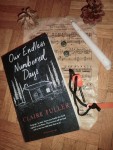
Outstanding Debut – Our Endless Numbered Days Claire Fuller

Excellent Classic – The Enchanted April, Elizabeth von Arnim

Most Uplifting Read – Antoine Laurain’s The Red Notebook and The President’s Hat

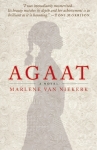
Most Disturbing Read – Agaat by Marlene Van Niekerk

Most Disappointing Read – The Waves , Virginia Woolf

The Enchanted April by Elizabeth von Arnim

CIMG7226As soon as I learned that Elizabeth von Arnim’s The Enchanted April was to be reissued as a Penguin classic, I jumped at the chance to read it. Elizabeth and her German Garden was such an engaging and entertaining read and I recall in the comments of that review so many mentions of The Enchanted April as a must read.

Elizabeth wrote The Enchanted April in a castello (an eleventh-century fortress with Roman foundations overlooking the Ligurian Sea) in Portofino, Italy, in April 1921. She had rented the place to get away from her own (sixteen bedroom) chalet in Switzerland… an extract from the Introduction by Brenda Bowen

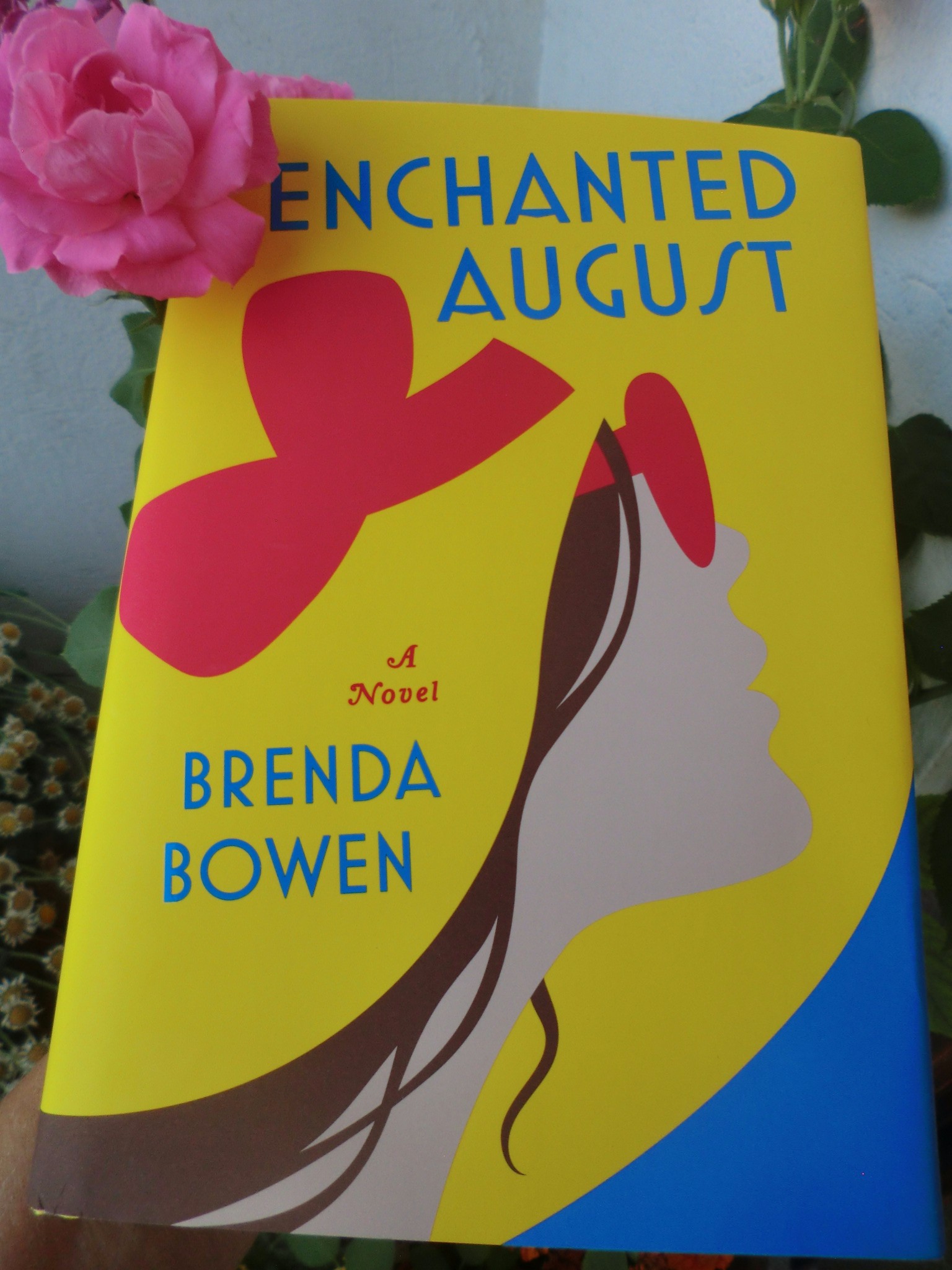
Brenda Bowen has written a work of fan fiction, published in June 2015, one that mirrors von Arnim’s work, set in contemporary Brooklyn and Maine featuring four ladies who will rent a cottage (not castle) on Little Lost Island, Maine.

Enchanted August

One to Watch Out For, Fan Fiction

Enchanting indeed, not just the month of April, but all that made this original classic so; the villa San Salvatore (inspired by the Castello Brown pictured below) on the cliffs of Portofino overlooking the sea, the blooming buds and flowers of Spring, four weeks stretched out in front of four unaccompanied women with no social obligations, no cooking, cleaning, nothing to do but enjoy the gardens, the villa, the seascape and one minor challenge, to tolerate each others company.

They are four women who remind me of the semi-autobiographical and coolly calculating character of Elizabeth, in von Arnim’s Elizabeth and her German Garden, for though the four women in this novel sought company for this séjour on the Ligurian coast of Italy, it was purely for financial reasons, most certainly not for companionship, the first hint of von Arnim’s well-known and often quoted attitude towards visitors.

Being with strangers, they each hoped to leave that part of themselves that must always meet the expectations of others behind. Mrs Wilkins  from Hampstead was the first to see the advertisement in The Times while visiting her London club.

To Those Who Appreciate Wisteria and Sunshine. Small mediaeval Italian Castle on the shores of the Mediterranean to be Let furnished for the month of April. Necessary servants remain. Z, Box 1000,

The Times.

Mrs Wilkins was certain another woman her age was reading the same ad and having a similar response to it, so true to her nature (though not typical of society’s expectation of a response) she seized the initiative suggesting they rented the place together.

Her initial reluctance overcome, once the two women realised it was possible, they needed only a solution to the expense which Mrs Wilkins solved by suggesting they place another ad to attract another two like-minded female souls, thus we are introduced to the beautiful, ever charming even when she is trying not to be, Lady Caroline Dester and the somewhat disagreeable and much older Mrs Fisher.

Once ensconced in their lodgings, the four women interact and are given a well-portrayed and at times humorous glimpse into their individual characters, made all the more interesting by the fact that these women were most unlikely to have ever encountered each other within their existing social circles.

Enchanted April

Mrs Wilkins and Mrs Arbuthnot are pleased to have escaped their husbands, though they each harbour an underlying sadness for how things were when they were newly married. They are not aged, in their thirties, they have more the air of self-accepting middle age. However, they hadn’t reckoned on the effect of a stay at San Salvatore.

Lady Caroline just wants to be left alone, unmarried and disinclined, she detests the attention her beauty and natural charm attract. The formidable Mrs Fisher appears malcontent for no more reason than that she’s been on Earth at least twice as long as the younger women, having lost what youthful exuberance she may ever have had long ago.

‘Mrs Fisher doesn’t seem happy – not visibly anyhow,’ said Mrs Arbuthnot, smiling.

‘She’ll begin soon, you’ll see.’

Mrs Arbuthnot said she didn’t believe that after a certain age people began anything.

Mrs Wilkins said she was sure no one, however old and tough could resist the effects of perfect beauty. Before many days, perhaps only hours, they would see Mrs Fisher bursting out into every kind of exuberance. ‘I’m quite sure, said Mrs Wilkins, ‘that we’ve got to heaven, and once Mrs Fisher realises that’s where she is, she’s bound to be different. You’ll see. She’ll leave off being ossified, and go all soft and able to stretch, and we shall get quite – why, I shouldn’t be surprised if we get quite fond of her.’

Things are about to change, as the castle San Salvatore, though solid and immovable, works its way into their psyches and each will fall under the spell of the charming fortress and its healing environment over the course of their four-week stay.

I thought The Enchanted April a wonderful, evocative read and witty insight into its very English characters, enjoyable for its sense of place and the lush season it evokes, von Arnim’s natural, subtle humour that she never ceases to inject into her narratives, in this novel there is no trace of the slight cynicism of her earlier work; she has allowed her four women to indulge this fantasy through to its natural conclusion.

And oh how fulfilling that can be for the reader, I know this little stretch of Italy and it invoked pleasant memories and incited future dreams of a possible return – with three women ‘bien sûr’!

Countess Elizabeth von Arnim

Born Mary (May) Annette Beauchamp in 1866, Elizabeth von Arnim was Australian by birth, English by upbringing, German and English through marriage, Swiss and French by choice and finally American by emigration. She published 21 books in her lifetime,  books where the central female character(s) were often witty and unreserved, possessing an unusual outlook on life. A number of them, including The Enchanted April were made into films.

An appearance of the novel Elizabeth and her German Garden in a recent episode of Downton Abbey, sparked renewed interest in the works of the author. That novel was so popular when first published, it was reprinted 21 times within a year of publication.

She was the cousin and contemporary of the New Zealand/English writer Katherine Mansfield. She died in Charleston, South Carolina in 1941.

KM logoElizabeth von Arnim Conference – In an extraordinary coincidence that I just discovered, the Katherine Mansfield Society is to hold an Elizabeth von Arnim Conference, at Lucy Cavendish College, University of Cambridge on Sept 13th 2015!

My review of Brenda Bowen’s Enchanted August.

Note: This book was an ARC (Advance Reader Copy) kindly provided by the publisher.

Frankenstein, or the Modern Prometheus by Mary Shelley

I had always intended to read Mary Shelley’s classic in 2015, however I hadn’t expected to come across it in so many forms before I picked it up in its traditional one, the book.

Captain R Walton and the scientist Victor Frankenstein, Arctic  Source: BBC Learning English

Captain R Walton and the scientist Victor Frankenstein, Arctic
Source: BBC Learning English

With the advanced English conversation class I teach, we began to listen to weekly episodes of Frankenstein via a BBC adapted audio drama, written for learners of the English language. Condensed to 10 episodes of about 7 minutes each, it introduces new vocabulary and a classic of English literature to learners, while keeping them entertained.

Midway through the audio drama, I heard that there was to be a relayed broadcast of the London National Theatre production of Frankenstein, starring Benedict Cumberbatch and Jonny Lee Miller, cast as the Creature and Victor Frankenstein, directed by Danny Boyle.

Throughout the season, the actors switched roles on alternate nights, Creature and Creator, inhabiting each others skin, developing each others mannerisms and tendencies, drawn together and repelled simultaneously. The version I saw showed Cumberbatch as the Creature, a stunning and visceral performance beginning with the birth-like slump onto the stage, the first stages of development and observation of the enigma of man.

Creature_birth

A Creature is Born, National Theatre London

After these two modern-day introductions, I was even more intrigued to read the original text and learn about the origin of a book that was itself born via 18-year-old Mary Godwin (later Shelley) telling ghost stories one cool June summer evening in 1816 at Lake Geneva with companions Lord Byron, the physician John Polidari, Percy Shelley and her stepsister Jane.

FrankensteinThe book starts out with letters written by a Captain R Walton, who is in St Petersburg preparing to leave for an excursion of discovery to the North Pole, to his sister Margaret in London.

Like Victor Frankenstein, the young scientist he will rescue from an ice floe in the Arctic and whose story he will listen to day after day while trapped in the ice, Walton has a thirst for knowledge and an agitated spirit that pushes him forward in his quest. He wishes to make his mark on the world and make a difference. Like Frankenstein he has immersed himself in studies of logic and now desires to achieve something of magnitude, having already failed to become a significant poet.

His prose is now dedicated only to his sister Margaret, through whose letters we will learn of Walton’s failed voyage and the story Victor Frankenstein will narrate to him, as he too gives up his pursuit of the Creature that was to be his mark upon the world, one that had already made a difference, though in ways he never dreamed of and lived to regret.

Upon hearing the voyager’s naive hopes, Victor Frankenstein shares his own story in an effort to try to thwart Walton from following his ideals  into what may become yet another foolhardy madness.

“Unhappy man! Do you share my madness? Have you drunk also of the intoxicating draught? Hear me; let me reveal my tale, and you will dash the cup from your lips!”

The story he tells is of his own youthful thirst for knowledge, his fascination with science, alchemy and existence itself. His obsession with creating life above all else, with no forethought of the consequence of such an act, his fear and neglect of that which he created and the terrible consequences wreaked upon him, his family and those closest to him as a result.

“You may easily perceive Captain Walton, that I have suffered great and unparalleled misfortunes. I had determined at one time that the memory of these evils should die with me, but you have won me to alter my determination. You seek for knowledge and wisdom, as I once did; and I ardently hope that the gratification of your wishes may not be a serpent to sting you, as mine has been. I do not know that the relation of my disasters will be useful to you; yet, when I reflect that you are pursuing the same course, exposing yourself to the same dangers which have rendered me what I am, I imagine you may deduce an apt moral from my tale, one that may direct you if you succeed in your undertaking and console you in case of failure.”

Victor Frankenstein grew up in the countryside of Switzerland, in a kind of reverie, with his adopted sister Elizabeth whom he always viewed as a gift, initially from his mother who brought her into the family and eventually as his future bride. But first he wished to fulfil his destiny, that alchemy of existence, he wanted to create a sustainable life-form.

He pursued it with zeal, neglecting all else, only to run in fear of what he had done, until it pursued him, confronting him. The Creature forced him to listen and hear of the curse he had inflicted on him, by making him in such a way that all humanity would abhor him, sentencing him to a life without love, without friends, unknown.

“I expected this reception,” said the daemon. ” All men hate the wretched; how, then, must I be hated, who am miserable beyond all living things! Yet you, my creator, detest and spurn me, thy creature, to whom thou art bound by ties only dissoluble by the annihilation of one of us. You purpose to kill me. How dare you sport thus with life? Do your duty towards me, and I will do mine towards you and the rest of mankind. If you will comply with my conditions, I will leave them and you at peace; but if you refuse, I will glut the maw of death, until it be satiated with the blood of your remaining friends.”

Victor Frankenstein listens to the Creature and is moved from the desire to kill his creation to consider creating another, a companion, the only chance he may have to live in harmony in this world, for to be alone has driven him to madness, murder and mayhem.

The book, while framed at both ends by the letters from the explorer to his sister, the middle part is split into three, the first and latter parts as told by and from the perspective of Victor Frankenstein, while the middle part recounts the Creature’s tale of exile and in doing so gives voice to the creature.

Benedict-Cumberbatch-Jonny-Lee-Miller

Benedict Cumberbatch and Jonny Lee Miller

It is in this section we have the most honest view of his creation and it is in this part that the theatre screenplay written by Nick Dear really excels.  It takes as the starting point, the metaphor of birth and Cumberbatch’s Creature slips from an embryonic web to the floor, resembling something more amphibian like than human, flaying its limbs about spasmodically as it tries to master them, this body with no instruction, no parent, a man with the gestures of a newborn.

Throughout his years of exile, his interactions with others teach him to survive, to communicate and slowly to understand the capacity and flaws of humanity. With understanding comes grief, he knows what is possible, that which will always be unreachable for him, a creature that thinks and is capable of acting as one of humankind but who will always be hated, rejected and worse, hunted to extinction.

“I cannot describe to you the agony that these reflections inflicted upon me; I tried to dispel them, but sorrow only increased with knowledge. Oh, that I had forever remained in my native wood, nor known nor felt beyond the sensations of hunger, thirst, and heat!”

An astounding read and such a pleasure after the introduction I had via the theatre and audio play. It’s true I’m not a great reader of the classics, but when they are given an alternate context and serve as inspiration in the way this creation has, I can’t help but read in awe the achievement that continues to inspire such great works in themselves.

A five star read for me!

For a glimpse of that theatre sensation, watch this one minute trailer, with extracts from the live production in London.

Danny Boyle’s Frankenstein with Benedict Cumberbatch

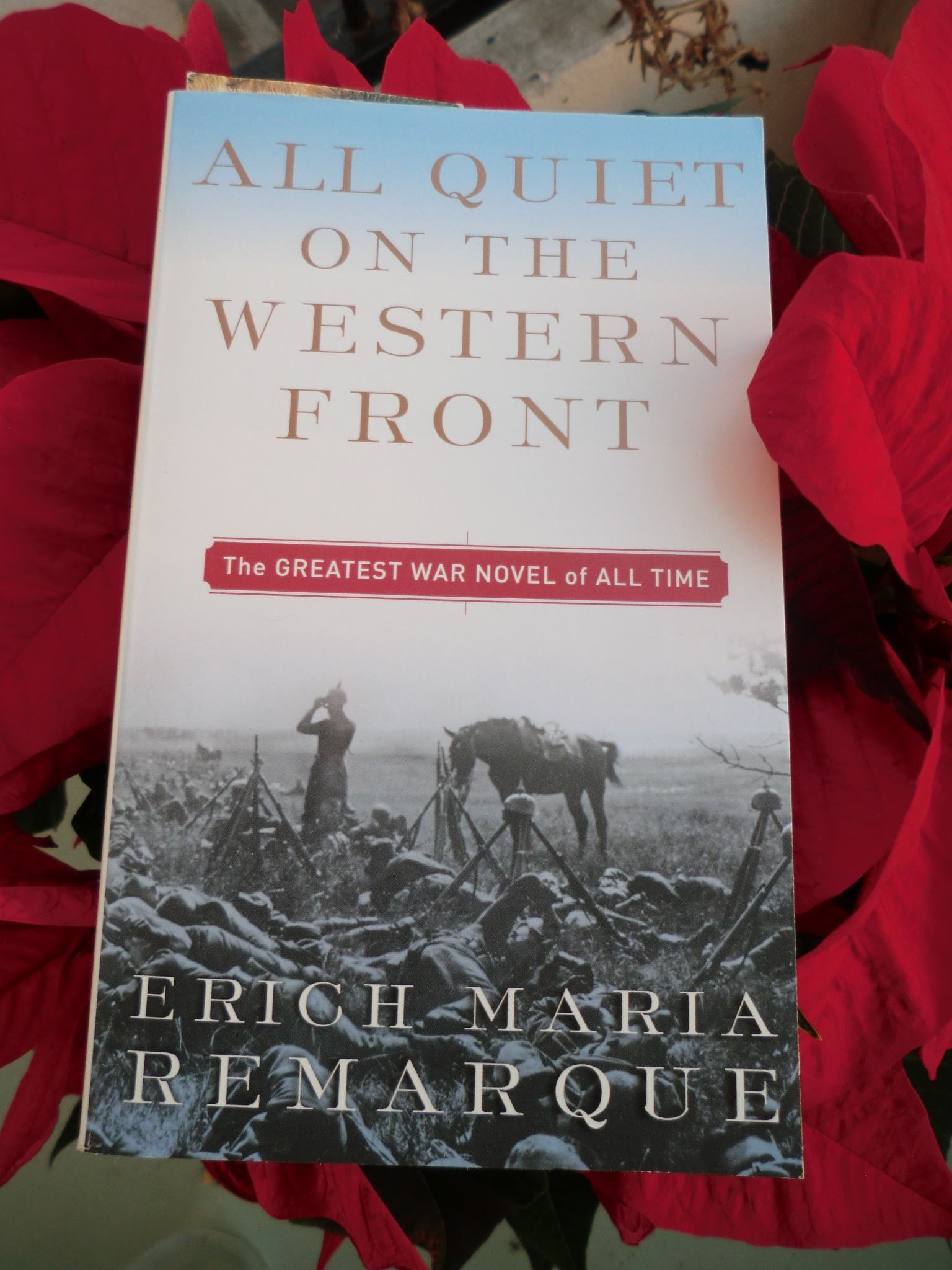
All Quiet on the Western Front by Erich Maria Remarque translated by A.W.Wheen

Vera BrittainVera Brittain gave us her Testament of Youth, an account of a generation of youth lost whether they lost their lives or survived World War One, for those who lived, something of the essence of youth was lost to them forever and none who were part of it were unaffected or not changed by it.

Earlier in the year Juliet Greenwood gave us a fictional account of woman during World War One in We That Are Left, a novel that highlights the significant changes in the lives of women during that period, to the point of not going back to the way things were.

More recently Richard Flanagan’s Testament of Horrors, which for this reader was more than was possible to absorb, despite the later redeeming passages I may have missed, so visceral were his descriptions.

And now, I add the German Literature classic All Quiet on the Western Front to that tome of war literature that shares something of the experience and its effect, the novel by Erich Maria Remarque telling the story of Paul Baumer, a 20 year old German soldier.

He and his friends are pressured by their schoolmaster to join up early, an action that won’t be forgotten and which will be repaid when they meet again under different circumstances.

“For us lads of eighteen they ought to have been mediators and guides to the world of maturity, the world of work, of duty, of culture, of progress – to the future. We often made fun of them and played jokes on them, but in our hearts we trusted them. The idea of authority, which they represented, was associated in our minds with a greater insight and a more humane wisdom. But the first death we saw shattered this belief. We had to recognise that our generation was more to be trusted than theirs. They surpassed us only in phrases and in cleverness. The first bombardment showed us our mistake, and under it the world as they had taught it to us broke in pieces. ”

All QuietHe narrates his journey, their comradeship, their fear, their daily survival. Their small joys often centred around food, their occasional escape, a mild wound or a leave pass and thoughts of how they might ever continue a life other than this if ever there is a peacetime. It is something few can imagine and most don’t want to, it isn’t relevant.

On one of his infrequent visits home, Baumer tries to understand what has changed.

“They talk too much for me. They have worries, aims, desires, that I cannot comprehend. I often sit with one of them in the little beer garden and try to explain to him that this is really the only thing: just to sit quietly, like this. They understand of course, they agree, they may even feel it so too, but only with words, yes that is it – they feel it, but always with only half of themselves, the rest of their being is taken up with other things, they are so divided in themselves that none feels it with his whole essence; I cannot even say myself exactly what I mean.”

The longer war rages, the further away from their past the young men become, they find solace in each other and even begin to miss the front when they are on leave, as they are no longer the youth they were and those that know them now are not here.

The author was himself a German solider who survived the war, became a teacher and a writer, but when in 1933, his works were banned and publicly burned on the initiative of the Nazi propaganda minister, Joseph Goebbels he and his wife left Germany to live in Switzerland. All Quiet on the Western Front had been published at a similar time to Hitler’s Mein Kampf and the two narratives were polar apart. The moment Germany elected Hitler to power, he went after Remarque. Sadly, it was his sister who paid the price, convicted of undermining morality as her brother was beyond reach. She was beheaded in 1943.

All Quiet 1st Editiom

1st edition in English

I read this on Armistice Day, 11 November, the day that an armistice was signed in France between the Allies and the Germans in 1918, commemorating the end of hostilities in WW1.

Although it is fiction, it reads like a true account. It is a remarkable book, sharing both the physical and mental aspects of youth at war and their slow realisation of its personal consequences.

It is tragic, sad and true and there is an element of hopelessness, that even though we can come to understand what will happen to those affected by war, there is little to be done to prevent it, we as humanity continue to choose it as a method of punishment disguised as a weapon of peace.

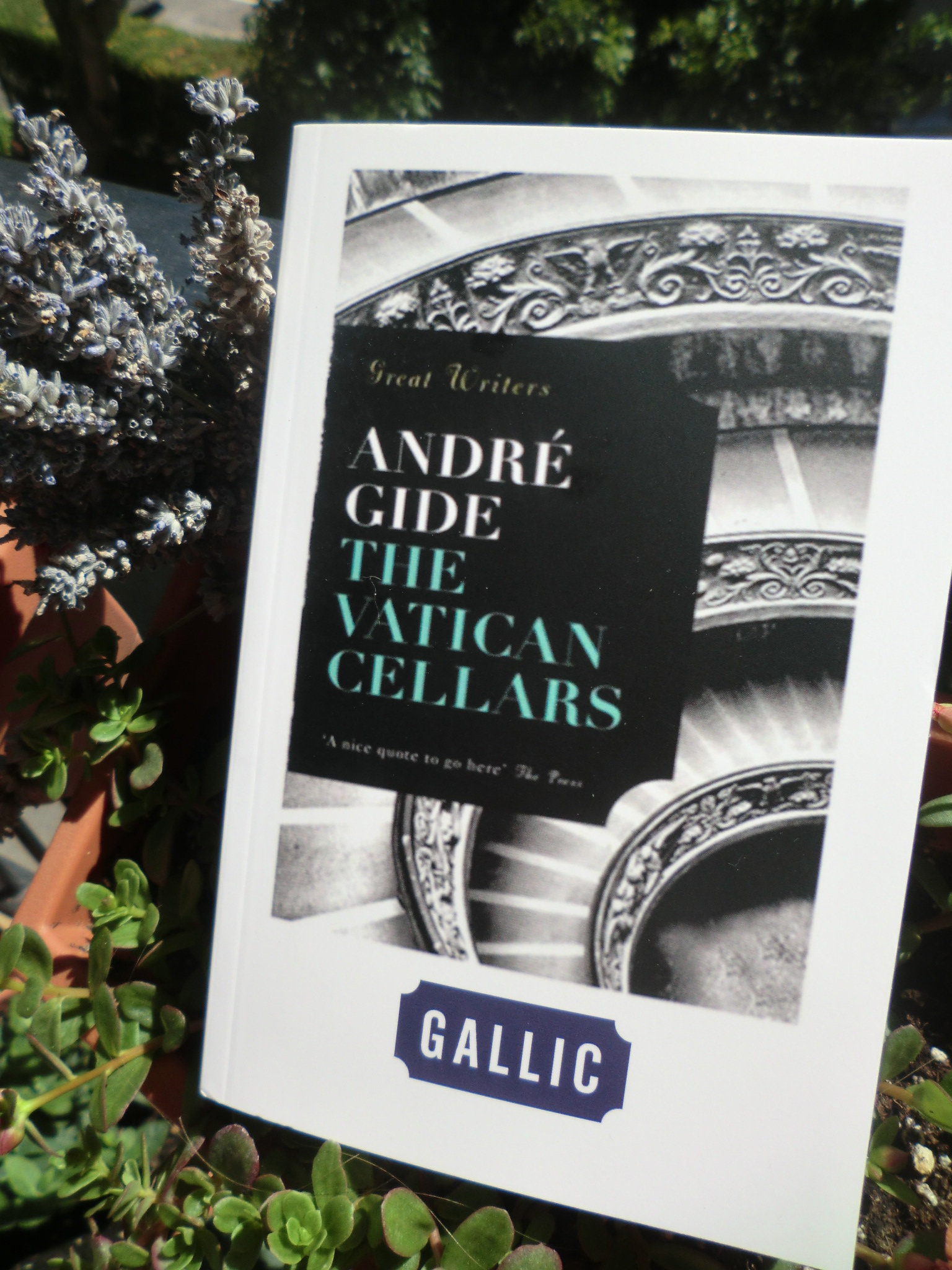
“All Paths Lead to Rome” – The Vatican Cellars by André Gide tr. by Julian Evans

Vatican CellarsOriginally published in the summer of 1914, this year is the 100th anniversary of André Gide’s Les Caves du Vatican otherwise known as The Vatican Cellars and sometimes as Lafcadio’s Adventures in English.

André Gide had quite a reputation and was adored and detested in equal measure in the French literary community during his time. He was a provocative writer, not sensationalist by today’s standards, but he rocked the foundations of robust entities in the early 1900’s and tested some of his friendships with his provocative, satirical works, that challenged the solemnity of the novelistic form and bourgeois attitudes of the time.

He declared the book not to be a novel, but a sotie, a medieval farce in which the players freely mock the powers that be, more often than not, the Church.

“Even in the authentic soties of the Middle Ages there was the attempt to demonstrate the madness of the real world by showing it capsized and lead by fools.” Wallace Fowlie, Andre Gide: His Life and Art

He did this to stand apart from that tradition of European fiction, characterised by its extreme seriousness. Many chose to judge it at face value, or to apply an interpretation that wasn’t his own and cause him to be ostracized by some.

A Young Gide Source: Center for Gidean Studies andregide.org

A Young Gide
Source: Center for Gidean Studies
andregide.org

He wasn’t looking for recognition or accolades, but he was a writer who wasn’t afraid to take on a subject and look at it through a symbolic, metaphorical lens even if it did court contempt in some quarters. Though still highly controversial in France, he was awarded the Nobel Prize in Literature in 1947, he died in 1951 and a year later his works were placed on the Vatican’s list of banned books.

That act was certainly provocative and no doubt helped to heighten the author’s popularity as negative publicity tends to do. So when this book arrived unsolicited in my mailbox, I was curious to find out more, not just about the story, but André Gide, a writer previously unknown to me. In a strange coincidence, this week I see that Papal controversy – or is it just rumour, continue, when I read this headline in The Independent.

God isn’t a magician with a magic wand according to the pope and there are non-believing vicars 

The basic premise of The Vatican Cellars centres around the members of one family, whose connections are slowly revealed, whether by blood or marriage, the first three books (more like parts as the book is only 300 pages) are portrayed from each of the main characters point of view and running throughout the narrative is the effect of a rumoured plot that a gang has kidnapped the Pope and placed him in the Vatican cellars, an imposter installed in his place. The fourth book introduces us to the gang, referred to as The Millipede and the final book is dedicated to the young man Lafcadio and brings all the characters to Rome.

Book One introduces us to Anthime Armand-Dubois, a crippled freemason devoted to scientific research, an atheist who leaves France to settle in Rome to be near a specialist in rheumatic diseases. His departure causes his brother-in-law Julius De Baraglioul great sorrow and his wife Véronique small joy.

“As one of those people who fill their flat disappointed lives with countless small devotions, in her sterility she offered up to the Lord every attention that a baby would have demanded from her. Sadly she entertained almost no hope of leading her Anthime back to Him. She had known for a long time how much stubbornness that broad brow, knitted in perpetual denial, was capable of. Father Flons had warned her.”

Julius, his wife (Véronique’s sister) and their 9-year-old daughter Julie visit, during which Anthime experiences an apparition of the Virgin Mary and the miraculous healing of his affliction. He converts, but loses his freemason and lucrative research contacts and must move to Milan to await compensation promised by the Vatican.

André Gide Source: Centre for Gidean Studies andregide.org

André Gide
Source: Centre for Gidean Studies
andregide.org

Book Two is Julius De Baraglioul, a novelist who arriving back in Paris receives a letter from his father, who is on his deathbed and wishes him to anonymously make the acquaintance of a certain Lafcadio Wluiki to check out his ambitions and character. Julius visits the Lafcadio’s lodgings, meets Carola Venitequa and snoops around his things reading a private notebook since the room is unlocked and uninhabited. He eventually meets him and gives him a copy of his latest novel, one that has been panned by critics. Recognising the book is based on the author’s father, Lafcadio eyes the dying man as a potential new “Uncle” and goes to see him.

In Book Three we meet Amédée Fleurissoire, debated by some to be the true hero of this story; within these pages the entire plot to kidnap the Pope is unveiled. A priest calls on the widow Countess de Guy de Saint-Prix, Julius’s younger sister just after her return from her father’s funeral in Paris and regales her with the extraordinary tale of the Pope’s demise. And here there is an author interjection, a sidestep of the story plot to tell of the factual plot, as the story was inspired by real events that occurred in 1893 by a gang of fraudsters, taking advantage of the Pope’s sympathies toward the French Revolution.

“Whether God’s representative on earth could have been abducted from the Holy See and, by the intervention of the Quirinal, stolen from all of Christendom as it were, is an excessively thorny problem which I do not have the temerity to raise in these pages. But it is a historical fact that, around the end of 1893, rumours were circulating to that effect. It goes without saying that numerous devoted souls became deeply agitated. A pamphlet on the subject appeared in Saint-Malo and was suppressed. …There is no doubt that countless pious souls made financial sacrifices, but it was dubious whether all those who received donations were genuine campaigners, or whether some were perhaps fraudsters.”

The priest wishes the Countess to make a significant donation, so she rushes off to see Madame Fleurissoire, the younger sister of Véronique and Marguerite and wife of our genuine hero Monsieur Amédée Fleurissoire. Hearing about all the fuss Fleurissoire decides he must leave Pau and travel to Rome himself to see what can be done.

Book Four is The Millipede (the centipede) which continues to follow the travels of Amédée, the presence of the gang undetected. He is intercepted at the station and brought to slovenly rooms, where we again meet Carola and he is taken on a bit of a wild goose chase to Naples and back, bumping into Julius who has also appeared in Rome.

Then Book Five brings us back to Lafcadio, raised by his mother and five uncles, across different European countries, he is at home everywhere, but belongs nowhere. After his encounter with Julius’s dying father, he too decides to take the train south, but he is heading for adventure, his destination Borneo. He is the anti-hero, the free spirit, parentless, he lives without obligation or restraint, he can do as he pleases, provided he has the means. His charm takes care of that.
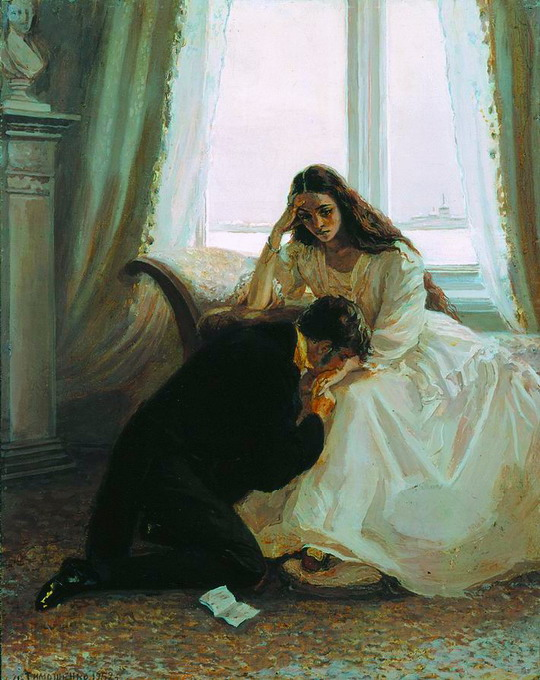
And what happens when they all find themselves in Rome? For that you’ll need to read the book.

As the literary critic Albert Guerard said:

“Perhaps only the maligned casual reader sees that les Caves du Vatican is above all a very funny book.”

It is a book that Gide had in the back of his mind for 20 years before writing it and many of the scenes were inspired from aspects of his own life or those close to him. For example, Anthime’s conversion is said to be based on Emile Zola’s Freemason cousin, who abjured his atheism in a public ceremony at a church in Rome.

The Vatican Cellars is an entertaining, easy read and can be intellectually stimulating if you are interested to analyse it further. I enjoyed it very much and all the more for having read around it, dipping into some of the published literary essays to understand the intentions of the author and the responses of the critics.

He was a humble author with a fascinating intellect who refused to accept literary prizes and acknowledgement at home, until it came to the Nobel, which he felt would have gone to Paul Valéry, if not for his untimely death and accepted it without reserve, though he was too ill to receive it in person.

In an open letter to several leading Swedish newspapers which had sought interviews, Gide confessed that he had received the Nobel Prize:

“with deep emotion, with tears in my eyes, like a schoolboy who has won a prize.”

I leave you with this very funny anecdote that I picked up from an essay by the critic George D.Painter.

“On 7 January 1930 Gide was returning by train from Toulon to Paris with Jacques de Lacretelle. At the opposite table, which was covered with flowers, sat a honeymoon couple, the husband engrossed in The Vatican Swindle. It was the first time Gide had ever seen a stranger reading himself. ‘Here’s your chance,’ said Lacretelle, ‘Tell him who you are – write him a dedication!’ But to do this, Gide would have had to feel sure that the unknown liked the book. Suddenly the young man pulled out a penknife. Good heavens, was he about, like Lafcadio, to plunge it in his thigh? But no, worse still, he seemed to intend to cut the book itself in pieces, and Lacretelle was seized with a fou rire. With great care the bridegroom cut the threads of the binding, detached the part he had read, handed it to his young wife; and both buried themselves in their reading.”

train reading

Note: Thank you most kindly to Gallic Books for sending me a copy of the book.

Eugene Onegin – Chapters 7 & 8 Alexander Pushkin

Moscow, loved daughter of Russia,

where can we find your equal?

DMITRIEV

Eugene Onegin 7 8Chapter Seven

The beginning of Chapter 7 contains numerous quotes and I have noticed all through my reading of Eugene Onegin that the epigrams are a kind of clue to what will follow. So on reading the four quotes that adorn the first page of this chapter, it is clear that the action is going to take us to that great, revered city, Moscow.

A forlorn Tatyana remains in the countryside, nursing the remnant emotions of an unrequited love, like weeds that grow over the unvisited grave of the poet Lensky.

Dear Tatyana, lover of illusion:

Though there he’s no more to be found,

He’s left sad footprints on the ground.

We learn of the swift healing heart of Olga, wooed by another and whisked down the aisle, her tears dried up and replaced by a smile, abandoning her sister and confidant with not much of a glance behind. Tatyana bereft, walks unbidden, finds herself arriving at the country home of Eugene Onegin, his staff invite her in and show her round like a tourist visiting a noble home, the rooms where our hero entertained his solitary self.

At once Anisia came to greet her,

the doorway opened wide to meet her,

she went inside the empty shell,

in which our hero used to dwell.

Spying a collection of strange books she asks if she can return to read them, opening a window into his soul, one she is less sure of, the marks on the page don’t lie, revealing the thoughts of another reader. She comes to understand him via the page, though they are nothing like those she prefers to lose herself in.

The locals are not happy with her loveless state with no plans to marry, they advise her family to take her to Moscow, after a week of travelling they arrive to stay with family, where Tatyana will meet her cousins and slowly become drawn into their ways.

Moscow’s the place, the marriage-fair!

There’s vacancies in plenty there.

They make subtle changes to prepare her for the social activities and try to pry the secrets of her heart, she resists and even while attending the dance, thinks only of the woods, her flower garden and books .

But while she roams in thought, not caring

for dance, and din, and worldly ways,

a general of majestic bearing

has fixed on her a steady gaze.

Chapter Eight

The narrator expounds his poetic verse, carrying us forward, oft-times veering off course as if he were driving an open air carriage then taking his eye off the road to watch the clouds form or listen to birds and admire the wildflowers, then suddenly we are back in the ballroom, the driver his eyes back on the road and the events as we come to know them gradually unfold.

Tatyana is escorted to a ball and sitting quietly to the side, after all this time who does she spot but Eugene, just returned from travels and roaming, he arrives in the midst of this social whirlabout. Recognising her from a distance, though not sure, he asks the prince next to him, who she is:

Eugene Opera‘Can you say,

Prince, who in that dark-red beret,

just there, is talking to the Spanish

ambassador?’ In some surprise

the prince looks at him, and replies:

‘Wait, I’ll present you – but you banish

yourself too long from social life.’

‘But tell me who she is.’ ‘My wife.’

Two years have passed and time has not stood still, he is introduced to the princess and she is unmoved, he sees no trace of the Tatyana he knew and really isn’t sure if it is the same girl. The prince invites him to a soirée and uncharacteristically he responds in haste, eager to see Tatyana once more and is impatient for the evening to arrive. Tatyana playing the dutiful hostess is serene, Eugene falls for all that he has previously scorned, the madness of love. He finds no solace and surprise, surprise, what does he do, this lovesick fop, but write a letter!

Eugene 8No answer comes. Another letter

he sends, a second, then a third.

No answer comes. He goes, for better

or worse, to a soirée. Unheard

she appears before him, grim and frozen.

No look, no word for him: she’s chosen

to encase herself inside a layer

of Twelfth Night’s chilliest, iciest air.

He turns to his books and finds no reason and then as the seasons pass, one spring day he ventures out to see her, is given an audience with the women he can’t get out of his mind and finds the roles have switched, it is she who now lectures him, reminding him of his own behaviour in reprimanding her, she speaks of her love, but that she now belongs to another, to whom she will be true. She leaves the room and Eugene is thunder-struck – the husband arrives – and now we must leave them, this chase has gone on long enough.

The Verdict

Wow. I made it. A brilliant read-along and an entertaining read, although I am a somewhat cynical reader, in that I find it difficult to believe that Eugene Onegin could have become the man he ends up being, not just because of his character so firmly established, but surely after two years travelling he should have gained a kind of maturity that would have provoked a different outcome than this. Perhaps I should have read it 10 years ago when it was given to me!

Thanks to Marian at Tanglewood for organising the challenge, it’s been fabulous. I totally recommend you all give this classic epic poem a try!

Eugene Onegin Chapters Five & Six Alexander Pushkin

O, never know these frightful dreams,

thou, my Svetlana!

VASILY ZHUKOVSKY

Eugene Onegin5

Reading the epigram above and looking into its source, I discover how little I really know about this poem, because of my ignorance of Russian poets and folklore, for Vasily Zhukovsky, a prominent figure in Russian literature in the 1800’s and tutor to a Duchess and her son, the future Tsar-Liberator Alexander II, was highly esteemed by Pushkin. His heroine Tatyana is modelled in some way on the heroine Svetlana in Zhukovsky’s poem of the same name, where there are dreams of snowy nights, a hovel and a corpse who manifests into her beloved, just as there are in Chapter 5 of Pushkin’s poem.

Chapter Five

Vasily Zhukovsky_1815

Vasily Zhukovsky, 1815
Source: Wikipedia

Tatyana, who is prone to superstition and susceptible to clairvoyance, is plagued by dreams, of a snowstorm and a large bear stalking her, she can’t escape the sense of being pursued and will be taken by the bear to a gathering in a hovel, where she is reunited with her love Eugene Onegin, who feasts with bizarre creatures. Her happiness is short-lived as he embarrasses her in front of the audience gathered, only to claim her like a worthy hero, making her swoon in quickly forgiven ecstasy.

Tatyana is troubled by her dream and won’t speak of it to her sister, instead she descends into the safe passages of a book, with their trustworthy, predictable heroes.

January 25, her name day arrives and the mood changes as friends, family, neighbours, the local army Major and more descend upon the Larin household and word has it the regimental band is coming!

Dinner is served amid much excitement and the merriment rises in volume when the doors open to admit the latecomers Lensky the poet and his friend Eugene Onegin. Finally! Seated opposite Tatyana, who becomes a bundle of nerves, our hero isn’t impressed with her lovesick feminine display and mentally passes judgement on them all. I ask myself, is the man a psychopath, he displays zero empathy!

Fortunately no one notices, the gluttons, as more food arrives and flutes for champagne and cries of ‘Speech’ to toast the beautiful Tatyana who pulls herself together to respond to each guest individually, stumbling when she reaches Eugene, who seems to take pity, for his face shows something she interprets as tenderness – more fool her!

They move to the salon, tea and cards and the sound of the band arriving, the ball is underway, the Russian Waltz on display! And now the trouble starts as Eugene claims Olga, shocking the crowd in their stomping frenzy and outraging his friend! What is he up to this player of dangerous games! How will Lensky react?

He finds the shock beyond all bearing;

so, cursing women’s devious course,

he leaves the house, calls for his horse

and gallops. Pistols made for pairing

and just a double charge of shot

will in a flash decide his lot.

Chapter Six

Seeing his friend depart, Eugene becomes bored with his game and will leave alone. While bodies sprawl everywhere in sleep, Tatyana sits at her window and peers into the darkness, a coldness creeping over her heart.

We meet another landowner with a shady past, who delivers a message to Eugene, a letter from his friend Lensky, challenging him to a duel. He accepts, this manly hero, though on his own he laments his role.

With reason, too: for when he’d vetted

in secret judgement what he’d done,

he found too much that he regretted:

last night he’d erred in making fun,

so heartless and so detrimental,

of love so timorous and gentle.

Lensky wakes in anger like a raging bull intent on not seeing his love, but relents and is confused to find her as much in love as she ever was, his anger abates and he regrets his haste, but wants to teach his friend a lesson. No one spares a thought for our heroine. Lensky cleans his pistols and spends all night writing his last poem.

How did these two friends becomes foes and what madness have they entered into, to continue this game of death. Pistols ready, they march, they turn, a shot. Our poet holds his hand to his heart, inspired right up to his last seconds in this world, he departs.

Reader, whatever fate’s direction,

we weep for the young lover’s end,

the man of reveries and reflection,

the poet struck down by his friend!

Even the narrator stalls, he can not go on, he needs to pause. He will come back and tell us what will happen when he can face it.

Reactions

A.S.Pushkin

Alexander Pushkin by Vasily Tropinin
Source: Wikipedia

Since Tatyana and her sister rarely speak, the dream sequence helps us understand her state of mind, her fears and desires, her confusion and unwillingness to share it with anyone. It is like a premonition of what will come, the roller coaster of highs and lows on her name day, where even then the only high note she experiences in relation to her beloved is a look on his face that may or may not have been tenderness.

My opinion of Eugene Onegin has not changed, he has not a shed of empathy, neither for Tatyana or ever more tragically for his dear friend, the poet Lensky. How will he redeem himself from this pistol waving mess!

And the Narrator? I recall that this poem was written over several years and when the Narrator interjects and seems to need to pause, I find myself wondering if these pauses represent the intervening years. No doubt some scholar has the answer.

Brilliant. Loving this!

Click here to read the final follow up review of Eugene Onegin Chapters 7 & 8

What Do We Read?

Photo0652

Recently there has been discussion in the media, on twitter and on various blogs about how books written by women are represented with respect to published reviews and the #readwomen2014 campaign launched as a result.

The annual survey carried out by VIDA – The Count continues to show them as  being under represented in most of the major publications that provide reviews and in translated fiction.

It made me wonder what I do read. I don’t think I have a bias towards male or female authors, but I do have a preference for cross-cultural fiction and I like to read translations, so I decided to look back over the last year and see how I fared.  As you can see below, I definitely read more female than male authors and slightly more than 2012 when 62% of the books I read were by women.

Gender 2013

In total, during 2013 I read 70 books, slightly more than the one book a week I have as an intention and 10 books more than I read in 2012.

As those who read this blog may know, I like to read cross-cultural, contemporary literature, so I read more modern than classics and I like to read around the world. What I hadn’t realised was that last year I read books by authors from 22 countries! Check out this fabulous pie chart.

Country 2013

Compared to 2012 when I only read books from 17 countries! From the US and the UK, I read exactly the same number of books (19) and a visit to Istanbul in May prompted an increase in Turkish literature (5) and three books in December helped my French literature (4) to increase, but I hope that will improve in 2014.

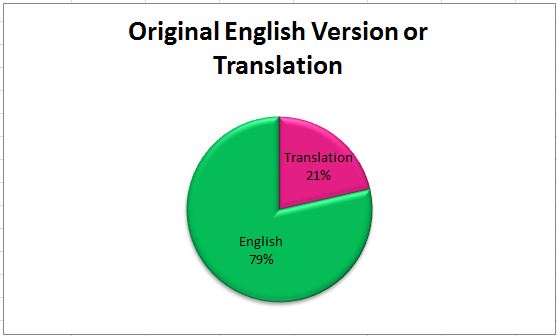
To read that widely, it is necessary to read translated work and 15 of the books I read or 21% were translated compared to only 10% in 2012. I’ve certainly travelled the world through books, I may have to start checking the globe to see which continents are missing.

Translation 2013

And what kind of books do I read? Well mostly fiction, a hefty 76% compared to 23% non-fiction and only 1% poetry, but less than 2012 when 82% of my reading was fiction and 16% non-fiction. I did read some excellent non-fiction in 2013 and hope to do the same this year.

Genre 2013

And lastly, how do I read? Yes, I have a kindle and in 2012 I read 25 books or 41% of them electronically. In 2013 that has increased to 46%, that’s 32 books on the kindle, almost half my reading! That’s thanks mostly to NetGalley who send me ARC’s (Advance Reader Copies) from the publishers that I request, which I am immensely grateful for.

E Book 2013

So now I know what I read and I think I shall just keep on doing the same, which is to be as spontaneous as possible, to engage with others who read for recommendations and keep reading around the world!