January by Sara Gallardo (1958) tr. Frances Riddle, Maureen Shaughnessy (2023)

January is a slim novella, considered to be a revelatory, pioneering masterpiece about a short period in the life of a 16-year-old Argentine girl living in a rural area, whose life trajectory is radically changed in a day. Now, for the first time, translated from Spanish into English.

Breaking the Silence, Exploring the Consequence

With echoes of Edith Wharton’s Summer , this radical feminist novel broke the silence around abortion to reshape the way women’s bodies and rights were perceived in 20th-century Argentina.

A radical feminist text, January was the first Argentine novel to represent rape from the survivor’s perspective and to explore the life-threatening risks pregnancy posed, in a society where abortion was both outlawed and taboo.

They talk about the harvest but they don’t know that by then there’ll be no turning back, Nefer thinks. Everyone here and everyone else will know by then, and they won’t be able to stop talking about it. Her eyes cloud with worry; she slowly lowers her head and herds a small flock of crumbs across the worn oilcloth.

A 16 year old girl in a predicament, not of her own making discovers she is pregnant, but not by the young man she dreams of. She is the daughter of peasant farm workers and has limited options, but will pursue them all the same, in order to try and avoid the inevitable, forced outcome that awaits her once her secret becomes known.

A pregnant teenager imagines death rather than forced marriage
Photo F.Capetillo Pexels.com

She is just of an age where she begins to notice and feel something for someone around her, but her virtue is stolen by another. Instead of imagining love, she imagines death, and wonders if this might be when her will finally see her.

She no longer cares about anything besides this thing that consumes her days and nights, growing inside her like a dark mushroom, and she wonders if it shows in her eyes as they remain fixed on her worn-out espadrilles, two little gray boats on the tile floor, or in her hands crossed in her lap, or in her hair burned by the perm.

The novella follows her panic, her attempt to find resolution without support, her symptoms, her desperation to seek absolution, her confession, her realisation of the terrible consequence, the life sentence, the marriage plot.

This thought floods her with a tide of anxiety as she remembers her secret. A sense of impotence rises to her throat, as if time has become something solid and she can almost hear its unstoppable current conspiring with her own body, which has betrayed her, tossing her to the mercy of the days.

She lives in rural Argentina, a conservative catholic environment, an unruly place for a young girl.

What will happen to her in this place that reveres the cloth, that judges and shames girls regardless of their innocence?

Further Reading

The New York Review of Books: Nefer’s Mission by Lily Meyer

The New Yorker: The Abortion Plot: A newly translated novel by the Argentinean writer Sara Gallardo provides a missing link in the history of abortion literature, by S. C. Cornell

Sara Gallardo: Recently rediscovered Argentine writer by Jordana Blejmar (University of Liverpool) & Joanna Page (University of Cambridge).

it is perhaps her abiding concern for the ‘Other’ – marginalized, solitary characters, women, animals, monsters, even elements of nature – that gives Gallardo’s literature its most powerful political dimension…

Author, Sara Gallardo

Sara Gallardo was born in Argentina in 1931 to an aristocratic Catholic family. She became a journalist in 1950 and was twenty-seven years old when her powerful debut January was published in 1958.

She grew up in Buenos Aires in a family of men so famous there are streets named after them all over Argentina (all key figures in the constitution of the Argentine nation): her grandfather Ángel Gallardo was a civil engineer and politician; her great-grandfather Miguel Cané was a journalist, senator, and diplomat; and her great-great-grandfather Bartolomé Mitre was president of Argentina from 1862-1868.

By the time she died in 1988 she had published more than a dozen books, including collections of short stories and essays. Gallardo has been compared to Lucia Berlin or Shirley Jackson.

January is considered required reading across Argentina.

Kusamakura (1906) by Natsume Sōseki tr. Meredith McKinney (2008)

Reading Challenge Self-Sabotage

If I’d had another Yūko Tsushima book on my shelf, I would have chosen that to read in January (for Tony’s #JanuaryInJapan + Meredith’s Japanese Literature Challenge17). I should know better than to pick just any book, especially a classic, in order to be part of the group. I don’t do that well in groups, or with literary challenges, so this was my punishment or delight. It took me two weeks to finish, not because it takes very long to read (it’s only 146 pages long) but because it brought out my disinclination to read, however it did inspire me to write and share a story.

Japanese literature translated fiction literary fiction

During the time I should have been reading it, I spent a weekend looking after two dogs, few distractions I thought, comfortable reading spaces. I sat down to read it and thought of the irony that it is a book about an artist who takes a meandering walk up a forested hillside.

I had just come back from a walk on a forested hillside. On his walk he encounters certain characters whom he observes and listens to while pondering art. My walk was over but the effect of was too present to be able to read more of the artist’s journey. I turned to the blank end pages and wrote out my walk in two parts, a story of intuitive insight, intrigue and fear.

You can read The Not So Great Escape here.

A New Month, A New Mood

A week later, I (re)turned to Kusamakura and found his walk took him in a more interesting direction, engaging him more with characters he met, a young woman confronting her past, her brother his uncertain future, their father, his latter years.

The book is by turns introspective as the artist attempts to create, he has his painting equipment with him, though it is to words and poetry he finds expression, and to understand something about beauty and form. The first night at an inn, he writes a series of short poems and in the morning discovers additions, not of his hand.

I tilt my head in puzzlement as I read, at a loss to know whether the additions are intended as imitations, corrections, elegant poetic exchanges, foolishness or mockery.

He often finds himself alone in places where he would expect there to be people. There is a sense of isolation and temporary abandonment he is disturbed by. Though he does not seek company, he seems to prefer his aloneness in the presence of others. He writes of mists and clouds and dew, of becoming the things he sees and wonders how to recreate that feeling to embody in a way that makes sense to others.

Eventually he accompanies the young woman, her brother and father on another journey, out of the hillside towards the train station, the train upon which he projects his thoughts of the changing civilisation, fast approaching modernity, the compact carriage carrying humanity stripped of their traditional freedoms, it will take this young brother towards war.

We are being dragged yet deeper into the real world, which I define as the world that
contains trains.

Context Can Elevate the Experience

For me, reading about this book afterwards, a little about the life of the author and of the context of the era, written just as Japan was opening itself to the rest of the world and the significant, irreversible change that would bring, brings another layer of understanding to the text, one that is not as easy to comprehend without that context.

In a brief piece entitled My Kusamakura, Sōseki stated that his aim had been to write a “haiku-style novel”. Previous novels, he said, were works in the manner of of the senryū, the earthier version of haiku that looks at everyday human life with a wryly humorous eye. “But it seems to me,” he wrote, “that we should also have a haiku-style novel that lives through beauty.”

The novel has been previously translated by Alan Turney with the title The Three-Cornered World, however Meredith McKinney has stayed with the Japanses title Kusamakura which literally translates as grass-pillow, a traditional literary term for travel, a kind of poetic journey.

Further Reading

Kusamakura reviewed by Tony Malone: A Grass Pillow For My Head

Article: Tony Malone on The Translations of Natsume Sōseki

Author, Natsume Sōseki (1867-1916)

Natsume Kinnosuke (Sōseki was his nom de plume) was born in 1867, the final year of the old regime, into a family of minor bureaucrats whose fortunes declined rapidly with the onset of the Meiji era. A late and unwanted child in a large family, he was adopted the following year by a childless couple, then returned nine years later, when the couple divorced, to his parents (whom he believed to be his grandparents). This loveless and lonely childhood marked him with a sense of estrangement and dislocation that haunted him through his adult years and that echoed the dislocations and questioning of identity that were hallmarks of the Meiji-era Japan.

Considered the foremost novelist of this era, he was one of Japan’s most influential modern writers. He wrote 14 novels, as wall as haiku, poems, academic papers on literary theory, essays, and autobiographical sketches. He is best known for his novels Kokoro, Botchan, I Am a Cat and his unfinished work Light and Darkness

Major themes in Sōseki’s works include ordinary people fighting against economic hardship, the conflict between duty and desire, loyalty and group mentality versus freedom and individuality, personal isolation and estrangement, the rapid industrialization of Japan and its social consequences, contempt of Japan’s aping of Western culture, and a pessimistic view of human nature. 

A World of Love by Elizabeth Bowen

I read A World of Love by Elizabeth Bowen for Reading Ireland Month 2023, during the week of Classics at Cathy’s 746Books.

O’Brien versus Bowen, A Fair Comparison?

A World of Love Elisabeth BowenHaving just read and loved Edna O’Brien’s trilogy The Country Girls, written a mere 5 years later than this novella, I thought I would easily get through this. They lived in the same country and both wrote in the English language, however they were worlds apart in their use of language, their choice of protagonist and place.

There is a 30 year difference in age, but while O’Brien writes with lucidity and frankness (too frank for many, thus her work was initially banned) Bowen writes with unfathomable verbiage that obfuscates the narrative and left me wondering what this had been about.

A World of Love? I think not.

War Changes Everything

A young man who would have owned a grand Anglo-Irish house, inconveniently dies in World War I, leaving a fiance Lilia, who sadly has no status having not yet married him, and a cousin Antonia, who will inherit the mansion. Needing a farm worker to run the place and perhaps feeling sorry for Lilia, Antonia brings these two together, they marry and have two girls, Jane and Maud.

One summer 20-year-old Jane pokes around the attic and discovers a bundle of letters folded into an old dress. There are a few conversations that circle the letters, though rarely address them – which is a little like the tone of the novel, people speak and avoid all the issues.

The Importance of Community

Postcard Stories Jan Carson Ireland

Photo by Y. Koppens on Pexels.com

There is an annual festival, which should be a day of excitement, and for Jane it is, but it is the only community event the family ever participate in, they are isolated and out of touch with the everyday reality of other lives, living in the shadow of the past, of a future that never manifested.

Ultimately, we learn that this family, like the muslin dress and the letters folded away in it, are living a life suspended between the past and the present, one that Jane, who is in the peak of her youth, clearly wants to bust out of. Her finding the dress and the letters is a sign of much needed change, something that disrupts the stagnant air of an old house, arrested in time.

Times Pass, Youth Reinvents the Present

When Jane descends wearing the musty, antique dress, a symbol of the past, Antonia gestures for it to be taken away, while Jane insists the presence of the sachets suggest it was meant to be worn again.

‘No, on the contrary – no, it had had its funeral. Delicious hour for somebody, packing away her youth. Last looks at it, pangs, perhaps tears even. Then down with the lid!’

‘What, does youth really end with a bang, like that?’

‘It used to. Better if it still did.’

Antonia, as so often, spoke into nothing – for Jane, not awaiting the answer to her idle question, had got back up and gone to the looking-glass. There she stood, back turned to the bed, searching impersonally for the picture Antonia had failed to care to find or for the meaning of the picture, without which there could be no picture at all. ‘What egotists the dead seem to be,’ she said. ‘This summery lovely muslin not to be worn again, because she could not? Why not imagine me?’  She stepped back on to a flounce of the hem, which tore. ‘Who’d  she have been? she wondered, roping the fullness round her to see the damage.

Old fashioned manor house novel boarding house

Photo by Skitterphoto on Pexels.com

In the last two pages, there is the arrival of a guest at the airport, an indicator that change is afoot.

It has taken me a few days to sit with this novella and reflect on what it might have been about, to be able to write anything about it.

For me the characters were under developed, not much of note or intrigue happened, and though there was this theme of stagnation and the dying out of a breed versus the presence of youth that wants to break through all of that, there were too many unnecessary words used to describe that which does occur, that made for a frustrating reading experience.

The Rebel Protagonist

It reminded me a little of a similar feeling I had reading another Anglo-Irish novel set in a big house, Molly Keane’s Good Behaviour, it seems I don’t particularly enjoy reading novels about misanthropes sitting around in big manor houses.

I admit that classics I do enjoy, tend to feature more rebellious protagonists, like Colette’s Claudine at School, Claudine in Paris, Claudine Married and Claudine and Annie or Françoise Sagan’s Bonjour TristesseNella Larsen’s Passing and Quicksand, and Jane Bowles Two Serious Ladies and the excellent Fire in the Blood by Irène Némirovsky.

Do you have any favourite classics of a certain type?

Reading Ireland 2023

This week, its contemporary fiction for Reading Ireland and I’m planning to read Louise Kennedy’s Trespasses, which was the winner of the 2022 An Post Irish Book Awards Novel of The Year and was just longlisted for the Women’s Prize for Fiction 2023.

Irish Literature Classic Contemporary Nonfiction

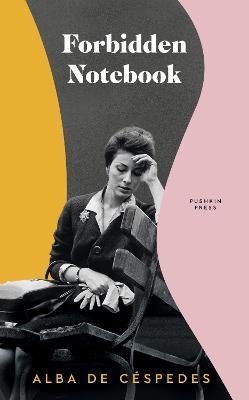
Forbidden Notebook by Alba de Céspedes (1952) tr. Ann Goldstein

I absolutely loved reading this, what a discovery! And brilliantly translated by Ann Goldstein.

Transgressive Writing

Italian feminist writing classic 1940s 1950ssValeria Cossati is a 42 year old Italian working wife, married with two children; one Sunday she is drawn to want to purchase a notebook in a local grocery store, a shop that is only permitted to be open on a Sunday, to sell tobacco. This purchase is her first act of transgression, the shopkeeper will allow it, but insists she hide the notebook in her coat.

The FORBIDDEN NOTEBOOK.

As if tainted by this scurrilous act, the notebook becomes something she must hide, for within its pages, she reveals her innermost thoughts, something she has not shared with anyone for years.

A Drawer Of Her Own, A Name of Her Own

From the first day she has the notebook in her home, she no longer feels safe, her husband, or one of her children might find it. She realises there is no place in her home that is private to her. In front of the family she tells her daughter she disapproves of her having a drawer she keeps locked.

Mirella responded energetically that if she studies so much, it’s because she wants to start work, to be independent, and to leave home as soon as she’s of age: then she’ll be able to keep all her drawers locked without anyone being offended.

Asking why she might want a drawer, at the suggestion that perhaps she too might like to keep a diary, the family laugh at her:

“What would you write, mamma?” said Michele.

Michele, her husband, since his mother died, he has started to call Valeria Mamma, a habit she enjoyed at first but increasingly resents.

Now I see it was a mistake; he was the only person for whom I was Valeria.

In Solitude I Meet Myself, A Stranger

For

Photo by Pixabay on Pexels.com

She writes late at night or at a time when the family aren’t at home, she wills them to leave (buying them tickets to a football match saying it was a gift from clients), so she can have time with her thoughts on the page.

Through her journal entries we discover that the words she speaks aloud to her family are often the opposite of what she is thinking. She never admits to resting, upholding the image of hard-working mother and wife.

I never confess it. I’m afraid that if I admitted I’d enjoyed even a short rest or some diversion, I would lose the reputation I have of dedicating every second of my time to the family. No one would remember the countless hours I spend in the office or in the kitchen or shopping or mending but only the brief moments I confessed I’d spent reading a book or taking a walk.

She criticizes and judges her daughter’s behaviour. Mirella is almost finished her law degree and starts working part time for a prominent lawyer, she is seeing an older, successful and sophisticated man – still a minor, she is reminded so by her mother – yet in the notebook, Valeria admires the independence her daughter is developing, the confidence she exhibits.

Mirella challenges her mother, when Valeria makes her take dinner to her brother who must have been tired after studying all day, she reminds her that they too have been working all day.

When she returned, she said “That is what disgusts me mamma. You think you’re obliged to serve everyone, starting with me. So, little by little, the others end up believing it. You think that for a woman to have some personal satisfaction, besides those of the house and the kitchen, is a fault, that her job is to serve. I don’t want that, you understand? I don’t want that.” I felt a shiver run down my spine, a cold shiver that I can’t get rid of. Yet I pretended indifference to what she said. I asked her ironically if she wanted to start being a lawyer in her own home.

I Am My Own Worst Enemy

In contrast, the lazy son Riccardo, who wants to go to Argentina, who neglects his studies, who speaks to his girlfriend in an authoritative manner, can do no wrong. When he makes an error of judgement, his parents laugh it off. Valeria is resentful when she realises her son is gaining a form of strength from his girlfriend that she couldn’t give him.

I wonder how – with her meager words, her motionless face – she can have bestowed on him such happy confidence…Michele says it’s always like that: the only thing that can spur a man is love for a woman, the desire to be strong for her, to win her.

Meanwhile, when her daughter displays the strength she yearns for in her son, she will have the opposite reaction.

I had to intervene, as when they were children, but, as then, I had the impression that Mirella was the stronger, and for that reason alone I would have liked to hit her.

The Cage Opens, My Inner Self is Overpowering Me

denial silence inability to express forbidden

Photo by Kat Smith on Pexels.com

The manner in which she writes begins to affect her appearance to others, for it injects an atmosphere of fear into her life, it is as if this activity of daring to write her feelings is highly subversive.  For someone usually so cool on the outside, so conformist to what a wife and mother in the 1940’s is perceived to be, the act of writing ignites a disturbing consciousness raising of a deep, inner, feminist desire for expression. Daily, she will explore this on the page, it will morph into an increased awareness, understanding and ultimately change her behaviour.

Her domestic discontent, the suppression of her innermost thoughts, having awakened and found a dangerous outlet, will escape their rigid enclosure and infect everything. She will become at odds with herself.

A Slow Rebellion, A Feminist Awakening

It is compelling and strange, the act of writing begins to have an effect on her relationships at home and at work, it precipitates a kind of mid-life crisis. The stirring up of long suppressed emotions and the witnessing of how a new generation of youth are entering adulthood, awakens a wave of desire and revolt that she both resists and can’t hold back, as her dissatisfaction with her life creates a restlessness that threatens to disrupt and erupt their imperfect equilibrium.

It is a subject explored by Virginia Woolf and others, a subject equally important today, the need for a safe space, time, a notebook – for women to connect to that aspect of themselves that isn’t in service to others, to their inner creativity, expression, joy – to arrive at the place of realising that they too deserve that.

Highly Recommended.

Alba de Céspedes, Author

Feminism Journal writing Womens Rights Italian LiteratureAlba de Céspedes (1911-1997) was a bestselling Italian-Cuban novelist, poet and screenwriter. The granddaughter of the first President of Cuba, who helped lead Cuba’s fight for independence, she was the daughter of a Cuban diplomat and his Italian wife, raised in Rome, Italy. She kept alive her family’s political commitment, often running afoul of Italy’s Fascist regime.

Married at 15 and a mother by 16, she began her writing career after her divorce at the age of 20. She worked as a journalist throughout the 1930’s while also taking an active part in the Italian partisan struggle and was twice jailed for anti-fascist activities, in 1935 and in 1943 after she had joined a resistance radio program, broadcasting from Bari under the pseudonym Clorinda.

By the 1950s, she was known throughout Italy. For years she wrote a popular advice column, tackling questions about marriage, infidelity and love with meditations on art and philosophy. These columns steered readers toward a modern, more secular morality, one that stressed women’s equality.

After the fall of fascism, she founded the literary journal Mercurio and went on to become one of Italy’s most successful and widely translated authors.

The New York Times reviewer called de Céspedes “one of the few distinguished women writers since Colette to grapple effectively with what it is to be a woman.”

Forbidden Notebook was longlisted for the Warwick Prize for Women in Translation 2023.

Further Reading

New York Times Review, Jan 2023: The Transgressive Power of Alba de Céspedes by Joumana Khatib

Washington Post Review, Feb 2023: ‘Forbidden Notebook’ is a slyly subversive novel by a writer once banned by Roxana Robinson

“While I am writing, I confine myself to occasionally reading books that keep me company not as entertainment but as solid companions. I call them books of encouragement, like those by Alba de Céspedes.” Elena Ferrante

N.B. Thank you to the publisher Pushkin Press for providing me with a review copy.

The Fire Next Time by James Baldwin

Delighted to pick this up at a book sale in the small French village of Ansouis recently, it contains two pieces previously published in other formats, brought together in this slim but powerful book, originally published in 1963, a period of time when he had returned from eight years living in Paris and before he returned to live in the south of France for the last 17 years of his life.

I have read one of Baldwin’s novels If Beale Street Could Talk (also made into a film in 2018) and listened to his 1965 impassioned speech in the historic debate between James Baldwin v. William F. Buckley Jr. at Cambridge University on the question: “Is the American Dream at the expense of the American Negro?“.

Letter to My Nephew

The Fire Next Time James BaldwinThe first ‘Letter to my nephew on the one hundredth anniversary of the emancipation’ entitled My Dungeon Shook originally appeared in the Progressive Madison, Wisconsin – a magazine known for its strong pacifism, championing grassroots progressive politics, civil liberties, human rights, economic justice, a healthy environment, and a reinvigorated democracy, is a letter to his 15 year old nephew James (who appears in a photo with his author Uncle on the cover of the book I read).

He shares with him what and who he sees in him, that comes from within the family, qualities that endear and those to be careful of, all from a place of deep love.

He writes to him too of his country and what it means to be of this country, to be black, to be at home in it despite all, to retain dignity and remember, to take inspiration from the long line of poets he comes from and remember one of them who said:

The very time I thought I was lost, My dungeon shook and my chains fell off.

A Letter to Me and You

The second is an essay Down at the Cross first appeared in the New Yorker as Letter from a Region of My Mind and is a wonderful talking through of his own development of self-awareness as he entered adolescence, describing how he and his peers came into a change that transformed girls and boys into something other and the refuges they seemed destined for, given how much beyond childhood wasn’t available to them.

He dissects his own choice to simultaneously seek refuge and revenge by going into the Church and the clarification it gave him, having seen beneath the veneer of that institution, while equally learning to use the tools it flexed to bring about an objective.

“I was saved. But at the same time, out of a deep, adolescent cunning I do not pretend to understand, I realized immediately that I could not remain in the church  merely as another worshipper. I would have to give myself something to do, in order not to be too bored and find myself among all the wretched unsaved of the Avenue. And I don’t doubt that I also intended to best my father on his own ground. Anyway, very shortly after I joined the church, I became a preacher – a Young Minister – and I remained in the pulpit for more than three years. My youth quickly made me a much bigger drawing card than my father. I pushed this advantage ruthlessly, for it was the most effective means I had found of breaking his hold over me. That was the most frightening time of my life, and quite the most dishonest, and the resulting hysteria lent great passion to my sermons – for a while. I relished the attention and the relative immunity from punishment that my new status gave me, and I relished, above all, the sudden right to privacy.”

He also speaks of his meeting and audience with Elijah Muhammad, then leader of the Nation of Islam, and analyses what he perceives of this man and their intentions, beyond the religious element.

america ancient architecture art

Photo by Pixabay on Pexels.com

It is noteworthy to consider this organisation that brought together religion and a population suffering from racism, when one thinks about the fact that most wars come about over religious difference, what terrible outcome might have occurred should they have been successful in the aim of their conversion, to make Islam the religion of Black American people, thus turning an issue of race into one of ideology.

“It is rare indeed that people give. Most people guard and keep; they suppose that it is they themselves and what they identify with themselves that they are guarding and keeping, whereas what they are actually guarding and keeping is their system of reality and what they assume themselves to be.”

Ultimately Baldwin’s message is one of love, for standing up for one’s rights, of dignity and the health of one’s soul, of our responsibility to life. His words seem as relevant today as they were at the time he wrote them.

“I am what time, circumstance, history, have made of me, certainly, but I am also, much more than that. So are we all.”  James Baldwin

Highly Recommended.

James Baldwin (1924-1987)

James_Baldwin_in_his_house_in_Saint-Paul_de_Vence

Baldwin at home in Saint Paul de Vence

James Baldwin was an essayist, playwright, novelist and voice of the American civil rights movement. His essays, collected in Notes of a Native Son (1955), explore intricacies of racial, sexual, and class distinctions in the society of the United States during the mid twentieth-century. 

An unfinished manuscript, Remember This House, was adapted for cinema as the Academy Award–nominated documentary film, the visual essay currently showing on Netflix (in France) I Am Not Your Negro (2016)

Other notable works include Go Tell It On The Mountain, Giovanni’s Room, Another Country, If Beale Street Could Talk.

Further Reading

Interview: Paris Review – The Art of Fiction James Baldwin talking with  Jordan Elgrably

New York Times: James Baldwin – His Voice Remembered; Life in His Language by Toni Morrison

LA Times: 30 Years After His Death James Baldwin Has Another Pop Culture Moment by Scott Timberg


Hadji Murad by Leo Tolstoy tr. Aylmer Maude

The Kindness of Enemies Shamil ImamI read Hadji Murad because it was referenced in the last pages of Leila Aboulela’s excellent The Kindness of Enemies and is set in the same location as the historical part of her book, 1850’s Caucasus. Aboulela’s book centres on the kidnap of A Russian Princess and her time in captivity under the protection of the Highlander Shamil Imam. He wishes to trade her for his son, help captive by the Russians for more than ten years.

Tolstoy was in the Russian army for a time and clearly witnessed many missions. One of the events he had knowledge of and wrote about, though this novella was published post-humously by his wife, was the defection to Russia and subsequent killing of one of Shamil Khan’s chieftans, another Highlander, Hadji Murad.

Though I’m not a huge fan of the classics, there are some exceptions and I did enjoy Anna Karenina, however having read Aboulela’s version which really brings the characters alive and highlights their dilemmas so openly, I found it hard to connect with Tolstoy’s tale, which rarely touches on lives other than the soldiers and noble decision makers.

Hadji Murad Thistle Leo Tolstoy

Photo by nastia on Pexels.com

The opening scene though is brilliant, the ploughed field, bereft of life, everything turned over, leaves only one sturdy thistle, half destroyed but for that one stalk still standing tall, the flower head emitting its bold crimson colour.

The land was well tilled and nowhere was there a blade of grass or any kind of plant to be seen; it was all black. “Ah, what a destructive creature is man… How many different plant lives he destroys to support his own experience!” thought I, involuntarily looking round for some living thing in this lifeless black field.

It is the scene that brings back the memory of this man Hadji Murad and compels him to write out those pages, perhaps purging himself of a ghastly memory.

“What energy!” I thought. “Man has conquered everything, and destroyed millions of plants, yet this one won’t submit.” And I remembered a Caucasian episode of years ago, which I had partly seen myself, partly heard of from eye-witnesses, and in part imagined.

It does make me think that he had intended not to publish it, that perhaps it was written for another purpose altogether. Particularly as, at the time he wrote it (1896-1903)

he was spending most of his time writing his virulent tracts against the art of fiction and denouncing some of the best writers in the world, including Shakespeare.

In conclusion, it highlights to me the importance of reading various perspectives of history, not just one side or the other, but also across gender. It is refreshing to read a female historian’s fictional version of an age old conflict, inhabiting characters who observe from positions of lesser power, of oppression, for their powers of observation are that much stronger than the privileged, it being one of their necessary survival instincts.

Top Reads of 2017

In 2017 I anticipated that I wouldn’t read as much as I had read in previous years, due to giving my reading time over to some personal studies and the reading that would accompany them and to the social visits I had from many of the men in my family, brother, Uncle, Fathers. As a result, less of my writing appeared here in Word by Word and more of it found its way in the old-fashioned long form between the pages of journals that I keep.

However, I did still manage to read 48 books from 21 countries (10 in translation) including Sri Lanka, Trinidad, Turkey, Ireland, Nigeria, Ghana, Palestine, Italy, Canada, Scotland, Pakistan, France, South Africa, Guadeloupe, Greece, Spain, Mauritius, Australia and of course the UK and the US.

Outstanding Read of 2017
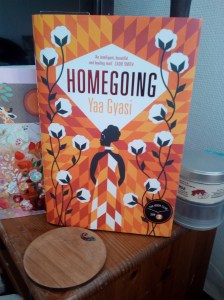
The one stand out novel for me came very early in the year, in February and I knew as soon as I finished it, that it was likely to be my outstanding novel of 2017.

This novel came out with a lot of fanfare and so I was a little dubious to begin with, novels that arrive with great expectations have a tendency to disappoint avid literary readers, so I read with intrigue what other reviewers had to say. Some loved it, others saw it as a collection of stories, and then my very dear Aunt, who totally knows what kind of books I love sent it to me for my birthday. Of course I dove right in.

Here is what I had to say in my review:

“I love, love, loved this novel and I am in awe of its structure and storytelling, the authenticity of the stories, the three-dimensional characters, the inheritance and reinvention of trauma, and the rounding of all those stories into the healing return. I never saw that ending coming and the build up of sadness from the stories of the last few characters made the last story all the more moving, I couldn’t stop the tears rolling down my face.”

Yaa Gyasi was born in Ghana, but lived most of her life in the US. After revisiting Ghana, she began writing her novel by asking herself what it meant to be black in America today and through the lives and descendants of two sisters, her narrative will arrive eventually in the modern day. Here’s what she was trying to do and in my opinion totally succeeds. Read my review here.

I began Homegoing in 2009 after a trip to Ghana’s Cape Coast Castle [where slaves were incarcerated]. The tour guide told us that British soldiers who lived and worked in the castle often married local women – something I didn’t know. I wanted to juxtapose two women – a soldier’s wife with a slave. I thought the novel would be traditionally structured, set in the present, with flashbacks to the 18th century. But the longer I worked, the more interested I became in being able to watch time as it moved, watch slavery and colonialism and their effects – I wanted to see the through-line.

Top Reads 2017

Here in no particular order are a few books that have stayed with me long after I read them and the year has passed.
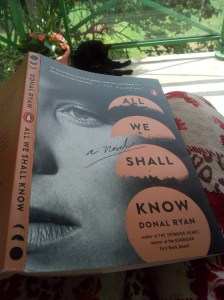
All We Shall Know by Donal Ryan is a slim novella, the third book by this young Irish writer and his best in my opinion.

The story is told in a way that pulls you inside the book and makes you feel it happening. Incredibly the author writes from the first person perspective of Melody, a 33-year-old woman who discovers she is pregnant to a young Traveller, a turning point that disrupts the confined world she has created and had been living in.

He has such penetrative powers of observation, that create a sense of foreboding and intrigue, it’s a book you’ll likely read in one sitting and then wonder in awe, how he did that. Just brilliant.

You can read my full review here.

Salt Creek by Lucy Treloar was published by Gallic Books new imprint Aardvark Bureau, I’ve loved all the books they’ve brought out under this imprint and Salt Creek might just be the best so far. It’s an historical novel, inspired by the events of the authors family, who immigrated to Australia from Britain, portraying one family trying to find success in farming in a harsh, unforgiving environment of South Australia.

This too is a book that gets under your skin, especially as a woman reading about the lives of other women and children (particularly daughters) who are at the mercy of the dreams and aspirations of men, men who have little empathy for how disruptive and out of the comfort zone, this life might be for a woman, and ironically, on the contrary, how quickly young children adapt, how easy it is for them to integrate and thus cross societal taboos when it comes to mixing with indigenous populations. It’s a novel richly populated with colonial issues of the time, that make you wish at times, that it could have a fantasy element, where it all might end differently.

Read my full review of Salt Creek here.

The Complete Claudine by Colette (translated by Antonia White) was my One Summer Chunkster for 2017, a French classic, relatively little known outside France among general readers, but an author who should be more widely read, especially by young adult readers, as it charts the young Claudine’s journey through her last year in school, then her adventures in Paris with her father, through marriage and into maturity.

The book includes an excellent introduction by Judith Thurman, which I devoted a full post to, as she was such a fascinating woman, so far ahead of the era in which she lived, being such a free spirit, determined to experience love, to live her artistic desires and be financially independent, wild and adorable!

Below are the links to the introductory piece and the four books that are contained in this one volume.
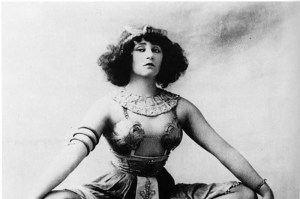
Sidonie Gabrielle Colette by Leopold Reutlinger

A brilliant choice for my one fat summer book of the year.

The Complete Claudine – An Introduction

Claudine at School

Claudine in Paris

Claudine Married

Claudine and Annie
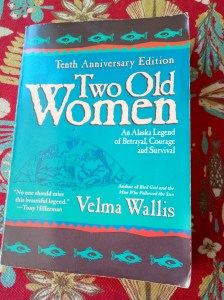
Two Old Women by Velma Wallis is a quirky fable-like book I read about and was intrigued by, recommended by a fellow reader. It is an Alaskan legend of betrayal, courage and survival, one which features, as the title suggests, two old women.

This is one of those stories, like Najaf Mazari’s excellent collection The Honey Thief, handed down in the oral tradition from generation to generation and now finally, thankfully, someone has captured it in print, so it can endure and be discovered by an even wider audience than originally intended.

I loved it because it teaches us the value of paying attention to our (women) elders, who possess much wisdom, something that if ignored wastes away and can even be forgotten by those who possess it. Let not our elders sit too quietly, lest they believe they have creaky bones and limp minds! Read my full review here.
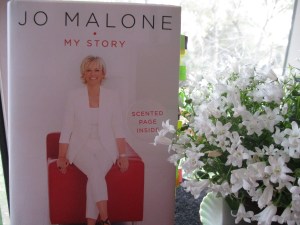
My Story by Jo Malone is one of the six memoirs I read in 2017 and the one that was the most intriguing and personal to me, not because I’m a fan of her perfumes, but because I too have a love of the aromas of plants, flowers, resins, herbs and like to create remedies from essential oils and mix them with other plant oils to use therapeutically.

Knowing Jo Malone to be a high-end luxury brand, I had little idea that she came from such fascinating and humble beginnings and was a woman of such incredible perseverance. As I say below, I loved it!

“I absolutely loved this book, from it’s at times heartbreaking accounts of struggle in childhood, to the discovery of her passion, the development of her creativity and the strong work ethic that carried her forward, to finding the perfect mate and the journey they would go on together.”

Read my full review here.

Worthy Mentions

I could go on, but rather I will just say that I also really enjoyed the excellent debut novel Stay With Me by Ayobami Adebayo, Swimming Lessons by Claire Fuller was an accomplished evocative novel, Nayomi Munaweera’s Island of a Thousand Mirrors was as exquisite, heart-breaking and lyrical as I expected after her brilliant What Lies Between Us I’d read in 2016.

The Woman Next Door by Yewande Omotoso and The Story of the Cannibal Woman by Maryse Condé were a brilliant pair to read together, both placing a black Caribbean woman in South Africa while observing her relations with others around her, in a post-apartheid era. And personally I thought Zadie Smith’s depiction of female friendship in Swing Time easily rivalled Elena Ferrante’s My Brilliant Friend, with her poignant insights and ever-present mastery of that sense of place and community, particularly in London. And though it didn’t reach the heights of Homegoing for me, Madeleine Thien’s Do Not Say We Have Nothing also left an equally strong impression:

“how living through Chairman Mao’s and the subsequent communist regime imprinted its effect on people’s behaviours forcing them to change, leaving its trace in their DNA which was passed on to subsequent generations, who despite living far from where those events took place, continue to live with a feeling they can’t explain, but which affects the way they live, or half-live, as something crucial to living a fulfilled life is missing. “

So did any of these books make your top reads for 2017? If not, what was your one Outstanding Read of the Year?

Happy Reading!

Order now via BookDepository 


Claudine and Annie (Book 4) by Colette tr. Antonia White #WITMonth

After her abrupt departure from Paris back to her father’s home in Montigny, to the village home where she grew up, I was curious to know what was to come of our troubled Claudine and her errant husband.
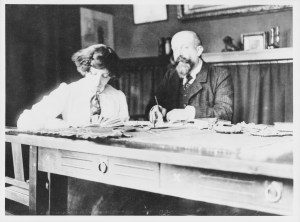
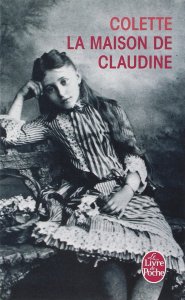
It was something of a surprise to realise that in this fourth book, we are back in Paris, but in the home and seeing through the eyes of a weeping Annie who is the narrator of this fourth book in The Complete Claudine series.

Annie is weeping because her husband of four years Alain, whom she known since she a child and rarely left his side, is about to depart on a boat for Brazil, due to notice of a recent inheritance which necessitates his going there to relinquish assets, prize bulls or something or other!

“Before I had turned thirteen, he was already the master of my life. Such a handsome master! A red-haired boy, with a skin whiter than an egg and blue eyes that dazzled me.”

Annie writes in beautiful notebook he gave her for the purpose of keeping her ‘Diary of his journey’. She reads the list of duties he drew up for her, with his usual solicitous firmness, in which we see reference to Claudine among those she has permission to call on and with which frequency:

“Only one call on Claudine and her husband. Too fantastically unconventional a couple for a young woman to frequent while her husband is away on a long journey.”

However he is more than happy that she spend time with his sister Marthe, about whom he writes:

“My dear Annie will give me much pleasure if she frequently consults my sister Marthe and goes out with her. Marthe has a great deal of good sense and even common-sense under her rather unconventional exterior.”

Annie’s perception of herself at the beginning is defined only in terms of her husband, and her husband’s interests are solely related to himself and how he wishes her to be.

“I don’t know anything…except how to obey. He has taught me that and I achieve obedience as the sole task of my existence…assiduously…joyfully.”

She even goes so far to refer to herself, as if it were a term of endearment as his ‘little slave girl’, a term her husband often called her, of course he says it without malice, with only a faint contempt for my dark-skinned race.

This passive, domestic Annie, grieving for her master husband is something of a disappointment, after the more confident, sensuous and outspoken Claudine, but I’m thankful there is at least an acquaintance, which promises Annie’s potential awakening.

In fact, Annie’s awakening and change in perception begins, soon after, when her sister-in-law makes an unkind comment on a portrait of her brother, likening him to a cockerel, an image thereafter Annie finds hard to remove from her mind, it serves to lift a little the blinkers from her view of this husband.

Parisian friends depart for the summer, to a thermal spa for the cure, to the annual opera festival in Germany, and it is here we see glimpses of Claudine and her husband, showing her grown in confidence within her marriage, having negotiated a way to curb their potentially destructive impulses.

Marthe’s husband is a novelist she continuously pushes to write faster, to hurry deadlines to meet the many financial commitments required to keep their lifestyle in the lavish manner she is accustomed to.

While Annie is able to confide in Claudine, the behaviour of her sister-in-law is too much for her and she decides to return to Paris to consider and prepare for the return of her husband, to make sense of how his absence has changed her.

“To free myself from the obsession – was it really to free myself?…I jumped out of bed and ran to look for Alain’s latest photograph that I had hidden between two sachets.

Whatever had happened? Was I actually dreaming? I could not recognise that handsome young man there. Those harsh eyebrows, that arrogant stance like a cock! No, surely I was mistaken or perhaps the photographer had absurdly overdone the re-touching?

But no, that man there was my husband who is far away at sea. I trembled before his picture as I tremble before myself. A slavish creature, conscious of its chains – that is what he has made of me ..Shattered, I searched obstinately for one memory of our past as a young married couple that could delude me again, that could give me back the husband I believed I had. Nothing, I could find nothing – only my whipped child’s submissiveness, only his cold condescending smile.”

Colette and Willy

Claudine and Annie is very different to the first three books and while I don’t know why Colette turned to an alternative narrator and wrote about such a submissive character, it makes me ponder a corollary with her own life, as she was a free-spirited child, close to nature, who married young to an older man, who put her to work on these novels.

It is said she was no great writer initially, but that he turned her into one, locking her in her room until she turned out something, which he faithfully edited and published in his own name. After thirteen years of such an apprenticeship, she was undoubtedly disillusioned, divorced him and then fought to be recognised for the work she had produced. She was also determined not to be financially dependent on a man.

Claudine and Annie strikes me as a novel of resistance, but using a character that is almost unrecognisable, the alter-ego of Colette perhaps, that aspect of her that was suppressed and oppressed all those years, whose slow awakening allowed her to see that man before her for who he really was, her slave master.

I was asked which of the series had been my favourite and I find I am really unable to choose as they go together so well and should be read as one.

Clearly, as this review suggests, the first three have a particular harmony as they are all narrated by Claudine and more centred around her life and growth, this fourth book is less about Claudine and we see her only from afar, as a confidante of the troubled Annie, however it deserves its place as I suspect there is more to Annie than the character on the page, for me it was read with a question hanging over it in relation to the life Colette was living at the time.

I loved Claudine at School for her exuberant overconfidence and love of nature, Claudine in Paris for her naivety and prudence, realising there was much about life she had still to learn and Claudine Married for the melancholy of marriage, of the realisation of her false ideals and indulgence of strong emotional impulses.

And where to from here? Well, I will be continuing to read a few more women in translation during August, but will also be looking out for La Maison de Claudine (My Mother’s House), a memoir of Sido (her mother) and her own provincial childhood.

Further Reading

An Introduction to the Author, Colette

Book 1 – Claudine at School

Book 2 – Claudine in Paris

Book 3 – Claudine Married

Claudine Married (Book 3) by Colette tr. Antonia White #WITMonth

The impulsive Claudine, thinking a marriage of her own making and choice (not one chosen by her father or suggested by a man who had feelings for her that weren’t reciprocated) embarks on her marital journey which begins with fifteen months of a vagabond life, travelling to the annual opera Festival de Bayreuth, in Germany, to Switzerland and the south of France.

It might have been more enjoyable had she not had to endure the many introductions to numerous of her husband’s friends and their families, whom he made himself most agreeable to and put himself out for, something the young bride was unable to fully appreciate.

“As he explains, with impudent charm, it is not worthwhile doing violence to one’s nature to please one’s real friends, since one’s sure of them anyway…”

Claudine demands mercy and a fixed abode and thus this book of her marriage begins when they are reinstalled back in Paris, however Claudine still feels as though something is lacking. Before they returned she requested they visit Montigny and while unable to visit her childhood home (now rented), they visit the school and for a brief period she reconnects to something of her former self and notes one of the differences between herself and her husband in so doing.

“How willingly I look back over this recent past and dwell on it! But my husband lives in the future. This paradoxical man who is devoured by the terror of growing old, who studies himself minutely in looking-glasses and desperately notes every tiny wrinkle in the network at the corner of his eyes, is uneasy in the present and feverishly hurries Today on Tomorrow. I myself linger in the past, even if that past be only Yesterday, and I look back almost always with regret.”

This living in the past causes her even to forget that she now lives in this new apartment, coming out of her daydream, she readies herself to return home (to her father) only to realise she no longer lives there and ponders where her home really is.

“To go home! But where? Isn’t this my home, then? No, no, it isn’t, and that’s the whole source of my trouble. To go home? Where? Definitely not to Rue Jacob, where Papa has piled up mountains of papers on my bed. Not to Montigny, because neither the beloved house…not the School…”

Her husband decides to re-initiate his “at-home day”, a day when society friends can call to visit, Claudine isn’t too enthusiastic, but agrees as long as she doesn’t have to be the hostess. It is here she will meet Rézi, a woman she is both charmed by and fearful of, one whom she becomes attached to, visiting her daily, encouraged by her husband.

“Rézi… Her whole person gives off a scent of fern and iris, a respectable artless, rustic smell I find surprising and enchanting by contrast..”

Having achieved his objective in coming to Paris, to find his daughter a suitor, Claudine’s father announces he’s had enough of Paris and is returning to Montigny, and taking her cat Fanchette with him.

Claudine is drawn into the intoxicating intimacy of her friendship with Rézi, albeit somewhat bothered by the overly attentive encouragement of her husband.

“The violence of Rézi’s attraction, the vanity of my resistance, the sense that I am behaving ridiculously, all urge me to get it over and done with; to intoxicate myself with her till I have exhausted her charm. But, I resist! And I despise myself for my own stubborn obstinacy.”

Their relationship plays itself out, up to the denouement, when Claudine seeking refuge decides to return to Montigny, to the safety of her childhood home, the woods, her animals whose loyalty she is assured of, and the affection of the maid Mélie and her humble, absent-minded father.

She writes a letter to her husband, the last pages arrive and we are on to the next book, in English entitled Claudine and Annie, in French Claudine s’en va, meaning Claudine Leaves!

Further Reading:

An Introduction to Colette

Book 1 – Claudine at School

Book 2 – Claudine in Paris

Book 4 – Claudine and Annie (to come)…

Claudine in Paris (Book 2) by Colette tr. Antonia White #WITMonth

After years of freedom in her beloved countryside of Montigny, having been Queen of her domain and revered in school, Claudine weakens on arrival in Paris, forcibly confined to the rooms within their new home in illness. She wonders what has happened to her, hardly recognising herself.

Her father assumes his previous habits, embarking on his latest project, confined to his library most days, employing an assistant to help him, a young man who appears to have a crush on Claudine.

Seeking company outside the home, Claudine asks after her father’s sister.

“Why haven’t we seen my aunt yet? Haven’t you written to her? Haven’t you been to see her?”

Papa, with the condescension one displays to mad people, asked me gently, with a clear eye and a soothing voice:

“Which aunt, darling?”

Accustomed to his absent-mindedness, I made him grasp that I was actually talking about his sister.

Thereupon he exclaimed, full of admiration:

“You think of everything! Ten thousand herds of swine! Dear old girl, how pleased she’ll be to know we are in Paris.” He added, his face clouding: “She’ll hook on to me like a damn’ leech.”

She is delighted to finally meet her Aunt and to discover Marcel, the young man Claudine’s age who she is guardian to, in fact Marcel is Claudine’s nephew, sent to live with his grandmother after the premature death of his mother.

If Claudine at School represents the unfettered, exuberant joys of teenage freedom, of the innocent and immature love between friends and the cruel indulgences of playful spite, Claudine in Paris is the slap in the face of regarding an approaching adult, urban world, one where the streets are inhabited by hidden dangers, the skies are more gloomy, people are not what they seem, even old friends from school become unrecognisable when the city and her frustrated inhabitants get their clutch onto the innocent.

Claudine wants to embrace it all with the same fervour she did her old school, but discovers her own prudence, when confronted with the reality of entering adulthood.

“There I was, making myself out completely sophisticated and disillusioned and shouting from the rooftops ‘Ha, ha! you can’t teach me anything. Ha, ha! I read everything! And I understand everything even though I am only seventeen.’ Precisely. And when it comes to a gentleman pinching my behind in the street or a little friend living what I’m in the habit of reading about, I’m knocked sideways. I lay about me with my umbrella or else I flee from vice with a noble gesture. In your heart of hearts, Claudine, you’re nothing but a common everyday decent girl. How Marcel would despise me if he knew that!”

Marcel’s father, whom she calls Uncle Renaud, introduces her to the theatre, she gets outfitted with a more appropriate wardrobe for a social life in Paris, she begins to delight in her new surroundings, although a melancholy often arises when she thinks of her life in the countryside, an affliction she thinks might be resolved by finding the right relationship.

“The lilies-of-the-valley on the chimney-piece intoxicated me and gave me a migraine. What was the matter with me? My unhappiness over Luce, yes, but something else too – my heart was aching with homesickness. I felt as ridiculous as that sentimental engraving hanging on the wall of Mademoiselle’s drawing-room Mignon regretting her fatherland. And I thought I was cured of so many things and had lost so many of my illusions! Alas, my mind kept going back to Montigny.”

She even misses her homework and having to explain those mindless subjects she used to abhor, such as ‘Idleness is the mother of all vices,’ one she has had the misfortune to come to understand better .

A marriage proposal awakens her from her misery, an idea forms in her mind and before we know it, the page has turned and we are into Claudine Married!

Further Reading:

An Introduction to Colette

Book 1 – Claudine at School

Book 3 – Claudine Married (to come)