Lucretia and the Kroons

Unsure quite I was pre-approved to read Lucretia and the Kroons’, published in July 2012, I was however curious to read Victor Lavalle’s novella, described by Gary Shteyngart as a master of literary horror.

After reading an audio transcript of an interview between Lavalle and Amy Minton on Narrative Voice, I decided to download his book and find out what it was all about, it being good to read outside what one would ordinarily choose.

It’s an adolescent literary horror of the tame kind and might even be considered magic realism depending on how you interpret it.  The world Lucretia enters can be seen as a metaphor for that which we either witness as an observer or experience as one who is mortally ill – that place somewhere between the living and the dead. Lavalle’s flourishing imagination takes two girls to a place that may or may not exist on an adventure of a zombie-ish kind.

Lucretia celebrated her 12th birthday without her best friend Sunny because she was too ill to attend. Lucretia is determined to spend time with her friend to make up for it and so arranges with much difficulty for Sunny to spend an afternoon with her, convincing her mother to leave them unsupervised for two hours.

Just before Sunny’s imminent arrival, Lucretia’s brother Louis tells her a story about the Kroons, the people who used to live two floors up and relishes warning her, as only older brothers can do, of the horrors that can happen to children. Lucretia is afraid for herself and especially for Sunny, who lives one floor up, so decides to take matters into her own hands with the intention of rescuing her friend.

The experience of reading Victor Lavalle is a little like Murakami for teenagers, unique multi-layered interpretations of reality or non-reality which require the reader to let go and read with an open mind. I found myself looking for and finding many parallel meanings, not necessarily those the author intended, but that is the magic of the book, that her entrance into this other worldly place can be interpreted in different ways. It did leave questions which a successfully written magic realism story inevitably does about what really did happen and the answer I find is always best when left to the reader’s interpretation rather than dictated by the author.

The author does offer an alternative interpretation in the final pages of the book, which really I almost prefer to ignore, because it was not required and added nothing to the story and might only serve to confuse younger readers and make it less likely to be something they could relate to.

The Tragedy of Lucretia Sandro Botticelli ca.1500-1501 via Wikipedia

I think this book and others like Neil Gaiman’s Coraline are interesting for young people who are drawn towards the much more imaginative, often dark, transformational kind of oeuvres. It is not what I read as a child, but it is what my daughter likes to read and create (graphic novels included) characters that are different from the norm, semi-gothic at times, avant-garde (not even sure of an apt word to describe it) and wonderful in a kind of ghoulish way, though the troubles they must overcome are no different to many others, who might read about them in a more conventional way. I think Lavalle is onto a good thing.

Note: This book was an Advanced Reader Copy (ARC), provided by the publisher via NetGalley.

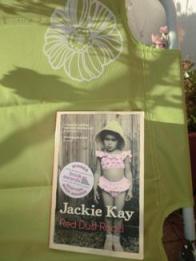
Red Dust Road by Jackie Kay

I discovered Red Dust Road after reading a feature about Jackie Kay in the Guardian’s A Life in Writing series coinciding with the release of her short story collection Reality Reality. Upon reading the interview I learned that she had also recently published a memoir focusing on the story of her adoption by a Scottish couple and her subsequent attempt to find her Scottish birth mother and Nigerian birth father. I ordered both books, keen to discover this writer’s work, particularly as she is also a renowned poet and I am drawn to writers who already have poetry resonating within their voice, and I couldn’t wait to jump into the memoir, more for personal reasons, since I have been on a similar journey myself.

While her brother Maxie said he couldn’t remember not knowing he was adopted, for Jackie, the realisation was one she remembered clearly after watching a cowboy and Indian film and feeling sad because the Indians had lost again and she wanted them to win. After observing that the Indians had her colouring which was not the same as her mother, she asked why. The revelation that followed came as a shock, she cried and worried that ‘not real’ meant her mother was somehow going to disappear or dissolve. But she had been gifted with a loving and sensitive mother, an honest, straightforward and intelligent woman, who clearly loved both her children unconditionally as Jackie Kay displays in her warm, appreciative depiction of the characters involved in this remarkable and exhilarating story.

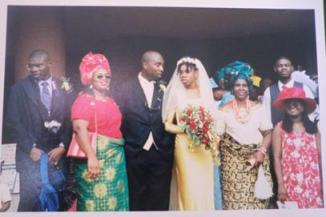
My Friend’s Wedding in Lagos

‘Betrothed’, she told me ‘your father met your mother in the Highlands of Scotland and they fell in love. He was from Nigeria – look, here it is in the atlas – and she was from the Highlands – look, here’s where she was from, Nairn. They were madly in love and they made you, but he was betrothed and had to return to Nigeria to marry a woman he maybe had never met. They do that there, you know. Hard, Jackie, must have been hard’.

In no rush to piece together the puzzle, but knowing that she will, Jackie finds occasion with her work to be in certain places where she can do a little investigative work, she visits Nairn, where he birth mother grew up and Milton Keynes where she lives now; Aberdeen where her father was at university and Nigeria, that supposed foreign land of her ancestors that she had no connection to in her daily life, but has dreamed of and imagined and experiences a kind of coming home when she visits the ancestral village of her father.

Recounting her visit to the village and in particular meeting one of the family members, left pools of liquids in my newly prescribed reading glasses, tears of joy and recognition as acknowledgement is realised. I don’t want to say too much, because there is too much good in reading this for the first time and not knowing what will occur, but this is a wonderful story, narrated without sentimentality, putting the reader right in her shoes, almost experiencing it first-hand.

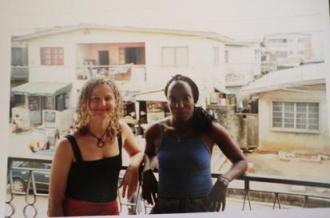
Hanging Out in Lagos, Nigeria

Like so many adoption stories and as depicted so well in Mike Leigh’s ‘Secrets and Lies’, there remains much mystery and secrecy around so many of the stories. For those who have buried that episode in their lives somewhere deep, there is a reluctance to risk the turbulence they perceive it may cause, and even when acknowledged by the parent adoptees are often kept from the rest of the family. This can be one of the greatest risks of pursuing genetic ties, the risk of rejection as an adult with full consciousness, unlike that of a baby; although much research suggests that a baby does indeed have awareness of the separation.

Many doctors and psychologists now understand that bonding doesn’t begin at birth, but is a continuum of physiological, psychological, and spiritual events which begin in utero and continue throughout the postnatal bonding period. When this natural evolution is interrupted by a postnatal separation from the biological mother, the resultant experience of abandonment and loss is indelibly imprinted upon the unconscious minds of these children, causing that which I call the “primal wound”. Nancy Verrier, The Primal Wound, Understanding the Adopted Child

The balcony from where the children sang to me

I laughed when she talked about the experience of being called Oyibo (white person) in the village, causing quite a sensation with her paler skin. She mentions returning to Lagos which she describes as more cosmopolitan and where one is unlikely to hear that word.

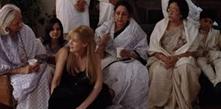
I have to say that I too know that word, from my visit to Lagos in 1999, when I visited for marriage of a very dear friend. In the quarter where I was staying, I was a bit of an anomaly and not only did the children come to stand outside the house in case they caught a glimpse of the Oyibo, they even had a song they sung, which my friend laughed at, remembering she too used to sing it as a child, something about ‘white man, eat more pepper (the very hot pepper soup for breakfast), make your face go redder’, I guess it’s true, we do have an unusual capacity to change the colour of our face when eating something very hot or becoming embarrassed!

There are so many extracts I could paste and talk about from Red Dust Road, the reaction of her own son, the discovery of names, the reading through old archives, visiting buildings from another past, the importance of the imagination and the importance of a true friend, but I would prefer that you read the book and enjoy your own journey and reactions to this wonderfully humane and important story that we are privileged to share.

*

Below, I share a few photos from my visit to Lagos, Nigeria in 1999, an unforgettable experience it was indeed.

Preparing for the Native Ceremony, bride wearing her family ensemble

View from a rear window

Bride with her brother, wearing an outfit from the husband’s family

The theatrical Native ceremony in full swing

Wild

Let me start by saying, I really enjoyed ‘Wild’ and admire the way Cheryl Strayed shared her story. It’s not exactly exciting to spend months hiking a trail, but the author writes about her journey in a way that is as gripping as any novel without being overly melodramatic. I was a little wary before starting, with the shoe falling off the cliff, wondering if she was some ill-prepared novice on a suicide mission, but that is not the case at all, the thing about the shoe probably the only time she does use an anecdote for overly dramatic effect, and to sell a book, why not – it worked.

Cheryl Strayed considers herself a bit of a stray. She changed her name in the process of finalising her divorce, gaining an apt description for how she felt at the time and profiting from the otherwise sad demise of her marriage by being able to offload a hyphenated name she held no sentimentality for.

Born in 1968, clearly intelligent and showing she had potential from a young age, ironically – getting married at the age of 19 was something of a rebellious act. Nineteen, an age of youthful idealism, where if not wary, we risk being fooled into taking the intensity of our feelings seriously and wind up wed. Or am I being just a tad cynical?

It’s a classic coming of age theme, girl with an absent father finds a wonderful man – and Strayed’s first husband Paul is a remarkable individual, who accepts the amicable divorce which Strayed sought by instinct more than knowing, missing a part of herself that she was fast learning couldn’t be fulfilled by another.

Being near Tom and Doug at night kept me from having to say to myself I am not afraid whenever I heard a branch snap in the dark or the wind shook so fiercely it seemed something bad was going to happen. But I wasn’t out here to keep myself from having to say I am not afraid. I’d come, I realised, to stare that fear down, to stare everything down, really – all that I’d done to myself and all that had been done to me.

The death of her mother at 45, knocked her off her straight and wedded course setting her on a side road to self-destruction, though fortunately something inside, perhaps the ever-present loving spirit of her mother (and a few of her sensible genes) mapped out an escape route from her self-destructive self by planning to hike the Pacific Crest Trail (PCT).

Despite the indulgent descent, she doesn’t come across as an addict, more a period of avoidance, indulging in destructive behaviour to avoid looking inward. This is a story of a woman heading towards a healing crisis, someone who needed to commit to a challenge in the extreme to provoke it.

The Pacific Crest Trail zigzags its way 2,650 kilometres from Mexico to Canada through California, Oregon and Washington, crossing desert country, passing forestland, mountain terrain and volcanic lakes. Strayed started her hike in Mojave, California, bypassed a section of the Sierra Nevada mountain range due to exceptional snow condition (very sensible) and ended it at The Bridge of Gods in Oregon.

Crater Lake by MBessey, Wikipedia

Strayed articulates with honest clarity all that brought her to the wilderness and the experience of being there. Writing a journal as she travelled, makes the day by day account as fresh as if it were a recent trip, subsequent years clarify her view, now a 44-year-old woman and mother herself, she recounts her 26th year with the wisdom of hindsight.

As difficult and maddening as the trail could be, there was hardly a day that didn’t offer up some form of what was called trail magic in the PCT vernacular – the unexpected and sweet happenings that stand out in stark relief to the challenges of the trail.

Bridge of the Gods by Cacophony, Wikipedia

As she walked, she was surprised at how the demands of the physical challenge and overcoming them become her sole focus, how she’d imagined dealing with her grief and loss, with days and days of free thinking time was nothing like the reality. On the trail, lapses in attention were on occasion broken by a rattle, warning her of a coiled predator on the path. It wasn’t necessary to think her way towards resolution, but to stride it out fully present allowing nature to knit together the broken bits inside.

Nature is a glorious healer and reading about it second only to getting out there in it. This book is a testament to that and the moments when the author fully embraces it and is filled with the wonder and energy of the natural environment are a pleasure to share. She epitomizes the reward of those who first conceived the idea of a nature trail in the wilderness for the public to provide “a lasting curative and civilising value” and I only hope this book, not only gets widely read, but inspires many others to get out on a nature trail themselves.

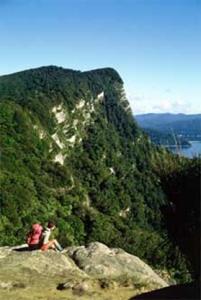
Panekiri Bluff, Lake Waikaremoana

Personally, I can recommend the hike around Lake Waikaremoana, in the North Island of New Zealand, I walked this with my family (there were 7 of us) when I was 14 years old, it is extreme wilderness and I’ll never forget the very fit Peruvian we met on the first night who asked us where the nearest shop was! He became the 8th member of our group and could shuffle a pack of cards like magic. We finished the trail in 5 days and took our new friend whom we all loved home to work as a willing farm hand, he stayed a couple of months until a letter arrived from a girl and off he went to follow her as free spirits do.

*

It was the thing that had compelled them to fight for the trail against all the odds and it was the thing that drove me and every other long-distance hiker onward on the most miserable days.

Titanic Revisited Part II

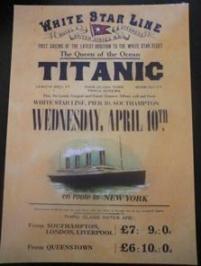
There are so many untold tales and now 100 years on from the Titanic tragedy, stories continue to be retold and others narrated for the first time, linked to the events that unfolded in the wake of the tragedy. Not only do we read accounts of those who were on the boat, but the event is used in fiction, a convenient device for eliminating a character such as the loss of the cousin and heir in Julian Fellowes Downton Abbey series, this event triggering the inheritance crisis that is at the centre of this drama. I read that if all the characters from fictional novels were indeed on the Titanic, it would more than triple the number of passengers she carried and sink it for sure.

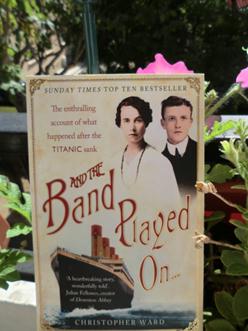
Christopher Ward’sAnd the Band Played On’ relates what happened after the sinking, the confusion and sometimes fictitious messages portrayed by the media, the arrival of the rescue ship SS Carpathia and the subsequent sailing and controversy surrounding the decisions made on-board the Mackay-Bennett, commissioned to return to the site to retrieve bodies. The author is the grandson of Jock Hume and Mary Costin; Jock was on the Titanic and his fiancé Mary awaited his return, three months pregnant with their first and only child.

The Daily Mirror assured its readers that all 2,209 passengers and crew on board the Titanic had been saved  and that ‘the hapless giant’ was being towed safely to New York.

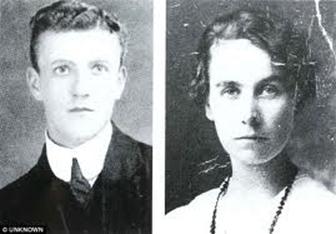
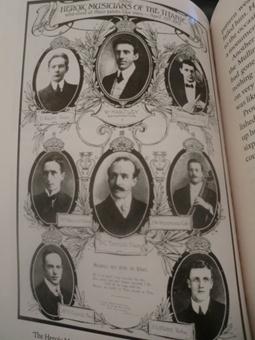
Jock Hume was a 21-year-old Scottish violinist who had made many sailings across the Atlantic; it is believed he lied about his age as he first went to sea in 1905, when he was 14 years old. On the Titanic’s embarkation list, his age is given as 28. He stood on deck with the other members of the band and they played music until it was no longer possible, the band knowing that their act of altruism would likely be the death of them. It is a memory that many survivors recalled, those who were fortunate enough to be waiting in a lifeboat, watching the tragedy unfold before them to tunes that would forever haunt them.

Jock Hume & fiancé Mary Costin

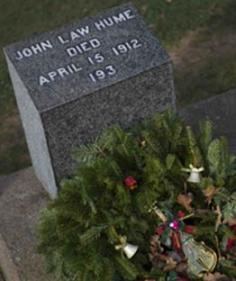
When it was no longer possible to stand, they strapped their instruments to their chests and jumped into the freezing cold waters together. None of the band members survived, however two of their bodies were recovered, Band Master Wallace Hartley (his violin case still strapped to him) and Jock Hume. Hours after the Titanic sank, White Star Line commissioned the Mackay-Bennett to recover the bodies of victims. Of the 209 bodies they brought back, 150 were laid to rest at three Halifax cemeteries. Jock Hume was buried in the Fairview cemetery, a site where visitors still pay their respects today.

The book shares little of the lives of Jock and Mary and focuses more on Jock’s father Andrew Hume, who was also a violinist. He paints an ugly picture of Andrew Hume as a difficult father, a fraudulent businessman and profiteer of his son’s death who rejected Mary and made disturbing accusations against her and the unborn child.

Ward recounts the trial of Jock’s 18-year-old sister Kate who pulled a prank on her father and stepmother in the form of a letter informing them of enemy involvement in her sister’s death during WWI; this escalated into a national outrage and the risk of contravening a newly passed Defence of the Realm Act (DORA) which gave the government wide-ranging powers for the duration of the First World War. Anyone charged under the Act would face a military trial by court martial with a maximum sentence of death by hanging or firing squad.

Heroic Musicians of the Titanic

The account of well researched historical facts following the sinking of the Titanic, lend the story a credibility that kept me interested throughout the book. What left me somewhat bemused was the sense of judgement against the Grandfather Andrew Hume. True, he appears to have been less than the perfect father, but he was a successful and motivated businessman and musician, even if exaggeration and a few lies did assist him (doesn’t that continue today?). However, between these pages, there is little room for compassion for the man, we only see him in the most negative light, which I find a little sad in a story portrayed by his great-grandson. To lose a wife, a son and be subject to the murderous revenge of his daughter surely deserves an ounce of compassion, no matter how unscrupulous he was as a person.

Man Booker Prize Longlist

Originally known as the Booker, it used to have just one criterion – that the prize would be for ‘the best novel in the opinion of the judges’. That remains one of the criteria and we know there have been some off years, it is a unique award, not what you would call popular fiction, it is what the organisers refer to as quality fiction to attract ‘the intelligent general audience’ – sounds a little book snobbish to me, but then  judging book prizes is subjective and often sparks a great debate and sometimes even bad behaviour.

The aim of today’s prize is said to be to promote the finest in literary fiction by rewarding the best novel of the year written by a citizen of the United Kingdom, the Commonwealth or the Republic of Ireland.

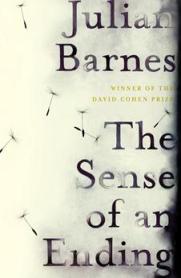
Last year’s winner was Julian Barne’s Sense of an Endingwhich I admit that I have not read yet, Barnes’ being a novelist I’ve started and stopped a couple of times, but will persevere and read before too long.

As an aside, I saw recently that the 2002 winner Yann Martel’s Life of Pi is being made into a film, directed by Ang Lee and today the film trailer has come out and it looks promising indeed.

And so, the Man Booker long list, announced by the judges today, from 147 submitted, the 12 novels are:

Nicola Barker, The Yips

Ned Beauman, The Teleportation Accident

André Brink, Philida

Tan Twan Eng, The Garden of Evening Mists

Michael Frayn, Skios

Rachel Joyce, The Unlikely Pilgrimage of Harold Fry

Deborah Levy, Swimming Home

Hilary Mantel, Bring Up the Bodies

Alison Moore, The Lighthouse

Will Self, Umbrella

Jeet Thayil, Narcopolis

Sam Thompson, Communion Town

Life of Pi

Six novels will be shortlisted and announced on 11 September and the winner on 16 October 2012.

So have you read any on the list yet, any predictions for the shortlist?

Happy Reading!

Summer Reads

I’m not one for compiling lists of what I am going to read ahead of time, because I value too much the freedom and spontaneity of a vast sea of choices each time I finish a book, and often the reading experience will lead me on to the next thing.

Like reading Barbara Kingsolver’s ‘Prodigal Summer’ straight after ‘The Namesake’. How could I know that after listening to the group discussing the book I would have a conversation with a local poet about the beauty of sentences and Jhumpa Lahiri’s essay and that she would tell me I must read Kingsolver’s book.  It was sitting on the shelf unread and thus I abandoned all other reading ideas and jumped straight into it.

100 years on, Titanic Belfast Museum

But I do love looking at the lists, always feeding into the mental TBR list, noting books I might wish to read or to keep an eye out for.

I could say I have intentions for summer, like the two Titanic inspired books I bought on a recent visit to Titanic Belfast, the excellent museum opened in March this year.

‘A Night to Remember’ and ‘And the Band Played On’ also seem appropriate companions to Charlotte Rogan’s ‘The Lifeboat’ which I have on kindle.

To help you decide, I wanted to share this excellent flowchart designed by Teach.com to encourage students to find a book of their choice, there are 101 books shown, inviting readers to consider fiction versus non-fiction, classic or contemporary and many other options.  I keep coming across it and there’s something appealing about viewing images of covers rather than just a list of titles, so enjoy and I hope you find something for your own summer read!


So do you plan your reads or are you open to the spontaneous?
Summer Reading Flowchart

Via Teach.com and USC Rossier Online

Gogol, The Namesake

I picked up Jhumpa Lahiri’s first collection of short stories ‘Interpreter of Maladies’ from the library recently, I seem to have read her work in reverse order, starting with her most recent collection ‘Unaccustomed Earth’ a collection of stories of the experience of second generation immigrants and moving eventually to the book that won the prize.

As I mention in one of my first (and most read) blog posts ‘Why People Don’t Read Short Stories’, it is not my habit to read a short story collection straight through, I stop and start and read them at random and so it has been with both these enticing volumes.

I noticed the bookshop book club was reading ‘The Namesake’ this month and I had just read an excellent essay by Lahiri in the New York Times called ‘My Life’s Sentences’ relating to her love of certain paragraphs in books and the construction of a sentence, so I decided to read her only novel ‘The Namesake’ which had been on the shelf since seeing the Mira Nair directed film a few years ago, which I loved.

‘The Namesake’ refers to Gogol, the Bengali son of the Ganguli family who immigrate to America, a consequence of Ashoke’s (Gogol’s father) changed outlook on life following a serious train accident, a catalyst for change that impacts and shapes the lives of all his family, an event that he does not speak of to his son until he is an adult.

The train is used as a metaphor for change in the novel, many of the significant turning points in the lives of the characters take place during a train journey, which in itself transports people physically from the familiar to a less familiar location and is an environment that one usually cannot escape from.

Not speaking about things is common among these characters, aided by the distant third person narrative which skips from the present to the past, in particular the most dramatic events are seen through the prism of the past, drawing the reader into this protective shield from potentially harmful events.

Gogol, is American, but his Russian name, his Bengali family and their culture mark him as different to many in his community. His home life is different to the average neighbourhood child and he finds himself like many children of immigrants and third culture kids, living between two worlds.

Whether we are conscious of it or not, we all grow up seeking to affirm our sense of personal and group identity, absorbing those questions of Who am I? Where do I belong? Traditionally, the family and the community reflect that notion and it is not until we step outside those comfort zones that we might question it. But for children growing up among worlds and between cultures the awareness comes much earlier.

For most of his life once he becomes aware of the differences, Gogol does what he can to minimise them, seeking out the ordinary, trying to blend in. He tries to suppress his cultural links, portrayed through his choice of girlfriend and change of name.

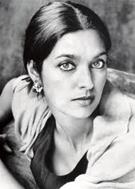
Jhumpa Lahiri

Like Lahiri’s short stories, which portray composites of life for immigrants of first or second generations from India, this book highlights one family’s experience, the dilemmas that each generation face which will mould their characters. We follow Gogol’s journey, try to understand it, imaging ourselves in the shoes of another, witness to the culture clash within this one family.

I consider briefly the clash of cultures within my own small family and understand the inclination to put it toward the back of mind. Writing is a good option for expressing the pathways of these experiences. I wonder if the presence of a large community from the parent culture assists or hinders integration. I find these stories leave many more questions than answers; there is no guide, just individual experience and the necessity to persevere, to survive.

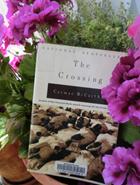
The Crossing

This is the second in the ‘The Border Trilogy’ series after ‘All The Pretty Horses’, that book being my first read of a Cormac McCarthy novel which turned me into a fan. The first book follows two young boys on their way toward Mexico to find work where they endure numerous perilous adventures including prison, first love, betrayal and death. Quite possibly the least bleak of McCarthy’s work, which may account in part for why I enjoyed it so much, but even his more downbeat work has much that I admire linguistically.

In ‘The Crossing’ we meet 16 year-old Billy who doesn’t intend to set out on an adventure, it happens almost by accident, he feels the need to put things right; three times he does so, each effort requiring him to cross the border into Mexico on a personal mission.

The first trip he attempts to return an injured, pregnant wolf he has trapped. Rather than kill her, he tries to return her to the mountains where she came from. The second journey with his brother Boyd is an attempt to retrieve stolen horses and the final crossing Billy makes alone to find his missing brother and bring him home.

To read McCarthy is to take a long, sometimes grim journey; a voyage that traverses rough terrain and encounters more evil than good ,while observing the character moulding experiences of its young male protagonist. But worthwhile for the linguistic pleasure of his descriptions and dialogue (some of it in Spanish).

What does the corrido say?

Quijada shook his head. The corrido tells all and it tells nothing. I heard the tale of the güerito years ago. Before your brother was even born.

You don’t think it tells about him?

Yes, it tells about him. It tells what it wishes to tell. It tells what makes the story run. The corrido is the poor man’s history. It does not owe its allegiance to the truths of history but to the truths of men.  It tells the tale of that solitary man who is all men. It believes that where two men meet one of two things can occur and nothing else.  In the one case a lie is born and in the other death.

McCarthy is no optimist, to take a journey into his imagination is tough and if this novel embraces anything, I think it is futility, the shadow that neutralises youthful exuberance and withers righteous intentions, that lingering threat that will keep an older, wiser man within reach of his homestead and away from the troubles that lie in wait of the restless, idealistic man on a dubious if well-intended mission.

But it is in his nature to make that attempt to set things right, not to let things be, to provoke a response and assert his rights, no matter how foolish they appear or dangerous they become.

I really enjoyed taking my time reading this novel, it is written in language I like to be immersed in and is thought-provoking along the entire journey and long after, I don’t need more than that from a good read and leave you with another favourite passage from near the end.

You look like you might have been down here a while, the man said.

I don’t know. What does that look like?

Like you need to get back.

Well. You probably right about that. This is my third trip.  It’s the only time I was ever down here that I got what I come after.  But it sure as hell wasn’t what I wanted.

A Piece of the Mosaic

Thank you to inspirational talent Kimberly Sullivan who lives in Rome and has written ‘In the Shadow of the Apennines’ set in the mountains of Abruzzo. She tagged me in the ‘Be Inspired’ blog hop hosted by ‘Page After Page’:

All of our stories come from somewhere, whether it be a dream, another book, a life event…So, I thought why not give people the chance to talk about their inspirations as well as their stories?

To participate, I should answer 10 questions about my novel and then tag 5 writer’s:

1. What is the name of your book?

‘A Piece of the Mosaic’

2. Where did the idea of your book come from?

It started with a prompt in a creative writing class at the Groucho Club in Soho; the tutor asked us to spend 5 minutes writing about a character. It was the scariest part of the class, that compulsory, time limited plunge into the unknown with others furiously scribbling away.

Paralysed, I had a vision of the back of a young man standing on a pier smoking a cigarette, gazing out to sea . He was wearing black trousers and a black leather jacket, observed by two schoolgirls giggling on a bench. After the class finished, I could not get that man out of my head.

3. In what genre would you classify your book?

I hate labels, I hope this book crosses as many genres as possible, but if I had to guess I would say it is contemporary, cross cultural fiction.

4. If you had to pick actors to play your characters in a movie rendition, who would you choose?

I don’t know any current Italian actors, so I would suggest a young man of Mediterranean origin to play Alfredo and because this question is too hard, I’m going to adapt it and say I dream of music composed by Ennio Morricone and the film directed by Giuseppe Tornatore director of Cinema Paradiso and Ba’aria. Authentic it must be.

5. Provide a brief synopsis.

Alfredo’s home village – Liguria

Angry with his father after his mother’s death, young Italian chef Alfredo, abandons the fishing village he has lived in all his life and travels to England, eventually finding a job in the seaside town on the South Coast. In return for low rent, he agrees to an unorthodox request from his spinster landlady Claudette, to help her find the sister she has not seen for 30 years since she and her husband immigrated to New Zealand.

Alfredo discovers more than a long-lost sister and the search soon becomes his own, to find Claudette’s niece Amber; the journey leading him towards everything he has tried to avoid in order to learn the truth.

6. Is your book already published/represented?

The synopsis and first three chapters have been read by 3 agents in London, with encouraging responses but declining representation and the full manuscript was requested by the fiction editor at Penguin NZ, who enjoyed it and suggested I seek representation in the UK.

 In order to establish some credibility with my writing, I decided to write a blog before I send it out again, so here I am blogging away, sharing my passion for the written word.

7. How long did it take you to write your book?

The actual writing part probably took about a year, but I wrote it in two bursts, the first half when I lived in London and on a whim travelled to Liguria to spend a week in a fishing village imagining and writing of lives other than my own.

I finished it in the first six months of arriving in France unable to speak French – the best excuse in the world not to have a proper job and to finish a first novel.

8. What other books within your genre would you compare it to? Or readers of which books would enjoy yours?

There are many books about people from the English-speaking world going to live in a non-English speaking country, both fiction and non-fiction, Alfredo isn’t leaving to see the world, he is escaping.  It is a story that questions identity and confronts issues of adoption and family.

I think it will appeal to people who like books that take them to places they dream of visiting and that introduce them to issues from different cultural perspectives, if anyone has any suggestions as to any other book this sounds like, let me know.

9. Which authors inspired you to write this book?
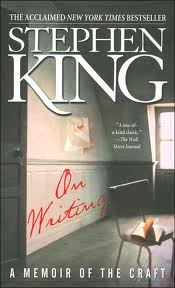
Two authors come to mind immediately, ironically Stephen King influenced this book, because I read his excellent slim masterpiece ‘On Writing’ midway through writing.  After reading it I changed a few things, I stopped writing longhand, I set a 1000 words/day word count (his is 2,000 words/day) and I stopped editing as I was writing, I just wrote it out until the end – terrified it would be crap, but discovered how to create pace.

The other author who spent some time residing in my subconscious was Italo Calvino, it took me a while to figure out what he wanted; now I know – but it’s a secret.

10. Tell us anything that might pique interest in your book?

Here are two extracts that survived that very first writing exercise, sitting in the Groucho Club in London, searching the recesses of my mind for inspiration.

Looking out over the swollen sea, Alfredo smiled knowingly at how her moods changed, one moment bright and sparkling in her refinery, phosphorescence glittering like sequins in the moonlight, the next as she was now, irascible, dark and brooding, like a young lover scorned, beauty transformed into bitterness. He watched a fish jump momentarily from her clutch, as if trying to escape her volatile and uncompromising mood, then witnessed the force of gravity, the sea’s ever-trusting accomplice, toss the cold-blooded vertebrae back into the maelstrom from which it had tried valiantly to escape.

He threw his half-finished cigarette into the sea and she hissed at him in reply. He had never been a regular smoker in Italy and wished he could kick the habit, cigarettes had become a comfort since he came to England, he liked to roll them as much as he liked to smoke them, it gave his hands something to do when his mind was restless. Thoughts extinguished, he walked down the length of the pier, eyes front, not looking at two giggling teenage girls to his right but sensing their eyes following his footsteps, over the wooden planks, where if one’s gaze was concentrated enough, you could see the pregnant swell of the waves below, as the tidal ebb carried them to and from the shore.

And now to tag 5 writers, all of whom are an inspiration to me:

  1. Brenda Moguez – Passionate Pursuits
    – Brenda is a prolific, unique and inspirational blogger with a rich family and personal history to draw on, not to mention a gigantic imagination, it’s just a matter of time before we will be reading her novel, now doing the rounds of agents.
  2. Juliet GreenwoodJulietGreenwoodAuthor – Juliet lives in a traditional Welsh cottage between the romantic Isle of Anglesey and the majestic mountains and ruined castles of Snowdonia, she is living the dream, a published writer and avid gardener; she is an inspiration.
  3. Patricia SandsEveryone Has a Story to Tell
    – Patricia has published a book about friendship, fun and the complexities of relationships among women, drawing inspiration from her own experiences. Every Friday she blogs about France and her current WIP (work in progress) is set here.
  4. Julie Christine Chalk the Sun
    – Julie is a Francophile, she is a reading writer, travels often and writes a fantastic book review. Just waiting for her to plunge right into writing that novel, a WWII star-crossed romance between a young French girl and a German POW, inspired by true events.
  5. Jen ThompsonChronicles of Jen
    – Jen is another writer who loves to read and shares her thoughts when she does, she’s a talented writer, lives in a caravan and is out there observing characters and seeking inspiration while serving hotdogs and popcorn. She may not be able to participate because her idea is so great, someone might steal it J
  6. Nelle NelleWritesI’m going to add one more, because I couldn’t have a list of writers without including Nelle, who not only is a great writer, but is a loyal follower and comments on all my reviews, even though her book budget is severely restricted.

The Pearl

I am content as my first foray into the work of John Steinbeck reveals that he too loves a fable, and like the best of them, lets the story speak for itself.

His short novel ‘The Pearl’ is based on a Mexican folk tale about Kino and Juana, a young couple who live a basic existence, their joy of a first baby threatened when it suffers the sting of a scorpion.

Kino is a pearl diver and on the day he most needs a miracle, the discovery of a large pearl appears at first to be the answer to the couple’s prayer. However, its discovery disturbs the community’s tranquil equilibrium, it seems too much to embrace and while it is in their possession, it wreaks only havoc.

There is a sense of inevitability with this kind of tale, we know the pearl is symbolic, and we recognise that desperate grasping, clutch of desire, laced with fear and stalked by paranoia, the fleeting hope it inspires is stifled by the more pervasive greed and jealousy which quickly degenerate into suspicion and violence.

Despite the inevitability, I read with the wilful hope of an optimist, always searching for some altruistic sign, an indication of man’s humanity, the charitable gesture of an honest person. Steinbeck leads us along on this journey, as we develop our own understanding bathing in his glorious prose.

Now Kino’s people had sung of everything that happened or existed. They had made songs to the fishes, to the sea on anger and to the sea in calm, to the light and the dark and the sun and the moon, and the songs were all in Kino and in his people – every song that had ever been made, even the ones that had been forgotten. And as he filled his basket the song was in Kino…

Taking the pearl from its natural habitat changes its symbolism, for in nature it is pure, lustrous, a thing of splendour and inspiration, it represents the transformation of something irritable (the grain of sand) into something of divine beauty (the pearl). But removing it from the sea will corrupt everything that sees, hears of, imagines or touches it; it becomes representative of greed and avarice, the longer it stays in their possession, the greater its destructive power. But will returning it to nature undo its curse?

In addition to this enjoyable story, the book opens with a foreword which reads like a letter from Steinbeck’s wife Elaine. She shares something of the joy of his writing life, his impulsive and creative attempts to construct the perfect writing environment (including building a writing room in the back seat of his Ford Station Wagon) all of which for me, created an almost familiar context from which to begin reading the great man’s work.

Onward to his next oeuvre, Tortilla Flat awaits.