Are Prize Winning Novels an Indication of Readership or a Nation’s Literary Heritage?

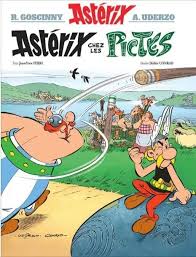
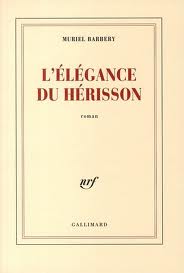
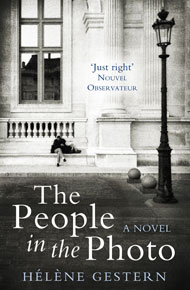
After the BBC’s journalist in Paris Hugh Schofield asked the question about Why French books don’t sell abroad, the Cultural Attaché to the US Embassy in New York, Laurence Marie responded with an extensive list and discussion of a list of French titles that are selling abroad. She also mentions how widely French literature is being translated into other languages and her article makes fascinating and insightful reading. I have collected book covers of some of the works mentioned, plus others, below.

Sometimes we hear about literature from another country when the author wins a major literary prize. However:

Are Prize Winning Novels Really Indicators of a Nation’s Readership?

French Books That Are Selling Abroad!

French Books That Are Selling Abroad!

I don’t think so.

Literary prizes usually have an agenda, if not multiple agendas.

In the case of the UK’s Booker Prize it was set up to try to bring more literary works into the mainstream.

It is known that the prize doesn’t actually influence the reading habits of avid readers. It is targeted at those for whom books are competing against other forms of entertainment.

I like the literary prize season, not so much in anticipation of a winner, but for the longlist, where we are more likely to find something new that might appeal to our taste, because of the variety offered and the number of works screened.

So what are the French literary prizes?

Le Prix Goncourt

I don’t know the French literary prizes well, and Schofield mentions in his article that there are over 2,000 of them, but the Le Prix Goncourt is well-known and has been around over 100 years since 1896.

The last recipient was Pierre Lemaitre, whose thriller Alex  (reviewed here by Savidge Reads who said of it: “a thriller that almost made ‘Gone Girl’ look tame”), was a bestseller last year and his prize-winning novel Au revoir là-haut looks set to be the same.

Nancy, a blogger in the Netherlands whom I admire enormously, tasked herself to read only French novels last year, as an interesting way to learn the language and not only has she succeeded in learning the language, but she has not given up, she continues to read novels in French. You can read her review (in English) of Le Maitre’s Au revoir là-haut here.

The prize was established by Edmond de Goncourt, a successful author, critic, and publisher, who bequeathed his estate to establish an academy and the prize was initially created to allow talented writers the opportunity to write a second book. The prize is seen as being SO prestigious, the prize money has not changed since the early 1900’s and remains something around €10.

Le Prix Femina

Leonora MianoTen members of the Goncourt academy are responsible for the judging of Le Prix Goncourt, and in protest against this all male jury, le Prix Femina was inaugurated, an equivalent literary prize open to all sexes, however the jury is all female.

This year the prize was won by Léonora Miano, a Cameroonian author who has lived in France since 1991, for her 7th novel La Saison de l’ombre (The Shadow Season).

There is also a Prix Femina étrangere for foreign books which was won in 2013 by Richard Ford for Canada and Le Prix Femina essai, a popular genre in France, the essay; this year won by father and son duo Jean-Paul Enthoven and Raphaël Enthoven for le Dictionnaire amoureux de Marcel Proust (Marcel Proust’s Love Dictionary).

2013 Pric FeminaThere are certainly no shortage of prizes here in France (other major literary prizes are the Grand Prix du Roman de l’Academie Francaise, the Prix Renaudot, the Prix Interallie and the Prix Medicis), and their lists make interesting reading, for their longevity and breadth and for that fact, that they are so little known by readers in the English language.

Although prize-winning literature might be translated into English, it may also create a false perception of readership, being skewed towards that overly intellectual perception of literature that Schofield refers to as being elitist, which can alienate the average English language reader (and perhaps also the average French reader).

Every nation is proud of their literary culture and achievements and like to endow their icons of that tradition with prestigious titles, however down here at the ordinary people reading level, there is a whole other canon of literature being read, whether it is in the English language or any other.

CIMG3882To know more about what ordinary readers are immersing themselves in, it is necessary to speak to people like us, those who don’t often have a voice in the media or on a jury, they are the voices that are worth hearing from, even if what they provide is anecdotal evidence.

I am speaking to some of the French people I encounter in everyday life who are passionate readers, to find out what they think about French literature and what they are reading, to be featured in future posts.  And to find out more about all that translated fiction they love to read here.

They’re Reading Thousands of Great Books Here, Cité du Livre – A Local French Cultural Centre and Library

Yesterday via a link on twitter, I read a provocative article in BBC News Magazine by Hugh Schofield entitled Why don’t French books sell abroad? It was an interesting, if superficial article, that made a few observations without going into any depth to understand the contemporary literary scene in France. It asked questions, reminded us of some old provocative stereotypes and did little to enlighten us on the subject of what excites French readers and why the English-speaking world aren’t more aware of their contemporary literary gems.

Kate from BooksKateRates, reads and blog about French literature and wrote an interesting blog post in response to the article and I have been scribbling notes since reading the original article. I plan to share them here, as it is a fascinating subject if one takes the time to research and understand it.

But firstly, I wanted to show you the library, as it offers a glimpse into  how the French absorb literature and culture and it’s one our favourite local hangouts.

Situated in what was a 14,500 sqm match factory, the library, La Bibliothèque Mèjanes, is part of the Cité du livre, a centre for the arts and culture which includes an auditorium for lectures and readings, rooms for more formal lectures, a small cinema showing themed films for 3 week periods (currently Humphrey Bogart films), a music and film lending room, adult and children’s libraries, a press room, an exhibition space (currently celebrating the centenary of Albert Camus), a café and plenty of space for research and study.

Library Press Room

Library Press Room

As we walk in through the enormous sculptures of the covers of Camus’s  L’etranger on one side and Saint-Exupéry’s Le Petit Prince and Molière on the other, we arrive in a long corridor and the reception area for borrowing and returning books.

Turn left and we head towards the reading library where outside the door is a display of books for adolescents. A quick glance at these books shows us that half of them are translated fiction, from South African, German and Hispanic authors.

AsterixInside, we walk past displays of translated literature originating from South Africa, a tribute to Nelson Mandela, then the stacks of Bande Dessinée, the very popular hardcover graphic novels, which even today remain at the top of the French bestsellers list, right now its Asterix chez les Pictes, visiting the people of ancient Scotland!

And here are the novels, in French called romans. Rows and rows of books and you might notice something they all have in common, well, in fact, something they all lack. Colour.

Compare it to the shelf opposite which contains the English language novels. It certainly removes that whole likelihood of an impulse buy based on an intriguing cover.

The Elegance of the Hedgehog

The Elegance of the Hedgehog

Most French literary novels are published without fancy colourful covers and while in the bookshop you might find first editions with promotional covers, there are many more with pale or cream covers without images and a black or red text title.

However, after looking around a little more, I discover that there is colour in some sections. Science Fiction and Fantasy are full of dark colours and the books covers in the section entitled Policiers (Crime) are mostly black. However, novels and poetry, even the section called American Literature pale into insignificance among a sea of white. It reminds me of one of the three principles of France l’égalitié and certainly here, all books have the same chance of being found, whether it’s from the library or in the bookshop, not just due to their bland covers, but also due to a government policy called le plan livre and the fixed price of books.

It costs €17.50 to join the library (adult) and its free for children, there is no cost for lending and no fees for late returns. 16 items (books and CD’s) and 3 DVD’s can be borrowed at any one time for a period of 3 weeks and the first renewal can be done online. The library is also full of computers providing free internet access to all members. My only complain is that its closed on Sunday and Monday. C’est la vie en France!

So what kind of books do French people read today? And is it true that nearly half of the fiction read is translated foreign fiction? And why don’t we see more books by French authors in English bookshops?  These questions and more I will talk about in the next post Reading Contemporary French literature.

PeopleIn the meantime, if you want to know what’s popular in France and available now to read in English, check out Gallic Books, who offer the best of what’s available in French translated in English with new titles coming out every month.

I’m looking forward to reading The People in the Photo by Hélène Gestern due out in English in February 2014.  If you wish to read it in French, it’s already available with the title Eux sur la photo.

Orphan Train by Christina Baker Kline

I picked this book up knowing I would likely finish it in a couple of days.  After a period of slow reading, sometimes we need a faster paced book to get us going again. Orphan TrainOrphan Train by Christina Baker Kline was passed to me by my book buddy and I was warned that it had flaws, and I did notice a definite divide among readers on Goodreads between those who loved it and those who couldn’t get past certain criticisms.

It is a fascinating story in part because of its little known historical background, that in the Depression era of the late 1920’s, early 1930’s (and as far back as 1854) thousands of abandoned and homeless children were rounded up in New York and coastal cities and taken by train to the Midwest of America, where preceding their journey, posters had been displayed in towns announcing that the train would be passing through. These children were offered to those interested in providing a home for them and on the day the train passed through the children were paraded in front of an interested adult audience.

While some were welcomed and loved, unfortunately, particularly for the older orphans, many experienced hardship and were destined for servitude, babies were more likely to attract those looking to create a family; older children attracted those looking for cheap labour.

HomesForChldrenChristina Baker Kline had two grandparents who were orphans, whom she says spoke very little about their experiences and her husband’s grandfather and siblings featured in a non-fiction story called Orphan Train inspiring her to research the subject further.

The book follows several months in the life of 17-year-old Molly Ayer growing up in Spruce Harbour, Maine who has been in and out of about 20 foster homes already and is spending 50 hours doing community service in the home of 91-year-old Vivian, assisting her clear up her attic and interviewing her for a school project. Spending time in her home and listening to Vivian talk about her early life opens Molly’s mind when she learns Vivian’s childhood was another version to her own. It generates in her a sense of belonging that she has not experienced since her father died in a car accident and she starts to become interested in filling in some of the gaps in Vivian’s story as this unexpected friendship develops.

“In truth, though she hasn’t admitted it out loud until now, Molly has virtually given up on the idea of disposing of anything. After all, what does it matter? Why shouldn’t Vivian’s attic be filled with things that are meaningful to her? The stark truth is that she will die sooner or later. And then professionals will descend on the house, neatly and efficiently separating the valuable from the sentimental, lingering only over items of indeterminate origin or worth. So yes – Molly has begun to view her work at Vivian’s in a different light. Maybe it doesn’t matter how much gets done. Maybe the value is in the process – in touching each item, in naming and identifying, in acknowledging the significance of a cardigan, a pair of children’s boots.”

orphan trainsIn between Molly’s contemporary narrative, the author switches to Vivian’s historical narrative spanning twenty-three years from 1929 when her family first arrive in New York from Galway in Ireland. While the narrative changes from one timeline to the next, there are parallels that connect the two and keep the book from reading like separate narratives. Because Molly meets Vivian quite early on, the juxtaposition of time actually keeps the thread of the story alive, as if we are reading what Molly is hearing.

My only criticism was provoked by a nagging question I had over why the story wasn’t more emotionally engaging. There are some significant events and turning points in the story that normally create a cathartic effect, as if the reader were actually experiencing them and American writers in particular do this particularly well. However, upon re-reading I noticed that often at the point where the character shares what is happening, rather than continue with the first person narrative and share the characters dramatic reaction, the first person perspective often changes into the third and looks back at the event, rather than staying and engaging with it. It creates a feeling of detachment and prevents the reader from experiencing the drama, it cuts short what we expect to encounter and halts any feeling of empathy we might have been capable of feeling.

Towards the end of the book, Vivian as a young woman makes a decision that I found surprising and difficult to believe. Usually when we have come to know a character well, their decisions are understood and we develop empathy for the character, even when they make a decision that is counter to our own imagination. I was surprised by Vivian’s decision because despite her experiences, her character development hadn’t suggested to me that she would make such a choice.

Rather than detract from the story though, I think this is something that makes an interesting discussion point, was I the only one to think like this for example? Are the choices that people make, in particular orphans, adoptees and children who have had traumatic childhoods, influenced so predictably by their experiences? Can a writer who has not had such an experience inhabit characters like Molly or Vivian with authenticity?

An excellent read and an insightful look into a lost generation of children whose experience is difficult to imagine.

The Hidden Lamp edited by Florence Caplow

Stories from Twenty-Five Centuries of Awakened Women

The Hidden LampThe Hidden Lamp is a rich source of feminine wisdom, a compilation of one hundred stories, some a mere paragraph long, each one chosen by one woman and commented on, sharing a contemporary perception of how that text speaks to her.

We as readers have the opportunity to receive the wisdom of the original text, reflect on it ourselves, observe the comments of the woman who has chosen to share it with us, often with a personal anecdote in this unique collection of twenty-five centuries of awakened women – those who in Buddhist terms have gained enlightenment.

Most well-known Zen stories or koans (according to American Zen Master, poet and author Zoketsu Norman Fischer) come from three collections Blue Cliff Record (12th C), The Book of Serenity (12th C), and The Gateless Barrier (13th C) and are an almost exclusively male domain.

In this collection, we find the long missing stories of women, shared in a unique collaborative style between its editors and commentators. Many of those interpreting the texts are Zen teachers and many others come from a wide range of Buddhist traditions and lineages, lending the collection an open-minded virtue, accessible to all, whether male or female, and regardless of knowledge of Buddhism philosophy and practice.

“Koans are powerful and succinct stories, most often about encounters between Zen teachers and students. They can be playful and humorous, mysterious, opaque or even combative.”

It is an invitation to consider what has been said, to ponder it and respond ourselves.

Reading the stories make fables seem like children’s stories. These excerpts often require an extraordinary stretch of the imagination to understand and there will be some we are simply not ready to interpret.  For those who have studied them, their revelations have often taken months or even years to realise.  Thanks to the commentaries, we can at least read of another’s insight although this does not in all cases necessarily bring clarity. We must accept that we are not yet ready for their learning.

Joko Beck

Charlotte Joko Beck

One of the first stories came from Peg Syverson’s reflection after listening to Joko Beck* give a talk. A young man raised his hand and bluntly asked “Are you enlightened?” to which she replied “I hope I should never have such a thought!”

Peg Syverson shared that she had thought of this exchange many times since she first heard it, that many of the things this teacher of hers said, surprised her. She likened it to another story of a Japanese master Nan-in, serving tea to a professor, pouring the tea until the cup filled and then overflowed, and still he continued to pour until the professor said, “It is overfull! No more will go in!”

“Like this cup”, said Nan-in, “you are full of your own opinions and speculations. How can I show you Zen unless you first empty your cup?”

The responses are often unexpected and penetrating. Their meaning isn’t obvious on first reading, they require us to look at the question, and at what those who ask are bringing along with the question. Syverson recounts her own audience with Joko, the question she was required to ponder and respond to, then despite several weeks of contemplating an answer, when she gave it, would receive another insightful, thought-provoking response, which upon reflection, changed the nature of her relationship with her son, the subject of her initial question. The clarity of the teacher’s mind in responding so succinctly is astonishing.

The answers seem nearly always to require that you go away and reconsider the exchange, eventually revealing the answer that perhaps was always within you. It is a kind of active learning, rather than the passive receipt of an interpretation and response, which can easily be set aside or forgotten.

The Hidden Lamp is not a book to read in one sitting, it is a reference to draw on now and then and a rich source of ancient feminine wisdom and modern thought, whose content is valid for one and all. Some of the names of the women in the book will be well-known and others less so, however their contributions might as well be nameless, as it is the story that brings the richness to the reader, the reputation of all the contributions having already been established.

His Holiness the 14th Dalai Lama of Tibet

His Holiness the 14th Dalai Lama of Tibet

Personally I always have at least one text of Buddhist thought/philosophy on the bedside table, I find them a quiet source of intellectual wisdom that easily resonates with my own world view.

Whether it’s a collection like this or one of the many excellent works of the Dalai Lama, or the pocket books of Pema Chodron, they all share a wisdom that comes from the practice of kindness, empathy and altruism while providing a prism of compassion through which to observe our everyday thoughts and encounters. A kind of preventative medicine for the mind, these awakened beings have spent years pondering the nature of suffering and both their practices and their words are a thoughtful guide and nurturing remedy to all negative emotion or thought.

* Joko Beck (American, 1917 – 2011) was a pianist and mother of four, who began Zen practice in her 40’s, founded two schools and wrote two books Everyday Zen: Love and Work and Nothing Special: Living Zen.

Note: This book was an Advance Reader Copy(ARC) provided by the publisher via NetGalley.

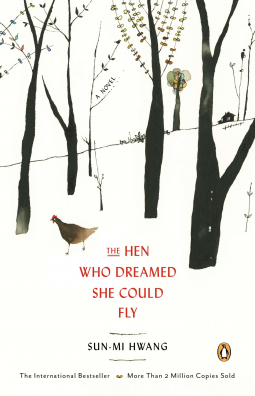
The Hen Who Dreamed She Could Fly by Sun-mi Hwang tr. Chi-Young Kim

This book is proof that it is not just reviews and the recommendations of friends that help us choose which book to read next, that an excellent cover and title coupled with an alluring blurb can suffice to motivate that impulse.

The HenThe cover made me pause and the promise of an inspiring fable in a short piece of internationally acclaimed translated fiction sounded enticing enough, but the discovery that the author Sun-mi Hwang had herself overcome the obstacle of childhood poverty and found a way to educate herself to achieve her dream to read and write sealed it.

Like Margarita Engle’s novel in verse The Wild Book and Tove Jansson’s Summer and Winter Book’s, sometimes a mood enhancing book is just what we need to bring ourselves back to life’s simple values for encouragement and reassurance.

The story revolves around ‘Sprout’, a battery hen frustrated with her caged life laying eggs in a sloping wire cage which causes her eggs to roll away, enabling the farmer to conveniently collect them to sell. She hatches a plan to escape, seeking a life outside the barn where others animals appear to roam free and where she feels it most likely to be able to achieve her dream of nurturing an egg to life.

Along the way we meet the old dog that guards the barn, the rooster who crows in the morning, the yard hen, a community of ducks and the lone hungry weasel.

“Whenever she saw the yard hen, Sprout couldn’t stand it – she felt even more confined in her wire cage. She too wanted to dig through the pile of compost with the rooster, walk side by side with him, and sit on her eggs.”

010113_1257_AMonthinthe2.jpgSprout escapes the coop and directs all her energy into survival. She learns who her friends are and who to be wary of.

She discovers the perceptions that govern the role each animal is set to play.

“Yes, you’re both hens, but you’re different. How do you not know that? Just like I’m a gatekeeper and the rooster announces the morning, you’re supposed to lay eggs in a cage. Not in the yard! Those are the rules.”

No fairy tale, this is fable at its best, confronting the reality of stepping outside the role society has dictated (even if nature has not divined) and showing that while achieving the goal can be possible, it is a route fraught with challenges. Reminiscent of Orwell’s Animal Farm or Adams Watership DownSun-mi Hwang brings us her perception of society through characters that we recognise with our own interpretation and reminds us that even the most far-fetched dreams are worth pursuing, no matter what the odds.

We read with trepidation and a strong desire, not so much for Sprout to succeed in her quest, but to survive. It is a delightful and touching story, deserving of its success.

Note: The book was an ARC (Advance Reader Copy) provided by the publisher via NetGalley.

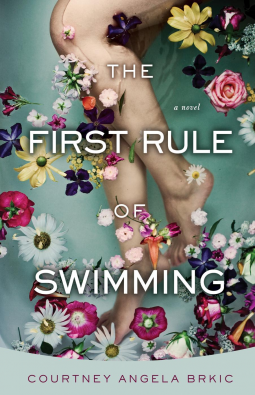
The First Rule of Swimming by Courtney Angela Brkic,

Without planning it, I have just read one book after another set in Croatia, one set in the fictitious village of Gost on the mainland the other on a small island.  Aminatta Forna’s The Hired Man and Courtney Angela Brkic’s The First Rule of Swimming portray different lives and paths, but complement each other in portraying contemporary life, where the past is ever-present and no one likes to speak of those who are absent.

First RuleThis is the first work of Courtney Angela Brkic I have read though I see she has published a noted collection of short stories entitled Stillness and a memoir The Stone Fields, short-listed for the Freedom of Expression Award.

The prologue of The First Rule of Swimming starts on the fictitious island of Rosmarina, Croatia in 1982 when 8-year-old Magdalena is reading a letter from her cousin Katarina, a letter that has clearly been opened and resealed.

“Katarina’s family had left when Magdalena was only two, a shadowy period that she tried hard to recall. But she was never sure if the faces she sometimes pictured were real or simply her imagination.”

When she writes the return postcard, her grandfather writes one as well, gluing it to hers – a message – to which they receive a cryptic reply about a cat, which causes Magdalena some confusion and her grandfather immense physical pain.

The book setting then moves to the present, with Magdalena taking care of her grandparents, her grandfather now in a stroke induced coma, but refusing to let go. Though most of the island’s youth leave to find jobs on the mainland, her strong connection to the island keeps her there pursuing a teaching career and ignoring any pressure to do otherwise, even at the expense of what seems like pending spinsterhood.

NY harbourBut when her sister Jadranka leaves for New York and disappears without trace a few weeks after her arrival, she leaves the security of the island to go after her, followed soon after by her estranged mother.

“It was as if a cord connected her to Rosmarina, and only for Jadranka did she have the will to fight against it. This attachment was both habit and biology. In her childhood a researcher had studied the islanders’ sense of direction. It was a capability he explained in terms of the Inuit in the far-off Arctic, who could find their way even through blizzards.

“It’s a rare genetic gift,” he had explained to her grandfather. The scientist had concluded that not everyone possessed the skill – which he termed innate nautical orientation – but she belonged squarely to the group that did. “

Behind these events is the slow revelation of what happened to certain members of the family including the girl’s Uncle and the truth about their father, something their mother has always kept from them and that appears to be connected to Jadranka’s disappearance. It reveals an era of suspicion, denunciation, false imprisonment and vendetta. Life was dangerous for anyone associated with those who held opinions not deemed favourable.

“Grudges went back generations, and children were judged by things their parents had done, some of them years before their birth. Small wonder, Magdalena sometimes thought, that her sister preferred places where nobody knew her.”

The two girls know little of the past, but will come to learn how much it has affected their present, the journey to New York will help them find answers.

It is a compelling read that like The Hired Man, will leave the reader curious and disturbed about the recent past and that tendency for humanity to brush things under the carpet as if they never happened.

Note: This book was an ARC (Advance Reader Copy) provided by the publisher via NetGalley.

The Hired Man by Aminatta Forna

Aminatta Forna

Aminatta Forna

Aminatta Forna has written two previous novels, The Memory of Love and Ancestor Stones both set in Sierra Leone where she was raised. She has also written an investigative memoir delving into the political events around the seizure and execution of her father on false charges of treason entitled The Devil that Danced on the Water that I plan to read.

After reading The Memory of Love last year and seeing her interviewed, it is clear she is a writer of courage and I knew I would be reading whatever she produced next.

The Hired ManJust as with The Memory of Love which is set in the aftermath of conflict of that disconcerting type where civilians mysteriously disappear and terrible unspoken things happen, in The Hired Man, we find ourselves following in the footsteps of 46-year-old Duro, an unmarried man living alone with his two dogs, his sisters and mother having already fled whatever horror occurred in their home town of Gost, a fictitious town caught between opposing sides in the former Yugoslavia.

“They have taken up a position south of the town opposite the army in the north. In between lies Gost. The army want to reach the coast but we stand in their way. Each side has roadblocks you have to pass through, on the road north and on the rods south out of Gost. Same questions, but different answers to each.”

For much of the early part of the book, we don’t know what has happened there, but Forna a somehow infuses the story with that sense of knowing yet not knowing, creating an underlying, slow building tension and unwillingness to trust any of the characters we come across. The events may be long in the past, but their memories feel as though they are not far from the surface and that anything could happen. And strange things do occur.

Into this undercurrent arrive an English woman Laura and her teenage son and daughter. Seemingly oblivious to the effect of their presence on the local villagers, they hire Duro and set about making improvements to the home they have purchased from with a view to doing it up and selling it on.

“I realised I’d upset the balance of thing. That I was a hired man and she was my employer made Laura relaxed in having me around the house. A mistake to take a day away without explanation: it made her feel she wasn’t the boss.”

Territory that made up the former Yugoslavia

Territory that made up the former Yugoslavia

We read the story through the eyes of the hired man Duro and interestingly Forna has chosen to narrate the story around Laura and her children in the past tense while Duro’s reflection on the past are written in the present even though they occurred many years before. It has that effect of making the past feel more present and could be how she succeeds in creating that tension, we read about the past as if it happened only recently.

“Vinca Pavic is an angry woman and her anger shows in the set of her teeth, the lines around her mouth into which her lipstick bleeds, the way she folds her arms. When she laughs it is to mock and in this she finds an ally in her son. But Anka, Anka was born with joy in her soul, to which they feel she has no right. Behind it all, as with so many things in life and in death, lies envy. In the end it gets the better of them.”

The Hired Man is a brilliant, quiet portrayal of the aftermath of conflict on a community, it goes some way towards explaining the meaning behind the silences, about why some can’t bear to stay and others can not bear to leave. It reminds us that nothing is forgotten and is a warning to outsiders to take care, that ignorance or indifference are sometimes deemed sufficient to warrant punishment.

Additional Reading:  Aminatta Forna: A Life in Writing provides excellent background reading and context to the book.

Note: This book was an Advance Reader Copy (ARC) provided by the publisher via NetGalley.

Unsettled: A Search for Love and Meaning by Neelima Vinod

Neelima Vinod is a poet whose work I have enjoyed reading online at Neel The Muse for a while, so I was intrigued to read her novella when learning that she had been published, wondering how a poet might fill the page when the words and sentences were required to touch both margins of the page continuously. Curious too, as it delves into the supernatural within the context of the story telling heritage of southern India, not quite the same as that contemporary foray into what is we refer to as the paranormal.

UnsettledBeing a novella, it is a relatively quick read and starts out as a love story, or its anti-thesis as it is clear that the relationship between the couple is being threatened by perceived jealousy. To heal their relationship Divya and Raghav seek out the services of Dr Ray, a yogi.

The Doctor sends them on a quest, to retrieve the ancient Scrolls of Love from an old abandoned house about which many stories have been told and which no one wishes to enter, in fear of what it is said to be possessed by. The Doctor’s motives do not appear to be entirely altruistic, a twist in the story that was almost too subtle and had me rereading passages to observe him more closely than I did the first time through.

house-next-door“It is in the one hundred-roomed mansion at Cherakad that the Scrolls of Love were buried during the terrible floods. It nearly wiped the village off the map centuries ago. No one has confirmed it though.

Archaeologists I have talked to have told me that the house lies abandoned. Any one in possession of the Scrolls would understand love’s true secret-folklore at its best.”

Parallel to the contemporary love story, we read a tale of the Royal Court poet Shankara, banished from the kingdom of Cherakad five centuries ago after falling out of favour with one of the King’s concubines Meenakshi. Shankara roams the land in confusion and without purpose until he encounters a woman in white, Thathri, the same woman Divya has been dreaming of, whose story she had been told by her Grandmother when she was a child.

As the book progresses, connections between the tales arise as the mystery unravels, the past and the present become entwined as the couple attempt to conquer their quest and resurrect their struggling relationship.

storytellerWell written, it’s an enjoyable read and one that requires careful attention in order to make the connections clear. I am sure there are things I was not aware of, I even wondered if Shankara was based on a real poet and whether this fable  had connection to stories already told and passed down through families and villages. Sadly, it is a dying art, the gift of oral story telling, threatened more than ever by the technology of today’s modern world.

Its title might suggest romance, but the dark and foreboding cover and spectre like presence within suggest it may be more of an alternative ghost story. Unsettling indeed.

Thank you Neelima for sending me a copy of your e-book.

If you are interested in reading it, you can find a copy at the Indireads Book Store.

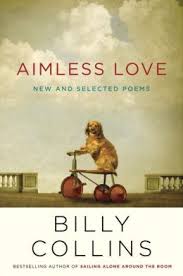
Aimless Love by Billy Collins

Aimless LoveI am a relative newcomer to the poetry of Billy Collins, but thanks to an admiring fan, I was lent a copy of his collection Sailing Alone Around the Room which was an extremely readable, entertaining and at times even hilarious read and so when I saw this new collection was coming out I requested it.

Who even knew that one could study for a PhD in Romantic Poetry? Does that make him of Doctor of Love I wonder?

His poems speak of ordinary things but steer clear of cliché, and Aimless Love as a title for this collection of collections as well as some new poems, seems perfectly apt for all manner of common things he appreciates and shares with us.

Aimless Love brings together selected poems from previous collections as well as some new poems

Here are a few extracts from moments of pure joy in reading Billy Collins Aimless Love:

The Country

I wondered about you

when you told me never to leave

a box of wooden, strike-

anywhere matches

lying around the house because

the mice

might get into them and start a fire.

But your face was absolutely

straight

when you twisted the lid down

on the round tin

where the matches, you said, are

always stowed.

Who could sleep that night?

Artwork by our Allia

Artwork by our Allia

Who could whisk away the thought

of the one unlikely mouse

padding along a cold water pipe

behind the floral wallpaper

gripping a single wooden match

between the needles of his teeth?

And who could not be tempted to read and understand more of this familiar relationship between the poet and his parents in:

No Time

In a rush this weekday morning,

I tap the horn as I speed past the

cemetery

where my parents lie buried

side by side under a smooth slab

of granite.

And this line from a poem called

Monday

Just think –

before the invention of the window,

the poets would have had to put on a jacket

and a winter hat to go outside

or remain indoors with only a

wall to stare at.

There are other fabulous poems like The Great American Poem, Horoscopes for the Dead, and Ode to a Desk Lamp.

But just as good as reading his poetry is listening to him read aloud, he has a melodic voice that lulls the listener into a kind of warm familial comfort, his words caress like a gentle tide of steaming bath water with the scent of Cedarwood. Well, perhaps if you close your eyes while listening, like I do.

Here he is reading just a few days ago, the title poem to this collection Aimless Love, so sit back, close your eyes, listen and be soothed:

Note: This book was an Advance Reader Copy, provided by the publisher via NetGalley.

Helium by Jaspreet Singh

I doubt this book would have crossed my path, had it not been sent to me by The Guardian in recognition for an extract quoted from my review of Caroline Smaile’s The Drowning of Arthur Braxton, one of my outstanding reads of 2013.

Helium2However, I am glad that it did, as it is an example of important fiction that crosses between cultures and provides us with insights into other worlds and perspectives, lessening our ignorance of events which often account for the unspoken attitudes and undercurrents present in countries that visitors, travellers and outsiders rarely gain access to. We are seeing more novels written in English from immigrants written from outside their country, alluding often to tragic events that have happened in their home country; for many, the reason they have fled.

Last year one of my favourite reads was one such book, Vaddey Ratner’s In the Shadow of the Banyan, based on a true story of the survival of seven-year-old girl of royal descent under a despotic regime in Cambodia and fictionalised as a tribute to those who were lost, in particular her own father. It is a stunning portrayal seen through the eyes of a child with both a chilling and hopeful view of humanity.

Indira Gandhi

Indira Gandhi

Helium centres around one man, Raj, a scientist who was an only child; we learn he left India 25 years before and will discover the reason why, along with his continuous fascination for science, the periodic table and memories. One memory in particular influences his journey and decisions, the attack of his college professor, a Sikh, who along with thousands of others in 1984 are targeted and killed in revenge for the assassination of the Prime Minister Indira Gandhi (daughter of India’s first Prime Minister Jawaharlal Nehru), in what was believed to be a government assisted genocide.

“How wrong Professor Singh was that day on the train when he said that the three most important questions for us concerned the origin of the universe, the origin of life and the origin of the mind. He forgot to add other questions or shall I say he forgot to ask the three really significant ones: Why do people respond differently to traumatic events? How do we remember the past? Why when ‘meaning’ collapses in our lives, do some of us seem to locate a new ‘meaning’?”

Rashtrapati Niwas, built 1888  Source: Wikipedia

Rashtrapati Niwas, built 1888
Source: Wikipedia

Raj, who faces his own challenges as a husband and father back in the United States, returns to India and unable to face his father, whom he suspects of being involved in those events, looks for the wife and children of his Professor and finds her working in an archive at Rashtrapati Niwas, formerly the Viceregal Lodge in Shimla, Himachal Pradesh.

“Clara has her romantic ideas of India and she clings to those ideas and I am a personification of those ideas. I am not allowed to narrate the dark side of that romance – how ugly the collective consciousness of a nation can be.”

Singh references Primo Levi’s The Periodic Table, a novel of science and memory and a man who survived persecution in the concentration camps of WWII and who wrote that outstanding, compassionate masterpiece If This Is A Man: The Truce which I was fortunate to read last year. And the black and white photos throughout the text are a sure reference to W.G.Sebald, another author he admires and relates to. They have the effect of making the reader almost forget that this is a work of fiction, and are a more than subtle reminder that the background events certainly did.

Jaspreet Singh’s character Raj is conflicted, being neither victim nor perpetrator of any crime, except perhaps ignorance, he reads Levi but can’t embrace his humanity or gift for forgiveness. He is angry, as much with himself as anyone else, and must live with the knowledge and acceptance of his role as bystander.

It is a novel that addresses the attempt to escape the past through distance, both physical and cultural and is a reminder that even as many as 25 years will not keep the past from affecting the present when confronted with people, places, books and reminders of that past, that without facing up to our inner demons, they will likely continue to possess and haunt us.