Before I Go to Sleep by S J Watson

SleepChristine wakes up in the morning and doesn’t recognise the man sleeping in the bed next to her. Nor do the photos posted in the bathroom assist her, they refuse to evoke any memories. Every day she wakes with the same feeling, she remembers nothing of the past 20 years and is surprised to find herself middle-aged and wonders who is in the bed beside her.

Her doctor suggests she begins to write things into a journal that she can read each morning, promising to call her in the morning to tell her where the journal is, so she can quickly bring herself up to date with what she has leaned the previous day.

He also suggests she keeps it to herself, that she not share it with her husband. Can she trust her doctor, can she trust her husband? The journal both helps and confuses her, until ultimately it reveals what she needs to know and the incredible facts that have been kept from her.

Before I Go To Sleep by S.J.Watson is an award-winning crime/thriller novel, a best seller when it came out – however it is not the kind of book I would usually choose to read, which probably best explains why it was an okay read for me and not one that I can say too much about.

It’s a suspense novel, however because a large portion of the novel is taken up with reading Christine’s journal, (about two-thirds of the novel) the suspense is delayed (in my opinion) until the last 50 pages and that middle section is more one of mild intrigue. It can get a little repetitive as each day she must go through the same thing, slowly learning more about what happened to her to cause her amnesia and what has happened in the last twenty years. A very long time.

The reader becomes increasingly suspicious despite Christine’s best intentions to convince us that everything is okay. S.J.Watson is good at withholding any clue to what will eventually be revealed, however some of these absences felt inauthentic, as if Christine wasn’t really interested in finding out more about the people around her and why there only appear to be two people in her life, her husband and her doctor. It might have been more intense if she’d been more curious and insistent to know the truth and challenged those she is in contact with about the inconsistencies.

One of the measures of a great book for me is to highlight passages throughout a book, sentences and paragraphs that make me want to reread, that create an image, that evoke something, they are the literary gems. This is not that kind of book, but I am happy that it was suggested by the book club, we had a very interesting discussion about it and the idea of losing one’s memory or another sense.

And for fans of the book, it looks like there is a film in the making, with Nicole Kidman as Christine:

Sleep Tweet

And in another thread on twitter S.J.Watson admits that he has finished his long-awaited, next book.
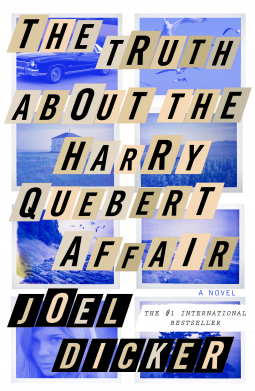
TruthAboutHarryAnd even though I say it’s not my genre, I am about to read another, knowing that it too probably won’t offer much in terms of literary highlights, but this thriller is a French translation that is taking the world by storm.

It has already become a bestseller in France with over 2 million copies sold in Europe and was part of a heated auction for the English publication rights. It has to be read if one wants to contribute to the conversation after all.

So watch out for The Truth about the Harry Quebert Affair, the debut novel by 28-year-old Swiss author Joël Dicker, likely to be a popular read this summer.

Interview in The Observer Joël Dicker: ‘I lost a bit of control of my life’

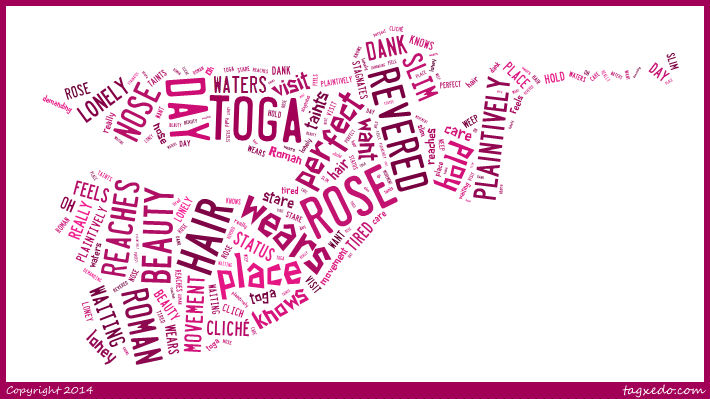
The Toga and the Rose by Sheighle Birdthistle

The Toga and The Rose is Sheighle Birdthistle’s latest collection of heartfelt poetry.

An Irish poet who founded the Poetry Corner in Aix-en-Provence, a group that meets monthly in the English bookshop, Book and Bar, Sheighle’s work is a wonder to read and arresting to listen to.

As I said to her after reading the collection the first time, there were moments when I realised I was holding my breath until the end of the poem, as if breath or movement would break the spell and silence might help ensure an ending I could cope with.

Her poems navigate the roller coaster of life’s events and emotions and she captures many of them with a choice of words that invoke powerful meaning and create suspense. From the darkest depths to the cusp of enlightened contentedness, it is a ride worth taking.

TogaFrom The Hand of God Gloved,

a life that should have been yellow, coloured grey’

to the desolation of Syria where

‘the falling leaves drop like huge tears of sorrow,

On the poppies scattered at their roots.’


and the absence of words in A Starry Night,

Words, stars, words blending

And rending us poets rigid with wonder

As we ponder.’


The poems of the Son and Daughters,

The Four Souls of My Body

‘we love each other, in different ways,

tempests and gentle torments,

Flowing like angels wings’

The Toga and The Rose

The Toga and The Rose

From family to humanity, we are affected by emotions both familiar and far from the hearth.


The Lady hostage of Burma,

Katrina of New Orleans


interspersed with many starry nights, sometimes bearers of hope, on other occasions harbingers of catastrophe, predictable only in their unpredictability.

Comedie de livreSheighle will be reading from The Toga and The Rose this weekend at La Comédie du Livre literature festival in Montpelier, where you can buy a copy of her book or via O’Mahony’s Booksellers and a range of online bookshops.

A grand weekend of literature of not just poetry, but also a focus this year on Scandinavian writers, including Jón Kalman Stefánsson, who the Shadow International Foreign Fiction Prize Team just voted as their choice for the top prize for his book The Sorrow of Angels.

Prayers for the Stolen by Jennifer Clement

bringbackourgirlsStolen women. It sounds like an oxymoron, as if those two words cancel each other out, they should not go together, it should not exist.

In the last month the #BringBackOurGirls campaign has raised awareness of the plight of stolen girls and women, the kidnapping of 200 high school girls from a boarding school in Nigeria bringing our attention to the proliferation of crimes that exist concerning the stealing or kidnapping of women. Modern day slavery. That it took so long for the story to come to the attention of the media and politicians disgusted many, making women feel like many third world countries feel – unimportant, insignificant, forgotten.

prayers for the stolenPrayers for the Stolen is the story of a girl named Ladydi, born in the mountain village of Guerrero in Mexico, what was once a real community, until it was ruined by the toxic effect of drug traffickers and immigration to the United States.

“Our angry piece of land was a broken constellation and each little home was ash.”

In this community families pray to give birth to sons, for daughters are cursed with everything that will mark them with the potential to become stolen. From a young age they blacken their faces and teeth, cut their hair short and their mothers clothe them as and tell people they are boys. They dig holes in the ground outside where they live and tell the girls to run and hide when they hear the big SUV’s with blackened windows approaching.

And when they hear the army helicopter, they run even faster, for it contains an even more deadly menace.

Ladydi lives alone with her mother, her father is working in the US. In the beginning he sent money but not now, some even say he has another family. Her mother plots her revenge against him daily, she has been doing so for a long time, before he even left she was consumed with vengeance, the naming of her daughter was one of her first acts of revenge.

Ladydi is friends with Maria, saved by a birth defect and Paula cursed by being born not just a girl, but a too beautiful one.

After eight years of waiting, doctors come to operate for free on children with deformities. Maria’s mother is reluctant to transform her daughter.

“Three army trucks were parked outside the clinic and twelve soldiers stood watch…

On one of the trucks someone had tacked a sign that said: Here doctors are operating on children.

These measures were taken so that the drug traffickers wouldn’t sweep down and kidnap the doctors and take them off.”

Maria’s brother Mike was the only boy on the mountain and as such indulged and spoiled, though now he is not often around, too busy, he turns up occasionally and his appearance changes noticeably over time. He has contacts and may be able to find Ladydi a job looking after the children of a well off family. Are her fortunes about to change?

I found this book a riveting read right from the first pages. It seems like an incredible story and yet it is clear that there are threads of truth running through the narrative, a terrible insight into the human trafficking trade. And despite the seriousness and tragic nature of the issues it deals with, it is not without humour and you can’t help but empathise with each of the female characters she so skilfully weaves together. We sense that their time together is limited but there are numerous memorable incidents that stay with the reader and endear us to this unique community of lost souls.

“A human being you can sell many, many times, whereas a bag of drugs you can sell once,” Clement, who has lived in Mexico since she was a year old, explains. “The trafficking of women is so horrific. You’d think that in this day and age there would be more equality and more fairness, and from what you see, it’s just not true.”

– Extract from interview by Stacey Bartlett

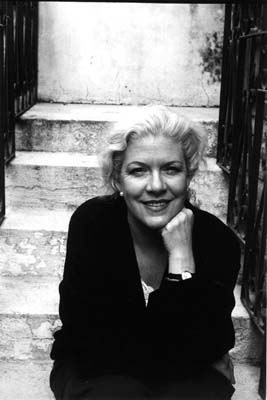
Jennifer Clement

Jennifer Clement

Jennifer Clement, in addition to writing four books of poetry, two novels and a work of non-fiction, was President of PEN Mexico for three years, where she investigated the killing of journalists (a crime no one has ever gone to prison for despite 75 being killed in the last decade). Her book is yet another way to raise awareness of the plight of women who are unable to speak out for themselves and she is a believer that literature can indeed change the world.

The book was inspired by the real village of Guerrero where poppy fields and heroin labs are hidden from view and Clement spent ten years researching the impact of drug and human trafficking on Mexican women. It is estimated that between 600,000 and 800,000 people are trafficked across international borders every year and that doesn’t include what goes on within national borders.

Prayers for the Stolen was a 5 star read for me, highly recommended.

Further Reading:

Interview – Stacey Bartlett’s excellent interview with Jennifer Clement

Review – New York Times book review by Gaby Wood

Note: This book was an Advance Reader Copy (ARC) kindly provided by the publisher via Netgalley.


Signed, Sealed, Delivered – Celebrating the Joys of Letter Writing by Nina Sankovitch

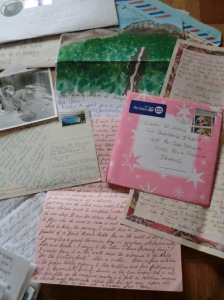
Signed SealedHow could I not pick this book up, a non-fiction tribute to the dying art of letter writing. A pastime that makes the young at heart feel like they have entered old age, because so few people do it any more, it has become old-fashioned!

I am a letter writer from so far back that I didn’t realise how early it began until reacquainting with people from the past via Facebook resulted in some reminding me of letters I had written when I was younger than 10-years-old.

I know I wrote letters when I was at boarding school (from 13), we all did, it was a matter of survival and a tactic to avoid that dreadful feeling at midday as we lined up the staircase waiting to retrieve our lunch to take outdoors, listening to the boarding school mistress read aloud the names of those who had received a letter today, and when your name wasn’t read out – inevitable really – it invoked a sense of disconnect, reminding you that you didn’t live at home, that you couldn’t just visit a friend, a neighbour, your family whenever you wanted, you had to wait for them to write a letter to be in contact.  Four years of listening to names being read out is enough of a sentence to instill a habit of letter writing into anyone surely.

LettersNina Sankovitch has a more romantic view of letters and letter writing and the word joy in the title is a clue. She doesn’t speak of the suffering of not receiving letters, she speaks of the joys of connection.

She gives her son a table and pen and he pens his first postcard letter at thirteen months old, fast forward to the present when he is eighteen and off to Harvard, now she is hankering for more than the brief text messages, tweets and occasional telephone calls, this more disposable form of communication that dominate life today but do not endure. She wants a letter and that desire makes her wonder what it is about a letter that means so much.

Will she convince her son to write to her, the kind of letters she has appreciated herself? Whether she does or not, that desire and the discovery of an old trunk containing letters dating back to the 1800’s that she inherits when she and her husband buy a new house, the seller wanting nothing to do with an old rotting trunk or its contents, send her on a quest of her own through the history of letters and her own personal correspondence, to discover and celebrate what is special about the handwritten letter.

“There have been times when I have needed the reassurance that I am not floating out there alone in the universe, that I am tethered to people who will keep me secure. The letters offer that reassurance. Even if those people are gone, the bond endures through the tokens of connection we passed back and forth, the written manifestation of our relationship.”

The author lost her oldest sister to a fast and brutal bile duct cancer, she has photos and memories of the times they shared, but it is the letters, postcards and birthday cards that keep her most alive within, just as the hundreds of letters written by James Bernheimer Seligman that she inherited in that trunk, a young man she never knew, but came to know through his correspondence created in her imagination, a vision of a person that almost seemed real.

From the ancient Egyptians to the medieval lovers Abelard and Heloise, from the letters received by President Lincoln after his son’s death to the correspondence of Edith Wharton and Henry James, Nina Sankovitch attempts to divine the allure of the letter. She takes us on journey through a stack of published letters that have been preserved and published, introducing those interested in letters and the epistolary form, to a long list of references that speak of great love, erotic fantasy, a mother’s love, a son’s last words from the front and much more.

I enjoyed the book and its introduction to some of the great literary correspondences, including the one found in her own backyard. I did find it overly sentimental in parts and despite the great introduction to those letter writers in history, there were too many examples of short encounters with little depth that had the effect of being easily forgotten.

It may have been better to highlight fewer, more memorable examples than some of the less engaging examples that pad out the book. On the other hand, readers have varied interests. I know I could easily have been swept away by a more in-depth discovery of fewer pairs of letter writers.

Samuel Steward 1957 Source: Wikipedia

Samuel Steward 1957
Source: Wikipedia

The relationship between Gertrude Stein, Alice B.Toklas and Samuel Steward (a poet and novelist I had never heard of) was one of the sets of correspondence that stood out for me. Steward wrote a letter to Gertrude Stein that was to become the beginning of a lifelong friendship, (interspersed with trips to Paris to see the two women), much of it conducted through letters and when Gertrude died he and Alice continued to write for another 20 years until her death.

Steward also wrote a journal, religiously writing notes every evening of all that had happened during the day, from which he penned his memoir Dear Sammy. A character in his own right, Steward left the world of academia to become a tattooist and pornographer remaining committed to the lifelong friendship he developed with Gertrude and Alice.

Ultimately, by referring to so many pairs of correspondence, we find something here for everyone, whether it hails from the present, our more recent history, or medieval characters like Heloise, the cloistered nun writing to her lover Abelard in the early 1100’s.

Madame Sévigné3I have moved Madame De Sévigné’s Selected Letters to within reach and feel inspired to become acquainted with one of the world’s greatest correspondents, a prominent figure in French society and literary circles in the 17th century, her letters continuing to enchant readers 300 years after they were written.

And do I still write letters? Absolutely, I just wrote one last week to an Irish poet!

So when did you last write a letter?

A timely and nostalgic reference to a dying form of communication and literary art form.

*

Note: This book was an Advance Reader Copy (ARC) kindly provided by the publisher via NetGalley.

The Rooms Are Filled by Jessica Vealitzek

Jessica  Vealitzek  Photo By Shannon Brandau

Jessica Vealitzek
Photo By Shannon Brandau

I have been following Jessica’s blog True Stories for some time and knew she had written a book, one that intrigued me before I even knew what it was about, because I was already familiar with the voice and thoughts of its author and knew it would be a powerful story told with a quiet voice.

She had some very interesting and thought-provoking things to say about Quiet Literature after a comment made by an agent at a writer’s conference. The agent after reading two pages of her manuscript said: “This has the risk of being too quiet. You don’t want to be too quiet.” In the weeks that followed that interaction, Jessica came to realise that quiet could well be an apt description and that quiet was exactly how she wanted her story and writing to be.

“But I am in love with quiet. Quiet literature assumes the reader is intelligent and thoughtful, able to read between the lines, between the gestures, and peek into the spaces between the words—to understand the words that aren’t there, and why. The quiet reader doesn’t need to be told everything.” Jessica Null Vealitzek

Rooms FilledNow published by SheWrites Press, The Rooms Are Filled, is a coming-of-age story of two outsiders brought together by a recent change in their lives: a Minnesota farm boy moves to suburban Chicago after his father dies, and his teacher, a closeted young woman attempts to start over after failing to live openly. As these two characters navigate new unfamiliar lives, they will make changes and adapt as they reveal who they really are.

Michael is nine years old as he stands and watches paramedics try to bring his father back to life after he collapses while fixing a rotting fence post outside the barn door. It was the day after his father had finally taken him out on one of his excursions into the snow-clad woods, scouring the landscape for traps that farmers had set to stop wolves menacing their flocks, introducing him to members of the pack, like family he would glimpse but never know .

For a time the days pass as they have done, however his father’s sudden death means all that he has known must change. He and his mother will leave the farm, the wilderness and its wolves that had been such a large part of his father’s life and move to the town where his Uncle lives, where his mother can find a job, and start again.

Both will face challenges as will another new arrival, Julia Parnell, Michael’s new school teacher, who has run from facing up to her own reality, taking refuge in this town, only to discover there is nowhere to hide from one’s true self.

The story quietly takes on issues common in our societies today and makes the reader feel what it is to be an outsider, to live outside a small town’s expectations.

Despite the sad beginning, the story unfolds with a grounded reality, life in the countryside, its rituals and chores evoke a feeling like driving along a familiar country road watching the landscape pass by, until we make a sudden turn into new territory and encounter a different kind of settlement where life is no longer as we knew it and one has to develop a whole new aspect to one’s character to survive an unknown urban species.

It is a gripping read, after a slow beginning getting to know these two characters and it’s a book that and once started I couldn’t put down.

The ending was a little mysterious and uncertain, I’m still thinking about that and no doubt it will provoke as much discussion as the story itself.

Further Reading

A Story of Survival – Jessica’s post on her passion for wolves

Quiet Literature – Jessica’s post on why Quiet is ok and for her, essential

Note: This book was an ARC (Advance Reader Copy) kindly provided by the publisher via NetGalley.

The Expedition to the Baobab Tree by Wilma Stockenström

Baobab Tree CoverI came across this book by chance, first published as Die kremetartekspedisie in its original Afrikaans in 1981, it was translated into English by Nobel Prize winner J.M. Coetzee, initially in 1983 and again in 2014.

I had never heard of Wilma Stockenström, but after a little digging, I find:

“For the past four decades Wilma Johanna Stockenström has been enriching Afrikaans literature with her satirical, obstinate and compassionate voice. Along with Elisabeth Eybers, Sheila Cussons, Ina Rousseau and Antjie Krog, she remains one of the most important women writers in Afrikaans.” © Johann de Lange

After recently reading Sue Monk Kidd’s The Invention of Wings, a story narrated by a female slave, I was interested to read this more literary novel, set in the harsh interior of South Africa.

It is a quiet, compelling, stream of consciousness narrative of a slave woman who finds refuge in the hollow of a baobab tree, attempting to survive following the death of her third master, finding herself abandoned in an often hostile wilderness.

“I was sold off a second time on the square near the sea where even then the raggedy castor-oil trees were standing. Was sold secondhand. I was a damaged plaything, my bundle of baby and myself bid for separately and disposed of separately. Simply playthings. Useful, certainly. My owner thought he had wasted his money.”

The Baobab Tree

The Baobab Tree

Embracing this newfound freedom of her body, mind and time, she thinks back over the years, reflecting on what her existence thus far has meant, the role of her three masters, moments shared with a friend, the loss of her children and the inclinations of man, something she has witnessed both in captivity and in this solitary freedom, where she finds a kind of disturbed though preferable peace.

“I know the interior of my tree as a blind man knows his home, I know its flat surfaces and grooves and swellings and edges, its smell, its darknesses, its great crack of light as I never knew the huts and rooms where I was ordered to sleep, as I can only know something that is mine and mine only, my dwelling place into which no one ever penetrates. I can say: this is mine. I can say: this is I. These are my footprints. These are the ashes of my fireplace. These are my grinding stones. These are my beads. My sherds.”

She is viewed by a tribe of small people who make a pilgrimage to the tree and recognise her as some kind of deity. It is their generosity and ritual of giving alms that aids her survival.

She notices everything, she appreciates her surroundings and tunes into small changes and disturbances in it. She becomes it.

Haunting, lyrical, this work is unlike any other narrative of the life of a slave woman I have ever encountered.


Note: This book was an Advance Reader Copy (ARC) kindly provided by the publisher via NetGalley.

The True Deceiver by Tove Jansson – #TOVE100

True Deceiver

I am reading The True Deceiver as part of my #TOVE100 Reading Challenge.

This is the first of Tove Jansson’s novels I have read that flows like a single story, her A Winter Book and The Summer Book read like vignettes, not driven so much by plot, more focused on the characters that inhabited their pages, their environment and various encounters that carried them through the season.

The seasons are ever present in all her work and in The True Deceiver, we meet the characters snow-bound in winter, waiting for the thaw of spring. This passage of time will thaw the surroundings and to a certain degree the characters as they undergo a transformation due to the events that follow.

“It was an ordinary dark winter morning, and snow was still falling. No window in the village showed a light.”

The True Deceiver is the story of an aging woman artist Anna Aemelin who lives alone on the outskirts of small village, snow bound as the opening pages reveal its stillness and propensity for chatter within. Anna keeps to herself and is content that way, her post and necessary supplies are delivered, there is minimal disruption to her way of life and the inspiration that feeds her artistic leanings, which awaken with the Spring and her venturing into the woodland beyond her home.

She often receives correspondence from fans, her art depicts realistic portrayals of the forest floor, disturbed only by the presence of her not so life-like animated rabbits, for which she is world-renowned, especially among the younger generation.

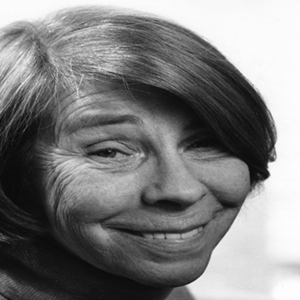
Tove Jansson © Moomin Characters™

Tove Jansson
© Moomin Characters™

As Boel Westin notes in Tove Jansson Life, Art, Words: The Authorised Biography, Jansson often writes herself into her fiction:

“Sometimes unconcealed, freely, openly, sometimes hidden behind various names and disguises…traces of Tove Jansson run hither and thither in all her texts and pictures, and the patterns they form are constantly new” Boel Westin

One of the villagers, Katri Krill, known to all as being good with numbers, one who can sniff out the slightest hint of corruption or exploitation, dreams of financial security for herself and her brother Mats. Despite her trustworthiness, her sudden interest in the aging artist sets tongues wagging in the village, as she takes over more and more of Anna’s business affairs, bringing her out of an oblivious state of denial regarding her situation, an interference that is both appreciated and resented equally.

“Now don’t take this the wrong way, Miss Kling, but I find your way of never saying what a person expects you to say, I find it somehow appealing. In you, there’s no, if you’ll pardon my saying so, no trace of what people call politeness… And politeness can sometimes be almost a kind of deceit, can it not? Do you know what I mean?”

When Katri takes over the letter writing activity to Anna’s child fans, the artist is appalled to learn how business like and impersonal her responses are, it might take less time, but it is not her style at all and she lets her know exactly how it should be:

“And what about this one? Anna went on. “Where’s the chitchat? He’s tried to draw a rabbit – obviously no talent at all – so here you could write something like ‘I’ve hung your picture above my desk’… This one’s learning to skate, and her cat’s name is Topsy. You can fill nearly a whole page with the skating and the cat if you write big enough. You’re not using the material.”

TOVE 100 © Moomin Characters™

TOVE 100
© Moomin Characters™

It is as though Tove Jansson is arguing with herself, Katri is like her alter ego and Anna resists embracing what she knows should be done, it undermines her integrity as an artist, she resents all the questions relating to the ugly business of merchandising that has grown like a malignant tumour out of her artwork; people take these things on, come up with ideas that have nothing to do with her work or her characters and their inclinations and want to do things with them, that in her imagination she knows they would never do. Katri tries to get her to detach from them, trying to convince her that she will never see these manifestations of her work, she should see them purely as a source of income, but Anna will not compromise, the artist’s integrity is not for sale.

Who is the true deceiver? Perhaps everyone has something of the deceiver in them, the truth can be brutal, kindness can be deceptive, secondary agendas can lie behind them both. The True Deceiver is Tove Jansson at her best, struggling and yet persevering to put into story form, the battle of those two states of mind, objectivity and aesthetic sensibility, constantly at war with each other, unlikely companions just as Anna and Katri, the rabbits and the dog.

Brilliantly evocative of the artistic struggle, it is a story that invites discussion and keeps the reader thinking long after that last page is turned. And wondering what those rabbits might have looked like, Moomins perhaps?

Highly Recommended.


All The Light We Cannot See by Anthony Doerr,

Sea swell at Manu Bay, Raglan, NZ

Sea swell at Manu Bay, Raglan, NZ

I read Anthony Doerr’s book after finishing two books that didn’t work too well for me and so the experience of dipping into the first few pages of Doerr’s All The Light We Cannot See was like exiting the murky depths of a turbulent current to float in that gentle swell of the ocean just before the breakwater, where the waves lift us up and down like a life buoy without breaking.

Reading Doerr’s words and meeting his characters Marie-Laure, Werner and Jutta caresses the mind like the sea cradling the body as if it were weightless.

That light, the gentle caress of words that uplift, that intrigue, that follow through on their promise, that warns of tragedy and provides the reader with a guide to navigate the pages that follow.

All the LightMarie-Laure and her father live within walking distance of the Natural History Museum in Paris, where he works as the master of locks, the keyholder. When she is six Marie-Laure loses her sight and every year after that her father builds her a wooden structure that is a kind of puzzle box. Using her hands, she explores the gift to finds its hidden secret and despite its increasing sophistication and difficulty, each year it takes her less time to crack its ingenious code, opening it to reveal the gift within.

He also builds her a model of their neighbourhood, every home, building, street. She memorises it until she is ready to go out and discover the area in its life-size proportion. When the Germans occupy Paris, Marie-Laure and her father flee to Saint-Malo to stay with her reclusive Uncle and his housekeeper where they must build another model she will learn to navigate.

“For a long time though, unlike his puzzle boxes, his model of their neighborhood makes little sense to her. It is not like the real world. The miniature intersection of rue de Mirbel and rue Monge, for example, just a block from their apartment, is nothing like the real intersection. The real one represents an amphitheater of noise and fragrance; in the fall it smells of traffic and castor oil, bread from the bakery, camphor from Avent’s pharmacy, delphiniums and sweet peas and roses from the flower stand. On winter days it swims with the odor of roasting chestnuts; on summer evenings it becomes slow and drowsy, full of sleepy conversations and the scraping of heavy iron chairs.

But her father’s model of the same intersection smells only of dried glue and sawdust. Its streets are empty, its pavements static, to her fingers it serves as little more than a tiny and insufficient facsimile.”

Werner and his sister Jutta are orphans in Germany, their father killed in a coal mining accident. Werner has a fascination for radio, both listening to and repairing them; the siblings discover and listen to broadcasts from as far away as France and England until war approaches, when to be in possession of a radio becomes a dangerous and illegal pastime. However, his talent has not gone unnoticed and will fast-track him into the midst of Hitler’s youth and a role as a detector of radio signals, leading him in wartime to the north of France.

“At midnight he and Jutta prowl the ionosphere, searching for that lavish, penetrating voice. When they find it, Werner feels as if he has been launched into a different existence, a secret place where great discoveries are possible, where an orphan from a coal town can solve some vital mystery hidden in the physical world.”

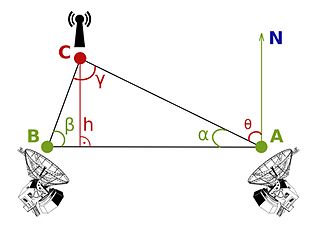
Radiotriangulation Scheme: Source wikipedia

Radiotriangulation Scheme: Source wikipedia

I really enjoyed this book, it made me care about the characters and interested in their lives and worry about them being on opposite sides of a great war. How could that ever be navigated safely?

Doerr describes the two different worlds of Marie-Laure and Werner with such clarity, overcoming blindness and interesting us in the intricacies of radio circuitry, pathways of electrons, amplifiers and transformer coils as if they were the most fascinating thing ever invented.

It is a story of survival, perseverance, passion and obsession set in the years leading up to and during WWII, it brings the streets, homes and sea wall of Saint Malo into the reader’s imagination where we too learn to see without seeing. And it will may make you curious to read Jules Verne if you haven’t already.

Anthony Doerr transmits an infectious enthusiasm for the story, creating endearing characters with rich, enticing prose, all the elements of great literary fiction that can entertain.

Further Reading:

New York Times Review Light Found in Darkness of Wartime


Note: This book was an Advance Reader Copy (ARC) provided by the publisher via NetGalley.


Nagasaki by Éric Faye

Thanks to Gallic Books, another recent English translation of a French literary work is being published in 2014, Nagasaki, a slim novella inspired by a newspaper cutting of real life events.

Belgravia Books

Belgravia Bookshop offering Gallic Books and other translations

Shimura Kobo lives alone in a quiet suburban street, by day he works as a meteorologist, he rarely socialises with his colleagues, nor does he see family much, his life causes fewer ripples in Nagasaki than the weather he forecasts for it.

“There comes a time when nothing happens any more. The ribbon of destiny, stretched too wide, has snapped. There’s no more. The shockwave caused by your birth is far, oh so far, behind you now. That is modern life. Your existence spans the distance between failure and success. Between frost and the rising of sap.”

Recently there have been a few barely detectable disturbances to his inanimate way of living. A container of fruit juice seems to have lost a few centimetres, and isn’t there one yoghurt pot less than was there this morning? He begins to take extra care securing his home, yet still has the feeling of something not being quite right.

Nagasaki (2)He sets up a webcam in his home and sits at work watching his kitchen as if studying the meteorological charts, waiting to detect any sign of disturbance.

It is a brief story where the revelation comes early, its slow residual effect only beginning in the aftermath. About halfway the narrative shifts, adding to the mystery of how the revelation impacts Shimura, as we no longer have access to his thoughts.

That it is based on a true story is enough to haunt the reader, but the way Eric Faye narrates it, contributes to the way this story inhabits the mind as we read. Like the best stories, it stays with you long after reading and invites discussion with others about how such a thing could happen in our society.

And it will make you check your door locks more carefully.


Note: Thank you to Gallic Books for providing a copy of the book.

All the Birds, Singing by Evie Wyld

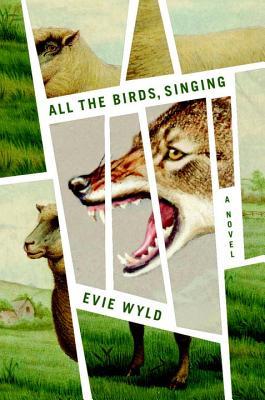
All the BirdsAn Australian woman named Jake Whyte has bought a farm on an unnamed remote island somewhere off the coast of England and although she has lived there alone for years, it is as if she has only just arrived, there is reticence, suspicion, distrust, an unwillingness to engage, to form new relationships or retain old ones.

In the opening paragraphs she visits a farm shop and we don’t get any sense that they know each other, there is no acknowledgment of neighbourly acquaintance. She is suffering from the violent loss of yet another of her 50 sheep that she farms with the help of her dog, Dog.

As the present day narrative progresses towards the mystery of the creature that is mauling her flock of sheep, alternate chapters reveal her past in Australia, from a point some years ago when she was working in a shearing gang back through a year or so living in remote countryside with a man, to her adolescent years and the significant event that caused her to run the first time. Is she a fugitive?

I was intrigued by the references to farm life and her stint working in a shearing gang, experiences I am familiar with. I grew up on a large sheep farm, and remember the job of ‘rousie’ (a wool handler) as we call it in New Zealand, not only working during school holidays helping out at home, but I spent a summer when I was 17 working for a local shearing gang on other farms in the area, although it did not involve handing the sheep to the shearer and I couldn’t quite get my head around how anyone could do that for four shearers without getting in the way.

Being a rousie was the most physically demanding job I have ever had (more so than the summer picking pumpkins, another in a vegetable patch, the kiwifruit orchard and that unforgettable summer job in a large freezing works/slaughterhouse).

Working in a shearing gang can feel a little like qualifying for an Olympic event, because while the rousie, responsible for removing the wool off the floor out of the way of the shearer as it falls from the sheep, separating the clean from the dirty wool, is paid by the hour, the shearer is paid by the sheep/lamb.

The more sheep they can shear, the more they will earn and there are indeed big competitions and world records (see David Fagan below) for those who can shear a sheep the fastest, without nicking or cutting them –something the farmer keeps an eye on when he releases the shorn sheep from the pen, there’ll be a few harsh words to any shearer increasing his rate at the expense of bloodying those precious ewes.

The photos below are taken from a visit to my father’s farm three years ago, now that he has retired, he created this one stand woolshed by converting part of an old cowshed.  The shearer shears, while Grandpa explains to the children what happens.

This slideshow requires JavaScript.

The female narrator of Evie Wyld’s novel is tough, to be a female sheep shearer is as rare as Scottish sumo wrestling and not for the faint-hearted. Gender demarcation lines in the shearing shed haven’t changed much over the last century.

“The shed smells good. Sweat and dung, lanolin and turps. I can’t imagine being away from it.”

Ironically for all her distrust, she does allow a complete stranger to take up residence for the few days over which the story is told. He is something of a metaphor for her tendency to succumb to the one impulsive act that in her past has lead her astray and required an escape.

In that respect it could be a coming-of-age story, but there is much in terms of her character that is stunted, damaged, unresolved, that I am not sure she has transformed much, if at all by the end of the novel. It shows how an unresolved past will continue to haunt the present, if not healed.

It was an interesting read though somewhat unfulfilling for me, I had read quite a lot about it so perhaps I had higher expectations or maybe it was because I was less tolerant of the controlled narrative, I don’t mind the presence of a narrative framework as long as it doesn’t impose too much on the reading experience.

The writing was excellent and often that can be enough when the threads of a narrative don’t tie up as we want them to and certainly I am interested in reading more of her work, she is a talented writer and was worthy candidate for the Baileys Women’s Prize, though sadly this title did not make it to the shortlist.

Further Viewing

The History of Sheep Shearing in New Zealand – a wonderful short film from the NZ archives demonstrating the shearing technique.

The Golden Shears – the Olympics of Sheep Shearing – David Fagan, world record holder, 14 seconds.

Note: This book was an ARC (Advance Reader Copy) kindly provided by the publisher via NetGalley.