Not only are Elizabeth von Arnim’s works experiencing a surge in popularity, with The Enchanted April being republished as a Penguin Classic this month, but her 90-year-old novel has spawned a work of fan fiction in Brenda Bowen’sEnchanted August.
Bowen takes four same named characters and weaves a contemporary 21st century tale set on an island in Maine. A huge fan of first the movie and then the book, Bowen transposes von Arnim’s idea into the modern world and reinvents its magic.
Two mothers Lottie and Rose see the same advertisement posted on the noticeboard of the over-zealous Brooklyn preschool their children attend:
Hopewell Cottage
Little Lost Island, Maine.
Old, pretty cottage
to rent on a small island
Springwater, blueberries, sea glass.
August.
They decide to rent it and find two others to join them to reduce the cost, Caroline Dester, a celebrity who wishes to hide from the world following a recent public humiliation and Beverly Fisher, the somewhat grumpy and initially reclusive, older character, grieving after a heartbreaking loss and seeking solitude in the company of strangers.
Lottie and Rose reflect on their unhappy marriages; distance and absence incline them towards remembering better days in the early years and in a surge of optimism brought on by the island ambiance, Lottie invites her husband without consulting the others, while Rose procrastinates at Lottie’s suggestion that she do the same.
These four unlikely holidaymakers attempt to navigate living together for one month and discover an ironic comfort and lack of inhibition brought about in the company of strangers. Wounds begin to heal, the island changes their routine and shifts their perspectives as they discover the life-changing effect of a month-long summer holiday on a small island where there is little to do but relax and unwind.
Enchanted August is a pleasant read, even when aware of the plot as it unfolds; discovering how Bowen chooses to represent her characters and their various dilemmas is part of the joy in reading it.
Traditional Maine Lobster Bake
It is very much an American version with its characters and setting just as von Arnim’s is essentially English even if set in Italy. One of the intriguing local aspects was the age-old lobster bake, something of a communal island lobster, clam, vegetable, seaweed, open fire culinary tradition that brings everyone together.
The island didn’t succeed in invoking quite the same charm and magic as Portofino did for me in the orignal classic, an idyll almost impossible to replicate, however it perhaps offers for many, a more realistic or attainable allure, the idea that one doesn’t have to travel so far to find a simple magic that can transform perspectives and lives.
An entertaining summer read, evocative of the charm, simplicity and transformative powers of a small island holiday.
The President’s Hat is the first book of Antoine Laurain’s that was translated from French into English by Gallic Books. It appears that three translators were used for the different voices.
Daniel Mercier voiced by Louise Rogers Lalaurie
Fanny Marquant and Bernard Lavallière voiced by Emily Boyce
Pierre Aslan voiced by Jane Aitken
In February, Gallic Books sent me a copy of his second translation The Red Notebook, which I devoured immediately and adored. Click on the link to read my review.
Thanks to that review where I indicated a wish to read The President’s Hat, Owen at The Carrot Cake Diaries sent me his copy and I returned the favour by sending him one my all time favourites, Martin Booth’s The Industry of Souls.
The President’s Hat is just as brilliant in its light-hearted uplifting way. It is the story of what happens to the people beginning with Daniel Mercier who encounter a black hat with the letters F M embossed in gold lettering inside the rim, when it is left on a restaurant seat by the former French President François Mitterand. Daniel is the first person seized by a compulsion to covet the hat and wear it until he too will leave it behind and the adventure moves on to the next person.
Each person who encounters the hat, is touched by it sufficiently to act in a way that will have a significant impact on their lives, thus taking the reader on an entertaining journey across France and into Venice in the eighties via gifted storytelling.
Although he appears only very briefly in the story, it is in a way a tribute to the man who was a popular President in the 1980’s, who ruled from 1981 to 1995 and in his last address to the people said:
“I believe in the forces of the spirit, and I won’t leave you.”
He died one year later.
Impossible to put down, uplifting and a joy to read, it is wonderful to come across one of those ‘turn-to’ authors when in need of a literary pick-me-up or just a fun read!
I came across Maryse Condé recently via the Man Booker International Prize 2015 list of 10 nominated authors. She is third from the left in the picture below.
Not a book prize as such, it is an award conferred on an author who has a significant body of published work, regardless of the original language it was written in, though some of it must have been translated into English.
It is from such long lists the gems are found I say, and having read about all 10 thanks to this excellent Interview: The Finalists Speakin The Guardian, I spotted my potential winner immediately. A winner in the sense that I intend to read a few of their books. The Indian writer Amitav Ghosh was the only author I’d read on this list.
One writer jumped out at me straight away and I pursued her works with little consideration for the pending award result. Maryse Condé didn’t win the prize, the Hungarian writer László Krasznahorkai did, a writer whose books intellectuals rave about, but who I’m not sure I’m ready for yet.
So I took Maryse Condé’s advice and started by reading this slim volume of essays of her childhood in Guadeloupe, Tales From the Heart, True Stories From My Childhood.
She takes us right back to the beginning, to the day of her birth. Being the youngest of 8 children, the family possessed an extended collective memory and she was fortunate to have heard the story of her birth from other perspectives.
Her appearance was both a source of pride and shame for her then 43-year-old mother and 63-year-old father, proud that her body remained robust enough to support the creation of a child and shame that it publicly displayed evidence of their continued indulgence in carnal pleasures.
The first chapter Family Portrait describes her parents relationship with France:
“For them France was in no way the seat of colonial power. It was truly the Mother Country and Paris, the City of Light that lit up their lives.”
World War II wasn’t considered dark on account of all the dreadful atrocities that occurred:
“but because for seven long years they were deprived of what meant the most to them, their trips to France.”
She recounts an anecdote of a waiter in a café complimenting the family on their excellent French pronunciation, to which her parents felt indignant, considering themselves just as French as a Parisian waiter, even more so because of their higher education, manners and regular travel.
Not understanding why it mattered so, she asked her brother Sandrino:
“Could he explain my parents behaviour?” to which he replied “Papa and Maman are a pair of alienated individuals,”
a mysterious word that would rest a long time in her consciousness until she came to understand it. She realised that not only did they take no pride in their African ancestry, they knew nothing of it, however:
“They believed they were the most brilliant and most intelligent people alive, proof positive of the progress achieved by the Black Race.”
In their neighbourhood all the mothers in their circle held a profession and with it contempt for the manual work they believed had been the undoing of their own mothers. They employed a servant who, though she raised 6 children of her own would begin work at 5am to take care of the needs of the family.
We meet her best friend Yvelise, two girls who did everything together, their friendship almost destroyed by the unfortunate intervention of one of her teachers, causing a temporary rupture.
Maryse’s mother Jeanne, knew the life she didn’t wish to lead, nor her children either, she had succeeded in breaking the cycle endured by her mother and grandmother and a good education was key (and perhaps being married to a successful and much older husband). Jeanne was a school teacher, revered and feared in equal measure by those around her. Her eldest son Sandrino and her youngest child Maryse the only two children who weren’t afraid to stand up to her, the others too terrified to challenge her.
On her birthday, her favourite pupils recited compliments, gave her roses, her husband bought her jewellery and the day would culminate with a family play, a short piece of theatre written themselves, in her honour.
‘Beneath her flamboyant appearance, I imagine my mother must have been scared of life, that unbridled mare that had treated her mother and grandmother so roughly…Both of them had been abandoned with their “mountain of truth” and their two eyes to cry with.’
10-year-old Maryse asked if she could read one of her compositions for her mother’s birthday.
‘I had no idea what I wanted to write. I merely sensed that a personality such as my mother’s deserved a scribe.’
If a book of essays can reach a crescendo, this is the moment when we reach it. The moment when Maryse learns that not all lessons come from one’s parents and school teachers, some come from life itself and often when we least expect it.
In the chapter School Days , she is at school (lycée) in Paris when her French teacher asks her to present to the class a book from her island. It is a watershed moment.
‘This well intentioned proposition, however, plunged me into a deep quandary. It was, let us recall, the early fifties. Literature from the French Caribbean had not yet blossomed. Patrick Chamoiseaulay unformed in his mother’s womb and I had never heard the name Aime Césaire. Which writer from my island could I speak about? I resorted to my usual source: Sandrino.’
Sugar Cane Alley
Sandrino introduces her to to a treasure. La Rue Case-Negres (Black Shack Alley) by Joseph Zobeland his hero José Hassan. It was made into an award-winning film titled Sugar Cane Alley.
It was her first introduction to a world no one up until that moment had ever mentioned; a world that highlighted slavery, the slave trade, colonial oppression, the exploitation of man by man and colour prejudice.
‘I was scared to reveal how José and I were worlds apart. In the eyes of this Communist teacher, in the eyes of the entire class, the real Caribbean was the one I was guilty of not knowing.’
These glimpses into the more significant and memorable aspects of childhood that shaped the author Maryse Condé are insightful, engaging and honest. Just as her consciousness is awakened, the vignettes finish and leave the reader desperate to know more.
I had intended to read this volume over time, but once I started reading I couldn’t stop, it is almost like reading a coming-of-age novella and at its conclusion, the writers fiction will begin. For Condé’s first novel Hérémakhonon is about a character raised in Guadeloupe, educated in Paris, who then travels to Africa in search of a recognisable past, just as she did.
‘Veronica has spent her childhood in Guadeloupe and, after a period as a student in Paris, wants to escape that island’s respectable black bourgeoisie, which she regards as secretly afraid of its own inferiority. She travels to an unnamed West African state and, while there, seeks an authentically African past with which she will be able to identify.’
Tales From The Heart is an excellent read and an intriguing introduction to the writer and her influences and will certainly make you want to read more of her work. I am very happy I have these three novels on the shelf to follow-up with only I am missing that debut novel which I really want to read now too! Very highly recommended.
As soon as I learned that Elizabeth von Arnim’sThe Enchanted April was to be reissued as a Penguin classic, I jumped at the chance to read it. Elizabeth and her German Garden was such an engaging and entertaining read and I recall in the comments of that review so many mentions of The Enchanted April as a must read.
Elizabeth wrote The Enchanted April in a castello (an eleventh-century fortress with Roman foundations overlooking the Ligurian Sea) in Portofino, Italy, in April 1921. She had rented the place to get away from her own (sixteen bedroom) chalet in Switzerland… an extract from the Introduction by Brenda Bowen
Brenda Bowen has written a work of fan fiction, published in June 2015, one that mirrors von Arnim’s work, set in contemporary Brooklyn and Maine featuring four ladies who will rent a cottage (not castle) on Little Lost Island, Maine.
One to Watch Out For, Fan Fiction
Enchanting indeed, not just the month of April, but all that made this original classic so; the villa San Salvatore (inspired by the Castello Brown pictured below) on the cliffs of Portofino overlooking the sea, the blooming buds and flowers of Spring, four weeks stretched out in front of four unaccompanied women with no social obligations, no cooking, cleaning, nothing to do but enjoy the gardens, the villa, the seascape and one minor challenge, to tolerate each others company.
They are four women who remind me of the semi-autobiographical and coolly calculating character of Elizabeth, in von Arnim’sElizabeth and her German Garden, for though the four women in this novel sought company for this séjour on the Ligurian coast of Italy, it was purely for financial reasons, most certainly not for companionship, the first hint of von Arnim’s well-known and often quoted attitude towards visitors.
Being with strangers, they each hoped to leave that part of themselves that must always meet the expectations of others behind. Mrs Wilkins from Hampstead was the first to see the advertisement in The Times while visiting her London club.
To Those Who Appreciate Wisteria and Sunshine. Small mediaeval Italian Castle on the shores of the Mediterranean to be Let furnished for the month of April. Necessary servants remain. Z, Box 1000,
The Times.
Mrs Wilkins was certain another woman her age was reading the same ad and having a similar response to it, so true to her nature (though not typical of society’s expectation of a response) she seized the initiative suggesting they rented the place together.
Her initial reluctance overcome, once the two women realised it was possible, they needed only a solution to the expense which Mrs Wilkins solved by suggesting they place another ad to attract another two like-minded female souls, thus we are introduced to the beautiful, ever charming even when she is trying not to be, Lady Caroline Dester and the somewhat disagreeable and much older Mrs Fisher.
Once ensconced in their lodgings, the four women interact and are given a well-portrayed and at times humorous glimpse into their individual characters, made all the more interesting by the fact that these women were most unlikely to have ever encountered each other within their existing social circles.
Mrs Wilkins and Mrs Arbuthnot are pleased to have escaped their husbands, though they each harbour an underlying sadness for how things were when they were newly married. They are not aged, in their thirties, they have more the air of self-accepting middle age. However, they hadn’t reckoned on the effect of a stay at San Salvatore.
Lady Caroline just wants to be left alone, unmarried and disinclined, she detests the attention her beauty and natural charm attract. The formidable Mrs Fisher appears malcontent for no more reason than that she’s been on Earth at least twice as long as the younger women, having lost what youthful exuberance she may ever have had long ago.
‘Mrs Fisher doesn’t seem happy – not visibly anyhow,’ said Mrs Arbuthnot, smiling.
‘She’ll begin soon, you’ll see.’
Mrs Arbuthnot said she didn’t believe that after a certain age people began anything.
Mrs Wilkins said she was sure no one, however old and tough could resist the effects of perfect beauty. Before many days, perhaps only hours, they would see Mrs Fisher bursting out into every kind of exuberance. ‘I’m quite sure, said Mrs Wilkins, ‘that we’ve got to heaven, and once Mrs Fisher realises that’s where she is, she’s bound to be different. You’ll see. She’ll leave off being ossified, and go all soft and able to stretch, and we shall get quite – why, I shouldn’t be surprised if we get quite fond of her.’
Things are about to change, as the castle San Salvatore, though solid and immovable, works its way into their psyches and each will fall under the spell of the charming fortress and its healing environment over the course of their four-week stay.
I thought The Enchanted April a wonderful, evocative read and witty insight into its very English characters, enjoyable for its sense of place and the lush season it evokes, von Arnim’s natural, subtle humour that she never ceases to inject into her narratives, in this novel there is no trace of the slight cynicism of her earlier work; she has allowed her four women to indulge this fantasy through to its natural conclusion.
And oh how fulfilling that can be for the reader, I know this little stretch of Italy and it invoked pleasant memories and incited future dreams of a possible return – with three women ‘bien sûr’!
Countess Elizabeth von Arnim
Elizabeth von Arnim
Katherine Mansfield
Born Mary (May) Annette Beauchamp in 1866, Elizabeth von Arnim was Australian by birth, English by upbringing, German and English through marriage, Swiss and French by choice and finally American by emigration. She published 21 books in her lifetime, books where the central female character(s) were often witty and unreserved, possessing an unusual outlook on life. A number of them, including The Enchanted April were made into films.
An appearance of the novel Elizabeth and her German Garden in a recent episode of Downton Abbey, sparked renewed interest in the works of the author. That novel was so popular when first published, it was reprinted 21 times within a year of publication.
She was the cousin and contemporary of the New Zealand/English writer Katherine Mansfield. She died in Charleston, South Carolina in 1941.
Elizabeth von Arnim Conference – In an extraordinary coincidence that I just discovered, the Katherine Mansfield Society is to hold an Elizabeth von Arnim Conference, at Lucy Cavendish College, University of Cambridge on Sept 13th 2015!
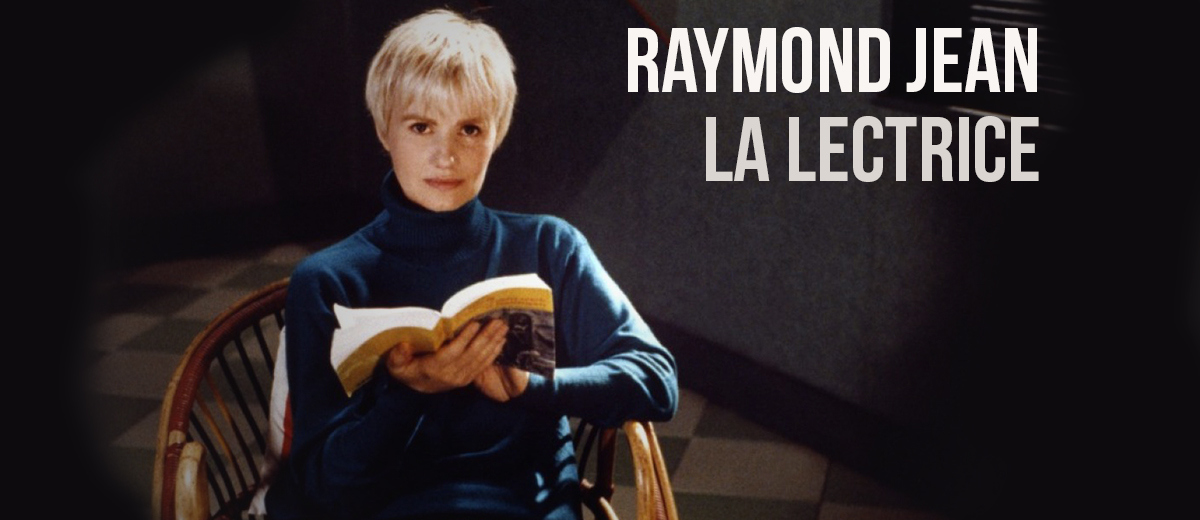
From the 2015 theme Chance Encounters: Meeting the Other comes another novella from Peirene Press, translated from French, Reader for Hire (La Lectrice) by Raymond Jean, translated by Adriana Hunter.
The first book in the series was Finnish author Aki Ollikainen’sWhite Hunger, a chilling tale of the necessity of abandonment to survive, when leaving behind what seems like certain death is replaced by a journey towards what is a less certain but equally probable demise, trying to escape the famine of 1867 Finland, heading for St Petersburg on foot through the snow.
This second book Reader for Hire tells the story of thirty-four year old Marie-Constance who is married, childless and unoccupied. She still regularly visits one of her literature professors at the university where she failed to complete her studies, but otherwise appears to possess little motivation to change her life or find a job.
One day a friend makes a suggestion that she at first considers outlandish, however with nothing better to do, the idea sticks and despite her general lethargy for being proactive, acts on it.
“You have a wonderful voice, it’s silly not to do something with it. A woman really needs an occupation these days…When we were at the Conservatoire you showed such talent… Why don’t you put an ad in the papers offering to read to people in their own homes?”
The man at the newspaper agency tries to discourage her, attempting to enlighten her as to what she may be exposing herself to, without being so direct to describe his exact misgivings, wishing to warn her of the kind of response she might attract, suggesting she remove the words ‘young woman’ and replace them with ‘person‘, a recommendation she rejects vociferously and thus proceeds with the advert offering her services as a reader.
Miou-Miou in the film, La Lectrice
It’s a social satire that attempts to celebrate the joy of reading aloud, willing it to be the life changing experience it could be, that clearly is not. Instead, it reveals just how much loneliness, desperation and depravity exists in our society and how many are looking for something that might quell the symptoms, even if that means corrupting something else offered. Despite the obvious need to use her to fulfil their empty lives, Marie-Constance is determined to turn her fantasy into a viable profession and talks of it as if it already is.
“…I mustn’t lose the few ‘regulars’ I’ve managed to hook. In fact I’m on my way to my managing director today. He’s more hooked than anyone else, we’ve all grasped that, but by something other than reading. I’ve made my decision and I’m ready. But I might still try and bring him around to literature.”
A wheelchair bound adolescent, a six-year-old girl who wants to go to the fair, not stay at home and be read to, the aging, demented communist wife of an ex General, the depressed Managing Director and the elderly magistrate, they come in all forms and guises and like a Doctor choosing the right medicine, Marie-Constance will select Maupassant, Marx, Claude Simon, de Perec and others in her quest for the best bookish match. She thinks only in terms of literary solutions, seeking out the company of her old professor for guidance, though he too appears to have other intentions.
I enjoyed most of the book, particularly while there was still some mystery and intrigue around the characters and their motivations, however I wanted the fantasy to endure, for Marie-Constance to find more of the genuine kind and less of the erotic, sadly the fictional reality, as depicted by Raymond Jean seems to illustrate that depravity is more in abundance and women will continue to allow it.
The book was originally published in French in 1986 and was made into a film two years later starring the French actress affectionately known as Miou-Miou, a name given to her on her acting debut by French comedian Coluche, a reference to her ‘petite voix douce miaulante’ soft voice.
I had always intended to read Mary Shelley’s classic in 2015, however I hadn’t expected to come across it in so many forms before I picked it up in its traditional one, the book.
Captain R Walton and the scientist Victor Frankenstein, Arctic Source: BBC Learning English
With the advanced English conversation class I teach, we began to listen to weekly episodes of Frankenstein via a BBC adapted audio drama, written for learners of the English language. Condensed to 10 episodes of about 7 minutes each, it introduces new vocabulary and a classic of English literature to learners, while keeping them entertained.
Midway through the audio drama, I heard that there was to be a relayed broadcast of the London National Theatre production of Frankenstein, starring Benedict Cumberbatch and Jonny Lee Miller, cast as the Creature and Victor Frankenstein, directed by Danny Boyle.
Throughout the season, the actors switched roles on alternate nights, Creature and Creator, inhabiting each others skin, developing each others mannerisms and tendencies, drawn together and repelled simultaneously. The version I saw showed Cumberbatch as the Creature, a stunning and visceral performance beginning with the birth-like slump onto the stage, the first stages of development and observation of the enigma of man.
A Creature is Born, National Theatre London
After these two modern-day introductions, I was even more intrigued to read the original text and learn about the origin of a book that was itself born via 18-year-old Mary Godwin (later Shelley) telling ghost stories one cool June summer evening in 1816 at Lake Geneva with companions Lord Byron, the physician John Polidari, Percy Shelley and her stepsister Jane.
The book starts out with letters written by a Captain R Walton, who is in St Petersburg preparing to leave for an excursion of discovery to the North Pole, to his sister Margaret in London.
Like Victor Frankenstein, the young scientist he will rescue from an ice floe in the Arctic and whose story he will listen to day after day while trapped in the ice, Walton has a thirst for knowledge and an agitated spirit that pushes him forward in his quest. He wishes to make his mark on the world and make a difference. Like Frankenstein he has immersed himself in studies of logic and now desires to achieve something of magnitude, having already failed to become a significant poet.
His prose is now dedicated only to his sister Margaret, through whose letters we will learn of Walton’s failed voyage and the story Victor Frankenstein will narrate to him, as he too gives up his pursuit of the Creature that was to be his mark upon the world, one that had already made a difference, though in ways he never dreamed of and lived to regret.
Upon hearing the voyager’s naive hopes, Victor Frankenstein shares his own story in an effort to try to thwart Walton from following his ideals into what may become yet another foolhardy madness.
“Unhappy man! Do you share my madness? Have you drunk also of the intoxicating draught? Hear me; let me reveal my tale, and you will dash the cup from your lips!”
The story he tells is of his own youthful thirst for knowledge, his fascination with science, alchemy and existence itself. His obsession with creating life above all else, with no forethought of the consequence of such an act, his fear and neglect of that which he created and the terrible consequences wreaked upon him, his family and those closest to him as a result.
“You may easily perceive Captain Walton, that I have suffered great and unparalleled misfortunes. I had determined at one time that the memory of these evils should die with me, but you have won me to alter my determination. You seek for knowledge and wisdom, as I once did; and I ardently hope that the gratification of your wishes may not be a serpent to sting you, as mine has been. I do not know that the relation of my disasters will be useful to you; yet, when I reflect that you are pursuing the same course, exposing yourself to the same dangers which have rendered me what I am, I imagine you may deduce an apt moral from my tale, one that may direct you if you succeed in your undertaking and console you in case of failure.”
Victor Frankenstein grew up in the countryside of Switzerland, in a kind of reverie, with his adopted sister Elizabeth whom he always viewed as a gift, initially from his mother who brought her into the family and eventually as his future bride. But first he wished to fulfil his destiny, that alchemy of existence, he wanted to create a sustainable life-form.
He pursued it with zeal, neglecting all else, only to run in fear of what he had done, until it pursued him, confronting him. The Creature forced him to listen and hear of the curse he had inflicted on him, by making him in such a way that all humanity would abhor him, sentencing him to a life without love, without friends, unknown.
“I expected this reception,” said the daemon. ” All men hate the wretched; how, then, must I be hated, who am miserable beyond all living things! Yet you, my creator, detest and spurn me, thy creature, to whom thou art bound by ties only dissoluble by the annihilation of one of us. You purpose to kill me. How dare you sport thus with life? Do your duty towards me, and I will do mine towards you and the rest of mankind. If you will comply with my conditions, I will leave them and you at peace; but if you refuse, I will glut the maw of death, until it be satiated with the blood of your remaining friends.”
Victor Frankenstein listens to the Creature and is moved from the desire to kill his creation to consider creating another, a companion, the only chance he may have to live in harmony in this world, for to be alone has driven him to madness, murder and mayhem.
The book, while framed at both ends by the letters from the explorer to his sister, the middle part is split into three, the first and latter parts as told by and from the perspective of Victor Frankenstein, while the middle part recounts the Creature’s tale of exile and in doing so gives voice to the creature.
Benedict Cumberbatch and Jonny Lee Miller
It is in this section we have the most honest view of his creation and it is in this part that the theatre screenplay written by Nick Dear really excels. It takes as the starting point, the metaphor of birth and Cumberbatch’s Creature slips from an embryonic web to the floor, resembling something more amphibian like than human, flaying its limbs about spasmodically as it tries to master them, this body with no instruction, no parent, a man with the gestures of a newborn.
Throughout his years of exile, his interactions with others teach him to survive, to communicate and slowly to understand the capacity and flaws of humanity. With understanding comes grief, he knows what is possible, that which will always be unreachable for him, a creature that thinks and is capable of acting as one of humankind but who will always be hated, rejected and worse, hunted to extinction.
“I cannot describe to you the agony that these reflections inflicted upon me; I tried to dispel them, but sorrow only increased with knowledge. Oh, that I had forever remained in my native wood, nor known nor felt beyond the sensations of hunger, thirst, and heat!”
An astounding read and such a pleasure after the introduction I had via the theatre and audio play. It’s true I’m not a great reader of the classics, but when they are given an alternate context and serve as inspiration in the way this creation has, I can’t help but read in awe the achievement that continues to inspire such great works in themselves.
A five star read for me!
For a glimpse of that theatre sensation, watch this one minute trailer, with extracts from the live production in London.
Danny Boyle’s Frankenstein with Benedict Cumberbatch
Antoine Laurain is the French author of five novels, including The President’s Hat, a novel that has found a popular and loyal following in the US and UK since being translated into English by Gallic Books.
Not serious literature, they’re the kind of books you reach for when you need something uplifting and entertaining. I reached for this one at the end of winter when in the grip of a terrible flu and found it the best medicine of all!
A Selection of Word by Word notebooks.
Intrigued and incensed in equal measure, as a notebook toting woman myself, I wanted to know more of this story centred around a character whose red notebook, containing handwritten thoughts and random PRIVATE jottings, has fallen into the hands of the curious bookseller, Monsieur Laurent Letellier.
Recognising it as a handbag of quality and not something intended to be thrown out, when Monsieur Letellier comes across the abandoned handbag on a Parisian street early one morning, he picks it up intending to hand it in at the police station, which he almost succeeds in doing, except, you know, French bureaucracy, it will require a one hour wait and he has a shop to open up, so plans to return later. Only later becomes much, much later and the police station is not where he will return it to.
The bag belongs to Laure, a woman we meet in the opening pages as she clutches her handbag to her detriment, metres from her apartment, only to be shoved against a metal door frame, losing the bag anyway. Without keys, and despite it being 2am, she manages to check into the hotel opposite, promising to pay in the morning, by which time she will have fallen into a coma.
Once the bag comes home with the bookseller, it becomes a major temptation and much of the book is spent on various dilemmas arising as a consequence of his inaction, which in turn provoke memories of past events. The longer it stays with him, the more trouble it causes and the more intrigued he becomes by its owner, despite recognising his chances at redemption grow slimmer as each day passes.
Early morning in the Luxembourg gardens, Paris
One of the items the bookseller discovers is a signed copy of Accident Nocturne by Patrick Modiano which leads him to track down the reclusive author, known to frequent Luxembourg Gardens most mornings. As a bookseller, he knows how rare book signings by this author are, so hopes the author may lead him to the woman.
The Modiano cameo intrigued me, particularly as he’d just won The 2014 Nobel Prize for Literature, was that the reason to mention him, I wondered? And then I read Helen’s Mad About The Books review of Dora Bruder and found an even better reason for the reference to this esteemed author.
In Dora Bruder, Modiano tells how in 1988 he stumbled across an ad in the personal columns of the 1941 New Year’s Eve edition of Paris Soir. The ad had been placed by the parents of 15-year-old Jewish girl Dora Bruder, who had run away from the Catholic boarding school where she’d been living.
It set the author off on an obsessive quest to find out everything he could about Dora Bruder and why during the most dangerous period of the German occupation of Paris, she had run away from those protecting her. But that’s another story and book, so see Helen’s review below for more on that extraordinary tale.
The Red Notebook has little of the hardship and tragedy of Dora Bruder, it reads more like a book that could be made into an entertaining romantic comedy, it has all the ingredients, the streets and bookshops of Paris, an artists’ workshop, handbags and their intriguing taboo contents, a jealous girlfriend and a lippy adolescent daughter. Watch this space I say!
Personally, I found it wonderful to discover an author who can do uplifting, feel good stories that push the right buttons for booklovers without becoming sentimental or too romantic. Though the ending may not be realistic, it was fun getting there.
If you like a glimpse of local life in Paris, characters who observe bookshelves and mention what other characters are reading, people who write in notebooks, the short form novella and an uplifting story, that could turn into a beautiful film, then pick up a copy of The Red Notebook here.
The Gracekeepers by Kirsty Logan is a book I picked up at random purely based on the blurb. A light fantasy escape read for the upcoming holiday. I listened to an interview with the author just to be sure (linked below), liked what I heard and decided to read it. And it turned out to be the perfect holiday read just as predicted.
Set in an imagined world where the ocean has flooded most of the earth, most people now live permanently at sea. They are referred to as damplings and those that remain on land, who have an air of self-imposed superiority and suspicion of others are known as landlockers.
‘We shouldn’t welcome damplings like this,’ murmured Callanish’s mother. ‘And at night-time, too, when good people should be ticked up safe in their houses! What are those circus folk hiding in the dark, hmm?’ She patted Callanish’s hands, making sure the gloves were on. ‘Some islands don’t even let damplings come above the blackshore. If they want to perform, they can do it in the daytime with waves lapping at their ankles like they’re meant. Those people belong in the water. They’re dirtying the land.’
Most of the story takes place at sea, with the floating circus Excalibur and seen through the eyes of one of its performers, North, whose parents died when she was young. North performs a captivating dance act with her bear, her closest companion, though she is afraid for him, for though he would never harm her, his instinct to protect is strong and dangerous.
The circus moves from place to place, floating between the scattered archipelagoes that are all that remain of earth; they perform to survive, the only way they can eat, although their leader, the ringmaster Red Gold, has alternate plans for North and his son, to try to change that, to establish a presence on land, one that neither youth is particularly enthralled about and that his wife Avalon has become obsessed over.
‘North never felt comfortable with her feet touching land. She didn’t trust its steadiness, its refusal to move or change in the honest way of the sea.’
Callanish is the gracekeeper, graces are small, fragile birds kept by her and used in a grieving ritual as part of her job in the Graceyard, they serve as a reminder of the duration of the mourning period, they are starved and their death signals the end of that period.
She is the sea equivalent of a funeral home, living isolated in her small house with only the birds and sea-life for company, tending graces and watery graves along the equator. People bring their dead to her for Resting, she performs the ritual and then lays them to rest at the bottom of the ocean in a shroud, tied to the birdcage containing the grace. We don’t know quite how or why she came to be doing this job, only that it was due to something she believes her mother might never forgive her for, penance for a mistake she made long ago.
‘For one adult Resting she was paid a mix of food, supplies and tradable goods: ten eggs, a thick wedge of bacon, a hank of fabric for letter-writing, a lump of copper the size of her thumbnail.’
When the Excalibur is forced to visit the gracekeeper, she meets North and is immediately drawn towards her, it causes a restlessness in her that sees her make some changes and seek resolution to the questions that plague her daily.
It is an interesting story about these two girls, the strange worlds they inhabit and the circumstances that are thrust upon them, forcing them to either accept or rebel. Accept what others want for them or rebel to lead a life that better represents who they really are and to follow their instinct.
There is a whole section about another group of sea-dwellers called the revivalists, which didn’t really fit into the story for me, they were a kind of evangelical group, where Callanish meets a former performer from the Excalibur, and tries to find out how to find the floating circus.
It’s an intriguing read that reminded me of The Night Circus, in the same way that there is something magical we sense about this world that is left to the reader’s imagination, KirstyLogan provides all the elements and introduces the characters but doesn’t inhabit them in such depth to create a solid picture, there remains an element of mystery and curiosity. For example, I didn’t know the meaning of the word coracle, but once I looked it up, that one word alone created a whole new exercise of imagination to understand how they might have fitted behind the circus ship Excalibur.
It would make an excellent picture story book, I found myself wanting to see exactly how the author visually imagined this world.
Born in Honolulu, Rachel’s Kalama’s memory of childhood with her mother, sister and two brothers is limited to her first six years, a time when life was full of simple joys and memorable returns, the homecomings of her father Henry, who was away at sea for months on end, his return always marked for Rachel by an anticipated gift, a doll he never failed to present to her, from one of the places he had recently visited.
The last doll she received from him was a nesting doll from Russia that he’d bought in Japan, the matryoshka.
Things started to change when her Uncle Pono fell sick and not only were they not allowed to see him, they weren’t to speak of him to anyone.
After a fight with her sister Sarah, which resulted in scratches on her legs, her mother notices a patch of pink skin with a nasty gash in the middle, one that doesn’t cause Rachel to flinch, something that worries her mother and causes her to become paranoid with fear, fear of leprosy, a disease that carries not only a terrible social stigma, but a life sentence if discovered by the authorities, and they will hunt you down at the first hint of suspicion.
It is the beginning of the end of childhood as Rachel has known it when the Health Inspector calls.
Brennert’s novel, largely based on historical fact, follows Rachel through the quarantine process of those suspected of carrying leprosy (Hansen’s disease) and on to life in Kalaupapa on the island of Moloka’i, allowing a glimpse into the community of sufferers and carers, of the pain of isolation and the irony of the freedom of this close-knit, albeit closed community.
“Love, marriage, divorce, infidelity… life was the same here as anywhere else, wasn’t? She realized now wrong she’d been; the pali wasn’t a headstone and Kalaupapa wasn’t a grave. It was a community like any other, bound by ties deeper than most, and people here went to their deaths as people did anywhere: with great reluctance, dragging the messy jumble of their lives behind them.”
It follows the life of a girl raised by Franciscan nuns, befriended by lepers, loved by her Uncle and an adopted Aunty, coming of age, finding one true love, deprived of maternal love and healing both physical and emotional wounds.
Brennert said of his novel:
“I wanted to tell the story of ordinary people who had to make such heartbreaking sacrifices…”
And one his main characters, Sister Catherine:
“I’ve come to believe that how we choose to live with pain, or injustice, or death is the true measure of the Divine within us…I use to wonder, why did God give children leprosy? Now I believe God doesn’t give anyone leprosy. He gives us, if we choose to use it, the spirit to live with leprosy, and with the imminence of death.”
Not just a tale of their suffering and coming to terms with life and death, it is a clash of cultures as a local population is forced to accept the beliefs and rituals of outsiders, a colonial and christian inheritance, where to stay true to one’s own traditions was seen as an act of rebellion or work of the devil even.
Recommended if you enjoy historical fiction based on real events and enjoy literature set in the islands of the Pacific.
End of an Island Era
A mere 16 leprosy patients remain today in this isolated community of Kalaupapa, a place through whom thousands of sufferers have passed since the 19th century. At present, the youngest member of the colony is 73-years-old. Although mandatory exile was lifted by the state in 1969, a number of patients voluntarily decided to stay. They were offered lifetime housing, amenities and healthcare and did not wish to open their community and environment to uninvited visitors. This may change however, when the colony’s last patient dies.
In an interesting article written by Philip Ross in the International Business Times on 5 May, 2015, he mentions:
Kalaupapa’s history is a tragic tale. In 1866, the Hawaiian government banished anyone diagnosed with leprosy, a chronic bacterial infection also known as Hansen’s disease, to Kalaupapa. More than 8,000 lepers were forced to relocate to the island at a time when there was no cure for the infection.
Men, women and children who had the disease were stigmatized and shunned as outcasts out of fear that their condition was highly contagious. The disease, however, cannot easily be passed from one person to another. Leprosy is caused by a bacterium called Mycobacterium leprae that grows slowly and affects the skin and nerves. Symptoms of leprosy include skin sores, and lumps and bumps that disfigure the body and can last for several weeks or months.
Read the entire article and see some incredible pictures here:
Reading Anne Tyler’s 20th novel A Spool of Blue Thread, reviewed here, first felt a little like turning to the back of the book before reading it through. This is how it ends, three generations upended, we found out how they came to be and what their origins were at the end.
I wanted to try another Anne Tyler novel to have a better sense of her work and so I asked around for recommendations and eventually decided on Ladder of Years.
What a great book!
Still set in the same small town Baltimore, another family, this time we are inside the mind of Delia Grinstead, the youngest of three adult sisters, daughters of a local GP who has recently passed away. He had been living with Delia and her husband, who is also a GP, one who took over the practice from her father where Delia remained the administrator, first to her father, then to her husband, never leaving home.
A smooth transition from daughter of the Doctor to wife of the Doctor, the same home, raising three children, taking the same holiday year after year, viewing the same holiday neighbours over the fence year after year, speculating about their family members, having never spoken a word to them.
Delia doesn’t appear disgruntled, but one day while on holiday she walks off down the beach (a bit like our Harold Fry) in her husband’s beach robe and just keeps going.
What follows is something like the winding back of the clock, a version of what her life might have been, had her husband chosen sister number 1 or sister number 2 and not sister number 3, Delia.
It’s not dramatic, it’s almost sensible, if we can use that word about someone who just walks out on their life like that. She expresses no hatred, disappointment or loss, she thinks only about herself in the present and responds always to the requests of others – rather than see fault in her own actions, she interprets others confusion or hurt with, “if they had only asked”, she offers little proactively and yet will respond to anything if asked.
She is something of an enigma and at first I wondered how she could so easily leave behind her children without much thought, then I wondered if she was menopausal, because at that time women lose a lot of that hormone that makes them so fiercely protective and maternal towards their children, or were they just more grown up and less in need of her?
She doesn’t have a lot to say about her motives, it is as if she acted without understanding the deep need inside her to move. Another reader commented “she reminds me of a spoiled youngest born who does just about everything without motivation“
I don’t have much of an insight into youngest borns as a type, but Delia was certainly quietly mysterious, I found the novel compelling, without any clear or stated motivation, she was unpredictable and yet ever so conservative.
Brilliantly constructed, a compelling read, I really enjoyed Ladder of Years and was intrigued right up until the last page. And bizarrely, there is also a spool of blue thread in this book, a small detail written twenty years ago(published in 1995), that would one day grow up to become an entire novel of its own.

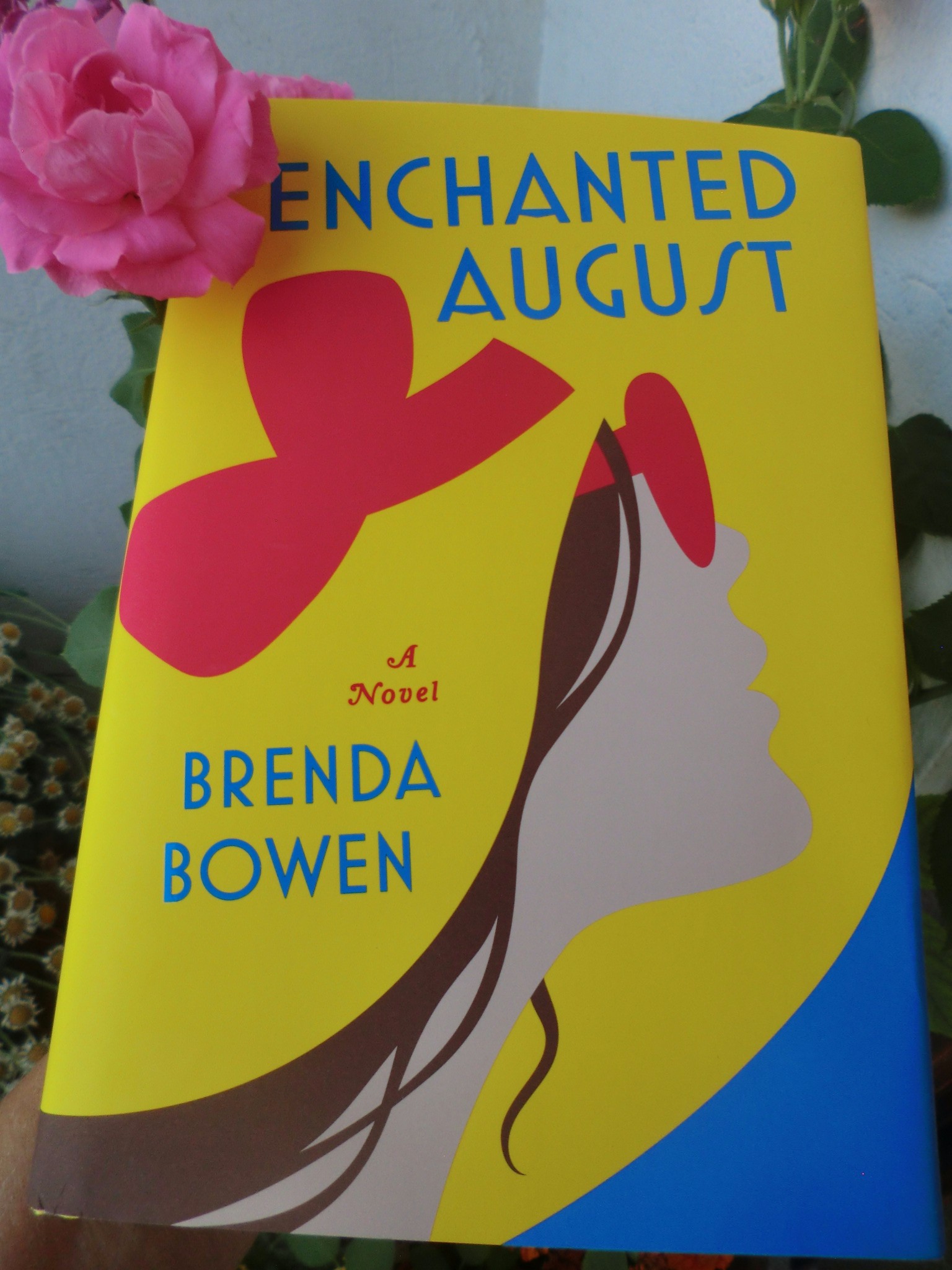 Not only are Elizabeth von Arnim’s works experiencing a surge in popularity, with The Enchanted April being republished as a Penguin Classic this month, but her 90-year-old novel has spawned a work of fan fiction in Brenda Bowen’s Enchanted August.
 ecide to rent it and find two others to join them to reduce the cost, Caroline Dester, a celebrity who wishes to hide from the world following a recent public humiliation and Beverly Fisher, the somewhat grumpy and initially reclusive, older character, grieving after a heartbreaking loss and seeking solitude in the company of strangers.




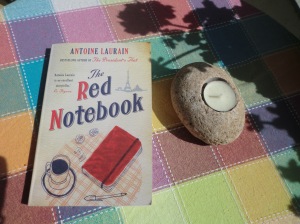 Antoine Laurain is the French author of five novels, including The President’s Hat, a novel that has found a popular and loyal following in the US and UK since being translated into English by Gallic Books.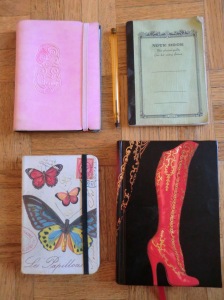
 The bag belongs to Laure, a woman we meet in the opening pages as she clutches her handbag to her detriment, metres from her apartment, only to be shoved against a metal door frame, losing the bag anyway. Without keys, and despite it being 2am, she manages to check into the hotel opposite, promising to pay in the morning, by which time she will have fallen into a coma.


 Word by Word