The Narrow Road to the Deep North by Richard Flanagan

Flanagan

A novel of the cruelty of war, the tenuousness of life and the impossibility of love.

I started reading this in July/August 2014, during the summer and to begin with I was fine with reading it, but by halfway I found myself not wanting to pick it up, the scenes described, horrific, grueling, they went on for too long, they were so vivid, my insides contracted each time I picked it up.

I read reviews, entered into discussions and debate about the necessity of being so exposed to such scenes as a way of understanding what men went through in war and I am not one to avoid that, but I couldn’t balance that intellectual point of view with the sickness I felt on reading this.

I was reading it on the kindle and at 50% I decided to stop and I picked up Vera Brittain’s Testament of Youth which I reviewed here, the true story of her wartime experience, some distance from the war but dealing with the effect of it, both in the hospitals where she volunteered and the letters from her fiance, brother and friends who were all fighting and who would all lose their lives.

Vera’s story brought meaning and understanding, empathy and insight, but it didn’t make me feel sick. Her life afterwards was affected by her experience in a positive way, it is a grand testament to a woman’s work and need to more than understand, but to make a contribution to try to change the world and our violent, destructive tendencies.

Richard Flanagan’s book then won the Booker Prize, so I tried again. I sped through the next 100 pages and had to pause again as that sick feeling refused to go away. So I stopped.

Today for the third and last time I picked the book up once again, but by now I could almost feel the pages of horror coming, whether it was Dorrigo trying to sew up his friends leg or watching the beating of a friend. And now I say enough. This book has many, many fans and has brought the author immense and deserved success, however, it doesn’t need my contribution and I don’t need to continue to torture myself by trying to read it, in the hope of some kind of enlightenment.

I read 65% and I am sure I missed out the redeeming parts of the book.

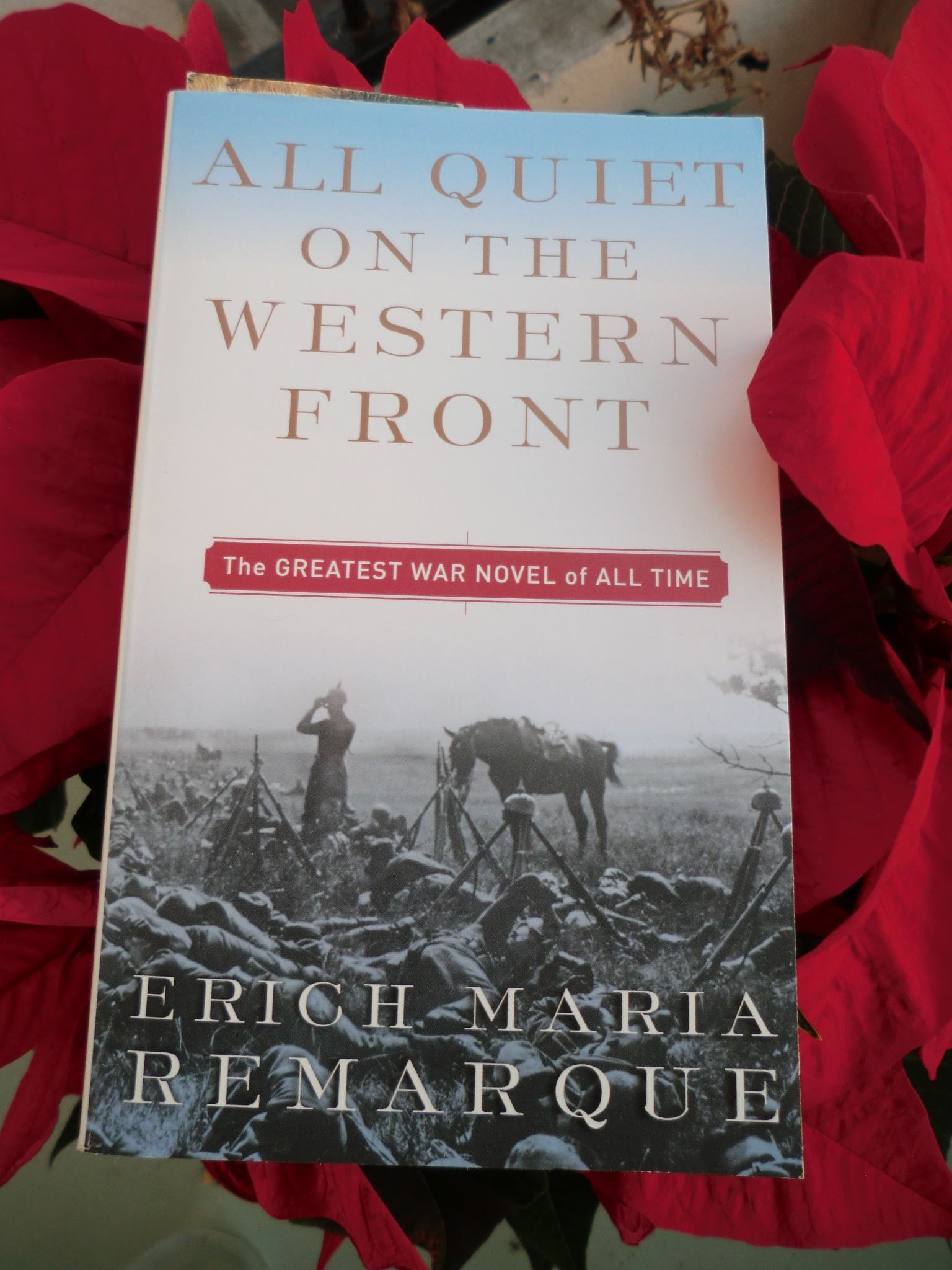
All QuietI leave it there and will turn to Erich Maria Remarque’s All Quiet on the Western Front instead to conclude a year of anniversary reads for WWI.

Note: This was an ARC (Advance Reader Copy) kindly provided by the publisher via NetGalley.

Literary Blog Hop Winner of My Brilliant Friend

Thank you to everyone who participated in and entered the Literary Blog Hop to win this excellent book, My Brilliant Friend, originally written in Italian by Elena Ferrante.

My Brilliant Friend

And thank you for all the wonderful comments and book recommendations of your favourite translation or book written in a language other than English. As you can see, my TBR is growing!

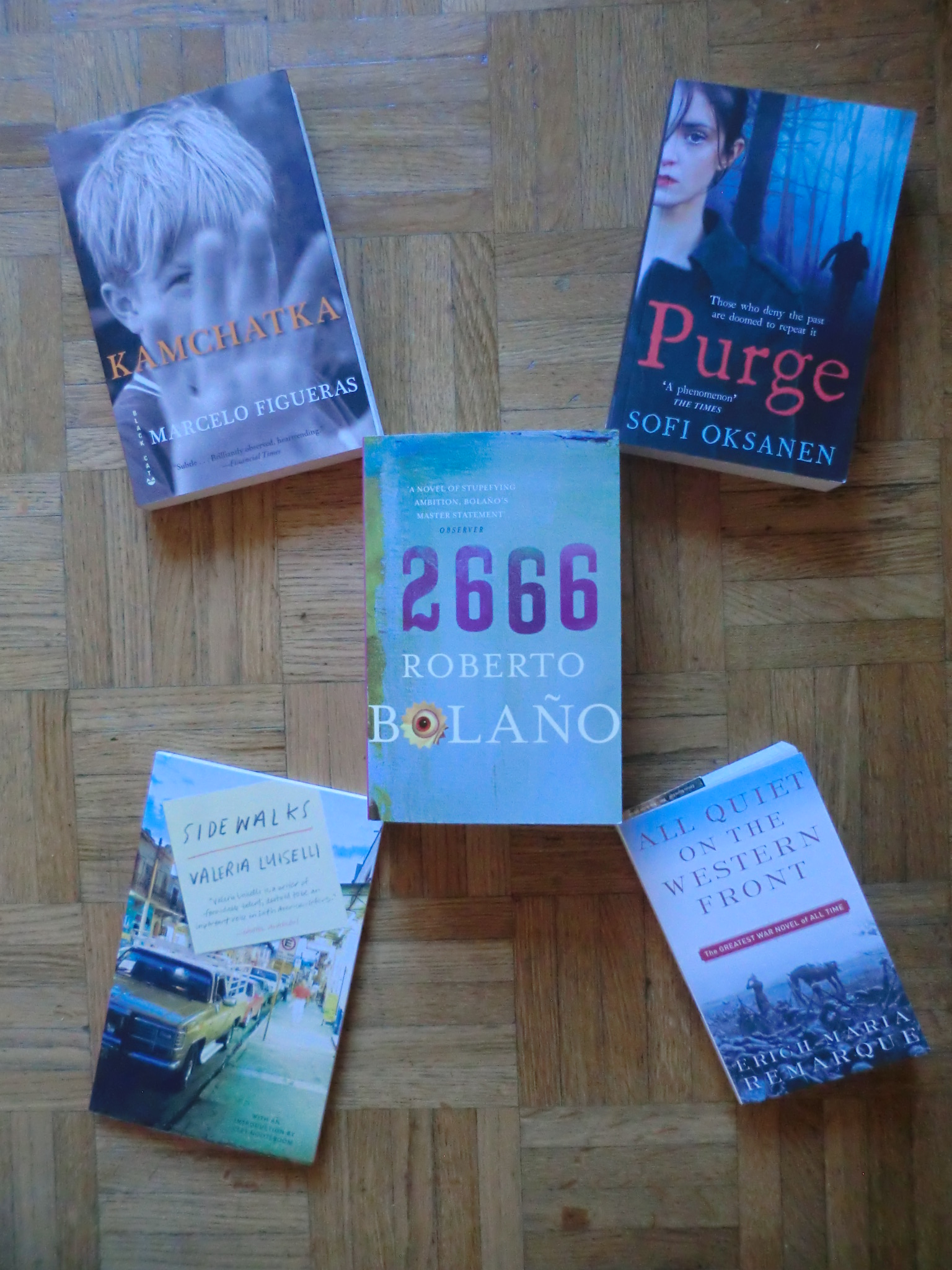
My New Book Haul

And the winner of the draw is…..

Michelle Willms

Congratulations Michelle! I’ll send you an email to ask you for your address details. Please answer this by Sunday 9th November.

Thanks again to everyone who commented and participated and shared such wonderful book recommendations.

Happy Reading All!

“All Paths Lead to Rome” – The Vatican Cellars by André Gide tr. by Julian Evans

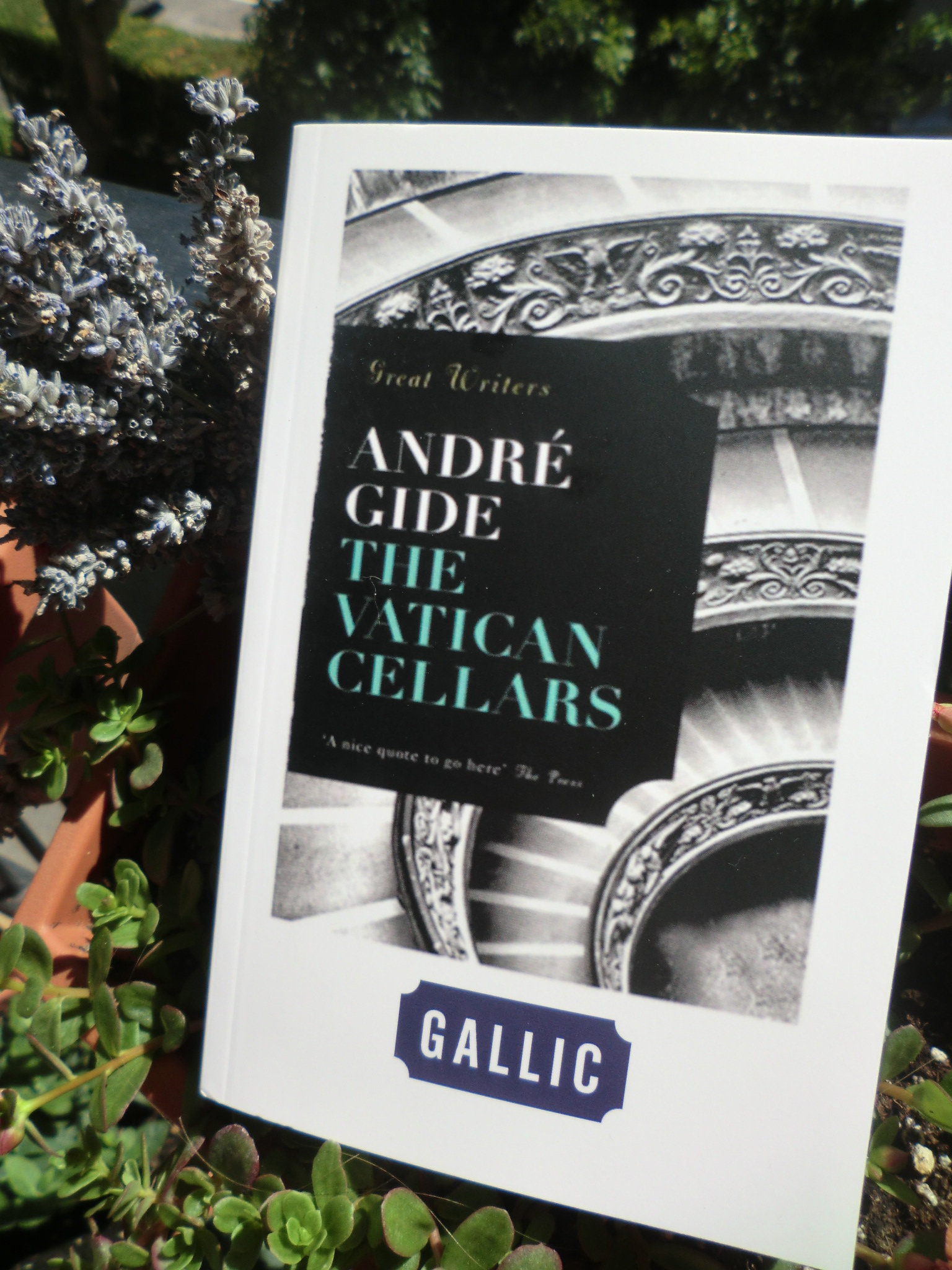
Vatican CellarsOriginally published in the summer of 1914, this year is the 100th anniversary of André Gide’s Les Caves du Vatican otherwise known as The Vatican Cellars and sometimes as Lafcadio’s Adventures in English.

André Gide had quite a reputation and was adored and detested in equal measure in the French literary community during his time. He was a provocative writer, not sensationalist by today’s standards, but he rocked the foundations of robust entities in the early 1900’s and tested some of his friendships with his provocative, satirical works, that challenged the solemnity of the novelistic form and bourgeois attitudes of the time.

He declared the book not to be a novel, but a sotie, a medieval farce in which the players freely mock the powers that be, more often than not, the Church.

“Even in the authentic soties of the Middle Ages there was the attempt to demonstrate the madness of the real world by showing it capsized and lead by fools.” Wallace Fowlie, Andre Gide: His Life and Art

He did this to stand apart from that tradition of European fiction, characterised by its extreme seriousness. Many chose to judge it at face value, or to apply an interpretation that wasn’t his own and cause him to be ostracized by some.
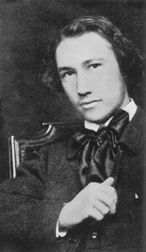
A Young Gide Source: Center for Gidean Studies andregide.org

A Young Gide
Source: Center for Gidean Studies
andregide.org

He wasn’t looking for recognition or accolades, but he was a writer who wasn’t afraid to take on a subject and look at it through a symbolic, metaphorical lens even if it did court contempt in some quarters. Though still highly controversial in France, he was awarded the Nobel Prize in Literature in 1947, he died in 1951 and a year later his works were placed on the Vatican’s list of banned books.

That act was certainly provocative and no doubt helped to heighten the author’s popularity as negative publicity tends to do. So when this book arrived unsolicited in my mailbox, I was curious to find out more, not just about the story, but André Gide, a writer previously unknown to me. In a strange coincidence, this week I see that Papal controversy – or is it just rumour, continue, when I read this headline in The Independent.

God isn’t a magician with a magic wand according to the pope and there are non-believing vicars 

The basic premise of The Vatican Cellars centres around the members of one family, whose connections are slowly revealed, whether by blood or marriage, the first three books (more like parts as the book is only 300 pages) are portrayed from each of the main characters point of view and running throughout the narrative is the effect of a rumoured plot that a gang has kidnapped the Pope and placed him in the Vatican cellars, an imposter installed in his place. The fourth book introduces us to the gang, referred to as The Millipede and the final book is dedicated to the young man Lafcadio and brings all the characters to Rome.

Book One introduces us to Anthime Armand-Dubois, a crippled freemason devoted to scientific research, an atheist who leaves France to settle in Rome to be near a specialist in rheumatic diseases. His departure causes his brother-in-law Julius De Baraglioul great sorrow and his wife Véronique small joy.

“As one of those people who fill their flat disappointed lives with countless small devotions, in her sterility she offered up to the Lord every attention that a baby would have demanded from her. Sadly she entertained almost no hope of leading her Anthime back to Him. She had known for a long time how much stubbornness that broad brow, knitted in perpetual denial, was capable of. Father Flons had warned her.”

Julius, his wife (Véronique’s sister) and their 9-year-old daughter Julie visit, during which Anthime experiences an apparition of the Virgin Mary and the miraculous healing of his affliction. He converts, but loses his freemason and lucrative research contacts and must move to Milan to await compensation promised by the Vatican.

André Gide Source: Centre for Gidean Studies andregide.org

André Gide
Source: Centre for Gidean Studies
andregide.org

Book Two is Julius De Baraglioul, a novelist who arriving back in Paris receives a letter from his father, who is on his deathbed and wishes him to anonymously make the acquaintance of a certain Lafcadio Wluiki to check out his ambitions and character. Julius visits the Lafcadio’s lodgings, meets Carola Venitequa and snoops around his things reading a private notebook since the room is unlocked and uninhabited. He eventually meets him and gives him a copy of his latest novel, one that has been panned by critics. Recognising the book is based on the author’s father, Lafcadio eyes the dying man as a potential new “Uncle” and goes to see him.

In Book Three we meet Amédée Fleurissoire, debated by some to be the true hero of this story; within these pages the entire plot to kidnap the Pope is unveiled. A priest calls on the widow Countess de Guy de Saint-Prix, Julius’s younger sister just after her return from her father’s funeral in Paris and regales her with the extraordinary tale of the Pope’s demise. And here there is an author interjection, a sidestep of the story plot to tell of the factual plot, as the story was inspired by real events that occurred in 1893 by a gang of fraudsters, taking advantage of the Pope’s sympathies toward the French Revolution.

“Whether God’s representative on earth could have been abducted from the Holy See and, by the intervention of the Quirinal, stolen from all of Christendom as it were, is an excessively thorny problem which I do not have the temerity to raise in these pages. But it is a historical fact that, around the end of 1893, rumours were circulating to that effect. It goes without saying that numerous devoted souls became deeply agitated. A pamphlet on the subject appeared in Saint-Malo and was suppressed. …There is no doubt that countless pious souls made financial sacrifices, but it was dubious whether all those who received donations were genuine campaigners, or whether some were perhaps fraudsters.”

The priest wishes the Countess to make a significant donation, so she rushes off to see Madame Fleurissoire, the younger sister of Véronique and Marguerite and wife of our genuine hero Monsieur Amédée Fleurissoire. Hearing about all the fuss Fleurissoire decides he must leave Pau and travel to Rome himself to see what can be done.

Book Four is The Millipede (the centipede) which continues to follow the travels of Amédée, the presence of the gang undetected. He is intercepted at the station and brought to slovenly rooms, where we again meet Carola and he is taken on a bit of a wild goose chase to Naples and back, bumping into Julius who has also appeared in Rome.

Then Book Five brings us back to Lafcadio, raised by his mother and five uncles, across different European countries, he is at home everywhere, but belongs nowhere. After his encounter with Julius’s dying father, he too decides to take the train south, but he is heading for adventure, his destination Borneo. He is the anti-hero, the free spirit, parentless, he lives without obligation or restraint, he can do as he pleases, provided he has the means. His charm takes care of that.

And what happens when they all find themselves in Rome? For that you’ll need to read the book.

As the literary critic Albert Guerard said:

“Perhaps only the maligned casual reader sees that les Caves du Vatican is above all a very funny book.”

It is a book that Gide had in the back of his mind for 20 years before writing it and many of the scenes were inspired from aspects of his own life or those close to him. For example, Anthime’s conversion is said to be based on Emile Zola’s Freemason cousin, who abjured his atheism in a public ceremony at a church in Rome.

The Vatican Cellars is an entertaining, easy read and can be intellectually stimulating if you are interested to analyse it further. I enjoyed it very much and all the more for having read around it, dipping into some of the published literary essays to understand the intentions of the author and the responses of the critics.

He was a humble author with a fascinating intellect who refused to accept literary prizes and acknowledgement at home, until it came to the Nobel, which he felt would have gone to Paul Valéry, if not for his untimely death and accepted it without reserve, though he was too ill to receive it in person.

In an open letter to several leading Swedish newspapers which had sought interviews, Gide confessed that he had received the Nobel Prize:

“with deep emotion, with tears in my eyes, like a schoolboy who has won a prize.”

I leave you with this very funny anecdote that I picked up from an essay by the critic George D.Painter.

“On 7 January 1930 Gide was returning by train from Toulon to Paris with Jacques de Lacretelle. At the opposite table, which was covered with flowers, sat a honeymoon couple, the husband engrossed in The Vatican Swindle. It was the first time Gide had ever seen a stranger reading himself. ‘Here’s your chance,’ said Lacretelle, ‘Tell him who you are – write him a dedication!’ But to do this, Gide would have had to feel sure that the unknown liked the book. Suddenly the young man pulled out a penknife. Good heavens, was he about, like Lafcadio, to plunge it in his thigh? But no, worse still, he seemed to intend to cut the book itself in pieces, and Lacretelle was seized with a fou rire. With great care the bridegroom cut the threads of the binding, detached the part he had read, handed it to his young wife; and both buried themselves in their reading.”

train reading

Note: Thank you most kindly to Gallic Books for sending me a copy of the book.

Literary Blog Hop … Book #Giveaway

From now until Wednesday November 5th Word by Word is participating along with other international bloggers in a Literary Blog Hop Giveaway hosted by Judith at Leeswamme’s Blog, an avid reader and reviewer from the Netherlands.

literarybloghopnovember

The blog hop offers you the opportunity to win a book here and you can visit other blogs listed below, each one offering a book of literary merit as a giveaway.

Just leave a comment below to enter the draw and on Thursday 6 November I will notify the winner.  And seriously,  even if you don’t win, you must read this book!

The book is Elena Ferrante’s My Brilliant Friend and the giveaway is open worldwide.

Win a copy of

My Brilliant Friend!

My Brilliant Friend

This entire series is definitely one of my Top Reads of 2014.

Elena Ferrante is an Italian author from Naples, where the books are set. We know little about her as she doesn’t accept interviews and uses a pen name, however that hasn’t prevented her books from becoming a word of mouth sensation. You can read my review of My Brilliant Friend here.

My Brilliant Friend is the story of two friends Elena and Lila growing up in an impoverished neighbourhood of Naples and their efforts to escape the inevitability of their fate, as members of a lower class community.

I found it a compelling read and loved the second book The Story of  New Name (reviewed here), as much as the first.

There are three books available in English (I’m reading Book 3 ) and a fourth book due out in 2015. (It was published in Italian on Oct 29 2014).

To Enter:

1. Leave a comment and tell me whether you have ever read a book in a language other than English, or a translated book. If you have, do you have a favourite? (1 entry)

2. Follow this blog. Mention in the comments if you already do. (2 entries)

3. Follow @clairewords on twitter (3 entries)

Then click on the links below to visit other blogs participating in the giveaway.

Make sure to visit the author Juliet Greenwood, whose two books Eden’s Garden and We That Are Left are excellent reads and also reviewed here at Word by WordClick on the titles to read the reviews.

Linky List:

  1. Leeswammes
  2. Read Her Like an Open Book (US/CA)
  3. My Book Self (N. Am.)
  4. The Book Stop
  5. My Book Retreat (US)
  6. Books in the Burbs (US)
  7. Guiltless Reading
  8. Word by Word
  9. Juliet Greenwood
  10. BooksandLiliane
  11. Words for Worms (US)
  12. The Relentless Reader
  13. The Misfortune of Knowing
  14. The Friday Morning Bookclub (US)
  15. Readerbuzz
  16. Lavender Likes, Loves, Finds and Dreams
  17. The Emerald City Book Review
  18. Wensend
  1. Laurie Here
  2. A Cup Of Tea, A Friend, And A Book (US)
  3. Moon Shine Art Spot (US)
  4. I’d Rather Be Reading At The Beach (US)
  5. Lost Generation Reader
  6. Books Speak Volumes
  7. Mom’s Small Victories (US)
  8. Books on the Table (US)
  9. Orange Pekoe Reviews
  10. Lavender Likes, Loves, Finds and Dreams
  11. Words And Peace (US)
  12. Booklover Book Reviews
  13. Inside the Secret World of Allison Bruning (US)

Note: Thank you to Daniela at Europa Editions for organising a copy of the book.

The Story of a New Name by Elena Ferrante tr. By Ann Goldstein … Neapolitan Tetralogy Book 2

The Story of a New NameThe second in the tetralogy of books about two friends Elena and Lila, growing up in an impoverished neighbourhood of Naples. The first book My Brilliant Friend I reviewed here.

Both girls were bright students in primary school, and perhaps because the story is narrated from Elena’s perspective she often sees herself in the shadow of her friend Lila, as if she must strive to attain her success, while Lila’s comes more naturally.

Lila fights to elevate herself, suggesting Elena studies with her to help her friend, thereby attaining the knowledge herself and through imposing her will on her husband, her family and business associates, who need her input and influence which she uses to both help them and to ensure her often rebellious stance is understood by them all.

It is Elena who despite her family circumstances progresses through high school and at the suggestion of a teacher applies to a university in Pisa where she can continue her studies.

Lila whose beauty and bravado bring her more to the attention of local boys wanting to move themselves up in the world financially, becomes entangled in their schemes and part of their negotiations and is married at sixteen to Stefano the grocer, partly in order to avoid the attention of the Solara brothers.

“How difficult it was to find one’s way, how difficult it was not to violate any of the incredibly detailed male regulations.”

Through her personal notebooks that she entrusts to Elena for safekeeping and Elena’s inability to withhold from the temptation of what they offer, we too as readers understand more from within the bounds of Lila’s marriage and life than we might otherwise from the limited perspective of her friend, particularly during the frequent periods where the friendship was being tested and therefore withheld.

Though unwilling to be trapped inside marriage, Elena does envy her friend the space and luxury her new status as Signora Raffaella Carracci has given her and when Lila’s husband suggests a summer holiday on doctor’s orders to increase her chances of conceiving a child, Lila’s insistence that her friend accompany becomes Elena’s excuse to find a way to be in close proximity to Nino Sarratore, the brilliant student she has had a crush on for years. His arrival becomes a turning point in their lives, though not the outcome either of them were wishing for.

Pisa NormaleElena distances herself from Lila and from her family and moves to Pisa, where initially she struggles to brush off the ways of her neighbourhood, her origin, her accent, things that make it obvious to others she is not one of them. She throws herself into her studies and into becoming more like her contemporaries; a new boyfriend aids her transition.

“That day, instead, I saw clearly the mothers of the old neighbourhood. They were nervous, they were acquiescent. They were silent, with tight lips and stooping shoulders, or they yelled terrible insults at the children who harassed them….

They had been consumed by the bodies of husbands, fathers, brothers, whom they ultimately came to resemble, because of their labours or the arrival of old age, of illness. When did that transformation begin? With housework? With pregnancies? With beatings? Would Lila be misshapen like Nunzia?…

And would my body too, one day be ruined by the emergence of not only my mother’s body, but my father’s? And would all that I was learning at school dissolve, would the neighbourhood prevail again, the cadences, the manners, everything be confounded in a black mire,…”

Leaving Naples allows Elena to begin to reform herself, to blend in, the novel highlights the tension between the Neapolitan dialect spoken in her neighbourhood and the correct Italian spoken by the professional, educated classes. Dialect is associated with aggression, insults and anger, with all the negative emotions and difficult challenges of a repressed community, while the Italian symbolises upward mobility and refinement.

Napoletana“Be careful where all this studying leads, Lenu. Remember who you are and which side you’re on.”

I found Book 2 just as engaging as Book 1, more than just narrating the events that mould the two girls’ lives is the underlying philosophical question of whether one can rise above one’s origins via the attainment of significant wealth or education. Elena and Lila represent these twin avenues, in their attempt to escape their origins.

The novel continues to focus on the friendship of the two girls and their connections with others, both those from within their sphere and those they encounter outside, a measure of how far they have progressed in their aim to rise up and out of the confines of the neighbourhood.

The narrative is less dramatic than it might be by some of the omissions. Elena doesn’t recount much of her own dialogue with her boyfriends and much of the story is narrated or told, rather than putting the reader in the midst of the events as if to experience them. It is the psychological and philosophical elements of the placement of the two women in these situations that lend themselves a kind of accepted inevitability, we won’t be shocked by anything that happens, knowing their backgrounds, it is the lure of that question of whether either of them can or will escape their fate that entices us to read on.

Next Book in the Series: Those Who Leave and Those Who Stay (click title to read review)

Nora Webster by Colm Tóibín

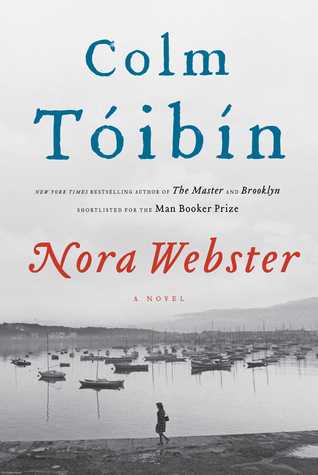
Nora WebsterSomething about the promise of Colm Tóibín’s new novel Nora Webster pulled me in right from the beginning, the cover with its familiar Irish landscape of boats moored against a grey sky, the less conspicuous protagonist, a 40-year-old housewife who doesn’t become the mother of a prophet, an oversensitive woman who rarely gives voice to the many thoughts that race through her mind as she tries to cope with the aftermath of her husband’s untimely death and the shift in relations with her four children.

We know little of her life with her husband Maurice, she doesn’t wallow in pity, though we know she neglected all else, including visiting her sons who were living with her Aunt, one of whom develops a stutter as a result, during those last months when he was dying.

“In these months, she realised, something had changed in the clear, easy connection between her and them, perhaps, for them, between each other. She felt that she would never be sure about them again.”

Nora Webster is a complex character whom few on the outside really understand, including her siblings, who despite their sister’s loss, well, according to Nora – seem to want to avoid her. Even when invited, she senses they wish her gone so they can talk about her. She behaves in a way to provoke them, ensuring they will have something to talk about, deliberately avoiding helping out, resolving not to do any washing up or to help in the kitchen.

“She wondered if she would ever be able to have a normal conversation and what topics she might be able to discuss with ease and interest.”

Set in a small town outside Dublin, in 1960’s Ireland, the novel charts a short period of time after her husband’s death in which Nora makes some important decisions such as selling the beach house and going back to work. She gets her hair dyed and joins the Gramophone Society. She takes singing lessons and following the advice of her Aunt puts her son into boarding school. She begins to create a life that would have been unimaginable in the past and becomes a woman she is comfortable with but surprised by, almost in spite of herself.

Colm Tóibín uses a particular narrative device that has a significant effect on how we see things. By writing in the third person limited perspective, we only ever see things from Nora’s point of view, there is little opportunity to see events in any other way, with the exception of the occasional insightful dialogue. This is the only time we hear what people have to say about Nora.

POVThe narrative perspective creates a narrow, introspective insight into her thinking, but also raises doubts as to whether what she thinks actually reflects reality, as she so rarely expresses her questioning thoughts and prefers to let them lie unstated, preferring to deal with the consequence of her silence. It made me want to shout  “Speak your mind Nora!”

She visits her sister who doesn’t offer them food after a long journey, Nora knows the boys are hungry and wonders if her sister believes they had already eaten, but says nothing.

“What was strange, she noticed, was that Catherine did not give her any opportunity to mention food; instead she spoke to her as though she were not really there. Once she noticed this, she found that she could notice nothing else….she had created an atmosphere in which Nora could have nothing to say.”

Nora has such powerful equanimity, that she rarely speaks, it is as if she lives continuously outside herself, observing herself and others in the situation and wondering many things that she will never utter. It is part of her character, accentuated by grief. To the point that when she does act and we see what she is capable of, it is a shock, it seems out of character. She is quite a force after all.

“She had trained herself not to ask any of the children too many questions. If she came home with a parcel of any kind when she was growing up, her mother would need to know what was in the parcel, or if a letter came for her, her mother would need to know who it was from and what news it contained. Nora had found this constantly irritating, and tried with her own children not to intrude.”

Nora Webster is a perplexing character and Colm Tóibín a masterful creator of character, deliberately using a narrative device that prevents the reader from feeling comfortable with her observation of reality, while forcing us to accept it. We too are trapped inside Nora’s mind, just as she is trapped inside her grief. We feel the need to escape, to shout, to ask someone what is really happening here.

“They did not have her way of watching every scene, every moment, for signs of what was missing or what might have been.”

I found the novel a compelling, albeit at times annoying read. I turned the pages hungry for more and found myself resenting the authorial control over the narrative perspective. I wanted to read a companion novel, the one written from the point of view of her son Donal or her daughter Fiona, I didn’t trust Nora Webster’s interpretation of people’s motives and although she knew people gossiped behind her back, I really wanted to know what it was they were saying and not just her wild, over analytic guess at what was passing through the minds of members of her family and community.

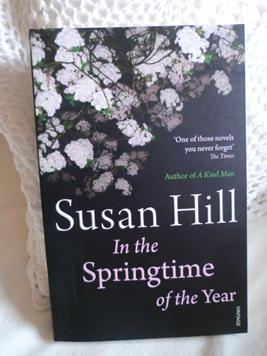
042512_1611_IntheSpring1.jpgNora’s grief is unique in that she very rarely dwells on the past and we aren’t sure whether the way she is now, is how she always was or how much of it is the result of her grieving.

One of the best novels I have read portraying a widow’s grief was Susan Hill’s astonishing, In the Springtime of the Year, which I highly recommend, her protagonist is equally displaced by grief and experiencing an existential crisis provoked by the untimely death of her young husband.

Note: This book was an ARC (Advance Reader Copy) kindly provided by the publisher via NetGalley.

My Brilliant Friend, Elena Ferrante tr. by Ann Goldstein…Neapolitan Tetralogy Book1

Elena Ferrante is already something of an Italian legend. An author said to spurn interviews, her pen name fuelling speculation about her real identity. Her work is said to be autobiographical and already capturing the attention of English readers in a similar way to the autobiographical series of novels by the Norwegian Karl Ove Knausgaard.

Being a fan of translated fiction I have had my eye on this series for a while and from the reviews and articles I have read, her work reminds me of Caroline Smailes, whose excellent novel The Drowning of Arthur Braxton was my favourite read in 2013.

My Brilliant FriendIn 2012, My Brilliant Friend, the first in the trilogy of Neapolitan novels was translated into English and the two subsequent books The Story of a New Name and Those Who Leave and Those Who Stay were published in 2013 and 2014 consecutively.

The trilogy follows the lives and friendship of Elena Greco and Lila Cerullo, two astute girls from a downtrodden suburb slum of post war  1950’s & 1960’s Naples, as they navigate the challenges and opportunities necessary to survive and overcome their upbringing.

My Brilliant Friend spans Elena and Lila’s childhood and adolescence years in their neighbourhood, one where aggression, tension and feuds reign and graduating from school is less of a priority than finding safety and protection from the inhabitants of their immediate environment.

The first pages begin with the naming of characters, a family tree of the neighbourhood, members of each family and their occupations. I often find these lists of characters overwhelming, so ignored them, telling myself, if the book is good, I’ll know who all these characters are by the end. And when I went back to look at it, sure enough, I knew who they all were.

The story then begins with a prologue when the girls are women in their mid-fifties and creates a mystery that won’t be resolved in the first book, as the girls only reach the age of sixteen by its conclusion. It intrigues and teases the reader to continue to read on and discover what it is Elena knows, that no one else does.

“It’s been at least three decades since she told me that she wanted to disappear without leaving a trace, and I’m the only one who knows what she means.”

A Naples Slum

A Naples Slum

Elena is angry and so begins to write this narrative, in an act of revenge-like competitiveness, a trait that has defined her relationship with Lila throughout their childhood and adolescence.

Narrated from the point of view of Elena, the girls first recollection of being together is around the fearful presence of Don Achille, the local grocer whose name is associated with a fairy tale ogre.

In their play, Lila’s actions are always decisive and with bold intent, Elena is less bold, yet more determined, she follows her friend but wishes to surpass her and learns how to cope with the sacrifices necessary to continue to be her friend. Starting with the day Lila dropped her doll through the street grating into a dark underground cellar.

“But that day I learned a skill at which I later excelled. I held back my despair, I held it back on the edge of my wet eyes, so that Lila said to me in dialect:

‘You don’t care about her?’

I didn’t answer. I felt a violent pain, but I sensed that the pain of quarrelling with her would be even stronger. I was as if strangled by two agonies, one already happening, the loss of the doll, and one possible, the loss of Lila.”

After her early years of passing well her exams, there is one year when Elena’s attention strays and as a result her parents are no longer willing to support her in school. They won’t pay for extra tuition but if she studies and resits the exams, they will allow her to continue.

Lila, who never fails, will have to leave school, regardless of her ability, her family isn’t willing to support her education. She has a hunger for education and follows Elena’s progress, increasing her knowledge, surpassing her friend, becoming more like her teacher, though never sitting another exam.

“She had begun to study Greek even before I went to high school? She had done it on her own, while I hadn’t even thought about it, and during the summer, the vacation? Would she always do the things I was supposed to do, before and better than me? She eluded me when I followed her and meanwhile stayed close on my heels in order to pass me by?”

Snapshot 1 (09-11-2012 17-25)

Friendship by Allia

The book ends with a wedding, the girls paths seem to be heading in different directions, they continue to navigate their lives according to the expectations and threats of their community, yet their paths, in their different ways, potentially hold the seeds of their escape.

My Brilliant Friend is an emotionally charged coming-of-age read and the story held me riveted all the way through from the prologue that isn’t resolved through their early schooldays up to that wedding day.

Ferrante’s depiction of the two girls friendship bristles with vulnerable authenticity, igniting our curiosity in their interactions with their community, making the reader care about what will happen to them all next.

Next Book in the Series: The Story of a New Name (click title to read review)

Buy This Book

Buy My Brilliant Friend at Book Depository

H is for Hawk by Helen Macdonald

Winner of Samuel Johnson Prize, Costa Prize

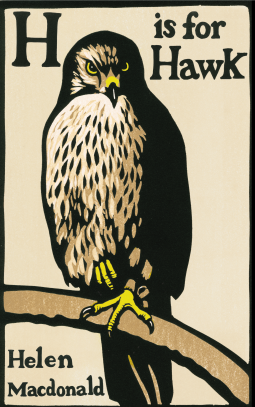
H is for Hawk and for Helen Macdonald, and her Hibernation from Humanity in coping with her father’s untimely death and her own pending transition, as her Cambridge University fellowship is coming to an end and she must soon leave the comfortable country cottage that came with it.

H is for HawkResponding to an instinctive need to escape reality she obtains a goshawk, retreats into her cottage, unplugs her telephone and focuses on training the raptor at the same time observing her own behaviour which begins to resemble the bird’s.

“The kind of madness I had was different. It was a madness designed to keep me sane. My mind struggled to build across the gap, make a new and inhabitable world. The problem was that it had nothing to work with. There was no partner, no children, no home. No nine-to-five job either. So it grabbed anything it could. It was desperate, and it read off the world wrong.”

In all her years as a falconer, she had never wanted to fly a goshawk, she feared them and comes to realise she has taken on the attitudes of those who glorified falcons, bird of nobility, of aristocracy, men of privilege, those who mocked the humble goshawk. But times and perceptions had changed, and getting to know and train a goshawk was the challenge she set for herself.

“Goshawks were ruffians: murderous, difficult to tame, sulky, fractious and foreign.”

She waits on a Scottish pier for the Belfast ferry, which is transporting a man and his goshawk, soon enough she will become the owner of the bird she names Mabel.

One Woman’s Obsession

The days pass and her focus must be with Mabel, she spurns human company, spending her free time in the company of T.H White, rereading The Goshawk, a book she had read as a child when her passion for birds was in its formative stages. White wrote about his failed attempt to train a goshawk, his account wrapped up in childhood fears and inclinations. Helen Macdonald reads around the life and writings of this man in order to understand him, as if to explain to her childhood self, why he did what he did.

“I understood why people considered it a masterpiece. For White made falconry a metaphysical battle. Like Moby-Dick or The Old Man and the Sea, The Goshawk was a literary encounter between animal and man that reached back to Puritan traditions of spiritual contest: salvation as a stake to be won in a contest against God.”

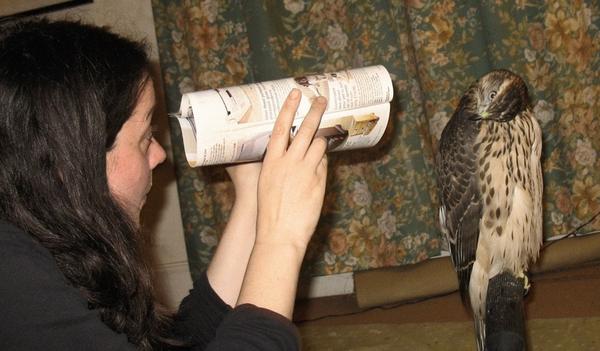
Mable and Helen playing with a paper telescope Photo by Christina McLeish @_Xtin_

Mable and Helen playing with a paper telescope
Photo by Christina McLeish @_Xtin_

It is a fascinating and insightful read as the author shares her commitment to an obsessive need to tame the hawk and exposes her vulnerability in coping with all that she wishes to avoid. Writing about the training of a goshawk is also a way of avoiding talking about herself.

We must read outside the narrative of the book to know more about Helen’s previous experience and expertise with hawks, we can tell she is no amateur, however she avoids looking back or enlightening the reader too much about her past, we are kept very much in the present, as unnerved as she is by her descent into hawk-like behaviours and instincts.

Nature Writing Memoir

I love nature writing that stimulates the imagination, that offers more than just an observation of what the author sees, but describes the environment and what an observer brings to it, one that provokes us to think about our own relationship to birds, animals and nature. Helen Macdonald comes to her goshawk challenge with fixed ideas about the need to escape all, she sets herself up like a scientific hypothesis, begins her transformation into a hawk like creature and then slowly deconstructs it, coming back to the realisation of her own humanity.

“Hands are for other human hands to hold. They should not be reserved exclusively as perches for hawks. And the wild is not a panacea for the human soul; too much in the air can corrode it to nothing.”

Falconry_sport_of_kings_(1920)

Falconry, the sport of Kings Source: wikipedia

She reminds us of the place and symbolism of falconry within humanity, its association with the hunt, with death, war, power and subservience.

It is unique in being a woman’s perspective within a heritage that has long been the domain of men, nobility, landowners, gentry, medieval lords.

It is refreshingly alive, honest and knowledgeable, exhibiting how our weaknesses and our strengths advance and recede in unison as naturally as the ebb and flow of tides.

Note: This book was an ARC (Advance Reader Copy) kindly provided by the publisher via NetGalley.

Testament of Youth by Vera Brittain

Vera BrittainThat Vera Brittain chose to name her autobiography a Testament, at first seems like an assertion of her intellectual inclinations, particularly in light of the decision she made to pause her hi-brow Oxford University studies when the First World War began as her closest friends, her fiancé Roland and brother Edward all signed up to participate, one by one departing for France.

She had fought hard to be accepted into Oxford, at a time when women were not exactly welcome, her own family and many of their social peers thought it a waste of time. It remained important, but while those she was closest to were sacrificing everything, it felt indulgent to be pursuing anything intellectual. She volunteered to become a VAD (Voluntary Aid Detachment) nurse as she sought the diversion of physically demanding work to lessen the idle hours of mental anguish concerning her male contemporaries at war.

Testament is more than one woman’s intellectual account, it is evidence of a generation’s stunted youth, a youth stolen by war and loyalty, one that for the men who participated, would continue to be acknowledged and remembered, their efforts appreciated and honoured. For Vera Brittain it would bring grief, disappointment and disillusionment.

She recalled one of her last bittersweet moments, punting up the river in Oxford with her friend Norah, whom she would not see again after the end of that term.

‘No evening on the river had held a glamour equal to that one, which might so well be the last of all such enchanted evenings. How beautiful they seemed – the feathery bend with its short, stumpy willows, the deep green shadows in the water under the bank, the blue, brilliant mayflies which somersaulted in the air and fell dying into the water, gleaming like strange, exotic jewels in the mellow light of the setting sun.

I had meant to do such wonderful things that year, to astonish my fellows by unprecedented triumphs, to lay the foundations of a reputation that would grow ever greater and last me through life; and instead the War and love had intervened and between them were forcing me away with all my confident dreams unfulfilled.’

Malta Vera Brittain

Vera Brittain, 3rd from left, in Malta, WWI

Her nursing efforts took her out of the northern provinces of England for good, away from her studies at Oxford to a military hospital in London, until events would propel her to volunteer for a foreign assignment, taking her to Malta and then close to the front line in France for the remaining years of the war.

Her account is all the richer for the journals she kept from 1913 to 1917 and rather than present them in full, she selects extracts to bring the era to life, sharing the angst and idealism of her youth, simultaneously looking back and narrating from the wisdom of early middle age, for she was 40 years old before she would finally see the much revised autobiography in print.

The book contains snippets of letters to and from Vera and her fiancé Roland and her brother Edward, they were her life blood, her motivation to face the relentless days in the hospital, where their work offered so much and yet did so little to stem the flow of blood and severed limbs, pain and hopelessness.

The letters that pass between Vera and Roland reveal the slow loss of hope, optimism and valour as they struggle to find meaning in war. Despite the often depressing content, they are fortunate to have each other, writing letters prolifically, drawing each other deeper into a love that they knew could be destroyed on any day.

After the war, Vera returns to Oxford and finds herself isolated. She has difficulty articulating her experience in a way that is understood and instead invites scorn and derision. A new generation of youth has swept up behind her and they have little time for the lessons that might be gleaned from a mature student who forsook her youth for volunteer nursing abroad. She gets involved in the debating society, and in one of the more excruciating passages in the book, valiantly tries to prove her point only to discover it will be she who is taught the lesson.

‘In the eyes of these realistic ex-High-School girls, who had sat out the war in classrooms, I was now aware that I represented neither a respect-worthy volunteer in a national cause nor a surviving victim of history’s cruellest catastrophe; I was merely a figure of fun, ludicrously boasting of her experiences in an already démodé conflict. I had been, I suspected, largely to blame for my own isolation. I could not throw off the War, nor the pride and the grief of it; rooted and immersed in memory, I had appeared self-absorbed, contemptuous and ‘stand-offish’ to my ruthless and critical juniors.’

Vera’s hope and her life purpose after the war, was to try to understand and then participate in any action that could prevent humanity from making the same terrible mistakes that caused the loss of so many lives. She changed her focus from Literature to History and searched for proof of anything that had been put in place to prevent such destructive hostilities from wiping out a generation of youth. She found what she was looking for in treaties and agreements and became an international speaker for the League of Nations attempting to advance understanding and awareness among the common population.

The book impressed me with its honesty, particularly as Vera Brittain was not afraid to portray her flaws; through the extracts from her journals we have a real sense of the character she was in her twenties and though she is the same person after the war and we recognise her inclinations, her direction in life is permanently altered by the experiences of those years.

The combination of experiencing the present through her diary and letters and her observations from the maturity of having survived war and gained some distance from it, from which to observe her former self, provides the reader a unique insight into humanity.

For me, it was a gripping read and although we learn much of the story in the opening introduction, it does nothing to lessen the effect as we witness Vera receiving news she has dreaded from the beginning and more than the individual events, the observation of emotional ups and downs and the effect of war on a generation seen from a young woman’s perspective is more insightful than any rendition of battles or victories I have ever read.

If the prospect of reading a 600 page book seems daunting, look out for the movie coming out in 2015!

Mrs. Hemingway by Naomi Wood

Four wives and an addiction to marriage. Despite the difficulty he had remaining faithful, Hemingway didn’t like being single, he liked his women to be contracted to him and then to have his liberty.

Though not a huge fan of his work, being more of a Steinbeck admirer than Hemingway, his connection to France and that group of Americans referred to as the lost generation, those who stayed or returned to Europe after the war, has ensured another kind of following and spawned an entire collection of literature, that which reimagines the lives of the artists, writers, their wives, mistresses and hangers-on. So I am one of those who enjoys reading more about him, than reading his actual work.

Thus far, I enjoyed meeting Hadley Richardson, Hemingway’s first wife through Paula McLain’s novel The Paris Wife, Zelda Fitzgerald, F.Scott Fitzgerald’s wife in Therese Anne Fowler’s Z: A Novel of Zelda and Gertrude Stein and others in Hemingway’s A Moveable Feast. He even made an appearance in Francisco Haghenbeck’s The Secret Book of Frida Kahlo while she was hanging out in Paris with Salvador Dali, Georgia O’Keefe and the Surrealists.

Mrs HemingwayNaomi Wood joins the club of authors channelling the voices of expat writers wives who lived in Paris, fascinating not just because they were the wives of men who wrote famous stories, but because they are women who made the decision to abandon the comfortable and familiar, to leave their country and family behind.

Both Hadley Richardson and Zelda Fitzgerald arrived in the shadow of their husbands dreams, without any ambition other than to be a faithful and supportive wife. As such, they encountered innumerable challenges in trying to create a satisfactory home life in a foreign country.

All of Hemingway’s wives spent time living in Paris, both the city and the man the thread that bound them together. Of the four, Martha and Mary perhaps fared better, both working journalists living there on their own terms, with their own purpose outside of marriage.

The book is structured in four equal parts, each dedicated to one wife and starts by portending the end, scenes that evoke the sense of an ending while they also contain the feminine distraction that signals the introduction of the next potential marriage candidate. Not one of the wives will be immune to the repetitive Hemingway pattern. It is a pattern he repeats all his life until the brutal ends.

With each end, we witness the beginning and each wife is witness to the new arrival and a foreshadowing of her demise. The novel centres around how he entered and exited these relationships without dwelling on the mundane, the structure keeping up the pace and instilling a sense of anticipation in the reader, wanting to know what could have happened in between times to change things.

“Sitting beside this woman to whom Ernest as already dedicated a poem, Martha recognizes Mary suddenly for what she is: her ticket out of here. This morning she saw that Ernest won’t let her break things off if there’s any chance he’s going to be alone. What he fears is loneliness, and whatever brutish thoughts he has when he is left untended. Only is he is assured of another wife will he let his present wife go.”

Like a poem, there is symmetry to the four wives and while they all love their husband and support him, none can prevent his inclination towards self-destruction, his propensity for excess. It is an insightful book in the way it presents the four relationships, carefully chosen scenes depicting the emergence and decline of their relationship.

We witness the relationships come and go like waves rising out of the ocean, resplendent at their peak, despite containing the knowledge of their inevitable destiny, to crash, disappear and reform anew. Hemingway rode the waves for as long as he could, writing prolifically, often using his own experiences as his subject matter. Perhaps he finally made it to the foreshore and saw the metaphoric waves for what they are, water rising and falling until it inevitably reaches the shore and destroys itself.

Ernest Hemingway,1923 Source: Wikipedia

Ernest Hemingway,1923 Source: Wikipedia

A worthy addition to the collection of literature that imagines the lives of Hemingway, his wives and the lost generation.