
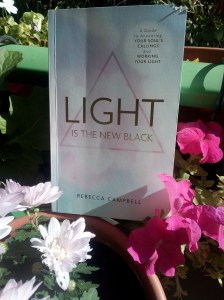
 If you have achieved things because you were capable, but they left you feeling unfulfilled, if you’ve ever felt as though there is something else you are supposed to be doing in this life but didn’t know exactly what, if you enjoy the feeling of being guided by your intuition when it proves to be spot on, if you sense that we are more than just a physical body here for one lifetime, then this book will appeal to you.
Rebecca Campbell was born in Australia and had a traditional upbringing and education before moving to London to pursue a career in creative direction in the advertising industry.
Since she was young, she had always been interested in a more spiritual perspective of existence, thus while gathering her more traditional qualifications, she took every opportunity to read, study and attend events related to that interest.
She had only one friend her own age Blair, whom she could speak candidly about her spiritual life and in 2011 she received a call to say he had been diagnosed with an incurable leukaemia. It was one of a series of events that occurred at that time, that would trigger her to quit her job and seriously begin to put her heartfelt callings of the soul ahead of her ego-lead rationalisations of the intellect. Once she’d decided not just to listen to this yearning, but to act on it, doors opened and opportunities arose, as if they’d all just been waiting for her to show up and become available to them.
“My inner light was burning bright. I was home. Now that I had found it, there was no way I was going to let it go. I vowed to say ‘YES’ to every little call from my soul, regardless of how much logical sense it made. I vowed to do everything I could, never to turn my back on myself again.”
In Light is the New Black, she shares what happened around her when she decided to stop ignoring those signs and synchronicities and followed the quiet inner voice of her intuition to make the shift which has led her to become the inspirational writer, speaker, spiritual mentor and intuitive guide and teacher she is today.

What began as a collection of Rebecca’s Thoughts that she shared on Instagram, morphed into this book, where she shares moments of her life that she now recognises as being part of the invitation to make a shift, of her awakening to a more soul centred way of being in the world.
“There is a shift happening right now where anything inauthentic can no longer survive. The things in our lives that don’t serve us are crumbling. Relationships, jobs, social structures, or anything built on shaky ground is destined to tumble down. It’s happening to bring us back home to who we truly are, so we can live a life that is in alignment with who we truly are, and who we came here to be. But when you’re in the thick of it, it can feel like a personal attack from the Universe.”
In effect, listening to that voice within, developing it, following its guidance and surrounding ourselves with others who understand it, is about taking steps towards raising our own consciousness to a higher vibration and when we do that there is a ripple effect, on others around us, which in turn helps raise the consciousness of the planet.
We all know that feeling of despair at the problems of the world, of the planet and our own obstacles and challenges, and while we may think there is little we can do to help the planet, raising our consciousness and listening to our intuition from a viewpoint of doing no harm and having intentions for the highest good of all, is indeed something.
It is not necessary to know what our purpose is, or even to know what steps we must take, we have to learn to get out of our own way, to stop trying to decide and force the outcome, quiet the mind and allow that voice of intuition to guide us to the next step.
Rebecca Campbell #LightIsTheNewBlack
“You can’t hear the calling of your soul if you don’t create space in your day to listen to it.”
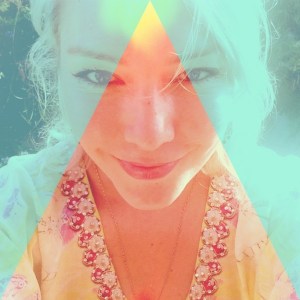
The best way to create the space for listening with a quiet mind is to have a regular meditation practice, any meditation practice, you start with something and if it suits you stick with it, if it feels hard and isn’t conducive to you wanting to do it every day, find another one. The important thing is to show up. Every day. Rebecca Campbell (and many other intuitives) see meditation as one of their non-negotiables. I totally agree. Meditation is a mind medicine, it’s a little bit magic.
Personally I never sit in the lotus position, I sit in a chair, lie on my bed, I can be anywhere, just close my eyes , open my meditation app, allow thoughts to come and go, opening to the allure of emptiness, that space that opens the channel to guidance.
“Don’t be attached to the outcome. Your job is to work out the what. The Universe’s job is to work out the how.”
This is an excellent book, with so many snippets of advice for learning how to get more into alignment with your life purpose, in other words, just being who you really are, not hiding your light under a bushel, breaking off the straight-jacket of conformity in the eyes of our culture, society and other people’s expectations, which we so often conform to at the expense of being ourselves.
“When we are in alignment, everything flows. When we are out of alignment, there’s a feeling that something isn’t quite right.”
I loved this book, I can relate to making a significant change in how I wanted to live my life and spend my working days, leaving behind my traditional education (a degree in Commerce/Marketing/Economics) and corporate job in my twenties to pursue a year of studies (in London) in things that I loved and wanted to be doing and learning forever; I studied Traditional Chinese Medicine & Aromatherapy, Therapeutic Massage, did a course in Creative Writing and another in Setting up a Small Business. I followed what lit me up and tried hard to let go of the expectations attached to the traditional education I’d had. And then spent years trying to fully embrace it, I wish I’d read this book back then.
Perhaps living far from home makes it easier to do this, I remember that I kept my interests and studies hidden from my family during this time, mainly because I could only afford to ingest encouragement and not fear or questioning about what I was doing or where it was leading. I just knew that I had to do it, that I wanted to do it and that all would become clearer as I progressed. I needed the freedom to pursue this mix of interests without anyone feeding negative or fear driven thoughts into it. And I didn’t want to be doing a job just because I was capable of it. I’m still learning that lesson!
Highly Recommended!
 I’m definitely going to read her next book, Rise Sister Rise: A Guide to Unleashing the Wise, Wild Woman Within which focuses more on the rise of the feminine, on those aspects of women that have been long suppressed by the patriarchal model we have lived under for eons and how the world is beginning to change as more women connect and together begin to heal those ancient wounds, to value once more that innate wisdom of the feminine.
“It’s about co-creating a whole new archetype of woman – a woman who does not keep herself small in order to make others feel more comfortable.”


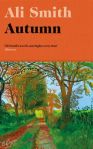
 I was intrigued to read a book by a Mauritian author during Women in Translation month. Eve out of her Ruins hadn’t been on my initial list, but it was recommended to me and I decided to get a copy especially as I’ve been seeing many images of the island of Mauritius recently.




 Such Small Hands is an incredible and unique novella, quite unlike anything I have read, it’s written almost from another dimension. The author somehow enters into a childlike perspective and witnesses the aftermath of a car accident in which the child Marina’s parents don’t survive.
 Inspired by a disturbing event, this enters the realm of post trauma in an innocent and bizarre way, taking the reader back to a kind of twilight zone of an insecure childhood, where the nightmare becomes real and the line between reality and dreams is blurred.
 Nothing Holds Back the Night is the book Delphine de Vigan avoided writing until she could no longer resist its call. It is a book about her mother Lucile, who she introduces to us on the first page as she enters her apartment and discovers her sleeping, the long, cold, hard sleep of death. Her mother was 61-years-old.
 I read this book in a day, it’s one of those narratives that once you start you want to continue reading, it’s described as autofiction, a kind of autobiography and fiction, though there is little doubt it is the story of the author’s mother, as she constructs thoughts and dialogue inspired by the information provided by family members, acknowledging that for many of the events, some often have a different memory which she even shares.
 After her abrupt departure from Paris back to her father’s home in Montigny, to the village home where she grew up, I was curious to know what was to come of our troubled Claudine and her errant husband.
 However he is more than happy that she spend time with his sister Marthe, about whom he writes:
 I loved Claudine at School for her exuberant overconfidence and love of nature, Claudine in Paris for her naivety and prudence, realising there was much about life she had still to learn and Claudine Married for the melancholy of marriage, of the realisation of her false ideals and indulgence of strong emotional impulses.
 The impulsive Claudine, thinking a marriage of her own making and choice (not one chosen by her father or suggested by a man who had feelings for her that weren’t reciprocated) embarks on her marital journey which begins with fifteen months of a vagabond life, travelling to the annual opera Festival de Bayreuth, in Germany, to Switzerland and the south of France.
 Their relationship plays itself out, up to the denouement, when Claudine seeking refuge decides to return to Montigny, to the safety of her childhood home, the woods, her animals whose loyalty she is assured of, and the affection of the maid Mélie and her humble, absent-minded father.
 If Claudine at School represents the unfettered, exuberant joys of teenage freedom, of the innocent and immature love between friends and the cruel indulgences of playful spite, Claudine in Paris is the slap in the face of regarding an approaching adult, urban world, one where the streets are inhabited by hidden dangers, the skies are more gloomy, people are not what they seem, even old friends from school become unrecognisable when the city and her frustrated inhabitants get their clutch onto the innocent.
 Claudine develops an attachment to one of the Assistant teachers, nineteen year old Aimée and in order to spend more time with her exclusively, organises private English lessons at home. This seems to turn the new Headmistress against her even more so than was initially apparent, revealing a complex female tension within the school, tolerated only because of the Headmistress’s special relationship to the District Superintendent of Schools.
 The year passes with the continued dramas between the students, Claudine reconciles herself to friendship with Luce, the younger sister of Aimée, who complains incessantly of mistreatment by her older sister, whose sole attentions are for the Headmistress.

 Below is a summary of
  Word by Word