
 Non Fiction Memoir
Continuing with reading lists, next are my Top Five Memoirs.
It was hard to whittle this list down to five, I could easily have included many others I’ve read and reviewed such as Jeanette Winterson’s gut-punching, exploration of an ill-fitted adoption Why Be Happy When You Can Be Normal, Helen MacDonald’s grief-laden obsession to train a goshawk H is for Hawk, Jacqueline Woodson’s charming, free verse of childhood and old family stories Brown Girl Dreaming, and Tove Jansson’s Finnish island tales and escapades The Summer Book & A Winter Book.
I’ve chosen five lesser known, equally brilliant memoirs, all books that when I look at the titles and covers, take me straight back to the remembered joy of their individual reading experience.
In pondering what it is that elevates some memoirs to that level of something universally understood, I recall one of Vivian Gornick’s insights from The Situation and The Story: The Art of the Personal Narrative
Truth in a memoir is achieved not through a recital of actual events; it is achieved when the reader comes to believe that the writer is working hard to engage with the experience at hand. What happened to the writer is not what matters; what matters is the large sense that the writer is able to make of what happened. For that, the power of the writing imagination is required. As V.S. Pritchett once said of the genre, “It’s all in the art. You get no credit for living.”
Top Five Memoirs
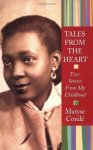 1.Tales From the Heart, True Stories of My Childhood by Marsye Condé tr. Richard Philcox (Guadeloupe/Paris)
Memoirs that succeed record a steadily changing idea of the emergent self, “a flash of insight illuminating the idea grows out of the struggle to clarify one’s own formative experience” and I can think of no better place to start than with Maryse Condé, one of my favourite authors.
The youngest of eight children, by the time she was born her mother was 43, her father 63, thus there were many family stories and life experiences she wasn’t present for, tales she would rely on oral retellings of her siblings and extended family to fill in. In these stories are planted the seeds of her future works, the lack of knowledge of her cultural history and her subsequent research into it, will manifest in her future historical masterpiece Segu, her desire to understand her mother and know her deceased grandmother will inspire Victoire, My Mother’s Mother, her first visit to Africa leads to her debut novel Heremakhonon about a young West Indian woman’s quest for roots.
This short collection of short tales is a beautiful introduction to the life and inspiration of an extraordinary woman and author who has given us so much through her stories and her persistent research and desire to understand what lies behind the lives we lead.
 2. Brother I’m Dying by Edwidge Danticat (Haiti/USA)
After reading her novel Breath, Eyes, Memory I became aware of this memoir and I was particularly intrigued because of it’s focus on the author’s father and Uncle. I have an affinity for books written by women born in or having a strong connection to the Caribbean, I love their storytelling tradition, their connection to a sometimes magical matriarchal force and nature.
This book was unique because it was the first time I’d read something that delved into the masculine. It straddles both a traditional life in Haiti and a new life in America, a unique story of a family trying to improve the lives of their loved ones, narrated by a woman who successfully straddles both, witness to a love between brothers. As Cristina García, author of Dreaming in Cuban (one of my Top 5 Fiction Reads of 2015) put it:
“Edwidge Danticat’s moving tale of two remarkable brothers – her own father and her beloved Uncle Joseph, separated for thirty years – is as compelling and richly told as her fiction. Politically charged and sadly unforgettable, their stories will lodge themselves in your heart.”
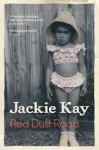 3. Red Dust Road by Jackie Kay (Scotland/Nigeria)
Jackie Kay is a wonderful Scottish poet and has written a heart-warming story of her connection to her adoptive Scottish family and to her slow-burning desire to uncover the mystery behind her existence. That journey begins at the University in Aberdeen, taking her to a suburb in Milton Keynes and a village in Nigeria, a place she has dreamed of and imagined but had no connection with until she arrives there and walks the red, dust road that will awaken something deep inside her.
It’s a unique cross cultural story, exciting in its revelations and profound in it’s understanding as she learns what family and belonging really mean to her, expressed with the beautiful incantation of a poet.
 4. The Hare With Amber Eyes: A Hidden Inheritance by Edmund De Waal (Vienna/Tokyo/Paris/London)
Remember this? What an incredible family memoir the artist, ceramic potter Edmund De Waal put together here, telling part of the story of his extended family though the voyage of a stunning collection of netsuke (miniature Japanese sculptures) and a family history that begins in Odessa, grows and is almost destroyed in Vienna, takes side journeys to Tokyo via that netsuke collection, now sitting in London.
It’s hard to describe the experience of reading this book, except that it’s a lot more interesting to read the history through the eyes of a hare with amber eyes than one man looking only at himself. In this way we learn something about the art, culture and society of the places these sculptures have inhabited as well as the family history over a tumultuous century. Truly unique, engaging, educational, and a deserving winner of a number of literature prizes.
 5. Unbowed One Woman’s Story by Wangari Maathai (Kenya)
I finish with the story of a remarkable woman who I wish had stayed around longer and become more well-known, though reading her story shows us how much of a difference she did make to other woman’s lives in her native country Kenya. She won the Nobel Peace Prize in 2004 and passed away in 2011.
Wangari Maathai was one of a group of young people from East Africa given scholarships and brought to the US in the ‘Kennedy Airlift’ of 1950 & 1960, who gained a degree in the US then returned to Kenya for her PhD. A scientist, initially she worked a veterinarian but her desire to do something practical and far-reaching moved her to found The Green Belt Movement and become involved in sustainable development. She would empower many women to create sustainable enterprises and won many battles to preserve public parks from being given over to urban development. An amazing, inspiring woman and a role model for our times.
Have you read any inspiring memoirs recently?
Further Reading

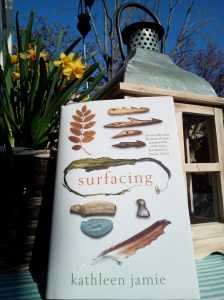 In the second half of Kathleen Jamie’s latest nature writing essay collection, Surfacing, she writes about an archaeological dig on the the island Orkney in Scotland, remembers a trip to a Tibetan town in China in her twenties, and tries to recall voices of her own female ancestors that are beginning to fade from her memory.
 The most famous find, discovered in 2009, is kept in the Heritage centre, where they have a small section, most of the centre given over to more recent Viking finds.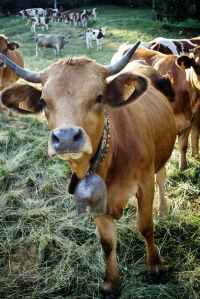


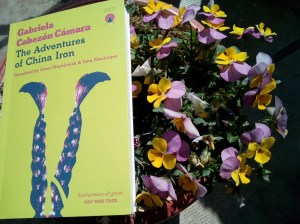 Drawing inspiration from other texts that have in turn been inspired by a life, or experience lived in Argentina, whether the epic poem ‘the gaucho’ Martin Fierro by José Hernández (a lament for a disappearing way of life) or the autobiography Far Away & Long Ago of the naturalist William Henry Hudson, The Adventures of China Iron is a beautiful elegy (for there will be consolation), a brilliant feat of the imagination that takes readers on an alternative journey.


 Every morning at the moment I am reading a chapter of Courageous Dreaming by Alberto Villoldo and this morning I read Chapter Six, Courage As Action, which ends with this exercise to create your own haiku.
 I loved listened to Ocean Vuong talking about writing, he’s an incredibly articulate speaker and an accomplished poet, his writing sophorific and it is easy to be lulled into it’s cadence and rhythm. I am the kind of reader who often prefers a poet’s prose to their poetry, easily swayed by the poet’s promise of enrapture in the long form.
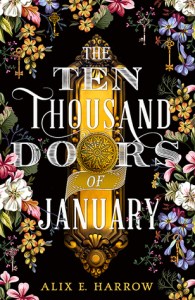 This is the book I took with me on holiday back in January, I’d forgotten about it to be honest. I hadn’t read any fiction for four months and thought perhaps something completely outside my usual genre might ease me back into reading.
 I absolutely loved this book, it was such an immersive experience, I could feel myself slowing it right down not wanting it to end.
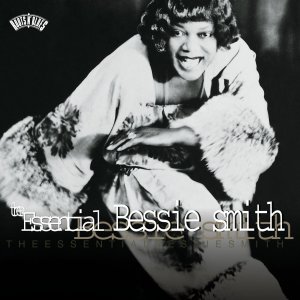 When Sam comes home and finds his wife in tears, we learn it is September 1937 and Bessie Smith (43), Empress of the Blues, has sung her last lament.
 Eugène Jacques Bullard left America for France at a young age, inspired by the words of his father (from Martinique, enslaved in Haiti, he took refuge with and married a Native American of the Creek tribe) who said to his son « un homme y était jugé par son mérite et non pas par la couleur de sa peau » that a man was judged there by his merit and not by the colour of his skin.
 Bernice L. McFadden’s ancestors are named at the back of the book as are some of the musicians, dancers and singers who make an appearance. By the end, I just wanted Harlan to be safe and it was with some relief that I read the closing chapters and wondered if that was the true version of events or the life-saving imagination of Ms McFadden.
 Translated Fiction


 5.
5.  Word by Word