
This second volume of Deborah Levy’s Living Autobiography trilogy has a completely different feel to the first Things I Don’t Want to Know, stuck as that first volume was, between the parameters of George Orwell’s four motivations in Why I Write and Levy’s own resistance to engaging with aspects of her subject that were rearing up to confront her.
Things I Didn’t Want to Know But Have Discovered
 So we now know a little of her motivation, however now comes the struggle, as she must balance writing with the cost of living; her circumstances have changed and we are going to learn how she manages as a single, independent mother.
This time she creates her own structure, using a series of 14 interlinked vignettes, episodes within the journey of releasing herself from a life lived within what were once deemed the acceptable parameters of a societal construct “marriage”, into the undoing of and reconstruction of something like “the pursuit of” but not quite, freedom.
In the opening, a 19 year old woman character is being chatted up by a man referred to as ‘Big Silver’, he is the wrong audience for the young woman’s story, however Levy decides she is the right reader for this one:
“To speak our life as we feel it is a freedom we mostly choose not to take”.
The young woman has the audacity to interrupt the man’s narrative sharing her own poignant story, as Levy introduces us to one of the recurring themes of her book, minor and major characters.
It had not occurred to him that she might not consider herself to be a minor character and him the major character. In this sense she had unsettled a boundary, collapsed a social hierarchy, broken with usual rituals.
Using the Master’s Tools
Levy’s observations are astute, comical and laced with self-irony, questioning the role and discovering the tenacity of the woman writer, though her verse is peppered with an abundance of references hailing from the tradition of well documented and taught, dead white men.
In the opening sentence she reminds us that Orson Welles once said, if we want a happy ending, it depends on where we stop the story. His words will frame the book and are thought provoking sure, but he was also known for saying there were three intolerable things in life, cold coffee, lukewarm champagne and overexcited women.
Was this irony ?
Or was it the result of a slanted education of a certain era/affiliation. It speaks to what is being read and consumed and to an old monopoly on ideas, that rendered a canon of white men the originators of knowledge.
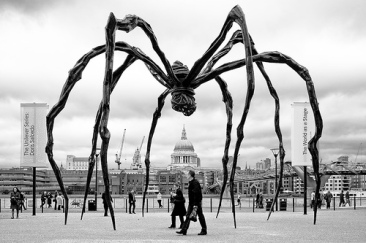
Louise Bourgeois ‘Maman’
For this reader, it was taken too far when redecorating her bedroom, upon rejecting the bright yellow, embraced too soon (overexcited), she repainted the walls white and chose to hang a portrait of Oscar Wilde, while on the same page, looked at photos of British sculptor Barbara Hepworth and French artist Louise Bourgeois that graced her fridge and wrote of them “the forms they were inventing gave them beauty without measure,” additionally sharing that the moths seem to like landing on those two.
Bourgeois had unfashionably declared that she made art because her emotions were bigger than herself.
Unable to relate to the women, it is towards Proust she inclined, when he said:
Ideas come to us as the successors to griefs, and griefs at the moment when they change into ideas, lose some part of their power to injure the heart.
Sister Outsider Speaks to Me
As I let this frustration percolate, trying to understand it, I wondered about the difference between gender politics and feminism. I admit that my annoyance has much to do with a decision to address an imbalance in my own reading when I started counting and analysing what I read and discovered too much of the same thing by the same type of people. So forgive me for projecting.
 A voice repeated in my mind, ‘the master’s tools, the master’s house’ – you know when you recall a fragment of a quote but can’t quite remember it. It was the passionate sage wisdom of Audre Lorde reminding me of her essay, The Master’s Tools Will Never Dismantle the Master’s House in Sister Outsider (1984). Four pages of thought provoking, mind opening courageous speech.
“For women, the need and desire to nurture each other is not pathological but redemptive, and it is within that knowledge that our real power is rediscovered. It is this real connection that is feared by the patriarchal world.”
Audre Lorde speaks too of those standing outside the circle of this society’s definition of acceptable women and suggests that it is learning how to stand alone, unpopular, sometimes reviled, and to make common cause with others identified as outside the structures, that we can create a world in which we can all flourish.
“It is learning how to take our differences and make them strengths. For the master’s tools will never dismantle the master’s house. They may allow us temporarily to beat him at his own game, but they will never enable us to bring about genuine change. And this fact is only threatening to those women who still define the master’s house as their only source of support.”
Freedom Hurts
Freedom is not to be pursued lightly, as she discovers when she exits her marriage and Victorian home as she enters her 50’s and a 6th floor apartment with her two daughters, soon developing the physical and energetic strength to endure it.
Freedom is never free. Anyone who has struggled to be free knows how much it costs.
Each vignette explores this struggle to cope and live with this new freedom, through a series of anecdotes that allow certain themes to repeat and by the time we read Gravity, she has been loaned a shed in the bottom of a garden in which to write and is kept to task by random apples that fall on the roof.
As I begin to read The Body Electric the writing energy and pace picks up a notch, we are out of the apartment and the shed, out of her head and on the road and what a hazardous place it is, but what energy and humour it brings to the narrative. Cycling became an obsession and kept her rage off the page.
I cursed and shouted at drivers when they opened their front doors in a way that toppled me on to the road. I had road rage. Yes, I had graduated to road rage on my electric bicycle. That is to say, I had a lot of rage from my old life and it expressed itself on the road.
There is the tiresome neighbour who waits for her to arrive to tell her off about temporary parking, intent on making her life more difficult, a situation various friends are keen to advise her on. But Jean is essential to the narrative, her ability to irritate prompts the author to ponder on what a woman is, on what she should be, or not be, a question she has no time to ask Jean.
It was possible that femininity, as I had been taught it was coming to an end. Femininity as a cultural personality, was no longer expressive for me. It was obvious that femininity, as written by men and performed by women, was the exhausted phantom that still haunted the twenty-first century. What would it cost to step out of character and stop the story?

Photo by Valeriia Miller on Pexels.com
And in the middle of The Black and Bluish Darkness as she is riding up the hill in the rain, comes the most tender and humorous moment, we can afford to laugh reading in the comfort of home, but imagining the scene (no spoilers) and the reminder of the underlying reality, feels a little heart-breaking – except we know she does not indulge in self-pity, and has wonderful friends to call on. She recovers well, reaching out to one of them, who arrives with a box of strawberries and runs a bath for her. There it is, that redemptive power, those good, reliable female friends that no woman can do without.
Levy further explores the lives of other role models and how they managed to write, love, being woman and further reflects on her own role model, her mother, who even after she has passed, whose loss results in Levy sometimes literally getting lost, severed from her origins, somehow manages to remain present, symbolically.
It is certainly the case that there are fewer references and tomes written by women in previous centuries that analyse the sacrifices they make to pursue their art and ideas. That freer life a writer desires comes with a cost of living and women have long been making it easier for others to manifest their dreams while either sacrificing their own, or sacrificing something else in their determination to attain them.
Making her lived experience the lens through which she observes the role of the woman writer, Levy provokes us all to think more about the choices and sacrifices we make and the balancing act required to pursue our creativity and passions.
Next Up : Real Estate!
Further Reading
Guardian Review: The Cost of Living by Deborah Levy review – a memoir and feminist manifesto
Article: Why Not Ask a Powerful Man What He’s Doing to Help Women? By Stella Bugbee
Article France Culture: Louise Bourgeois, “une femme enragée et agrippée” (1911-2010)
Review: Sister Outsider by Audre Lorde
 I loved how this historical novel focuses on the lives of these women, Rue her mother May Belle and grandmother Ma Doe and the community within which they live, without allowing the narrative to stray over too far into the lives and homes of those who diminished their lives.
 In May Belle’s time, one of the ways to effect a conjure was to make a doll that bore a resemblance to the person and if possible to access strands of hair to entwine with whatever material was used. Varina has porcelain dolls that Rue admires and is envious of, when she discovers her mother is making a doll that faintly resembles her, she pretends not to notice she has discovered it, and will mask even further her disappointment when she misreads its purpose.
 Fantasy isn’t a genre I read very often, but one I have a nostalgic feeling for, having loved it when I was a child. The problem usually being that it becomes harder to evoke the magical feeling that a child’s imagination is capable of creating. However I was willing to try and decided to read it on a day I’d have few interruptions.
 Despite Piranesi’s scientific status, he is developing a connection to the World within he lives, in which he is able to ask questions and intuit answers.
 Winter Flowers (Les Fleurs d’hiver) by Angélique Villenueuve, translated by Adriana Hunter is published Oct 7 by

 1. just open it and start reading taking in what is actually shared at face value, a woman on the cusp of a life change, whose suppressed emotions will no longer stay down, who leaves town to try and figure them out, looks back at her childhood and adolescence for inspiration, then decides to look forward instead and begins to write (on the last page);

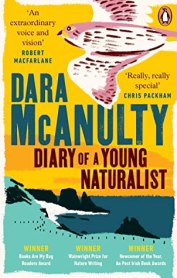 Dara McAnulty is autistic, as are his mother and two siblings, a beautiful advantage, because the family seem to understand exactly how to mitigate the intensity and lived experience of this characteristic.

 Pearl has promised the Reverend to welcome this newcomer, but she wasn’t expecting the shock of seeing Sugar’s face and who it reminds her of, nor the sudden flurry of visitors who want to sit in her kitchen in case they get a peek at this unwelcome new resident, whom they’re so inquisitive of.
 Bernice L. McFadden is the author of ten critically acclaimed novels including Sugar, Loving Donovan, Nowhere Is a Place, The Warmest December, Gathering of Waters (a New York Times Editors’ Choice and one of the 100 Notable Books of 2012), and Glorious, which was featured in O, The Oprah Magazine and was a finalist for the NAACP Image Award.

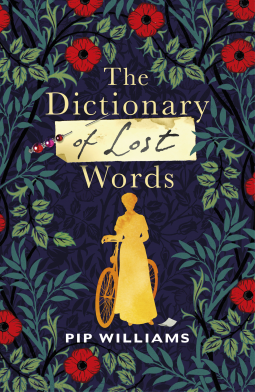 And so I dive in and find myself often using the dictionary feature on the kindle – yes there are a lot of lost words, or words that are no longer in common use, and one of the main words, and locations, the scriptorium had me confused right from the start – a tin shed where a few learned, self-important men are compiling the first edition of the Oxford dictionary? Even as I write these words, the spellcheck has underlined that word in red.
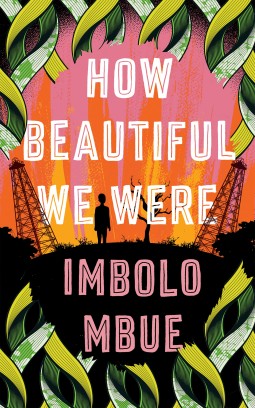 Imbolo Mbue takes you back to the fictional African village, Kosawa in the 1980’s. It could be in any number of countries, a fact acknowledged by naming her characters after real towns and cities.
 The first ‘Letter to my nephew on the one hundredth anniversary of the emancipation’ entitled My Dungeon Shook originally appeared in the Progressive Madison, Wisconsin – a magazine known for its strong pacifism, championing grassroots progressive politics, civil liberties, human rights, economic justice, a healthy environment, and a reinvigorated democracy, is a letter to his 15 year old nephew James (who appears in a photo with his author Uncle on the cover of the book I read).

 Word by Word