
Cold Enough for Snow is a 96 page literary fiction novella set in Japan, that can be read in an afternoon.
Mother Daughter Relationships
 It is an intricate, observant story told by a daughter who has arranged to take her mother on holiday to Japan. She recounts their days and interactions and tries to anticipate what her mother might like, knowing that the intersection of their common interests is negligible.
Mother and daughter have been raised in different countries and cultures, additionally the mother was not raised in the same country as her parents, so both have grown up migrants, knowing little about what came before, except that it has influenced the way they would have been raised.
Do We Ever Really Know Our Mother?
There is a void, a vacuity, a kind of absence of understanding that is very present, in terms of the way the daughter tries to feel her way towards guessing what her mother might like, what to propose to her. The mother doesn’t have set ideas or desires regarding what they might do, she is like a stranger, a visitor to the holiday, not exhibiting the same kind of intentionality that the daughter possesses.
Earlier in the year, I had asked her to come with me on a trip to Japan. We did not live in the same city anymore, and had never been away together as adults, but I was beginning to feel it was important, for reasons I could not yet name. At first, she had been reluctant, but I had pushed, and eventually she had agreed, not in so many words, but by protesting slightly less, or hesitating over the phone when I asked her, and by those acts alone, I knew that she was finally signalling that she would come. I had chosen Japan because I had been there before, and although my mother had not, I thought she might be more at ease exploring another part of Asia. And perhaps I felt this would put us on equal footing in some way, to both be made strangers.

Photo by Tomu0e on Pexels.com
It was autumn and though pretty, there had been adverse weather warnings.
The daughter describes the minutiae of their every movement, of taking trains, changing platforms, the places they visit, the flora and fauna, occasionally flashing back to memories to when she travelled with her husband Laurie; wishing that the same excitement of discovery she’d had with him might be present with her mother.
She also recalls how difficult her younger sister was, growing up. Now a mother herself, she is dealing with difficult behaviours that have passed through to her own child, little understanding why she had been so troubled.
Ask Me No Questions, I Tell You No Lies
She tries to engage her mother in conversation, they talk; the daughter asks questions, the mother answers.
I thought about how vaguely familiar this scene was to me, especially with the smells of the restaurant around me, but strangely so, because it was not my childhood, but my mother’s childhood that I was thinking of, and from another country at that. And yet there was something about the subtropical feel, the smell of the steam and the tea and the rain…
It was strange at once to be so familiar and yet so separated. I wondered how I could feel so at home in a place that was not mine.

Photo by Pixabay on Pexels.com
The daughter has had a particular education that influences the way she observes things, she wants to share that with her mother, she tries, mostly her mother smiles when she shares these perspectives, but it is impossible to tell if she agrees.
Whenever I’d asked her what she’d like to visit in Japan, she’d often said she would be happy with anything. The only question she’d asked once was whether, in winter, it was cold enough for snow, which she had never seen.
Existential Beliefs and Nothingness
One day the daughter desires to visit a church, reportedly a beautiful building designed by a famous architect, in a suburb near Osaka. Though she knew her mother did not believe in that religion, visiting that place was supposed to be a profound experience, it provoked and exchange between the two.
I asked my mother what she believed about the soul and she thought for a moment. Then, looking not at me but at the hard, white light before us, she said that she believed that we were all essentially nothing, just series of sensations and desires, none of it lasting. When she was growing up, she said that she had never thought of herself in isolation, but rather as inextricably linked to others. Nowadays, she said, people were hungry to know everything, thinking that they could understand it all, as if enlightenment were just around the corner. But, she said, in fact there was no control, and understanding would not lessen any pain. The best we could do in this life was to pass through it, like smoke through the branches, suffering, until we either reached a state of nothingness, or else suffered elsewhere.
The novella presents these two women and the things they do, snippets of their one sided conversations, their attempt to bond, to find a connection. They are transparent, one thing they have in common is the inability to pretend, there is no falseness, they are a product of those environments they’ve grown up trying to fit into, familiar yet unfamiliar, known, yet unknown, compelled by life’s circumstance to remain an enigma to each other.
It was an interesting read, that palpable desire to connect, the deep chasm between them, born of something outside their control, yet the human need to try and persevere, to find a way through anyway.
Further Reading:
Interview Bomb magazine: Chasing the Echoes of Belonging: Jessica Au Interviewed by Madelaine Lucas
Review, the guardian: a graceful novella about how we pay attention
Jessica Au, Author
Jessica Au is a writer, editor and bookseller based in Melbourne, Australia.
Cold Enough for Snow won the inaugural Novel Prize in 2022, run by Giramondo, New Directions and Fitzcarraldo Editions, and is set to be published in eighteen countries. Au won both the 2023 Victorian Premier’s Prize for Literature and Victorian Premier’s Prize for Fiction for Cold Enough for Snow.
“Migration is probably the one through line of my family. My grandfather migrated from China to Malaysia, my mother migrated from Malaysia to Australia. So, that’s three generations of migration. When I was younger, I would take my mother’s language and refer to Malaysia as “home”. Where I was living, where I was born, was never “home”. Even after living in Australia for so many years, that idea of home being elsewhere is constant and present. I don’t have a sense of belonging anywhere.” Jessica Au, interview, Bomb Magazine


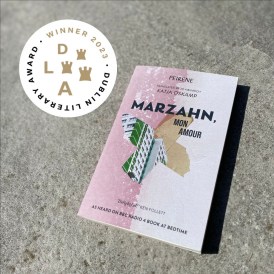 Marzhan Mon Amour is a memoir-ish novel, collective history and a character study of a group of people living in and around a multi-storied communist-era plattenbau prefab apartment building in the working class quarter of Marzahn, East Berlin, told through the eyes and ears of a woman facing her middle years.

 Brazilian author, Ana Paula Maia’s Of Cattle and Men, was an interesting and confronting story that in parts was hyper realistic in a visceral way, and fable-like in other ways. It is the fourth book I’ve read this year from the
 Grand, tells the story of Noelle McCarthy’s growing up in Hollymount, County Cork and the highs and lows of being around a mother, who had already lost two children before she was born and was herself never comforted by her own mother. Seeking to self-regulate through the effect of alcohol, Grand demonstrates numerous effects of having been raised under those circumstances and how a multi-faceted generational trauma passes down.
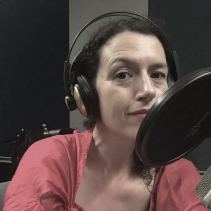 Noelle McCarthy is an award-winning writer and radio broadcaster. Her story ‘Buck Rabbit’ won the Short Memoir section of the Fish Publishing International Writing competition in 2020 and this memoir Grand won the Best First Book General Nonfiction Award at the NZ Book Awards 2023.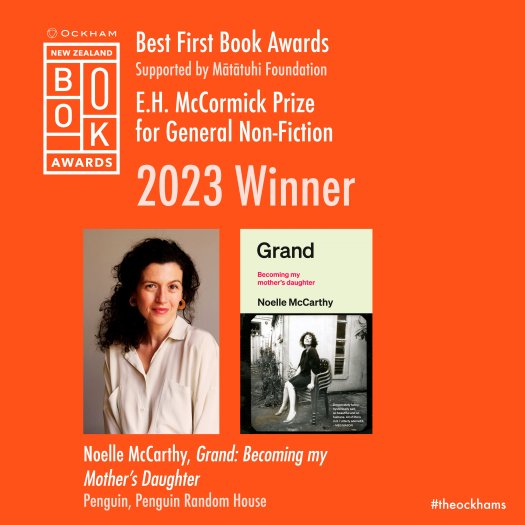
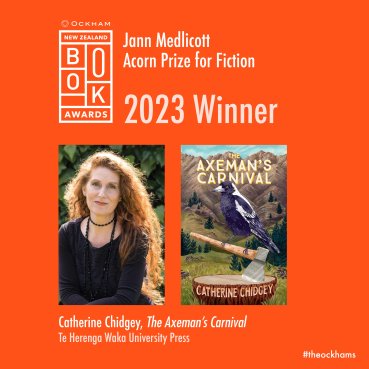


 One that didn’t win, but that was Number 4 in The People’s Choice and one I have heard a lot about and sighted on a recent visit to London, is
 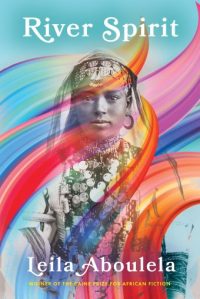 River Spirit is a unique work of historical fiction set in 1890’s Sudan, at a turning point in the country’s history, as its population began to mount a challenge against the ruling Ottoman Empire, only the people were not united, due to the opposition leadership coming from a self-proclaimed “Mahdi” – a religious figure that many Muslims believe will appear at the end of time to spread justice and peace.
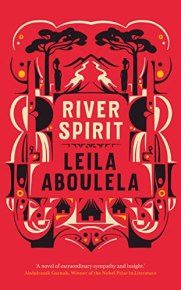 The change in perspective and the lack of a first person narrative keeps the characters at a slight distance to the reader as we follow the trials of Zamzam’s life and her dedication to being a part of Yaseen’s life. Like other readers, I wished at times that the story was told in the first person from her point of view, but the story is too important to be limited to one perspective.
 Once Akuany and her brother leave the family village, most of the story takes place in Khartoum, a city that is at the confluence of the Blue Nile and the White Nile, two major rivers that join to become the Nile proper, the longest river in the world, that continues on through Egypt to the Mediterranean.
 Leila Aboulela is a fiction writer, essayist, and playwright of Sudanese origin. Born in Cairo, she grew up in Khartoum and moved in her mid-twenties to Aberdeen, Scotland. Her work has received critical recognition and a high profile for its depiction of the interior lives of Muslim women and its distinctive exploration of identity, migration and Islamic spirituality.
 Though not an easy read, Pod is a work of inspired literary genius. A cetacean epic, it is a fictional account of dolphin tribe rivalry and a coming-of-age of story of one of the pod, created from real knowledge of environmental science and marine biology. Clearly, a lot of background research and animal behavioural understanding underpins the narrative.

 Later, Laura, to ensure pregnancy doesn’t occur accidentally, takes the drastic measure of having her tubes tied, forever removing that risk.
 Meanwhile, outside Laura’s apartment a pair of pigeons with two eggs in their nest (a refuge she tried to destroy without success), appear to have been subject to a brood parasite.
 A divorced woman, Nora Garcia (a cellist), returns for her deceased ex-husband Juan’s, (a pianist and composer) funeral; back to a Mexican village from her past, through the art and music they played and navigated together.
 The novel is set in the present, on the afternoon that the body is displayed in the coffin in a room, and our narrator is a guest like many others, who aren’t sure to whom, they ought to offer condolences. She overhears snippets of conversations, adding to the cacophony of her own reflections.
 A prolific essayist, she is best known for her 1987 autobiography Las genealogías (The Family Tree), which blended her experiences of growing up Jewish in Catholic Mexico with her parents’ immigrant experiences. She also wrote fiction and nonfiction that shed new light on the seventeenth-century nun Sor Juana Inés de la Cruz. Among her many honors, she won the Magda Donato Prize for Las genealogías and received a Rockefeller Grant (1996) and a Guggenheim Fellowship (1998).
 Word by Word