Mother of Pearl by Mary Morrissy

I decided to read Mother of Pearl (1996) as a precursor to Mary Morrissy’s latest novel Penelope Unbound (2023), a re-imagined and slightly changed life of Nora Barnacle (the wife of James Joyce) which I intend to read in 2024. Having enjoyed Nuala O’Connor’s excellent novel Nora, I’ll be curious to see where Morrissy takes her.

It is only now, since the death of Joyce’s grandson Stephen in 2020, one of the most litigious heirs in history, that stories can safely be written about Nora and James Joyce – as Stephen did all he could to prevent access or usage of the family archive, including the destruction of hundreds of letters. James Joyce, a brilliant writer with an overprotective grandson

It seems that Mary Morrissy likes to take inspiration from real life characters or stories, and so it was with Mother of Pearl. A little backstory then before reviewing the novel.

Truth Stranger Than Fiction

A notorious baby-snatching case in 1950’s Ireland was the inspiration for Mary Morrissy’s Mother of Pearl. Re-imagining elements of that story, rather than retelling the facts was a decision she made because the truth would have come across to readers as unbelievable. Morrissy in an article on her website explains:
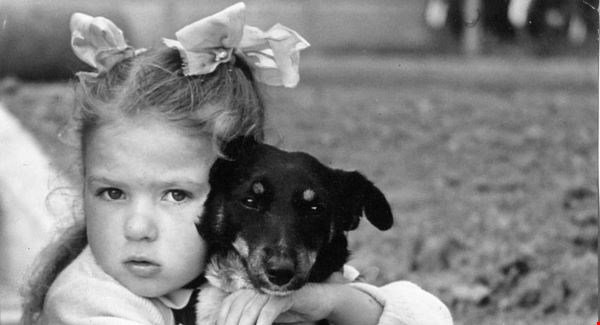
Elizabeth Browne 1950 Dublin kidnap victim

Elizabeth Browne, above, was kidnapped from a pram on Henry Street in Dublin on November 25, 1950. Her kidnapper, Mrs Barbara McGeehan, who lived in Belfast, took her north on the train and passed her off as her own child to her unsuspecting husband.

Four years later – and this is where truth is stranger than fiction – Mrs McGeehan travelled south again and stole another child, this time a boy, Patrick Berrigan, from outside Woolworths on Henry Street. As luck would have it, a fellow passenger on the Belfast train noticed Mrs McGeehan, in particular that she had no milk for her baby, and went to the dining car to get some. Afterwards when the alert was raised about the Berrigan baby kidnap, she remembered this incident and contacted the police.

Mrs McGeehan was traced to her home in the White City estate in Belfast where police found the Berrigan baby and the four-year-old Elizabeth Browne, now renamed Bernadette. In these pre-DNA days, she was identified by a distinctive birth mark, and her parents, news-vendors John and Bridget Browne, travelled to Belfast to claim her.

Identity Trauma

What interested Morrissy in particular, was the identity trauma of a four-year-old being forcibly removed from a loving home and familiar “parents” and being returned to a family, who though biologically related, were strangers to her.

Clearly this was something Elizabeth’s parents thought about or experienced the repercussions of, because there was another twist, a strange fact that once again did not go into the novel. After Mrs McGeehan served her two year jail year sentence for the kidnap, the Browne family contacted her. Following their reconciliation, every year Elizabeth would travel to Belfast to spend a holiday with the very same woman who had kidnapped her.

Though Elizabeth would marry and have her own family, sadly she died at the very young age of 38 years from cancer.

The Novel, A Dark Re-Imagining
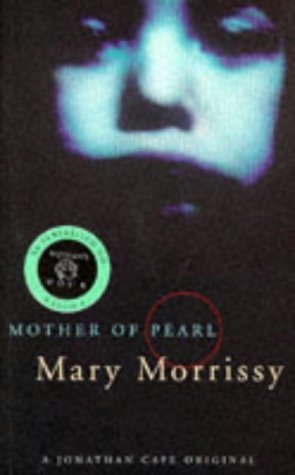
A novel in three parts, Mother of Pearl explores perspectives in three women’s lives, the first two will mother the same child, the third is that of the child grown – the consequence of a repressed childhood, of events never talked about, of the effect of those events and years and the suppression of them, on her psyche.

Part 1 – We meet Irene in Granitefield sanotorium, an institution where she spends some years due to having contracted TB. She willingly leaves her family behind and finds some kind of comfort in the hospital environment, electing to remain there as an employee long after she has recovered from her illness and might easily have left.

The operation, they told her, had saved her. But she had lost four of her ribs, cracked open by a giant pair of shears…Without her ribs Irene felt as if part of her protection against the world had been removed.

Standing vigil, she is known to recognise the imminence of death patients. One in particular will be kife changing.

Irene knew the moment she saw Stanley Godwin that he was watching someone beloved die. Healthy people keeping vigil seemed to take on the symptoms of the disease.

This son, who is with his mother, suddenly understands the implications of his mothers death, of the great loss and hole in his life, her absence will mean for him. His attention moves towards Irene.

Inwardly he was quaking. He could comprehend the impending loss; what he couldn’t imagine was his life afterwards. A middle-aged man about to be granted unwanted freedom.

Outside of the institution, longing for a child she knows will not come, brooding on her own losses, Irene succumbs to fantasies and one day indulges her desire, removing a sickly child from a hospital, a baby she names Pearl.

This was her offspring, hers alone, the child of her illness, Irene’s first loss. And she was still out there. Not dead, simply lost. In a hospital ward somewhere, unclaimed, waiting for her mother. This time Irene determined she would tell no one, not even Stanley. She would seek out the child who was rightfully hers, the fruit of Eve’s ribs.

Part 2 – We meet Rita, who becomes Mrs Mel Spain, mother of the baby she had not initially realised how much she wanted, until the day she is taken from her. And the husband Mel, son of an absent father, who feels a yearning to follow in his carefree footsteps.

It didn’t stop Mel wondering, however, how his father had managed the extraordinary trick of disappearing into thin air. He had become invisible by simply walking out of his life. Ten years after the event, as he nursed his fourth drink of the night, Mel finally understood how easy it must have been. It was not, as he had always thought, a daring but calculated move; it was a matter of impulse and extreme selfishness.

Part 3 – we meet the child, a child who remembers little of her early life, who is told stories that don’t resonate with the dream-like memories she has, who feels like an outsider in her family and can not explain to herself why.

Exploring themes of loss, abandonment, denial, Mother of Pearl takes us inside the dysfunction of family, of obsession with and rejection of a child, of the long-lasting impact on those formative years of the compromised adult that will little understand their own inclination(s), as those threads of early development and the scars of traumatic events imprint on their psyche and affect their future selves.

A compelling and thought provoking read that is all the more astounding given the events that propelled the author to recreate such a situation.

Further Reading

The Guardian: Penelope Unbound by Mary Morrissy review – masterly alternative life of Nora Barnacle by John Banville

JSTOR Interview With Mary Morrissy, Studies, An Irish Quarterly Review Vol. 87, No. 347 (Autumn, 1998)

Author, Mary Morrissy

Mary Morrissy was born in Dublin in 1957.  She has published four novels – Mother of Pearl (1995), The Pretender (2000), The Rising of Bella Casey (2013) and Penelope Unbound (2023) and a collection of short stories, A Lazy Eye (1993). 

She won a Hennessy Award for short fiction in 1984 and a prestigious US Lannan Literary Foundation Award in 1995.  Mother of Pearl was shortlisted for the Whitbread/Costa Award and longlisted for the Women’s (Orange)Prize for Fiction (1996) while The Pretender was nominated for the Dublin Impac Award and shortlisted for the Kerry Group Irish Fiction Award. The Rising of Bella Casey was nominated for the Dublin Literary Award.

A member of Aosdána, she is a journalist, a teacher of creative writing and a literary mentor. She blogs on art, fiction and history at marymorrissy.com

“I suppose I explore a female kind of darkness. My characters tend to be very restricted, restricted emotionally, I mean, by fear and guilt and an inability to move in and inhabit the centre of their own lives. And despite all our so-called modernity, I think this still holds true for thousands of women. We may have broken away from the traps of our mothers’ generation, but there is a long way to travel before women have, if I may use the phrase in this context, parity of esteem. - Interview with Mary Morrissy, Studies, An Irish Quarterly Review Vol. 87, No. 347 (Autumn, 1998)

The Wager, A Tale of Shipwreck, Mutiny and Murder by David Grann

A tale of shipwreck mutiny and murder British navy

The Wager by David Grann recently won the 2023 Goodreads Choice Award for Best History & Biography.

David Grann is the author of the #1 New York Times bestsellers Killers of the Flower Moon (recently made into a film by Martin Scorcese) and The Lost City of Z.

In this latest book he chronicles the fate of the 18th century British warship, the Wager, which had set out on a secret mission during an imperial war with Spain (with dubious reasoning behind it), with the intention of tracking down a fleet rumoured to be carrying a horde of treasure.

Not only was there a significant human cost to these excursions, it was the era of plundering natural resources, constructing a single large warship could require as many as four thousand trees, therefore a hundred acres of forest might be felled.

The conflict was the result of the endless jockeying among the European powers to expand their empires. They each vied to conquer or control ever larger swathes of the earth, so that they could exploit and monopolise other nations’ valuable natural resources and trade markets. In the process, they subjugated and destroyed innumerable indigenous peoples, justifying their ruthless self-interest – by claiming they were somehow spreading “civilisation” to the benighted realms of the earth. Spain had long been the dominant empire in Latin America, but Great Britain, which already possessed colonies along the American eastern seaboard, was now on the ascendance – and determined to break its rival’s hold.

Wrecked off the coast of Patagonia, after rounding the notoriously dangerous Cape Horn, those who survived would spend months on an island before putting together makeshift vessels from what they had salvaged, leaving the island in two groups, heading in opposite directions, with different stories to tell.

Reading Outside the Norm

It’s not my usual reading fare, however after reading a praise-worthy review, I was drawn to it, when I read that the men who laboured on these large ships were often kidnapped and forced to crew, sometimes taken from workhouses or even snatched just as they were returning from having crewed on another ship, much to the consternation of their waiting families.

After peaceful efforts to man the fleets failed, the Navy resorted to what a secretary of the Admiralty called a “more violent” strategy. Armed gangs were were dispatched to press seafaring men into service – in effect, kidnapping them. The gangs roamed cities and towns, grabbing anyone who betrayed the telltale signs of a mariner: the familiar checkered shirt and wide-kneed trousers and round hat; the fingers smeared with tar, which was used to make virtually everything on a ship more water-resistant and durable.

It took a little to get into the rhythm of the book, as the various characters and their backgrounds were introduced, just as the ship HMS Wager delayed leaving British shores due to setbacks, both human and due to adverse weather conditions. Once they set sail, on August 23, 1740 and with the help of route maps on the inside front and back flaps, the story became more captivating.

Hidden Histories in the Archives, Disrupting the Historical Narrative

It is a fascinating account that David Grann became aware of upon visiting the UK National Archive in Kew, reading an ancient logbook of one of the crew of the ship, which then lead him to other accounts of the adventures of those onboard, in particular, rival perspectives on what happened after HMS Wager was shipwrecked on May 14, 1741 off the southern coast of Patagonia, Chile.

The time survivors spent on Wager Island is reminiscent of William Golding’s Lord of the Flies. As Captain David Cheap tries to keep order and calm, as food sources they manage to salvage deplete and disagreements increase, men become desperate, divisions occur, loyalties waver.

When the Captain crosses a serious line, his authority and ability to stay in charge decline, causing a major rupture in support for the direction they plan to take.

Indigenous Intuition, Avoiding the Real Savagery

One of the more interesting parts of their land based story, given how difficult it was for them to survive and the factions that develop as the group splits loyalties, was the arrival of a group of Kawésqar indigenous people, who pretty much live in their canoes circumnavigating the coast, living off the land, sea and foreshore.

These people helped the castaways by obtaining meat and seafood for them, quickly and adeptly building dwellings and then would leave (they knew not to trust these pale faced marauders). Witnessing the insidious tensions mounting among the castaways, one morning they would awake to discover them, their canoes and dwelling all gone, never to return.

Aware of how helpless the Englishmen were, the Kawésqar would regularly venture out to sea and then magically return with nourishment for them. Byron saw one woman depart with a companion in a canoe and , once offshore, grip a basket between her teeth and leap into the freezing water. “Diving to the bottom,” Byron wrote, she “continued under water in an amazing time.” When she emerged, her basket was filled with sea urchins – a strange shellfish, Byron wrote, “from which several prickles project in all directions.”

Logbooks of Seafaring Adventures Can Be Important Navigation Tools

Eventually the castaways would rebuild from what they had been able to salvage, another sailing vessel and one group who disagreed with the Captain which route to take would depart in one direction and the rest, some months later in the opposite direction.

Cheap’s plan, meanwhile, was taking on new, hidden dimensions. Poring over charts, he began to believe that there was a way to not only preserve their lives but also fulfill their original military mission. He calculated that the nearest Spanish settlement was on the island of Chiloé, which was off the Chilean coast and some 350 miles north of their present location.

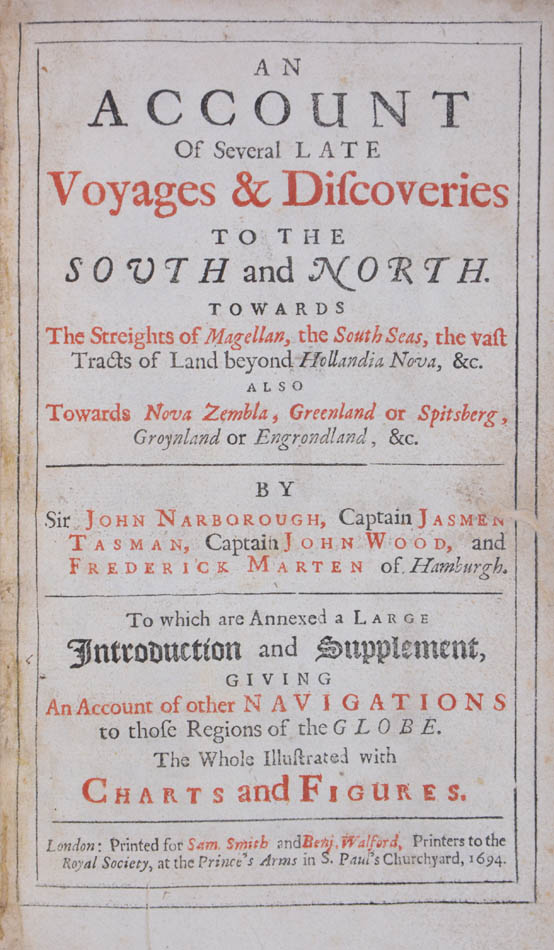
Bulkeley, on the other hand, borrowed the 16-year-old midshipman John Byron’s copy of Sir John Narborough’s chronicle of sea tales exploring the Patagonia region, believing it may contain critical clues for navigating a safe passage away from Wager Island. He would use this reference to take his group of men through the tricky Strait of Magellan, thus avoiding Cape Horn.

After a voyage, the captain of a ship turned over the requisite logbooks to the Admiralty, providing reams of information for building an empire – an encyclopedia of the sea and of unfamiliar lands.

Anson and his officers would frequently consult the journals of the few seamen who had ventured around Cape Horn.

Moreover, these “logbooks of memory”, as one historian coined them, created a record of any controversial actions or mishaps that occurred during a voyage. If need be they could be submitted as evidence at courts-martial; careers and lives might depend on them.

Who Is Actually On Trial Here, Man or An Empire?

The trip culminates in some survivors return to England and various allegations against different people, threat of imprisonment or hanging. A trial will be held.

In the meantime the stories and individual accounts captured the imagination of ‘Grub Street hacks’ and others who profited by publishing narratives of the high sea and inhospitable island adventures, in an era that ironically resembled the ‘fake news’ era of our own time. Due to the sheer number of differing accounts, perceptions of the Wager affair varied from reader to reader.

Once the broadsheet newspapers and periodicals were filled with breathless reports, book publishers competed to release first-hand accounts from the former castaways.

Though few of those narratives survived today, plenty of archive material made it possible for David Grann to put together an interesting account of an inconclusive British imperial adventure that may have lost the nation more than just men and a ship, but much credibility for the human and financial cost of their exploits, all in the name of retaining their perception as being a superior imperial power.

Author, David Grann

David Grann is an American journalist, a staff writer for The New Yorker and author of Killers of the Flower Moon, The Osage Murders and the Birth of the FBI, which was a finalist for the National Book Award and winner of an Edgar Allan Poe Award for best true crime book. He also wrote The Lost City of Z, A Tale of Deadly Obsession in the Amazon shortlisted for the Samuel Johnson Prize, also adapted into a critically acclaimed film directed by James Gray.

Grann’s investigative reporting has accumulated several honours, including a George Polk Award. He lives with his wife and two children in New York.

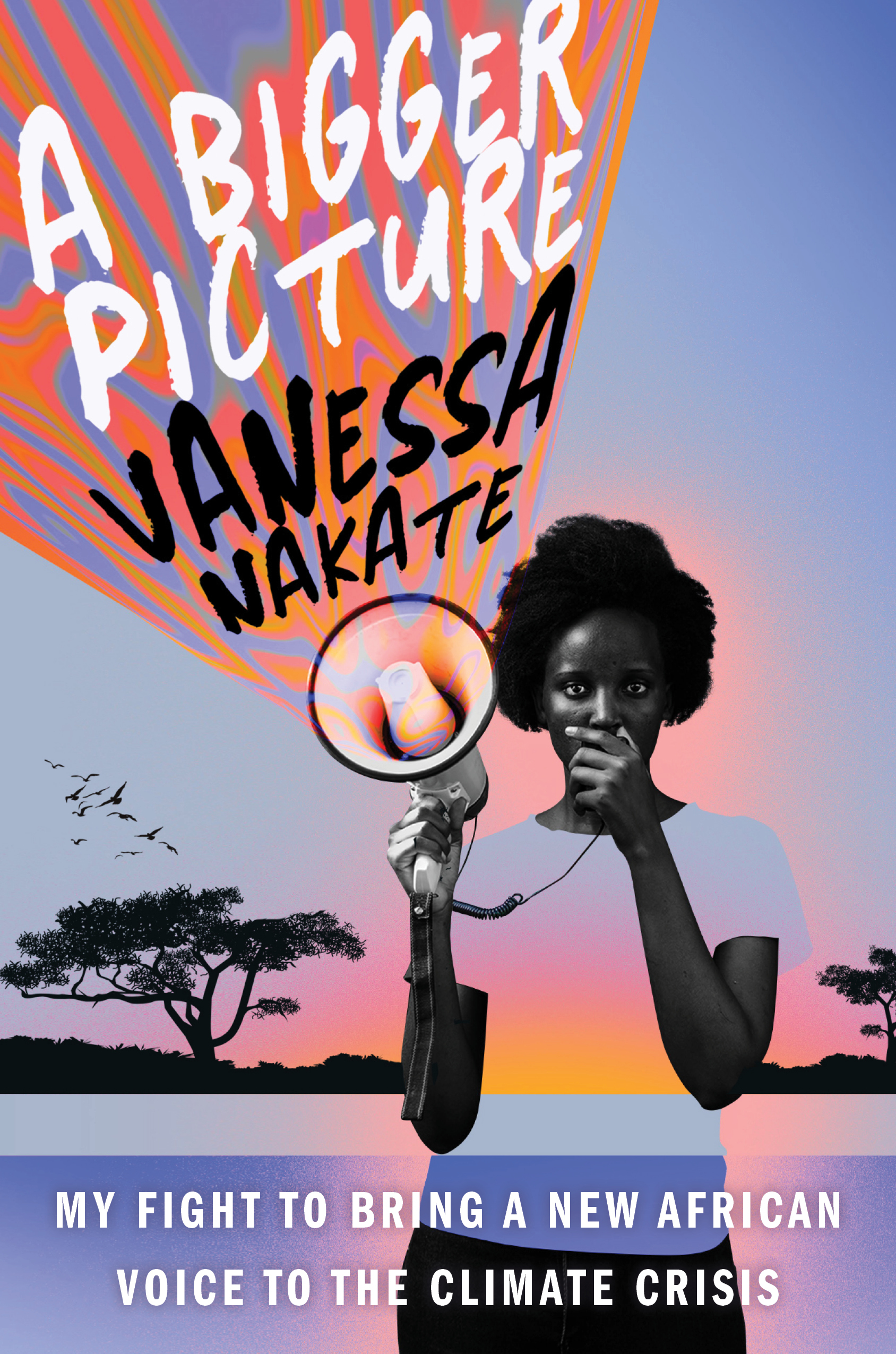
A Bigger Picture by Vanessa Nakate

My Fight To Bring A New African Voice To The Climate Crisis

Vanessa Nakate is a young Ugandan woman who became concerned about the effect of climatic conditions and change on her country and in particular the knock on effect floods, crop destruction would have on women and girls, disproportionately affected, as explained in her book.

Alternative Learning Experiences for Children

climate change literature Kenya African Voices

She decided to organise a strike, just herself, her two younger brothers (14 & 10), two visiting cousins (11 &9) and another cousin her age. It would be the six of them, holding up a few placards they made, and they would stand in four busy locations in Kampala, moving from each place after 30 minutes when her alarm went off.

“What shall we write?” Varak, the nine-year-old asked.
I wanted us to express something positive, and to ensure that my younger family members held placards they themselves would understand. We decided to pick slogans we thought wouldn’t be too threatening, and so wrote several, in English.
Trees Are Important For Us
Nature Is Life
When You Plant A Tree, You Plant A Forest
Thanks For The Global Warming (that was our sarcastic one) and
Climate Strike Now
We also drew some trees next to the letters.

Nothing dramatic happened, no one told to stop, but it was the beginning of an interest, of a young woman finding her cause and taking an action, that would lead her to learning and discovering more, to connecting with others, to finding local solutions and developing a presence and a new voice, on an international stage.

One woman stopped and told them of some trees being cut down to make way for a school, that they should be stopped. Each time Nakate went out and had the opportunity to engage or had a response on social media, it would often lead her to the next idea, it would put her in touch with others who genuinely wanted something to be done, their voices to be heard.

How One Exclusion Can Lead to Greater Inclusion

It is an excellent read, because it follows her personal journey, as a young person with little knowledge about activism and from this small spark of quiet daring (despite her anxieties, insecurities and fear of judgement), she shares her perseverance, her growing knowledge, the first invitations to attend international conferences and events, to a tipping point, when many more (including me) would hear about her – after she was cropped out of a photograph of young climate change activists including Greta Thunberg at Davos, Switzerland during the WEF (World Economic Forum) in January 2020.

My message was, and is, straightforward: People in Uganda, in Africa, and across what’s called the Global South, are losing their homes, their harvests, their incomes, even their lives, and any hopes of a livable future right now.

The Quiet Methodical, Cooperative Approach

What makes her message and her actions all the more interesting is that she takes a quiet methodical approach to doing things in her own authentic way, in a country where she is aware of both dangers and expectations, so does nothing foolhardy, acting responsibly.

However, when there is the opportunity for advancement of her cause and for manageable solutions she can implement herself, she steps up to those and has helped make life more amenable for many families already, while continuing to pursue the wider message, especially to young people, future leaders, for whom it will be better if they encounter this knowledge through their early education, than as adults already fixed in their opinions or influenced by position or power.

Since I’m always looking for solutions that reflect reality and the need to get the message out, I decided that instead of suggesting that students walk out of classes, I’d try to take the climate strikes into schools – where they could form part of the curriculum in a way that I’d wished climate change had been when I was a young girl.

The first school she approached in this way was open to this collaboration, the teachers assembled 100 students inside the compound, Vanessa Nakate gave a short speech explaining what the strike was about, in a way that could relate to and then lead them in a chant, the teachers encouraging the children to chant even louder.

What do we want? Climate justice. When do we want it? Now.

Genuine Efforts and Action Do Get Noticed

In 2019 she received an email from the UN Secretary General’s office in New York, an invitation to attend the Youth Climate Summit. Understandably, she and her parents didn’t think it was real, but it was, she would be the first person in her family to travel outside of Uganda and that would signify a new beginning in her self-appointed role.

The first half of the book is about the development of her role, the logistics of trying to attend events and to becoming involved in meaningful solutions at home, such as the Vash Green Schools Project (supports the installation of solar panels and building clean cooking stoves in primary schools) and to realising the need for self-care due to overwhelm.

Role Models and Inspiration, Making Connections

The second half gives a bigger picture of the wider issues, sharing information from others she interviewed and has been inspired by, including the late Wangari Maathai, the inspiring Kenyan woman who created the Green Belt Movement and made much progress (often hindered by men in power) who was the first African woman to win the Nobel Peace Prize in 2004 for ‘her contribution to sustainable development, democracy and peace’. Read my review of her autobiography Unbowed here.

Coincidentally COP28 is happening right now in Dubai and Vanessa Natake is there with others trying to get their message across to world leaders who have the power to phase out fossil fuels and support equitable and safe renewable energies. Her article appearing in today’s Guardian below.

I really enjoyed reading this book and learning more about how Vanessa Natake became a voice for her country and continent and inspired so many youth and adults to both learn and do more to try and halt the destruction that is affecting them all.

Highly Recommended.

Further Reading

The Guardian Opinion: At Cop28 it feels as if humanity’s shared lifeboat is sinking by Vanessa Nakate

Author & Activist, Vanessa Nakate

Vanessa Nakate is a Ugandan climate justice activist. She grew up in Kampala and started her activism in December 2018 after becoming concerned about the unusually high temperatures in her country. Inspired by Greta Thunberg to start her own climate movement in Uganda, Vanessa Nakate began a solitary strike against inaction on the climate crisis in January 2019. She founded the Youth for Future Africa and the Africa-based Rise Up Movement and spearheaded the Save Congo Rainforest campaign.

She has addressed world leaders at multiple climate summits and appeared on the cover of TIME magazine in 2021 (featuring on the Time100 Next list in 2021). She was appointed a UNICEF Goodwill Ambassador in 2022.

Nakate and her work have been featured in the New York Times, the Guardian,Yes!,Vox, Vogue, the Huffington Post, the International Women’s Forum, and the Global Landscapes Forum, and on globalcitizen.org, greenpeace.org, CNN, the BBC, PBS, and United Nations media. She lives in Kampala, Uganda.

Redemption Ground, Essays and Adventures by Lorna Goodison

A mix of memoir, poetry, life adventure and epiphanies, I loved this collection by Jamaican writer Lorna Goodison.

Bonding With the Irish Over Tea & Poetry

essays memoir creative nonfiction Jamaican literature

The opening essay ‘The Song of the Banana Man’ and ‘The Fiddler of Dooney’ totally sets the scene for the rest of the book. It is an anecdotal story of the author and her friend, excited to be in London, overhearing two ‘bobbies’ (policemen) talk about a cafe they were just passing, in a way that lured them inside.

‘Whassis then, a new tea ‘ole?’

Their schooling in Kingston, Jamaica had been heavy on all things British and European, so entering this establishment was something related to that indirect familiarity. They encounter three boys from Ireland, who ask if they are from the West Indies and they begin to banter, drinking toasts to the colonial experience, singing songs and reciting poetry.

When I play on my fiddle in Dooney,
folk dance like a wave of the sea;

The poems they chose were about ordinary people, sure of themselves, of what they did, grounding words shared by these young people, whose paths have crossed, starting out on their own journeys. The exchange lasts while they’re having their tea and comes to a natural end, upon which they part ways. The author is at the beginning of her life journey, but the lines recited by them all have staying power.

And I was not sure where I belonged or what my own purpose was in life back then…. But listening to those three Irish men recite ‘The Fiddler of Dooney’ that afternoon, maybe I’d thought yes, that’s what I’d like to be, someone whose artistry makes people dance like a wave of the sea.

A Working Class Teen Dares to Do Better

In, A Taste of Honey, she recounts the experience of seeing a movie in 1963, adapted from the play created by Shelagh Delaney (who was 18 years old when she wrote it) that moves her, that is a moment of epiphany. Being one of nine children, she relished the opportunity to go and see the film one Saturday afternoon alone.

Shelagh Delaney went to a play that she found boring, pretentious and condescending, and said to herself I can do better than that, and went home and wrote A Taste of Honey.

The film would win a BAFTA award.

A Taste of Honey showed working-class women from a working-class woman’s point of view, had a gay man as a central and sympathetic figure, and a black character who was neither idealised nor a racial stereotype. – extract from The Guardian by Dennis Barker

Goodison reflects on why she was so moved by this film, how it gave her some of her life and writing purpose and inspiration.

Shelagh was pronounced ‘ineducable’, but was able to produce work that affected me so deeply that I ended up sitting alone in a cinema after everyone else had filed out, trying hard to compose myself enough to go outside and face a world where most people would not understand why a simple thing like a Saturday afternoon matinee could make me weep as if a close friend or relative had died.

The Daffodil Drama

Writing poetry from a young age, in ‘Some poems that made me’ we read more of this early education and a different take on Wordsworth’s ‘I Wandered Lonely as a Cloud’, aka ‘The Daffodils’ poem, after she researches his childhood and life and decides to give the poet a break. See my review Lucy by Jamaica Kincaid for another reference to the daffodil drama.

Over the years I have said quite a lot about this poem, as have other writers throughout the British Commonwealth who have come to regard it as the ultimate anthem to British colonial oppression.

She will encounter may poets and poems until she arrives at the one voice that cause her to stop reading everyone else and just read his poems. In the work of Derek Walcott, who would become a friend and mentor, she found poem as a source of hope and consolation; poem as a lifeboat, anchor and safe harbour.

As she begins to think of her own place in the world, she seeks out women poets, finding nourishment in the work of Gwendolyn Brooks and other African-American fiction writers, while still searching for poetry by Caribbean women, ultimately ending up writing the poems she wanted to read and finding the right language to express them.

I learnt early in my life as a writer that if I wanted to write about my people I had to learn to listen carefully to family stories then imagine, and constantly reimagine those stories…All writer’s do this, but Caribbean writers face formidable or particular challenges because of the ways in which slavery, and then colonialism, erased or distorted so much of our lives that we have to learn to writer ourselves into the story in any way we can.

Tributes to the Mothers & Imagination

We read ‘Guinea Woman’ the poem she wrote trying to imagine a woman she had never met, her great grandmother, an elegy for her mother Doris ‘After the Green Gown of My Mother Gone Down’, and another poem entitled ‘Bedspread’ inspired by news of the home of Winnie Mandela being raided by police, where they seize personal effects including a bedspread, taken because it was in the colours of the African National Congress.

The collection takes the reader to different countries and places on her journeying, sharing both fun and pivotal moments, stories of redemption, of good souls that come to set the indebted free, of her own life crisis in New York, that preceded a change in direction, acting on a promise to herself.

A Musical Accompaniment

Like my reading experience of Bernice McFadden’s excellent The Book of Harlan, whenever Lorna Goodison mentions music, like in the vignette ‘A Part for Tarquin’, I look it up and listen while reading. This one is about her friend Bernard dragging her along to a non-party that she doesn’t wish to attend, and ends with them listening into the night to the pianist Wynton Kelly playing the Miles Davis sextet Some Day My Prince Will Come.

That was the night I began to really appreciate the genius of the Jamaican-American pianist Wynton Kelly, about whom Miles himself was supposed to have said, ‘Wynton is the light for the cigarette; without him there is no smoking.’ That night I realised that if hope has a sound it would be Wynton Kelly’s piano-playing. His hope notes were like sunbeams on the morning waves coming in at Bluefields beach.

Loved it all.

Author, Poet, Essayist, Lorna Goodison

Caribbean poet Lorna Goodison was born in Kingston, Jamaica in 1947. A painter before she turned her focus to poetry, Goodison was educated at the Jamaica School of Art and the School of the Art Students League in New York. She was appointed poet laureate of Jamaica from 2017 – 2020. In 2018, she received a Windham–Campbell Literature Prize, and in 2019, she was awarded the Queen’s Gold Medal for Poetry.

Her numerous poetry collections include Collected Poems (2017), Supplying Salt and Light (2013), Goldengrove: New and Selected Poems (2006), Controlling the Silver (2005), Traveling Mercies (2001), Heartease (1988), and Tamarind Season (1980).

She is the author of the short story collections By Love Possessed (2011), Fool-fool Rose is Leaving Labour-in-Vain Savannah (2005), and Baby Mother and the King of Swords (1990), and the memoir From Harvey River: A Memoir of My Mother and Her People (2007), which won the British Columbia National Award for Canadian Non-Fiction.

In 2019, she published Redemption Ground: Essays and Adventures

Professor of English and of Afroamerican & African Studies at the University of Michigan, Goodison divides her time between Toronto and the north coast of Jamaica.

Goodison’s image-rich and socially- and historically-engaged poems often inhabit the lives and landscapes of her Jamaican homeland. “I suspect that I might always write about Jamaica,” Goodison stated in an interview with Mosaic: Literary Arts of the Diaspora. Goodison also discussed the humor in her work, noting, “Jamaicans are very comical people, and laughter is a way of coping with life’s displeasures. Also, when you make something of it [a hard situation], it says that you are in control. There are incidences when we have no control; all we can do is make some sort of a gesture. Sometimes, the world can throw things at you that are so cruel and so devastating that you are in no position to have any kind of real response but to make a gesture. And I think that sometimes laughter is a gesture saying that you have not completely annihilated me; you have not robbed me of my ability to respond as a human being.”

Noting that Goodison often “complements her careful observation of the physical world and her fine eye for detail with a tense, lean, elliptical style” in a review of Supplying Salt and Light, Jim Hannan observed, “At their best, Lorna Goodison’s poems observe the unsavory in history and society even as they guide us firmly toward sources of redemption. With compassion and empathy, Goodison writes about human failure and triumph in large and small measures.”

Simple Passion by Annie Ernaux translated by Tanya Leslie

After reading Annie Ernaux’s Nobel Prize Lecture I Will Write to Avenge My People, I decide to read the slim titles Simple Passion (48 pages) and next I will read Shame (86 pages). I have already read A Man’s Place, and eventually I will get to her more lengthy masterpiece The Years.

Simple Passion was the #1 national bestseller in France for over three months when it was first published in 1991, and a celebrated scandal even in France’s liberal society. It was followed up ten years later by a second book Se Perdre (2001) (Getting Lost), which explores the affair through a series of diary notes.

In this book, Annie Ernaux observes herself throughout the life-cycle of an affair, the in-between moments of a conditional relationship, describing how that passion drew her in and ruled her, even when she took herself away from it.

She writes of this encounter with hindsight, as if observing something external to her, like a work of art, looking for some kind of truth or meaning behind the physical and mental experience, now that she has some distance from it. Her interest in writing is not to focus on the man (who could be any man) but on the obsession itself.

A Simple Passion Reveals a More Complex Humanity

The man, referred to as A, is from another country, he is married; the 18 months he is in her life, this ‘simple passion’ is depicted like an illness or a condition, she is able to see how it changes her. She studies it.

I am not giving the account of a liaison, I am not telling a story (half of which escapes me) based on a precise – ‘he came on 11 November’ – or an approximate chronology – ‘weeks went by’. As far as I was concerned, that notion did not enter the relationship. I could experience only absence or presence. I am merely listing the signs of a passion, wavering between ‘one day’ and ‘every day’, as if this inventory could allow me to grasp the reality of my passion.

A Life Suspended, Waiting for a Man

Photo by A.Piacquadio Pexels.com

She observes this condition, though she is virtually powerless to overcome or stop it, it will run its course and she will create an honest, transparent account of it, documenting the range of emotions, behaviours and instinct that run through her.

She observes how this desire becomes the lens through which she sees everything around her, how she spends her time endlessly waiting; waiting for him to call, waiting for him to arrive, waiting for the inevitable end of their association.

This endless wait reduces every other experience, as if they were lived by someone else, while magnifying the space in her mind given to thinking about him, of their time together – amid brief lucid moments of realising the insignificance of him, of the exaggerated importance she has temporarily given him.

I often wondered what these moments of lovemaking meant to him. Probably nothing more than just that, making love. There was no point looking for other reasons. I would only ever be certain of one thing: his desire or lack of desire. The only undeniable truth could be glimpsed by looking at his penis.

Fulfilling Life’s Purpose, Finding Meaning

The passion passes through a cycle from its beginning, middle, near-end and end, passing through excitement, anticipation, acceptance, moving on, overcoming towards finding meaning.

Yet it is that surreal, almost non-existent last visit that gives my passion its true meaning, which is precisely to be meaningless, and to have been for two years the most violent and unaccountable reality ever.

Written in short fragments, paragraphs, it is a hypnotic read. I have never read anything quite like it, an introspective interrogation of the self, she is able to set aside society’s judgments and write in a way that is as intimate as a journal, but in a short succinct way that has her own purpose, to better understand the human condition.

I discovered what people are capable of, in other words, anything: sublime or deadly desires, lack of dignity, attitudes and beliefs I had found absurd in others until I myself turned to them. Without knowing it, he brought me closer to the world.

The author presses forward towards fulfilling that promise made to her 22 year old self, as we learned of in her novel lecture, to interrogate her own actions, her own mind in the life she has created, having ventured far from humble beginnings. In writing to avenge her people, she writes to avenge all.

He had said, ‘You won’t write a book about me.’ But I haven’t written a book about him, neither have I written a book about myself. All I have done is translate into words – words he will probably never read, which are not intended for him – the way in which his existence has affected my life. An offering of a sort, bequeathed to others.

Seeing For Ourselves and Even Stranger Possibilities by Suhaiymah Manzoor-Khan

Essays, Prose and a Play on Seeing

I first came across the writer Suhaiymah Manzoor-Khan in 2021, she wrote the opening essay ‘I Am Not An Answer, I Am The Question’ in Cut From The Same Cloth?Muslim Women on Life in Britain edited by Sabeena Akhtar. Her essay was about the understanding she came to while a student at the University of Cambridge where she encountered a tool for attempting to ‘unlearn’: questioning.

I realised that most feminist and anti-racist politics I had engaged with up until that point were shallowly asking the wrong questions. Most of the questions being asked were not my questions at all. So much of my educational and consciousness-raising work had been the work of answering questions posed by others.

Her book Seeing For Ourselves and Even Stranger Possibilities is an extension to the understanding she shared in that initial essay.

It is interesting to read the opening pages where she is grappling with her purpose for writing and how to begin this book, having just finished reading Annie Ernaux’s nobel lecture, where she reaches back sixty years to a diary entry and finds her opening line (her purpose for writing), in the words ‘j’écrirai pour venger ma race’ (I will write to avenge my people).

Manzoor-Khan writes about ‘the gaze of the other’ and questions whether she has anything to add to a complex and much discussed subject and finds out she does when she turns the topic on its head.

Ernaux was writing from the perspective of a higher educated French working class woman in the closing years of a writing career, while Manzoor-Khan writes from the perspective of a higher educated British Muslim woman at the beginning of hers.

Troubled by such doubts, I started to consider why being a subject rather than an object was the furthest horizon I could dream of. What lay beyond ‘seeing with my own eyes’? What if ‘seeing for ourselves’ wasn’t actually the best way to see? What could transcend the desire to be see-er instead of seen? What if I closed my eyes and did not prioritise seeing at all?

Looking into these stranger possibilities, she contemplates the how to, and finds no easy route than to go forth and try. What results is a combination of prose, poetry and a short play interspersed throughout the text; looking at the question from different angles and so too, using different genres.

Need, Want, Seeing, Overcoming

The book is structured into seven parts:

the need - how I am found
the want - how I find myself
becoming a sight - the portal of objecthood
striving to see - seeking subjecthood is a circle
escaping the cycle - even stranger possibilities
grief is a type of ghaib - love is a type of sight
a note on endings - the impossibility of concluding

The need is about clarifying intention and the want is to bear witness to an existence. This latter section opens with a poignant vignette on hoarding nineteen white IKEA boxes in the author’s room that cause her shame. On further reflection, she discovers their ‘why’, they are evidence of a life.

I am afraid to let on about this in case it becomes obvious how afraid I am to go unseen. In case it becomes obvious how powerful it is to destroy a people’s history. How catastrophic it is to leave them believing they are suspended. To eliminate their past, present and knowledge.

The Writer and The Book in Conversation

Photo by Monica Silvestre on Pexels.com

Throughout the text are acts, scenes from a short play. It is how the book opens, Act 1, a conversation between the writer and the book.

the writer: You’re not what I expected you to be.

the book: What did you expect?

the writer: You were supposed to be about seeing and being seen
About the different gazes upon us
And how to see ourselves without them

the book looks smirkingly at the writer, knowing more than her (as always).

The way these brief interludes are positioned lightens the tone of the book, giving it a different vibe, featuring characters such as the writer, the book, her head, her heart, her fear, her eyes, her soul.

Because of their brevity, the voices of those characters speak more loudly and succinctly than the more existential meanderings of the author on changing her perspective of the gaze, from ‘others’ on her to (even stranger possibilities) just the ‘one’. The many different forms that address her subject, allow the reader to consider, reflect and attempt to understand the perspective being shared.

It is a philosophical read, of short easy-reading vignettes,some that challenge more than others, of poetry and the interspersed acts and scenes of the play featuring the writer, the book, her eyes, her fear, her head, her soul. In another scene, a group of onlookers struggle with the question of being seen, of invisibility, of too much visibility, of how we are perceived by others, by ourselves, by the Divine Presence…

It is a companionable read, though not easy to review, as the author reminds us, this is a book of questions, and it is also a journey, it is not a conclusion or a set of answers, it is observations, reflections, it invites participation, it does not exist in isolation.

It puts into word the frustrations and injustice of invisibility and challenges that which is seen (the blind scrutiny) in its place.

Perhaps rather than the head, the intellect, the eyes, the judgments, we ought to perceive with the soul, if so, what might that look like?

Rather than striving to be seen, approved or understood by gazes that shrink me, all I have to do is that which brings me closer to my Maker, who sees the full context of me. Everything else is either a means to this or a diversion from it.

The book is available from its UK publisher Hajar Press, and as an ebook here.

Further Reading

The Skinny: ReviewSuhaiymah Manzoor-Khan’s cross-disciplinary book is a beautiful consideration of devotion to faith, family and politics by Paula Lacey

Suhaiymah Manzoor-Khan, Author

Suhaiymah Manzoor-Khan is a poet and writer whose work disrupts assumptions about history, race, violence and knowledge.

She is the author of Tangled in Terror and the poetry collection Postcolonial Banter; a co-author of A FLY Girl’s Guide to University; and a contributor to the anthologies Cut from the Same Cloth? and I Refuse to Condemn.

Her writing has also featured in The Guardian and Al Jazeera, and her poetry has been viewed millions of times online. She is a co-founder of the Nejma Collective, a group of Muslims working in solidarity with people in prison. She is based in Leeds and is currently writing for theatre.

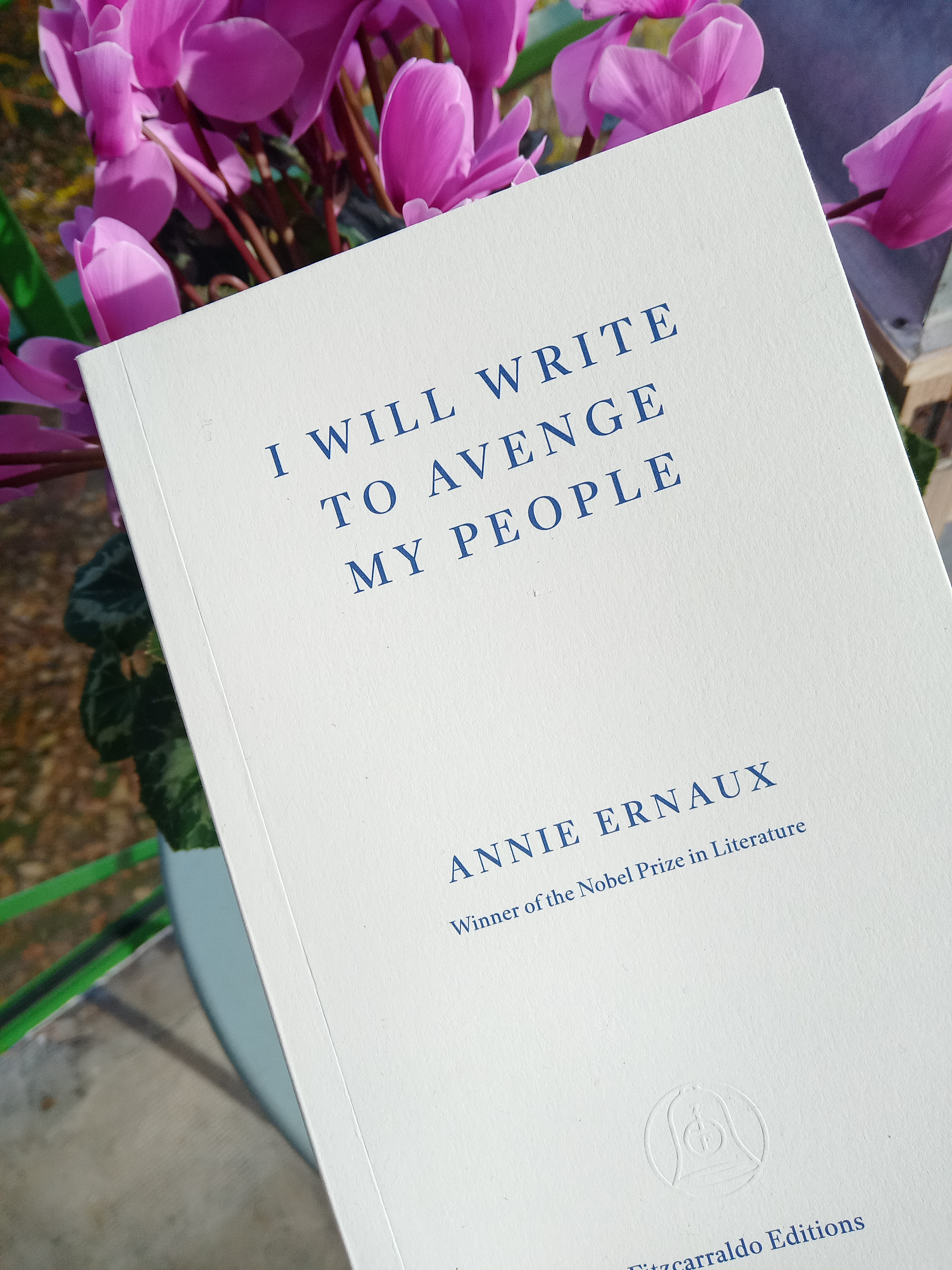
I Will Write To Avenge My People, The Nobel Lecture by Annie Ernaux tr. Alison Strayer & Sophie Lewis

Winner of the Nobel Prize in Literature 2022

In October 2022 the French author Annie Ernaux became the first French woman (the seventeenth woman) to win the Nobel Prize in Literature.

Read together, the reflections of the Nobel women reveal a diversity of ideas about what literature can do and a sense of a practitioner’s responsibility to these ideas. While the lectures vary widely in content—from Lessing’s and Gordimer’s concrete political lessons to Szymborska’s larger abstract musings to fables personal (Müller) and universal (Morrison)—each contains observations that are at once totally complex and completely true. – extract from LitHub article by Jessi Haley

The Agony and Experience of Class

The Nobel Committee recognised that ‘in her writing, Annie Ernaux consistently and from different angles, examines a life marked by strong disparities regarding gender, language and class

They awarded her the prize:

“for the courage and clinical acuity with which she uncovers the roots, estrangements and collective restraints of personal memory”

In this slim volume is the acceptance speech given by Annie Ernaux on 7 December, 2022 in Stockholm, Sweden, alongside a short biography (both translated by Alison L.Strayer). There is a brief banquet speech included, translated by Sophie Lewis.

It is a brilliant introduction to the motivation of the lifetime of work and writing by Annie Ernaux, opening with a reference to the title – alluding to the challenge of a search for the perfect opening line to her upcoming Nobel Prize lecture:

Finding the sentence that will give me the freedom and the firmness to speak without trembling in this place to which you have invited me this evening.

She doesn’t have to look far, she says, although the line she refers to – the title of her talk – is one she wrote in a diary sixty years ago.

j’écrirai pour venger ma race

It was written when she was 22 years old, the daughter of working class parents, studying literature in a faculty of sons and daughters of the local bourgeoise; an echo of Arthur Rimbaud’s cry in Une saison en enfer (A Season in Hell):

‘I am of an inferior race for all eternity.’

A young woman, the first of her family to be university educated, her youthful idealism was projected into those words.

I proudly and naively believed that writing books, becoming a writer, as the last in a line of land-less labourers, factory workers and shop keepers, people despised for their manners, their accent, their lack of education, would be enough to redress the social injustice linked to social class at birth.

Turning Away From Convention

Her first attempt at the novel was rejected by multiple publishers, but it was not this that subdued her desire and pride, to eventually seek a new form of expression.

It was life situations in which the weight of difference between a woman’s existence and that of a man was keenly felt in a society where roles were defined by gender, where contraception was prohibited and termination of pregnancy a crime.

These situations and circumstances instilled in her a pressing need to move away from the “illusory ‘writing about nothing’ of my twenties, to shine light on how her people lived, and to understand the reasons that had caused such distance from her origins.

Like an immigrant now speaking a language not their own, a class-defector, she too had to find her own language, however, it was not to found in the pages of the esteemed writers she had been studying and was teaching:

I had to break with ‘writing well’ and beautiful sentences – the very kind I taught my students to write – to root out, display and understand the rift running through me. What came to me spontaneously was the clamour of a language which conveyed anger and derision, even crudeness; a language of excess, insurgent, often used by the humiliated and offended as their only response to the memory of others’ contempt, of shame and shame at feeling shame.

Recognising that when a reader was culturally privileged they would maintain the same imposing and condescending outlook on a character in a book, as they would in real life, she sought to elude that kind of gaze and thus her trademark style evolved:

I adopted a neutral, objective kind of writing, ‘flat’ in the sense that it contained neither metaphors nor signs of emotion. The violence was no longer displayed; it came from the facts themselves and not the writing. Finding the words that contain both reality and the sensation provided by reality would become, and remain to this day, my ongoing concern in writing, no matter what the subject.

It’s an enrapturing lecture and an excellent introduction and insight into Ernaux’s particular and individual style, and wonderful that her volume of work has been recognised and celebrated at this esteemed level. You can read the lecture using the link below.

I have read one book by Ernaux, A Man’s Place and I am planning to read Shame, A Simple Passion and her masterpiece The Years.

Shame Simple Passion The Years Annie Ernaux Nobel Prize Winner 2022

Have you read any books by Annie Ernaux? Are you planning to read any?

Further Reading

The Nobel Prize Website: Annie Ernaux Nobel Lecture (Read the lecture here)

LitHub Article: A Brief History of All the Women Who Have Won the Nobel Prize in Literature by Jessi Haley

Annie Ernaux, French Author

Born in 1940, Annie Ernaux (née Duchesne) was born in Lillebonne and grew up in Yvetot, Normandy, where her parents ran a café-grocery store in the spinning mill district.

They had lost a little girl of seven before I was born. My first memories are inseparable from the war, the bombings that devastated Normandy in 1944.

She was educated at a private Catholic secondary school, encountering girls from more middle-class backgrounds, and experiencing shame of her working-class parents and milieu for the first time.

After abrief stint in Finchley, London, cleaning houses all morning and reading from the library all afternoon, she returned to France to study at the University of Rouen. Obtaining a degree in modern literature, she became a school teacher. From 1977 to 2000 she was a professor at the Centre National d’Enseignement par Correspondance.

Her books, in particular A Man’s Place (La Place) and A Woman’s Story (Une femme) have become contemporary classics in France. These books marked a break from the definitive novelistic form, she would continue teaching in order to never depend on commercial success.

One of France’s most respected authors, she has won multiple awards for her books, including the Prix Renaudot (2008) for The Years (Les Années) and the Marguerite Yourcenar prize (2017) for her entire body of work. The English translation of The Years (2019) was shortlisted for the Man Booker prize International and won the Warwick Prize for Women in Translation (2019).

The main themes threaded through her work over more than four decades are: the body and sexuality; intimate relationships; social inequality and the experience of changing class through education; time and memory; and the overarching question of how to write these life experiences.

Fitzcarrraldo Editions have now translated and published eleven of her works into English, including this booklet.

Ernaux’s work is uncompromising and written in plain language, scraped clean. And when she with great courage and clinical acuity reveals the agony of the experience of class, describing shame, humiliation, jealousy or inability to see who you are, she has achieved something admirable and enduring. – Nobel Prize Committee

The Booker Prize Winner 2023

Back in August the Booker Dozen 13 novels were longlisted for the Prize, which in September became a shortlist of six novels, and today a winner announced.

The judges were looking for the best work of long-form fiction, written in English, selected from entries published in the UK and Ireland between 1 October 2022 and 30 September 2023.

I read two from the longlist, both Irish novels that I very much enjoyed, Sebastian Barry’s Old God’s Time and Elaine Feeney’s How To Build A Boat. Sadly, neither made the shortlist below, but another two Irish novels did make it, The Bee Sting by Paul Murray which just won the Irish Novel of the Year and Paul Lynch’s Prophet Song.

From this shortlist of six novels, the winning novel is:

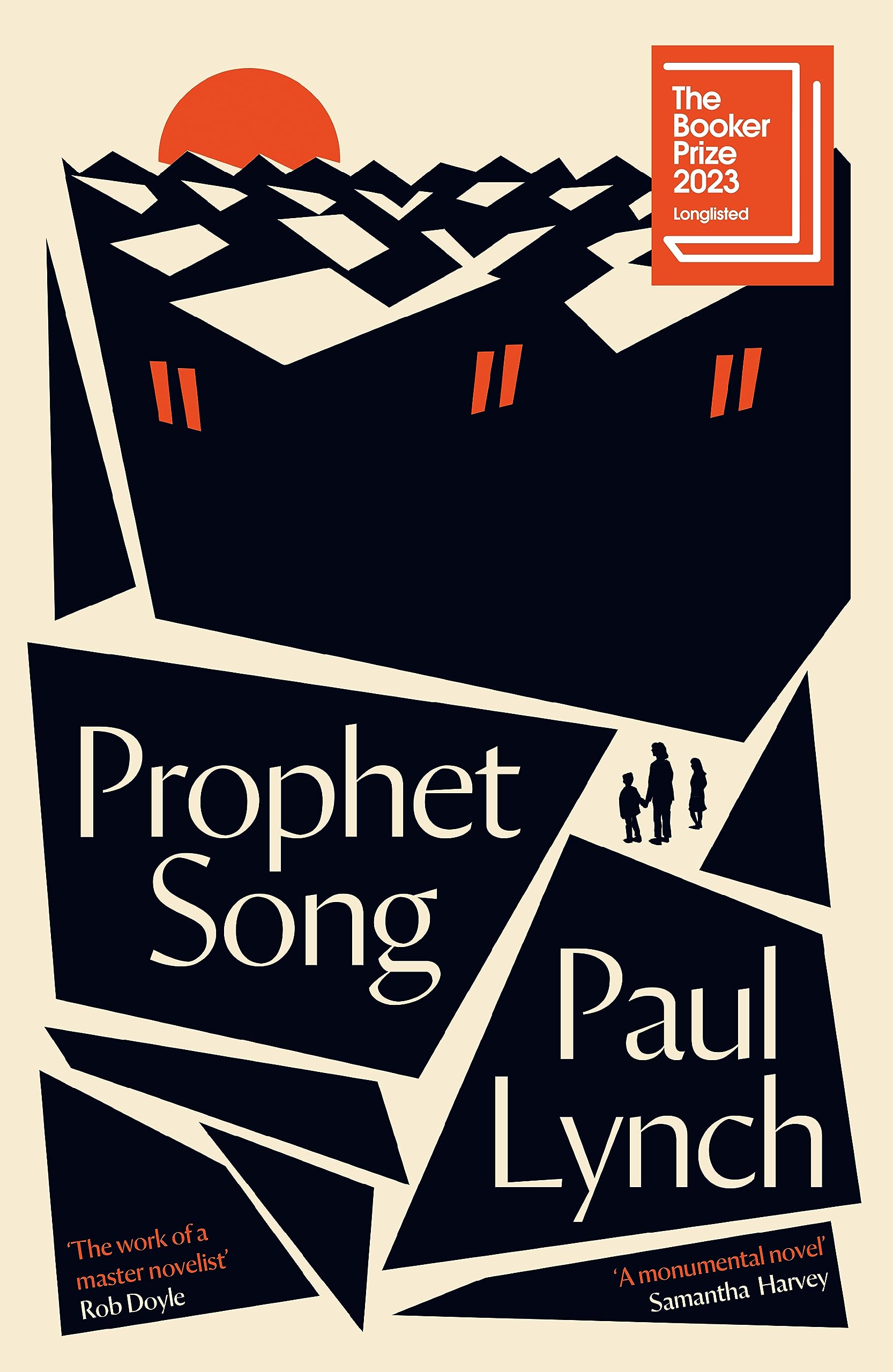
Prophet Song by Paul Lynch

Why You Should Read This Book According to the Judges

How would you summarise this book in a sentence to encourage readers to pick it up? 

Prophet Song follows one woman’s attempts to save her family in a dystopic Ireland sliding further and further into authoritarian rule. It is a shocking, at times tender novel that is not soon forgotten.  

Is there something unique about this book, something that you haven’t encountered in fiction before? 

The prose is a feast, with gorgeous rolling sentences you sink into. A stylistic gem.  

What do you think it is about this book that readers will not only admire, but really love? 

It is propulsive and unsparing, and it flinches away from nothing. This is an utterly brave performance by an author at the peak of his powers, and it is terribly moving.  

Can you tell us about any particular characters that readers might connect with, and why? 

Eilish is our guide through this relentless world, and we feel as deeply as she feels. The situations are sometimes dire, and yet she remains resilient, determined and, above all, human. She breaks our hearts. 

Although it’s a work of fiction, is there anything about it that’s especially relevant to issues we’re confronting in today’s world? 

Far from didactic, the book warns of the precarity of democratic ideals and the ugly possibilities that lie beyond their desecration. 

Is there one specific moment in the book that has stuck in your mind and, if so, why?  

Prophet Song has one of the most haunting endings you will ever read. The book lives long in the mind after you’ve set it down.

* * * * * * * * * * *

That’s a wrap, the end of the literary award season 2023.

Have you read Prophet Song, or if not, do you think you might be tempted to read it?

So Late In the Day by Claire Keegan

So Late in the Day (2023) was recently shortlisted for the Irish Book Awards Novel of the Year; it didn’t win that award however Claire Keegan won Author of the Year 2023.

The Literary Withhold

I read So Late in the Day as if it were a kind of literary mystery.

It is so short, (it’s a small square book of 4 chapters, 47 pages, around 11,000 words), that with Keegan’s combination of economy and precision with words, I found I was reading vigilantly between the lines as I went, not being able to stop myself from trying to guess the significance of every utterance and carefully constructed phrase. I mean, right from that opening line…

On Friday, July 29th, Dublin got the weather that was forecast.

…it read to me like something imbued with meaning. Did something or someone get what they deserved, I wondered?

Recalling other stories of Keegan’s, like Foster and Small Things Like These, I would suggest this is a motif of her storytelling, the slow reveal, the building up of a sense of something untold, omitted. The reader can’t help but wonder, question, try and guess as each page reveals a little more, what might be coming, the denouement.

Keegan herself suggested in a recent interview that the book requires a second reading:

So Late in the Day deploys her typically hushed technique to devastating effect; plain sentences unfurl their full implication only on rereading, the narration a veiled disclosure of the protagonist’s poisonous habits of thought.  – extract from Guardian article

Review

A young man, Cathal, is at his workplace on a Friday afternoon and seems very conscious of the time, in the first couple of pages it is mentioned twice, it passes slowly, perhaps excruciatingly. People act on guard around him, they know something we don’t.

It was almost ready (his coffee) when Cynthia, the brightly dressed woman from accounts, came in, laughing on her mobile. She paused when she saw him, and soon hung up.

Photo by R.Esquivel Pexels.com

His boss indicates he needn’t stay the rest of the day, and Cathal is aware of him closing his door softly, all of which makes the reader wonder why, what has happened to this young man that people seem to be treading carefully around him? As he leaves the office at the end of the day and waits for the lift, on hearing someone approach, he pushes open the door to the stairwell.

On the bus ride home, another clue:

He would ordinarily have taken out his mobile then, to check his messages, but found he wasn’t ready – then wondered if anyone ever was ready for what was difficult or painful.

The final clue before the end of the chapter is when a young woman gets on the bus and sits in a vacant seat opposite him. He breathes in her scent…

until it occurred to him that there must be thousands if not hundreds of thousands of women who smelled the same.

A Relationship Unravelled

He returns home, steps over wilted flowers on his doorstep and spends the evening alone, consuming a weight watchers microwave dinner and opens a bottle of champagne.

The four short chapters alternate between the past and the present. When the narrative steps back in time, we learn about his relationship with a half French, half English girl Sabine that he’d met in Toulouse. The dialogue between them reveals a disconnect that goes unnoticed by him and is ignored by her.

It is the discordant undertones within their conversation and his contemptuous observations that reveal the long, dark shadow of influence and inference.

After the reveal, when we learn what has happened to him, who he is, he recalls things about his own mother, his father, things from the past that shaped them, though he does not acknowledge that.

If a part of Cathal now wondered how he might have turned out if his father had been another type of man and had not laughed, Cathal did not let his mind dwell on it. He told himself it meant little, it was just a bad joke.

A Take on Language and Lore

It is a thought-provoking, provocative read, that subtly explores a seismic patriarchal crack in Irish society, one that infiltrates language, habits, behaviours and attitudes.

It is ironic, that the title in English is ‘So Late in the Day‘ compared to the French translated title which was translated or treated as ‘Misogynie‘. One title refers to the actions of the female character while the other refers to the behaviours of the male character. The story is told through the observations of Cathal, so the English language title belongs to his perception of reality, while the French title takes on a more overarching thematic approach.

In the article below, in The Guardian, it was revealed that the American author George Saunders was a fan of the story and recently chose it when invited to pick a favourite New Yorker story to discuss on the magazine’s podcast, but stopped short of reading it, due to one of the words used.

Keegan (who read the story herself, with riveting poise) tells me she respects his reluctance “even though he considered it to be the perfect word – as I do. It’s what Irish men often call women here. Writing the language people use is part of what a writer does to portray the lives we lead, the world we live in.”

Further Reading

The Guardian Interview: Claire Keegan: ‘I can’t explain my work. I just write stories’ by Anthony Cummins

Warwick Prize for Women in Translation Winner 2023

Today the winner of the Warwick Prize for Women in Translation was chosen from eight books shortlisted. The full longlist of 16 titles and descriptions can be seen here.

The 2023 competition received a total of 153 eligible entries representing 32 languages; this was the largest number of submissions made to the prize to date. The longlist covered 11 languages and for the first time included a title translated from Vietnamese. Arabic, Chinese, Hungarian and Italian were represented more than once. 

A Graphic Novel Debut From Egypt Wins

The winning novel by Deena Mohamed (Egypt) is the graphic novel Your Wish Is My Command, translated from Arabic by Deena Mohamed, published by Granta.

The illustrated novel imagines what might happen if you could buy and sell wishes. The book follows Shokry, a kiosk owner in Cairo, Egypt, as he tries to sell off three wishes he inherited from his father.

It combines fantasical elements alongside everyday realities in contemporary Cairo, as the characters cope with the challenges they face.

In the translation, on the opening page (which is at the back, the book reads from right to left, as it would in Arabic) is an inscription, from a reader:

Shubeik Lubeik (Your Wish Is My Command) is easily the most subversive book I’ve read in decades, Deena Mohamed has much to say about the human condition, but she does so with effortless grace, superb cartooning, and brimming with intelligence both emotional and intellectual – all while maintaining an incredible sense of humour.” Ganzeer, author/artist of The Solar Grid.

Further Reading

NPR Review by Malaka Gharib

New Yorker Review by Yasmine AlSayyard

The Guardian – Your Wish Is My Command by Deena Mohamed review – a spellbinding fantasy from Egypt by James Smart

Washington Post review – What Egyptians Wish For – In ‘Shubeik Lubeik,’ a new graphic novel by Deena Mohamed, genies really do come in bottles — but only for those rich enough to afford them by Jonathan Guyer

A Special Commendation, Non Fiction Essays from Denmark

The judges have also selected a title for special commendation this year:

A Line in the World, A Year On the North Sea Coast’ by Dorthe Nors, translated from Danish by Caroline Waight and published by Pushkin Press – a year travelling along the North Sea coast—from the northern tip of Denmark to the Frisian Islands.

In 14 essays, it traces the history, geography, and culture of the places she visits while reflecting on her childhood and her family and ancestors’ ties to the region.

She writes of the ritual burning of witch effigies on Midsummer’s Eve; the environmental activist who opposed a chemical factory in the 1950s; the quiet fishing villages surfers transformed into an area known as Cold Hawaii in the 1970s.

She connects wind turbines to Viking ships, 13th century church frescoes to her mother’s unrealised dreams. She describes strong waves, sand drifts, storm surges, shipwrecks; nature asserting its power over human attempts to ignore or control it.

In Case You Missed It

In 2022, the prize was jointly awarded to Osebol by Marit Kapla, translated from Swedish by Peter Graves and published by Allen Lane/Penguin Random House, and to Tomb of Sand by Geetanjali Shree, translated from Hindi by Daisy Rockwell and published by Tilted Axis Press.