January by Sara Gallardo (1958) tr. Frances Riddle, Maureen Shaughnessy (2023)

January is a slim novella, considered to be a revelatory, pioneering masterpiece about a short period in the life of a 16-year-old Argentine girl living in a rural area, whose life trajectory is radically changed in a day. Now, for the first time, translated from Spanish into English.

Breaking the Silence, Exploring the Consequence

With echoes of Edith Wharton’s Summer , this radical feminist novel broke the silence around abortion to reshape the way women’s bodies and rights were perceived in 20th-century Argentina.

A radical feminist text, January was the first Argentine novel to represent rape from the survivor’s perspective and to explore the life-threatening risks pregnancy posed, in a society where abortion was both outlawed and taboo.

They talk about the harvest but they don’t know that by then there’ll be no turning back, Nefer thinks. Everyone here and everyone else will know by then, and they won’t be able to stop talking about it. Her eyes cloud with worry; she slowly lowers her head and herds a small flock of crumbs across the worn oilcloth.

A 16 year old girl in a predicament, not of her own making discovers she is pregnant, but not by the young man she dreams of. She is the daughter of peasant farm workers and has limited options, but will pursue them all the same, in order to try and avoid the inevitable, forced outcome that awaits her once her secret becomes known.

A pregnant teenager imagines death rather than forced marriage
Photo F.Capetillo Pexels.com

She is just of an age where she begins to notice and feel something for someone around her, but her virtue is stolen by another. Instead of imagining love, she imagines death, and wonders if this might be when her will finally see her.

She no longer cares about anything besides this thing that consumes her days and nights, growing inside her like a dark mushroom, and she wonders if it shows in her eyes as they remain fixed on her worn-out espadrilles, two little gray boats on the tile floor, or in her hands crossed in her lap, or in her hair burned by the perm.

The novella follows her panic, her attempt to find resolution without support, her symptoms, her desperation to seek absolution, her confession, her realisation of the terrible consequence, the life sentence, the marriage plot.

This thought floods her with a tide of anxiety as she remembers her secret. A sense of impotence rises to her throat, as if time has become something solid and she can almost hear its unstoppable current conspiring with her own body, which has betrayed her, tossing her to the mercy of the days.

She lives in rural Argentina, a conservative catholic environment, an unruly place for a young girl.

What will happen to her in this place that reveres the cloth, that judges and shames girls regardless of their innocence?

Further Reading

The New York Review of Books: Nefer’s Mission by Lily Meyer

The New Yorker: The Abortion Plot: A newly translated novel by the Argentinean writer Sara Gallardo provides a missing link in the history of abortion literature, by S. C. Cornell

Sara Gallardo: Recently rediscovered Argentine writer by Jordana Blejmar (University of Liverpool) & Joanna Page (University of Cambridge).

it is perhaps her abiding concern for the ‘Other’ – marginalized, solitary characters, women, animals, monsters, even elements of nature – that gives Gallardo’s literature its most powerful political dimension…

Author, Sara Gallardo

Sara Gallardo was born in Argentina in 1931 to an aristocratic Catholic family. She became a journalist in 1950 and was twenty-seven years old when her powerful debut January was published in 1958.

She grew up in Buenos Aires in a family of men so famous there are streets named after them all over Argentina (all key figures in the constitution of the Argentine nation): her grandfather Ángel Gallardo was a civil engineer and politician; her great-grandfather Miguel Cané was a journalist, senator, and diplomat; and her great-great-grandfather Bartolomé Mitre was president of Argentina from 1862-1868.

By the time she died in 1988 she had published more than a dozen books, including collections of short stories and essays. Gallardo has been compared to Lucia Berlin or Shirley Jackson.

January is considered required reading across Argentina.

Daughters Beyond Command by Véronique Olmi tr. Alison Andersen

Daughters Beyond Command is a wide ranging chronicle of 1970’s France, seen through the eyes of the Malivieri Catholic family with three daughters, living in an apartment in Aix-en-Provence. It traverses issues of family, feminism, worker’s rights, class, animal rights, amid the rapid transformation of society in the 19070’s France.

Family saga set in France against social political context of May 68 to the May 81 election

While the story follows the changing lives and events, in particular of the daughters and the mother (we don’t learn too much about Bruno, the father), it also demonstrates the shifts in society and of generations that occur through the way these daughters seek their independence. It contrasts with the way their mother harbours secrets and makes other complicit when she does share what she would prefer to hide.

Regardless of their ages or circumstances, the country and the world is changing and attitudes and behaviours are shifting and everyone is forced to reckon with the changes as they impact them in different ways, raising consciousnesses and often unable to maintain previous ways of being .

Sabine, the eldest wants to work in theatre and acting and will do everything she can to pursue that dream in Paris. Fiercely independent, she has developed an irritation around comfort and conformity.

She watched as Maria set the table under Michelle’s authority. She looked at the framed photographs of her cousins who had not yet come home.Happy times on horseback, in cars, on boats. It was like a huge advertising campaign. It filled her with rage. There had to be something behind this publicity for the life she was being shown, both here and at home, in the silver frames of photographs, or poor people’s kitchens, behind the slogans like Moulinex Sets a Woman Free, the injunctions to promote progress, comfort, and the frenzied pursuit of happiness, luxury, and family life, there was something else. Which could be neither bought nor sold.

The second sister Hélène has been seduced by the trappings and comfort of this sophisticated Parisian family. Sabine can’t understand why she chooses to spend so much time with them, a family that lives in a way beyond anything they have ever experienced. Hélène spends most of her holidays with the family who don’t have daughters; the Uncle who has taken a particular interest in her. That regular proximity changes some of her habits, including the way she speaks.

It was a betrayal of the Malivieri clan, and Sabine was astonished that her sister could flaunt her bonds of dependence so naturally.

Hélène will also leave home early and pursue an education Paris, supported by her Uncle. She is less outspoken but equally passionate, affected by moral question around the protection and rights of animals.

As time passed, a breach had come between Hélène and her parents; adaptation upon her return required quickly taking stock of her loved ones. She saw her father, whose kindness and altruism for everything he could not lavish on his family financially. She saw her mother, hard-working and attentive, doggedly managing her household, and the rare moments she seemed to cast off her condition as a housewife, when she really seemed to be her true self, were when they visited Laurence on Saturday afternoons at her bastide.

Photo by Alotrobo on Pexels.com

The student riots of May ’68 had an impact on the nation and caused both fear and admiration in these adults trying to figure out how to parent their daughters, growing up surrounded by influences they could not control.

As the lives of the daughters changes, so too does the outside world. Simone de Beauvoir and Gisèle Halimi found the movement Choisir la cause des femmes (Choose the Cause of Women) in 1971 to decriminalise abortion in France, riot police storm the Lip watch factory that had been occupied by workers for three months, forcibly removing them; there is talk and images of the horrors of Vietnam, of the desire for freedom, respect for the proletariat, and the lyrics of the Bob Dylan song The Times Are A Changin’, the death of the President Georges Pompidou.

Sabine told her his name was Bob Dylan and that his song said, more or less, that the world was changing, you had to keep your eyes open,and the parents had better watch out, their sons and their daughters were beyond their command. It was a political song.

As time passes and events happen the sisters find a way to strengthen their bond despite their differences, separating from each other and then coming together in solidarity, while their parents seem stuck in time. Agnes, the mother is unable to stop changes happening to her, which will bring about a crisis, one the two older girls question but are again met with silence.

While the novel isn’t necessarily about resolving any of the issues presented, it encapsulates the impact of changing times on the various members of the family in a way that I found interesting, having lived in France for around 19 years, but not during the era mentioned. So much of the landscape was familiar, and some of the references, but many were not.

I appreciated the story for the depiction of what it might have been like to be part of an ordinary family growing up in this town in the 1970’s and learning about the significant events that challenged and affected people’s thinking, seen from the perspective of inside France. It is these changes in the background of the family lives and the adept writing that maintains the narrative pace.

It might be set in the 1970’s but it feels as relevant today in many respects as it did for that era of change.

Further Reading

My review of Véronique Olmi’s novella Beside the Sea (2015)

Listen to Bob Dylan’s The Times They Are A Changin

Kirkus Reviews: The personal is political for Olmi’s finely drawn characters.

Litro Magazine Review: Daughters Beyond Command by Monica Cadenas

Author, Véronique Olmi

Véronique Olmi was born in 1962 in Nice and now lives in Paris. She is an acclaimed French dramatist and her twelve plays have won numerous awards. Olmi won the Prix Alain-Fournier emerging artist award for her 2001 novella Bord de Mer (beside the Sea). It has since been translated into all major European languages.

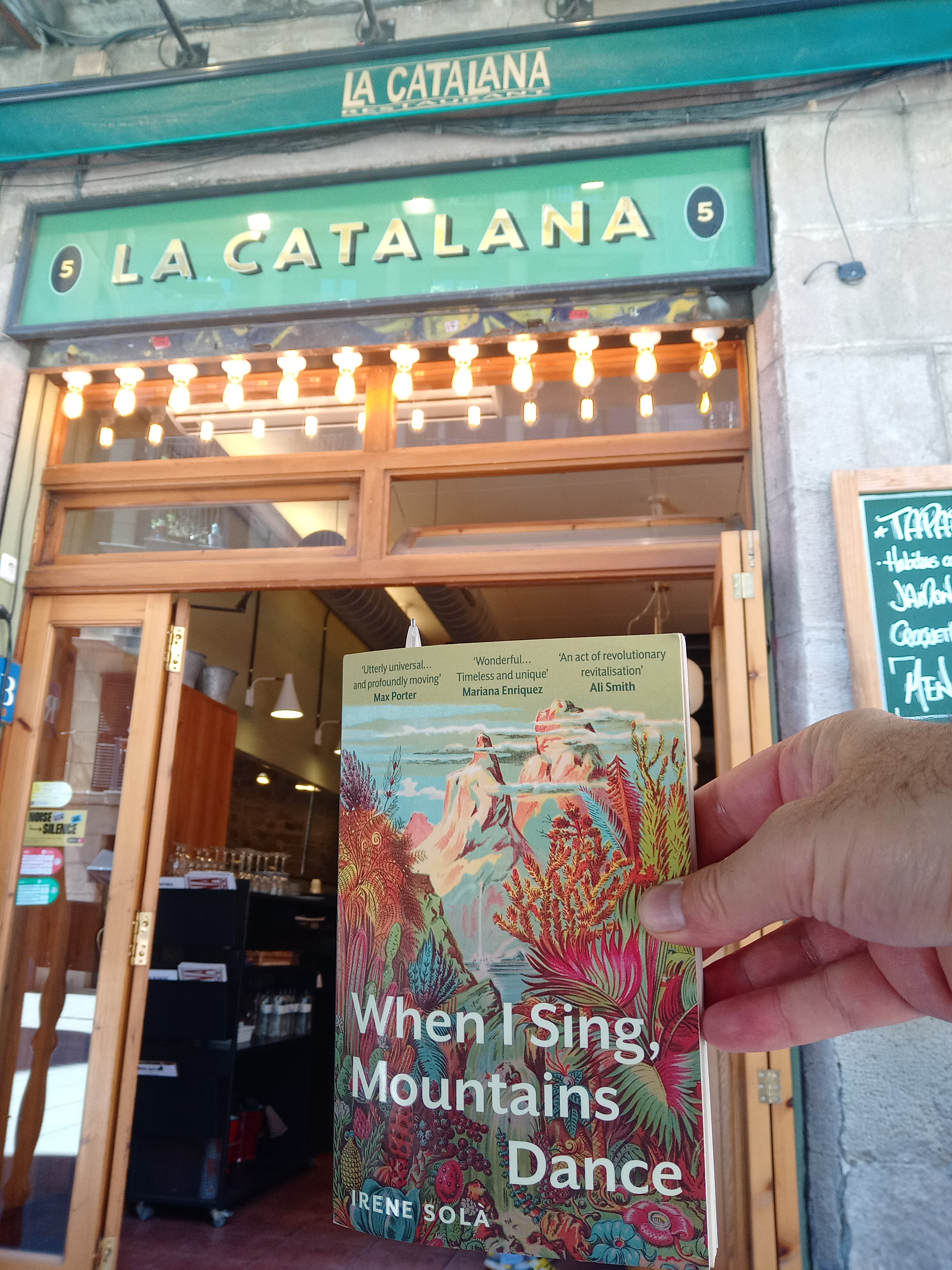
When I Sing, Mountains Dance by Irene Solà tr. Mara Faye Lethem

Early in May, I went with my son to Barcelona to meet up with my brother who was celebrating a significant birthday.

I couldn’t resist the opportunity to take a novel with me translated from Catalan, although during the four days we were there, I did not spend much time reading.

I read a few chapters before I went there and was intrigued to discover a novel of multiple voices and perspectives, not just human voices, firmly rooted in Catalonia culture.

While the first three days were in the city, I felt drawn towards the mountains and so we spent a day in nearby Montserrat.

When Lightning Strikes

Photo M.Soetebier Pexels.com

When I sing, Mountains Dance is set near a village high in the Pyrenees. It is a lyrical, mind-expanding work, littered with references to the folklore and history of Catalonia that brings alive, and gives voice to, every aspect of life within its unique biosphere.

The first chapter is entitled Lightning and I cannot be sure that it is lightning that speaks; perhaps it is the many facets of the storm that narrates. However, it is lightning that wreaks devastation and change on the community that we will then slowly be introduced to, over the following chapters.

After our arrival all was stillness and pressure, and we forced the thin air down to bedrock, then let loose the first thunderclap. Bang! A reprieve. And the coiled snails shuddered in their secluded homes, godless and without a prayer, knowing that if they didn’t drown, they would emerge redeemed to breathe the dampness in. And then we poured water out in colossal drops like coins onto the earth and the grass and the stones, and the mighty thunderclap resounded inside the chest cavity of every beast.

Navigating Loss, Celebrating Survival

A man named Domènec, a husband and father of two children, is outside when the storm breaks. He is in the middle of rescuing a calf whose tail is caught in a jumble of wires, carrying a small load of black chanterelles (Trumpet of Death) he has foraged. In saving the life of one, nature then takes another, in an instant.

And when it was clear we were done, the birds hopped out onto branches and sang the song of survivors, their little stomachs filled with mosquitoes, yet bristling and furious with us. They had little to complain about, as we hadn’t even hailed, we’d rained just enough to kill a man and a handful of snails. We’d barely knocked down any nests and hadn’t flooded a single field.

Ghosts of the Past Acting on the Present

A Catalan novel in translation, book cover set against the mountains of Montserrat

The four women who witnessed it approached him, then left him, gathering the soaking mushrooms he had dropped, women who made unguents and elixirs and all the other wicked things that witches do.

The death of the man sets off a catalyst of consequences for those left behind, his grieving wife, his newborn son, his neighbours.

I don’t know what hurts more: thinking only of the good memories and giving in to the piercing longing that never lets up, that intoxicates the soul, or bathing in the stream of thought that lead me to sad memories, the dark and cloudy ones that choke my heart and leave me feeling even more orphaned at the thought that my husband was not that all the angel I held him up to be.

Their voices are presented individually, then as the narrative moves along, the interconnectedness of this polyphonic world becomes increasingly apparent.

A Polyphonic Narrative

Irene Solà channels the unique voices of every living (or previously living) being: the lightning bolts, roe deer, mountains, the ghosts of civil war, the widow Sió and later her grown children, Hilari and Mia, as well as Mia’s lovers, with their long-buried secrets and their hidden pain.

The construction is non-linear, the voices fragmentary, but the threads of story rise up through the pages, like those black chanterelles from the damp forest floor.

When tragedy strikes the family a second time, the sister is forced to face life’s struggles and joys alone. A chorus of voices bears witness to all that passes, and the savage beauty of the natural environment, demonstrating aloneness as a state of human mind and not a reality.

Here, the voice of the black chanterelles:

The wild boar came, dark mouth, wet teeth, hot air, fat tongue. The boar came and ripped us out. A man came and ripped us out. The lightning came and killed the man. The women came and gathered us up. The women came and cooked us. The children came. The rabbits came. And the roe-deer. More men came and they carried baskets. Men and women came and they carried knives.

There is no grief if there is no death. There is no pain if the pain is shared. There is no pain if the pain is memory and knowledge and life. There is no pain if you’re a mushroom! Rain fell and we grew plump. The rain stopped and we grew thirsty. Hidden, out of sight, waiting for the cool night. The dry days came and we disappeared. The cool night came, and we grew. Full. Full of all the things. Full of knowledge and wisdom and spores. Spores fly like ladybugs. Spores are daughters and mothers and sisters, all at once.

Narrative Threads, Seeds, Spores, Growth and Healing

Sometimes the text reads like a story and other times like a hallucinatory dream, with a hidden message. Something of a puzzle, the various parts that make up this ecosystem, this community, the human and non-human. It is like imagining that the mountain and the trees really do bear witness to all and if they could share what they have witnessed, it would be something like this.

It requires slow reading and perseverance, as it takes a little while for the voices to become apparent and for the reader to accept that the human voices are not given the right to dominate the narrative. We are able to see and comprehend the wider picture if we have the patience to persevere.

Highly Recommended travel companion if visiting Catalonia.

Further Reading

Guardian Review: the mushroom’s tale – Animals, ghosts, humans, mountains and clouds share the narrative in this playful, deeply felt portrait of Catalonia and its people by Christopher Shrimpton

Granta: In Conversation: Eva Baltasar & Irene Solà‘The tide carries my books from my head to a place that is no longer mine.’ The authors discuss friendship, the sea and finishing their novels. March 2022.

Author, Irene Solà

Irene Solà is a Catalan writer and artist, winner of the European Union Prize for Literature, the Documenta Prize for first novels, the Llibres Anagrama Prize, and the Amadeu Oller Poetry Prize. Her artwork has been exhibited in the Whitechapel Gallery.

By interlacing art and literature, Irene Solà’s work investigates the construction, uses and possibilities of narrative and storytelling, from the historical and popular contexts to the more contemporary.

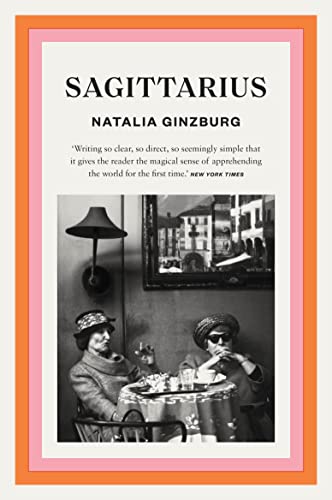
Sagittarius by Natalia Ginzburg (1957) tr. Avril Bardoni

After just finishing Domenico Starnone’s The House on Via Gemito (my review here) featuring a domineering father, it felt appropriate to read another Italian author Natalia Ginzburg and her fictional account of a domineering mother.

The Interfering Parent

However, Ginzburg’s parent in the novella Sagittarius might be considered timid compared to Starnone’s Federico. While she is over invested in the lives of her two daughters, they seem able to pursue their own desires in spite of her interference.

Fed up with life in a small town she moves to the suburb of a city to be closer to her sisters, who run a china shop and her student daughter (who narrates the story), then demands that her second daughter and husband move with her, she has promised to give him money to set up a practice.

What he needed was a practice of his own in a good central location. My mother had promised to give him the money for this as soon as she had won a certain lawsuit against the local council in Dronero, concerning a property dispute; she had made the promise lightly, finding it easy to part with money that was so far away and so unlikely ever to be hers; the litigation had already dragged on for more than three years, and Cousin Teresa’s husband, a solicitor, had told us that our chances of winning were nil.

Photo by Ylanite Koppens on Pexels.com

We learn she disapproves of the husband Chaim, a Jewish Polish Doctor with only one brother left in his family, having lost his family in wartime. She was initially distraught over the one that got away, – a rich, blond, young man her daughter met on holiday, until she became ill and her mother arrived – not realising that her overbearing parental behaviour might have had something to do with it. She had done everything to ensure her daughter would marry well.

Every time she thought about the boy with the blond crew cut my mother became enraged. Not one spark of generosity had he shown! No crumb of comfort had he offered! And to think he had disappeared without even saying goodbye! Without a single word of any kind: The very memory of the blond crew cut and of the afternoon spent with is family now filled her with disgust.

There were days when my mother was almost as bored in town as she had been in Dronero. She already knew the central shopping district like the back of her hand, having walked the length and breadth of it looking for suitable premises, small but attractive, for her art gallery; but the rents were all extremely high and, besides; another problem was beginning to occur to her, that of finding painters willing to show in her gallery. She knew nobody.

Making Friends in the City

Finding it more lonely and isolating than she imagined, she is happy when she meets Pricilla (call me Scilla), a woman who (eventually) listens to her dreams and desires and seems in tune with them and even willing to partner with her on her project to open an art gallery.

My mother was now anxious to talk about her gallery project but was unable to get a word in edgeways because Signora Fontana never stopped chattering for an instant.

In her dogged pursuit of ambition, and desperate desire for a true friend, she overlooks important signs that perhaps all is not as it should be and naively keeps her plans to herself, avoiding criticism or advice from any of her family members that might have lead her to question her association – though probably not.

A Greek Mythology Warning

Photo by Damir on Pexels.com

It is no coincidence that Ginzburg names her character Scilla, that name immediately conjured up for me the creature Scylla lurking in the sea that enticed ships onto the rocks. She is adept at luring men into a perilous and rocky waterway, thus as I read, every person that Scilla was connected to, became for me, a potential villain or obstacle in her path, some perhaps by accident, others by design.

Scilla convinces her friend to wait on the art gallery project and invites her in on another shop idea. They will decide on a name, Scilla’s zodiac sign, Sagittarius, one that could easily be transferred to an art gallery.

Ultimately she will be confronted with her own poor judgement, both those she put her trust in that she should not have and those who she neglected and would be there for her in her downfall.

This novella is often read with the excellent Valentino which I read earlier in the year and loved. Sagittarius is a little more predictable, whereas for me, Valentino was exceptional, my favourite of the two, but I highly recommend them both and look forward to reading more Ginzburg this year.

Further Reading

My reviews of other Natalia Ginzburg works: Family Lexicon (memoir), The Dry Heart (debut novel), Valentino (novella)

JacquiWine’s Journal reviews Valentino and Sagittarius

Author, Natalia Ginzburg

Natalia Ginzburg (1916-1991) was born in Palermo, Sicily. She wrote dozens of essays, plays, short stories and novels, including Voices in the EveningAll Our Yesterdays and Family Lexicon, for which she was awarded the prestigious Strega Prize in 1963.

Her work explored family relationships, politics and philosophy during and after the Fascist years, World War II. Modest and intensely reserved, Ginzburg never shied away from the traumas of history, whether writing about the Turin of her childhood, the Abruzzi countryside or contemporary Rome—approaching those traumas indirectly, through the mundane details and catastrophes of personal life.

She was involved in political activism throughout her life and served in the Italian parliament between 1983 to 1987. Animated by a profound sense of justice, she engaged with passion in various humanitarian issues, such as the lowering of the price of bread, support for Palestinian children, legal assistance for rape victims and reform of adoption laws. 

She died in Rome in 1991 at the age of seventy-five.

Why Did You Come Back Every Summer by Belén López Peiró (Argentina) tr. Maureen Shaughnessy

It’s been a good couple of weeks for Charco Press, with Not a River by Selva Almada (translated by Annie McDermott) on the shortlist for the International Booker Prize 2024 and Of Cattle and Men by Ana Paula Maia (translated by Zoë Perry) winning the Republic Of Consciousness Prize 2024.

An Unforgettable Summer

social legal justice #metoo voices silenced

This week I picked up Why Did You Come Back Every Summer from the 2024 Bundle, originally published in Spanish in 2018 as Por qué volvias cada verano and published in English for the first time in April 2024.

What a book.

A young woman experiences sexual abuse by a family member when she is a teenager. Some years later she reveals what happened. And there are all kinds of responses, reactions, accusations, procedures and legal processes.

Testimony or Treason

In this lucid text, a chorus of voices speak. Often they are speaking to her, only we do not hear her voice. We hear one side of conversations. We hear what they have all said. We see what they are all doing. We understand the selfish human inclination to protect one’s own. We become witness to observing a victim in need of love and support being hung out to dry.

In between the commentaries, are the affidavits. Short, streamlined, neutral texts presented in old fashioned type that all begin and end the same way, with their two or three salient points contained within.

Photo by Suzy Hazelwood on Pexels.com

The voices that speak are presented on the right hand page, the left hand page remains blank. It gives the text momentum, the pages pass quickly. The voices say so much more, they incriminate.

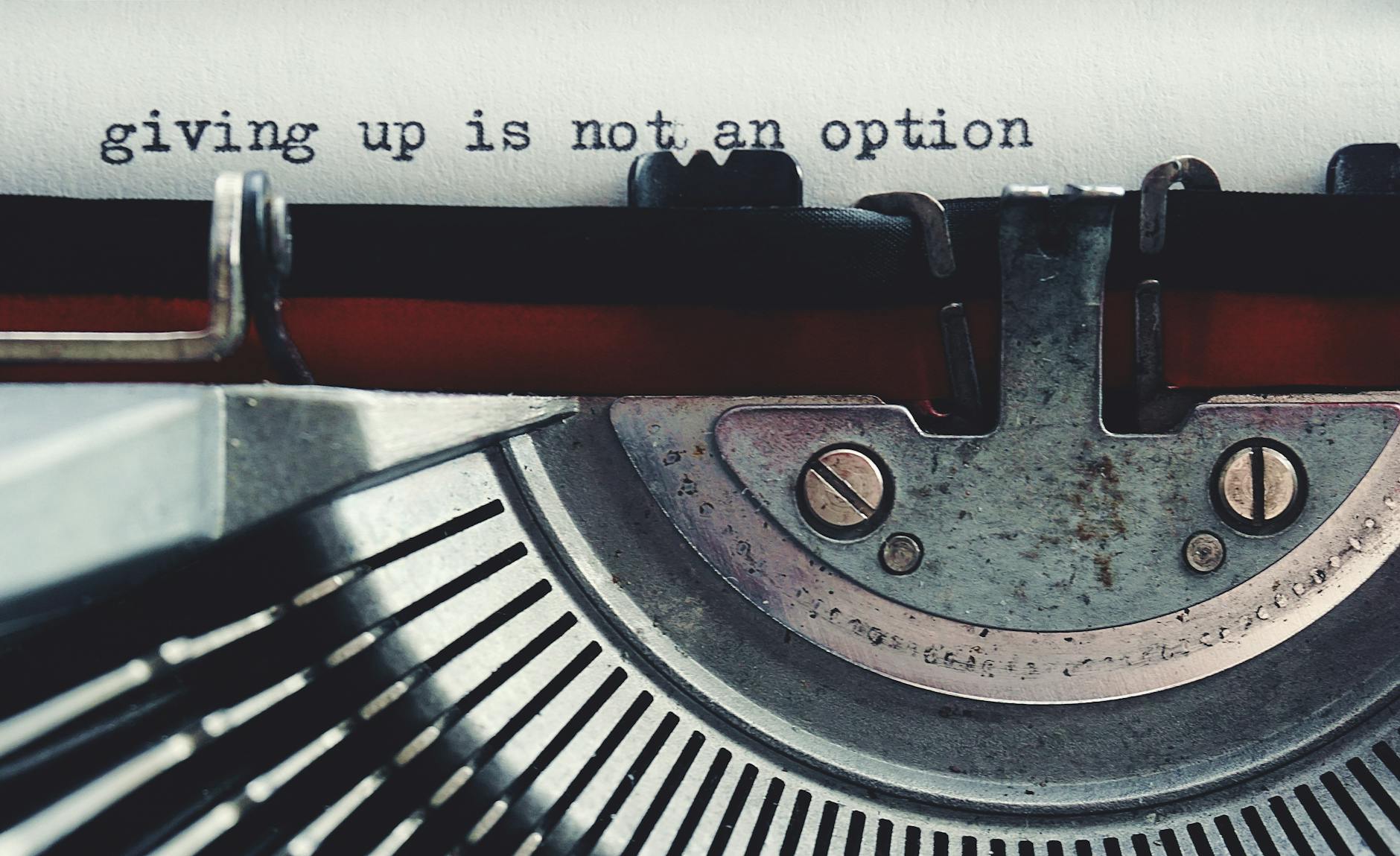
The legal texts are more dense, no white space between paragraphs and they cover consecutive pages. There is no space for reflection or consideration, as we read we can hear the sound of the keys typewriter striking the ribbon.

#MeToo Movement and the Sharing of Stories

The process for pursuing justice, rather than protect or bring about resolution, too often results in making the lives of women even worse. To pursue justice threatens exposure, judgement, scorn, rift, ostracism, it brings shame. It reached a tipping point in 2017 with the #MeToo movement. Frustrated, women began to share their stories, it was the only thing left to do and when it was done as a collective, it created community and support, if not justice. Long buried trauma rose to the surface, if not for justice, to begin to heal a wound of womanhood.

Reading Why Did You Come Back Every Summer reminded me of the recent documentary You Are Not Alone: Fighting the Wolf Pack, a Spanish feature film about a young woman seeking justice after a terrifying ideal at Spain’s iconic ‘running of the bulls’. Produced in secret, the film is told through the words of the victim survivors and recounts the mass protests the case sparked on account of the injustice experienced.

More than a million women and girls took to the streets chanting “Sister, I do believe you” and broke their silence on social media with #Cuéntalo (“Tell Your Story”).

There are many ways to share a story and Belén López Peiró has created a work of art that honours an experience that changed a young girls life forever, putting it into a form that has already become a literary, social and political phenomenon in her country and beyond.

It is a justice-seeking oeuvre narrated through a cacophony of voices that gives power to the unsaid, that allows the quiet to echo resoundingly, that shines a light on yet another shadow of humanity.

Highly Recommended.

Author, Bélen López Peiró

Belén López Peiró studied journalism and communication sciences in Buenos Aires University and has recently completed an MA in Creative Writing at the Barcelona’s Pompeu Fabra University. She currently coordinates non-fiction writing workshops with a gender perspective. 

Why Did You Come Back Every Summer is her debut novel. In 2021 she published her second book Donde no hago pie (Nowhere to Stand) which narrates the legal process the author went through to bring her abuser to justice.

Republic of Consciousness Prize for Small Presses 2024

Now in its 8th year, The Republic of Consciousness Prize is an annual literary prize aimed to support small and independent presses in the UK and Ireland. The organisation supports and recognises the work of those presses considered vital to the United Kingdom’s literary culture.

They state their purpose as:

“To advance for the public benefit literary fiction of the highest merit from small presses in the UK and Ireland through a range of reading, speaking and event initiatives, and by providing grants and assistance to practitioners and producers of literary fiction.”

Ground Breaking Experimental Works of Fiction

By their very nature, they are more likely to be ground-breaking experimental works that mainstream publishers consider commercially risky, although when one of these novels takes off, they are often ready to step in.

It is where we are likely to come across innovative forms of writing, therefore you either have to be a brave and adventurous reader, or practice a certain level of discernment, in order to find those titles that might appeal if you are less of a risk taker in reading.

Reading Outside the Comfort Zone

I like to see what titles the prize is considering, though they are generally a little too avant-garde for me. This year, I discovered I had read one title that was on the longlist and then it made the shortlist, so of course I was hoping it would win!

No doubt if you follow me here, you will have guessed which press it was – Yes, it was a Charco Press title. Charco Press publish outstanding works of mostly Latin American contemporary fiction in translation and you can support them by subscribing to their annual 2024 bundle. You won’t regret it!

Another Winner From Charco Press

Yesterday, from a shortlist of five books, the winner was announced, which the judges described as:

“A stunning thriller of sorts. So understated. So powerful. So heartbreaking. Worked for me completely on both the level of a human story and as a warning parable for our times.“

Of Cattle and Men by Ana Paula Maia (Brazil) translated by Zoë Perry (Portuguese)

I read Of Cattle and Men (link to my review here) in May 2023 and it was one I could not put down until I finished. Deeply evocative of slaughterhouse communities and institutions, it opens a channel to consideration of the consciousness of bovines and depicts man in his basest form, driven to paranoia by what he can not understand or control and therefore seeks to destroy.

The writing is compelling and thought provoking, it is suggestive in a way that provokes the reader’s imagination, without being explicit about what might be being suggested. I thought it was excellent. And a year later, it has stayed with me.

When night falls, the residents of Ruminant Valley tend to shut their doors and windows tight. They believe that everything that seems improbable during the day can overcome the darkness. It’s when thoughts that were once impossible become possible; when hushed whispers swell, and above all, when that layer of darkness cloaks anything suspicious. The figures, the voids, the long shadows, all of it brought on by the night, which is immense, and its reaches infinite.

Highly Recommended.

Warning: Not for the squeamish.

Further Reading

Granta: Read an extract from Of Cattle and Men

Guardian: Charco Press wins Republic of Consciousness prize for ‘gut-punch’ novel by Ella Creamer

Human Ecology Research Paper: A Social History of the Slaughterhouse: From Inception to Contemporary Implications (2010) by Amy J.Fitzgerald, Depart of Sociology & Anthropology, University of Windsor, Canada

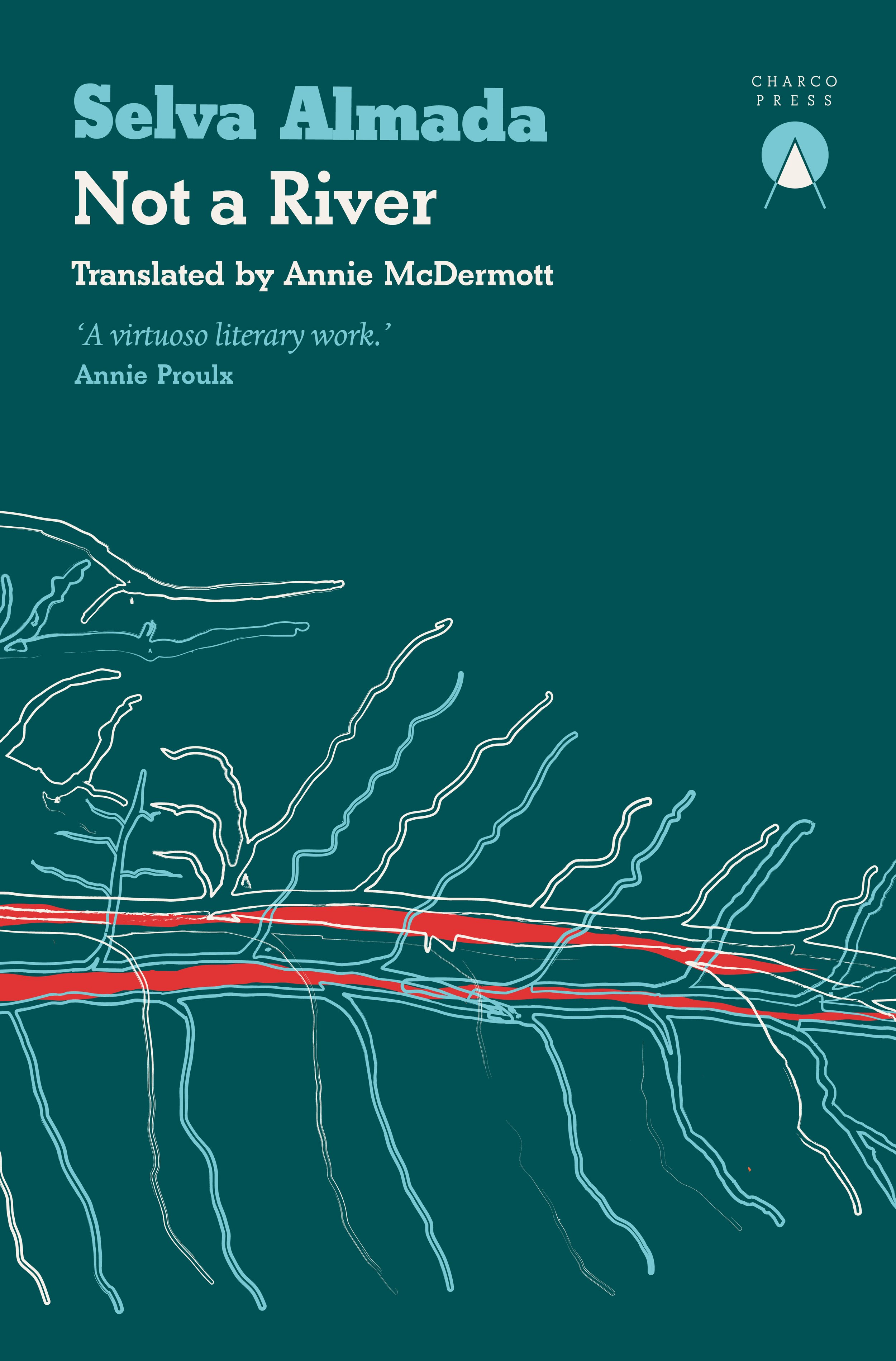
Not a River by Selva Almada (Argentina) tr. Annie McDermott

Not a River has just been shortlisted for the International Booker Prize 2024.

Opening Lines and Book Covers

International Booker Prize longlist 2024 Argentinian literature Spanish translation

I read the opening line and let it tell me as much as possible about the story I am about to read.

“Enero Ray, standing firm on the boat, stocky and beardless, swollen-bellied, legs astride, stares hard at the surface of the river and waits, revolver in hand.”

It’s a Charco Press title, so there is always a thought provoking abstract image on the cover, that never fails to contribute to the understanding of what the book has to say. This one shows twin rivers, fed by tributaries, running red.

It is clear that will be blood, death, perhaps menace and/or violence – and more than one episode. Just as the water of the smaller channels has no choice but to flow into the main river, so too the intent of a man standing firm, awaiting his prey. But who/what else will the river claim?

To Understand Any Story We Circle Back

Not a River tells a story, not in a linear way, but in a circular fashion, beginning with two men El Negro and Enero and a boy Tilo, on a fishing trip; circling back to a previous trip when Eusubio was with them, slowly revealing the memory that is acting on both men and what happened to their friend. The fishing trip is further disturbed by a visit from ‘a local’ whose questions unsettle the trio.

The second tributary/narrative follows Siomara and her two daughters Lucy and Mariela. The girls are entering womanhood, the mother is becoming more protective.

Photo V. Bagacian Pexels.com

Siomara was in one of those phases she sometimes went through, when she was grouchier than usual. Saying no to everything and dealing out punishments and bans for no reason. All because she could see how the two girls were growing, how little by little they were slipping away, how sooner or later they were going to leave her as well.

She lights fires as a way to deal with her emotions, she has done so since she was a girl. She seems to be lighting them a lot recently.

Sometimes she thinks the fire talks to her. Not like a person does, not with words. But there’s something in the crackle, the soft sound of the flames, as if she could almost hear the air burning away, yes, something, right there, that speaks to her alone…
Come on, you know you want to.
It says.

Again the story turns on itself, something has happened here too, sometimes the mother is living in the past, the present too much for her. The girls hear about a dance and plan to go.

Lucy wants to be a hairdresser. She wants to give other woman those moments of peace her mother seems to feel when she is doing her hair.

The narrative moves back and forth like the tide, people in the community are connected and affected by events that occur at the river. Paths cross, fates intertwine. It is necessary to let go of needing to know whether we are in the past or the present. If certain events happened before or after others. We accept each part of the story’s mosaic, see how they fit together, until all the pieces have been laid.

A summer like this one. Twenty years back, a summer like this one. The same island or the next one along or the one after that. In the memory it’s all just the island, with no name or exact coordinates.

The longer the men stay in the forest, the more uneasy they feel about what they have done, what has happened in the past and how unwelcome and out of place they feel. Invited to a dance, they leave their campsite for the evening.

Dreams and a Queue for the Healer

Photo by Pixabay on Pexels.com

Enero has a disturbing dream, twice.

Eusubio looked at him and thought for a moment.
We need to go see my godfather. He knows about this stuff.
He said.

Mariela also has a dream, she tells her sister Lucy about it.

And what happened in the dream?
I don’t know, like I say I just had a kind of flashback. It was weird, there were lights and sirens.

There is a sense of the repetitive cycles of the generations, girls hide from their families, they grow up to become a mother who can’t help but try and prevent their child from repeating the same mistakes. To keep them safe.

She pretends not to hear. Still just about strong enough to resist. But for how much longer.
One day, she knows she will answer the fires’s call.

In less than 100 pages, Not a River depicts disparate elements of a broken community, marginalised families, their efforts to bond, heal, escape, punish, revel and cope with the aftermath of it all.

Selva Almada’s paragraphs are like brushstrokes on a canvas, each one contributes to the story and is necessary in order to see beyond it.

The characters in my novel, men and women who live on what the river can provide, are a reflection of what the neo-liberalism of the 1990s has done to Argentina: impoverishing it, condemning a significant part of its citizens to poverty and marginalization.

Selva Almada

Highly Recommended for fans of thought provoking literary fiction.

Further Reading

Tony’s Reading list – review of Not a River

Booker Prize Website: Q & A with Author & Translator

My review of The Wind that Lays Waste

Selva Almada, Author

Selva Almada is considered one of the most powerful voices of contemporary Argentinian and Latin American literature and one of the most influential feminist intellectuals of the region.

Compared to Carson McCullers, William Faulkner, Flannery O’Connor, Sara Gallardo and Juan Carlos Onetti, Almada has published several novels, a book of short stories and a book of journalistic fiction. She has also published a film diary, written on the set of Lucrecia Martel’s film Zama, based on Antonio di Benedetto’s novel.

She has been a finalist for the Medifé Prize, the Rodolfo Walsh Award and of the Tigre Juan Award. Her work has been translated into French, Italian, Portuguese, German, Dutch, Swedish and Turkish. 

Not a River (shortlisted for the Vargas Llosa Prize for Novels) is her fourth book to appear in English after The Wind that Lays Waste (Winner of the EIBF First Book Award 2019), Dead Girls (2020), and Brickmakers (2021).

A Respectable Occupation (2017) by Julia Kerninon tr. Ruth Diver (2020)

An Ode to Pope

How could I not love a miniature work of narrative nonfiction that the author quotes as having being in part inspired by the opening two lines of a poem from the 18th century English poet Alexander Pope.

The heroic rhyming couplets of Pope’s The Rape of the Lock (1712) were my optional choice for the fifth form School Certificate exam many moons ago, a memorable chapter of my own literary journey. Kerninon quotes from his Why did I write? what sin to me unknown.

Why did I write? what sin to me unknown
Dipp’d me in ink, my parents’, or my own?

Why and How I Write

une activitié respectable writing life nonfiction French literature

A Respectable Occupation is a short nonfiction narrative about how and why the French author Julia Kerninon became a writer and the necessity of reading.

I came across this book in a photo on author Kerri ní Dochartaigh’s Substack g l i m m e r s where she wrote about her favourite books of the year for 2023.

Dochartaigh is the q u e e n of referencing creative nonfiction and nature writing in her own writing. Her second memoir Cacophony of Bone is full of literary references to little known, enticing contemporary works of narrative nonfiction.

Julia Kerninon had a unique upbringing in many ways, not least because she lived in multiple countries, Canada, England and France, but also because it is as if she were raised to become a writer, more of an expectation than a desire, so she pursues it in the same way many others might pursue a career that has been held in high esteem by their parents. Only writing isn’t like law, medicine or business.

I had an incredibly heavy electric typewriter my mother had lent me, and she had glued little labels with lowercase letters onto the keys because I found capitals confusing, and I wrote lots of stories about talking animals with my friend Pete.

The Legend of Writers

She recalls a kind of bohemian childhood and the first six years where she was an only child and the focus of her mother who she admired, and how her world tilted when they became a family of 4 not 3.

An identical monument of books had saved her as well, thirty years earlier, from a hopeless childhood, and so she spread her secret before me, she explained what she loved most in the world, in a gesture that was also a potlatch, an immeasurably generous offering, which I might be expected to return one day with an even greater gift.

Her mother had been born in a small fishing village, the eldest of four, the only girl, she had learned Russian at ten in boarding school and read everything she could lay her hands on. She passed on all she could to her daughter, who did everything in her power to satisfy her, to repair her, to recompense her for the enormous effort it must have cost her to make all this known to her first child.

I read books non-stop, in a panicked frenzy, trying to catch up on lost time, trying to catch up with my mother who seemed to know everything.

If I lost a manuscript and went crazy with panic, she would just shrug with no compassion at all and explain that in any case I would have to throw away or lose lots of books before writing a single good one. The best thing that can happen to you is a house fire.

a respectable occupation Julia Kerninon typewriter
Photo by medium photoclub @ Pexels.com

At sixteen she had found a community of ‘old poets’ who met in an old biscuit factory in her hometown, a second education, after a house full of books.

At twenty she was reading Gertrude Stein‘s ill-conceived advice: If you don’t work hard when you are twenty, no one will love you when you are thirty.

She confronted her father and told him she wanted to take a gap year from her university studies. He agreed.

I thought that to be a writer, I had to train like an athlete, like a dancer, until it didn’t hurt anymore, until I didn’t ask myself any more questions. I wanted to possess that skill.

She takes herself off to Budapest for a year. Her life becomes a cycle of working hard, playing hard, then taking herself off somewhere for a year or six months to write.

She becomes a waitress in the summers, so she can write throughout the winter. She decides that to be poor is acceptable if she can be free instead and that she would learn to live alone, to be alone, to work alone, during those productive times of her life. That maybe these were not sacrifices at all, they were merely aspects of the life that she had created, that she loved.

Though she figures out how to live like this herself, she attributes this advice given to her by a much loved man:

the main thing is to have free time – you’ll obviously work out how to earn a crust somehow – but free time is something you’ll always have to scavenge, he told me earnestly.

It’s a wonderful little book, a digression of sorts, a reminder that the writing life comes in many shapes and forms, that the sharing of the various experiences can also provide inspiration to those who are on that path and that the pursuit of the occupation can also be a subject to write about, that people like reading about.

I write books because it’s good discipline, because I like sentences and I like putting things in order in a Word document. I like counting the words every night and I like finishing what I start.

A short introduction by Lauren Elkin is equally compelling, another writer whose book Art Monsters : Unruly Bodies in Feminist Art was in the photograph in Kerri Ni Dochartigh’s end of year essay.

I will leave you with one final quote from Julia Kerninon, one that applies as equally to reading as it does to writing.

I’ve been striding through literature like a field, where my footsteps flatten the grass for a moment, just long enough to see the path I’ve taken and the immensity of what is yet to be discovered.

Further Reading/Listening

An Interview with Julia Kerninon and Ruth Diver: A Respectable Occupation

#RivetingReviews: Jennifer Sarha reviews A Respectable Occupation by Julia Kerninon

Author, Julia Kerninon

Julia Kerninon is a French novelist from Brittany, whose first novel Buvard (2013) won the prestigious Prix Françoise Sagan in 2014.

Born in 1987, she holds a Ph.D in American Literature. She has been compared to French New Wave filmmaker Éric Rohmer for her sense of style and feeling for dialogue, and to Alain Resnais for the artful structure of her narratives. Most of all, her work stands out for its contagious joy, drive, exuberance.

Kerninon’s second novel, Le dernier amour d’Attila Kiss, won the Prix de la Closerie des Lilas in 2016, and her latest novel, My Devotion, won the 2018 Fénéon Literary Prize. She lives in Nantes.

Valentino (1957) by Natalia Ginzburg tr. Avril Bardoni (Italian), Intro by Alexander Chee

The more I read of the Italian author Natalia Ginzburg, the more I am hooked.

Valentino leads the reader along, thinking you are reading a straight forward story, until you arrive at the point of realising that your reactions are judgements and the book holds up a mirror to our own conditioning. And that is how it feels reading it in 2024. I can’t even imagine the storm it likely raised when published in 1957.

Little Sense or Sensibility

novella Italy parody fiction gender conditioning

Valentino is a short novella narrated by Caterina, who is training to become a teacher. She lives with her father, a retired schoolteacher, her mother, who used to give piano lessons and her brother, Valentino who does very little, but whose medicine studies and equipment cost a lot.

we had to help my sister who was married to a commercial traveller and had three children and a pitifully inadequate income, and we also had to support my student brother who my father believed was destined to become a man of consequence. There was little enough reason to believe this, but he believed it all the same and had done ever since Valentino was a small boy and perhaps found it difficult to break the habit.

Valentino spends his time playing with a kitten, making toys out of scraps of material, dressing up and admiring himself. A string of engagements to teenagers raise false hopes and always end the same way – broken. So when he announces he will be married within the month, naturally the family expect the pattern to continue.

What a Wife Can Be or Not to Be

So when he turned up with his new fiancée we were amazed to the point of speechlessness. She was quite unlike anything we had ever imagined.

We learn of all the family members reactions to this new fiancée, with the exception of the father.

he was about to launch into a long speech about what was the main consideration but my mother interrupted him. My mother always interrupted his speeches, leaving him choking on a half-finished sentence, puffing with frustration.

A Man of Consequence, The Weight of Expectation

Photo by W R on Pexels.com

Valentino is oblivious to the reactions and judgements of his family and continues to act and communicate as he always has, holding nothing back, expecting everyone to be happy for him.

Is he fearless? A truth teller who doesn’t hide things or worry about what others think of him? Is he a narcissist? He is a wonderful character because he is like the mystery at the centre of the story. Who don’t quite know who he is because he isn’t acting as everyone including the reader might expect him to.

His father lost for words, does not understand that what he is witnessing is the incarnation of his desire, his son is indeed becoming a man of consequence, just not in the way he had expected.

Valentino is captivated by his wife, by her look, her intelligence, her culture. She showers him in gifts, he has upended social convention, insulted the patriarchy and all who prop it up.

My father said he would go to have a talk with Valentino’s fiancée, but my mother was opposed to this, partly because my father had a weak heart and was supposed to avoid any excitement, partly because she thought his arguments would be completely ineffectual. My father never said anything sensible; perhaps what he meant to say was sensible enough, but he never managed to express what he meant, getting bogged down in empty words, digressions and childhood memories, stumbling and gesticulating. So at home he was never allowed to finish what he was saying because we were all too impatient, and he would hark back wistfully to his teaching days when he could talk as much as he wanted and nobody humiliated him.

Out of Place

Once they are married, it is his family that feels out of place, ill at ease. Valentino is easily able to be among his wife’s friends and family as well as his own. He does not feel undeserving or unworthy of their company or his newfound social status. Neither is he aware of the dilemmas facing his family.

It is best not to share too much of the storyline, but to discover it yourself, because every page is a wonderful discovery, of thought provoking insights into the human condition and the reaction of those around us when one defies convention and how they too can be displaced when set down inside an unfamiliar environment.

When Caterina finishes her diploma and gets a job, we observe how Maddalena’s offer to house and feed her, though on the surface seems attractive, acts to disempower her, denying her independence and supporting a selfish desire. Through the unconventional marriage, we see the ridiculousness of gender conditioning all the more clearly.

I thought it was absolutely brilliant, the way Ginzburg has created these two characters, upending societal norms and inverting typical behaviours.

Highly recommended.

Author, Natalia Ginzburg

Natalia Ginzburg (1916-1991) was born in Palermo, Sicily. She wrote dozens of essays, plays, short stories and novels, including Voices in the EveningAll Our Yesterdays and Family Lexicon, for which she was awarded the prestigious Strega Prize in 1963.

Her work explored family relationships, politics and philosophy during and after the Fascist years, World War II. Modest and intensely reserved, Ginzburg never shied away from the traumas of history, whether writing about the Turin of her childhood, the Abruzzi countryside or contemporary Rome—approaching those traumas indirectly, through the mundane details and catastrophes of personal life.

She was involved in political activism throughout her life and served in the Italian parliament between 1983 to 1987. Animated by a profound sense of justice, she engaged with passion in various humanitarian issues, such as the lowering of the price of bread, support for Palestinian children, legal assistance for rape victims and reform of adoption laws. 

She died in Rome in 1991 at the age of seventy-five.

Further Reading

My review of Ginzburg’s memoir, Family Lexicon (1963)

My review of Ginzburg’s debut novel The Dry Heart (1947)

Interview with Alexander Chee: On Natalia Ginzburg’s Valentino by Sander Pleij, 6 May 2023

Reading Intentions 2024

Photo Ylanite Koppens @ Pexels.com

I’m not really into reading goals and rarely participate in challenges that might oblige me to stick with a fixed plan.

A mood reader, I like being able to change my mind about what is going to be picked next. So often, the book I’m reading points the way forward to the next one, or a conversation leads me to recall another book I have on the shelf already.

That said, there are certain intentions I have, and I thought I would list them this year, to give a little direction or framework to the year. As always, things can change, they probably will and if so I will welcome that!

1. Read one book a week

While the number doesn’t really matter, it exists so that that at any one time I can see if I’m keeping with my intention or lagging behind. This reading challenge is on Goodreads, which is where I dump my first impressions as I read or makes notes while reading, or not.

Some may think that reading 50-60 books in a year is a lot; it is about the equivalent of reading 50 pages a day, which is around half an hour to an hour each day. The trick is to read a little every day. I mostly read at night, in the TV watching hour(s) and just before sleep.

2. Reading Ireland Month, March 2024

Last year I read 18 Irish books and I could easily do the same this year, the main focus being Reading Ireland Month in March over at Cathy’s 746Books.

In addition to books from this pile I own here, Cathy has just posted Irish Novels to look out for in 2024 and Irish Short Story Collections + Nonfiction to Look Out for in 2024.

There are few books here I am interested in, notably, from author’s I’ve read and enjoyed; Jan Carson’s Quickly, While They Still Have Horses (short stories) plus collections from Mary Costello and Lucy Caldwell; in fiction, Nuala O’Connor’s Seaborne, Siobhan Gleeson’s Hagstone, Caiolinn Hughe’s The Alternatives. There’s likely to be more temptations I’m sure!

3. Read More Latin American Fiction

Thanks to a subscription with Charco Press, I will be receiving nine books throughout 2024, as they are published.

2023 was a stellar year of reading books from this region, I enjoyed them all, in particular A Little Luck by Claudia Piñeiro (Argentina) tr. Frances Riddle, Two Sherpas by Sebastian Martinez Daniell (Argentina) tr. Jennifer Croft and The Delivery by Margarita Garcia Robayo (Colombia) tr. Megan McDowell.

The 2024 Fiction Bundle includes these titles, so many of which I am excited to read:

4. Read More Annie Ernaux, In French

In 2023, I read Annie Ernaux’s Nobel Prize lecture, I Will Write to Avenge My Race (2022), Simple Passion (1991), and Shame (1997).

In 2024, I hope to read her masterpiece The Years (2008) in English and these three titles in French, L’occupation (2002), (The Possession), Une femme (1987), (A Woman’s Story) and “Je ne suis pas sortie de ma nuit” (1997), (I Remain in Darkness).

I live in France, but tend to read French titles in English, in order to encourage readers to pick them up, however all these titles are available in English anyway and reading in French is a great way to increase vocabulary and exercise the brain!

5. Observe the Awards

Each year, there are certain awards, I like to follow, though they rarely influence what I am going to read. If anything, I’m more likely to find something that might interest me on the longlists, but I do enjoy watching the process of these so very subjective gatherings and all the literary chatter they evoke.

The awards I’ll be looking our for in 2024 are, the New Zealand Book Awards, The Irish Book Awards, The Dublin Literary Prize, The International Booker, The Booker and The Warwick Prize for Women in Translation.

I also like to see who makes the Dylan Thomas Prize longlist, an award for young writers, aged 39 and under, as it is can be a predictor of authors to watch out for in the future. The author Okwiri Oduour (Kenya), who wrote Things They Lost, my One Super Outstanding Read of 2023, was longlisted for this prize and another favourite author Sara Baume (Ireland/UK) was shortlisted.

6. Read More Women in Translation

I love to read around the world. In 2023, I read books from 23 countries and a third of them were in translation. I particularly like to support women authors in translation, due to the challenge this group has in being picked up by publishers and seen.

There is a wealth of great literature to discover here and it is heartening to see classics by the likes of Alba de Céspedes (Italy) coming to print in English for the first time, since being published in the 1950’s.

In 2024, I hope to read more of her work, more by Natalia Ginzburg (Italy), plenty via Charco Press and certainly more that I have yet to decide on. Women in Translation month #WITMonth is in August, which isn’t a great reading month for me, as it’s peak season work wise, so I’ll be reading it all year round, but following closely in August for recommendations.

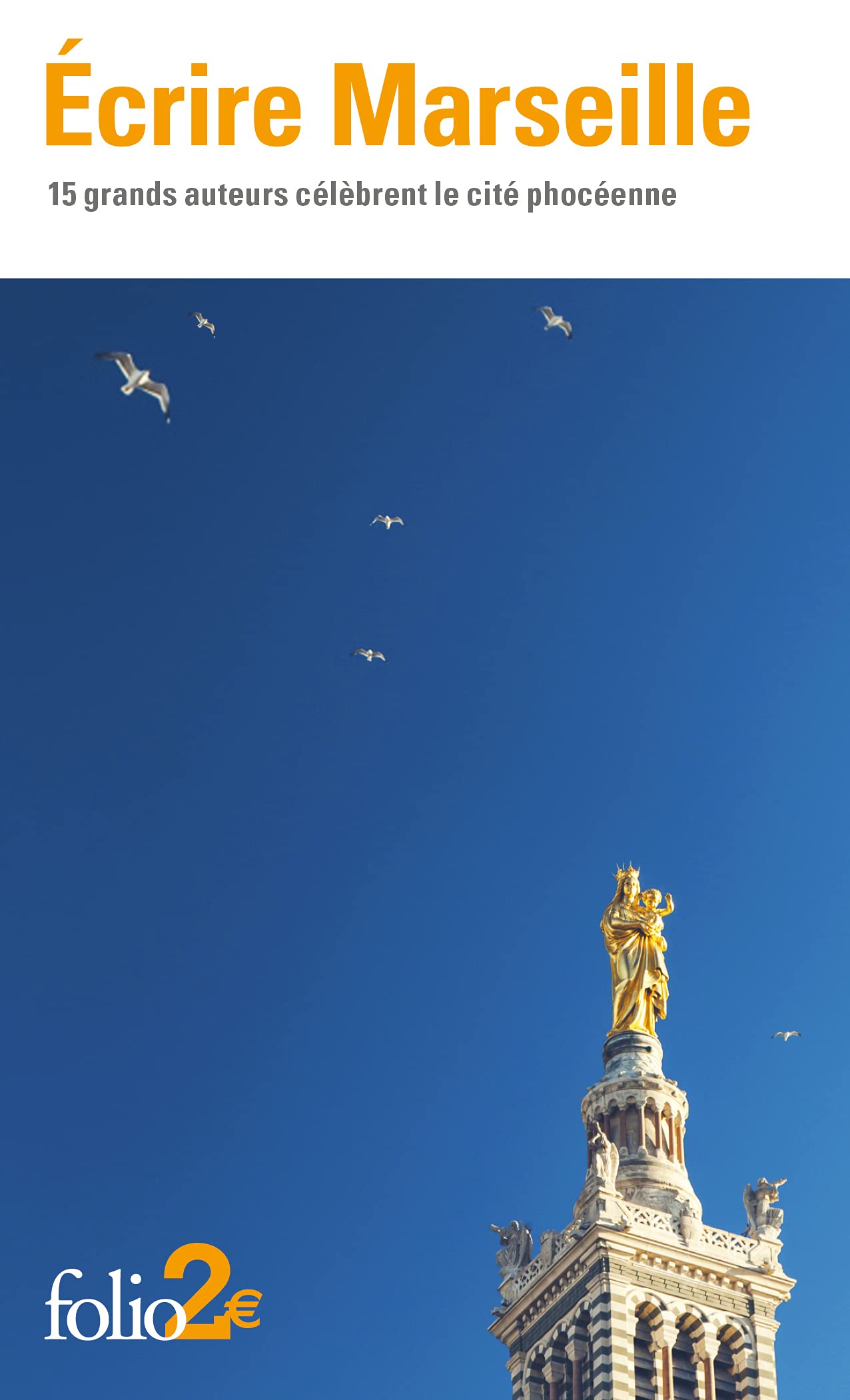
7. Écrire Marseille: 15 grands auteurs célèbrent la cité phocéenne

Jean Claude Izzo Alexandre Dumas Gustave Flaubert Albert Cohen Simone de Beauvoir

Marseille is a wonderful city, only 25 minutes from where I live. I came across this title in a local bookstore, a compilation of extracts from various French works that mention or celebrate the city of Marseille in some way.

Having had a glimpse inside, I won’t be exactly reviewing the titles or extracts, but I will allow each text to inspire me to write something, using them as a kind of springboard to discover whatever it is to be found by studying the text. That is likely to include a few visits to this complex, unique city herself.

The opening quote is from The Trilogy Fabio Mentale, of which I have read the first in the series, Jean-Claude Izzo’s Total Khéops (1995) (Total Chaos):

“Marseille n’est pas une ville pour les touristes. Il n’y a rien à voir. Sa beauté ne se photographie pas. Elle se partage. Ici, il faut prendre parti. Se passionner. Être pour, être contre. Être, violemment. Alors seulement ce qui est à voir se donne à voir.”

“Marseilles isn’t a city for tourists. There’s nothing to see. Its beauty can’t be photographed. It can only be shared. It’s a place where you have to take sides. Be passionate. Be for, be against. Be, violently. Only then what is to be seen, shows itself.” 

The 15 authors included in the anthology are:

Arrivées à Marseille: Alexandre Dumas (1802-1870), Gustave Flaubert (1821-1880), Albert Cohen (1895-1981), Simone de Beauvoir (1908-1986)

Regards sur la ville: Paul Valéry (1871-1945), Marcel Pagnol (1895-1974), Albert Camus (1913-1916), René Frégni (né en 1947), Rebecca Lighieri (née en 1966), Alain Damasio (né en 1969)

Quelques quartiers de la cité phocéenne: Paul Cézanne (1839-1906), Albert Londres (1884-1932), Louis Brauquier (1900-1976), Jean-Claude Izzo (1945-2000), Maylis de Kerangal (née en 1967)

8. Read What I Like, When I Like

Photo by Julia Kuzenkov on Pexels.com

Have intentions, not obligations. No need to review or finish a book, just follow what lights me up.

Reading and playing around on this blog is total freedom and enjoyment, never a chore, just a fun place to hang out and create content that are like the conversations I am unable to have, because I would never wish to impose all this on anyone.

But thank you to those willing to read and comment, who follow along anyway, that is like the icing on the cake, a gift that is much valued and appreciated and which often contributes to what I might read next.

* * * * * * * * *

Do you have any reading intentions for 2024? Let me know in the comments below.