Best Books of 2025 Top Reads in Translation

Apaprt from committing to read Women in Translation in August, I read less consciously and more by mood or whatever stood out on the shelf this year.

Though I read more books, I read from the same number of countries, but less in translation. In 2024, 33% (20 books) of the titles I read were in translation – a conscious effort. This year only 15%. It is also in part the effect of taking a subscription, I loved most of the Charco Press titles I read, but there were some I was less inclined to read; I would look at them and then choose something else.

It’s about discernment. So I remove those books from the shelf and more carefully research those I have no hesitation in wanting to read. I chose well this summer and so I here are the best seven titles I highly recommend. I’ll be making a more conscious effort to read more in translation in 2026, so please share with me your favorites from this year.

Top 7 Reads in Translation

The Runner Up Outstanding Read of 2025

Somebody is Walking On Your Grave: My Cemetery Journeys, Mariana Enriquez (Argentina) tr. Megan McDowell

See yesterday’s post Runner Up for Outstanding Book of the Year. The author travels to 13 countries over two decades, visiting cemeteries – mixing travelogue, personal history, cultural history and collective memory. I read the essays over a month, each one exhibiting not just the protocols around death, but the context of different eras that each country has been through, and how that has impacted the collective memory. Her essays take the reader to :

Europe: Italy, Spain, France, United Kingdom (England & Scotland), Czech Republic, Germany
Americas: Argentina, Chile, Mexico, United States, Peru, Cuba
Oceania: Australia

Argentina in the ’70s, the decade where I was born, had a dictatorship that made a lot of bodies disappear. Therefore, there’s a generation of people that were killed by the government, and they don’t have a grave.

I realized that that trauma, that is very engraved in my life, somehow made me feel that a grave, a tombstone – it’s something of comfort. It’s a final thing in a good way.

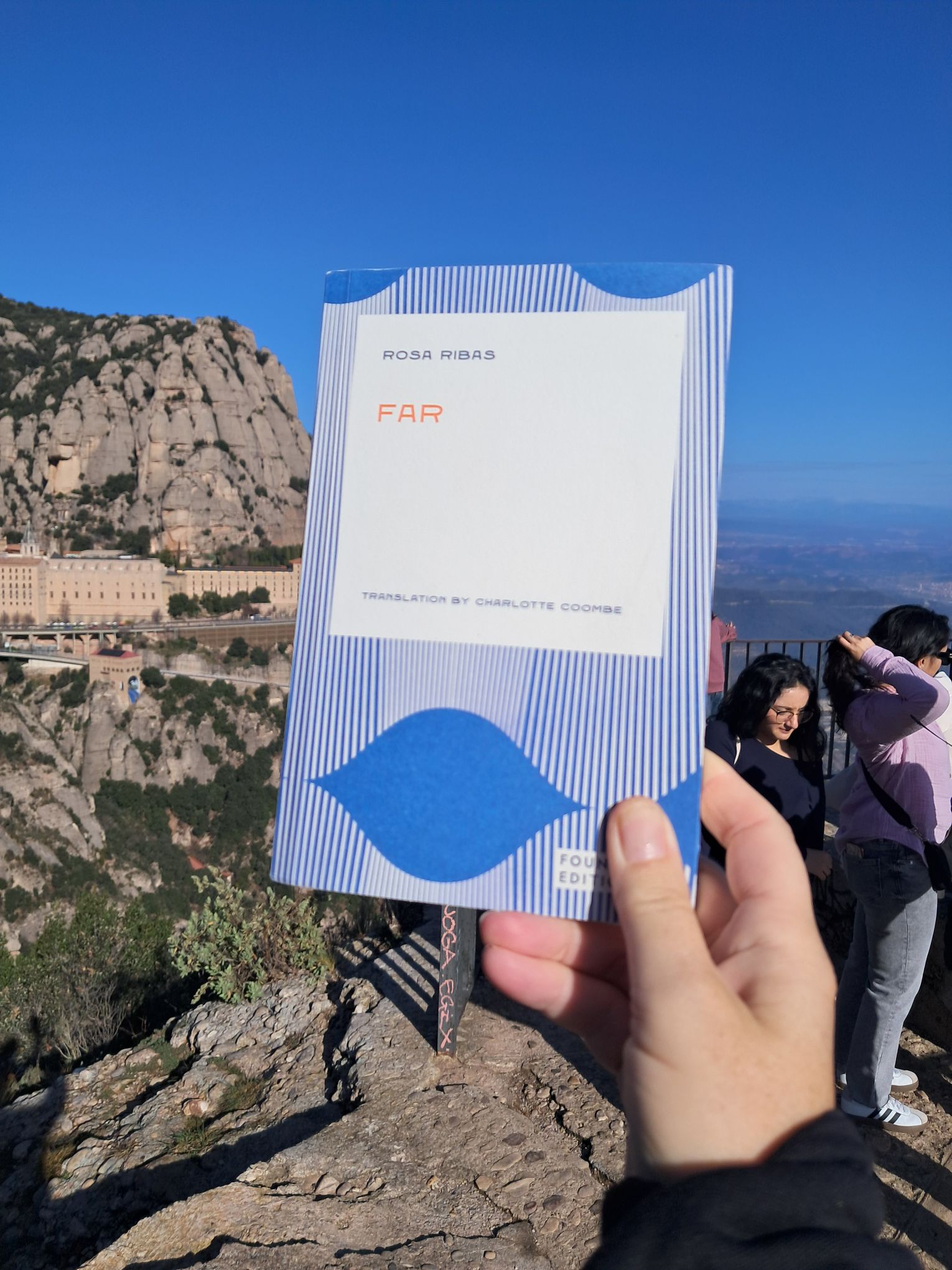
Far by Rosa Riba (Spain) tr. Charlotte Coombe

Book cover of English translation of Far by Rosa Ribas translated by Charlotte Coombe, mountain and monastery of Montserrat, Catalonia in the background

Far was a novel I came across by the relatively new publisher of Mediterranean literature, Foundry Editions after reading an article in the Guardian about a building project in Spain, 13,500 affordable apartments built to house 40,000 people, a ghost town after the global financial crisis, and the deepest economic recession Spain had experienced for fifty years.

Author Rosa Ribas was taken by friends to visit this strange monument to a broken era in Seseña; the housing development was known as ‘The Manhattan of La Mancha’ and as night fell three lights came on and inspired an idea for her novel Far, a story of determined inhabitants trying to create community, while others are escaping who knows what? We follow two characters, both dealing with issues, one in hiding, the other part of the community. Tensions rise, the locals become paranoid and angry at their untenable situation, mirroring the disintegration of the country’s economic situation, disenfranchised youth and a rise in racism and xenophobia.

The entire development was constructed on a pile of poorly concealed sleaze, a chain of bribery, corruption, intimidation, and complicit silences. No ancient manuscripts, no mythical foundations. If these lands had been the scene of some momentous event, back when battles of conquest and reconquest were being fought all over the area, no one had bothered to record it. It was a bleak place, devoid of stories, where it was impossible to satisfy any yearnings for greatness.

The Body Where I Was Born by Guadalupe Nettel (Mexico) tr. J.T. Lichenstein

The Body Where I Was Born by Guadalupe Nettel

Having loved Still Born by the same author, I picked this up and was equally mesmerised. This novel is a semi-autobiographical coming of age story set in the 1970’s, that follows a girl’s childhood in Mexico, the things that marked her experience, that she looks back on now (from a therapist’s chair) with a better understanding of the impact.

She ponders the harm of parental regimes and how they perpetuate onto the next generation the neuroses of one’s forebears, in her case her parents were ‘open-minded’ in a way that ultimately lead to the disintegration of the family and a period of living with a grandmother who disliked her. She and her brother then move to the south of France while her mother pursues studies and a new love.

Enjoying it, I was surprised to learn the narrative moved to the same town where I live. The siblings navigate life at a local school among pupils from multiple origins, North African, Indian, Asian, Caribbean and French, a unique and unforgettable experience, very much unlike the international schools they had attended elsewhere.

It is an engaging, insightful recollection of an atypical upbringing, within different cultures. Loved it!

To survive in this climate, I had to adapt my vocabulary to the local argot – a mix of Arabic and Southern French – that was spoken around me, and my mannerisms to those of the lords of the cantine.

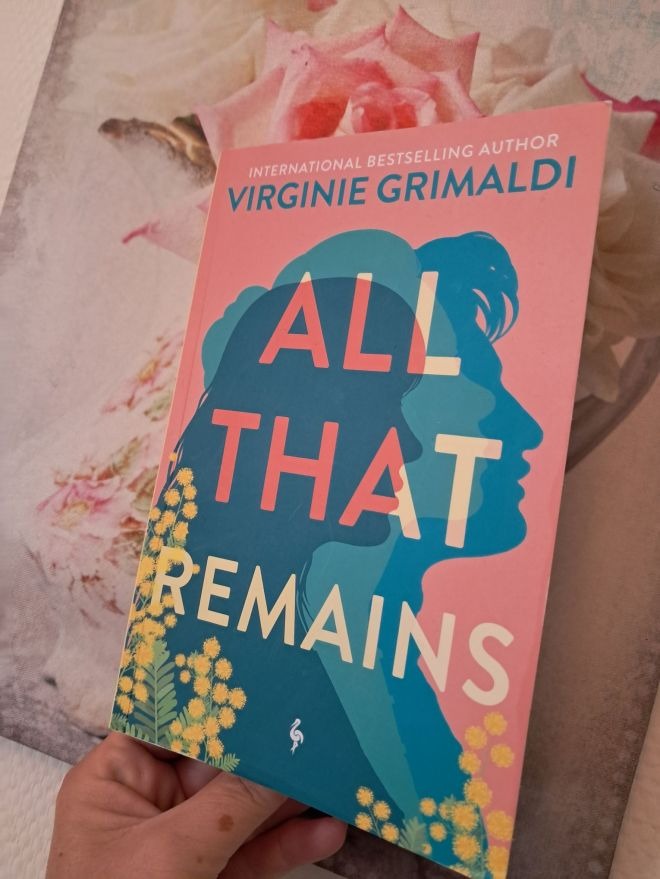
All That Remains by Virginie Grimaldi (France) tr. by Hildegarde Serle (French)

Another book set in France, this time set in Paris, this a page turner from the opening chapters, a feel good novel and another that I was attracted to due to its connection to real life events. I had heard about elderly widowed Parisians in largish apartments being assisted by a specialist agency that matched them with mature students as a way to keep them in their own homes, and to provide students with accomodation.

This is the premise of the novel; recently widowed Jeanne (74) decides to rent one of her rooms and two people quickly respond, an 18 year old Théo, apprentice boulanger, of no fixed abode and a thirty something Iris, who is escaping from something. It’s a perfect slice of ordinary life in Paris and a wonderful example of a new way to live, where young and old help each out and all the better for it.

“Hello Madame, I just wanted to confirm my interest in your room for rent. And please know that, if it weren’t for my tricky situation, I’d never have interrupted your conversation with the young man, who also seems in real need of a home. If you’ve not yet made your choice, I’d understand if you favour him. Regards Iris.”

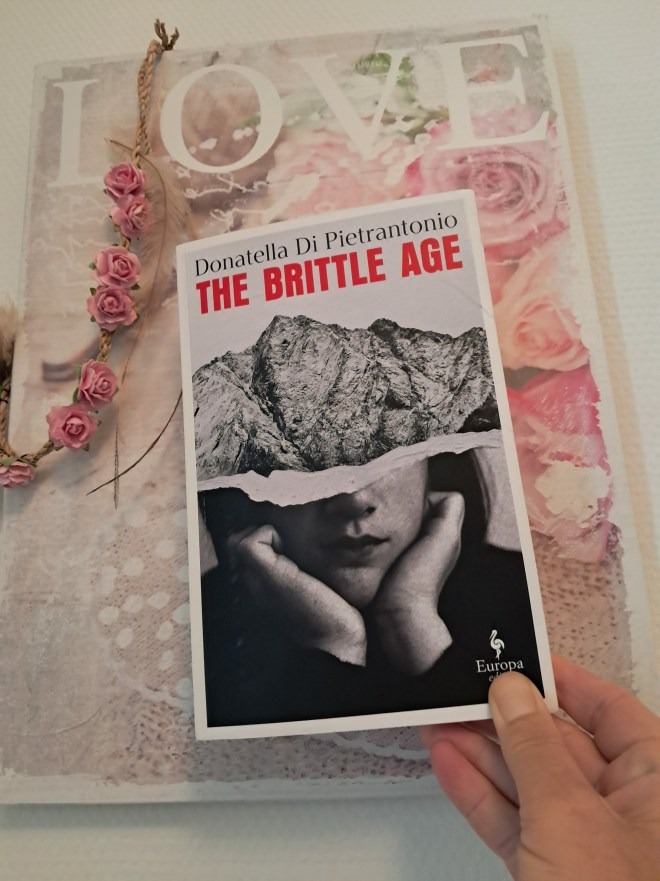
The Brittle Age (L’età fragile) by Donatella Di Pietrantonio (Italy) tr. Ann Goldstein

Winner of the 2024 Strega Prize, The Brittle Age is a novella inspired by an historic true-crime event in the 1990’s, a double femicide in the mountainous region of the Abruzzo Apennines in Italy, a novel dedicated to “all the women who survive”. The third novel I’ve enjoyed by her, since A Girl Returned and A Sister’s Story.

Though it is framed by an actual event, this novel really piqued my interest for the way it dealt with the mother-daughter relationship. Lucia’s daughter Amanda returns from Milan on one of the last trains as the pandemic shuts everything down, she stays in her room, barely eats, doesn’t talk, her phone lies uncharged under the bed. Lucia worries but can get nothing out of her.

The novel explores both the events of the past and the mother’s struggle to understand what is going on with her daughter. Amanda’s reclusiveness awakens memories and feelings Lucia has suppressed from 30 years ago. Although the story is about a crime, the mystery of what happens sits alongside the portrait of a fractured family and community, all impacted by the past, burying it with silence. I loved the balance of revelations of both past events and present predicaments, a most memorable read.

Our birthplace had protected us for a long time, or maybe that had been a false impression. We grew up in a single night.

All Our Yesterdays, Natalia Ginzburg (Italy) tr. Angus Davidson, Intro Sally Rooney

This might be my favourite Natalia Ginzburg novel – it sits alongside her family memoir Family Lexicon and often reminded me of parts of that book, clearly inspired by events she lived through.

Set in Northern Italy in the lead up to WWII, the war era through to liberated, it is a brilliant depiction of two Italian families (one family own the leather factory in town, the other is middle class), neighbours who live opposite each and everyone they’re connected to, everyone who enters their home – what they live through during this era, how they keep tabs on each other, the dilemmas they face, how they deal with them, their tragedies and accomplishments, their loves and losses.

The absence of the mother, and the ill health of their authoritarian father, intent on writing a memoir critical of the regime, looms over them and creates tension and an air of rebellion. Youth desire change and autonomy in a country that feels increasingly oppressive leading them towards risk and turbulent decisions.

This story and its characters was so immersive, and the depiction of difficult times treated with compassion, as we encounter each event, every friend or person connected to those two households. When not present they are the subject of letters, so at almost all times everyone is aware of the well-being of the others. In the second part of the novel, the focus shifts to the impoverished rural Italian south

It was so, so good, it really gives a sense of what it was like to live through this period for this family, especially knowing the hardship the author lived through, her young, anti-fascist husband Leone was tortured and murdered by the Gestapo.

This was a war in which no one would win or lose, in the end it would be seen that everyone had more or less lost.

Brandy Sour by Constantia Soteriou (Cyprus) tr. Lina Protopapa (Greek)

Another favourite from Foundry Editions, this is a wonderful novella that is like a series of vignettes set in an old hotel in Cyprus, each one from the perspective of a character with a connection to the hotel, their story told through a tale related to a particular beverage and often how it cures them of various afflictions. Clever but simplistic and there are threads that carry through making it read more like an interconnected story than separate stories.

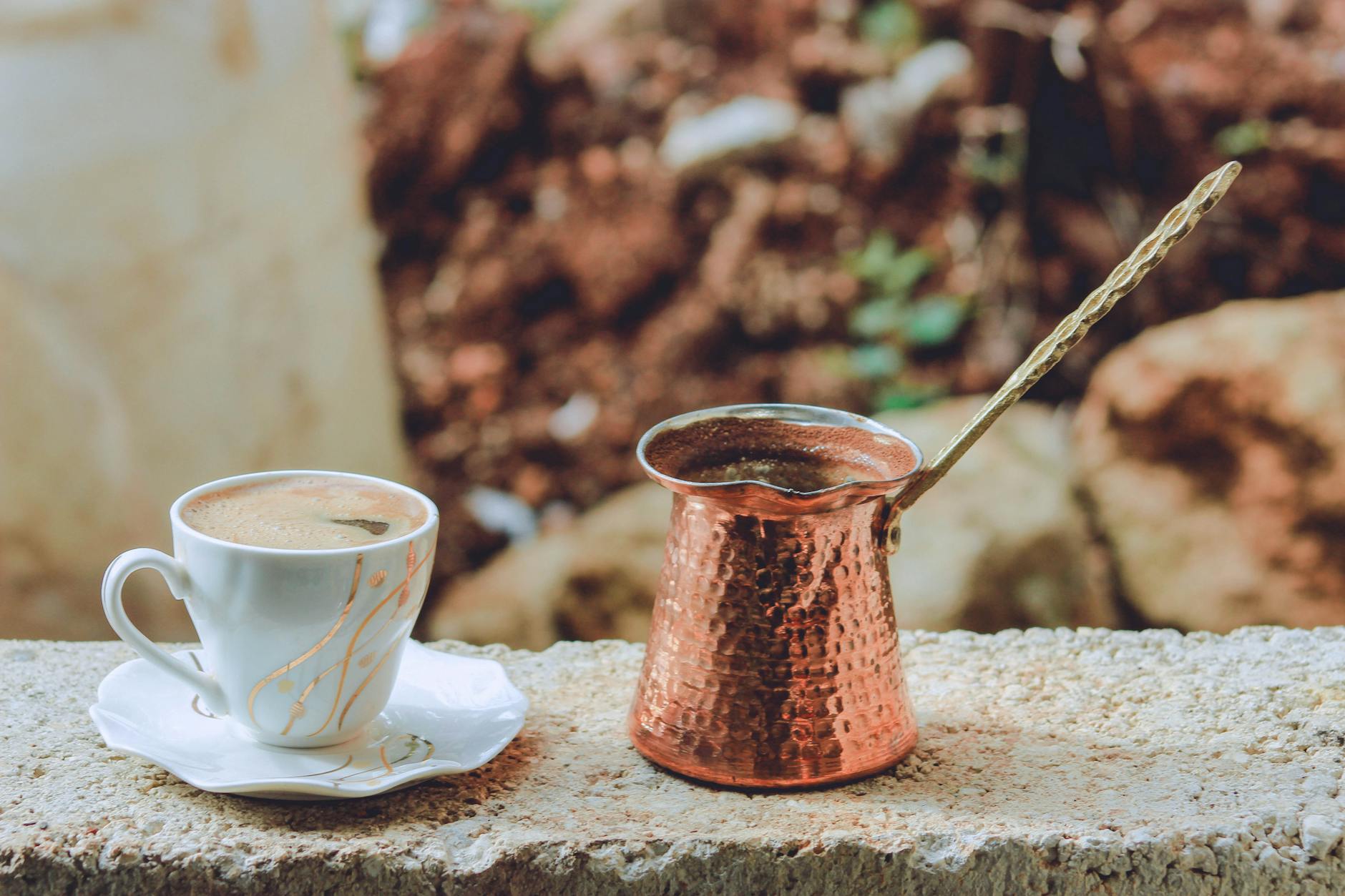
He always wakes at dawn and he goes to the kitchen to have his coffee prepared the way he likes it. The only coffee of the day. With lots of kaymak and no sugar. Turkish coffee – Greek coffee, he always corrects himself – with sugar is an absolute waste of coffee. It needs to be bitter. There’s no point otherwise.

Coffee Brandy Sour turkish greek cofee Cyprus
Photo S. Daboul Pexels.com

The emblematic Ledra Palace Hotel was established in 1949 on Nicosia’s UN-controlled buffer zone, the Green Line that, since 1964, has divided the island into Greek Cypriot and Turkish Cypriot sectors and reading the book one discovers a little known history of the island and its people, those who visited int he past, from colonial visitors to the Egyptian King, employees, local villagers.

“The Palace was the epicentre of the island’s recent history. It was built as the promise of a new era; a haven for all nationalities, all communities. It drew people from all backgrounds: the wealthy bourgeoisie who lounged by its cerulean pool; the poorer working classes who made its beds – and its Brandy Sours…”

* * * * * *

That’s it for 2025. Let me know what works in translation were your favourites this year. Thanks for reading and sharing and commenting. Happy Reading!

Best Reads of 2025 Top Non-Fiction

Yesterday I shared my Top 9 Fiction Reads for 2025 along with the One Outstanding Read of 2025 and the runner up. So no surprise to see them here on my best non-fiction of 2025, as the first two titles mentioned here were my two outstanding reads of 2025.

In nonfiction, I like a really good memoir that shares more than just the personal experience, like a good nature writing memoir will increase knowledge of an aspect of nature and share something of a life that is also uplevelling in some way.

Top Non-Fiction

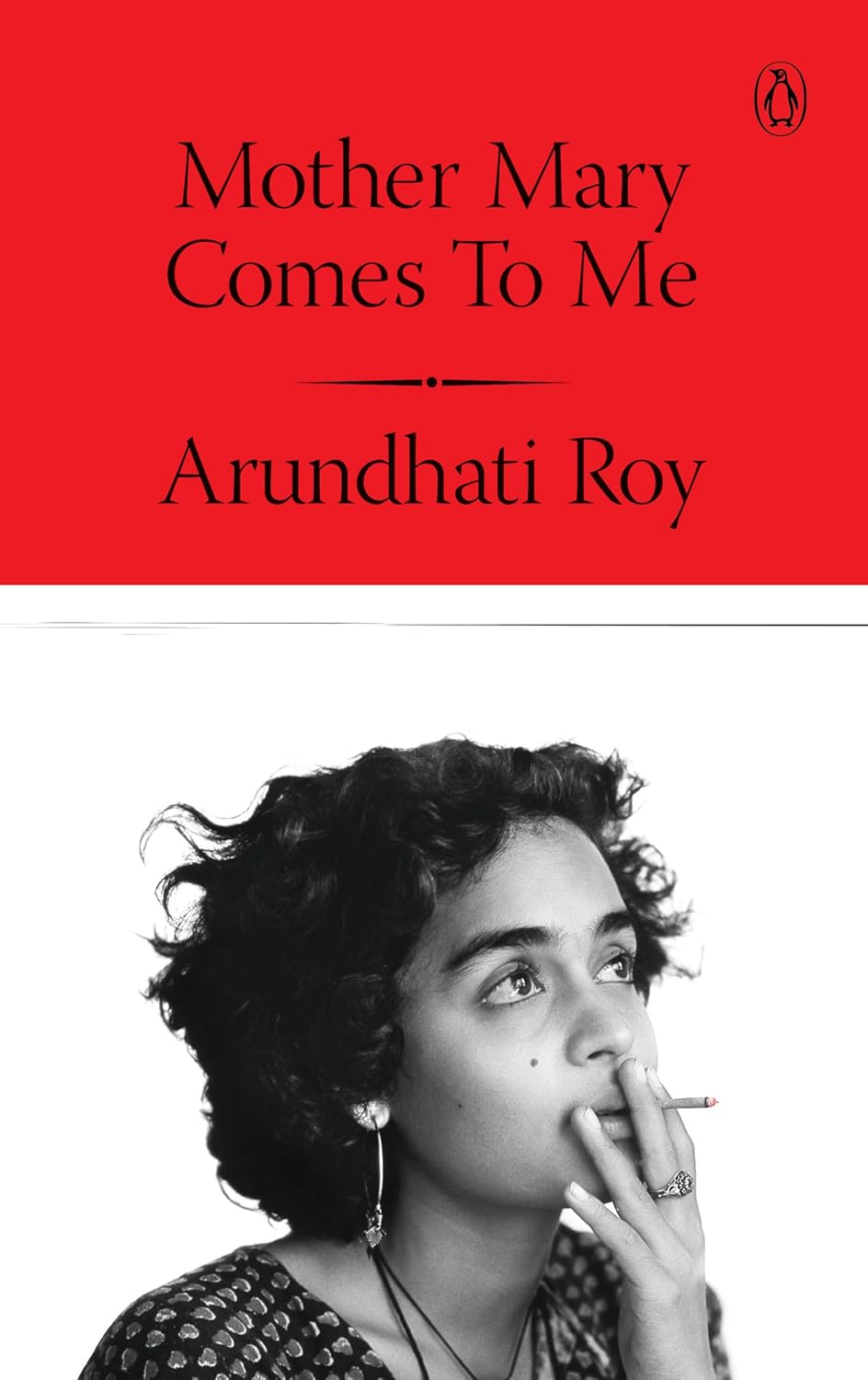
Mother Mary Comes to Me by Arundhati Roy (India)

memoir by Arundhati Roy Mother Mary Comes to Me

– This was my Outstanding Read of 2025 and a book that takes a while to process, because these strong women it features, Arundhati Roy and her mother Mary Roy, have achieved incredible feats at a high cost to their basic humanity. They have both lived through situations that required them to fight back, they have lived in close proximity to and been decimated by cruelty and lifted up by personal achievement; they have been revered by an entourage and yet rarely found peace in their relationship to each other or in other close relationships. Intimate and inspirational.

The transparency and honesty with which Arundhati writes, as she walks the reader through childhood in Kerala, early adulthood in Delhi, through a dogged determination to live according to her own values making her both friends and enemies, and through it all that magnetising effect of the mother. Toxic bond or filial loyalty, I’m not entirely sure, but she chose to publish this work, one thinks respectfully, after the ruthless matriarch of steely perseverance let go of her last breath.

“I think I had a cool seraph watching over me. Especially each time I was at a crossroads and had to make a decision. My education, the class I came from, and, above all, the fact that I spoke English protected me and gave me options that millions of others did not have. Those were gifts bestowed on me by Mrs Roy. At no point, no matter how untenable my circumstance, did I ever forget that.”

Somebody is Walking On Your Grave: My Cemetery Journeys by Mariana Enriquez (Argentina) tr. Megan McDowell (Spanish)

– My runner up book for Outstanding Read of 2025 in part because I couldn’t stop telling people about the many different things I learned from reading this book. A memoir-like collection of essays, this really is like super-alternative, armchair travel, where you get to voyage briefly through 13 countries with an experienced, gothic guide to an underworld of 21 cemeteries.

Somebody is Walking On Your Grave My Cemetery Journeys Mariana Enriquez Argentina in translation

However, the focus isn’t just on the visit, you’re going to be there for a few days, so you’ll get to learn from the highly observant, well researched, perspective of an Argentinian writer (known for unconventional and sociopolitical stories of the macabre) about various cultures, odd behaviours and aspirations of various eras, in how humans have treated those they have revered, once passed. From Genoa to Prague, to Highgate to the Paris catacombs, from Rottnest Island in Australia to Bonaventure in Savannah, from Havana, Cuba to Peru, Mexico, Chile and Argentina, she uses cemeteries to reflect on history, culture, memory, and her own personal life. Outstanding!

Reading Edgar Allen Poe – and then with the years, I learned that also cemeteries have a lot to say about life, about the history of the people. And then Argentina in the ’70s, the decade where I was born, had a dictatorship that made a lot of bodies disappear. Therefore, there’s a generation of people that were killed by the government, and they don’t have a grave.

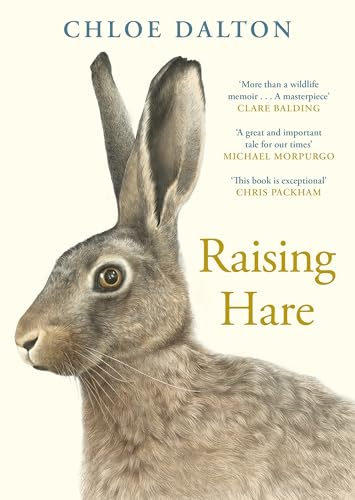
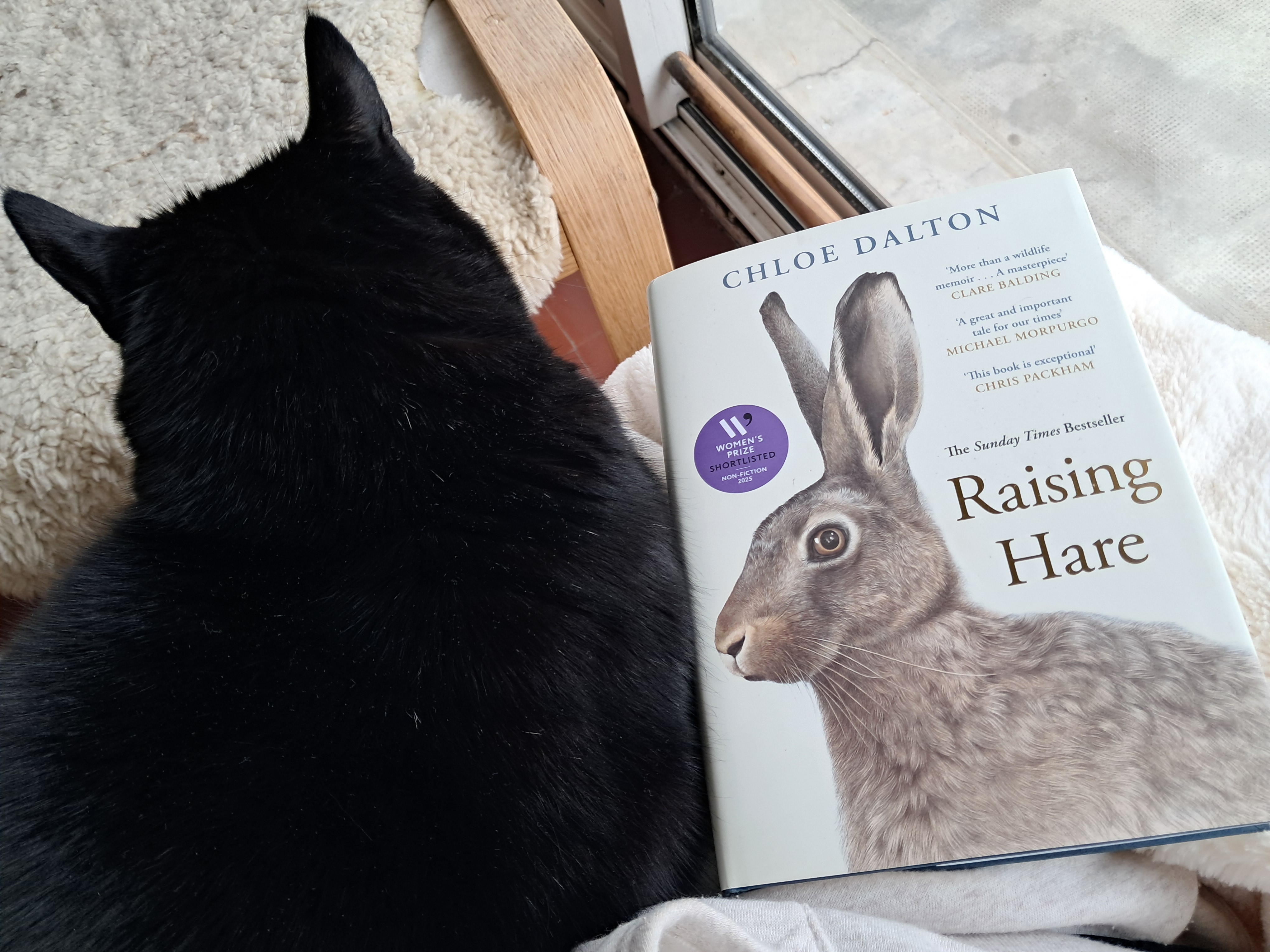
Raising Hare by Chloe Dalton (UK)

Raising Hare by Chloe Dalton shortlisted womens prize nonfiction winner Wainwright Prize 2025

Shortlisted for the Women’s Prize for Nonfiction, I became aware of this title early in the year but waited till the end having read enough reviews to be convinced it was going to be for me. Chloe Dalton hears a bark, stumbles across a leveret and wants to ignore it, but can’t and then lacking knowledge becomes something of an expert on hares and how to care for one, going deep into library archives and reading obscure, ancient texts as well as modern informative ones.

She bonds with the hare but facilitates it return to the wild and then turns her daytime political expertise sights on an outdated policy – Hares are the only game species which are not protected by a ‘close season’ in England and Wales: a period of the year during which they cannot be shot and killed – which I was pleased to read just yesterday, an article in the Guardian Saturday 20 Dec 2025 – Shooting hares in England to be banned for most of the year in sweeping changes to animal welfare law about to be announced in the UK. The new close season will ban hare hunting during the breeding months of February to October to protect mothers and the young.

I pondered the concept of ‘owning’ a living creature in any context. Interaction with animals nurtures the loving, empathetic, compassionate aspects of human nature. It taps into a primordial reverence towards the living world and a sense of the commonality and connectedness across species. It is a gateway, as I was discovering, into a state of greater respect for nature and the environment as a whole. We all too easily subordinate animals to our will, constraining or confining them to suit our purposes, needs and lifestyles.

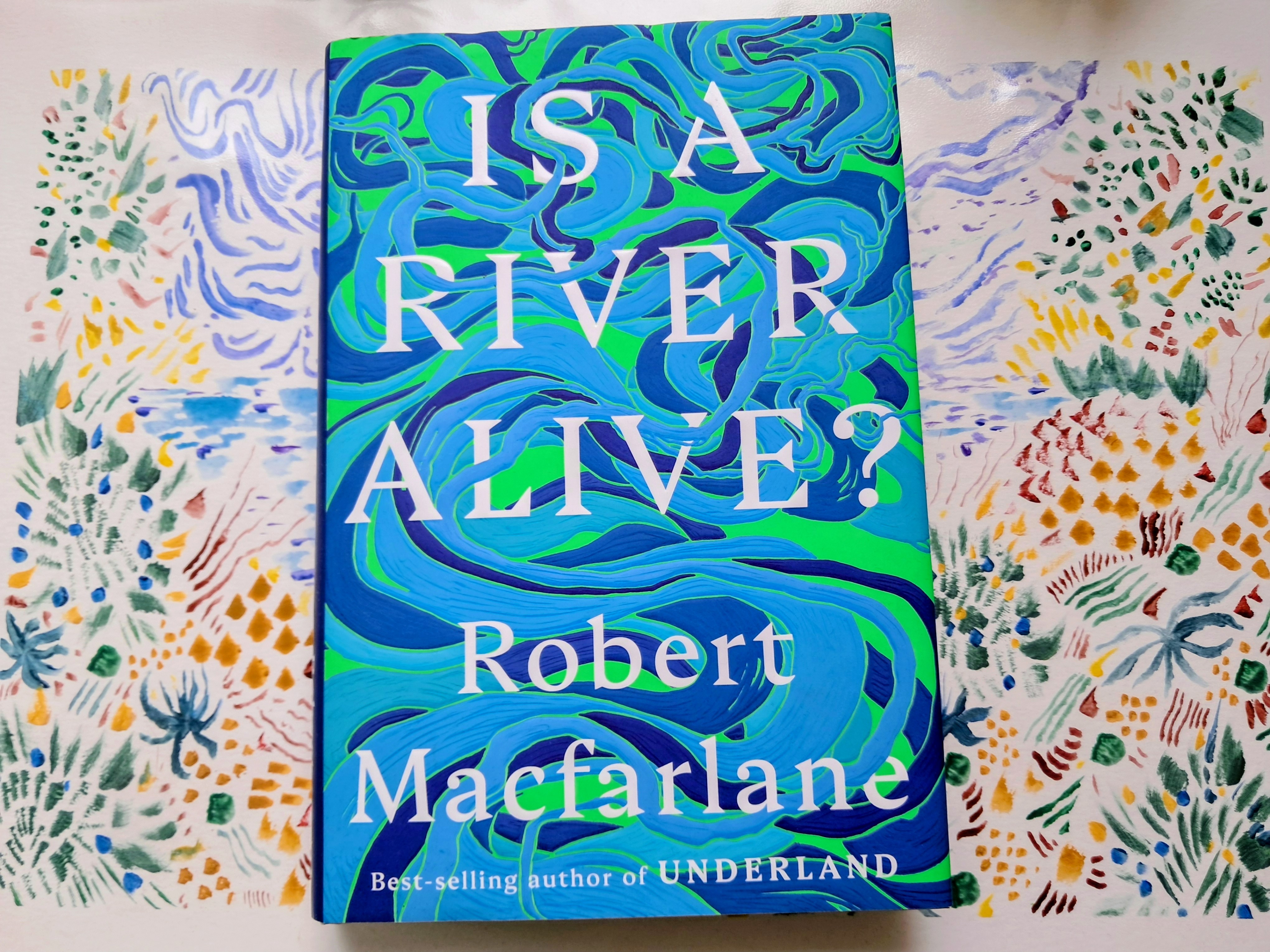
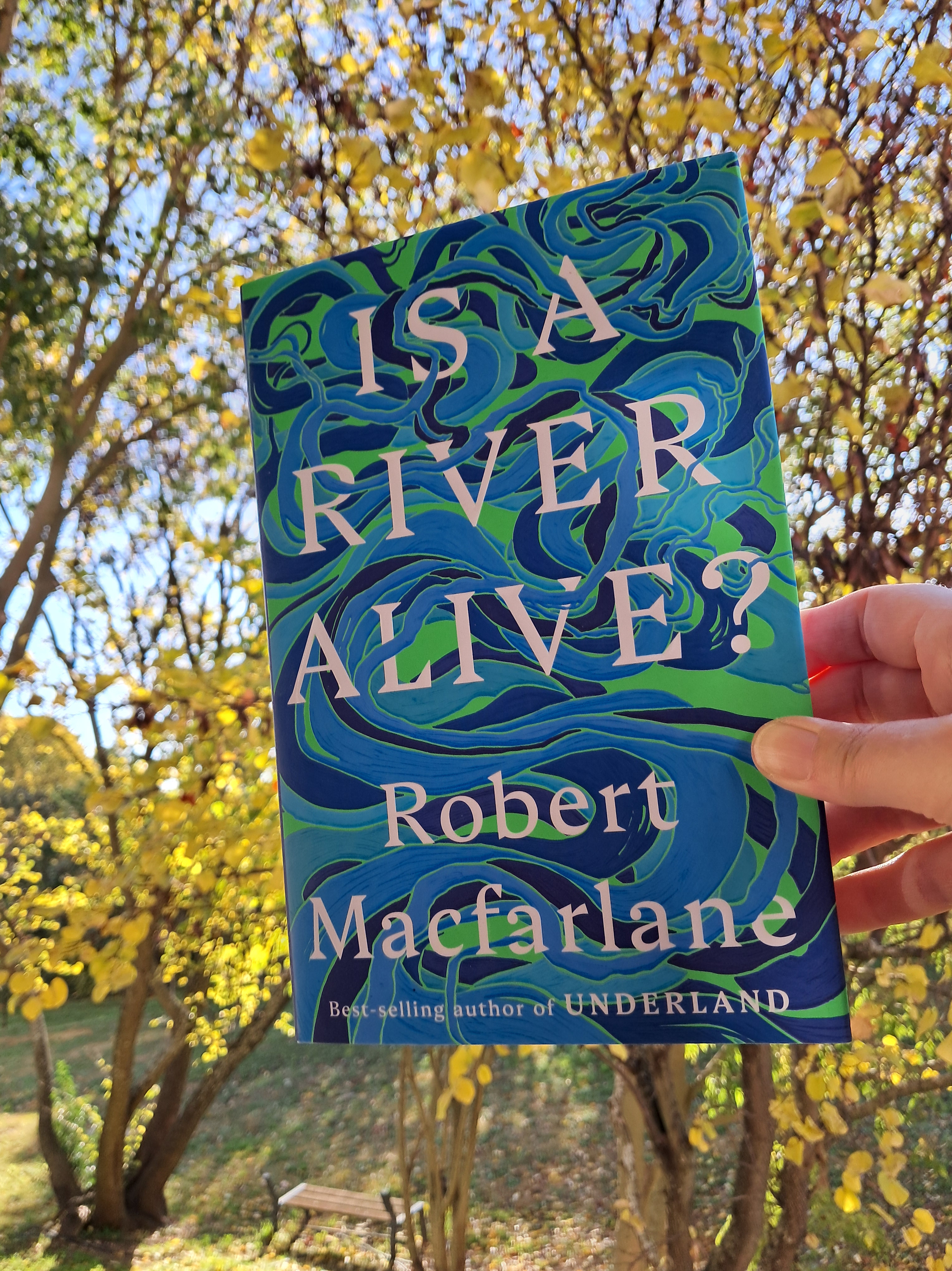
Is A River Alive? by Robert Macfarlane (UK)

nature writing rivers naturalist perspective nonfiction poetic prose

– Another travelling memoir with nature and the environment at the forefront of his journeying, Robert Macfarlane is well known for his mapping of the Old Ways of the ancients, writing about landscapes as living, abundant, storied places and how humans interact with them. So he is very aware of how aspects of nature, such as rivers and streams are being compromised and endangered and killed by humanity, thus he sets out on these three journeys to understand his question, Is a River Alive?

He travels to a cloud-forest in Ecuador with a team of people all looking at nature from different perspectives, a fungi expert, a musician and a ‘Rights of Nature’ lawyer; then to India to find the source of its three rivers with a passionate teacher and advocate for waterways and finally to northern Canada to kayak down a river under threat from corporations wanting to dam it.

Ultimately, beyond his initial question, to which his young son gave him the answer before he even left home, he explores the idea and begins to see for himself, rivers and forests as moral and sentient beings rather than resources to be owned and exploited, shifting from a perspective of ownership to one of responsibility for their guardianship. If we begin to see rivers and the natural world as part of our shared way of living and protect them, we might live more simple and healthy lives.

Spinster, Making a Life of One’s Own by Kate Bolick (US)

Spinster Making a Life of Ones Own by Kate Bolick features columnist Neith Boyce, essayist Maeve Brennan, social visionary Charlotte Perkins Gilman, poet Edna St. Vincent Millay, and novelist Edith Wharton

– Not one I reviewed, but I came across this memoir while doing genealogical research. I discovered a female ancestor named Mary Stoyle, born in 1791 in Zeal Monachorum, Devon who had five children and on all the baptism certificates she was always the sole parent named. In the census registers, she was Head of Household.

Clearly a man contributed to the conception of her children, but equally it appears he was not part of her household. That made me curious about her Profession and initially under the heading Quality, Trade or Profession, in 1816 when her son George was born, it was listed as Spinster. When Joseph was born in 1831, her Profession had changed to Weaver, which suggested she was financially independent. Women worked at Spinning because it could be done at home, fitted around childcare, and required little capital. Weaving required greater technical skill. Mary was almost certainly a self-supporting handloom weaver, working from home, producing woollen cloth for the local / regional rural economy.

I wondered if anyone had looked into these non-married women from the early 1800’s, as I discovered it was more common than we might think, and that these matriarchs were well respected. So I read Kate Bolick’s book which was a little more modern than what I was looking for, (and focused on but equally fascinating as she explored a number of renowned women from the last century who had tried to live a life without marriage or children in order to pursue some other objective, creative or career.

She looked into the lives of American script writer and columnist Neith Boyce, Irish essayist Maeve Brennan, American social visionary Charlotte Perkins Gilman, poet Edna St. Vincent Millay, and novelist Edith Wharton. Some of these women did marry, but all of them sought ways to escape the traditional expectations of that contract to pursue their own personal ambitions. While it didn’t really help me with my own questions about Mary Stoyle, it was fascinating to read about these women and some of the changing statistics over time, in particular to learn that the institution of marriage was less prominent in the 18th century and reached its peak in the mid 20th century.

Special Mentions, Spiritual Well-Being Top Ups

I read a few books this year that come under the heading of spiritual well-being and two that were particularly good were Rebecca Campbell’s Your Soul Had a Dream, Your Life Is It regarding the cycle of transitions, of resonance and discernment, understanding grief, loss, separation, change. The benefit of going within, of being our own best support, to heal, grow and transmute feeling(s) into the next version of ourselves. To align more with soul purpose, tapping into our inner guidance system. Nothing really new, just good reminders to keep up the practice (s). I’ve read all her books, they’re good to dip in and out of.

spirit hacking shaman durek frequency vibration energy

The other one I read and listened to was Spirit Hacking (2019) by Shaman Durek, I particularly enjoy his Ancient Wisdom Today podcast pep talks while on a 5 km walk. He is spiritually and intellectually knowledgeable, very direct, often funny, he calls things out, and is deeply encouraging. He comes from a heart-centred background of immersion in Buddhist and Shamanic Philosophy, basically that your thoughts create your reality and the regular checking of what kind of energy you are bringing when responding to challenges and triggers, he gives great examples from personal experiences and admits to his own flaws. He comes to all this with an attitude that may be challenging to some, but I find him interesting to observe, listen to and learn from, filtering out what is useful or not.

* * * * * *

If you’ve read any of these non-fiction titles, or have another favourite for 2025, share them with us in the comments below.

Is A River Alive by Robert Macfarlane

Though I really enjoy nature writing of the creative nonfiction kind, I had never read a book by Robert Macfarlane. I’d heard of The Old Ways, but steered away from what I perceived was a very English text.

In that book he travelled Britain’s ancient paths discovering the secrets of their beautiful, underappreciated landscape.

Deliberate Reading and Intentional Rejection

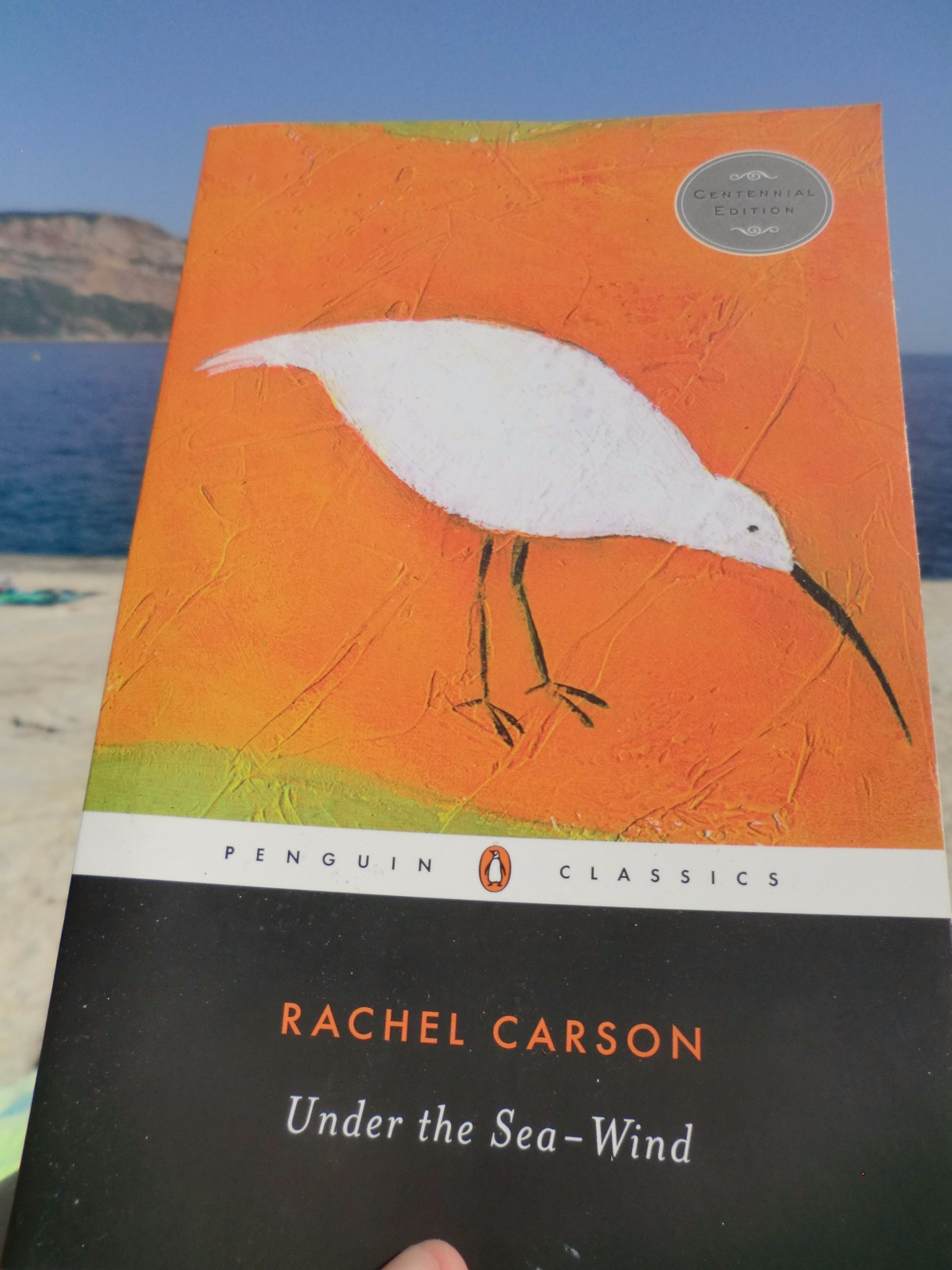
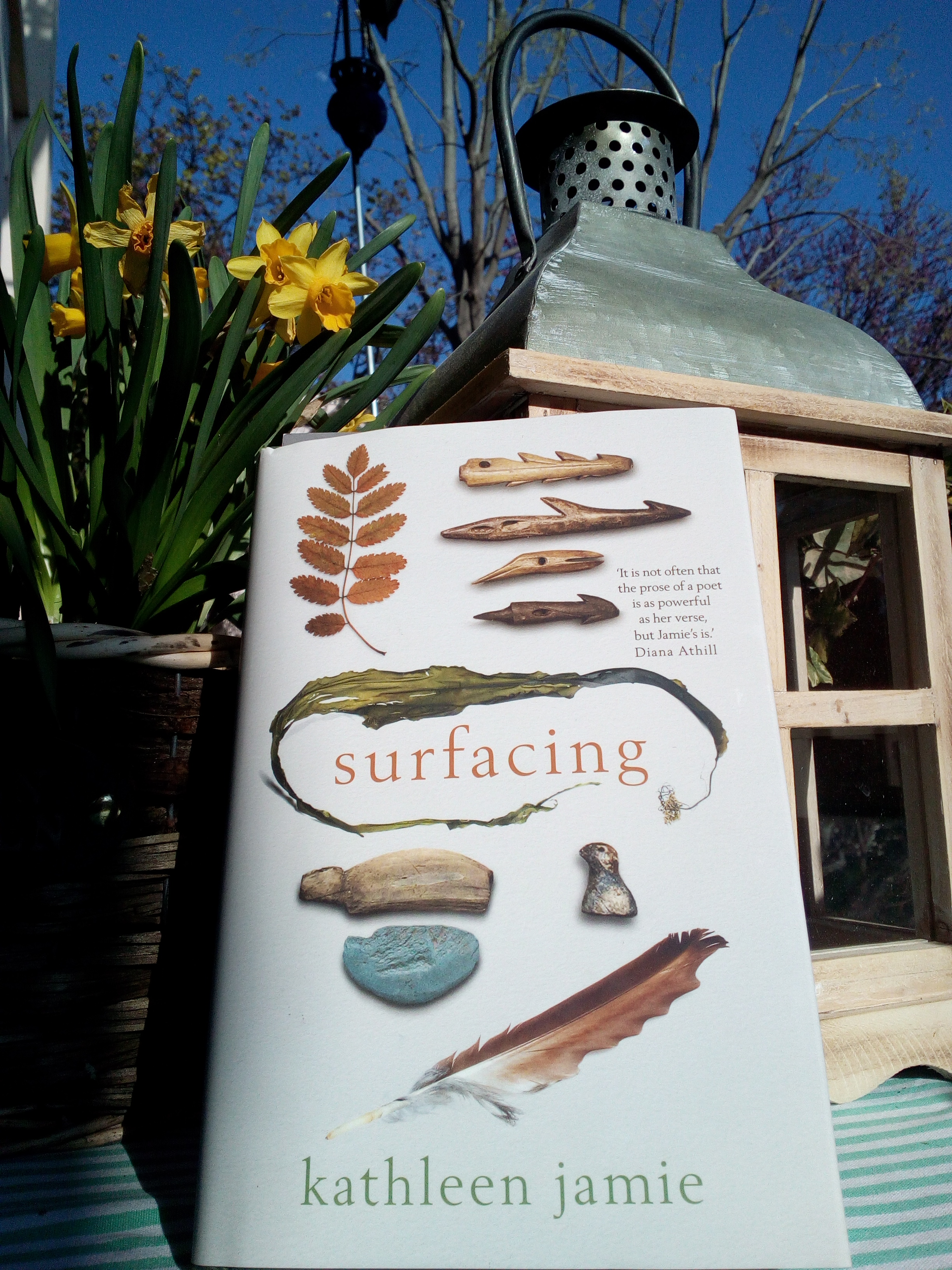
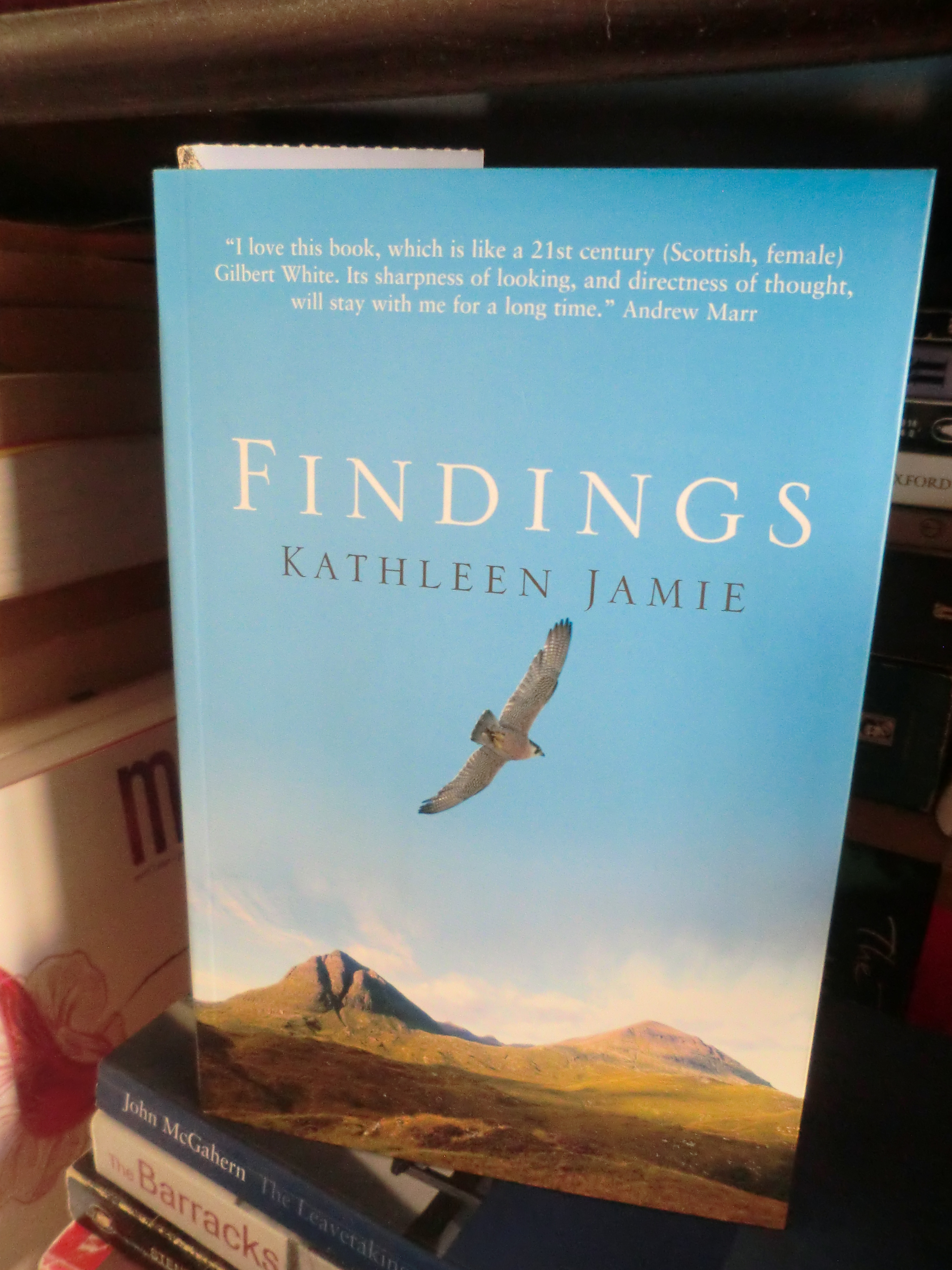
To be honest, we have lived through multiple decades of male English explorer literature and I find they have been over represented in the past. I was more interested in rebel explorers like Jane Digby and in this century, nature writers whose work was lyrical and/or moving, authors like Kathleen Jamie, Annie Dillard, Tove Jansson’s Summer & Winter books, Rachel Carson’s Sea Trilogy, Terry Tempest Williams When Women Were Birds, Rebecca Solnit’s The Faraway Nearby.

Travel Companions Matter

So while I had deliberately turned my attention elsewhere, something about the premise of Is a River Alive? made me loosen my gaze and look to find out for myself what he was seeing. Because firstly, he was going to Ecuador, India and Canada, and secondly, he was keeping unorthodox, interesting, and passionately dedicated company on his travels.

On Partnership and Healthy Collaboration

A few years ago I read Riane Eisler’s excellent book The Chalice and the Blade (1987) and its follow up Nurturing Our Humanity: How Domination and Partnership Shape Our Brains, Lives and Future (2019) books that explore the concept of partnership, how it fosters connection and positive collaboration to build healthy communities, encouraging creativity to solve problems.

Robert Macfarlane’s book, to me, is a living example of those dedicated to pursuing this kind of philosophy, it is not just about one man’s observations, it is about bringing together people with a common interest, with different strengths or expertise, doing good to bring attention to that which needs help – NATURE – to prevent further destruction and death, because YES, A River IS Alive!

Three River Journeys and an English Spring

A journey into an idea that changes the world – the idea that a river is alive.

Book cover of Is A River Alive by Robert Macfarlane

Apart from starting and ending the book at a local spring he walks with his children in England, the book is divided into three, covering geographically diverse journeys in three countries, connecting with their rivers and eco-systems.

Part I : The River of the Cedars (Ecuador); Part II : Ghosts, Monsters and Angels (India) and Part III : The Living River (Nitassinan/Canada).

It is the summer of 2022, the hottest on global record – the summer when nearly all the rivers die…

The rivers have it worst. The Po dead-pools. Sections of the Rhine are no longer navigable to the shallow-draughted barges that keep Germany’s heartlands moving. In Canada, spawning salmon are poached alive in gravel beds. On the banks of the Yangtze in Sichuan, parents sit their young children in buckets of water to keep them from heatstroke. In the borderlands of England and Wales, the run-off from giant chicken farms sickens the listless water of the River Wye.

A Personified Natural World – Te Awa Tupua

But first the introduction. An idea was presented in 1971 by Christopher Stone to a seminar in Southern California, an idea that made his students sit upright, pay attention and apply their problem solving skills. It led to a landmark paper called ‘Could Trees Have Standing? Toward Legal Rights for Natural Objects‘.

‘So,’ he asked hesitantly, ‘what would a radically different law-driven consciousness look like? A consciousness in which…Nature has rights. Yes, rivers, lakes, trees, animals. How would such a posture in law affect a community’s view of itself?’

An idea that then found traction in New Zealand, nearly forty years later, when Māori legal scholar Professor Jacinta Ruru (Raukawa, Ngāti Ranginui) after reading his work and together with student James Morris, took it further, publishing the paper ‘Giving Voice to Rivers‘.

Ideas move in space and time. They swim like fish. They drift like pollen. They migrate like birds. Sometimes their movement carries them right around the world, and they find new niches in which to flourish.

Their article demonstrated an affinity between the concept of legal personhood for natural entities and the long-standing Māori relationship with rivers as living, sacred ancestors.

This lead to the Te Awa Tupua Act and entered into law. The river was alive, it was an ancestor to the iwi (people), a ‘legal person’ with rights and now Guardians would uphold those rights. It created a global ripple, super-charging the ‘Rights of Nature ‘ movement.

In 2017, after more than a century of legal struggles by the Māori people of the Whanganui River (Te Āti Haunui-a-Pāpārangi), the 292-kilometer Whanganui River — also known as Te Awa Tupua — became the first river in the world to be recognized as a legal entity, granting it the same rights and powers as a legal person.

Ultimately, Christopher D. Stone (1937-2021) left a profound and lasting legacy in environmental law, legal philosophy, and human rights, reshaping how the law understands who – or what – can have rights.

Book Review

Exploring Rivers Considering the Rights of Nature

Part I : Los Cedros, Ecuador

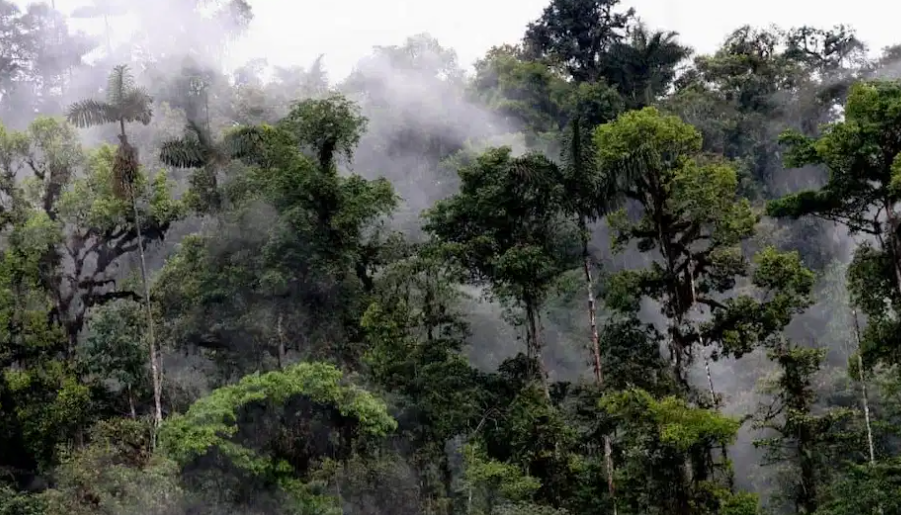
The book follows these three journeys to places threatened by mining, pollution and dams: first to the cloud forest, Los Cedros, in northern Ecuador with Chilean-Italian-British fungi expert, Guiliana Furci; musician/singer Cosmo Sheldrake (who listens and records nature sounds) and César Rodriguez-Garavitoa, Colombian social justice lawyer advocating for the Rights of Nature.

A cloud-forest is a river maker.

Cloud-forests form at higher altitudes than rainforests; typically between three thousand and eight thousand feet above sea level, in steep landscapes of peak, ridge and valley. The elevation means that cloud-forests are cooler than rainforests, and the drama of their topography means that their rivers are fast, shallow, clear and rock-bedded, compared to the muddier, slower rivers of of rainforests.

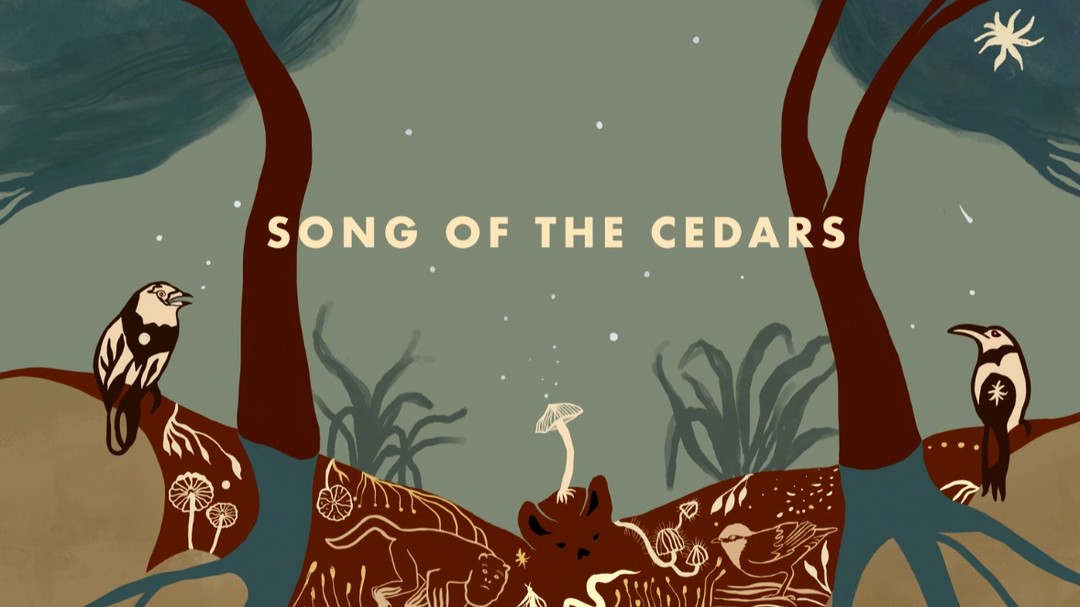
Song of the Cedars a co creation with Los Cedros cloud forest and Cosmo Sheldrake Robert Macfarlane Giuliana Furci and César Rodríguez-Garavito

As the group walks into the forest, each person brings their knowledge, concern and creativity, they join in the excitement of finding new species of fungi, they listen to the sounds captured and together they create their own song from what they hear and what they learn. It will be the first legal attempt to recognise an ecosystem’s moral authorship in the co- creation of a work of art. I can only imagine how it must have been to travel with this group and be part of this.

I listened to the song they co-created with the forest. The Song of the Cedars. I was blown away by the combination of listening and feeling its vibration as I read the accompanying text. Prepare to be moved if you listen and read, especially when it gets to the drumbeat refrain about 2.30 minutes in.

✨️CLOUDS DEEPEN MY SIGHT✨️

Part II : Chennai, India

I have come to Chennai in search of ghosts, monsters and angels.

The ghosts are those of the rivers who had to be killed for this city to live.

The monsters are the terrible forms those river ghosts take every few years, when they are resurrected by cyclone or monsoon.

The angels are those who watch over the lives of the rivers where they survive, and who seek to revive those who are dying and Yuvan Aves – teacher, naturalist, writer, water activist – is one of these angels.

In Part II, Macfarlane travels to Chennai, India to follow three wounded rivers to their source with Yuvan Aves, a young man he has never met, but corresponded with for five years. Together they will trace Chennai’s rivers and waterbodies from inland to coast.

Part III : Mutehekau Shipu River, Canada

Photo by Baskin Creative Co. on Pexels.com

And finally Part III, a wild kayak ride down the threatened Mutehekau Shipu river, with instructions from local native healer, Rita Mestokosho that will make the accomplishment and observations even more meaningful than his original intentions.

The Mutehekau Shipu had become the first river in Canada to be recognised as a living, rights-bearing Being.

Inspired by the negotiations between indigenous Maori and the Crown in New Zealand, they too have signed a resolution to recognise the river as a living being.

The small team will travel down the challenging river for a hundred miles to its mouth at the sea over two weeks. It is a wild adventure and a spiritual experience, Macfarlane has been told to forget his notebooks and ‘be the river’.

‘You need to pay attention to the river, Robert. The important thing is to wake up not the consciousness but the heart. Rather than you speaking of the river, it is the river who will speak to you.’

This is an extraordinary, informative, compelling read that, though packed with information, is full of humanity and incredibly passionate characters, all trying to do more to honour and protect nature’s gifts, before other less enlightened aspects of humanity kill them off or choke them forever.

I completely devoured this. Highly Recommended if you have any interest in understanding the wilds of nature and her impact on our living, breathing world.

Further Reading

Article: Jacinta Ruru : Recalibrating the law to recognise Māori interests

Article: The Revelator, Environmental Truth & Justice : The Te Awa Tupua Act: An Inspiration for Communities to Take Responsibility for Their Ecosystems

Article: Canadian Geographic : I am Mutehekau Shipu: A river’s journey to personhood in eastern Quebec

Author, Robert Macfarlane

Robert Macfarlane’s best-selling books include UnderlandThe Old Ways, and Mountains of the Mind. With the artist Jackie Morris he is the coauthor of The Lost WordsThe Lost Spells, and The Book of Birds.

Is A River Alive? was a finalist for the 2025 Banff Mountain Book Competition in Environmental Literature & longlisted for the 2026 Andrew Carnegie Medal for Excellence in Nonfiction. It was named a Best Book of 2025 by The New YorkerEconomistGuardianMinneapolis Star-TribuneKirkus Reviews, and Publishers Weekly.

He is the recipient of the E. M. Forster Prize for Literature and the Henry David Thoreau Prize for Literary Excellence and is a fellow of Emmanuel College, Cambridge.

Raising Hare by Chloe Dalton

There is nothing quite like a thoughtful work of nature writing to end the year with, as we move from autumn into winter hibernation. I missed out on the Nonfiction November themed reads that many other bloggers participate in, however I seem to have been attracted to reading nonfiction in December.

Best Nature Writing of 2025

Raising Hare by Chloe Dalton shortlisted womens prize nonfiction winner Wainwright Prize 2025

I liked the sound of Raising Hare from the moment I heard of it, when it was longlisted and then shortlisted for the women’s prize for non-fiction. And in these last weeks of the year, it seems to be sustaining interest by readers, having won the Wainwright Prize for Nature Writing and Overall Book of the Year. The chair of judges, referring to it as a ‘soulful debut’ said,

“A whole new audience will be inspired by the intimate storytelling of Chloe Dalton. Raising Hare is a warm and welcoming book that invites readers to discover the joy and magic of the natural world. As gripping and poignant as a classic novel, there is little doubt this will be read for years and decades to come.”

Not a Typical Animal Rescuer

The author Chloe Dalton as we read in her short bio, does not have the typical profile of someone who might rescue an animal. She lived and worked in London as a political adviser and foreign policy specialist, something of a workaholic who travelled a lot and was always on hand when needed. So this story and transformation likely would not have happened, had there not been a lock down that sent her to her home in the English countryside and changed the way she lived and worked.

If I had an addiction, it was to the adrenaline rush of responding to events and crises, and to travel, which I often had to do, at a few hours notice.

It makes me wonder how many other unique experiences with nature and wildlife occurred during this time, when the world slowed down and people started noticing how we live and the detrimental impact we are having, even in a small acreage like this.

Born in a Pandemic

Photo by Pixabay on Pexels.com

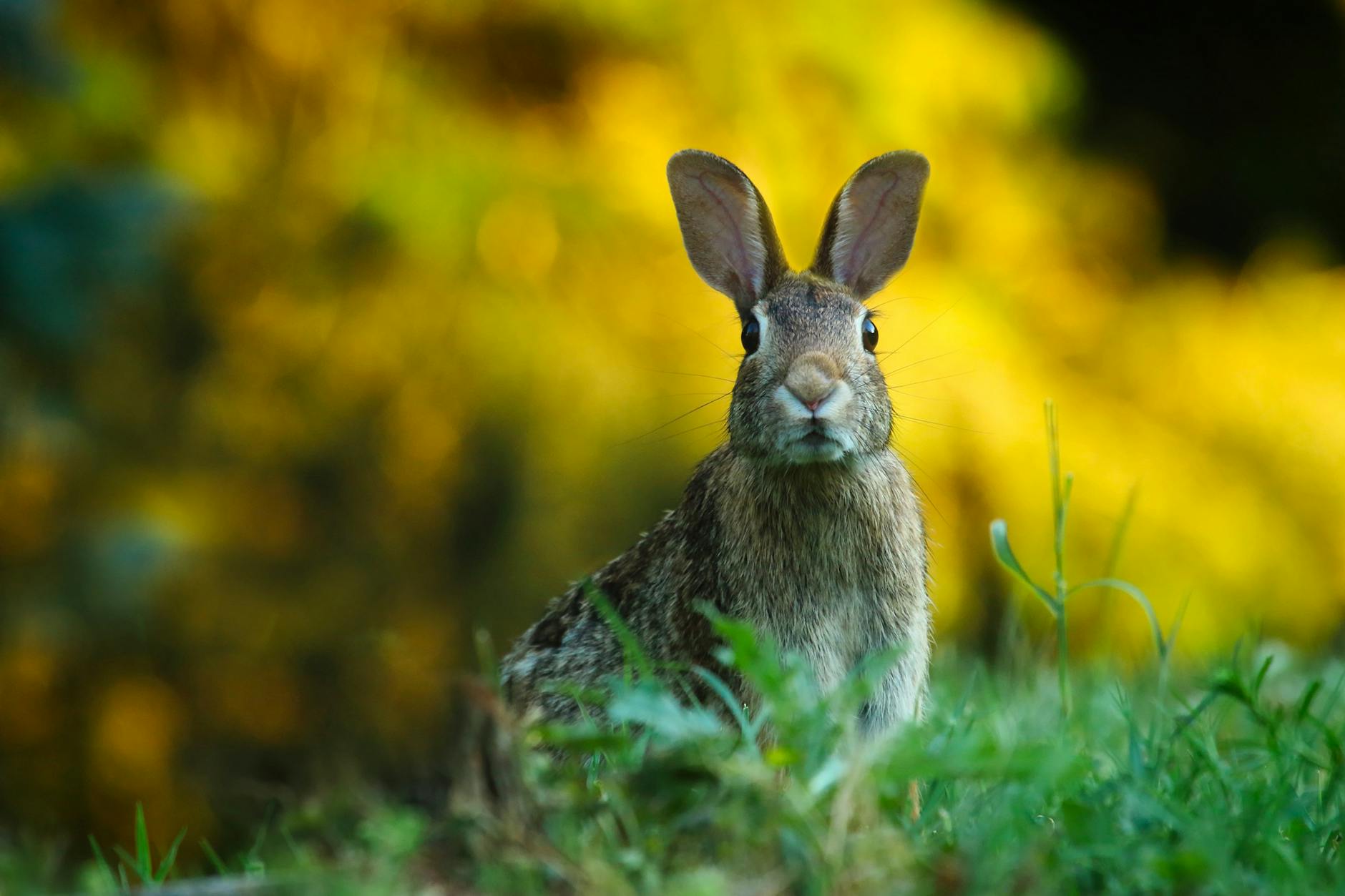
It’s the story of how a woman, living alone in the English countryside encounters a leveret after hearing a dog barking, clearly disturbing the nest. Initially ignoring it, then four hours later when it had not moved, she could not – the poor thing as small as the palm of her hand, frozen in the middle of a track leading directly to her house.

A call to a local conservationist dispelled any notion she had that she could return it to the field later, and further telling her hares could not be domesticated.

I felt embarrassed and worried. I had no intention of taming the hare, only of sheltering it, but it seemed that I had committed a bad error of judgement. I had taken a young animal from the wild – perhaps unnecessarily – without considering if and how I could care for it, and it would probably die as a result. My heart sank.

Overwhelmed and terrified she’d kill it by accident, she begged her sister, who lived with a menagerie of animals to take the leveret. After explaining how unsuitable that cacophonous environment would be for a baby hare, her sister told her ‘You’ll do fine’ and hung up.

Providing Care and Gaining an Education

Book cover Raising Hare by Chloe Dalton

We then observe where all that leads, not just into the care of a vulnerable animal, but how she educates herself all about leverets and hares, all the while focused on observing its every movement and behaviour, as they live alongside one another throughout the pandemic period and beyond.

I found it highly educational and loved the subtle transformation the author undergoes, as she learns to see her own environment through the purview of local wildlife and in effect provides an update to much existing research and knowledge about this breed, due to the unique opportunity of getting so close to living in proximity to a hare and her protege, while allowing it to stay wild so that it could continue to breed in the wild.

It is a gentle, enquiring, observational work of nature writing and a tender transformation of one human in her own ways, through the observation of the little known leveret, its home environment and habits. It is almost impossible not to be moved by the young hare, coming to know how sensitive the species is, and how it navigates this unorthodox contact with a female human.

I pondered the concept of ‘owning’ a living creature in any context. Interaction with animals nurtures the loving, empathetic, compassionate aspects of human nature. It taps into a primordial reverence towards the living world and a sense of the commonality and connectedness across species. It is a gateway, as I was discovering, into a state of greater respect for nature and the environment as a whole. We all too easily subordinate animals to our will, constraining or confining them to suit our purposes, needs and lifestyles.

Consciousness Raising Around Wildlife

Photo by Michael Pointner on Pexels.com

What a chance to have occurred, for someone interested in policy, to take an interest in a more local and domestic situation, pouring herself into the research, taking care of a vulnerable sentient being and starting to consider the changes that can be made, to enable all species, including human to coexist in a less destructive manner.

Hares are the only game species which are not protected by a ‘close season’ in England and Wales: a period of the year during which they cannot be shot and killed. Other ‘game’ species – such as deer, pheasants and partridges, to name a few – are all protected by a close season. Hares by contrast can be shot at any time of year, including during the crucial months of February to September, when they typically raise their young.

Scotland and the rest of Europe already protect hares in this way. Only in England and Wales does this anomaly persist.

Highly Recommended.

Further Reading

Women’s Prize Interview: In conversation with Chloe Dalton

Read a Sample – the opening pages of Raising Hare by Chloe Dalton

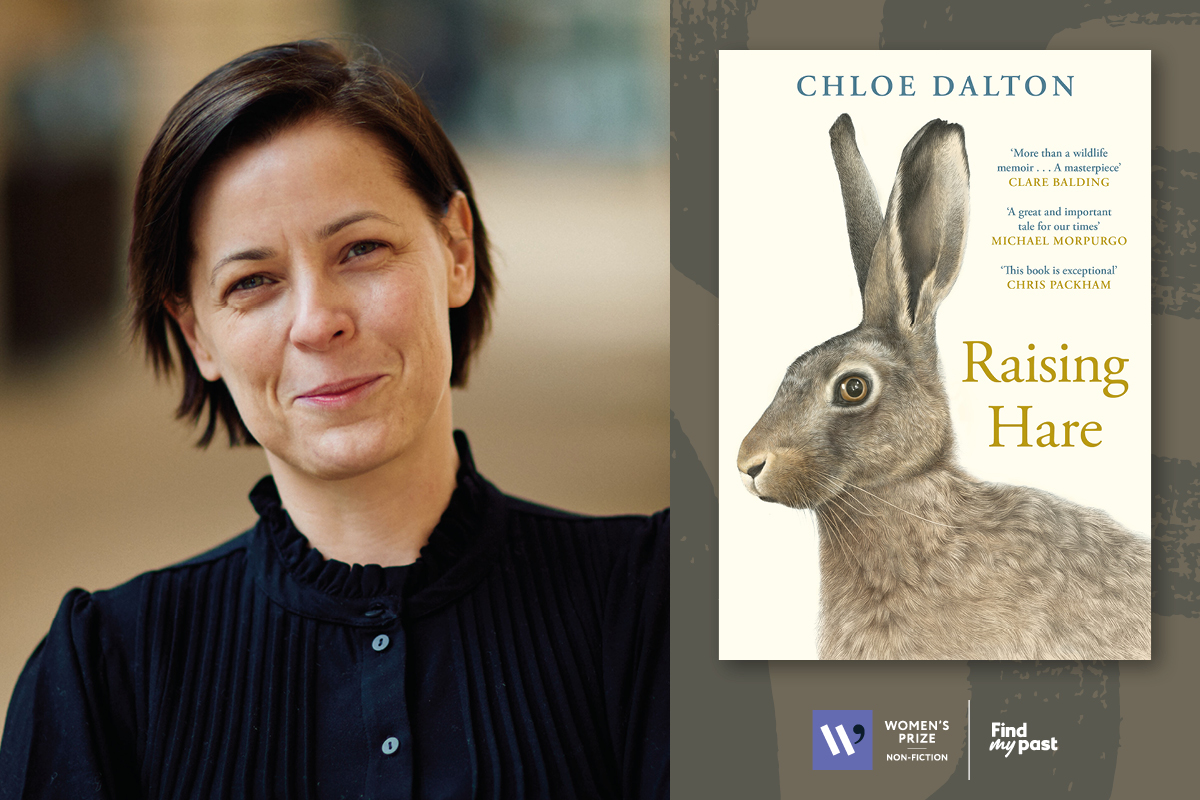
Author, Chloe Dalton

Chloe Dalton is a writer, political adviser and foreign policy specialist. She spent over a decade working in the UK Parliament and the Foreign and Commonwealth Office and has advised, and written for and with, numerous prominent figures. She divides her time between London and her home in the English countryside.

Her debut book, Raising Hare, was an instant Sunday Times and New York Times bestseller. It won the Wainwright Prize for Nature Writing and was shortlisted for the Women’s Prize for Non-Fiction, and was selected as a Waterstones Book of the Year and as the Hay Festival Book of the Year. It was a Critics Best Books pick for The Times, Financial Times, Guardian, Spectator and iNews and was a Waterstones Non-Fiction Book of the Month.

‘Imagine holding a baby hare and bottle feeding it. Imagine it living under your roof, drumming on your duvet to attract your attention. Imagine the adult hare, over two years later, sleeping in the house by day, running freely in the fields by night and raising leverets of its own in your garden. This happened to me.’  

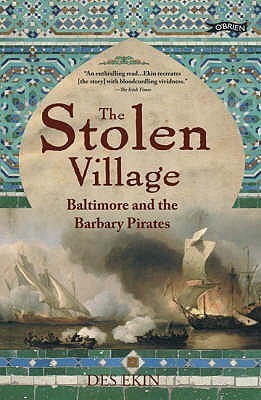
The Stolen Village by Des Ekin (2006)

Baltimore and the Barbary Pirates

After Mary Read’s pirate adventures in Saltblood by Francesca de Tores, I turned to a book of history, The Stolen Village that tells of a pirate raid on the West Irish village of Baltimore. I must have picked this up at a sale, because it’s not a book that I recall looking for, but it fits perfectly with the pirate theme, and I was curious to know more since like many readers, I had never heard of an Irish village being pillaged to traffic humans.

Conspiracy, Corruption and Ethnic Cleansing

The story of the raid on Baltimore is a tale of plotting and intrigue, of conspiracy and betrayal, and it involves corruption in the highest ranks of of the King’s Navy.

And perhaps most fascinating of all is the theory that the raid may have not been a chance event, but a mission of revenge: a pre-planned act of ethnic cleansing aimed at removing the English newcomers and restoring the village to its original Irish owners.

From Dutch Privateer to Barbary Pirate, A Name Change

The Stolen Village by Des Akin The Irish village of Baltimore raided by Barbary Pirates and taken to Algiers sold into slavery

Captain Morat Rais and his crew of Barbary Pirates aided by 200 troops of the Ottoman Empire enter Baltimore in June 1631, where they succeed in capturing 109 villagers, abandoning 2 elders, taking the rest to Algiers to be traded as slaves, once the Pacha had taken his pick.

We learn this captain was born in Dutch Haarlem around 1570, his real name Jan Jansen. A man who began his career as a privateer in the Dutch War of Liberation. He sought opportunities on the Barbary coast, in the 3 states of Tunis, Tripoli & Algiers, after being captured himself, choosing to reinvent himself and swap allegiances.

In an era when it was commonplace for white traders from England to land on the African coast and to seize black people as slaves, this was one of the comparatively rare occasions when the boot was on the other foot: a slaving mission from Africa landing on English-held territory and seizing white slaves.

More Villagers Taken From Iceland

Four years before the Irish raid, the same captain, in 1627 led 5 ships to Iceland, showing no mercy, assaulting multiple villages and returning to Algiers with over 400 captives, including 240 from the volcanic island Heimaey.

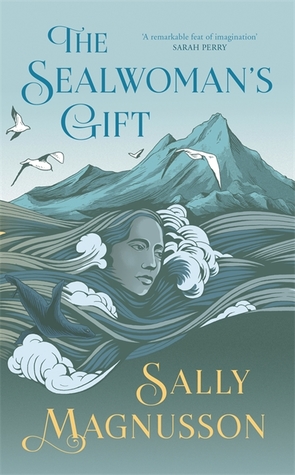
The Sealwoman's Gift by Sally Magnusson The capture of 400 villagers from Iceland sold into slavery in Algiers Morat Rias

When I encountered his name, I knew I’d come across Morat Rais before. In Sally Magnusson’s excellent work of historical fiction, The Sealwoman’s Gift. Much of that story is known from the journals Reverend Ólafur Egillson kept, depicting the terror of the invasion, the sea journey, slave markets and the fates of the survivors.

Of the Irish villagers no written account by a person survived so Ekin uses other sources that inform us what their likely fate would have been, which can make the text feel a little disjointed, without the fluidity of a fictional story, sticking to facts and documented accounts requires the reader to imagine.

Some readers have criticised the book for this, but I read it already knowing this and didn’t mind that it sticks to the facts and therefore lets you know when he is sourcing known information from another event that might gives clues about this one.

Who Were These People in Baltimore?

There is a layer of conspiracy to the Irish raid, a rumour regarding feudal clans and unwanted English settlers that Ekin explores, adding more intrigue to the tale.

There are plenty of myths about that and Ekin dispells three of them, one that they were aggressive colonists, usurpers who had stolen the village from local Irish by force, two, that they were ‘blow ins’, and as such had no permanent ties there; and the third myth that they’d been sent to impose the State religion upon the area.

Ekin tells us they were themselves viewed as rebels and dissenters, refugees who went there to escape all that.

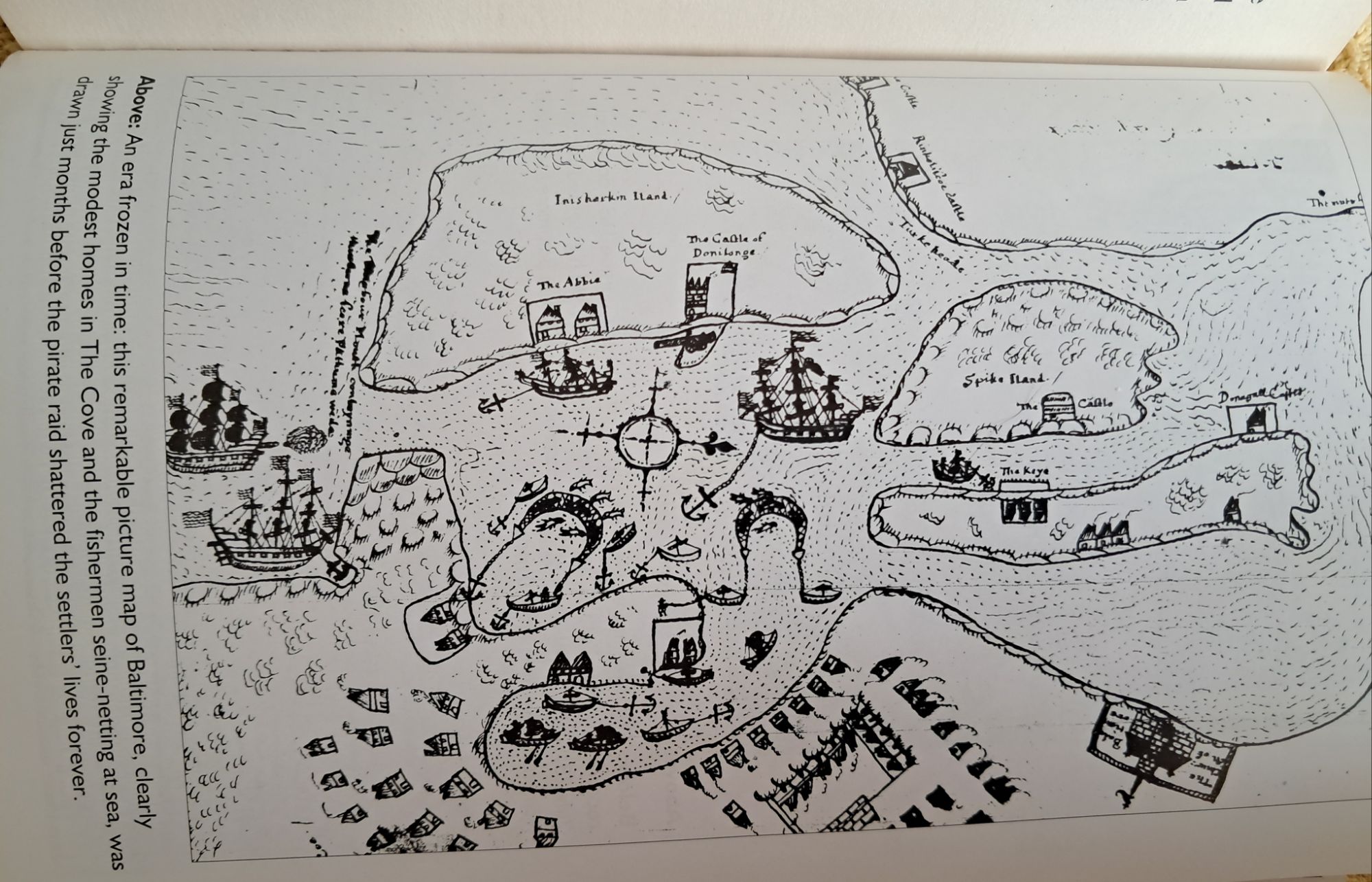
The village of Baltimore, drawn months before the pirate raid shattered the settlers' lives
Baltimore village just months before the pirate raid shattered the settlers’ lives

The new Baltimore settlement had been created by a family of intellectual freethinkers whose fierce refusal to conform had made them a thorn in the side of the religious and political establishment in England for generations.

It is a fascinating story, as is the history of the movement of people and the way in which privateers or corsairs move from legitimate to illegitimate activities, the bases the pirates used that others wanted rid of and all the machinations of the establishment and the clans behind it all that fueled so many conspiracy theories.

With eight pages of glossy black & white photos, a list of The Taken and a comprehensive bibliography, it was a most enjoyable read.

A Truce That is Not Peace by Miriam Toews

Life and Death So Far, A Search for Meaning

“…we might remember the dead without being haunted by them, give to our lives a coherence that is not ‘closure,’ and learn to live with our memories, our families, and ourselves amid a truce that is not peace.” – Christian Wiman

A truce that is not peace Life and Death So Far memoir by Miriam Toews

I’ve been tempted but never read any of Miriam Toews novels, so this might not be the best place to start, this being the first time she has written about her own life in non-fiction (Swing Low: A Life she wrote about her father in 2000). Hoever, I was intrigued and it was available to read on Netgalley so I jumped in to learn more about the source(s) of her inspiration.

While her novels are not autobiographies, they address the emotional, spiritual, and political terrain of her life – her Mennonite upbringing and their lack of voice, her family’s struggles with mental illness and the burden of communal silence. 

A Truce That Is Not Peace makes those long-standing concerns fully explicit, acknowledging the reality behind those themes in her novels, exploring the writing life, family tragedies and day to day obsessions with grace, humour and bite.

Fragments of Memory, Flashes of Reality

The memoir is written in a fragmented journal entry style, one that continued to visit and revisit a number of current obsessions and memories she kept going back to, things from the past that haunted her, her father and sister’s suicides, their long periods of silence, their incessant need to write, her conversations and the questions asked by a Jungian therapist, who she reassures each visit that she is not suicidal (having read that is the greatest fear therapists have of their clients), though it is all she talks about.

It then switches into current desires, a wind museum idea, how to negotiate getting her royalties back from her ex-husband, and repeated attempts to answer the question Why Do I Write?, as the Conversación Comité who invited her to respond to that question, in anticipation of participating in a conversation in Mexico City, keeps rejecting her submissions as being not altogether what they were looking for, while attempts to rewrite it have her dreaming about her Wind Museum.

Creativity, the Messiness and Musings of Lives

Various quotes, letters, emails, dreams, nightmares; musings and memories litter the text as the author grapples with what presents itself in her life, and then the words of others arrive as if to provide validation or a way to get to that truce she seeks.

“Punishment, perhaps, or some contagion of fate, finds her here, her hair shorn, both wrists wrapped, her eyes open, pondering the parable of perfect silence.” – Christian Wiman

Photo by Mat Brown on Pexels.com

The text is interrupted by grandchildren activities, worries about biting habits, by questions she asks her mother, by the antics of family gatherings, of things falling apart in the house, the river that runs beneath it, a skunk with distemper that keeps trying to return to the now renovated back deck and falling into the window well. A close encounter with a plane in a blizzard on a highway, all while trying to find a way to navigate this life, this ‘truce that is not peace’.

It reminded me of reading Terry Tempest Williams When Women Were Birds: Fifty-four Variations on Voice, another memoir that circles a writer’s many obsessions as she struggles to find a connection. Her list of things she wrote of were: Great Salt Lake, Mother, Bear River Bird Refuge, Family, Flood, Cancer, Division of Wildlife Resources, Mormon Church, subjects that resided within her, evolving and changing shape like a murmuration.

When Miriam Toews makes her list she writes: Wind Museum, Deranged Skunk, North-west quadrant with ex, Conversacion in Mexico City, Neighbours.

I found the style confusing at first, but then because she returns to the same subjects, I started seeing the pattern. She mixes heavy subjects with the mundane of everyday life, and shares pockets of humour and tenderness amid the pain. The presence of children and noise and problems that need to be dealt with keep them all grounded and present and observant, there is inspiration everywhere, even in the most mundane.

While it may have helped had I read her other work, it is not necessary.

“When I started writing, the work was an act of rebellion. An act of subversiveness. But also a philosophical one. The humor, the writing, the taking note of absurdity. A rebelliousness against life. That’s how Camus felt too. That it is absurd. That there is no meaning. That there’s no reason to this crazy place of pain and ridiculousness. And yet, it’s what we have. So let’s be in it.” Miriam Toews

Further Reading

The Yale Review: Shakespeare & Company interview Miriam Toews on how writing resembles loss, Adam Biles

The Guardian: ‘My sister, my God. It’s a visceral pain that never goes away’: Miriam Toews on a memoir of suicide and silence by Hannah Kingsley-Ma

Author, Miriam Toews

Miriam Toews is a Canadian novelist and writer born in 1964 in Steinbach, Manitoba, a small, conservative Mennonite town that profoundly shaped her life and work.

Toews is best known for her darkly comic, deeply compassionate novels that explore themes of Mennonite culture, female autonomy, family bonds, mental illness, and the struggle for personal freedom. Her internationally acclaimed books include A Complicated Kindness (2004), All My Puny Sorrows (2014), and Women Talking (2018), the last of which was adapted into an Oscar-nominated film.

Much of Toews’s writing is informed by her own experiences, including the suicides of her father and sister, and her complicated relationship with the Mennonite community in which she was raised. Her memoir, A Truce That Is Not Peace, addresses these influences directly. She lives in Toronto.

“The book is about my attempt to find connection, to really meet my sister, in the spaces between words, in the silence. And my inability to do that, my reluctance to go there. There’s just such a huge abyss between the pain of the feelings and the articulation of that pain, whether it’s manifested in silence or whether it’s manifested in writing a story. It’s that time in between. I think that’s where I can maybe meet her in my mind.” interview with Adam Biles, Shakespeare & Company, Paris

N.B. This book was an ARC kindly provided by the publisher, 4th estate, via NetGalley.

Somebody Is Walking on Your Grave by Mariana Enriquez tr. Megan McDowell #RIPxx

My Cemetery Journeys

Someone is Walking On Your Grave My Cemetery Journeys Mariana Enriquez

Argentinian author Mariana Enríqeuz is known for unconventional and sociopolitical stories of the macabre, amid contemporary Argentina. Her stories are populated by unruly teenagers, crooked witches, homeless ghosts and hungry women walking the troubled line between urban realism and literary horror.

Though I’ve seen her Gothic titles on the International Booker shortlist, an overactive imagination has constrained my curiosity to venture further until now.

When I saw that Granta were publishing a memoir-like collection of essays that chronicle her travels through graveyards of the world, steeped in history, legend and local culture, I was more than intrigued, I wanted to take that journey with Mariana Enriquez as my guide.

One Woman’s Obsession and Another’s

This is not fiction, it’s a journalistic travel diary, beginning with her first teenage encounter in Genoa, Italy, spanning years of visits and curating the experiences that came with them, and a potted history of characters she momentarily became obsessed with while visiting 21 cemeteries across four continents.

I admit that I have my own obsession with cemeteries, though not to visit them or to seek out historical characters; my interest is in the words left behind, the clues that help me recreate a lineage.

I discovered that it is possible to do that online through ‘Find a Grave’, another way to find ancestors and fill in the gaps in a family tree, creating one’s own virtual cemeteries populated with the memorials of those who came before.

Lest we forget or should we never have known and have a compulsion to awaken our soul remembering. I visit these virtual creations, solve some of their mysteries and see into the lives of those forgotten, as if they were there, tapping me on the shoulder inviting me to come and witness how it was.

A Goth Flaneur Coming of Age

From that very first essay about her journey as a 25-year-old to Italy with her mother I was hooked. Mariana Enriquez described herself as a ‘goth‘ from about the age of six years old and in her book, travels to cities and obscure locations around the world with the aim of visiting a place of rest, unravelling stories as she goes.

In her gripping, journalistic style, she shares why each graveyard was important to visit, whether part of an interesting historical aspect, or because of a particular personality, or a rumour about the strange things that allegedly happen there. It surprised me initially that many of these places require security, some even have ticket offices, because strange things can happen in broad daylight as well as the dead of night.

Each essay gives the country and location of the cemetery and the year she visited and sometimes there is a photo of a particularly interesting sculpture. In an NPR interview with Ayesha Rascoe, she expanded on her youthful inclinations and inspiration in seeking out these places of rest.

Reading Edgar Allen Poe – and then with the years, I learned that also cemeteries have a lot to say about life, about the history of the people. And then Argentina in the ’70s, the decade where I was born, had a dictatorship that made a lot of bodies disappear. Therefore, there’s a generation of people that were killed by the government, and they don’t have a grave.

I realized that that trauma, that is very engraved in my life, somehow made me feel that a grave, a tombstone – it’s something of comfort. It’s a final thing in a good way.

Death and the Maiden, Staglieno

So it begins with Death and the Maiden, Monumental Cemetery of Staglieno, Genoa in 1997 and this essay is literally the initial seduction into the collection, Mariana’s mother had enough money to take her first trip to Europe and invited her daughter along.

Genoa wasn’t her priority; when read of the places in Italy that were, I’m drawn down literary, art and historical rabbit holes in delight. But Staglieno at least had graves that featured on the cover Joy Division‘s single Love Will Tear Us Apart, even if she had never liked them.

In a public square in Genoa is where she meets the perfect goth boy playing violin, an Italian Englishman, like a creature out of Mary Shelley or Byron. Someone to accompany her on her pilgrimage.

Enzo was the most beautiful creature I had ever seen. At least for me, for my idea of beauty, which is shadowy and pale and pliant, black and blue, a little moribund but happy, more dusk than night.

Welsh Immigrants in Patagonia

When Enriquez travels to Trevelin Cemetery in Chubut, Agentina, 2009, I learn about the Welsh who left their homeland to settle in Patagonia in 1865. Having been exploited and discriminated against in the United Kingdom and fearing losing their language and identity, 153 Welsh men, women and children boarded the ship Mimosa and arrived in a place that was something of a disappointment, but became the most significant Welsh colony in Argentine Patagonia.

I learn about characters from this group, the little known history that explains the proliferation of Jones, Thomas and Evans, the foreign words on the gravestones, in a place where many today still speak Welsh.

The Mountains of San Sebastian to Rottnest Island

From English soldiers buried in forest graves on a Basque mountain near San Sebastian in Spain, I read of more minor historical events and wonder about the meaning of the words on the chapel, “Every hour wounds; the last one kills.” So many stories and mystery among the remains.

In 2007, she accompanies her Australian boyfriend Paul who works as a bike mechanic on Rottnest Island, half an hour from Freemantle in Western Australia. A stable, long distance relationship that is headed towards marriage and an outsider’s view of a curious part of the world where the lead singer of AC/DC came of age, went to jail and is buried. She wants to see his grave.

The place has a booming real estate market, houses with yards full of healing crystals and fairies, collectors of all kinds who exhibit their cabinets of curiosities in the streets, artists, musicians, and a sparse but continuously fluctuation itinerant population linked to the port – people who can be unhinged, unstable and on occasion violent.

Weirded out by the hotel-asylum they’re staying in, she takes the ferry to the island, once inhabited by the Noongar Aborginal people, also used as a prison and visits the burial grounds, unearthing more story of post-colonial and indigenous poeples.

Savannah to New Orleans to Cuba to Edinburgh

I don’t wish this make this overly long, because I feel like I could write paragraphs on every essay; they are so interesting, quirky, incredible and speak so much to the different cultures they inhabit, from a very different perspective than what anyone would usually encounter visiting a foreign country.

If you came from New Orleans, I guess you would know about the vibrant characters that inhabit it, both the living and the dead. I did not know that it is the site of the second most visited grave in American after Elvis, that of the 19th century midwife, herbalist and philanthropic Voodoo practitioner of French, Spanish and African origins Marie Laveau.

Then there was the controversy surrounding the Pietro Gualdi marble sculpture of a seated woman in a robe holding a bouquet of flowers that Dennis Hopper and Peter Fonda requested permission from the Italian Society to use in the tomb scene of Easy Rider. Suffice to say all requests since then have been denied. And Nicholas Cage’s pyramid? A pharaonoic tomb waiting for a body.

Frankfurt was brief, Cuba was fascinating and macabre and sad after the friend who hosted her became the first close associate whom death claimed. Savannah was touristy and disappointing, I mean how could the book cover of John Berendt’s novel Midnight in the Garden of Good and Evil have caused such havoc and chaos to a place of rest?

Edinburgh was crowded, full of folklore; people visiting the graves of random names J.K.Rowling chose as characters for her Harry Potter books. Bizarre comes in so many different forms, real, imagined and just because.

Taphophilia Syndrome and the Magnificent Seven

I learn a new word. Taphophile, people who are passionate about cemeteries, memorials, and the history they hold. And Taphophilia syndrome? An abnormal attraction for graves. Who knew there were so many?

The visit to London’s Highgate cemetery fascinated me because I lived so close to it for some years, yet never had an inclination to visit. Audrey Niffenegger’s Her Fearful Symmetry, set in the cemetery sat unread on my shelf for years. To read about it here and what the author encountered there was like stepping into another realm, as all these places are, existing in the in-between.

Highgate and London’s Magnificent Seven created from 1833-1841 just demonstrated to me how little the living can be aware of the cult of the dead right next door.

Day of the Dead 1-2 November

Mexico seems to be the only country that retains a feeling of celebration around the departed. Though she visits and writes of its traditions, Enriquez has never been there for the Day of the Dead, when souls return and are welcomed to their family home to eat with their living relatives.

Here in France 1 November is the public holiday Toussaint (All Saint’s Day) and there is a mass visitation to cemeteries all over the country, when families visit, tidy up, pay their respects and bring chrysanthemum’s to family graves.

The Mexican anthropologist Alfonso Alfaro said, “We are a people who maintain a privileged relationship with death.” And the art critic Luis Cardoza y Aragon wrote:

Death is a universal theme of human expression. Mexico’s feeling toward death, the familiarity, tenderness and simplicity in its treatment of death, its obsession, which it sees as neither tragic nor funereal, but rather nuptial and natal, imbued with an immediate everydayness, an imperious and serene visibility, characterized more by cascading laughter than lamentation – it all harbours the unlearned wisdom of a cosmic and playful conceptualization, as if in perpetual amazement, that is particular to Mexico.

Prague to Paris to Eva Peron and the Disappeared

Prague has its legends but is overrun by tourists; Mariana resists and admits maybe it’s because she’s not a fan of Kafka.

In Paris, I hear of the fascinating history and grisly dilemma of 12th century Holy Innocents Cemetery in the Les Halles quarter that lead to the creation of the Montmartre catacombs. And a visit down there.

Eventually the journey comes full circle to Buenos Aires, Argentina, to the aristocratic Recoleta Cemetery, where Eva Peron is buried. Described once as ‘Venice without the canals’ it has ostentatious vaults like palaces along narrow streets, where everything is above ground, a way of showing off grandeur.

Peron’s journey there is an enthralling tale of body snatching, written about in Santa Evita by Tomas Eloy Martinez. A macabre story, it is one that Enriquez shares with freinds visiting the cemetery, one she told her husband Paul on their first date, that turned into a second date, though not everyone reacts that well she admits.

The Appartition of Marta Angélica

Part of the reason to write these stories came from reflections when her friend’s mother’s remains were identified after being found in a mass grave, having disappeared thirty-five years previously, kidnapped, disappeared and presumed killed, by the military dictatorship in Argentina.

“for someone like me who grew up in a dictatorship that had the peculiarity of making bodies disappear,” the idea of a tomb and of a cemetery was overshadowed by the political trauma.

The idea of no burial, no grave, no funeral rite, that’s what’s traumatic for me.”

Thank you for patiently reading, if you made it this far.

I absolutely loved and was riveted by this book of essays. I read it over the course of a month or so, it was too interesting and thought provoking and worldwide encompassing to read too quickly. It surprised me how compelling it was, with the right blend of personal story, characters met on her travels, fascinating known and unknown history and the insights into different cultural rituals and treatment of the subject of death, burial and even the movement and perceived ownership of or control over bodies. It gives even more meaning to those letters RIP.

Highly Recommended.

Further Reading

Mariana Enríquez Essay: Notes on Craft – on writing dark fiction

NPR Interview : ‘Somebody Is Walking on Your Grave’ – a journey to cemeteries across 4 continents

Author, Mariana Enríquez

Mariana Enríquez is an award-winning Argentine novelist and journalist, whose work has been translated into more than twenty languages.

She is the author of Things We Lost in the Fire and The Dangers of Smoking in Bed, which was shortlisted for the 2021 International Booker Prize. Our Share of Night was awarded the prestigious Premio Herralde de Novela.

“People often ask me why I like to write dark fiction. Horror. Weird tales… There is something about horror and dark fiction that is familiar and homely, and at the same time, always audacious. It’s with this language that I can explain myself and explain what I worry about.”

N.B. This book was an ARC (Advance Reader Copy) kindly provided by the publisher via NetGalley.

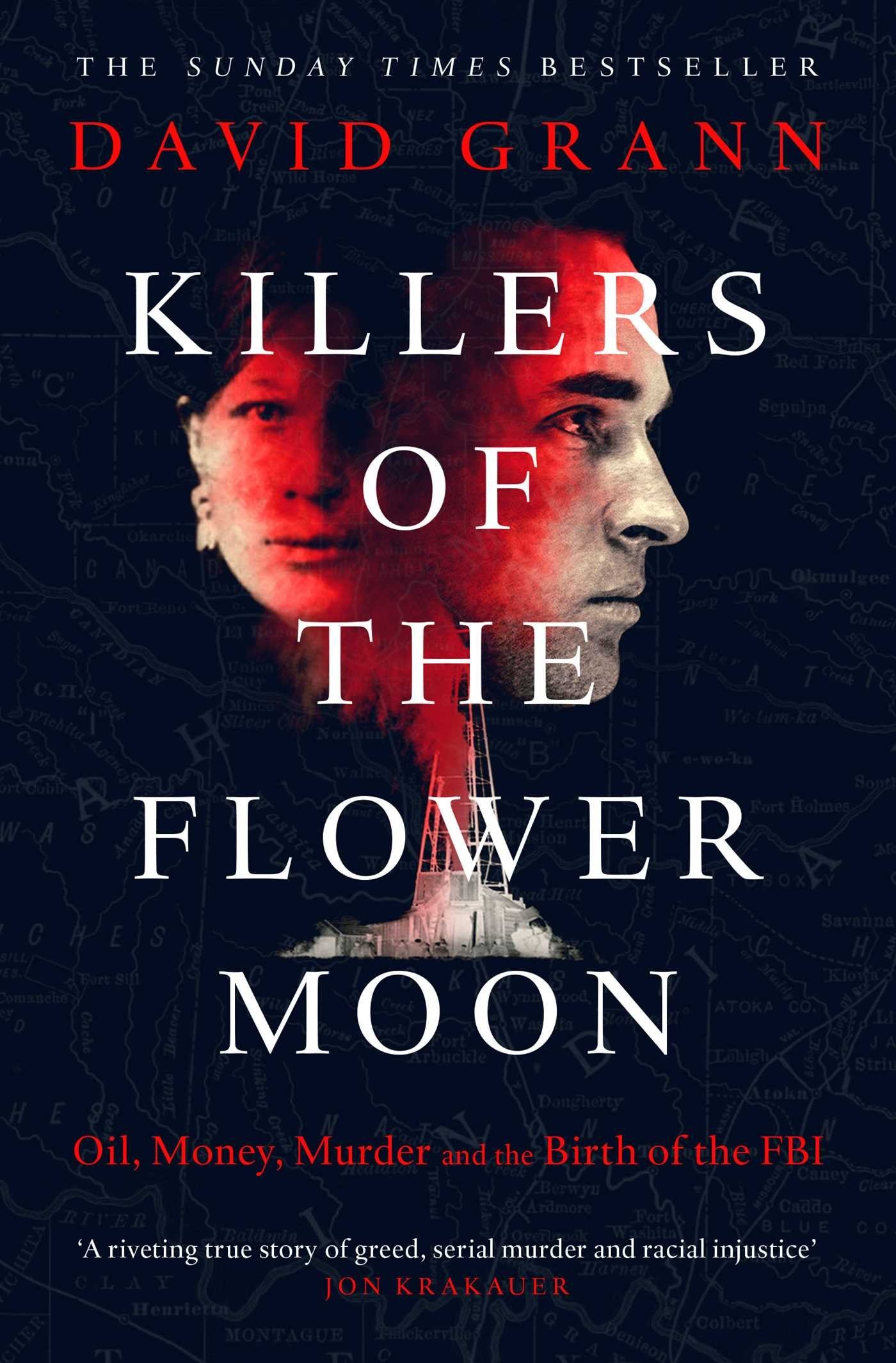
Killers of the Flower Moon by David Grann (2017)

Around the time the Martin Scorsese film of this book came out, the author David Grann had a new nonfiction book coming out The Wager, A Tale of Shipwreck, Mutiny and Murder.

The film about the Native American Osage murders was three and a half hours long and I knew that was not for me, not because the story isn’t important, but the way stories like this are portrayed cinematically in the 21st century is not for me.

I did read The Wager and thought it was excellent, and I knew if I ever came across Killers of the The Flower Moon, I would read that too.

Last week I visited our local English bookstore and there was a second hand copy sitting on the shelf, so I snapped it up and read it in a day.

Killers of the Flower Moon

So what is that title all about?
“In April, millions of tiny flowers spread over the blackjack hills and vast prairies in the Osage Territory of Oklahoma. There are Johnny-jump-ups and spring beauties and little bluets… In May, when coyotes howl beneath an unnervingly large moon, taller plants such as spiderworts and black-eyed Susans, begin to creep over the tinier blooms, stealing their light and water. The necks of the smaller flowers break and their petals flutter away, and before long they are buried underground. This is why the Osage Indians refer to May as the time of the flower-killing moon.”

Land and Oil – From Greed to Domination to Dehumanisation

Grann twists the metaphor to describe what happened to the Osage people when white settler individuals, driven by greed, racism and a total lack of empathy conspired to kill multiple members of families for their wealth and rights to oil profits.

In nature, one species nourishes the next, governed by the cycles of the Moon whereas the story he presents here, uses that phrase to describe a murderous cycle of greed and violence to annihilate and supplant the native Osage.

An Obsession with Wealth and Control

In the early 1870’s , the Osage had been driven from their lands in Kansas onto a rocky, presumably worthless reservation in northeastern Oklahoma, only to discover, decades later, that this land was sitting above some of the largest oil deposits in the United States. To obtain that oil, prospectors had to pay the Osage for leases and royalties.

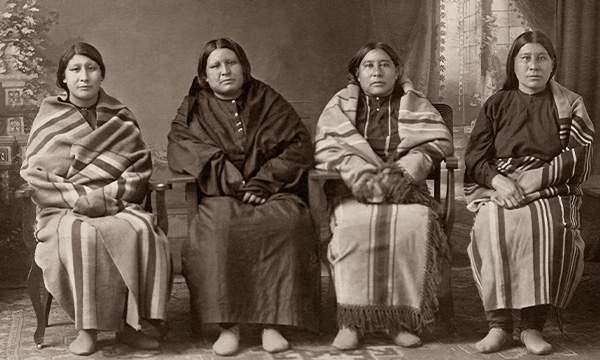
I raced through this book, enjoying how thorough it had been researched. It is divided into three parts, Chronicle One: The Marked Woman (or The Marked Family or The Marked Tribe) focuses on four sisters Mollie, Anna , Minnie and Rita (pictured below) and their mother Lizzie, all of whom find themselves in danger of being killed in an elaborate conspiracy, without knowing who or why.

Four Sisters Targeted

The story opens with the gruesome murder of Anna and then goes back to describe the events that lead the Osage people to be where they were living, how their lives were changed, the treaty that forced them to give up their lands or be declared enemies of the United States, the banned aspects of their languages and lifestyles, the imposed education and names.

In the early 1870’s the Osage were forced to cede nearly a hundred million acres of their ancestral land (between the Arkansas River and the Missouri River), ultimately finding refuge in a 50 – by – 125 mile area in southeastern Kansas. And it was in this place that Mollie’s mother and father had come of age.

One native Osage family of four sisters targeted in the Reign of Terror in the US from 1913 - 1931 by whites seeking to obtain headrights
Osage sisters Me-se-moie (Rita), Wah-hrah-lum-pah (Anna), Wah-kon-tah–he-um-pah (Mollie) and Wa-sha-she (Minnie)

Decades later it was discovered that this infertile land sat above some of the largest oil deposits in the country. To obtain that oil, prospectors had to pay the Osage for leases and loyalties. As a result, as oil revenues grew and their wealth accumulated, the Osage became the wealthiest people per capita in the world. However, severe controls were placed on their ability to access their own money.

Who Was Behind the Murders? A Texas Lawman Investigates

While the family got no help from the local sheriff they paid various private investigators to look into the murder of Anna, when Rita and her husband were killed. The community lived in fear and needed answers.

Chronicle Two: The Evidence Man turns the focus to Texas Ranger, Tom White, who becomes the government appointed (by Edgar Hoover) lead in an investigation, when a number of others who attempt to report back to authorities are mysteriously killed, hinting at a wider conspiracy. Tom White focuses on Mollie’s family when her mother mysteriously dies and Mollie becomes the sole survivor of her family.

Under Hoover, agents were now seen as interchangeable cogs, like employees in a large corporation. This was a major departure from traditional policing, where lawmen were typically products of their own communities. The change helped insulate agents from local corruption and created a truly national force, yet it also ignored regional difference and had the dehumanising effect of constantly uprooting employees.

A Wider Conspiracy Revealed

Chronicle Three: The Reporter circles back and relooks at these events and sees that they were part of a wider pattern of targeted murders, but this is in the 21st century, where there are few people left who can recall events. However, the archives and family testimony reveal the depth of this terrible vengeance against a marginalised population, just because in the process of being banished from their original lands to other infertile lands, they happened to land on undiscovered deposits of oil and became wealthy.

Brilliantly pieced together and a horror to read, how this family of women were targeted and those around them easily influenced to participate in it and the wounding legacy of future generations who lost so much of their family over the greed and jealously of remorseless white men.

Further Reading

Guardian: Killers of the Flower Moon by David Grann review – family murder, oil & the FBI by RO Kwon

NYTimes: The Osage Indians Struck It Rich Then Paid the Price

FBI History : Osage Murders Case – A deadly conspiracy against the Osage Nation and the agents who searched for answers

“The most common comment I have received is: ‘I can’t believe I never learned about this. I think that is a reflection to some degree of the underlying force that led to these crimes, which was prejudice.” David Grann

Author, David Grann

David Grann is an American journalist, a staff writer for The New Yorker, author of The WagerThe Lost City of ZA Tale of Deadly Obsession in the Amazon, shortlisted for the Samuel Johnson Prize.

Killers of the Flower Moon: The Osage Murders and the Birth of the FBI was a finalist for the National Book Award and winner of an Edgar Allan Poe Award for best true crime book. It was adapted into a film directed by Martin Scorsese, starring Leonardo DiCaprio, Lily Gladstone, Robert De Niro, and Jesse Plemons. 

His stories have also been published in the New York Times MagazineAtlanticWashington PostBoston Globe, and Wall Street Journal.

In addition to writing, Grann is a speaker who has given talks about topics from Killers of the Flower Moon and the importance of historical memory to the dangers of complicity in unjust systems, and from the art of writing and detection to the leadership methods of explorers, such as Ernest Shackleton.

Women’s Prize for Non-Fiction Shortlist 2025

Now in it’s second year running, the Women’s Prize for Non-Fiction Shortlist has been announced. If you want a reminder, here are the 16 books that were on the longlist.

The six titles chosen range from history, science and nature, to current affairs and memoir, united by the power of hope and the necessity of resistance to initiate change.

Judge’s Comment

It’s an absolute pleasure to announce six books on our 2025 shortlist from across genres, that are united by an unforgettable voice, rigour, and unique insight. Included in our list are narratives that honour the natural world and its bond with humanity, meticulously researched stories of women challenging power, and books that illuminate complex subjects with authority, nuance and originality. These books will stay with you long after they have been read, for their outstanding prose, craftsmanship, and what they reveal about the human condition and our world. It was such a joy to embrace such an eclectic mix of narratives by such insightful women writers – we are thrilled and immensely proud of our final shortlist.

Kavita Puri, Chair of Judges

The Shortlist

Here are the six books chosen with a description, a short commentary by one of the judges and a link to a sample read or audio, if you’re interested to read/listen to a little of each title. Listening to the judges describe each book made them all sound really interesting to me.

I think I’m most interested by Agent Zo (after reading Madame Fourcade’s Secret War by Lynne Olson last year) and Private Revolutions because of its insight to another culture and those lives and stories that are so unlike our own. What do you think? Do any of these sound interesting to you?

Let me me know in the comments below.

Womens Prize for NonFiction Shortlist 2025

A Thousand Threads by Neneh Cherry (read a sample) (listen to audio)

Top of the Pops, December 1988. The world sat up as a young woman made her debut: gold bra, gold bomber jacket, and proudly, gloriously, seven months pregnant. This was no ordinary artist. This was Neneh Cherry.

But navigating fame and family wasn’t always simple. In this beautiful and deeply personal memoir, Cherry remembers the collaborations, the highs and lows, the friendships and loves, and the addictions and traumas that have shaped her as a woman and an artist. At the heart of it, always, is family: the extraordinary three generations of artists and musicians that are her inheritance and her legacy.

Musician. Songwriter. Collaborator. Activist. Mother. Daughter. Lover. Friend. Icon. This is her story.

A Thousand Threads by Neneh Cherry is the story of a remarkable life and the many threads that made it. Its about belonging, family, how we find our place in society, as well as music of course. The writing is exceptional and effortless. It’s a complex portrayal full of warmth, honesty and integrity and of how Neneh came to be who she is today.

The Story of a Heart by Rachel Clarke (read a sample) (listen to audio)

The first of our organs to form, the last to die, the heart is both a simple pump and the symbol of all that makes us human: as long as it continues to beat, we hope.

One summer day, nine-year-old Keira suffered catastrophic injuries in a car accident. Though her brain and the rest of her body began to shut down, her heart continued to beat. In an act of extraordinary generosity, Keira’s parents and siblings agreed that she would have wanted to be an organ donor. Meanwhile nine-year-old Max had been hospitalised for nearly a year with a virus that was causing his young heart to fail. When Max’s parents received the call they had been hoping for, they knew it came at a terrible cost to another family.

This is the unforgettable story of how one family’s grief transformed into a lifesaving gift. With tremendous compassion and clarity, Dr Rachel Clarke relates the urgent journey of Keira’s heart and explores the history of the remarkable medical innovations that made it possible, stretching back over a century and involving the knowledge and dedication not just of surgeons but of countless physicians, immunologists, nurses and scientists.

The Story of a Heart is a testament to compassion for the dying, the many ways we honour our loved ones, and the tenacity of love.

The Story of a Heart by Rachel Clark is the tale of a boy, a girl and the heart they share. I like how the book combines the author’s expertise and the emotional resonance of the subject to bring together an extraordinary story. It moves effortlessly between disciplines and is meticulously researched and superbly written. I will find it impossible to forget.

Raising Hare by Chloe Dalton (read a sample) (listen to audio)

Imagine you could hold a baby hare and bottle-feed it. Imagine that it lived under your roof and lolloped around your bedroom at night, drumming on the duvet cover when it wanted your attention. Imagine that, over two years later, it still ran in from the fields when you called it and snoozed in your house for hours on end. This happened to me.

When lockdown led busy professional Chloe to leave the city and return to the countryside of her childhood, she never expected to find herself custodian of a newly born hare. Yet when she finds the creature, endangered, alone and no bigger than her palm, she is compelled to give it a chance at survival.

Raising Hare chronicles their journey together and the challenges of caring for the leveret and preparing for its return to the wild. We witness an extraordinary relationship between human and animal, rekindling our sense of awe towards nature and wildlife. This improbable bond of trust serves to remind us that the most remarkable experiences, inspiring the most hope, often arise when we least expect them.

Raising Hare by Chloe Dalton is a beautiful meditation on the interactions between the human and the more than human that takes you under its spell. I really like how the book opens up questions of wildness, how do we let the wild into our lives, what can we do in our spaces to cultivate wild living? This is a captivating book that really stayed with me.

Agent Zo: The Untold Story of Courageous WW2 Resistance Fighter Elżbieta Zawacka by Clare Mulley (read a sample) (listen to audio)

This is the incredible story of Elzbieta Zawacka, the WW2 resistance fighter known as ‘Zo’. The only woman to reach London from Warsaw during the Second World War as an emissary of the Polish Home Army command, Zo undertook two missions in the capital before secret SOE training in the British countryside. As the only female member of the Polish elite Special Forces – the SOE-affiliated ‘Silent Unseen’ – Zo became the only woman to parachute from Britain to Nazi German-occupied Poland. There, whilst being hunted by the Gestapo who arrested her entire family, she took a leading role in the Warsaw Uprising and the liberation of Poland.

After the war she was demobbed as one of the most highly decorated women in Polish history. Yet the Soviet-backed post-war Communist regime not only imprisoned her, but also ensured that her remarkable story remained hidden for over forty years. Now, through new archival research and exclusive interviews with people who knew and fought alongside Zo, Clare Mulley brings this forgotten heroine back to life, and also transforms how we see the history of women’s agency in the Second World War.

Agent Zo: The Untold Story of Courageous WW2 Resistance Fighter Elżbieta Zawacka by Clare Mulley is a masterfully written biography that brings Elżbieta’s extraordinary story to life in exceptional detail. Phenomenally well researched, it’s a window into World War 2 stories that aren’t often heard, told through the life of an inspiring and powerful protagonist. I loved how the book follows Elżbieta right into the twenty-first century, showing the complexity of post-war politics. This is a history that still resonates today.

What the Wild Sea Can Be: The Future of the World’s Ocean by Helen Scales (read a sample) (listen to audio)

No matter where we live, ‘we are all ocean people,’ Helen Scales observes in her bracing yet hopeful exploration of the future of the ocean. Beginning with its fascinating deep history, Scales links past to present to show how prehistoric ocean ecology holds lessons for the ocean of today.

In elegant, evocative prose, she takes us into the realms of animals that epitomize current increasingly challenging conditions, from emperor penguins to sharks and orcas. Yet despite these threats, many hopeful signs remain, in the form of highly protected reserves, the regeneration of seagrass meadows and giant kelp forests and efforts to protect coral reefs.

Offering innovative ideas for protecting coastlines and cleaning the toxic seas, Scales insists we need more ethical and sustainable fisheries and must prevent the other existential threat of deep-sea mining. Inspiring us all to maintain a sense of awe and wonder at the majesty beneath the waves, she urges us to fight for the better future that still exists for the ocean.

A heartfelt exploration of the deep sea from coral to whales to emperor penguins to kelp, the writing is urgent and spellbinding and gripping, showing how humans have accelerated climate change and how we can fight for a better future. I absolutely loved spending time with the marine biologist Helen Scales down in the brutal and beautiful depths of the ocean.

Private Revolutions: Coming of Age in a New China by Yuan Yang (read a sample) (listen to audio)

Yuan Yang, the first Chinese-born British MP, tells the stories of four Chinese women striving for a better future in an unequal society.

From June, who dreams of going to university rather than raising pigs, to Sam, forced into hiding as her activist peers are lifted from the streets, this is a singularly immersive portrait of a rapidly changing nation – and of the courage of those caught in the swell.

Private Revolutions: Coming of Age in a New China by Yuan Yang traces a moment of transition in China through the lives of four women who were growing up in the years after Tiananmen Square.These coming-of-age stories are ones you rarely hear of; individuals who want different lives from their parents who are battling the system.It’s eye-opening, beautifully written and carefully researched.

The Winner

The winner of the Women’s Prize for Non-Fiction will be announced on 12 June 2025, the same day as the winner for the Women’s Prize for Fiction, whose longlist you can view here. That shortlist will be announced on 2 April.

Reading Ireland Month 2025

March is Reading Ireland month, an initiative created by Cathy at 746 Books and it is simply a way of being in community, while reading anything written by Irish authors or that relates to Ireland, there are no fixed rules, just the intention to Read Ireland, whatever that means to you! There’s even a Spotify playlist if you’re interested in a bit of musical culture.

Getting a Jump Start

For me that means reading more Irish authors from my bookshelves. I did read two in January, in fact my first read of 2025 was Donal Ryan’s Irish Book Award 2024 winning, heart, be at peace, a novel about multiple characters in a rural town in County Tipperary facing the different issues that face them a decade or so on from his debut novel The Spinning Heart.

Then I picked up a beautiful second hand hardback Water by John Boyne on holiday, and read it on my flight home. It is the first of four novellas in his The Elements series and now I want to read the next three, Earth, Fire and the final one Air due out in May 2025. But not yet, I’m prioritising what I already have!

Reading From the Shelves

A selection of books to read during Reading Ireland month of March

So here is the pile from my bookshelves, from which I will be choosing what to read in March 2025.

There are also three titles languishing on my kindle, which doesn’t get as much attention as it should, because out of sight is out of mind when it comes to reading. So I’m jogging my memory and will try to read at least one of these e-books.

On the kindle I have Listening Still by Anne Griffin, The Quiet Whispers Never Stop by Olivia Fitzsimons and Quickly, While They Still Have Horses by Jan Carson. In physical print I have another Carson The Raptures, that I picked up at the annual Ansouis vide grenier in September 2024.

Audrey Magee’s The Colony (2022) was longlisted for the Booker Prize, shortlisted for the Orwell Prize for political fiction and the Kerry Group Irish Novel award, so it gained a lot of attention and I have been keen to read it.

When Fiction Reminds Us of Those Who’ve Passed

I really enjoyed Sebastian Barry’s Old God’s Time (2023) and want to read more of his work, so I chose his Dunne Family trio of books, Annie Dunne (2002), A Long Long Way (2005) and On Canaan’s Side (2011) to delve more into his storytelling. I am part way through reading these now.

I love that this collection of novels and the play that was the first in the series, were all inspired by characters from his own ancestral lineage. That inspired me too.

After reading A Long Long Way, I became curious, as I too have an ancestor, born in the same year as his character Willie Dunne (1896), who like Willie, went to France in World War I, was in an Irish regiment and did not return. My ancestor Edmund Costley died on 9 April 1916, in Ypres, West Flanders, Belgium at the age of 19. I’ll be writing a post about him in April.

Historical Re-Imaginings, True Crime, Women’s Lot

I have read two novels by Mary Morrissey, Mother of Pearl (1995) and Penelope Unbound (2023). Morrissey tends to take historical stories and/or characters and re-imagine their lives. Mother of Pearl was inspired by a notorious baby-snatching case in 1950’s Ireland, that she chose to fictionalise, having said that the truth would have come across to readers as unbelievable; while Penelope Unbound re-imagines the life of Nora Barnacle, if in Trieste, Italy, when James Joyce made her wait all day outside a train station for him, she decides to leave.

This year I’m going to read her imagined autobiography, The Rising of Bella Casey (2013); she was the sister of the acclaimed playwright Sean O’Casey, and it is set at the turn of the century Dublin, a social commentary on the lives of women in that era.

Then there is Maggie O’Farrell’s The Marriage Portrait (2022), another historical re-imagining, this time of the short life of Lucrezia de’ Medici, a sixteenth century member of the renowned aristocratic House of Medici in Italy. I enjoyed O’Farrell’s riveting memoir I Am, I Am, I Am – Seventeen Brushes With Death (2017), the first of her works I read, and then the multiple award-winning, Hamnet (2020) and The Hand That First Held Mine (2010), so I’m looking forward to immersing in this one.

Irish Non-Fiction

missing persons or my grandmothers secrets unmarried mothers in ireland nonfiction memoir that excavates the truth about silence

There are two non-fiction titles on my pile, Missing Persons, Or My Grandmother’s Secrets by Claire Wills, author, critic and cultural historian, winner of the Irish Book Award for non-fiction, who has written a family history that blends memoir with social history. She explores the gaps in that history, brought about by Ireland’s brutal treatment of unmarried mother’s and their babies, and a culture of not caring, not looking into or asking questions, rolling back a dark period of its history of loss and forgetting.

The second non-fiction title is the candid Fierce Appetiteslessons from my year of untamed thinking, also subtitled, Loving, Losing and Living to Excess in my Present and in the Writings of the Past by medieval historian Elizabeth Boyle.

The title is a reference to Vivian Gornick’s memoir Fierce Attachments, which is part of what intrigued me, but also the uniqueness of someone finding sense of three dramatic events in their life through medieval literature.

Every day a beloved father dies. Every day a lover departs. Every day a woman turns forty.All three happening together brings a moment of reckoning.

Boyle writes on grief, addiction, family breakdown, the complexities of motherhood, love and sex, memory, class, education, travel (and staying put), with unflinching honesty,deep compassion and occasional dark humour.

Remembering Edna O’Brien (15 December 1930 – 27 July 2024)

Edna O'Brien The Country Girls The House of Splendid Isolation

I couldn’t read Ireland without adding a title from Edna O’Brien, who died in 2024 at the age of 93. In 2023, I read The Country Girls trilogy, made up of three stories The Country Girls (1960), The Lonely Girl (1962), and Girls in Their Married Bliss (1964) released in 1986 in a convenient single volume.

Credited with breaking the silence on issues young girls faced growing up in Ireland, it was a subject she would often return to. She was punished for it, but lead the way for others to eventually follow.

O’Brien described her work in this way:

I have depicted women in lonely, desperate, and often humiliated situations, very often the butt of men and almost always searching for an emotional catharsis that does not come. This is my territory and one that I know from hard-earned experience. Edna O’Brien (Roth, 1984, p. 6)

Cathy at 746 Books and Kim at Reading Matters are spending a year reading Edna O’Brien and are reading Country Girls in February, you can see their reading schedule for the year if you go to their blog.

I have decided to read one my shelf, The House of Splendid Isolation (1991), the first book in her Modern Ireland trilogy, a political novel, depicting the relations of an Irish Republican Army terrorist and his hostage, an ageing Irish widow, in a house that represents the troubled nation.

Suggestions, Recommendations?

That’s the selection I have made, no guarantees on what I’ll get through, but I’m looking forward to the immersion. Have you read and enjoyed of the titles I mention above?

Are you going to read any Irish literature in March? Let me know in the comments below.