Daughters Beyond Command by Véronique Olmi tr. Alison Andersen

Daughters Beyond Command is a wide ranging chronicle of 1970’s France, seen through the eyes of the Malivieri Catholic family with three daughters, living in an apartment in Aix-en-Provence. It traverses issues of family, feminism, worker’s rights, class, animal rights, amid the rapid transformation of society in the 19070’s France.

Family saga set in France against social political context of May 68 to the May 81 election

While the story follows the changing lives and events, in particular of the daughters and the mother (we don’t learn too much about Bruno, the father), it also demonstrates the shifts in society and of generations that occur through the way these daughters seek their independence. It contrasts with the way their mother harbours secrets and makes other complicit when she does share what she would prefer to hide.

Regardless of their ages or circumstances, the country and the world is changing and attitudes and behaviours are shifting and everyone is forced to reckon with the changes as they impact them in different ways, raising consciousnesses and often unable to maintain previous ways of being .

Sabine, the eldest wants to work in theatre and acting and will do everything she can to pursue that dream in Paris. Fiercely independent, she has developed an irritation around comfort and conformity.

She watched as Maria set the table under Michelle’s authority. She looked at the framed photographs of her cousins who had not yet come home.Happy times on horseback, in cars, on boats. It was like a huge advertising campaign. It filled her with rage. There had to be something behind this publicity for the life she was being shown, both here and at home, in the silver frames of photographs, or poor people’s kitchens, behind the slogans like Moulinex Sets a Woman Free, the injunctions to promote progress, comfort, and the frenzied pursuit of happiness, luxury, and family life, there was something else. Which could be neither bought nor sold.

The second sister Hélène has been seduced by the trappings and comfort of this sophisticated Parisian family. Sabine can’t understand why she chooses to spend so much time with them, a family that lives in a way beyond anything they have ever experienced. Hélène spends most of her holidays with the family who don’t have daughters; the Uncle who has taken a particular interest in her. That regular proximity changes some of her habits, including the way she speaks.

It was a betrayal of the Malivieri clan, and Sabine was astonished that her sister could flaunt her bonds of dependence so naturally.

Hélène will also leave home early and pursue an education Paris, supported by her Uncle. She is less outspoken but equally passionate, affected by moral question around the protection and rights of animals.

As time passed, a breach had come between Hélène and her parents; adaptation upon her return required quickly taking stock of her loved ones. She saw her father, whose kindness and altruism for everything he could not lavish on his family financially. She saw her mother, hard-working and attentive, doggedly managing her household, and the rare moments she seemed to cast off her condition as a housewife, when she really seemed to be her true self, were when they visited Laurence on Saturday afternoons at her bastide.

Photo by Alotrobo on Pexels.com

The student riots of May ’68 had an impact on the nation and caused both fear and admiration in these adults trying to figure out how to parent their daughters, growing up surrounded by influences they could not control.

As the lives of the daughters changes, so too does the outside world. Simone de Beauvoir and Gisèle Halimi found the movement Choisir la cause des femmes (Choose the Cause of Women) in 1971 to decriminalise abortion in France, riot police storm the Lip watch factory that had been occupied by workers for three months, forcibly removing them; there is talk and images of the horrors of Vietnam, of the desire for freedom, respect for the proletariat, and the lyrics of the Bob Dylan song The Times Are A Changin’, the death of the President Georges Pompidou.

Sabine told her his name was Bob Dylan and that his song said, more or less, that the world was changing, you had to keep your eyes open,and the parents had better watch out, their sons and their daughters were beyond their command. It was a political song.

As time passes and events happen the sisters find a way to strengthen their bond despite their differences, separating from each other and then coming together in solidarity, while their parents seem stuck in time. Agnes, the mother is unable to stop changes happening to her, which will bring about a crisis, one the two older girls question but are again met with silence.

While the novel isn’t necessarily about resolving any of the issues presented, it encapsulates the impact of changing times on the various members of the family in a way that I found interesting, having lived in France for around 19 years, but not during the era mentioned. So much of the landscape was familiar, and some of the references, but many were not.

I appreciated the story for the depiction of what it might have been like to be part of an ordinary family growing up in this town in the 1970’s and learning about the significant events that challenged and affected people’s thinking, seen from the perspective of inside France. It is these changes in the background of the family lives and the adept writing that maintains the narrative pace.

It might be set in the 1970’s but it feels as relevant today in many respects as it did for that era of change.

Further Reading

My review of Véronique Olmi’s novella Beside the Sea (2015)

Listen to Bob Dylan’s The Times They Are A Changin

Kirkus Reviews: The personal is political for Olmi’s finely drawn characters.

Litro Magazine Review: Daughters Beyond Command by Monica Cadenas

Author, Véronique Olmi

Véronique Olmi was born in 1962 in Nice and now lives in Paris. She is an acclaimed French dramatist and her twelve plays have won numerous awards. Olmi won the Prix Alain-Fournier emerging artist award for her 2001 novella Bord de Mer (beside the Sea). It has since been translated into all major European languages.

My Friends by Hisham Matar

I have wanted to read Hisham Matar’s memoir The Return: Fathers, Sons and the Land in Between for some time. That book is an account of the author’s search for his father who was kidnapped and disappeared in Libya when the author was 19-years-old. That book won him the Pulitzer Prize for biography or autobiography in 2017.

I read My Friends in the last couple of weeks and since finishing it, I learned that it has won the Orwell Foundation, 2024 Prize for Political Fiction from a shortlist of eight novels.

Alexandra Harris, who chaired the political fiction panel, said:

My Friends is a work of grace, gentleness, beauty and intellect, offered in the face of blunt violence and tyranny. The shootings at the Libyan embassy in London in 1984 reverberate through the novel, defining the lives of young men who cannot risk returning to their families and their native country. Matar’s response to those gunshots is a richly sustained meditation on exile and friendship, love and distance, deepening with each page as layers of recollection and experience accrue.”

From Kings Cross Station to Shepherd’s Bush Green

My Friends is narrated between the time it takes our protagonist to farewell his friend Hosam Zowa at the Eurostar terminal at King’s Cross Station, to walk two hours plus, overland to the apartment he has lived in for the past 30 years at Shepherd’s Bush Green. Along the way he will pass points that elicit memories of the past from his youth to current middle age, bringing about a kind of reckoning, a healing.

By the end of the novel, he will have made a significant decision, long in the making.

These past years since 2011, since the Libyan Revolution and all that had followed it – the countless failures and missed opportunities, the kidnappings and assassinations, the civil war, entire neighbourhoods flattened, the rule of militias – changed Hosam. Evidence of this was in his posture but also his features: the soft tremble in the hands, perceptible each time he brought a cigarette to his mouth, the doubt around his eyes, the cautious climate in them, and a face like a landscape liable to bad weather.

The novel in a sense starts at the end, with the brief reunion and subsequent farewell of these two friends, as Hosam returns to London after spending the last five years in Libya and is en route to Paris and a new life in San Francisco.

This goodbye is the catalyst to Khaled’s long walk and reflection on the past thirty years of a compromised life that have lead to this moment.

One Fateful Decision

Young Libyan students living in exile in London afraid to return home, survive through the tenuous bonds of friendship

This was so good. Not just well written and an addictive page-turner, but an acute exploration of the effect on a young man of this one event. That event becomes a turning point in his life, keeping him away from his country and family. The longer that situation and his fear of it remains, the more it changes who he is and will become, preventing him from returning, even when he can.

Khaled is the son of a school teacher from Benghazi, Libya and when he is 18, he starts an English Literature degree at Edinburgh university on a government scholarship (having refused to find an influential relation to help the application along).

His family are proud, but his father is also cautious and has one pertinent but emphatic piece of advice for his son.

Bidding me farewell at the airport, my father held me not in his usual easy embrace but in one more constricted.

‘Don’t be lured in,’ he said, the words emanating from his very core.
‘I won’t,’ I said, assuming he meant the usual temptations that might lure a teenager.
He held my hand tightly, squeezing it harder than he had ever done before. The force frightened me. It made it seem as though I were in danger of falling. The pupils of his eyes turned small and dark and slowly, in a barely audible tone, he said,

‘Don’t. Be. Lured. In.’

A Perception of Freedom

Despite the warning, Khaled gives in easily to pressure from his friend, fellow student Mustafa, to go on a quick trip to London to attend a demonstration against the regime of Gaddafi, outside the Libyan embassy.

When government officials fire from the windows at protestors, the two boys are wounded, their lives forever changed.

Exiled.

This aspect of the novel is based on a real incident that happened on 17 April 1984 resulting in the death of 25-year-old policewoman PC Yvonne Fletcher and the injury of 11 of the 70 demonstrators.

Living in Fear

Khaled is one of the worst wounded, and spends a week or so in hospital. From the moment he awakens, he lives in fear of being associated with what has happened, of being recognised. He lives in fear for his family, of repercussions and so begins a life of suppression.

He will never speak of what happened, he will never share exactly his whereabouts or what he is doing. He lives his life in a void ahead of the stories he tells. His family think he continues to study in Edinburgh. Every conversation he has, he speaks as though someone is listening. Because they are.

The Student, The Professor, The Writer

Thanks to a connection made with Professor Walbrook who had shown an interest in him, he will eventually resume his education in London and become a teacher.

‘Tell me about your life back in Libya. I’m afraid I know very little about your country.’

‘I grew up in the same Ottoman house where I was born, in Benghazi, right in the heart of the old downtown, very close to the seafront. The house belonged to my paternal grandfather and to his father before him. Each, including my father, was born there.

In London, he will lead a low profile existence and relationships are not easy to navigate due to how much of himself he becomes adept at holding back. His friendship with Mustafa is important because of their shared history and the rupture that skewered their life trajectory. For five months after the shooting he lost touch with him, then they re-connect, Mustafa carrying the guilt of the one who influenced the other.

What I wish I could have told him then is that at that moment I believed no one in the entire world knew me better than he did. That with him I did not have to pretend. I did not have to shield myself from his concern or bewilderment. I did not have to translate. And violence demands translation. I will never have the words to explain what it is like to be shot, to lose the ability to return home or to give up on everything I expected my life to be, or why it felt as though I had died that day in St Jame’s Square and, through some grotesque accident, been reborn into the hapless shoes of an eighteen-year-old castaway, stranded in a foreign city where he knew no one and could be of little use to himself, that all he could just abut manage was to march through each day, from beginning to end, and then do it again. I did not know how to say things then, I still do not, and the inarticulacy filled my mouth. This, I now know, is what is meant by grief, a word that sounds like something stolen, picked out of your pocket when you least expect it.

A Short Story on BBC Radio

The friendship that develops with Hosam Zowa, one we are aware of from the opening pages, reappears over half way through the novel. The origins of this friendship trace back to three years before departing for Scotland.

Khaled and his family were at home listening to BBC Radio Arabic (an 85 year old broadcasting service terminated in 2023). A well known presenter interrupted the news broadcast to read a short story by a man named Hosam, a writer whose debut novel would become a salve to Khaled and Mustafa, after what happened to them in London.

It was certainly the point in time after which nothing was the same again, not for him and, although I did not know it then, not for me either.

Not long after that story was read over the airwaves, the presenter was assassinated. The writer would go into hiding.

We had met in 1995, when he was thirty-five and I was twenty-nine, and, even though we have known each other for twenty-one years, it surprised me when I heard him whisper, ‘My only true friend,’ speaking the words rapidly and with deep feeling, as though it were a reluctant admission, as if at that moment and against the common laws of discourse speech had preceded thought and he was, very much like I was, comprehending those words for the very first time, and, perhaps, also like I was, noticing the at once joyous and sorrowful wake they left behind, not only because they had arrived at the point of our farewell, but also because of how they made even more regrettable that illusive character of our friendship, one marked by great affection and loyalty but also absence and suspicion, by a powerful and natural connection and yet an unfathomable silence that had always seemed, even when we were side by side, not altogether bridgeable. I do not doubt that I have been equally responsible for this gap, but nonetheless, I continue to accuse him in the privacy of my thoughts, believing that a part of him had chosen to remain aloof. I could perceive his remoteness even in the most boisterous of times.

A Personal, Political Promenade

Over the course of his walk, the novel unfolds and Khaled reflects on how he has been in these various relationships, the safe spaces he has created for himself, a small inconsequential apartment, a girlfriend that makes no demands of him, a teaching role that he can disappear into and those two friendships that remind him who he is.

His friends however make a decision to leave and Khaled will hesitate, witnessing from afar what is happening in his home country, a place changed from that which he and his father and ancestors knew. A country in the full throes of a revolution that will play out in the public domain.

A brilliant accomplishment, navigating the alternate life of a young man in exile, witness to a unique period in history, and the things that help someone like him survive in a place that provides refuge while never quite belonging.

Highly Recommended.

Hisham Matar, Author

Hisham Matar was born in New York to Libyan parents, spent his childhood in Tripoli and Cairo and has lived most of his adult life in London. His memoir The Return was the recipient of the 2017 Pulitzer Prize. He is also the author of the novels In The Country of Men, which was shortlisted for the Booker Prize, and Anatomy of a Disappearance.

Matar is a professor at Barnard College, Columbia University. He is a Fellow of the Royal Society of Literature and an Honorary Fellow of the Royal Academy of Arts. His work has been translated into over thirty languages.

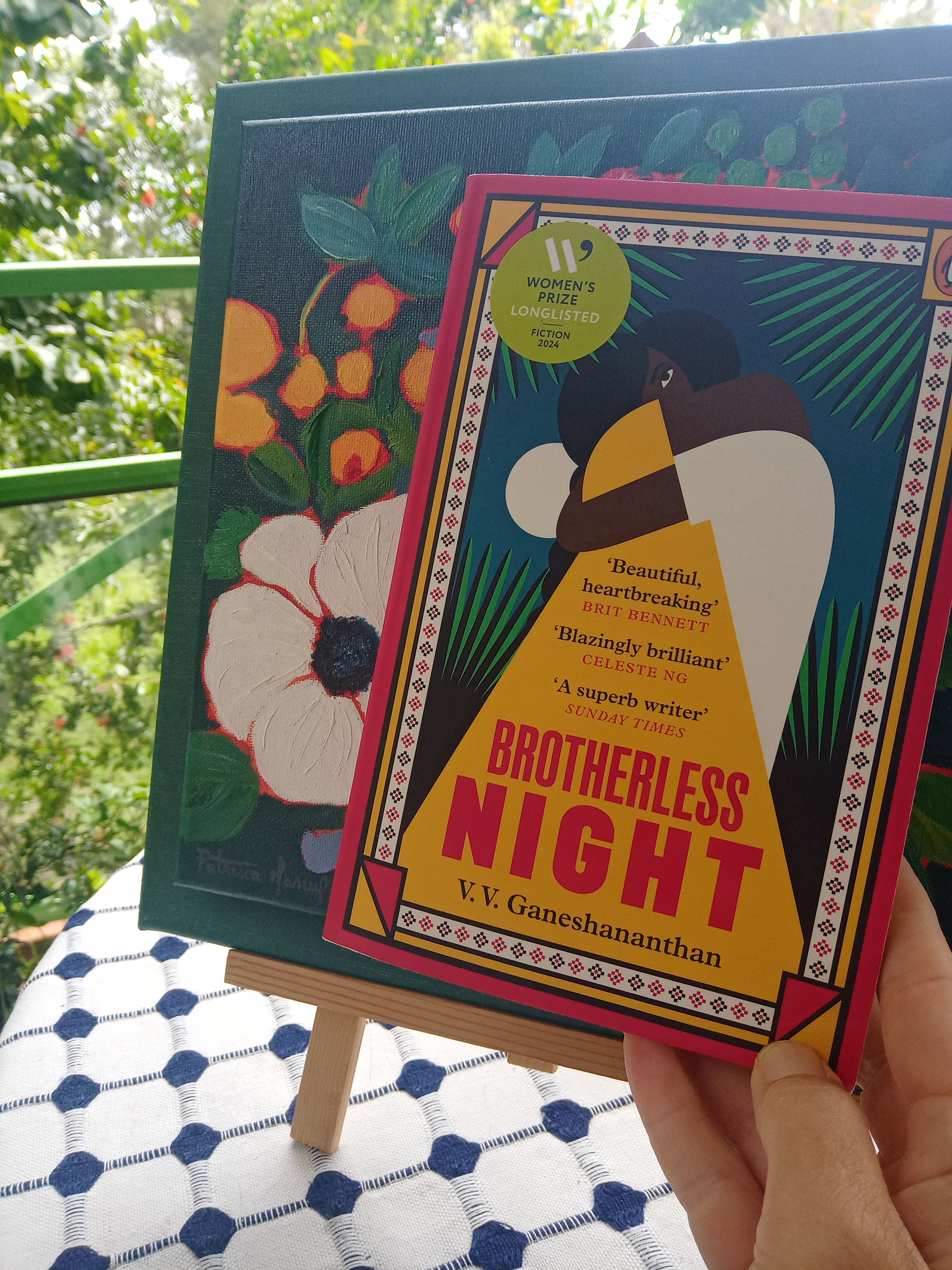
Brotherless Night by V.V. Ganeshananthan

I became aware of Brotherless Night when it was shortlisted for the Women’s Prize for Fiction 2024, the winner of which will be announced at 6.45pm GMT on June 13th, 2024.

When I read that it was about a young woman in Sri Lanka, in the time of approaching civil war, I recalled reading Nayomi Munaweera’s excellent Island of a Thousand Mirrors (my review here), a book about families and divisions, as well as belonging – how human beings continue to perpetuate separation and difference and make it dangerous, fearful and forbidden to pursue union and friendship, due to backgrounds and ethnic differences. Two families from different ethnic origins, living up and downstairs from each other…and so the story will unfold, as another generation is compromised.

Long simmering ethnic tensions and perceptions of injustice against the government lead to a civil war that pitted one group of people against the other, Buddhist Singhalese and Hindu Tamil.

A Family and A Country Set to Lose

Sri Lanka civil war 1981 -1989 a sister who wants to become a doctor, four brother, Tamil militant recruiters, governments using ethnic differences to punish

Brotherless Night is narrated from the perspective of Sashi, from 1981-1989, the long, tumultuous, violent years of the civil war, fought between the Sinhalese-dominated state and Tamil separatist groups (bookended by chapters set in New York 2009).

It is mainly set in the city of Jaffna, where the young protagonist of a Tamil family lives, with some chapters set in the capital Colombo.

At sixteen, Sashi wants to become a doctor like her older brother. She has four brothers, all with different ambitions, three older and one younger. Their father Appa, a government surveyor, is travelling and rarely at home unless given leave.

The story opens when one of their friends K, hears Sashi’s screams as she spills hot water on herself and drops his bicycle and comes inside and tends to her burn. He is in her third brother Seelan’s class, also destined for medical school. His life will take a different direction, becoming further entwined with hers and her brothers.

Awakening to Irreparable Adult Conflict

The novel traces the beginnings of their pursuit of their dreams and the slow unravelling as the country erupts and young Tamil men are both recruited and sometimes snatched to join “the cause”.

A book sat on her brother’s shelf, an old bestseller about the 1958 anti-Tamil riots, one he read after being present at an international conference on Tamil language and culture where police had fired into the audience.

At sixteen I still hadn’t touched Emergency ’58 but I knew it was a brutal testimony to Sri Lanka’s willingness to slaughter its own Tamil citizens. My father’s slim, battered copy of the book had taken on the aura of something forbidden and terrifying. Did I need to read it to know that because we were ethnic minorities, Tamils were considered expendable?

It follows the effect on this particular family of the different choices people make, including the absent father and the daring mother. When two of the brothers join one of the militant groups, Sashi’s mother does everything to try and save the youngest son from becoming lost to them. When disaster arrives, she rallies ‘the mothers’ in one unforgettable episode that does make a difference, but won’t save them from what is coming.

The boys are challenged by their mother on a rare visit home, but are unable to provide responses to her unanswerable questions.

The Twisted Turns of Stunted Dreams

It is about the disruption of the dreams and the way they can swerve when disasters occur; about the effect on families and youth of political ideologies and both the difficulty and dangers of resisting; the futility of judgement, of regret.

I did not wait. Neither did the war. It was with us now. Since Dayalan and Seelan would not tell us, I went out and asked my friends what they had heard or knew, and in that way began to collect information about the new lives people were choosing. Were they responding to the war or were they making it? Boys joined in droves; the ranks of the militant groups swelled. Almost every week now one of our neighbours told Amma about those they knew who were going. People spoke about it more and more freely. Some of the parents were proud. “What did we expect them to do, after all,” said Jega Uncle, Saras Aunty’s husband. His nephew had joined. “After what they did in Colombo, how did they expect us to react?”

How to Survive

Perhaps education is one of the few ways that youth can escape a world in turmoil, but even that is no guarantee. So many have little choice or are made to choose between life and death, no choice at all.

Stories that involve families, their experiences, their losses, their small wins, their deep hurts, their bravery and failures perhaps tell us more than what media news stories depict, where money, power and political influence dictate. The lives of families, of mothers and sons and daughters come from the heart, from a desire to want them to survive and thrive.

Thoroughly researched and humanely presented, while not holding back from expressing its fury, this novel will make many readers grateful for the simplicity of their own lives and realise the ease with which they are able to pursue it and the banality of our own carefree decision-making, compared to the complicated conflict too many today are born into.

Highly Recommended.

“I was interested in writing about the gray space between militarized societies and questions of choice and coercion,” V.V. Ganeshananthan, in an interview with Here & Now‘s Deepa Fernandes

Further Reading

wbur Interview: ‘Brotherless Night’ explores Sri Lanka’s civil war through stories of family by Deepa Fernandes

NPR: ‘Brotherless Night,’ an ambitious novel about Sri Lankan civil war, wins $150K Carol Shields prize

The Guardian: Brotherless Night by V.V Ganeshananthan review – heartbreak in war-torn Sri Lanka by Yagnishsing Dawoor – excerpt below.

The novel has the intimacy of a memoir, the urgency of reportage, and the sweep and scale of the epic. It occasionally employs the second person to address the reader. In this, it sits somewhere between plea and testimony. And while the revelations are distressing, the narration itself is buoyed up by a rare and robust emotional force. Ganeshananthan’s prose is rich, eloquent, utterly unsparing. “The war,” Sashi tells us, “offered us only tight quarters.”

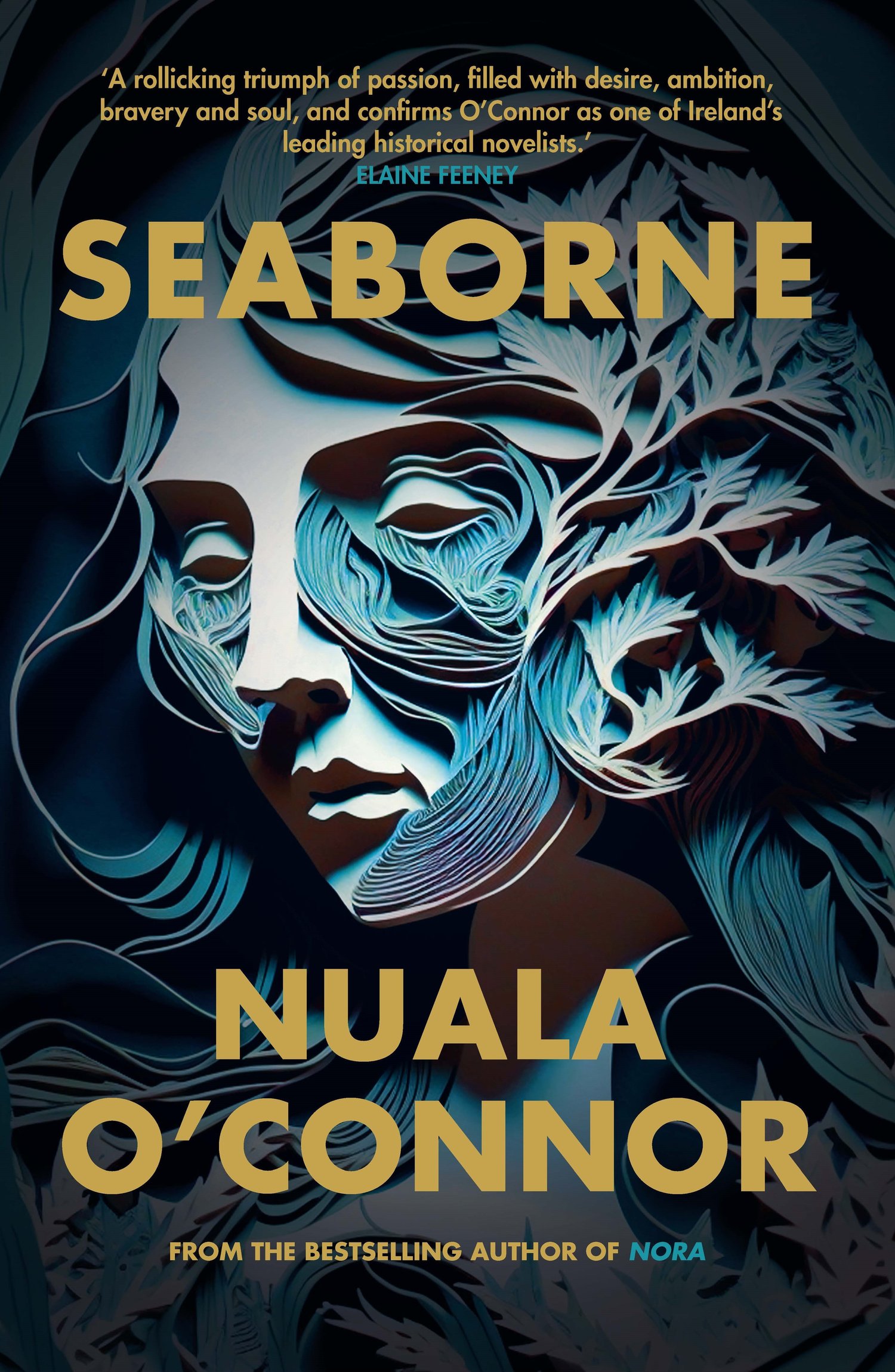
Seaborne by Nuala O’Connor

Formative Years Bring a Taste of Freedom

rebel pirate woman adventure Irish literature

Seaborne is an adventure story about a young girl born in Kinsale, Cork to a maid, who, in order to keep her with her, styles her as a boy growing up, so she can stay in her father’s house (a local lawyer) and be apprenticed to him.

Anne becomes Anthony in her childhood and loves nothing more than going out on the boat with her father, being at sea.

Eventually, in order that her parents can be together, the man abandons his wife and family, and travels with Anne and her mother to the Carolina’s where he will run a plantation.

Life As A Girl is Restricted

But Anne having had significant freedom as a boy is none too pleased by the restrictions and rules that presenting as a girl puts upon her.

‘Three times trouble, girl, with your red hair, and your forward manner, and your obsession with water and boats. For a lady, one is ill luck and the others are ill conduct. The three do not match well.’

And I give my ever honest reply. ‘They match the finest with me, Father.’

Finding a Way to Seascape

She finds solace and much more, with her friend and servant Bedelia and finds a way to have the occasional sea journey thanks to a young man they hear of, Gabriel Bonny, who for a few coins will take a person to sea. At first he declines to take her, she will visit a tailor and have a set of clothes made, more suitable for seafaring, eventually she wins him over, he can not refuse her.

I woke this day knowing only one thing: I wanted to hire a boat, row it out, and feel saltwind about my face and hair. I desired to have nothing but the sway of the sea under my body and I determined to make that happen.

Seeing him as a way to escape her destiny and to a life at or near the sea, she elopes with him, taking Bedelia with her.

Passion, Piracy and Plunder

Photo by brenoanp on Pexels.com

In the town where they settle Anne discovers that her husband isn’t so keen to let her pursue her dream to be at sea. She becomes restless and rebels against the wifely life and in her restless wanderings, she comes across someone who will.

Captain Calico Jack will allow her to follow him and his crew into dangerous territory and a life she had never imagined but finds passion and excitement in.

I crave a chance to wave my sword, to fire a shot. I want to know how it feels to own such power. And I think of the riches that await us, and the wandering sea-life Jack and I will have when we have plenty of money.

They will sail around the islands of the Caribbean, looking for opportunity, trying to avoid those in service to Governor Rogers, a man with a mission to suppress piracy and protect trade, who was hell bent on apprehending the infamous pirate and his men.

A Maverick Maiden

Set in the 1700’s, Anne Bonny is a real character, though much about her is legendary and not easily verifiable. Nuala O’Connor has familiarised herself with facts and read the fictions and re-imagined a version of a deeply unconventional life for Anny Bonny, told in a lilting, of its era prose.

It is narrated in a way that allows the reader to easily visualise the life and surroundings she inhabits and the high sea adventures she participates in, even if they are shortlived. It’s a fun, imaginative read, of a woman before her time, who gave herself freedoms and lived fearlessly, despite the era she lived in and the culture she came from.

Further Reading

Irish Daily Mail: I’m Always Willing to follow a historical female maverick to see where her story leads me

RTE Radio 1 Interview: 39th Cúirt International Festival of Literature

Author, Nuala O’Connor

Nuala O’Connor is a novelist, short story writer and poet, and lives in County Galway with her family.

She is the author of four previous novels, including Nora: A Love Story of Nora and James Joyce (2021), Becoming Belle (2018) and Miss Emily (2015), a reimagining of the life of Emily Dickinson, and six short story collections, her most recent being Joyride to Jupiter (2017) and Birdie (2020).

She has won many prizes for her short fiction including the Francis MacManus Award, the James Joyce Quarterly Fiction Contest and the UK’s Short Fiction Journal Prize and been nominated for numerous prizes including the Edge Hill Short Story Prize, the Kerry Group Irish Novel of the Year Award, the Irish Book Awards Novel of the Year and the International Dublin Literary Award. Nora was shortlisted for the 2021 An Post Irish Book Awards RTÉ Audience voice Award. She is editor-in-chief at flash e-zine Splonk.

The Last Train from Paris (2023) by Juliet Greenwood

Women of Courage, WWII

Juliet Greenwood writes immersive historical fiction, often set in Wales or Cornwall around World War II and always featuring women protagonists, who rise to the challenge in difficult times. Her books are a tribute to those women, often unseen, who keep the world turning, even in the most terrible of times.

I have been following Juliet’s progress and reading her books since she wrote Eden’s Garden and I have also read and reviewed We That are Left and The Ferryman’s Daughter.

The Last Train from Paris is set in the period just before and during World War II, moving from Paris, to London to Cornwall and was inspired in part by stories that Juliet’s mother told her about this period.

It’s a story I’ve been longing to write, ever since I was a little girl and my Mum first told me about studying French near Paris on the day war broke out in 1939. I couldn’t imagine then what it must have been liketo have been a 17-year-old English girl, on her own, catching the train to Calais through a country preparing for war and, like Nora, finding herself on a ferry in the middle of the Channel, being stalked by a German submarine. It’s a story that’s haunted me, especially since we found the letters Mum exchanged with my Dad in London, and the scribbled note she sent him when she finally arrived in Dover.

Past Circumstances, Present Lives

WWII Historical Fiction Cornwall Paris 1939

1964: Iris is visiting her mother in St Mabon’s Cove, Cornwall, an escape from her life in London. She has been having nightmares of feeling trapped. Her mother has given her a box. She has also been looking at the objects in it that relate to her past. It is awakening something that has become more insistent. She knows she was adopted and that these items have something to do with her original family.

Over the course of the weekend, she will ask her mother questions and begin to learn about the past. And encounter a strange reporter is snooping around the village asking questions, a caller her mother wishes to ignore.

Studying in Paris, 1939

The historical narrative centres around two young women characters in 1939; Nora lives in London, where she has worked as a dish washer in a kitchen since she was sixteen. Sabine, a freelance journalist works in a boulangerie (bakery) in Paris, living with her husband Emil, also a journalist, who is focused on writing the novel that is going to change their lives.

The two women meet when Sabine gives a talk in London, after spending a month gaining work experience at the London Evening Standard newspaper. They maintain contact, writing each letters regularly.

Nora, frustrated with the lack of opportunity in her job, comes up with the idea of going to Paris to do a chef training course at Madame Godeaux’s Cuisine Française, seeing no chance of promotion in her current employment.

The Risk of Relying on the Family Business

Juliet Greenwood historical fiction Paris 19
Photo Pixabay @ Pexels.com

Sabine and Emil’s lives are a little precarious due to their reliance on Emil’s brother Albert to subsidise their rent and pending war has contributed to the family boot business suffering. When bad news arrives, Emil, as the second son, is summoned to return to Colmar, to take over from his brother.

When Nora arrives in Paris, she is disappointed to learn that Sabine has already left for Colmar, but she settles into her course and meets other girls, amid a growing wariness of the safety of the city. When one of the girls Heidi tells her the real reason she is in Paris, Nora begins to understand the danger that is not far away.

The novel follows the twin time periods, the present day 1964 where Iris hearing from her mother stories of the past that will lead towards her understanding her identity and circumstances that lead to where she is now and the crossing of paths of two women in the past whose connection resulted in lives being forever changed.

As the story gathers pace, secrets are revealed, dangers confronted and choices made in desperation have long term effects.

There are so many twists and turns in the story, it’s one that you won’t want to put down once started, bt to share any more would be to spoil the joy of discovering and the detective work we begin to do as readers, trying to puzzle out the missing pieces of the jigsaw of these three women’s lives.

A riveting and immersive read, that reminds us just how precarious life is, how stability can be shattered from one day to the next, yet offers hope in its demonstration of the acts of kindness some will make to help others, to make each other safe.

N.B. Thanks you to the author Juliet Greenwood, for providing me a copy of the book to read and review.

These Days by Lucy Caldwell

These Days is set over a period of a week in the life of one family with a young son and two daughters, both of whom are at significant turning points in their relationships, just as the Belfast Blitz is about to destroy much of their city.

The precariousness of life pushes both girls out of their everyday lives into confronting the very depths of who they are and what they want from life and whether or not they are prepared to conform or compromise.

Belfast Blitz World War 2

The tension of living with blacked out windows, with their father being an on-call doctor, who must rush to the hospital to deal with the casualties and Emma, a First Aid volunteer also called into the throng of destruction, heightens the situations both girls are in, creating a unique sense of urgency, and yet…

Audrey’s boyfriend, an only son, is also a doctor and the thought of possibly losing her hastens his own decisions, which Audrey responds to in that same atmosphere of heightened tension. But when she returns to work at the tax office and begins to realise how that decision is likely to change her life, she begins to question how much she really wants it. IS what she feels enough?

…She thinks of the Yeats poem: this tumult in the clouds…in balance with this life, this death…and she thinks how strange, how strange it is, the sides on which we find ourselves, the things we, really, have no choice or say in, the ways we blindly go through a life in which the grooves are already set.

Emma spends less time thinking about her decisions and future life, she is more impulsive, reckless even. Just as she is coming to the realisation of how she wants to love and live, that vision of a future life disappears right in front of her. In a cruel twist of fate, she will experience something that her own mother has long lived with, intertwined feelings of love and grief, of love at its inception, turned in an instant to memory, rather than be allowed to flourish.

Their mother too conceals thoughts of a life not quite embarked on, one cut short that re-enters her imagination now and then, that has caused her to stop believing.

But the times we live through, she thinks, as they turn onto Sydenham Avenue, have bred in us all a grim, stoical sort of endurance. After the Great War, and the civil war, and the shattering Troubles of the twenties, those hundreds of people dead…After the unemployment and the riots of the thirties, the sectarian pogroms, the chaos, the roads blockaded, the burning, only half, a quarter of a mile away…You’re not surprised by anything anymore: you shake your head and press your lips and get on with whatever else there is to be doing, make the most of things, make of what you have – what you’re fortunate, and yes, grateful to have – the best you can.

Her latent grief, a feeling that arises then recedes, removes some of the shock of what is happening around them.

It hasn’t surprised her, over the years, she sometimes secretly thinks, that the city around her should periodically erupt into barricades and flames, doesn’t surprise her that it should be obliterated now from above, because that, sometimes, is how a cold small part of her feels – just take it, take all of it, I want none of it, none of this, because none of it – how can it? – none of it matters.

As these women go about these terrible, historical days, encountering both a physical and emotional toll, they will all come to realise what is most important to them, it will mark them and change them.

It will never go away, she wants to say then. None of it does – the real or the imagined. Once you have seen those images, whether with your eyes or or in your mind’s eye, they are etched there – seared into the body. They are there forever and you can’t pretend otherwise. When they rise up, you need to try not to fight them, try not to push them away. You must just focus on the smallest, most incidental thing you can. You must make yourself breathe, and feel the current of breath through your body.

Meticulously researched, the days of the Belfast Blitz and the consequences of families, are brought to life in the pages of this novel, the lost and homeless, the children evacuated, the trauma these days will instill in the genes of future generations, yet unborn. Those familiar with the streets and surrounds of Belfast will imagine it all the more evocatively.

“My grandma didn’t like to talk about the Belfast Blitz: ‘Ach, sure, what do you want to know about all that for?’ Towards the end of her life, wracked with vascular dementia, all questions became traps, and then she couldn’t talk at all. I still wonder, even after years of researching it, what her stories might have been.” Lucy Caldwell 

The Belfast Blitz

Lucy Caldwell These Days

Due to its capacity for shipbuilding and other manufacturing that supported the Allied war effort, Belfast was considered a strategic target by the German Luftwaffe. It was also the most undefended city in Europe.

That threat became a reality in April and May 1941, with four separate attacks, causing a high number of casualties and destruction of the city and residential areas.

On Easter Tuesday, 15 April 1941, 200 Luftwaffe bombers attacked military and manufacturing targets in the city. Some 900 people died as a result of the bombing and 1,500 were injured. 220,000 people fled from the city.

In total over 1,300 houses were demolished, some 5,000 badly damaged, nearly 30,000 slightly damaged while 20,000 required “first aid repairs”.

Lucy Caldwell, Author

Born in Belfast in 1981, Lucy Caldwell is the award-winning author of four novels, several stage plays and radio dramas, and two collections of short stories: Multitudes (2016) and Intimacies (2021).  

These Days (2022) won the 2023 Walter Scott Prize for Historical Fiction.

The Tea Girl of Hummingbird Lane by Lisa See

This was a title from my list of 20 Books of Summer 2023 by the author Lisa See, whose previous and more recent historical fiction set on the Korean island of Jeju, I very much enjoyed.

The Island of Sea Women was a novel about the haeyno women, a female diving collective, their history and how their lineage was changed by societal events happening around them. A stunning, unforgettable work of fiction that drew on a fascinating history.

In The Tea Girl of Hummingbird Lane, a girl named Li-yan from an Akha hill tribe in China learns everything in childhood from her mother, she is subject to the tribes rituals, beliefs, traditions. However, some of the events she witnesses mark her in a way that make her determined to avoid being subject to them.

The novel begins in the 1980’s and although Li-yan had little exposure to the outside world, she is less accepting of old ways that are cruel and barbaric. She is part of a consciousness raising, yet in some ways still tied to traditional expectations. The novel follows her through life up until present day 2016 (when it was written).

Young love feels invincible but can create a trap, so when Li-yan finds herself in a compromising situation, she and her mother do what they can to deal with it less harshly than what custom dictates. She crosses a line that no matter which way she turns will have devastating consequences, so makes the decision she can best live with, keeping it a secret from everyone else.

Her life continues after this event, and through her we witness aspects of Chinese life for this young woman who has a chance to be more formally educated and become knowledgeable about all things to do with Pu’er tea, about all kinds of tea trees, with the additional connection of coming from a land where her lineage has been long connected to these ancient trees.

“The colour of the brew is rich and dark with mystery. The first flavour is peppery, but that fades to divine sweetness. The history of my people shimmers in my bones. With every sip, it’s as if I’m wordlessly reciting my lineage. I’m at once merged with my ancestors and with those who’ll come after me. I grew up believing that rice was to nourish and that tea was to heal. Now I understand that tea is also to connect and to dream.”
Photo by Angela Roma on Pexels.com

In addition to her own personal secret, she shares with her mother, the secret location of one particular ancient tea tree, one she has inherited by birth and in a location that must continue to be hidden, due to superstition.

“Is this my land?” I ask.
“When I went to you a-ba in marriage, the old traditions were supposed to be over. No more buying and selling of women into slavery or marriage. No more dowries either. But it doesn’t matter what the government says. This land belongs to the women in our line. It is ours alone to control. It was given to me as my dowry as it will one day go to you with marriage.”

As the tea industry develops and booms and people begin to pay crazy prices for what perceive is precious, many in the village leave their old ways behind, following the allure of money and wealth. This too challenges relationships, friendships and threatens the long held bonds within the village.

The Tea Girl of Hummingbird Lane Lisa See
Photo by Quang Nguyen Vinh on Pexels.com

Simultaneously to the narrative set in China, the story dips in and out of the life of an adoptee, Haley Davis in America. It is a less profound exploration of a complex subject within the novel, and at times an uncomfortable exposure of the significant issue of intra-country adoption.

Overall, an engrossing, eye opening, well researched historical novel, that will make you think about tea in ways you may never have done before.

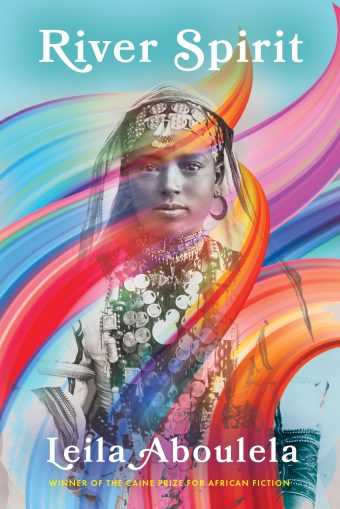
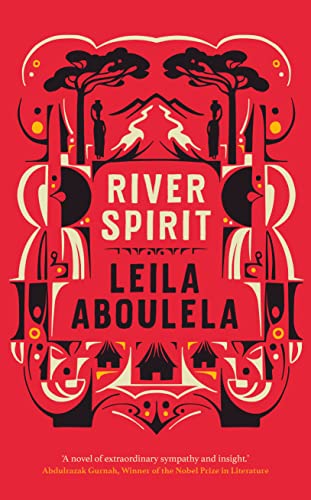
River Spirit by Leila Aboulela

I have now read three novels by Leila Aboulela and enjoyed them all, her historical fiction has taken me into parts of history that I’ve known nothing about and she brings a fresh, unique perspective, thanks to her cross-cultural life experience, at the intersection of being a Muslim woman of Sudanese origin living in Scotland.

I was very much looking forward to this latest novel as she returns within it to her country of origin and tells us a story that begins in a village and moves to the city of Khartoum, Sudan, intertwining the crossover histories of two occupying Empires against a uprising local population, at the very place where two grand rivers meet.

Grandiose Empires and A False Prophet

White Nile Blue Nile Khartoum Sudan conflictRiver Spirit is a unique work of historical fiction set in 1890’s Sudan, at a turning point in the country’s history, as its population began to mount a challenge against the ruling Ottoman Empire, only the people were not united, due to the opposition leadership coming from a self-proclaimed “Mahdi” – a religious figure that many Muslims believe will appear at the end of time to spread justice and peace.

The appearance of ‘the Mahdi’ or ‘the false Mahdi’ created a division in the population and provided a gateway for the British to further a desire to expand their own Empire, under the guise of ousting this false prophet. However for a brief period, this charismatic leader would unite many who had felt repressed by their circumstances, inspiring them to oust their foreign occupiers by whatever means necessary, even if it also set them against their own brothers and kinsmen.

Orphans, A Merchant, A Promise

Against this background, Leila Aboulela tells the story of orphan siblings, Akuany and Bol, and their young merchant friend Yaseen, a friend of their father; their parents were killed in a slave raid on the village, the merchant made a promise to protect these two youngsters, forever connecting them to his life.

The story is told through multiple perspectives, mostly in the third person perspective, from Akuany (who becomes enslaved to both an Ottoman officer and a Scottish painter at various points and is renamed Zamzam) and Yaseen’s point of view, as well as one of the fighters of the Mahdi, Musa.

Leila Aboulela Sudan 1890s historical fictionThe change in perspective and the lack of a first person narrative keeps the characters at a slight distance to the reader as we follow the trials of Zamzam’s life and her dedication to being a part of Yaseen’s life. Like other readers, I wished at times that the story was told in the first person from her point of view, but the story is too important to be limited to one perspective.

So the reader is taken on a journey through the shifting viewpoints of all parties implicated and affected by the approaching conflict, those of fervent belief, the skeptical, outsiders with ulterior motives, and the innocent, the women and children trying to live ordinary family lives amid the power struggles of patriarchal dominance and colonial selfishness.

Yaseen decides to become a scholar, a decision that changes his life and opportunities; he meets the Mahdi and is unconvinced, an opinion that will become dangerous and have repercussions for him and his family.

As the revolutionary Mahdi leader grew in popularity and his followers in confidence, Sudan began to slip from the grasp of Ottoman rule and everyone was forced to choose a side, whether for personal, political or religious reasons. The (religious) confusion created by the implication of accepting this new leader ,became a strategic opportunity for British colonial interests to gain access to natural resources and secure control of the Nile ahead of other European interests was well as protecting their interests in Egypt. The real threat for both the Ottoman and British Empires, was the potential for the creation of a new independent power, one that came from within Sudan. That, clearly, they were likely to undermine.

What has changed is that this is now a massive rebellion against a major power. The fake Mahdi has coalesced the nation’s sense of injustice.

Two Rivers Entwine, the Nile

River Spirit The Nile Leila Aboulela SudanOnce Akuany and her brother leave the family village, most of the story takes place in Khartoum, a city that is at the confluence of the Blue Nile and the White Nile, two major rivers that join to become the Nile proper, the longest river in the world, that continues on through Egypt to the Mediterranean.

The river is part of Akuany’s story, part of her being and a symbol of her twin selves, one free, one enslaved, of twin occupying forces, the Ottoman and British Empires, of the many aspects in the story where twin forces clash, mix and become something new. It represents her devotion to her brother and to the merchant Yaseen, to a focus that drives her forward through the changing circumstances of her life. The two rivers arrive from different sources in a city that is full of many coming from elsewhere, where agendas often clash and local people get caught on the crossfire of inevitable conflict.

She was not one of them, but she was like them. She was also one of the lowly rising, one of the poor benefiting, one of the featherweight children of this land, thrust up by this shake-up, loosened and made free to stand up and grab what was there on offer, what she had always wanted.

One of the things I particularly enjoyed about the story, was the focus of the story coming from characters within the population, that we witness things from within, through the eyes of both a simple, loyal but marginalised, servant girl and through a young educated man, both of whom are from Sudan. They are living in turbulent times and are witness to the effect various powerful influences have on their city and in the case of ZamZam the effect on her person, treated as an object of ownership.

Cycles of Conflict, Khartoum Today

The novel was published on March 7th, 2023, a mere month before two Generals again plunged Sudan into armed conflict with devastating consequences for civilians and civilian infrastructure, especially in Khartoum and Darfur. At least 676 people have been killed and 5,576 injured, since the fighting began. (14 May, UN source)

Over 936,000 people have been newly displaced by the conflict since 15 April, including about 736,200 people displaced internally since the conflict began, and about 200,000 people who have crossed into neighbouring countries, including at least 450,000 children who have been forced to flee their homes.

“Fanatics can never draw out the good in people. They will go to war I predict. They will raise armies, invade, and pillage because it is only aggression that will keep their cause alive. Fighting an enemy is always easier than governing human complexity.”

Further Reading

New York Times: Amid Conflict and Cruelty, a Love Story That Endures by Megha Majumdar, March 7, 2023
Brittle Paper: A Compelling Tale of Love and Anti-Colonialism in 19th Century Sudan by Ainehi Adoro, May 16, 2023

The Scotsman, Book Review by Joyce McMillan

Brittle Paper, Interview: “We Need to Hear the Stories of Africa’s Encounter with Europe from Africans Themselves” | A Conversation with Leila Aboulela

Africa in Words (AiW) Interview: Review and Q&A: Leila Abouleila’s ‘River Spirit’ – Rewriting the Footnotes of Sudanese Colonial History by Ellen Addis

Leila Aboulela, Author

River Spirit Sudanese historical fiction MahdiLeila Aboulela is a fiction writer, essayist, and playwright of Sudanese origin. Born in Cairo, she grew up in Khartoum and moved in her mid-twenties to Aberdeen, Scotland. Her work has received critical recognition and a high profile for its depiction of the interior lives of Muslim women and its distinctive exploration of identity, migration and Islamic spirituality.

She is the author of six novels: River Spirit (2023), Bird Summons (), Minaret (2005), The Translator (1999), a Muslim retelling of Jane Eyre, it was a New York Times 100 Notable Books of the Year, The Kindness of Enemies (2015) and Lyrics Alley (2010), Fiction Winner of the Scottish Book Awards. Leila Aboulela was the first winner of the Caine Prize for African Writing and her latest story collection, Elsewhere, Home (2018) won the Saltire Fiction Book of the Year Award.

Her work has been translated into fifteen languages and she was long-listed three times for the Orange Prize, (now the Women’s Prize for Fiction).

“We need to hear the stories of Africa’s encounter with Europe from Africans themselves. Mainstream colonial history has been viewed and written through the lens of Europe. This is insufficient for us in these contemporary times and as Africans we need to write our own history. ” Leila Aboulela, interview with Brittle Paper.

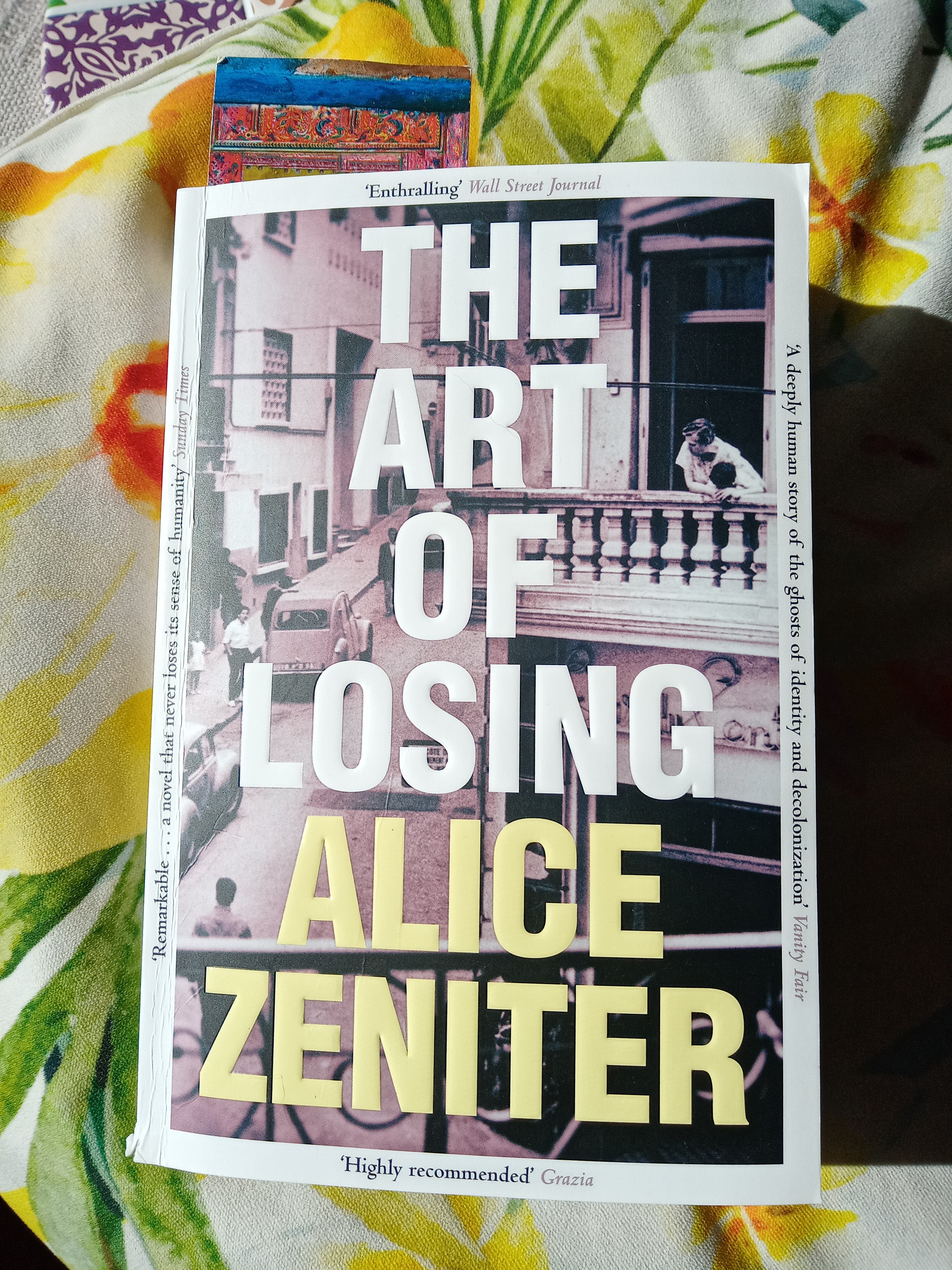
The Art of Losing by Alice Zeniter tr. Frank Wynne

Most Popular Library Book of 2022

The Art of Losing by Alice Zeniter was the winner in 2022 of the Dublin Literary Award, an award where all books nominated are chosen by librarians around the world. As a result, this book went on to become the most borrowed book in Ireland, though it was nominated by the Bibliothèque publique d’information, France.

Three Generations of Family From 1930’s Algeria to Present Day Paris

Spanning three generations, beginning with Ali, born in a mountain village of the Kabyle region of northern Algeria, his son Hamid, also born there but whisked away to France with his parents in 1962, when threats and violence arrived in the village, endangering their lives, to Naima, born in France – the one who seeks answers to questions about who they are, why they had to leave and the stigma that surrounds their identity.

wp-1676027504150Written in three parts, each is an immersion in that era and life, showing how swiftly families change when they cross into another culture, how foreign they become to their own, how important it is to heal the wounds of the past, to acknowledge, understand and have tolerance for differences; how fear passes down ancestral lines, how connection is important.

The prologue begins on a day near the end of what is to come. Naima has a hangover, a phrase repeats in her mind, her cousin’s words, demanding ‘Have you forgotten where you come from?’ She is preparing for an exhibition, an event that will take her back to her roots in Algeria.

As with many that use a prologue, it is a good idea to reread it after finishing the book, it has little context in the beginning. To be honest, I don’t find its placement at the beginning either helpful or intriguing. The book didn’t need it.

A Kabylian Mountain Village

And so we return to the 1930’s, a better place to begin the story.

In the 1930’s, Ali is a poor adolescent boy from Kabylia. Like most boys in his village, he is hesitating between breaking his back in small family fields dry as sand, tilling the lands of a colonist or some farmer richer than he is, or going down to the city, to Palestro, to work as a labourer.

olive press

Photo by Alin Luna on Pexels.com

The family fortune changes, first when their father dies in a rockslide, then when Ali and his brothers are caught in a flash flood and manage to not only save themselves, but trap a floating olive press that almost drowns them.  It becomes key in changing their circumstance and before long they buy olive groves of their own.

The wealth of Ali and his brothers is a blessing that rains down upon a wider circle of cousins and friends, binding them into a larger, concentric community. It takes in many of the villagers, who are grateful. But it does not make every one happy. It overthrows the erstwhile supremacy of another family, the Amrouches, who, it is said, were rich back when lions still roamed.

Though it is 100 years since the colonisation of Algeria by the French, life in the mountainous hamlets still runs according to clannish loyalties. Rifts exist between villagers, each sides with their own clan, it brings no hatred or anger, in the early days it is simply a matter of pride, of honour. However, whenever there is a debate or decision, they naturally take opposite views.

A qaid (local leader appointed by the French) warns them of bandits, men who say they are fighting for the independence of the country, said to have been manipulated by Egyptian revolutionaries and Russian communists. When the freedom fighters appear, they will tell them they are not outlaws, ‘we are Kabyles, Muslims, like you’.

The villagers waver between exaltation and fear.  Exaltation because everyone here  believes that the French have no right to what the mountain lands offer to the Kabyles. Fear because of the word ‘we’, used so casually by this man that no one here has ever seen.

Things hot up and eventually they will be warned against listening to French propaganda and threaten those affiliated with them, (WW2 war veterans) should they continue to claim their war pension. This group become referred to collectively as harki. As will be their descendants, anyone who admits their family left in 1962.

First Generation Transition

Camp de Rivesaltes 1962 FranceWhen they flee to France, they are initially housed in the ‘Camp de Rivesaltes‘ and subsequently sent to a social housing community in Normandy. Hamid is the eldest of what will soon become a family of 10 children. He is the go-between, the first to receive the French education, to learn what is expected of them, to encounter racism, to want to escape the entrapment of a family that will always be seen as outsiders.

Perhaps if his childhood had been like Clarisse’s, he would have done something else, he would have taken the time she suggested to to discover what he truly loves, what he wants to devote his days to doing, but he has not been able to shake off entirely the obligation of the utilitarian, the efficient, the concrete, nor has he been able to shake off a notion of the civil service as a grail where he is fortunate to be allowed to work.

At night, as he sets his alarm clock, he sometimes thinks that it takes much longer than he expected to escape, and that if he has not put as much distance between himself and his childhood as he would have liked, the next generation can carry on where he left off. He imagines that what he is really doing in the stifling little room that serves as his office is amassing shares in freedom that he will be able to pass on to his children.

He is free to marry for love, but he carries a legacy of silence into it. Outside the country of his birth, he is not judged like his father was for initially not producing a son. Hamid will raise only girls. One of them, Naima will tell their story.

“Every family is the site of a clash of civilizations.” Pierre Bourdieu, Sociologist, Algeria 1960

A Mystery of Identity and Repercussion for Multiple Generations

On discovering her father and therefore her family are referred to as harki, Naima sets out to discover what exactly this means and what her grandfather and others like him might have done to be so distrusted by their own. Despised at home and unwelcome in the country that has given them citizenship due to their efforts and support during WW2 – and left them stranded thereafter.

The path to acceptance is a lonely road and an almost impossible one without losing one’s identity completely; something must be let go, given up – each successive generation moves further away from their roots, knowing less and less about who they were.

The War That Made Heroes of Some & Traitors of Others

Naima’s investigation into her grandfather Ali’s past, reminds us of others who joined the cause to fight in WW2, of the Battle of Monte Cassino, in Italy. Like men from other colonial countries, he fought, yet as a consequence, for defending France, for being a war veteran, became perceived by many in his own country as a traitor.

As I read about this, I stopped and went to check a few of my own ancestral documents and sure enough, my grandfather too fought in the Battle of Monte Cassino, a raw subject he never talked of, that gave him nightmares for years. He lost his best friend there. In his division alone 1,600  New Zealanders lost their lives. These men were always regarded as heroes.

Looking Back, Healing Wounds, Learning Whose Version of a Story?

The Art of Losing brilliantly portrays these lives over three generations to bring Algerian history alive in a way that is rare to come across. Though there is a depth of research behind it, the pace never slows, in the hands of this storyteller, artfully using her characters, their relationships and circumstances to present an historical perspective and explain why sometimes silence and burying ones pain seem like the only way to survive, to manage disappointment. But then successive generations are challenged in relationships to break old patterns and heal wounds they may have inherited without even knowing the cause.

The novel ends with a retrospective art exhibition of a man Lalla, named in homage to Lalla Fatma N’Soumer (1830-1863) a Kabylan leader of resistance against the French, an Algerian Joan of Arc.

History is written by the victors, Naima thinks as she drifts off to sleep. This is an established fact, it is what makes it possible for history to exist in only one version. But when the vanquished refuse to admit defeat, when, despite their defeat, they continue writing their own version of history right up to the last second, when the victors for their part, write their history retrospectively to show the inevitability of their victory, then the contradictory versions on either side of the Mediterranean seem less like history than justifications or rationalizations sprinkled with dates and dressed up as history.

Perhaps that is what kept former residents of Bias so close to the camp they loathed; the could not bring themselves to break up a community that had reached an agreement on the version of history that suited them. Perhaps this is a foundation of communal life that is too often overlooked yet absolutely essential.

The original French version l’art de perdre was published in 2017, the English translation in 2021, and in Sept 2021 the French president Emmanuel Macron, made an official apology and asked for forgiveness for the French treatment of Algerian Harki fighters, for abandoning them during their home country’s war of independence. Trapped in Algeria, many were massacred as the country’s new leaders took brutal revenge. Thousand of others were placed in camps in France, often with their families, in degrading and traumatising conditions.

A Must Read novel. Highly Recommended.

Alice Zeniter, Author

l'art de perdre harki AlgerianAlice Zeniter was born in 1986. She is the author of four novels; Sombre dimanche (2013) won the Prix du Livre Inter, the Prix des lecteurs de l’Express and the Prix de la Closerie des Lilas; Juste avant l’oubli (2015) won the Prix Renaudot des lycéens.

l’art de perdre (2017) won the Prix Goncourt de Lycéens and 5 other French literary awards, in translation as The Art of Losing (2021) it won the Dublin Literary Award (2022) and was among the 20 top-selling Francophone books for two years in a row.

“I decided I wanted to learn more, but I wasn’t particularly interested in doing all this research for myself. My own self isn’t of huge interest to me, whereas anything that taps into the collective, and the political, this I care about.” Alice Zeniter

On her Inspiration from French sociologist Nicole Lapierre (author of Sauve qui peut la vie)

“…in it, she says that we need to learn how to tell their story like we do Odysseus’s. That migrant’s stories aren’t about pity, no, they’re about a never-ending journey, a story of craft and resourcefulness, of strength and beauty, of repeated departures, and until we manage to tell these stories in that way, we are abandoning them, leaving them to at best be pitied, and at worst be hated and feared. And that’s when I realised that the story I was researching, which dated from the early 1960s, completely echoed these current events. It is the story of populations locked in camps built far from urban centres, hidden away so that many will be able to say they didn’t know, that they don’t want to know or bother with these realities, with typhus and lice… This is when I realised that there might be an emergency to write about this motif, focusing on the fact that any migration is first an emigration, and removing that part from the story amputates people, it condemns them to misunderstandings. And that’s also when I decided to write this story in three acts. The emigration, the arrival which never really arrives and the third generation which, despite knowing nothing about the land of origin, has never been able to fully arrive either, as French people.”

Alice Zeniter is a a French novelist, translator, scriptwriter and director. She lives in Brittany.

Dublin Literary Award Longlist 2023

With books nominated by 84 international libraries from 31 countries across Africa, Europe, Asia, the US, Canada, South America, Australia, and New Zealand, the full longlist of 70 novels has been announced for the Dublin Literary Award 2023. The €100,000 award is presented annually for a novel written in English or translated into English.

The nominations include 29 novels in translation and 14 debut novels. Among the translated books are novels originally published in Arabic, Bulgarian, Dutch, Hindi, Korean, Slovene, Icelandic, Japanese, Norwegian, Spanish, French, Dutch, Portuguese and more.

The international panel of judges who will select the shortlist and winner, features Gabriel Gbadamosi, an Irish and Nigerian poet, playwright and critic based in London; Marie Hermet, a writer and translator who teaches creative writing and translation at the Université Paris Cité; English writer Sarah Moss who is the author of eight novels and teaches creative writing at UCD; Doireann Ní Ghríofa who is a bilingual poet, essayist, translator and author of A Ghost in the Throat; and Arunava Sinha who translates fiction, non-fiction and poetry from Bengali to English and has won several translation awards in India.

The shortlist will be revealed on 28th March and the winner on 25th May 2023.

I have read two of the novels, the wonderful East German Marzhan, mon Amour which I adored, an uplifting semi-autobiographical novella that is a celebration of community, and the Irish novella Small Things Like These, I’m one of the few who didn’t get on with this novel, despite its popularity.

It’s a wide-ranging selection and it will be interesting to see what makes the shortlist. There are a few familiar authors I’m interested in who I’ve read before like Elif Shakaf, Louise Erdrich, Kim Thúy and Yewande Omotoso and those I’m aware of, that I’d like to try like the award winning Canadian author Omar El-Akkad.

Let me know what you’ve enjoyed or are tempted by in the comments below:

The Longlist

Below are all the titles on the longlist, with their genre and the country of origin of the author plus the comments made by the nominating library(s).
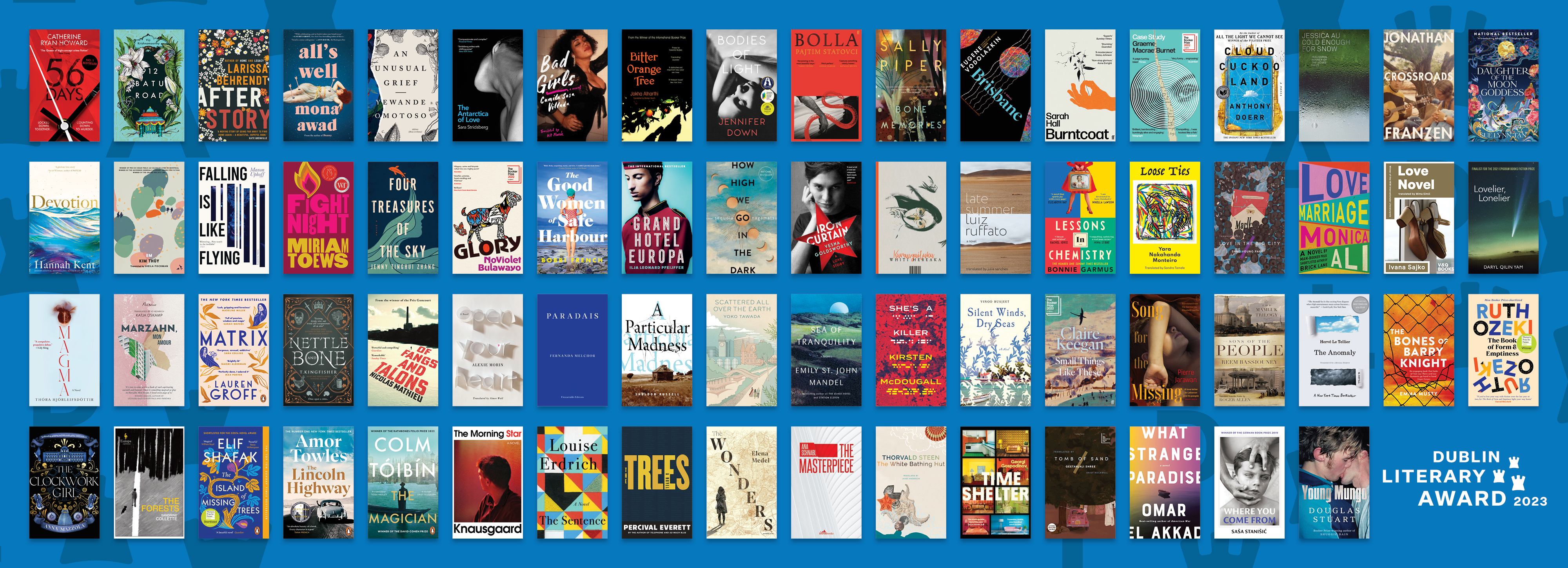
DLA23-Collage-1920x965px-02

56 Days  (Crime/Thriller Fiction) by Catherine Ryan Howard  (Ireland)

“a gripping and unputdownable thriller. Its structure is interesting going between the present, when a body has been found, and the 56 days preceding this gruesome discovery. Though fictional it deals realistically with the horrors of the real-life pandemic situation that the world had experienced during the previous two years.” –  Cork City Libraries

912 Batu Road (Historical/Migration Fiction) by Viji Krishnamoorthy (India of Tamil/Hokkein-Chinese)

912-Batu-Road Viji Krishnamoorthy’s sweeping debut novel deftly weaves together vibrant fiction and meticulous research on the heroic exploits of Malayan wartime heroes – Sybil Kathigasu, Gurchan Singh and many others – who fearlessly fought for their beloved country.

“This novel was chosen for its interesting history and patriotisms of Malaysia and Malaysians. It displays how Malaysia is a harmonious country that embraces multiracial aspects.” –  National Library of Malaysia

A Particular Madness (Fiction) by Sheldon Russell (USA)

“In his novel, Russell explores mental illness through the experience of the main character: Jacob Roland. Set in Oklahoma, the novel showcases the reality of rural America at a time when mental illness was often misunderstood and mistreated, as it still is today.” –  Oklahoma Department of Libraries, USA

After Story (Fiction) by Larissa Behrendt  (Australia)

After Story Larissa Behrendt

“It’s a beautifully written story, fascinatingly revealed via alternating perspectives from a mother and daughter using overseas literary travel to try to mend a difficult relationship, and illuminating the complex nature of familial ties, buried grief and historical trauma.” – Libraries Tasmania, Australia

All’s Well (Fiction/Horror) by Mona Awad (Canada)

A piercingly funny indictment of our collective refusal to witness and believe female pain.

“The plotting is a clever mishmash of Shakespeare, obviously MacBeth and All’s Well That Ends Well, though there’s a little Tempest thrown in as well. But Awad doesn’t make herself a slave to what Shakespeare dictates. She has entwined the Scottish play so brilliantly in a brutal theatre production of All’s Well, that the power plays, the ghosts, the betrayals, the madness, are seamlessly incorporated. How Awad came up with all this is fascinating.” –  Cleveland Public Library, USA

An Unusual Grief (Fiction) Yewande Omotoso (Barbados/Nigeria/South Africa)

“We were absolutely blown away by An Unusual Grief. Felt an instant connection to the book, perhaps because it has a local setting or the daily issues of life that it confronts.  While it deals with grief, it is not a gloomy book, thanks in large part to the art of storytelling that Omotoso displays throughout the novel. It is a beautifully written book that is raw in its emotion as it covers and conveys the many layers of grief.” – City of Capetown Library and information Services

Bad Girls (Fiction) by Camila Sosa Villada (Argentina) tr. Kit Maude (Spanish)

“We really loved this novel. The heroines are transgender women whose lives are absolutely complicated… They are rejected by the whole society and especially by those who use to deal with them as prostitutes.

The novel shows a solidarity and a humanity that delighted us. And even though the story is rather tragic there is a craziness and a hymn to life and joy that makes this book unforgettable.” – Bibliothèques municipales de Genève, Switzerland

Bitter Orange Tree (Literary Fiction) Jokha Alharthi (Oman) tr. Marilyn Booth (Arabic)

“Narrated in first person, the story unfolds vividly in prose full of pictures, stories, names and objects of a childhood and youth in the Middle East and the richness of Arabian culture. All these narrative elements mingle with dreams of the young woman and regrets of missed chances to close up on her own self. Bitter Orange Tree is the coming-of-age of a young woman that still has yet to fully explore her own identity.” – Stadtbücherei Frankfurt am Main, Germany

Bodies of Light  (Literary Fiction) by Jennifer Down (Australia)
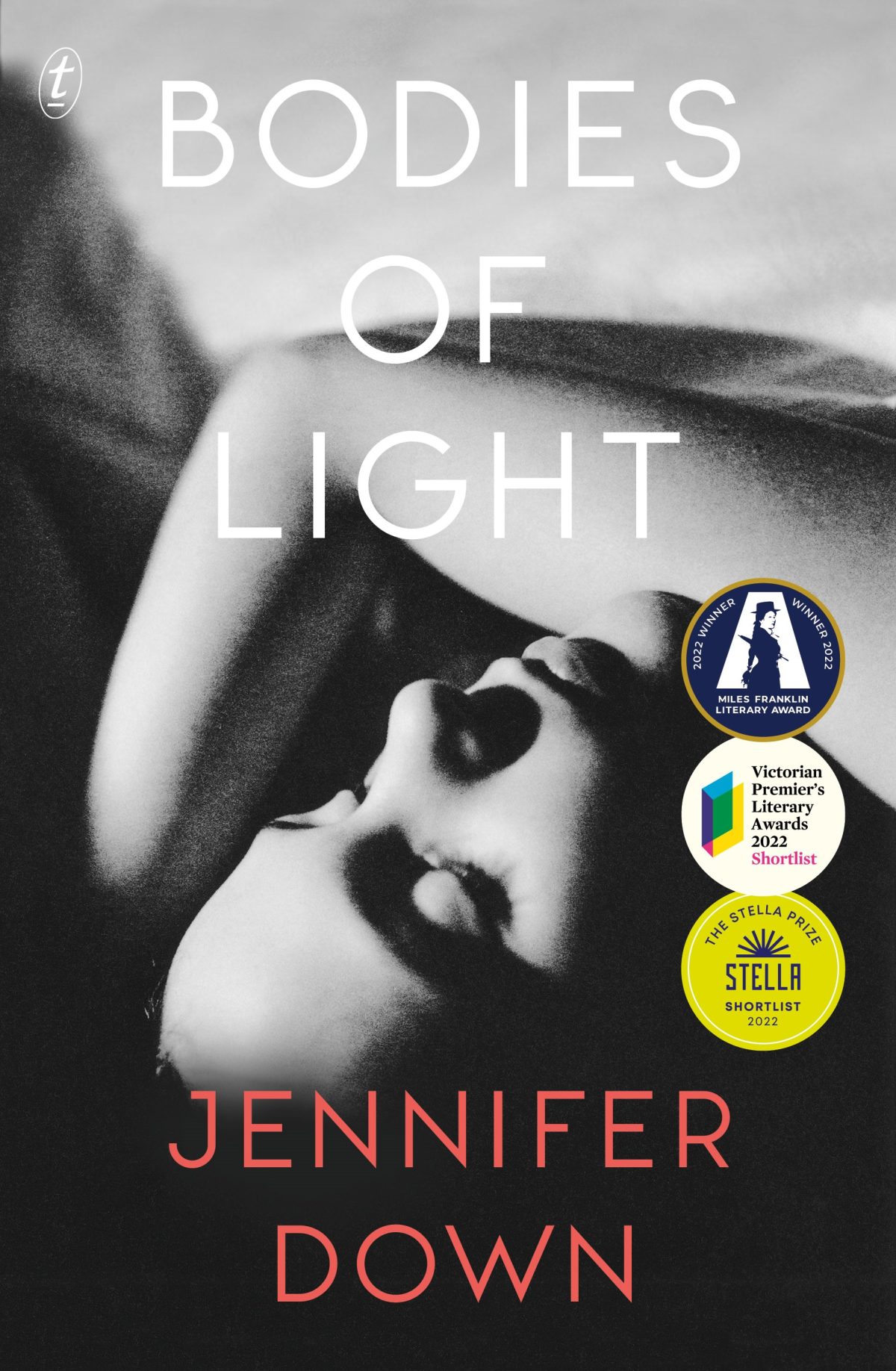
Bodies of Light Jennifer Down“Bodies of Light has been nominated by popular vote from public library staff across Victoria.” – State Library of Victoria, Australia

Bolla (Fiction) by Pajtim Statovci  (Albania/Finland) tr. David Hackston (Finnish)

“Albanian protagonist, Arsim, is a brilliant student and just married to his young wife. He’s also in love with a person who is wrong for him in two ways: Miloš is a man and a Serb. Violence takes Arsim over and he get punished both physically, mentally and socially. Bolla is a phenomenal literal study of love, loneliness, passion and violence. It pictures the horrors of war and living a secret life.” – Helsinki City Library, Finland

Bone Memories (Fiction) by Sally Piper (Australia)

“Bone Memories is a brilliant and devastating novel about a mother’s grief for her lost daughter, Jess, and a son’s grief about losing his mother. It begins sixteen years after Jess’s murder, with the victim’s family continuing to grapple with the lives they face ahead and their memories of her. The novel is set in Queensland and is written by Brisbane-based author Sally Piper.” – State Library of Queensland Australia

Brisbane (Historical Fiction) by Eugene Vodolazkin (Ukraine) tr. Marian Schwartz 

Brisbane is a new novel by the the international bestselling author Eugene Vodolazkin – the winner of the Big Book Award, the Leo Tolstoy Yasnaya Polyana Award, and the Read Russia Award, the finalist of the Russian Booker Award. Vodolazkin also won the Solzhenitsyn Prize in 2019.  He is a modern Thinker and Peacemaker who continues to develop traditions and heritage of a grand philosophical novel. –  All Russia State Library for Foreign Literature

Burntcoat (Science Fiction/Dystopia) by Sarah Hall (UK)

“A love story taking place during a deadly pandemic, a story about dealing with an unknown virus and loss while at the same time creating a life during dire circumstances and creating art – subtle and heartbreaking.” –  Zentralbibliothek Zürich, Switzerland

Case Study (Literary Fiction) by Graeme Macrae Burnett (UK)

“Macrae Burnett has created a dynamic work that has excellent characterisation with acute observation.  The writing is layered but there is no use of superfluous words. While the themes are profound, the style is both intriguing and playful .  He has created a book that is thought provoking and a compulsive read.” –  Limerick City and County Libraries, Ireland

Cloud Cuckoo Land (Science Fiction/Fantasy) by Anthony Doerr (US) 

“This book had good storytelling in spades. Each of the characters has a relationship with a librarian, Zeno and Seymour with the librarians in Lakeport, Idaho, Anna with scribes in Constantinople, Omeir with Anna, and Konstance with the AI controller of her ship. This beautifully written book is a shining example of hope.” – Bács-Kiskun Megyei Katona József Könyvtár, Hungary

Cold Enough For Snow (Literary Fiction) by Jessica Au (Australia)

“Cold Enough for Snow is something like an ephemeral waterfall. The story, of a woman and her mother travelling in Japan, unfolds with grace – not a thundering cascade but a slow trickling that still has the power to, in time, soften the rock below into shape. The prose is elegant and unpretentious, making inferences but not enforcing meaning. The story speaks to the complexity of our relationships with those we love, and also nods towards some of the richness and value of travel and being present outside of our regular environments.The novel pushes and pokes at notions of identity, belonging and perception; invoking colour and description to honour the importance of observation, care and attention. It is a work of great softness and strength.” – The National Library of Australia

Crossroads (Domestic Fiction) by Jonathan Franzen (US)

“Suspense” – Öffentliche Bücherei -Anna Seghers, Germany

Daughter of the Moon Goddess (Fantasy Fiction) by Sue Lynn Tan (Malaysia/Hong Kong)

Daughter-of-the-Moon-Goddess Sue-Lynn-Tan“Daughter of the Moon Goddess is jam-packed novel that follows Xingyin on her path to self-discovery as she tries to free her mother and herself from their eternal confinement on the moon.

Inspired by Chinese Mythology’s Chang’e, each word of this novel is thoughtfully chosen and crafted poetically, taking you on an almost dreamy adventure from start to finish. There is amazing world building done by Tan and a wonderful female protagonist that is strong and determined. This novel is filled with magic, powerful creatures, secrets, betrayals, amazingly written battle scenes, and even a love triangle – though that doesn’t shadow over anything. Wonderful, adventurous book.” – Kansas City Public Library, USA

Devotion (Historical Fiction) by Hannah Kent  (Australia)

“The story and the characters of the book are so perfect. We love Hannah’s Kent writing and the way that it just connects with our thoughts, mind, and soul.” – Veria Central Public Library, Greece

Em (Historical/Literary Fiction) by Kim Thúy (Vietnam/Canada) tr. Sheila Fischman (French)

“Kim Thúy seals words into packets, plain and firm as an encyclopedia entry; shimmery and taut as an ode; pitted and unbendable as a curse, lays them edge to corner to end to say, do you see it now? Do you?” – Hartford Public Library, USA

Falling is like Flying (Fiction) by Manon Uphoff (Netherlands) tr. Sam Garrett (Dutch)

“Falling is Like Flying is an impressive novel in which author Manon Uphoff demonstrates what literature is capable of. With all her literary power, Uphoff manages to reveal a history that seems almost impossible to tell. A history of sexual abuse by a dominating father called the Minotaur is uncovered in a devastating personal mythology. In this novel, the Minotaur is finally overcome in his labyrinth by the power of language.” – KB, National Library of the Netherlands

Fight Night (Fiction) by Miriam Toews (Canada)

“Told in the unforgettable voice of nine-year old Swiv, this is a story of life, death, birth and intergenerational trauma that is both hilarious and heart-breaking. Swiv, the youngest of three fierce women, is worrying about her aging grandmother’s health and her pregnant mother’s mental health. All while her feisty (and deeply mortifying) grandmother tries to impart life lessons about fighting – both to survive and to find joy.” – Toronto Public Library, Canada

Four Treasures of the Sky (Historical Fiction) by Jenny Tinghui Zhang (China/US)

Four-treasures-of-the-sky“This debut novel is a stunner, historical fiction at its best (captivating, illuminating and provoking) in its depiction and portrayal of the horrors of racism, discrimination, abuse and greed.

The author has threaded a deep understanding of Chinese calligraphic arts, that goes beyond artistic standards; referenced an eponymous heroine in a classic Chinese novel; included historical events about Chinese Americans that have been relegated and left to fade away; revealed the graphic horror of a childhood cut short; and created a protagonist who continuously reinvents herself, in order to survive, and also to discover who she really is. It is no small achievement that Jenny Zhang has written a book of arresting beauty about horrific events.” – Los Angeles Public Library, USA

Glory (Literary Fiction) by NoViolet Bulawayo (Zimbabwe)

“Bulawayo’s reimagining of the overthrow of Robert Mugabe, Zimbabwe’s infamous authoritarian ruler, features a cast made up entirely of talking animals (Mugabe is the Old Horse). Bulawayo’s gift for storytelling is dazzling.” –Boston Public Library, USA

“The use of language in the novel  colourful, poetic and also comedic  illustrates the absurdity and surreal nature of a police state , built with the structure of animal stories that are typical of African tradition.”–Biblioteca Vila de Gràcia, Barcelona, Spain

Grand Hotel Europa (Fiction) by Ilja Leonard Pfeijffer (Netherlands) tr. Michele Hutchison (Dutch)

“It is a monumental novel about loss, the immigration crisis, the history and future of Europe, Mass tourism and many more themes. A phenomenal read which lets you think about modern day Europe.” –  De Bibliotheek Utrecht, The Netherlands

How High We Go in the Dark (Science Fiction/Short Stories) by Sequoia Nagamatsu  (Japan/US)

“This novel in interlinked stories presents a complex and deeply humane look at grief and survival in a post-apocalyptic world. “–  Multnomah County Library, USA

Iron Curtain: A Love Story (Historical/Literary Fiction) by Vesna Goldsworthy (Serbia/UK)

“Iron Curtain uses a bitter-sweet story of a doomed love affair between Milena, a communist Red Princess, and Jason, a self-declared Irish Marxist poet, to probe the political divisions of Europe which continue to affect us all. It echoes the myth of Medea in its gripping tale of Western betrayal and Eastern revenge.

It is a spellbinding novel: vividly original, tense and often hilarious in its extraordinary evocation of two wildly contrasted worlds. It brings to mind the best political fiction from Eastern Europe, such as the works of Pasternak and Kundera, now in an inimitable British-Serbian woman’s voice. With the passing of the period of optimism which followed the fall of the Berlin Wall the fractured world described in this novel has an ominous resonance today.” – Belgrade City Library, Serbia

Kurangaituku (Literary Fiction/Mythology) by Whiti Hereaka (New Zealand) 

Kurangaituku Whiti-Hereaka“Kurangaituku takes readers on an immersive journey through deep time with its shape-shifting lead character. An exploration and reclamation of indigenous storytelling, it shows how language can create, shape, give life and destroy, with “one hundred lifetimes or more able to be lived by a single being.

The world of Kurangaituku is visceral and sensual, and Hereaka’s flowing and hypnotic prose is made for reading aloud. Its looping narrative structure is seamlessly woven together with the book’s double-sided and interlocking format, reflecting the Māori worldview of the circularity of life and death, transfiguration and rebirth and allowing the story to be formed and reformed in the space between author and audience. A multi-dimensional and unforgettable book.” – Auckland Council Libraries

“Kurangaituku is the retelling of a legend and so much more. It is about the power of our voices to tell our own story. It is about the importance of story to ourselves and to our culture, and the destructive nature of someone else telling or supplanting our story as part of colonisation. An amazing, thought-provoking, beautifully lyrical work. ‘Do you see what their stories have done?…They have made monsters of us both’.” – Christchurch City Libraries

Late Summer (Literary Fiction) by Luiz Ruffato (Brazil) tr. Julia Sanches  (Portuguese)

“Late Summer is an excellent reflection on the effects of isolation. A book that shows both a portrait of contemporary society, in which social classes have ruptured any form of a dialogue between them, and a realistic story of a man tortured by his unsuccessful attempt to redeem his past.

The main character, Oséias, abandoned by his wife and son, decides to go back to his hometown after twenty years away. On a six-day journey trying to reconnect to his family, as a flaneur, he retraces his boyhood and shares by streams of consciousness old memories and thoughts mingled with a detailed narrative of the events of the journey. The novel also unveils the feeling of inadequacy present in our time and presents a philosophical and perennial question of belonging.”  – Sistema Nacional de Bibliotecas Públicas/Biblioteca Demonstrativa do Brasil 

Lessons in Chemistry (Popular Fiction) by Bonnie Garmus (US)

“Author Bonnie Garmus provides an original storyline that is refreshing, humorous, and very timely.” -Miami-Dade Public Library

” This is a brilliant story – of a woman who is determined to make her mark on the world and not willing to let anyone get in her way. She’s feisty, heroic, and intelligent, and she unwittingly becomes the star of a TV cookery show, aimed at teaching the nation how to make food that matters. The show becomes a call to arms to the millions of women who follow her ‘lessons in chemistry’ encouraging all to ‘use the laws of chemistry and change the status quo.’” -Norfolk Library, UK

“Great story of women empowerment set in the 1960’s.” – Laramie County Library System, US

Loose Ties (Fiction) by Yara Nakahanda Monteiro (Portugal) tr. Sandra Tamele 

“This book is both a story of love and of war, a contemporary tale that deals with the past, a call for the independence of women as political beings. And of their own bodies in search of freedom.

Yara Monteiro revisits a personal and collective history, in which the lives of expatriates who suffer the discomfort of a painful isolation are retraced. This novel is a deep, funny, and courageous novel that gives Angolan women a voice, while reflecting on identity issues.” –  Biblioteca Pública Municipal do Porto, Portugal

Love in the Big City (Literary Fiction) by Sang Young Park Korea) tr. Anton Hur 

“The novel follows the life of a young gay man in Seoul. It delves into identity, growth, pain through a queer lens. The story is set in Seoul but has a western sensibility. It is relatable and universal for readers of all background. The narrative is simple but intense and sensory with both humour and emotion. And there is in the end surprising poignancy and depth. Award-winning for its unique literary voice and perspective. The translation is great.” – Bucheon City Library, Republic of Korea

Love Marriage by Monica Ali (Bangladesh/UK)

“A clash of cultures evolves into a delicate examination of the ways in which both immigrant and non-immigrant families have shaped their children, diffusing unexplored suffering across generations.” –  Milwaukee Public Library, USA

Love Novel by Ivana Sajko (Croatia) tr. Mima Simić 

“Love Novel tells the story of a young married couple whose relationship is affected by the struggles of everyday reality. They are fighting for the survival of their love and the meaning of life in conditions of extreme economic insecurity. The lack of communication affects the relationship resulting in slow deterioration, followed by general dissatisfaction. This “love novel” becomes relevant again in today’s situation of new economic crises that we all face.” – Rijeka City Library, Croatia

Lovelier, Lonelier (Fiction) by Daryl Qilin Yam (Singapore)

“Lovelier, Lonelier is a strong study of character and explores the emotional impact of love and loss in a narrative that spans multiple countries. The writing is self-assured in its ability to connect the various characters through a number of personal tragedies. The novel tackles meaningful themes such as the nature of reality, the role of chance, intergenerational trauma, and the power of art to redeem or destroy.” –  National Library Board of Singapore

Magma (Literary Fiction) by Thóra Hjörleifsdóttir (Iceland) tr. Meg Matich 

“Magma is the first novel by Thóra Hjörleifsdóttir. In the book, she talks about the dark side of love and invisible violence. The main character Lilja falls in love with a man and is ready to go to great lengths for him. When she stops setting limits for him, Lilja loses control of herself and reality. A very interesting and well written book about a difficult subject that paints a picture of an abusive relationship.” – Reykjavík City Library, Iceland

Marzahn, Mon Amour (Uplifting Fiction)  by Katja Oskamp (Germany) tr. Jo Heinrich – read my review here
Peirene Press German Literature Women in Translation“It is a book that allows a deep insight into the daily lives of the so called ordinary people. The author treats each of them with respect and approaches with careful empathy.” – Stadtbüchereien Düsseldorf, Germany

Matrix (Fiction) by Lauren Groff (US)

“Matrix stands out for its exquisite use of language, particularly Groff’s seamless weaving of psalms and liturgical texts into the narrative, marrying the miraculous and the mundane into one ecstatic tapestry of feminine power.” – Richland Library, USA

Nettle and Bone (Fantasy/Horror Fiction) by T. Kingfisher 

“The book mixes fantasy and feminist elements that are not exaggerated but instead very convincing because of Kingfisher’s thoughtful narrative style. This is adult fantasy literature far away from cliché featuring unique characters and surprising incidents.” – Universitätsbibliothek Bern, Switzerland

Of Fangs and Talons by Nicolas Mathieu (France) tr. Sam Taylor

“A bleak tale of the disenfranchised, in this case the factory workers and others living in a small town in the Vosges region of France. Things start to go downhill when the factory is set to close, then it gets worse. Compelling enough to want to read all in one sitting. Very excellent.” – The State Library of South Australia

Open Your Heart (Auto-fiction) by Alexie Morin (France) tr. Aimee Wall 

“Open your Heart is an autobiographical novel depicting the story of two friends linked by a condition of illness and operation at a young age. A strong narrative that shed light through sufferings, power beyond discomfort, without restraint.” – Bibliothéque de Québec, Canada

Paradais (Literary Fiction) by Fernanda Melchor (Mexico) tr. Sophie Hughes (Spanish)

“The pace and intensity of the narration transmits all the sorrow, anger, and frustration that might make one empathize with some characters; and yet the novel is also relentless to show how coward self-justification and the inexcusable, selfish relief of one’s anger can make a victim as vile as any victimiser. The author thus depicts in few pages the complexity of human beings and of the context of their actions.” – Biblioteca Daniel Cosío Villegas, Mexico

Scattered All Over the Earth (Science Fiction/Dystopia) by Yoko Tawada (Japan) tr. Margaret Mitsutani

“In a not too distant future, Japan has disappeared from the face o the earth due to an environmental catastrophe. In Yoko Tawada’s latest novel, we follow Hiruko, a climate refugee on her trip through Europe searching for someone else who speaks her mother tongue. Others join her and the small group is traveling from one bizarre and thoroughly comical situation to the next. It is fascinating how Tawada manages to combine the themes of our time in this first part of a planned trilogy: climate change, migration, globalization – and above all the key question: What does language mean for identity and human community?” – Zentral und Landesbibliothek, Berlin, Germany

Sea of Tranquility (Speculative/ Science Fiction) by Emily St. John Mandel (Canada)
SeaofTranquility“A fantastic (in all senses of the word) novel that somehow weaves a mystery and time travel and colonies on the moon and a pandemic and a double homicide together into a beautiful, life-affirming story.” – Winnipeg Public Library, Canada

“A masterpiece of speculative fiction, tying together historical fiction, time travel and references to our own experiences living through the Covid-19 pandemic in an ultimately hopeful exploration of the nature of existence and human connection. A time traveling detective sent to gather evidence about a rift in the fabric of reality is the thread that draws together disparate characters across centuries including an author very similar to St John Mandel herself. She writes beautifully, rendering the old growth forests of British Colombia and decaying moon colonies of the future equally with equal parts romance, imagination and vivid detail, instilling nostalgia for both. Captivating, deceptively light, Sea of Tranquility nevertheless touches on weighty topics—colonialism, the environment, loneliness, morality in a thought-provoking way.” – Ottawa Public Library, Canada

She’s a killer (Fiction) by Kirsten McDougall (New Zealand)

“Set in the very near future in New Zealand where the effects of climate change are really beginning to bite and affect both our physical world but also our society. The book is multi-layered, often very funny in a dark way, contains many layers of twists and turns and is a fabulous read to boot. It’s a  fast-paced thriller which boasts great and complex characters. It’s both personal and intimate and about New Zealand and also the World simultaneously, dealing with global issues and events in a unique fashion.” – Wellington City Library, New Zealand

Silent Winds, Dry Seas by Vinod Busjeet (Mauritius/US)

“We are happy to nominate this novel from a local writer. The writing is engaging and evocative. The poetry of language successfully evokes a richly tropical, multi-sensual ambience. The scents are olfactible, colours brilliant, heat diaphoretic. The author skillfully dramatizes and limns distinctive and fascinating characters: Vishnu’s extended and extensive family, and community members and neighbours, fully developing their individual personalities and visages. They are not cardboard, they breathe. The plot itself incorporates global historical events as well as those in the Mauritian march to independence that serve to place the story in time. The end result is that you enjoy a quick-paced story while learning a bit about a place you never have been. A thoroughly enjoyable read.” – DC Public Library, USA

Small Things Like These (Fiction) by Claire Keegan (Ireland) – Read my review here

“With exceptional grace, economy and storytelling skill, Keegan has penned a classic story of moral courage that encapsulates so much of what it means to be human today. This short novel is bigger than any award but deserves all the recognition it can get.”– Chicago Public Library

“A tiny, perfect novel reminding us of a shameful part of Ireland’s history, seen through the eyes of a coal merchant whose eyes are opened to the iron grip of the Catholic church on the hearts and minds of his community. Heart-breaking and thought provoking.” – Waterford City and Council Library Services

“116 pages of beautifully written prose, the story centres around Bill Furlong, his upbringing, and his empathy to the inmates of the local Magdalene convent. Claire Keegan’s sublime and moving novel, covering the weeks before Christmas 1985, shows the importance of facing up to our past, and the historic collusion between Church, State, and Irish society. As Bill’s wife remarked; “If you want to get on in life, there’s things you have to ignore, so you can keep on.” – Dún Laoghaire-Rathdown Libraries, Dublin

“The master storytelling is in Furlong, as the gentle quiet hero. The reader would follow him to the darkest pits and back, and we do. This is a really important novel for a society where absolute authority has reigned. By the end of this book, the soul feels a little healed. “– Galway Public Libraries

Song for the Missing (Historical Fiction) by Pierre Jarawan (Lebanon/Germany) tr. Elisabeth Lauffer (German)

“2011. During the troubled times of the Arabic Spring, Amin recalls the year 1994, when he, as an orphan, came with his Grandma from Germany to Lebanon. He remembers the taboo of speaking about the 17.000 missing people in Lebanon and the silent grief of their relatives. Little by little, Amin discovers that his parents belong to the missing persons. With his friend Jafar, Amin roams Beirut and its traumatized population, until he meet a story teller, who sparks Amin’s interest in books.

Rooted in the oral storytelling traditions of the Orient and passionate, Pierre Jarawan narrates stories of the people of Lebanon to make the reader feel what is lost. A touching, political novel and a varied family story. “–  Leipziger Städtische Bibliotheken, Germany

Sons of the People: The Mamluk Trilogy (Historical Fiction) by Reem Bassiouney (Egypt) tr. Roger Allen (Arabic)

“Set against a historical backdrop, Sons of the People: The Mamluk Trilogy sheds light on the last days of the Mamluk dynasty before its downfall. The Mamluks were defeated by the Ottoman troops in 1517 at the battle of Marj Dabiq, after which Tuman Bay was beheaded. The incidents of the trilogy start with the story behind the construction of the mosque of Sultan Hassan, whose architect is the offspring of a Mamluk prince who married an Egyptian girl, Zineb, under duress. Eventually, the mosque appears to be the dominant motif in the trilogy, which creates a well-wrought narrative, helping Bassiouney to depict a vivid picture of the social, political and economic life in Egypt under the rule of the Mamluks; a period that has always raised very controversial questions concerning its cultural and political inheritance. With the second story, the narrative shifts to different times where the very mosque becomes a bloodbath of the fighting Mamluks. In the final one, the conquering army ravishes the riches of mosque. Reem Bassiouney is a distinguished Egyptian novelist. She also received the Naguib Mahfouz Medal for Literature.” – Bibliotheca Alexandrina, Egypt

The Anomaly (Popular Fiction) by Hervé Le Tellier (France) tr. Adriana Hunter 

“In this highly original and inventive novel, Hervé le Tellier introduces his characters in chapters very different in tone to mix such genres as thriller, science-fiction, comedy or spy novel. Though mostly entertaining in tone with its use of pastiche and satire, the novel also tackles darker issues such as homophobia in the world of hip hop, cancer, child abuse, intricate love affairs, unethical business. This puzzling speculative fiction with its spatio-temporal rift also questions our perception of reality and ourselves.” – Bibliothèque publique d’Information, Paris, France

The Antarctica of Love(Literary Fiction) by Sara Stridsberg (Sweden) tr. Deborah Bragan-Turner 
Antartica-of-Love-by-Sara-Stridsberg“Inni, a prostitute and drug addict, is brutally murdered in a forest. From the realm of the dead, she recounts her broken life. Rhythmically, her story returns to the end point of her existence, when the Hunter has ushered her into his car for a final journey. Carried by a powerful and poetic writing, this book sublimates the unbearable.” – Bibliothèque Municipale de Reims, France

The Bones of Barry Knight (Social Justice Fiction) by Emma Musty (UK)

“The Bones of Barry Knight is a contemporary novel focusing on a refugee camp in an unnamed country. It is very moving as it depicts the impact of war on everyday people. It is raw and unflinching, but also full of poignant beauty.” – Redbridge Library London, UK

The Book of Form and Emptiness (Literary Fiction/Magic Realism) by Ruth Ozeki (US)

“This beautifully written book deals with issues of family love, mental illness, grief and loss, and the importance of friends. It is philosophical, heart-breaking and empowering, and it is also full of joy.” -Dunedin Public Libraries, NZ

“The newest title from a beloved local author, this book takes place between the public library and the youth psych ward. It is simultaneously whimsical, philosophical, and heart-wrenching. It blends sympathetic characters and a vigorous engagement with everything from our attachment to material possessions to the climate crisis.” -Vancouver Public Library, Canada

The Clockwork Girl (Historical/Gothic Fiction) by Anna Mazzola (UK)

“A thoroughly immersive read, captivating and utterly thrilling. It’s easy for the reader to ensconce oneself in its masterfully crafted, self-contained universe. The historical setting is commendably subtle, suggested rather than imposed upon the reader. Simply superb!” – Tampere City Library, Finland

The Forests (Fiction/Dystopia) by Sandrine Collette (France) tr. Alison Anderson (French) 

“The world is on fire. Only armed with love and hope, the young Corentin begins a terrible journey to the remote Valley of Forests, looking for Augustine his adoptive grandmother. A powerful and frightening post-apocalyptic novel.” – Réseau de Bibliothéques de Colmar, France

The Good Women of Safe Harbour (Uplifting Fiction) by Bobbi French (Canada)

“The Good Women of Safe Harbour by Bobbi French is a brilliant novel with rich characters and a strong sense of place. Set in Newfoundland in the final, beautiful summer of Frances Delaney’s “small” life, this book is wildly joyful and deeply sad. It challenges the reader to reevaluate the ways in which we see our lives, the good and the bad. This novel handles such difficult topics as mental illness, assisted suicide, abortion and mothers separated from their children while never for a moment leaving the central premise that life is beautiful and precious and must be celebrated. This book is a celebration.” – Newfoundland and Labrador Public Libraries, Canada

The Island of Missing Trees (Fiction) by Elif Shafak (Turkey/UK)

The-Island-of-Missing-Trees“This was a beautifully written book that wove true historical events into a thought provoking and emotional book. The characters are fully formed and bring to life the story of turmoil, betrayal, the need for understanding and acceptance , flitting between the present day and 1970s. The Fig Tree was a particularly unique narrator – and a reminder of the impacts of war of community and nature.” – Glasgow Life, Scotland

“A love story and a history of a long-lived conflict in the Island of Ciprus, love and hate, memory and trauma are perfectly represented.” -Biblioteca Nazionale Vittorio Emanuele III – Napoli

 “The Island of Missing Trees is a cleverly constructed novel with a touch of magical realism. It is masterfully told and written in an elegant language. Shafak explores the consequences of the civil war on ordinary lives and future generations. Highlighted themes are migration, homophobia, religion, loss and family secrets. Shafak inspires and delivers a beautiful, powerful novel full of empathy and hope.” – Openbare Bibliotheek Brugge (Bruges Public Library)

“This novel provides a human and compassionate account of tragic, traumatising, troubling and turbulent past of Cyprus. It shows us fractured communities torn apart by war, partition, division, religion, love, loss, grief, migration, the natural world, and the search for a sense of identity and belonging that refuses to be denied. Shafak writes through the prism of hope, moving on, renewal and healing, of the need to tell the stories of the past, rather than burying them, addressing the issues that hurt, and extend our concern and eyes to the natural world, to recognise its central integral place, like the fig tree growing in the tavern, within humanity and connect with it in the way our ancestors would have done.” – Rede de Bibliotecas de Lisboa

The Lincoln Highway (Popular Fiction) by Amor Towles (US)

“This title was the most popular 2021-22 Adult Fiction book read by Iowa City Public Library patrons last year.” – Iowa City Public Library

The Magician (Literary Fiction) by Colm Tóibín (Ireland)

“A beautifully written fictionalised biographical novel about Thomas Mann. He struggles to come to terms with disaster in his family, hidden desire and nationality. He opposes Nazism and has to flee from Germany to the United Stated and Switzerland. The novel triggers you to (re)read the work of Nobel Prize winner Thomas Mann.” – Openbare Bibliotheek, Gent, Belgium

The Masterpiece by Ana Schnabl (Slovenia) tr. David Limon 

“What really interests the author and what she excels at showing is the human condition, the motivations and desires of her characters. In rich literary prose, she discusses the cost of personal autonomy and the explosive power of love. She also provides insight into the writing process and sheds light on a vital component of producing art with the aid of her protagonists.” – Ljubljana City Library, Slovenia

“With The Masterpiece, Ana Schnabl proved her stylistic exceptionality, you don’t skip lines with her.” –  Mariborska Libraries, Slovenia

The Morning Star by Karl Ove Knausgaard (Norway) tr. Martin Aitken 

“The Morning Star is a staggering, ambitious work about the small and the grand things. We meet a collection of people, loosely connected, who each get to tell their story. One night, in the middle of regular life, an enormous star appears in the sky. Nobody knows what it is, and after a little while things go back to normal. But not quite.” – Solvberget Library and Culture Centre, Norway

The Sentence; A Novel (Fiction) by Louise Erdrich (US) 

“The Sentence is a captivating and inventively crafted novel. Tookie, the main character, is a middle-aged Native American woman just getting by and working in a Minneapolis bookstore that specialized in subjects of Indigenous culture and history. We get to know Tookie and her friends and family very well. They are each unique yet very believable. Even the eccentric ghost who appears intermittently is believable. This novel has it all: a compelling plot, sometimes heart-breaking, sometimes laugh-out-loud funny; inventive word play; and a lively cast of colourful characters trying their best to honour their indigenous identities amid often cruel and inhospitable surroundings. – New Hampshire State Library, USA

The Trees: A Novel (Popular Fiction) by Percival Everett (US) 

“The Trees is a powerful social satire of lasting importance.” – Free Library of Philadelphia, USA

The White Bathing Hut (Fiction) by Thorvald Steen (Norway) tr. James Anderson 

“Since he was a youth he has lived with a rare muscle disease, but only when he is in his 60s and sitting in a wheelchair does he learn the truth about his grandfather and uncle, who had the same hereditary disease, and that his own mother never has told the truth.” – Olso Public Library, Norway

The Wonders (Literary Fiction) by Elena Medel (Spain) tr. Lizzie Davis and Thomas Bunstead

“Elena Medel’s first novel is a poetic and vivid portrait about two Spanish working-class women, Alicia y María, who are limited by class and gender dynamics. The novel stands out for its rhythmic prose and unforgettable characters.” – Biblioteca de Andalucía, Spain

Time Shelter by Georgi Gospodinov (Bulgaria) tr. Angela Rodel 

“A dystopian vision of Europe and the world in the face of a personal and collective memory breakdown leading to ‘a flood of the past’. Smuggling poetry into fiction, his style is both poetic and philosophical yet readable, funny, self-ironic. Gospodinov’s literature is coming from a small language and territory in the periphery of Europe, but has the power of giving meaning and empathy through great narrative voices and storytelling skills.

He is the most read author not only at the Sofia City Library, but also at the libraries across the country. A number of meetings about the novel were held in the library with various readers, provoking interesting discussions. ” – Sofia City Library, Bulgaria

Tomb of Sand (Literary Fiction) by Geetanjali Shree (India) tr. Daisy Rockwell (Hindi)

“This is an amazing and experimentally written book. Geetanjali Shree’s playful tone and exuberant wordplay results in a book that is engaging, funny, and utterly original, at the same time as being an urgent and timely protest against the destructive impact of borders and boundaries, whether between religions, countries, or genders, highly recommend it, especially since it gives an insight to many customs and habits of India. A rare gem of a novel.” –  India International Centre, India

What Strange Paradise by Omar El-Akkad (Canada)

What-Strange-Paradise-Omar ElAkkad“The refugee crisis told through the eyes of a child highlights the difficult circumstances of a group of Syrians on a boat in the Mediterranean, but underscores a sense of humanism binding all people together. ” – San Diego Public Library, USA

Where You Come From by Saša Stanišić (Bosnia-Herzegovina/Germany) tr. Saša Stanišić (German)

“Saša Stanišić and his mixed family (Serbian and Bosnian) flee from Yugoslavia in the early 1990s and end up in Heidelberg, Germany, where they struggle to integrate, to a large extent because of the low paying jobs available to immigrants. Saša Stanišić tells his personal story in a touching, exciting and stylistic outstanding narrative Style. The novel was successful adapted for the Theater and won the German Book Prize in 2019.” – Stadtbücherei Heidelberg, Germany

“Third novel from internationally acclaimed and bestselling Bosnian-German author Saša Stanišic. The story follows a young refugee and his family who fled to Germany from Yugoslavia in the 1990s. A heartwarming and moving reflection on the process reshaping ones identity between countries, cultures and languages.” – Stadtbibliothek Bremen, Germany

Young Mungo (Fiction) by Douglas Stuart (Scotland/US)

“This is Stuart’s follow up to his debut Booker Prize-winning novel, Shuggie Bain, and while both books define themselves by a fractured Glaswegian family with an unreliable and fragile mother, Young Mungo turns toward the fifteen-year-old title character (named after the patron saint of Glasgow) as he navigates both first love and unrelenting danger.

This is a challenging novel of cruelty and carelessness where conflict – ideological and physical – persists, but Stuart’s compassionate mastery of language and storytelling provides an unexpected and gleaming tenderness.” – Carnegie Library of Pittsburgh, USA