
 French Literature
Another satisfying light read full of laughs from Antoine Laurain. It’s so rare that a book actually makes me laugh out loud, but this one did, quite a few times.
It’s far-fetched, but knowing he writes an uplifting tale and creates such fun characters makes me want to read everything he writes.
Here, its 2017 and we meet a Parisian man named Hubert who lives in a building that has been in his family for generations, though now he owns only the apartment he lives in. His wife and daughters are away, he had just attended the management committee meeting for residents and on entering his cellar afterwards discovered a dusty 1954 Vintage Beaujolais.
Accidentally locking himself in, he is rescued by Bob from Milwaukee, who’s rented Madame Renaud’s apartment on AirBnB, an activity forbidden by the committee (say you’re the American cousin if anyone asks) so in a gesture of appreciation Hubert invites Bob and two tenants Julien (a cocktail waiter at Harry’s Bar) and Magalie (a restorer of antique ceramics) to join him to open the bottle.
1954 was a special year and the novel has already taken us to the Saint Antoine vineyards in the Beaujolais wine region, just north of Lyon where the grapes may have been infused with a touch of magic from a low flying unidentified object.
 Monsieur Pierre Chauveau (Julien’s great grandfather) gave a witness statement on 16 September 1954, describing what he had seen. His unusual testimony was classified by the police as follows:
Report of an unidentified flying object by one Pierre Chauveau, a wine grower residing in Charmally-les-Vignes.
Though mocked locally, the police weren’t as surprised, by the end of 1954 more than 1,000 witness statements and over 500 reports of UFO sightings had been received by the police across the country. No explanation for this phenomenon was ever found and gradually the number of reported sightings fell back to normal levels – between fifty and one hundred a year.
One evening shortly after, he consumed a bottle of the 1954 Beaujolais, gave some to his dog (as was his habit), went out for a walk and they were never seen again.
The morning after the four in Paris drink the vintage wine, they wake up in 1954.
Hubert loosened his tie and walked rapidly back home, trying as best he could to make sense of the morning’s events. Unless it was a dream, Salvador Dalí was staying at the Hotel Meurice, all the buses were vintage, street sellers had reverted to using hand-drawn carts and the large moustachioed man surveying his building work whom he’d greeted as he left this morning was none other than Monsieur Bouvuer himself, the founder of the charcuterie of that name. The charcuterie that had opened in 1954. Hubert stopped. 1954. The same year as the wine.
As they head out into their day, we too are taken back in time and see the city and people’s habits as they were back in the 1950’s. Bob, who had never been to Paris took the longest time to realise he was no longer in 2017.
 The four of them have various interesting encounters, Hubert with a long lost relative whose charred diary he finds in the apartment he left empty for 24 years, Julien meets the original Harry MacElhone, founder of the bar he works in and Magalie seeks out her now thirty-one-year old grandmother Odette.
They meet up at Harry’s to discuss their situation and to come up with a plan on how to get themselves back to their present, which will lead them on another adventure to the wine region of Beaujolais.
It’s an entertaining ride, as they journey across old Paris bringing back to life a few memorable characters and places in Paris of a bygone era.
Along the way, we encounter Jean Gabin, Edith Piaf, Salvador Dali, Robert Doisneau, Marcel Aymé, Jacques Prévert, Hubert de Givenchy, Audrey Hepburn, François Truffaut, Claude Chabrol, Jean-Luc Godard, the duke of Windsor and the infamous Scotsman of the winebar where the Bloody Mary was said to be invented, Harry MacElhone.
In a blog post Millésime 54 Antoine Laurain briefly mentions that readers will come across these characters in his book and if you click through you’ll see a collection of portraits of some of them.

Le Baiser de l’hotel de ville (The Kiss), 1950
© Robert Doisneau
These encounters reminded me of Woody Allen’s film Midnight in Paris, except here, Antoine Laurain pays tribute to more renowned French celebrity characters of Paris, and its the 1950’s not the 1920’s, inviting the reader to discover who they were and where they used to hang out.
In an interview, Laurain explained that the idea of writing a story where his characters travelled back to the 1950’s came to him long ago, before he wrote The President’s Hat. He adored the work of Doisneau and Brassaï, but he needed a way to bring them back to era. The wine became the way and that surge in UFO sightings that actually occurred in 1954, his point of departure.
Vintage 1954 is an invitation to the reader’s imagination to join Laurain’s adventure in 50’s Paris, to discover the vineyards of the Beaujolais region, and is as pleasurable, if not more than the wine itself.
A full-bodied, sweet novella, with depth, elegance, it is expressive, connected, ultimately one of finesse.
Further Reading
Interview Q&A with Antoine Laurain by Gallic Books – Wine and time travel with Antoine Laurain
The Book Trail Vintage 1954 – a few of the book locations in Paris mapped out with explanations (also links to locations in his previous books)
The President’s Hat (reviewed here)
The Red Notebook (reviewed here)
Smoking Kills (reviewed here)
 This novel La Tresse by Laetitia Colombani was a birthday gift from a friend, at the time I was given it, it wasn’t available in English, however it has since been translated and published in 2019, available under the title The Braid.
 I hesitated to read this for some time, just because it was in French, but I was pleasantly surprised by how easy it was to read and how little I had to look up new vocabulary. I enjoyed it when I did as I discovered new words and scribbled them in pencil in the margins. And then how I come across those words in the external world, resulting in me thinking I really would enjoy to read more of these works that are available in French but not yet in English.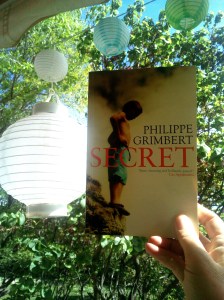
 The narrator shares the same name as the author, and though he never knew the exact details of what happened before he was born, except by anecdote, he used fiction to explore and build a narrative that hopefully might have let some of the ghosts he had lived with for many years to rest.
 I’ve been looking forward to picking this novel up, because it’s set in and around the streets and coastal inlets of Marseilles (our local city) and even ventures into Aix-en-Provence and Vauvenargues (the scene of a murder in the novel – though known locally because Picasso lived in the château there). It was originally published in French in 1995, when Izzo was 50 years old, a mere five years before his premature passing.



 Jean-Claude Izzo when asked about the phenomenal success of his trilogy, characteristically chose to shine the light on the city he loved:
 As soon as I saw the cover of Sandrine Collette’s Nothing But Dust I wanted to read this book. I didn’t know what genre it was, but it was published by Europa Editions; all the books they choose to publish that I have read have been excellent.
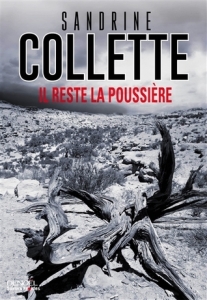 We become immersed in this life on a sheep farm with The Mother, her four sons, a dog named Three and the Criollos they ride, on the arid, infertile steppe they live on in Patagonia. All they’ve known and grown up with is harsh and menacing, reliably so; all they know is work, for her.
 Due to an ugly scandal involving allegations of sexual harassment and corruption, there was no Nobel Prize for Literature awarded in 2018. Apparently it will resume next year, however to fill the gap, an alternative prize was awarded by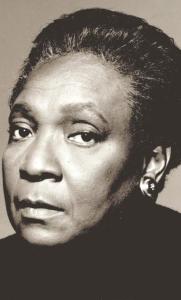
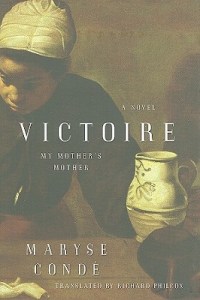 ‘The story is, of course, about my grandmother but the real problem was my mother. I lost my mother when I was very young — fourteen and a half. And during the short time that I knew her I could never understand her. She was a very complex character. Some people — most people, the majority of people — disliked her. They believed she was too arrogant, too choleric. But we knew at home that she was the most sensitive person and I could not understand that contradiction between the way she looked and the way she actually was. So I tried to understand as I grew up and I discovered that it was because of a big problem with her own mother. She seems to have failed; she had the feeling that she was not a good, dutiful daughter. I had to understand the grandmother and the relationship between my mother, Jeanne, and her mother, Victoire, to understand who Jeanne was, why she was the way she was, and at the same time understand myself.’
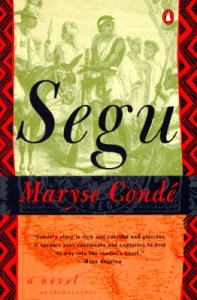 She set off, not just in search of grandmothers and great grandmothers, but in search of the Kingdom of Segu, about which write an incredible historical novel,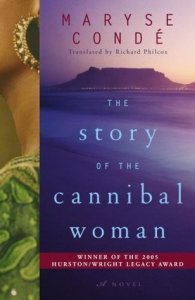
 Antoine Laurain is one of my go to author’s when I’m in the mood for something short and light and of course, being a French author, there’s going to be the inevitable addition of the little French quirks, the things that one recognises from living here in France for more than 10 years.
 After a series of stressful events overwhelm him, he takes up the habit once more, relieved to find that the ‘urge’ has returned, but shocked to discover that the subsequent ‘pleasure’ that should follow it when he does light up has gone. Angered and determined to have that aspect returned to him, he makes a follow-up appointment with the hypnotist to reverse the procedure, which will lead him down a rocky road towards involvement in a worse crime, in pursuit of that elusive ‘pleasure’ he is determined to retrieve.


 The narrating of family stories, taking us back as far as her great-grandfather Montazemolmolk with his harem of 52 wives, serves to provide context and an explanation for why certain family members might have behaved or lived in the way they did, helping us understand their motives and actions.

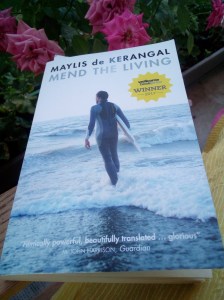 Although I’ve read reviews and seen this book appear often over the last year, and knew I really wanted to read it, I couldn’t remember what is was about or why.
 The British translation (by Jessica Moore) is entitled Mend the Living, broader in scope, it references the many who lie with compromised organs, who dwell in a twilight zone of half-lived lives, waiting to see if their match will come up, knowing when it does, it will likely be a sudden opportunity, to receive a healthy heart, liver, or kidney from a donor, taken violently from life.
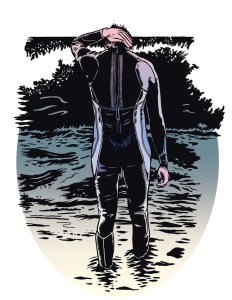 The translator Jessica Moore refers to her task in translating the authors work, as ‘grappling with Maylis’s labyrinthe phrases’, which can feel like what it must be like to be an amateur surfer facing the wave, trying and trying again, to find the one that fits, the wave and the rider, the words and the translator. She gives up trying to turn what the author meant into suitable phrases and leaves interpretation to the future, potential reader, us.
 Once I got into the rhythm of this, which is to say, reading in French, and getting past the need to look up too many new words, I couldn’t put this down, by the time I found my reading rhythm, the lives of Gabriel (Gaby) and his sister Ana, his parents, his friends had their claws in me and I had to know what was going to happen next.
 His father is French, his mother Tutsi from Rwanda, they live in the small country bordering Rwanda, Tanzania and the Democratic Republic of Congo, called Burundi. It boasts the second deepest lake in the world, Lake Tanganyika, which occupies a large portion of the country’s border and is part of the African Great Lakes region.

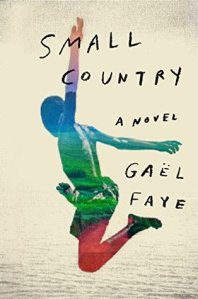 The ending is not really an ending, it could be said there is more than one ending and perhaps there may even be another book. I found it incredibly moving and was amazed to be so moved in a language that is not my own. An incredible feat of writing, a wonderful talent.
 Word by Word