Brotherless Night by V.V. Ganeshananthan

I became aware of Brotherless Night when it was shortlisted for the Women’s Prize for Fiction 2024, the winner of which will be announced at 6.45pm GMT on June 13th, 2024.

When I read that it was about a young woman in Sri Lanka, in the time of approaching civil war, I recalled reading Nayomi Munaweera’s excellent Island of a Thousand Mirrors (my review here), a book about families and divisions, as well as belonging – how human beings continue to perpetuate separation and difference and make it dangerous, fearful and forbidden to pursue union and friendship, due to backgrounds and ethnic differences. Two families from different ethnic origins, living up and downstairs from each other…and so the story will unfold, as another generation is compromised.

Long simmering ethnic tensions and perceptions of injustice against the government lead to a civil war that pitted one group of people against the other, Buddhist Singhalese and Hindu Tamil.

A Family and A Country Set to Lose
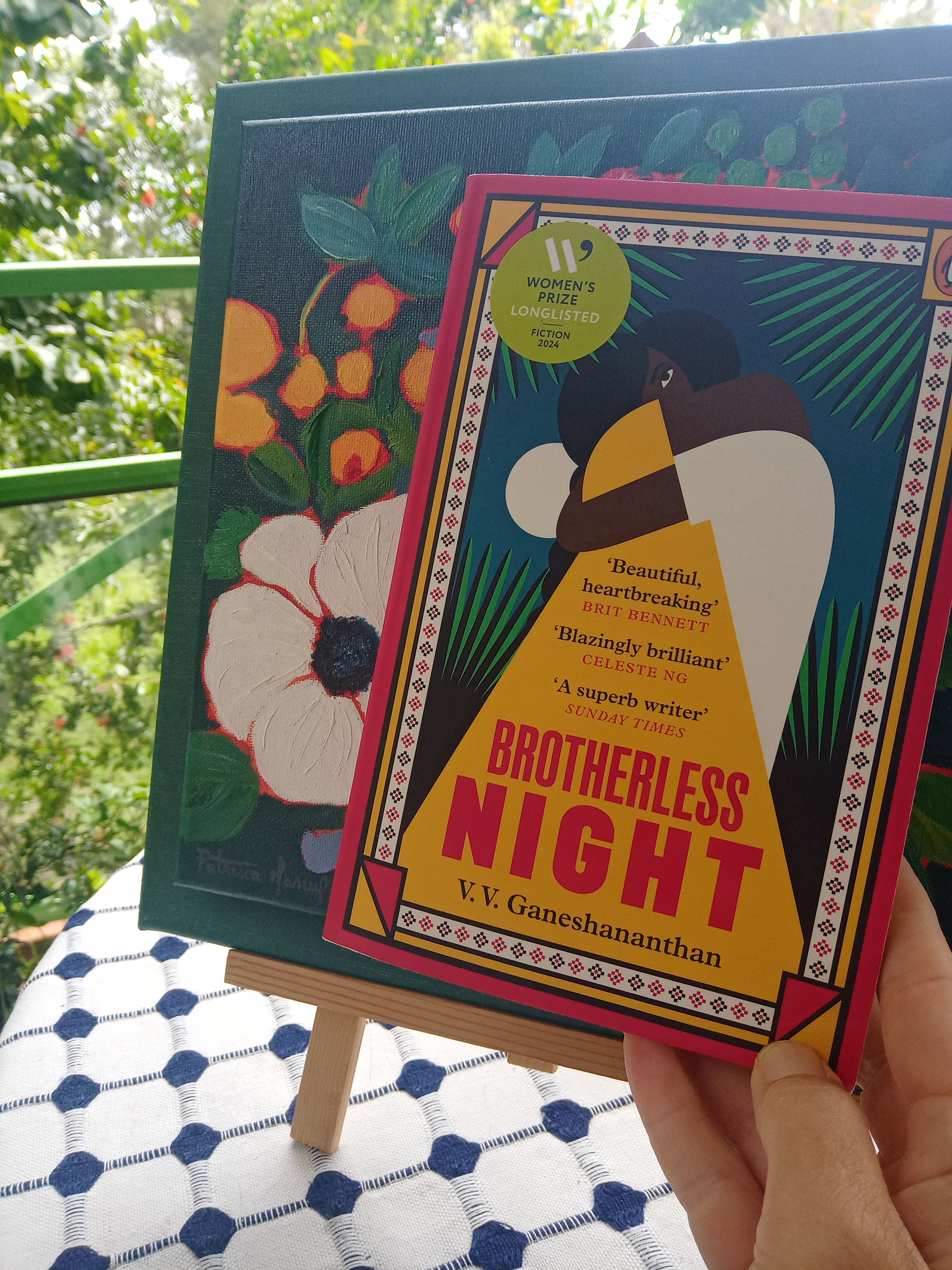
Sri Lanka civil war 1981 -1989 a sister who wants to become a doctor, four brother, Tamil militant recruiters, governments using ethnic differences to punish

Brotherless Night is narrated from the perspective of Sashi, from 1981-1989, the long, tumultuous, violent years of the civil war, fought between the Sinhalese-dominated state and Tamil separatist groups (bookended by chapters set in New York 2009).

It is mainly set in the city of Jaffna, where the young protagonist of a Tamil family lives, with some chapters set in the capital Colombo.

At sixteen, Sashi wants to become a doctor like her older brother. She has four brothers, all with different ambitions, three older and one younger. Their father Appa, a government surveyor, is travelling and rarely at home unless given leave.

The story opens when one of their friends K, hears Sashi’s screams as she spills hot water on herself and drops his bicycle and comes inside and tends to her burn. He is in her third brother Seelan’s class, also destined for medical school. His life will take a different direction, becoming further entwined with hers and her brothers.

Awakening to Irreparable Adult Conflict

The novel traces the beginnings of their pursuit of their dreams and the slow unravelling as the country erupts and young Tamil men are both recruited and sometimes snatched to join “the cause”.

A book sat on her brother’s shelf, an old bestseller about the 1958 anti-Tamil riots, one he read after being present at an international conference on Tamil language and culture where police had fired into the audience.

At sixteen I still hadn’t touched Emergency ’58 but I knew it was a brutal testimony to Sri Lanka’s willingness to slaughter its own Tamil citizens. My father’s slim, battered copy of the book had taken on the aura of something forbidden and terrifying. Did I need to read it to know that because we were ethnic minorities, Tamils were considered expendable?

It follows the effect on this particular family of the different choices people make, including the absent father and the daring mother. When two of the brothers join one of the militant groups, Sashi’s mother does everything to try and save the youngest son from becoming lost to them. When disaster arrives, she rallies ‘the mothers’ in one unforgettable episode that does make a difference, but won’t save them from what is coming.

The boys are challenged by their mother on a rare visit home, but are unable to provide responses to her unanswerable questions.

The Twisted Turns of Stunted Dreams

It is about the disruption of the dreams and the way they can swerve when disasters occur; about the effect on families and youth of political ideologies and both the difficulty and dangers of resisting; the futility of judgement, of regret.

I did not wait. Neither did the war. It was with us now. Since Dayalan and Seelan would not tell us, I went out and asked my friends what they had heard or knew, and in that way began to collect information about the new lives people were choosing. Were they responding to the war or were they making it? Boys joined in droves; the ranks of the militant groups swelled. Almost every week now one of our neighbours told Amma about those they knew who were going. People spoke about it more and more freely. Some of the parents were proud. “What did we expect them to do, after all,” said Jega Uncle, Saras Aunty’s husband. His nephew had joined. “After what they did in Colombo, how did they expect us to react?”

How to Survive

Perhaps education is one of the few ways that youth can escape a world in turmoil, but even that is no guarantee. So many have little choice or are made to choose between life and death, no choice at all.

Stories that involve families, their experiences, their losses, their small wins, their deep hurts, their bravery and failures perhaps tell us more than what media news stories depict, where money, power and political influence dictate. The lives of families, of mothers and sons and daughters come from the heart, from a desire to want them to survive and thrive.

Thoroughly researched and humanely presented, while not holding back from expressing its fury, this novel will make many readers grateful for the simplicity of their own lives and realise the ease with which they are able to pursue it and the banality of our own carefree decision-making, compared to the complicated conflict too many today are born into.

Highly Recommended.

“I was interested in writing about the gray space between militarized societies and questions of choice and coercion,” V.V. Ganeshananthan, in an interview with Here & Now‘s Deepa Fernandes

Further Reading

wbur Interview: ‘Brotherless Night’ explores Sri Lanka’s civil war through stories of family by Deepa Fernandes

NPR: ‘Brotherless Night,’ an ambitious novel about Sri Lankan civil war, wins $150K Carol Shields prize

The Guardian: Brotherless Night by V.V Ganeshananthan review – heartbreak in war-torn Sri Lanka by Yagnishsing Dawoor – excerpt below.

The novel has the intimacy of a memoir, the urgency of reportage, and the sweep and scale of the epic. It occasionally employs the second person to address the reader. In this, it sits somewhere between plea and testimony. And while the revelations are distressing, the narration itself is buoyed up by a rare and robust emotional force. Ganeshananthan’s prose is rich, eloquent, utterly unsparing. “The war,” Sashi tells us, “offered us only tight quarters.”
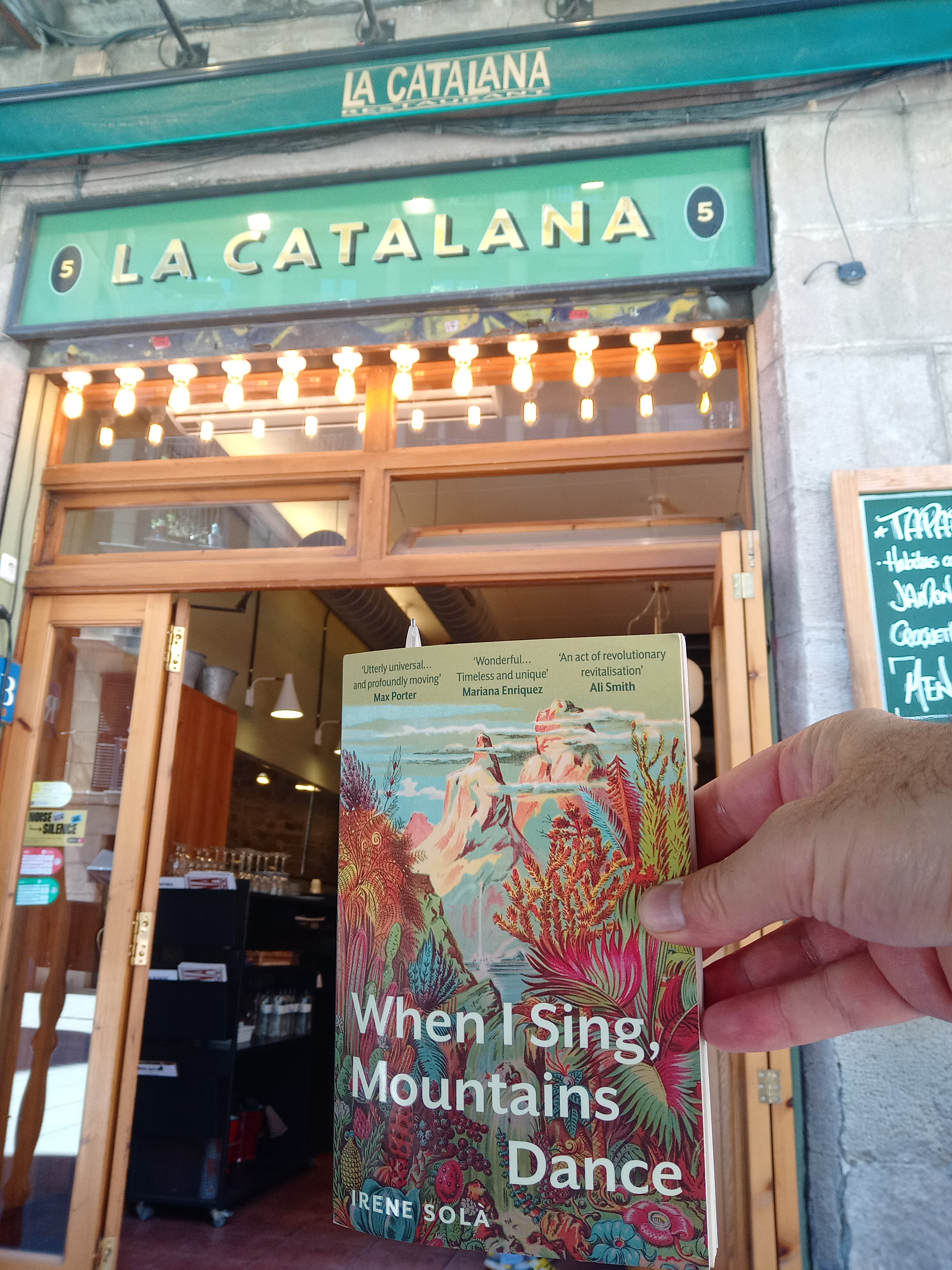
When I Sing, Mountains Dance by Irene Solà tr. Mara Faye Lethem

Early in May, I went with my son to Barcelona to meet up with my brother who was celebrating a significant birthday.

I couldn’t resist the opportunity to take a novel with me translated from Catalan, although during the four days we were there, I did not spend much time reading.

I read a few chapters before I went there and was intrigued to discover a novel of multiple voices and perspectives, not just human voices, firmly rooted in Catalonia culture.

While the first three days were in the city, I felt drawn towards the mountains and so we spent a day in nearby Montserrat.

When Lightning Strikes

Photo M.Soetebier Pexels.com

When I sing, Mountains Dance is set near a village high in the Pyrenees. It is a lyrical, mind-expanding work, littered with references to the folklore and history of Catalonia that brings alive, and gives voice to, every aspect of life within its unique biosphere.

The first chapter is entitled Lightning and I cannot be sure that it is lightning that speaks; perhaps it is the many facets of the storm that narrates. However, it is lightning that wreaks devastation and change on the community that we will then slowly be introduced to, over the following chapters.

After our arrival all was stillness and pressure, and we forced the thin air down to bedrock, then let loose the first thunderclap. Bang! A reprieve. And the coiled snails shuddered in their secluded homes, godless and without a prayer, knowing that if they didn’t drown, they would emerge redeemed to breathe the dampness in. And then we poured water out in colossal drops like coins onto the earth and the grass and the stones, and the mighty thunderclap resounded inside the chest cavity of every beast.

Navigating Loss, Celebrating Survival

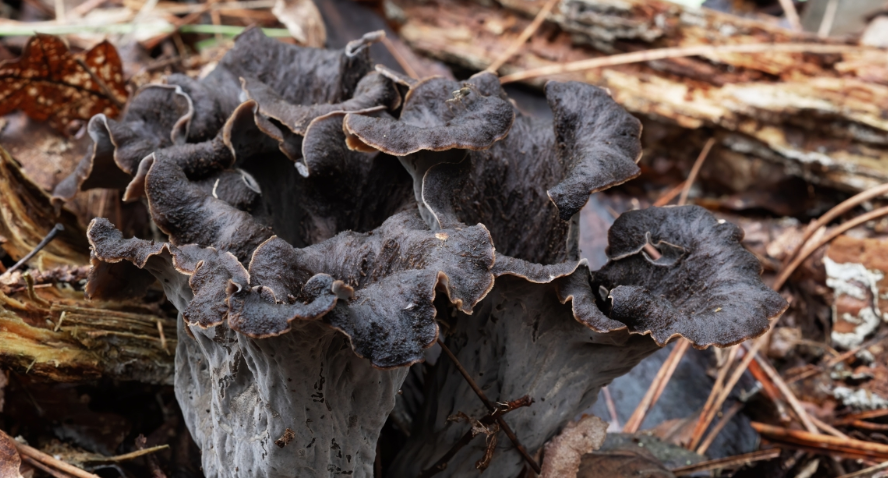
A man named Domènec, a husband and father of two children, is outside when the storm breaks. He is in the middle of rescuing a calf whose tail is caught in a jumble of wires, carrying a small load of black chanterelles (Trumpet of Death) he has foraged. In saving the life of one, nature then takes another, in an instant.

And when it was clear we were done, the birds hopped out onto branches and sang the song of survivors, their little stomachs filled with mosquitoes, yet bristling and furious with us. They had little to complain about, as we hadn’t even hailed, we’d rained just enough to kill a man and a handful of snails. We’d barely knocked down any nests and hadn’t flooded a single field.

Ghosts of the Past Acting on the Present

A Catalan novel in translation, book cover set against the mountains of Montserrat

The four women who witnessed it approached him, then left him, gathering the soaking mushrooms he had dropped, women who made unguents and elixirs and all the other wicked things that witches do.

The death of the man sets off a catalyst of consequences for those left behind, his grieving wife, his newborn son, his neighbours.

I don’t know what hurts more: thinking only of the good memories and giving in to the piercing longing that never lets up, that intoxicates the soul, or bathing in the stream of thought that lead me to sad memories, the dark and cloudy ones that choke my heart and leave me feeling even more orphaned at the thought that my husband was not that all the angel I held him up to be.

Their voices are presented individually, then as the narrative moves along, the interconnectedness of this polyphonic world becomes increasingly apparent.

A Polyphonic Narrative

Irene Solà channels the unique voices of every living (or previously living) being: the lightning bolts, roe deer, mountains, the ghosts of civil war, the widow Sió and later her grown children, Hilari and Mia, as well as Mia’s lovers, with their long-buried secrets and their hidden pain.

The construction is non-linear, the voices fragmentary, but the threads of story rise up through the pages, like those black chanterelles from the damp forest floor.

When tragedy strikes the family a second time, the sister is forced to face life’s struggles and joys alone. A chorus of voices bears witness to all that passes, and the savage beauty of the natural environment, demonstrating aloneness as a state of human mind and not a reality.

Here, the voice of the black chanterelles:

The wild boar came, dark mouth, wet teeth, hot air, fat tongue. The boar came and ripped us out. A man came and ripped us out. The lightning came and killed the man. The women came and gathered us up. The women came and cooked us. The children came. The rabbits came. And the roe-deer. More men came and they carried baskets. Men and women came and they carried knives.

There is no grief if there is no death. There is no pain if the pain is shared. There is no pain if the pain is memory and knowledge and life. There is no pain if you’re a mushroom! Rain fell and we grew plump. The rain stopped and we grew thirsty. Hidden, out of sight, waiting for the cool night. The dry days came and we disappeared. The cool night came, and we grew. Full. Full of all the things. Full of knowledge and wisdom and spores. Spores fly like ladybugs. Spores are daughters and mothers and sisters, all at once.

Narrative Threads, Seeds, Spores, Growth and Healing

Sometimes the text reads like a story and other times like a hallucinatory dream, with a hidden message. Something of a puzzle, the various parts that make up this ecosystem, this community, the human and non-human. It is like imagining that the mountain and the trees really do bear witness to all and if they could share what they have witnessed, it would be something like this.

It requires slow reading and perseverance, as it takes a little while for the voices to become apparent and for the reader to accept that the human voices are not given the right to dominate the narrative. We are able to see and comprehend the wider picture if we have the patience to persevere.

Highly Recommended travel companion if visiting Catalonia.

Further Reading

Guardian Review: the mushroom’s tale – Animals, ghosts, humans, mountains and clouds share the narrative in this playful, deeply felt portrait of Catalonia and its people by Christopher Shrimpton

Granta: In Conversation: Eva Baltasar & Irene Solà‘The tide carries my books from my head to a place that is no longer mine.’ The authors discuss friendship, the sea and finishing their novels. March 2022.

Author, Irene Solà

Irene Solà is a Catalan writer and artist, winner of the European Union Prize for Literature, the Documenta Prize for first novels, the Llibres Anagrama Prize, and the Amadeu Oller Poetry Prize. Her artwork has been exhibited in the Whitechapel Gallery.

By interlacing art and literature, Irene Solà’s work investigates the construction, uses and possibilities of narrative and storytelling, from the historical and popular contexts to the more contemporary.

Enter Ghost by Isabella Hammad

After looking at the novels on the shortlist for the Women’s Prize for Fiction 2024, I decided to read two of them, Enter Ghost (set in Palestine) and Brotherless Night (set in Sri Lanka) mainly because in addition to enjoying works by women in translation, I also enjoy novels in English set in other countries, written by people who have had some experience of that culture.

Enter Ghost is as much a semi-lived experience as it is a story to be read and understood. I don’t know if every reader will experience it that way, but for me, many of the places that the novel takes place in, elicited memories of being there, travelling [the 5 hr scenic route (irony)] between Bethlehem and Ramallah, visiting a countryside village outside of it, spending a day in Jerusalem (finding someone who had permission to enter the city to accompany me). A day(s) in the life of an ordinary (is there such a thing) Palestinian.

I expected them to interrogate me at the airport and they did.

This novel brings alive the sense of place and the many difficult and challenging encounters local people have to navigate, in trying to travel from one place to another. For some, like the elderly, it is best not to even try.

Sonia Nasir is one of the semi-privileged, she is able to fly into the country. That is, she is does not have to travel overland via Jordan and cross the Allenby/King Hussein Bridge to enter Palestine, as many do.

Enter Ghost is a story of youth, about a desire to stage a play in one of the most difficult places you might try to do that.

People who live in different parts of Palestine, with different ID’s and therefore different freedoms, different fears, vastly different experiences. Gazan’s, West Banker’s and what they refer to as 48’ers. It is as if they are from different countries, how different their lives are based on the geography of birth.

Sonia is half Dutch, half Palestinian and lives in London where she is a successful stage actor. She is connected to Palestine, through family summer holidays spent in Haifa (a Northern coastal town). While visiting her sister Haneen, she meets her friend Mariam, who asks her to fill in for a couple of characters in the play she is staging, while she searches for suitable replacements. They are staging an Arabic version of Hamlet.

The novel depicts the process of rehearsing and pushing actors to develop into the roles they are playing, while navigating an environment where even theatre is seen as a possible revolutionary act. All the while they rehearse, they are never quite sure if they can pull this off, nor are they even sure of whether they can trust each other.

As well as navigating their own relationships, there is an incident at the Al-Aqsa Mosque which further complicates their ability to move about.

Throughout the obstacles, Sonia is coming to terms with her recent past in London, the fraught relationship she has with her sister and with her ancestral home.

outdoor theatre Hamley an Arabic version of a Shakespeare play
Photo by Matheus Bertelli on Pexels.com

The day Michael, the movement director, joined rehearsals, he had examined my body like a tailor; told the directors to leave the room, and proceeded to lecture me about the importance of motivation.

‘Every person,’ he said, looking away, absorbed by his words, ‘every body moves differently from the next person’s body when their mind goes through something. When you’re sad, you,’ he pointed, ‘are going to move differently from the way I move when I’m sad. I can still read your movements, but they’re not going to be the same as mine. But if you make a straight line from emotion to movement – your emotion, your movement – then the audience will not only read you, they will feel you.’

She is 38 years old, mature in one sense and an established actor, and yet it is something of a coming-of-second-age novel, as both the play and the new relationships and the place all act on her and transform her.

As the time this novel was shortlisted for the Women’s Prize, the HOME venue in Manchester, UK cancelled then reinstated (after nearly 100 artists protested and began to remove their work from an exhibition there) a Palestinian theatre performance of Voices of Resilience.

There is reference too in the novel, to a turning point in Palestinian theatre history, the staging of Al-Atmeh, ‘Darkness’, a play which as it begins the lights go out – actors are part of the audience and play out all the elements of dealing with this one of many regular occurrences of life under occupation, trying to fix it.

The titular darkness allows the actors to discuss the darknesses of various interrelated forms of oppression—occupation, social backwardness, patriarchy—and the play ends with the cast and audience holding candles to collectively illuminate the stage. It was a raging hit. The audiences had seen nothing like it and they were ecstatic.

The version of Hamlet that is staged is based on a translation by Jabra Ibrahim Jabra translated back into English for the novel, and the language used and those who use it and how they use it is as important as the text itself.

I am not well versed in the play Hamlet, but the parts of the play that are shared in the novel and the context within which they are staged don’t require that the reader be too familiar with it, but no doubt if you are familiar with Hamlet, it will add another layer of understanding.

I particularly enjoyed it also for the understanding it brought to the process of developing a troupe of actors for a play and how the author captured these performances and the emotion they elicited (or didn’t). That is powerful, dedicated and practiced writing.

Overall, as I said in the beginning, I felt like I lived through this novel, which was exhausting at times, but wholeheartedly worth it.

Further Reading

The Revolutionary Power of Palestinian Theatre, Isabella Hammad Reflects on How Art Can Still Effect Change, Lithub.com, 4 Apr 2023

International Booker Prize Winner 2024

The International Booker Prize shortlist celebrated six novels in six languages (Dutch, German, Korean, Portuguese, Spanish and Swedish), from six countries (Argentina, Brazil, Germany, Netherlands, South Korea and Sweden), interweaving the intimate and political in radically original ways. All the books were translated into English and published in the UK/Ireland.

The 2024 international booker prize shortlist including Selva Almada's Not a River

The shortlist was chosen from the longlist of 13 titles and today the winner was announced.

The Winner

The winner for 2024 of the International Booker Prize is Kairos by Jenny Erpenbeck (Germany) translated from German by Michael Hofmann. Jenny Erpenbeck was born in East Berlin in 1967, and is an opera director, playwright and award-winning novelist.

Kairos is an intimate and devastating story of the path of two lovers through the ruins of a relationship, set against the backdrop of a seismic period in European history.

Berlin. 11 July 1986. They meet by chance on a bus. She is a young student, he is older and married. Theirs is an intense and sudden attraction, fuelled by a shared passion for music and art, and heightened by the secrecy they must maintain. But when she strays for a single night he cannot forgive her and a dangerous crack forms between them, opening up a space for cruelty, punishment and the exertion of power. And the world around them is changing too: as the GDR begins to crumble, so too do all the old certainties and the old loyalties, ushering in a new era whose great gains also involve profound loss. 

What the International Booker Prize 2024 judges said

‘An expertly braided novel about the entanglement of personal and national transformations, set amid the tumult of 1980s Berlin. 

Kairos unfolds around a chaotic affair between Katharina, a 19-year-old woman, and Hans, a 53-year-old writer in East Berlin.

Erpenbeck’s narrative prowess lies in her ability to show how momentous personal and historical turning points intersect, presented through exquisite prose that marries depth with clarity. She masterfully refracts generation-defining political developments through the lens of a devastating relationship, thus questioning the nature of destiny and agency. 

Kairos is a bracing philosophical inquiry into time, choice, and the forces of history.’   

Read An Extract From the Opening Chapter

Prologue

Will you come to my funeral? 

She looks down at her coffee cup in front of her and says nothing. 

Will you come to my funeral, he says again. 

Why funeral— you’re alive, she says. 

He asks her a third time: Will you come to my funeral? 

Sure, she says, I’ll come to your funeral. 

I’ve got a plot with a birch tree next to it. 

Nice for you, she says. 

Four months later, she’s in Pittsburgh when she gets news of his death. 

Continue Reading here…

Further Reading

Everything you need to know about Kairos

A Reading Guide on Kairos

Q & A with Jenny Erpenbeck and Michael Hofmann

Thoughts

I haven’t read Kairos though it has had mainly positive reviews. I have read one of her novels Visitation some years ago and didn’t get on with that one too well, so I haven’t picked up any more of her work. I have no doubt that it is well written, I’m just not that interested in the premise.

Have you read Kairos? Or any other novels by Jenny Erpenbeck? Let us know in the comments below what you thought.

New Zealand Book Awards Winner 2024 #theOckhams

Today the New Zealand Book Awards 2024 announced their winners. Known as The Ockham’s they are regarded as the country’s premier literary honours for books written by New Zealanders.

Awards are given for Fiction (the Jann Medlicott Acorn Prize for Fiction), Poetry (the Mary and Peter Biggs Award for Poetry), Illustrated Non-Fiction (the Booksellers Aotearoa New Zealand Award for Illustrated Non-Fiction) and General Non-Fiction.

There are also four awards for first-time authors (the Mātātuhi Foundation Best First Book Awards) and, at the judges’ discretion, Te Mūrau o te Tuhi, a Māori Language Award.

Auckland Writer’s Festival | Waituhi O Tāmaki 2024

The announcement of the winners, hosted by Jack Tame coincided with the beginning of the annual Auckland Writer’s Festival, running from 14 – 19 May, 2024.

The Jann Medlicott Acorn Prize for Fiction

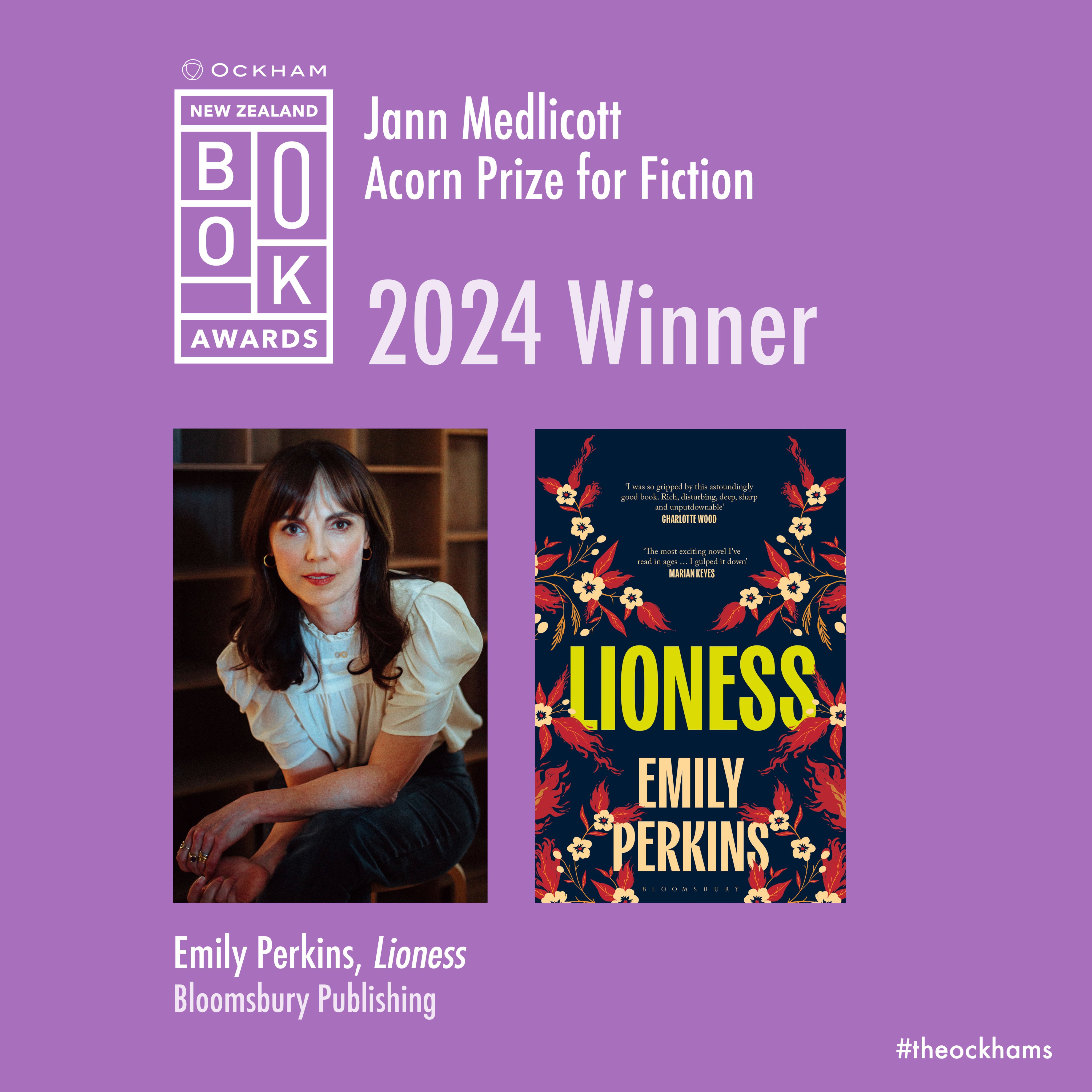
From a shortlist of four novels, the winner of the Fiction award is Emily Perkins for Lioness.

Jann Medlicott Acorn Prize for Fiction 2024

A searing and urgent novel crackling with tension and intelligence, Lioness starts with a hiss and ends with a roar as protagonist Therese’s dawning awareness and growing rage reveals itself.

At first glance this is a psychological thriller about a privileged wealthy family and its unravelling. Look closer and it is an incisive exploration of wealth, power, class, female rage, and the search for authenticity.

Emily Perkins deftly wrangles a large cast of characters in vivid technicolour, giving each their moment in the sun, while dexterously weaving together multiple plotlines. Her acute observations and razor-sharp wit decimate the tropes of mid-life in moments of pure prose brilliance, leaving the reader gasping for more. Disturbing, deep, smart, and funny as hell, Lioness is unforgettable.

Author, Emily Perkins

Emily Perkins is an award-winning writer living in Aotearoa, New Zealand. Her books include the Women’s Prize longlisted The Forrests, Novel About My Wife, winner of the Believer Book of the Year Award and the Montana Medal for Fiction, and the short story collection Not Her Real Name, winner of the Geoffrey Faber Memorial Prize.

She also writes for theatre, film and television, including the original play The Made and an adaptation of Henrik Ibsen’s The Doll’s House, both with Auckland Theatre Company. With director Alison Maclean, she co-wrote the feature film The Rehearsal, adapted from Eleanor Catton’s novel.

Emily has taught creative writing and was the host of TVNZ’s books programme The Good Word. She is a member of the UK’s Folio Academy, an Arts Foundation Laureate, and a Member of the New Zealand Order of Merit for services to literature.

Other Category Winners

The winner of the Booksellers Aotearoa New Zealand Award for Illustrated Non-Fiction was Gregory O’Brien for Don Binney: Flight Path, an illustrated account of the life and work of one of NZ’s most iconic artists.

The Mary and Peter Biggs Award for Poetry went to Grace Yee for her fusion of Cantonese-Taishanese and English collection that moves between old newspaper cuttings, advertisements, letters, recipes, cultural theory, and dialogue, evoking the unsettledness of migration, Chinese Fish.

The General Non-Fiction Award went to Damon Salesa for An Indigenous Ocean: Pacific Essays and the Maori Language Award went to Tā Pou Temara (Ngāi Tūhoe) for Te Rautakitahi o Tūhoe ki Ōrākau.

I read Lioness in the summer of 2023 and found it a compelling thought provoking read, where there is as much going on beneath the surface of scenes depicted, in the spaces its protagonist inhabits, observing those around her, as there was in their reality. While reading, it felt like I hadn’t read anything that had done this before, it provoked hyper-vigilant observations, readers will likely have strong opinions about the characters, it’s almost impossible not to.

I’m happy to see Emily Perkins‘ work being celebrated, there is often a frisson of excitement around one of her novels coming out, her readership extending much beyond NZ.

Have you read Lioness? What did you think of it?

Seaborne by Nuala O’Connor

Formative Years Bring a Taste of Freedom

rebel pirate woman adventure Irish literature

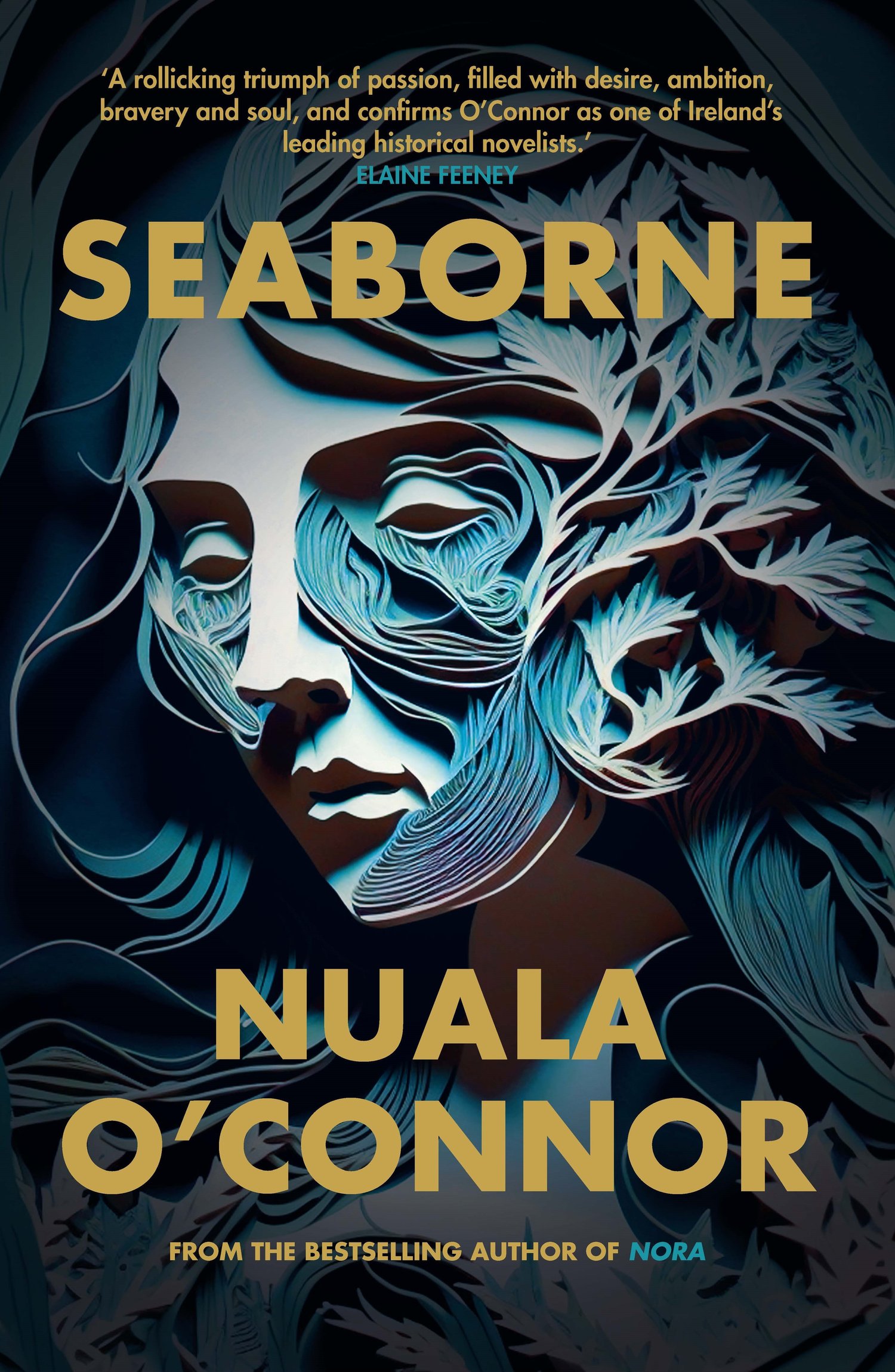
Seaborne is an adventure story about a young girl born in Kinsale, Cork to a maid, who, in order to keep her with her, styles her as a boy growing up, so she can stay in her father’s house (a local lawyer) and be apprenticed to him.

Anne becomes Anthony in her childhood and loves nothing more than going out on the boat with her father, being at sea.

Eventually, in order that her parents can be together, the man abandons his wife and family, and travels with Anne and her mother to the Carolina’s where he will run a plantation.

Life As A Girl is Restricted

But Anne having had significant freedom as a boy is none too pleased by the restrictions and rules that presenting as a girl puts upon her.

‘Three times trouble, girl, with your red hair, and your forward manner, and your obsession with water and boats. For a lady, one is ill luck and the others are ill conduct. The three do not match well.’

And I give my ever honest reply. ‘They match the finest with me, Father.’

Finding a Way to Seascape

She finds solace and much more, with her friend and servant Bedelia and finds a way to have the occasional sea journey thanks to a young man they hear of, Gabriel Bonny, who for a few coins will take a person to sea. At first he declines to take her, she will visit a tailor and have a set of clothes made, more suitable for seafaring, eventually she wins him over, he can not refuse her.

I woke this day knowing only one thing: I wanted to hire a boat, row it out, and feel saltwind about my face and hair. I desired to have nothing but the sway of the sea under my body and I determined to make that happen.

Seeing him as a way to escape her destiny and to a life at or near the sea, she elopes with him, taking Bedelia with her.

Passion, Piracy and Plunder

Photo by brenoanp on Pexels.com

In the town where they settle Anne discovers that her husband isn’t so keen to let her pursue her dream to be at sea. She becomes restless and rebels against the wifely life and in her restless wanderings, she comes across someone who will.

Captain Calico Jack will allow her to follow him and his crew into dangerous territory and a life she had never imagined but finds passion and excitement in.

I crave a chance to wave my sword, to fire a shot. I want to know how it feels to own such power. And I think of the riches that await us, and the wandering sea-life Jack and I will have when we have plenty of money.

They will sail around the islands of the Caribbean, looking for opportunity, trying to avoid those in service to Governor Rogers, a man with a mission to suppress piracy and protect trade, who was hell bent on apprehending the infamous pirate and his men.

A Maverick Maiden

Set in the 1700’s, Anne Bonny is a real character, though much about her is legendary and not easily verifiable. Nuala O’Connor has familiarised herself with facts and read the fictions and re-imagined a version of a deeply unconventional life for Anny Bonny, told in a lilting, of its era prose.

It is narrated in a way that allows the reader to easily visualise the life and surroundings she inhabits and the high sea adventures she participates in, even if they are shortlived. It’s a fun, imaginative read, of a woman before her time, who gave herself freedoms and lived fearlessly, despite the era she lived in and the culture she came from.

Further Reading

Irish Daily Mail: I’m Always Willing to follow a historical female maverick to see where her story leads me

RTE Radio 1 Interview: 39th Cúirt International Festival of Literature

Author, Nuala O’Connor

Nuala O’Connor is a novelist, short story writer and poet, and lives in County Galway with her family.

She is the author of four previous novels, including Nora: A Love Story of Nora and James Joyce (2021), Becoming Belle (2018) and Miss Emily (2015), a reimagining of the life of Emily Dickinson, and six short story collections, her most recent being Joyride to Jupiter (2017) and Birdie (2020).

She has won many prizes for her short fiction including the Francis MacManus Award, the James Joyce Quarterly Fiction Contest and the UK’s Short Fiction Journal Prize and been nominated for numerous prizes including the Edge Hill Short Story Prize, the Kerry Group Irish Novel of the Year Award, the Irish Book Awards Novel of the Year and the International Dublin Literary Award. Nora was shortlisted for the 2021 An Post Irish Book Awards RTÉ Audience voice Award. She is editor-in-chief at flash e-zine Splonk.

Hagstone by Sinead Gleeson

I was intrigued to read this debut novel Hagstone having enjoyed Sinéad Gleeson’s voice in her nonfiction narrative essay collection Constellations (reviewed here).

Island Culture and Art

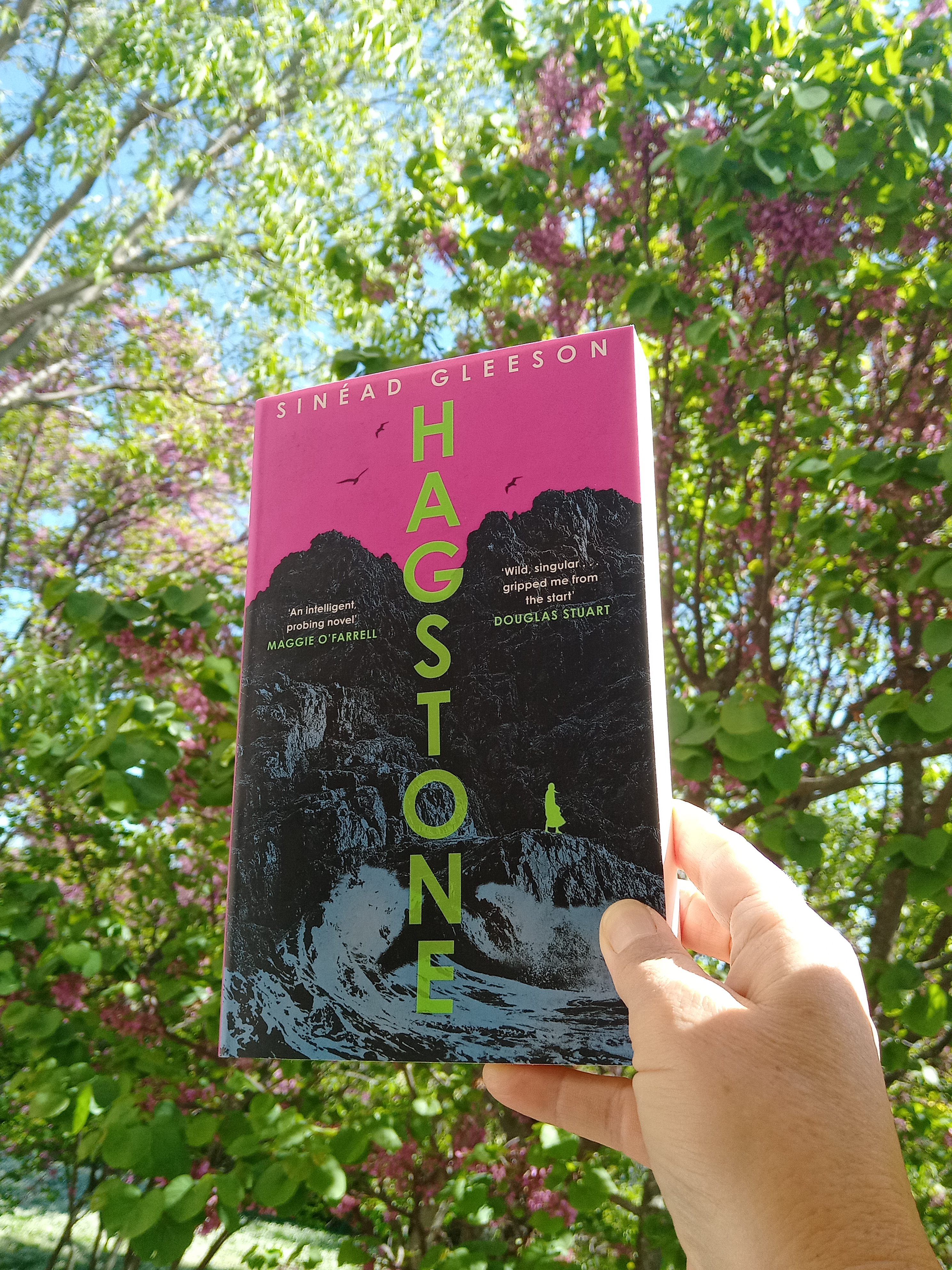
On a wild and rugged island, artist Nell feels at home. It is the source of inspiration for her art, rooted in the landscape, local superstitions and the feminine.

The island has a way of tethering people to the soil, despite high watermarks of loss. Even when people leave, stories survive.

The mysterious Inions, a commune of women who have travelled there from all over the world, consider it a place of refuge and safety, of solace in nature. They have barely any contact with anyone outside of the convent where they reside.

wild woman Island literature Irish commune of women refuge in nature waves crash on rocks silhouette of a woman standing on a rock pink sky birds circling

Hagstone centres around the life of Nell, living alone in a cottage on the island (putting me in mind of Sophie White’s Where I End) where she tries to eek out a living doing tours of the island and changeovers in holiday rentals, to support her preferred activity, making ‘durational art’.

Up on a hill lies an old convent named Rathglas, inhabited by the group of women (not nuns, though they live in a very nun-like fashion) who have opted out of society, headed by a woman they refer to as Maman.

Given its gynocratic nature, Rathglas attracted activists and agitators, though you couldn’t help but wonder if some were drawn there by the sound.

A clever use of the French word for Mother and the title of French artist Louise Bourgeois’s most famous sculpture, an enormous bronze, stainless steel, and marble sculpture of a spider, found in several locations, representative of the protective and nurturing nature of her mother.

A Commission For Samhain, Rogue Elements

Louise Bourgeois art installation Maman, A Crouching Spider in an infinity pool reflected in the water Chateau La Coste Puy Sainte Reparade near Aix en Provence

One day Nell receives a letter, an invitation to create an artwork for the thirtieth anniversary since the Inions arrived, to coincide with the festival of Samhain.

Then there is Cleary, a man recently returned to the island, a subject of intrigue and attraction, the two of them seeking to fill some void, craving each other’s company while avoiding attachment.

And the rich actor, Nick, a man everyone recognises but no one knows. Nell takes him on a tour and his inquisitive questioning unsettles her.

Haunting Sounds That Not All Can Hear

Photo by Oliver S. Pexels.com

There is a strange sound that emits from the island, that only women can hear and not only hear, but it has a strange effect on them. Birds fall out of the sky.

It was impossible to exactly predict the arrival of the sound. The canonball rumble of it. It paid no heed to scientific forecasts.Storm warnings in traffic light colours. Some felt it in advance, like a tingle on the skin. Others said the air felt heavier. Last night it arrived along with a new moon. The result was something never seen before.

I never quite understood what this was, was it an element of magic realism or something else. It was one of the threads left to the reader’s imagination, a missed opportunity or perhaps I missed something?

It all leads up to the night of Samhain, after which nothing will be the same.

Hagstone started out really well and drew me in and had a strong first half, introducing the different characters, elements of intrigue and clever satirical humour, that wasn’t sustained in the latter half where it lost opportunities to delve deeper into the intentions behind some of its characters and tie up some unfinished threads.

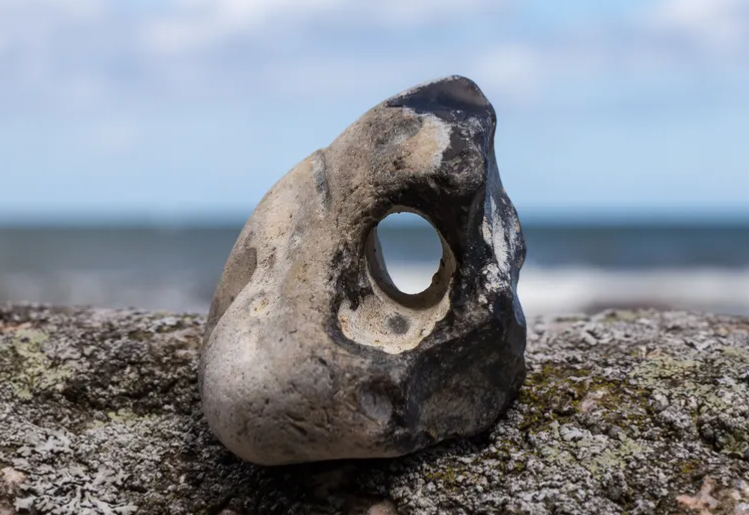
– A hagstone – I have a thing for them! Thank you.

– For years I just thought they were battered stones with holes in them, until Sile set me right. About the fact they’re lucky, and fishermen tie them to their boats to ward off evil.

– And that if you look through the hole, you’re meant to see a different view of the world. I think that’s why I collect them.Looking, seeing, an artist thing.

Further Reading

The Guardian: Hagstone by Sinéad Gleeson review – portrait of an artist by Jessie Greengrass

Author, Sinéad Gleeson

Sinéad Gleeson is an Irish author and artist.

Her essay collection, Constellations: Reflections from Life, won Non-Fiction Book of the Year at 2019 Irish Book Awards and the Dalkey Literary Award for Emerging Writer. It was shortlisted for the Rathbones Folio Prize and the James Tait Black Memorial Prize and the Michel Déon Prize.

Erasure by Percival Everett (2001)

I read this after Percival Everett’s excellent So Much Blue (my review) so my reading was influenced by having read that earlier novel, which I enjoyed more.

I did really enjoy this, however I enjoyed So Much Blue more on account of the type of reader I am, because it takes you outside of America to Paris and El Salvador – that novel was about the growth of the protagonist as a result of those experiences, whereas Erasure is more of a commentary on American culture and racial bias.

Revenge Can Backfire

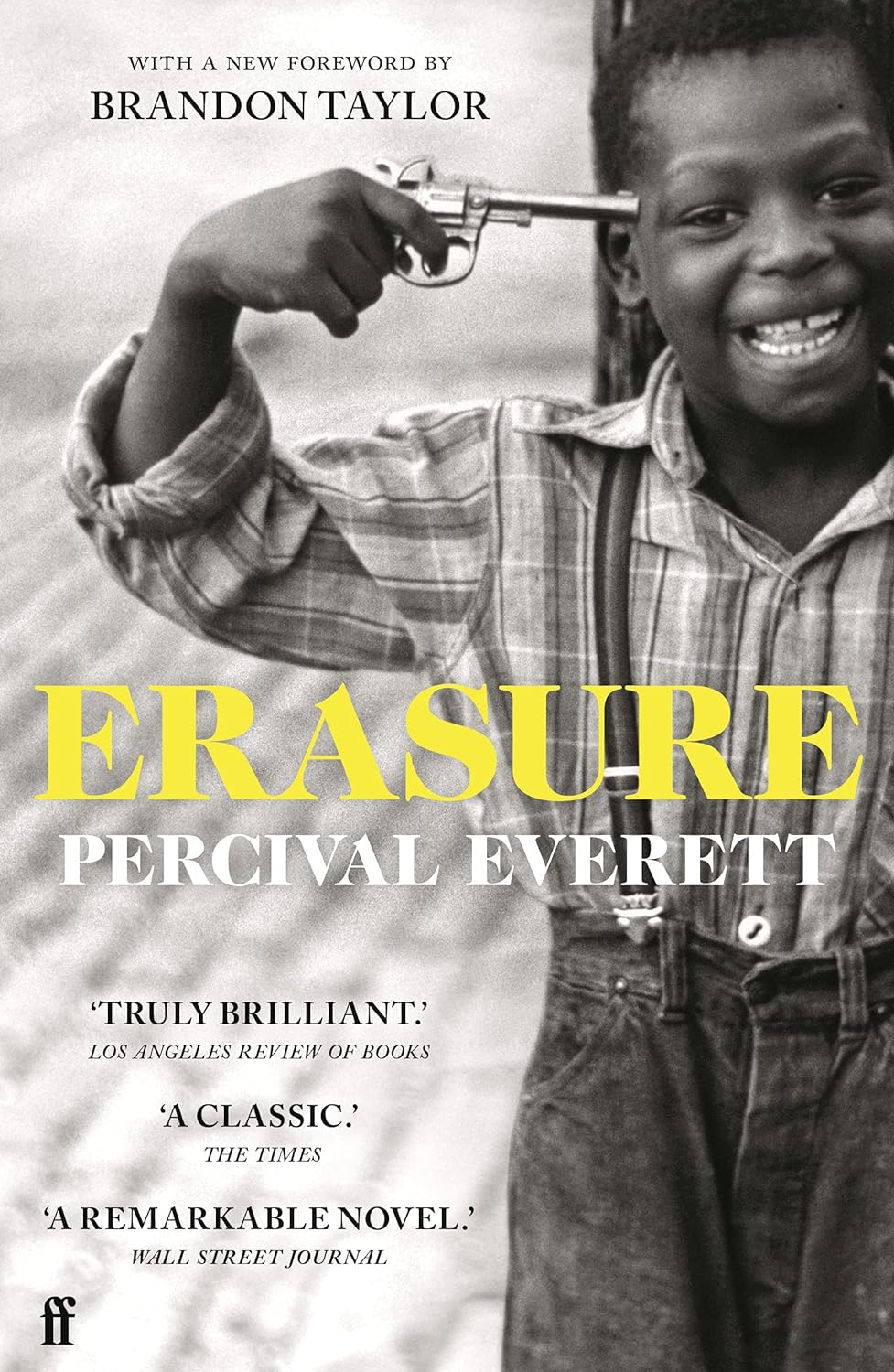
American Fiction film classic satire Cord Jefferson book cover young smiling black boy child holds a toy pistol to his head wearing checked shirt and jeans with braces photo in black and white the word Erasure in yellow text

In Erasure, a deeply satirical novel of the publishing industry and its biases; we have a Black American writer ‘Monk’ as protagonist, whose current work isn’t gaining traction.

I called my agent to check on the status of my novel and he had no good news for me. Three more editors had turned it down. ‘Too dense,’ one had said. ‘Not for us,’ a simple reply from another. And, ‘The market won’t support this kind of thing,’ from the third.

‘So, what now?’ I asked.

‘I don’t know what to tell you,’ Yul said. ‘If you could just write something like The Second Failure again.’ The ice clinked in his glass.

‘What are you telling me?’ I asked.

‘I’m not telling you anything.’

He feels resentful of some of what he is seeing gain popularity (fiction about the Black community using performative and pejorative racial themes and language); and he has had enough of his work being criticised for being too white.

He is middle aged and his mother is showing signs of needing additional care as her dementia begins to endanger her life. His sister and brother are both Doctors as was his late father. He visits his mother and sister, to learn his sister is being harassed by pro-life protestors every day and his mother has been lighting fires inside – a box of papers his father asked her to burn.

The Novel With A Novel

In his angst about work he writes a revenge novella using the pseudonym Stagg R. Leigh, one that uses every terrible trope about his race and sends it to his agent. The agent thinks it is a joke, he is instructed to send it out to prospective publishers anyway.

I remembered passages of Native Son and The Color Purple and Amos and Andy and my hands began to shake, the world opening around me, tree roots trembling on the ground outside, people in the street shouting dint, ax, fo, screet, and fahvre! and I was screaming inside, complaining that I didn’t sound like that, that my mother didn’t sound like that, that my father didn’t sound like that and I imagined myself sitting on a park bench counting the knives in my switchblade collection and a man came up to me and he asked me what I was doing and my mouth opened and I couldn’t help what came out, ‘Why fo you be axin?

I put a page in my father’s old manual typewriter. I wrote this novel,, a book on which I knewI could never put my name:

That 80 page novella, initially entitled My Pafology is contained within the novel Erasure. When I started reading, I skipped ahead to see how long it was. It is a unique experience to read a novel within a novel and one that is…well, I don’t really know how to describe it, because it is so deliberately offensive – and so then we witness the author watch his act of protest backfire as he is made to kind of account for what he has done.

Dealing With A Parent With Dementia

In the meantime he takes his mother and her maid on a short holiday, which results in hastening things forward there, dealing with a tragedy and coming to terms with aspects of the family that had been hidden.

Photo furkanfdemir Pexels.com

As in So Much Blue, where we learned that Percival Everett has a bit of a fascination for secrets, so too are they present here. He explores their impact on those whom they have been withheld from.

It is a thought provoking novel and there are many references to other writers and artists and thinkers within, like clues to the things that the author might have been thinking about while writing, that can take the reader down various rabbit holes. Like this one:

* * *
D.W. Griffith: I like your book very much.
Richard Wright: Thank you.

* * *

Going Down A Rabbit Hole

I learned that film director D.W.Griffith, in 1915, directed a controversial, silent film, Birth of a Nation, that depicted previously enslaved African Americans as uncivilised, and that order was restored to the chaotic South by the noble KKK.

African American author Richard Wright wrote Native Son, a book with a similar premise to My Pafology, one that may or may not undermine the humanity of the African American. James Baldwin objected to it, believing it confirmed the damning judgment on African-Americans delivered by their longstanding tormentors.

All that to say there are complex references and issues contained within Erasure that might require more close reading.

It also satirises the book prize industry, when our protagonist finds himself in a dilemma having been asked to judge a prize.

The Movie American Fiction

The book has recently been made into a film which I have not seen, entitled American Fiction. It was written and directed by Cord Jefferson and won an Academy Award (Oscar) for Best Adapted Screenplay in 2024. Jefferey Wright plays the role of the author ‘Monk’, he received a nomination for Best Actor in the Academy Awards 2024.

I was aware of this, although I did not look at any reviews or trailers, but did wonder how much of the depth of reflection could ever be portrayed in a film.

Highly Recommended. Read the book before seeing the film.

Have you read Erasure or seen the film American Fiction? What did you think?

Further Reading

New York Times: The Book Behind ‘American Fiction’ Came Out 23 Years Ago. It’s Still Current.

NPR: Advice from a critic: Read ‘Erasure’ before seeing ‘American Fiction’ by Carole V. Bell

Percival Everett, Author

Percival Everett is the author of over thirty books, including So Much BlueTelephoneDr No and The Trees, which was shortlisted for the 2022 Booker Prize and won the 2022 Bollinger Everyman Wodehouse Prize.

He has received the Hurston/Wright Legacy Award and the PEN Center USA Award for Fiction, has been a Pulitzer Prize finalist, and is Distinguished Professor of English at the University of Southern California. His novel Erasure has now been adapted into the major film American Fiction.

His latest novel James (a reimagining of Mark Twain’s The Adventures of Huckleberry Finn, told from the perspective of the enslaved Jim) was published on 11 April 2024. He lives in Los Angeles.

Women’s Prize for Fiction Shortlist 2024

The Women’s Prize for Fiction have announced their shortlist of six novels. You can view the entire longlist here.

Identity, Resilience, Migrant Experiences, Family Relationships

Many of the books depict characters who are navigating seismic changes in their identity, undergoing a process of self-reckoning and self-acceptance, with several dealing with the inheritance of trauma and the resilience of women overcoming the weight of the past.

Half of the books in this year’s shortlist explore the migrant experience through different lenses, offering moving, distinct, explorations of race, identity and family, of the West’s false promise and the magnetism of home.

The shortlist encompasses stories that both focus on intimate family relationships, as well as those that convey a sweep of history, always with an eye on the particularity of women’s experience, whether in the home or in the context of war and political upheaval.

The Shortlist

Below are descriptions of the individual titles, along with a quote from a judge, to help you discern if they might be of interest:

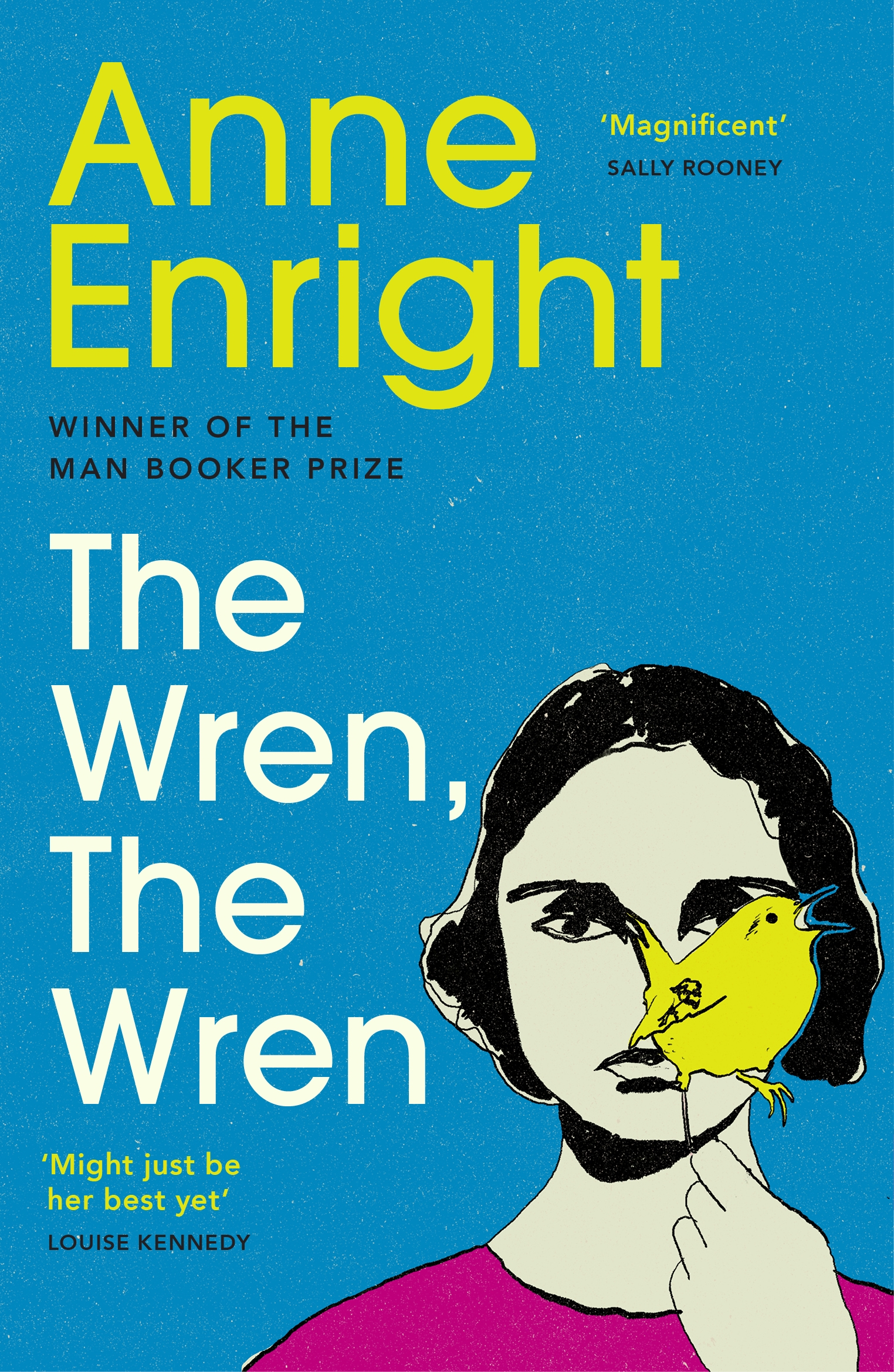
The Wren, The Wren by Anne Enright (Ireland) published by Jonathan Cape, 283 pgs

A psychologically astute examination of family dynamics and the nature of memory. Enright’s prose is gorgeous and evocative and scalpel sharp.

Nell – funny, brave and much loved – is a young woman with adventure on her mind. As she sets out into the world, she finds her family history hard to escape. For her mother, Carmel, Nell’s leaving home opens a space in her heart, where the turmoil of a lifetime begins to churn. Across the generations falls the long shadow of Carmel’s famous father, an Irish poet of beautiful words and brutal actions.

A consideration of love: spiritual, romantic, darkly sexual or genetic. A generational saga tracing the inheritance of trauma and wonder, it is a testament to the resilience of women in the face of promises, false and true. An exploration of the love between a mother and daughter – sometimes fierce, often painful, always transcendent.

Brotherless Night by V. V. Ganeshananthan (Sri Lanka), published by Viking, 348 pgs (see my review here)

Visceral, historical, emotional. It is 300 pages of must-read prose. A powerful book that has the intimacy of memoir, the range and ambition of an epic, and tells a truly unforgettable story about the Sri Lankan civil war.

Sixteen-year-old Sashi wants to become a doctor. But over the next decade, as a vicious civil war subsumes Sri Lanka, her dream takes her on a different path as she watches those around her, including her four beloved brothers and their best friend, get swept up in violent political ideologies and their consequences. She must ask herself: is it possible for anyone to move through life without doing harm?

Restless Dolly Maunder by Kate Grenville (Australia), published by Canongate Books, 256 pgs

[It] follows the life of Dolly, who really is restless. It begins in the 1880s in rural Australia, and it follows Dolly’s ambitions to live a bigger life than the one she’s been given.

Dolly Maunder is born at the end of the 19th century, when society’s long-locked doors are just starting to creak ajar for determined women. Growing up in a poor farming family in rural New South Wales, Dolly spends her life doggedly pushing at those doors. A husband and two children do not deter her from searching for love and independence.

Restless Dolly Maunder is a subversive, triumphant tale of a pioneering woman working her way through a world of limits and obstacles, who is able – despite the cost – to make a life she could call her own.

Enter Ghost by Isabella Hammad (Britain/Palestine), published by Jonathan Cape, 336 pgs (see my review here)

How can a production of Hamlet in the West Bank resonate with the residents’ existential issues? Enter Ghost is a beautiful, profound meditation on the role of art in our society and our lives.

After years away from her family’s homeland, and reeling from a disastrous love affair, actress Sonia Nasir returns to Haifa to visit her sister Haneen. While Haneen made a life here commuting to Tel Aviv to teach at the university, Sonia remained in London to focus on her acting career and now dissolute marriage. On her return, she finds her relationship to Palestine is fragile, both bone-deep and new.

When Sonia meets the charismatic, candid Mariam, a local director, she joins a production of Hamlet in the West Bank. Soon, Sonia is rehearsing Gertrude’s lines in classical Arabic with a dedicated group of men who, in spite of competing egos and priorities, all want to bring Shakespeare to that side of the wall. As opening night draws closer and the warring intensifies, it becomes clear just how many obstacles stand before the troupe. Amidst it all, the life Sonia once knew starts to give way to the daunting, exhilarating possibility of finding a new self in her ancestral home.

Timely, thoughtful, and passionate, Isabella Hammad’s highly anticipated second novel is an exquisite story of the connection to be found in family and shared resistance.

Soldier Sailor by Claire Kilroy (Ireland), published by Faber & Faber, 233 pgs (my review)

A full-bodied, remorseless, visceral deep dive into the maternal mind. It is ultimately a love story between Soldier, the mother, and Sailor, the son.

In her acclaimed new novel, Claire Kilroy creates an unforgettable heroine, whose fierce love for her young son clashes with the seismic change to her own identity.
As her marriage strains, and she struggles with questions of autonomy, creativity and the passing of time, an old friend makes a welcome return – but can he really offer her a lifeline to the woman she used to be?

River East, River West by Aube Rey Lescure (France/China), published by Duckworth, 352 pgs

Set in Shanghai in the 2000s, it’s a novel about reinvention. It’s original, it’s funny, and it’s sometimes heartbreaking as well.

A mesmerising reversal of the east–west immigrant narrative set against China’s economic boom, River East, River West is an exploration of race, identity and family, of capitalism’s false promise and private dreams.

Shanghai, 2007: feeling betrayed by her American mother’s engagement to their rich landlord Lu Fang, fourteen-year-old Alva begins plotting her escape. But the exclusive American School – a potential ticket out – is not what she imagined.

Qingdao, 1985: newlywed Lu Fang works as a lowly shipping clerk. Though he aspires to a bright future, he is one of many casualties of harsh political reforms. Then China opens up to foreigners and capital, and Lu Fang meets a woman who makes him question what he should settle for.

The 2024 Winners

The winner of both the Women’s Prize for Fiction and the inaugural Women’s Prize for Non Fiction will be announced on June 13th, 2024.

I have only read one from the list, Claire Kilroy’s excellent Soldier, Sailor. I’m most interested in reading V.V. Ganeshananthan’s Brotherless Night and Isabella Hammad’s Enter Ghost and am reminded that a friend recommended her debut The Parisian back in 2019 (but you know, 700+ pages).

Have you read any of these from the shortlist? Let us know what you thought in the comments below.

So Much Blue by Percival Everett (2017)

This is my first read of American author Percival Everett, a prolific writer I have been aware of for a few years and wanted to read. So Much Blue is partly set in France so I chose to read that first. I loved it. It’s a multi-layered novel with different strands contributing to an eventual shift in the main protagonist.

A Triple Timeline Narrative

It starts out light and comical with a number of laugh out loud moments and as the story develops, the reflections grow deeper and the experiences become more risky, it becomes more serious.

There are three timelines and the narrative switches between the three, as all are important to the present situation, where the protagonist, artist Kevin Pace is painting a large 12 X 21 foot canvas in his shed and will not show it to anyone, not his wife Linda, his best friend Richard or his children. The painting harbours his secrets. In a rare interview Percival said:

“I’m interested in secrets: how important they are, and how much secrets contribute to the truth of something.”

House – Present Moment

The chapters entitled House are set in the present. Pace is fifty six years old, a recovering alcoholic and abstract artist, living with his wife Linda and their two children Will (12) and April (16). He is experiencing a kind of reckoning with himself. It has something to do with the locked shed where he works on a ‘maybe masterpiece’ he is creating, and events of the past that he is reconciling with. At the same time, right now, there is a situation with his daughter, which he is not managing very well.

I considered myself a significant and singular failure as both a husband and a father.

Paris – Ten Years Ago

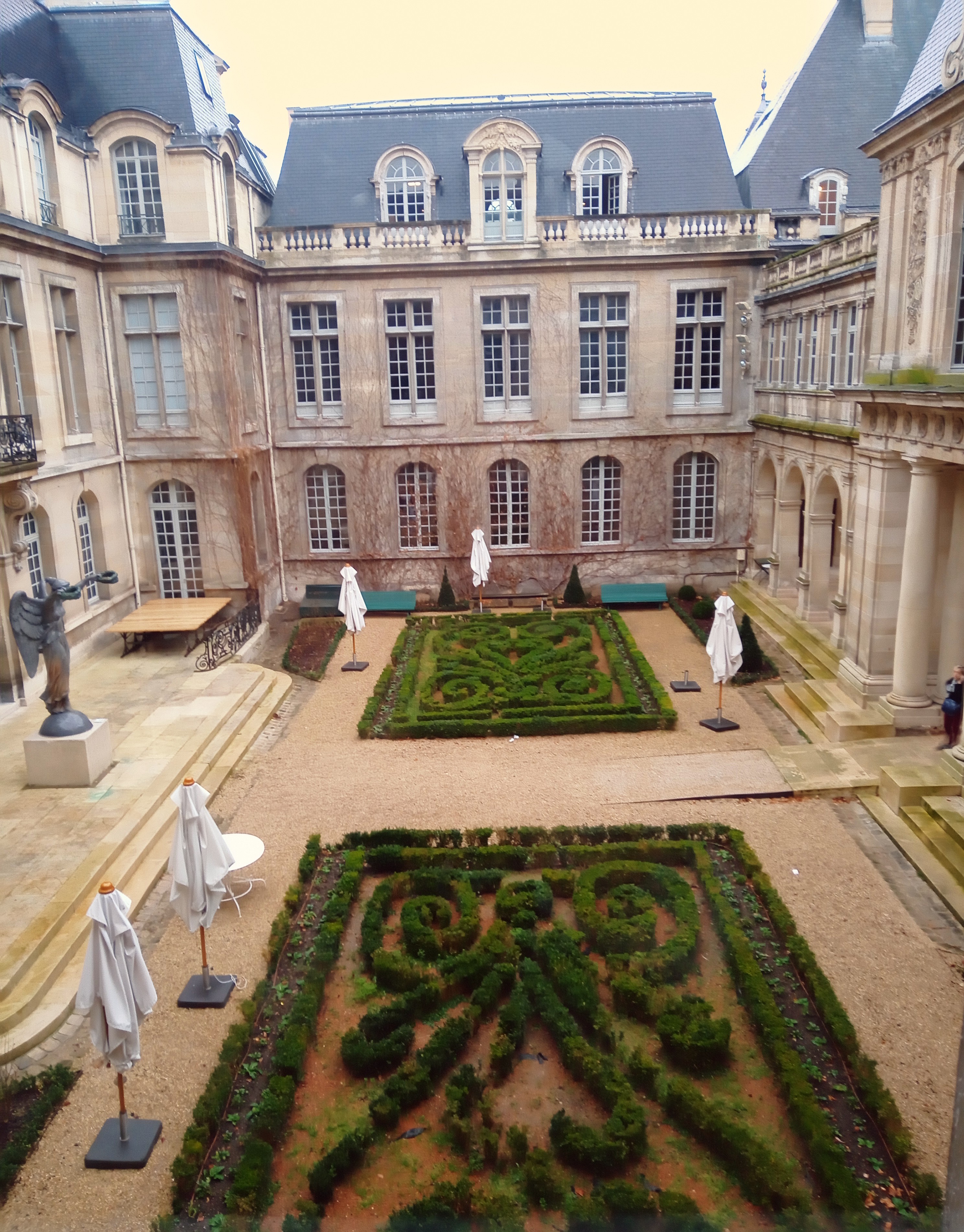
Musée Carnavalet Me Marais Paris History Madame Sévigné de Seve

To understand who he is and what is behind his painting, we read about two life changing experiences he went through, that have contributed to who he is today. The first, in the chapters entitled Paris took place ten years ago when he was 46 years old; a brief affair with a very young Parisian woman. Though it is one of his secrets and regrets, it was the first time he had experienced something and it contributes to his later understanding and growth.

It could have been argued that ten years earlier I had succumbed to a banal midlife crisis, but now I was falling victim to something far worse, a late-life revelation.

1979 – 30 years ago

The second experience was a covert trip to El Salvador in 1979 with his friend Richard, while they were still university students. They travelled there to look for Richard’s brother Tad, who was missing, believed to be involved in bad business. The two boys went there without knowledge that the country was on the brink of civil war and witnessed terrible things, that would haunt Kevin for years to come. The 1979 chapters are a wild ride and a shocking wake up call to the young men.

If only I had the excuse of misunderstanding why I was there, perhaps then some of the guilt would not exist, perhaps then I would not have blamed myself to this day, perhaps then I would not long for a piece of me that died that day. But my friend had come to me, depressed, fearful, lost, and he had asked for my help. I offered it willingly, if not completely innocently or selflessly. That was 30 years ago. It was May 1979.

Alcoholic or Workaholic

As an artist, he is interested in colour and its representation and so we too come to understand what that means to him. Though we are not able to see what he creates, we can imagine. Ultimately, the art is not enough and he must revisit some of the past in order to realise what he must do to make amends.

It was far more socially acceptable to be a workaholic, the obsessed artiste, than it was to be a drunk, but using an old neighbour’s phrase, I’m here to tell you that one addiction was as bad as the next.
The real sadness was that I drifted away from my life and children because of alcohol, but instead of finding the current back to them when I ceased, I camped out on an uncharted island in the middle of myself. Nonetheless, selfish as I was, things were better. I was more trustworthy. An absentminded artist is more forgivable than an alcoholic.

So Much Blue After the Reds, Browns and Ochres

I found reading it very vivid and could imagine the scenes so well. The character of Kevin is flawed but self-aware, he is aware of his failings and there will be transformation of sorts by the end.

I looked across the dining room at a small canvas of mine. There was no blue in it. It was often pointed out that I avoided blue. It was true. I was uncomfortable with the colour. I could never control it. It was nearly always a source of warmth in the underpainting, but it was never on the surface, never more than an idea on any work. Regardless that blue was so likeable, a colour that so many loved or liked – no one hated blue – I could not use it. The colour of trust, loyalty, a subject for philosophical discourse, the name of a musical form, blue was not mine. And by extension green was not mine. In fact, in Japanese and Korean, blue and green have the same name. As blue as the sky is, the colour came late to humans.

Brilliant. Look forward to reading more.

‘A picture is a secret about a secret’. Diane Arbus

Further Reading

NPR Review: So Much Blue is Everett’s Best Yet by Michael Schaub

New York Times: In ‘So Much Blue,’ a Married Painter Spills Secrets by Gerald Early

Percival Everett, Author

Percival Everett is the author of over thirty books, including So Much BlueTelephoneDr No and The Trees, which was shortlisted for the 2022 Booker Prize and won the 2022 Bollinger Everyman Wodehouse Prize.

He has received the Hurston/Wright Legacy Award and the PEN Center USA Award for Fiction, has been a Pulitzer Prize finalist, and is Distinguished Professor of English at the University of Southern California. His novel Erasure has now been adapted into the major film American Fiction.

His latest novel James (a reimagining of Mark Twain’s The Adventures of Huckleberry Finn, told from the perspective of the enslaved Jim) was published on 11 April 2024. He lives in Los Angeles.