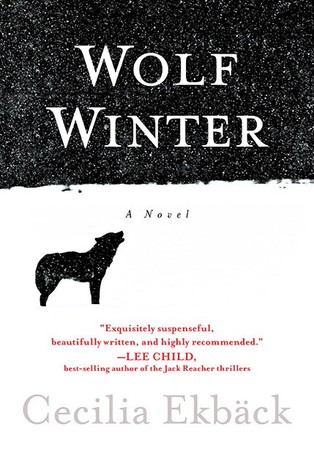
Wolf Winter by Cecilia Ekbäck

wolf winterSet in Swedish Lappland in 1717, Cecilia Ekbäck’s debut novel Wolf Winter follows a family of four, Maija, her husband Paavo and their daughters Frederika and Dorotea from a fishing village in their native Finland to the forested lands surrounding Sweden’s Blackåsen mountain.

They swap houses with Maija’s brother, deciding a life in the interior may be better suited to Paavo, who had developed numerous fears keeping him from earning his living at sea. However, when their daughters stumble across a dead body allegedly killed by wolves, on a route near the mountain, they begin to wonder whether they have left one dark dream for an even blacker nightmare.

Maiji suspects it was a crime and makes it her business to ask questions to an extremely reticent and unappreciative band of local settlers and itinerant Lapps. Her husband never questions her interference, even when present he plays no role and as soon as the first signs herald the approach of winter, he sets off alone for the coast, leaving the women-folk to survive the harsh physical elements and the even stranger mystical apparitions that some but not all will witness. Without a man to steer them out of trouble, the woman face many risks, not least being perceived as dabbling in witchcraft, as church records show has happened to a few others with similar inclinations who preceded them.

There is a new priest in town whom Maiji spends a few evenings shovelling snow with, holed up in her cabin, and the widow of the previous priest, who seems to know more than she is willing to pass on, brothers who steal wives, wolves whom some see and not others, and a teacher whose presence seems to awaken the angry ghosts of the departed.

Lapps or Laplanders circa 1900

Lapps or Laplanders circa 1900

Unfortunately, I couldn’t really get into this novel in the way I wanted to, though it wasn’t a difficult read.  It didn’t portray a sense of the era, it felt contemporary even though it did evoke a strong sense of place and it was clear there were no modern comforts. Perhaps it was the attitude and freedom of the protagonist that didn’t sit with the era.

The time spent with a number of the characters was so fleeting, it left too little of an impact and rendered them insufficient to develop an interest in. The storyline itself raised so many questions that went unanswered, like why did the husband go off and leave his family in such a vulnerable position when they could have gone with him and been protected. And why did the wife think she as a newcomer could become an investigator into a crime that clearly the locals were not happy about being questioned, especially when it threatened her safety. Her role was to assist in bringing new life (she was a kind of midwife) and yet at every turn she was endangering those close to her. The younger daughter nearly lost her feet to frostbite after trekking in a blizzard to ask the Lapps questions about the murder. I didn’t believe in Maiji’s intentions and relationships and the blurred line between reality and the mystical elements. I wanted to be drawn in by it, but was unable to brush off the scepticism.

So what drew me towards reading this novel in the first place?

Well the snowy winter setting was very appealing, the plot sounded intriguing and the praise of Hilary Mantel and the Library Journal, who had this to say definitely lured me in:

“The novel will appeal to readers who like their historical fiction dark and atmospheric, or mystery fans who are open to mysticism and unconventional sleuths. Readers who enjoyed the winter landscape and magical realism of Eowyn Ivey’s The Snow Child may also want to try this.”  Library Journal

“The story creeps up and possesses the imagination; there’s something eerie in the way half-understood and only half-seen events leave their mark. It’s a powerful feat of suggestion, visually acute, skillfully written; it won’t easily erase its tracks in the reader’s mind.” Hilary Mantel

It was an interesting concept and disappointing that it wasn’t more engaging, but for those who like a good mystery with an element of hinted at magical realism, this could be just what Hilary Mantel suggests it is.

Note: This book was an ARC (Advance Reader Copy) kindly made available in e-book format from the publisher via NetGalley.

The Yellow Rain by Julio Llamazares tr. by Margaret Jull Costa

A village high in the Pyrenees, mostly in ruin, houses one last ageing male resident who imagines those who will eventually discover him and all that has passed.

“Yes, that is probably how they will find me, still dressed and staring straight at them, much as I found Sabina amid the abandoned machinery in the mill. Except that, then, the only other witnesses were the dog and the grey moan of the mist as it caught and tore on the trees by the river.”

CIMG6791Julio Llamazares The Yellow Rain is an elegy to a forgotten village, a way of life, for a man who meets death long before it invites him to join it.

Ainielle is a village in the Spanish Pyrenees that has become abandoned and derelict, no one lives there any longer except this one man who refuses to let go of the past and will experience his last years, months, days in a kind of slow, yellowing reality.

“Solitude, it is true, has forced me to come face to face with myself. But also, as a consequence, to build thick walls of forgetting around my memories. Nothing so frightens a man as another man especially if they are one and the same – and that was the only way I had of surviving amid all this ruin and death, the only way of withstanding the loneliness and the fear of madness.”

A snake bite almost relieves him of his solitary existence, but even then he can’t help but fight against death’s shadows of invitation that sit uninvited next to his bedside.

“The panic and cold of death have long since ceased to frighten me. Before I discovered its black breath inside me, even before I was left all alone in Ainielle, like one more shadow amid the shadows of the dead, my father had already shown me by his example that death is only the first step on that journey into silence from which there is no return.”

Throughout the book, images of yellow and yellowing pervade, as everything succumbs to oblivion, a consequence of time passing and soon we are not sure if it is merely nature or the natural deterioration of an old man’s eyes, tainting everything he sees.

Source: Melancholy Morning by Vizibil

Source: Melancholy Morning by Vizibil

“But suddenly, at around two or three in the morning, a gentle breeze came up the river, and the window and the roof of the mill were suddenly covered by a dense, yellow rain. It was the dead leaves from the poplars falling; the slow, gentle autumn rain was returning once more to the mountains to cover the fields with old gold and the roads and the villages with a sweet, brutal melancholy. The rain lasted only a matter of minutes. Long enough, though, to stain the whole night yellow, and, by dawn, when the sunlight fell once more on the dead leaves and on my eyes, I understood that this was the rain which, autumn after autumn, day after day, slowly destroyed and corroded the plastered walls, the calendars, the edges of letters and photographs, and the abandoned machinery of the mill and my heart.”

Written in the future, the past and the present, in a lyrical style that for me never depresses though we might think it bleak, this ode to a changing landscape that is reverting back to its true nature is haunting, gripping, colourful and soul destroying all at the same time.

Even as it gets a little repetitive towards the end, it is all part of the slow degeneration of mind, body, house, village, life, with no witness but himself, the last inhabitant. Another 5 star read for me.

The author Julio Llamazares, was born in the now vanished town of Vegémian, which he left at the age of 12 to go to a boarding school in Madrid.  He is one of Europe’s most celebrated writers. Hundreds of these villages have disappeared in recent decades as their inhabitants leave for the cities.

Maria Barbal’s Stone in a Landslide tells a similar story, only she traverses the entire life of her female protagonist Conxa, while Llamazares focuses on the end and on one who refused to leave.

Kamchatka by Marcelo Figueras tr. Frank Wynne (Spanish, Argentina)

KamcahtkaKamchatka is a novel by the Argentinian writer Marcelo Figueras set in 1976, one year during a disturbing era of Argentinian history under military dictatorship, often referred to as The Dark Ages, a time when speaking out against the establishment gave rise to a terrible number of “Disappeared”.

Ordinary people vanished without trace, neither arrested nor imprisoned, there was no record of their detainment, they simply disappeared, believed to have been disposed off.

In an interview with Stu a huge reader of translated fiction who reviews at Winston’s Dad, Marcelo Figueras said this about his own experience as a child growing up in those years, words that are clearly an inspiration for the novel he has written:

“On the one hand, I was the typical boy on the verge of adolescence: shy, introspective, living in a bubble made of books ,music, comics, TV and movies. I played Risk a lot. I watched The Invaders. I enjoyed Houdini, the movie with Tony Curtis and Janet Leigh, but rejected its sad, sad ending. I fell in love every day. I danced alone.

But on the other hand, I lived in fear. I knew nothing about what was happening, my family had always been apolitical. In spite of that, I sensed something awful was going on: it was everywhere, even in the air, atoms of fear mixed with oxygen and nitrogen.

That was one of the main ingredients of the military Junta’s perversity: they tried to keep the appearance of normality, Buenos Aires’ streets were calm and orderly (and filled with policemen), as if nothing out of the ordinary was really happening. But people were being kidnapped in the dark, locked in dungeons, tortured and killed, and their bodies hidden in massive, anonymous graves or dropped into the sea. So something wicked was indeed happening. And my nose picked it up somehow.”

The author goes on to say that the subject has been written about by many authors and in his opinion many of those stories follow a similar trajectory of a romantic young man or woman, their involvement in politics, a kidnapping occurs, torture, death and the law courts follow.

He wanted to do something different, to write about what those who were not kidnapped endured, a different horror. By making a 10-year-old the narrator of his novel, he puts the reader right into this fearful and confusing situation of sensing being in danger and yet understanding nothing about where that fear is coming from.

HoudiniEarly on in the novel, our narrator and his younger brother, whom he affectionately refers to as The Midget, are pulled out of school abruptly by their mother and they go on what she describes as a holiday, to stay in a safe house.

The boys are told to choose a name for themselves, to change their identity and after finding a book about Harry Houdini on top of a cupboard, our narrator calls himself Harry and decides he wants to become an escape artist, something he goes to great lengths to tell us is very different to being a magician.

“Since the uncertainties of the present weighed heavily on me, I had been spending a lot of time thinking about my future. The idea of becoming an escape artist struck me as clearly as a vision: once the notion was firmly planted in my brain, all my worries  disappeared. Now I had a plan, something that would, in the near future, make it possible to tie up the loose ends of my circumstances. I imagined that Houdini himself had done much the same thing. ”

Risk Map

The ‘Risk’ Map of the World

The stay doesn’t feel like a holiday to Harry, however he passes his time doing the things he enjoys, playing Risk with his father, a post colonial game of strategy to take over the territories of the world. Harry wants to conquer but he never does, his father believes it is important he learns how to win through continual practice, not to have victory handed to him.

Finally the match occurs where Harry begins to win, he pushes his father back, gaining all but one last territory, that last bastion of strength, Kamchatka. He fails to take it and from that moment on his fortune turns.  Kamchatka is this place on the map that few have heard of, but it contains a hidden strength and it is both a figurative place Harry will return to in later years and a physical landscape of extraordinary elements that he will also visit.

Our Harry is very curious and intelligent and the book is structured into sections like lessons from a day at school. In each of these parts he reflects on philosophical ideas, covering subjects the book is divided into, biology, geography, language, astronomy and history. These reflections were one of the magical parts of the book for me, I recognise that beautiful curiosity of a young mind, trying to make connections between what he knows and what he thinks might be, growing his brain on the page.

“Sometimes I think that everything you need to know about life can be found in geography books. The result of centuries of research, they tell us how the Earth was formed…They tell us about how successive geological strata of the planet were laid down, one on top of the other, creating a modem which applies to everything in life. (In a sense too, we are made up of successive layers. Our current incarnation is laid down over a previous one, but sometimes its cracks and eruptions bring to the surface elements we thought long buried.)”

Most of the narrative takes place in this suburban exile for the period that the two boys are with their parents, during that time they invite their Grandmother to visit, a formidable woman who doesn’t get on with her daughter and whom The Midget plays a deathly trick on.

There is  a swimming pool and often the boys find a dead toad floating within it, so they devise a method for the toad to escape, hoping to improve the genetic selection of toads, as only the intelligent will figure out how to escape. It is a child’s game invested with hope.

And Kamchatka?

“The last thing Papa said to me, the last word from his lips, was ‘Kamchatka’.”

I thought this book was incredibly well told, the voice of the child narrator was so authentic and believable, his curiosity, frustrations and fear penetrate the pages and make the reader feel it all. You can’t help but read the book with a certain amount of tension, not knowing what the outcome will be. I was left wanting to read a sequel, to know how Harry coped and lived in the teenage years that would have followed, when life must have been so different to everything he and The Midget had known up until then.

A 5 star read for me, highly recommended.

The book was short listed for the Independent Foreign Fiction Prize in 2011.

A Note on That Place Called Kamchatka

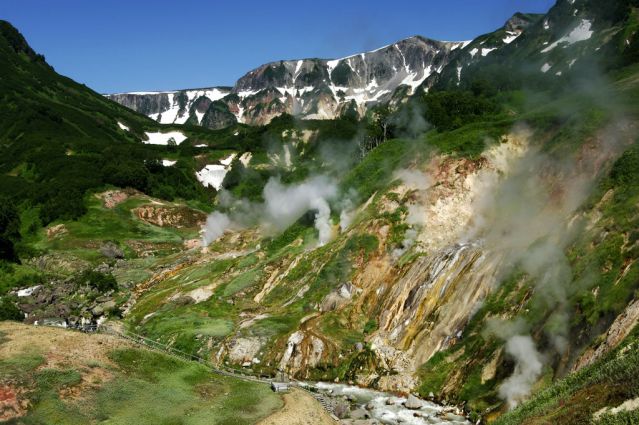
Kamchatka landscapeIn the easternmost region of Russia, eight time zones from Moscow, closer to Japan than most of Russia lies the region and peninsula of Kamchatka. A land of legends and a kingdom of bears. The region is stunning to look at and sees all the elements come together, snow topped hills, ramblings brooks, luscious greenery and volcanic vapours, yes there are frequent volcanic eruptions and earthquakes.

I realised some days after finishing this wonderful book that I knew about Kamchatka because some months ago my son made me go with him to see a stunning documentary at the cinema called ‘Terre des Ours’ which is set right on the heart of Kamchatka, a territory that is the home of brown bears, who only come out of hibernation for 3 months of the year and during that time they leave the snow topped mountainous regions and traverse the lava fields and go down to the river and lakes which are heaving with salmon. They must eat enough to get them through the next hibernation and the female bears have an even more challenging role as they have to catch enough for themselves and their offspring, while fending off the attentions of the lone male bears.

Below is a one minute trailer that show you a little of that magical world. The film is brilliant, sadly I don’t think it is available in English, the voice over is done by Marion Cotillard. But do watch this snippet, its magic.

Wake by Elizabeth Knox

Vinter's LuckElizabeth Knox is a well-known New Zealand author whom I first discovered via a book club I belonged to in London. We read her astonishing novel The Vintner’s Luck which provoked an animated discussion as opinions were so diverse, all agreeing we had not read anything like it before.

Since then she has published a fascinating pair of young adult novels The Dreamhunter Duet, a sequel to The Vinter’s Luck and another YA (young adult) book Mortal Fire, which I plan to read this year.

I met Elizabeth Knox when she and three other New Zealand writers visited France as part of Les Belles étrangères cultural visit some years ago and so I was delighted when she asked me a few questions recently about our local library here in Aix-en-Provence, a location that may feature in one of her upcoming adventures. So thanks Elizabeth for the copy of Wake, it certainly had me reading outside my comfort zone, but within a very familiar landscape.

Wake will be published in the UK by Little, Brown Book Group in March 2015. The book covers below show the New Zealand version on the left, illustrated by Dylan Horrocks and the pending UK version.

wake ukWake Elizabeth KnoxA sleepy, waterfront town in the South Island of New Zealand with a Kākāpō reserve is the setting for this macabre, sci-fi adventure, revolving around 14 survivors of an invisible, destructive and still hungry presence that has created  a kind of net outside which the survivors can not move without dire consequences.

When the presence arrives, as it does in the opening pages, death, destruction and bizarre, disgusting action follows, the kind of thing that might normally turn this reader off, however I have faith in the author, an adept mistress of storytelling, so I persevere, despite the feeling of dread as the initial pages are littered with zombie-like scenes, the kind I would never wish to see on celluloid.

The novel is narrated from the point of view of the survivors, as they learn how to stay within the threatening environment without succumbing to this invisible presence. They try to understand what has happened and what is continuing to happen, how to survive and overcome the insidious presence and whether they can trust each other.

It reads almost like a reality television show of survival, but in reverse because they remain in the town they know, only now they are its only inhabitants having no contact with the outside world and a sense of pending doom as their isolation pushes each of them toward their own mental limits.

We get to know the individual characters, thrown together seemingly at random, how their strengths and weaknesses both help and hinder the group and how as a team they attempt to survive.

With so many characters and little if any connection between them before this catastrophe, the story is as much an unveiling of character, as it is a journey toward its own conclusion. I found it a compelling read, once I got past the initial horror and enjoyed the mystery of trying to predict which characters were going to contribute to the final outcome.

There is a strong sense of place and whether it was the writing or the familiarity and ease at which I could imagine the surroundings, I found it a very visual read, I could see faces and hear the dialogue as I read almost as if I was indeed watching that version, I said I wouldn’t. Well, maybe with a cushion to hand when the creepy music starts.

It is a novel that keeps you thinking and guessing, trying to understand what the force portrayed actually is and whether it has a weak or vulnerable spot. It is made all the more complex by being invisible and the reader having no insight into what is happening in the world outside the devastated zone.

And the flightless, endangered Kākāpō? A metaphor of survival perhaps?

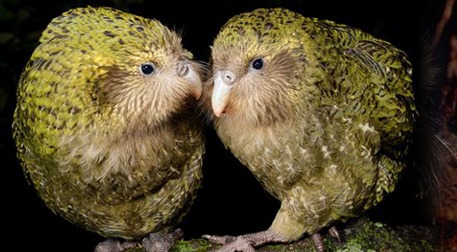
The Kākāpō, a large, flightless nocturnal bird, critically endangered, only 126 living as of March 2014

The Kākāpō, a large, flightless nocturnal bird, native to New Zealand, critically endangered, only 126 living as of March 2014

When did you last read a book that was outside your regular comfort zone? Did it surprise you?

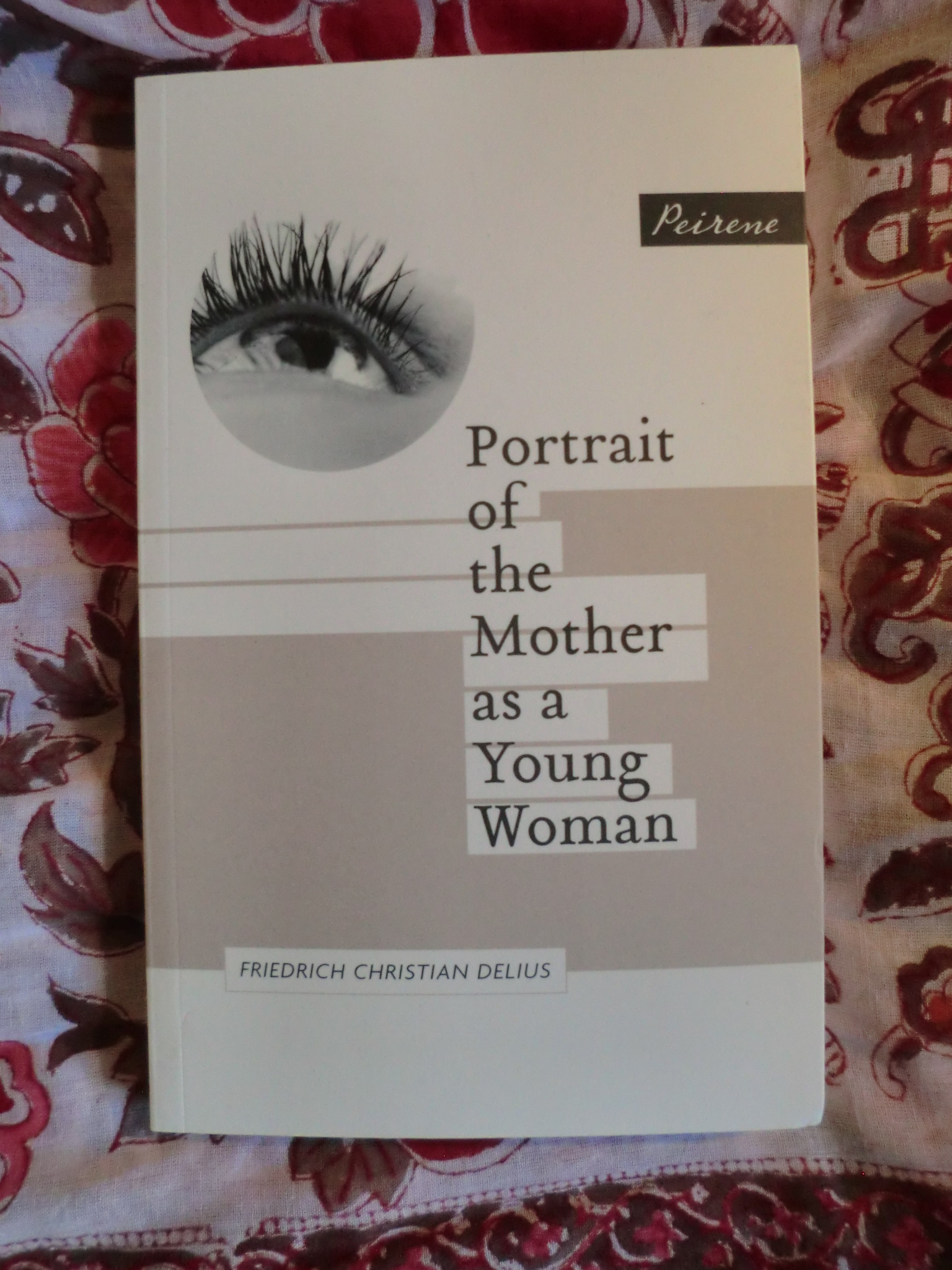
Portrait of the Mother as a Young Woman by Friedrich Christian Delius tr. Jamie Bulloch

Portrait of the MotherThis 117 page long single sentence in a novella, is the third and final book in the Peirene Press series entitled Female Voices: Inner Realities.

If you missed the first two, you can read my reviews here:

Beside the Sea by Véronique Olmi (translated from French by Adriana Hunter)

Stone in a Landslide by Maria Barbal (translated from Catalan by Laura McGloughlin and Paul Mitchell)

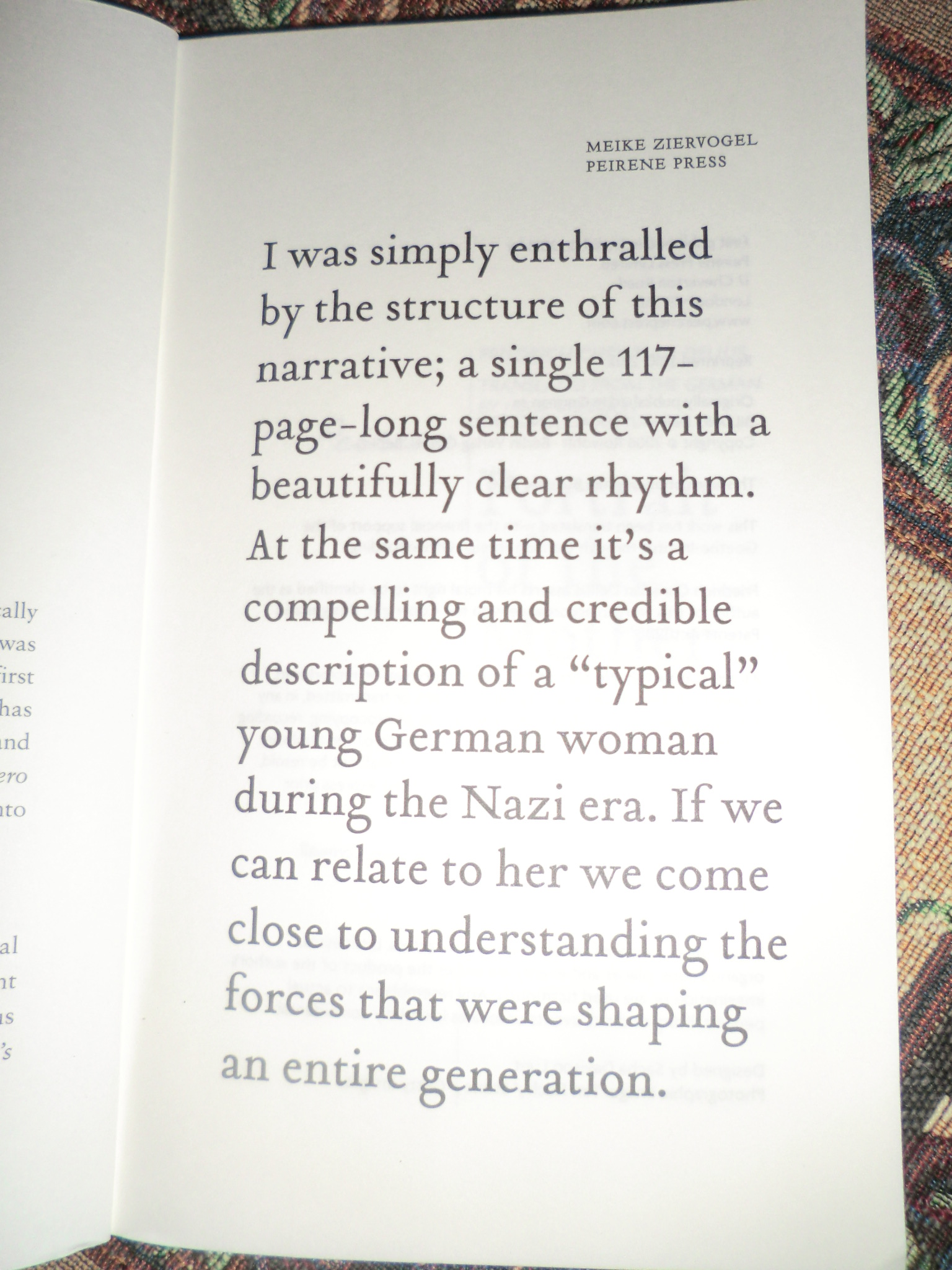
In my previous review I mention the enticing page at the beginning of all Peirene books where publisher Mieke Ziervogel shares what drew her to choosing this book for translation into English.

Here is a glimpse at what she says about this book:

Portrait 2

The book is set in Rome in 1943 when Italy and Germany remain allies during the second world war. The narrative takes place during an afternoon stroll as our young woman on the brink of becoming a mother is walking towards a Lutheran church where she will attend a classical concert.

Eight months pregnant, she is the young wife of a German solider and had been waiting for him to join her in Rome; after briefly reuniting, one day later he is redeployed to Tunisia. Alone again so soon, she walks to the Bach concert thinking about how her life has changed now as a married woman and how distant she feels from everything around her. She recalls recent memories of the short time spent with her husband wondering whether he will return to her safely or not.

Rome 1943Being outside her own country, without her husband and not yet active in her role as mother, it is as if she becomes more acutely aware of who she is, there is little to distract her and she often prefers to keep to herself.

Even the friendship that naturally developed with her room-mate Ilse, she keeps in check, worrying about the implications of being associated with those whose views are more vociferous than her own, she who wishes for a quiet life.

she worried about Ilse, who rarely had a good word to say about authority that was

invested by God, about Hitler and Mussolini, only a few days ago she had said Hitler always demanded that people show no weakness, but human beings were not made like that, and Mussolini always demanded that people had to hate the enemy, but the Italians that she knew were not fond of hatred, why should they hate the English and the Americans,

fortunately Ilse had broken off at this point, perhaps out of consideration for her, because she,

the younger woman, who was always silent when national and political questions were discussed, had just for a second wondered why it was necessary to hate the British and Americans, and in the same instant this forbidden thought made her feel guilty, confused and horrified,

She is not despondent for she has a deep faith and whenever her thoughts turn towards herself she recalls that war is God’s most difficult trial, lamenting:

“God, who is love, delivers this all to us, that it may benefit us in the end,

for it was un-Christian to shed tears for one’s own misfortune and to forget the far greater misfortunes of others, the joys of life were limitless”

Her thoughts enable the reader to understand her reluctance to do anything that might jeopardise what slim chance she may have at a normal life, she dislikes that by virtue of being foreign she already stands out, the opposite of what might give her peace of mind.

Portrait of the Mother as a Young Woman is a spellbinding portrayal of one woman’s internal conversation, her method of coping with the strangeness of her environment, talking herself into maintaining a calm state of mind, rationalising why they have found themselves in this situation. Though it is a trial for her, it is not enough to prevent her dreaming of the life she wishes they were living, something that seems increasingly like a fantasy, as the probability of her husband’s return grows slimmer as each day passes.

Poignant in its simplicity, expressing that universal feminine desire for love in a safe, nurturing environment.

Stone in a Landslide by Maria Barbal, tr. from Catalan by Laura McGloughlin and Paul Mitchell

Stone  in a LandslideThis is the second in the Female Voices: Inner Realities series from Peirene Press.

Publisher, Mieke Ziervogel introduces each of their books with one or two sentences in extra-large font on the second page and it’s a page that you find yourself looking forward to whenever you pick up one of their books.

She shares what attracted the team to selecting that title as one of the Peirene books to translate into English and share with readers.

For Stone in a Landslide, she had this to say:

“I fell in love with Conxa’s narrative voice, its stoic calmness and the complete lack of anger and bitterness. It’s a timeless voice, down to earth and full of human contradictory nuances. It’s the expression of someone who searches for understanding in a changing world but senses that ultimately there may be no such thing.”

We meet Conxa as a 13-year-old girl living in the Catalan Pyrenees, Spain at the beginning of the last century, though she narrates the story from the other end of her life, reflecting back on her journey as an old woman.

One of six children, the opening lines tell us how she came to live with her childless aunt and uncle, leaving her family, home, village and mountain behind at such a tender age.

“Anyone could see that there were a lot of us at home. Someone had to go. I was the fifth of six children – Mother used to say I was there because God had wanted me to be there and you have to take what He sends you. The eldest was Maria, she, more than Mother, ran the house.  Josep was the son and heir and Joan was going into the church. We three youngest were told a hundred times that we were more of a burden than a blessing….So it was decided that I, who was level-headed and even-tempered, would be sent to help my mother’s sister, Tia.”

LandslideShe remembers going to school and how fortunate she was to be able to, on account of having older sisters who stayed home to do the work. Three winters she went to school, until she joined the family of her aunt and uncle and then had to help them with the outdoor work.

In short chapters of around two pages, we observe the change in Conxa’s life, her new duties, how people perceive her initially as an outsider and how that perception begins to change, she has become an heir to land thus her marriage prospects have increased. She suffers silently from being separated from her family, but in time accepts her new role and life.

“Time passed and no one spoke of home. Of my family. In five years I had seen Mother and Maria only once, when they came for the Festa Major during my first year at Pallarès….My aunt and uncle said nothing about going back and I didn’t dare mention it. Was I happy there? I had no idea. I’d lived with my heart in my mouth a bit, worried about what they might throw back in my face. Maybe the poverty of my family…But I’d got used to them and their way of doing things. And it’s true, the thought of leaving Pallarès to return to Ermita became stranger every day.”

We learn through Conxa’s experiences how people were perceived, eldest sons were destined to be the heir, a second son may have had to learn a trade and were therefore seen as lesser prospects. Ownership of land accrued status, men who earned a wage were less desirable.

“They knew him to be hard-working and quick-witted but, because of the nature of his work, he appeared to be a drifter and freer than most men, who only looked at the ground to work it or the sky to figure out what the weather will bring. I realised that they saw him as an outsider, someone who’d managed to earn himself a living, but this had more or less divided him from his family.”

Falling in love with a tradesman is about as rebellious as Conxa gets, her aunt and uncle soon realise that Jaume is a good match, and as with her life as the adopted daughter Conxa becomes as accepting of her new circumstances in her life with Jaume, who must by necessity travel a lot for his work.  He is more outspoken and for this Conxa will experience hardship as the Spanish Civil War impacts even the quietest villages.

Stone in a Landslide is such an apt metaphor for Conxa and yet she was not like the others. She doesn’t complain, she loves genuinely, she accepts her circumstances and only at the end when she is physically removed from her natural surrounding does she come close to realising how much a part of that landscape she is as a person. She coped with many changes, from daughter to adopted daughter, lover, mother within her natural environment, but the final move puts her somewhere beyond reach, beyond comprehension of how to be who she really is.

“Perhaps I had turned into a living stone, or it was just that I had never known how to rebel…. I felt that I was going to need to be strong, but I had no idea why.”

Another excellent addition to the collection and discovery of another wonderful writer.

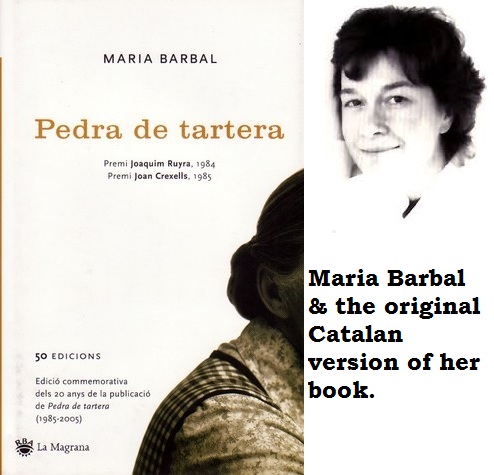
Maria Barbal, born in 1949, is considered the most influential living Catalan author. The clarity with which she presents human relations and the passage of time has earned her critical acclaim and a wide readership. She lives in Barcelona.

Next Up: Portrait of the Mother as a Young Woman by Friedrich Christian Deluis.

Female Voice Inner Realities

Beside the Sea by Véronique Olmi, tr. by Adriana Hunter (French)

A single mother of two boys wants to take them on a little holiday near the sea. That might sound simple enough, but for this mother, it is a major life event and a challenge, as she suffers from some kind of mental affliction that normally requires her to take daily medication.

Beside the SeaThis trip is out of the ordinary and we experience it from inside the mind of the mother, the stream of consciousness narrative is so effective here, it gets inside our mind as we read. We feel her sense of anxiety acutely and become almost as sensitive as she is to the threatening hostility of the outside world, that place from which she wishes to protect her children.

She wants them to experience the wonder of the seaside, she takes them for hot chocolate and they visit a funfair, all of which present certain challenges. She observes and reflects on aspects of their characters with a poetic clarity that all mothers will relate to.

“I stopped on the sea wall, my two kids holding my hands, I wondered how to do it, how to say hello to the sea.  It was making a hellish noise, really angry, and the children cowered. I stayed there, not moving a muscle, watching it…I’d been waiting for it such a long time!”

It is an incredible novella and I appreciated it all the more, ironically, after following  recent discussion on Vishy’s review of Nabakov’s Lolita . They discuss that dilemma many readers have when they recognise an exceptional prose style but feel uncomfortable with the subject or the perceptions of the protagonist. It makes it hard to share an opinion and it takes time to understand our reactions. We observe them first and then try to understand them.

What I found most interesting in those subsequent comments actually came from the more experienced readers, those who had read it more than once and they describe what changed in terms of their own perceptions with subsequent readings. In the first read we react more to the story and character, in subsequent readings it seems the reader has greater insight into the intentions of the writer/artist, beyond surface character and plot.

Those comments made me think more about Beside The Sea and wonder if I might appreciate it more coming to it for a second time. I was in admiration of the style but uncomfortable with the journey. I would recommend it to the curious, thinking reader who isn’t quick to judge and it’s not one to read when you’re feeling fragile.

anxietyThe author does an incredible job in making the reader empathise with the mother, even though I didn’t particularly enjoy going into that state and arriving at its inevitable conclusion.

I also couldn’t help thinking about these kind of stories in the media, the short versions which usually focus on the result and not what leads people to where they end up. I don’t want to spoil the read, so you’ll just have to read it to find out what I mean by that. I think the enjoyment of this book will also be dependent on where one is on the ‘potential for empathy’ scale.

It is an interesting challenge, that an author would choose to travel inside the mind of someone like this and write in the stream-of-consciousness form.  I am sure this was one of the works that the publisher and writer Mieke Ziervogel read as background research in writing her own debut novella ‘Magda‘.

Poignant and thought-provoking given the issues that lie beneath its surface, this is the story that is almost never told and rarely understood by the public, who often only see that end result favoured by the media and judge it far too easily.

This is the first book in the Peirene Press Female Voices: Inner Realities series, all of which I am reading in January 2015.

Next Up : Stone in a Landslide by Maria Barbal (translated from Catalan)

Female Voice Inner Realities

Top Reads 2014

It’s tough to have to choose one, and all the books below have been excellent reads, but the one standout for me was Prayers for the Stolen, because I haven’t stopped thinking about it all year,  it’s always top of mind when anyone asks me about a good book I’ve read recently, just as I still recommend Caroline Smailes The Drowning of Arthur Braxton from 2013 and Eowyn Ivey’s The Snow Child from 2012, all outstanding reads.

The Stats

This year I read 57 books, basically one book a week, 79% of my reads were fiction, 16% non-fiction and 5% poetry. I managed to read books by authors from 18 different countries and this year 40% of what I read was translated from another language. 54% of the books I read were printed books and 46% I read on a kindle. 63% were written by a female author.

Outstanding Read of the Year 2014

Prayers For The Stolen by Jennifer Clement
prayers for the stolen This book had a huge impact on me at the time of reading,  a fictional account of a girl named Ladydi growing up in a part of Mexico where it is dangerous to be a girl, so the mother’s disguise them as boys, from the moment of their birth.

An insightful read, about a tragic issue, told with empathy and humour and helping to raise awareness of the plight of so many women and girls unable to speak out for themselves. A must read.


And in no particular order, My Top Reads for 2014!

Top Fiction

1.Eugene Onegin by Alexander Pushkin (translated from Russian by James E. Falen)
Eugene Onegin 7 8The epic book length poem Eugene Onegin was my surprise read of the year and pure delight. I avoided reading it for years and years thinking it would be inaccessible. It was hilarious and a riveting read.

I read it two chapters at a time in a read along and was thoroughly entertained by that cad Eugene Onegin and bemused by that reader of far too many romantic novels Tatiana, and broken-hearted at the fate of the poet. Absolutely brilliant and I would quite like to read another translation after some of the comparisons other readers made as we read, what turns out to be not quite the same version. More Pushkin definitely.

2. Nada by Carmen Laforet (translated from Spanish by Edith Grossman)
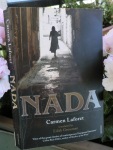
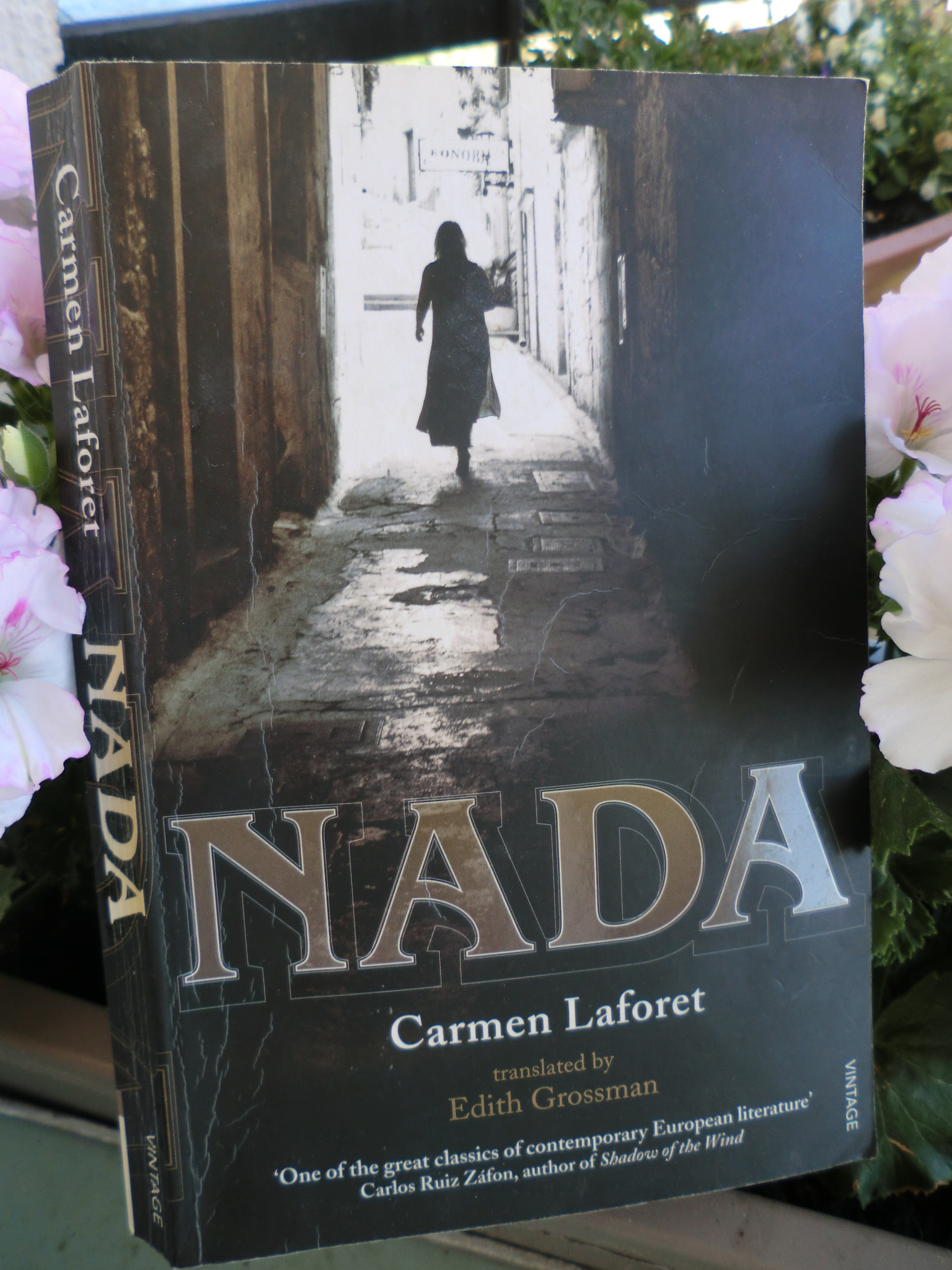
Nada (2)Nada was being passed around friends all exclaiming its wonder, a book written by the author when she was 23 years old and based on her own similar experience as a young woman moving to Barcelona to study. It takes place in the shadowy aftermath of a traumatic civil war, its effect hanging over her family. Andrea, now an orphan, arrives to stay with relatives, however her stay is not as she’d imagined it, the family are full of eccentricities and Andrea finds more refuge in the gloomy streets and with her new friends than in the oppressive atmosphere of the apartment among her strange relatives. A feverish, coming of age classic.

3. We That Are Left by Juliet Greenwood
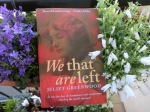
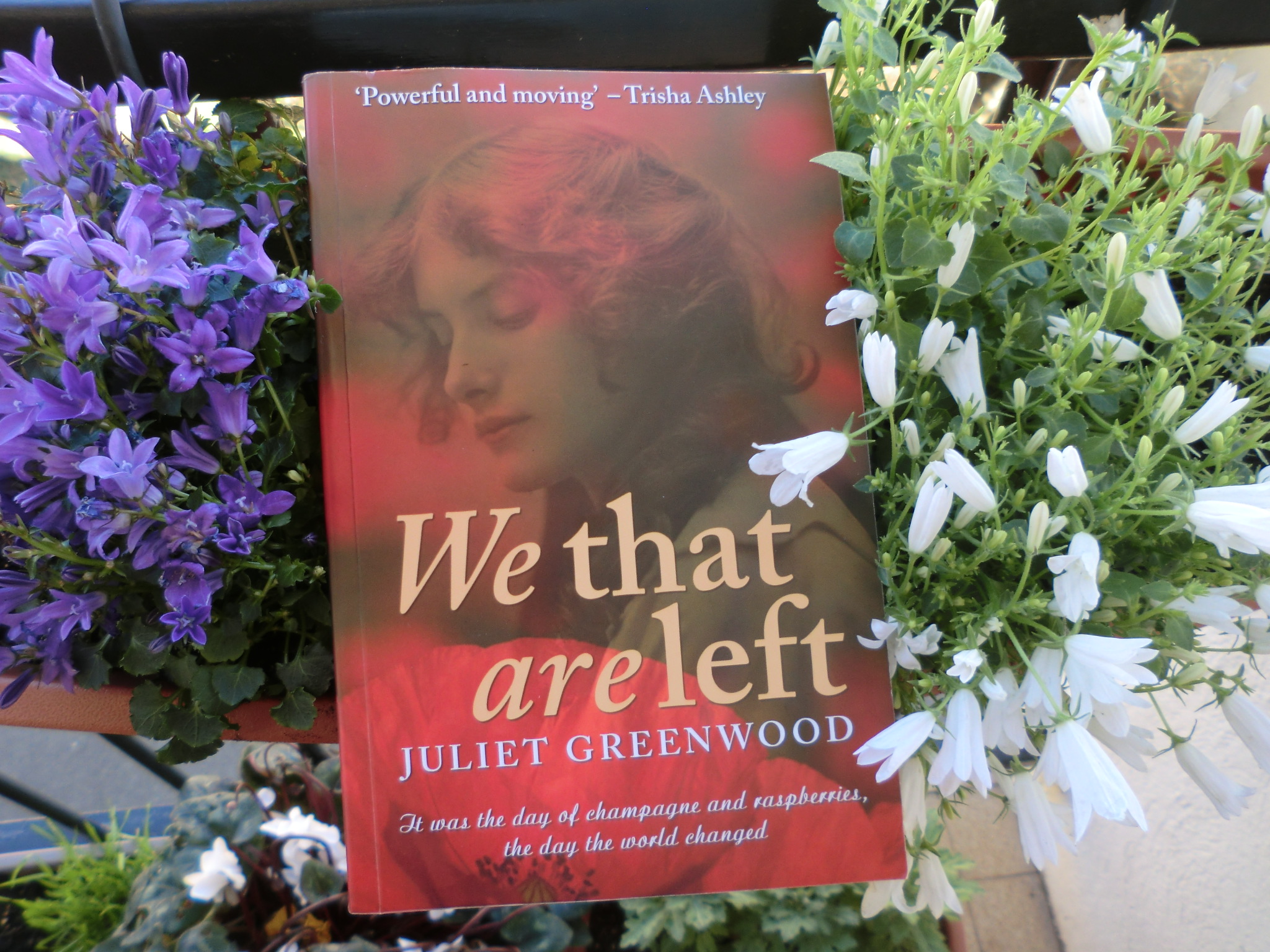
We That Are Left (2)A title I was waiting for, having loved Eden’s Garden and this promised to be just as good, set in World War One and featuring a cast of women characters who are changed by the war in ways that will continue long after.

From Cornwall to Wales to France, we follow Elin as her husband leaves for the war and she must assume responsibility for the family estate and is propelled into a dangerous mission to rescue her friend in the thick of fighting. It concerns the changes thrust upon women during the war and their refusal to go back to the more submissive role that was expected of them before the war. They prove they are just as capable of handling a crisis and if necessary will manage on their own. Brilliant, thrilling and unputdownable.

4.The True Deceiver by Tove Jansson (translated from Swedish by Thomas Teal)
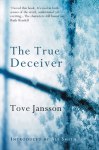
True DeceiverThe True Deceiver is the first novel I have read by Tove Jansson, having read three collections of her short stories (The Summer Book,  A Winter Book and Art in Nature) all of which I enjoyed, so this was an interesting departure to stay with the same characters throughout and it is quite a thrilling read, clearly inspired in part by her own experience, facing up to the artist struggle.

It is the perfect winter read, set in the snow bound winter months, while they await the thaw. Anna is an aging artist who lives alone and is content for it to be that way, her contact with the outside world through the many letters from her fans. But someone in the village has other plans and slowly makes herself indispensable to the older woman, preying on her vulnerabilities. And the true deceiver? That is the question that reading the novel reveals.

4. My Brilliant Friend by Elena Ferrante (translated from Italian by Ann Goldstein)
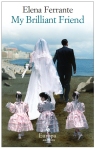
My Brilliant FriendIf you haven’t yet succumbed to #FerranteFever keep an eye out for this book and the two that follow it, The Story of a New Name and Those Who Leave & Those Who Stay. They narrate a friendship between Elena and Lila, set in an impoverished neighbourhood of Naples, one tries to escape  her place in society via a university education and a marriage that will elevate her status while the other uses her intelligence in a relentless, fearless and  often ruthless quest to survive. The books are compelling and may be semi-autobiographical, however the author remains an enigma, using a pseudonym and not ready to own up to his/her identity – believing that if a book has any merit, it will find its audience.

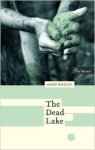
5. The Dead Lake by Hamid Ismialov (translated from Russian by Andrew Bromfield)
The Dead Lake

This is why I wait until the end of the year before creating my list, because who knows what special book gems we might discover before the final curtain call. The Dead Lake is part of the Peirene Press coming-of-age series published in 2014 and tells the story of Yerzhan, a boy growing up at a remote railway siding in Kazakhstan, an area where atomic weapon testing is carried out.

There are only two communities where he lives and he adores the neighbour’s daughter and it is to impress her that he walks into that lake at 12-years-old and stops growing. It is a stunning and unforgettable novella and an insightful glimpse into a nomadic culture, that we are privileged to be able to read thanks to the passionate endeavours of our friends at Peirene Press.

6. The Bees by Laline Paull

Bees2

The Bees is an extraordinary feat of the imagination, narrated from the point of view of Flora 717 a sanitation worker bee. It is about life in an orchard hive and the threats both internal and external to the hive. Totally convincing, the Hive is like a cult and each bee knows its place, its role and responds by instinct and receives energy from the Hive Mind, the Queen and the collective conscience of the Hive. Flora is different and as we discover why, we begin to fear for her life. A stunning, original work, I was enthralled but the story and love that the author was inspired by a Bronze Age Minoan palace in translating a real beehive into a fictional landscape.


Top Non-Fiction
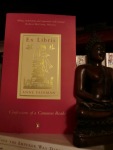
Ex Libris1. Ex Libris: Confessions of a Common Reader by Anne Fadiman

This was the very first book of the year I read and a special read for booklovers. It contains 18 bookish essays from the bibliophile Anne Fadiman, written over a period of four years, in which she talks about how she became so book obsessed and shares many often hilarious anecdotes. It was also recommended and gifted to me by the talented blogger and world-wide reader VishyThe Knight.
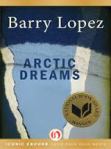
Arctic dreams2. Arctic Dreams by Barry Lopez

First published in 1986 and winner of the National Book Award for non-fiction in the US, Artic Dreams is a compilation of poetic nature essays written by a compassionate, scientific, nature loving mind, as he observes those creatures whose natural habitat is the arctic, whether they are polar bears, seals or Arctic people. Some of my best recommendations, as was the case with this book, come from Valorie at Books Can Save a Life.
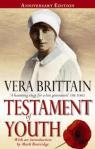
Vera Brittain3. Testament of Youth by Vera Brittain

I planned to read this right from the beginning of 2014 when it was republished as an anniversary edition to commemorate the beginning of World War one. Vera Brittain was an intellect and despite it being seen as a waster of time by many ion the provinces where she came from she set of for Oxford to compete with the boys, whom most of her friends were.

One by one, her friends, her brother, her fiance went off to fight and not able to concentrate on something that seemed meaningless in the face of war, she volunteered as a nurse. Testament of Youth is taken from her journals and is an insightful, at times heartbreaking insight into a lost youth, and an attempt to understand humanity and to prevent us from repeating the same mistakes. A brilliant book, about to be released as a feature film.
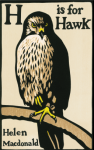
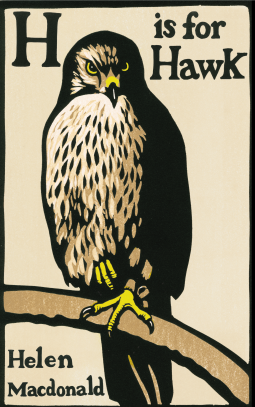
H is for Hawk4. H is for Hawk by Wendy Macdonald

There haven’t been so many non fiction titles that called out to me this year, but this one did immediately and I pushed it to the top of the pile to read and was riveted by Helen Macdonald’s grief stricken, obsessive encounter with Mebel, he Goshawk she raises, spurning human company and comfort in the aftermath of her father’s death. Great to see it then win the Samuel Johnson prize.
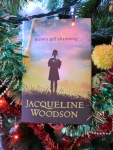
 

Brown Girl Dreaming5. Brown Girl Dreaming by Jacqueline Woodson

What a delightful memoir in free verse from a well-known children’s writer, writing of her childhood spent between South Carolina and Brooklyn, NY tales of family members, a new brother, her passion for words, being Jehovah Witness and making a great friend. Reminds me of the equally talented Margarita Engle and her collection of novels in verse.


Voila!

So what was your outstanding read(s) for 2014?

Under the Tripoli Sky by Kamal Ben Hameda tr. by Adriana Hunter

We are in the city of Tripoli, bordering the Mediterranean in the 1960’s, though this is no seaside idyll.

Tripoli SkyThe narrative follows in the footsteps and the mind of a boy named Hadachinou who prefers the company of his mother, her friends, great-aunt’s and escorting girls sent on errands who are not yet kept indoors, bound by the shackles of marriage, in a society where a river of seething discontent courses through the veins of many, where the sexes barely tolerate each other and anyone who seems to have escaped the marriage trap is resented their so-called freedoms.

Hadachinou is privy to the thoughts, gossip and attitudes of women, a witness to their interior lives, he listens to their stories and absorbs their repressed desires as his own begin to awaken.

The tea ceremony was the only part of the day when my mother and her friends could live their lives in real times and tell their own stories. At last they could talk about dreams, longings and anxieties , all in the same breath and their bodies were at peace.

I sometimes wondered how these women who were all so different were able to spend hours at a time, each talking about her own god, her own people and thoughts, free to be wildly outspoken but without provoking any true conflict. It was because they had no power to preserve and no possessions to watch over. That was for the people on the other side of the wall: the men, the sheikhs, the governors and their hunting dogs! Scheming and calculating, diplomacy and power struggles were their domain.

Here with the women, my guardian angels, there were just words, spoken openly and easily, flitting and whirling about, a life force in themselves. Without these moments of trusting abandon, they would have dried up with sorrow. Or imploded as they toiled over their cooking pots.

Taynal Mosque

Taynal Mosque Source: wikipedia

While the men are at work, or at the mosque or in the coffee houses, the women finish their work and make time to see each other.

Here, great-aunt Nafissa has had enough of the women bad mouthing his mother’s childhood friend Jamila, words they only speak when his mother leaves the room, venomous remarks spiralling into bitterness about what they perceive as her secret life; flushed with rage, aunt Nafissa rails against them:

‘Leave Jamila alone,’ she cried. ‘Let her live her life. Its only because you’re jealous that you see evil in everything. She and her friends allow themselves freedoms you don’t have, freedoms you envy because your husbands keep you on a tight leash. What would you have her do? Stay at home like you, sitting on cushions and sucking on loukoums while you wait for men who never come home? You think those women are living bad lives? You make me laugh! But you don’t know when to hold your tongues, that’s for sure, and you’re full of spite. And, anyway, it’s not as if any of this has ever stopped you taking their money!’ she added, always ready to speak out against injustice.

OldTripoli

Old Tripoli Source: wikipedia

It is not easy to read about a repressed patriarchal society without much glimmer of hope, a slice of life narrative set in a pre-Gaddafi society on the verge of change.

I found it a sombre read, left wondering if this boy will be changed by virtue of his proximity to the women folk, or whether that might become a reason for his need to escape, lest he not fit in.

Looking out to sea, I remembered what Hadja Kimya had said: ‘Hadachinou, keep yourself busy doing simple things that delight you. Give yourself a goal. The soul of life is the little things, the minor events no one notices… That’s where life is, the pleasure of being alive, otherwise there’s just this vast blueness casting its shadow over us. Go on, keep yourself busy, do something, and then you might find yourself one day.’

This is cultural insight beyond the normal bounds of the English language, thanks to the translation of Adriana Hunter and the passion of Peirene Press in bringing these kinds of stories into the mainstream.