When I Hit You: Or, A Portrait of the Writer as a Young Wife by Meena Kandasamy

I began seeing reviews about When I Hit You, Or, A Portrait of the Writer as a Young Wife late in 2017,  most were stunned by this novel, obviously by the subject, a woman writing about the experience of domestic violence and abuse, herself a victim of it within marriage; but also the analysis of her response to what was happening. This was a highly educated, intelligent and articulate young woman writing. It nudged preconceived ideas about victims of domestic abuse.

The reviews made me wish to read it, but the subject prevented me from picking it up sooner.  And then it made the long list of the Women’s Prize for Fiction 2018. I relented.

While it genuinely deserves to be on the list for its literary uniqueness and merit, it’s also relevant given we are in an era where the silencing, harassment and abuse of women is reaching a tipping point, in the West at least. The author now lives in London, however this story takes place in contemporary India, where she grew up.

The statistics on domestic violence in India are appalling, violence by husbands against wives is widespread, nearly two in five* (37 %) married women have experienced some form of physical or sexual violence by their husband, and while the statistics vary according to the number of years of education men or women have acquired, 12%  of married women with 12 or more years of education have experienced spousal violence, compared with 21 percent of married women whose husbands have 12 or more years of education.

This is one aspect that surprises some Western readers, that highly educated women, married to highly educated men (the husband in this book is a university professor) while less likely to suffer, are not immune. No one is.

The title is a reference to James Joyce’s Portrait of the Artist as a Young Man his debut novel about a young man growing up, (essentially, his alter-ego). In the same way we see the character of this novel traverse the early months of a new marriage, as a young wife.

Meena Kandasamy

Meena Kandasamy has created an artwork, carefully sculpted, observed and understood from different angles, a work that endures over four months, like acts in a play, before the master stroke, a line she drew, that when her husband crossed, would signal to her the moment to leave. It is written by an unnamed narrator in a first person voice that moves from reflective to urgent, from a place of detached distance to a disturbing sense of present danger.

The novel begins in the period after she has escaped her marriage, in recounting the things her mother says to people, it is five years since her daughter left the marriage and the story has mutated and transformed into something the mother can more easily digest as she narrates.

So, when she begins to talk about the time that I ran away from my marriage because I was being routinely beaten and it had become unbearable and untenable for me to keep playing the good Indian wife, she does not talk about the monster who was my husband, she does not talk about the violence, she does not even talk about the actual chain of events that led to my running away. That is not the kind of story you will be getting out of my mother, because my mother is a teacher, and a teacher knows that there is no reason to state the obvious. As a teacher, she also knows that to state the obvious is , in fact, a sure sign of stupidity.

When she tells the story of my escape, she talks of my feet.

The way the story begins, hearing her mother’s voice with hindsight, introduces the subject with a dose of irony. It is a lead up to the author introducing herself as the writer that she is, and sharing the lessons she has acquired through this writing project.

Much as I love my mother, authorship is a trait that I have come to take very seriously. It gets on my nerves when she steals the story of my life and builds her anecdotes around it. It’s plain plagiarism. It also takes a lot of balls to do something like that – she’s stealing from a writer’s life – how often is that sort of atrocity even allowed to happen? The number one lesson I have learnt as a writer: Don’t let people remove you from your own story. Be ruthless, even if it is your own mother.

She continues with narrating the story, and seeing it as if she is playing a role in a drama.

And in some ways, that is how I think of it: it is easier to imagine this life in which I’m trapped as a film;  it is easier when I imagine myself as a character. It makes everything around me seem less frightening; my experiences at a remove. Less painful, less permanent. Here, long before I ever faced a camera, I became an actress.

The husband, a Marxist who considered himself a revolutionary, a comrade, using communist intellectual ideas and his activities to elevate his self aggrandisement, detests the idea of his wife’s being a writer, an attitude that pushes her to want to antagonise him. The more he wishes to silence her, the stronger is her will to write, to imagine, to create, to express herself.

Being a writer is now a matter of self-respect. It is the job title that I give myself…

But it’s not just about antagonizing him. There is a distasteful air of the outlaw that accompanies the idea of a writer in my husband’s mind. A self-centredness about writing that doesn’t fit with his image of a revolutionary. It has the one-word job description: defiance. I’ve never felt such a dangerous attraction towards anything else in my life.

Given how prevalent it is, it is a brave and courageous feat for the author to have penned this work and for it to be recognised and appreciated in this way, deservedly so. In an interview with The Wire, (linked below) Meena Kandasamy said:

“I will write in the same way in which I lived through all of this: carrying myself with enormous, infinite grace.”

It is an incredible work of creativity, working through the post-trauma of domestic violence.

Meena Kandasamy has taken charge of her story, she retells it in exactly the form(s) that she desires, and I am sure she will move on and create more great works of art, in literary form.

This is not a work to shy away from, especially not now, in these times where women are being supported when they choose to express these narratives, in order to move on from the trauma, because no one wants these stories to define their lives or to be who they are. Healing might come slowly, but I hope it does indeed come, that people like Meena Kandasamy can share their version of resilience and acts of moving forward and on, for the sake of themselves and others like them, albeit never forgetting.

I finish with one more of the many quotes I highlighted from reading:

I remind myself of the fundamental notion of what it means to be a writer. A writer is the one who controls the narrative.

I have put myself in a dangerous situation with this marriage, but even in this complicated position, I’m finding plot points. This is the occupational hazard of being a writer-wife.

Further Reading:

Interview: Meena Kandasamy on Writing About Marital Violence

* Statistics on Domestic Violence in India

Buy a copy of this book via Book Depository

Man Booker International Prize 2018 long list

I like to read books that come from within other cultures, so a literature prize that brings attention to authors from outside the predominant literary cultures interests me.
The Man Booker International Prize was originally established in 2005, biannually rewarding an author for a body of work originally written in any language as long as it was widely available in English.

From 2016, the prize became a translation prize, awarded annually for a single work of fiction, translated into English and published in the UK. To highlight the importance of translation, the £50,000 prize is divided equally between the author and the translator.

The Man Booker International Prize has revealed their ‘Man Booker Dozen’ of 13 novels in contention for the 2018 prize, which celebrates the finest works of translated fiction from around the world. As with the Women’s Prize for Fiction 2018, extract summaries of the books are provided via the Prize website.

The judges considered 108 books. Lisa Appignanesi, chair of the 2018 Man Booker International Prize judging panel, commented:

‘Judging this Man Booker International Prize has been an exhilarating adventure. We have travelled across countries, cultures, imaginations, somehow to arrive at what could have been an even longer long list. It’s one which introduces a wealth of talent, a variety of forms and some writers little known in English before. It has great writing and translating energy and we hope readers take as much pleasure in discovering the work as we did.’

The full 2018 longlist is as follows: Author (nationality), Translator, Title (imprint)

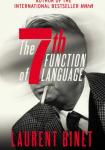
Laurent Binet (France), Sam Taylor(tr.), The 7th Function of Language (Harvill Secker)

Roland Barthes is knocked down in a Paris street by a laundry van. It’s February 1980 and he has just come from lunch with François Mitterrand, a slippery politician locked in a battle for the Presidency. Barthes dies soon afterwards. History tells us it was an accident. But what if it were an assassination? What if Barthes was carrying a document of unbelievable, global importance? A document explaining the seventh function of language – an idea so powerful it gives whoever masters it the ability to convince anyone, in any situation, to do anything.

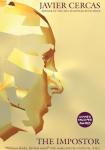
Javier Cercas (Spain), Frank Wynne(tr.), The Impostor (MacLehose Press)

The Impostor is a true story that is packed with fiction – fiction created by its main character, Enric Marco. But who is Enric Marco? A veteran of the Spanish civil war, a fighter against fascism, an impassioned campaigner for justice, and a survivor of the Nazi death camps? Or, is he simply an old man with delusions of grandeur, a charlatan who fabricated his heroic war record, who was never a prisoner in the Third Reich and never opposed Franco, but simply a charming, beguiling and compulsive liar who refashioned himself as a defender of liberty and who was unmasked in 2005 at the height of his influence and renown?

In this novel – part narrative, part history, part essay, part biography, part autobiography – Javier Cercas unravels the man and delves with passion and honesty into the most ambiguous aspects of what makes us human – our infinite capacity for self-deception, our need for conformity, our thirst for affection and our conflicting needs for fiction and for the truth.

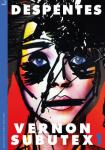
Virginie Despentes (France), Frank Wynne (tr.), Vernon Subutex 1 (MacLehose Press)

Vernon Subutex was once the proprietor of Revolver, an infamous music shop in Bastille. His legend spread throughout Paris. But by the 2000s, with the arrival of the internet and the decline in CDs and vinyl, his shop is struggling. When it closes, Subutex is out on a limb, with no idea what to do next. Nothing sticks. Before long, his savings are gone, his employment benefit is cut, and when the friend who had been covering his rent dies suddenly, Subutex finds himself relying on friends with spare sofas and ultimately alone and out on the Paris streets. But, as he is stretching out his hand to beg from strangers in the street, a throwaway comment he made on Facebook is taking the internet by storm.

Vernon does not realise this, of course. It has been many weeks since he was able to afford access to the internet, but the word is out: Vernon Subutex has in his possession the last filmed recordings of Alex Bleach, famous musician and Vernon’s benefactor, who recently died of a drug overdose. Unbeknown to Vernon, a crowd of people, from record producers to online trolls and porn stars, are now on his trail.

Jenny Erpenbeck (Germany), Susan Bernofsky(tr.), Go, Went, Gone (Portobello Books)

Newly retired Richard is considering his new life without his work as a university professor.  He spends his days cooking, pottering in his garden and walking around his home city of Berlin – a place he has lived his entire life. Following an excursion to Alexanderplatz he befriends a group of African men whose camp is being pulled down by the authorities. These asylum seekers have found their way to Berlin from all over Africa by way of Libya and then Italy. They have no ‘right’ to be in Berlin, and they must follow the protocols and rules if they have any hope in being allowed to remain.

Richard is captivated by their stories and by their predicament.  Born during World War II, he was almost lost as a baby due to the ‘chaos of war’. He grew up and worked in East Berlin until one day East and West unified and his home and horizons changed dramatically. Go, Went, Gone is a novel that explores some of the most important issues of the day of race, immigration and the question of European identity.

Han Kang (South Korea), Deborah Smith(tr.), The White Book (Portobello Books)

An unnamed narrator moves to a European city where she is haunted by the story of her older sister, who died a mere two hours after birth. As she contemplates the child’s short life she focuses on the whiteness and all it symbolises. The White Book is a meditation on colour, beginning with a list of white things. It is a book about mourning, rebirth and the tenacity of the human spirit. It investigates the fragility, beauty and strangeness of life.

Ariana Harwicz (Argentina), Sarah Moses & Carolina Orloff(tr.), Die, My Love (Charco Press) – my review here

In a patch of dilapidated French countryside, a woman struggles with the demons of her multitudinous internal conflicts. Embracing exclusion, yet desiring to belong, craving freedom whilst feeling trapped, yearning for family life and yet wanting to burn the entire façade down. Given surprising leeway by her family for her increasingly erratic behaviour, she instead feels ever more incarcerated, stifled. Motherhood, womanhood, the mechanisation of love, the inexplicable brutality of having ‘your heart live in someone else’s’; these questions are faced with raw intensity. It is not a question of whether a breaking point will be reached, but rather when, and how violent a form will it take.

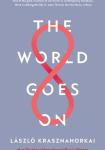
László Krasznahorkai (Hungary), John Batki, Ottilie Mulzet & George Szirtes, The World Goes On (Tuskar Rock Press)

A Hungarian interpreter obsessed with waterfalls, at the edge of the abyss in his own mind, wanders the chaotic streets of Shanghai. A traveller, reeling from the sights and sounds of Varanasi, encounters a giant of a man on the banks of the Ganges ranting on the nature of a single drop of water. A child labourer in a Portuguese marble quarry wanders off from work one day into a surreal realm alien from his daily toils. A collection of 21 stories from the winner of the Man Booker International Prize 2015.

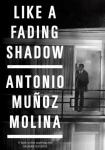
Antonio Muñoz Molina (Spain), Camilo A. Ramirez, Like a Fading Shadow (Tuskar Rock Press)

On 4 April 1968, Martin Luther King was murdered by James Earl Ray. Before Ray’s capture and sentencing to 99 years’ imprisonment, he evaded the FBI for two months as he crossed the globe under various aliases. At the heart of his story is Lisbon, where he spent 10 days attempting to acquire an Angolan visa. Aided by the recent declassification of James Earl Ray’s FBI case file, Like a Fading Shadow weaves a taut retelling of Ray’s assassination of King, his time on the run and his eventual capture, tied together with an honest examination of the novelist’s own past.

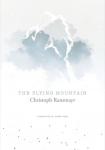
Christoph Ransmayr (Austria), Simon Pare, The Flying Mountain (Seagull Books)

The Flying Mountain tells the story of two brothers who leave the southwest coast of Ireland on an expedition to Transhimalaya, the land of Kham, and the mountains of eastern Tibet – looking for an untamed, unnamed mountain that represents perhaps the last blank spot on the map. As they advance toward their goal, the brothers find their past, and their rivalry, inescapable, inflecting every encounter and decision as they are drawn farther and farther from the world they once knew. Only one of the brothers will return. Transformed by his loss, he starts life anew, attempting to understand the mystery of love, yet another quest that may prove impossible.

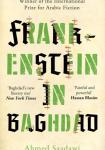
Ahmed Saadawi (Iraq), Jonathan Wright, Frankenstein in Baghdad (Oneworld)

From the rubble-strewn streets of US-occupied Baghdad, the junk dealer Hadi collects human body parts and stitches them together to create a corpse. His goal, he claims, is for the government to recognise the parts as people and give them a proper burial. But when the corpse goes missing, a wave of eerie murders sweeps the city, and reports stream in of a horrendous-looking criminal who, though shot, cannot be killed. Hadi soon realises he’s created a monster, one that needs human flesh to survive – first from the guilty, and then from anyone who crosses his path. As the violence escalates and Hadi’s acquaintances – a journalist, a government worker and a lonely old woman – become involved, the ‘Whatsitsname’ and the havoc it wreaks assume a magnitude far greater than anyone could have imagined.

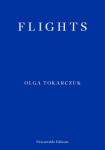
Olga Tokarczuk (Poland), Jennifer Croft, Flights (Fitzcarraldo Editions)

Flights is a novel about travel in the 21st century and human anatomy. From the 17th  century, the story of the real Dutch anatomist Philip Verheyen, who dissected and drew pictures of his own amputated leg, discovering in so doing the Achilles tendon. From the 18th century, the story of a North African-born slave turned Austrian courtier stuffed and put on display after his death in spite of his daughter’s ever more desperate protests, and the story of Chopin’s heart as it makes the covert journey from Paris to Warsaw, stored in a tightly sealed jar beneath his sister’s skirt. From the present we have the trials and tribulations of a wife accompanying her much older professor husband as he teaches a course on a cruise ship in the Greek islands, the quest of a Polish woman who emigrated to New Zealand as a teenager but must now return to Poland in order to poison her terminally ill high school sweetheart, and the slow descent into madness of a young husband whose wife and child mysteriously vanished on a vacation on a Croatian island and then appeared again with no explanation.

Through these narratives, interspersed with short bursts of analysis and digressions on topics ranging from travel-sized cosmetics to the Maori, Flights guides the reader beyond the surface layer of modernity and towards the core of the very nature of humankind.

Wu Ming-Yi (Taiwan), Darryl Sterk, The Stolen Bicycle (Text Publishing) – my review here

Cheng, a novelist, once wrote a book based on his father’s disappearance 20 years ago. One day he receives a reader’s email asking whether his father’s bicycle disappeared as well. Perplexed and amused, Cheng decides to track down the bicycle, which was stolen years ago. The search takes him on an epic quest, deep into the secret world of antique bicycle collectors via a scavenger’s treasure trove and the mountain home of an aboriginal photographer. He also finds himself caught up in the strangely intertwined stories of Lin Wang, the oldest elephant who ever lived, the soldiers who fought in the jungles of South-East Asia during the World War II and the secret worlds of the butterfly handicraft makers… The Stolen Bicycle is both a historical novel about bicycles, elephants and war, and a startlingly intimate meditation on memory, family and home.

Gabriela Ybarra (Spain), Natasha Wimmer, The Dinner Guest (Harvill Secker)

In 1977, three terrorists broke into Gabriela Ybarra’s grandfather’s home and pointed a gun at him in the shower. This was the last time his family saw him alive, and his kidnapping played out in the press, culminating in his murder. Ybarra first heard the story when she was eight, but it was only after her mother’s death, years later, that she felt the need to go deeper and discover more about her family’s past. The Dinner Guest is a novel inspired by what she found.  It connects two life-changing events – the very public death of Ybarra’s grandfather and the more private pain as her mother dies from cancer and Gabriela cares for her.

***

I haven’t read any of these books, though I am familiar with a number of the authors, I’ve read two excellent books by Han Kang, Human Acts and The Vegetarian. I’ve been meaning to read Jenny Erpenbeck for a while.

I like the sound of the novels that intertwine memoir with fiction, Gabriela Ybarra’s The Dinner Guest and Wu Ming-Yi’s The Stolen Bicycle.

The list does feel a little too Euro-centric for my taste, with 9 of the 13 storytellers coming from Europe, it’s great to see an Argentinian author included, I did read that Charco Press discovered in an informal survey that many readers when asked to name a South American author are mentioning names who were popular 30 years ago, so they’re aiming to bring us up to speed with some exciting contemporary authors who’ve been overlooked.

I’ll be waiting to read a few of the reviews from the Shadow panel in the coming weeks and months and in the meantime continue with reading a few more from the Women’s Prize.

The shortlist of six books will be announced on 12 April at an event at Somerset House in London, and the winner of the 2018 prize will be announced on 22 May.

***

What are your thoughts on this list?

Click here to buy one of the above books via BookDepository

Three Things About Elsie by Joanna Cannon

Elsie is Florence’s (Flo) best friend. The book is all about Flo and begins with her lying on the floor having had a fall, she’s waiting for someone to arrive, she lives in a self-contained apartment within a retirement village. She imagines who might come first, what they might say, the ambulance ride to the hospital.
Every few chapters are interspersed with a chapter that is labelled with the time, the first chapter is 4.48pm and the last chapter is 11.12pm. The chapters in between narrate the story of both the present and the past, about her time at Cherry Tree with Jack and Elsie, about staff members Miss Ambrose and Handy Simon, a few outings they take together, both the trio of Jack, Elsie and Flo and a group outing for a couple of days to Whitby.

I looked across the lounge, and into the past. It was more useful than the present. There were times when the present felt so unimportant, so unnecessary. Just somewhere I had to dip into from time to time, out of politeness.

Flo has plenty of complaints about what she is expected to participate in at Cherry Tree, but she’s also worried about being sent to Greenbank, she feels as though she’s under probation. Her observations about the names of these places and the names of many things, is insightful and adds a lightness to the narrative.

Another problem with Cherry Tree is there are no cherry trees. I’ve had this out with Miss Bissell on more than one occasion, but she won’t be told. ‘One of them must be,’ is all she can come up with, but none of them is. It’s the kind of name you give to these places though. Woodlands, Oak Court, Pine Lodge. They’re often named after trees for some reason. It’s the same with mental health units. Forests full of forgotten people, waiting to be found again…
It’s like the day room. It’s isn’t a day room, it’s an All The Bloody Time Room. Everybody will be in there now and it isn’t daytime.

And then there is the new resident who looks uncannily familiar to Flo, and makes her fearful and paranoid about events that occurred back in the 1950’s, only no one seems to be taking her seriously about her concerns, so she Jack and Elsie decide to take matters into their own hands.

Memory is like a character in the book, it’s is something that is sometimes there in abundance, stretching far back into the past and at other times, beyond reach.

‘You need to think about things for longer before you give up, Florence.
I didn’t answer, and we were stuck in a wordless argument for a while.
‘Do you remember taking sandwiches on holiday, when we were children? she said eventually. ‘Do you remember going to Whitby?’
I said I remembered but I wasn’t sure. She could tell straight away, because nothing much gets past Elsie.
‘Think, Florence,’ she said. ‘Think.’
I tried. Sometimes, you feel a memory before you see it. Even though your eyes can’t quite find it, you can smell it and taste it, and hear it shouting to you from the back of your mind.
‘Ham and tomato’ I said. ‘With boiled eggs!’

Three Things About Elsie is a delightful read, a book written with tremendous empathy and compassion by a writer who has been close to the elderly and listened, and seen them for who they are and have always been, that the bodily exterior and instances of confusion aren’t what defines them.

She portrays these characters with integrity and humour, I had the feeling often as I read that I was watching these scenes happen, so vividly are they drawn, so clear the voices and intentions of the characters. She creates a mystery that intrigues the reader, making me not want to put the book down, desperate to know what was going to happen next and always with that air of doubt, about what is real and what might be the confusion of an elderly woman. But never mind that, for as we read, we are right there with Flo, Jack and Elsie, moving on from one clue to the next, following them in their devilish escapades and hoping that all will be well in the end.

I’m not surprised this book is being adored and appreciated by so many readers, Joanna Cannon captures the soul of Flo and we recognise the vulnerability of ageing and only been seen for the deteriorating body and mind that isn’t who we are at all.

Three Things About Elsie has been long listed for the Women’s Prize For Fiction 2018. Click on the link to read about the 16 novels nominated.

Click Here to Buy Three Things About Elsie via BookDepository

Women’s Prize for Fiction long list 2018 #WomensPrize

The annual Women’s Prize for Fiction was announced at midnight last night, on International Women’s Day.

No longer the Baileys Prize, this year there are three sponsors, including Bailey’s and the prize will simply be referred to as the Women’s Prize for fiction. The wider sponsorship aims to ‘build on the successes of the past and will also see the commercial possibilities to connect with a global audience’ while championing women’s creativity, celebrating excellence and keeping women’s voices centre stage.

“What is striking about the list, apart from the wealth of talent, is that women writers refuse to be pigeon-holed. We have searing social realism, adventure, comedy, poetic truths, ingenious plots and unforgettable characters. Women of the world are a literary force to be reckoned with.” Sarah Sands, Chair of Judges.

This year, I have already read three from the list, I’ll link to my reviews at the end. The long listed books follow, with extracts via the Women’s Prize:


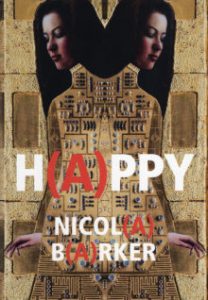
H(A)PPY by Nicola Barker – a post – post apocalyptic Alice in Wonderland, of “daring narrative ingenuity”

Imagine a perfect world where everything is known, where everything is open, where there can be no doubt, no hatred, no poverty, no greed. Imagine a System which both nurtures and protects. A Community which nourishes and sustains. An infinite world. A world without sickness, without death. A world without God. A world without fear. Could you…might you be happy there?

The Idiot by Elif Batuman – portrait of the artist as a young woman, inventing herself, awakening

Selin, a tall, highly strung Turkish-American from New Jersey turns up at Harvard and finds herself dangerously overwhelmed by the challenges and possibilities of adulthood. She studies linguistics and literature, teaches ESL and spends a lot of time thinking about what language – and languages – can do.  Throughout her journeys, Selin ponders profound questions about how culture and language shape who we are, how difficult it is to be a writer, and how baffling love is.

Three Things About Elsie by Joanna Cannon – a poignant perspective of community life &  the vulnerability of age

84-year-old Florence has fallen in her flat at Cherry Tree Home for the Elderly. As she waits to be rescued, Florence wonders if a terrible secret from her past is about to come to light; and, if the charming new resident is who he claims to be, why does he look exactly like a man who died sixty years ago whom she fears? Florence, Elsie and Jack set to and unravel the mystery, getting them out of the home and out of their minds, that linger in the past.

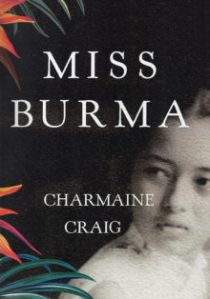
Miss Burma by Charmaine Craig – a novel of love and war, colonialism and ethnicity, and the ties of blood

Based of the lives of the author’s mother and grandparents, Miss Burma tells the story of modern-day Burma through the eyes of one family struggling to find love, justice, and meaning during a time of war and political repression.


Manhattan Beach by Jennifer Egan – historical novel with a hint of noir thriller, set in the Depression

Anna Kerrigan, nearly twelve years old, accompanies her father to visit Dexter Styles, a man who, she gleans, is crucial to the survival of her father and her family. She is mesmerised by the sea beyond the house and by some charged mystery between the two men. Years later, her father has disappeared, the country is at war. Anna works at the Brooklyn Naval Yard, where women are allowed to hold jobs that once belonged to men, now soldiers abroad. She becomes the first female diver, the most dangerous and exclusive of occupations, repairing ships that will help America win the war. One evening at a nightclub, she meets Dexter Styles again and begins to unravel the complexity of her father’s life, and the reasons he might have vanished.

The Mermaid and Mrs Hancock by Imogen Hermes Gowar – spell-binding story of curiosity and obsession

One September evening in 1785, the merchant Jonah Hancock hears urgent knocking on his front door. One of his captains is waiting eagerly on the step. He has sold Jonah’s ship for what appears to be a mermaid.

As gossip spreads through the docks, coffee shops, parlours and brothels, everyone wants to see Mr Hancock’s marvel. Its arrival spins him out of his ordinary existence and through the doors of high society. At an opulent party, he makes the acquaintance of Angelica Neal, the most desirable woman he has ever laid eyes on….and a courtesan of great accomplishment. This meeting will steer their lives on a dangerous new course.

What will be the cost of their ambitions? And will they be able to escape the destructive power mermaids are said to possess?

Sight by Jessie Greengrass – existential reflections of a pregnant woman

In Sight, a woman recounts her progress to motherhood, while remembering the death of her own mother, and the childhood summers she spent with her psychoanalyst grandmother.

Woven among these personal recollections are significant events in medical history: Wilhelm Rontgen’s discovery of the X-ray and his production of an image of his wife’s hand; Sigmund Freud’s development of psychoanalysis and the work that he did with his daughter, Anna; John Hunter’s attempts to set surgery on a scientific footing and his work, as a collaborator with his brother William and the artist Jan van Rymsdyk, on the anatomy of pregnant bodies.

What emerges is the realisation that while the search for understanding might not lead us to an absolute truth, it is an end in itself.

Eleanor Oliphant is Completely Fine by Gail Honeyman – uplifting story of an out-of-the-ordinary heroine

Eleanor Oliphant leads a simple life. She wears the same clothes to work every day, eats the same meal deal for lunch every day and buys the same two bottles of vodka to drink every weekend. Eleanor Oliphant is happy. Nothing is missing from her carefully timetabled life. Except, sometimes, everything. One simple act of kindness is about to shatter the walls Eleanor has built around herself. Now she must learn to navigate the world that everyone else seems to take for granted – while searching for the courage to face the dark corners she’s avoided all her life. Change can be good. Change can be bad. But surely anything is better than…fine?


When I Hit You: Or, A Portrait of the Writer as a Young Wife by Meena Kandasamy – fierce and courageous dissection of what love meant, means and will come to mean when trust is undermined by violence

Seduced by politics, poetry and an enduring dream of building a better world together, a young woman falls in love with a university professor. Marrying him and moving to a rain-washed coastal town, she swiftly learns that what for her is a bond of love is for him a contract of ownership. As he sets about bullying her into his ideal of an obedient wife, and devouring her ambition of being a writer in the process, she begins to push back – a resistance he resolves to break with violence and rape.

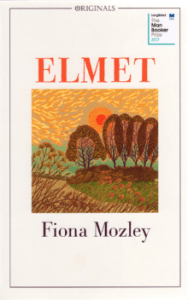
Elmet by Fiona Mozley – a novel about family, and a beautiful meditation on landscape

Daniel is heading north. He is looking for someone. The simplicity of his early life with Daddy and Cathy has turned sour and fearful. They lived apart in the house that Daddy built for them with his bare hands. They foraged and hunted. When they were younger, Daniel and Cathy had gone to school. But they were not like the other children then, and they were even less like them now. Sometimes Daddy disappeared, and would return with a rage in his eyes. But when he was at home he was at peace. He told them that the little copse in Elmet was theirs alone. But that wasn’t true. Local men, greedy and watchful, began to circle like vultures. All the while, the terrible violence in Daddy grew.

The Ministry of Utmost Happiness by Arundhati Roy – an aching love story and a decisive remonstration

Over a journey of many years, the story spools outwards from the cramped neighbourhoods of Old Delhi to the burgeoning new metropolis and beyond, to the Valley of Kashmir and the forests of Central India, where war is peace and peace is war, and where, from time to time, ‘normalcy’ is declared.

Anjum, who used to be Aftab, unrolls a threadbare carpet in a city graveyard that she calls home. A baby appears quite suddenly on a pavement, a little after midnight, in a crib of litter. The enigmatic S. Tilottama is as much of a presence as she is an absence in the lives of the three men who loved her.

It is told in a whisper, in a shout, through tears and sometimes with a laugh. Its heroes are people who have been broken by the world they live in and then rescued, mended by love-and by hope. They are as steely as they are fragile, and they never surrender.

See What I Have Done by Sarah Schmidt – a murder, an intimate story of a volatile household, a family devoid of love

Just after 11am on 4th August 1892, the bodies of Andrew and Abby Borden are discovered. He’s found on the sitting room sofa, she upstairs on the bedroom floor, both murdered with an axe.

It is younger daughter Lizzie who is first on the scene, so it is Lizzie who the police first question, but there are others in the household with stories to tell: older sister Emma, Irish maid Bridget, the girls’ Uncle John, and a boy who knows more than anyone realises.


A Boy in Winter by Rachel Seiffert – portrait of the Nazis’ arrival in Ukraine as they move towards the final solution

Early on a grey November morning in 1941, only weeks after the German invasion, a small Ukrainian town is overrun by the SS. Penned in with his fellow Jews, under threat of transportation, Ephraim anxiously awaits word of his two sons, missing since daybreak. Come in search of her lover to fetch him home again, away from the invaders, Yasia confronts new and harsh truths about those closest to her. Here to avoid a war he considers criminal, German engineer Otto Pohl is faced with an even greater crime unfolding behind the lines, and no one but himself to turn to. And in the midst of it all is Yankel, a boy who must throw his chances of surviving to strangers.

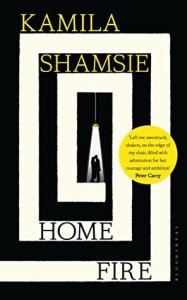
Home Fire by Kamila Shamsie – a contemporary retelling of the classic Antigone, the idealism of youth in dangerous times

Isma is free. After years spent raising her twin siblings in the wake of their mother’s death, she resumes a dream long deferred – studying in America. But she can’t stop worrying about Aneeka, her beautiful, headstrong sister back in London, or their brother, Parvaiz, who’s disappeared in pursuit of his own dream – to prove himself to the dark legacy of the jihadist father he never knew.

Then Eamonn enters the sisters’ lives. Handsome and privileged, he inhabits a London worlds away from theirs. As the son of a powerful British Muslim politician, Eamonn has his own birthright to live up to – or defy. The fates of these two families are inextricably, devastatingly entwined in this searing novel that asks: what sacrifices will we make in the name of love?

The Trick to Time by Kit de Waal – a moving story of love and loss, overcoming grief

Mona is a young Irish girl in the big city, with the thrill of a new job and a room of her own in a busy boarding house. A dollmaker, she lovingly crafts handmade dolls that she sells to collectors around the world, and provides bereavement counselling for mothers who have suffered stillbirths, miscarriages and cot deaths. On her first night out in 1970s Birmingham, she meets William, a charming Irish boy with an easy smile and an open face. They embark upon a passionate affair, a whirlwind marriage – before a sudden tragedy tears them apart.

Decades later, Mona pieces together the memories of the years that separate them. But can she ever learn to love again?

Sing, Unburied, Sing by Jesmyn Ward – a portrait of a family, of hope, struggle and ugly truths

Jojo is thirteen years old and trying to understand what it means to be a man. His mother, Leonie, is in constant conflict with herself and those around her. She is black and her children’s father is white. Embattled in ways that reflect the brutal reality of her circumstances, she wants to be a better mother but can’t put her children above her own needs, especially her drug use.

When the children’s father is released from prison, Leonie packs her kids and friend into her car and drives north to the heart of Mississippi and Parchman Farm, the State Penitentiary. At Parchman, there is another boy, the ghost of a dead inmate who carries all of the ugly history of the South with him in his wandering. He too has something to teach Jojo about fathers and sons, about legacies, about violence, about love.

***

It’s an interesting list, with lots of familiar names to me, and many titles that I’ve seen reviewed by Eric at Lonesome Reader, who keeps up with reading and reviewing most of the new fiction coming out in the UK. I’m surprised not to see Ali Smith’s Winter there, nor Elizabeth Strout and disappointed not to see Jennifer Nansubuga Makumbi’s Kintu, which I’m going to write more about soon.

I’m in the middle of reading the excellent and humorous Three Things About Elsie by Joanna Cannon, the writing and her poignant depictions of characters are excellent. There are many on here I want to read, Sight was picked by Eric as his book likely to win the Man Booker this year and he’s pretty accurate with predictions, so I’d better read that, I’ve seen much written about When I Hit You, it’s one of those books I know is a mini masterpiece, but such a heartbreaking, soul-destroying subject to read about – still, I may have to read it now.

So which from the list are you interested in reading? Or disappointed not to see there?

Further Reading:

My Review of Home Fire by Kamila Shamsie

My Review of Sing, Unburied, Sing by Jesymn Ward

My review of Three Things About Elsie by Joanna Cannon

My review of When I Hit You by Meena Kandasamy

Click Here to Buy A Book Now via BookDepository

Anything is Possible by Elizabeth Strout

The inhabitants of Amgash appear to have invaded the imagination of Elizabeth Strout, not satisfied with being mere peripheral characters in her excellent novel My Name is Lucy Barton.

That book, which was a novel to us, is a memoir to them, one that a few of the characters we encounter in this set of stories will buy and read, one of them even attending a book signing near Chicago and meeting her again many, many years post their shared childhoods.

The characters vary in their kindnesses and quirks, in the opening story Pete, Lucy’s brother, resents his neighbour Tommy’s visits, carried out with heartfelt intention and yet perceived as a kind of torture, so much of what occurs between people is misunderstood due to the lack of communication or misreading of intentions.

In a voice without belligerence, even with a touch of apology to it, he said, “Look Tommy. I’d like it if you didn’t keep coming over here.” Pete’s lips were pale and cracked, and he wet them with his tongue, looking at the ground. For a moment Tommy was not sure  he heard right, but as he started to say “I only-” Pete looked at him fleetingly and said, “You do it to torture me, and I think enough time has gone by now.”

We find out what happened to the pretty Nicely girls, whose mother left the home after a brief affair that went wrong and lived a quiet life of regret nearby for years afterwards. Through Patty, we meet Lucy’s niece Lila, who has never met her Aunt but shares strong opinions of her with Patty, her school guidance counsellor.

Patty said, “That’s a nice name Lila Lane.” The girl said, I was supposed to be named for my aunt, but at the last minute my mom said, Fuck her.”

Patty took the papers and bounced their edges against the desk.

The girl sat up straight, and spoke with suddenness. “She’s a bitch. She thinks she’s better than any of us. I never even met her.”

Dottie runs a Bed and Breakfast and the steady churn of customers keeps her busy and entertained with company. Sometimes she meets the wealthy who wish to confide in her, it turns out they can be lonely too.

The next morning at breakfast Shelley did not acknowledge Dottie. Not even a thank you for the whole wheat toast.  Dottie was very surprised;  her eyes watered with the  sudden sting of this. But then she understood. There was an old African proverb Dottie had read one day that said, “After a man eats, he becomes shy.” And Dottie thought of that now with Shelley. Shelley was like the man in the proverb, having satisfied her needs, she was ashamed.  She had confided more than she wanted to, and now Dottie was somehow to blame.

In a later story though we become aware of a change, often there’ll be just a passing reference to the character who inhabited the previous story, one that informs us of what followed on, and gives a kind of quiet closure, in this respect it reminds me a lot of Yoko Ogawa’s stories in her collection Revenge, there is that thread that connects the stories, it creates a little frisson of excitement when you spot it.

It is such a pleasure to spend time within the pages of Strout’s imaginary characters, who move from references into fully formed characters with such ease, this collection had me wondering if one of these characters might push in on her and demand a novel too. Tt wouldn’t surprise me – who is in control here, the characters or the author? I have a feeling her characters have a strong will of their own, and that this book was written to try to keep a few of them quiet, so she could move on to the next story that’s no doubt already brewing.

Anything is Possible recently won The Story Prize (for an outstanding work of short fiction) and a cash award of US$20,000. The judges praised the book for its “subtle power,” and described Strout as:

“a specialist in the reticence of people, and her characters are compelling because of the complexity of their internal lives, and the clarity with which that complexity is depicted.”

Today the long list for the Women’s Prize for Fiction will be announced (at midnight), it will be interesting to see if this collection will be nominated, I certainly hope that it will be.

Further Reading:

My Review: My Name is Lucy Barton

My Review: The Burgess Boys

Buy a copy of one of Elizabeth Strout’s books via BookDepository

Happiness by Aminatta Forna

Happiness opens with the tale of a wolf hunter in the US called in to track a wolf that is believed to have been killing sheep. He observes the surroundings, lies in wait, makes the kill, collects his bounty and then returns to lie in wait for the she-wolf he knows will come out after three days. Two species. Surviving.

London. A fox makes its way across Waterloo Bridge. The distraction causes two pedestrians to collide—Jean, an American studying the habits of urban foxes, and Attila, a Ghanaian psychiatrist there to deliver a keynote speech.

Attila has just been to the theatre, he has arrived a few days early to indulge his passion for theatre and to look up his niece Ama, whom the family hasn’t heard from recently, he will also see an old friend and former colleague Rosie, who has premature Alzheimers.

While we follow Attila on his rounds of visiting his friends and family, all of whom are in need of his aide, we witness flashbacks into his working life, his brief encounters in numerous war zones, where he was sent on missions to negotiate with hardline individuals often operating outside the law. He remembers his wife Maryse, there is deep sense of remorse.

His niece Ama and her 10 year old son Tano have been forcibly evicted from their apartment in an immigration crackdown, she is unable to resolve the matter, hospitalised due to an unstable diabetic condition. Attila responds with the help of the doorman of his hotel, who alerts other hotel doormen, to be on the lookout for Tano who has disappeared amidst all the confusion.

And there is Jean, in London to study the behaviour of the urban fox, she has funding for a period of time to observe them, their numbers, how they have come to be living in the city and whether they expose a risk to the humans they live alongside. She recruited a local street-cleaner and through him others, to be her field study fox spotters, the few people likely to regularly see them.

‘Everything happens for a reason, that was Jean’s view, and part of her job was tracing those chains of cause and effect, mapping the interconnectedness of things.’

These networks of connected men, the doormen, the streetcleaners and others, come together to help Jean and Attila in their search for Tano. They’ve texted his picture to each other, they know who to look for. They demonstrate something important, in their resilience and ability to adapt to this new environment, creating new support circles, many having been through traumatic experiences before finding a semblance of new life in London.

‘Let me do the same for you,’ said the doorman. ‘The doormen and security people, they are my friends. Most of those boys who work in security are Nigerian. We Ghanaians, we prefer the hospitality industry. Many of the doormen at these hotels you see around here are our countrymen. The street-sweepers, the traffic wardens are mainly boys from Sierra Leone, they came here after their war so for them the work is okay.’

The fox lives beside the human but inhabits a different time zone, most humans are little aware of their presence as their nocturnal meanderings cease the minute humanity awakens and begins to disturb a territory that belongs more to them in the small hours of the night.

Jean too remembers what she has left, in America, where she tried to do a similar study on the coyote, an animal that due to the human impact on the environment had left the prairie and moved towards more urban environment.

Finding herself in conflict with locals, who campaigned against the coyote, believing it to be a danger to humans, her voice silenced by those who preferred to extend hunting licences, despite her warnings that culling the coyote would result in their population multiplying not decreasing.

‘If you remove a coyote from a territory, by whatever means, say even if one dies of natural causes a space opens up. Another will move in.’

‘What if you were to kill a number of them, ten per cent of the total population, say?’

‘They’d reproduce at a faster rate. We call it hyper-reproduction. Have larger litters of cubs. Begin to mate younger, at a year instead of at two years. All animals do it, not just coyote,’ said Jean. ‘Humans do it after a war. The last time it happened we called it the ‘baby boom”.’

Now a similar debate arises in London, where the Mayor wants to cull the animals and Jean’s message, based on scientific evidence is being ignored, worse it attracts the attention of internet trolls, flaming the unsubstantiated fears of residents.

UK Cover

Ultimately the novel is about how we all adapt, humans and wild animals alike, to changing circumstances, to trauma, to the environment; that we can overcome the trauma, however we need to be aware of those who have adapted long before us, who will resist the newcomer, the propaganda within a political message.

And to the possibility that the experience of trauma doesn’t have to equate to continual suffering, that our narrative does not have to be that which happened in the past, it is possible to change, to move on, to find community in another place, to rebuild, to have hope. And that is perhaps what happiness really is, a space where hope  can grow, might exist, not the fulfilment of, but the idea, the expression.

Hope. Humour. Survival.

Salman Rushdie alludes to this after the fatwa was issued against him when he said this:

“Those who do not have power over the story that dominates their lives, power to retell it, rethink it, deconstruct it, joke about it, and change it as times change, truly are powerless, because they cannot think new thoughts.”

Aminatta Forna

In an enlightening article in The Guardian, linked below, Forna describes reading Resilience, by renowned psychologist Boris Cyrulnik. Born in France in 1937, his parents were sent to concentration camps in WW2 and never returned. He survived, but his story often wasn’t believed, it didn’t fit the narrative of the time. He studied medicine and became a specialist in resilience.

“It’s not so much that I have new ideas,” he says, at pains to acknowledge his debt to other psychoanalytic thinkers, “but I do offer a new attitude. Resilience is about abandoning the imprint of the past.”

The most important thing to note about his work, he says, is that resilience is not a character trait: people are not born more, or less, resilient than others. As he writes: “Resilience is a mesh, not a substance. We are forced to knit ourselves, using the people and things we meet in our emotional and social environments.

Further Reading

My Review: The Memory of Love by Aminatta Forna

My Review: The Hired Man by Aminatta Forna

Article: Aminatta Forna: ‘We must take back our stories and reverse the gaze’, Writers of African heritage must resist the attempts of others to define us and our history, Feb 2017

Article: Escape from the past: Boris Cyrulnik lost his mother and father in the Holocaust. But childhood trauma needn’t be a burden, he argues – it can be the making of us. by Viv Groskop Apr 2009

***

Note: This book was an ARC, kindly provided by the publisher (Grove Atlantic) via NetGalley. It is published March 6 in the US and 5 April in the UK.

Buy a copy of Happiness via BookDepository


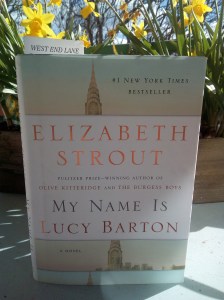
My Name is Lucy Barton by Elizabeth Strout

There is something so captivating about the voice of Lucy Barton, it made me wish to slow read this novel, as if it were a box of exquisite chocolates that require enormous self-discipline not to finish in one sitting.
Lucy Barton is in hospital after an operation and isn’t healing as she should, the very kind Doctor doesn’t understand why, so keeps her under observation.

That Lucy finds so many people whose path she crosses in adulthood so very kind or nice, is a telling detail.

Her husband, of whom her parents disapprove and have never met, arranges for her mother to visit Lucy, they haven’t seen each in years, but over five days she sits near her bed and they chat as if those years of silence hadn’t been.

It’s as if Lucy Barton relives a part of her childhood as an adult, but transplanted to a safe, uneventful place, a room in a hospital where they will not be interrupted, except by the occasional nurses.

Then my mother and I talked about the nurses; my mother named them right away: “Cookie,” for the skinny one who was crispy in her affect; “Toothache,” for the woebegone older one; “Serious Child,” for the Indian woman we both liked.

Lucy now lives in NY, her parents are from the rural town of Amgash, Illinois, life for them, including her siblings hasn’t changed much, Lucy however liked to stay after school near the warm radiator, doing her homework, reading books. She read her way through school and out of their town, almost by accident, into university and onward to marriage, children and writing stories.

Her turning point she wonders, came through a chance encounter with a woman in a dress shop, a writer, in whom she recognises something she can’t quite articulate. She attends one of her workshops and though intending to work on a novel, begins to write sketches of scenes of her mother visiting her in hospital, these are the pages she shares in her private meeting with the author, who gives her this advice:

Then she said, “Listen to me, and listen to me carefully. What you are writing, and what you want to write,” and she leaned forward again and tapped with her finger the piece I had given her, “this is very good and it will be published. Now listen. People will go after you for combining poverty and abuse. Such a stupid word, ‘abuse’, such a conventional and stupid word, but people will say there’s poverty without abuse, and you will never say anything. Never ever defend your work. This is a story about love, you know that. This is a story of a man who has been tortured every day of his life for things he did in the war. This is the story of a wife who stayed with him, because most wives did in that generation, and she comes to her daughter’s hospital room and talks compulsively about everyone’s marriage going bad, she doesn’t even know it, doesn’t even know that’s what she’s doing. This is a story about a mother that loves her daughter. Imperfectly. Because we all love imperfectly. But if you find yourself protecting anyone as you write this piece, remember this: You’re not doing it right.”

Through her writing, her listening to her neighbour Jeremy speak of the necessary ‘ruthlessness’ of the artist, of Sarah Payne’s writing advice to take any weakness in her story and address it head-on, Lucy Burton moves her life and her narrative on from its traumatic past, to a new empowered beginning.

But really, the ruthlessness, I think, comes in grabbing onto myself, in saying: This is me, and I will not go where I can’t bear to go – to Amgash, Illinois – and I will not stay in a marriage when I don’t want to, and I will grab myself and hurl onward through life, blind as a bat, but on I go! This is the ruthlessness, I think.

Absolutely loved it, hypnotic, slowly affirming a life that can grow and change and evolve out of traumatic experience, that past narratives don’t define future stories, that love is as hardy as a seed that grows out of rock, not impossible to bloom even in the harshest of circumstances.

My Name is Lucy Barton was long listed for both the Man Booker Prize and the Women’s Prize for Fiction in 2016. She has since written a follow-up book Anything is Possible set in that rural town of Amgash, Illinois, seventeen years after she left it.

The long list for the Women’s Prize for Fiction 2018, will be announced on Thursday 8th March, let’s wait and see if Elizabeth Strout’s newest book will make the cut.

Purchase a copy of My Name is Lucy Barton at Book Depository

Winter Sisters by Robin Oliveira

I read My Name is Mary Sutter when it first came out and was utterly entranced by Robin Oliveira’s depiction of the character of Mary, a midwife intent on becoming a surgeon in an era where women were totally blocked from pursuing such a thing. She was unable to achieve her ideal through formal channels, so she went to war, the American civil war, and there had the kind of experience few would wish her, unless, like Mary, you were being excluded from pursuing your desired profession and were driven to break through irrational barriers by equally irrational means.

In her research, the author learned that 17 young women became physicians after their nursing experiences in the civil war. While Mary Sutter is fictional, she is a truly inspired character about whom Robin Oliveira had this is say:

“And through it all there was Mary Sutter, whose story I needed to tell as a celebration of women who seize the courage to live on, to thrive, to strive, even, when men conspire to war. Mary, flawed and intelligent, careening between desire and remorse, stumbling forward out of courage and stubbornness, hiding a broken heart, but hoping to redeem something beautiful from a life humbled by regret.”

Her second novel, set in Paris was the excellent I Always Loved You, reviewed here, is about the American painter Mary Cassatt, her life in Paris, struggling to make a name while remaining true to her art, and enduring a life-long fractious relationship with impressionist painter and sculptor Edgar Degas.

When asked what made her return, in this her third historical novel, to the character of Mary Sutter, Robin Oliveira said:

Over the last few years, readers have often asked me to include Mary Sutter in a new book, but I could not think of a single circumstance that would challenge her as much as the obstacles she had faced in the Civil War. Then I learned about the age of consent. I simply couldn’t leave Mary Sutter out of it, for I had finally discovered something of equal importance for her to battle.

So now it is 1869 in Albany, New York, Mary Sutter is now Dr Mary Sutter Stipps, living in Albany, New York, where she practices in a local hospital, despite most of her male colleagues despising her (because she is a woman), she also runs a home practice with her husband William Stipp and a lesser known clinic, where a lantern is illuminated on Thursdays when she opens for ladies of the night, those who are refused treatment elsewhere.

These are the conservative years after the civil war, a period of tumultuous struggle and the emergence of women’s suffrage, meaning any freedoms women attempted to gain were often fiercely opposed and ridiculed. Mary faces opposition at every turn, but refuses to be cowered and will stand up for and insist on justice for what she believes is right and good.

On the evening this story begins, a severe winter blizzard disrupts the city, children are locked in schools for two days, businesses close, the Doctors house their patients overnight, and accidents occur – two days later as people begin to reappear, Mary learns of the deaths of close family friends, the hatmaker Bonnie and her labourer husband David and the unexplained disappearance of their daughters, Emma(10) and Claire(7).

Mary and William search for the girls everywhere, implore the police and their wider networks to help and eventually must accept they’ve gone.

At the graveside, they become acquainted with lumberlord Gerritt Van der Veer, his wife Viola, and their son Jakob. From that day on the lives of the two families become intertwined, as Mary continues her relentless pursuit of the lost girls, leading her to become exposed to the deep manipulations throughout the city and its powerful, by those out to benefit themselves who will do anything to stop those like her, trying to help and heal, without discrimination or judgement.

Book One sets up the story, introducing us to Elisabeth, Mary’s niece, a violin protegé who has been studying in Paris in the company of her grandmother Amelia, who swiftly return on hearing the terrible news, though laden with their own mysterious troubles.

Mary seeks the help of the women she’s met through the clinic, women who hear and see things she and Will would never come across, suspicions begin to arise, as they become aware of a man in hiding, injured on the night the ice cracks on the Hudson River, causing flash flooding across the city.

“I trust her Mother. She’s no opportunist. If she’d wanted money, she would have asked for it then, wouldn’t she have, if she intended to lie? And besides, none of that matters, does it, if we go looking ourselves. The brothels are the single place we haven’t looked. What harm can come from looking? I can’t understand why Captain Mantel refused. Oh damn him.The police know exactly where the brothels are. it would be easy for them.”

By Book Two the story has become riveting, complex, there are elements of the mystery to resolve, a pending court case, perceived betrayals, all set against the legal and societal background of the times they lived in, there are aspects of the law that will shock the reader, we read about the 1800’s and we are reminded of the similar treatment of victims today with regard to police procedure, questioning victims and the law that appears designed to protect the accused more than the victim.

It’s too good a read to give away anything more that happens from Book Two onwards, suffice to say I could not put this down, I was up late finishing it and thought it brilliantly woven together. It’s commentary on the hardships of women and girls, of all ages and from all classes is insightful and outrageous. Women are blocked in so many directions, in particular when they possess talent, controlled, commented on, kept by men in positions of power. Fortunately, there are exceptions, and these characters provide the faint glimmer of hope that gets us through the tough parts.

“He wanted to say, It’s either hide forever or see forever. He wanted to say, You need to choose. He wanted to say, Follow me, I’ll show you…

Every inch toward courage was a decision. Every ten feet on her own would be a triumph. The line between coercion and choice for her was the line between darkness and light. He would never push her, but she needed to choose to climb this hill. If she didn’t, she wouldn’t have the courage to climb onto the witness stand or perhaps even to walk down a street on her own.”

Mary Sutter oversteps the demarcated line of acceptable professions for women, she breaks the mould, though not without challenge and William and Jakob show themselves to be different kind of men, demonstrating the potential of working alongside women, not excluding them.

The price women pay when they overstep that societal and male control, is the story of the Gilded Age, and continues to play out one hundred and fifty years later. Indeed, the changing role of women in society, and what men will accept, remains one of the essential conflicts of our time.

Highly recommended, one of the best historical novels of the year.

Note: This book was an ARC (Advance Reader Copy) kindly provided by the publisher.

The Heart’s Invisible Furies by John Boyne

I had a feeling John Boyne may have put his heart and soul into this book, though I had little idea how so. The blurb is intentionally vague, we know Cyril has been adopted and that the book is about his struggle with coming to terms with his identity.

The last novel of his that I read was The Boy in Striped Pyjamas, a moving story set during WW2, seen through the innocent eyes of Bruno, the eight-year-old son of the commandant at a German concentration camp.

In The Heart’s Invisible Furies, a title taken from a quote by Hannah Arendt, the German-born American political theorist:

“A line came into my mind, something that Hannah Arendt once said about the poet Auden: that life had manifested the heart’s invisible furies on his face.”

we meet 16-year-old Catherine Goggin, sitting quietly in church in a small Irish village of Goleen in County Cork, as she is about to be denounced and humiliated in front of the entire congregation, then thrown out of, not only the church, but her home and the village, for bringing shame on the community.

The story is narrated through the voice of her not-yet born son, the boy that we come to know as Cyril Avery; he will be adopted and raised by Charles and Maude Avery, after Catherine travels to Dublin and takes up employment in the tea room of the Dáil Éireann (House of Representatives), where she is given a chance by the manageress, and eventually becoming that herself.

The book is divided into different parts, each covering a significant chunk of Cyril’s life, initially in Ireland, then a period in Amsterdam, time in New York and finally coming back to Ireland.

Cyril finds it extremely difficult within his family, his school and his culture to be himself. Through his inability to be and express himself, we see how oppressive a culture can be against anything or anyone who dares to step outside the acceptable norm,  highlighting the extreme hypocrisy that therefore must exist, as humans by their very nature are not clones of each other, they are born and exist in more than just binary variations.

Church of Our Lady, Star of the Sea, Parish of Goleen, West Cork

In this first part, as Cyril is growing up, John Boyne makes something of a parody of his life, in particular in relation to his adoptive parents, who continually insist on reminding him that he is not a real Avery, and Cyril himself, so used to hearing this, will correct every person who uses the word mother or father, by inserting the word ‘adoptive’ to be sure they too understand.

“I always called them Charles and Maude, never ‘Father’ and ‘Mother’. This was on Charles’s insistence as I wasn’t a real Avery. It didn’t bother me particularly but I know it made other people uncomfortable and once, in school, when I referred to them thus, a priest punched me around the ears and told me off for being modern.”

The first time we read this, it seems sad, but the continual repetition makes it comic, and it is a tool that Boyne uses, perhaps to soften the effect of what must have been quite a soul-searching book to write, as he reaches deep into his own life experiences to create the life of Cyril.

At the age of seven, he meets Julian, the son of a lawyer who is helping his father stay out of prison for tax evasion, they will become best friends.

But for all that we had, for all the luxury to which we were accustomed, we were both denied love, and this deficiency would be scorched into our future lives like an ill-considered tattoo inscribed on the buttocks after a drunken night out, leading each of us inevitably towards isolation and disaster.

Leinster House, where Dáil Éireann Irish parliment sits

While the novel focuses on Cyril’s attempts to survive in a world hostile to his natural inclinations, his experiences highlight the struggle that so many people encounter, unable to live their lives openly and honestly without the fear of rejection and violence.

Boyne peels back the layers of Irish inclinations and attitudes in the 20th century and shows how destructive this closed mindedness is on the lives of anyone who crosses an imaginary line of acceptable ‘being’. The contrast with how Cyril is able to live his life in the Netherlands, shown through the carefree Bastiaan, who has known no such bigotry in his life experience is revealing.

It’s hard to say too much about the novel without giving away spoilers, except to say that this astonishing novel is a courageous, honest attempt to show how the way we conform to society and culture’s expectations, against our own nature’s can be so harmful to so many and it makes us wonder how life might be, if we lived in a more utopian world, where tolerance reigned supreme.

Boyne admits the comic form isn’t one he’s indulged in before and he has deliberately avoided writing anything personal in his novels until now.

“Perhaps Cyril Avery is everyone I might have been, that I am, that I amn’t, and that I might be yet. The desire to fall in love and to share one’s life with someone is neither a homosexual nor a heterosexual conceit. It’s human. We’re all suckers for a pretty face or a kind heart. What else can we do but keep hoping that the right person will show up?” John Boyne

Reservoir 13 by Jon McGregor

Reservoir 13 was long listed for the Man Booker Prize 2017 and won the Costa Book Award for Best Novel that year as well. It was also nominated for the Goldsmith Prize for experimental fiction, about which he had this to say:

“It felt like a very experimental book while I was writing it, but it’s not necessarily that experimental on the surface, although it demands quite a lot of the reader … a certain patience.”

In terms of the story, it is an impersonal narrative, a series of snapshots into the lives of people living in an English village, beginning in the year that a teenage girl goes missing, an event that in small ways touches the lives of most of the residents, an event that remains permanently associated with it.

The novel continues to zoom in on village life, each chapter equivalent to one year, each subsequent first sentence of the chapter referencing the local fireworks, each chapter resembling a kind of closely knitted pattern. As you would expect, over the years, young people grow up and leave, families are created and fall apart, seasons pass, work is done, animals tended, relationships formed, the past remembered. Likes waves breaking, there is a continuous monotony to life in just another ordinary village, where once upon a time a girl went missing.

“His sister wanted to know where the Tuckers had gone and who would move in next. He said he didn’t always have the answers. He asked her not to ask so many bloody questions, and when the tears came he said he was sorry. It went on like this. This was how it went on.”

I agree it is an accomplished novel, it has been well thought out, structured, it’s almost a piece of modern architecture, in its linear, logical, detached approach. However, I found it almost impossible to be swept into the narrative without the constant awareness of the author’s orchestration and presence, even in some of the voices. It felt very controlled.

There is much that is clever, and intellectually it is something to admire. I reread the comments made on the cover and thought, yes, all that is true, so what did it lack for me? It made me think of a review I read recently for Salt Creek by Lucy Treloar reminding me of that reading experience, which was the anti-thesis of this one. Of being drawn inside a story versus feeling completely outside of it, of the open air art installation versus the museum piece vitrine.

“The passive voice was really deliberate because it just feels very English to me,” McGregor says. “It’s a gossipy village, but they would never think of themselves as gossips. ‘Somebody was seen.’ They’re not going to say: ‘I saw so and so.’ Small communities can be very inclusive, but they can also be very claustrophobic.”

Some books you read and you yourself are far far away from what is happening, you are unable to empathise or relate, you see words on the page, that speak of things happening in and around people, but they are told in a way that keeps them on the page, they refuse to enter your imagination or evoke empathy.

And then there are books that by some kind of magic awaken the imagination, they affect the senses, they can make you feel hot, cold, dehydrated, in pain, terrified, joyous, curious, relieved, all manner of emotions and feelings, and you feel relieved almost that it’s only a story, you will recover. They are not always comfortable, in fact I love reading outside my comfort zone, about other cultures, other experiences, other everything than the familiar.

Reservoir 13 certainly provoked the analytical part of my brain, in fact everything it provoked was in that left hemisphere of the brain and that’s possibly why it was only an okay read for me, it was too far in one direction, admirable as that may be, it leaves me with little to say about it, and little of an impression.

So I’ll finish with a link to the author in an interview with Justine Jordan from The Guardian, which gives greater insight into what the author was attempting to do.

Further Reading:

The Guardian: Jon McGregor: ‘I’m allergic to trying to make points in fiction’ – The prizewinning novelist and short story writer on capturing daily rural life and the joy of a bad review

Have you read it? How was the reading experience for you?