Saltwater in the Blood by Easkey Britton

International Women’s Day
Journée internationale des droits des femmes 2022 UN

Journée internationale des droits des femmes 2022

My calendar tells me that today is the journée internationale des droits des femme (I like that in French it focuses on the rights on women, somewhat lost in translation in English) so  I’ve been thinking about what to share.

As often is the case when I ask myself an open question, my mind responds by connecting various other things I’ve noted recently together, creating a common thread.

An article about women surfing in Sri Lanka prompted me to choose Easkey Britton’s book Saltwater in the Blood to read for Reading Ireland Month and it’s the perfect choice for International Women’s Day.

Women Surfing in Sri Lanka

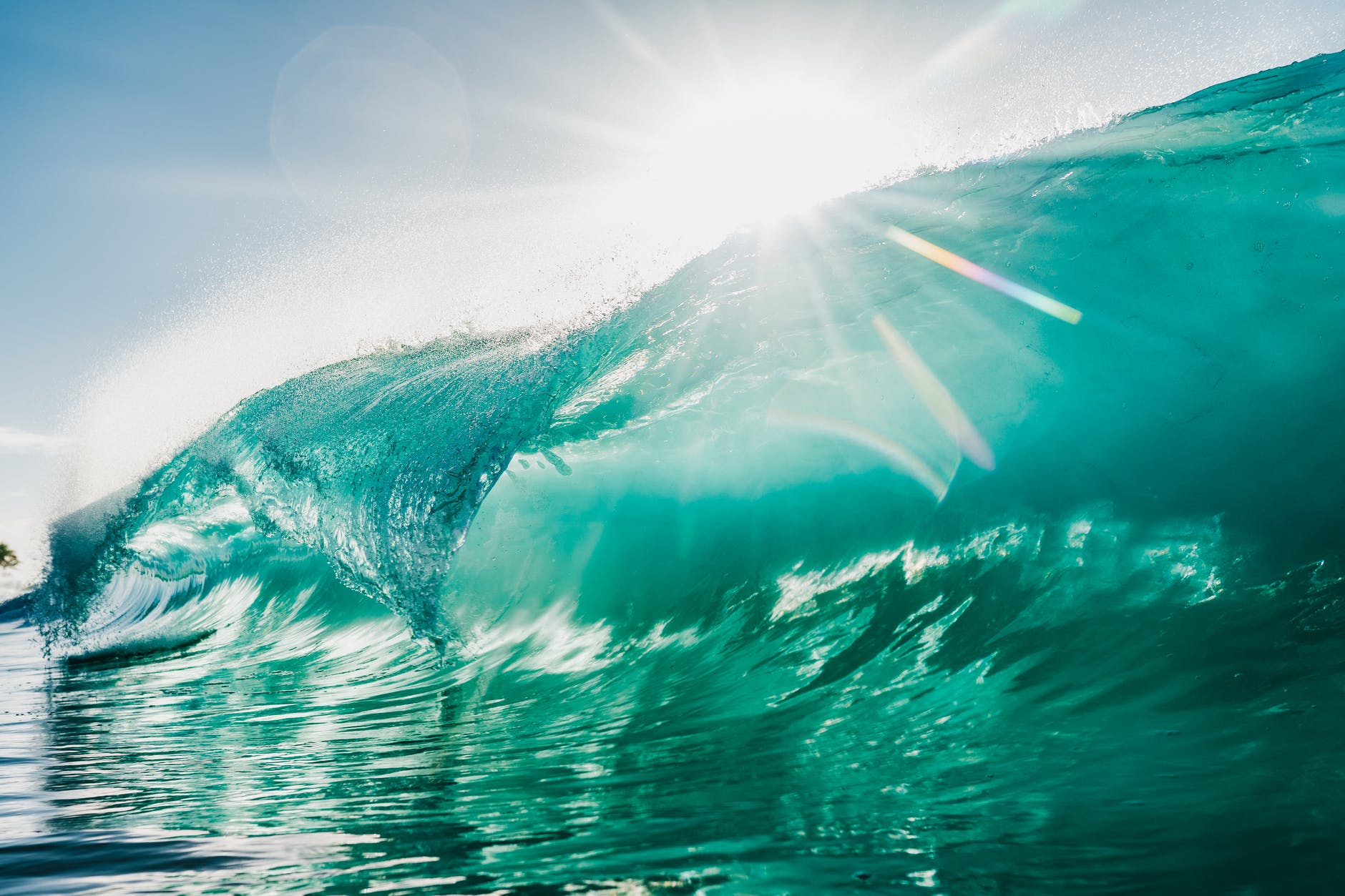
A couple of days ago there was a wonderful article in the Guardian, ‘When I surf I feel so strong’: Sri Lankan women’s quiet surfing revolution by Hannah Ellis-Peterson about the desire of Shamali Sanjaya who grew up in a fishing village, to experience riding the waves like her brother and father whom she would sit and watch enviously.
Easkey Britton Saltwater in the Blood Surfing Sri Lanka

Photo by K. Gonzalez-Keola Pexels.com

When a friend knocked on her door one day inviting her to go surfing, she could hold it back no more, that longing – like the title of Irish pro surfer Easkey Britton’s book alludes to – was indicative of saltwater in the blood. She was a natural surfer.

“When I surf, it is such a happy feeling for me,” she said. “I am filled with this energy, I feel so strong. Life is full of all these headaches and problems, but as soon as I get into the water, I forget about it all.”

Not content to keep her passion to herself, she persevered through disapproval and in 2018 set up the Arugam Bay Girls Surf Club, members, ranging from ages 13 to 43. Despite having broken through many local taboos amid accusations of trying to change the culture, many women still face a backlash from their families and communities; however their perseverance has also brought a new lease of life and healing to others.

Book Review and An Obsession With the Sea

I bought this book because I am a sea creature, a lover of the sea, its secrets and legends. I grew up on the wild west coast of New Zealand, near the volcanic rock and black sand beaches of Port Waikato and loved nothing more than going out past the breakers into the big swell of the huge waves there, being lifted up and down and eventually body surfing the wave back in. I loved it.

The coastline is notoriously wild and unfriendly, waves break against rugged cliffs, and the sea in some parts is slowly reclaiming the black sand dunes and dwellings that humans built.

There is something mesmerising about the sea and Easkey Britton’s story shares her physical and intellectual pursuit of it, her mindful practice in relation to it, eventually learning how to awaken to the more feminine element of her psyche in her relation to it with others.

The Irish Coast and Big Wave Surfing
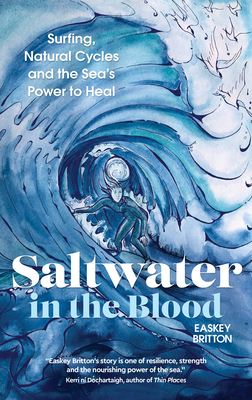
Surfing Natural Cycles Sea Power to Heal Irish Literature

Saltwater in the Blood is an account of her lifelong relationship with the sea, surfing and the rugged coastline of Ireland’s western coast. Complimented by her beautiful illustrations, as on the cover, it is perhaps the nearest thing to experiencing surfing without getting in the water!

She writes about surfing, her connection with the sea and the Irish coast, natural cycles, the ebb and flow of life and learning to let go. 

Right from her early school days, if the tide was out far enough the seafront provided a shortcut to school. Her father surfed and painted and she joined the boys in the water, learning to surf at a young age and becoming a pro champion surfer who toured the world catching waves. 

In the first part of the book she shares how she focused on surfing, following a well trodden path, overcoming fear, learning to read the signs, pushing her physical and mental limits as each level of difficulty was conquered, trying to stay grounded and safe, while riding and being tossed by the waves.

Connect Not Conquer

However, over time, she learned to regard the sea in a different way and began the process of letting go of the need to compete and the heightened awareness that being one of the only girls in the water carried with it. She began the process of moving away from competition towards collaboration (a process that Riane Eisler writes about in Nurturing Our Humanity).

Though she recalls the excitement of learning to tow-surf (pulled behind a jet ski in order to access big waves a paddle surfer can’t get to) and the thrill of surfing the giant waves nearby at Mullaghmore (see Conor Maguire riding a 60-foot Monster Wave), an invitation to travel to far flung places to write about surfing in countries and cultures where it is little known, provides her an opportunity to learn more from what the sea offers, and the unique experience of being in the company of women and their shared relationship to the sea.

Surfing in Iran

One of the most interesting chapters in book for me, was the time she spent in Sistan-Baluchistan in Iran, .

It was a land not known for its surf-exposed coastline. A short stretch of coast, about 60 to 80 kilometres, lies in a narrow swell window between Pakistan and the coast of Oman, exposed for a few months of the year during Indian monsoon season. This was a part of Iran that didn’t feature in any travel guides, let alone surf magazines…At first, it was primarily about the waves, like all surf trips -the discovery of waves that maybe no one else had surfed before. But it soon became something much more.

The first trip was captured in a short film by her travelling companion, French filmmaker Marion Poizeau, an effort that she eventually published on YouTube having failed to find a production or TV company to share it. It went viral – MISSION “SURF EN IRAN”! and was the beginning of their adventure, the second time, the story became about connecting with and teaching a local group of Baluch women to surf.

I wanted to understand the challenges and opportunities of being able to do it and how this compared to our notion of surfing as a pursuit that offers a sense of freedom, flow and escapism and how that was translated in the context of somewhere like Iran.
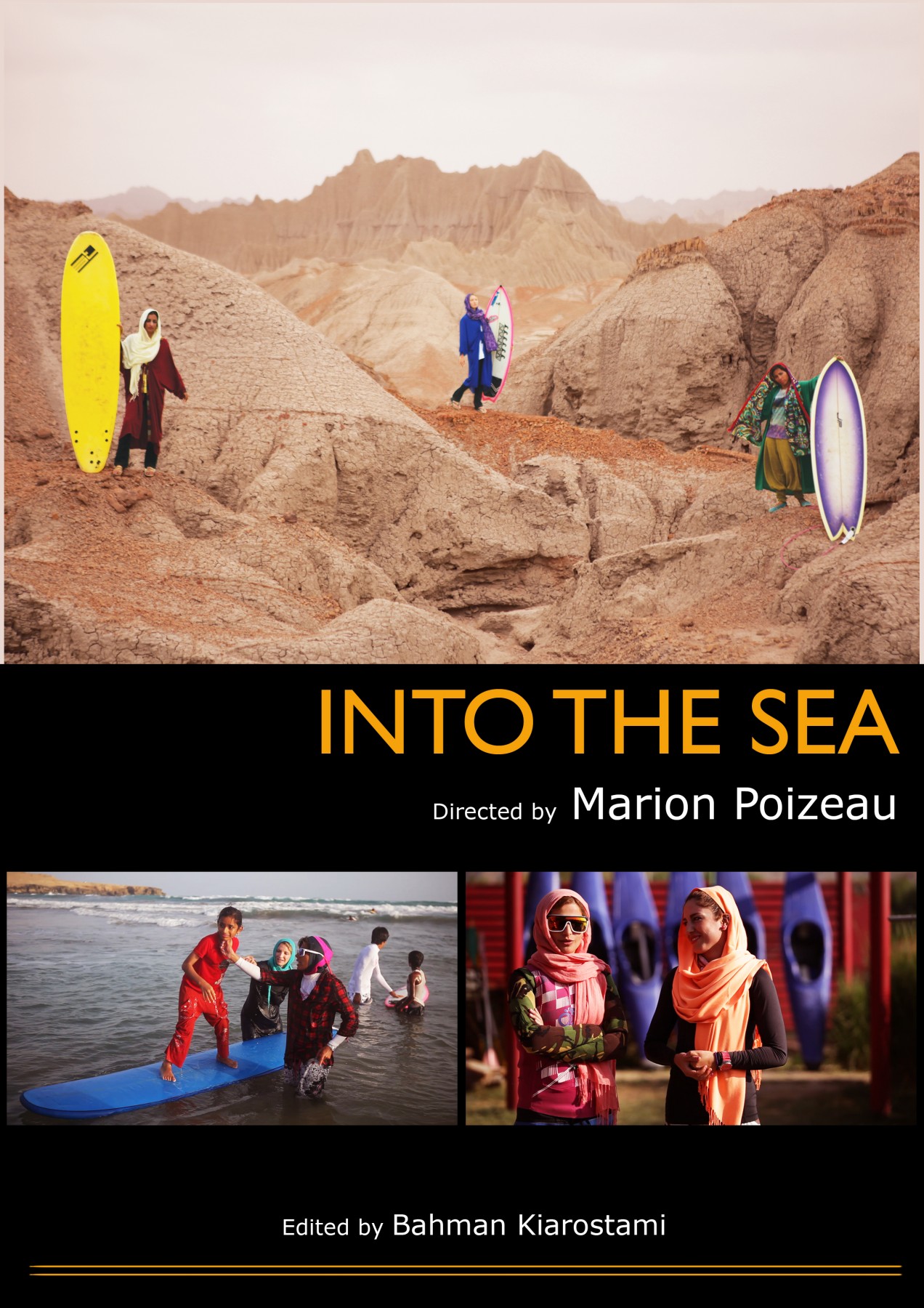
Surfing in Iran Easkey Britton Irish SurferBefore climbing on the surfboards, they would do what in effect were warm up exercises, but not of the traditional sportsman type, they would play in the waves and get a feel for the swell and the breakers, preparing themselves by sensing the sea’s mood, harmonising with each other.

This change of direction, firstly away from the competitive purpose of surfing and even away from the act of discovery and exploration, towards a meaningful exchange, capable of contributing something meaningful to each others lives, is what I was most impressed by, particularly thinking about that in the context of what today is about, empowering women through sharing knowledge.

It was a breakthrough moment for me personally in terms of how my relationship with surfing and my body truly altered and I realized how much more drawn I was to the connective rather than competitive aspects of surfing and the sea.

Joined by Mona Seraji, a snowboarder and Shahla Yasini, a swimmer and diver, this experience would result in the award winning documentary Into The Sea. Through the eyes of these three women, the viewer experiences the journey from a unique and unusual perspective, full of heart and emotion.

Protect the Ocean

The book ends with a message about looking after the ocean and the responsibility we all have to protect our local water sources.

I also enjoyed that there were so many familiar references to other books I’ve read about the sea or the environment, like Rachel Carson’s The Sea Around Us, botanist Robin Kimmerer’s Braiding Sweetgrass, Anne Morrow Lindbherg’s classic Gift From the Sea and many more.

If you like reading books about the sea and particularly from a woman’s perspective, add this one to your list!

Further Reading

Magic Seaweed’s Hannah Bevan Interviews Easkey Britton On the Power of Saltwater Immersion

Oceanographic Magazine: Living By The Tide  by Easkey Britton on Wild Swimming

SilverKris Article, May 2021: The Rise of Sri Lanka’s First Female Surfers by Zinara Rathnayake (with great photos by Tommy Schultz)

Easkey Britton, Author
Saltwater in the Blood Surfing Lighthouse Cottages

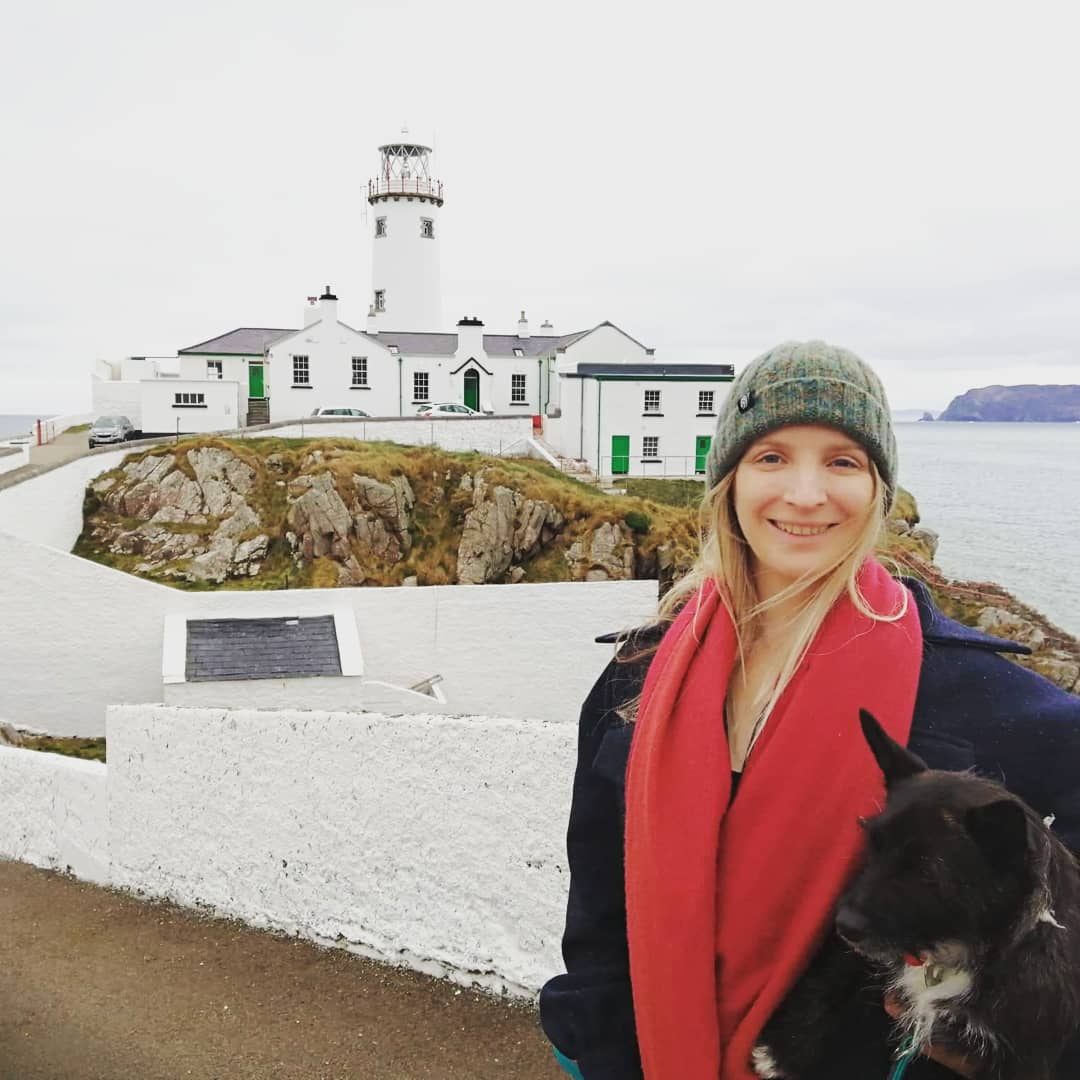
Easkey Britton Working On Her Book at Fanad Lighthouse, one of the ‘Great Lighthouses of Ireland’

Easkey Britton is a world renowned surfer, marine social scientist, activist, writer and artist passionate about the sea. She contributes  her expertise in blue spaces , health and social well-being to national and international research projects.

A life-longer surfer, she channels her passion for surfing and the sea into social change.  Her work is deeply influenced by the ocean and the lessons learned pioneering  women’s big wave surfing in Ireland.

She is the author of 50 Things To Do Beside the Sea, has published numerous peer-reviewed articles and is a regular columnist at Oceanographic Magazine. She lives on the West Coast of Ireland with her partner and their dog Wolfie – however a picture she shared two days ago in a rock pool indicates there are twins on the way!
Reading Ireland logo 2022

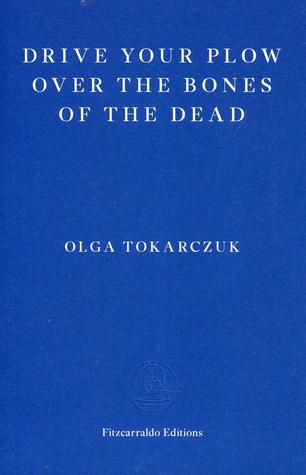
Drive Your Plow Over the Bones of the Dead by Olga Tokarczuk tr. Antonia Lloyd-Jones

Polish Literature Novel Prize Winner Blake AstrologySomewhere on a plateau above a small forested village in Poland, near the border with the Czech Republic, lives Janina, except she doesn’t like that name, she insists on being called Mrs Duszejko.
An astute observer of things around her, she is more of a winter type, has knowledge and interest in the influence of planets and houses, likes to translate Blake’s poetry and read his letters, has great respect for all sentient beings, except perhaps those who hunt Animals for sport and take joy in it.

The novel opens as her neighbour whom she refers to as Oddball knocks on her door very early one morning to inform her that their mutual neighbour Big Foot is dead. The two visit his home and do what they think good neighbours should do, respectfully arranging the contorted corpse, though Oddball’s son Black Coat (a policeman) later tells them off for moving the body.

Our Feet Connect Us

Mrs Duszejko observing his feet:

They astonished me. I have always regarded feet as the most intimate and personal part of our bodies, and not the genitals, not the heart, or even the brain, organs of no great significance that are too highly valued. It is in the feet that all knowledge of Mankind lies hidden; the body sends them a weighty sense of who we really are and how we relate to the earth. It’s in the touch of the earth, at its point of contact with  the body that the whole mystery is located – the fact that we’re built of elements of matter, while also being alien to it, separated from it. The feet – these are our plugs into the socket. And now those naked feet gave me proof that his origin was different. He couldn’t have been human. He must have been some sort of nameless form, one of the kind that – as Blake tells us – melts metal into infinity, changes order into chaos.

Referring to her Little Girls draws attention to another mystery, and while she doesn’t share the story of what happened to them initially, they are an absent presence throughout the story, a conundrum that will eventually be revealed, including its connection to the death of the neighbour.

brown deer under trees

Photo by Devon Rockola on Pexels.com

Described as reclusive, unconventional and eccentric, she might well be the most sane person in the village, certainly she is one of the more interesting. An intellectual and a mystic, a lover of nature, philosophy, astrological influences, animals and wildlife, surviving in a village that reveres hunting, an activity undertaken by the Commandant of Police, the local priest, the village President and other dominating types puts her in the firm minority – despite her isolation, she finds her circle within the community.

Unhappy at the way the authorities are conducting their investigation, convinced by clues she has observed – ominous deer tracks – she writes to the police bringing their attention to her theory of revenge by wildlife against the actions of hunting humans. And recalls her earlier reports to them about Big Foot’s poaching activities. Death brings another element to her theory, the effect of astrological shifts and patterns.

I could also tell that he didn’t understand everything that I was saying – firstly for the obvious reason that I was using arguments alien to him, but also because he had a limited vocabulary. And that he was the type of Person who despises anything he can’t understand.

A Community of Soul Mates

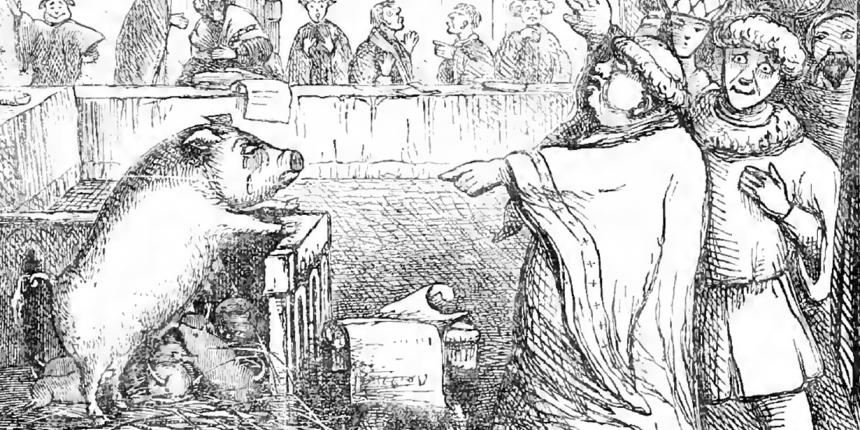
A sow on trial in at Lavegny in 1457 from The Book of DaysDizzy, a former student, now her 30 year old friend, helps with the Blake translations, though is unconvinced by some of her  theories concerning astrology and the revenge of animals, bolstered by her having discovered real animal trials, which peaked in 14th to 16th century Europe.

It was believed by many medieval authorities that ‘crimes’ committed by animals were the devil’s work and letting them go unpunished would provide an opportunity for the devil to take over human affairs.

Dizzy, who’s prone to effusive digressions on the topic of Blake’s symbolism, has never shared my passion for Astrology. That’s because he was born too late. His generation has Pluto in Libra, which somewhat weakens their vigilance. And they think they can balance hell. I don’t believe they will manage it.

Drive Your PLow Over the Bones of the Dead Olga Tokarczuk PolishWhen he challenges her for going around telling people about those Animals, concerned for her reputation, she  is outraged.
‘One has to tell people what to think. There’s no alternative. Otherwise someone else will do it.’

Another of the villagers is the young woman who runs a vintage clothing shop, a place Janina discovered one day when she was frozen through and hungry. The characters she befriends represent hope in an otherwise worrisome society.

The whole thing was a mixture of socialist café, dry cleaner’s and fancy-dress costume hire. And in the middle of it all was Good News.

That’s what I called her.  This name suggested itself irresistibly, at first sight.

Mrs Duszejko (Janina) is fed up and no longer young, she says what she thinks and doesn’t care what others think of her. She reads the signs and takes action. She’s an unexpected delightfully, transgressive heroine, of her own existential thriller.

I absolutely loved it and was surprised at how accessible a read it was, given this is an author who recently won the Nobel Prize for Literature. Her power to provoke by telling a story is only heightened by the suggestion on the back cover that her ideas presented here caused a genuine political uproar in Poland.

Further Reading

The Guardian: Interview – Olga Tokarczuk: ‘I was very naive. I thought Poland would be able to discuss the dark areas of our history’ by Claire Armitstead

Olga Tokarczuk, Author

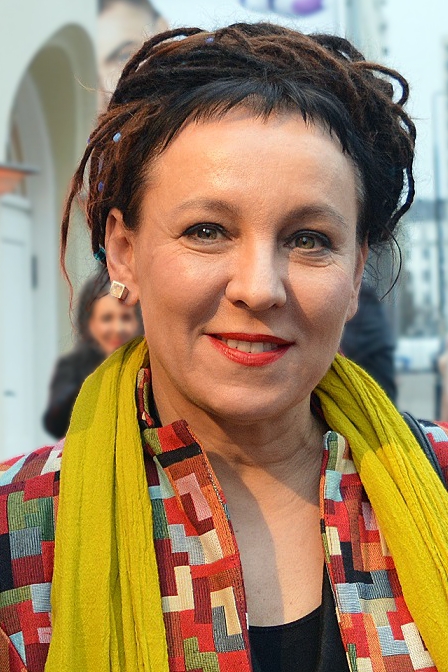
Polish literature Nobel Prize LiteratureOlga Tokarczuk is an Aquarian, a Psychologist and Jungian expert, a Polish essayist and author of nine novels, three short story collections and her work has been translated into forty-five languages.

Her novel Flights won the 2018 International Booker Prize, in Jennifer Croft’s translation. In 2019, she was awarded the Nobel Prize in Literature. Primeval and Other Times (1996) was her first work translated into English in 2010.

Her most recently translated novel, written over six years, The Books of Jacob (2014) was published in English in Nov 2021.

The Last Resort by Jan Carson

The only downside in reading The Last Resort is that it was so short!

Northern Irish Literature short storiesThis is the novel I have been waiting for Jan Carson to write, for here is a writer who in her ordinary life as an arts facilitator has brought together people from opposite sides in their way of thinking, encouraging them to sit down and write little stories, enabling them to imagine from within the shoes of an(other) – teaching the practice of empathy.
Her novel The Fire Starters comes from that place of darkness and indifference, when there is no empathy. I found it disturbing. I’ve since realised gothic novels aren’t my thing.

Here, Carson digs deeper into the psyche of the many that make up their community and finds a common thread that connects them, something that both pushes them forward and holds them back and shows it in its many guises, through a kaleidoscope of colourful characters. Everyone has their own mini drama and troubling perspective, that coming together might create a shift away from.

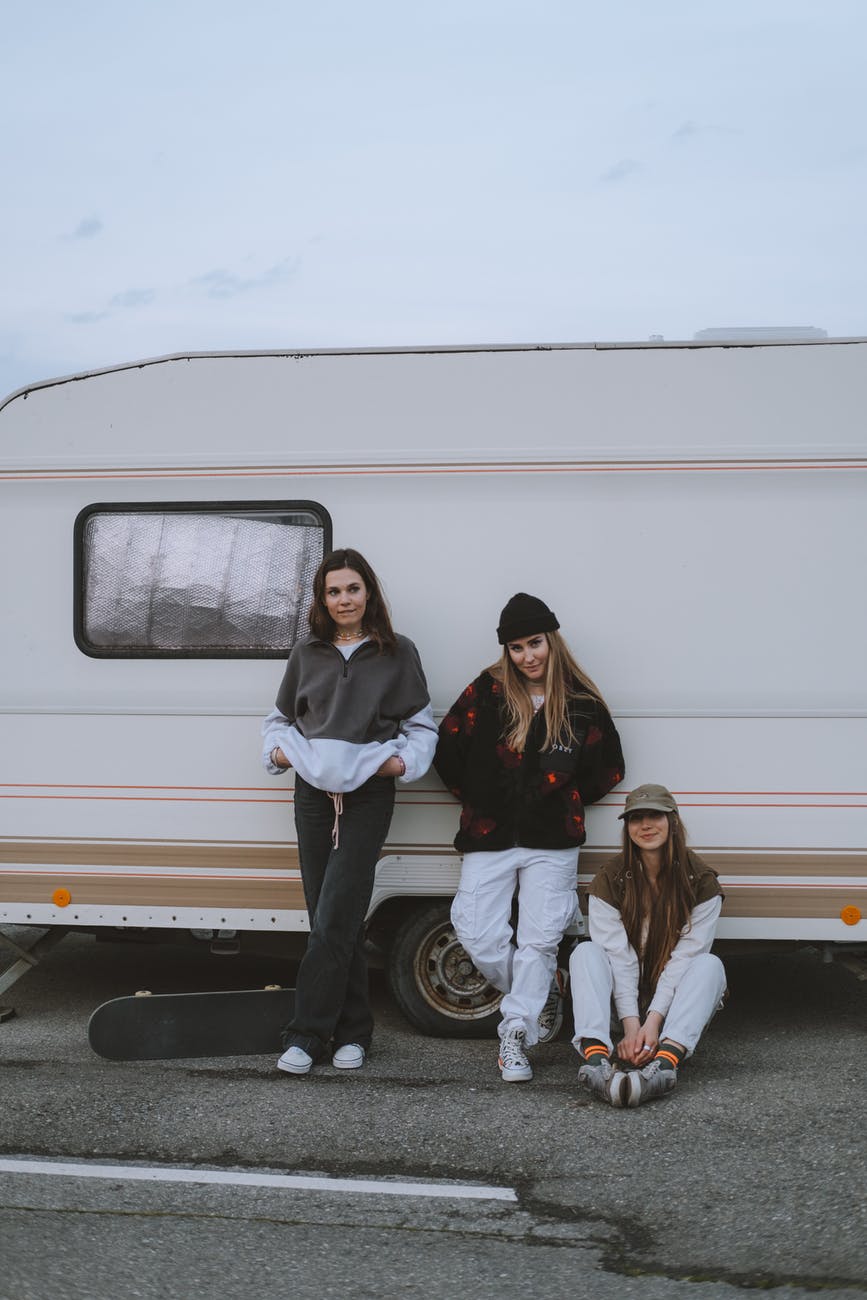
Set in a fictional Seacliff caravan park in Ballycastle on the North Coast of Ireland, as the book opens we meet Pete, who now (reluctantly) runs the caravan park and Frankie, who has gathered a few friends for the 50th anniversary of Lynette, for whom they will place a memorial bench with a brass plaque at the top of the cliff.

A caravan on the North Coast was the height of luxury, somewhere you could escape to at the weekend. They felt safe here. Or they did until that bomb went off in the car park.

the last resort ballycastle jan carson ireland

Photo Y. ShuraevPexels.com

It’s the first day of the holiday season and most of these people have been coming here for years, though for some this may be their last visit. Not everyone is happy to be here, like Alma and her two siblings, especially when they wake up one morning to discover their phones and her iPad are missing.

Alma is into Agatha Christie and when she discovers they are not the only family that has something missing she decides to investigate, even if there hasn’t been a murder. Yet. No really, there’s no murder.

It’d be easy to push someone over that cliff. It’s so crumbly. You could make it look like an accident. I can think of at least three different times Agatha Christie killed somebody by shoving them off a cliff. If my iPad wasn’t gone I’d google to see if there were more. I’m raging about losing my iPad. Now I have to run my investigation the old-fashioned way. Snooping around. Observing suspects. Taking notes on my jotter. Maybe it’s better like this. Poirot never looked anything up on Wikipedia or checked suspects’ alibis on Facebook. If Poirot was here, he’d say, forget the iPad, Alma. Use your leetle grey cells. I’m doing my best. I’m watching everyone, even Mum. It’s always the person you least suspect.

Alma’s Mum Lois has a PhD in mythology and her thing is sea monsters. Monsters, wizards and demons, that’s her parents thing, Harry Potter is for kids, Alma likes the real world, way scarier.

Seacliff Northern Ireland The Last Resort

Photo by Tatiana on Pexels.com

Each chapter is narrated by one of 10 characters in the caravan park and about each family we learn what is holding them back, what consumes their minds. And while there is not a murder, no smoking gun, there is the cliff – and from the beginning you sense its ominous presence, the way it draws everyone to its apex.

We meet Alma again (my favourite character) as she trails around the caravan park interrogating her disapproving adult suspects. She’s brilliant.

Richard is a complete empath, hiding it from his family as if it were a sign of weakness, a position likely to be exposed given he has used his father’s caravan to house sixteen homeless men, many of them immigrants.

I couldn’t tell Dad about them. I’ve never really told him what I really do. He wouldn’t understand. In his world, you work hard, and you do well. There’s no reason to end up on the street, hawking The Big Issue, unless you’ve brought it on yourself.

Kathleen struggles to accept her daughter for who she is, because of societal expectations, but finds it hard to follow through with her disapproval because she desperately wants a relationship with her grandson Max. She finds Alma strange, intense and curious.

Lois answers all her questions. She talks to her weans like they’re adults. When she split up with her husband, Alma was fit to tell me the ins and outs of the whole divorce. She was only ten. You have to protect a child that age. They’re not old enough to know everything. Still, I have to say I envy them – calearied as they are – at least they talk to each other, really properly talk. We’re all adults in this caravan but we’ll spend the whole weekend talking about nothing. The weather. The baby. Whether or not to put the kettle on. Avoiding the elephant in the room because nobody wants to cause a scene.

So many great lines, so much humour, angst, regret, camaraderie as the story leads to its wild denouement on the seacliff, as the thing that’s been holding them all together, holding them back, demands to be released.

Just brilliant. Highly Recommended.

Further Reading

Best Caravans in Fiction (A List in Progress), Jan Carson

Jan Carson, Author

Northern Ireland Author Fiction

Jan Carson by ©Jonathan Ryder

Jan Carson is a writer and community arts facilitator based in Belfast. Her debut novel Malcom Orange Disappears (2014) was published to critical acclaim, followed by a short-story collection, Children’s Children (2016), and two flash fiction anthologies Postcard Stories (2017) and Postcard Stories 2 (2020).

Her second novel The Fire Starters (2019) translated into French by Dominique Goy-Blanquet as Les Lanceurs de Feu, won the EU Prize for Literature, was shortlisted for two prestigious French literary awards the Prix Femina and Prix Médicis in 2021 and was also shortlisted for the Dalkey Novel of the Year Award.

Her third novel The Raptures was released in Jan 2022.

My Top 5 Irish Fiction & Nonfiction Books

It’s Reading Ireland Month and in addition to posting reviews as and when I read books from my Irish Literature pile, I’ll be following Cathy at 746book’s weekly prompts to explore some past favourites.

This week it’s a Top 5 prompt and I was going to do novels, but many of my all time favourite Irish reads are nonfiction, so I’m sharing both.

week 1 Top 5

Top 5 Irish Fiction

There are more than 5 Irish novels that I have rated 5 star reads, so I’m listing the first five that come to mind, that have stayed with me, below. Click on the title to read my review. So honorable mentions to : the incredible Booker Prize winning Milkman by Anna Burns and Donal Ryan’s All We Shall Know, my favourite of the four novels of his I’ve read.

Best Non Fiction Read of 20201. A Ghost In the Throat by Doireann Ní Ghríofa – this was my One Outstanding Read of 2020.  Poet and essayist Doireann Ní Ghríofa’s work of autofiction/essay reflects on history, motherhood, female passions and the elusiveness of time, place and identity. All this, while reading, rereading, thinking about and translating a 200 year old Irish poem she is obsessed with: “Caoineadh Airt Uí Laoghaire” by the 18th century noblewoman Eibhlín Dubh Ní Chonaill. Somehow she combines this into a fluid, mesmerising text that grabs the reader. Insists. Provokes. Opens Up. Reclaims space. Awakens. Utterly compelling.

“In performing this oblique reading, I’ll devote myself to luring female lives back from male texts. Such an experiment in reversal will reveal, I hope, the concealed lives of women, present, always, but coded in invisible ink.”

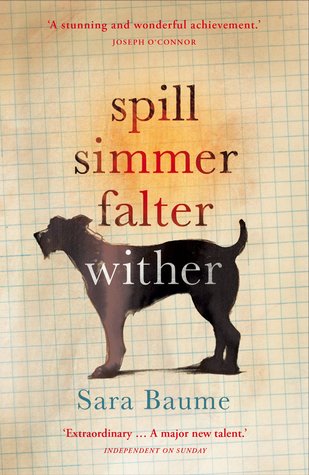
Sara Baume Ireland Dogs in Literature Literary Fiction2. Spill Simmer Falter Wither by Sara Baume – I read Baume’s work of nonfiction Handiwork before any of her novels; I remember looking forward to reading this, wondering what her fiction was going to be like. Having now read three of her books it is clear she has become my current favourite Irish author. Using her unique, rhythmic, contemplative style and way of creating character that is so measured and thoughtful, this novel is about a man getting himself into a state after taking on a stray dog and as it complicates his life, escaping with him on a road trip. It is exquisite, playful and surprising.

“I expected it would be exciting;  I expected that the freedom from routine  was somehow greater than the freedom to determine your own routine. I wanted to get up in the morning and not know exactly what I was going to do that day. But now that I don’t, it’s terrifying.”

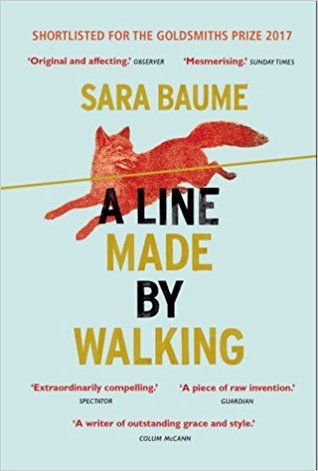
Irish literary fiction Visual Artist3. A Line Made By Walking by Sara Baume – No surprise then that her second novel is also in my Top 5, a stunning work about a young woman leaving Dublin city to return to her roots. She moves into her grandmother’s empty, neglected ‘for sale’ house, a place of temporary refuge as she deals with an aberration in her mental health.

Visual art is part of her recovery and the novel includes references to over seventy art installations that she tests herself on. Taking quiet charge of her own healing, creating daily purpose, the novel is itself the work of an artist. Brilliant.

“Why must I test myself? Because no one else will, not any more. Now that I am no longer a student of any kind, I must take responsibility for the furniture inside my head. I must slide new drawers into chests and attach new rollers to armchairs. I must maintain the old highboys and sideboards and whatnots. Polish, patch, dust, buff. And, from scratch, I must build new frames and appendages; I must fill the drawers and roll along.”

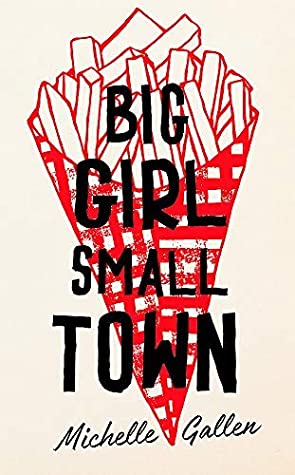
Michelle Gallen Big Girl Small Town CWIP Prize 20204. Big Girl, Small Town by Michelle Gallen – this was a novel I saw being talked about on twitter and bought on a whim, in part because the setting in a fish & chip shop in Northern Ireland reminded me so much of our own funny story (linguistic challenge) in a chip shop in the seaside town of Newcastle in 2019.

Written in a phonetic vernacular that creates a harmonious rhythm, it follows a week in the life of socially awkward but inwardly clear-eyed, 27-year-old Majella who has a list of stuff in her head she doesn’t like and has just learned her 85 year old grandmother may have been murdered. It’s entertaining, kind of sad, funny and  confrontational. Not my usuaI literary fare, but I totally loved it.

“Sometimes Majella thought that she should condense her whole list of things she wasn’t keen on into a single item:  – Other People.”

Hearts Furies5. The Heart’s Invisible Furies by John Boyne – this novel was on so many reader’s best books list the year it came out, along with an intriguing premise, I was curious.

A heart and soul epic, with a little inspiration from his own life, it is about a boy coming to terms with his identity, exposing aspects of Ireland’s history, juxtaposed with that of the Netherland’s and the US, as Cyril’s life takes him to both those places.

The novel focuses on Cyril’s attempts to survive in a world hostile to his natural inclinations, his experiences highlighting struggles many encountered during those years, unable to live their lives openly and honestly without the fear of rejection or violence.

It is a courageous attempt to show how the way we conform to society and culture’s expectations against our own nature, can be harmful to so many, making us wonder how life might be, if we lived in a more utopian world, where tolerance reigned supreme. Thought provoking and profound.

“A line came into my mind, something that Hannah Arendt once said about the poet Auden: that life had manifested the heart’s invisible furies on his face.”

Top 5 Irish Nonfiction

creative nonfiction bird migration songbirds1. Handiwork by Sara Baume – the book that sparked my interest in the work of visual artist, sculptor and writer Sara Baume, it’s like a notebook, not too many words on each page or chapter, sharing something of her year of sculpting birds. A place for reflections on her experience, observations and insights, connections, including memories of her father and grandfather who also worked with their hands.

Quotes from influential texts she’s known for years offer up additional wisdom as daily she repeats the same rhythm; crafting, sculpting, writing, reading.  Like a songbird, this mini book tweets its tribute to those who craft and create, following an intuitive inclination to fashion one thing out of another using their hands.

“From my Dad I inherited a propensity for handiwork, but also the terrible responsibility, the killing insistence.”

nature writing Wainwright prize2. Diary of a Young Naturalist by Dara McAnulty – Incredibly this book was written by a 15 year old boy with an ability beyond his years, it is a diary of observations of the natural world around him, a place that provides him with a breathing space, a remedy to the way he is in the world.

The book follows the seasons through the senses of this autistic boy, who has a passion for nature and the environment and a family in tune with he and his siblings needs. Deservedly won The Wainwright Prize for UK Nature Writing.

“Many people accuse me of ‘not looking autistic’. I have no idea what that means. I know lots of ‘autistics’ and we all look different. We’re not some recognisable breed. We are human beings. If we’re not out of the ordinary, it’s because we’re fighting to mask our real selves. We’re holding back and holding in. It’s a lot of effort.”

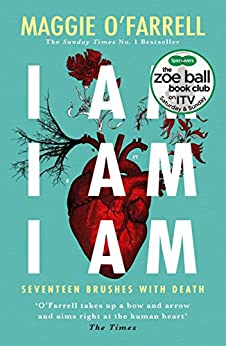
Maggie O'Farrell Memoir Near Death Experiences3. I Am, I Am, I Am – Seventeen Brushes With Death by Maggie O’Farrell – known for her award winning novel Hamnet, this is O’Farrell’s memoir told through multiple intriguing encounters with death. The opening story is heart-stopping and frightening, deliberately placed to capture attention.

An interesting insight is the awareness of her fearlessness, something that a brush with death seems to bolster, that fortunately motherhood will quell.

“It was not so much that I didn’t value my existence but more that I had an insatiable desire to push myself to embrace all that it could offer. Nearly losing my life at the age of eight made me sanguine – perhaps to a fault – about death. I knew it would happen, at some point, and the idea didn’t scare me; its proximity felt instead almost familiar. The knowledge that I was lucky to be alive, that it so easily could have been otherwise, skewed my thinking.”

constellations-sinead-gleeson4. Constellations by Sinéad Gleeson – In her Reflections on Life, Gleeson writes essays, using parts of the body to structure the narrative, a body containing metal like constellations of stars that front each chapter.

Her essays share the struggles, shame, hopes and disappointments, of bones, of blood, of hair, of children, of grief.  They bear witness to a deteriorating mind,  experiences that seem like weakness, that have contributed to moulding a psyche of great strength and perseverance. An activist. A voice. A woman standing in the light, seen, heard, inspiring others.

Kahlo, Grealy and Spence were lights in the dark for me, a form of guidance. A triangular constellation. To me, they showed that it was possible to live a parallel creative life, one that overshadows the patient life, nudging it off centre stage…That in taking all the pieces of the self, fractured by surgery, there is a rearrangement: making wounds the source of inspiration, not the end of it.”

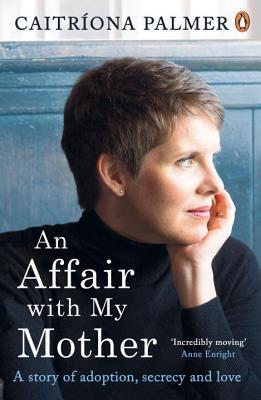
affair with mother5. An Affair With My Mother by Caitriona Palmer – an incredible adoption memoir written by an Irish journalist now living in the US, who has an experience in her mid twenties common to many adoptees, often referred to as “coming out of the fog”, when they realise that despite a happy childhood and apparent lack of effect of the trauma of relinquishment – something isn’t quite right. It’s a crisis that often results in them seeking to understand their identity, to know who they are, not who they were raised to be.

Palmer finds and meets her birth mother in Ireland, initially it is a positive experience, but the continued shame and fear of the mother, and her insistence on their connection remaining secret, compromises the connection.

In addition to sharing her story Palmer digs deep into the history of adoption in Ireland, researching archives and interviewing those affected. It’s an affecting, intimate account of real lives that continue to be impacted today, a cruel legacy of church and state judging and shaming young women, punishing innocent children.

“What I didn’t understand was that that primary loss impacted me, it did change me, I’m still grieving her. Despite my wonderful happy life, amazing husband and children… I’m internally grieving, this woman, this ghost, that’s a love that I’ll never regain in a way, memoir is an attempt to grasp at that.

I wanted people to know you can grow up happily adopted and still have this hole, I always feel like there is a hole deep down inside of me that I can’t quite fill, in spite of the abundance of love that surrounds me, this primary loss is profound.”

Next Week: My Year In Irish Lit!

It’s Reading Ireland Month 2022

Irish Culture and Belfast

Cathy over at 746 Books runs an annual Reading Ireland celebration of books and culture every year in March, so I’m going to try and join in a little. Here in Week 1’s prompt, she shares her Top 5 Irish Movies, interest in Irish cinema currently ascending; Kenneth Branagh’s Belfast a hot contender for the Oscar Awards with seven nominations.

There are four weekly themes to explore and plenty of Irish books on my shelf to read, so you can expect to see a few reviews and other Irish related posts this month.

Reading Ireland logo 2022

More of Moore

In 2021, I joined in another of her challenges to celebrate the Northern Irish writer Brian Moore 100 who lived most of life in self-imposed exile abroad.

I read four of his novels throughout the year, Lies of Silence (1990) (a Northern Irish Troubles thriller), The Lonely Passion of Judith Hearne (1955) (frustrating literary fiction), The Doctor’s Wife (1976) (slightly steamy literary fiction) and The Magician’s Wife (1997) (French/Algerian historical fiction).

As you can see below, I have a few more on the TBR to choose from, to read this year. And I’ll be writing more about the highlights of 2021 later in the month.

Reading Ireland Month 2022 TBR

In addition to reading more Moore, I’m planning to read Mary Costello this year, more of Jan Carson, whose novel The Fire Starter’s I read last year, as well as her Postcard Stories.

NonFiction Looks Promising

I’m really looking forward to the two nonfiction titles in my pile, two nature writing memoir type books Thin Places by Kerri ní Dochartaigh and Saltwater in the Blood, Surfing, Natural Cycles and the Sea’s Power to Heal by Easkey Britton, an Irish surfer from County Donegal with a doctorate in Environment and Society.

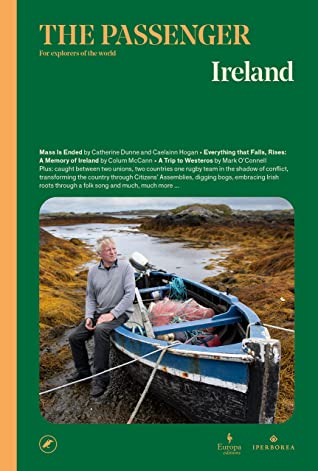
essays Sara Baume Colum McCann Europa EditionsAnd perhaps most of all, I’m very excited about this upcoming collection of illustrated essays, photography, art and reporting, The Passenger, Ireland by Irish writers and journalists from Catherine Dunne to Colum McCann, Mark O’Connell and Sara Baume writing about their country in modern times. Due for publication on March 17 by Europa Editions, here’s an extract printed on the back cover:

“A country is composed of its people far more than its landscape. Let’s face it. We’re torturously poetic. We’re unbearably self-conscious. We’re awkwardly comic. We’re wilfully ambiguous. We’ll answer a question with another question. We’ll give you directions towards the exact place you don’t want to go. We’ll walk a hundred miles to receive a good insult. We’re blasphemous. We’re contrarian. We never forget a grudge. We address incomprehension. Our war songs are merry. Our love songs are sad. We have half-doors: we are neither in nor out. We make great fun of despair. And we’re marvellous at spouting rubbish about ourselves. (Mea culpa, mea culpa, mea maxima culpa.) But we are also open to change. It is the eternal dream: to keep on becoming something new. The Irish have always had a great sense of humour, none more so than when their backs have been against the wall. The one thing that has never been given up on, in the Irish psyche, is the presumption of hope – and indeed the presumption of home.”

– From ‘Everything That Falls Must Also Rise’ by Colum McCann

Irish Lit Prompts

Finally, the weekly themes for Reading Ireland Month 2022 are:

Week 1: My Top 5 Irish …

  • for this prompt I’m going to choose my Top 5 Irish Fiction & NonFiction Books

Week 2: My Year in Irish Lit

  • a look at the highlights of reading Irish literature from 2021

Week 3: Irish or Not Irish?

  • Authors you didn’t realise were Irish or those you thought were, but aren’t – Hmm?

Week 4: New To My TBR

  • The punishment for getting involved in this monthly reading celebration, all the temptations to acquire more Irish literature, or how I came to get involved in the Brian Moore thing and all those Mary Costello novels. I’m going to try and resist, but I know I will fail.

So, any recommendations, a favourite Irish novel or book to share? Have you seen Belfast?