
Originally published in 1987, this nonfiction title is both a mini biography (of Sally Morgan’s Great Uncle Arthur, her mother Gladys and her Nan, Daisy) and part memoir.
Sally Morgan, an Australian of Aboriginal descent, begins the book writing about her childhood from the perspective of not knowing her own identity. Thus the reader too, reads from this perspective as Sally recounts events in her life as they happen and as a child would, refrains from analysing or questioning them. Until she finds out.
 The children at school ask about her skin colour and ethnic origin.
One day, I tackled Mum about it as she washed the dishes.
‘What do you mean “Where do we come from?” ‘
‘I mean what country. The kids at school want to know what country we come from. They reckon we’re not Aussies. Are we Aussies Mum?’
Mum was silent. Nan grunted in a cross sort of way, then got up from the table and walked outside.
‘Come on Mum, what are we?’
‘What do the kids at school say?’
‘Anything. Italian, Greek, Indian.’
‘Tell them you’re Indian.’
‘I got really excited then. ‘Are we really? Indian!’ It sounded so exotic.
‘When did we come here?’ I added.
‘A long time ago’, Mum replied. ‘Now no more questions. You just tell them you’re Indian.’
It was good to finally have an answer and it satisfied our playmates. They could well believe we were Indian, they just didn’t want us pretending we were Aussies when we weren’t.
At home, they live with their mother Gladys and father Bill, who is unwell and sometimes dangerous. He is a WWII war veteran of able body, suffering from what today would be diagnosed as PTSD.
Bill was a strange man, he wasn’t prejudiced against other groups, just Aboriginals. He never liked us having our people to the house. We had to cut ourselves off. I think it was his upbringing.
Bill had spent a lot of his childhood in country towns. I think that moulded his attitudes to Aboriginal people. Down South, Aboriginals were really looked down upon. Bill would have been brought up with that.

Photo by Dan on Pexels.com
During those difficult years with her Dad, one of the few things Sally enjoyed about school were the Wednesday afternoon stories, listening to Winnie the Pooh, a character who lived in a world of his own and believed in magic, just like she did. While Pooh was obsessed with honey, Sally was obsessed with drawing.
My drawings were very personal. I hated anyone watching me draw. I didn’t even like people seeing my drawings when they were finished. I drew for myself, not anyone else. One day, Mum asked me why I always drew sad things. I hadn’t realised until then that my drawings were sad. I was shocked to see my feelings glaring up at me from the page. I became even more secretive about anything I drew after that.
Nan also lives with them and as Sally gets to know Nan’s brother Arthur, she learns that they are not Indian, they are of Aboriginal origin. Confronting her grandmother elicits no information at all, she refuses to speak of her past, nor of who her father was and suggests Sally forget about it.
Arthur agrees to tell his story and over a period of 3 months, in his 90’s, she records their conversations and learns about his life and a little more about his sister’s, her Nan. They are the children of an Aboriginal woman and the white stationmaster whose farm they lived and worked on.
They grew up in an era referred to as “living under the Act” when Australia had laws that not only dispossessed Aboriginal people of their land, culture and traditions, but forcibly removed their children from them, did not allow them to raise their children, in effect owned them and treated them similar to slaves. People like Nan grew up under this Act and lived their lives under the effect of the trauma it brought about. The only way they could see to protect their children was to lie about who they were and withhold their heritage from their children and grandchildren.

Heritage by Sally Morgan (1990)
This story is Sally’s persistent endeavour to find that lineage, those lost family members and that heritage and to find out the story of her grandmother who was too scared to tell it and said she would take her secrets to the grave. To understand what it meant to belong to a heritage.
What did it really mean to be Aboriginal? I’d never lived off the land and been a hunter or gatherer. I’ve never participated in corroborees or heard stories of the Dreamtime. I’d lived all my life in suburbia and told everyone I was Indian. I hardly knew any Aboriginal people. What did it mean for someone like me?
I absolutely loved every word of it, the way it is told, the close connection this family has to each other, the evidence of a spiritual connection to their ancestry and the spirits, even though they have not been raised with this knowledge.
The real life characters are vividly drawn, the dialogue authentic and the story’s of Arthur, Gladys and Daisy (Nan) beautifully recollected. Though it tells of a terrible time in Australia’s past, of children taken from their mothers, of slavery, abuse, fear and judgement because of skin colour, it is also a legacy for this family, a gift to the Australian nation and the world at large, to be given the opportunity to gain insight into a period of history, little known or heard from this important perspective.
Highly Recommended.
Sally Morgan, Author, Painter
 Sally Morgan is one of Australia’s best-known Aboriginal artists and writers.
For as long as she can remember, Sally wanted to paint and write but at school she was discouraged from expressing herself through her art because her teachers failed to see the promise in her individual style. It was not until she researched her family history and discovered her Aboriginal identity that she found meaning in her images and gained the confidence to pick up her paints again.
Sally’s widely-acclaimed first book, My Place, has sold over half a million copies in Australia. Sally Morgan’s second book, Wanamurraganya, was a biography of her grandfather.
My Place won the Human Rights and Equal Opportunity Commission humanitarian award in 1987, the Western Australia Week literary award for non-fiction in 1988, and the 1990 Order of Australia Book Prize.
In 1993, international art historians selected Morgan’s print Outback, as one of 30 paintings and sculptures for reproduction on a stamp, celebrating the Universal Declaration of Human Rights.
Her children’s picture story books include Little Piggies and Hurry Up Oscar. She has collaborated with artist and illustrator Bronwyn Bancroft on several picture books including Dan’s Grampa. Curly and the Fent was written by Sally in collaboration with her children Ambelin, Blaze and Ezekiel.
Sally is the Director at the Centre for Indigenous History and the Arts at the University of Western Australia and lives in Perth.
 Written in three parts, this award winning novel by Lebanese author Hada Barakat, is composed of a series of six letters written in a stream of consciousness narrative that are interlinked. The letters are read, but not by their intended recipient, found between the pages of a book, dug out of a bin or otherwise encountered. They prompt the finder to write their own letter.
 Hoda Barakat was born in Beirut in 1952. She has worked in teaching and journalism and lives in France. She has published six novels, two plays, a book of short stories and a book of memoirs, as well as contributing to books written in French. Her work has been translated into a number of languages.
 So we now know a little of her motivation, however now comes the struggle, as she must balance writing with the cost of living; her circumstances have changed and we are going to learn how she manages as a single, independent mother.
 A voice repeated in my mind, ‘the master’s tools, the master’s house’ – you know when you recall a fragment of a quote but can’t quite remember it. It was the passionate sage wisdom of Audre Lorde reminding me of her essay, The Master’s Tools Will Never Dismantle the Master’s House in
 I loved how this historical novel focuses on the lives of these women, Rue her mother May Belle and grandmother Ma Doe and the community within which they live, without allowing the narrative to stray over too far into the lives and homes of those who diminished their lives.
 In May Belle’s time, one of the ways to effect a conjure was to make a doll that bore a resemblance to the person and if possible to access strands of hair to entwine with whatever material was used. Varina has porcelain dolls that Rue admires and is envious of, when she discovers her mother is making a doll that faintly resembles her, she pretends not to notice she has discovered it, and will mask even further her disappointment when she misreads its purpose.
 Fantasy isn’t a genre I read very often, but one I have a nostalgic feeling for, having loved it when I was a child. The problem usually being that it becomes harder to evoke the magical feeling that a child’s imagination is capable of creating. However I was willing to try and decided to read it on a day I’d have few interruptions.
 Despite Piranesi’s scientific status, he is developing a connection to the World within he lives, in which he is able to ask questions and intuit answers.
 Winter Flowers (Les Fleurs d’hiver) by Angélique Villenueuve, translated by Adriana Hunter is published Oct 7 by

 1. just open it and start reading taking in what is actually shared at face value, a woman on the cusp of a life change, whose suppressed emotions will no longer stay down, who leaves town to try and figure them out, looks back at her childhood and adolescence for inspiration, then decides to look forward instead and begins to write (on the last page);

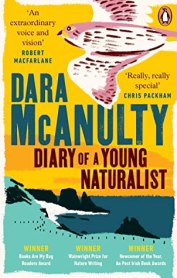 Dara McAnulty is autistic, as are his mother and two siblings, a beautiful advantage, because the family seem to understand exactly how to mitigate the intensity and lived experience of this characteristic.

 Word by Word