The Dry Heart by Natalia Ginzburg tr. Frances Frenaye

I’m planning on reading a few books by the Italian writer Natalia Ginzburg, as mentioned on reviewing her excellent memoir Family Lexicon which I chose to start with, before diving into her fiction.

I start her fiction at the beginning with this brilliant, page turning feminist classic, originally penned in 1947, The Dry Heart.

Captivating right from the opening lines,

“Tell me the truth,” I said.
“What truth?” he echoed…
I shot him between the eyes.

novella Italian Literature

Natalia Ginzburg’s debut novella starts with a shot and then goes into the domestic detail that preceded that moment.

Those first lines begin halfway down the page, just a couple of paragraphs before you turn the page, where not only is the husband shot, but in the last sentence before we turn the page, she tells us,

But for a long time already I had known that sooner or later I should do something of the sort.

She then leaves the house and over the course of the day, she recalls in minute detail how she met Alberto, her husband of four years, their long drawn out courtship, her wavering feelings for him that seesaw between love and hate but never indifference, before deciding what she ought to do now.

I put on my raincoat and gloves and went out. I drank a cup of coffee at the counter of a café and walked haphazardly around the city. It was a chilly day and a damp wind was blowing. I sat down on a bench in the park, took off my gloves and looked at my hands. Then I slipped off my wedding ring and put it in my pocket.

A school teacher living in a boarding house, surrounded by different characters on the periphery of her life, she had a vivid imagination and had fantasized about marriage. Alberto hadn’t fit that image but over time that had changed.

When a girl is very much alone and leads a tiresome and monotonous existence, with worn gloves and very little spending money, she may let her imagination run wild and find herself defenceless before all the errors and pitfalls which imagination has devised to deceive her.

The novel vivdly portrays the roller coaster of her young imagination, the frustration and desire she feels, the willingness to compromise and accept a less than perfect situation, the significant step forward their marriage takes when a child comes into it, until the day she snaps.

There is no mystery, all is laid bare in captivating, enticing prose, that is direct and insistent while exploring the dark aspect of a relationship that can’t be controlled, of characters who are ill-suited yet drawn towards one another, until that spontaneous combustion of their marriage.

It’s a novella, just over 100 pages, one to dive right in, highly recommended. A feminist classic.

Brilliant.

Also reviewed earlier this year by Jacqui at JacquiWine’s Journal and Kim at Reading Matters Blog.

Natalia Ginzburg Italian literature Family Lexicon

Natalia Ginzburg, Author

Natalia Ginzburg (1916-1991) was born in Palermo, Sicily. She wrote dozens of essays, plays, short stories and novels, including Voices in the EveningAll Our Yesterdays and Family Lexicon, for which she was awarded the prestigious Strega Prize in 1963.

She was the first to translate Marcel Proust’s Du côté de chez Swann into Italian.

Her work explored family relationships, politics and philosophy during and after the Fascist years, World War II. Modest and intensely reserved, Ginzburg never shied away from the traumas of history, whether writing about the Turin of her childhood, the Abruzzi countryside or contemporary Rome—approaching those traumas indirectly, through the mundane details and catastrophes of personal life.

She was involved in political activism throughout her life and served in the Italian parliament between 1983 to 1987. Animated by a profound sense of justice, she engaged with passion in various humanitarian issues, such as the lowering of the price of bread, support for Palestinian children, legal assistance for rape victims and reform of adoption laws. 

She died in Rome in 1991 at the age of seventy-five.

Warwick Prize for Women in Translation longlist 2023

16 titles have been longlisted for the seventh annual award of the Warwick Prize for Women in Translation.

The prize was established by the University of Warwick in 2017 to address the gender imbalance in translated literature and to increase the number of international women’s voices accessible to a British and Irish readership.

This year, there were 153 nominations representing 32 languages. The longlist spans 11 languages and for the first time includes a title translated from Vietnamese.  Arabic, Chinese, Hungarian and Italian language books are represented more than once.

A Long Line of Classics by Women Coming into Translation

Knowing how few women authors have been translated into English until now, only confirms how many great books sitting waiting to be discovered and rediscovered, as the demand to read literature from elsewhere increases exponentially. Yes, we have been and are, starved for other voices, for universal connections, stories imagined and conceived in other languages.

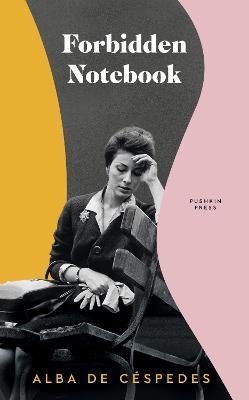
I have read two from the list, both excellent novels that I recommend, click on the titles to read my earlier reviews. Forbidden Notebook by Italian-Cuban author Alba de Cespédes translated by Ann Goldstein is a rediscovered classic from 1952, a highly compelling read about a woman’s self discovery through the transgressive act (find out why) of writing in a notebook.

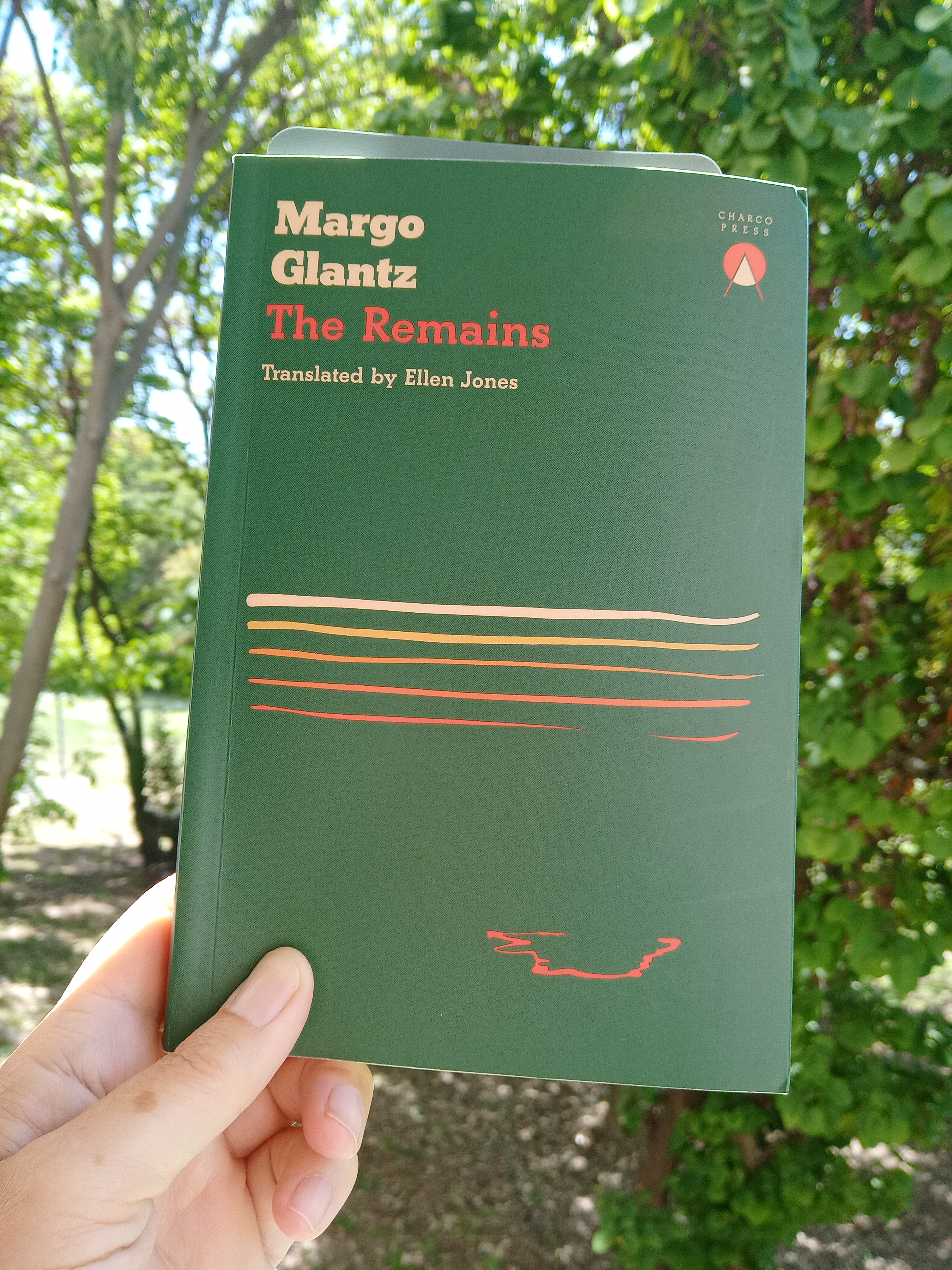
The Remains by Mexican author Margo Glantz translated from Spanish by Ellen Jones is an extraordinary novella of a woman who returns for the funeral of her ex-husband and relives aspects of their relationship while navigating the audience of mourners, uncertain to whom they should pass on their condolences.

The judges said of the 2023 longlist:

“From an exceptionally rich field of submissions we have chosen 16 remarkable books in first-rate translations. All of them deserve to find delighted readers everywhere.

Our contemporary picks span a dazzling rainbow of genres, cultures and voices – from an Egyptian graphic novel to a Vietnamese vision of migrant life in France; a Chinese fable of an alternative Hong Kong to a comic-epic Swedish novel of ideas; a Mexican musical elegy to a Yemeni documentary testament to the human costs of war.

But this year’s long list also honours a formidable cache of rediscovered gems from major 20th-century women writers: classic works given new life by the translator’s time-defying art.”

The full list of longlisted titles, in alphabetical order, with a summaries, is as follows:

Dorthe NorsA Line in the WorldA Year on the North Sea Coast (nonfiction) translated from Danish by Caroline Waight (Pushkin Press) – a year travelling along the North Sea coast—from the northern tip of Denmark to the Frisian Islands.

In 14 essays, it traces the history, geography, and culture of the places she visits while reflecting on her childhood and her family and ancestors’ ties to the region. She writes of the ritual burning of witch effigies on Midsummer’s Eve; the environmental activist who opposed a chemical factory in the 1950s; the quiet fishing villages surfers transformed into an area known as Cold Hawaii in the 1970s. She connects wind turbines to Viking ships, 13th century church frescoes to her mother’s unrealised dreams. She describes strong waves, sand drifts, storm surges, shipwrecks; nature asserting its power over human attempts to ignore or control it.

Lalla RomanoA Silence Shared (historical fiction, WWII) translated from Italian by Brian Robert Moore (Pushkin Press) – Italian classic about the mysterious relationships between two partisan couples in German-occupied Italy in the wintry mountains of Piemonte.

Sheltering from the war in a provincial town outside of Turin, Giulia and her husband Stefano feel an instant affinity with Ada and Paolo: she a spontaneous, vibrant young woman, he a sickly intellectual, a teacher and partisan in hiding. As the Germans occupy Italy, a subtle dance of attractions between the couples begins, intensified by their shared isolation and the hum of threat over a long, hard winter.

Amanda SvenssonA System So Magnificent It Is Blinding (literary fiction) translated from Swedish by Nichola Smalley (Scribe UK) – A joyful family saga about free will, forgiveness, and connectedness that asks if we are free to create our own destinies or are just part of a system beyond our control?

As a set of triplets is born, their father chooses to reveal his affair. Pandemonium ensues. Two decades later, Sebastian has joined a mysterious organisation, the London Institute of Cognitive Science, where he meets Laura, a patient whose inability to see the world in three dimensions intrigues him. Meanwhile, Clara has travelled to Easter Island to join a cult, and the third triplet, Matilda, is in Sweden, trying to escape the colour blue.

An event forces the triplets to reunite. Their mother calls with news: their father has gone missing and she has something to tell them, a twenty-five-year secret that will change all their lives.

Krisztina TóthBarcode (short stories/literary fiction) translated from Hungarian by Peter Sherwood (Jantar) – a first substantial work in prose after 4 volumes of verse, consists of 15 short stories tied together by a poetic sensibility.

Whether about childhood acquaintances, school camps, of love or deceit, all take place against the backdrop of Hungary’s socialist era in its declining years. The stories are strung together, like jewels in a necklace, along metaphorical ‘lines‘, which nearly all include the word for ‘line, bar‘. The losses, disappointments, and tragedies great and small offer nuanced ‘mirrorings’ of the female soul and linger long in the memory.

ThuậnChinatown (literary fiction) translated from Vietnamese by Nguyễn An Lý (Tilted Axis) – An exquisite and intense journey through the labyrinths of Hanoi, Leningrad, and Paris via dreams, memory, and loss

An abandoned package is discovered in the Paris Metro: local workers suspect it’s a terrorist bomb. A Vietnamese woman sitting nearby, her son asleep on her shoulder, waits and begins to reflect on her life, from her childhood in communist Hanoi, to studying in Leningrad during the Gorbachev period, to the Parisian suburbs where she now teaches English. Through it all runs her passion for Thuy, the father of her son, a writer from Saigon’s Chinatown, who, with the shadow of the China-Vietnam border war falling between them, she has not seen for 11 years.

Through her breathless, vertiginous, and moving monologue alongside the train tracks, the narrator attempts to face the past and exorcize the passion that haunts her.

Zhang YueranCocoon (Historical Fiction) translated from Chinese by Jeremy Tiang (World Editions) – a unique voice from a generation of important young writers from China, shedding a different light on the country’s recent past – on the unshakable power of friendship and the existence of hope

Cheng Gong and Li Jiaqi go way back. Both hailing from dysfunctional families, they grew up together in a Chinese provincial capital in the 1980s. Now, many years later, the childhood friends reunite and discover how much they still have in common. Both have always been determined to follow the tracks of their grandparents’ generation to the heart of a mystery that perhaps should have stayed buried. What exactly happened during that rainy night in 1967, in the abandoned water tower?

Alba de CéspedesForbidden Notebook (literary fiction) translated from Italian by Ann Goldstein (Pushkin Press) – a classic domestic novel that centres the inner life of a dissatisfied housewife living in postwar Rome. Exquisitely crafted, Forbidden Notebook recognises the universality of human aspirations.

Italian feminist writing classic 1940s 1950s

Valeria Cossati never suspected how unhappy she had become with the shabby gentility of her bourgeois life – until she begins to jot down her thoughts and feelings in a little black book she keeps hidden in a closet. This new secret activity leads her to scrutinize herself and her life more closely, and she soon realizes that her individuality is being stifled by her devotion and sense of duty toward her husband, daughter, and son.

As the conflicts between parents and children, husband and wife, and friends and lovers intensify, what goes on behind the Cossatis’ facade of middle-class respectability gradually comes to light, tearing the family’s fragile fabric apart.

Dorothy TseOwlish (Science Fiction/Fantasy) translated from Chinese by Natascha Bruce (Fitzcarraldo) – Thrumming with secrets and shape-shifting geographies, this extraordinary debut novel is a boldly inventive exploration of life under repressive conditions.

In the mountainous city of Nevers, there lives a professor of literature called Q. He has a dull marriage and a lacklustre career, but also a scrumptious collection of antique dolls locked away in his cupboard. And soon Q lands his crowning a music box ballerina named Aliss who tantalizingly springs to life. Guided by his mysterious friend Owlish and inspired by an inexplicably familiar painting, Q embarks on an all-consuming love affair with Aliss, oblivious to the sinister forces encroaching on his city and the protests spreading across the university that have left his classrooms all but empty.

Marguerite DurasThe Easy Life (literary fiction) translated from French by Olivia Baes & Emma Ramadan (Bloomsbury) – For the first time in English, a literary icon’s foundational masterpiece about a young woman’s existential breakdown in the deceptively peaceful French countryside.

Francine Veyrenattes, a 25-year-old woman feels like life is passing her by. After witnessing a series of tragedies on her family farm, she alternates between intense grief and staggering boredom as she discovers a curious detachment in herself, an inability to navigate the world as others do. Hoping to be cleansed of whatever ails her, she travels to the coast. But there she finds herself unraveling, uncertain of what is inside her. Lying in the sun with her toes in the sand by day, dissolving in her hotel room by night, she soon reaches the peak of her inner crisis and must grapple with whether and how she can take hold of her own existence.

An extraordinary examination of a young woman’s estrangement from the world, a work of unsettling beauty and insight, a bold, spellbinding journey into the depths of the human heart.

Magda SzabóThe Fawn (literary fiction) translated from Hungarian by Len Rix (Maclehose) – Eszter Encsy, an accomplished actress, ponders her impoverished childhood and path to accomplishment on hearing news of a childhood acquaintance.

A series of internal monologues delve into the depths of the humiliation, isolation, poverty, social and emotional exclusion and despair she experienced, attempting to comprehend her experiences. At first she recalls them with a disturbing calmness and an indifferent detachment, outwardly remaining unperturbed and icy, but soon finds her manner of speaking and her demeanor slowly changing as it becomes more and more difficult for Eszter to choke down the intense feeling of hatred and resentment she has been allowing to ferment for years.

Bianca BellováThe Lake (Science Fiction/Dystopia) translated from Czech by Alex Zucker (Parthian Books) – a dystopian page-turner, the coming of age of a young hero.

A fishing village at the end of the world. A lake that is drying up and, ominously, pushing out its banks. The men have vodka, the women troubles, the children eczema to scratch. Born into this unforgiving environment, Nami, embarks on a journey with nothing but a bundle of nerves, a coat that was once his grandfather’s and the vague idea to search for his mother, who disappeared from his life at a young age. To uncover this mystery, he must sail across and walk around the lake and finally dive to its bottom. A raw account of life in a devastated land and the harsh, primitive circumstances under which people fight to survive.

Grazia DeleddaThe Queen of Darkness (short stories) translated from Italian by Graham Anderson (Dedalus) – The ancient traditions of Sardinia feature heavily in this early collection. The stories collected in The Queen of Darkness, originally published in 1902 shortly after Deledda’s marriage and move to Rome, reflect her transformation from little-known regional writer to an increasingly fêted and successful mainstream author. The two miniature psycho-dramas that open the collection are followed by stories of Sardinian life in the remote hills around her home town of Nuoro. The stark but beautiful countryside is a backdrop to the passions, misadventures and injustices which shape the lives of its rugged but all too human inhabitants.

Margo GlantzThe Remains (literary fiction) translated from Spanish by Ellen Jones (Charco Press) – The way you hold a cello, the way light lands in a Caravaggio, the way the castrati hit notes like no one else could–a lifetime of conversations about art and music and history unfolds for Nora Garcia as she and a crowd of friends and fans send off her recently deceased ex-husband, Juan.

Like any good symphony, there are themes and repetitions and contrapuntal notes. We ping-pong back and forth between Nora’s life with Juan (a renowned pianist and composer, an accomplished raconteur) and the present day, where she sits among familiar things, next to his coffin, breathing in the mix of mildew and lilies that overwhelm this day and her thoughts.

In Glantz’s hands, music and art access our most intimate selves, illustrating and creating our identities, offering us ways to express love, loss and bewilderment when words cannot suffice. As Nora says, “Life is an absurd wound: I think I deserve to be given condolences.”

Hanne Ørstavikti amo (literary fiction based on true life) translated from Norwegian by Martin Aitken (And Other Stories) – a harrowing novel, filled with tenderness, grief, love and loneliness.

A woman is in a deep and real, but relatively new relationship with a man from Milan. She has moved there, they have married, and they are close in every way. Then he is diagnosed with cancer. It’s serious, but they try to go about their lives as best they can. But when the doctor tells the woman that her husband has less than a year to live – without telling the husband – death comes between them. She knows it’s coming, but he doesn’t – and he doesn’t seem to want to know. Delving into the complex emotions of bereavement, it asks how and for whom we can live, when the one we love best is about to die.

Bushra al-MaqtariWhat Have You Left Behind? (nonfiction) translated from Arabic by Sawad Hussain (Fitzcarraldo) – powerfully drawn together civilian accounts of the Yemeni civil war that serves as a vital reminder of the scale of the human tragedy behind the headlines.

In 2015, a year after it started, Bushra al-Maqtari decided to document the suffering of civilians in the Yemeni civil war, which has killed over 200,000 people according to the UN. Inspired by the work of Svetlana Alexievich, she spent 2 years visiting different parts of the country, putting her life at risk by speaking with her compatriots, and gathered over 400 testimonies, a selection of which appear here. 

Purposefully alternating between accounts from the victims of the Houthi militia and those of the Saudi-led coalition, al-Maqtari highlights the disillusionment and anguish felt by civilians trapped in a war outside of their own making. As difficult to read as it is to put down, this unvarnished chronicle of the conflict in Yemen serves as a vital reminder of the scale of the human tragedy behind the headlines, and offers a searing condemnation of the international community’s complicity in the war’s continuation.

Deena MohamedYour Wish Is My Command (graphic novel) translated from Arabic by Deena Mohamed (Granta) – Shubeik Lubeik – a fairytale rhyme meaning ‘Your Wish is My Command’ is the story of three characters navigating a world where wishes are literally for sale; mired in bureaucracy and the familiar prejudices of our world, the more expensive the wish, the more powerful and more likely to work as intended. The novel tell the story of three first class wishes used by Aziza, Nour, and Shokry, each grappling with the challenge inherent in trying to make your most deeply held desire come true.

Deena’s mix of calligraphy and contemporary styles, brings to life a vibrant Cairo neighborhood, and cast of characters whose struggles and triumphs are deeply resonant. Shubeik Lubeik heralds the arrival of a significant new talent and a brave, literary, political, and feminist voice via the graphic novel.

The shortlist for the prize will be published in early November. The winner will be announced in London on Thursday 23 November.

Family Lexicon by Natalia Ginzburg tr. Jenny McPhee

Family Lexicon (Lessico Famigliare) is a unique memoir or work of autofiction of family life and by Italian author Natalia Ginzburg. She advises the reader to read it like a novel, the places, events and people are real, recalled in the way she knew them, most often by the way they used language.

This is the first of her books I have read and since life informs fiction, I thought I would meet the characters from her life before reading more of her novels.

Family Sayings & Life Lessons

Rather than speak of her life as a narrative from childhood onwards, of her own exploits, she focuses on the characters around her, building a picture of them through noting their tendencies and favoured expressions. The things they said most often, which creates impressions of attitudes and the force of personality, so that we come to know something of the household, from when they were all together, through the war and beyond.

I had little desire to talk about myself. This is in fact not my story but rather, even with gaps and lacunae, the story of my family.

The character that looms largest in the family is her father, the patriarch. Devoid of sentiment, Ginzburg familiarises us with his brusque ways, his favourite insults, criticisms, judgments and orders. Taking the family on holiday to the mountains was a form of boot camp, compulsory hiking from dawn to dusk. His own mother, though joining them, refused to stay with him, preferring a less regimental nearby hotel. The children complaining of boredom elicited:

‘You lot get bored’, my father said, ‘because you don’t have inner lives.’

Photo by C. Czermak Pexels.com

There were five children in the family, Natalia being the youngest, the quiet observer, the astute note-taker.

Though they live in different cities, countries and rarely see each other, it is the family lexicon that unifies them, that one word or phrase that causes them to fall back into old roles and relationships, into childhood and youth again.

Those phrases are our Latin, the dictionary of our past, they’re like Egyptian or Assyro-Babylonian hieroglyphics, evidence of a vital core that has ceased to exist but that lives on in its texts, saved from the fury of the waters, the corrosion of time. Those phrases are the basis of our family unity and will persist as long as we are in the world, re-created and revived in disparate places on the earth, whenever one of us says, ‘Most eminent Signor Lipmann’, and we immediately hear my father’s impatient voice ringing in our ears; ‘Enough of that story! I’ve heard it far too many times already!’

On her mother, who is the opposite to the father:

But my mother’s affections were as erratic as ever, her relationships inconstant. Either she saw someone every day or she never wanted to see them. She was incapable of cultivating acquaintances just to be polite. She always had a crazy fear of becoming ‘bored’, and she was afraid visitors would come to see her just as she was going out.

Her mother preferred the much younger company of new mothers then those her own age who she referred to as “old biddies”.

Notables or Nobodies, An Extended Family

While much of what she recalls is far from endearing, it resonates loudly as realistic, the phrases that stand and repeat through time, by their nature, they are those that mark in the memory, while others float away like debris.

New characters arrive unbidden and I find myself reading back a few pages to see if they have been mentioned before, knowing their significance, like Leone Ginzburg, the man who will become her husband. He enters the text with his friend Pavese and the publisher they worked for; Pavese wrote poetry, as many we meet on these pages do, while Leone’s true passion was politics, at one time jailed and perceived as a dangerous conspirator.

As time passes and Natalia moves from Turin, to the countryside during the war and eventually to Rome, different people are around or mentioned, connected to the family in some way and again. We see snapshots of them, as she observes or listens to them during a significant event, though never how she feels, it is as if her memory exists only in the face and words of those who witness.

Words: Weapons or Wisdom

When Leone is arrested and doesn’t return home, she is at a loss what to do.

Leone was arrested in a clandestine printer’s shop. We were living in an apartment neat the Piazza Bologna and I was home alone with my children. I waited, and as the hours went by and he failed to come home, I slowly realised that he must have been arrested. The day passed and then the night, and the next morning Adriano came over and told me to leave the lace immediately, because Leone had, in fact, been arrested and the police might show up at any moment.

When she recalls this terrifying moment, the imprint of her memory is all about Adriano, the relief in seeing him a balm to the more terrifying thoughts she must have had for herself and her children.

For the rest of my life, I will never forget the immense solace I took in seeing Adriano’s very familiar figure, one I’d known since childhood, appear before me that morning after so many hours of being alone and afraid, hours in which I thought about my parents far away in the north and wondered if I would ever see them again. I will always remember Adriano hunched over as he went from room to room, leaning down to pick up clothes and the children’s shoes, his movements full of kindness, compassion, humility and patience. And when we fled from that place, he wore on his face the expression that he’d had when he came to our apartment for Turati; it was that breathless, terrified, excited expression he wore whenever he was helping someone.

Poetry as Freedom

During fascism, novelists and poets were silenced, starved of words, forbidden to freely express themselves, having to choose carefully from a slim, censored collection. In the post-war period, there was initial exuberance, followed by a reckoning, as the language of poetry and politics mixed, then separated. Perhaps it is was this experience, as much as being the youngest child, often interrupted, that contributed to her writing style.

At the time there were two ways to write: one was a simple listing of facts outlining a dreary, foul, base reality seen through a lens that peered out over a bleak and mortified landscape; the other was a mixing of facts with violence and a delirium of tears, sobs and sighs…It was necessary if one was a writer, to go back and find your true calling that had been forgotten in the general intoxication. What had followed was like a hangover, nausea, lethargy, tedium. In one way or another, everyone felt deceived and betrayed, both those who lived in reality and those who possessed or thought they possessed a means of describing it. And so everyone went their own way again, alone and dissatisfied.

Tim Parks tells us in the introduction that many of the characters and names mentioned are well-known figures in Italian history, however Ginzburg writes of them all with egality, they are friends and family, ordinary humans, with quirks and foibles, whether they are written about elsewhere under their various labels or not, here they are written about purely in relation to their connection to her family. In the end pages however, there are notes on all the names, foreign language phrases, excerpts that expand on the references casually made in the text.

page 241 my mother said, “Many clothes, much honour!” : a parody of the facist slogan “Many Foes, Much Honour”.

While initially the style feels quite abrupt, direct and unflinching, over time it becomes like a jigsaw puzzle, the family and their friends, acquaintances and situation slowly emerge with greater clarity, depicting something greater than a mere memoir of one member, it becomes an historical document in itself, recording the voices, concerns and passions of a group of people that together gave Natalia Ginzburg a lifetime of writing inspiration.

Natalia Ginzburg Italian literature Family Lexicon

Much is made elsewhere of this period in the 1930’s and 1940’s Italy being a hotbed of anti-Facist activity and this family being in the midst of it. Many of their friends were noted publishers, writers, professors, scientist -known to be anti-Fascist and Jewish.

I enjoyed the book all the more for not being aware of the labels and infamy of the characters while reading it, but it adds another layer of interest to read the end notes which give potted bio’s of those characters and further explanations to some of the phrases used or events written about.

Highly Recommended and I’m looking forward to reading her book of essays The Little Virtues and her debut novel The Dry Heart and more, coming soon!

Further Reading

New Yorker: Rediscovering Natalia Ginzburg by Joan Acocella, July 22, 2019 – In Ginzburg’s time, Italian literature was still largely a men’s club. So she wanted to write like a man.

The guardian: If Ferrante is friend, Ginzburg is a mentor by Lara Feilgel, 25 Feb, 2019 – the complex world of Natalia Ginzburg.

Natalia Ginzburg, Author

Natalia Ginzburg (1916-1991) was born in Palermo, Sicily. She wrote dozens of essays, plays, short stories and novels, including Voices in the EveningAll Our Yesterdays and Family Lexicon, for which she was awarded the prestigious Strega Prize in 1963.

She was the first to translate Marcel Proust’s Du côté de chez Swann into Italian.

Her work explored family relationships, politics and philosophy during and after the Fascist years, World War II. Modest and intensely reserved, Ginzburg never shied away from the traumas of history, whether writing about the Turin of her childhood, the Abruzzi countryside or contemporary Rome—approaching those traumas indirectly, through the mundane details and catastrophes of personal life.

She was involved in political activism throughout her life and served in the Italian parliament between 1983 to 1987. Animated by a profound sense of justice, she engaged with passion in various humanitarian issues, such as the lowering of the price of bread, support for Palestinian children, legal assistance for rape victims and reform of adoption laws. 

She died in Rome in 1991 at the age of seventy-five.

Elena Knows by Claudia Piñeiro tr. Frances Riddle

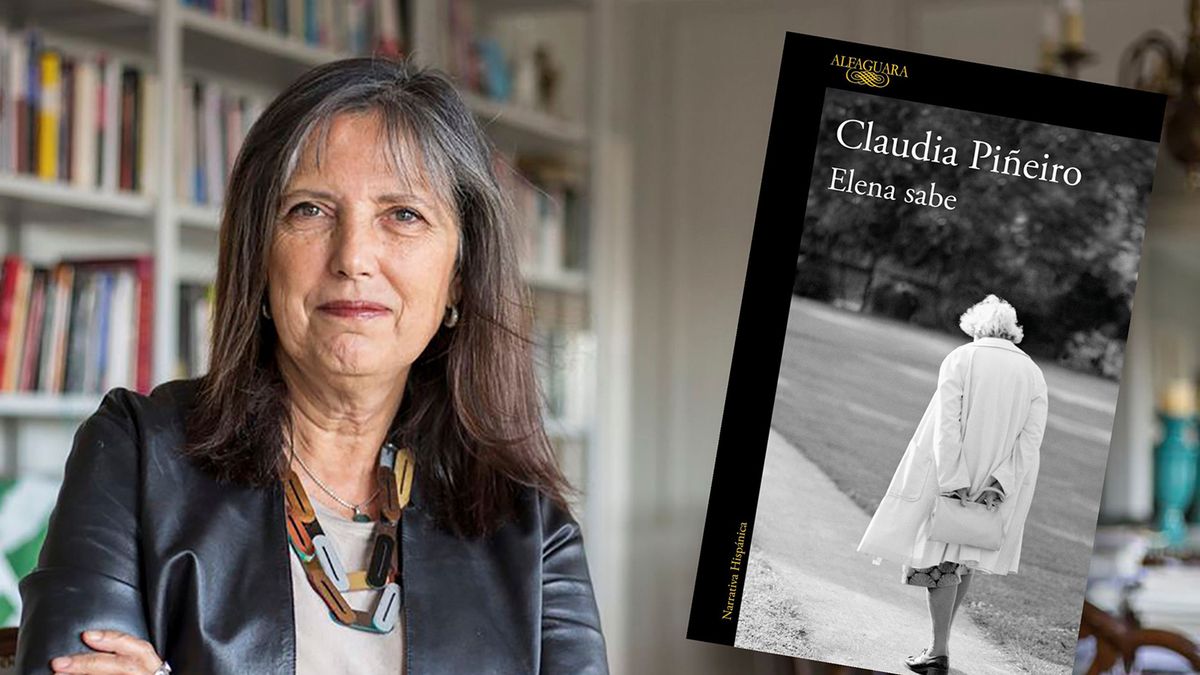
With A Little Luck now available in English, I’m catching up by reading the word of mouth sensation Elena Knows, which was shortlisted for the International Booker Prize in 2022 and won the Premio Pepe Carvalho Prize for crime fiction in 2019. According to the newspaper La Nación, Claudia Piñeiro is the third most translated Argentinean author, after Borges and Cortázar.

Claudia Piñeiro does seem like an interesting author to watch, taking the convention crime fiction genre and giving it a shake up by focusing on social issues and ethical questions, in particular related to the way women’s bodies have been and are used and abused.

Also reading this for #20booksofsummer23 and getting a head start on August’s #WITMonth, reading women in translation, because that’s my favourite corner of the reading world to be looking for literary gems!

What Does Elena Know That No One Else Seems to?

Elena has just learned her daughter Rita is dead. That it occurred on the same afternoon she booked Elena into her boyfriend’s mother’s salon for “the works”.

It was a rainy afternoon and this is the main reason Elena knows there was foul play. Because her daughter was afraid of lightning and because a mother just knows.

No one knows as much about her daughter as she does, because she’s her mother, or was her mother. Motherhood, Elena thinks, comes with certain things, a mother knows her child, a mother knows, a mother loves.That’s what they say, that’s how it is.

A Rigid Point of View

We see everything from her ‘eyes cast downward’ viewpoint, as she heads out one day to get answers from someone she hasn’t seen in 20 years.

Elena’s body is debilitated by Parkinson’s, so in between pills, she can move more easily.

Photo by RAFAEL QUATY on Pexels.com

Rita was there when he first explained the disease. Rita, who’s now dead. He told them that Parkinson’s was degradation of the cells of the nervous system. And both she and her daughter disliked that word. Degradation.And Dr Benegas must’ve noticed, because he quickly tried to explain. And he said, an illness of the central nervous system that degrades, or mutates, or changes, or modifies the nerve cells in such a way that they stop producing dopamine. And then Elena learned that when her brain orders her feet to move, for example, the order only reaches her feet if the dopamine takes it there. Like a messenger, she thought that day. So Parkinson’s is Herself and dopamine is the messenger.

The novel is told over the course of one day, in three sections: Morning (second pill), Afternoon (third pill) and Evening (fourth pill). The absence of the first pill in the narrative is a reminder as to how dependent she is on the medication and how controlling it is over her every movement, how it restricts her freedom, her vision, her ability to do anything. She is enslaved to those pills and that body.

As the pill begins to wear off, the risk of her becoming stuck increases, as her body becomes less manageable, there is no room for error or miscalculated judgement, if she is to make the journey she has planned. There are moments when she has to wait for the pill to take effect, these must be carefully timed.

Proprietary Attitudes Over Humans

She is off to get help in her attempt to investigate her daughter’s death, thinking she can use the ‘able body’ of someone she sets out on this day to meet. There is a reason why she believes that this person will help her, where no other can, and she will go to all kinds of lengths, despite the debilitating obstacles of her own body, in order to have an audience with them.

She won’t be able to do it by herself because she doesn’t have a body. Not now that the dethroned king and Herself are in charge. Even if she uses all the tricks in the book, she won’t be able to uncover the truth unless she recruits another body to help her. A different body that can act in her place. That can investigate, ask questions, walk, look directly into people’s eyes. A body that will obey Elena’s orders.

The novel explores this idea of how people impose or claim agency over another’s body and what they sentence them to, in so doing; or how they believe they “know” another just because they gave birth to or mothered them, or that God gave them some kind of right to be so knowing.

Elena’s body is in the end stages, but in her mind, she is still coming-of-age.

Claudia Piñeiro, Author

Claudia Piñeiro is best known for her crime novels, which are bestsellers in Argentina, Latin America and around the world. Four of her novels have been adapted and made into films.

As an author and scriptwriter for television, Piñeiro has already won numerous national and international prizes, among them the renowned German LiBeraturpreis for Elena Knows and the prestigious Sor Juana Inés de la Cruz Prize for Las grietas de Jara (A Crack in the Wall).

Her 8 episode series The Kingdom (2021) currently showing on Netflix, sparked controversy in 2021 for its portrayal of the Evangelical church in Argentina.

More recently, Piñeiro has become a very active figure in the fight for the legalisation of abortion in Argentina and for the legal recognition of writers as workers. Her fiction stems from the detective novel but has recently turned increasingly political, taking a broader, more critical gaze at corruption, injustice, community divisions and other dysfunctions of contemporary society. 

Further Reading

What’s On My Bookshelf: Claudia Piñeiro talks of books that inspired her career including The Little Virtues by Natalia Ginzburg, Fierce Attachments by Vivian Gornick, The Story of a Shipwrecked Sailor by Gabriel García Márquez, To the End of the Land by David Grossman, A Room of One’s Own by Virginia Woolf and The Buenos Aires Affair by Manuel Puig.

International Booker Prize Interview: Claudia Piñeiro, ‘I’ve always been very rebellious’

“I always begin writing my books with an image that acts like a trigger. I allow this image to steep in my mind, the characters then begin to speak, to reveal their conflicts. It’s like a tangled ball of wool that I unwind bit by bit. In the case of Elena Knows this image was a woman, a woman in her kitchen at home, sitting bent over in a chair waiting for the pill she’s taken to take effect so she can get up. This was the trigger image. I should also acknowledge that this diseased body of the character Elena is inspired by the body of my mother, who suffered from the same illness, Parkinson’s.  Claudia Piñeiro

Boulder by Eva Baltasar tr. Julia Sanches

Boulder is another portrait of a woman, the second of a triptych.

The narrator of Permafrost never quite cut the strings of family, choosing the path(s) of least resistance, while lamenting not having made more independent choices in her formative years.

Assured Prose Who Art in Metaphor

If the narrator of Permafrost is somewhat unsure, that of Boulder is more certain. The prose is assured, the narrative has pace, the protagonist moves towards what suits her, to freedom – until things change.

The avid descriptions and bold metaphors have me rereading and highlighting passages, like the creation of foam as a wave crashes on itself, they are as natural to the text as the paragraphs within which they roll.

An itinerant cook, she moves from place to place, island to ship, working in the kitchen. Life on the cargo ship suits her, she’s at home in turbulent seas, around those that neither desire nor reject her, a place where there was no need to pretend life had a structure. Rootless, drifting and free.

Freedom In Its Many Forms

I think I’ve discovered what happiness is: whistling the moment you wake up, not getting in anyone’s way, owing no explanations, and falling into bed at daybreak, body addled from exhaustion, and mind free of every last trace of bitterness and dust.

The boat sails up and down the coast of Chile, she rarely disembarks, the only temptation in Chaitén, for a hot shower, fresh linen, and a lurking lust for a lover. That’s where she meets Samsa.

I look at her and she fills every corner of me. My gaze is a rope that catches her and draws her in. She looks up, sees me. She knows.

They begin to see each other, though it is often months between visits. Her lover renames her Boulder.

Photo by Bren Pintelos on Pexels.com
She doesn’t like my name and gives me a new one. She says I’m like one of those large, solitary rocks in southern Patagonia, pieces of world left over after creation, isolated and exposed to every element. No one knows where they came from. Not even they understand why they are still standing and why they never break down. I tell her I’ve seen rocks like those in the middle of the ocean.

Compromise, Commitment, Cohabitation

Samsa leaves for Iceland and asks Boulder to join her, she says yes. Samsa makes decisions and Boulder adapts to them. She observes the island, the islanders, the things she doesn’t like, she finds work that gives her an escape. She observes the different way they love each other, the pull of the boats when she walks the dock alone at night.

There’s a restlessness. She starts her own business, a food truck, no boss, no employees, a small but significant and necessary freedom. Something of her own. A coping mechanism.

It’s Not An Elephant in the Room

Photo by Sindre Fs on Pexels.com

Then it happens. Samsa wants to have a baby, Boulder knows that refusing her will mean the end, so asks for more time.

The novel charts this turning point in the relationship, where one woman will become pregnant and give birth while the other tries to support and be part of something she does not feel.

It is an alternative navigation of an age old dilemma, seen through the lens of a queer relationship, a couple struggling with avoidance issues.

It’s not difficult to imagine where it is headed, or what might happen, when one person isn’t quite committed to the idea and desires freedom so strongly. Is the love of another enough sufficient when events propel their lives forward faster than the communication of important feelings around them?

Boulder’s observations and experience are like that of an outsider who can’t quite enter the familiar, of trying to overcome an obstacle of the mind, when the heart is resisting, when self destructive tendencies threaten to communicate what the voice has been unwilling or unable to.

Boulder was shortlisted for the International Booker Prize 2023.

Further Reading

Read an Extract from ‘Boulder’

Eva Baltasar International Booker Prize interview: ‘I wrote three versions of Boulder and deleted two’

“My protagonists are mirror images of myself, only more precise and always veiled. I try to discover who they are by writing, travelling to their darkest, most uncomfortable corners, which is like travelling to the darkest corners of myself, corners that are often repressed and at times denied wholesale. Being able to embark on this journey aboard a novel is as exciting as it is unsettling. It’s as if the novel had transformed into a caravel and the seas were vast but finite, teeming with monsters on the edge of the earth.” Eva Baltasar

Permafrost by Eva Baltasar tr. Julia Sanches

A Poet’s Prose

On the back page in the first sentence that describes the author, it says Eva Baltasar has published ten volumes of poetry. Permafrost is her debut novel, the first in a triptych which aims to explore the universes of three different women in the first person. It clear from the beginning this is the prose of an assured poet.

Julia Sanches triptic #1 catalan translation

I love the title, Permafrost. That deep, but necessary layer in the earth, cold and hard, it creates a foundation layer and stability, as long as conditions remain the same. Kathleen Jamie writes about it in her excellent essay collection Surfacing.

The narrator of Permafrost destabilises the reader on the opening page, with these opening lines…

It’s nice, up here. Finally. That’s the thing about heights: a hundred metres of vertical glass. I’ve settled on an edge, I live on this edge and wait for the moment when I’ll leave the edge, my temporary home.

Not only thinking about heights, but observing all the minutae that surrounds her. It seems like a suicide attempt, a theme that recurs throughout the 122 page novella, only she appears to be distracted by an ever present curiosity around the details of the new experience, something that seems incongruent with wishing to take a life.

I’ve settled on an edge, I live on this edge and wait for the moment when I’ll leave the edge, my temporary home.

Living On the Edge Creates Curiosity

The Thomas Bernhard epigram warns us ‘To be born is to be unhappy, he said, and as long as we live we reproduce this unhappiness.’

So I am surprised by the humour. Despite her melancholy nature and existential awareness, the living in the shadow of family, she makes us laugh.

She tells us her family all self-medicate. Not her, she prefers the edge.

Not for me though – best to keep moving wildly to the edge, and then decide. After a while, you’ll find that the edge gives you room to live, vertical as ever, brushing up against the void. Not only can you live on it, but there are even different ways of growing there. If surviving is what’s it all about, maybe resistance is the only way to live intensely. Now, on this edge, I feel alive, more alive than ever.

A promising child, her first crisis is graduation, after five years, there’s nowhere to go, few clues as to how to put this learning to use. So she lives in her Aunt’s apartment and rents out rooms to different women, providing herself an income and an effortless source of lovers. She spends her days reading, observing, pondering death, too curious to pursue it.

Birth and Children are Grounding

Photo by Pixabay on Pexels.com

Her meandering is interrupted by her pregnant sister and her mother, their insistence to stay close, involved, drawing her back in, keeping her that person she was. The Aunt’s phone call, she’s selling the apartment.

An au pair in Scotland, a marriage proposal in Belgium, childhood memories, fantasies, churning through relationships, occasionally one that lasts a chapter, dialogue with the sister, the mother.

A mole grows and changes form, she makes a doctor’s appointment then cancels it for a year, then follows up.

Life Can Be Insistent

Each chapter is less than two pages, sometimes the narrative skips a chapter and picks up the thread again later on. It’s an inner voyage of discovery and an outer journey of experiences to unravel what was formed by others and discover the essence of, to know who she is. As that realisation occurs, life throws an even greater challenge and responsibility her way.

I’ve realised I know myself by heart…

It is a unique work, recognisably the work of a poet, unruly, impulsive, it makes light of heavy subjects, never quite proselytising, both giving into and resisting convention, forging a way through, trying different things on, breaking out and being pulled back in. One is left wondering if she is floating with the tide or pushing through it.

Permafrost received the 2018 Premi Llibreter from Catalan booksellers and was shortlisted for the Prix Médici for Best Foreign Book in France (2020).

Next up, book 2 in the triptych, Boulder, which was recently shortlisted for the International Booker Prize 2023.

20 Books of Summer 2023

Cathy at 746 Books is hosting the annual 20 Books of Summer challenge, one I have never participated in, but I decided this year that I’m going to try and make space on the bookshelves and donate more books in September to a local vide grenier in Ansouis, Vaucluse, where there is always a large sale of English books.

Below are the 20 books I am will read from this summer, from now until the end of August. I’m predominantly a mood reader, however August is Women in Translation #WITmonth, so I have included a few titles for that. Here are the books on my list:

women in translation summer reading

Other People’s Books, Their Must-Reads

The pile on the left are books that have been lent or given to me by friends, these are books that when I see them on the shelf, I think, I must hurry up and read that, because I need to let my friend know what I thought of it. They are promising, because they were loved by the person who gave it to me! So come on Claire, hurry up and read them, there are potential gems hiding in here!

The title link is to the description in Goodreads, when I’ve finished, I’ll add a link at the end to my review.

  1. Nine Perfect Strangers by Liane Moriarty – I’m starting here today and it’s already given me a few laugh out loud moments. Nine people attend a remote health spa, somewhere north of Sydney, Australia, they’ve all responded to the offer to change their lives in 10 days, but who exactly is this intriguing person who is going to turn their lives around? On verra! – my review
  2. The Maid by Nita Prose – a friend bought this as an airport read and it was the the Goodreads Winner for Best Mystery & Thriller in 2022, it’s described as a locked-room mystery and a heartwarming journey of the spirit, exploring what it means to be the same as everyone else and yet entirely different. – my review
  3. The Tea Girl of Hummingbird Lane by Lisa See – hugely popular author of historical fiction, often connected to China, this novel is set in a remote mountain village tea plantation, exploring the rituals and traditions of the Akha people and the effect of a stranger in their midst. It promises strong and complex female characters and insights into little known aspects of Chinese culture. – my review
  4. All Are Welcome by Liz Parker – this romantic comedy novel was given to me by a friend and it was written by her cousin, got to support family ventures! A darkly funny novel about brides, lovers, friends and family and all the secrets and skeletons in the closet that come with them. Described by one reader as a hybrid ‘beach read’, character-driven, dysfunctional family story.
  5. Purged by Fire: Heresy of the Cathars by Diane Bonavist – a little known work of historical fiction about the struggle of the Cathars of the Languedoc region in Southern France (who rejected the teachings of the Catholic church) in the 13th century, and the papal directive to to root them out as they were deemed heretics, to confiscate property, and burn the unrepentant at the stake. Here is a story of three people trapped in the fatal complicities of that Inquisition.
  6. Dreams of Trespass by Fatema Mernisse – tales of a girlhood harem, this is a memoir of a young girl’s growing up in a French Morroccan harem in Fez, set against the backdrop of WWII.
  7. The Promise by Damon Galgut – this won the Booker Prize in 2021 and was lent to me by a friend, despite me saying I wasn’t going to read it, the premise sounds very much like the incredible South African novel Agaat by Marlene van Niekerk that I read in 2015, but I need to give this back, so…
  8. My Name is Resolute by Nancy E.Turner – this author wrote one of my favourite historical fiction trilogies about a pioneer woman who sought a living in the harsh, untamed lands of the Arizona Territory circa late 1800’s. They were based on the author’s great grandmother Sarah Prine; These is My WordsSarah’s QuiltA Star Garden.  This new book, begins in 1729, the heartfelt story of a woman struggling to find herself during the tumultuous years preceding the American Revolution.

Women in Translation #WITMonth

The pile on the right are all books I really want to read soon and they are a mix of works by women in translation and other books that I feel will be easy to pick up and get lost in, not overly challenging. I think I may be being rather ambitious as not only am I working throughout the summer, I have visitors coming and going throughout most of July and August. But there is a sense of freedom that summer brings and it is light so late, I’m going to create the list and then just see what happens.

  1. Fresh Dirt From the Grave by Giovanna Rivero (Bolivia) tr. Isabel Adey (Spanish) – gothic short stories from Latin America, this is part of my annual subscription to Charco Press. Six tales of a dark beauty that throb with disturbing themes: the legitimacy of revenge, incest as survival, indigenous witchcraft versus Japanese wisdom, the body as a corpse we inhabit. Rivero’s stories pierce the reader like a wound, but in the end also offer possibilities of love, justice and hope.
  2. Elena Knows by Claudia Piñeiro (Argentina) tr. Frances Riddle (Spanish) – a word of mouth sensation and International Booker Prize shortlist (2022) I’ve been wanting to read this for ages, so added it my 2023 bundle from Charco. The author has another book coming into English in July this year A Little Luck, so I may even get to that title this summer. – my review
  3. Boulder by Eva Baltasar (Spain) tr. Julia Sanches (Catalan) – shortlisted for the International Booker (2023) Eva Baltasar demonstrates her preeminence as a chronicler of queer voices navigating a hostile world― in prose as brittle and beautiful as an ancient saga. – my review
  4. Permafrost by Eva Baltasar (Spain) tr. Julia Sanches (Catalan) – having learned Boulder was #2 of a Triptych, I’ve added #1 to the list. Full of powerful, physical imagery, this prize-winning debut novel by acclaimed Catalan poet Eva Baltasar was a word-of-mouth hit in its own language. It is a breathtakingly forthright call for women’s freedom to embrace both pleasure and solitude, and speaks of the body, of sex, and of the self. There’s a third book Mamut not yet translated. – my review

My Summer Reading

best summer reads
  1. My Fourth Time, We Drowned by Sally Hayden – this non-fiction, journalistic masterpiece is chronicle of the plight of refugees that find themselves in Mediterranean water’s and the implicated political decisions that have made their lives that much worse. I came across this after reading Leila Aboulela’s River Spirit, historical fiction set in Sudan. Sally Hayden has written about the situation in Sudan today. Her book won the Orwell Prize for Political Writing 2022 and is described as a must read. #humanrights – my review
  2. The Coroner’s Daughter by Andrew Hughes – I should have read this in April, it was the One Dublin One Book choice for 2023. Last year we read the excellent Nora by Nuala O’Connor about the lives of Nora and James Joyce, this year it’s historical fiction set in 1816 Dublin, about a young lady sleuth operating at the dawn of forensic science.
  3. Promise at Dawn by Romain Gary – I have this in English and French and my neighbour keeps telling me to read it,I know this is going to be a gem, it is the story of the love for his mother that was his very life, their secret and private planet, their wonderland “born out of a mother’s murmur into a child’s ear, a promise whispered at dawn of future triumphs and greatness, of justice and love.”
  4. Homesick by Jennifer Croft – another title from Charco Press, not translated, but the author is a translator. This is a work of autobiographical fiction, longlisted for the Women’s Prize for Fiction.
  5. The Island of Missing Trees by Elif Shafak – I’ve read 4 of her novels The Forty Rules of Love, The Bastard of Istanbul, Three Daughters of Eve and Honour and one work of nonfiction The Happiness of Blond PeopleA Personal Meditation on the Dangers of Identity. I’m always interested in the work of Turkish writer Elif Shafak, who writes from the perspective, and comes from, the place where East meets West.
  6. Daughter of the King by Kerry Chaput – set in La Rochelle, France 1661 – historical fiction based on the true story of the French orphans who settled Canada, a story of one young woman’s fight for true freedom.
  7. The Amateur Marriage by Anne Tyler – far too long sitting on my shelf, I didn’t even realise I had this novel when I first read Tyler’s Ladder of Years. – my review
  8. End of Story by Louise Swanson – and here is the wonderful Louise Beech, whose novel How To Be Brave was such an unforgettable experience; this novel sees her using a new pen name for a different genre, a novel that is making a bit of a splash, it came about after a tweet made by a British politician (now the Prime Minister) suggested that people in the arts ought to retrain.

“This got me trying to imagine about a world without the arts. Without stories.”

Have you read any of these titles above, any recommendations, suggestions as to which to read first? Do you have summer (or winter) reading plans? Let me know in the comments below.


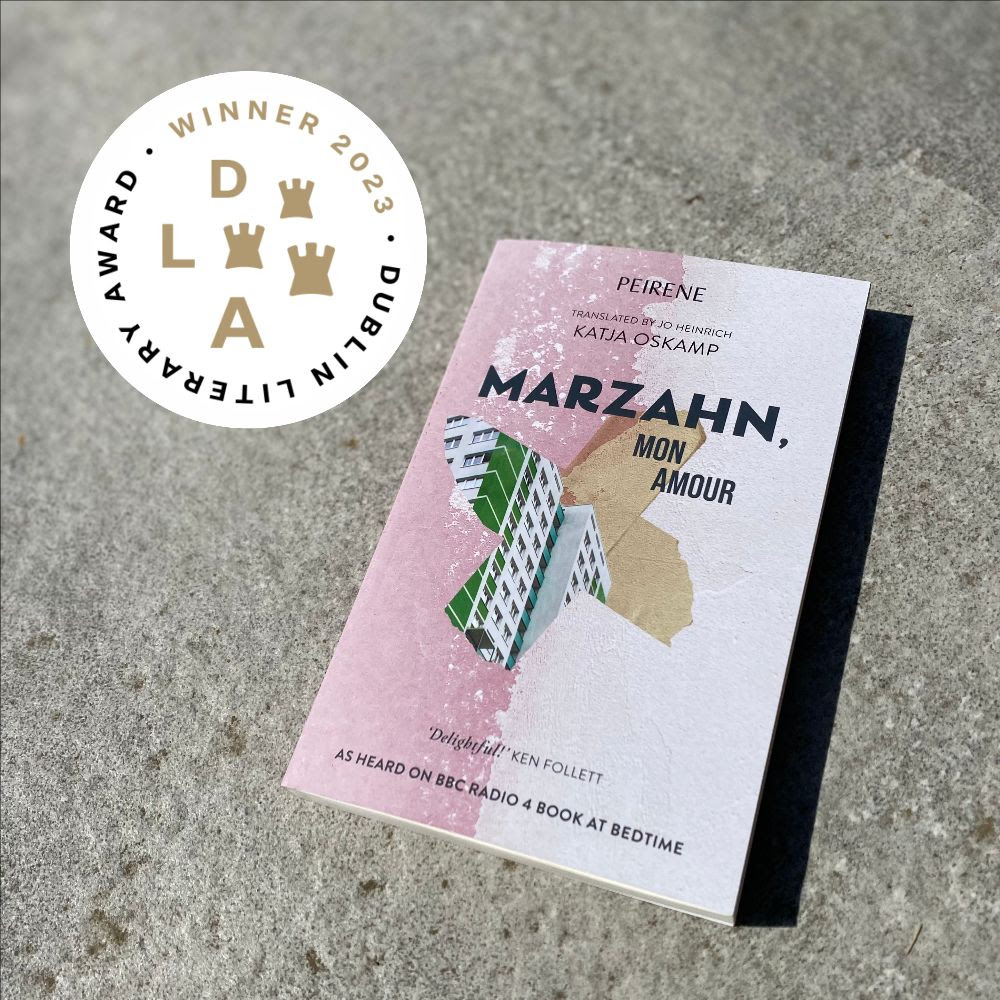
Dublin Literary Award Winner 2023

The wonderful Dublin Literary Award 2023 has announced their winner and I am pleased to learn it is one I have not only read, but it was one of my Top Fiction Reads of 2022

The Dublin Literary Award is unique in that it’s books are nominated by libraries from cities around the world. This year 84 libraries from 31 countries across Africa, Europe, Asia, the US, Canada, South America, Australia, and New Zealand made their nominations, the judges selected a shortlist of six novels and tonight they have awarded the prize to

Marzahn, Mon Amour by Katja Oskamp, translated by Jo Heinrich (read my review here) :

The 2023 Judging Panel, led by Professor Chris Morash of Trinity College Dublin, including Gabriel Gbadamosi, Marie Hermet, Sarah Moss, Arunava Sinha and Doireann Ní Ghríofa (author of my One Outstanding Read of 2020), commented:

 “Every so often, you come across a novel whose simple, direct honesty knocks you sideways.  There is an unaffected humility and generosity about Katja Oskamp’s Marzhan, Mon Amour that speaks to the value of community and to the dignity of ordinary lives. ‘The love I have inside me has turned to liquid,’ concludes the novel’s narrator, ‘and now runs into the most unlikely places’.  To read Marzhan, Mon Amour in Jo Heinrich’s translation from the German is to feel Katja Oskamp’s all-encompassing embrace of her world.”

Marzahn Mon Amour Katja OskampMarzhan Mon Amour is a memoir-ish novel, collective history and a character study of a group of people living in and around a multi-storied communist-era plattenbau prefab apartment building in the working class quarter of Marzahn, East Berlin, told through the eyes and ears of a woman facing her middle years.

“The middle years, when you’re neither young nor old, are fuzzy years. You can no longer see the shore you started from, but you can’t yet get a clear enough view of the shore you’re heading for. You spend these years thrashing about in the middle of a big lake, out of breath, flagging from the tedium of swimming. You pause, at a loss, and turn around in circles, again and again. Fear sets in, the fear of sinking halfway, without a sound, without a cause.”

The narrator is a 45 year old woman (referred to in some articles as the author herself), whose partner is ill, requiring her to abandon her career as a writer and take up something else. She retrains as a chiropodist and joins Tiffy who offers beauty treatments and massage and Flocke who does nails, in a salon at the foot of an eighteen storey building.

If the opening paragraph quoted above, sounds melancholy, know that it represents a turning point.

Marzahn, Mon Amour is a tender reflection on life’s progression and our ability to forge connections in the unlikeliest of places under the the most unassuming circumstances.

I highly recommend you read it! A wonderful, life-affirming, inspirational read.


Of Cattle and Men by Ana Paula Maia tr. Zoë Perry

Charco Press Brazilian Literature novellaBrazilian author, Ana Paula Maia’s Of Cattle and Men, was an interesting and confronting story that in parts was hyper realistic in a visceral way, and fable-like in other ways. It is the fourth book I’ve read this year from the Charco Press Bundle 2023.

Set in a place where there is a one-man owned slaughter-house, not far away a hamburger processing plant, the author creates a small world that concerns men and their relationship to meat and their relationship to the beings who provide it.

Two enclosures, one for cattle and one for men, standing side by side. Sometimes the smell is familiar. Only the voices on one side and the mooing on the other distinguish the men from the ruminants.

Humanity has been able to consume meat in part because they are separated from the process of how to turn something sentient into something edible.

Man’s Need for Ritual

Here, we meet Edgar Wilson, stun operator, who has ritualised his occupation and believes that it has an effect on the animal.

Edgar picks up the mallet. The steer comes up close to him. Edgar looks into the animal’s eyes and caresses its forehead. The cow stomps one hoof, wags its tail and snorts. Edgar shushes the animal and its movements slow. There is something about this shushing that makes the cattle drowsy, it establishes a mutual trust. An intimate connection. With his thumb smeared in lime, Edgar Wilson makes the sign of the cross between the ruminant’s eyes and takes two steps back. This is his ritual as a stun operator.

He has a dark history and holds little compassion for men who are carelessly cruel. It brings out his own.

Milo decides to keep quiet. He knows Edgar Wilson’s loyalty, his methods, and he knows that Zeca really was useless. No one had reported him missing, and if anybody came looking for the boy, he would simply say he never showed up for work again. That he doesn’t know where he’s gone off to. Just as no one questions death in the slaughterhouse, the death of Zeca, whose rational faculties were on par with the ruminants, would surely be ignored. Senhor Milo knows cattlemen, he’s cut from the same cloth. No one goes unpunished. They’re men of cattle and blood.

Recently the animals waiting in the holding area have become unsettled and strange, unexplained happenings have been occurring. The men stay up into the night to investigate and try to find the suspected predator that is disturbing the animals and worse.

How Language Eviscerates and/or Exposes

I thought this novella was quite incredible and it evoked all kinds of memories and thoughts, that may not be like many other readers.

Firstly, the realism of the slaughter house. Although this novel concerns what seems like a small scale operation, the attention to detail in its execution and the evocation of all the senses in that environment immediately reminded me of memories I would rather forget.

When I was a university student, one summer I needed to find a job allied to the agricultural industry. I wrote to a family friend who was a ‘stock agent’ asking if he knew of an opportunity. He suggested a “freezing works” (an interesting choice of name used in New Zealand and Australia to describe a slaughterhouse at which animal carcasses are frozen for export) and so I began my summer working in this enterprise’s pay office, transferring data from daily timesheets into a ledger that would eventually be input into a computer to generate their pay. Far from the action, except that one of my roles was to go and collect those time sheets from the different departments. And that is where and how, I witnessed, with every one of my senses, everything.

Benevolent Bovines and Other Sentient Beings

of cattle and men Ana Paula Maia

Photo by Pixabay on Pexels.com

Secondly, the question of what an animal intuits and feels. Being raised on a 1,600 acre sheep and cattle farm, I can acknowledge that as humans, we are conditioned to accept certain realities and often made to participate in them, until the age of free will. Within childhood, in my case, we occasionally had access to a ‘farm animal’ as a pet – the relationship building that can occur between the human and the animal is undeniable, but equally, not every human will allow that relationship to occur.

Our pet lambs (after the annual school pet day) were put back into the flock; my pet calf, I rescued from one fate (slaughter), to have her destined for another (to become the ‘house cow’), providing daily milk to the family; she could therefore keep her offspring for six months. There was on occasion, an attempt to ‘mother’ one newborn (orphan) onto another, an act that could result in the false mother killing the strange newborn, despite it being dressed in the skin of her own dead lamb.

There is indeed a knowing.

For a few moments, Edgar Wilson yields to the late afternoon sun that has not yet fully set, but that is rushing headlong into a moonless, starless night. He knows how to listen in silence, even when others are just sighing or snorting. Life in the country has made him like the ruminants, and being a cattleman, he is able to strike a perfect balance between the fears of irrational beings and the abominable reverie of those who dominate them. He sinks two fingers into the paint can and marks the foreheads of the four cornered cows.

In Of Cattle and Men, Ana Paula Maia shows man’s inhumanity to man and his denial that an other meat-producing species might have awareness, consciousness or feeling. So the men are confused by what is occurring and they look only towards what they know, that which man is capable of; therefore they suspect other men, each other. They disbelieve what is in front of them, what they see.

Because what if those animals had agency?

Certainly not my usual kind of read, but I read this novella in one sitting, intrigued by the premise and captivated by the writing. Brilliantly portrayed, evocative of place and confronting to humanity’s blindness, I’d definitely read more by Ana Paula Maia.

Ana Paula Maia, Author

Ana Paula Maia (Brazil, 1977) is an author and scriptwriter and has published several novels, including O habitante das falhas subterráneas (2003), De gados e homens (2013), and the trilogy A saga dos brudos, comprising Entre rinhas de cachorros e porcos abatidos (2009), O trabalho sujo dos outros (2009) and Carvão animal (2011). Her novel A guerra dos bastardos (2007) won praise in Germany as among the best foreign detective fiction.

As a scriptwriter she has worked on a wide range of projects for television, cinema and theatre. She won the São Paulo de Literatura Prize for Best Novel of the Year two years in a row: in 2018 for her novel Assim na Terra como embaixo da Terra, and in 2019 for Enterre Seus Mortos.

The Remains by Margo Glantz tr. Ellen Jones

How to describe this incredible literary masterpiece. A lyrical elegy of tempo rubato.

A Symphony of Reluctant Grief

Translated Allen Jones Mexican Jewish literatureA divorced woman, Nora Garcia (a cellist), returns for her deceased ex-husband Juan’s, (a pianist and composer) funeral; back to a Mexican village from her past, through the art and music they played and navigated together.
A lyrical and rhythmic form of elegy that, rather than speak about the person who has passed, we experience something of a past version of that person; they are almost present, seen through the distorted lens of a reluctant, grieving ex. We can almost hear his continuous and relentless explanations to his often-time audience of one.

It felt like listening to a symphony in words, as like with music, thoughts and conversations repeat with slight changes over time.

Revelatory thoughts of the woman who knew a man best, observing the body, imagining the isolation and neglect of a heart, that brought this death about. The incantation going into detail of the functions and dysfunctions of the heart, both as the pump that irrigates the body and the metaphor for feelings of love and neglect.

The heart has impulses that reason doesn’t know.

A Different Kind of Garden Party

El rastro Margot GlantzThe novel is set in the present, on the afternoon that the body is displayed in the coffin in a room, and our narrator is a guest like many others, who aren’t sure to whom, they ought to offer condolences. She overhears snippets of conversations, adding to the cacophony of her own reflections.
Its not like death goes around whispering in our ear, though, does it? It just arrives, suddenly, when we least expect it. Silence falls and I move away – he’s right, I think, death doesn’t whisper in our ear, it just arrives, alone, without warning us in advance. I don’t care how simple dying or anything else is for that matter, even if it was that simplicity that made his heart explode, made it shatter into pieces (mine too), yes, life, the absurd wound that is life, yes, it’s true, the heart is only a muscle that irrigates the body, keeping it alive, a muscle that one day fails us.

Bach, Beethoven, Gould & Open Heart Surgery

Margot Glantz The Remains

Photo by Gimmeges on Pexels.com

Scenes and topics of conversation from the past circulate through her mind as she observes all around her. Much of it is about music, about their preferences, their differences told through how revered pianists played the music of Bach, Beethoven and more.

In her grief, she writes intense descriptions of a person talking to her, observing visual elements, lips moving, facial gestures, drifting off and away, out of her own body, hearing nothing of the tedious chatter. Her thoughts range from music, pianists, the genius castrati voices of eighteenth century Italian opera, to the intricacies and origins of open-heart surgery.

Grief arrives unbidden, tears overflow, the intellect refuses it, reprimands her, convinces her she doesn’t care. The body does not comply. She recalls evenings spent listening to great pianists, their heated arguments, wondering if it was due to their diametrically opposed ways of seeing the world.

Though I don’t profess to know too much about the world of classical music or the work of all the names mentioned – the way Glantz takes the reader on a voyage through these subjects, venturing into them in depth, returning again in brief, then jumping into subjects of the heart – was compelling to read, in a mesmerising way.

Her reassessing of her relationship, observing the many people come to farewell the man she doesn’t know whether she loved or despised, while in the throe of grief, bewilderment and loss, showing us how lives intersect and continue to have a presence in the mind of another, long after separation.

“Life is an absurd wound: I think I deserve to be given condolences.”

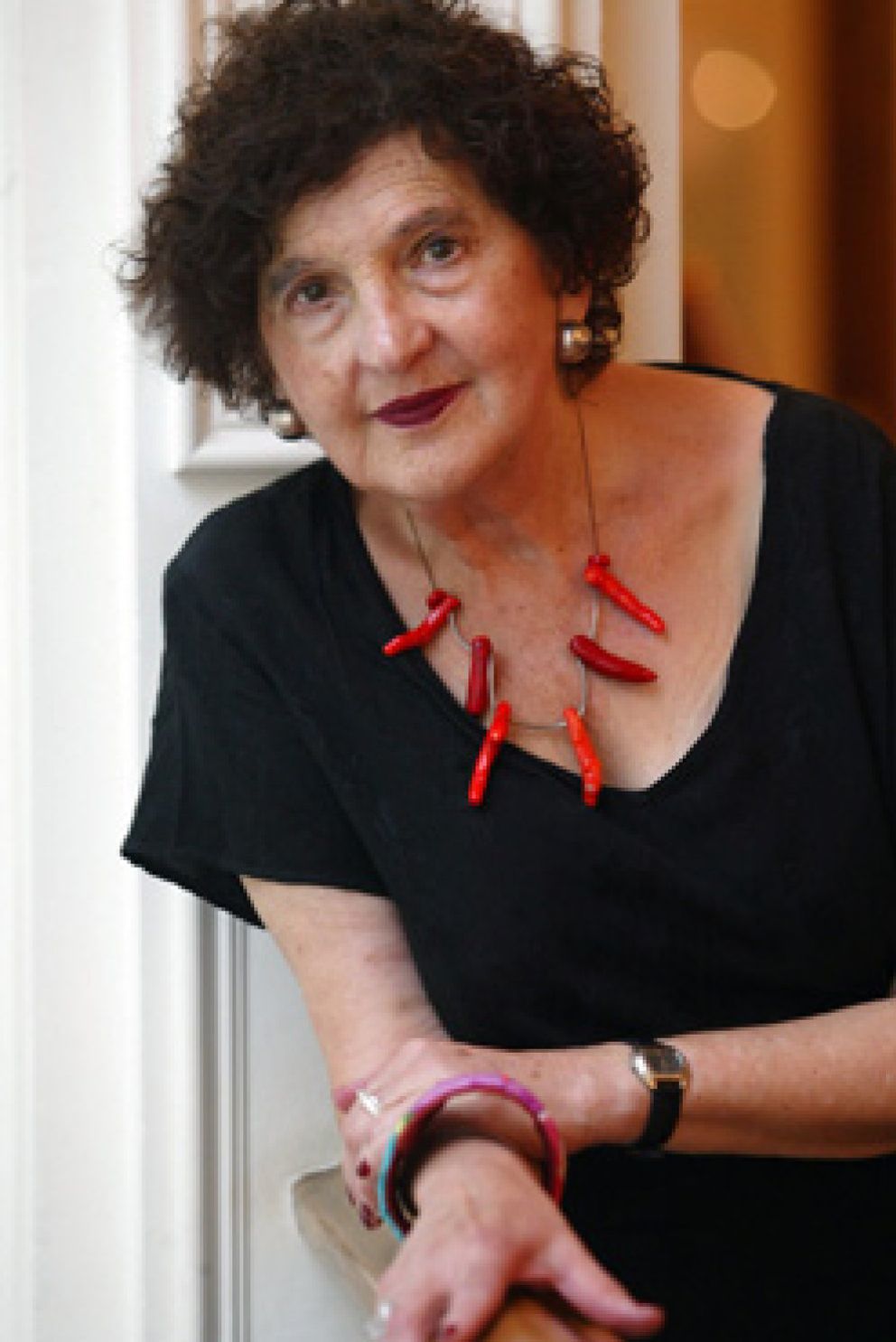
Margo Glantz, Author (1930- )

Margo Glantz fused Yiddish literature, Mexican culture, and French tradition to create experimental new works of literature.

Margot Glantz Author MexicanA prolific essayist, she is best known for her 1987 autobiography Las genealogías (The Family Tree), which blended her experiences of growing up Jewish in Catholic Mexico with her parents’ immigrant experiences. She also wrote fiction and nonfiction that shed new light on the seventeenth-century nun Sor Juana Inés de la Cruz. Among her many honors, she won the Magda Donato Prize for Las genealogías and received a Rockefeller Grant (1996) and a Guggenheim Fellowship (1998).

Glantz demonstrates tremendous versatility as an individual and as a writer in the creative ways in which she blends her multiple cultural, religious and literary affinities. She unabashedly resists classification or categorisation of any kind and therefore identifies herself neither as a Jewish writer nor as a composer of personal narrative, nor as a Sor Juanista, the term used to refer to those scholars who devote themselves to the study of Sor Juana Inés de la Cruz. Belonging to no single one of these groups or schools of thought, she is an enigmatic amalgam of all of them. Glantz’s multiplicity is what makes her unique, and failure to recognize any component of her being would diminish her diversity.

Despite being one of the most iconic figures in Latin American literature, her work is little known in English. Charco Press now bring her work to a new audience with this excellent translation by Ellen Jones.

The Remains was longlisted for the Warwick Prize for Women in Translation 2023.