
 A Memoir of Finding Home Across the World
Living in Sweden and remembering nothing of her native language Portugese that she spoke until she was adopted at the age of eight, Christina Rickardsson, now 32-years-old is about to embark on her first trip back to the country of her birth to reconnect with elements of that initial period in her life, vividly recalled.
Recurring nightmares of her childhood awaken something in her sub-conscious, creating an emotional/ spiritual crisis that she addresses by revisiting .
I watched my eyes fill with tears as I realized that the little girl who had run for her life had just kept on running. I needed to stop running and once and for all, for my own sake, process what had happened.
A dual narrative flips between the present as she returns to Sao Paulo with her friend Rivia, who will act as her translator and the past where she shares the vivid memories and equally strong emotions of her early childhood years.
She reviews the adoption papers that have been locked in a safe for the past 24 years.
I’ve never felt the need to find out who I am, where I come from, or why I was abandoned. I know who I am, where I come from; most of all I know that I wasn’t abandoned. Kidnapping might be too strong a word to use for how our adoption transpired, but sometimes that’s what it felt like.
Some of the things she reads disturb her because they don’t ring true, she retains strong and tender feelings of love towards her biological mother and recalls the trauma of their separation but has never understood why. Her story is written in a desire to restore her mother’s name and tell their truth as she remembers it, to fill in the gaps in her knowledge and find out if her mother is still alive.
She recalls details of living in a forest cave in the Brazilian wilderness with her mother, of surviving on the streets of Sao Paulo and her time in an orphanage before she and her almost 2-year-old brother are adopted by a Swedish couple and begin a new life there.

Map from traditional symbols of culture and the nature of Brazil
She recalls her friendships with other children when they live in the streets, special moments, terrifying incidents and the strong emotions they evoke are equally remembered, her instinct for self-preservation is strong and her reactions to things spill over into her new life in Sweden, where they are often deemed inappropriate.
On some level, I began to understand that people, especially grown-ups, weren’t interested in the truth but rather in a truth that suited them. They only wanted to know about things that made stuff easier for them. It didn’t matter that I was walling off part of myself, that I was turning into someone else.
The relationship she remembers with her mother from childhood is tender, the bond strong, she defends it, and holds tight to the memories. There is a respectful appreciation for her Swedish family and clearly a difference between her feelings and those of her brother, who recalls little of his life in Brazil before their adoption.
There’s an undercurrent of sadness in this accomplished memoir, of a woman who is neither one thing nor the other, who can never let got of who she is, but must continue to live as that whom she has become.
She repeats often a kind of mantra, that life for her is not about finding herself, but about creating herself. And yet the two go hand in hand, as her story so adeptly shows, though she was separated from her mother, her country and culture, she lived in it long enough for something of it to have sunk deep into her psyche, which is not the case for children adopted at birth, or as toddlers. Many search to find out what she already knew, before they can freely go on to ‘create’ themselves anew, or to realise that they can be who they are, because they can make peace with the mystery of their unknown heritage.
I felt so much rage growing up that it frightened me. It filled me and destroyed me. I felt it, but I didn’t know how to handle it, so I smiled and laughed even more and did well in school…I had walled off my true self.
 Eventually she finds a way to navigate the two selves by turning the focus outward, towards helping others, addressing the ache of having had to suppress her true self for so long.
She shares one of the more troubling stories of her childhood in a 15 minute TED Talk below and the inspiration behind the words in the title, Never Stop Walking.
Further Reading/Listening
Christina’s TEDTalk : The Lottery of Life
Article, 25 Oct 2018 Humaniam.org : Children, the main victims of violence and crime in Brazil
 Happiness opens with the tale of a wolf hunter in the US called in to track a wolf that is believed to have been killing sheep. He observes the surroundings, lies in wait, makes the kill, collects his bounty and then returns to lie in wait for the she-wolf he knows will come out after three days. Two species. Surviving.
 The fox lives beside the human but inhabits a different time zone, most humans are little aware of their presence as their nocturnal meanderings cease the minute humanity awakens and begins to disturb a territory that belongs more to them in the small hours of the night.

 Sing, Unburied, Sing is set in the same Southern US community, putting us amidst a struggling mixed race family, a young black woman Leonie, who fell in love with Michael from a racist white family implicated in a tragedy that affected her family. In its telling, it traverses love, grief, terminal illness, addiction, prejudice, dysfunctional parenting, hope and survival, the effect this mix has on everyone touched by it, the painful and the poignant.
 There is a reference to her novel Salvage The Bones, as the family return from their road trip, they pass a young couple walking a dog, it is the brother and sister, Skeetah and Eschelle, from the neighbourhood, protagonists of that earlier novel. I was curious to know if the dog was related to China, an unresolved thread left hanging from her earlier novel. I was delighted to encounter them.
 I bought a second-hand copy of Two Old Women, after it was recommended by someone whose reading I follow as one of her favourite books, I remember it being an interesting list of books that I had never heard of and this small book, an Alaskan legend of betrayal, courage and survival intrigued me enough to get it.
 The People Velma Wallis writes about in this legend, roamed the land and rivers around the area she was born, following trails that ensured they had access to the necessary resources to survive the changing seasons. They depended on the annual salmon runs and large game as well as small animals, using their skins for warmth.
 In the group there are two old women whom the People care for, Ch’idzigyaak and Sa’, younger men set up their shelters, younger women pull their possessions, however they are both known for constantly complaining of their aches and pains. One day, the chief makes a sudden announcement, one that the group has heard of from their stories, but never witnessed within their own band.
 And so begins a challenging journey, a reawakening and discovery of talents that had lain dormant from lack of use, as the two women set out to prove their People wrong and more, to set an example, though no one is there to witness it.
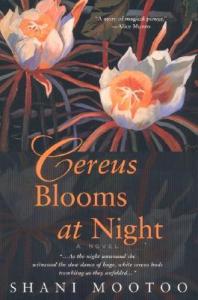 It is a novel narrated in parts, each part focusing on a character(s) who were influential in her life, including the young man who never knew her until this day, the one who became her confidant, perhaps the first man she ever trusted, after all that had passed beforehand. Much of it is told as Mala slips into memories of herself as child, reliving it.
 As Tyler gained her trust, Mala’s story is revealed to us through him and through the two visitors she received, who on her first day there, unable to see her, left a pot with a cutting of the fragrant night-blooming cereus plant, a gift that clearly delighted her, a symbol of fragrant, nurturing oblivion.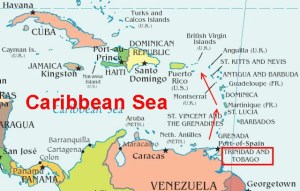
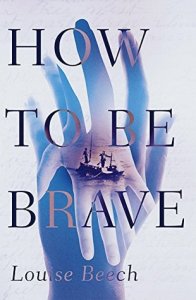 How to Be Brave isn’t just a book you read, it’s a story that you feel like you are living while reading, right down to sharing the symptoms and emotions of some of its characters. I didn’t just read this book, I experienced it, developed symptoms and was grateful for medicine and the time to rest and recuperate from it. But fear not, it’s totally worth the ride.
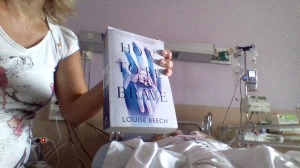 Louise Beech has created a page-turning, moving story that on Day 2 of reading, which was also Day 2 post-op for my daughter who also has Type 1 diabetes (diagnosed at 9 year-old), but who is recovering currently from spinal surgery to correct a scoliosis related curvature, I began to develop symptoms of headache, dehydration and my body ached all over. I wasn’t sure if it was sympathetic pain for my daughter or for Colin, I couldn’t read, just as Colin and the men couldn’t always find the energy to keep a lookout and gave into sleep, and so did I, after a quick trip to the pharmacy for medicine and water, so dehydrated! Miraculously, the next day I was completely fine.






 Word by Word