
A Year of Life on the Great Beach of Cape Cod
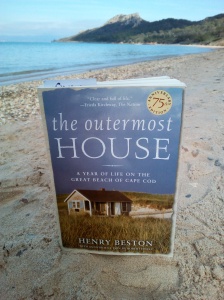
Reading Beston on Plage de Notre Dame, Porquerolles Island, France
Originally published in 1928, and still in print today, this is perhaps one of the early examples of literary nature writing, an account of a year spent living among the sand dunes of the great peninsula of Cape Cod, living closer to the ‘rough sea nature’ in all her aspects than most humans do and observing all that passes through and by, using all the senses.
Having planned to stay two weeks in his newly built house on the sand dunes, Henry Beston’s fascination with the changes of the dunes, the tides, the sky, the migration of birds and butterflies keep him captivated; thus he keeps extending his stay, observing the minutiae of life and nature, writing it into this book.
I first came across the title while reading one of my favourite nature writing books by Rachel Carson, Under the Sea-Wind, in which she mentions this volume as one of her inspirations.
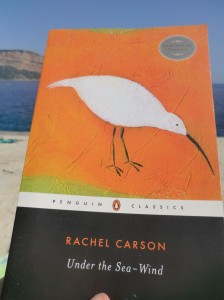 And though I enjoyed Henry Beston’s book considerably, Carson’s book for me left a greater impression, for who could not forget being made to see life through the eyes of the very creatures Henry Beston observes. Carson chose to narrate the three parts of her book from the point of view of a sanderling (bird), a mackerel, and a migrating eel. If you haven’t read it and loved this book, I am sure you will enjoy and appreciate Rachel Carson’s personal favourite of all the books she wrote, it is the perfect companion to The Outermost House.
I got the impression Henry Beston may have been something of an insomniac, or perhaps it was because during winter he abandoned the cold bedroom and slept in his front room, where there was the warmth and then cooling of the fire and the changing light of the seven windows he’d included in his simple design. Often throughout the book, he wakes in the night and so making the most of it, seeing these awakenings as an unwitting opportunity, he dresses and goes out to see what’s up. And though we might think that one night must surely be just like another, he always finds something new to observe, reflect on and write about.
He was often visited by the “surfmen” who patrolled the coastline, making sure he’d survived the latest storm, men he said knew the conditions of that coast like no other, not as sailors, but like those who are land based who watch and develop their knowledge and instinct as he learned to, observing how quickly the elements could change and become violent, showing little compassion for floating man-made vessels that attempted to navigate its peripheries.
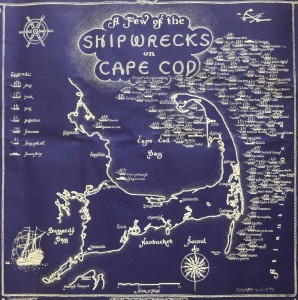 It was the late 1920’s and no doubt a year like any other, with its share of wrecks, disasters. The pragmatic attitudes of the locals, as likely to come to the rescue and do anything to help, as they are to salvage what is left, not always understood by the families of victims of the many shipwrecks.
“a wreck was treasure trove, a free gift of the sea; even to-day, the usable parts of a wreck are liable to melt away in a curious manner.”
To get a feel for the prose, I’m sharing a few more of the passages I highlighted as I read, they best portray a sense of his experience and lyrical turn of phrase.
He develops a compassion and understanding for birds and animals and insects that he finds at odds with what an education (or perhaps religion) has taught him, he questions the self-perceived superiority of man and wonders that we ought not perhaps rethink this arrogance.
“We need another and a wiser and perhaps a more mystical concept of animals. Remote from universal nature, and living by complicated artifice, man in civilisation surveys the creature through the glass of his knowledge and sees thereby a feather magnified and the whole image in distortion. We patronise them for their incompleteness, for their tragic fate of having taken a form so far below ourselves. And therein we err, and greatly err. For the animal shall not be measured by man. In a world older and more complete than ours they move finished and complete, gifted with extensions of the senses we have lost or never attained, living by voices we shall never hear. They are not brethren, they are not underlings; they are other nations, caught with ourselves in the net of life and time, fellow prisoners of the splendour and travail of earth.”
He attempts to put into words, his great awe and the magnificence of the ocean, implying that of nature’s three great elemental sounds in nature (the rain, the wind and the sound of outer ocean on a beach) the ocean is the most awesome, beautiful and varied.
“For it is a mistake to talk of the monotone of ocean or of the monotonous nature of its sound. The sea has many voices. Listen to the surf, really lend it your ears, and you will hear in it a world of sounds: hollow boomings and heavy roarings, great watery tumblings and tramplings, long hissing seethes, sharp, rifle-shot reports, splashes, whispers, the grinding undertone of stones, and sometimes vocal sounds that might be the half-heard talk of people in the sea. And not only is the great sound varied in the manner of its making, it is also constantly changing its tempo, its pitch, its accent, and its rhythm, being now loud and thundering, now almost placid, now furious, now grave and solemn-slow, now a simple measure, now a rhythm monstrous with a sense of purpose and elemental will.”
He is prone to talk of the sounds of natures as if they were a symphony of his making.
“As I muse here, it occurs to me that we are not sufficiently grateful for the great symphony of natural sound which insects add to the natural scene; indeed, we take it so much as a matter of course that it does not stir our fully conscious attention. But all those little fiddles in the grass, all those cricket pipes, those delicate flutes, are they not lovely beyond words when heard in midsummer on a moonlight night.”

Cape Cod Birdlife by Janet DiMatta
A delightful read that I enjoyed even though I have never visited the area, it does make you wish to see it for yourself, a unique ecosystem and landing point between here and there for so many species, one that Henry Beston has succeeded in depicting so well, it has ensured his book has become a classic, continued to be read, reread and appreciated by multiple generations of readers.
To see some pictures of the house, you can visit the website Outermost House.
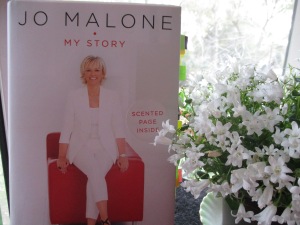 But Jo Malone the girl, wasn’t born into luxury. She was an ordinary girl raised in a family that struggled a bit on the good days, and a lot on the bad days, which were often brought on by her doting father’s gambling inclinations, her mother’s over-spending habit and the pressure to work long hours to keep the family afloat.
 When she really began to play around with fragrance, demand began to rise more than she could cope with, and Gary suggested they embrace the business, move it to its own premise and open a shop. Her business was beginning to overwhelm their living condition, he recognised the potential and offered to commit himself wholeheartedly it. That would be the beginning of Jo Malone, her signature brand.
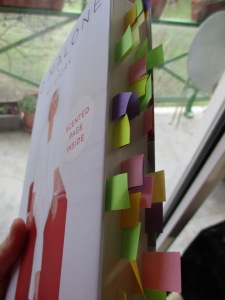 From there, a whirlwind of events follow and she will partner up with a perfume house in Paris, turning her instinct into a viable, enduring product. She tried to put into words her creative process and it is fascinating when she does, for it is something that can’t be copied or cloned, it is an insight into the pure magic of creativity, of how she uses image, colour and experience to create a scent.

 I absolutely loved this book, from it’s at times heartbreaking accounts of struggle in childhood, to the discovery of her passion, the development of her creativity and the strong work ethic that carried her forward, to finding the perfect mate and the journey they would go on together.
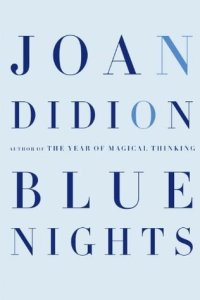 Written as a reflection on the death of her daughter at 39 years of age, the book begins as Didion thinks back to her daughter’s wedding seven years earlier, which then triggers other memories of her childhood, of family moments, of people and places, numerous hotels they have frequented.
 Although the main theme of the book is her daughter’s premature death, nowhere does she analyse or obsess about what actually happened in the way we vividly remember she did about her husband in My Year of Magical Thinking. Rather, the book appears to be as much an acknowledgement of her own ageing and decline, recognising and facing up to her own ‘frailty’, her obsession with her own health scares, recounting every little malfunction or symptom of a thing that never shows up on any of the numerous scans or tests she has. It is as if she writes her own denouement, to a death that never arrives, as the multitude and thoroughness of all the tests she has show how very much alive and in relative good health she is, despite herself.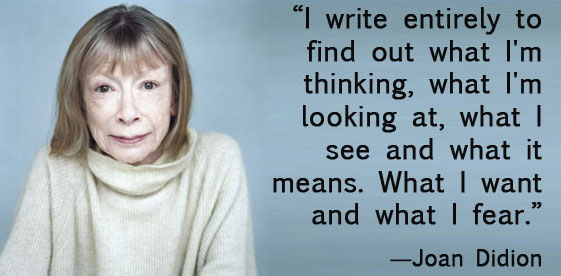
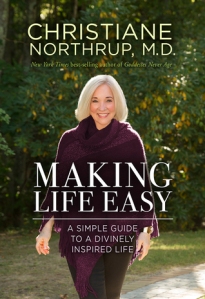 This was my first read of Christiane Northrup, despite the fact she’s written lots of books, with titles like: Goddesses Never Age: The Secret Prescription for Radiance, Vitality, and Well-Being, The Wisdom of Menopause: Creating Physical and Emotional Health and Healing During the Change and Women’s Bodies, Women’s Wisdom: Creating Physical and Emotional Health and Healing (39 editions published).
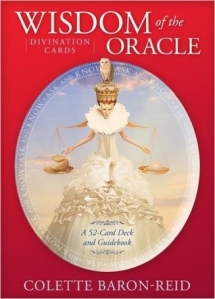 The health and sexuality sections held less interest to me, probably because I was attracted to the book after listening to her speak in a ‘raw and real’ conversation with my favourite ‘intuitive’ Colette Baron-Reid, in that conversation it was the more spiritual aspects that were under discussion, particularly as Colette’s book Uncharted: The Journey through Uncertainty to Infinite Possibility had been published in October 2016. Northrup is a fan of Colette Baron-Reid and mentions that she uses her Wisdom of the Oracle card deck as one of her spiritual tools for guidance.
 She also discusses thoughts and inputs, the effect of what we are constantly exposed to and how it should be managed in order to avoid overdosing on negativity and the toxic, fear-enhancing effect of the media for example. She discusses the positive power of affirmations, meditation, gratitude, the power of giving and receiving, connecting with nature, tapping and much more.
 I’ve been listening to Colette Baron Reid’s insights for a while, I often look up her wisdom cards online and follow her


 It’s a consciousness raising view of reality, one that will resonate with enlightened readers, empaths, those familiar with working with energies and the open-minded.

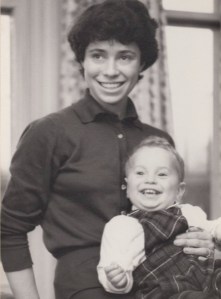
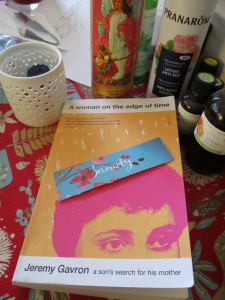 A Woman on the Edge of Time is a memoir that reads like a mystery, as Jeremy Gavron, a journalist, interviews family, old school friends, neighbours and colleagues of his mother Hannah Gavron, whom he has little memory of.


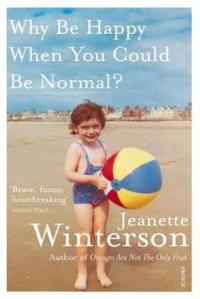 This stylised memoir, set in the working-class north of England, is the book Jeanette Winterson wasn’t ready to write back in 1985 when at 25 years of age, she wrote the novel Oranges Are Not the Only Fruit, a book that plunged the reader into her universe, one that provided the author the liberty of narrating freely, without the confines of the story having to have been exactly as she had lived it – it was fiction, an imagined story, and she named the main character Jeanette, a provocative gesture for sure.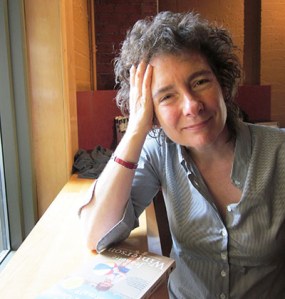
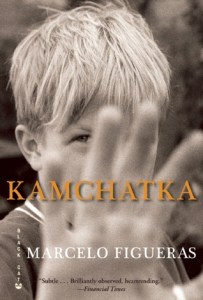
 In The Rabbit House, Laura rarely refers to the political situation that forced them to live in hiding, resulting in her having to change her name and be extra careful about how she engaged with others, for it is written from the perspective of her 7-year-old self, exactly as she recalls the events and changes that occurred in their lives at the time, with little understanding of the cause of this sudden change.
 The only people in the house are Diana, seven months pregnant, my mother behind the false back wall, and me.
 Further Reading
 James Doty never really set out to write this book, but he told his story to so many people with whom it resonated and being one of the founding creators of CCARE (The Center for Compassion and Altruism Research) he was eventually convinced how many more people could be inspired by his story and learn about the amazing work being undertaken, that he agreed to share his experience.

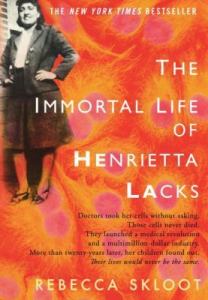
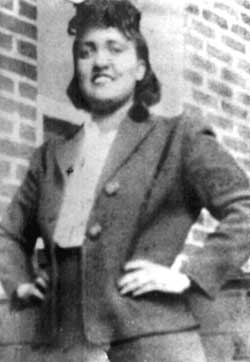 Skloot made Henrietta the subject of her research for 10 years in the creation of this thorough, respectful account of the life of Henrietta Lacks and her journey to uncover the events of the time within the context of what was the norm in her day.
 Word by Word