
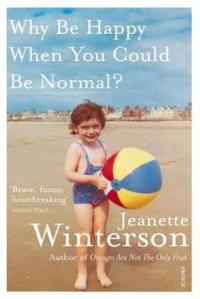
 This stylised memoir, set in the working-class north of England, is the book Jeanette Winterson wasn’t ready to write back in 1985 when at 25 years of age, she wrote the novel Oranges Are Not the Only Fruit, a book that plunged the reader into her universe, one that provided the author the liberty of narrating freely, without the confines of the story having to have been exactly as she had lived it – it was fiction, an imagined story, and she named the main character Jeanette, a provocative gesture for sure.
It was indeed inspired by her own experience, as we discover when she braved it and published this memoir nearly 30 years later (her adopted mother no longer living or able to be disapproving of her work), providing for the title, a quote from the mother who had been unable to shape the little human she acquired into her version of a normal daughter.
In her memoir she allows the real life characters to reveal parts of themselves, in particular Jeanette and the woman who raised her, whom she refers to as Mrs Winterson (her adoptive mother), a telling detail in itself, that she reserves the title of mother for the woman who is a shadowy illusion for most of the narrative; not there, not looked for, a vague presence in her psyche that she continuously rejects the thought of, her biological mother. I did wonder whether this was a literary invention or whether she actually did refer to her adoptive mother as Mrs W. It makes quite a statement.
‘I do not know why she didn’t/couldn’t have children. I know that she adopted me because she wanted a friend (she had none), and because I was like a flare sent out into the world – a way of saying that she was here – a kind of X marks the spot.
She hated being a nobody, and like all children, adopted or not, I have had to live out some of her unlived life. We do that for our parents – we don’t really have any choice.’
Despite what was likely to have been a desperate desire for a child, Mrs W. dolled out punishments and criticisms more than any form of affection or love for her chosen child. When her mother was angry with her, Mrs W. often repeated one of her preferred biblical phrases “The Devil lead us to the wrong crib”. The Church was like family (though unsuccessful in helping them make friends) and the Bible one of only five books in the house, the one referred to most often. The most regular punishment however, was to lock her in the coal-scuttle or out on the door stoop – for the whole night.
‘Dad’s on the night shift, so she can go to bed, but she won’t sleep. She’ll read the Bible all night, and when Dad comes home, he’ll let me in, and he’ll say nothing, and she’ll say nothing, and we’ll act like it’s normal to leave your kid outside all night, and normal never to sleep with your husband. And normal to have two sets of false teeth, and a revolver in the duster drawer…’
It is a collection of anecdotes, written in a way to make the reader present, it’s not like reading an account of the past, it’s reliving days in the life of this fierce little battler, a girl who had a zest for life, who used her locked up time to invent imaginary characters, who made up stories, who forged her own personality through, who would not be tamed, who left home while still at school, taught herself to drive, lived in a car for a while and remarkably pushed herself forward as one of the ‘experimental’ working-class contenders for a place at Oxford University and succeeded.
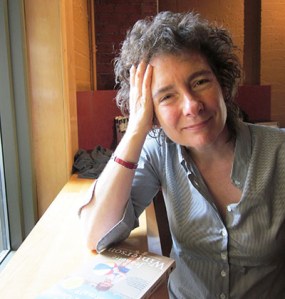
Jeanette Winterson, Photo by Sanhita SinhaRoy
Jeanette Winterson writes her own story, forged over a past she didn’t know, that she tried to convince herself wasn’t important until driven almost mad and finally would follow through to unravel the missing link.
Her experience with Mrs Winterson is told with as much compassion as is possible, the facts related in a way that leaves the reader to judge and most will wonder why Mrs Winterson desired a child or was deemed fit to be given one at all.
It is an extraordinary account of childhood and growing up, of what home is, of how we perceive and learn love, of adoption, of how those formative years contribute into making us what we will become and that mysterious ‘other life’ that might have been, when you’ve been switched to alternative parentage post birth.
I never wanted to find my birth parents – if one set of parents felt like a misfortune, two sets would be self-destructive. I had no understanding of family life. I had no idea that you could like your parents, or that they could love you enough to be yourself.
I was a loner. I was self-invented. I didn’t believe in biology or biography. I believed in myself. Parents? What for? Except to hurt you.
It is also a tribute to literature and to the power of stories to influence lives, whether they are an escape for those who need refuge and to understand the world around them, or whether they are the occupation of the oppressed, a creative outlet for someone with nothing but their imagination to keep them entertained while enduring their struggle.
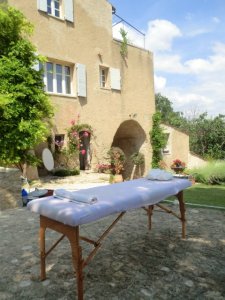 A few years ago a lady who had recently moved here to Aix-en-Provence contacted me in relation to
  Excited about the opportunity to put her writing skills to the test, Karin took the first chapter of her book, moulded it as much as she could to meet the criteria, sent it to me to look over and to make recommendations on how to whittle it down further without losing any of the content and then sent it off! We came up with the title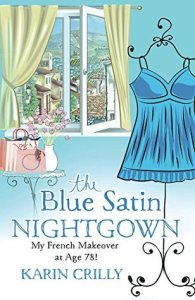

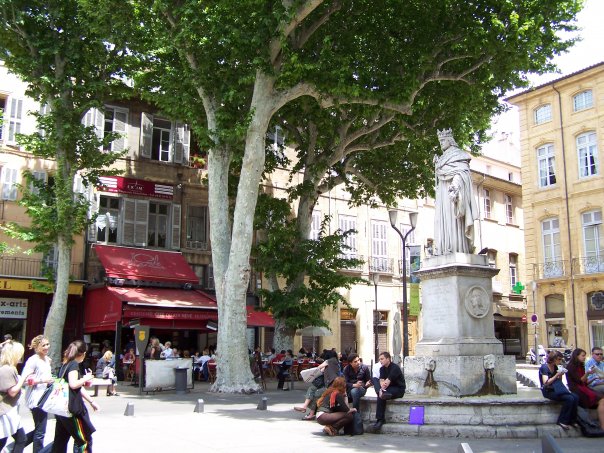
 In The Rabbit House, Laura rarely refers to the political situation that forced them to live in hiding, resulting in her having to change her name and be extra careful about how she engaged with others, for it is written from the perspective of her 7-year-old self, exactly as she recalls the events and changes that occurred in their lives at the time, with little understanding of the cause of this sudden change.
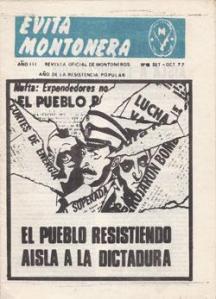 The only people in the house are Diana, seven months pregnant, my mother behind the false back wall, and me.
 Further Reading
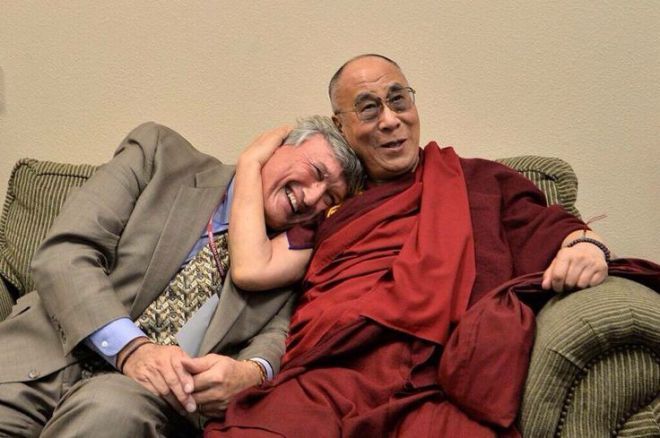
 James Doty never really set out to write this book, but he told his story to so many people with whom it resonated and being one of the founding creators of CCARE (The Center for Compassion and Altruism Research) he was eventually convinced how many more people could be inspired by his story and learn about the amazing work being undertaken, that he agreed to share his experience.
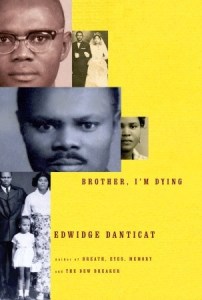 I first read Haitian author, Edwidge Danticat last summer, her novel Breath, Eyes, Memory (review linked below) about a young girl living with her Aunt in Haiti, while her mother lived in New York, a little like the life of the author herself, much of which is revealed in this non-fiction title, Brother, I’m Dying where we learn more about her life, though the primary focus is on her father Mira and in particular, her Uncle Joseph.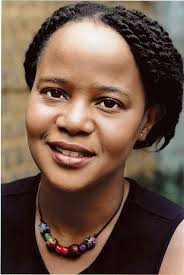





 Word by Word