Top Reads 2015

If you’ve noticed a lack of reviews recently, please know it’s not from a lack of interest, time or reading, just a temporary technical problem, not yet resolved but should be by mid January.

So, 2015 was a bumper reading year, I surpassed my book a week ambition and actually read 65 books from 26 different countries, a third of what I read was translated from another language, something I seek out in my interest to experience literature and storytelling from within other cultures and not only by those who have access to the English language.

I will create a separate post to talk more about my impressions and attractions of reading outside the main literary cultures and the cultures and landscapes that keep drawing me back for more.

As with previous years, I’ll share my one Outstanding Read and the Top 5 Fiction and Non-Fiction reads, with a few special mentions.

Outstanding Read of 2015
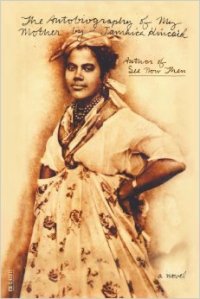
Autobiography MotherThe Autobiography of My Mother by Jamaica Kincaid My first read of the long-established author Jamaica Kincaid (Antigua) and it moved me like no other book had since last years outstanding read, Jennifer Clement’s Prayers for the Stolen.

This is a novel about a young woman growing up without a mother, abandoned for a time by her father and looking back at her life and the thoughts, reactions she had back then, using all the senses.

It is a kind of awakening, a visceral account that is insightful and squeamish both. It was for me too, the beginning of a season of Caribbean reads that were one of the major reading highlights of the year, soon after this I read three books by Maryse Condè (Guadeloupe), Cristina García’s Dreaming in Cuba, Edwidge Danticat’s Breath, Eyes, Memory (Haiti) all of which were 5 star reads.

Top Fiction
Click on the title below to read the review.

1.  The Wall,  Marlen Haushofer a riveting story of one womans survival in the aftermath of a catastrophic event, with only a few animals for companions. A lost classic that was revived years after the death of the writer and one that had me spellbound until the end.

2. The Yellow Rain, Julio Llamazares set in an almost abandoned village in the Spanish Pyrenees, this is a haunting, elegiac account of one man who refused to leave and was witness to the degradation of all that man had contributed as nature reclaimed what was left. Captivating in the way it is written, you will want to slow read it, brief yet unforgettable.

3. Dreaming in Cuban, Cristina Garcia spanning three generations of women from Cuba, told from their differing perspectives, particularly the grandmother who is rooted in her country and culture, it explores separation, identity, the strong bonds of family and the weight of expectation. How these women survive their circumstances. Just brilliant and part of a great collection of literature from the region.

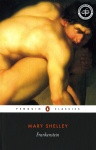
4. Frankenstein, Mary Shelley well it started with listening to the BBC audio broadcasts for learners of English, followed by watching a relayed broadcast of Benedict Cumberbatch in the London National Theatre adaptation, which was brilliant, to finally reading the work itself. I was a little hesitant, old classics aren’t really my thing, but I loved reading Frankenstein and couldn’t help but admire the tremendous achievement of Mary Shelley in creating it. Made all the more fabulous by having seen how it continues to inspire creative direction in the 21st century.

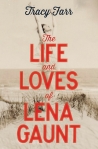
5. The Life and Loves of Lena Gaunt, Tracy Farr I didn’t read a lot of newly published works in 2015, but this one was a standout read for me, I was quickly drawn into the world of Lena Gaunt, an Australian theremin player who was born in Asia and had a few life changing experiences from her encounters there, who lived without much parental guidance or supervision, and developed her musical talents amid an eclectic group of artistic friends, had one true love and faced certain tragedy, all of which is brought to life after a recital she gave in her eighties attracted the attentions of a filmmaker. All the more interesting, for it being inspired by a true legend.

Top Non-Fiction

1. Unbowed: Autobiography of Wangari Maathai the truly inspiring story of Kenyan Nobel Peace Prize winner Wangari Maathai, the work she did, the challenges overcome that gave her a top education and the will to make a real difference, particularly for the lives of women in her country. She empowered others and created enduring projects and movements for all.

2. Under the Sea-Wind, Rachel Carson first in a nature inspired trilogy about the sea and her inhabitants, brought to life in a creative narrative, as seen from the perspective of three sea creatures, part one, the edge of the sea shows the habitat from the point of view of a female sanderling bird, she names Silverbar, part two, the Gulls way, is dedicated to the open sea and navigated by Scomber, the mackerel, and finally part three, river and sea, we follow Anguilla the eel as he travels from his coastal river pool downstream towards the sea and that deep instinctual pull towards the abyss.

3. Tales of the Heart: Stories from my Childhood, Maryse Condé essays, vignettes of childhood, recommended as the place to start in reading the work of this talented and enthralling writer from Guadeloupe. Loved it and was quick to follow-up with Victoire, My Mothers Mother, a book she says is true, though sold as a novel by her publishers due to the tendency of her research subjects to rely on oral stories to pass on their history. Brilliantly told, as she delves into the unknown life of her grandmother to better know and her own mother who died when she was 14.

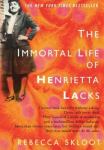
4. The Immortal Life of Henrietta Lacks, Rebecca Skloot (review to come) the background story to the global presence and utilisation of the immortal HeLa human tissue cells, that were discovered to be unique in that they never died, continued to replicate and could be used to do all manner of tests for disease and drugs and how cells respond, something of a revolution for medical science.

HeLa were the initials of the person from whom the samples were taken, as was the procedure at the time. But who was HeLa and what did she or her family have to say about these extraordinary developments thanks to the cells of one woman? Rebecca Skloot spent 10 years researching the life of Henrietta Lacks and the subject of the HeLa cells to bring this extraordinary narrative.

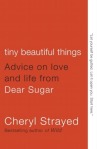
5. Tiny, Beautiful Things: Advice on Love and Life from Dear Sugar, Cheryl Strayed these are letters from the columnist Sugar, who it turned out was Cheryl Strayed, author of the book Wild about her solo journey to trek the Pacific West trail in her twenties.

These letters are written when she is in her forties and though still young, has lived multiple lives and had more than her share of extreme and dysfunctional experiences, from which to draw her own brand of wisdom. It’s a pick up at will kind of book, but her confrontational yet compassionate style is refreshing and thought-provoking, her ability to be very clear on her opinion and advice, without being judgmental.

Special Mentions
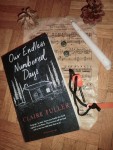
Outstanding Debut – Our Endless Numbered Days Claire Fuller

Excellent Classic – The Enchanted April, Elizabeth von Arnim

Most Uplifting Read – Antoine Laurain’s The Red Notebook and The President’s Hat

Most Disturbing Read – Agaat by Marlene Van Niekerk

Most Disappointing Read – The Waves , Virginia Woolf

The Secret Chord by Geraldine Brooks

Secret Chord

In 2012, Geraldine Brook’s wrote a fascinating book Caleb’s Crossing (review here), about Bethia, the fictional daughter of a Minister and two Wôpanâak tribe members, Caleb Cheeshahteaumauk and Joel Iacoombs, all inhabitants of the 200sqkm island of Noepe, (Martha’s Vineyard). Caleb and Joe were the first Native Americans to attend Harvard College, their story so fascinating, it left this reader wanting to know more about them.

So I was looking forward to Geraldine Brook’s next book, for when she inhabits certain characters, her stories can really carry you away while teaching you something of the historical era they inhabit. And here it is, her next book:

The Secret Chord is an imagined narrative of the biblical figure King David, told mostly from the perspective of a shepherd boy whose father David has had murdered in front of the lad; one who becomes his near constant companion, the prophet Natan. He can foresee the future though isn’t always able to share what he knows will unfold. For this he has few friends, no loves and is a dispassionate observer of events.

‘I have had a great length of days, and been many things. A reluctant warrior. A servant, a counselor. Sometimes, perhaps, his friend. And this, also, have I been: a hollow reed through which the breath of truth sounded its discordant notes.’

David is the youngest of a large family of brothers, rejected by his father and siblings over a perceived betrayal that occurs between his parents. His father can’t bear the sight of him and banishes him to the hills where he is easier to forget. He is recalled some years later when his Uncle Shaul, calls for all his nephews to appear before him, wishing to identify and anoint the one he believes will become the future King. It is a turning point for young David, as will be his encounter with the giant Goliath.

David_Playing_the_Harp_1670_Jan_de_Bray

David Playing the Harp, 1670 Jan de Bray

Sadly, his early years of solitude don’t prevent him from becoming another seeker of power and prowess through murder, mayhem and the sublimation of women.

Lover of Yonatan, David marries his sister Michal, both children of Shaul. Killed in battle,  the father intervenes and marries his daughter off to another man, David is not yet King, he is exiled for a while during this period, he seems to forget Michal, who eventually falls in love with the man forced upon her and will have children with him, only to be summoned by David when he becomes King, as if she would then welcome him. He is unforgiving when he discovers that is not the case.

There will be many more wives and children, and little tolerance for criticism of his protege, whose lives run unchecked by discipline or ressect. David also errs when he observes the wife of his loyal warrior Uriah the Hittite, Batsheva, and calls for her, thus provoking a prophecy the King uttered himself in response to a tale Natan told him of a man who suffered a grave injustice, trying to illustrate how wrong he had been in his behaviour. Upon hearing the story of a rich man who stole a poor man’s favourite ewe to slaughter and serve to a guest, David shouts:

‘That man deserves to die! Tell me his name! I’ll see to it that he pays for that lamb four times over, because he was greedy and had no pity.’

‘His name?’ I said quietly. ‘You really want to know who he is, that greedy, pitiless man? That man who has everything?’

‘As the Name lives, so do.’

‘That man is you.’

Statue King David by Nicolas Cordier

Statue King David by Nicolas Cordier

And so the four deathly, dishonourable events that follow are seen in that context of retribution for what happened to Uriah. A daughter raped and dishonoured by her older brother, a revenge killing one brother against the other, a banishment and betrayal by the son leading to his death. The sole light in all this darkness being the son born to Batsheva named Shlomo who after a vision of the boy’s promising future, one he keeps to himself, comes under Natan’s protectorate, inheriting none of the destructive qualities of his

I have to admit, I almost put this down after reaching halfway, the first half was so full of battles, murder, horror, the callousness of men who seek power, who kill or appropriate anything and everything they want or which stands in their way, ruthlessly dispatching the innocent, acquiring wives and concubines like commodities, and without the balance that can be created in a narrative that observes things from the perspective of the main character or one of his great loves.

The second half is redeemed through the character of Shlomo, the youngest son, who shares none of the attributes of his siblings or father and to spend time on his story provides the reader a little reprieve from the rest.

Of course there are novels based on history and legend full of violence, however I believe this novel failed for me due to the choice of narrative perspective. It may have been a missed opportunity not to have shown us the perspective from one of the characters who had something to gain or lose, a character who was emotionally invested in an outcome, male or female – a perspective the reader might try to comprehend or empathise with. Rather, we must observe from the outside, through a character who abandoned his own grieving mother to follow the murderer of his father, one who will develop no close relationships, save David. Instead of being enraptured by it, I was just constantly sickened by the history and behaviours of people.

Note: This book was an ARC (Advance Reader Copy) kindly provided by the publisher via NetGalley.

Under the Udala Trees by Chinelo Okparanta

Under the Udala TreesIjeoma was living with her parents in their yellow painted home surrounded by rose and hibiscus bushes,  immersed in the aroma of orange, guava, cashew and mango trees, in the village of Ojoto, where vendors lined the street and life had a slow, amiable pace when war broke out between Biafra and Nigeria.
She was just eleven years old when this catastrophe struck, provoking a sequence of other catastrophes in their lives, resulting in her being sent away for her own safety for a year, to a neighbouring village to stay with a childless couple.

‘We moved about in that unhurried way of the butterflies, as if the breeze was sweet, as if the sun on our skin was a caress. As if slow paces allowed for the savoring of both. This was the way things were before the war: our lives, tamely moving forward.’

The 1967 war barged into their lives and all over everything, the quiescent ambiance of Ojoto replaced by the noise and brutality  of the war machine, armoured cars, bomber planes, men with guns and machetes, war chants disturbing the evening air.

Before the war, her father told candlelit stories, folktales about talking animals and old kingdoms, spoke of kings and queens, magic drums, scheming tortoises and hares.

In the second year of war, her Mama sent her off, when bold talk of Biafra beating Nigeria had dwindled, supplanted by:

‘collective fretting over what would become of us when Nigeria prevailed: Would we be stripped of our homes, and of our lands? Would we be forced into menial servitude? Would we be reduced to living on rationed food? …Would we recover?’

Chinelo Okparanta

Author, Chinelo Okparanta

As a consequence of war, Ijeoma is sent to stay with the grammar school teacher and his wife, in the neighbouring village of Nnewi.

It is here, she crosses paths with Amina, a Hausa girl who follows her home from the shop one day.

‘I found a large rock near where an udala tree stood and sat down there. I waited on the rock, hoping the shadow would continue along, but it did not. Instead, it sat across from me, on another rock, eyes brght, like a pair of light bulbs. She was no longer a shadow.’

Ijeoma is Igbo, but she is far from home and the grammar school teacher and his wife though initially disapproving, become used to her new homeless friend, who helps out and doesn’t cause trouble. They decide she hardly even looks like those they consider the enemy.

“Actually she is more Fulani-looking than Hausa-looking. Which means she could pass for Igbo.”

The grammar school teacher considered his wife’s words. “It’s true,” he said. “Some Igbos and Fulanis do have a certain similarity in their features. Their complexion for one thing.”

“And she appears to be a hard worker.”

Part 2 of the novel displays the changed relationship with her mother after the events of Nnewi. The first week she is back her mother does not speak to her, a week passes without a word between mother and daughter. Her mother then resumes speaking, as if the silence had not been. She informs her daughter that now she is settled in, they will make a schedule, to begin the important work of cleansing her soul. No more folktales or stories of Kings and Queens, her mother’s preferred teachings come straight from the Bible and will be poured into her like medicine.

LEVITICUS 18.

Thou shalt not lie with mankind, as with womankind: it is an abomination.

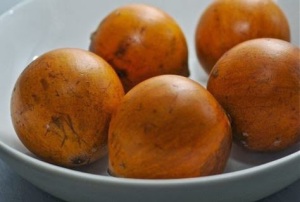
Udala African Star Apple

“Udala” Ibo for white star apple is a feminine symbol of fertility and generosity.

Chinelo Okparanta’s Under the Udala Trees is a journey of self discovery, a coming-of-age tale of a girl experiencing a sexual awakening in defiance of her mother’s and society’s expectations, one she half heartedly attempts to suppress, only to experience an even worse suffering. Ancient folklore, biblical interpretations, all is summoned and used by parents to guide the daughter towards the righteous path.

It is a courageous story to tell in modern-day Nigeria, a country that has criminalised same-sex  relationships. It also adds significantly to the growing literary works that use the Biafran conflict as their historical context and brings our attention to an interesting and outspoken literary talent.

Chimamanda Ngozi Adichie broke the mould in terms of writing about the Biafran conflict with Half of A Yellow Sun and then more recently it was addressed in the autobiographical work of Chinua Achebe There Was A Country: A Personal History of Biafra, the book he published not long before his death, finally speaking out about what has long been considered a taboo subject in Nigeria’s past, one that the generations who lived it had seemed to wish to remain silent on.

Note: This book was an ARC (Advance Reader Copy) kindly provided by the publisher via NetGalley.

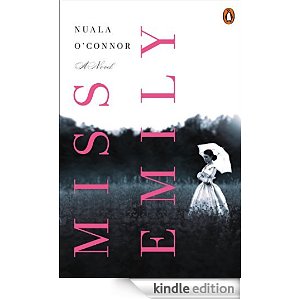
Miss Emily by Nuala O’Connor

Nuala O’Connor is the Irish author I discovered in 2014 thanks to the Irish Times Book Club.

You may remember last year, I read and reviewed her novel The Closet of Savage Mementos which she wrote under her Irish name Nuala Ní Chonchúir. That novel was about an Irish girl who left Dublin for a Scottish seaside town after the death of her boyfriend and to escape her mother’s dramas. In Scotland she encountered her own drama and was forced to make a life-changing decision.

Emily Dickinson and an Irish Maid

Now, writing as Nuala O’Connor for US and UK  readers, she pens the story of another Irish woman, the feisty but hard-working Ada, who also leaves Dublin, destined to become housemaid to the Dickinson family. It is a fictional account of the friendship between the Irish maid and the poet Emily Dickinson.

Ada Concannon, the eldest of 7 children, possesses an energetic zest for life that was unappreciated by her previous employer; upon being demoted to scullery maid she decides to seek her fortune elsewhere, taking a passage on the boat to New England where her Aunt Mary, Uncle Michael and a couple of not too friendly cousins reside.

She lands on her feet with the job at the Dickinson household, a family of four with their spinster sisters Vinnie and Emily, neighbours to their gruff brother Austin and his wife Sue, whom Emily appears to (not very convincingly) pine for.

The American Frugal Housewife

The Frugal Housewife

Emily is reluctant to leave the house, preferring words to company and attaches herself to Ada, the kitchen being one of her preferred refuges, thus friendship with the housemaid most important.

Her friendship with the maid flouts convention and is a kind of quiet rebellion within the home that the poet rarely steps out of.

“When I talk too much, everything I think and feel is wrung from me. I have nothing to write about when all is spent. It takes me so long to restore myself. It is as if I must heal a wound after each party where all is chitchat and glances and fun.”

Ada is adept in the kitchen, devoted to the family and the book The Frugal Housewife that Mrs Dickinson has lent her.

“Think of this as your second Bible,” she said.

Ada is charmed by the quiet and unassuming Daniel Byrne, her stay marred only by the creepy presence of the nephew of Daniel’s boss, Patrick Crohan.

Chapters alternate between Miss Emily’s and Ada’s perspective to reveal brief but eventful encounters in the kitchen and rooms of the Dickinson home, between Ada, Miss Emily and those around them.

Although Ada is outgoing and attractive, she still has something of the Irish reserve and tendency to silence when there is trouble. And trouble there will be. Ada and Emily must attempt to navigate the narrow space between their classes to deal with the trouble, without compromising their reputations.

Miss Emily is a lively, charming read, she brings her characters to life, especially the Irish and creates a world we can quickly imagine and inhabit. There is something comfortable and reassuring in her prose and novels that makes you want to abandon all else until the last page is turned. Just as she did with Savage Mementos, so too she achieves with Miss Emily. My only regret is that it all ends too soon, I’m still wondering about Ada and could easily follow after her into a sequel.

“For now I need the solace of words. Words bracket silence. That quiet gives propulsion to the words and all that they say. Words smoulder, they catch fire, they are volcanic eruptions, waiting to explode. I like to start small. With the fewest words I can manage. If the words run away, I trip them up and pull them back – they are elastic. If they do not cooperate, I obliterate them.”

Miss Emily audio

2666 by Roberto Bolaño, tr. Natasha Wimmer

26662666 was the last novel written by Chilean author Roberto Bolaño before his untimely death at the age of 50 years due to liver failure, he was near the top of the list for a liver transplant, but sadly didn’t survive long enough to be a recipient.

Knowing of his precarious existence and wishing to be able to support his family for as long as possible, he embarked on the grand oeuvre that would become 2666. He had planned to publish it as five separate volumes, which is no doubt in part responsible for it being such an exceptionally long novel at 900 pages.

Born in Chile, he spent much of his childhood and youth in both Chile and Mexico before moving in 1977 to Spain where he married, settled and eventually would die. His literary success came late in life and with death looming, he appears to have been in somewhat of a rush to pen this last grand tome. It wasn’t until after his death, that his work became known to readers in the English language, though he was widely perceived as the most important Latin-American writer since Gabriel García Márquez.

2666 is structured into five parts, which would have been the five books, though they are meant to be read as a whole. Four of the five parts are reasonable in length and content and intrigue while Part 4. The Part About The Crimes is long, arduous and was for me in parts sickening.  It recounts hundreds of crimes against predominantly young women that occur in Santa Teresa, the one location that connects all 5 parts of the story. It is largely based on the mostly unsolved and still ongoing serial murders that took place in the MExican town of Ciudad Juárez (Santa Teresa in the novel).

In order to try to make sense of the sum of parts, I created the diagram below after reading, in its entirety it depicts the global, interconnected horrors that have infiltrated and usurped parts of 20th century society, while on the surface story level, it shows the connections between characters, locations and subject, with that Mexican town of Santa Teresa taking centre stage, the one place all these characters are at some time drawn to.

Making sense of Roberto Bolaño's 2666

Trying to Make Sense of Roberto Bolaño’s Five Parts of 2666

The five parts briefly are as follows:

Part 1: The Part About the Critics introduces us to 4 critics from 4 European countries who specialise in the literature of a German writer, they travel to conferences around the world, presenting, discussing his work, seeing each other, pursuing reports of the disappeared writer named Archimboldi, until Mexico. They too become more or less interconnected and though supposedly intellectuals and above the debased actions of the lesser educated, we see that they are no better than the rest and perhaps even worse.

Part 2: The Part about Amalfitano, his daughter Rosa, his wandering wife Lola and the poet in the asylum in San Sebastian, his move from Barcelona to Mexico and the beginning of hearing that voice in his head.

Part 3: The Part About Fate, the political/social journalist, his dead mother, her neighbour,writing up Barry Seaman’s speech, the death of a sportswriter, the fight he covers in Santa Teresa, the Mexicans, the gun, Rosa Amalfitano, Guadalupe Roncal and the albino German singing prisoner.

Part 4: The Part About the Crimes mentioned above, this reader begins to suffer fatigue from the pages and pages of repetition, another young woman, raped a certain way, strangled, the long hair, dumped on a highway or in a dump, the lack of police investigation, that lack of interest, as if to be woman is to warrant such a fate. The reader too starts to become as bored as the police seem to this endless, sordid situation. They have a job to do, but for what reason are we succumbed to having to absorb these hundreds of heinous crimes taking place in one city.

I was relieved when this part was behind me, all those murders in Santa Teresa, the inept investigations, the scapegoat, the media, the Congresswoman, the cause/effect of money.

Part 5: The Part About Archimboldi, in wartime Germany with a man named Hans Reiter. And finally we catch up with Bonno von Archimboldi, the writer pursued in Part 1.

orhan-pamuk-the-museum-of-innocenceOverall, it was a marathon read, that fatigued me, in a similar way to Orhan Pamuk’s lengthy novel of obsession The Museum of Innocence, a book that became a kind of effigy, that morphed into an actual museum displaying a collection of items evocative of everyday life and culture of Istanbul during the period in which the novel is set. Bolaño collected murders and experiences, Pamuk everyday objects and obsessions.

It is a novel highly regarded by many, however I would be reluctant to recommend it without the potential reader reading a variety of reviews to discern whether or not it is something that corresponds to their interest.

I chose to read it as my summer chunkster for 2015 and can relate to the following question raised in the Guardian review I’ve linked to below:

But why would you want to encounter “an oasis of horror in a desert of boredom” in the leisurely days of summer? Because you’ll have time to immerse yourself, for one thing. There’s never a bad time to read a great book, however dark, however dangerous.

Bravo to the late Roberto Bolaño, I believe he achieved his aim, to continue to support his family long after his own demise.

Further Reading:

Guardian Review

“Very long and very violent, this is a journey into the darkest parts of humanity. It’s hard going, but it is a truly great book”

New York Times Review

By bringing scents of a Latin American culture more fitful, pop-savvy and suspicious of earthy machismo than that which it succeeds, Bolaño has been taken as a kind of reset button on our deplorably sporadic appetite for international writing, standing in relation to the generation of García Márquez, Vargas Llosa and Fuentes as, say, David Foster Wallace does to Mailer, Updike and Roth.


Man Booker Prize Short List 2015

While my attention has been elsewhere diverted, the short list for the annual Man Booker Prize 2015 was announced.

MB logoIf you hadn’t seen the long list, which for me with all literature prizes is often where I am likely to find titles that will appeal to me, you can read about it here:

Man Booker Prize Long Lost 2015

On the six titles and authors that made the shortlist, the judges had this to say:

The judges remarked on the variety of writing styles, cultural heritage and literary backgrounds of the writers on the shortlist, which includes new authors alongside established names. Two authors come from the United Kingdom, two from the United States and one apiece from Jamaica and Nigeria.

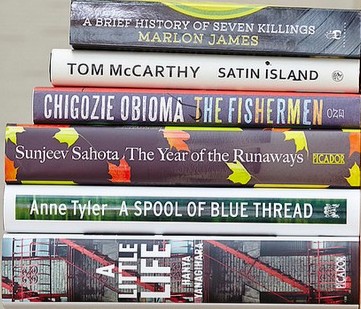
The six titles on the 2015 shortlist are:

ManBooker Shortlist 2015A Brief History of Seven Killings , by Marlon James (Jamaica) – explores the attempted assassination of Bob Marley in the late 70s.

Satin Island, by Tom McCarthy, (UK) – postmodern philosophical novel of ideas on how we experience our world.

The Fishermen, by Chigozie Obioma (Nigeria) – 4 brothers encounter a madman whose prophecy unleashes a family crisis.

The Year of the Runaways, by Sunjeev Sahota (UK) – migrant workers in a Sheffield house, all fleeing India in desperate search of a new life.

A Spool of Blue Thread, by Anne Tyler (US) – three generations of the Whitshank family, their stories, secrets and longings.

A Little Life , by Hanya Yanagihara (US) – epic saga of friendship, self-destructive behaviour and a lot of misery, the bookish version of an addictive TV series?

***

I have only read one title from the list, Anne Tyler’s book and with my predilection for literature that crosses cultures and enters other worlds, the titles that attract me most are Chigozie Obioma’s The Fishermen and Marlon James A Brief History of Seven Killings, although there are other titles on the long list such as Laila Lalami’s The Moor’s Account that sound interesting as well.

The Winner! 

The authors will be reading at the SouthBank Centre in London on 12 October and the winner will be announced on Tuesday 13 October.

Do you have a favourite to win? Have you read any of the shortlisted titles?

MB Prize

Man Booker Prize 2015 long list

The long list for the Man Booker Prize 2015 was announced today, Wednesday 29 July.

The ‘Booker Dozen’ 13 novels feature three British writers, five US writers and one each from the Republic of Ireland, New Zealand, India, Nigeria and Jamaica.

Marlon James, who currently lives in Minneapolis, is the first Jamaican-born author to be nominated for the prize. Laila Lalami, now based in Santa Monica but born in Rabat, is the first Moroccan-born. There are three debut novelists, the literary agent Bill Clegg, Nigerian Chigozie Obioma and New Zealand author Anna Smail.

The longlist is:

Bill Clegg (US) – Did You Ever Have a Family

– On the eve of her daughter’s wedding, June’s life is devastated when a disaster takes the lives of her entire family, all gone in a moment. June is the only survivor.

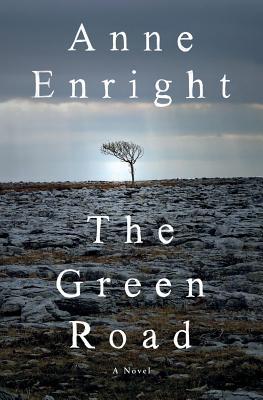
The Green RoadAnne Enright (Ireland) – The Green Road

– Spans 30 years, 3 continents and narrates the story of Rosaleen, matriarch of the dysfunctional Irish Madigan family and her four children. Sounds promising.

Marlon James (Jamaica) – A Brief History of Seven Killings

– a fictional exploration of the attempted assassination of Bob Marley in the late 1970s, featuring assassins, journalists, drug dealers, and even ghosts.

Tom McCarthy (UK) – Satin Island

– A “corporate ethnographer,” narrator, U. is tasked with writing the “Great Report,” an all-encompassing document that would sum up our era. A big essay of a novel.

The Moor's AccountLaila Lalami (US) – The Moor’s Account
– the imagined memoirs of the first black explorer of America, a Moroccan slave whose testimony was left out of the official record, historical fiction from 1527.

Chigozie Obioma (Nigeria) – The Fishermen

– In a Nigerian town in the mid 1990’s, four brothers encounter a madman whose mystic prophecy of violence threatens the core of their close-knit family.

Andrew O’Hagan (UK) – The Illuminations

– Anne battles dementia, her grandson Luke is in Afghanistan, on his return they set out for an old guest house where they witness the annual illuminations, dazzling artificial lights that brighten the seaside resort town as the season turns to winter. Love, memory, war and fact.

Marilynne Robinson (US) – Lila

– Revisiting characters and setting of Gilead and Home; Lila, homeless and alone after years of roaming the countryside, steps inside a small-town Iowa church—the only available shelter from the rain—and ignites a romance and a debate that will reshape her life.

Anuradha Roy (India) – Sleeping on Jupiter 

– a young girl ends up in an orphanage run by an internationally renowned spiritual guru, before being adopted abroad, haunted by memories, she returns to the temple town of Jarmuli to tie up loose ends and keep promises made long ago, intertwined with the stories of three women she meets on the train.

Sunjeev Sahota (UK) – The Year of the Runaways

– an unlikely family thrown together by circumstance, three men – Tochi, Randeep and Avtar – live together with other migrant workers in a house in Sheffield, all fleeing India and in desperate search of a new life, the woman, Narindar, is married to Randeep but barely knows him and lives in a separate flat.

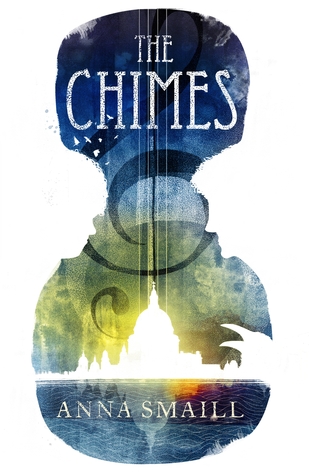
The ChimesAnna Smaill (New Zealand) – The Chimes

– set in a reimagined London, a world where people cannot form new memories, the written word forbidden and destroyed. In the absence of both memory and writing is music. Simon Wythern has a gift that could change all that.

Anne Tyler (US) – A Spool of Blue Thread  (see review)

Hanya Yanagihara (US) – A Little Life

– follows the complicated relationships of four young men over decades in New York City, their joys and burdens, Jude’s journey to stability, having been scarred by a horrific childhood with its prolonged physical and emotional effects.

***

The only one I have read is Anne Tyler’s A Spool of Blue Thread, the book I’ve been hearing the most about recently, is Hanya Yanagihara’s A Little Life (albeit in a big fat book), a little too hyped for me and I’m already committed to my #chunkster for summer, which I started today, Chilean Roberto Bolano’s epic 2666.

One of the titles that intrigues me most from the list, that I have also read a few excellent reviews of recently is debut novelist Chigozie Obioma’s The Fishermen.

I’ve also listened to Anne Enright being interviewed and I’m sure The Green Road will be a great read. Based on the blurb alone, I like the sound of Laila Lalami’s historical novel, The Moor’s Account, particularly being a voice and perspective from outside the established literary quarters.

No predictions, but the shortlist of six books will be announced on Tuesday 15 September and the winner on Tuesday 13 October.

So which of these titles appeals to you, or  would you like to read?


From Caucasia With Love by Danzy Senna

A Longish Intro on How I Came Across this Book

OreoDanzy Senna reviewed a book in the New Yorker in May 2015, a work she refers to as that hilarious, badass novel Oreo* by Fran Ross, an overlooked classic, a satire about race, originally published in 1974 without a stir, the novel everyone remembers from that time published two years later, had the title Roots.

Senna read Oreo in the late 1990’s, when she was living in a neighbourhood of what she called ‘Brooklyn’s dreadlocked élite‘ talented, up and coming, young black musicians, film-makers, artists said to be backed by the likes of Tracy Chapman and Alice Walker.

Though it had been written 20 years before, the book seemed to speak of their present and in her article she reflects on the narratives that had tended to gain traction and audience, those like Roots that looked back at slavery and oppression and then those that had been ignored, like Oreo, narratives that looked forward, that addressed modern issues, where no one is immune to criticism.

Sadly, Fran Ross died at a young age of cancer, little known in the literary world, this her only published work. It was republished in July 2015.

*To much of the public, an oreo is a black biscuit with white cream filling, in the African-American community however, it is a racial slur used to insult a black person who appears to act white.

You can read the article linked below, I hope to read the book soon, and all this to say how I came across the author Danzy Senna, who wrote From Caucasia, With Love, a novel about a mixed race family and the effect on their two daughters, when they separate, on account of the differing colour of their skin.

Review of From Caucasia, With Love

CaucasiaBirdie and Cole are two sisters, so close, they have their own made up language they speak fluently, that no one else can understand. The rest of society judges them on appearance, for Birdie appears white and her older sister Cole appears to be black.

While their parents are together it is less of an issue, but when they separate and move away from each other, each daughter departing with one parent, they will discover how much their colour dictates other people’s perceptions of them. Cole leaves for Brazil with her father and Birdie is on the run with her white activist mother fleeing the authorities.

The story is narrated from the point of view of Birdie and although she feels just like her sister, there were already signs of their differences in the behaviour of those closest to them. Her white grandmothers favouritism, and her father’s new girlfriend who won’t look her in the eye,  favoured by one, rejected by the other.

Birdie travels with her mother, losing all contact with her sister and father and integrates into a new life and school as someone she is not, she accepts it, but the truth seethes beneath the surface of all her interactions, she becomes numb to the misconceptions about who she is, until she has had enough and decides to go looking for Cole and her father.

“Strange as it may sound, there was safety in this pantomime. The less I behaved like myself, the more I could believe that this was still a game. That my real self – Birdie Lee – was safely hidden beneath my beige flesh, and that when the right moment came, I would reveal her, preserved, frozen solid in the moment in which I had left her.”

Danzy Senna

Danzy Senna

It is a gripping coming of age story of a girl who must deal with so much more than growing up, being forced to subsume another identity, neither one thing nor the other, without a role model to guide her.

It is a courageous effort to place the reader in the mind of a character who is like a changeling, crossing racial and geographic boundaries, making choices that will ensure not just her survival, but that she gets the answers she is looking for.

Further Reading:

New Yorker Article – An Overlooked Classic About the Comedy of Race by Danzy Senna


The Wall by Marlen Haushofer tr. Shaun Whiteside

The WallHaushofer’s novel begins on the 5th of November, the day the protagonist, a middle-aged woman, begins to write a report of what has occurred over the last two years, since she became isolated in a hunting lodge in the Austrian Alps, where she had been visiting her cousin Luise and Luise’s husband Hugo.

Some kind of unwitnessed catastrophic event occurs, creating an invisible wall between that which lives and that which doesn’t.

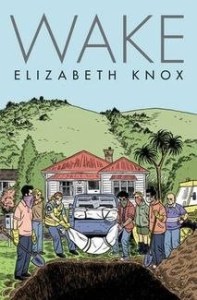
As I started reading and then discovered what The WallWake Elizabeth Knox was, I recalled Elizabeth Knox’s Wake, where a similar event occurs, though rather than one woman as we observe in Marlen Haushofer’s modern classic The Wall, with Knox we followed what happened to a group of survivors adding elements of fantasy and horror that suspend belief  allowing the reader to interpret it more as the form of entertainment it was written to be.

In The Wall, Luise and Hugo walk to the nearby Alpine village one evening, putting them on the deathly side of the catastrophic event. Sending their dog Lynx home before them, he becomes one of the important and constant companions of this lone woman, who will learn what it takes to survive.

Eventually she realises she is living in the forest completely alone, she is joined by a cow she names Bella whom she hopes is pregnant, an old cat who will also give birth, and she finds a sack of potatoes she can plant and some beans which she will also use to create a crop. She is grateful to Hugo for his forethought.

“At the time everyone was talking about nuclear wars and their consequences, and this led Hugo to keep a little store of food and other important things in his hunting-lodge.”

The book recalls the days, the months, the seasons, the work she creates for herself, the relationship between her and the animals, her nurturing of them and attempt to protect them from the harsh elements of the environment and their interactions with her, that remind her of her duty to survive.

Lynx prodded me with his muzzle and pushed me sideways. Maybe he didn’t like the flood, maybe he also felt that I was miles away and wanted to attract some attention. As always on such occasions I followed him in the end. He knew much better than I did what was good for me.

It is written in a stream of conscious style that never becomes monotonous, despite the monotony of her days, she must live in the present to survive and that depends very much on caring for the needs of the animal life that support her. She must deal with her own mental turbulence and anguish, discovering that her manual labours and constant activity, though tiring, keep her from the dangers of over thinking and decline.

By cutting timber, in fact, I missed a very fine Indian summer. I didn’t see the landscape at all, obsessed as I was by the thought of stacking up a big enough supply of wood.  Once the last log had been stored under the verandah I had a stretch and decided to treat myself a little. It’s strange, in fact, how slight my pleasure is every time I complete a task. Once it’s out of the way I forget it,  and think about new things to do. Even at that time I didn’t allow myself much time to recover. That’s how it always was: while I was slaving away I dreamt about how I would quietly and peacefully rest on the bench, but as soon as I finally sat down on the bench I grew restless, and started looking out for new work to do. I don’t think this was due to any particular industriousness, since by nature I’m rather lethargic,  but was probably through self-protection, for what would I have done otherwise but remember and brood? That was exactly what I mustn’t do, so what was there to do but more work? I didn’t even have to look for work, it turned up insistently of its own accord.

EndlessI was also reminded of Claire Fuller’s Our Endless Numbered Days, another book of survival in the European forest lands, a novel that contains distractions other than just survival, it being about a daughter whose father has taken her off to survive in the forest.

Marlen Haushofer’s protagonist has no zombies or deranged father’s to contend with, purely one woman’s survival and existence alongside a select few animals.

I found it utterly compelling and could not put it down. It is a brilliant novel that strips away the noise and manic obsessions of society placing one woman in a basic situation that will exhibit humanity’s natural feminine instinct to nurture, to protect, to achieve and survive while intermittently falling prey to the melancholic tendencies of mind that threaten to derail us. It does this without the use of fantastical elements apart from the existence of the wall itself, making it feel realistic and believable.

Marlen Haushofer wrote the book in the early 1960’s and it wasn’t published until 1968, two years before her premature death at the age of 49. The book was resurrected 15 years later when discovered by the feminist and anti-nuclear movements and has since been translated into 18 languages and made into a major motion picture by the Director Julian Pölsler. Deserving of being categorised as a modern classic.

The Wall is a muted critique of consumerism and a delicate poem in praise of nature, a challenge to violence and patriarchy, an encomium to peace and life-giving femininity, a meditation on time, an observation on the differences and similarities between animals and humans, and a timeless minor masterpiece. Jerry Whyte , Film critic on Julian Pölsler’s film adaptation

Wall Movie

Highly recommended and thank you to Vishy (click here for his review) for recommending it to me.

Mayumi and the Sea of Happiness by Jennifer Tseng

“I am a quiet lady, but my imagination is wild and busy.” Isobelle Ouzman

Livia and TsengFrom one island to another, having left the four holidaymakers from elsewhere on Little Lost Island in Brenda Bowen’s Enchanted August, I find a not so little, but lost islander in Mayumi, a 41-year-old librarian and resident of another New England island.

With a demanding 4-year-old daughter who has claimed a place in the marital bed, an emotionally and physically distant husband and finding solace between the pages of the books she reads, Mayumi’s life seems to lack something she isn’t aware of, until someone arrives at the library counter to ignite it.

She develops a fixation on a 17-year-old boy, seducing him and slotting him timetable-like in her already routine, controlled life, as if forbidden love is just another aspect of a carefully planned existence, something that be contained.

In addition, she can’t help but allow a friendship to develop with the boy’s mother, her equal desire for friendship and understanding crossing neurotic wires that seem destined to create an emotional explosion.

Publisher, Europa Editions describe the book as:

“With echoes of  The Giant’s House and shot through with literary references, the debut novel by Asian-American poet Jennifer Tseng is a book that leaves a lasting impression.”

and Kirkus Reviews:

Tseng explores time and place, isolation and connection, and veers more toward the lyrical than the lurid.”

while the author herself said:

“I love the premise of someone in a mundane setting, then a stranger walks in, and everything changes.”

Jennifer Tseng

Jennifer Tseng

It was a strange read for me and while many authors succeed in bringing the reader inside a perspective that might be counter-intuitive to their own instinct, it felt as though I remained on the outside of this narrative, never able to crossover into the world Muyumi inhabits, through her narcissistic obsession.

I haven’t read The Giant’s House, although reading the blurb of it I can see why comparisons might be made.

orhan-pamuk-the-museum-of-innocenceThe only reading experience I can compare this too is Orhan Pamuk’s The Museum of Innocence, which is a very long treatise on the experience of obsession, it is so long that you can’t help but experience the tedium of an unrelenting obsession.

Tseng’s exploration is unique by virtue of it being a female obsession, confusing the roles of mother, lover, friend and wife.

It is a reminder that in the quietest of environments, the imagination is actively at work and you never know when inspiration or obsession might alight.

I leave you with a quote from the book, where Mayumi is feeling frustrated by the pending departure of the young man for a couple of weeks over the summer:

“You know I didn’t come here to mix with your sort. If anything I came here to escape such excitements.”

What had in it the seed of a compliment came off sounding like a snub. He drew back slightly as if I had just hit him.

“What I meant to say,” I persisted, determined to salvage the moment and bolster his confidence, “is that this is a highly unusual circumstance. I’ve lead a very sheltered life, sheltered from good as much as from bad. I’ve minded my own business. I never sought thrills. I’ve been content to avoid the company of youth and beauty. Before you, I had no desire.”

“With all due respect, May, I find it hard to believe,” he finished in iambic pentameter, “that a woman with your brain and your appetite came halfway across the world in search of nothing.”

He was well-mannered yet restless; his eyes studied me as though I were a page in a book. I had the sense of being one among many, of being read intensely but fleetingly by a reader who would soon turn the page.

In addition to being a poet and fiction writer, the author Jennifer Tseng is a librarian on Martha’s Vineyard, a New England island.

Pumpkin Island Maine

Note: This book was an ARC (Advance Reader Copy) kindly provided by the publisher.