Things They Lost by Okwiri Oduor

A Focus on World Literature

I came across Kenyan author, Okwiri Oduor’s Things They Lost in 2022 while perusing OneWorld Publications, one of my favourite indie publishers. Their books are described as:

“emotionally engaging stories with strong narratives and distinctive voices. In addition to being beautifully written, we hope our novels play their part in introducing the reader to a different culture or an interesting historical period/event, and deeply explore the human condition in all its vagaries”

Some of the wonderful books they have published that I have read and reviewed are Ugandan author, Jennifer Nansubuga Makumbi’s Kintu and The First Woman, Russian author Guzel Yakhina’s Zuleikha, Lebanese author Hoda Barakat’s Voices of the Lost, Iraqi author Shahad Al Rawi’s The Baghdad Clock and Korean author Sun-mi Hwang’s The Hen Who Dreamed She Could Fly.

Otherworldly Surrealism that Feels Real

Kenyan literary fiction Dylan Thomas Award 2023Things They Lost is a coming-of-age tale of a young girl who is highly intuitive and sensitive to other spiritual dimensions. She has always been aware of the presence of entities that may not be apparent to others, although some of the women around her also have perceptive abilities.

I absolutely loved this novel and was pulled in by the narrative voice immediately. It was one that gave me a frisson of excitement very early on, that feeling of having encountered an author that might become a favourite, their assured use of language above and beyond the norm.

Ayosa Ataraxis Brown is a character that is going to stay with me for a long time. She is 12 years old and lives virtually alone in a large house that has passed down the family since the English woman Mabel Brown first arrived and built a house and employed enough people to call the surrounding area Mabel Town. It has now evolved into the more aptly named Mapeli Town.

It was not so much a deformation as an emancipation, for the name had softened, and could wedge itself better in the townspeople’s mouths. Mabel Town had belonged to the Englishwoman, but Mapeli Town was theirs.

Poetry, Death News, Snatchers

Ayosa, the great grand daughter of Mabel now lives in the big house. Her expanded awareness is a necessary trait for her survival, when it is difficult to tell whether the person standing in front of you is real and kind, or a wraith that has sussed out your innermost desire, used as a lure to snatch you. The Fatunas who dwell upstairs keep her company and at times make the whole house shake.

The radio keeps her and the townsfolk company. Radio man reads the death news while Ms. Temperance recites a daily poem;  violence has been known to occur when she missed a day, so important is the daily poem to the welfare of this community. It helps them deal with the things that have happened.

She also keeps a notebook and jots things down, about what it’s like for her as a girl. Of memories, things remembered from the Yonder Days.

She said, I wish it were true.

You wish what were true?
That you could remember me as a girl. There are things I cannot tell you with my own mouth. I wish you could have been there to see them yourself.

Ayosa said nothing. In her notebook, she wrote, I was there.

Jolly anna ha-ha-ha

The prose is magical, how to even describe it, reading Okwiri Obuor is to enter into another world, her rich, vibrant, incantatory prose doesn’t just shine, it is deeply invested in portraying the day to day presence and effect of abandonment by the mother.

Certain repetitions of phrases and words create the girls own vernacular and familiarise the reader with their linguistic world. There is mystery throughout, we are at the edge of knowing, the more we read, the more questions we have, trying to understand and interpret through these young all seeing eyes.

Her mama had an outside life and an inside life. In the outside life, she was Nabumbo Promise Brown. Daughter of Lola Freedom. Sister of Rosette Brown. Granddaughter of Mabel Brown. But in the inside life she was none of those things. She was Another Person. She lived in a tree hollow, inside a red city. She was a beggar and a thief. She robbed and plundered and murdered.

Things They Lost Dylan ThomasThere but Not There, A Peculiar Absence

It is never entirely clear what ails her mother, sometimes absent, sometimes there, but not there. Ayosa has been aware of her mother since before she was born, when she was a mere wriggling thing. She is able to remember things that happened before.

That was how it was. Mamas left. Daughters waited. Was that why Mamas birthed daughters – so there would always be someone in the world devastated with desire for them?

Ayosa is one in a line of daughters who have been abandoned, of those who have continued the pattern; this is her coming-of-age story, this all-seeing girl, how she lives, what she sees, what nurtures and nourishes her in the absence of mother.

Along the way, we meet a host of entertaining characters, woman who stand in on occasion for the absent mother, the reliable Madame Apothecary and her granddaughter Temerity, the mysterious Sindano in her empty cafe, so while we are concerned for Ayosa, it is reassuring to know there is a community nearby.

Friendship and Sisterhood

Through her burgeoning friendship and connection with Mbiu – with her horse Magnolia, that pulls a pockmarked Volkswagon – she has the opportunity to break free of her self-imposed entrapment, despite the maternal protectiveness that has developed in her as a result of all she has experienced until now.

Okwiri Oyuor succeeds in making the reader see through the perspective of young protagonist, we are forced to let go of our own version of reality and accept Ayosa’s, to see and understand as she does. Some will read this and interpret it as magic realism, but for me it felt realistic, like stepping into the mind of a well-developed and highly sensitive imagination, attuned to their local environment and cultural heritage, their ancestral connections, to realms beyond the physical – it seems that the absence of one (the mother) creates the opportunity for the elevated development of the other.

This is a journey of the soul, of the many lives already lived, of those met along the way in this one precious life, of overcoming challenges and learning to stand up to what is no longer acceptable. Written in mesmerizing poetic prose, that pulls you into a magical, if somewhat fearful world, until the devotion of female friendship liberates all.

Highly Recommended.  Will Be One of My Favourites of 2023.

Okwiri Oduor, Author

Things They Lost Dylan Thomas awardOkwiri Oduor was born in Nairobi, Kenya. At the age of 25, she won the Caine Prize for African Writing 2014 for her story ‘My Father’s Head’. Later that year, she was named on the Hay Festival’s Africa39 list of 39 African writers under 40 who would define trends in African literature.

She has been a MacDowell Colony fellow, and she received her MFA from the Iowa Writers’ Workshop. She has a story forthcoming in Granta.

Things They Lost is her debut novel and was long listed for the Dylan Thomas Award 2023. She currently lives in Germany.

Further Reading

Interview, Guernica Magazine: “What is your specific lonely like?” Okwiri Oduor on her debut novel, Things They Lost By Carey Baraka

A Profile: breathless babbling and blathering about Okwiri Oduor By Aaron Bady

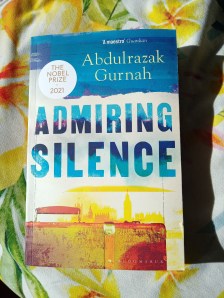
Admiring Silence by Abdulrazak Gurnah

 A young man grows up with his mother on the island of Zanzibar, without knowing his father.

Nobel Prize Literature 2021 fictionSome years later he is given a chance to study in England, by a family friend who is a strict disciplinarian, ensuring he succeeds in his studies. He discovers how much more difficult life can be when he becomes independent and no longer has the encouragement of his fellow countryman to push him.

“I began to understand how Ahmed had protected me, and how frightening England really was…In no time at all after I moved, I was overcome by the enormity of my abandonment, like someone weeping in a crowd. 

I was astonished by the sudden surge of loneliness and terror I felt when I realized how stranded I was in this hostile place, that I did not know how to speak to people and win them over to me,that the bank, the canteen, the supermarket,  the dark streets seemed so intimidating, and that I could not return from where I came – that, as I then thought, I had lost everything.Then Emma came and filled my life. I can’t describe that.”

The novel opens with the following lines that say much about our protagonist and are a reference to twin themes of memory and identity that thread throughout the narrative and an ever present silence, his accomplice.

“I have found myself leaning heavily on this pain. At first I tried to silence it, thinking it would go and leave me to my agitated content. That it would linger for a season, a firm reminder of the disquiet that lurks and coils below the surface of the stubbornly self-gratifying vision of our lives. Far from going, it became more clear, more precisely located, concrete, an object that occupied space within me, cockroachy, dark and intimate, emitting thick, stinking fumes that reeked of loneliness and terror. When I woke up in the morning, I groped for it, then sighed with plunging recognition as I felt it stirring inside me, alive and well.”

We meet him in middle age, when he is sensing this pain; the doctor will tell him his heart is buggered, informing him of the susceptibility of Afro-Caribbean’s to numerous complaints. And so to the first of his many silences, to the proliferation of thoughts never spoken, used as a tool to protect himself from racism and prejudice.

“Of course, after all this drama I did not have the heart to tell him that I was not Afro-Caribbean, or any kind of Caribbean, not even anything to do with the Atlantic – strictly an Indian ocean lad, Muslim, orthodox Sunni by upbringing, Wahhabi by association and still unable to escape the consequences of those early constructions.”

He had been surprised by Emma’s interest in him. They had become a couple and a had a child together. Amelia, now a teenager whom he is barely able to relate to. He has become a disappointment to her without understanding why.

Due to Emma’s rebelliousness against her middle class, conventional parents, they had never married. Our unnamed narrator never complained about this situation, he was beyond the reproach of his own culture, a place she had never visited, a culture his daughter knew nothing of.

Encounters with Emma’s parents predictably demonstrated racism, ignorance and insensitivity, as might be expected from an older generation when one culture or race encountered another, having had little or nothing to do them in the past – or worse – having lived and worked in a way where they had deemed themselves superior, as if it were an accepted fact. 

“Murmur audibly, smile brightly, say nothing. In general that did not seem to me at the time to be a contemptible philosophy, and there were many occasions when I rebuked myself for failing to live by it more consistently. I felt Emma watching me, waiting for me to take offence about something. I had been well primed for this, to expect to be offended by something her parents were bound to say, or imply, or disguise in an apparently innocent commonplace.”

Our narrator observes everything with a mild sense of detachment, he is curious but not judgmental. He often thinks of things he could have said, should have said, but didn’t. His silence will have consequences. He uses them as a pause or space between the past and present, a void that sets him on a collision course with reality, resulting in disappointment and self-deception.

The narrative voice comes across like he is explaining things to to the uninitiated, to others also not from England, to the outsider; perhaps as a warning, not to do as he has done.

“So I went to see my doctor in the end. I became afraid for my pitiful life and went to see my doctor. You can say that in England. My doctor. Here everyone has a doctor all to themselves.”

His observations of the nuances of the cross-cultural, inter-racial relationship are bittersweet. Following fond memories of a holiday in the lake district where they read poetry and take long walks, he ponders the moment things changed with his daughter.

I have photographs of that time and I know I don’t imagine the impossible contentment they portray.

Then she grew up, I suppose. She spoke to her mother about things that she must have thought I would not be able to help her with.It was predictable, but it was also oddly painful. She wanted to do things differently, in ways that seemed strange to me, and when I said this to her I felt a distance growing between us. I suppose I was slow to realize that she did not want to be treated as a beloved child any more, who would listen avidly to my wise thoughts and advice and then change her plans accordingly. So the first time she shouted angrily at me, I cried. I remember her distress then, but perhaps there was nothing either of us knew how to do to prevent the distance growing. Maybe it was more my fault then hers, because I was slow to learn to make room for her, to withdraw gracefully and with affection. And the distance grew into a habit, with only moments of fondness breaking into the hurtful watchfulness.

Admiring Silence Abdulrazak Gurnah

Photo by Charl Durand on Pexels.com

Due to the political situation in Zanzibar, it is 20 years before he returns. He has not told his family about his personal life in England. His relationship with Emma is increasingly difficult, as they fall into patterns they seem not to be able to extract themselves from.

When he returns home, he finds that little has changed. His family set about doing what they have always done, intervening. Though he knows he probably won’t go along with anything they are arranging for him, he allows situations to progress further than they should, given his circumstance. It will require him to be more present and to do more than just observe what is happening around him, he ought to take action he tells himself, before things get out of control.

It is a recognition of heightened awareness, the consequence of which is a loss, an understanding, whose price is to live in the ‘in-between’, to make one continually ponder who they really are, to where they belong.

Brilliantly told, observed and felt. Gurnah’s portrayal of the unnamed narrator is insightful, and realistic, capturing what it might feel like to be trapped between two cultures, with a foot in each camp, neither quite belonging to one or other, seeing through them both, existing in a kind of no man’s land, a threshold that many occupy, though rarely under the exact same circumstance.

The way the novel ends feels realistic, it leaves some of the story to the reader’s imagination, it reminds us of how many different combinations of circumstances exist with people being born and/or raised in cultures not of their parents, or marrying across cultures. 

“Gurnah’s dedication to truth and his aversion to simplification are striking. This can make him bleak and uncompromising, at the same time as he follows the fates of individuals with great compassion and unbending commitment. His novels recoil from stereotypical descriptions and open our gaze to a culturally diversified East Africa unfamiliar to many in other parts of the world. In Gurnah’s literary universe, everything is shifting – memories, names, identities.” Anders Olsson, Chairman of the Nobel Committee

I loved the novel, it was a 5 star read for me, highly recommended, I hope to read By The Sea  next.

Abdulrazak Gurnah, Author

Abdulrazak-Gurnah-Nobel-Prize-LiteratureAbdulrazak Gurnah is a Tanzanian-born British novelist and academic. He was born in the Sultanate of Zanzibar and moved to the UK in the 1960s as a refugee during the Zanzibar Revolution. 

After liberation from British colonial rule in December 1963, Zanzibar went through a revolution which led to oppression and persecution of citizens of Arab origin; massacres occurred. Gurnah belonged to the victimised ethnic group and after finishing school was forced to leave his family and flee the country, by then the newly formed Republic of Tanzania. He was eighteen years old. He did not return until 1984. 

Gurnah has published ten novels and a number of short stories. He was awarded the Nobel Prize for Literature in 2021 “for his uncompromising and compassionate penetration of the effects of colonialism and the fate of the refugee in the gulf between cultures and continents”.

The theme of the refugee’s disruption runs throughout his work. He began writing as a 21-year-old in English exile, and even though Swahili was his first language, English became his literary tool. In his work, he consciously breaks with convention, upending the colonial perspective to highlight that of the indigenous populations. 

Memory of Departure (1987) Pilgrims Way (1988) Dottie (1990) Paradise (1994) Admiring Silence (1996) By the Sea (2001) Desertion (2005) The Last Gift (2011) Gravel Heart (2017) Afterlives (2020)

Further Reading

Biography + Bibliography of Gurnah’s WorksNobel Prize for Literature Committee

Interview with Abdulrazak Gurnah

Seven Steeples by Sara Baume

Call It Baumish Prose

There’s a kind of magic in the poetic prose of Irish author Sara Baume, something uniquely identifiable, that you know you are in the presence of within a few pages.

Irish literary fiction poetic proseMy first encounter was her nonfiction title Handiwork, one I highly recommend as a starting place to her work and style. This title is like a spring board into her fiction, an introduction to the visual artist, the poet, the keen observer and storyteller.

Seven Steeples feels like a levelling up in confidence, it casts aside the idea that a novel requires a plot; if there is one, it might be the ever present question, addressed in the first sentence of each chapter, of another passing year, will the mountain be climbed?

The Irony – A Misanthropic Romantic Encounter

Bell and Sigh meet at an outing with mutual friends and fall into step together. Soon they are moving out of their respective lodgings to a house in the country, in the south-west of Ireland; flanked by a mountain, near the sea, opposite a field where bullocks roam, neighbours to a dairy farmer and his black and white cows. They have a dog each, Voss and Pip. There is a van. A tree in the backyard.

They say there is a wild goat who lives up there, the landlord said, the last surviving member of an indigenous flock.
They say that from the top, the landlord said,
you can see
seven standing stones, seven schools,
and seven steeples.

Bell and Sigh avoid humankind as much as possible, letting go of social and family ties, of obligations, of convention. They are creatures of routine, as are their animals.

It Was Windy

wind instrument music nature champ harmoniqueBaume describes everything about them, about the house, its character, its creaks and groans, its smallest inhabitants, the habits of all those who dwell within its walls, inside its walls, outside its walls in her multiple adjective, poetic prose, that skips across the page to a rhythmic beat.

Discovering a blue rope clothes line in the overgrown grass, they string it up between the tree and the house.

Without knowing it, they had fashioned  a wind instrument. There was the flapping of wet fabric, the dull jangle of the wooden pegs, the ping of weathered springs as they came apart, the thud of timber pincers against sod.

The tree was an instrument too. The tips of its branches rapped the plaster skin of the house like drumsticks.

The house was an orchestra – of pipes and whistles, of cymbals and chimes,  of missing keys and broken reeds. All January the elements played its planes  and lax panes, its slates and flutes.  Sometimes its music was a kind of keening , other times, a spontaneous round of applause.

I had the feeling I was reading a prose poem, one that celebrated and played with words, that painted a picture of two people who’d stepped outside of the ordinary life that had become too onerous and sought another kind of ordinary; a slower, quieter more insular version, that fostered simplicity and ignored conformity, that sacrificed the greater community for being at one with the immediate surrounds.

The Hybrid Poet & Spiders

Sara Baume is hands down one of my favourite authors; I love it when a poet rises above that conventional form to create something more akin to storytelling, without losing their adeptness at poetic flow. She is the hybrid poet, one who can take a skill in one area and apply it to another and create something unique, a singular recognisable, assured voice.

In this text she surpasses what was one of my favourite ever literary descriptions of a spider, until now that prize belonged to Martin Booth in his stunning novel The Industry of Souls, for years my favorite novel.

Here is a glimpse at what Sara Baume can do with the common household spider, while subtly acknowledging their insistence in inhabiting various places, in this unconventional life:

wp-1675248154796First we meet the spider that lives behind the wing mirror of their van, who takes refuge behind the glass.

After every journey, it mended the damage done to its tenuous web by the forcing of rushing air and whipping briars.

And then we meet more, these passages delighted me not just for their linguistic beauty, but due to the familiar feeling of having observed and got to know the habits of certain household spiders, to the point of almost thinking of them as free-ranging pets. When they become something your son wants to show people who visit, who begins to trap insects himself to feed the arachnid.

A different, less industrious spider took up residence in the hollow bars of the steel gate. Another lived in the rubber hollows of the welcome mat. And there were dozens distributed throughout the house –
in alcoves, cupboards, inglenooks,
in open spaces and plain sight.

The largest house spider kept to a cranny beneath the bathroom radiator by day. By night it crawled into the folds of the towels or slid down the gently-slanting sides of the bathtub. In the morning, Bell or Sigh – whoever happened to discover it first – had to dangle a corner of the bathmat down like a rope ladder;
like a lifebuoy.

To the spider, the tub was a snowy fjord, a glacial valley – vast, unmarred, arresting. It knew this was an unsafe place. Still it could not quell a desire to summit the tub’s outer edge. Each time it was blinded by a white glare,
and lost its footing, all eight of its footings,
and skied.

Language skips, pauses, ponders, leaves gaps, creates shapes on the page, carries the reader along on a repetitive yet spellbinding journey that never moves outside a 20 mile radius of their humble abode.

The narrative passes through the months, the seasons, and seven years as they learn about the patterns of their environment and each other, about how to live in harmony with their surroundings, until these humans and their dogs are no longer separate entities, they are as if one.

Highly Recommended.

Sara Baume, Author

Irish literature Poetry Visual artistSara Baume’s debut novel, Spill Simmer Falter Wither won the Geoffrey Faber Memorial Prize and has been widely translated. Her second novel, A Line Made by Walking, was shortlisted for the Goldsmiths Prize and her 2020 bestselling non-fiction book, handiwork, was shortlisted for the Rathbones Folio Prize. Seven Steeples, was shortlisted for the Goldsmiths Prize and has just been longlisted for the Dylan Thomas Prize 2023.

Her writing has won the Davy Byrnes Short Story Award, the Hennessy New Irish Writing Award, the Rooney Prize, an Irish Book Award, as well as being nominated for countless others including the Costa and the Dublin Literary Award. She is the recipient of a Lannan Literary Fellowship and lives in West Cork where she works as a visual artist as well as a writer.

Further Reading

My review of Handiwork (Creative Nonfiction)

My review of Spill Simmer Falter Wither

My review of A Line Made By Walking

The Passenger Ireland – including an essay by Sara Baume – Talismans

Interview, Public Libraries Online: “I’m Always Writing in Extremity of My Life” — Sara Baume on Her Gorgeous and Poetic New Novel by Brendan Dowling

Dublin Literary Award Longlist 2023

With books nominated by 84 international libraries from 31 countries across Africa, Europe, Asia, the US, Canada, South America, Australia, and New Zealand, the full longlist of 70 novels has been announced for the Dublin Literary Award 2023. The €100,000 award is presented annually for a novel written in English or translated into English.

The nominations include 29 novels in translation and 14 debut novels. Among the translated books are novels originally published in Arabic, Bulgarian, Dutch, Hindi, Korean, Slovene, Icelandic, Japanese, Norwegian, Spanish, French, Dutch, Portuguese and more.

The international panel of judges who will select the shortlist and winner, features Gabriel Gbadamosi, an Irish and Nigerian poet, playwright and critic based in London; Marie Hermet, a writer and translator who teaches creative writing and translation at the Université Paris Cité; English writer Sarah Moss who is the author of eight novels and teaches creative writing at UCD; Doireann Ní Ghríofa who is a bilingual poet, essayist, translator and author of A Ghost in the Throat; and Arunava Sinha who translates fiction, non-fiction and poetry from Bengali to English and has won several translation awards in India.

The shortlist will be revealed on 28th March and the winner on 25th May 2023.

I have read two of the novels, the wonderful East German Marzhan, mon Amour which I adored, an uplifting semi-autobiographical novella that is a celebration of community, and the Irish novella Small Things Like These, I’m one of the few who didn’t get on with this novel, despite its popularity.

It’s a wide-ranging selection and it will be interesting to see what makes the shortlist. There are a few familiar authors I’m interested in who I’ve read before like Elif Shakaf, Louise Erdrich, Kim Thúy and Yewande Omotoso and those I’m aware of, that I’d like to try like the award winning Canadian author Omar El-Akkad.

Let me know what you’ve enjoyed or are tempted by in the comments below:

The Longlist

Below are all the titles on the longlist, with their genre and the country of origin of the author plus the comments made by the nominating library(s).

DLA23-Collage-1920x965px-02

56 Days  (Crime/Thriller Fiction) by Catherine Ryan Howard  (Ireland)

“a gripping and unputdownable thriller. Its structure is interesting going between the present, when a body has been found, and the 56 days preceding this gruesome discovery. Though fictional it deals realistically with the horrors of the real-life pandemic situation that the world had experienced during the previous two years.” –  Cork City Libraries

912 Batu Road (Historical/Migration Fiction) by Viji Krishnamoorthy (India of Tamil/Hokkein-Chinese)

912-Batu-Road Viji Krishnamoorthy’s sweeping debut novel deftly weaves together vibrant fiction and meticulous research on the heroic exploits of Malayan wartime heroes – Sybil Kathigasu, Gurchan Singh and many others – who fearlessly fought for their beloved country.

“This novel was chosen for its interesting history and patriotisms of Malaysia and Malaysians. It displays how Malaysia is a harmonious country that embraces multiracial aspects.” –  National Library of Malaysia

A Particular Madness (Fiction) by Sheldon Russell (USA)

“In his novel, Russell explores mental illness through the experience of the main character: Jacob Roland. Set in Oklahoma, the novel showcases the reality of rural America at a time when mental illness was often misunderstood and mistreated, as it still is today.” –  Oklahoma Department of Libraries, USA

After Story (Fiction) by Larissa Behrendt  (Australia)

After Story Larissa Behrendt

“It’s a beautifully written story, fascinatingly revealed via alternating perspectives from a mother and daughter using overseas literary travel to try to mend a difficult relationship, and illuminating the complex nature of familial ties, buried grief and historical trauma.” – Libraries Tasmania, Australia

All’s Well (Fiction/Horror) by Mona Awad (Canada)

A piercingly funny indictment of our collective refusal to witness and believe female pain.

“The plotting is a clever mishmash of Shakespeare, obviously MacBeth and All’s Well That Ends Well, though there’s a little Tempest thrown in as well. But Awad doesn’t make herself a slave to what Shakespeare dictates. She has entwined the Scottish play so brilliantly in a brutal theatre production of All’s Well, that the power plays, the ghosts, the betrayals, the madness, are seamlessly incorporated. How Awad came up with all this is fascinating.” –  Cleveland Public Library, USA

An Unusual Grief (Fiction) Yewande Omotoso (Barbados/Nigeria/South Africa)

“We were absolutely blown away by An Unusual Grief. Felt an instant connection to the book, perhaps because it has a local setting or the daily issues of life that it confronts.  While it deals with grief, it is not a gloomy book, thanks in large part to the art of storytelling that Omotoso displays throughout the novel. It is a beautifully written book that is raw in its emotion as it covers and conveys the many layers of grief.” – City of Capetown Library and information Services

Bad Girls (Fiction) by Camila Sosa Villada (Argentina) tr. Kit Maude (Spanish)

“We really loved this novel. The heroines are transgender women whose lives are absolutely complicated… They are rejected by the whole society and especially by those who use to deal with them as prostitutes.

The novel shows a solidarity and a humanity that delighted us. And even though the story is rather tragic there is a craziness and a hymn to life and joy that makes this book unforgettable.” – Bibliothèques municipales de Genève, Switzerland

Bitter Orange Tree (Literary Fiction) Jokha Alharthi (Oman) tr. Marilyn Booth (Arabic)

“Narrated in first person, the story unfolds vividly in prose full of pictures, stories, names and objects of a childhood and youth in the Middle East and the richness of Arabian culture. All these narrative elements mingle with dreams of the young woman and regrets of missed chances to close up on her own self. Bitter Orange Tree is the coming-of-age of a young woman that still has yet to fully explore her own identity.” – Stadtbücherei Frankfurt am Main, Germany

Bodies of Light  (Literary Fiction) by Jennifer Down (Australia)
Bodies of Light Jennifer Down“Bodies of Light has been nominated by popular vote from public library staff across Victoria.” – State Library of Victoria, Australia

Bolla (Fiction) by Pajtim Statovci  (Albania/Finland) tr. David Hackston (Finnish)

“Albanian protagonist, Arsim, is a brilliant student and just married to his young wife. He’s also in love with a person who is wrong for him in two ways: Miloš is a man and a Serb. Violence takes Arsim over and he get punished both physically, mentally and socially. Bolla is a phenomenal literal study of love, loneliness, passion and violence. It pictures the horrors of war and living a secret life.” – Helsinki City Library, Finland

Bone Memories (Fiction) by Sally Piper (Australia)

“Bone Memories is a brilliant and devastating novel about a mother’s grief for her lost daughter, Jess, and a son’s grief about losing his mother. It begins sixteen years after Jess’s murder, with the victim’s family continuing to grapple with the lives they face ahead and their memories of her. The novel is set in Queensland and is written by Brisbane-based author Sally Piper.” – State Library of Queensland Australia

Brisbane (Historical Fiction) by Eugene Vodolazkin (Ukraine) tr. Marian Schwartz 

Brisbane is a new novel by the the international bestselling author Eugene Vodolazkin – the winner of the Big Book Award, the Leo Tolstoy Yasnaya Polyana Award, and the Read Russia Award, the finalist of the Russian Booker Award. Vodolazkin also won the Solzhenitsyn Prize in 2019.  He is a modern Thinker and Peacemaker who continues to develop traditions and heritage of a grand philosophical novel. –  All Russia State Library for Foreign Literature

Burntcoat (Science Fiction/Dystopia) by Sarah Hall (UK)

“A love story taking place during a deadly pandemic, a story about dealing with an unknown virus and loss while at the same time creating a life during dire circumstances and creating art – subtle and heartbreaking.” –  Zentralbibliothek Zürich, Switzerland

Case Study (Literary Fiction) by Graeme Macrae Burnett (UK)

“Macrae Burnett has created a dynamic work that has excellent characterisation with acute observation.  The writing is layered but there is no use of superfluous words. While the themes are profound, the style is both intriguing and playful .  He has created a book that is thought provoking and a compulsive read.” –  Limerick City and County Libraries, Ireland

Cloud Cuckoo Land (Science Fiction/Fantasy) by Anthony Doerr (US) 

“This book had good storytelling in spades. Each of the characters has a relationship with a librarian, Zeno and Seymour with the librarians in Lakeport, Idaho, Anna with scribes in Constantinople, Omeir with Anna, and Konstance with the AI controller of her ship. This beautifully written book is a shining example of hope.” – Bács-Kiskun Megyei Katona József Könyvtár, Hungary

Cold Enough For Snow (Literary Fiction) by Jessica Au (Australia)

“Cold Enough for Snow is something like an ephemeral waterfall. The story, of a woman and her mother travelling in Japan, unfolds with grace – not a thundering cascade but a slow trickling that still has the power to, in time, soften the rock below into shape. The prose is elegant and unpretentious, making inferences but not enforcing meaning. The story speaks to the complexity of our relationships with those we love, and also nods towards some of the richness and value of travel and being present outside of our regular environments.The novel pushes and pokes at notions of identity, belonging and perception; invoking colour and description to honour the importance of observation, care and attention. It is a work of great softness and strength.” – The National Library of Australia

Crossroads (Domestic Fiction) by Jonathan Franzen (US)

“Suspense” – Öffentliche Bücherei -Anna Seghers, Germany

Daughter of the Moon Goddess (Fantasy Fiction) by Sue Lynn Tan (Malaysia/Hong Kong)

Daughter-of-the-Moon-Goddess Sue-Lynn-Tan“Daughter of the Moon Goddess is jam-packed novel that follows Xingyin on her path to self-discovery as she tries to free her mother and herself from their eternal confinement on the moon.

Inspired by Chinese Mythology’s Chang’e, each word of this novel is thoughtfully chosen and crafted poetically, taking you on an almost dreamy adventure from start to finish. There is amazing world building done by Tan and a wonderful female protagonist that is strong and determined. This novel is filled with magic, powerful creatures, secrets, betrayals, amazingly written battle scenes, and even a love triangle – though that doesn’t shadow over anything. Wonderful, adventurous book.” – Kansas City Public Library, USA

Devotion (Historical Fiction) by Hannah Kent  (Australia)

“The story and the characters of the book are so perfect. We love Hannah’s Kent writing and the way that it just connects with our thoughts, mind, and soul.” – Veria Central Public Library, Greece

Em (Historical/Literary Fiction) by Kim Thúy (Vietnam/Canada) tr. Sheila Fischman (French)

“Kim Thúy seals words into packets, plain and firm as an encyclopedia entry; shimmery and taut as an ode; pitted and unbendable as a curse, lays them edge to corner to end to say, do you see it now? Do you?” – Hartford Public Library, USA

Falling is like Flying (Fiction) by Manon Uphoff (Netherlands) tr. Sam Garrett (Dutch)

“Falling is Like Flying is an impressive novel in which author Manon Uphoff demonstrates what literature is capable of. With all her literary power, Uphoff manages to reveal a history that seems almost impossible to tell. A history of sexual abuse by a dominating father called the Minotaur is uncovered in a devastating personal mythology. In this novel, the Minotaur is finally overcome in his labyrinth by the power of language.” – KB, National Library of the Netherlands

Fight Night (Fiction) by Miriam Toews (Canada)

“Told in the unforgettable voice of nine-year old Swiv, this is a story of life, death, birth and intergenerational trauma that is both hilarious and heart-breaking. Swiv, the youngest of three fierce women, is worrying about her aging grandmother’s health and her pregnant mother’s mental health. All while her feisty (and deeply mortifying) grandmother tries to impart life lessons about fighting – both to survive and to find joy.” – Toronto Public Library, Canada

Four Treasures of the Sky (Historical Fiction) by Jenny Tinghui Zhang (China/US)
Four-treasures-of-the-sky“This debut novel is a stunner, historical fiction at its best (captivating, illuminating and provoking) in its depiction and portrayal of the horrors of racism, discrimination, abuse and greed.

The author has threaded a deep understanding of Chinese calligraphic arts, that goes beyond artistic standards; referenced an eponymous heroine in a classic Chinese novel; included historical events about Chinese Americans that have been relegated and left to fade away; revealed the graphic horror of a childhood cut short; and created a protagonist who continuously reinvents herself, in order to survive, and also to discover who she really is. It is no small achievement that Jenny Zhang has written a book of arresting beauty about horrific events.” – Los Angeles Public Library, USA

Glory (Literary Fiction) by NoViolet Bulawayo (Zimbabwe)

“Bulawayo’s reimagining of the overthrow of Robert Mugabe, Zimbabwe’s infamous authoritarian ruler, features a cast made up entirely of talking animals (Mugabe is the Old Horse). Bulawayo’s gift for storytelling is dazzling.” –Boston Public Library, USA

“The use of language in the novel  colourful, poetic and also comedic  illustrates the absurdity and surreal nature of a police state , built with the structure of animal stories that are typical of African tradition.”–Biblioteca Vila de Gràcia, Barcelona, Spain

Grand Hotel Europa (Fiction) by Ilja Leonard Pfeijffer (Netherlands) tr. Michele Hutchison (Dutch)

“It is a monumental novel about loss, the immigration crisis, the history and future of Europe, Mass tourism and many more themes. A phenomenal read which lets you think about modern day Europe.” –  De Bibliotheek Utrecht, The Netherlands

How High We Go in the Dark (Science Fiction/Short Stories) by Sequoia Nagamatsu  (Japan/US)

“This novel in interlinked stories presents a complex and deeply humane look at grief and survival in a post-apocalyptic world. “–  Multnomah County Library, USA

Iron Curtain: A Love Story (Historical/Literary Fiction) by Vesna Goldsworthy (Serbia/UK)

“Iron Curtain uses a bitter-sweet story of a doomed love affair between Milena, a communist Red Princess, and Jason, a self-declared Irish Marxist poet, to probe the political divisions of Europe which continue to affect us all. It echoes the myth of Medea in its gripping tale of Western betrayal and Eastern revenge.

It is a spellbinding novel: vividly original, tense and often hilarious in its extraordinary evocation of two wildly contrasted worlds. It brings to mind the best political fiction from Eastern Europe, such as the works of Pasternak and Kundera, now in an inimitable British-Serbian woman’s voice. With the passing of the period of optimism which followed the fall of the Berlin Wall the fractured world described in this novel has an ominous resonance today.” – Belgrade City Library, Serbia

Kurangaituku (Literary Fiction/Mythology) by Whiti Hereaka (New Zealand) 
Kurangaituku Whiti-Hereaka“Kurangaituku takes readers on an immersive journey through deep time with its shape-shifting lead character. An exploration and reclamation of indigenous storytelling, it shows how language can create, shape, give life and destroy, with “one hundred lifetimes or more able to be lived by a single being.

The world of Kurangaituku is visceral and sensual, and Hereaka’s flowing and hypnotic prose is made for reading aloud. Its looping narrative structure is seamlessly woven together with the book’s double-sided and interlocking format, reflecting the Māori worldview of the circularity of life and death, transfiguration and rebirth and allowing the story to be formed and reformed in the space between author and audience. A multi-dimensional and unforgettable book.” – Auckland Council Libraries

“Kurangaituku is the retelling of a legend and so much more. It is about the power of our voices to tell our own story. It is about the importance of story to ourselves and to our culture, and the destructive nature of someone else telling or supplanting our story as part of colonisation. An amazing, thought-provoking, beautifully lyrical work. ‘Do you see what their stories have done?…They have made monsters of us both’.” – Christchurch City Libraries

Late Summer (Literary Fiction) by Luiz Ruffato (Brazil) tr. Julia Sanches  (Portuguese)

“Late Summer is an excellent reflection on the effects of isolation. A book that shows both a portrait of contemporary society, in which social classes have ruptured any form of a dialogue between them, and a realistic story of a man tortured by his unsuccessful attempt to redeem his past.

The main character, Oséias, abandoned by his wife and son, decides to go back to his hometown after twenty years away. On a six-day journey trying to reconnect to his family, as a flaneur, he retraces his boyhood and shares by streams of consciousness old memories and thoughts mingled with a detailed narrative of the events of the journey. The novel also unveils the feeling of inadequacy present in our time and presents a philosophical and perennial question of belonging.”  – Sistema Nacional de Bibliotecas Públicas/Biblioteca Demonstrativa do Brasil 

Lessons in Chemistry (Popular Fiction) by Bonnie Garmus (US)

“Author Bonnie Garmus provides an original storyline that is refreshing, humorous, and very timely.” -Miami-Dade Public Library

” This is a brilliant story – of a woman who is determined to make her mark on the world and not willing to let anyone get in her way. She’s feisty, heroic, and intelligent, and she unwittingly becomes the star of a TV cookery show, aimed at teaching the nation how to make food that matters. The show becomes a call to arms to the millions of women who follow her ‘lessons in chemistry’ encouraging all to ‘use the laws of chemistry and change the status quo.’” -Norfolk Library, UK

“Great story of women empowerment set in the 1960’s.” – Laramie County Library System, US

Loose Ties (Fiction) by Yara Nakahanda Monteiro (Portugal) tr. Sandra Tamele 

“This book is both a story of love and of war, a contemporary tale that deals with the past, a call for the independence of women as political beings. And of their own bodies in search of freedom.

Yara Monteiro revisits a personal and collective history, in which the lives of expatriates who suffer the discomfort of a painful isolation are retraced. This novel is a deep, funny, and courageous novel that gives Angolan women a voice, while reflecting on identity issues.” –  Biblioteca Pública Municipal do Porto, Portugal

Love in the Big City (Literary Fiction) by Sang Young Park Korea) tr. Anton Hur 

“The novel follows the life of a young gay man in Seoul. It delves into identity, growth, pain through a queer lens. The story is set in Seoul but has a western sensibility. It is relatable and universal for readers of all background. The narrative is simple but intense and sensory with both humour and emotion. And there is in the end surprising poignancy and depth. Award-winning for its unique literary voice and perspective. The translation is great.” – Bucheon City Library, Republic of Korea

Love Marriage by Monica Ali (Bangladesh/UK)

“A clash of cultures evolves into a delicate examination of the ways in which both immigrant and non-immigrant families have shaped their children, diffusing unexplored suffering across generations.” –  Milwaukee Public Library, USA

Love Novel by Ivana Sajko (Croatia) tr. Mima Simić 

“Love Novel tells the story of a young married couple whose relationship is affected by the struggles of everyday reality. They are fighting for the survival of their love and the meaning of life in conditions of extreme economic insecurity. The lack of communication affects the relationship resulting in slow deterioration, followed by general dissatisfaction. This “love novel” becomes relevant again in today’s situation of new economic crises that we all face.” – Rijeka City Library, Croatia

Lovelier, Lonelier (Fiction) by Daryl Qilin Yam (Singapore)

“Lovelier, Lonelier is a strong study of character and explores the emotional impact of love and loss in a narrative that spans multiple countries. The writing is self-assured in its ability to connect the various characters through a number of personal tragedies. The novel tackles meaningful themes such as the nature of reality, the role of chance, intergenerational trauma, and the power of art to redeem or destroy.” –  National Library Board of Singapore

Magma (Literary Fiction) by Thóra Hjörleifsdóttir (Iceland) tr. Meg Matich 

“Magma is the first novel by Thóra Hjörleifsdóttir. In the book, she talks about the dark side of love and invisible violence. The main character Lilja falls in love with a man and is ready to go to great lengths for him. When she stops setting limits for him, Lilja loses control of herself and reality. A very interesting and well written book about a difficult subject that paints a picture of an abusive relationship.” – Reykjavík City Library, Iceland

Marzahn, Mon Amour (Uplifting Fiction)  by Katja Oskamp (Germany) tr. Jo Heinrich – read my review here

Peirene Press German Literature Women in Translation“It is a book that allows a deep insight into the daily lives of the so called ordinary people. The author treats each of them with respect and approaches with careful empathy.” – Stadtbüchereien Düsseldorf, Germany

Matrix (Fiction) by Lauren Groff (US)

“Matrix stands out for its exquisite use of language, particularly Groff’s seamless weaving of psalms and liturgical texts into the narrative, marrying the miraculous and the mundane into one ecstatic tapestry of feminine power.” – Richland Library, USA

Nettle and Bone (Fantasy/Horror Fiction) by T. Kingfisher 

“The book mixes fantasy and feminist elements that are not exaggerated but instead very convincing because of Kingfisher’s thoughtful narrative style. This is adult fantasy literature far away from cliché featuring unique characters and surprising incidents.” – Universitätsbibliothek Bern, Switzerland

Of Fangs and Talons by Nicolas Mathieu (France) tr. Sam Taylor

“A bleak tale of the disenfranchised, in this case the factory workers and others living in a small town in the Vosges region of France. Things start to go downhill when the factory is set to close, then it gets worse. Compelling enough to want to read all in one sitting. Very excellent.” – The State Library of South Australia

Open Your Heart (Auto-fiction) by Alexie Morin (France) tr. Aimee Wall 

“Open your Heart is an autobiographical novel depicting the story of two friends linked by a condition of illness and operation at a young age. A strong narrative that shed light through sufferings, power beyond discomfort, without restraint.” – Bibliothéque de Québec, Canada

Paradais (Literary Fiction) by Fernanda Melchor (Mexico) tr. Sophie Hughes (Spanish)

“The pace and intensity of the narration transmits all the sorrow, anger, and frustration that might make one empathize with some characters; and yet the novel is also relentless to show how coward self-justification and the inexcusable, selfish relief of one’s anger can make a victim as vile as any victimiser. The author thus depicts in few pages the complexity of human beings and of the context of their actions.” – Biblioteca Daniel Cosío Villegas, Mexico

Scattered All Over the Earth (Science Fiction/Dystopia) by Yoko Tawada (Japan) tr. Margaret Mitsutani

“In a not too distant future, Japan has disappeared from the face o the earth due to an environmental catastrophe. In Yoko Tawada’s latest novel, we follow Hiruko, a climate refugee on her trip through Europe searching for someone else who speaks her mother tongue. Others join her and the small group is traveling from one bizarre and thoroughly comical situation to the next. It is fascinating how Tawada manages to combine the themes of our time in this first part of a planned trilogy: climate change, migration, globalization – and above all the key question: What does language mean for identity and human community?” – Zentral und Landesbibliothek, Berlin, Germany

Sea of Tranquility (Speculative/ Science Fiction) by Emily St. John Mandel (Canada)
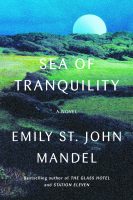
SeaofTranquility“A fantastic (in all senses of the word) novel that somehow weaves a mystery and time travel and colonies on the moon and a pandemic and a double homicide together into a beautiful, life-affirming story.” – Winnipeg Public Library, Canada

“A masterpiece of speculative fiction, tying together historical fiction, time travel and references to our own experiences living through the Covid-19 pandemic in an ultimately hopeful exploration of the nature of existence and human connection. A time traveling detective sent to gather evidence about a rift in the fabric of reality is the thread that draws together disparate characters across centuries including an author very similar to St John Mandel herself. She writes beautifully, rendering the old growth forests of British Colombia and decaying moon colonies of the future equally with equal parts romance, imagination and vivid detail, instilling nostalgia for both. Captivating, deceptively light, Sea of Tranquility nevertheless touches on weighty topics—colonialism, the environment, loneliness, morality in a thought-provoking way.” – Ottawa Public Library, Canada

She’s a killer (Fiction) by Kirsten McDougall (New Zealand)

“Set in the very near future in New Zealand where the effects of climate change are really beginning to bite and affect both our physical world but also our society. The book is multi-layered, often very funny in a dark way, contains many layers of twists and turns and is a fabulous read to boot. It’s a  fast-paced thriller which boasts great and complex characters. It’s both personal and intimate and about New Zealand and also the World simultaneously, dealing with global issues and events in a unique fashion.” – Wellington City Library, New Zealand

Silent Winds, Dry Seas by Vinod Busjeet (Mauritius/US)

“We are happy to nominate this novel from a local writer. The writing is engaging and evocative. The poetry of language successfully evokes a richly tropical, multi-sensual ambience. The scents are olfactible, colours brilliant, heat diaphoretic. The author skillfully dramatizes and limns distinctive and fascinating characters: Vishnu’s extended and extensive family, and community members and neighbours, fully developing their individual personalities and visages. They are not cardboard, they breathe. The plot itself incorporates global historical events as well as those in the Mauritian march to independence that serve to place the story in time. The end result is that you enjoy a quick-paced story while learning a bit about a place you never have been. A thoroughly enjoyable read.” – DC Public Library, USA

Small Things Like These (Fiction) by Claire Keegan (Ireland) – Read my review here

“With exceptional grace, economy and storytelling skill, Keegan has penned a classic story of moral courage that encapsulates so much of what it means to be human today. This short novel is bigger than any award but deserves all the recognition it can get.”– Chicago Public Library

“A tiny, perfect novel reminding us of a shameful part of Ireland’s history, seen through the eyes of a coal merchant whose eyes are opened to the iron grip of the Catholic church on the hearts and minds of his community. Heart-breaking and thought provoking.” – Waterford City and Council Library Services

“116 pages of beautifully written prose, the story centres around Bill Furlong, his upbringing, and his empathy to the inmates of the local Magdalene convent. Claire Keegan’s sublime and moving novel, covering the weeks before Christmas 1985, shows the importance of facing up to our past, and the historic collusion between Church, State, and Irish society. As Bill’s wife remarked; “If you want to get on in life, there’s things you have to ignore, so you can keep on.” – Dún Laoghaire-Rathdown Libraries, Dublin

“The master storytelling is in Furlong, as the gentle quiet hero. The reader would follow him to the darkest pits and back, and we do. This is a really important novel for a society where absolute authority has reigned. By the end of this book, the soul feels a little healed. “– Galway Public Libraries

Song for the Missing (Historical Fiction) by Pierre Jarawan (Lebanon/Germany) tr. Elisabeth Lauffer (German)

“2011. During the troubled times of the Arabic Spring, Amin recalls the year 1994, when he, as an orphan, came with his Grandma from Germany to Lebanon. He remembers the taboo of speaking about the 17.000 missing people in Lebanon and the silent grief of their relatives. Little by little, Amin discovers that his parents belong to the missing persons. With his friend Jafar, Amin roams Beirut and its traumatized population, until he meet a story teller, who sparks Amin’s interest in books.

Rooted in the oral storytelling traditions of the Orient and passionate, Pierre Jarawan narrates stories of the people of Lebanon to make the reader feel what is lost. A touching, political novel and a varied family story. “–  Leipziger Städtische Bibliotheken, Germany

Sons of the People: The Mamluk Trilogy (Historical Fiction) by Reem Bassiouney (Egypt) tr. Roger Allen (Arabic)

“Set against a historical backdrop, Sons of the People: The Mamluk Trilogy sheds light on the last days of the Mamluk dynasty before its downfall. The Mamluks were defeated by the Ottoman troops in 1517 at the battle of Marj Dabiq, after which Tuman Bay was beheaded. The incidents of the trilogy start with the story behind the construction of the mosque of Sultan Hassan, whose architect is the offspring of a Mamluk prince who married an Egyptian girl, Zineb, under duress. Eventually, the mosque appears to be the dominant motif in the trilogy, which creates a well-wrought narrative, helping Bassiouney to depict a vivid picture of the social, political and economic life in Egypt under the rule of the Mamluks; a period that has always raised very controversial questions concerning its cultural and political inheritance. With the second story, the narrative shifts to different times where the very mosque becomes a bloodbath of the fighting Mamluks. In the final one, the conquering army ravishes the riches of mosque. Reem Bassiouney is a distinguished Egyptian novelist. She also received the Naguib Mahfouz Medal for Literature.” – Bibliotheca Alexandrina, Egypt

The Anomaly (Popular Fiction) by Hervé Le Tellier (France) tr. Adriana Hunter 

“In this highly original and inventive novel, Hervé le Tellier introduces his characters in chapters very different in tone to mix such genres as thriller, science-fiction, comedy or spy novel. Though mostly entertaining in tone with its use of pastiche and satire, the novel also tackles darker issues such as homophobia in the world of hip hop, cancer, child abuse, intricate love affairs, unethical business. This puzzling speculative fiction with its spatio-temporal rift also questions our perception of reality and ourselves.” – Bibliothèque publique d’Information, Paris, France

The Antarctica of Love(Literary Fiction) by Sara Stridsberg (Sweden) tr. Deborah Bragan-Turner 

Antartica-of-Love-by-Sara-Stridsberg“Inni, a prostitute and drug addict, is brutally murdered in a forest. From the realm of the dead, she recounts her broken life. Rhythmically, her story returns to the end point of her existence, when the Hunter has ushered her into his car for a final journey. Carried by a powerful and poetic writing, this book sublimates the unbearable.” – Bibliothèque Municipale de Reims, France

The Bones of Barry Knight (Social Justice Fiction) by Emma Musty (UK)

“The Bones of Barry Knight is a contemporary novel focusing on a refugee camp in an unnamed country. It is very moving as it depicts the impact of war on everyday people. It is raw and unflinching, but also full of poignant beauty.” – Redbridge Library London, UK

The Book of Form and Emptiness (Literary Fiction/Magic Realism) by Ruth Ozeki (US)

“This beautifully written book deals with issues of family love, mental illness, grief and loss, and the importance of friends. It is philosophical, heart-breaking and empowering, and it is also full of joy.” -Dunedin Public Libraries, NZ

“The newest title from a beloved local author, this book takes place between the public library and the youth psych ward. It is simultaneously whimsical, philosophical, and heart-wrenching. It blends sympathetic characters and a vigorous engagement with everything from our attachment to material possessions to the climate crisis.” -Vancouver Public Library, Canada

The Clockwork Girl (Historical/Gothic Fiction) by Anna Mazzola (UK)

“A thoroughly immersive read, captivating and utterly thrilling. It’s easy for the reader to ensconce oneself in its masterfully crafted, self-contained universe. The historical setting is commendably subtle, suggested rather than imposed upon the reader. Simply superb!” – Tampere City Library, Finland

The Forests (Fiction/Dystopia) by Sandrine Collette (France) tr. Alison Anderson (French) 

“The world is on fire. Only armed with love and hope, the young Corentin begins a terrible journey to the remote Valley of Forests, looking for Augustine his adoptive grandmother. A powerful and frightening post-apocalyptic novel.” – Réseau de Bibliothéques de Colmar, France

The Good Women of Safe Harbour (Uplifting Fiction) by Bobbi French (Canada)

“The Good Women of Safe Harbour by Bobbi French is a brilliant novel with rich characters and a strong sense of place. Set in Newfoundland in the final, beautiful summer of Frances Delaney’s “small” life, this book is wildly joyful and deeply sad. It challenges the reader to reevaluate the ways in which we see our lives, the good and the bad. This novel handles such difficult topics as mental illness, assisted suicide, abortion and mothers separated from their children while never for a moment leaving the central premise that life is beautiful and precious and must be celebrated. This book is a celebration.” – Newfoundland and Labrador Public Libraries, Canada

The Island of Missing Trees (Fiction) by Elif Shafak (Turkey/UK)
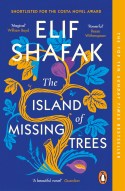
The-Island-of-Missing-Trees“This was a beautifully written book that wove true historical events into a thought provoking and emotional book. The characters are fully formed and bring to life the story of turmoil, betrayal, the need for understanding and acceptance , flitting between the present day and 1970s. The Fig Tree was a particularly unique narrator – and a reminder of the impacts of war of community and nature.” – Glasgow Life, Scotland

“A love story and a history of a long-lived conflict in the Island of Ciprus, love and hate, memory and trauma are perfectly represented.” -Biblioteca Nazionale Vittorio Emanuele III – Napoli

 “The Island of Missing Trees is a cleverly constructed novel with a touch of magical realism. It is masterfully told and written in an elegant language. Shafak explores the consequences of the civil war on ordinary lives and future generations. Highlighted themes are migration, homophobia, religion, loss and family secrets. Shafak inspires and delivers a beautiful, powerful novel full of empathy and hope.” – Openbare Bibliotheek Brugge (Bruges Public Library)

“This novel provides a human and compassionate account of tragic, traumatising, troubling and turbulent past of Cyprus. It shows us fractured communities torn apart by war, partition, division, religion, love, loss, grief, migration, the natural world, and the search for a sense of identity and belonging that refuses to be denied. Shafak writes through the prism of hope, moving on, renewal and healing, of the need to tell the stories of the past, rather than burying them, addressing the issues that hurt, and extend our concern and eyes to the natural world, to recognise its central integral place, like the fig tree growing in the tavern, within humanity and connect with it in the way our ancestors would have done.” – Rede de Bibliotecas de Lisboa

The Lincoln Highway (Popular Fiction) by Amor Towles (US)

“This title was the most popular 2021-22 Adult Fiction book read by Iowa City Public Library patrons last year.” – Iowa City Public Library

The Magician (Literary Fiction) by Colm Tóibín (Ireland)

“A beautifully written fictionalised biographical novel about Thomas Mann. He struggles to come to terms with disaster in his family, hidden desire and nationality. He opposes Nazism and has to flee from Germany to the United Stated and Switzerland. The novel triggers you to (re)read the work of Nobel Prize winner Thomas Mann.” – Openbare Bibliotheek, Gent, Belgium

The Masterpiece by Ana Schnabl (Slovenia) tr. David Limon 

“What really interests the author and what she excels at showing is the human condition, the motivations and desires of her characters. In rich literary prose, she discusses the cost of personal autonomy and the explosive power of love. She also provides insight into the writing process and sheds light on a vital component of producing art with the aid of her protagonists.” – Ljubljana City Library, Slovenia

“With The Masterpiece, Ana Schnabl proved her stylistic exceptionality, you don’t skip lines with her.” –  Mariborska Libraries, Slovenia

The Morning Star by Karl Ove Knausgaard (Norway) tr. Martin Aitken 

“The Morning Star is a staggering, ambitious work about the small and the grand things. We meet a collection of people, loosely connected, who each get to tell their story. One night, in the middle of regular life, an enormous star appears in the sky. Nobody knows what it is, and after a little while things go back to normal. But not quite.” – Solvberget Library and Culture Centre, Norway

The Sentence; A Novel (Fiction) by Louise Erdrich (US) 

“The Sentence is a captivating and inventively crafted novel. Tookie, the main character, is a middle-aged Native American woman just getting by and working in a Minneapolis bookstore that specialized in subjects of Indigenous culture and history. We get to know Tookie and her friends and family very well. They are each unique yet very believable. Even the eccentric ghost who appears intermittently is believable. This novel has it all: a compelling plot, sometimes heart-breaking, sometimes laugh-out-loud funny; inventive word play; and a lively cast of colourful characters trying their best to honour their indigenous identities amid often cruel and inhospitable surroundings. – New Hampshire State Library, USA

The Trees: A Novel (Popular Fiction) by Percival Everett (US) 

“The Trees is a powerful social satire of lasting importance.” – Free Library of Philadelphia, USA

The White Bathing Hut (Fiction) by Thorvald Steen (Norway) tr. James Anderson 

“Since he was a youth he has lived with a rare muscle disease, but only when he is in his 60s and sitting in a wheelchair does he learn the truth about his grandfather and uncle, who had the same hereditary disease, and that his own mother never has told the truth.” – Olso Public Library, Norway

The Wonders (Literary Fiction) by Elena Medel (Spain) tr. Lizzie Davis and Thomas Bunstead

“Elena Medel’s first novel is a poetic and vivid portrait about two Spanish working-class women, Alicia y María, who are limited by class and gender dynamics. The novel stands out for its rhythmic prose and unforgettable characters.” – Biblioteca de Andalucía, Spain

Time Shelter by Georgi Gospodinov (Bulgaria) tr. Angela Rodel 

“A dystopian vision of Europe and the world in the face of a personal and collective memory breakdown leading to ‘a flood of the past’. Smuggling poetry into fiction, his style is both poetic and philosophical yet readable, funny, self-ironic. Gospodinov’s literature is coming from a small language and territory in the periphery of Europe, but has the power of giving meaning and empathy through great narrative voices and storytelling skills.

He is the most read author not only at the Sofia City Library, but also at the libraries across the country. A number of meetings about the novel were held in the library with various readers, provoking interesting discussions. ” – Sofia City Library, Bulgaria

Tomb of Sand (Literary Fiction) by Geetanjali Shree (India) tr. Daisy Rockwell (Hindi)

“This is an amazing and experimentally written book. Geetanjali Shree’s playful tone and exuberant wordplay results in a book that is engaging, funny, and utterly original, at the same time as being an urgent and timely protest against the destructive impact of borders and boundaries, whether between religions, countries, or genders, highly recommend it, especially since it gives an insight to many customs and habits of India. A rare gem of a novel.” –  India International Centre, India

What Strange Paradise by Omar El-Akkad (Canada)

What-Strange-Paradise-Omar ElAkkad“The refugee crisis told through the eyes of a child highlights the difficult circumstances of a group of Syrians on a boat in the Mediterranean, but underscores a sense of humanism binding all people together. ” – San Diego Public Library, USA

Where You Come From by Saša Stanišić (Bosnia-Herzegovina/Germany) tr. Saša Stanišić (German)

“Saša Stanišić and his mixed family (Serbian and Bosnian) flee from Yugoslavia in the early 1990s and end up in Heidelberg, Germany, where they struggle to integrate, to a large extent because of the low paying jobs available to immigrants. Saša Stanišić tells his personal story in a touching, exciting and stylistic outstanding narrative Style. The novel was successful adapted for the Theater and won the German Book Prize in 2019.” – Stadtbücherei Heidelberg, Germany

“Third novel from internationally acclaimed and bestselling Bosnian-German author Saša Stanišic. The story follows a young refugee and his family who fled to Germany from Yugoslavia in the 1990s. A heartwarming and moving reflection on the process reshaping ones identity between countries, cultures and languages.” – Stadtbibliothek Bremen, Germany

Young Mungo (Fiction) by Douglas Stuart (Scotland/US)

“This is Stuart’s follow up to his debut Booker Prize-winning novel, Shuggie Bain, and while both books define themselves by a fractured Glaswegian family with an unreliable and fragile mother, Young Mungo turns toward the fifteen-year-old title character (named after the patron saint of Glasgow) as he navigates both first love and unrelenting danger.

This is a challenging novel of cruelty and carelessness where conflict – ideological and physical – persists, but Stuart’s compassionate mastery of language and storytelling provides an unexpected and gleaming tenderness.” – Carnegie Library of Pittsburgh, USA


Child of Fortune by Yuko Tsushima tr. Geraldine Harcourt

‘Hark, my distant, quiet friend, and feel
Your breath still enriching this emptiness.’
RilkeSonnets to Orpheus

Such a thought provoking novel.

Child of Fortune begins inside Koko’s dream. Dreams appear often in the narrative, as do memories, not exactly nightmares, they make her uneasy, leave her feeling unsatisfied.

The dream consisted simple of staring at the ice mountain. It had no beginning and no end. When she opened her eyes the mountain was there, and when she closed them it was gone. Cold and abrupt, it wouldn’t allow her emotions free play like any ordinary dream.

Japanese literature literary fiction36 year old Koko raises her 11 year old daughter Kayako alone, she works part time teaching piano, though the way she is obliged to teach it pains her. Since she bought her apartment (thanks to a partial inheritance) she has also become independent of her family, something her sister Shoko constantly criticizes her for.
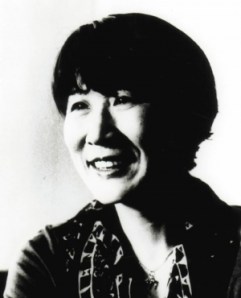
Shoko chose to stay living in the family home after the death of their mother, using her money to upgrade their lifestyle, the children’s schools. She is full of judgement. Undermining Koko, she lures the daughter away, to the point where Kayako only spends Saturday’s with her mother.

Koko was in fact proud of the way she and her daughter lived in their apartment – with no frills, and entirely on her own earnings – and she wanted Kayako to share that pride, but the cousins in their setting made a too-perfect picture.

Not wishing to nag and risk losing her completely (as she had done with the father and her lover), she allows her this freedom to come and go. She suspects the visit is a way of her sister keeping an eye on her. Her daughter confirms it.

That’s right. She said we can’t let your mother out of our sight or there’s no telling what she’ll get up to next.

Child of Fortune Dreams Ice Mountain Yuko

Photo Simon Berger @ Pexels.com

Koko begins to feel unwell.

She remembers her marriage to Hatanaka and how ill-suited they were, her husband so focused on his studies, never working, all his women friends, the loss of the few of her own, because they didn’t like him.

Though she has no memory of it, her father died when she was young, she knew he had gone to live elsewhere before she was born. Her mother too had raised her children alone.

Koko suspects she may be pregnant. She ignores it.

Three people. Koko was strongly attracted by the number’s stability. Not two, not four, but three. A triangle: a full, beautiful form. There was something to be said for the square, too, but the triangle was the basis of all form. The dominant.

She remembers her affair with Doi, three years before, how attentive he had become when he became a father himself. Then in the fall, she began seeing Osada, a friend of Hatanaka, stirring up old, deep regrets.

He reminds Koko of her brother who died, a child who found happiness in making others happy. The loss of this childhood connection is deep, profound, forgotten, almost non-existent. He had been Kayako’s age.

She was sure there could be no happiness for her without her brother. For the first time, Koko knew a kind of joy that had nothing to do with the intellect. The boy’s emotions were unclouded: what pleased him meant joy, what displeased him meant anger; but he experienced his deepest joy in enduring what displeased him for the sake of those he loved. She wondered why. Though he lacked intelligence, he was endowed with love, which was another kind of wisdom.

The sister arranges an interview for Koko’s daughter at the school her cousins attend. Koko isn’t comfortable but allows it. Kayako is worried about what to say about her father, having heard a lot of people are turned down because of their home background.

Koko’s dreams are like insights into a state of mind she can’t quite grasp. She is passive, the consequences of which threaten to overwhelm her, the potential loss of her daughter, the pending arrival of a baby, the secrecy around it. She thinks of everything, except what she must do, make a decision, confront reality. She has become somewhat paralysed.

She could hear her sister’s voice now, drawing gradually closer: so you’ve finally begun to understand what a bad mother you’ve been, how little sense you’ve shown? And hear herself protest; no, that’s not it – don’t think I’ve liked choosing a different world from other people. I know I’ve been stubborn – but not about Kayako alone. All my life, though often I haven’t known which way to turn, I have managed to make choices of my own. I don’t know if they were right or wrong. I don’t think anyone can say that.

Because of the insight into her mind, her thoughts, dreams, her past, we see all aspects of Koko and we hear the damning, irresponsible voice of her sister, the judgement that wears down what little self-worth remains. There is no recognition of her pain, of her depression, neither seen within nor by others. It is never mentioned, never thought of, yet it is obvious.

One thing, though, was certain: that she had never betrayed the small child she’d once been; the child who had pined for her brother in the institution; the child who had watched her mother and sister resentfully, unable to understand what made them find fault with her grades, her manners, her languages. And she was not betraying that child now, thirty years later. This, she had always suspected, was the one thing that mattered. And although she was often tempted by a growing awareness of the ‘proper thing to do’ once Kayako was born – not only in the harsh advice she was constantly offered by others, but within her own mind – in the long run her choices had always remained true to her childhood self.

Tsushima explores this in a powerful stream of consciousness narrative that invites all kinds of reactions from readers, many sit in judgement, casting Koko as the bad mother, the unconventional mother, the selfish woman pursuing her own desires.

And yet, she is the new woman, safeguarding the home, choosing to do something she loves without it stealing all her time, so she has time for her daughter and herself. She is independent and does not aspire to that which accrued wealth can buy.

It is a reflection on the many manifestations of grief, of events, moods and emotions that arrive unbidden; often unseen, rarely unexplained, but very present; and how little patience our society can have for understanding, how punitive we can be in our insistence on conventionality, how intolerant of depression, of weakness, of prolonged grief.

Rather than stand for any one view, Tsushima presents her character Koko and shows us the effect of her struggle for freedom.

As I finished the book, which was originally published in 1978, I was struck by the relevance of a quote by the French author Constance Debré, author of Love Me Tender translated by Holly James; in the Guardian on 14 Jan, 2023:

“There’s always a price to pay for freedom. To me, that’s a happier, livelier way to see things: rather than saying there are injustices or blows raining down on you, you realise it’s all because you’re living life in the way you want, seeking out an existence … trying to give life some shape. That’s why life and literature are so connected: it’s the quest for form.”

Yuko Tsushima, Author

Japanese literature feminismYuko Tsushima (1947-2016) was a prolific writer, known for her stories that centre on women striving for survival and dignity outside the confines of patriarchal expectations. Groundbreaking in content and style, Tsushima authored more than 35 novels, as well as numerous essays and short stories.

Like her protagonist in Child of Fortune, Tsushima’s childhood was marked by the death of her disabled brother. Her father, Osamu Dazai was one of the most celebrated Japanese writers of the 20th century, who passed away when she was a year old.

Tsushima’s 1978 novel Child of Fortune  won the 1978 Women’s Literature Prize in Japan, it was published in English in 1986 by The Women’s Press, earning the translator Geraldine Harcourt the Wheatland Foundation’s translation prize in 1990.

Further Reading

New York Times: The Overlooked Autofiction of Yuko Tsushima By Abhrajyoti Chakraborty

Free Love by Tessa Hadley

Nothing Free About It

relationshipsAfter seeing this title on a few end of year Top Fiction Reads for 2022, this was one of the first books I chose, to get back into the reading rhythm. Perhaps for that reason, it took a little while to get into, but once it reached the first significant turning point, the plot became more interesting and surprising and the choices the author made, much more thought provoking. It would make an excellent book club choice.

In essence, 40 year old Phyllis – who was living a conventional life as a housewife with two children, her husband Roger working at the Foreign Office – steps out of the submissive role she has been wed to, when a friends’ son comes to visit. Prior to this moment she hadn’t appeared to be frustrated with her life.

“In fact she was easy, an easy person, easily made happy, glad to make others happy. She was pleased with her life. The year was 1967.”

The encounter leads to numerous consequences, increasingly dramatic, that will affect everyone in the family. Our housewife leaves her middle class, manicured English lawn suburb for a rundown, seedy apartment building in Ladbroke Grove, teeming with diversity, creativity, and people living in the moment.

A Housewife Acting on a Crazy Impulse. Really?

Free Love Tessa Hadley Sixties fashion UtopiaIn the initial chapters, it was difficult to believe. Every reader will bring to their reading of the story, their own imagining of how this mother could abandon all for something that feels like it will be fleeting.
But then you slowly accept it, recalling the era in which it was set, knowing there was a whole other way of living and being in the 1960’s, a revolution against convention and authority, a risk taking utopian fever spreading its tentacles among the young and not so young. A time bomb, but still.

Colette, Not Yet Colette

The teenage daughter Colette is the more tortured soul, an astute observer, a lonely intellectual who read everything, though refused to read the novelist her mother said she was named after.

“Her father’s intelligence was so much stronger than her mother’s, Colette thought; yet it was the slippery labyrinth of her mother’s mind – illogical, working through self-suggestion and hunches according to her hidden purposes – which was closed to Colette, and therefore more dangerous for her.”

Colette Reading

              The Other Colette

While we may feel sorry for the children – the son was always going to be sent away to boarding school, an interesting juxtaposition, to set side by side, twin forms of abandonment – it is interesting to see how the relationship between mother and daughter evolves under the new circumstance of their lives.

Colette starts skipping school.

“When she got to London Bridge she put her satchel and uniform in a left-luggage locker. All she did in the city was walk around in the crowds, pretending to be absorbed and purposeful like everyone else. She went to browse in certain bookshops, in Carnaby Street she bought tinted sunglasses, underground magazines and cones of incense from stuffy little shops, also henna to dye her hair at home. Sometimes she screwed up her courage to ask for a glass of barley wine in a pub, then sat alone defiantly to drink, reading.”

Honesty versus Secrecy

It was interesting to imagine a conventional housewife having such courage or impulsivity to do what she did. The choices Phyllis makes are surprising and daring, and just when we think she is the only one capable of making such counter conventional choices, there is another twist in the story.

It becomes a story about consequences, those that are dared lived out in the open, versus those that have been hidden. Then it gets really interesting. It makes you wonder, should those secrets be kept or shared? One can never predict the consequences of either route, but this story attempts to pit one against the other.

It reminded me of the experience of reading Brian Moore’s The Doctor’s Wife.

Coming Full Circle

The ending is more poignant than conclusive, it reiterates the messiness of real lives and the power of forgiveness, the benefit of setting aside judgement, of being true to oneself without having to reject the other.

“Phyllis had been braced to defend herself against her husband. On her way to meet him, she’d summoned an idea of his authority, implacable and punitive, mixed up with his role in the world of Establishment power. Now she was taken aback by how he bent his head before her, opening himself so easily; his kindness drew one sob out of everything loosened and raw inside her.”

An enjoyable and thought provoking read ad an author I’d be happy to read more of. Have you read any of Tessa Hadley’s novels?

N.B. Thank you to the publisher for providing an ARC via Netgalley.

Further Reading

NPR review –A woman embraces change in the 1960s in Tessa Hadley’s novel ‘Free Love’ by Heller McAlpin

Guardian review: sexual revolution in 60s suburbia by Michael Donkor

Interview with Lisa Allardice: Tessa Hadley: ‘Long marriages are interesting. You either hang on or you don’t’

Guardian Short Story, Dec 18, 2022 : Juana the Mad – A chance encounter at a Christmas party churns up buried memories in this exclusive tale by the prize-winning novelist.

Tessa Hadley, Author

Free Love London based fiction A9Tessa Hadley is a British author of 8 novels, short stories and nonfiction. Born in Bristol in 1956, she was 46 when she published her first novel, Accidents in the Home, which she wrote while bringing up her 3 sons and studying for a PhD.
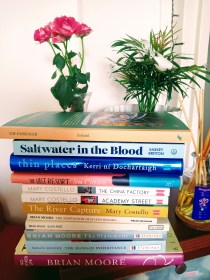
Her writing focuses on women, families and relationships – what she has called “the intricate tangle of marriage, divorce, lovers, close friends, children and stepchildren – the web people create for themselves”.

She reviews regularly for the London Review of Books and is a frequent contributor to the New Yorker and Granta. Professor of Literature and Creative Writing at Bath Spa University, her special interests including Jane Austen, Henry James, Jean Rhys and Elizabeth Bowen.

“I love the irresponsibility of short stories. Writing short, you create with a free hand. Each new development you imagine can be drawn in to the story without consequences, with all the lightning-bolt effect of a first thought, no requirement to elaborate a hinterland. A quickly scribbled indication of background can stand in for a whole city, a whole past. And yet I can’t stop wanting to write novels too. Novels see things through. The reader is in for the long term; the writer is in for a sizeable stretch of her life. In a novel there’s not only the dazzle of the moment, but also the slow blooming of the moment’s aftermath in time, its transformation over and over into new forms. I love to write about the present, and the past that’s recent enough for me to remember. The fiction writer’s ambition is modest and overweening: to take the imprint of the passing moment, capture it in the right words, keep it for the future to read.” Tessa Hadley, Author Statement

Top Reads of 2022

It feels a little fraudulent to write about my favourite reads of 2022, when I forbid myself to read or write about books for six months of the year, while I was working on a creative writing project. Writing about books is one of my greatest pleasures, however I realised that if I could harness that energy and apply it to something else I wished to complete, perhaps I could finish that other project.

I did finish it, so I’m giving myself a break and reopening the blog door, keeping the ‘thoughts on books’ muscle active.

An Irish Obsession and A Foreign Language Desire

Reading Ireland Month 2022 TBRThough I read less than half the number of books of 2021, I did manage to read 30 books from 13 countries, a third Irish authors, thanks to Cathy’s annual Reading Ireland month in February. I’m looking forward to more Irish reads this year; there were many promising reads published in 2022 that I wasn’t able to get to.
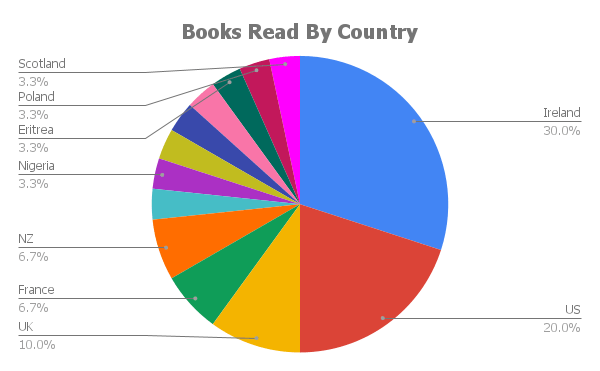
Sadly I missed Women in Translation month in August, though I managed to read six books in translation, two making my top reads of the years.

2023 will definitely be better for translations, since I’ve taken out a Charco Press subscription, giving me the opportunity to read a few Latin American contemporary authors from Argentina, Brazil, Bolivia, Peru, Colombia and Mexico.

Books Read By Country

Non-Fiction, A Rival to the Imagination

As far as genre went, there was a much greater balance between fiction and non-fiction than in previous years, due to having been in the mood to read a lot more non-fiction this year.

Books Read by Genre

And so to the books that left the most significant impression, where I have reviewed them I’ll create a link in the title.

One Outstanding Read

Was there one book that could claim the spot of Outstanding Read of 2022? This wasn’t easy to decide given most of my reading occurred in the beginning of the year, but as I look over the titles, there was one book that I remember being pleasantly surprised by and having that feeling of it not wanting to end, and being laugh out loud funny in places.

It is one of those novels, or perhaps I ought to say she is one of those writer’s whose works I wouldn’t mind being stuck on a desert island with, more than just a story, they open your mind to other works, stimulate curiosity and have a particular sensibility that reassures this reader that the novel will endure.

“I absolutely loved it and was surprised at how accessible a read it was, given this is an author who recently won the Nobel Prize for Literature. Her power to provoke by telling a story is only heightened by the suggestion on the back cover that her ideas presented here caused a genuine political uproar in Poland.” – extract from my review

So here it is, my One Outstanding Read of 2022 was :

Olga Tokarczuk’s Drive Your Plow Over the Bones of the Dead translated from Polish by Antonia Lloyd-Jones

In no particular order, here are my top 5 fiction and non-fiction reads for 2022.

Top 5 Fiction

Peirene Press German Literature Women in TranslationMarzhan, mon amour, Katja Oskamp (Germany) translated by Jo Heinrich

– What a joy this Peirene novella was, one of those rare gems of what I perceived as uplifting fiction, until I lent it to a friend who is a nurse, who DNF’d it, making me realise that what can be delightful for one reader can be quite the opposite for another, in this case, someone who had heard too many sad stories from patients, requiring an empathetic barrier, to endure the overwhelm it creates.

Marzhan is a much maligned multi-storied, communist-era, working class quarter in East Berlin, where our protagonist, a writer, leaves her career behind to retrain as a chiropodist, due to the sudden illness of her husband. In each chapter, we meet one of her clients, members of the local community, many who have lived there since its construction 40 years earlier. A chronicler of their personal histories, we witness the humanity behind the monolith structures of the housing estates, the connections created between the three women working in the salon and the warmth and familiarity they provide to those who cross their threshold. A semi-autobiographical gem.

Northern Irish Literature novellaThe Last Resort, Jan Carson (Northern Ireland)

– Another novella, this was another delightful, often hilarious story, with well constructed characterisation. Set in a fictional Seacliff caravan park in Ballycastle on the North Coast of Ireland, a group gather to place a memorial bench on the cliff top for a departed friend.

Each chapter is narrated by one of 10 characters, revealing their state of mind and concerns, while exploring complex family dynamics, ageing, immigration, gender politics, the decline of the Church and the legacy of the Troubles.  A sense of mystery and suspense, pursued by teenage sleuth Alma, lead to the final scene, the cliff-hanger.  A delightful afternoon romp.

Ukraine historical fictionI Will Die in a Foreign Land, Kalani Pickhart (US) (Set in Ukraine 2013/14) (Historical Fiction)

– Set in Ukraine in 2014, during the Euromaiden protests, four characters with different backgrounds (two outsiders, two protestors) cross paths, share histories, traverse geography and represent different perspectives in this Revolution of Dignity, the origin of a conflict that endures today.

The narrative is gripping, informative, well researched and had me veering off to look up numerous historical references. Moved by the documentary, Winter on Fire: Ukraine’s Fight for Democracy, Pickhart was struck by the fighting spirit of the Ukrainian people against their government and the echo of the past, when the bells of St. Michael’s Golden-Domed Monastery rang for the first time since the Mongols invaded Kyiv in 1240AD.

“Though it is novel told in fragments, through multiple narratives and voices, there is a fluidity and yet the plot moves quickly, as the connection(s) between characters are revealed, their motivations and behaviours come to be understood and revelations acknowledge the pressures and complexities of life in this country, some things universal, others unique to their history and geography.”

Dublin One City One Read Irish LiteratureNora, A Love Story of Nora Barnacle & James Joyce, Nuala O’Connor (Ireland) (Historical Fiction)
– Absolutely loved it. I was instantly transported into Nora’s world, seeing their life and travels, the many challenges they faced and the unique connection that kept them together throughout. I knew nothing of their lives before picking this up during the One Dublin, One Book initiative in April 2022. Knowing now all the many places they lived and how Europe allowed them to live free of convention, I’m curious to encounter the stories Joyce created while Nora was keeping everything else together for him.

It is incredible that Nuala O’Connor managed to put together such a cohesive story given the actions of Joyce’s formidable grandson/gatekeeper Stephen, who did all he could to prevent access or usage of the family archive, including the destruction of hundreds of letters, until his death in 2020.

In 2023 the One Dublin, One Book read will be The Coroner’s Daughter by Andrew Hughes.

London Homesickness New Zealand writers abroadTowards Another Summer, Janet Frame (NZ) (Literary Fiction)

–  What a treat this was, one of Janet Frame’s early novels written in the 1960’s when she was living in London, one she was too self conscious to allow to be published, so it came out posthumously in 2007. Written long before any of her autobiographical work, it clearly was inspired by much of her own experience as a writer more confident and astute with her words on the page than social graces.

In the novel, a young NZ author living in a studio in London, is invited to spend a weekend with a journalist and his family, something she looks forward to until beset by anxiety and awkwardness. Her visit is interspersed with reminiscences of her homeland, of a realisation of her homesickness and desire to return. She imagines herself a migratory bird, a kind of shape-shifting ability that helps her to be present, absent, to cope with the situation and informs her writing.

“A certain pleasure was added to Grace’s relief at establishing herself as a migratory bird. She found that she understood the characters in her novel. Her words flowed, she was excited, she could see everyone and everything.”

Top 5 Non-Fiction

nonfiction essays love effect of domination patriarchy black woman perspectiveAll About Love: New Visions, bell hooks (US)
– What a joy it was to discover the voice and beautifully evolved mind of bell hooks in these pages.

Her perspective is heart lead, her definition of love leaves behind conditioned perceptions of romance and desire and the traditional roles of carer, nurturer, provider – and suggests that it might be ‘the will to do for oneself or another that which enables us to grow and evolve spiritually’ love becomes a verb not a noun.

It is a way of looking at this least discussed human emotion and activity that fosters hope and encouragement, in an era where we have been long suffering the effects of lovelessness under a societal system of domination.

essays Sara Baume Colum McCann Europa EditionsThe Passenger – Ireland (Essays, Art, Investigative Journalism)

– This collection of essays, art and information about contemporary Ireland is an underrated gem! Europa Editions noticed my prolific reading around Ireland after I read Sara Baume’s wonderful A Line Made By Walking and mentioned that she was one of the contributors to this stunning collection.

I planned to read a couple of essays each day, but it was so interesting, I kept reading until I finished it. Brilliant!

Across 11 essays, the collection explores the life and times of modern Ireland, with contributions from Catherine Dunne and Caelinn Hogan – discussing the decline of the Church’s influence, the dismantling of a system designed to oppress women and a culture of silence in The Mass is Ended; William Atkins writes a fascinating essay on the Boglands; Manchan Magnan shares how the contraction of a small local fishing industry heralded the decline and disappearance of much of the Irish language in An Ocean of Wisdom; Sara Baume writes of Talismans and Colum McCann of nostalgia in Everything That Falls Must Also Rise.

The BBC’s former political editor in Northern Ireland Mark Devenport, writes about a region hanging in the balance, the UK and the EU, torn between fear and opportunity and the distinct feeling of having been abandoned in At The Edge of Two Unions: Northern Ireland’s Causeway Coast; while Lyra McKee’s gut-wrenching essay Suicides of the Ceasefire Babies investigates the troubling fact that since the signing of the Good Friday Agreement in 1998, more people in Northern Ireland have committed suicide than were killed during the 30 year conflict.

“Intergenerational transmission of trauma is not just a sociological or psychological problem, but also a biological one.”

And more, a brilliant essay on citizen assemblies, another on Irish music, rugby and a less enchanting one that explores locations in The Game of Thrones.

What My Bones Know Stefanie FooWhat My Bones Know, A Memoir of Healing from Complex Trauma, Stefanie Foo (US) (Memoir)
– This was a gripping memoir I couldn’t put down. I read it for reference purposes, interested in the solutions she finds for healing complex PTSD. It is well researched, while each section contributes to the arc of a comprehensive and compelling narrative.

Stefanie Foo had a dream job as an award-winning radio producer at This American Life and was in a loving relationship. But behind her office door, she was having panic attacks and sobbing at her desk every morning.  After years of questioning what was wrong with herself, she was diagnosed with complex PTSD – a condition that occurs when trauma happens continuously, over the course of years.

She becomes the subject of her own research, her journalist skills aiding her to interview those responsible for various discoveries and healing modalities, gaining insights into the effect and management of her condition, eventually reclaiming agency over it.

“Every cell in my body is filled with the code of generations of trauma, of death, of birth, of migration, of history that I cannot understand. . . . I want to have words for what my bones know.”

Ancestor Trouble Maud NewtonAncestor Trouble, A Reckoning & A Reconciliation, Maud Newton (US) (Memoir/Genealogy)

– This was a fascinating read and exploration, at the intersection between family history and genetics; the author sets out to explore the nurture versus nature question with the aid of DNA genetic reports and stories both documented about and passed down through her family. Some of those stories and people she was estranged from create a concern/fear about what she might inherit.

Maud Newton explores society’s experiments with eugenics pondering her father’s marriage, a choice he made based on trying to create “smart kids”. She delves into persecuted women, including a female relative accused of being a witch, and discovers a clear line of personality inclinations that have born down the female line of her family. A captivating and highly informative read.

My Fathers Daughter Hannah Azieb PoolMy Father’s Daughter, Hanna Azieb Pool (UK/Eritrea) (Adoptee Memoir)

– A memoir of the Eritrean-British journalist, Hannah Azieb-Pool, who returns to Eritrea at the age of 30 to meet her family for the first time. In her twenties, Azieb-Pool is given a letter that unravels everything she knows about her life. Adopted from an orphanage in Eritrea, brought to the UK, it was believed she had no surviving relatives. When she discovers the truth in a letter from her brother – that her birth father is alive and her Eritrean family are desperate to meet her, she is confronted with a decision and an opportunity, to experience her culture origins and meet her family for the first time.

It’s a story of uncovering the truth, of making connections, a kind of healing or reconciliation. Ultimately what has been lost can never be found. It’s like she was able to view an image of who she might have been and the life she may have had, and while viewing it was cathartic, it is indeed an illusion, a life imagined, one never possible to live.

 *  *  *  *  *  *

Have you read any of these books? Anything here tempt you for reading in 2023?
Happy Reading All!

Hamnet by Maggie O’Farrell

Hamnet was the winning novel of the Women’s Prize For Fiction in 2020 and won the fiction prize at the National Book Critics Circle Awards (2020). It was author Maggie O’Farrell’s eighth novel.

Behind Every Great Man…Is An Often Untold Story

Anne Hathaway Shakespeares wife HamletSet in 1580’s Stratford, Warwickshire, the novel is about the meeting of two young people, their respective families, the life they create and the effect their twin children have on it.
Though the husband will become a famous playwright and name one of his plays after the son they lose, this isn’t a story that centres around him or his work, neither is it really about the son – those names are more like the bright lights that make us curious to see what the fuss is about.

Delightfully, it’s all about Agnes.

“If you ask someone what they know about Shakespeare’s wife, you’ll probably receive one of two answers. Either: he hated her. Or: she tricked him into marriage. Historians and biographers and critics have for a long time inexplicably vilified and criticized her, creating a very misogynistic version of her. I wanted to persuade people to think again, to not rush to conclusions.

We are so accustomed to calling her ‘Anne Hathaway’ but her father’s will clearly names her as ‘Agnes’. That was an electrifying, defining moment in the writing of the book. In giving her what is presumably her birth name, I’m asking readers to discard what we think we know about her and see her anew.” Maggie O’Farrell

Twin Everything

I expected to be gripped early on, so was surprised that it took a while to get into sync with the very descriptive, present tense, third person, omniscient narrative perspective. Initially it felt like listening to someone -while looking through a camera – describe in minute detail every single detail in the frame as it was moving quickly forward. 

It’s written in a dual narrative timeline in alternate chapters; the year that the twins fall ill and the year that these young parents meet. It is divided into two parts, Part 1 takes place before the death of Hamnet and the shorter Part 2, the aftermath.

The initial scene puts us in the eyes of this boy Hamnet as he rushes through his home and that of his grandparents, looking for someone, anyone, due to the sudden onset of deathly pestilence in his twin sister Judith.

Love Always Finds A Way

As the chapters switch between Hamnet’s alarm given the pending emergency and the year his parents met, we get to know his father, a Latin tutor, son of a glove maker/tyrant and his mother Agnes, a farmer’s daughter, living with her disapproving stepmother.

These young people become each others refuge from family situations they’d both like to escape. Agnes is highly intuitive, has an in-depth knowledge of herbalism and possesses a kestrel the local priest gave her. She is unlike other young women, self-possessed, ‘knowing’.

“Some have asked Susanna how her mother does it. They have sidled up to her in the market or out in the streets to demand how Agnes divines what a body needs or lacks or bursts with, how she can tell if a soul is restive or hankering, how she knows what a person or a heart hides.”

The novel traces their relationship, marriage and the sacrificial act that came from her ability to perceive what was best for her husband (facilitating his venturing to London to find and pursue his purpose) and what best for her three children, while highlighting the tragic demise of their son, a turning point in their relationship.

“She, like all mothers, constantly casts out her thoughts, like fishing lines, towards her children, reminding herself of where they are, what they are doing, how they fare.”

Even in the boys passing there is something mystical in the way it is rendered. The boy is a twin, but also the son of a woman in touch with nature and with a feeling for ‘the other side’. What Hamnet did to save his sister comes of both those mysteries.

How Women Shape The Lives of Others

Forget that the playwright Shakespeare is a character in this novel and read it for the unique individuals they might have been, as ordinary people in a community, coming together against the odds. I really enjoyed that this was so much more about Agnes and that she had gifts she seemed able to live with and use as a mature woman, without persecution. A result and reward of a difficult childhood, after the untimely death of her own mother.

“She grows up feeling wrong, out of place, too dark, too tall, too unruly, too opinionated, too silent, too strange. She grows up with the awareness that she is merely tolerated, an irritant, useless, that she does not deserve love, that she will need to change herself substantially, crush herself down if she is to be married. She grows up, too, with the memory of what it meant to be properly loved, for what you are, not what you ought to be.”

By deliberately not mentioning the husband’s name, we imagine this couple encountering each other, evolving together, moving apart and coming back together, for nothing can both unite and divide a couple quite like the grief of losing a child.

“What is given may be taken away at any time. Cruelty and devastation wait for you around corners, inside coffers, behind doors; they can leap out at you at any moment, like a thief or a brigand. The trick is to never let down your guard. Never think you are safe. Never take for granted that your children’s hearts beat, that they sup milk, that they draw breath, that they walk and speak and smile and argue and play. Never for a moment forget that they may be gone, snatched from you, in the blink of an eye; borne away from you like thistledown.”

A novel of an auspicious pairing of souls, of longing and grief, of sacrifice and regret, I really enjoyed it after the slow start, despite the narrative perspective at times keeping me at a distance from the characters.  O’Farrell does such a brilliant job in re-imagining this much maligned character, it makes you want to read and know much more about Agnes. About the women whose lives were rarely scribed.

Maggie O’Farrell, Author

Hamnet The Marriage Portrait Shakespeares WifeMaggie O’Farrell is a Northern Irish novelist, now one of Britain’s most acclaimed and popular contemporary fiction authors whose work has been translated into over 30 languages. Her debut novel After You’d Gone won the Betty Trask Award and The Hand That First Held Mine the Costa Novel Award (2010).

She has written 9 novels and a superb memoir, I’ve reviewed here: I Am, I Am, I Am, Seventeen Brushes With Death.

Her latest book set in Renaissance Italy, The Marriage Portrait, tells the story of a 16-year-old duchess and her fateful marriage to the Duke of Ferrara – based on the short life of Lucrezia de’ Medici.

Towards Another Summer by Janet Frame

This novel grew on me the more I read it and the less I expected from it.

A Kiwi Writer In London

London Homesickness New Zealand writers abroadThe story takes place over one weekend when a young New Zealand novelist named Grace Cleave, who is living in London, takes a train to spend the weekend with Philip, a journalist, his wife and two young children. She has escaped the city for a while after accepting an invitation to visit the family following an interview about her work and ambitions.

She is the author of a few published novels, a writer with an expanding reputation, living in a small, cold, uninspiring flat, moving between her writing desk, her therapist and a nagging yearning to be elsewhere. 

Keen to take up the opportunity to escape and the familiarity the visit may offer (they have a connection to her home country), she is disappointed to be confronted by dreadful anxiety once she arrives. Her tendency to analyse everything and to express herself more articulately in her thoughts (or on paper) than in actual conversation makes her feel shameful.  She has been invited in her capacity as a writer; she feels sure they expect more from her and sees herself as a disappointment, not measuring up to the perception created by her talent.

Grace was stricken with the terrible certainties and uncertainties of speech…The ritual of spoken communication is so firmly accepted that few people question it or dare to rearrange it. If you look towards someone, speak to that person, saying You, you, you, then what you say refers to that person; it’s all so simple.
Not being a human being and not being practiced in the art of verbal communication, Grace was used to experiencing moments of terror when her mind questioned or rearranged the established ritual; when commonplace certainties became, from her point of view, alarming uncertainties.

Homesickness

New Zealand landscape cabbage tree Janet FrameDuring the visit, many instances, objects and mutterings remind her of her own faraway home, memories of childhood intercede and brilliant metaphors come to her fully formed. It was as if she were being filled with future content and yet the contrast with how she came across to others was painful for her to witness.

Filled with longing born out of the loneliness of her self-imposed exile, she hoped to fill that void by being with someone who valued her work and understood her connection to a landscape elsewhere.

“So I, a migratory bird, am suffering from the need to return to the place I have come from before the season and sun are right for my return. Do I meet spring summer or winter? Here I live in a perpetual other season unable to read in the sky, the sun, the temperature, the signs for returning. Is it homesickness – ‘I know a place whereon…’ the matagouri, the manuka, the cabbage tree grow…”

A Migratory Bird

In her dream life, day or night, there are moments when Grace thinks of herself as a migratory bird.  It adds something to her work, to be able to retreat into this imagined form and see things from another perspective.

“A certain pleasure was added to Grace’s relief at establishing herself as a migratory bird. She found that she understood the characters in her novel. Her words flowed, she was excited, she could see everyone and everything.”

Semi-Autobiographical

It is all the more brilliant, having learned that it was published posthumously, that it is semi autobiographical, though written twenty years before any of her own autobiographical works. She set the novel aside referring to it as ’embarrassingly personal’. The character of Philip was based on a Guardian journalist who had interviewed her.

“I matter. I fly alone, apart from the flock, on long journeys through storm and clear skies to another summer. Hear me!”

Highly recommended for Janet Frame fans.

migratory bird, get on your bird, Janet Frame Towards Another Summer

Photo by Flo Maderebner on Pexels.com

Janet Frame, Author

Janet Frame died on January 29 2004 at the age of 79. She wrote novels, poems, and a three-volume autobiography that were read and admired worldwide. She won many awards and was short-listed for the Nobel Prize in Literature.

Further Reading

‘a sharp drama, of fleeing and missing, home’ – Guardian review by Catherine Taylor

Short Biography of Janet Frame – by Patrick Evans Dictionary of New Zealand Biography

The Janet Frame Collection, NZ On Screen – a collection of films and material relating to Janet Frame

Wrestling With the Angel – a brilliant biography written by esteemed historian Michael King


Booker International Prize Shortlist 2022

In my recent absence, six translated novels have been shortlisted for the International Booker Prize including book from six languages: Korean, Norwegian, Japanese, Spanish, Hindi and Polish.

Wildly original works of literature that will captivate readers, this year’s shortlisted books all explore trauma, whether on an individual or societal level. 

Translated literary fiction

Summaries of the novels are below, with the judges comments. The winners of the prize will be named on 26 May 2022.

The Shortlist

Heaven by Mieko Kawakami (Japan) Translated by Sam Bett, David Boyd

HeavenTold through the eyes of a 14-year-old boy subjected to relentless bullying, Heaven is a haunting novel of the threat of violence that can stalk our teenage years.

Instead of putting up resistance, the boy suffers in complete resignation. His sole ally is a girl classmate, similarly outcast and preyed upon by the bullies. They meet in secret to take solace in each other’s company, unaware that their relationship has not gone unnoticed by their tormentors.

Mieko Kawakami’s deceptively simple yet profound work stands as a testament to her remarkable literary talent. Here, she asks us to question the fate of the meek in a society that favours the strong, and the lengths to which even children will go in their learnt cruelty.

An intense, claustrophobic novel, Heaven uses its tale of middle school bullying to enact
Nietzsche’s critique of morality.

Elena Knows by Claudia Piñeiro (Argentina) Translated by Frances Riddle

Elena KnowsA unique story that interweaves crime fiction with intimate tales of morality and the search for individual freedom.

After Rita is found dead in the bell tower of the church she used to attend, the official investigation into the incident is quickly closed. Her sickly mother is the only person still determined to find the culprit.

Chronicling a difficult journey across the suburbs of the city, an old debt and a revealing conversation, Elena Knows unravels the secrets of its characters and the hidden facets of authoritarianism and hypocrisy in our society.

“Claudia Piñeiro’s short and deeply felt novel, evokes the loneliness of ageing and the uncertainty of memory. Frances Riddle’s brutal yet sparing translation suggests the shadows and light of noir without ever eclipsing the very human tragedy at the core of the book.”

A New Name: Septology VI-VII by Jon Fosse (Norway) Translated by Damion Searls

A New NameJon Fosse delivers both a transcendent exploration of the human condition and a radically ‘other’ reading experience – incantatory, hypnotic, and utterly unique.

Asle is an ageing painter who lives alone on the coast of Norway. His only friends are his neighbour, Åsleik, a traditional fisherman-farmer, and Beyer, a gallerist who lives in the city. There, in Bjørgvin, lives another Asle, also a painter but lonely and consumed by alcohol. Asle and Asle are doppelgängers – two versions of the same person, two versions of the same life, both grappling with existential questions.

Written in melodious and hypnotic ‘slow prose’, this is the final instalment of Fosse’s Septology, the major prose work by ‘the Beckett of the twenty-first century’ (Le Monde).

Tomb of Sand by Geetanjali Shree (India) Translated by Daisy Rockwell

Tomb of SandAn urgent yet engaging protest against the destructive impact of borders, whether between religions, countries or genders.

In northern India, an 80-year-old woman slips into a deep depression at the death of her husband, then resurfaces to gain a new lease of life. Her determination to fly in the face of convention confuses her bohemian daughter, who is used to thinking of herself as the more ‘modern’ of the two. To her family’s consternation, Ma then insists on travelling to Pakistan, confronting the unresolved trauma of her teenage experiences of Partition.

Despite its serious themes, Geetanjali Shree’s light touch and exuberant wordplay ensures that Tomb of Sand remains constantly playful – and utterly original.

A loud and irresistible novel.

The Books of Jacob by Olga Tokarczuk (Poland) Translated by Jennifer Croft

The Books of JacobOlga Tokarczuk’s portrayal of Enlightenment Europe on the cusp of precipitous change, searching for certainty and longing for transcendence.
In the mid-18th century, as new ideas begin to sweep the continent, a young Jew of mysterious origins arrives in a village in Poland. Before long, he has changed not only his name but his persona; visited by what seem to be ecstatic experiences, Jacob Frank casts a charismatic spell that attracts an increasingly fervent following.

In the decade to come, Frank will traverse the Hapsburg and Ottoman empires as he reinvents himself again and again. He converts to Islam and then Catholicism, is pilloried as a heretic and revered as the Messiah, and wreaks havoc on the conventional order with scandalous rumours of his sect’s secret rituals and the spread of his increasingly iconoclastic beliefs.

Cursed Bunny by Bora Chung (South Korea) Translated by Anton Hur

Cursed BunnyBora Chung presents a genre-defying collection of short stories, which blur the lines between magical realism, horror and science fiction.
Korean author Bora Chung uses elements of the fantastic and surreal to address the very real horrors and cruelties of patriarchy and capitalism in modern society. Anton Hur’s translation skilfully captures the way Chung’s prose effortlessly glides from the terrifying to the wryly humorous. Winner of a PEN/Haim Grant.

While the stories in Cursed Bunny by Bora Chung blend elements of horror, fantasy and the surreal, each is viscerally rooted in the real fears and pressures of everyday life.