The Hypocrite (2024) by Jo Hamya

I came across The Hypocrite randomly and was intrigued firstly by the Sicilian setting and secondly by its premise of being a clash of generational perspectives.

I was also intrigued, having recently read Enter Ghost by Isabella Hammad, to discover another novel with a theatre setting. It is a thought provoking novel about the family dynamics of a daughter and her parents, played out one afternoon as she lunches with her mother, while her father watches the play downstairs. It is an awakening of sorts for them all.

A Daughter Creates

A young woman Sophia, has written a play. It is set in a summer holiday house on one of the Aeolian islands of Sicily, a place she spent a month with her father, typing his dictated novel, mostly hanging out alone, quietly observing the women he bedded nightly. That was 10 years ago.

The Father Watches

literary fiction a daughter writes a play about her fathers generation referencing a holiday in Sicily

Today, her father, the (in)famous author, attends a matinee showing of his daughter’s work for the first time. He knows nothing about the play prior to being seated in the theatre. He swiftly realises that much of the set and characters are familiar to him. This might even be about him. About that holiday. He begins to feel uncomfortable.

No stories are entirely imaginary, cherub, he’d said then. Everything is always a little bit real. Sometimes you steal things from other stories and change them until they work how you like.

He wonders if the people sitting either side of him know who he is. He begins to prepare defences in his mind. He decides to interact with the young woman who had been seated next to him.

He thinks, I have never been any good at arguing. I have only ever said what is on my mind. So he asks her, without malice, whether she dislikes him because of what they’ve both watched; does his best to keep his breathing steady in the interval between his question and her answer.

Round Glasses is blunt. She disliked him before, she says. And the play is no great shakes.

The Mother Bitches

a mother and daughter eat in a theatre restaurant
Photo by Rene Terp on Pexels.com

Upstairs in the theatre restaurant, the daughter dines with her mother. She spends most of the meal talking about her ex-husband. She has re-experienced living with him for a period during lockdown. Unaware, she begins to create a scene.

The narrative shifts between the father observing the play unfold, the daughter listening to the mother complain of him and that month long holiday in the past that inspired her to write the play.

In Sicily, Sophia had looked forward to spending the longest uninterrupted time with her father she had ever had. She did not realise that she would spend most of the time alone or in the company of Anto, the nephew of the woman who cleaned the house. Her father would be absent to her, except when dictating his chauvinistic novel. She would observe and learn things.

We Are all Products of Them and Ourselves

The novel explores the unmet expectations of each character in the family trio, their deafness to each other’s desire and the clash of generational perspectives.

The contradiction of the time had been the heightened moral obligation to consider other people as a means to keeping one’s own self-interest afloat. Showing other people care meant avoiding them.

theatre stage play audience in a theatre red curtain
Photo by Monica Silvestre on Pexels.com

The scenes pass in a kind of circumambulation, one after the other, progressing onward.

Revelation comes slowly to the father seeing himself from another’s perspective, through actor’s on a stage, where he cannot interrupt or change the narrative, he is forced to bear witness.

Held To Account, Punished and Portrayed

The mother is witnessed by both the daughter and the waiter, who forces her to account for her deteriorating behaviour. This is not the family home, no dsyfunction permitted.

The daughter equally will be challenged by a random stranger in a public place.

It is not quite a reckoning, but a challenge to each of them to see what they are not seeing, to pause from the habit of inflicting a perspective on others.

The novel puts on stage personal power, public perception and creative potential and asks it audience to consider the responsibility and ambiguity of creating art, mining lives and the sanctity or not (for art) of relationships.

So who is the hypocrite?

Everyone it seems.

Further Reading

The Guardian Review: The Hypocrite by Jo Hamya review – sharp generational shame game by Miriam Balanescu, 12 May, 2024

The Guardian Interview: Jo Hamya ‘Could I just write one massive grey area?’ by Hephzibah Anderson 20 Apr, 2024

Jo Hamya, Author

Jo Hamya was born in London. After living in Miami some years, she completed an English degree at King’s College London and a Masters in contemporary literature and culture at Oxford University. She has worked as a copyeditor for Tatler, edited manuscripts published by Edinburgh University Press and Doubleday UK.

She has written for the New York Times, Guardian and Financial Times. Currently, she works as an in-house writer and archivist for the Booker Prizes and its authors and is a PhD candidate at King’s College London.

Her debut novel was Three Rooms (2021). She lives in London.

My Friends by Hisham Matar

I have wanted to read Hisham Matar’s memoir The Return: Fathers, Sons and the Land in Between for some time. That book is an account of the author’s search for his father who was kidnapped and disappeared in Libya when the author was 19-years-old. That book won him the Pulitzer Prize for biography or autobiography in 2017.

I read My Friends in the last couple of weeks and since finishing it, I learned that it has won the Orwell Foundation, 2024 Prize for Political Fiction from a shortlist of eight novels.

Alexandra Harris, who chaired the political fiction panel, said:

My Friends is a work of grace, gentleness, beauty and intellect, offered in the face of blunt violence and tyranny. The shootings at the Libyan embassy in London in 1984 reverberate through the novel, defining the lives of young men who cannot risk returning to their families and their native country. Matar’s response to those gunshots is a richly sustained meditation on exile and friendship, love and distance, deepening with each page as layers of recollection and experience accrue.”

From Kings Cross Station to Shepherd’s Bush Green

My Friends is narrated between the time it takes our protagonist to farewell his friend Hosam Zowa at the Eurostar terminal at King’s Cross Station, to walk two hours plus, overland to the apartment he has lived in for the past 30 years at Shepherd’s Bush Green. Along the way he will pass points that elicit memories of the past from his youth to current middle age, bringing about a kind of reckoning, a healing.

By the end of the novel, he will have made a significant decision, long in the making.

These past years since 2011, since the Libyan Revolution and all that had followed it – the countless failures and missed opportunities, the kidnappings and assassinations, the civil war, entire neighbourhoods flattened, the rule of militias – changed Hosam. Evidence of this was in his posture but also his features: the soft tremble in the hands, perceptible each time he brought a cigarette to his mouth, the doubt around his eyes, the cautious climate in them, and a face like a landscape liable to bad weather.

The novel in a sense starts at the end, with the brief reunion and subsequent farewell of these two friends, as Hosam returns to London after spending the last five years in Libya and is en route to Paris and a new life in San Francisco.

This goodbye is the catalyst to Khaled’s long walk and reflection on the past thirty years of a compromised life that have lead to this moment.

One Fateful Decision

Young Libyan students living in exile in London afraid to return home, survive through the tenuous bonds of friendship

This was so good. Not just well written and an addictive page-turner, but an acute exploration of the effect on a young man of this one event. That event becomes a turning point in his life, keeping him away from his country and family. The longer that situation and his fear of it remains, the more it changes who he is and will become, preventing him from returning, even when he can.

Khaled is the son of a school teacher from Benghazi, Libya and when he is 18, he starts an English Literature degree at Edinburgh university on a government scholarship (having refused to find an influential relation to help the application along).

His family are proud, but his father is also cautious and has one pertinent but emphatic piece of advice for his son.

Bidding me farewell at the airport, my father held me not in his usual easy embrace but in one more constricted.

‘Don’t be lured in,’ he said, the words emanating from his very core.
‘I won’t,’ I said, assuming he meant the usual temptations that might lure a teenager.
He held my hand tightly, squeezing it harder than he had ever done before. The force frightened me. It made it seem as though I were in danger of falling. The pupils of his eyes turned small and dark and slowly, in a barely audible tone, he said,

‘Don’t. Be. Lured. In.’

A Perception of Freedom

Despite the warning, Khaled gives in easily to pressure from his friend, fellow student Mustafa, to go on a quick trip to London to attend a demonstration against the regime of Gaddafi, outside the Libyan embassy.

When government officials fire from the windows at protestors, the two boys are wounded, their lives forever changed.

Exiled.

This aspect of the novel is based on a real incident that happened on 17 April 1984 resulting in the death of 25-year-old policewoman PC Yvonne Fletcher and the injury of 11 of the 70 demonstrators.

Living in Fear

Khaled is one of the worst wounded, and spends a week or so in hospital. From the moment he awakens, he lives in fear of being associated with what has happened, of being recognised. He lives in fear for his family, of repercussions and so begins a life of suppression.

He will never speak of what happened, he will never share exactly his whereabouts or what he is doing. He lives his life in a void ahead of the stories he tells. His family think he continues to study in Edinburgh. Every conversation he has, he speaks as though someone is listening. Because they are.

The Student, The Professor, The Writer

Thanks to a connection made with Professor Walbrook who had shown an interest in him, he will eventually resume his education in London and become a teacher.

‘Tell me about your life back in Libya. I’m afraid I know very little about your country.’

‘I grew up in the same Ottoman house where I was born, in Benghazi, right in the heart of the old downtown, very close to the seafront. The house belonged to my paternal grandfather and to his father before him. Each, including my father, was born there.

In London, he will lead a low profile existence and relationships are not easy to navigate due to how much of himself he becomes adept at holding back. His friendship with Mustafa is important because of their shared history and the rupture that skewered their life trajectory. For five months after the shooting he lost touch with him, then they re-connect, Mustafa carrying the guilt of the one who influenced the other.

What I wish I could have told him then is that at that moment I believed no one in the entire world knew me better than he did. That with him I did not have to pretend. I did not have to shield myself from his concern or bewilderment. I did not have to translate. And violence demands translation. I will never have the words to explain what it is like to be shot, to lose the ability to return home or to give up on everything I expected my life to be, or why it felt as though I had died that day in St Jame’s Square and, through some grotesque accident, been reborn into the hapless shoes of an eighteen-year-old castaway, stranded in a foreign city where he knew no one and could be of little use to himself, that all he could just abut manage was to march through each day, from beginning to end, and then do it again. I did not know how to say things then, I still do not, and the inarticulacy filled my mouth. This, I now know, is what is meant by grief, a word that sounds like something stolen, picked out of your pocket when you least expect it.

A Short Story on BBC Radio

The friendship that develops with Hosam Zowa, one we are aware of from the opening pages, reappears over half way through the novel. The origins of this friendship trace back to three years before departing for Scotland.

Khaled and his family were at home listening to BBC Radio Arabic (an 85 year old broadcasting service terminated in 2023). A well known presenter interrupted the news broadcast to read a short story by a man named Hosam, a writer whose debut novel would become a salve to Khaled and Mustafa, after what happened to them in London.

It was certainly the point in time after which nothing was the same again, not for him and, although I did not know it then, not for me either.

Not long after that story was read over the airwaves, the presenter was assassinated. The writer would go into hiding.

We had met in 1995, when he was thirty-five and I was twenty-nine, and, even though we have known each other for twenty-one years, it surprised me when I heard him whisper, ‘My only true friend,’ speaking the words rapidly and with deep feeling, as though it were a reluctant admission, as if at that moment and against the common laws of discourse speech had preceded thought and he was, very much like I was, comprehending those words for the very first time, and, perhaps, also like I was, noticing the at once joyous and sorrowful wake they left behind, not only because they had arrived at the point of our farewell, but also because of how they made even more regrettable that illusive character of our friendship, one marked by great affection and loyalty but also absence and suspicion, by a powerful and natural connection and yet an unfathomable silence that had always seemed, even when we were side by side, not altogether bridgeable. I do not doubt that I have been equally responsible for this gap, but nonetheless, I continue to accuse him in the privacy of my thoughts, believing that a part of him had chosen to remain aloof. I could perceive his remoteness even in the most boisterous of times.

A Personal, Political Promenade

Over the course of his walk, the novel unfolds and Khaled reflects on how he has been in these various relationships, the safe spaces he has created for himself, a small inconsequential apartment, a girlfriend that makes no demands of him, a teaching role that he can disappear into and those two friendships that remind him who he is.

His friends however make a decision to leave and Khaled will hesitate, witnessing from afar what is happening in his home country, a place changed from that which he and his father and ancestors knew. A country in the full throes of a revolution that will play out in the public domain.

A brilliant accomplishment, navigating the alternate life of a young man in exile, witness to a unique period in history, and the things that help someone like him survive in a place that provides refuge while never quite belonging.

Highly Recommended.

Hisham Matar, Author

Hisham Matar was born in New York to Libyan parents, spent his childhood in Tripoli and Cairo and has lived most of his adult life in London. His memoir The Return was the recipient of the 2017 Pulitzer Prize. He is also the author of the novels In The Country of Men, which was shortlisted for the Booker Prize, and Anatomy of a Disappearance.

Matar is a professor at Barnard College, Columbia University. He is a Fellow of the Royal Society of Literature and an Honorary Fellow of the Royal Academy of Arts. His work has been translated into over thirty languages.

Orbital by Samantha Harvey

A Long Perspective of Earth

nature writing from space and an unexpected and profound love letter to life on Earth

Six astronauts from six countries are in a spacecraft at the International Space Station that orbits Earth two hundred and fifty miles from the edge of the planet.

We spend one day, or 16 orbits with them and find out how it is to be living on the job, while falling, though it seems like floating.

We learn about what they are doing, how they are a team and yet not, how much more difficult (or less relevant) it is to obey political allegiances when you are in orbit and look back at Earth and see her for what she really is.

Orbit 1, ascending

One of the astronauts Chie receives a message that her mother has passed away, which makes her feel emotions and reflect in ways that are not typical of the kind of human selected to spend months in space.

Since that news, they find themselves looking down at earth as they circle their way around it (meanderingly it seems, though that couldn’t be less true), and there’s that word: mother mother mother mother. Chie’s only mother now is that rolling, glowing ball that throws itself involuntarily around the sun once a year. Chie has been made an orphan, her father dead a decade. That ball is the only thing she can point to now that has given her life. There’s no life without it. Without that planet there’s no life. Obvious.

hurricane circling earth weather pattern seen from outer space
Photo by Pixabay on Pexels.com

A typhoon warning has been sent and the astronauts track its weather patterned behaviour from afar.

Roman is on his eighty eighth day of this mission. He keeps a tally of the days, to tether himself to something countable, otherwise the centre drifts.

…in this new day they’ll circle the earth sixteen times. They’ll see sixteen sunrises and sixteen sunsets, sixteen days and sixteen nights.

Each orbit passes a different continent, a different part of the ocean.

By day it is as if the Earth is uninhabited, at night, the impact of humanity is more apparent.

Separate or One

The astronauts are supposed to represent different countries and demarcations, but up there the lines are less obvious.

They have talked before about a feeling they often have, a feeling of merging. That they are not quite distinct from one another, nor from the spaceship. Whatever they were before they came here, whatever their differences in training or background, in motive or character, whatever country they hail from and however their nations clash, they are equalised here by the delicate might of their spaceship. They are a choreographing of movements and functions of the ship’s body as it enacts its perfect choreography of the planet.

A rocketship to the moon is about to be launched, these astronauts will travel much further, in a different direction, with a different purpose.

The Problem of Dissonance

Photo by Pixabay on Pexels.com

At first they are enamoured by the night views, the twinkly lights of habitation and the surface dazzle of man-made things.

That soon changes as the senses broaden and deepen and it is the daytime earth they come to love, the humanless simplicity of land and sea, the way the planet seems to breathe, to show itself, clearly.

So then come discrepancies and gaps. They were warned in their training about the problem of dissonance. They were warned about what would happen with repeated exposure to this seamless earth. You will see, they were told, its fullness, its absence of borders except those between land and sea. You’ll see no countries, just a rolling indivisible globe which knows no possibility of separation, let alone war. And you’ll feel yourself pulled in two directions at once. Exhilaration, anxiety, rapture, depression, tenderness, anger, hope, despair.

The Mystery of Las Meninas

A story told in 16 orbits that reflects on man’s inclination to explore the outer frontiers and asks why, how it might affect humanity, if at all. And ponders who is the real subject of Velazquez’s painting, Las Meninas? Above all, it is a nostalgic glance back at what we have that we don’t always seem to see.

It is an interesting and thought provoking read that brings about a single point of focus – the earth. I discovered I am very much a happily earth bound creature. The idea of space or floating in an orbiting capsule holds very little intrigue, except indeed, to further appreciate all that the Earth offers us in terms of her own nature.

Further Reading

The Guardian: Orbital by Samantha Harvey review – the astronaut’s view

When I Sing, Mountains Dance by Irene Solà tr. Mara Faye Lethem

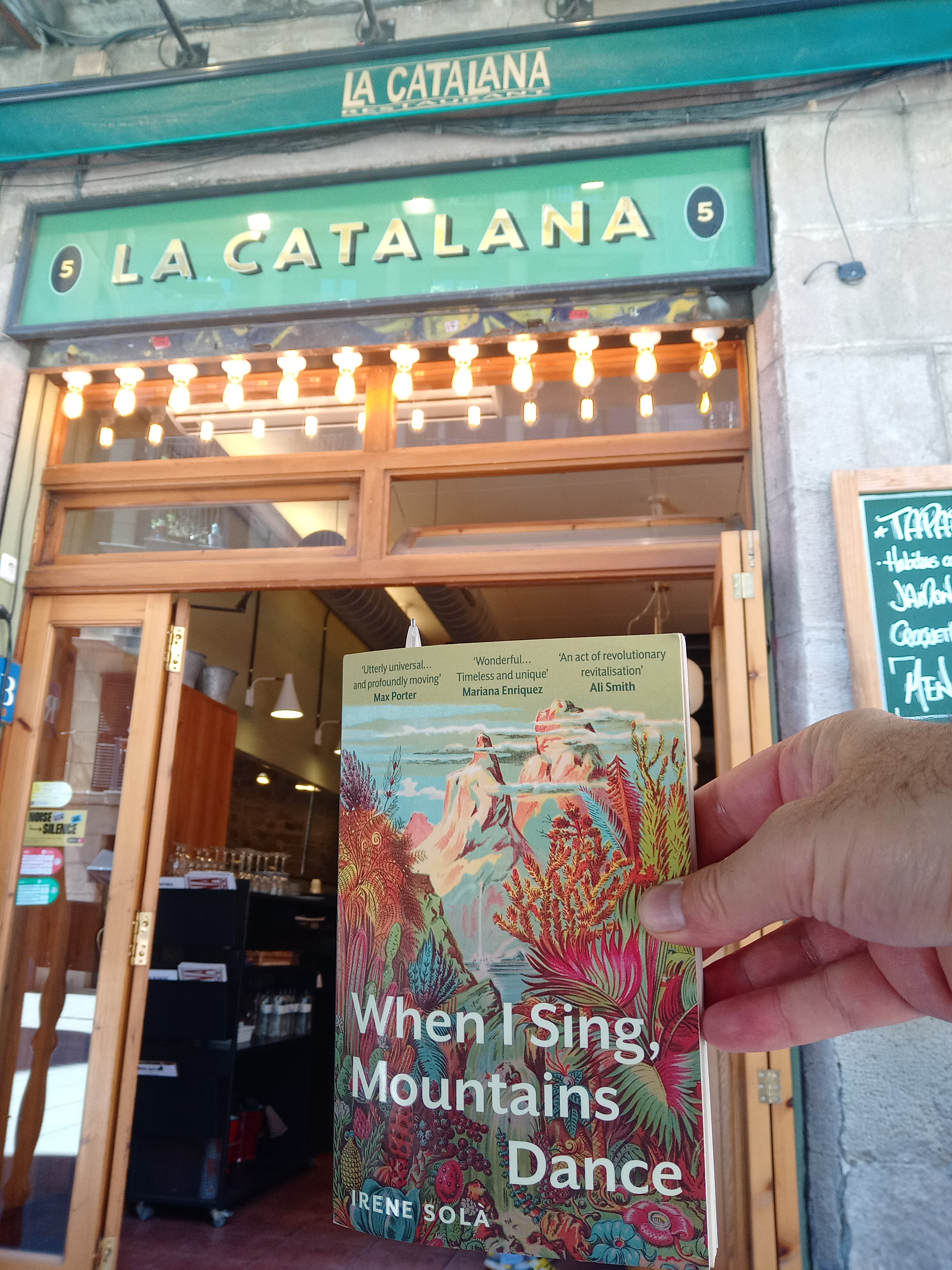
Early in May, I went with my son to Barcelona to meet up with my brother who was celebrating a significant birthday.

I couldn’t resist the opportunity to take a novel with me translated from Catalan, although during the four days we were there, I did not spend much time reading.

I read a few chapters before I went there and was intrigued to discover a novel of multiple voices and perspectives, not just human voices, firmly rooted in Catalonia culture.

While the first three days were in the city, I felt drawn towards the mountains and so we spent a day in nearby Montserrat.

When Lightning Strikes

Photo M.Soetebier Pexels.com

When I sing, Mountains Dance is set near a village high in the Pyrenees. It is a lyrical, mind-expanding work, littered with references to the folklore and history of Catalonia that brings alive, and gives voice to, every aspect of life within its unique biosphere.

The first chapter is entitled Lightning and I cannot be sure that it is lightning that speaks; perhaps it is the many facets of the storm that narrates. However, it is lightning that wreaks devastation and change on the community that we will then slowly be introduced to, over the following chapters.

After our arrival all was stillness and pressure, and we forced the thin air down to bedrock, then let loose the first thunderclap. Bang! A reprieve. And the coiled snails shuddered in their secluded homes, godless and without a prayer, knowing that if they didn’t drown, they would emerge redeemed to breathe the dampness in. And then we poured water out in colossal drops like coins onto the earth and the grass and the stones, and the mighty thunderclap resounded inside the chest cavity of every beast.

Navigating Loss, Celebrating Survival

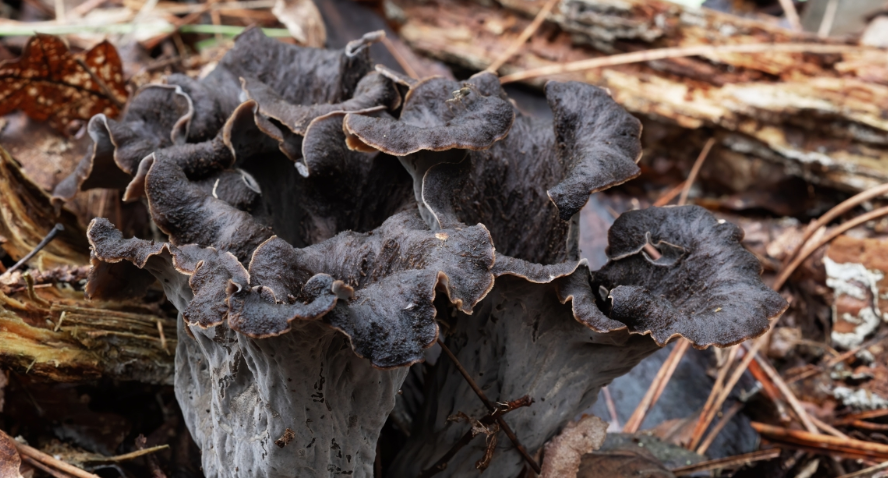
A man named Domènec, a husband and father of two children, is outside when the storm breaks. He is in the middle of rescuing a calf whose tail is caught in a jumble of wires, carrying a small load of black chanterelles (Trumpet of Death) he has foraged. In saving the life of one, nature then takes another, in an instant.

And when it was clear we were done, the birds hopped out onto branches and sang the song of survivors, their little stomachs filled with mosquitoes, yet bristling and furious with us. They had little to complain about, as we hadn’t even hailed, we’d rained just enough to kill a man and a handful of snails. We’d barely knocked down any nests and hadn’t flooded a single field.

Ghosts of the Past Acting on the Present

A Catalan novel in translation, book cover set against the mountains of Montserrat

The four women who witnessed it approached him, then left him, gathering the soaking mushrooms he had dropped, women who made unguents and elixirs and all the other wicked things that witches do.

The death of the man sets off a catalyst of consequences for those left behind, his grieving wife, his newborn son, his neighbours.

I don’t know what hurts more: thinking only of the good memories and giving in to the piercing longing that never lets up, that intoxicates the soul, or bathing in the stream of thought that lead me to sad memories, the dark and cloudy ones that choke my heart and leave me feeling even more orphaned at the thought that my husband was not that all the angel I held him up to be.

Their voices are presented individually, then as the narrative moves along, the interconnectedness of this polyphonic world becomes increasingly apparent.

A Polyphonic Narrative

Irene Solà channels the unique voices of every living (or previously living) being: the lightning bolts, roe deer, mountains, the ghosts of civil war, the widow Sió and later her grown children, Hilari and Mia, as well as Mia’s lovers, with their long-buried secrets and their hidden pain.

The construction is non-linear, the voices fragmentary, but the threads of story rise up through the pages, like those black chanterelles from the damp forest floor.

When tragedy strikes the family a second time, the sister is forced to face life’s struggles and joys alone. A chorus of voices bears witness to all that passes, and the savage beauty of the natural environment, demonstrating aloneness as a state of human mind and not a reality.

Here, the voice of the black chanterelles:

The wild boar came, dark mouth, wet teeth, hot air, fat tongue. The boar came and ripped us out. A man came and ripped us out. The lightning came and killed the man. The women came and gathered us up. The women came and cooked us. The children came. The rabbits came. And the roe-deer. More men came and they carried baskets. Men and women came and they carried knives.

There is no grief if there is no death. There is no pain if the pain is shared. There is no pain if the pain is memory and knowledge and life. There is no pain if you’re a mushroom! Rain fell and we grew plump. The rain stopped and we grew thirsty. Hidden, out of sight, waiting for the cool night. The dry days came and we disappeared. The cool night came, and we grew. Full. Full of all the things. Full of knowledge and wisdom and spores. Spores fly like ladybugs. Spores are daughters and mothers and sisters, all at once.

Narrative Threads, Seeds, Spores, Growth and Healing

Sometimes the text reads like a story and other times like a hallucinatory dream, with a hidden message. Something of a puzzle, the various parts that make up this ecosystem, this community, the human and non-human. It is like imagining that the mountain and the trees really do bear witness to all and if they could share what they have witnessed, it would be something like this.

It requires slow reading and perseverance, as it takes a little while for the voices to become apparent and for the reader to accept that the human voices are not given the right to dominate the narrative. We are able to see and comprehend the wider picture if we have the patience to persevere.

Highly Recommended travel companion if visiting Catalonia.

Further Reading

Guardian Review: the mushroom’s tale – Animals, ghosts, humans, mountains and clouds share the narrative in this playful, deeply felt portrait of Catalonia and its people by Christopher Shrimpton

Granta: In Conversation: Eva Baltasar & Irene Solà‘The tide carries my books from my head to a place that is no longer mine.’ The authors discuss friendship, the sea and finishing their novels. March 2022.

Author, Irene Solà

Irene Solà is a Catalan writer and artist, winner of the European Union Prize for Literature, the Documenta Prize for first novels, the Llibres Anagrama Prize, and the Amadeu Oller Poetry Prize. Her artwork has been exhibited in the Whitechapel Gallery.

By interlacing art and literature, Irene Solà’s work investigates the construction, uses and possibilities of narrative and storytelling, from the historical and popular contexts to the more contemporary.

International Booker Prize Winner 2024

The International Booker Prize shortlist celebrated six novels in six languages (Dutch, German, Korean, Portuguese, Spanish and Swedish), from six countries (Argentina, Brazil, Germany, Netherlands, South Korea and Sweden), interweaving the intimate and political in radically original ways. All the books were translated into English and published in the UK/Ireland.

The 2024 international booker prize shortlist including Selva Almada's Not a River

The shortlist was chosen from the longlist of 13 titles and today the winner was announced.

The Winner

The winner for 2024 of the International Booker Prize is Kairos by Jenny Erpenbeck (Germany) translated from German by Michael Hofmann. Jenny Erpenbeck was born in East Berlin in 1967, and is an opera director, playwright and award-winning novelist.

Kairos is an intimate and devastating story of the path of two lovers through the ruins of a relationship, set against the backdrop of a seismic period in European history.

Berlin. 11 July 1986. They meet by chance on a bus. She is a young student, he is older and married. Theirs is an intense and sudden attraction, fuelled by a shared passion for music and art, and heightened by the secrecy they must maintain. But when she strays for a single night he cannot forgive her and a dangerous crack forms between them, opening up a space for cruelty, punishment and the exertion of power. And the world around them is changing too: as the GDR begins to crumble, so too do all the old certainties and the old loyalties, ushering in a new era whose great gains also involve profound loss. 

What the International Booker Prize 2024 judges said

‘An expertly braided novel about the entanglement of personal and national transformations, set amid the tumult of 1980s Berlin. 

Kairos unfolds around a chaotic affair between Katharina, a 19-year-old woman, and Hans, a 53-year-old writer in East Berlin.

Erpenbeck’s narrative prowess lies in her ability to show how momentous personal and historical turning points intersect, presented through exquisite prose that marries depth with clarity. She masterfully refracts generation-defining political developments through the lens of a devastating relationship, thus questioning the nature of destiny and agency. 

Kairos is a bracing philosophical inquiry into time, choice, and the forces of history.’   

Read An Extract From the Opening Chapter

Prologue

Will you come to my funeral? 

She looks down at her coffee cup in front of her and says nothing. 

Will you come to my funeral, he says again. 

Why funeral— you’re alive, she says. 

He asks her a third time: Will you come to my funeral? 

Sure, she says, I’ll come to your funeral. 

I’ve got a plot with a birch tree next to it. 

Nice for you, she says. 

Four months later, she’s in Pittsburgh when she gets news of his death. 

Continue Reading here…

Further Reading

Everything you need to know about Kairos

A Reading Guide on Kairos

Q & A with Jenny Erpenbeck and Michael Hofmann

Thoughts

I haven’t read Kairos though it has had mainly positive reviews. I have read one of her novels Visitation some years ago and didn’t get on with that one too well, so I haven’t picked up any more of her work. I have no doubt that it is well written, I’m just not that interested in the premise.

Have you read Kairos? Or any other novels by Jenny Erpenbeck? Let us know in the comments below what you thought.

Erasure by Percival Everett (2001)

I read this after Percival Everett’s excellent So Much Blue (my review) so my reading was influenced by having read that earlier novel, which I enjoyed more.

I did really enjoy this, however I enjoyed So Much Blue more on account of the type of reader I am, because it takes you outside of America to Paris and El Salvador – that novel was about the growth of the protagonist as a result of those experiences, whereas Erasure is more of a commentary on American culture and racial bias.

Revenge Can Backfire

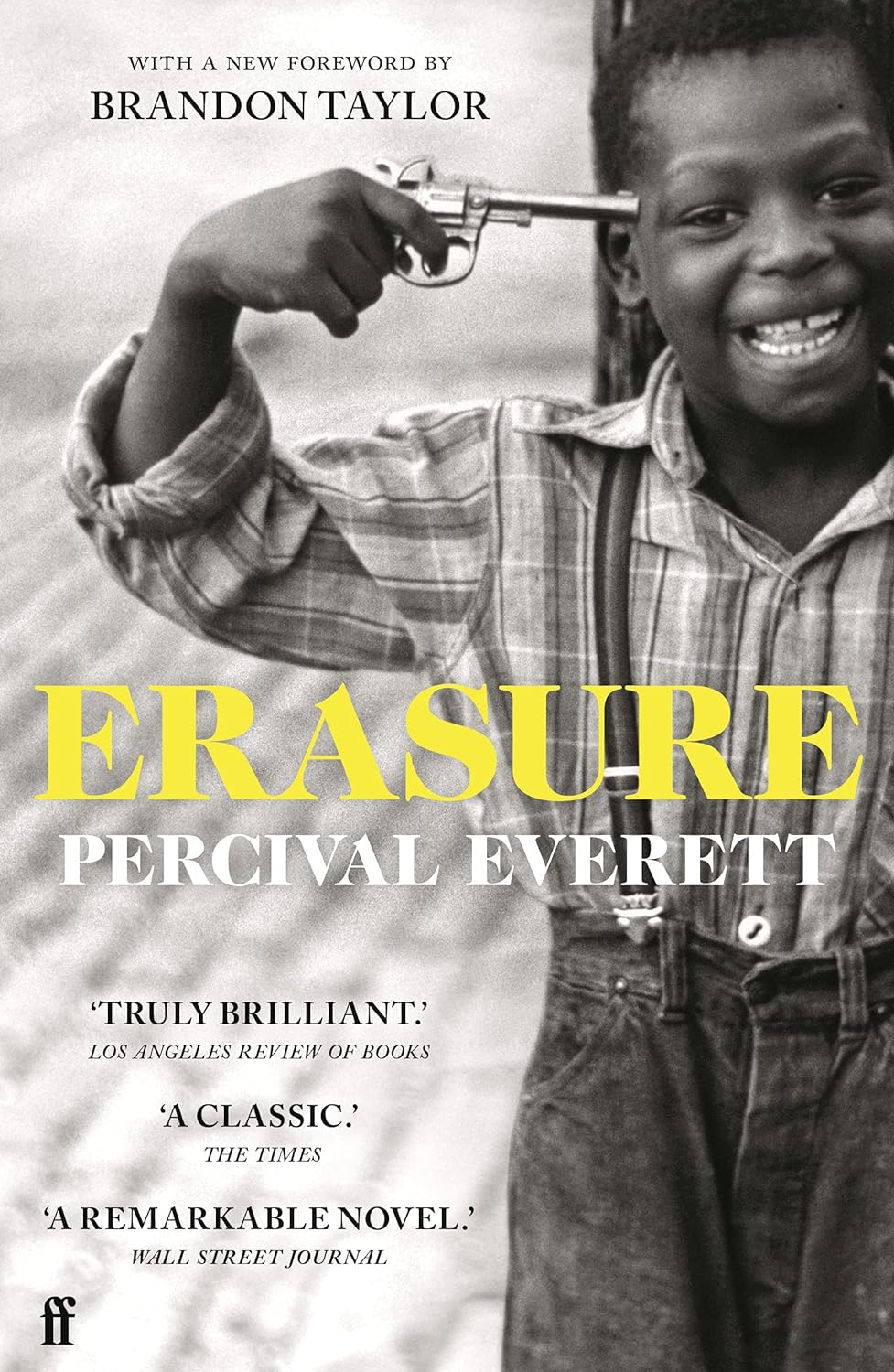
American Fiction film classic satire Cord Jefferson book cover young smiling black boy child holds a toy pistol to his head wearing checked shirt and jeans with braces photo in black and white the word Erasure in yellow text

In Erasure, a deeply satirical novel of the publishing industry and its biases; we have a Black American writer ‘Monk’ as protagonist, whose current work isn’t gaining traction.

I called my agent to check on the status of my novel and he had no good news for me. Three more editors had turned it down. ‘Too dense,’ one had said. ‘Not for us,’ a simple reply from another. And, ‘The market won’t support this kind of thing,’ from the third.

‘So, what now?’ I asked.

‘I don’t know what to tell you,’ Yul said. ‘If you could just write something like The Second Failure again.’ The ice clinked in his glass.

‘What are you telling me?’ I asked.

‘I’m not telling you anything.’

He feels resentful of some of what he is seeing gain popularity (fiction about the Black community using performative and pejorative racial themes and language); and he has had enough of his work being criticised for being too white.

He is middle aged and his mother is showing signs of needing additional care as her dementia begins to endanger her life. His sister and brother are both Doctors as was his late father. He visits his mother and sister, to learn his sister is being harassed by pro-life protestors every day and his mother has been lighting fires inside – a box of papers his father asked her to burn.

The Novel With A Novel

In his angst about work he writes a revenge novella using the pseudonym Stagg R. Leigh, one that uses every terrible trope about his race and sends it to his agent. The agent thinks it is a joke, he is instructed to send it out to prospective publishers anyway.

I remembered passages of Native Son and The Color Purple and Amos and Andy and my hands began to shake, the world opening around me, tree roots trembling on the ground outside, people in the street shouting dint, ax, fo, screet, and fahvre! and I was screaming inside, complaining that I didn’t sound like that, that my mother didn’t sound like that, that my father didn’t sound like that and I imagined myself sitting on a park bench counting the knives in my switchblade collection and a man came up to me and he asked me what I was doing and my mouth opened and I couldn’t help what came out, ‘Why fo you be axin?

I put a page in my father’s old manual typewriter. I wrote this novel,, a book on which I knewI could never put my name:

That 80 page novella, initially entitled My Pafology is contained within the novel Erasure. When I started reading, I skipped ahead to see how long it was. It is a unique experience to read a novel within a novel and one that is…well, I don’t really know how to describe it, because it is so deliberately offensive – and so then we witness the author watch his act of protest backfire as he is made to kind of account for what he has done.

Dealing With A Parent With Dementia

In the meantime he takes his mother and her maid on a short holiday, which results in hastening things forward there, dealing with a tragedy and coming to terms with aspects of the family that had been hidden.

Photo furkanfdemir Pexels.com

As in So Much Blue, where we learned that Percival Everett has a bit of a fascination for secrets, so too are they present here. He explores their impact on those whom they have been withheld from.

It is a thought provoking novel and there are many references to other writers and artists and thinkers within, like clues to the things that the author might have been thinking about while writing, that can take the reader down various rabbit holes. Like this one:

* * *
D.W. Griffith: I like your book very much.
Richard Wright: Thank you.

* * *

Going Down A Rabbit Hole

I learned that film director D.W.Griffith, in 1915, directed a controversial, silent film, Birth of a Nation, that depicted previously enslaved African Americans as uncivilised, and that order was restored to the chaotic South by the noble KKK.

African American author Richard Wright wrote Native Son, a book with a similar premise to My Pafology, one that may or may not undermine the humanity of the African American. James Baldwin objected to it, believing it confirmed the damning judgment on African-Americans delivered by their longstanding tormentors.

All that to say there are complex references and issues contained within Erasure that might require more close reading.

It also satirises the book prize industry, when our protagonist finds himself in a dilemma having been asked to judge a prize.

The Movie American Fiction

The book has recently been made into a film which I have not seen, entitled American Fiction. It was written and directed by Cord Jefferson and won an Academy Award (Oscar) for Best Adapted Screenplay in 2024. Jefferey Wright plays the role of the author ‘Monk’, he received a nomination for Best Actor in the Academy Awards 2024.

I was aware of this, although I did not look at any reviews or trailers, but did wonder how much of the depth of reflection could ever be portrayed in a film.

Highly Recommended. Read the book before seeing the film.

Have you read Erasure or seen the film American Fiction? What did you think?

Further Reading

New York Times: The Book Behind ‘American Fiction’ Came Out 23 Years Ago. It’s Still Current.

NPR: Advice from a critic: Read ‘Erasure’ before seeing ‘American Fiction’ by Carole V. Bell

Percival Everett, Author

Percival Everett is the author of over thirty books, including So Much BlueTelephoneDr No and The Trees, which was shortlisted for the 2022 Booker Prize and won the 2022 Bollinger Everyman Wodehouse Prize.

He has received the Hurston/Wright Legacy Award and the PEN Center USA Award for Fiction, has been a Pulitzer Prize finalist, and is Distinguished Professor of English at the University of Southern California. His novel Erasure has now been adapted into the major film American Fiction.

His latest novel James (a reimagining of Mark Twain’s The Adventures of Huckleberry Finn, told from the perspective of the enslaved Jim) was published on 11 April 2024. He lives in Los Angeles.

So Much Blue by Percival Everett (2017)

This is my first read of American author Percival Everett, a prolific writer I have been aware of for a few years and wanted to read. So Much Blue is partly set in France so I chose to read that first. I loved it. It’s a multi-layered novel with different strands contributing to an eventual shift in the main protagonist.

A Triple Timeline Narrative

It starts out light and comical with a number of laugh out loud moments and as the story develops, the reflections grow deeper and the experiences become more risky, it becomes more serious.

There are three timelines and the narrative switches between the three, as all are important to the present situation, where the protagonist, artist Kevin Pace is painting a large 12 X 21 foot canvas in his shed and will not show it to anyone, not his wife Linda, his best friend Richard or his children. The painting harbours his secrets. In a rare interview Percival said:

“I’m interested in secrets: how important they are, and how much secrets contribute to the truth of something.”

House – Present Moment

The chapters entitled House are set in the present. Pace is fifty six years old, a recovering alcoholic and abstract artist, living with his wife Linda and their two children Will (12) and April (16). He is experiencing a kind of reckoning with himself. It has something to do with the locked shed where he works on a ‘maybe masterpiece’ he is creating, and events of the past that he is reconciling with. At the same time, right now, there is a situation with his daughter, which he is not managing very well.

I considered myself a significant and singular failure as both a husband and a father.

Paris – Ten Years Ago

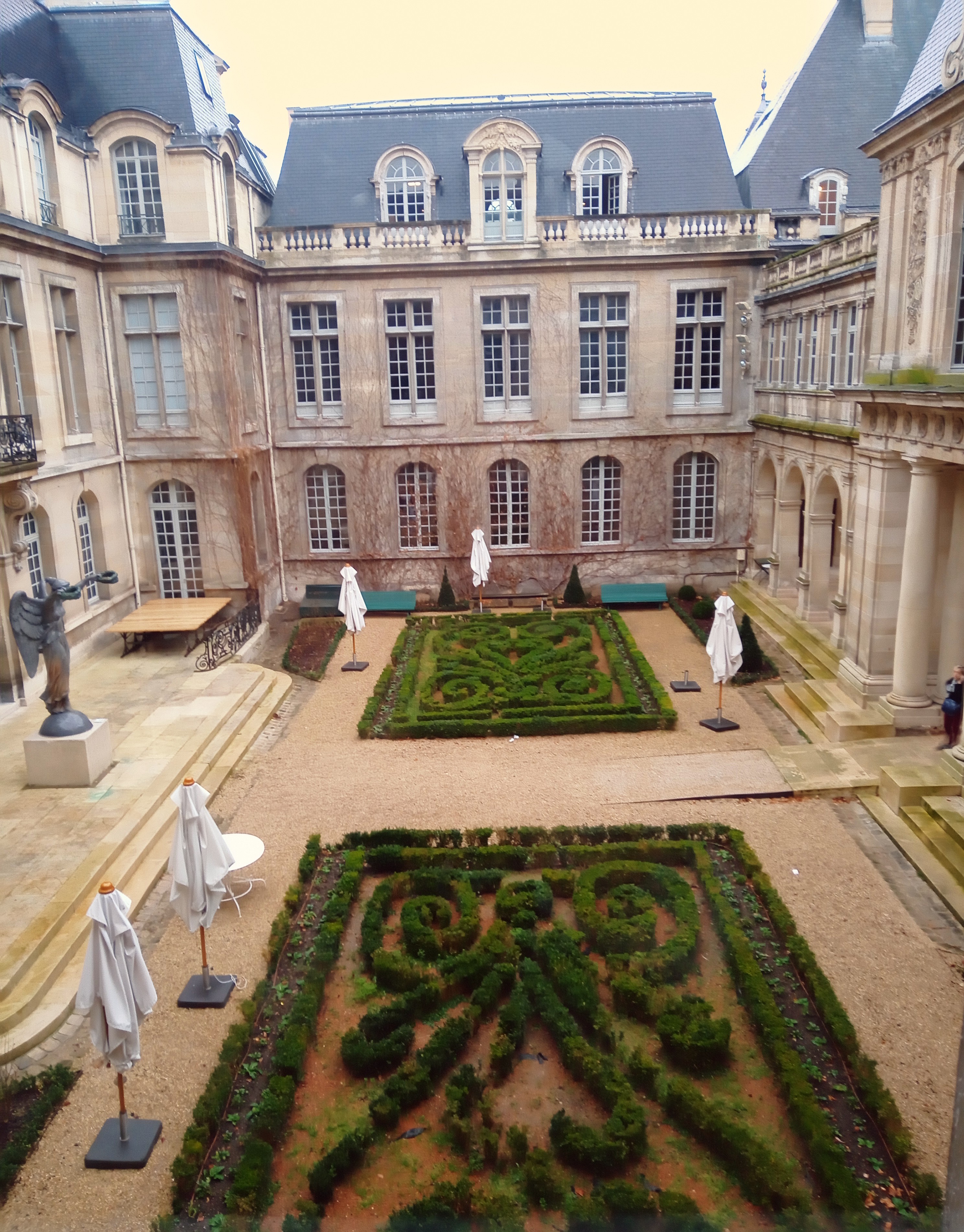
Musée Carnavalet Me Marais Paris History Madame Sévigné de Seve

To understand who he is and what is behind his painting, we read about two life changing experiences he went through, that have contributed to who he is today. The first, in the chapters entitled Paris took place ten years ago when he was 46 years old; a brief affair with a very young Parisian woman. Though it is one of his secrets and regrets, it was the first time he had experienced something and it contributes to his later understanding and growth.

It could have been argued that ten years earlier I had succumbed to a banal midlife crisis, but now I was falling victim to something far worse, a late-life revelation.

1979 – 30 years ago

The second experience was a covert trip to El Salvador in 1979 with his friend Richard, while they were still university students. They travelled there to look for Richard’s brother Tad, who was missing, believed to be involved in bad business. The two boys went there without knowledge that the country was on the brink of civil war and witnessed terrible things, that would haunt Kevin for years to come. The 1979 chapters are a wild ride and a shocking wake up call to the young men.

If only I had the excuse of misunderstanding why I was there, perhaps then some of the guilt would not exist, perhaps then I would not have blamed myself to this day, perhaps then I would not long for a piece of me that died that day. But my friend had come to me, depressed, fearful, lost, and he had asked for my help. I offered it willingly, if not completely innocently or selflessly. That was 30 years ago. It was May 1979.

Alcoholic or Workaholic

As an artist, he is interested in colour and its representation and so we too come to understand what that means to him. Though we are not able to see what he creates, we can imagine. Ultimately, the art is not enough and he must revisit some of the past in order to realise what he must do to make amends.

It was far more socially acceptable to be a workaholic, the obsessed artiste, than it was to be a drunk, but using an old neighbour’s phrase, I’m here to tell you that one addiction was as bad as the next.
The real sadness was that I drifted away from my life and children because of alcohol, but instead of finding the current back to them when I ceased, I camped out on an uncharted island in the middle of myself. Nonetheless, selfish as I was, things were better. I was more trustworthy. An absentminded artist is more forgivable than an alcoholic.

So Much Blue After the Reds, Browns and Ochres

I found reading it very vivid and could imagine the scenes so well. The character of Kevin is flawed but self-aware, he is aware of his failings and there will be transformation of sorts by the end.

I looked across the dining room at a small canvas of mine. There was no blue in it. It was often pointed out that I avoided blue. It was true. I was uncomfortable with the colour. I could never control it. It was nearly always a source of warmth in the underpainting, but it was never on the surface, never more than an idea on any work. Regardless that blue was so likeable, a colour that so many loved or liked – no one hated blue – I could not use it. The colour of trust, loyalty, a subject for philosophical discourse, the name of a musical form, blue was not mine. And by extension green was not mine. In fact, in Japanese and Korean, blue and green have the same name. As blue as the sky is, the colour came late to humans.

Brilliant. Look forward to reading more.

‘A picture is a secret about a secret’. Diane Arbus

Further Reading

NPR Review: So Much Blue is Everett’s Best Yet by Michael Schaub

New York Times: In ‘So Much Blue,’ a Married Painter Spills Secrets by Gerald Early

Percival Everett, Author

Percival Everett is the author of over thirty books, including So Much BlueTelephoneDr No and The Trees, which was shortlisted for the 2022 Booker Prize and won the 2022 Bollinger Everyman Wodehouse Prize.

He has received the Hurston/Wright Legacy Award and the PEN Center USA Award for Fiction, has been a Pulitzer Prize finalist, and is Distinguished Professor of English at the University of Southern California. His novel Erasure has now been adapted into the major film American Fiction.

His latest novel James (a reimagining of Mark Twain’s The Adventures of Huckleberry Finn, told from the perspective of the enslaved Jim) was published on 11 April 2024. He lives in Los Angeles.

Republic of Consciousness Prize for Small Presses 2024

Now in its 8th year, The Republic of Consciousness Prize is an annual literary prize aimed to support small and independent presses in the UK and Ireland. The organisation supports and recognises the work of those presses considered vital to the United Kingdom’s literary culture.

They state their purpose as:

“To advance for the public benefit literary fiction of the highest merit from small presses in the UK and Ireland through a range of reading, speaking and event initiatives, and by providing grants and assistance to practitioners and producers of literary fiction.”

Ground Breaking Experimental Works of Fiction

By their very nature, they are more likely to be ground-breaking experimental works that mainstream publishers consider commercially risky, although when one of these novels takes off, they are often ready to step in.

It is where we are likely to come across innovative forms of writing, therefore you either have to be a brave and adventurous reader, or practice a certain level of discernment, in order to find those titles that might appeal if you are less of a risk taker in reading.

Reading Outside the Comfort Zone

I like to see what titles the prize is considering, though they are generally a little too avant-garde for me. This year, I discovered I had read one title that was on the longlist and then it made the shortlist, so of course I was hoping it would win!

No doubt if you follow me here, you will have guessed which press it was – Yes, it was a Charco Press title. Charco Press publish outstanding works of mostly Latin American contemporary fiction in translation and you can support them by subscribing to their annual 2024 bundle. You won’t regret it!

Another Winner From Charco Press

Yesterday, from a shortlist of five books, the winner was announced, which the judges described as:

“A stunning thriller of sorts. So understated. So powerful. So heartbreaking. Worked for me completely on both the level of a human story and as a warning parable for our times.“

Of Cattle and Men by Ana Paula Maia (Brazil) translated by Zoë Perry (Portuguese)

I read Of Cattle and Men (link to my review here) in May 2023 and it was one I could not put down until I finished. Deeply evocative of slaughterhouse communities and institutions, it opens a channel to consideration of the consciousness of bovines and depicts man in his basest form, driven to paranoia by what he can not understand or control and therefore seeks to destroy.

The writing is compelling and thought provoking, it is suggestive in a way that provokes the reader’s imagination, without being explicit about what might be being suggested. I thought it was excellent. And a year later, it has stayed with me.

When night falls, the residents of Ruminant Valley tend to shut their doors and windows tight. They believe that everything that seems improbable during the day can overcome the darkness. It’s when thoughts that were once impossible become possible; when hushed whispers swell, and above all, when that layer of darkness cloaks anything suspicious. The figures, the voids, the long shadows, all of it brought on by the night, which is immense, and its reaches infinite.

Highly Recommended.

Warning: Not for the squeamish.

Further Reading

Granta: Read an extract from Of Cattle and Men

Guardian: Charco Press wins Republic of Consciousness prize for ‘gut-punch’ novel by Ella Creamer

Human Ecology Research Paper: A Social History of the Slaughterhouse: From Inception to Contemporary Implications (2010) by Amy J.Fitzgerald, Depart of Sociology & Anthropology, University of Windsor, Canada

The House on Via Gemito by Domenico Starnone (Italy) tr. Oonagh Stransky

That was quite an experience.

Starnone writes a work of fiction about the man his father was (we can assume it is autobiographical since his father’s name was Federico and he painted an artwork titled ‘The Drinkers’ which is in part featured on the cover). It is an attempt to tell the story of a man he spent his childhood in fear of and his adulthood trying not to be like.

Reconstructing a Life, Walking the Streets

In the novel, the narrator is the eldest son Mimi, who lives in Rome but has returned to Naples some time after the death of his father and is reconstructing memories, by walking the streets where they lived, visiting certain places to evoke other memories, like the hospital where his mother was when her husband could no longer deny her illness; the church where he made his first communion; the council offices, where he hopes to find some of his father’s paintings, including ‘The Drinkers’. Every location existed in service to his father’s existence and memories.

He was certain that both great and small events had a common thread: the mystery of his destiny. And he constantly tried to prove it to himself, his relatives, his friends, and to us children by weaving a vibrant pattern in which the only events that were true were the ones vitally connected to him. Consequently, all the names of cities and buildings and roads, all of geography, served merely to create a map of his needs, and this was how they were to be remembered.

Though the novel is about the man, the title refers to a street where they lived for a while and the use of street names rather than diary entries or even artworks, inscribes the neighbourhood into history, creating a different kind of legacy, one that will last longer than any man or work of art. A diary would be too intimate, a street map a kind of canvas.

Portrait of a Narcissist Father Via His Eldest Son

It is also about his own boyhood, however the character of the father overshadows the son, his wife, his wife’s family, in fact anyone in proximity to him. This is because he considers himself superior. According to himself. He makes it one of his main purposes in life to remind everyone around him of that fact. He can not be taken down or made to think he is anything less than how he perceives himself.

It’s true, he was lazy. He was arrogant. He was blowhard. He was all those things, and the first to admit it. He felt he had the right to be lazy, arrogant, and a blowhard – to anyone who busted his balls. He was born to be a painter, not a railroader.

The son walks familiar streets of Naples, streets he never strolled with his father – but knew intimately from his adolescence – as a way to navigate anecdotes about the way his father lived his life, the things he said (mostly insults about everyone else), the things he did (working for the railroad as a clerk, beating his wife, painting artworks) and his opinions about various matters. He walks and remembers. He walks and imagines anew.

A Determined Artist Perseveres

historical fiction Paris 1939 Domenico Starnone House on via gemito
Photo by Pixabay on Pexels.com

Federi is passionate about art and believes he possesses great artistic talent, but the art world is full of shit people who nominate their friends for prizes, then their friends create prizes and nominate those friends, therefore keeping him out of these circles. He blames everyone for his lack of success that he continues to strive for. Beginning with his own father who refused to educate him, in fact his parents abandoned him at a young age and sent him to live with his grandmother.

He becomes a working class man, who sees the most beautiful woman who he takes for a wife, raises four sons and a daughter and spends his free time at home painting or pursuing opportunities to advance his art.

A Literary Triptych

The book is in three sections. The first section ‘The Peacock’ introduces the character and is the part of the book where you might abandon, because it isn’t yet clear why it might benefit any reader to be subject to this psychological demonstration of one of the most extreme versions of the societal system of domination at work. The patriarchy thrives under this system, as Riane Eisler showed in her work The Chalice and the Blade: Our History, Our Future and Nurturing Our Humanity: How Domination and Partnership Shape Our Brains, Lives, and Future and the portrait this novel creates shows how someone who lives according to this conditioning impacts those in his proximity. Cycles of trauma, neglect and narcissism eroding relationships in pursuit of validation, not love.

A Masterpiece Created at All Cost

Much of the source material is inspired by journals his father kept, which trigger memories and dates of events he participated in. The artworks themselves are a kind of journal, a record of themes in his life. Part Two ‘The Boy Pouring Water’ is the most compelling and significant section, it documents the process of creating the largest, most significant art work he would do. ‘The Drinkers’ required the son to pose as the boy pouring water, other members of the family sat for him and the local fruit and vegetable seller.

The anxiety the young son would feel when he realises that there is a problem in the image, between the character holding out the glass and where he is pouring from will cause contortions of magnitude in him, to try and avoid the disaster he sees coming. His father never sees it and we think for a moment that the drama has been averted, alas no – disaster arrives at the height of his short-lived pleasure.

So why do we want to read a novel about an egomaniac? And one that was originally published just over 20 years ago.

It is both a psychological example of the effect a man with no empathy and worse, a need to belittle, insult and induce fear in people, can have on a family. It is set against a backdrop of 1960’s Naples, post WWII, a place where allegiances often changed, both in the halls of power and on the street, depending on how ‘enemies or allies’ treated the people.

It is the historical context and the journey of a working class man trying to break into the establishment of artists, who despite his unruly personality, perseveres and participates as much as is possible for someone who won’t allow himself to be intimidated. Everything is a struggle, he will fight to the end. Art ‘wasn’t fun, it was war’.

Fortunately as the years passed, I developed a strategy for blocking out his words. Using this technique, which I perfected as a teenager, the angrier he grew when telling the stories of his life and the reasons for his actions, the thicker the fog grew in my head, allowing me to think about other things. It helped establish a distance between us. It curbed the desire to kill him.

Fatherhood in Another Era, Produce, Punish, Protect

In the final part ‘The Dancer’ the humiliation of the son comes full circle as he enters adolescence and tries to impress a girl Nunzia and his father gives him terrible advice about what to do with women. As if things couldn’t get any worse, we learn that young girl has been abused by an Uncle and the son lies waiting for his fathers verdict.

The book ends with a scene that makes the reader pause to reflect on how reliable the narrator is, like the father, he too has the ability to exaggerate, to curate anecdotes and perspective.

Once I got into this, which didn’t take very long, I found it both shocking and compelling to read, the dedication by a son to honoring the passage of a man who made his boyhood hell. Thus he provides a kind of validation beyond the grave, but doesn’t hold back from focusing on the many flaws alongside the talent. It is the many layers that make it something of a classic, the psychological profile and repeat patterns of the man, the making of an artist and the impact on family and the social history of a city.

Highly Recommended.

The House on Via Gemito is a marvellous novel of Naples and its environs during and after the Second World War. The prism for this exploration is the relationship between the narrator and his railway worker / artist father – an impossible man, filled with cowardice and boastfulness. His son’s attempt to understand and forgive him is compelling; we are held through the minutiae of each argument and explosion, each hope and almost-success.’ International Booker Judges

Further Reading

New York Times Review June 2023: My Father The Frustrated Artist

A Reading Guide – The House on Via Gemito, International Booker Prize 2024

Read An Extract from the Opening Chapter here

To see the artwork of Federico Starnone visit https://starnone.it/gallery2/

Author, Domenico Starnone

About the author

Domenico Starnone is an Italian writer, screenwriter and journalist. He was born in Naples and lives in Rome

He is the author of 13 works of fiction, including First ExecutionTies, a New York Times Editors Pick and Notable Book of the Year, and a Sunday Times and Kirkus Reviews Best Book of the Year, Trick, a Finalist for the 2018 National Book Award and the 2019 PEN Translation Prize, and Trust. 

The House on Via Gemito won Italy’s most prestigious literary prize, the Strega in 2001 and was longlisted for the International Booker Prize 2024.

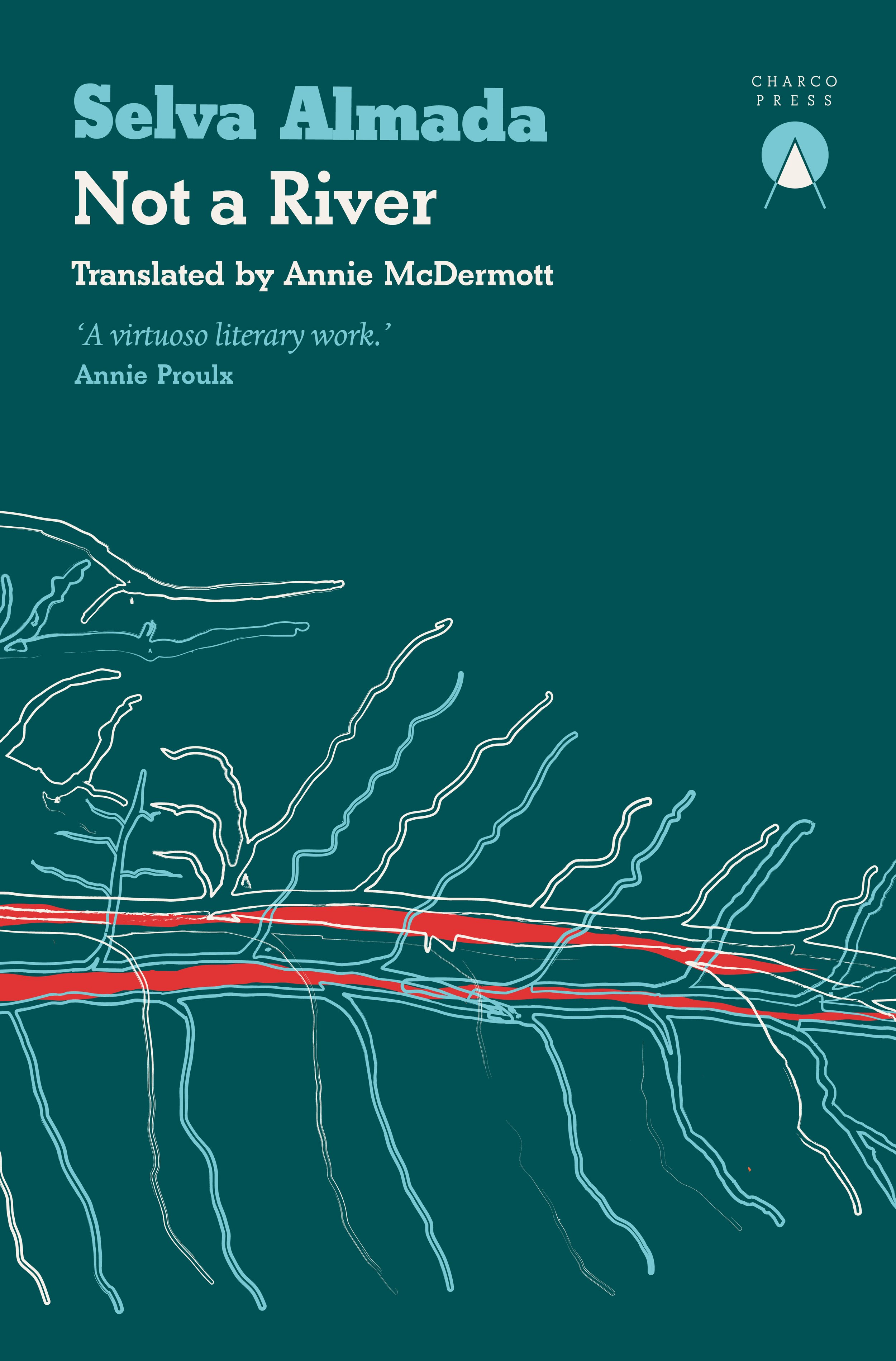
Not a River by Selva Almada (Argentina) tr. Annie McDermott

Not a River has just been shortlisted for the International Booker Prize 2024.

Opening Lines and Book Covers

International Booker Prize longlist 2024 Argentinian literature Spanish translation

I read the opening line and let it tell me as much as possible about the story I am about to read.

“Enero Ray, standing firm on the boat, stocky and beardless, swollen-bellied, legs astride, stares hard at the surface of the river and waits, revolver in hand.”

It’s a Charco Press title, so there is always a thought provoking abstract image on the cover, that never fails to contribute to the understanding of what the book has to say. This one shows twin rivers, fed by tributaries, running red.

It is clear that will be blood, death, perhaps menace and/or violence – and more than one episode. Just as the water of the smaller channels has no choice but to flow into the main river, so too the intent of a man standing firm, awaiting his prey. But who/what else will the river claim?

To Understand Any Story We Circle Back

Not a River tells a story, not in a linear way, but in a circular fashion, beginning with two men El Negro and Enero and a boy Tilo, on a fishing trip; circling back to a previous trip when Eusubio was with them, slowly revealing the memory that is acting on both men and what happened to their friend. The fishing trip is further disturbed by a visit from ‘a local’ whose questions unsettle the trio.

The second tributary/narrative follows Siomara and her two daughters Lucy and Mariela. The girls are entering womanhood, the mother is becoming more protective.

Photo V. Bagacian Pexels.com

Siomara was in one of those phases she sometimes went through, when she was grouchier than usual. Saying no to everything and dealing out punishments and bans for no reason. All because she could see how the two girls were growing, how little by little they were slipping away, how sooner or later they were going to leave her as well.

She lights fires as a way to deal with her emotions, she has done so since she was a girl. She seems to be lighting them a lot recently.

Sometimes she thinks the fire talks to her. Not like a person does, not with words. But there’s something in the crackle, the soft sound of the flames, as if she could almost hear the air burning away, yes, something, right there, that speaks to her alone…
Come on, you know you want to.
It says.

Again the story turns on itself, something has happened here too, sometimes the mother is living in the past, the present too much for her. The girls hear about a dance and plan to go.

Lucy wants to be a hairdresser. She wants to give other woman those moments of peace her mother seems to feel when she is doing her hair.

The narrative moves back and forth like the tide, people in the community are connected and affected by events that occur at the river. Paths cross, fates intertwine. It is necessary to let go of needing to know whether we are in the past or the present. If certain events happened before or after others. We accept each part of the story’s mosaic, see how they fit together, until all the pieces have been laid.

A summer like this one. Twenty years back, a summer like this one. The same island or the next one along or the one after that. In the memory it’s all just the island, with no name or exact coordinates.

The longer the men stay in the forest, the more uneasy they feel about what they have done, what has happened in the past and how unwelcome and out of place they feel. Invited to a dance, they leave their campsite for the evening.

Dreams and a Queue for the Healer

Photo by Pixabay on Pexels.com

Enero has a disturbing dream, twice.

Eusubio looked at him and thought for a moment.
We need to go see my godfather. He knows about this stuff.
He said.

Mariela also has a dream, she tells her sister Lucy about it.

And what happened in the dream?
I don’t know, like I say I just had a kind of flashback. It was weird, there were lights and sirens.

There is a sense of the repetitive cycles of the generations, girls hide from their families, they grow up to become a mother who can’t help but try and prevent their child from repeating the same mistakes. To keep them safe.

She pretends not to hear. Still just about strong enough to resist. But for how much longer.
One day, she knows she will answer the fires’s call.

In less than 100 pages, Not a River depicts disparate elements of a broken community, marginalised families, their efforts to bond, heal, escape, punish, revel and cope with the aftermath of it all.

Selva Almada’s paragraphs are like brushstrokes on a canvas, each one contributes to the story and is necessary in order to see beyond it.

The characters in my novel, men and women who live on what the river can provide, are a reflection of what the neo-liberalism of the 1990s has done to Argentina: impoverishing it, condemning a significant part of its citizens to poverty and marginalization.

Selva Almada

Highly Recommended for fans of thought provoking literary fiction.

Further Reading

Tony’s Reading list – review of Not a River

Booker Prize Website: Q & A with Author & Translator

My review of The Wind that Lays Waste

Selva Almada, Author

Selva Almada is considered one of the most powerful voices of contemporary Argentinian and Latin American literature and one of the most influential feminist intellectuals of the region.

Compared to Carson McCullers, William Faulkner, Flannery O’Connor, Sara Gallardo and Juan Carlos Onetti, Almada has published several novels, a book of short stories and a book of journalistic fiction. She has also published a film diary, written on the set of Lucrecia Martel’s film Zama, based on Antonio di Benedetto’s novel.

She has been a finalist for the Medifé Prize, the Rodolfo Walsh Award and of the Tigre Juan Award. Her work has been translated into French, Italian, Portuguese, German, Dutch, Swedish and Turkish. 

Not a River (shortlisted for the Vargas Llosa Prize for Novels) is her fourth book to appear in English after The Wind that Lays Waste (Winner of the EIBF First Book Award 2019), Dead Girls (2020), and Brickmakers (2021).