A Silent Education: Our Quiet Challenge in Provence

Struggling with my latest read, I think about all those people starting out on the NanoWriMo trail and all those old stories gathering dust on the shelf, my finished and unfinished novels, the new one I would love to start and the words of my friend Bernadette, who suggested to me yesterday that I write a story directly into this blog.

It’s an idea with merit and one that will help me overcome another little dilemma, that of a 10-year-old girl who wants her own blog, whose little fingers have occasionally and so she says ‘accidentally’ found their way in here.

So this will be our collaboration, I will write the episodes and she will create the illustrations, which seems appropriate as this story is going to be about her, about an aspect of our journey together that is worth sharing, because I know our experience is already helping others going through something similar.

So, next up Episode One : The Benefits of Insomnia written by me and illustrated by my daughter.

Here is the cover she designed today, there is a colour version, but she wants me to put it up in black and white.

And just to clarify, that’s her on the left and me on the right. (She has used her artistic ability liberty to remove her curls and make herself as tall as me).

Black Count – Glory, Revolution, Betrayal and the Real Count of Monte Cristo by Tom Reiss

Mention the name Alexandre Dumas and many will associate it with the classic stories as well-known now through their film adaptations, The Count of Monte Cristo, The Three Musketeers, The Black Tulip and La Reine Margot (Marguerite de Valois) as they are through the novels.

In France the novelist referred to as Alexandre Père Dumas, had a son Alexandre, also a well-known playwright. Less is known about the novelist’s father General Alexandre ‘Alex’ Dumas, born in 1762, the son of Marie Cessette Dumas, a black slave from Saint-Domingue (modern-day Haiti) and a French nobleman Alexandre Antoine Davy, the Marquis de Pailleterie, who was from a family of provincial aristocrats with a more impressive coat of arms and title than fortune to their name.

Tom Reiss has researched the life of General Alex Dumas and takes us from the French sugar plantations of Saint-Domingue to the battlefields of the French revolution and to a dark dungeon on an island in the Mediterranean, in recapturing the spirit of this extraordinary man, living in an unforgettable era, that we are all the better off for being reminded of.

Antoine was the eldest of three brothers, required to go out in the world and seek their fortunes, which they initially pursue in the army before Antoine followed his brother Charles to Saint-Domingue. At the time the world’s largest sugar exporter, it generated vast wealth using slave labour, as depicted so vividly by Isabelle Allende in her excellent novel Beneath the Sea.

Charles married into money and established himself as a planter so Antoine joined him, though without the same work ethic or ambition, content to live off his brother, until an altercation caused him to flee with a couple of slaves and his slave mistress. The brothers never saw each other again and the family lost track of the eldest brother believing him to be dead. As the eldest, Antoine was heir to the title and the ancestral estate of Bielleville, however it was passed to a nephew in the belief of his demise, until his sudden and unexpected return to France.

Antoine had fled across the mountains to Jérémie, a coffee plantation area where he settled with a woman named Marie-Cessette and had four children with, including a son born on March 25, 1762 whom they named Thomas-Alexandre.

Bielleville, the family estate

He eventually returned to France, and learning of the death of his parents attempted to claim his title which had passed to the nephew, Comte Léon de Maulde, who employed a detective to investigate the returning heir’s mysterious island interlude and return.

Chauvinault then reported on Antoine’s having bought, in the late 1750’s, the beautiful black woman named Marie-Cessette, for whom he’d paid that “exorbitant price” – implying some unusual interest in her. Before Antoine’s return to France, Chauvinault reported, he had sold three of his children, as well as Marie-Cessette herself.

The detective also brought the interesting news that Antoine’s fourth child, a boy who was said to be his favourite, had not been sold along with the others. This boy was “a young mulatto who, it is said, was sold at Port-au-Prince,” Chauvinaluth wrote, “conditionally, with the right of redemption, to Captain Langlois, for 800 livres.”

On arrival in France Antoine sends for his son and thus begins a different life for the adolescent Alex Dumas Davy de la Pailleterie. His father pawned the family estate and moved them to the rich and fast growing Saint-Germain-en-Laye, on the western side of Paris. Dumas received a superior education, expensive clothes, training in fine manners, riding, baroque dancing and duelling among other equally refined activities. After a falling out with his father, he enlisted as a horseman in the service of the queen just as the French revolution was gaining ascendancy, which resulted in him being promoted through the ranks rapidly, rising to command entire divisions.

Up until the reign of Napoleon Bonaparte, nothing seemed to phase Dumas, he was respected by all, he was fair, he introduced many improvements in the armies beneath him and challenged any wrongdoings of others, whilst keeping his head – not so easy during the reign of terror.

General Alex Dumas

Alex Dumas was a consummate warrior but also a man of great conviction and moral courage. He was renowned for his strength, his swordsmanship, his bravery, and his knack for pulling victory out of the toughest situations. But he was known, too, for his profane back talk and his problems with authority.

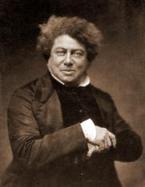
Alexandre Pere Dumas, Novelist

He was the inspiration behind the hero of his son’s novel ‘The Count of Monte Cristo‘, the story of the young sailor Edmond Dantes who, on the verge of a promising career and life, is locked away without witness or trial in the dungeon of the island fortress Château d’If.

An island dungeon is where Alex Dumas, finds himself after the failed French invasion of Egypt, when he is almost shipwrecked on his return, the ship limping into the south of Italy, which in the meantime has become an enemy of France and sadly Dumas’ influence with Bonaparte has diminished and he is all but forgotten.

Les Fers brisés, Paris

The story is rich in detail and reads more like a novel than the historical account that it is. Tom Reiss has excelled in researching both the vast volume of documentation, which from his account, sounds as if the Generals sent letters at an equivalent rate to which people send email today as well as visiting all of the battle sites and physical locations the General and his family were based.

Reiss encounters his own difficulties in pursuing the research, all of which contribute to making this a most compelling and entertaining read, but above all, one can’t help but admire the man, who lived in an extraordinary period of history, who was born into slavery, witnessed its emancipation, then both saw and experienced it tragically being rescinded. He deserves his rightful place in the historical annals of France, as a role model, a hero and a man of the people.

Note: This book was an Advanced Reader Copy (ARC) kindly made available by the publisher via NetGalley.

Who or what is really harming literature?

All the hoopla created by Booker judge and TLS Editor Peter Stothard’s untimely comments in The Independent suggesting that book bloggers are harming literature, reminded me that I have yet to post a review of Deborah Levy’s Swimming Home, which I finished a short while ago and shall rectify shortly. (now done)

While posting a rant isn’t one of the objectives of this blog, since I’ve been commenting on the issue elsewhere, I decided to do something a little different and turn our eyes away from the culpability of book bloggers for a moment – who if you’ve read anything I’ve written in the last 24 hours you will know I think do a marvellous job – and instead suggest some other groups or individuals who it might also be said are harming literature today.

Voila, the list:

  1. Governments – I’m referring more to the British government whose budget cuts in the culture sector have had a crushing effect on many cultural and literary organisations (and libraries!!) who relied on funding to keep their operations and artists/writers supported. Sadly, either the government doesn’t appreciate the cultural value and importance of the Arts or hopes it will turn itself into a more commercial business model, if it can’t earn a living, either the private sector will save it, or it will cease to exist.
  2. Literacy – there had been a significant increase in the percentage of non-readers, an alarming trend and certainly harmful to all literature however, a recent survey in the US has shown that for the first time in a quarter century, literary reading has increased among American adults.

    A decline in both reading and reading ability was clearly documented in the first generation of teenagers and young adults raised in a society full of videogames, cell phones, iPods, laptops, and other electronic devices.

  3. Technology – the quote above says it all; technology has affected the leisure and entertainment options of children and young people, who might otherwise have picked up a book. However, this cloud may have a silver lining if the same people then hear about books via social networks and get reading on their gadgets. The book industry is going to have to get pretty creative to capture the attention of young people. Bloggers are the first step in that direction, right?
  4. Parents – Yes. Parents. Are we encouraging our kids to read by reading to them, taking them to the library, buying books or engaging in animated storytelling? All kids love being read to or told made-up stories and while they are young, books also assist them to undercover their passions and interests! Not a new problem, but one that can be detrimental to our beloved literature.
  5. Artists and Book Sculptors – Well, really this is an excuse to show you the extraordinary, exquisite, mysterious sculptures created by an unknown sculptor in Edinburgh late last year, which also sets out to prove that sometimes great literature actually needs to be harmed in order to generate support, awareness and appreciation.
  6. Libraries – both a victim and a culprit, the poor old library is being phased out in many cities, but libraries have also been known to be engaged in selling off and destroying the old to make room for the shiny new things that want to steal the limelight!

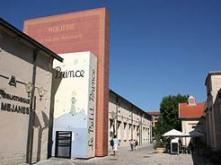
    Cité du livre Bibliothèque Méjanes Aix-en-Provence

  7. Social Networking – it may be having an adverse effect on some writers as they navigate the fine line between having a public profile to assist with promotion of their titles and the distraction of random communications and information that keeps them from writing. Not surprising that some enterprising company has come up with an app you pay for that restricts your internet access, we can now purchase discipline for the undisciplined!
  8. E-books – so you think e-books are good for literature? I’m not so sure, I think that e-books have turned literature into a much more accessible and easy to purchase commodity, with an associated risk that many people are consuming books and not actually reading them. So good for the writer’s pocket and for the estates of classics and at least the bookshelves aren’t suffering, but are we at risk of becoming collectors rather than readers.
  9. Telephones – I’ve mentioned technology already, but I have to register my concern at lugging my brick of a book, Murakami’s 1Q84 on holiday and a quick glance around the beach suggested I was one the very few doing that old fashioned thing, reading a book. Everyone else was doing the finger tapping dance on their teeny gadgets – alas, the mobile telephone has replaced the beach read, at least in St Tropez this summer!
  10. Steve Jobs & the Apple team – when computer hard drives required an entire office to house them and technology was beige, boring and you had to be a geek to operate it, literature was in no way threatened – now that it’s sleek, sexy and can facilitate a music, film, or other visual experience, a whole new level of entertainment has captured our imaginations, to the detriment of the more passive, noiseless book.
  11. The iGen – the baby boomers are becoming grandparents, the X generation are coping with being older parents and the new generation have been dubbed the iGen. They are going to create and imagine a whole new way of doing things. We don’t yet know what kind of literature they will want to read or create and they will decide which of our contemporary writers become future classics. Perhaps books are going to become more of an interactive experience?

The point being, there are a good many things out there and I am sure you can think up more of them, that could be said to be harming literature. But at least it stimulates a good debate and brings out those who are passionate about reading, writing, reviewing, critiquing.

Ok, back to writing that review then.

When Women Were Birds: Fifty-Four Variations on Voice

Firstly I have to thank my blog buddy Cassie for recommending this glorious oeuvre to me, her blog review is written with such passion and awe, she even inspired the author Terry Tempest Williams herself, to leave a wonderful appreciative comment.

When she wrote this book, Terry Tempest Williams was fifty four years old, the age her mother was when she finally succumbed to a cancer that first perched threateningly within her breast in her late 30’s, then a young mother of four children.

Raised in a Mormon family and heritage it perhaps should not have been such a great surprise when Terry’s mother informed her that like previous generations of women, she had left her daughter a collection of carefully preserved, beautiful cloth bound journals. A tradition yes, but a legacy, this daughter of words knew nothing of until that revelatory moment.

In Mormon culture, women are expected to do things: keep a journal and bear children. Both gestures are a participatory bow to the past and the future. In telling a story, personal knowledge and continuity are maintained. My mother kept her journals and bore four children: a daughter and three sons. I am her daughter, in love with words.

One month after her mother’s passing, Terry Tempest Williams felt ready to receive their wisdom and sat quietly opening one after the other absorbing their blessed pure message. She opened the journals to discover that the pages were blank. Every. Single. One.

Word by word, the language of women so often begins with a whisper.

I am leaving you all my journals…

Terry Tempest Williams creates an opportunity and uses those pages to reflect on the legacy her mother has left her and fills the pages with fifty four vignettes, fifty four variations on voice. She comes to understand many things about the blank page and the infinite possibilities this offers, the things her mother’s gesture may have meant. She indulges her imagination and shares a flock of realisations:

My Mother’s Journals are an expanding and collapsing universe every time they are opened and closed.

My Mother’s Journals are a gesture and a vow.

My Mother’s Journals are a collection of white handkerchiefs.

My Mother’s Journals are an obsession.

Part way through writing these short chapters, Williams attended a family event, which unhinged something inside. Restless, she came home and wrote a list, a list of the things she had been writing about in these pages and struggled to find a connection. Her list looked like this:

Great Salt Lake                      Mother

Bear River Bird Refuge             Family

Flood                                  Cancer

Division of Wildlife Resources    Mormon Church

Circling both lists, it seemed as if nothing connected them. Until she wrote the letters TTW underneath; then the exercise became apparent. It is she who connects these subjects, it is within her that they reside and it is through her voice on the page that we share an intimate and creative journey, like observing the beauty, the wonder and constantly evolving shape of a murmuration. A privilege to witness.

This is a book to slow read, to re-read and to ponder. This book is in every one of us. Whether we create our list first or mid way through as TTW did.

A Murmuration – click here to see two women and the most amazing flock of birds ever. Spectacular.

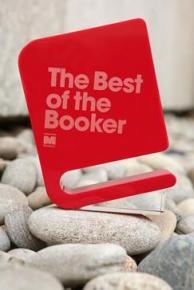
Man Booker Prize Longlist

Originally known as the Booker, it used to have just one criterion – that the prize would be for ‘the best novel in the opinion of the judges’. That remains one of the criteria and we know there have been some off years, it is a unique award, not what you would call popular fiction, it is what the organisers refer to as quality fiction to attract ‘the intelligent general audience’ – sounds a little book snobbish to me, but then  judging book prizes is subjective and often sparks a great debate and sometimes even bad behaviour.

The aim of today’s prize is said to be to promote the finest in literary fiction by rewarding the best novel of the year written by a citizen of the United Kingdom, the Commonwealth or the Republic of Ireland.

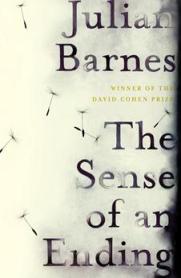
Last year’s winner was Julian Barne’s Sense of an Endingwhich I admit that I have not read yet, Barnes’ being a novelist I’ve started and stopped a couple of times, but will persevere and read before too long.

As an aside, I saw recently that the 2002 winner Yann Martel’s Life of Pi is being made into a film, directed by Ang Lee and today the film trailer has come out and it looks promising indeed.

And so, the Man Booker long list, announced by the judges today, from 147 submitted, the 12 novels are:

Nicola Barker, The Yips

Ned Beauman, The Teleportation Accident

André Brink, Philida

Tan Twan Eng, The Garden of Evening Mists

Michael Frayn, Skios

Rachel Joyce, The Unlikely Pilgrimage of Harold Fry

Deborah Levy, Swimming Home

Hilary Mantel, Bring Up the Bodies

Alison Moore, The Lighthouse

Will Self, Umbrella

Jeet Thayil, Narcopolis

Sam Thompson, Communion Town

Life of Pi

Six novels will be shortlisted and announced on 11 September and the winner on 16 October 2012.

So have you read any on the list yet, any predictions for the shortlist?

Happy Reading!

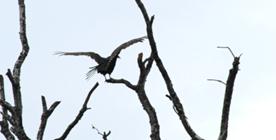
Buzzard

Friday Fictioneers is the brainchild of Madison Woods who posts a photo prompt each Friday to inspire followers to write a piece of flash fiction. After observing Rich participate I decided before I read his work, to see if anything was lurking in the depths of my imagination that wanted out, and Voila here it is, slightly longer at 150 words, but I’m ok with that.


A Man’s Best Friend

What’s she called?
Buzzard.

Buzzard? As in bird?
Yeh mate, Buzzard.

Bit strange for a dog don’t you think?

If I thought it was strange I’d have called her Bud, wouldn’t I?

Yeh, I guess.
Come on then, you gonna give me a hand or not. You get the front and take it slow down them stairs, I got the back. And no chat, I don’t want nosy neighbours asking stuff ‘ll give us more to do.

The two men lifted the long rectangular box off the table and walked towards the front door of the near empty apartment. Descending the stairs, they kept the deadweight container level until they got outside then slid it into the back of the waiting yute.

But where did you get Buzzard from?

Easy, wasn’t it. Last thing I saw before I picked up the body. That and the dog. So you gonna drive or me?

City of Love

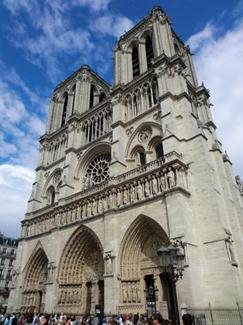
The immense and almighty Notre Dame de Paris

I have been busy retracing the many steps of the monuments of Paris these past few days, so not much time for reading, although I did manage to finish Barbara Kingsolver’s excellent ‘Prodigal Summer’ which I will write more of soon and following on from this glorious visit to Paris, I am now immersed in Hemingway’s ‘A Moveable Feast’ keeping me in Paris for a few more days yet, albeit the 1920’s.

If you need any more proof that Paris is indeed the city of love, check out this superb photo I took of that beautiful feminine monument ‘La Tour Eiffel’, is that not a beautiful heart shining down on the population?

We took an evening stroll up to the Sacre Cœur cathedral, two minutes from where we were staying.  In fact I was babysitting that evening while friends from New Zealand were at a Bruce Springsteen concert, I have to say it was the best night looking after 3 children ever, practicing french phrases during dinner and an impressive after dinner promenade to one of the city’s marvels.

Here is a detail from one of the tower walls of L’Arc de Triomphe. I love the dramatic detail of the sculptures and wall friezes.

Despite the beautiful blue skies you see, it did indeed rain every day I was in Paris, it reminded me a little of New Zealand, that rain, sun, rain, sun, beautiful green trees.

However, something that only Paris can offer, her history of monarchs, uprisings, revolutions and battles and 60,000 square metres of art works in one museum alone and then there’s the people watching, all chairs facing the street for the best view, it’s amazing what you observe and overhear during the downing of une noisette (small coffee with a dash of milk).

Now back in Aix-en-Provence where the temperatures are consistently hot and as I got out of the car, I am greeted by the incessant noise of the cicadas, who have long announced the debut of summer and witnessed the emergence of one of these gigantic insects from its chrysalis on the wall right next to me, the moment before he too joined that eternal cacophony of sound reminiscent of the season.

*

Au revoir Paris, je reviens bientôt.

Summer Reads

I’m not one for compiling lists of what I am going to read ahead of time, because I value too much the freedom and spontaneity of a vast sea of choices each time I finish a book, and often the reading experience will lead me on to the next thing.

Like reading Barbara Kingsolver’s ‘Prodigal Summer’ straight after ‘The Namesake’. How could I know that after listening to the group discussing the book I would have a conversation with a local poet about the beauty of sentences and Jhumpa Lahiri’s essay and that she would tell me I must read Kingsolver’s book.  It was sitting on the shelf unread and thus I abandoned all other reading ideas and jumped straight into it.

100 years on, Titanic Belfast Museum

But I do love looking at the lists, always feeding into the mental TBR list, noting books I might wish to read or to keep an eye out for.

I could say I have intentions for summer, like the two Titanic inspired books I bought on a recent visit to Titanic Belfast, the excellent museum opened in March this year.

‘A Night to Remember’ and ‘And the Band Played On’ also seem appropriate companions to Charlotte Rogan’s ‘The Lifeboat’ which I have on kindle.

To help you decide, I wanted to share this excellent flowchart designed by Teach.com to encourage students to find a book of their choice, there are 101 books shown, inviting readers to consider fiction versus non-fiction, classic or contemporary and many other options.  I keep coming across it and there’s something appealing about viewing images of covers rather than just a list of titles, so enjoy and I hope you find something for your own summer read!


So do you plan your reads or are you open to the spontaneous?
Summer Reading Flowchart

Via Teach.com and USC Rossier Online

A Piece of the Mosaic

Thank you to inspirational talent Kimberly Sullivan who lives in Rome and has written ‘In the Shadow of the Apennines’ set in the mountains of Abruzzo. She tagged me in the ‘Be Inspired’ blog hop hosted by ‘Page After Page’:

All of our stories come from somewhere, whether it be a dream, another book, a life event…So, I thought why not give people the chance to talk about their inspirations as well as their stories?

To participate, I should answer 10 questions about my novel and then tag 5 writer’s:

1. What is the name of your book?

‘A Piece of the Mosaic’

2. Where did the idea of your book come from?

It started with a prompt in a creative writing class at the Groucho Club in Soho; the tutor asked us to spend 5 minutes writing about a character. It was the scariest part of the class, that compulsory, time limited plunge into the unknown with others furiously scribbling away.

Paralysed, I had a vision of the back of a young man standing on a pier smoking a cigarette, gazing out to sea . He was wearing black trousers and a black leather jacket, observed by two schoolgirls giggling on a bench. After the class finished, I could not get that man out of my head.

3. In what genre would you classify your book?

I hate labels, I hope this book crosses as many genres as possible, but if I had to guess I would say it is contemporary, cross cultural fiction.

4. If you had to pick actors to play your characters in a movie rendition, who would you choose?

I don’t know any current Italian actors, so I would suggest a young man of Mediterranean origin to play Alfredo and because this question is too hard, I’m going to adapt it and say I dream of music composed by Ennio Morricone and the film directed by Giuseppe Tornatore director of Cinema Paradiso and Ba’aria. Authentic it must be.

5. Provide a brief synopsis.

Alfredo’s home village – Liguria

Angry with his father after his mother’s death, young Italian chef Alfredo, abandons the fishing village he has lived in all his life and travels to England, eventually finding a job in the seaside town on the South Coast. In return for low rent, he agrees to an unorthodox request from his spinster landlady Claudette, to help her find the sister she has not seen for 30 years since she and her husband immigrated to New Zealand.

Alfredo discovers more than a long-lost sister and the search soon becomes his own, to find Claudette’s niece Amber; the journey leading him towards everything he has tried to avoid in order to learn the truth.

6. Is your book already published/represented?

The synopsis and first three chapters have been read by 3 agents in London, with encouraging responses but declining representation and the full manuscript was requested by the fiction editor at Penguin NZ, who enjoyed it and suggested I seek representation in the UK.

 In order to establish some credibility with my writing, I decided to write a blog before I send it out again, so here I am blogging away, sharing my passion for the written word.

7. How long did it take you to write your book?

The actual writing part probably took about a year, but I wrote it in two bursts, the first half when I lived in London and on a whim travelled to Liguria to spend a week in a fishing village imagining and writing of lives other than my own.

I finished it in the first six months of arriving in France unable to speak French – the best excuse in the world not to have a proper job and to finish a first novel.

8. What other books within your genre would you compare it to? Or readers of which books would enjoy yours?

There are many books about people from the English-speaking world going to live in a non-English speaking country, both fiction and non-fiction, Alfredo isn’t leaving to see the world, he is escaping.  It is a story that questions identity and confronts issues of adoption and family.

I think it will appeal to people who like books that take them to places they dream of visiting and that introduce them to issues from different cultural perspectives, if anyone has any suggestions as to any other book this sounds like, let me know.

9. Which authors inspired you to write this book?
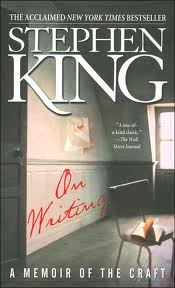
Two authors come to mind immediately, ironically Stephen King influenced this book, because I read his excellent slim masterpiece ‘On Writing’ midway through writing.  After reading it I changed a few things, I stopped writing longhand, I set a 1000 words/day word count (his is 2,000 words/day) and I stopped editing as I was writing, I just wrote it out until the end – terrified it would be crap, but discovered how to create pace.

The other author who spent some time residing in my subconscious was Italo Calvino, it took me a while to figure out what he wanted; now I know – but it’s a secret.

10. Tell us anything that might pique interest in your book?

Here are two extracts that survived that very first writing exercise, sitting in the Groucho Club in London, searching the recesses of my mind for inspiration.

Looking out over the swollen sea, Alfredo smiled knowingly at how her moods changed, one moment bright and sparkling in her refinery, phosphorescence glittering like sequins in the moonlight, the next as she was now, irascible, dark and brooding, like a young lover scorned, beauty transformed into bitterness. He watched a fish jump momentarily from her clutch, as if trying to escape her volatile and uncompromising mood, then witnessed the force of gravity, the sea’s ever-trusting accomplice, toss the cold-blooded vertebrae back into the maelstrom from which it had tried valiantly to escape.

He threw his half-finished cigarette into the sea and she hissed at him in reply. He had never been a regular smoker in Italy and wished he could kick the habit, cigarettes had become a comfort since he came to England, he liked to roll them as much as he liked to smoke them, it gave his hands something to do when his mind was restless. Thoughts extinguished, he walked down the length of the pier, eyes front, not looking at two giggling teenage girls to his right but sensing their eyes following his footsteps, over the wooden planks, where if one’s gaze was concentrated enough, you could see the pregnant swell of the waves below, as the tidal ebb carried them to and from the shore.

And now to tag 5 writers, all of whom are an inspiration to me:

  1. Brenda Moguez – Passionate Pursuits
    – Brenda is a prolific, unique and inspirational blogger with a rich family and personal history to draw on, not to mention a gigantic imagination, it’s just a matter of time before we will be reading her novel, now doing the rounds of agents.
  2. Juliet GreenwoodJulietGreenwoodAuthor – Juliet lives in a traditional Welsh cottage between the romantic Isle of Anglesey and the majestic mountains and ruined castles of Snowdonia, she is living the dream, a published writer and avid gardener; she is an inspiration.
  3. Patricia SandsEveryone Has a Story to Tell
    – Patricia has published a book about friendship, fun and the complexities of relationships among women, drawing inspiration from her own experiences. Every Friday she blogs about France and her current WIP (work in progress) is set here.
  4. Julie Christine Chalk the Sun
    – Julie is a Francophile, she is a reading writer, travels often and writes a fantastic book review. Just waiting for her to plunge right into writing that novel, a WWII star-crossed romance between a young French girl and a German POW, inspired by true events.
  5. Jen ThompsonChronicles of Jen
    – Jen is another writer who loves to read and shares her thoughts when she does, she’s a talented writer, lives in a caravan and is out there observing characters and seeking inspiration while serving hotdogs and popcorn. She may not be able to participate because her idea is so great, someone might steal it J
  6. Nelle NelleWritesI’m going to add one more, because I couldn’t have a list of writers without including Nelle, who not only is a great writer, but is a loyal follower and comments on all my reviews, even though her book budget is severely restricted.

The Smile by Ray Bradbury

A Short Story Set in the Future

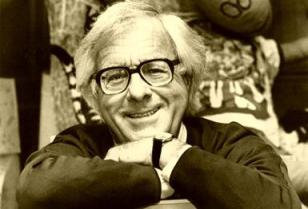
He wrote more than 27 novels and over 600 short stories and somehow his work has never crossed my path.

As I read the Culture and Book pages of The Guardian daily, I have been reading some wonderful tributes to the writer Ray Bradbury who died recently at the age of 91. ‘Margaret Atwood on Ray Bradbury: the tale-teller who tapped into the gothic core of America’ was interesting, Atwood celebrates the author, known for his science fiction but who has shown remarkable scope and influence throughout his career. He was a story-teller; he had an active and far-reaching imagination and rejected the limitation of labels.
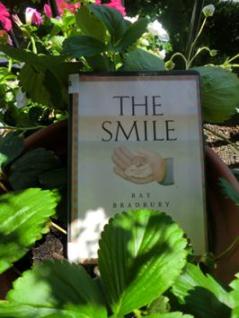
After a quick trip to our local French library yesterday, I stopped at a display table honouring Ray Bradbury and came home with his prophetic short story ‘The Smile’ the only English language work left on the display.

Set in 2061, the story is set in a square in Rome, where the boy Tom waits with an angry crowd to view the ‘Mona Lisa’. Joy has vanished from this world and people are filled with hate for everything that represents the past. Except Tom. He remembers. He represents hope. Perhaps love. Certainly appreciation.

Tom stood before the painting and looked at it for a long time.

The woman in the painting smiled serenely, secretly, at Tom, and he looked back at her, his heart beating, a kind of music in his ears.