
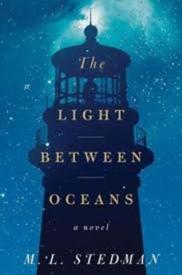
 I begin reading with envy as M.L.Stedman’s playful yet adept metaphors slip off sentences, like droplets off the oars of a dinghy, each one plunging back into the ocean to collect another stream from which to compose those few extra words that create more than just mere description, revealing an image and inviting us deeper into the world she paints with words, an island hundreds of miles from civilisation, where only the two oceans, a grand light, the twinkling stars and the tall, elegant, imposing bearer of that light keep a young, newly married couple company.
There are times when the ocean is not the ocean – not blue, not even water, but some violent explosion of energy and danger: ferocity on a scale only the gods can summon. It hurls itself at the island, sending spray right over the top of the lighthouse, biting pieces off the cliff. And the sound is a roaring of a beast whose anger knows no limits. Those are the nights the light is needed most.
Post World War I
It is the early years after the first world war and many families have been affected by the loss of their sons, Tom survived the war but carries the guilt of a survivor who has seen too much and wishes they could have done more. Isabel’s family is no stranger to the grief of losing not one but two sons, within days of each other, never quite giving up the illusion of hope that maybe it was all an error and one of them will return.
The Isolation of Lighthouse Living
Tom accepts a job on Janus Rock, a lighthouse many miles out to sea, with visits to the mainland years apart, the island, the sea and that reassuring steadfast light his sole companions. Until Isobel joins him in wedlock and on the island will encounter her own form of grief, yearning for the child that never quite makes it into life.
After the last stillborn child, a dingy washes ashore with the body of a young man and a baby wrapped in a bundle, miraculously still alive. Convincing her husband to delay the inevitable moment, the two fall into a conspiracy of their own making, one that lifts Isabel’s spirit while crushing Tom’s peace of mind.
When he wakes sometimes from dark dreams of broken candles, and compasses without bearings, he pushes the unease down, lets the daylight contradict it. And isolation lulls him with the music of the lie.
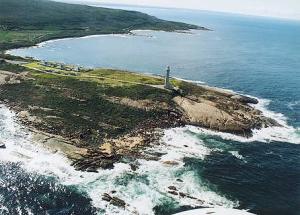
Inspired by Cape Leeuwin Photo by Augusta Margaret River Tourist Association
At times uncomfortable reading, Stedman keeps you guessing and wanting to turn the pages, as the behaviours of the female characters are as unpredictable as the currents of the ocean herself. Tom, like the lighthouse itself is resolute, yet vulnerable to the consequences of his steadfast loyalty.
The choice of a third person narrative perspective has the effect of keeping the reader at a certain emotional distance and prevented me from being drawn into empathising with the characters, never being truly brought deep into their minds to see things from their perspective, thus we remain at a safe distance ourselves, just like those ships out at sea.
I did wonder why the author hadn’t taken that leap and told the story from the perspective of one of the central characters, but at the same time, sense the hesitation to go there. In all, a magnificent debut and thought-provoking novel, with many fabulous evocations of the turmoil of the sea and humanity.


 Set in the summer of 1914, the story centres around Grace Winter, a 22 year widow; right from the beginning we understand she is one of three women being held in prison while on trial for a crime that is alleged to have occurred while they were afloat on a lifeboat after the sinking of a grand ocean liner they were travelling to New York on.
 When I came to S&S, I told everyone here I wanted to publish books that deepen the cultural conversation and take readers to places they couldn’t otherwise go. – Jonathan Karp, Simon & Schuster
 population (1-2 million) died. The regime was finally overthrown by the Vietnamese military in January 1979.
 Terrible as it is and damaged as they are, it is those who survive and who are still able to maintain some belief in the human spirit and humanity that bring one of the few gifts that such terror evokes. It is a price no person would ever wish to pay.
 This is a multi-layered story that reveals itself with each encounter, that hints at the traumatic events and psychological destruction of a nation, depicting the constant struggle for survival in a post-war era and the love it’s citizens have for their country despite the difficulties and horrors of the past. There is sacrifice in staying and pain in leaving; there is no real escape, both will suffer, albeit in different ways.


 Laddy Merridew comes to spend time with his Gran in an old Welsh mining town in Vanessa Gebbie’s ‘A Coward’s Tale’. Not happy with his lot, lost in the in-between, here where he doesn’t feel like he belongs so starts skipping school and there, the home he has come from that is breaking apart and will never be as it was and what’s worse, is requiring him to make decisions he feels incapable of making.
 Once I got into the tales and understood the framework, I enjoyed the book, but I admit it took three attempts before the stories managed to carry me away with their rhythmic, poetic prose. However they are splendid tales and told with a unique captivating voice that puts the reader right in that square with all the other listeners, empathizing with each of the characters that the adored Ianto Jenkins brings to life for them.
 Eva and her companions have travelled to the ancient Silk route city of Kashgar in the hope of converting lost souls, but seem to find only trouble, not helped by the questionable motivations of each of the individuals that make up the group. Tolerated but unwelcome, they find themselves ostracized and seen as bringing bad luck during a time of political and religious unrest.
 Word by Word