Testament of Youth by Vera Brittain

Vera BrittainThat Vera Brittain chose to name her autobiography a Testament, at first seems like an assertion of her intellectual inclinations, particularly in light of the decision she made to pause her hi-brow Oxford University studies when the First World War began as her closest friends, her fiancé Roland and brother Edward all signed up to participate, one by one departing for France.

She had fought hard to be accepted into Oxford, at a time when women were not exactly welcome, her own family and many of their social peers thought it a waste of time. It remained important, but while those she was closest to were sacrificing everything, it felt indulgent to be pursuing anything intellectual. She volunteered to become a VAD (Voluntary Aid Detachment) nurse as she sought the diversion of physically demanding work to lessen the idle hours of mental anguish concerning her male contemporaries at war.

Testament is more than one woman’s intellectual account, it is evidence of a generation’s stunted youth, a youth stolen by war and loyalty, one that for the men who participated, would continue to be acknowledged and remembered, their efforts appreciated and honoured. For Vera Brittain it would bring grief, disappointment and disillusionment.

She recalled one of her last bittersweet moments, punting up the river in Oxford with her friend Norah, whom she would not see again after the end of that term.

‘No evening on the river had held a glamour equal to that one, which might so well be the last of all such enchanted evenings. How beautiful they seemed – the feathery bend with its short, stumpy willows, the deep green shadows in the water under the bank, the blue, brilliant mayflies which somersaulted in the air and fell dying into the water, gleaming like strange, exotic jewels in the mellow light of the setting sun.

I had meant to do such wonderful things that year, to astonish my fellows by unprecedented triumphs, to lay the foundations of a reputation that would grow ever greater and last me through life; and instead the War and love had intervened and between them were forcing me away with all my confident dreams unfulfilled.’

Malta Vera Brittain

Vera Brittain, 3rd from left, in Malta, WWI

Her nursing efforts took her out of the northern provinces of England for good, away from her studies at Oxford to a military hospital in London, until events would propel her to volunteer for a foreign assignment, taking her to Malta and then close to the front line in France for the remaining years of the war.

Her account is all the richer for the journals she kept from 1913 to 1917 and rather than present them in full, she selects extracts to bring the era to life, sharing the angst and idealism of her youth, simultaneously looking back and narrating from the wisdom of early middle age, for she was 40 years old before she would finally see the much revised autobiography in print.

The book contains snippets of letters to and from Vera and her fiancé Roland and her brother Edward, they were her life blood, her motivation to face the relentless days in the hospital, where their work offered so much and yet did so little to stem the flow of blood and severed limbs, pain and hopelessness.

The letters that pass between Vera and Roland reveal the slow loss of hope, optimism and valour as they struggle to find meaning in war. Despite the often depressing content, they are fortunate to have each other, writing letters prolifically, drawing each other deeper into a love that they knew could be destroyed on any day.

After the war, Vera returns to Oxford and finds herself isolated. She has difficulty articulating her experience in a way that is understood and instead invites scorn and derision. A new generation of youth has swept up behind her and they have little time for the lessons that might be gleaned from a mature student who forsook her youth for volunteer nursing abroad. She gets involved in the debating society, and in one of the more excruciating passages in the book, valiantly tries to prove her point only to discover it will be she who is taught the lesson.

‘In the eyes of these realistic ex-High-School girls, who had sat out the war in classrooms, I was now aware that I represented neither a respect-worthy volunteer in a national cause nor a surviving victim of history’s cruellest catastrophe; I was merely a figure of fun, ludicrously boasting of her experiences in an already démodé conflict. I had been, I suspected, largely to blame for my own isolation. I could not throw off the War, nor the pride and the grief of it; rooted and immersed in memory, I had appeared self-absorbed, contemptuous and ‘stand-offish’ to my ruthless and critical juniors.’

Vera’s hope and her life purpose after the war, was to try to understand and then participate in any action that could prevent humanity from making the same terrible mistakes that caused the loss of so many lives. She changed her focus from Literature to History and searched for proof of anything that had been put in place to prevent such destructive hostilities from wiping out a generation of youth. She found what she was looking for in treaties and agreements and became an international speaker for the League of Nations attempting to advance understanding and awareness among the common population.

The book impressed me with its honesty, particularly as Vera Brittain was not afraid to portray her flaws; through the extracts from her journals we have a real sense of the character she was in her twenties and though she is the same person after the war and we recognise her inclinations, her direction in life is permanently altered by the experiences of those years.

The combination of experiencing the present through her diary and letters and her observations from the maturity of having survived war and gained some distance from it, from which to observe her former self, provides the reader a unique insight into humanity.

For me, it was a gripping read and although we learn much of the story in the opening introduction, it does nothing to lessen the effect as we witness Vera receiving news she has dreaded from the beginning and more than the individual events, the observation of emotional ups and downs and the effect of war on a generation seen from a young woman’s perspective is more insightful than any rendition of battles or victories I have ever read.

If the prospect of reading a 600 page book seems daunting, look out for the movie coming out in 2015!

Good Morning, Mr Mandela by Zelda la Grange

Mandela Day

Today, 18 July is Nelson Mandela Day, it was the date of his birthday and the day he married his wife Graça Machel. I discovered this yesterday as I was nearing the end of Zelda la Grange’s memoir Good Morning, Mr Mandela as she helped with the plan to advocate to the UN to try to make 18 July International Nelson Mandela Day, after receiving a letter of congratulations from Bono for Mandela’s ninetieth birthday celebrations held in Hyde Park, London. He wrote:

“Happy Birthday Madiba. I am working to make July 18th a public holiday in every country that acknowledges that the struggle of Nelson Mandela is not over until every individual who yearns for freedom has the chance to grasp it. I believe your birthday should be an occasion around the globe to honour those who still struggle.” Bono, U2

Good MorningWhen I saw this memoir was due for release I didn’t know anything about Zelda la Grange, but after reading this interview by John Carlin in The Guardian from 2008, I decided to find out more and finished reading it today.

Zelda la Grange was born in 1970 in East Johannesburg, South Africa to a white Afrikaans family. Her father worked in construction and her mother was a teacher. The family wasn’t rich, but being white, they enjoyed the privileges of their race, benefiting from the apartheid regime through access to health, education and a strong sense of entitlement. It wasn’t something she ever thought about, it was the way they lived, they accepted it and had little knowledge of how these policies affected black and coloured people. They were racist.

“As a child it is easy to follow when you grow up in an environment that is safe. Perhaps if I had been oppressed, didn’t have access to a decent school, a proper house, electricity and water, I would have asked different questions, and my brain would have developed into being more inquisitive about injustice at an early age.”

Not knowing what she wanted to do with her life, she enrolled in a course to become an Executive Secretary. When Mandela was voted President she was working in a government Human Resources Department and heard there was a job opening in the administrative department of the President’s office.

It was to be the beginning of a twenty-year career working for Nelson Mandela, first in his capacity as President and then when he left the government, she would be the one person he chose to take with him, to maintain in his employ for life.

Zelda la Grange served Nelson Mandela for around 20 years and you could say she gave her life to him as she had little personal existence outside her working life, so loyal was she to the man who handpicked her to be that loyal employee. Ever the strategist, he chose a woman whose skills complimented his own, she compensated for his weakness and allowed him to continue to focus on his strengths by taking care of all the things that needed to go on behind the scenes to ensure safe passage and no surprises. She was a perfectionist, though she doesn’t admit that in the book, working often through the night than have anything go wrong and was completely obsessed with every little detail.

Zelda owns up in the opening pages that this book is her story and so doesn’t contain great political insights into South Africa or its policies, nor does she ever break the trust she had with Nelson Mandela and say anything he wouldn’t have approved of. One gets the impression that she could have said so much more and perhaps even did, but any excesses have been cut from the first draft and what we read here is a clean, if somewhat lacking version of the events of those twenty years they worked together.

The book reads like a diary of events, which can become tedious, especially as the language is quite prosaic, just as the job must have been, however she is clearly passionate and dedicated to serving the man she referred to as Khulu or Grandfather and he referred to her as Zeldini. Their relationship was extremely close, but always with a respectful and appropriate distance, as was inherent in both their natures.

It is an incredible record of those years and the many voyages they made, people met and funds raised for various humanitarian projects they launched, even if we miss the perspective of the man himself.  In telling her story, she pays tribute to her boss and has created a record of her great respect and need to ensure that all those associated with him, from friends to celebrities to politicians were adequately taken care of. She never stoops to gossip, takes care not to say anything negative about the family, although you can sense the unspoken tension underneath, after all they did bar her from the funeral activities and if it wasn’t for the generosity of Mandela’s wife, Mrs Machel, she would not have attended at all.

An interesting account and makes me even more curious to read Mandela’s own words and gain an insight into what was going on inside his mind during these years.

Today's Google Doodle

Today’s Google Doodle

Note: This book was an ARC (Advance Reader Copy) kindly provided by the publisher via NetGalley.

la fête du muguet et du travail

Le Muguet

Le Muguet

Au mois de mai, fais ce qu’il te plait.

In the month of May do what your heart fancies.

Provencal proverb

Today is a public holiday here in France, to commemorate la fête du travail and la fête du muguet.

I wrote a little about this tradition two years ago here, sharing my experience of a neighbour knocking on our apartment door and presenting me with this small token of friendship and bonheur (happiness) le muguet. Around town, I noticed people selling the small flowers in the street.

This commemoration actually has two origins and two separate histories, one dating back to the Middle Ages and the other to Chicago in 1886.

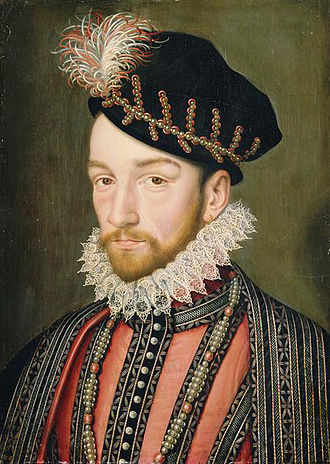
La muguet, also known as lys des vallées (lily of the valley) is a plant originating in Japan, long symbolising the arrival of spring, and on 1 May 1561, the year he became King, Charles IX chose it as a gift to bring bonheur to the women of the royal court.

Charles IX, King of France 1560-1574

Charles IX, King of France 1560-1574

It wasn’t until 1976 that it was also associated with la fête du 1er mai, la fête du travail.

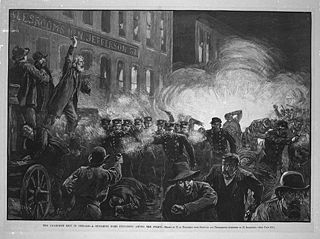
In Chicago in 1886 a movement was launched to lobby for the 8 hour working day and the 1st of May was chosen to commemorate it. A strike involving 400,000 workers on May 4, referred to as the Haymarket Riot, paralysed a number of factories, the protest became violent resulting in the death of a dozen people including seven police.

Haymarket Riot, 4 May 1886, Chicago, Illinois

Haymarket Riot, 4 May 1886, Chicago, Illinois

In June 1889 in Paris, for the centenary of the French revolution, it was decided to associate the 1st of May with the objective of attaining the 8 hour working day and in commemoration of the movement launched in Chicago on 1 May 1886.

Initially, they wore a red triangle to represent the triple objectives, 8 hours work, 8 hours sleep, 8 hours of leisure. This was replaced by the flower l’églantine and finally in 1907 by le muguet.

On 23 April 1919, the 8 hour day was ratified by the French senate and on 24 April 1941, during the German occupation,  the 1st of May was officially designated la fête du travail.

8 hours

Today la fête du travail is celebrated in most countries across Europe, except Switzerland and the Netherlands. It is also celebrated in South Africa, Latin America, Russia and Japan.  In the UK, the first Monday in May is celebrated and in the US, Labour Day is celebrated on the first Monday in September.

Voila! Bonne fête à tout le monde.

All The Light We Cannot See by Anthony Doerr,

Sea swell at Manu Bay, Raglan, NZ

Sea swell at Manu Bay, Raglan, NZ

I read Anthony Doerr’s book after finishing two books that didn’t work too well for me and so the experience of dipping into the first few pages of Doerr’s All The Light We Cannot See was like exiting the murky depths of a turbulent current to float in that gentle swell of the ocean just before the breakwater, where the waves lift us up and down like a life buoy without breaking.

Reading Doerr’s words and meeting his characters Marie-Laure, Werner and Jutta caresses the mind like the sea cradling the body as if it were weightless.

That light, the gentle caress of words that uplift, that intrigue, that follow through on their promise, that warns of tragedy and provides the reader with a guide to navigate the pages that follow.

All the LightMarie-Laure and her father live within walking distance of the Natural History Museum in Paris, where he works as the master of locks, the keyholder. When she is six Marie-Laure loses her sight and every year after that her father builds her a wooden structure that is a kind of puzzle box. Using her hands, she explores the gift to finds its hidden secret and despite its increasing sophistication and difficulty, each year it takes her less time to crack its ingenious code, opening it to reveal the gift within.

He also builds her a model of their neighbourhood, every home, building, street. She memorises it until she is ready to go out and discover the area in its life-size proportion. When the Germans occupy Paris, Marie-Laure and her father flee to Saint-Malo to stay with her reclusive Uncle and his housekeeper where they must build another model she will learn to navigate.

“For a long time though, unlike his puzzle boxes, his model of their neighborhood makes little sense to her. It is not like the real world. The miniature intersection of rue de Mirbel and rue Monge, for example, just a block from their apartment, is nothing like the real intersection. The real one represents an amphitheater of noise and fragrance; in the fall it smells of traffic and castor oil, bread from the bakery, camphor from Avent’s pharmacy, delphiniums and sweet peas and roses from the flower stand. On winter days it swims with the odor of roasting chestnuts; on summer evenings it becomes slow and drowsy, full of sleepy conversations and the scraping of heavy iron chairs.

But her father’s model of the same intersection smells only of dried glue and sawdust. Its streets are empty, its pavements static, to her fingers it serves as little more than a tiny and insufficient facsimile.”

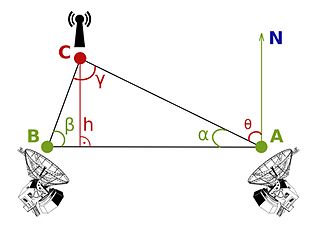
Werner and his sister Jutta are orphans in Germany, their father killed in a coal mining accident. Werner has a fascination for radio, both listening to and repairing them; the siblings discover and listen to broadcasts from as far away as France and England until war approaches, when to be in possession of a radio becomes a dangerous and illegal pastime. However, his talent has not gone unnoticed and will fast-track him into the midst of Hitler’s youth and a role as a detector of radio signals, leading him in wartime to the north of France.

“At midnight he and Jutta prowl the ionosphere, searching for that lavish, penetrating voice. When they find it, Werner feels as if he has been launched into a different existence, a secret place where great discoveries are possible, where an orphan from a coal town can solve some vital mystery hidden in the physical world.”

Radiotriangulation Scheme: Source wikipedia

Radiotriangulation Scheme: Source wikipedia

I really enjoyed this book, it made me care about the characters and interested in their lives and worry about them being on opposite sides of a great war. How could that ever be navigated safely?

Doerr describes the two different worlds of Marie-Laure and Werner with such clarity, overcoming blindness and interesting us in the intricacies of radio circuitry, pathways of electrons, amplifiers and transformer coils as if they were the most fascinating thing ever invented.

It is a story of survival, perseverance, passion and obsession set in the years leading up to and during WWII, it brings the streets, homes and sea wall of Saint Malo into the reader’s imagination where we too learn to see without seeing. And it will may make you curious to read Jules Verne if you haven’t already.

Anthony Doerr transmits an infectious enthusiasm for the story, creating endearing characters with rich, enticing prose, all the elements of great literary fiction that can entertain.

Further Reading:

New York Times Review Light Found in Darkness of Wartime


Note: This book was an Advance Reader Copy (ARC) provided by the publisher via NetGalley.


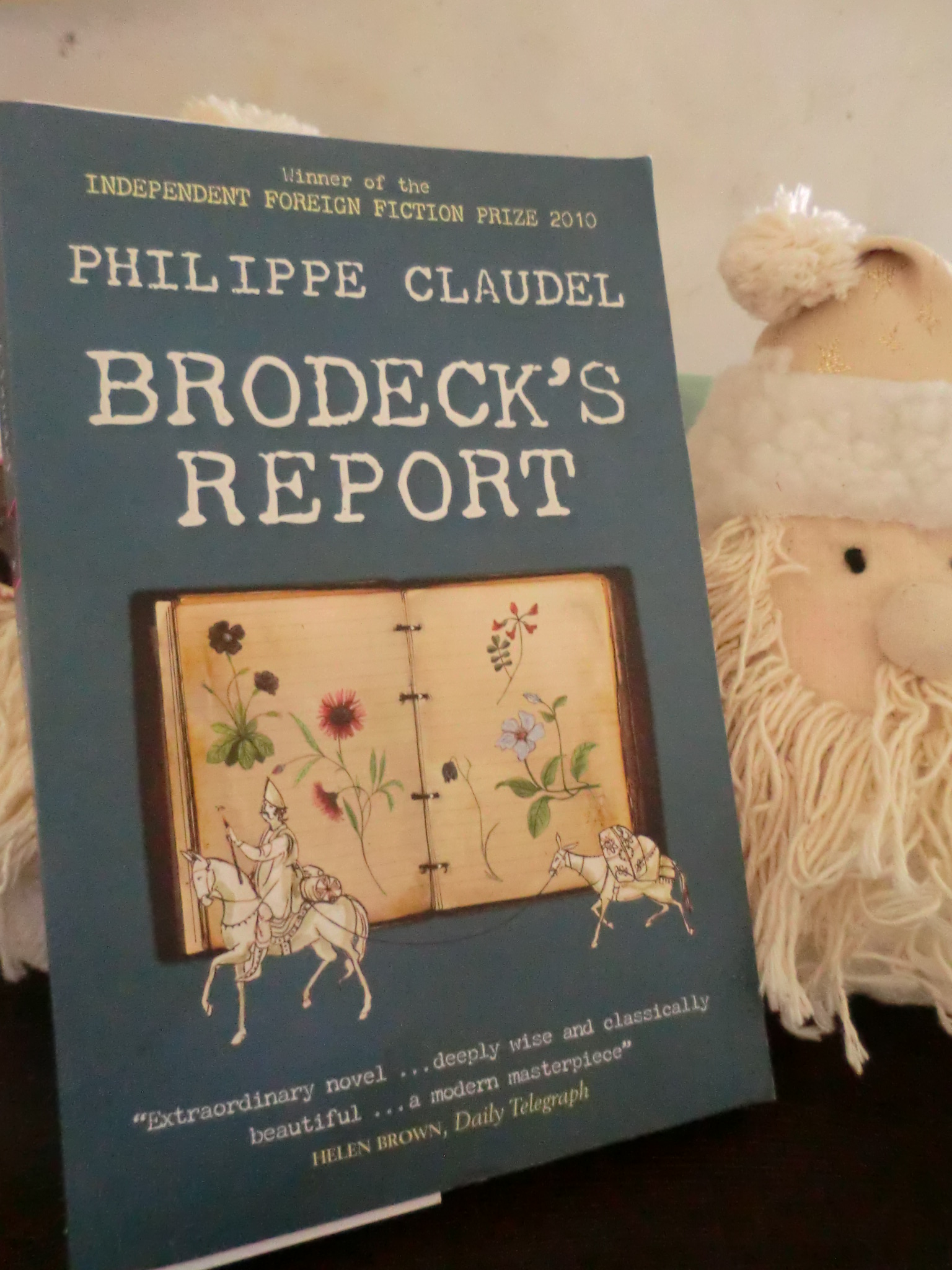
Brodeck’s Report by Philippe Claudel, tr. John Cullen

BrodeckThis book has been on my radar since I read Le Petite Fille de Monsieur Linh by Philippe Claudel last year. That was the first book I had read by Philippe Claudel and our book club decided we should read it in French. I remember at the time, one of my twitter followers mentioned Brodeck’s Report as being her favourite, and on a recent visit to West End Lane Bookshop in London, I found this copy.

Brodeck’s Report is the story of the young man Brodeck, who as a child arrived in a French village with an old woman who had taken pity on him, finding him sitting alone in the ruins of a house fire.

He becomes a protégé of the village, who save enough to send him to university with the intention of him making an important contribution to village life, as it was clear he had the capability. Their plans are thwarted by unrest in the city and Brodeck flees to the village with a young woman who will become his wife. The village soon becomes occupied, resistance is taught a harsh lesson and the community are encouraged to ‘cleanse the village’. Brodeck and one other who came from elsewhere are sent away.

InnWhen the story begins, Brodeck is home, having survived the camp and after stepping out to find butter, stumbles into the midst of a village gathering at the Schloss Inn, where those grouped have decided he will write a report about the unknown, nameless stranger who came to visit, who had now met his end.

The novel is quiet, devastating and yet brilliant. Claudel takes one village which happens to be near the border – and what is a border but an imagined, even a painted line on paper – of an occupying country, and uses the village and its resident to portray humanity and its many inclinations, including its inability to learn from mistakes – which manifest when a stranger rides into town, installs himself at the local inn and goes about his business, without letting anyone know what that is. Many of the events portrayed in the novel are the result of illusory thought, of man’s inclination to create a story when there is none and to punish the outsider, the one who has inspired their dark imagination.

BrodeckBrodeck is tasked with writing an account of the events that do take place and as he does so, he simultaneously writes another account, his own narrative of what is occurring and what has happened in the recent past. He writes to try to make sense of it, as is his nature and to know what he must do.

Reading Primo Levi adds to an understanding of Claudel’s work and having read this novel so soon after Aminatta Forna’s The Hired Man, it illuminates something more of that work as well, it is as if they write about the same people, only Claudel dares to take the reader deeper into the heart of his villagers forcing us to open our eyes.

“It is a strange time of day. The streets are deserted, the encroaching darkness turns them into cold, grey blurs, and the houses become shifty silhouettes, full of menace and innuendo. Night has the curious power of changing the most everyday things, the simplest faces. And sometimes it does not so much change them as reveal them, as if bringing out the true natures of landscapes and people by shrouding them in black.”

Stunning.

Orphan Train by Christina Baker Kline

I picked this book up knowing I would likely finish it in a couple of days.  After a period of slow reading, sometimes we need a faster paced book to get us going again. Orphan TrainOrphan Train by Christina Baker Kline was passed to me by my book buddy and I was warned that it had flaws, and I did notice a definite divide among readers on Goodreads between those who loved it and those who couldn’t get past certain criticisms.

It is a fascinating story in part because of its little known historical background, that in the Depression era of the late 1920’s, early 1930’s (and as far back as 1854) thousands of abandoned and homeless children were rounded up in New York and coastal cities and taken by train to the Midwest of America, where preceding their journey, posters had been displayed in towns announcing that the train would be passing through. These children were offered to those interested in providing a home for them and on the day the train passed through the children were paraded in front of an interested adult audience.

While some were welcomed and loved, unfortunately, particularly for the older orphans, many experienced hardship and were destined for servitude, babies were more likely to attract those looking to create a family; older children attracted those looking for cheap labour.

HomesForChldrenChristina Baker Kline had two grandparents who were orphans, whom she says spoke very little about their experiences and her husband’s grandfather and siblings featured in a non-fiction story called Orphan Train inspiring her to research the subject further.

The book follows several months in the life of 17-year-old Molly Ayer growing up in Spruce Harbour, Maine who has been in and out of about 20 foster homes already and is spending 50 hours doing community service in the home of 91-year-old Vivian, assisting her clear up her attic and interviewing her for a school project. Spending time in her home and listening to Vivian talk about her early life opens Molly’s mind when she learns Vivian’s childhood was another version to her own. It generates in her a sense of belonging that she has not experienced since her father died in a car accident and she starts to become interested in filling in some of the gaps in Vivian’s story as this unexpected friendship develops.

“In truth, though she hasn’t admitted it out loud until now, Molly has virtually given up on the idea of disposing of anything. After all, what does it matter? Why shouldn’t Vivian’s attic be filled with things that are meaningful to her? The stark truth is that she will die sooner or later. And then professionals will descend on the house, neatly and efficiently separating the valuable from the sentimental, lingering only over items of indeterminate origin or worth. So yes – Molly has begun to view her work at Vivian’s in a different light. Maybe it doesn’t matter how much gets done. Maybe the value is in the process – in touching each item, in naming and identifying, in acknowledging the significance of a cardigan, a pair of children’s boots.”

orphan trainsIn between Molly’s contemporary narrative, the author switches to Vivian’s historical narrative spanning twenty-three years from 1929 when her family first arrive in New York from Galway in Ireland. While the narrative changes from one timeline to the next, there are parallels that connect the two and keep the book from reading like separate narratives. Because Molly meets Vivian quite early on, the juxtaposition of time actually keeps the thread of the story alive, as if we are reading what Molly is hearing.

My only criticism was provoked by a nagging question I had over why the story wasn’t more emotionally engaging. There are some significant events and turning points in the story that normally create a cathartic effect, as if the reader were actually experiencing them and American writers in particular do this particularly well. However, upon re-reading I noticed that often at the point where the character shares what is happening, rather than continue with the first person narrative and share the characters dramatic reaction, the first person perspective often changes into the third and looks back at the event, rather than staying and engaging with it. It creates a feeling of detachment and prevents the reader from experiencing the drama, it cuts short what we expect to encounter and halts any feeling of empathy we might have been capable of feeling.

Towards the end of the book, Vivian as a young woman makes a decision that I found surprising and difficult to believe. Usually when we have come to know a character well, their decisions are understood and we develop empathy for the character, even when they make a decision that is counter to our own imagination. I was surprised by Vivian’s decision because despite her experiences, her character development hadn’t suggested to me that she would make such a choice.

Rather than detract from the story though, I think this is something that makes an interesting discussion point, was I the only one to think like this for example? Are the choices that people make, in particular orphans, adoptees and children who have had traumatic childhoods, influenced so predictably by their experiences? Can a writer who has not had such an experience inhabit characters like Molly or Vivian with authenticity?

An excellent read and an insightful look into a lost generation of children whose experience is difficult to imagine.

Magda

Magda (2)In the course of Meike Ziervogel’s novella, we meet three generations of women in one family, an embittered grandmother, her daughter Magda and the lovesick teenager Helga. They have little in common except the desire to improve their lives and those of their children, something in which all three of them will spectacularly fail.

Magda succeeded in elevating her station in life, though some may have perceived that she achieved notoriety only through marriage. However, from an early age she appeared to decide she deserved better than the position society had set her; taking her destiny into her own hands it manifested physically in the clothes she wore, the adornments with which she accessorised and in her comportment. She kept quiet about her material accumulation, but her gestures spoke volumes and even as she volunteered selflessly to help those less well off, others looked at her with scorn and derision.

Despite her mother’s efforts to do her best by her headstrong daughter, that didn’t mean she should give herself airs and graces she was not born to, at least that was her mother’s opinion.

Was it a consequence of being sent to a convent for schooling at a young age (at the suggestion of a new stepfather) that developed her resourcefulness and sense of superiority? By the time her mother decided to end her education and send her to work in a factory to smother that conceited attitude, the stepfather who had come to adore the charming girl, would have none of it.

We learn of the mother’s perception of Magda after the fall of Hitler, whilst she is being interviewed by a commissar and she is revelling in having an important audience in which to denounce her child – though more through envy, jealousy and a sense of outrage at being unappreciated, forgotten even – not quite the admission of guilt he is looking for, though he hopes it may contribute to establishing Magda’s fanaticism.

It reflects the irony of a mother wanting the best for her baby girl and then having to live in the shadow of who her offspring has become, someone unreachable, who has by necessity let go and left the bitter mother full of resentment behind.

Magda_Goebbels

Magda Goebbels

Upon receiving this book from the author Meike Ziervogel, (also founder of the publishing company Peirene Press), I read a few mentions of intentions to read Magda that indicated a certain wariness, expecting it to be disturbing, as do a few of the more provocative blurb comments, suggesting the portrayal of mother’s as abusers and the association of one mother being a Nazi sympathiser and married to a prominent figure in that regime (Joseph Goebbels, Hitler’s propaganda minister).

I didn’t find the book like that at all and found the suggestion that…

…abuse breeds abuse through generation after generation. – Frederick Taylor, author of Exorcising Hitler

…misleading, even false.

I found much to admire in Ziervogel’s depiction of the character Magda, her ability to use disadvantage to her advantage, her separation from her mother allowed her to amass inner resources, to learn another language, to create a persona that made her different. She understood implicitly her mother’s advice that she should better her social status; her falling – or failing – was the direction in which she channelled the fire within her, that desperate need for some kind of meaningful fulfillment, that was at its height at the wrong time in history, her calling came not for Him (God) but for him (the Führer).

She believed in him and his vision with a fanaticism, similar to religious fanaticism and in the same way that a small minority of devout religious followers go to extremes for their beliefs, so too does Magda.

Helga’s is a brief, heart-breaking coming-of-age story, the story within the story and it seems appropriate that she, the innocent, is depicted through a different narrative structure, the intimacy of her private diary.

As I reread the last three chapters a second time, I noted  all the chapter headings which read like flash fiction, framing the story in less than thirty words.

3 generations by Allia

3 generations by Allia

The Preparation

The Girl Behind Convent Walls

The Mother and the Commissar

The Calling

Helga’s Diaries

The Pill Box

The Vision of Magda Goebbels

The Final Task

As a novella, Magda doesn’t waste words, yet it manages to depict the depth of the three generations of its female characters. While it succeeds here, the end remains shocking and disturbing, unjustified, it is impossible to accept.

The book is fiction, inspired by real historical figures and events. I have written these thoughts without having read about the actual life of Johanna Maria Magdalena “Magda” Goebbels (11 November 1901-1 May 1945), wishing to pay closer attention to the author’s story and her character creation than the historical account, which could easily overshadow one’s impression of a work of fiction.

Portrait of a Turkish Family by Irfan Orga

The last of my collection of Turkish literature either brought back from Istanbul or lying on the shelf unread, Portrait of a Turkish Family was hailed as a masterpiece and I have to agree, a timeless classic, capturing a changing way of life as a consequence of war and fire, two of Turkey’s most fearsome destroyers of many families life of peace and tranquility that preceded them.

Orga IrfanIrfan Orga was born in 1908 in Istanbul, his mother only 15 years old, his father 20 and a younger brother Mehmet born two years later. His sharing of the family story really starts at age 5 when he remembers certain events with an amazing clarity, although many memories and conversations are clarified in greater depth later on to him by his mother. His curiosity and gift for eavesdropping apparent early on and perhaps those memories are so clear because life was soon to change dramatically.

By 1913, war was imminent and it was clear that Irfan’s father and only uncle were going to be called up. He sold the family business which hadn’t been doing too well, against his mother’s wishes, before being sent to war, in the hope that there might be something to come back to, a fresh start.

Ottoman uniforms WWI

Imperial Army workshop making uniforms

Once the men left for war, the family, raised and assisted by servants, continued largely in ignorance of what was to come, until food became scarce and their roles began to change.  As time went on, war forced everyone to adapt without realising that life would never again be as it had been before.

As change burrowed permanently into their lives, each would suffer in their own way, the coping mechanism of one often causing suffering in another.  Mother, mother-in-law, and the two boys were forced to move houses, downsizing significantly and rebelling against this change Irfan’s mother ripped the kafes from the windows of the house, insisting on letting the light in.

Kafes are the closely latticed harem shutters always used in Ottoman times to prevent passing males from catching glimpses of the women who moved within the house, not so much in evidence today, due to the neglect that makes them a significant fire risk. As back then, even today many families struggle to afford the upkeep required to take care of these houses, thus they crack, peel, rot and deteriorate into an unlivable state, when not consumed by fire first. We were fortunate to see this excellent restored house near Topkapi Palace and its equally neglected counterpart on Heybeliada Island below.

Without giving anything away, because it is so much better to experience the book, Orga captures the events and dramatic turning points of his family life with insight and brutal honesty. It is heart breaking at times, in particular the relationship between the mother and her sons, of which there is more focus than with his younger sister, born later and not always sharing the same experiences as the two boys.

The Orga Family

The Orga Family

Orga left Istanbul in his 30’s after a period in the Air Force to come to England and eventually married his Norman-Irish wife, amid controversy, not least of which it being deemed an illegal act in Turkey at the time, thus apart from one return visit, he was forced to remain living in exile in England.

His son Ateş Orga contributes a heartfelt afterword, sharing something of his father’s life outside the scope of his book, which focuses on those first 30 years of his life in Turkey.

A brilliant read, full of insight into life in a liberal Muslim family at the beginning of the 20th century and their challenges in coping with the effects of war and devastation.

It seems timely to be reading this as contemporary events overshadow historical reflections, provoked by the seizure of one of the last remaining urban parks in central Istanbul, it is being reclaimed to build a shopping mall and the citizens begin to revolt against what they perceive as authoritarian rule.

Ironically, on our last day in the city 2 weeks ago, we tried to find Taksim Square and Gezi Park, but all we found was a corrugated iron fence and a sea of humanity traversing the great shopping street between Taksim and Tunnel. It had been said that you haven’t seen Istanbul if you have not visited this area, but I was at a loss as to what I was supposed to find, all trace of restive beauty hidden and on the verge of replacement.

I am reminded of Pamuk’s Istanbul Memories of a City and the many pages of hüzün, that sense of melancholy that has hung over the city since Ottoman times and can’t help but wonder if the time for silent brooding is erupting into a new age of outspoken demonstration.CIMG4470

And all down the Bosphor, down, down to the Black Sea, ran the tall trees and the old wood houses that suit the skyline so well. If I turned my head to the left there on the hilltop, I could see Dolmabahçe Saray white and artificial as a wedding cake in its peaceful setting. Miniature mosques front the water’s edge and there at the end of all the shining palaces lay Istanbul – my Istanbul that will forever hold something of my heart. Grey it would look from this hill and the smoke from the boats would lie over it like a soft veil and tall and tapering are the minarets that enchant the skyline, and from my hill I would see, being the Mosques, the Marmara like a faint line of thread. Irfan Orga

The Dervish by Frances Kazan

DervishSo what is a dervish you might ask? And why does Frances Kazan use it as her book title?

“Are the Sufis and the dervishes the same?” I asked.

“The two are like the threads on a loom. She replied. “Different colours, varying textures interwoven together to make a single carpet of immeasurable beauty.”

Perhaps it symbolises the unknown aspect, that thing just beyond our rational ideas, the reason we do certain things that can’t be explained. Not quite insanity, but on the way towards it and yet it is also that part of our nature that makes us feel most alive, that promises to make life interesting. When we choose not to indulge it, our lives, in consequence are more predictable, more balanced and much less exciting.

The protagonist of Frances Kazan’s novel Mary is an artist who lives in New York and is looking back on that period in her life just after she became a young widow, her husband was killed in France in WWI in the Battle of the Somme. Restless in New York, she responds to her sister’s invitation to join them in Istanbul where Connie’s husband works for the American consulate. In the last days of her time in Istanbul, the dervish becomes her sole subject to draw and paint, something about these mystical humanists resonating within her psyche and manifesting in her drawings.

220px-Edib_Halide

Halide Edib

The story is set in the dying days of the Ottoman Empire post World War I, the country is occupied by the British which has spawned the establishment of the Turkish Nationalist movement. While the Americans are Allies of the British, they aren’t directly involved and therefore must exercise cautious diplomacy with whom they make friends. They have tentative relations with Turkish nationalists, but political tensions in the city are high and the two sisters have been warned to stay close to the consulate.

Unlike her sister who listens to that advice, Mary refuses to stay behind the protective walls of the embassy; a new city that embraces so many languages and cultures beckons her. These daring excursions result in her becoming witness to the murder by a British officer of the young son of Turkish Nationalist and to her being wanted for questioning by the British Army.

This encounter is a turning point in her visit, after which she befriends the Turkish novelist and feminist political leader Halide Edib Adivar who supported Mustafa Kemal (later Ataturk) in the resistance against the occupation of their country by a foreign power and she will also meet and more than befriend the father of the young man who was killed.

“I was born in the harem, in the same room as my mother and her mother before her. Once upon a time we felt safe within those old walls; I fear we dwelt in illusion.”

Mary’s is with Halide and her husband Dr. Adnan, who has been appointed as Minister of Health in recent elections, when they hear there is to be a coup d’etat, which put them all in danger and forced them to flee. It also resulted in a warrant for Mary’s arrest and set her off on an overland adventure with her friends.

Mustafa Kemal Ataturk

Mustafa Kemal Ataturk

France Kazan has written this story around a subject that is clearly one of her passions in life, the history of the Ottoman Empire and many of the characters are real historical figures themselves. Not just a scholar of Turkish studies and an admirer of Halide Edib, but her late husband the film-maker Elia Kazan, was born in Istanbul. In his book and film by the same title, America America, he tells how, and why, his family left Turkey and moved to America.

It is an entertaining read, not too burdened with political and historical recounting. I found it a little difficult to believe the somewhat complicated relationship between Mary and Mustafa Pasha, and her decision to stay when her sister and husband decided to leave. Perhaps grief makes us less sensitive to risk and more inclined to reckless adventure.

And those whirling dervishes? I will leave the last words to Rumi:

Rumi, the founder of the Mevlevi Order in the 13th century said the dancing dervishes represent the solar system and the planets that revolve around the sun. At the same time that they are immersed in their own microcosmos, they create new worlds and make contact with eternity.

The fact that humans can join the choreography of the cosmos by dancing to its rhythm is an awareness that humanity has had since ancient times. One can say that all dance, in a certain way, is yielding the body to the earth’s movement. Slowly, as the body sways and the blood rhythm changes, consciousness also changes. With the revolution paralleling that of the cosmos, the mind assumes a freedom from the earthly bondage. It would be as though the mind begins to concentrate on the depth of existence on its own, while the body has been given away to the earth.

Note: This book was an Advance Reader Copy (ARC) provided kindly by the publisher via NetGalley.

Patasana: Murder at an Archaeological Dig by Ahmet Ümit tr. Amy Spangler

Patasana

Visiting another country is an opportunity to be introduced to new authors, to read outside one’s preferred genre and to gain new historical perspectives.

So while I am already a fan of the more well-known in the English language writers, Orhan Pamuk and Elif Shafak, Ahmet Ümit was completely unknown to me and while mystery isn’t my preferred genre, a book that introduces us to new places and offers insights into other cultures and their way of life is certainly appealing.

Books from the Basement

I asked in the bookshop in Istanbul for A Memento of Istanbul, another book written by Ahmet Ümit, but it wasn’t available. The only book they had in English by him, had to be retrieved from the basement. I’m not sure if that is significant or not, although having got to the end of the book and knowing the controversy surrounding the treatment of the Armenian population within Turkey, allowing his characters to thrash out their opposing views, may have courted controversy.

In 2012 France tried to make denial of the Armenian Genocide a criminal offence, souring relations between the two countries, however the draft law was struck down.

Review

HIttites
Ancient Hittites

Patasana was the son and grandson of a palace scribe, who wrote his story and that of his father and grandfather onto tablets that were then sealed and are now being uncovered 2700 years later.

Each alternate chapter is a translation of one of the tablets, so while we follow the contemporary story of the archaeological dig of an antique Hittite settlement in southeast Anatolia and it’s team members, we also learn what Patasana lived through, the confessions of a young scribe, his life, love and regrets.

The Hittites

Hittite Chariot
Hittite Chariot

“He was the chief scribe of the palace, a very important government position among the Hittites. These men were extremely well-educated. They knew several languages. Their duty was to compose texts as dictated by the king, not to write down their own feelings, thoughts and memories. But that didn’t keep the scribe Patasana from writing down his own story. That’s why the tablets are so important….We believe what we have here is the earliest documentation of humankind’s non-official history….We think he’s telling the story of the ancient city’s final days. And together with the history of the city, his own personal history as well.”

Unsure whether it is related to the dig or not, a local elder is discovered dead, having fallen, or been pushed from the minaret of the mosque, a man in monks clothes seen fleeing the scene. Esra, the leader of the team is paranoid about upsetting locals and having her first dig cancelled before they have uncovered all the tablets and participated in an important press conference being held to satisfy their funders. Her insistence on knowing everything and getting close to the police captain makes her just as suspicious as virtually every character who at one time or other she imagines as a suspect.

Euphrates River, Anatolia

Whilst it could have done with some editing down, it is an enjoyable and I believe popular book.

It is interesting that the author was born in Gaziantep, southern Antolia and while on a family picnic near the Euphrates River saw an excavation site, an old Hittite city, prompting him to immerse himself in researching the area, its people and customs and then write this book.

Ahmet Ümit, Author

Ahmet Ümit himself sounds like an interesting character straight from a novel and it is clear that his own life has inspired many of the stories and characters he has written. As a young man he was a revolutionary political activist and a member of the Turkish Communist Party and he illegally attended the Academy for Social Science for a while in Moscow.

In an interview with Maria Eliades in Time Out Istanbul in 2011 he said:

“In this land, there’s a problem with history. The Turks came here 1,000 years ago but the land has a history that is 200,000 years old. Generally, the government believes that history began 1,000 years ago. They do not count the history of people who were not Muslim. In my novels, I’m trying to show how these people influenced the history and where their position was. I’m trying to emphasize how the Hittites, the Romans, the Byzantines, the Armenians, Greeks and all the different groups affected it. Turkey needs this: an independent view of people, regardless of their race or religion. That’s the basis of my books. The detective part of the story is a catalyst for explaining the untold part of the stories.”