All That Remains by Virginie Grimaldi tr. Hildegarde Serle (2025)

Contemporary French literature translated to English Virginie Grimaldi All That Remains Il nous restera ça three silhouettes mimosa flowers

We are just coming out of our second summer heatwave and in this kind of heat, where it’s 38°C (100°F) every afternoon, reading needs to be light and propulsive, because the brain just doesn’t function in the same way.

I chose to read French author Virginie Grimaldi’s All That Remains because I felt sure it would provide the sustenance I was looking for, without having to think too much.

Good-hearted, uplifting fiction, great characters and a connection with some of the best parts of French life, that help overcome universal problems that anyone might face. Positive aspects of humanity overcoming the oppressive.

I love the sprigs of mimosa on the book cover, a beautiful winter flowering shrub that thrives in difficult conditions, blooming on the coastal region of the south of France in January and February. It evokes such good feeling, symbolising new beginnings, resilience and adaptability and a sign that spring is on its way.

La Cohabitation Intergénérationnelle

In addition, when I read the premise of three generations living together, it reminded me of a news item I had seen on French television about “La cohabitation intergénérationnelle“, where residents (over 60 years) in Paris and elsewhere, at risk of needing to move out of their apartments or homes, were being matched with students (under 30 years) seeking affordable accommodation, able to be a reassuring presence, particularly at night, and share meals together.

Seeing these people on the screen, sitting talking together, feeling safer at home, having more space, companionship – able to get through those years of difficulty – well, as we say here, « Vive la France »!

Grief, Homelessness and New Beginnings

sprigs of mimosa new beginnings, resilience, surviving in difficult conditions Virgine Grimaldi All That Remains
Photo by Eva Bronzini on Pexels.com

It’s a novel about three people from three different generations, who wind up sharing an apartment together, when their needs intersect.

Jeanne (74) is recovering from unexpected widowhood and needs to do something soon to address unforeseen financial concerns, if she wants to remain in her apartment in Paris. The woman in the bakery won’t allow her to put up a notice, but fortunately someone overhears her asking.

For the past three months, Jeanne had been unweaving those habits, thread by thread. The plural had become singular. The setting was the same, the timing the same, and yet everything rang hollow. Even the melancholy had disappeared, as if her entire life had been training for the bereavement she was now facing. She was desensitized.

Iris (33) a care worker, is being evicted from her temporary studio, living out of a suitcase and in hiding from a situation that will be revealed.

“Hello Madame, I just wanted to confirm my interest in your room for rent. And please know that, if it weren’t for my tricky situation, I’d never have interrupted your conversation with the young man, who also seems in real need of a home. If you’ve not yet made your choice, I’d understand if you favour him. Regards Iris.”

Paul, a French boulangerie bakery in London and Aix en Provence patisserie

Théo (18) is an apprentice in a local boulangerie (bakery) and has just reached the age of independence. Having just bought a car for €200, he parked up outside the house with the blue shutters and thought he’d solved his accommodation woes, however his problems have just magnified.

I don’t intend to drive around in this car. I settle down on the back seat, head resting on my bag, covered with my coat. I put in my earbuds and play Grand Corps Malade’s latest song. I light the roll-up saved since this morning and close my eyes. It’s a long time since I’ve felt this good. No sleeping in the metro for me tonight. For 200 euros, I’ve treated myself to a home.

Jeanne, Iris and Théo in Paris

Each short chapter moves to the next character and within very few pages I was deeply invested in wanting to know more about each one and where the story was going. It’s a wonderful novel about perseverance and overcoming challenges and the messiness of life and finding support and comradeship in unexpected places.

I loved this book and would be not be surprised to see it being made into a film, it’s got all the good vibes and realistic issues that people f all generations have to face, and a unique but encouraging way that different members of a society can be there for those who were strangers at first.

Another #WITMonth read, highly recommended!

There is a crack in everything,

That’s how the light gets in.

LEONARD COHEN

Author, Virginie Grimaldi

Virginie Grimaldi was born in 1977 in Bordeaux where she still lives. Translated into more than twenty languages, her novels are carried by endearing characters and a poetic and sensitive pen. Her stories, funny and moving, echo everyone’s life. She is the most read French novelist in 2019, 2020 and 2021 (Le Figaro littéraire/GFK awards) and winner of the Favorite Book of the French in 2022 (France Télévisions).

N.B. Thank you kindly to Europa Editions UK for sending this copy for review.

Daughters Beyond Command by Véronique Olmi tr. Alison Andersen

Daughters Beyond Command is a wide ranging chronicle of 1970’s France, seen through the eyes of the Malivieri Catholic family with three daughters, living in an apartment in Aix-en-Provence. It traverses issues of family, feminism, worker’s rights, class, animal rights, amid the rapid transformation of society in the 19070’s France.

Family saga set in France against social political context of May 68 to the May 81 election

While the story follows the changing lives and events, in particular of the daughters and the mother (we don’t learn too much about Bruno, the father), it also demonstrates the shifts in society and of generations that occur through the way these daughters seek their independence. It contrasts with the way their mother harbours secrets and makes other complicit when she does share what she would prefer to hide.

Regardless of their ages or circumstances, the country and the world is changing and attitudes and behaviours are shifting and everyone is forced to reckon with the changes as they impact them in different ways, raising consciousnesses and often unable to maintain previous ways of being .

Sabine, the eldest wants to work in theatre and acting and will do everything she can to pursue that dream in Paris. Fiercely independent, she has developed an irritation around comfort and conformity.

She watched as Maria set the table under Michelle’s authority. She looked at the framed photographs of her cousins who had not yet come home.Happy times on horseback, in cars, on boats. It was like a huge advertising campaign. It filled her with rage. There had to be something behind this publicity for the life she was being shown, both here and at home, in the silver frames of photographs, or poor people’s kitchens, behind the slogans like Moulinex Sets a Woman Free, the injunctions to promote progress, comfort, and the frenzied pursuit of happiness, luxury, and family life, there was something else. Which could be neither bought nor sold.

The second sister Hélène has been seduced by the trappings and comfort of this sophisticated Parisian family. Sabine can’t understand why she chooses to spend so much time with them, a family that lives in a way beyond anything they have ever experienced. Hélène spends most of her holidays with the family who don’t have daughters; the Uncle who has taken a particular interest in her. That regular proximity changes some of her habits, including the way she speaks.

It was a betrayal of the Malivieri clan, and Sabine was astonished that her sister could flaunt her bonds of dependence so naturally.

Hélène will also leave home early and pursue an education Paris, supported by her Uncle. She is less outspoken but equally passionate, affected by moral question around the protection and rights of animals.

As time passed, a breach had come between Hélène and her parents; adaptation upon her return required quickly taking stock of her loved ones. She saw her father, whose kindness and altruism for everything he could not lavish on his family financially. She saw her mother, hard-working and attentive, doggedly managing her household, and the rare moments she seemed to cast off her condition as a housewife, when she really seemed to be her true self, were when they visited Laurence on Saturday afternoons at her bastide.

Photo by Alotrobo on Pexels.com

The student riots of May ’68 had an impact on the nation and caused both fear and admiration in these adults trying to figure out how to parent their daughters, growing up surrounded by influences they could not control.

As the lives of the daughters changes, so too does the outside world. Simone de Beauvoir and Gisèle Halimi found the movement Choisir la cause des femmes (Choose the Cause of Women) in 1971 to decriminalise abortion in France, riot police storm the Lip watch factory that had been occupied by workers for three months, forcibly removing them; there is talk and images of the horrors of Vietnam, of the desire for freedom, respect for the proletariat, and the lyrics of the Bob Dylan song The Times Are A Changin’, the death of the President Georges Pompidou.

Sabine told her his name was Bob Dylan and that his song said, more or less, that the world was changing, you had to keep your eyes open,and the parents had better watch out, their sons and their daughters were beyond their command. It was a political song.

As time passes and events happen the sisters find a way to strengthen their bond despite their differences, separating from each other and then coming together in solidarity, while their parents seem stuck in time. Agnes, the mother is unable to stop changes happening to her, which will bring about a crisis, one the two older girls question but are again met with silence.

While the novel isn’t necessarily about resolving any of the issues presented, it encapsulates the impact of changing times on the various members of the family in a way that I found interesting, having lived in France for around 19 years, but not during the era mentioned. So much of the landscape was familiar, and some of the references, but many were not.

I appreciated the story for the depiction of what it might have been like to be part of an ordinary family growing up in this town in the 1970’s and learning about the significant events that challenged and affected people’s thinking, seen from the perspective of inside France. It is these changes in the background of the family lives and the adept writing that maintains the narrative pace.

It might be set in the 1970’s but it feels as relevant today in many respects as it did for that era of change.

Further Reading

My review of Véronique Olmi’s novella Beside the Sea (2015)

Listen to Bob Dylan’s The Times They Are A Changin

Kirkus Reviews: The personal is political for Olmi’s finely drawn characters.

Litro Magazine Review: Daughters Beyond Command by Monica Cadenas

Author, Véronique Olmi

Véronique Olmi was born in 1962 in Nice and now lives in Paris. She is an acclaimed French dramatist and her twelve plays have won numerous awards. Olmi won the Prix Alain-Fournier emerging artist award for her 2001 novella Bord de Mer (beside the Sea). It has since been translated into all major European languages.

A Respectable Occupation (2017) by Julia Kerninon tr. Ruth Diver (2020)

An Ode to Pope

How could I not love a miniature work of narrative nonfiction that the author quotes as having being in part inspired by the opening two lines of a poem from the 18th century English poet Alexander Pope.

The heroic rhyming couplets of Pope’s The Rape of the Lock (1712) were my optional choice for the fifth form School Certificate exam many moons ago, a memorable chapter of my own literary journey. Kerninon quotes from his Why did I write? what sin to me unknown.

Why did I write? what sin to me unknown
Dipp’d me in ink, my parents’, or my own?

Why and How I Write

une activitié respectable writing life nonfiction French literature

A Respectable Occupation is a short nonfiction narrative about how and why the French author Julia Kerninon became a writer and the necessity of reading.

I came across this book in a photo on author Kerri ní Dochartaigh’s Substack g l i m m e r s where she wrote about her favourite books of the year for 2023.

Dochartaigh is the q u e e n of referencing creative nonfiction and nature writing in her own writing. Her second memoir Cacophony of Bone is full of literary references to little known, enticing contemporary works of narrative nonfiction.

Julia Kerninon had a unique upbringing in many ways, not least because she lived in multiple countries, Canada, England and France, but also because it is as if she were raised to become a writer, more of an expectation than a desire, so she pursues it in the same way many others might pursue a career that has been held in high esteem by their parents. Only writing isn’t like law, medicine or business.

I had an incredibly heavy electric typewriter my mother had lent me, and she had glued little labels with lowercase letters onto the keys because I found capitals confusing, and I wrote lots of stories about talking animals with my friend Pete.

The Legend of Writers

She recalls a kind of bohemian childhood and the first six years where she was an only child and the focus of her mother who she admired, and how her world tilted when they became a family of 4 not 3.

An identical monument of books had saved her as well, thirty years earlier, from a hopeless childhood, and so she spread her secret before me, she explained what she loved most in the world, in a gesture that was also a potlatch, an immeasurably generous offering, which I might be expected to return one day with an even greater gift.

Her mother had been born in a small fishing village, the eldest of four, the only girl, she had learned Russian at ten in boarding school and read everything she could lay her hands on. She passed on all she could to her daughter, who did everything in her power to satisfy her, to repair her, to recompense her for the enormous effort it must have cost her to make all this known to her first child.

I read books non-stop, in a panicked frenzy, trying to catch up on lost time, trying to catch up with my mother who seemed to know everything.

If I lost a manuscript and went crazy with panic, she would just shrug with no compassion at all and explain that in any case I would have to throw away or lose lots of books before writing a single good one. The best thing that can happen to you is a house fire.

a respectable occupation Julia Kerninon typewriter
Photo by medium photoclub @ Pexels.com

At sixteen she had found a community of ‘old poets’ who met in an old biscuit factory in her hometown, a second education, after a house full of books.

At twenty she was reading Gertrude Stein‘s ill-conceived advice: If you don’t work hard when you are twenty, no one will love you when you are thirty.

She confronted her father and told him she wanted to take a gap year from her university studies. He agreed.

I thought that to be a writer, I had to train like an athlete, like a dancer, until it didn’t hurt anymore, until I didn’t ask myself any more questions. I wanted to possess that skill.

She takes herself off to Budapest for a year. Her life becomes a cycle of working hard, playing hard, then taking herself off somewhere for a year or six months to write.

She becomes a waitress in the summers, so she can write throughout the winter. She decides that to be poor is acceptable if she can be free instead and that she would learn to live alone, to be alone, to work alone, during those productive times of her life. That maybe these were not sacrifices at all, they were merely aspects of the life that she had created, that she loved.

Though she figures out how to live like this herself, she attributes this advice given to her by a much loved man:

the main thing is to have free time – you’ll obviously work out how to earn a crust somehow – but free time is something you’ll always have to scavenge, he told me earnestly.

It’s a wonderful little book, a digression of sorts, a reminder that the writing life comes in many shapes and forms, that the sharing of the various experiences can also provide inspiration to those who are on that path and that the pursuit of the occupation can also be a subject to write about, that people like reading about.

I write books because it’s good discipline, because I like sentences and I like putting things in order in a Word document. I like counting the words every night and I like finishing what I start.

A short introduction by Lauren Elkin is equally compelling, another writer whose book Art Monsters : Unruly Bodies in Feminist Art was in the photograph in Kerri Ni Dochartigh’s end of year essay.

I will leave you with one final quote from Julia Kerninon, one that applies as equally to reading as it does to writing.

I’ve been striding through literature like a field, where my footsteps flatten the grass for a moment, just long enough to see the path I’ve taken and the immensity of what is yet to be discovered.

Further Reading/Listening

An Interview with Julia Kerninon and Ruth Diver: A Respectable Occupation

#RivetingReviews: Jennifer Sarha reviews A Respectable Occupation by Julia Kerninon

Author, Julia Kerninon

Julia Kerninon is a French novelist from Brittany, whose first novel Buvard (2013) won the prestigious Prix Françoise Sagan in 2014.

Born in 1987, she holds a Ph.D in American Literature. She has been compared to French New Wave filmmaker Éric Rohmer for her sense of style and feeling for dialogue, and to Alain Resnais for the artful structure of her narratives. Most of all, her work stands out for its contagious joy, drive, exuberance.

Kerninon’s second novel, Le dernier amour d’Attila Kiss, won the Prix de la Closerie des Lilas in 2016, and her latest novel, My Devotion, won the 2018 Fénéon Literary Prize. She lives in Nantes.

Reading Intentions 2024

Photo Ylanite Koppens @ Pexels.com

I’m not really into reading goals and rarely participate in challenges that might oblige me to stick with a fixed plan.

A mood reader, I like being able to change my mind about what is going to be picked next. So often, the book I’m reading points the way forward to the next one, or a conversation leads me to recall another book I have on the shelf already.

That said, there are certain intentions I have, and I thought I would list them this year, to give a little direction or framework to the year. As always, things can change, they probably will and if so I will welcome that!

1. Read one book a week

While the number doesn’t really matter, it exists so that that at any one time I can see if I’m keeping with my intention or lagging behind. This reading challenge is on Goodreads, which is where I dump my first impressions as I read or makes notes while reading, or not.

Some may think that reading 50-60 books in a year is a lot; it is about the equivalent of reading 50 pages a day, which is around half an hour to an hour each day. The trick is to read a little every day. I mostly read at night, in the TV watching hour(s) and just before sleep.

2. Reading Ireland Month, March 2024

Last year I read 18 Irish books and I could easily do the same this year, the main focus being Reading Ireland Month in March over at Cathy’s 746Books.

In addition to books from this pile I own here, Cathy has just posted Irish Novels to look out for in 2024 and Irish Short Story Collections + Nonfiction to Look Out for in 2024.

There are few books here I am interested in, notably, from author’s I’ve read and enjoyed; Jan Carson’s Quickly, While They Still Have Horses (short stories) plus collections from Mary Costello and Lucy Caldwell; in fiction, Nuala O’Connor’s Seaborne, Siobhan Gleeson’s Hagstone, Caiolinn Hughe’s The Alternatives. There’s likely to be more temptations I’m sure!

3. Read More Latin American Fiction

Thanks to a subscription with Charco Press, I will be receiving nine books throughout 2024, as they are published.

2023 was a stellar year of reading books from this region, I enjoyed them all, in particular A Little Luck by Claudia Piñeiro (Argentina) tr. Frances Riddle, Two Sherpas by Sebastian Martinez Daniell (Argentina) tr. Jennifer Croft and The Delivery by Margarita Garcia Robayo (Colombia) tr. Megan McDowell.

The 2024 Fiction Bundle includes these titles, so many of which I am excited to read:

4. Read More Annie Ernaux, In French

In 2023, I read Annie Ernaux’s Nobel Prize lecture, I Will Write to Avenge My Race (2022), Simple Passion (1991), and Shame (1997).

In 2024, I hope to read her masterpiece The Years (2008) in English and these three titles in French, L’occupation (2002), (The Possession), Une femme (1987), (A Woman’s Story) and “Je ne suis pas sortie de ma nuit” (1997), (I Remain in Darkness).

I live in France, but tend to read French titles in English, in order to encourage readers to pick them up, however all these titles are available in English anyway and reading in French is a great way to increase vocabulary and exercise the brain!

5. Observe the Awards

Each year, there are certain awards, I like to follow, though they rarely influence what I am going to read. If anything, I’m more likely to find something that might interest me on the longlists, but I do enjoy watching the process of these so very subjective gatherings and all the literary chatter they evoke.

The awards I’ll be looking our for in 2024 are, the New Zealand Book Awards, The Irish Book Awards, The Dublin Literary Prize, The International Booker, The Booker and The Warwick Prize for Women in Translation.

I also like to see who makes the Dylan Thomas Prize longlist, an award for young writers, aged 39 and under, as it is can be a predictor of authors to watch out for in the future. The author Okwiri Oduour (Kenya), who wrote Things They Lost, my One Super Outstanding Read of 2023, was longlisted for this prize and another favourite author Sara Baume (Ireland/UK) was shortlisted.

6. Read More Women in Translation

I love to read around the world. In 2023, I read books from 23 countries and a third of them were in translation. I particularly like to support women authors in translation, due to the challenge this group has in being picked up by publishers and seen.

There is a wealth of great literature to discover here and it is heartening to see classics by the likes of Alba de Céspedes (Italy) coming to print in English for the first time, since being published in the 1950’s.

In 2024, I hope to read more of her work, more by Natalia Ginzburg (Italy), plenty via Charco Press and certainly more that I have yet to decide on. Women in Translation month #WITMonth is in August, which isn’t a great reading month for me, as it’s peak season work wise, so I’ll be reading it all year round, but following closely in August for recommendations.

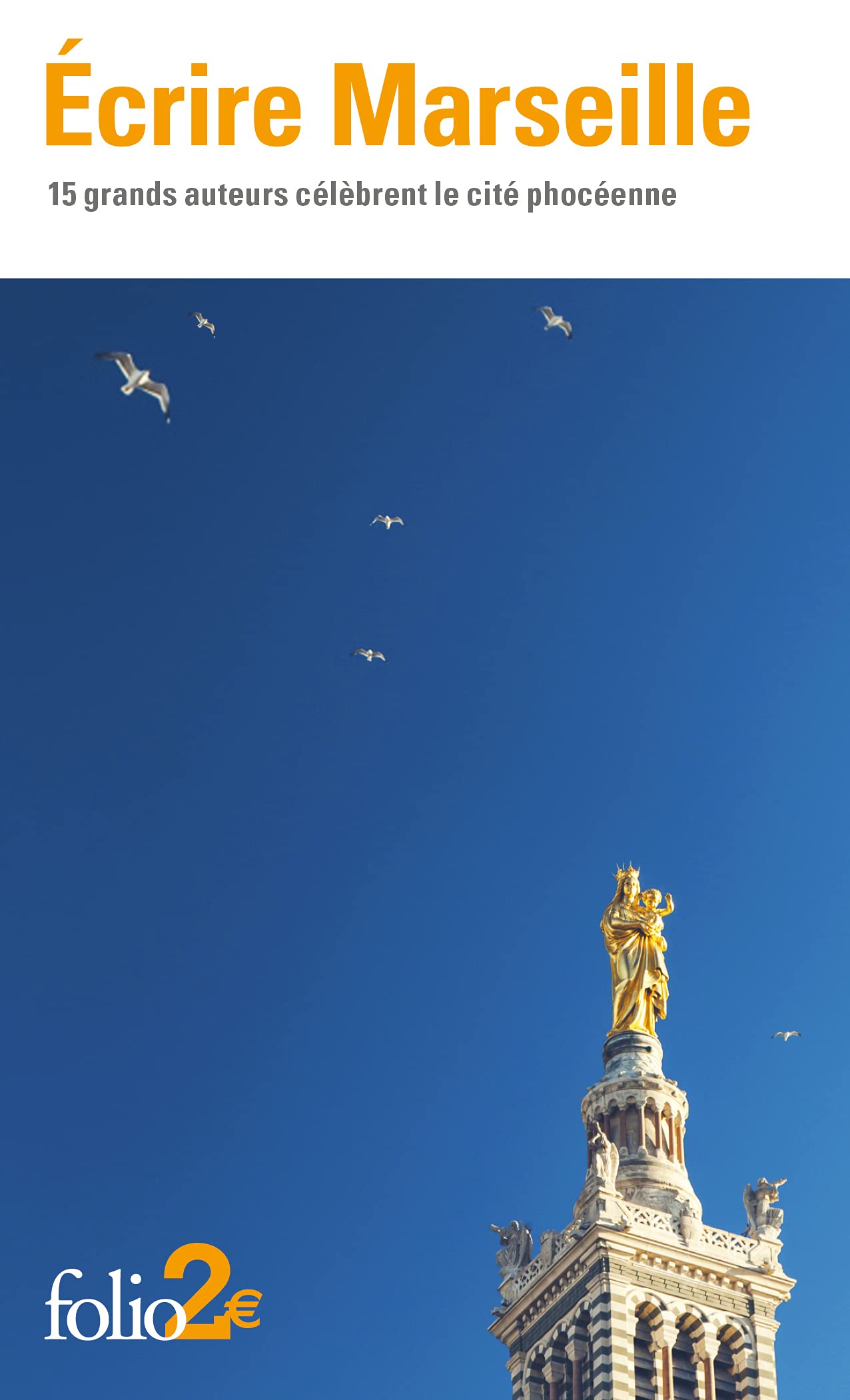
7. Écrire Marseille: 15 grands auteurs célèbrent la cité phocéenne

Jean Claude Izzo Alexandre Dumas Gustave Flaubert Albert Cohen Simone de Beauvoir

Marseille is a wonderful city, only 25 minutes from where I live. I came across this title in a local bookstore, a compilation of extracts from various French works that mention or celebrate the city of Marseille in some way.

Having had a glimpse inside, I won’t be exactly reviewing the titles or extracts, but I will allow each text to inspire me to write something, using them as a kind of springboard to discover whatever it is to be found by studying the text. That is likely to include a few visits to this complex, unique city herself.

The opening quote is from The Trilogy Fabio Mentale, of which I have read the first in the series, Jean-Claude Izzo’s Total Khéops (1995) (Total Chaos):

“Marseille n’est pas une ville pour les touristes. Il n’y a rien à voir. Sa beauté ne se photographie pas. Elle se partage. Ici, il faut prendre parti. Se passionner. Être pour, être contre. Être, violemment. Alors seulement ce qui est à voir se donne à voir.”

“Marseilles isn’t a city for tourists. There’s nothing to see. Its beauty can’t be photographed. It can only be shared. It’s a place where you have to take sides. Be passionate. Be for, be against. Be, violently. Only then what is to be seen, shows itself.” 

The 15 authors included in the anthology are:

Arrivées à Marseille: Alexandre Dumas (1802-1870), Gustave Flaubert (1821-1880), Albert Cohen (1895-1981), Simone de Beauvoir (1908-1986)

Regards sur la ville: Paul Valéry (1871-1945), Marcel Pagnol (1895-1974), Albert Camus (1913-1916), René Frégni (né en 1947), Rebecca Lighieri (née en 1966), Alain Damasio (né en 1969)

Quelques quartiers de la cité phocéenne: Paul Cézanne (1839-1906), Albert Londres (1884-1932), Louis Brauquier (1900-1976), Jean-Claude Izzo (1945-2000), Maylis de Kerangal (née en 1967)

8. Read What I Like, When I Like

Photo by Julia Kuzenkov on Pexels.com

Have intentions, not obligations. No need to review or finish a book, just follow what lights me up.

Reading and playing around on this blog is total freedom and enjoyment, never a chore, just a fun place to hang out and create content that are like the conversations I am unable to have, because I would never wish to impose all this on anyone.

But thank you to those willing to read and comment, who follow along anyway, that is like the icing on the cake, a gift that is much valued and appreciated and which often contributes to what I might read next.

* * * * * * * * *

Do you have any reading intentions for 2024? Let me know in the comments below.

Shame (1997) by Annie Ernaux, tr. Tanya Leslie

In her 2022 nobel prize lecture, I Will Write to Avenge My People, Annie Ernaux shares her motivation for writing in the particular way that is unique to her, telling us how it is at odds with the way she taught.

I had to break with ‘writing well’ and beautiful sentences – the very kind I taught my students to write – to root out, display and understand the rift running through me.

So it with this understanding, that I picked up Simple Passion (my review here) and now Shame, works of non-fiction that explore how certain pivotal events in her life affected her, by noticing her actions and reactions, how her own behaviour or perception changed.

The Origin of Shame

The book opens with a quote from Paul Auster‘s The Invention of Solitude:

Language is not truth.

It is the way we exist in the world.

The opening line begins with the pivotal event, shortly before her 12th birthday:

My father tried to kill my mother one Sunday in June, in the early afternoon.

and then describes everything she remembers about that day in a page of detail.

It was 15 June 1952. The first date I remember with unerring accuracy from my childhood. Before that, the days and dates inscribed on the blackboard and in my workbooks seemed just to drift by.

These words were written 45 years later, around 1997, when this book was first published in French, words that she tells the reader were impossible to write about, even in a personal diary, before then.

Silence Esteemed, The Seed of Unworthiness

I considered writing about it to be a forbidden act that would call for punishment. Not being able to write anything else afterwards for instance. (I felt a kind of relief just now when I saw that I could go on writing, that nothing terrible had happened). In fact, now that I have finally committed it to paper, I feel that it is an ordinary incident, far more common among families than I had originally thought. It may be that narrative, any kind of narrative, lends normality to people’s deeds, including the most dramatic ones.

Ernaux looks back at the origin of her experience of shame, awakened to it by certain moments, exploring the change(s) as she is made to feel them, in the many areas of her life within which it dwelt, sometimes just hidden behind a door, always at risk of being discovered by others.

From then on, that Sunday was like a veil that came between me and everything I did. I would play, I would read, I would behave normally but somehow I wasn’t there.

Beginning with that traumatic event, she observes the lingering effect it had on her, the strong presence it maintained, despite the fact that no one ever talked (to her) about it.

She revisits photos and news archives from that day, that time, trying to find something.

Writing an Ethnological Study of Self

While she rejects the idea of traditional therapy, it could be said that she has created her own form of it, by bringing her deepest shame to the page, as if in doing so, she is somehow sending it away, banishing it to readers.

I expect nothing from psychoanalysis or therapy, whose rudimentary conclusions became clear to me a long time ago – a domineering mother, a father whose submissiveness is shattered with a murderous gesture. To state it’s ‘childhood trauma’ or ‘that day the idols of childhood were knocked off their pedestal’ does nothing to explain a scene which could only be conveyed by the expression that came to me at the time: ‘gagner malheur‘, to breathe disaster. Here abstract speech fails to reach me.

Photo Pavel Danilyuk @ Pexels.com

This text she describes as carrying out an ethnological study of herself.

Like Simple Passion, written in short fragments, it is an engaging read that centres around the year 1952, living by the rules and codes of her world, which usually required unquestioning obedience, without any knowledge that there may be others.

The more I retrace this world of the past, the more terrified I am by its coherence and its strength. Yet I am sure I was perfectly happy there and could aspire to nothing better. For its laws were lost in the sweet, pervasive smells of food and wax polish floating upstairs, the distant shouts coming from the playground and the morning silence shattered by the tinkling of a piano – a girl practicing scales with her music teacher.

A brilliant depiction of a shattering of illusion and the origins of one girls perception of unworthiness.

As the book closes, and the year 1952 ends, her attention is caught by a film/book release.

In his novel, Fires on the Plain, published in 1952, the Japanese author Shōhei Ōoka writes: ‘All this may just be an illusion but all the same I cannot question the things I have experienced. Memories too belong in that category’.

Highly Recommended.

Author, Annie Ernaux

Born in 1940, Annie Ernaux (née Duchesne) was born in Lillebonne and grew up in Yvetot, Normandy, where her parents ran a café-grocery store in the spinning mill district.

She was educated at a private Catholic secondary school, encountering girls from more middle-class backgrounds, and experiencing shame of her working-class parents and milieu for the first time.

After a brief stint in Finchley, London, cleaning houses all morning and reading from the library all afternoon, she returned to France to study at the University of Rouen. Obtaining a degree in modern literature, she became a school teacher. From 1977 to 2000 she was a professor at the Centre National d’Enseignement par Correspondance.

Her books, in particular A Man’s Place (La Place) and A Woman’s Story (Une femme) have become contemporary classics in France. These books marked a break from the definitive novelistic form, she would continue teaching in order to never depend on commercial success.

One of France’s most respected authors, she has won multiple awards for her books, including the Prix Renaudot (2008) for The Years (Les Années) and the Marguerite Yourcenar prize (2017) for her entire body of work. The English translation of The Years (2019) was shortlisted for the Man Booker prize International and won the Warwick Prize for Women in Translation (2019).

The main themes threaded through her work over more than four decades are: the body and sexuality; intimate relationships; social inequality and the experience of changing class through education; time and memory; and the overarching question of how to write these life experiences.

Simple Passion by Annie Ernaux translated by Tanya Leslie

After reading Annie Ernaux’s Nobel Prize Lecture I Will Write to Avenge My People, I decide to read the slim titles Simple Passion (48 pages) and next I will read Shame (86 pages). I have already read A Man’s Place, and eventually I will get to her more lengthy masterpiece The Years.

Simple Passion was the #1 national bestseller in France for over three months when it was first published in 1991, and a celebrated scandal even in France’s liberal society. It was followed up ten years later by a second book Se Perdre (2001) (Getting Lost), which explores the affair through a series of diary notes.

In this book, Annie Ernaux observes herself throughout the life-cycle of an affair, the in-between moments of a conditional relationship, describing how that passion drew her in and ruled her, even when she took herself away from it.

She writes of this encounter with hindsight, as if observing something external to her, like a work of art, looking for some kind of truth or meaning behind the physical and mental experience, now that she has some distance from it. Her interest in writing is not to focus on the man (who could be any man) but on the obsession itself.

A Simple Passion Reveals a More Complex Humanity

The man, referred to as A, is from another country, he is married; the 18 months he is in her life, this ‘simple passion’ is depicted like an illness or a condition, she is able to see how it changes her. She studies it.

I am not giving the account of a liaison, I am not telling a story (half of which escapes me) based on a precise – ‘he came on 11 November’ – or an approximate chronology – ‘weeks went by’. As far as I was concerned, that notion did not enter the relationship. I could experience only absence or presence. I am merely listing the signs of a passion, wavering between ‘one day’ and ‘every day’, as if this inventory could allow me to grasp the reality of my passion.

A Life Suspended, Waiting for a Man

Photo by A.Piacquadio Pexels.com

She observes this condition, though she is virtually powerless to overcome or stop it, it will run its course and she will create an honest, transparent account of it, documenting the range of emotions, behaviours and instinct that run through her.

She observes how this desire becomes the lens through which she sees everything around her, how she spends her time endlessly waiting; waiting for him to call, waiting for him to arrive, waiting for the inevitable end of their association.

This endless wait reduces every other experience, as if they were lived by someone else, while magnifying the space in her mind given to thinking about him, of their time together – amid brief lucid moments of realising the insignificance of him, of the exaggerated importance she has temporarily given him.

I often wondered what these moments of lovemaking meant to him. Probably nothing more than just that, making love. There was no point looking for other reasons. I would only ever be certain of one thing: his desire or lack of desire. The only undeniable truth could be glimpsed by looking at his penis.

Fulfilling Life’s Purpose, Finding Meaning

The passion passes through a cycle from its beginning, middle, near-end and end, passing through excitement, anticipation, acceptance, moving on, overcoming towards finding meaning.

Yet it is that surreal, almost non-existent last visit that gives my passion its true meaning, which is precisely to be meaningless, and to have been for two years the most violent and unaccountable reality ever.

Written in short fragments, paragraphs, it is a hypnotic read. I have never read anything quite like it, an introspective interrogation of the self, she is able to set aside society’s judgments and write in a way that is as intimate as a journal, but in a short succinct way that has her own purpose, to better understand the human condition.

I discovered what people are capable of, in other words, anything: sublime or deadly desires, lack of dignity, attitudes and beliefs I had found absurd in others until I myself turned to them. Without knowing it, he brought me closer to the world.

The author presses forward towards fulfilling that promise made to her 22 year old self, as we learned of in her novel lecture, to interrogate her own actions, her own mind in the life she has created, having ventured far from humble beginnings. In writing to avenge her people, she writes to avenge all.

He had said, ‘You won’t write a book about me.’ But I haven’t written a book about him, neither have I written a book about myself. All I have done is translate into words – words he will probably never read, which are not intended for him – the way in which his existence has affected my life. An offering of a sort, bequeathed to others.

The Art of Losing by Alice Zeniter tr. Frank Wynne

Most Popular Library Book of 2022

The Art of Losing by Alice Zeniter was the winner in 2022 of the Dublin Literary Award, an award where all books nominated are chosen by librarians around the world. As a result, this book went on to become the most borrowed book in Ireland, though it was nominated by the Bibliothèque publique d’information, France.

Three Generations of Family From 1930’s Algeria to Present Day Paris

Spanning three generations, beginning with Ali, born in a mountain village of the Kabyle region of northern Algeria, his son Hamid, also born there but whisked away to France with his parents in 1962, when threats and violence arrived in the village, endangering their lives, to Naima, born in France – the one who seeks answers to questions about who they are, why they had to leave and the stigma that surrounds their identity.
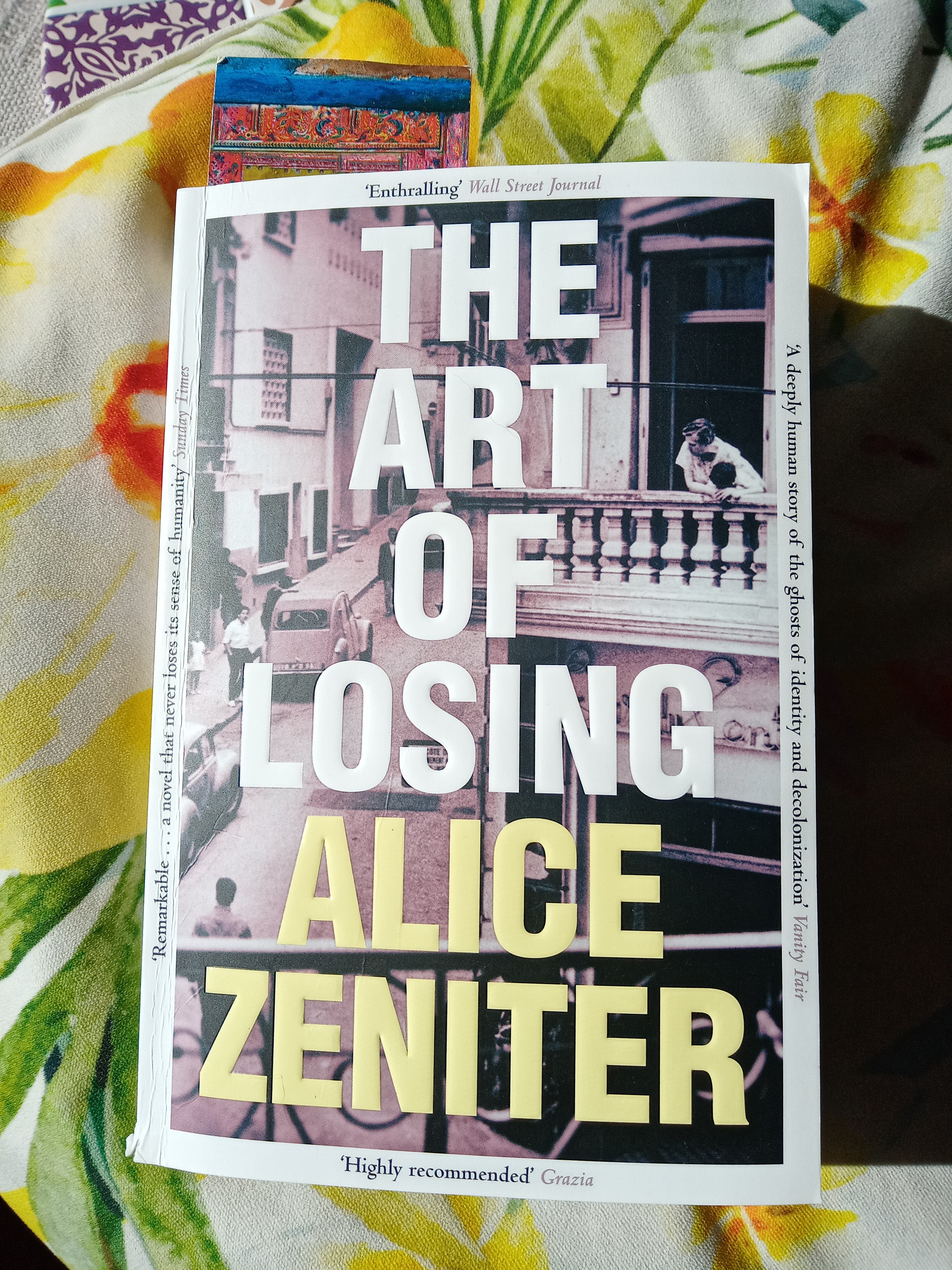
wp-1676027504150Written in three parts, each is an immersion in that era and life, showing how swiftly families change when they cross into another culture, how foreign they become to their own, how important it is to heal the wounds of the past, to acknowledge, understand and have tolerance for differences; how fear passes down ancestral lines, how connection is important.

The prologue begins on a day near the end of what is to come. Naima has a hangover, a phrase repeats in her mind, her cousin’s words, demanding ‘Have you forgotten where you come from?’ She is preparing for an exhibition, an event that will take her back to her roots in Algeria.

As with many that use a prologue, it is a good idea to reread it after finishing the book, it has little context in the beginning. To be honest, I don’t find its placement at the beginning either helpful or intriguing. The book didn’t need it.

A Kabylian Mountain Village

And so we return to the 1930’s, a better place to begin the story.

In the 1930’s, Ali is a poor adolescent boy from Kabylia. Like most boys in his village, he is hesitating between breaking his back in small family fields dry as sand, tilling the lands of a colonist or some farmer richer than he is, or going down to the city, to Palestro, to work as a labourer.

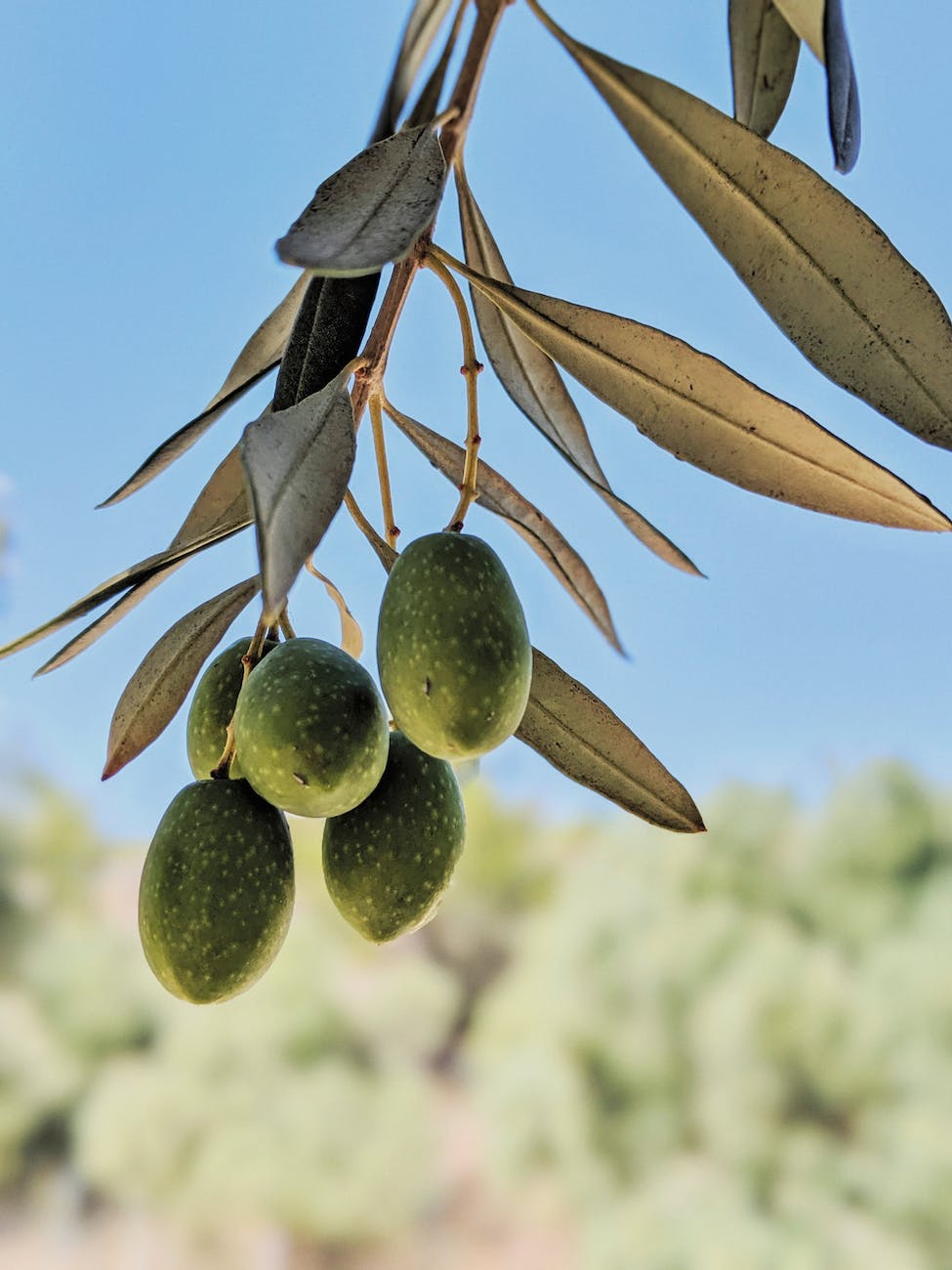
olive press

Photo by Alin Luna on Pexels.com

The family fortune changes, first when their father dies in a rockslide, then when Ali and his brothers are caught in a flash flood and manage to not only save themselves, but trap a floating olive press that almost drowns them.  It becomes key in changing their circumstance and before long they buy olive groves of their own.

The wealth of Ali and his brothers is a blessing that rains down upon a wider circle of cousins and friends, binding them into a larger, concentric community. It takes in many of the villagers, who are grateful. But it does not make every one happy. It overthrows the erstwhile supremacy of another family, the Amrouches, who, it is said, were rich back when lions still roamed.

Though it is 100 years since the colonisation of Algeria by the French, life in the mountainous hamlets still runs according to clannish loyalties. Rifts exist between villagers, each sides with their own clan, it brings no hatred or anger, in the early days it is simply a matter of pride, of honour. However, whenever there is a debate or decision, they naturally take opposite views.

A qaid (local leader appointed by the French) warns them of bandits, men who say they are fighting for the independence of the country, said to have been manipulated by Egyptian revolutionaries and Russian communists. When the freedom fighters appear, they will tell them they are not outlaws, ‘we are Kabyles, Muslims, like you’.

The villagers waver between exaltation and fear.  Exaltation because everyone here  believes that the French have no right to what the mountain lands offer to the Kabyles. Fear because of the word ‘we’, used so casually by this man that no one here has ever seen.

Things hot up and eventually they will be warned against listening to French propaganda and threaten those affiliated with them, (WW2 war veterans) should they continue to claim their war pension. This group become referred to collectively as harki. As will be their descendants, anyone who admits their family left in 1962.

First Generation Transition

Camp de Rivesaltes 1962 FranceWhen they flee to France, they are initially housed in the ‘Camp de Rivesaltes‘ and subsequently sent to a social housing community in Normandy. Hamid is the eldest of what will soon become a family of 10 children. He is the go-between, the first to receive the French education, to learn what is expected of them, to encounter racism, to want to escape the entrapment of a family that will always be seen as outsiders.

Perhaps if his childhood had been like Clarisse’s, he would have done something else, he would have taken the time she suggested to to discover what he truly loves, what he wants to devote his days to doing, but he has not been able to shake off entirely the obligation of the utilitarian, the efficient, the concrete, nor has he been able to shake off a notion of the civil service as a grail where he is fortunate to be allowed to work.

At night, as he sets his alarm clock, he sometimes thinks that it takes much longer than he expected to escape, and that if he has not put as much distance between himself and his childhood as he would have liked, the next generation can carry on where he left off. He imagines that what he is really doing in the stifling little room that serves as his office is amassing shares in freedom that he will be able to pass on to his children.

He is free to marry for love, but he carries a legacy of silence into it. Outside the country of his birth, he is not judged like his father was for initially not producing a son. Hamid will raise only girls. One of them, Naima will tell their story.

“Every family is the site of a clash of civilizations.” Pierre Bourdieu, Sociologist, Algeria 1960

A Mystery of Identity and Repercussion for Multiple Generations

On discovering her father and therefore her family are referred to as harki, Naima sets out to discover what exactly this means and what her grandfather and others like him might have done to be so distrusted by their own. Despised at home and unwelcome in the country that has given them citizenship due to their efforts and support during WW2 – and left them stranded thereafter.

The path to acceptance is a lonely road and an almost impossible one without losing one’s identity completely; something must be let go, given up – each successive generation moves further away from their roots, knowing less and less about who they were.

The War That Made Heroes of Some & Traitors of Others

Naima’s investigation into her grandfather Ali’s past, reminds us of others who joined the cause to fight in WW2, of the Battle of Monte Cassino, in Italy. Like men from other colonial countries, he fought, yet as a consequence, for defending France, for being a war veteran, became perceived by many in his own country as a traitor.

As I read about this, I stopped and went to check a few of my own ancestral documents and sure enough, my grandfather too fought in the Battle of Monte Cassino, a raw subject he never talked of, that gave him nightmares for years. He lost his best friend there. In his division alone 1,600  New Zealanders lost their lives. These men were always regarded as heroes.

Looking Back, Healing Wounds, Learning Whose Version of a Story?

The Art of Losing brilliantly portrays these lives over three generations to bring Algerian history alive in a way that is rare to come across. Though there is a depth of research behind it, the pace never slows, in the hands of this storyteller, artfully using her characters, their relationships and circumstances to present an historical perspective and explain why sometimes silence and burying ones pain seem like the only way to survive, to manage disappointment. But then successive generations are challenged in relationships to break old patterns and heal wounds they may have inherited without even knowing the cause.

The novel ends with a retrospective art exhibition of a man Lalla, named in homage to Lalla Fatma N’Soumer (1830-1863) a Kabylan leader of resistance against the French, an Algerian Joan of Arc.

History is written by the victors, Naima thinks as she drifts off to sleep. This is an established fact, it is what makes it possible for history to exist in only one version. But when the vanquished refuse to admit defeat, when, despite their defeat, they continue writing their own version of history right up to the last second, when the victors for their part, write their history retrospectively to show the inevitability of their victory, then the contradictory versions on either side of the Mediterranean seem less like history than justifications or rationalizations sprinkled with dates and dressed up as history.

Perhaps that is what kept former residents of Bias so close to the camp they loathed; the could not bring themselves to break up a community that had reached an agreement on the version of history that suited them. Perhaps this is a foundation of communal life that is too often overlooked yet absolutely essential.

The original French version l’art de perdre was published in 2017, the English translation in 2021, and in Sept 2021 the French president Emmanuel Macron, made an official apology and asked for forgiveness for the French treatment of Algerian Harki fighters, for abandoning them during their home country’s war of independence. Trapped in Algeria, many were massacred as the country’s new leaders took brutal revenge. Thousand of others were placed in camps in France, often with their families, in degrading and traumatising conditions.

A Must Read novel. Highly Recommended.

Alice Zeniter, Author
l'art de perdre harki AlgerianAlice Zeniter was born in 1986. She is the author of four novels; Sombre dimanche (2013) won the Prix du Livre Inter, the Prix des lecteurs de l’Express and the Prix de la Closerie des Lilas; Juste avant l’oubli (2015) won the Prix Renaudot des lycéens.

l’art de perdre (2017) won the Prix Goncourt de Lycéens and 5 other French literary awards, in translation as The Art of Losing (2021) it won the Dublin Literary Award (2022) and was among the 20 top-selling Francophone books for two years in a row.

“I decided I wanted to learn more, but I wasn’t particularly interested in doing all this research for myself. My own self isn’t of huge interest to me, whereas anything that taps into the collective, and the political, this I care about.” Alice Zeniter

On her Inspiration from French sociologist Nicole Lapierre (author of Sauve qui peut la vie)

“…in it, she says that we need to learn how to tell their story like we do Odysseus’s. That migrant’s stories aren’t about pity, no, they’re about a never-ending journey, a story of craft and resourcefulness, of strength and beauty, of repeated departures, and until we manage to tell these stories in that way, we are abandoning them, leaving them to at best be pitied, and at worst be hated and feared. And that’s when I realised that the story I was researching, which dated from the early 1960s, completely echoed these current events. It is the story of populations locked in camps built far from urban centres, hidden away so that many will be able to say they didn’t know, that they don’t want to know or bother with these realities, with typhus and lice… This is when I realised that there might be an emergency to write about this motif, focusing on the fact that any migration is first an emigration, and removing that part from the story amputates people, it condemns them to misunderstandings. And that’s also when I decided to write this story in three acts. The emigration, the arrival which never really arrives and the third generation which, despite knowing nothing about the land of origin, has never been able to fully arrive either, as French people.”

Alice Zeniter is a a French novelist, translator, scriptwriter and director. She lives in Brittany.

A Man’s Place by Annie Ernaux tr. Tanya Leslie

A book that can be read in an afternoon, this is my first read of Annie Ernaux’s work, one I enjoyed and appreciated. I did find myself wondering why the French title La place was changed to A Man’s Place. I find the change in title unnecessarily provocative and limiting.

La Place autofiction memoir French literature women in translationAt only 76 pages, it is a brief recollection that begins in quiet, dramatic form as she recalls the day her father, at the age of 67, unexpectedly, quite suddenly dies.

Other memories arise as she recalls this shocking one and it is this same recollection she will end the book with, albeit alongside a few other now restored memories, once she has written her way through many others as she attempts to create a tableau of anecdotes that describe the man her father was, their family, social status and surroundings.

A child who will rise into and feel comfortable within a middle class environment, marrying into it, she then tries to look back, remember and understand the characteristics and desires of her family – her father in particular – now that she dwells on the other side, among the petite bourgeoisie.

Having decided she has no right to adopt an artistic approach to write about him (the novel), she embarks on a more neutral tone.

I shall collate my father’s words, tastes and mannerisms, the main events of his life, all the external evidence of his existence, an existence which I too shared.
No lyrical reminiscences, no triumphant displays of irony. This neutral way of writing comes to me naturally, it is the very same style I used when I wrote home telling my parents the latest news.

Neither fiction or nonfiction, this work has  been described as an autosociobiographical text, one that explores their lives and the social milieu within which they are surrounded, dwell and evolve.

Though she only met her grandfather once, she sketches him through overheard comments, a hard man that no one dared quarrel with, a carter for wealthy landowning farmers.

His meanness was the driving force which helped him resist poverty and convince himself that he was a man. What really enraged him was to see one of the family reading a book or a newspaper in his house. He hadn’t had time to learn how to read or write. He could certainly count.

French memoir autofiction nonfictionErnaux’s father was fortunate to remain in education until the age of 12, when he was hauled out to take up the role of milking cows. He didn’t mind working as a farmhand. Weekend mass, dancing at the village fetes, seeing his friends there. His horizons broadened through the army and after this experience he left farming for the factory and eventually they would buy a cafe/grocery store, a different lifestyle.

Ernaux shares memories, observing her father and her own growing awareness of the distance between his existence and way of being and that witnessed at the homes of friends she becomes acquainted with, as she straddles the divide, living in one world, familiar with the other, neither judging or sentimentalising the experiences as she notes them down.

In front of people whom he considered to be important, his manner was shy and gauche and he never asked any questions. In short, he behaved intelligently. Which consisted in grasping our inferiority and refusing to accept it by doing everything possible to conceal it.

They are a snapshot in time and of a place and way of life of a certain social class and milieu, one she is able to preserve by collecting these memories in a kind of obituary to both her father and the places he lived and worked, the people he loved, the mannerisms and behaviours he engendered.

His greatest satisfaction, possibly even the raison d’être of his existence, was the fact that I belonged to the world which had scorned him.

Annie Ernaux, Author

Annie ErnauxBorn in 1940, Annie Ernaux (née Duchesne) was born in Lillebonne and grew up in Yvetot, Normandy, where her parents ran a café and grocery store. She was educated at a private Catholic secondary school, encountering girls from more middle-class backgrounds, and experiencing shame of her working-class parents and milieu for the first time. After studying at Rouen University she became a school teacher.

Her books, in particular A Man’s Place (La Place) and A Woman’s Story (Une femme) have become contemporary classics in France.

One of France’s most respected authors, she has won multiple awards for her books, including the Prix Renaudot (2008) for The Years (Les Années) and the Marguerite Yourcenar prize (2017) for her entire body of work. The English translation of The Years (2019) was shortlisted for the Man Booker prize International and won the Warwick Prize for Women in Translation (2019).

The main themes threaded through her work over more than four decades are: the body and sexuality; intimate relationships; social inequality and the experience of changing class through education; time and memory; and the overarching question of how to write these life experiences.

Fitzcarrraldo Editions have now translated and published seven of her works into English.

Love Anger, Madness by Marie Vieux-Chauvet tr. Rose Myriam-Réjouis, Val Vinokur

A Haitian Trilogy – Introduction by Edwidge Danticat

Love Anger Madness Marie Vieux ChauvetOriginally published in French as Amour, colère et folie, this trilogy of novellas was originally suppressed upon its initial publication in 1968. Seen as a scathing response to the struggles of race, class and sex that had occurred in Haiti, this major work became an underground classic, would send its author into exile and would finally be released in an authorised edition in France in 2005 (this English version in 2009).
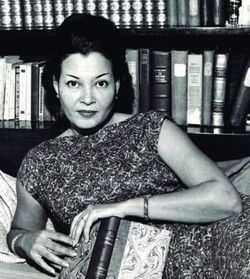
Considered by Edwidge Danticat as the cornerstone of Haitian literature, she opens her introduction telling us that “Fewer than a handful of Haitian writers have, both while alive and dead, inspired as much adulation, analysis, and discussion as Marie Vieux-Chauvet.”

Born in Port-au-Prince in 1916, Marie Vieux-Chauvet was a member of the “occupation generation”, that is, born a year after the United States invaded Haiti, an occupation that would last 19 years. She would use the turmoil of that rebellion as the back-story for Love, the first novella of the trilogy.

“We have been practicing at cutting each other’s throats since Independence,” she writes of the country we Haitians like to remind the world was the first black republic in the Western Hemisphere, home to the only slave revolt that succeeded in producing a nation. What we would rather not say, and what Claire Clamont and Marie Vieux-Chauvet are brave enough to say, is that this same country has continued to fail at reaching its full potential, in part because of foreign interference and domination, but also because of internal strife and power struggles.

In three distinct novellas it unflinchingly manages to condemn totalitarianism and tyranny, with little care of the consequences, an act of courageousness or recklessness, but one that would make a significant and permanent mark in the chronicles of Haitian literature.

Love

The narrator of Love, Claire Clamont, is the eldest of three daughters, of a landowning upper-class family. She is the son her father never had and he wishes her to runs things as he would have them done. However, he hasn’t reckoned on her stubbornness and refusal to affiliate with some of the old ways he indulges, having raised her to think of them as superstitious. As a result she is neither feared nor respected by the workers, whom he had sold parcels of land to fund his political campaigns, a futile effort that has left the family near penniless.

The three sisters of this aristocratic family live together, all coveting the same man, Felicia’s husband. Annette succeeds in seducing him, Claire silently, voyeuristically encouraging her.

Meanwhile, a man sent to reform Haiti is known to use violent, torturous means to get his message across, preying on the innocent.

The love this elder daughter practices is tinged with jealousy, revenge and resentment, laying blame at the feet of an ancestor with dark skin. She resents this ancestor who made her so, resents her father for trying to turn her into the son he never had, resents one sister for marrying a man she loves and the other for having seduced him.

Anger

Anger centres around a family and the day a group of black uniformed paramilitary seize their land, putting stakes in the ground, the grandfather and the young disabled grandson are indignant, the son and his wife wary and afraid, their older daughter Rose is practical, the young adult son Paul going crazy, desires revenge.

Men arrive and plant stakes in the ground of land belonging to a family, they wear black uniforms and invoke fear. Each of the family inside react. Then the concrete arrives. They’re seizing the land and building a wall.

The family is observed, tries to address the injustice, is compromised.

The mother got up slowly, put down her needlework, walked over to the old man and spoke into his ear.

“Look at him, Grandfather,” she whispered, “just look at him.”

The child was clenching his fists and grinding his teeth.

“Who will flog those who have taken our land?” he said without paying any attention to the mother. “Is there no longer a steward who can do it?”

“Alas, no!” the grandfather answered.

“Why not?”

“Because there are ups and downs in the life of a people. As the arrow rises, it gives birth to heroes; when it falls, only cowards come into the world. No steward would agree to stand up to those who have taken our land.”

He told himself that his crippled and sickly grandson was the faint beginning of the next era of heroes and that the arrow had begun its slow ascent only eight years ago. Hundreds more must have come into the world the same time he did, he thought, and with feet and legs as well as a brave soul. A day will come when they will grow up and the birds of prey will have to account for their deeds to every last one of them.

Madness

Madness is narrated by René, a lower class mulatto poet hiding inside his shack, paranoid about what’s going on outside his door and inside his mind, finding solace in a bottle, in rituals to do with voodoo beliefs that most of his life he has rejected and the poet friends he fearfully opens his door to, to offer them refuge. Unclear, what is real and what is the projection of a man’s fearful mind, we read on, aware that under oppression anything is possible.

A thought provoking read that invites the reader to understand more about the historical and present situation in Haiti.

Marie Vieux ChauvetMarie Vieux-Chauvet was a Haitian novelist, poet and playwright, the author of five novels including Dance on the Volcano, Fonds des Negres, Fille d’Haiti and Les Rapaces.

Her works focus on class, color, race, gender, family structure and the upheaval of Haitian political, economic and social society during the United States occupation of Haiti and the dictatorship of François Duvalier. She died in New York in 1973.

Further Reading

Permanent Exile: On Marie Vieux-Chauvet

Gratitude by Delphine de Vigan (France) tr. George Miller

les gratitudes French literature AgeismI’ve read one other novel by Delphine de Vigan, which was auto-fiction and delved into lives affected by a bi-polar parent. A later novel also sat on the edge of fiction and real life, a novel of suspense where a friendship becomes obsessive and perhaps dangerous.

Gratitude feels like a departure from that style of writing, there’s nothing haunting or tense here, no tactics to turn the page faster.

More reflective, it considers the dilemma of ageing on three people: childless, unmarried Michka who was orphaned at the age of seven, near the end of her life; Marie, a young woman who lived upstairs, who has become like family to her; and Jérôme, the resident speech therapist who visits and is touched by Michka’s way of being, as he attempts to retrain her mind to find the lost words.

It’s a relatively simple tale told from the perspective of two people, one whose connections go back many years, the other who meets her for the first time in the care home. Both are equally important, reminding me of the beginning of that saying…

People come into your life for a reason, a season, or a lifetime. When you figure out which it is, you will know exactly what to do.

How To Express Gratitude

It is Marie who in the opening pages questions what it means to have gratitude and how to show it to someone who has been important in one’s life. She reflects on Michka’s life and their final interactions, in search of evidence of her  gratitude. Jérôme wishes there was a forewarning system, to let us know when someone’s time is imminent, even though he works with the elderly, he suffers from the shock of their departure.

The narrative switches between the two as first Marie recalls the day everything changed, when Michka lost her independence and then moments are shared while she is in care, Michka’s conversation affected by her aphasia, the impairment of her use of language, other words jump ahead pushing out the one she wishes to say.
The admission interview for the nursing home demonstrates the terror and horror of entry, as if going for a job interview for a job you never wanted in the first place, made to feel like you might be rejected. The director reminds her that it’s the same with everything in life – whatever you do, there are tests, interviews, competitions, exams, assessments, evaluations, grading. It is necessary to show your dedication, commitment, motivation and determination.

In the second half as more and more words disappear or malfunction, a sense of urgency arises.

Attaining Completion, Resolution

It is a slice of life and a look into that part of it that is imperfect, that part when some have to be at the mercy of others, in a facility that diminishes the end, possibly brings it on more quickly.

Michka has an unresolved matter to deal with and in her sessions with Jérome, which she often sabotages to question him about his father, she tells him of her regret, the thing she is unable to do for herself. Time is running out.

Gratitude is a life-affirming read, even if there are sad undertones, showing there exist all manner of souls around, those that want to hurry us along, and those that without expectation of reward, are willing to go out of their way to help another. And the importance of fulfilling those wishes for another.

My Review Of:

Nothing Holds Back the Night by Delphine de Vigan

gratitude Maya Angelou Delphine de Vigan

N.B. This book was an ARC ( Advance Reader Copy) with thanks to Bloomsbury Publishing provided via Netgalley.