Ignorance

It was the book I read following Michéle Robert’s novel Ignorance that gave me something to reflect on regarding the meaning of that loaded word she uses as her title.

In Maya Angelou’s latest autobiography Mom & Me & Mom (review pending), she speaks of ignorance and quotes her mother:

She said, “Ignorance is a terrible thing. It causes families to lose their centre and causes people to lose their control. Ignorance knows no binds. Old people, young people, middle-aged, black, white can all be ignorant .

An apt epigram for this war-time novel set in occupied France.
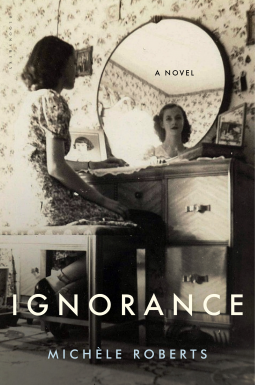
IgnoranceTwo young girls from a rural village are sent briefly to live in a local convent, Marie Angèle because her mother is about to have a baby and Jeanne, because her mother is unwell and in hospital. Marie Angle is the daughter of local middle class grocers, Catholic and raised with something of a sense of entitlement and superiority over her lesser friend Jeanne, whose mother, a widow converted to Catholicism when she married, but lives in a community that rarely allows her to forget her Jewish past. Marie Angèle expects to inherit half of her parent’s shop, she expects that the well-connected young Maurice, the man who can obtain anything during wartime will do the right thing by her.

I could hide my ignorance most of the time, because if he felt like talking he just wanted me to listen. One day, however, parked in the woods, he said : talk to me….I left Jeanne out of these tales. We’d been thrown together as children, purely by accident, we’d had a sort of friendship for a certain time, but we couldn’t mix now. I preferred to concentrate on positive things. That was how we were getting through the war.

Jeanne rarely thinks of her friend, she knows she is loved by her mother, observes their second class status in the way the nuns treat her compared to her friend, their quickness to judge and to listen to gossip as if it were fact. She is not ignorant of the activities that take place in the house where she works, but she like her mother is realistic about her opportunities, she doesn’t allow herself willingly to be taken advantage of, she learns from her past, though it will be insufficient to save her from the consequences of the misguided morals of her childhood friend.

Marie Angèle however, believes  that Jeanne, by working in such an establishment has thus become one of them, a common tart, she believes the village gossip, judges her former friend’s improved dress and appearance.  She portrays her own husband as a man unrecognisable as the same man Jeanne describes as one of the clients of that establishment. Even when confronted with an inkling of this truth, the wife’s inclination is not to question her husband, but to seek revenge against the bearer of the message, a penance that will continue to be paid into the next generation, as Marie Angèle manipulates control of Jeanne’s daughter Andrée and both their futures.
Womens prize logoThe novel is split into sections which view life in overlapping time periods from the perspectives of the two girls which couldn’t be more different, in particular on the part of Marie Angèle concerning not just her friend, but the plight of other families that must go into hiding. Towards the end there is also a section given to Andrée, Jeanne’s daughter and another from Dolly, one of the nuns, complicit in an act of betrayal.

The simple narrative structure exposes the ruinous attitudes, religious hypocrisy and shamelessly uninformed  morality of the ignorant and how it continues to be perpetuated by gossip, fed by jealousy and fueled by ill intention. It reveals that destructive instinct humanity sometimes imposes on the weak and those who are different from the rest. Devastating.

Ignorance is on the long list for the Women’s Prize for Fiction 2013. The short list will be announced on April 16. Will this title be on it I wonder?

Note:  This book was an Advance Reader Copy (ARC) provided by the publisher via NetGalley.

NW, life’s passage via the Kilburn High Road

The back cover of Zadie Smith’s novel NW, recently long-listed for the Women’s Prize for Fiction 2013 mentions This Is The Story Of A City, the north-west corner of city, however that’s not how I think of it. London is something else, as is The City of London.

NW is a community, a fluid changing community, one of London’s many pulses; for some it is a stepping stone to the next stage, for others it is home. It has been a thoroughfare into London since the days of the Romans and in more recent times, the resting place for Irish immigrants fleeing their country for one reason or another, sometimes dramatic, sometimes not. And following the Irish are the many other groups who found NW their starting point to a life in London, that city of promise and unending challenge. NW is the same, the faces that pass through it, indicative of the era we are living within.

NWNW the novel is experimental, its structure changes with each section and after starting the second part which focuses on Felix, I realised that the narrative voice was being used as a metaphor for the state of mind of the character, a brave step or a risk on the authors part by commencing with Leah, who thoughts are all over the place and is suffering from that anxiety of a young, married woman with a successful career and a husband who loves her, who doesn’t understand why she is not content, or why she can’t admit that she isn’t ready to start a family.

So we start with the staccato stream of conscious thoughts of a woman who would benefit from therapy and/or meditation to still that rampant inner chatter, planting the reader in the midst of prose that is challenging for some and uneasy for those listening to the audio version. Not when chapter 7 is shaped like a tree, though that is one of the least challenging pages, one of beauty in fact.

But once we get to Felix’s section, things calm down, Felix’s major life troubles are behind him, the reading is easy and the pace picks up.  Although he’s not entirely immune to temptation, he seems to have moved on from his more despondent days, he’s been clean for 2 years and plans to stay that way. To me, he is the only character who shows real signs of moving on, however he has not moved out of NW,  his mistake perhaps is in staying and trying to convert those around him.

The other female character Keisha, changes her name to Natalie when she becomes a lawyer, an attempt to outgrow her past; she marries and has two children. She and Leah have been friends since their school days and their connection provides the one strong thread throughout the novel. Natalie, like Leah has risen above her past, but can’t seem to resist undermining it, with her strange behaviour, in what was for me, one of the least believable parts of the novel, in part because the author keeps us from knowing exactly what Natalie is up to online and offline, before she gets caught and flips out. I was hoping she might be more influenced by the role model of  Theodora Lewis-Lane, who tries to advise her.

“The first lesson is: turn yourself down. One notch. Two. Because this is not neutral.”  She passed a hand over her neat frame from her head to her lap, like a scanner. “This is never neutral.”

NW6For me personally, it was in part a nostalgic read, Zadie Smith’s writing comes alive when she evokes place and it is a neighbourhood I lived in and around for many years, NW is the most complete and yet complex character of all, embracing so much diversity, inviting everyone in without prejudice and yet claiming some in the harshest terms possible. There are as many reasons to hate it as there are to love it and anyone who has lived there will likely never forget it.

NW is a melancholic novel about four characters trying to escape their past and leaves the reader with few signs of hope for the future, or at least that future is left for us to imagine. Those who focus on the uniqueness of the writing or who have some experience of /interest in these communities may enjoy it, while those looking for the traditional transformation of character, or any kind of escape may be disappointed.

Despondency is the norm and we will not be rescued from it, it merely lessens with time if we survive.

Not the Orange Women’s Prize for Fiction Longlist

Womens prize logoThere may not be a new sponsor yet, however 20 books appear on the long list for the international Women’s Prize for Fiction and although there are certain predictable inclusions, such as Hilary Mantel’s Bring Up the Bodies, Barbara Kingsolver’s Flight Behaviour and Zadie Smith’s NW, it is great to see such a diverse range of excellent books.

life after lifeI have managed to read a few already, here are links to my reviews of Elif Shafak’s HonourM.L.Stedman’s The Light Between Oceans and Kate Atkinson’s Life after Life. I enjoyed all three books, but won’t be trying to guess the winner, it’s much too subjective to choose, read the reviews and see what appeals to you. I am sure there is something for everyone.

There is an interesting article in The Guardian today with links to a synopsis and reviews for all of the books. They include reader reviews as well as journalist reviews. The Guardian Bookshop is an interesting alternative for buying new books in the UK, particularly as they don’t charge an additional delivery charge for every book.

The Women’s Prize for Fiction 2013 is awarded for the best novel of the year written by a woman. Any woman writing in English of any nationality, country of residence, age or subject matter is eligible. The shortlist will be announced on April 16. Happy Reading!

The Longlist of 20 novels

Womens-Prize-longlist

Kitty Aldridge A Trick I Learned From Dead Men

Kate Atkinson Life After LifeHonour

Ros Barber The Marlowe Papers

Shani Boianjiu The People of Forever are Not Afraid

Gillian Flynn Gone Girl

Sheila Heti How Should A Person Be?

A M Homes May We Be Forgiven

Barbara Kingsolver Flight Behaviour

Deborah Copaken Kogan The Red Book

Hilary Mantel Bring Up the Bodies

Bonnie Nadzam Lamb

Emily Perkins The Forrests122012_0454_TheLightBet1.jpg

Michèle Roberts Ignorance

Francesca Segal The Innocents

Maria Semple Where’d You Go, Bernadette

Elif Shafak Honour

Zadie Smith NW

M L Stedman The Light Between Oceans

Carrie Tiffany Mateship with Birds

G. Willow Wilson Alif the Unseen

The Unlikely Pilgrimage of Harold Fry by Rachel Joyce

627 miles in 87 days

There is something appealing about the idea of making a pilgrimage and reading about it is almost as satisfying on another level, even when the pilgrim in question doesn’t know that is what he is doing.

Unlikely Pilgrimage

Harold Fry was not prepared for a pilgrimage at all, he was on his way to post a letter, a note written in haste that the closer he came to the post-box, the less satisfied he was with what he had composed, as if the letter had somehow come to represent all that he had achieved with his life – showing him up as incapable of stringing together the appropriate words that might express the sentiment he wished to convey – while harbouring his mild but growing discontent, he continues on to the next post-box and then the next and then one thing lead to another…

Harold’s letter is a reply to Queenie Hennessy, an ex-colleague whom he hasn’t seen since the day she disappeared from work, a disappearance that is in some way connected to Harold.  Queenie’s short letter informs Harold of her illness, he learns she is lying in a hospice in Berwick-upon-Tweed, in the very northern tip of England, about as far from Kingsbridge, South Devon as one could possibly be.

The walk to the post-box and an encounter with a young shop assistant in a garage prove to be the tipping point for Harold, he sets off to Berwick, convinced that by making his pilgrimage, he might save Queenie from certain death.

Harolds journey
Harolds journey up England

Harold is propelled by instinct, an urgency to make some kind of difference and as his feet carry him North, little by little he comes to understand the significance of his undertaking, as the layers of his self-protective habits built up over the years, peel away at a similar rate to the soles of his shabby yachting shoes, until eventually even words are no longer required to explain; his purpose and inspiration shine out of him, attracting followers and making him almost unrecognisable to the woman he has lived with for the past forty years, his wife Maureen.

Harold believed his journey was truly beginning. He had thought it started the moment he decided to walk to Berwick, but he now saw that he had been naïve. Beginnings could happen more than once, or in different ways. You could think you were starting something afresh, when actually what you were doing was carrying on as before. He had faced his shortcomings and overcome them, and so the real business of was walking was happening only now.

Rachel Joyce’s debut novel was short-listed for the Booker Prize, however it would be wrong to think of her as a novice writer and as the back pages inform us, she has written over twenty original afternoon plays for BBC Radio 4 as well as drama adaptations to television. It is clear from the first pages that this is a confident and accomplished writer and I couldn’t help but imagine these characters already on-screen, it is as if we have seen Harold before, so much of that reserved part of his character seems so familiar, even if he does appear to fill a stereotype, however he does not remain typecast for long, yet neither does he change completely.

A very English novel, not just the landscape, it is the slow unmasking of Harold, a man who barely made a ripple in his working life, having done his best to keep unpleasant matters from being aired or making a fuss.

He had always been too English; by which he supposed he meant that he was ordinary. He lacked colour. Other people knew interesting stories, or had things to ask. He didn’t like to ask, because he didn’t like to offend. He wore a tie every day but sometimes he wondered if he was hanging on to an order or set of rules that had never really existed.

An enjoyable read, Rachel Joyce is working on a second novel, another “celebrating the ordinary, linking laughter and pain” story, she said.

Further Reading

BBC

Interview – Rachel Joyce discusses how her background writing radio plays informed the novel and how her father (to whom she dedicates the book)and others shaped the character of Harold.

Wild by Cheryl Strayed – my last review of a different kind of pilgrimage, the true story of Cheryl Wild’s hike of the Pacific Crest Trail

Note: This book was an ARC (Advance Reader Copy) provided by the publisher via NetGalley.

The Romantics, A Novel

RomanticsAfter so much non-fiction and short stories, from my sick-bed this last week, I was trying to think what I had on the shelf that I could just sink into, a good novel and I thought briefly about Amitav Ghosh’s The Sea Poppies, which I know is there somewhere, but too high on the shelf, too heavy in hardback and so my arm reached out and landed instead on Pankaj Mishra’s  The Romantics.

This wasn’t just about needing to lose myself in a story, I wanted to escape to somewhere exotic but familiar and Mishra offered a view from a rooftop apartment in Benares (Varanasi) India, that instantly awakened pleasant memories, but did so via a young Indian protagonist whom I knew would give me another perspective to life there.

The Romantics is a story about a lost young Brahmin, Samar, whose family for centuries followed the same traditions, having been favoured by a sixteenth-century Mogul emperor who granted them land, passing on their legacy with little thought to the past or the future, tending their land at the foothills of the Himalayas somewhat oblivious to the subsequent twists and turns of history.

My own knowledge of the past went only back as far as my great-great-grandfather, in the last century, but I can’t imagine his own ancestors deviated much from the well-worn Hindu grooves in which he and his son and grandson spent their own lives: studentship in Benares, adulthood and marriage, late-middle-age detachment and then the final renunciation followed by retreat to the Himalayas.

CIMG2125

The Ganges, Benares

With India’s independence this well-trodden familial cycle was thrown into disarray, lands and accumulated wealth lost, his father became just another citizen seeking employment. Samar has finished his studies but faces an uncertain future after the premature death of his mother and his father’s announcement that he wishes to spend his last days in Pondicherry.

Samar makes Benares his home and befriends Miss West, an English expatriate, and others who are ‘passing through’, idealist Americans, Buddhist contemplatives and the young Frenchwoman Catherine whom he falls in love with, despite her living with a young local sitar player, whom she imagines she will transition to Paris with.

The reality of my position was made more apparent by Debbie’s reply when I asked her what she was doing in Benares. ‘Passing through,’ she had said, and the words had stayed with me. They had suggested a kind of perpetual journeying through the world, a savouring of life in a way I had no means of knowing, the life itself seeming – as it did in the pictures in Miss West’s room – unimaginably adventurous.

He also makes the acquaintance of Rajesh, a fellow Brahmin, whom he suspects of being involved in shady political or criminal dealings; Samar passes his days between these two cultural thresholds, participating fully in neither, observing himself and others yet not quite able to stop himself from complicating his life unnecessarily, not so different from them all.

CIMG3772Through Samar, Mishra writes with a quiet equanimity which permits us interesting insights into the lives of all the characters,  though his insights do little to prevent him making similar mistakes. Eventually he leaves, after an extended visit to his sick father and finds himself a job in Dharamshala where he will settle, until something reminds him of the past and once again, he will give in to a baser instinct.

The perfect escape novel and always interesting to read about the stayers, young people who went to visit India or any other country vastly different from their own, who end up for one reason or another staying.

The Zenith by Dương Thu Hương

In 1996 I spent three months travelling in Asia, limiting my visit to four countries, India, Nepal, Vietnam and Thailand.

It was in Vietnam that I first travelled on my own and perhaps for this reason, it has always resonated deeply within me. It is a special place and I experienced it at a unique time, the city of Hanoi had no cars and most of its population travelled by bicycle, unlike the city of Saigon in the South full of the noise pollution of motorbikes. 090212_1801_IntheShadow1.jpg

That’s not to suggest it was easy to navigate those intersections, with bicycles coming from all directions, the ring of the bicycle bell a constant stream of warning as the masses somehow managed to criss-cross in opposite directions without accident. I watched that flow for a long time before I understood and dared to join it. The trick? Do not hesitate.

While in Hanoi, I decided to read a couple of Vietnamese authors, I was interested in reading something that came from a local perspective and not from the English-speaking perspective which seemed more prominent.  A young boy in the street sold me two books, Bao Ninh’s The Sorrow of War and Dương Thu Hương’s Paradise of the Blind, the latter a story that illustrated the effect of a rigid communist ideology on a family in the wake of the land reforms of the 1950’s, as narrated by a young woman travelling to Moscow in the 1980’s.

A quote on the back written by Grace Paley, confirmed my thoughts.

“At last a woman, a Vietnamese woman, tells us Vietnamese life: the village, the city, the repression and expansion, the middle peasant, the poor peasant, the years of exquisite food and no food, working in the Soviet Union – and all beautifully told so that we begin to understand not where we were for years, but where and how they – the Vietnamese – are now.”                                                      – Grace Paley

090212_1801_IntheShadow6.jpgThe author’s depiction of ordinary people, in both rural and urban Vietnam was compelling and the definition of terms at the back of the book, particularly of food and practical items was especially useful for me as I cycled my way around the city and out along the river, past markets and temples and saw how people lived, ate and spent their days. This book was the first Vietnamese novel published in the US (1993) I have since discovered, so no surprise that I had never come across this enlightened perspective before.

zenithDương Thu Hương now lives in exile in Paris and her latest novel The Zenith has recently been published. It gets off to a slow start initially, when Ho Chi Minh, the President looks back as a 70-year-old man at parts of his life with regret. He regrets the lack of contact with children that he fathered and the loss of a woman he loved, he regrets the distance that has come between himself as a man and the people he sought to represent.

Wishing to retrieve something of that contact, he attends the funeral of a woodcutter to pay his respects, only to realise the suffering his presence will have caused because of his distinguished position and the expectations that are carried with it should he grace them with his presence. He despairs at having lost sight of that which motivated him to first become involved in the revolution, to bring equality to all.

A bitter longing mixed with a searching curiosity flowers in his heart; he wants to attend the funeral of the woodsman because he wants to experience the funeral of a real father.

Things pick up in pace and interest when we learn more of the story of the woodcutter, his family and village, this one story perhaps seen to represent various stages in the country’s own experience of communism, both its idealistic benefits for the community and its destructive elements against the weak and innocent, when power, greed and envy are present within its leadership, turning even family members against each other. The story-telling reaches its zenith and had me totally convinced of the authenticity of the relationship between the wise sixty-something father/grandfather Mr Quang and his new 18-year-old bride Miss Ngan and relishing the way they managed the reactions of close family and their community with their provocative yet bona-fide marriage.

Of old, it was said: “Tears run downward.” So true.

“Filial love for parents can’t equal the ties of anxious love in a father’s soul for a child. Because when we love our parents we look up but when we love our children we look down. And according to the laws of heaven and earth, tears always flow downward. Especially whenever we recognise that as fathers we have done wrong. Hell itself will then open a door straight into the heart.”

It highlights the enormous gap that can grow between those who rule and have power and/or wealth and those who are trying to survive, just like the distance between rich and poor in a democratic society, similarly it exists between those who yield power and those who don’t in a communist society, trust breaking down within a community as people become increasingly desperate and open to being corrupted while others live in constant fear.

This is not a book to be read quickly, nor even understood immediately. I continue to think about what I read and what it attempted to portray about society, leadership, workers, family and the effect of power and its oft great distance from the reality of how people live, the destructiveness of jealousy and the perseverance of those who will never be compromised, who will always fight for what they perceive is good and right.

The country, its writers and message continue to allure and despite all the suffering, both past and present, there remains for me a quiet tranquility that pervades it, a steadfast patience and determination I admire.

Note: This book was an Advance Reader Copy (ARC) provided by NetGalley on behalf of the publisher.

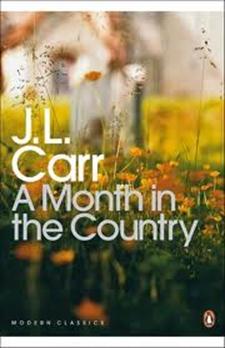
A Month in the Country by J.L.Carr

I read this book on a loose recommendation from MJ Wright, who mentioned it on reading my review of M.L. Stedmans’ The Light Between Oceans.  The character Tom Sherbourne in that book was a returning veteran from World War I, he was a man who didn’t have much to return to and chose the lone, isolated lighthouse as his place to work in his attempt to recover from the horrors of war.

I gained more a sense of his disturbance and difficulties in dealing with the ghosts of that past, the guilt that plagued him at being alive when so many of his compatriots had not made it, than I did from our Tom here in the country, the author choosing to infer rather than describe the thoughts and memories of his experience, protecting the reader somewhat from that horror.

Tom Birkin is home from the war and spends a memorable month in 1920 restoring a medieval wall painting in a small village church, where he is not entirely welcome, the commission being a pre-requisite to the Church receiving a substantial financial bequest from an elderly woman who has passed. Tom having discovered his wife has taken up with another man, travels north and spends his days on the ladder meticulously uncovering the work of a man he thinks about so often that by the end comes to know intimately, divining what happened to him.

I didn’t look like a Churchman. Indeed I looked like an Unsuitable Person likely to indulge in Unnatural Activities who, against his advice, had been unnecessarily hired to uncover a wall-painting he didn’t want to see, and the sooner I got it done and buzzed off back to sin-stricken London the better.

He befriends another man, known as Moon, who has been commissioned to dig outside the church boundary for a lost fourteenth century grave, one man working on high, the other down below. Outsiders both, they become as close as men can be who have no other friends and the unspoken experience of war between them. I wondered about the significance of digging up a grave, having read in The Light Between Oceans of the disturbing memories this invoked for Tom Sherbourne, when he had to dig one on the island, however it seemed not to have the same effect on these two men or if it did, we were not exposed to those thoughts.

Semi-Autobiographical Novella

A semi-autobiographical, slow burning novella, its pace like a refreshing walk in the English countryside, keeping two men occupied in that aftermath of war before returning to that same but changed place that will become the rest of their lives. It would be comforting to think that a month in the country could work magic for a returning war veteran, however I think it more likely to have been a brief but necessary respite.

It being the festive season, I couldn’t miss an opportunity with a title like A Month in the Country, to share this delightful photo sent by my family in New Zealand a few days before Christmas, having explained to a few friends here that we are not really into eating turkey and as you can see, they feel quite safe to wander up the driveway of my father’s home and show off their brood.
Happy New Year to you all and thank you for reading Word by Word and sharing your thoughts.

I hope to continue to find time to read a book a week in 2013, and have upped my challenge to 60 books!

All the best to you for 2013!

Top Reads 2012

A near impossible task. I read so many fabulous books this year and hate to choose, however there was one outstanding read for me, that pushed all my buttons in terms of use of language, enticing me into the story, reading in wonderment at the writer’s ability to exceed my greatest reading desires.

Outstanding Read of the Year

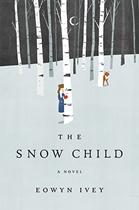
123112_1428_TopReads2011.jpgThat book was Eowyn Ivey’s The Snow Child and coincidentally, just today our Scottish friend over at TheOnlyWayIsReading wrote a magnificent review, especially poignant for male readers. Inspired by a Russian fairytale of an older childless couple who cut family ties and move to the Alaska wilderness, it is a journey of navigating the internal elements and external forces in life, where love, hope and the imagination are equally necessary for survival as the more practical resources.

Top Fiction

010212_1323_CuttingforS1.jpgThe year started on a high note and I’ll never forget New Year’s Day 2012 gripped by the powerful and realistic storytelling of Abraham Verghese, in his epic Cutting for Stone, absolutely brilliant.

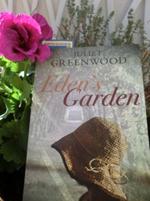
123112_1428_TopReads2013.jpgEden’s Garden is a wonderfully inspired novel set in Cornwall and Wales, following the lives of two women a decade apart, Carys returns to her hometown in Wales to take care of her mother and becomes drawn towards the garden and statues of Plas Eden and a man from her past, while Ann in Victorian London, is at a turning point in her life, destitute, far from her aristocratic past.

123112_1428_TopReads2014.jpgProdigal Summer was a fantastic and hot summer read, I can’t believe this book sat on my shelf for years and circumnavigated the globe with me before I finally turned its pages.

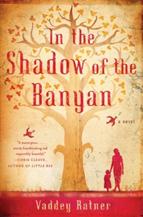
In the Shadow of the Banyan, is a fictionalised account of a period in the life of Vaddey Ratner, difficult childhood years in Cambodia under a tyrannical regime, losing members of her family, she recalls them in this heart-breaking but uplifting story which pays tribute to those who never made it and shows tremendous compassion in doing so.

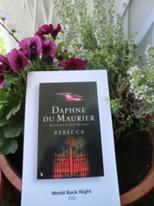
Rebecca was my classic treat of the year, thanks to Joanne at The Book Jotter who sent me a copy as part of World Book Night, this has to be the most compelling, page turning classic I have read and I look forward to following it up with watching the Hitchcock film sometime soon.

Top Non-Fiction

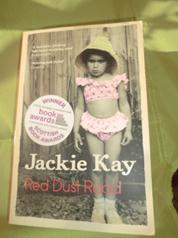
Red Dust Road crossed my path after reading a captivating interview about the poet Jackie Kay in The Guardian, inspiring me to read this memoir about the discovery of her birth parents, who could not have been more different from the liberal, Scottish open-hearted parents she was raised by. A fabulous story, so eloquently shared and a joy to learn that it has made the World Book Night list for the UK in 2013.

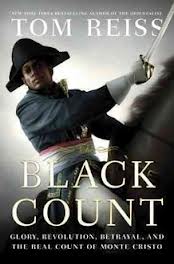
The Black CountThe Black Count was a surprise read, as I prefer historical accounts fictionalised, they tend to be more compelling and the learning aspect easier to remember than non-fiction accounts, however Tom Reiss keeps the reader interested and has written an excellent account of the revolutionary hero, General Alex Dumas – the son of a San Domingan(Haitian) slave and French nobleman. Sold into slavery himself by his father, he eventually makes it to France and rises to become a General in the French revolution, a contemporary of Bonaparte (though no friend of his), his story inspiring his son to write countless novels, including The Count of Monte Cristo.

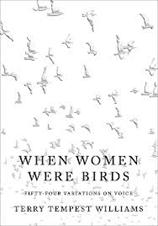
123112_1428_TopReads2019.jpgWhen Women Were Birds – Fifty Four Variations on Voice was my introduction to the work of Terry Tempest Williams, recommended by Cassie (whose review was so great, it prompted a response by the author), and gifted to me by my best book buddy and very dear friend CKC. The author is 54, the age her mother was when she passed away and left her daughter her journals. In this book, Tempest writes 54 short vignettes, trying to understand the enigma of that maternal gesture.

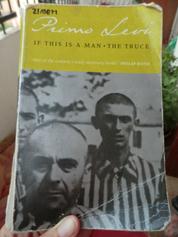
123112_1428_TopReads20110.jpgIf This Is A Man: A Truce – it seems appropriate to finish with this book, recommended by our Scottish friend who has just finished The Snow Child, he wrote a moving review, that left me with no other choice than to get hold of this book and read this all important humane work by Primo Levi, writing of that inhumane experience, a concentration camp and leaving us with much to think about.

There were so many memorable others, La Petite Fille de Monsieur Linh, my first read of an adult book in French; Murakami’s trilogy 1Q84, the Titanic anniversary books, my late discovery of the joys of John Steinbeck and Ray Bradbury, the tribute to Edith Wharton’s 150th anniversary with Ethan Frome and Summer, a couple more from firm favourites Susan Hill and Irène Némirovsky.

And for you? What books stood out for you in

2012?

and the winner is …

Well the odds of winning this give-away are pretty good, clearly  many, many people had already read Daphne du Maurier’s Rebecca.

*

So here are the five potential winners, cosy in the prize draw hat.

5 lucky readers keen to read Rebecca

*

and the winner is…..

*

Rebecca stays in France!

I happen to know Deidre is participating in NaNoWriMo this month and doing very well, with more than 16,000 words written already.  She wrote an excellent post summarising all the research and tips before embarking on this ‘Write a 50,000 word novel in November’ challenge, which you can read here.

She has a great blog which I love reading, especially as she lives here in France as well, so Rebecca will be travelling North and hopefully won’t distract Deidre from her writing endeavour!

Sorry to the other contestants, it was a close call!

Classic Gothic Tale to Give-away

It is thanks to Jo at The Book Jotter that I have now read Rebecca, after she offered copies to readers on World Book Night, one of the conditions being to pass the book on, so what better reason to offer the book as a give-away  If you would like to enter the draw, just make a comment and leave an email address so I can contact you after the draw on Wednesday November 7. You can also assist in selecting the books that will be offered free in the US and the UK for World Book Night 2013 by clicking on the link and nominating your favourite book(s).
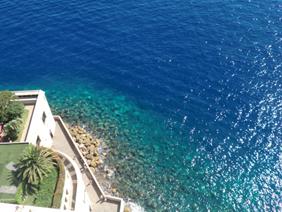
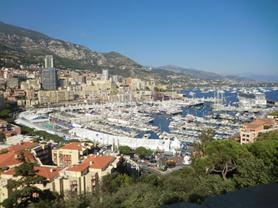
View from the Musée d’Oceanographie, Monaco

As a quiet companion to a wealthy dowager in Monte Carlo, it was hard to imagine how this young woman, who remains unnamed throughout the novel, was going to elevate her station in life by any other means than some chance encounter – and indeed Mrs Van Hopper’s convenient two-week malady provides exactly the opportunity that would likely otherwise never have occurred.

There was nothing for it but to sit in my usual place beside Mrs Van Hopper while she,  like a large,complacent spider, spun her  wide net of tedium about the stranger’s person.

And with the change of location from the calm, sun-filled vistas of Monaco and Italy, we arrive at Manderley, the grand estate of many rooms, corridors, wings, ritual, tradition and an established staff, all haunted by memories, both real and imagined of the previous Mrs de Winter, Rebecca.
Last night I dreamt I went to Manderley again.

In Rebecca, Daphne du Maurier has created an extraordinary character who though never physically present, seems to affect everyone from the dog to the most loyal and disturbing housekeeper, Mrs Danvers to the slightly demented grandmother.

The new bride quickly comes to realise how different she is to her predecessor and perhaps being so young is therefore prone to exaggerated imaginings which add to her feeling of insecurity. All of which does make one wish someone would sit her down for a moment and explain exactly what is what, her sister-in-law comes close, but never quite stays long enough to enlighten her young sister-in-law – although that vivid imagination and neurotic behaviour do add to the suspense and excruciating discomfort of someone who feels most out of place in her new world.

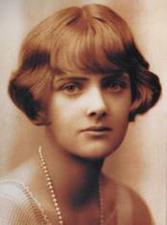
Daphne du Maurier

Du Maurier herself was living in Alexandria at the time she wrote Rebecca and was said to have felt uncomfortable with her life and obligations as the wife of a commanding officer, entertaining other wives while surviving the fierce heat of an Egyptian summer.

Both woman in the novel reflect aspects of du Maurier’s own complex character and the duality of her natural inward inclination versus the more extrovert role she was required to play. No doubt these experiences she was living through on a daily basis continued to feed her imagination and enrich the two female characters who really did seem to have little in common, the author giving away few clues as to why Maxim could have married two such opposite types of women.

Intrigue, tradition, a grand estate, a young naïve protagonist with an over active imagination, all contribute to a fascinating and compelling read – a classic that continues to enthrall readers as much today as it did in 1938 when it was first published, not to mention a Hitchcock film!

Don’t forget to leave a comment and your email address if you would like to enter the draw to receive this copy.

Do you have a Daphne du Maurier favourite?