Champ Harmonique MP2013

This poetic musical installation, entitled Harmonic Fields in English, came to my attention three months ago when I was searching for something interesting to write in the ‘To Do’ section of the destination guide on Marseilles I (used to) write for a magazine.

I knew it wouldn’t be too hard to find something spectacular, as Marseilles has been designated cultural capital of Europe for 2013, a prestigious event on the cultural calendar and one that has resulted in much-needed expenditure giving this seaside city something of a facelift.

I will save the wondrous changes in the city for another post, but yesterday my children and I drove into Marseilles and along the corniche to Les Goudes. I do love that word corniche , the English equivalent doesn’t evoke quite the same warm, exciting, air of anticipation feeling as corniche.
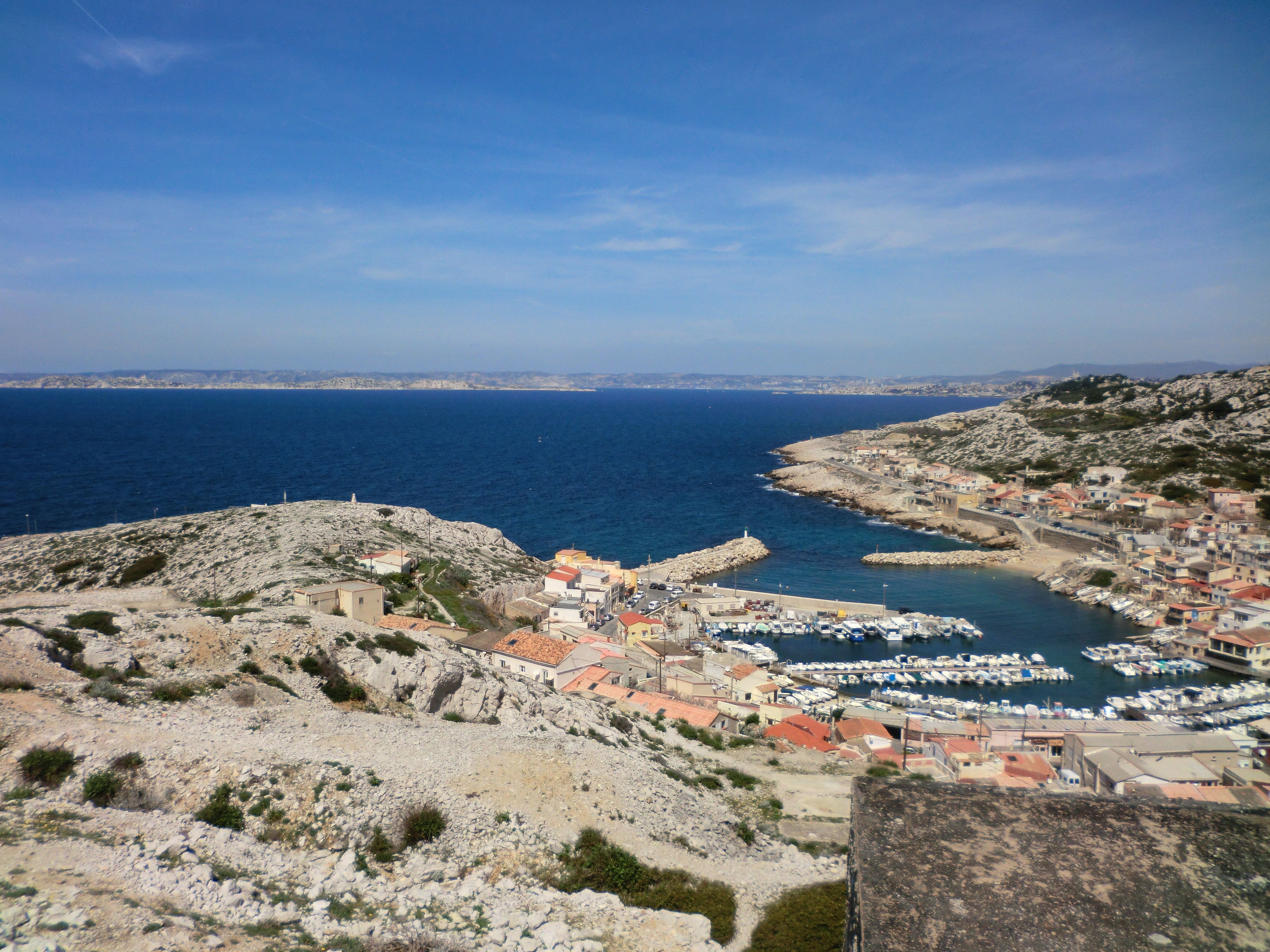
The village of Les Goudes, Marseilles

The village of Les Goudes, Marseilles

The corniche (roughly translated as ledge, more naturally translated as cliff road or coast road) winds its way from the centre of Marseilles, La Vieux Port past all the beaches and seaside restaurants, beach parks, cafes, cliff-front residences, joggers, sun-seekers and finishes in Les Goudes, which signals the beginning of Les Calanques, huge limestone cliff faces which make it nearly impossible to access the coastline between Marseilles and Cassis, except by boat or on foot. But the rewards for doing so are spectacular.
CIMG3832

The beginning of Les Calanques

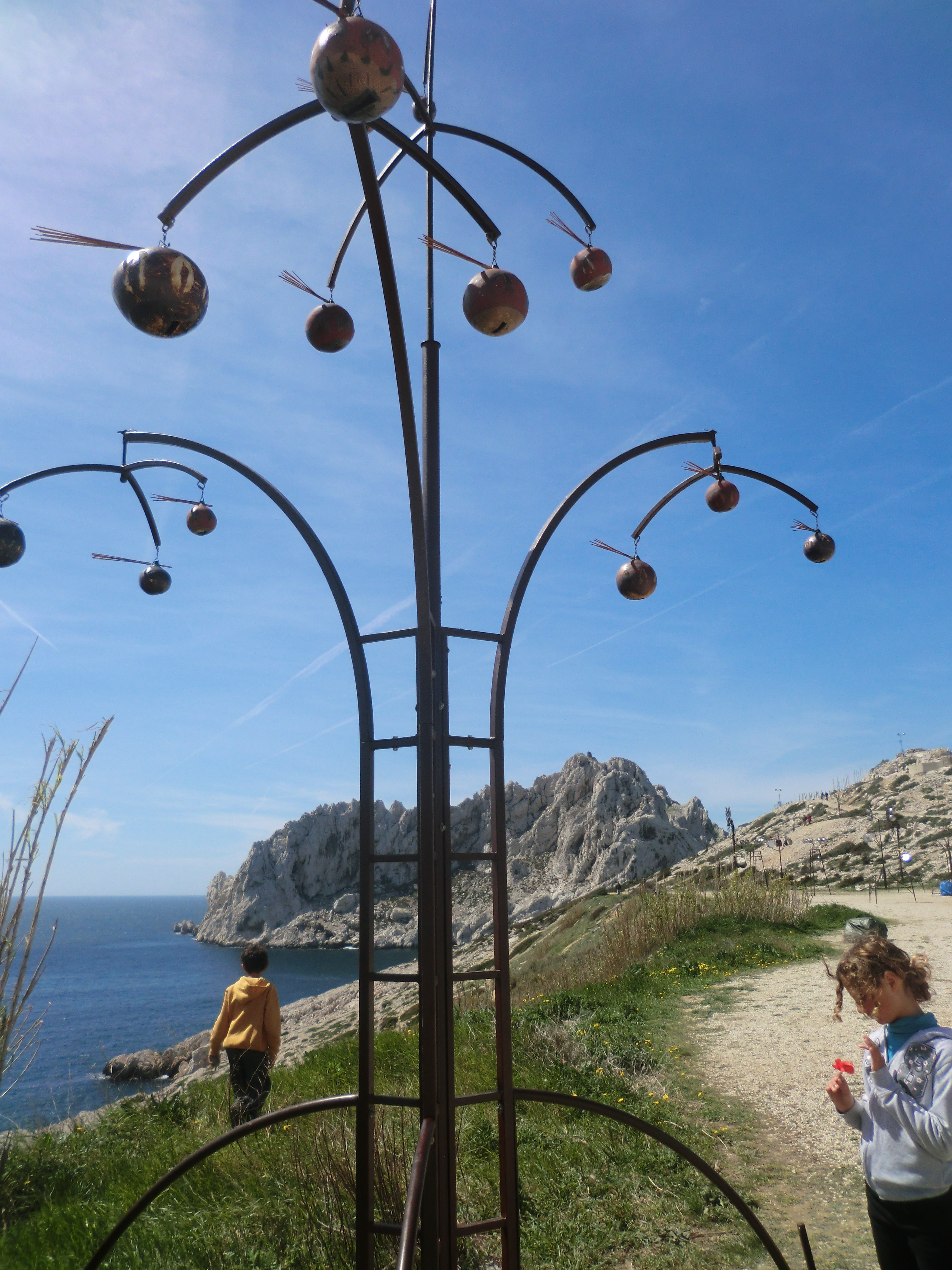
Champ Harmonique is the brainchild of Pierre Sauvageot, inspired by the wind and natural instruments of Indonesia, which require no player but the wind and can hang from trees or be placed in nature, allowing her to be playful, moody or melodramatic.

The coastline of Marseilles in the region of Provence could not be more perfect, natures favourite elements here are the sun and the wind, the one we know best from the north-east is the Mistral, but there are many others and yesterday we had a less dramatic, more playful wind, speeding up, then slowing down, her presence never more known and her subtleties never more appreciated than when given something like this spectacular installation to play with.

Nature gets to play here with cellos, drum shakers, glockenspiels, bamboo poles that sing, spinning music boxes, and a lot of other things I can’t even begin to translate like hélices-sirènesépouvantails balinais, tepees chromatiques, graals pentatoniques, arcs sonores, arbres à flûtes, cannes à pêche à lacrotale… 500 instruments in total.

It is a poetic symphony to experience and cannot (and should not says Pierre Sauvageot) be captured easily on film, but the stunning environment must be shared and if you have the occasion to visit the south of France during 2013, this is merely a taste of the events happening during the Marseilles Provence cultural capital celebrations.
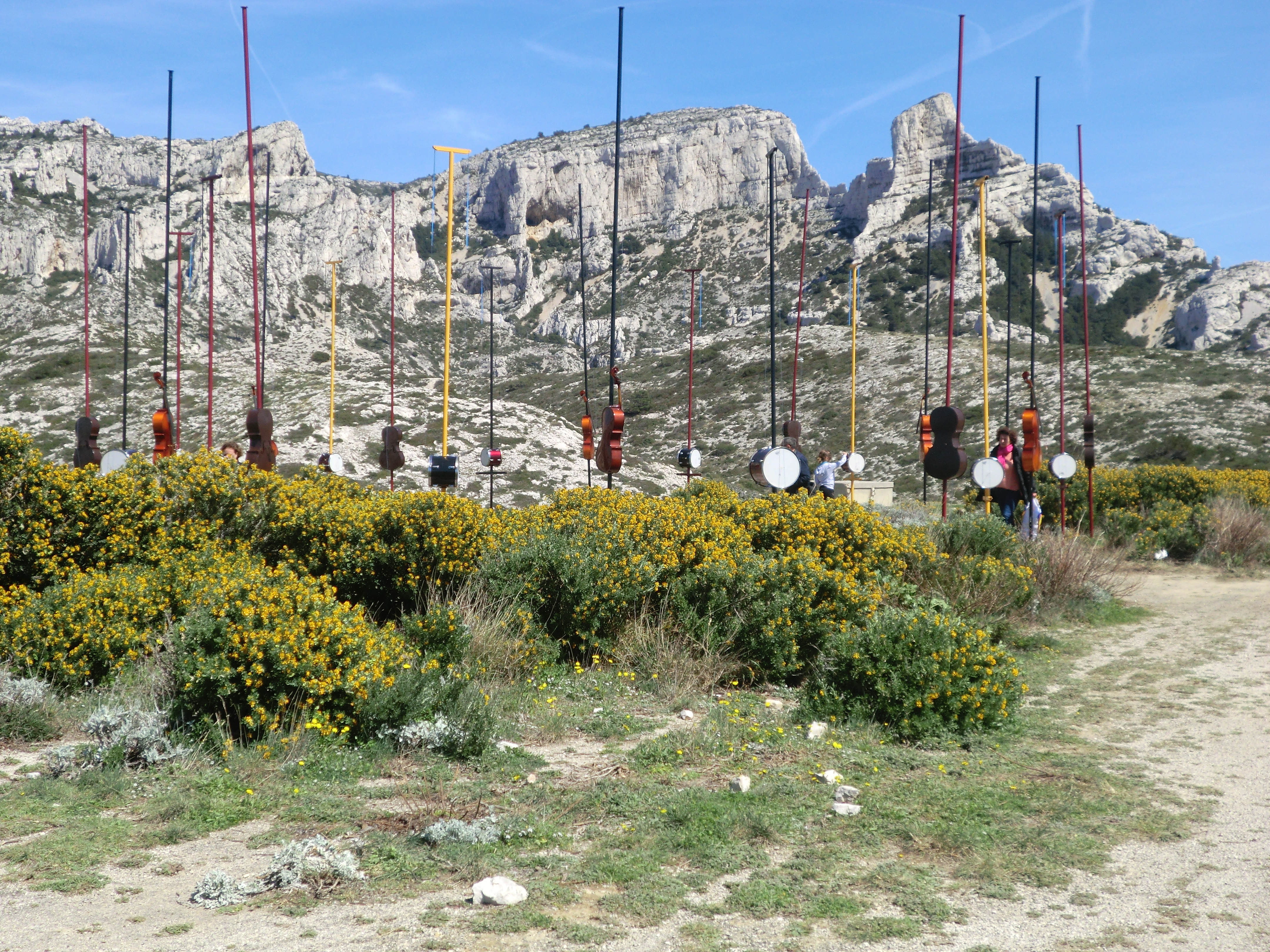
CIMG3841Champ Harmonique is open until the 28th April in Les Goudes, Marseilles. It’s free to enter and the installation is supervised on Thursday, Friday and Saturdays and although it is open and accessible at all other times, some of the instruments are disabled during the unattended periods.

In true French style, (a sit down leisurely lunch remains a significant priority here for all), the installation is closed every day from 12–2pm.

And there will be a special open air concert on the evening of the 25th, the night of the full moon!

To imagine what the experience might have felt like and to see the view, here’s a three minute video, captured during the time it was open.

Mom & Me & Mom by May Angelou

Maya Angelou starts her conversation book by mentioning something people often ask, how it is that she became the women she is, a question she says she has been tempted to respond to using lines quoted from Topsy, the young black girl in Uncle Tom’s Cabin who said, “I dunno, I just growed.”

Mom Me MomInstead, Angelou has written this thought-provoking tribute, sharing a slew of matriarchal experiences among the many others already shared in her remarkable series of autobiographies, to highlight a little of how she did become that brave, sensitive, adventurous and caring women she is, in part due to the grandmother she loved and the mother she came to adore.

It is a story written with utmost compassion and forgiveness, for this is a woman whose mother admitted when she and her husband separated that she could not mother young children, so sent them to live with their grandmother for ten years. Angelou closes the prologue reminding us that love heals and throughout the book will prove that kindness is the greatest gift we can ever give and foster in others.

Love heals. Heals and liberates. I use the word love, not meaning sentimentality, but a condition so strong that it may be that which holds the stars in their heavenly positions and that which causes the blood to flow orderly in our veins.

Vivian Baxter, Maya Angelou’s mother, was the eldest of a large family of mostly boys, for whom threats, intimidation and violence were a part of their way of their life and this petite force was often at the forefront of their skirmishes. Their father encouraged tough boy talk and tasked his daughter with ensuring the boys didn’t soften. Little wonder that after falling in love, marrying and realising that it was a mistake, they were also unable to agree on who should raise their toddlers, they separated and sent the children to their father’s mother in Stamps, Arkansas. Maya was three and Bailey five-years-old.

Ten years later, when their grandmother felt that Bailey had grown too old for Arkansas, when he had reached a dangerous age for a black boy in the segregated South, it was arranged for them to return to their mother in California. Bailey was enthusiastic, Maya much less so. It would be difficult, but for all her flaws, their mother knew how to communicate with her children and didn’t push her mother status on them. Maya decided she would call her ‘Lady’ and her mother’s response to this is one of many small pleasures Angelou offers up in her book.

Maya has a baby very young, without the foundation of a loving relationship, however with the love and support of her mother, this event in no way prevents her from pursuing her life’s dreams and ambitions.

I thought about my mother and knew she was amazing. She never made me feel as if I brought scandal to the family. The baby had not been planned and I would have to rethink plans about education, but to Vivian Baxter that was life being life.

Some years later deciding to marry Tosh tested the mother daughter relationship, Vivian didn’t try to stop her daughter from making what she thought was a mistake, but she chose to leave San Francisco, not wishing to witness the fallout. Like any young women living off the heady ambiance of newly married love, Maya wished to prove her mother wrong.

To begin with she continued doing all the things she loved, the things that made her Maya Angelou, seeing her friends, attending a dance class, going to church and speaking freely about God. However her activities slowly became issues between the young couple, so she stopped them in an attempt to maintain peace between herself and her husband.

At first the dimness is hardly noticeable but not alarming. Then with a rush, the light is vanquished by darkness.

This gem of a book, complete with gorgeous photos, is a wonderful addition to her already masterful collection of autobiographies and chronicles that one relationship that runs through our entire lives, that with our mother. It may not always be easy, but Angelou shares those moments that tested and ultimately strengthened the love and respect they had for each other. She accomplishes it with incredible honesty and selflessness, something that shines through in the brief interview I have linked here. What a wise and loving soul she is.

Interview – Learning to Love My Mother: Maya talks about her mother with a BBC interviewer.

“Exercise patience with yourself first, so you can forgive yourself for all the dumb things you do. Then exercise patience with your children.”

Buy a Copy of Mom & Me & Mom via Book Depository

Note: The book was an Advance Reader Copy (ARC) provided by the publisher via NetGalley.

Honour by Elif Shafak

US edition cover

US edition cover

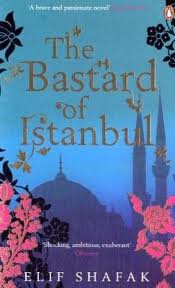
Elif Shafak comments in her essay on identity The Happiness of Blond People about the stereotyping or tendency of books written by or about women from the East, that they often sport covers with an image of a veiled woman.

It is something that makes her other books stand out, because they don’t do that. The Bastard of Istanbul and The Forty Rules of Love (at least the editions that I read) have enticing covers that invite you to enter another world, depicting vibrant, warm colours and referencing stunning forms of Eastern architecture, curves, arabesques, spires and sparkling elements.

When I first spied the UK cover of her new book Honour I thought ‘Oh no’, not one of those books – I was disappointed as it looked like it belonged to that genre, the misery tale of a woman’s lot in a society where the veil is used as a symbol of varying degrees of oppression. That was before I read and reviewed the essay I refer to above, in which she cites those books with similar disdain.

It was some comfort to see that the US edition has nothing like that cover, preferring the safe symbolism of the open arches, inviting us in to take a look within its pages, no veils, no dark colours, no fear, no buying into outdated stereotypes. It would be interesting to know which cover  attracts the most readers.

Honour

UK edition cover

There is a plethora of lifestyles among Muslims, a variety of personal stories to consider; and yet only some of these stories come to the fore. They almost always happen to be the most problematic ones: we seldom hear about happy Muslims, in particular about happy Muslim women. Honour killings, female circumcision, child brides, the veil, gender segregation, lack of freedom… Gender is the number-one topic where the so-called Clash of Civilisations is manifest and crystallized. It is no coincidence that a considerable number of books related to Islam have female images on their covers, and in many, if not most cases, these females appear to be sad, silenced, secluded or suffering. Women with their mouths covered, or eyes peeking out from behind their hijab, or heads bowed miserably down… Elif Shafak, The Happiness of Blond People

Book covers aside, this is a very credible story, one that many women who have uprooted their lives and brought up or given birth to children in a foreign culture may relate to. Narrated by her daughter Esma, the story centres around the life of Pembe, identical twin to Jamila and one of eight educated daughters of a family raised in a Kurdish village, the desire and constant striving for a son eventually taking the mother in childbirth.

Life here is a precarious path for young woman, where one wrong step can easily lead to condemnation. One of the twins dreams of a life far away, the other seeks to learn from those around her, from nature and experimentation. Love is the sacrifice that will enable them to attain their so-called dreams.

Their adult lives are lived far from each other, Jamila becoming a renowned village midwife and Pembe, fulfils that desire to live elsewhere, travelling further than she ever dreams, her husband Adem, from Istanbul, brings her to live in East London where they will raise their three children Iskander, Esma and Yunis.

To her the future was a land of promises. She had not been there yet, but she trusted it to be bright and beautiful. It was a place of infinite potential, a mosaic of shifting tiles, now in a seamless order, now in mild disarray, for ever re-creating itself.

To him the past was a shrine. Reliable, solid, unchanging and, above all, enduring. It provided insight into the beginning of everything; it gave him a sense of centre, coherence and continuity.

Through the story, which alternates between 1940’s Kurdistan and 1970’s London, we come to know each of these family members and begin to understand how their individual and collective experiences has moulded them, Pembe and Jamila in their traditional village with its elders, family, traditions, superstitions; Adem with an alcoholic father and angst-ridden mother who eventually abandons her children, unable to cope with the Jeckyll and Hyde character of her husband. Each has been in some way touched by the repercussions of a ‘loss of honour’.

Iskander is raised in London with memories of his early life elsewhere, carrying memories of disappointment like molten rock deep within. He is sensitive to a vibe between his parents he doesn’t understand, something that makes him want to act. When his father leaves home and it becomes clear that his mother is moving on, the pressure of that molten rock within him causes him to explode.

RumiHonour touches on many great themes and then excels in sharing all the familial details, the interactions between its characters, the people and culture around them, to the point where we identify with each character as we spend time seeing things from their perspective and then experience a sense of anxiety knowing that these perspectives are likely to clash and the outcome will not be good.

And then there is Zeeshan, a character who arrives unexpectedly, but one I recognise instantly, knowing of Shafak’s interest in Sufism and the work of the 13th century poet and philosopher Rumi; Zeeshan is a gift and offers a lifeline to Iskender representing hope.

Elif Shafak is a writer with an interesting perspective, as she herself says, she has one foot in Istanbul and the other travels and makes connections in cities around the world.

Writing that crosses cultures and observes characters doing the same invokes a sense of empathy, she is a writer whose work I will be following and whose city I look forward to visiting in May this year.

Elif Shafak speaking in Sophia, Bulgaria Photo courtesy of Tayna Tzvetkova

Elif Shafak speaking in Sophia, Bulgaria
Photo courtesy of Rayna Tzvetkova

Note: This book was an Advance Reader Copy (ARC) provided by the publisher via NetGalley.

The Romantics, A Novel

RomanticsAfter so much non-fiction and short stories, from my sick-bed this last week, I was trying to think what I had on the shelf that I could just sink into, a good novel and I thought briefly about Amitav Ghosh’s The Sea Poppies, which I know is there somewhere, but too high on the shelf, too heavy in hardback and so my arm reached out and landed instead on Pankaj Mishra’s  The Romantics.

This wasn’t just about needing to lose myself in a story, I wanted to escape to somewhere exotic but familiar and Mishra offered a view from a rooftop apartment in Benares (Varanasi) India, that instantly awakened pleasant memories, but did so via a young Indian protagonist whom I knew would give me another perspective to life there.

The Romantics is a story about a lost young Brahmin, Samar, whose family for centuries followed the same traditions, having been favoured by a sixteenth-century Mogul emperor who granted them land, passing on their legacy with little thought to the past or the future, tending their land at the foothills of the Himalayas somewhat oblivious to the subsequent twists and turns of history.

My own knowledge of the past went only back as far as my great-great-grandfather, in the last century, but I can’t imagine his own ancestors deviated much from the well-worn Hindu grooves in which he and his son and grandson spent their own lives: studentship in Benares, adulthood and marriage, late-middle-age detachment and then the final renunciation followed by retreat to the Himalayas.

CIMG2125

The Ganges, Benares

With India’s independence this well-trodden familial cycle was thrown into disarray, lands and accumulated wealth lost, his father became just another citizen seeking employment. Samar has finished his studies but faces an uncertain future after the premature death of his mother and his father’s announcement that he wishes to spend his last days in Pondicherry.

Samar makes Benares his home and befriends Miss West, an English expatriate, and others who are ‘passing through’, idealist Americans, Buddhist contemplatives and the young Frenchwoman Catherine whom he falls in love with, despite her living with a young local sitar player, whom she imagines she will transition to Paris with.

The reality of my position was made more apparent by Debbie’s reply when I asked her what she was doing in Benares. ‘Passing through,’ she had said, and the words had stayed with me. They had suggested a kind of perpetual journeying through the world, a savouring of life in a way I had no means of knowing, the life itself seeming – as it did in the pictures in Miss West’s room – unimaginably adventurous.

He also makes the acquaintance of Rajesh, a fellow Brahmin, whom he suspects of being involved in shady political or criminal dealings; Samar passes his days between these two cultural thresholds, participating fully in neither, observing himself and others yet not quite able to stop himself from complicating his life unnecessarily, not so different from them all.

CIMG3772Through Samar, Mishra writes with a quiet equanimity which permits us interesting insights into the lives of all the characters,  though his insights do little to prevent him making similar mistakes. Eventually he leaves, after an extended visit to his sick father and finds himself a job in Dharamshala where he will settle, until something reminds him of the past and once again, he will give in to a baser instinct.

The perfect escape novel and always interesting to read about the stayers, young people who went to visit India or any other country vastly different from their own, who end up for one reason or another staying.

Elizabeth and her German Garden, Elizabeth von Arnim

Elizabeth von ArminStaying overnight with friends in England just before Christmas, this book by Elizabeth von Arnim was placed on my bedside table and though there was no chance I would finish it, I was captivated and charmed by Elizabeth’s garden right from those first few pages.

May 7th – I love my garden. I am writing in it now in the late afternoon loveliness, much interrupted by the mosquitoes and the temptation to look at all the glories of the new green leaves washed half an hour ago in a cold shower. Two owls are perched near me, and are carrying on a long conversation that I enjoy as much as any warbling of nightingales. The gentleman owl says, and she answers from her tree a little way off,, beautifully assenting to and completing her lord’s remark, as becomes a properly constructed German she-owl. They say the same thing over and over again so emphatically that I think it must be something nasty about me; but I shall not let myself become frightened away by the sarcasm of owls.

I left without the book, only for it to land on my doorstep late January on my birthday, and in these cold harsh months when the comforts of a garden are not so easy to find, when I have been finding solace instead in the nature essays of Kathleen Jamie and the short stories of Tove Jansson (review to come), this novel was a welcome respite.

Elizabeth von Arnim

Elizabeth von Arnim

It is fiction, though reads very much like an autobiography and was initially published anonymously in 1898. The author (a cousin of Katherine Mansfield) is said to have been born in Sydney, in NZ and in England, I’m not sure about any of that, but her parents did leave Sydney and return to England where she was raised (while her father’s brother and family remained in New Zealand).

Katherine Mansfield

Katherine Mansfield

It seems likely that Katherine Mansfield spent time with these relations when she moved to England herself, I found one reference confirming this, a comment by the journalist (and relation of the two) Louise Ahearn, who is currently researching Elizabeth’s life and it is mentioned in the book that Katherine visited her cousin at the home she built Chateau Soleil, in Switzerland.

On a tour of Europe, while in Rome with her father when she was 23-years-old, her talented piano playing was overheard by Il Conte the German Graf Henning August von-Armin-Schlagenthin, who was travelling to help get over the death of his wife and child the previous year. After a persistent courtship they were married and soon settled into upper-class life in Berlin, where she gave birth to three girls in quick succession.

Nassenheide Schloss, the family estate by Alexander Duncker ex wikipedia

Nassenheide Schloss, the family estate by Alexander Duncker ex wikipedia

Not happy in Berlin and homesick for England, in 1896 she was introduced to the family estate Nassenheide, ninety miles north of Berlin in Pomerania. A seventeenth century-schloss, located at the time near the German border (now in Poland), it had been a convent and had not been lived in for more than 25 years, surrounded by an unkempt, rambling, derelict garden which Elizabeth immediately fell in love with. She insisted on living there and it seems she got her way (at least for the summer months), much to the chagrin of her husband, whom she affectionately refers to in the novel as the Man of Wrath.

The book captures many moments of appreciation of this unorthodox wilderness the character Elizabeth is so content within, and equal moments of candour at the annoyance of those who dare impose themselves to visit. She has difficulty keeping the gardener who often hands in his notice while she somehow convinces him to stay, until events dictate that drastic action is necessary to get rid of him.

The gardener has been here a year and has given me notice regularly on the first of every month, but up to now has been induced to stay on. On the first of this month he came as usual, and with determination written on every feature told me he intended to go in June, and that nothing should alter his decision. I don’t think he knows much about gardening, but he can at least dig and water, and some of the plants he plants grow, besides which he is the most unflaggingly industrious person I ever saw, and has the great merit of never appearing to take the faintest interest in what we do in the garden. So I have tried to keep him on, not knowing what the next one may be like, and when I asked him what he had to complain of and he replied “Nothing,” I could only conclude that he has a personal objection to me because of my eccentric preference for plants in groups rather than plants in lines. Perhaps, too, he does not like the extracts from gardening books I read to him sometimes when he is planting or sowing something new.

The author is at her best when describing her longing for the garden and the simple pleasure it brings her, though equally adept are her recounts of conversations with city ladies of her social standing, capturing their inability to comprehend that it is by her own choice that she spends so much time in this savage wilderness, they are convinced they must feel sorry for her and that she has been deposed there, belonging as they do to that breed of women who absolutely require the regular company of their peers and the invitations to social occasions, something Elizabeth does her best to avoid.

Content with the book, inspired by but lacking the garden, we instead take a drive and a stroll around a much closer abandoned ruin, appreciating its beauty among the weeds.

CIMG3742

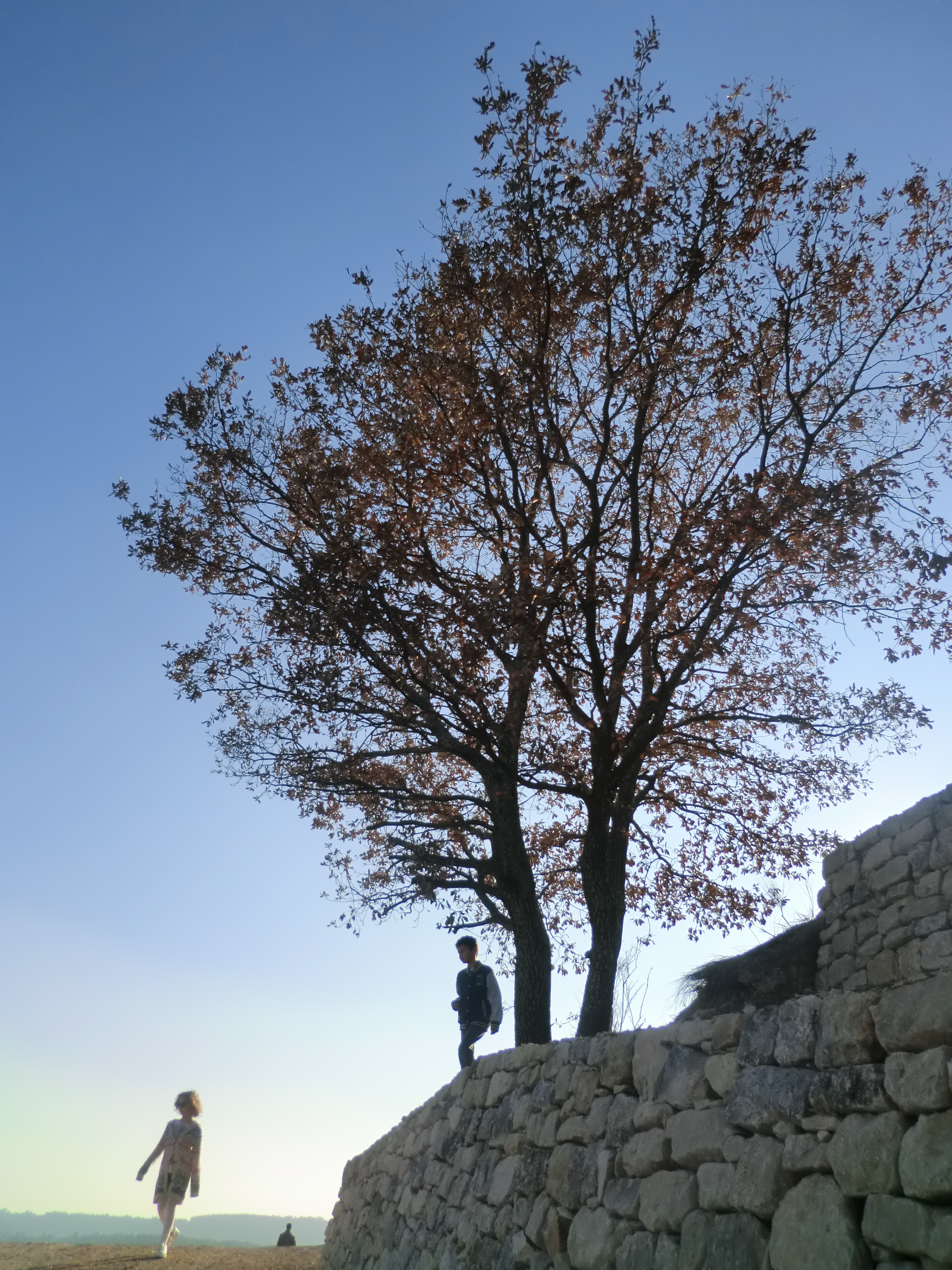
Ruins of L’oppidum de la Quille, Puy Sainte Réparade

CIMG3751

The fading winter light of Provence, Puy Sainte Réparade

What We Expect When We Don’t Expect Much From Love: Stories by Ludmilla Petrushevskaya

LudmillaThere Once Lived A Girl Who Seduced Her Sister’s Husband, And He Hanged Himself. The title itself is intriguing, though if you have read the author before, you will recognise the tendency, she is the bestselling author of There Once Lived A Woman Who Tried To Kill Her Neighbour’s Baby.

I took the book with me on a recent visit to London, as my alternative to the kindle, since I have been caught out a couple of times with that little machine dying on me even though the battery wasn’t run down. I have since discovered the 20 second rule. When the kindle fails to come to life when it should, hold it in the on position for 20 seconds to reboot it. Like many gadgets today I’m not sure these things are designed to last, not as long an old-fashioned book anyway. And I have Penguin to thank for sending me a bona-fide book!

The blurbs quote Chekov, Poe, Beckett, Tolstoy and various others to entice you in, making promises that will no doubt encourage dissent; it is a tall order to be compared to literary greats. I haven’t read all those greats, but there is one collection I am reminded of, not because she writes like him, but because the voice is clear from story to story and at the end I am left with the notion that “there is consistency in that voice” and “she says it how it is”.

Carver LoveIf Ludmilla Petrushevskaya reminds me of any writer, it is Raymond Carver and his collection what we talk about when we talk about love. Ironically, when pulling this volume off the shelf, I also find tucked in its last page, a boarding card for a flight from Marseille to London, dated June 2008.

So back to the book.

Seventeen episodes of attempts at love or connection with another, in all their dysfunction, set within the context of post revolutionary Russia when private ownership of housing was forbidden and many family apartments were divided and sub-divided and the space people came to occupy diminished, along with many of their hopes and expectations of each other.

By 1972, when Petrushevskaya published her first story, Moscow was ringed with concrete buildings containing these overcrowded units where the majority of these love stories take place.

Born in 1938 in Moscow, Ludmilla Petrushevskaya never knew family life. Evacuated with her mother to Kuibyshev during the war, she was left there in the care of her aunt and grandmother while her mother returned to Moscow to attend college. Members of the family of “an enemy of the people”, they were treated as pariahs – and were slowly starving. At age eight, Petrushevskaya began to run away from her temporary home and spend summers as a street beggar. Her mother returned after four years and brought her back to Moscow, where they were officially homeless. As a young girl there, Petrushevskaya and her mother lived under a desk in her insane grandfather’s room, while occasionally renting cots in nearby communal apartments. It was an unsettled, unhappy childhood, one experienced without the consolation of siblings.” Extract from Introduction by translator Anna Summers

The stories are collected into four sections, the first A Murky Fate contains stories of characters who consider entering relationships that are flawed or doomed, in readiness for a chance at that diminished flutter of something that may resemble love. It is not to be moved by these circumstances that we read these stories, it is to bear witness to another’s reality. They are uncomfortable, fatalistic and near-true.

She’ll wait for his long-distance call in a phone booth at the post office. For ten prepaid minutes they’ll become one soul again, as they did over the twenty-four prepaid days of their vacation. They’ll shout and cry across thousands of miles, deceived by the promise of eternal summer, seduced and abandoned.

As we read the stories, our own expectations are so low for these women, that it is possible to experience our own small pleasure in expecting nothing and finding delight in an obscure change in their fortune, even if only for a short period.

I mentioned to a friend that it was as if I was sitting across the table from the writer listening to an oral narration of people she knew, that it reminded me of other tables I have sat at, listening to stories of other women from different cultures and how they found themselves living in this or that country or city, so often lead by the allure of love or the promise of an improved lifestyle.

dollsEach community, era, culture has its stories to share, it disappointments to shed and its eternal hope for future generations, that they may do better. Reading these stories is like reading another chapter in the evolution of humanity and reminds us that we have a long way to go before arriving near any kind of nirvana.

…the day is burning its last, and Milgrom, eternal Milgrom, sits in her little pensioner’s room like a guard at the museum of her own life, where there is nothing at all but a timid love.

Note: This book was kindly made available by the publisher.

Revenge by Yoko Ogawa (Japan) – Eleven Dark Tales

RevengeWow! Those of you who have been reading this blog long enough to remember my post on Why People Don’t Read Short Stories may remember that they are something I usually savour, rarely devouring an entire collection in one sitting, but Yoko Ogawa breaks the mould and her newly published book Revenge is full of hooks and devices that stopped me putting it aside and saw me instead ploughing on to read one after the after.

Like a curious sea creature taking the glistening bait, after reading the first story, I dove into the next, caught in the deft grip of Ogawa’s clever and haunting narration, each story carrying the slimmest thread into the next, sufficient to keep the reader interested and more than that, inquisitive to continue and see what she would come up with next.

I first read Yoko Ogawa last year, attracted by her slim collection of three stories contained within The Diving Pool and then her novella The Housekeeper + The Professor, they are very different books, so I was interested in how this collection would compare.

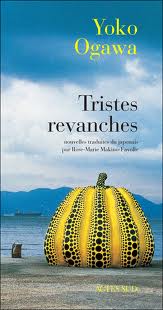
tristes revancesShe has written prolifically over the years and much of her work has been translated into French, very little thus far in English, though perhaps that will change as her short stories are increasingly appearing in contemporary English language publications. The Nobel Prize winning author Kenzaburō Ōe when speaking about her work said:

‘Yoko Ogawa is able to give expression to the most subtle workings of human psychology in prose that is gentle yet penetrating.’

Revenge is an apt title, there are traces of it in every story, calculated revenge, obsessive revenge, inexplicable revenge and cold-blooded revenge. Each story exists on its own, but I read it like a novel, not wanting to pause between titles and feeling right from the end of the first story a tightness in the solar plexus and realisation that I had been holding my breath.

It’s not just the story, it’s awe at how she can write in such an engaging way, where very little actually happens, but we begin to understand more about what is going on in the mind of the character from all the little details she gives, creating a growing image in our own minds, just before she delivers the final blow. And even when we don’t know much about a particular character, someone on the periphery perhaps, not important to the story, chances are we are about to find out more about them in the next story. And so we read on to find out if we guessed right or if she will insert some other connection.

I share this from the blurb, which encapsulates something of these stories in a more concise manner than I ever could:

An aspiring writer moves into a new apartment and discovers that her landlady has murdered her husband. Years later, the writer’s stepson reflects upon his stepmother and the strange stories she used to tell him. Meanwhile, a surgeon’s lover vows to kill him if he does not leave his wife. Before she can follow-through on her crime of passion, though, the surgeon will cross paths with another remarkable woman, a cabaret singer whose heart beats delicately outside of her body. But when the surgeon promises to repair her condition, he sparks the jealousy of another man who would like to preserve the heart in a custom tailored bag. Murderers and mourners, mothers and children, lovers and innocent bystanders—their fates converge in a darkly beautiful web that they are each powerless to escape.

Ogawa is certainly not the first writer to do this, to infuse stories with their subtle threads and connections, Alice Hoffman does it with Blackbird House, Colum McCann did it with Let The Great World Spin and I believe Cloud Atlas (which I have not read) has something that makes it too, more like vaguely connected stories than a novel.

jigsawRevenge isn’t a complicated kind of clever though, there’s no need to question or ponder too deeply over it, the links are clear, but it will leave you wondering how she does it, how she maps out those stories and creates those links. It’s like a jigsaw puzzle with multiple subjects, the letters R E V E N G E scratched across the surface.

Note: This book was an Advance Reader Copy (ARC) provided by the publisher via NetGalley.

The Happiness of Blond People – A Personal Meditation on the Dangers of Identity by Elif Shafak

011312_1324_TheTigersWi2.jpgBastard of IStanbulElif Shafak writes great stories and as this essay illustrates, she both lives and has already lived an interesting life between East and West; experiencing different cultures and absorbing the influence of a high achieving, single parent mother and her superstitious, story-telling grandmother in a untypical but enriching, matriarchal upbringing.

ElifShafak Ask EbruBilun Wiki

Elif Shafak, Publicity shot by Ebru Bilun – wikipedia

As a young pupil she learnt what it means to be on the receiving end of prejudiced comments, introducing her to the clichéd stereotypes cast about by those who might never have experienced but seemed “to know” what it meant to be Turkish, that false responsibility, those who leave will all take on, for the actions of government or other citizens, on behalf of their maternal country and people.

Elif Shafak has inherited and nurtured a healthy imagination and studied many of the great philosophers, with a particular interest in Rumi, sometimes witnessed through her novels and now combines her knowledge with first-hand observations of how cultural differences are perceived in this short book.

The title of the essay was inspired by a conversation overheard at the Rotterdam airport in the Netherlands between Turkish fathers, one despairing of the difficulty of living in proximity to his downstairs neighbour.  She developed a habit of calling the police each time his children made too much noise playing in the apartment, causing his family much stress and anxiety, because the police invariably arrived with sirens blazing – makes me wonder what story she told the police, and thankful that my neighbour isn’t so bad after all!

The man finishes by asking his friend in earnest, how it is that blond children are so quiet and well-disciplined, introducing us to Shafak’s reflections on identity, cultural difference and the inherent, almost unavoidable angst of first generation immigrants worldwide.

The immigrant must be prepared to swallow his share of humiliations every day. He has to accept that life will treat him with disrespect and that he’ll be smacked and jostled with undue familiarity.

Happiness of Blond PeopleShe discusses the perception that happiness can be found in the West, less likely to have to deal with war, warlords, tribal conflict, poverty, corruption, human-rights violations or major natural disasters and the equally ingrained counter-assumption that life in the East is more real and less degenerate than in the West: where society is so selfish and individualistic that communal and family ties have virtually disappeared, unable to support a person, especially the elderly, in a time of need.

A secondary-school student I met in Ankara during a literary event put this to me in a slightly different way. “If you are young, it is better to live in the West than in the East,” he said. “But if you are old, then it is better to be in the East than in the West, because we respect our elders, whereas they don’t. In Europe I have seen old ladies in supermarkets buying one courgette, one carrot, one tomato, one bunch of parsley. Have you ever seen a Muslim woman doing that? No! We always buy at least half a kilo, if not more, because we cook for the entire family.”

What seems to be missing in the immigration experience is often lack of community, the lack of acceptance or gesture of kindness and therefore difficulty in integration, families are often not made to feel welcome (except among their own kind) which then encourages them to live separately and to maintain their own traditions and cultural perceptions and habits, rather than merging with the new country and culture. It can also breed resentment, particularly if it wasn’t a mutual decision to leave or even a choice, as in times of war.

It is often true that it must take at least one generation to normalise integration, but in more closed communities whose occupants themselves have little curiosity for the outsider or have not travelled and come to understand how and why things are done differently, with an altogether different logic elsewhere, this separation is at risk of continuing into multiple generations, especially where there are clear physical differences between people that can provoke prejudice, judgement or even worse, racism.

HonourFor me, most of the time I enjoy being confronted with those genuine mind-bending situations that require one to figure out how people came to see or do something in a way so different from our own – with the exception of violent or inhumane acts, but even behind those practices, there is a story to be told and a history to be understood, which doesn’t make it right, but can assist us to at least consider these practices in context, something Elif Shafak explores in her latest gripping novel ‘Honour‘.

An immigrant myself, I understand many of the isolating factors inherent in such a status, especially when it is necessary to learn a new language. Whilst it is not easy to participate in a traditional society with its many rituals and social codes, it is more likely that an immigrant will find success and contentment in creating a business or activity of their own, something unique that is or will be valued, than putting themselves up against their compatriots and being disappointed time after time, especially if living outside the larger multicultural cities.

This is a short read and a refreshing, open-minded perspective, from a woman who interacts with people in both the East and the West, always interesting to read and listen to.

In this life, if we are ever going to learn anything, we will be learning it from those who are different from us. It is in the crossroads of ideas, cultures, literatures, traditions, arts and cuisines that humanity has found fertile grounds for growth.

The Zenith by Dương Thu Hương

In 1996 I spent three months travelling in Asia, limiting my visit to four countries, India, Nepal, Vietnam and Thailand.

It was in Vietnam that I first travelled on my own and perhaps for this reason, it has always resonated deeply within me. It is a special place and I experienced it at a unique time, the city of Hanoi had no cars and most of its population travelled by bicycle, unlike the city of Saigon in the South full of the noise pollution of motorbikes. 090212_1801_IntheShadow1.jpg

That’s not to suggest it was easy to navigate those intersections, with bicycles coming from all directions, the ring of the bicycle bell a constant stream of warning as the masses somehow managed to criss-cross in opposite directions without accident. I watched that flow for a long time before I understood and dared to join it. The trick? Do not hesitate.

While in Hanoi, I decided to read a couple of Vietnamese authors, I was interested in reading something that came from a local perspective and not from the English-speaking perspective which seemed more prominent.  A young boy in the street sold me two books, Bao Ninh’s The Sorrow of War and Dương Thu Hương’s Paradise of the Blind, the latter a story that illustrated the effect of a rigid communist ideology on a family in the wake of the land reforms of the 1950’s, as narrated by a young woman travelling to Moscow in the 1980’s.

A quote on the back written by Grace Paley, confirmed my thoughts.

“At last a woman, a Vietnamese woman, tells us Vietnamese life: the village, the city, the repression and expansion, the middle peasant, the poor peasant, the years of exquisite food and no food, working in the Soviet Union – and all beautifully told so that we begin to understand not where we were for years, but where and how they – the Vietnamese – are now.”                                                      – Grace Paley

090212_1801_IntheShadow6.jpgThe author’s depiction of ordinary people, in both rural and urban Vietnam was compelling and the definition of terms at the back of the book, particularly of food and practical items was especially useful for me as I cycled my way around the city and out along the river, past markets and temples and saw how people lived, ate and spent their days. This book was the first Vietnamese novel published in the US (1993) I have since discovered, so no surprise that I had never come across this enlightened perspective before.

zenithDương Thu Hương now lives in exile in Paris and her latest novel The Zenith has recently been published. It gets off to a slow start initially, when Ho Chi Minh, the President looks back as a 70-year-old man at parts of his life with regret. He regrets the lack of contact with children that he fathered and the loss of a woman he loved, he regrets the distance that has come between himself as a man and the people he sought to represent.

Wishing to retrieve something of that contact, he attends the funeral of a woodcutter to pay his respects, only to realise the suffering his presence will have caused because of his distinguished position and the expectations that are carried with it should he grace them with his presence. He despairs at having lost sight of that which motivated him to first become involved in the revolution, to bring equality to all.

A bitter longing mixed with a searching curiosity flowers in his heart; he wants to attend the funeral of the woodsman because he wants to experience the funeral of a real father.

Things pick up in pace and interest when we learn more of the story of the woodcutter, his family and village, this one story perhaps seen to represent various stages in the country’s own experience of communism, both its idealistic benefits for the community and its destructive elements against the weak and innocent, when power, greed and envy are present within its leadership, turning even family members against each other. The story-telling reaches its zenith and had me totally convinced of the authenticity of the relationship between the wise sixty-something father/grandfather Mr Quang and his new 18-year-old bride Miss Ngan and relishing the way they managed the reactions of close family and their community with their provocative yet bona-fide marriage.

Of old, it was said: “Tears run downward.” So true.

“Filial love for parents can’t equal the ties of anxious love in a father’s soul for a child. Because when we love our parents we look up but when we love our children we look down. And according to the laws of heaven and earth, tears always flow downward. Especially whenever we recognise that as fathers we have done wrong. Hell itself will then open a door straight into the heart.”

It highlights the enormous gap that can grow between those who rule and have power and/or wealth and those who are trying to survive, just like the distance between rich and poor in a democratic society, similarly it exists between those who yield power and those who don’t in a communist society, trust breaking down within a community as people become increasingly desperate and open to being corrupted while others live in constant fear.

This is not a book to be read quickly, nor even understood immediately. I continue to think about what I read and what it attempted to portray about society, leadership, workers, family and the effect of power and its oft great distance from the reality of how people live, the destructiveness of jealousy and the perseverance of those who will never be compromised, who will always fight for what they perceive is good and right.

The country, its writers and message continue to allure and despite all the suffering, both past and present, there remains for me a quiet tranquility that pervades it, a steadfast patience and determination I admire.

Note: This book was an Advance Reader Copy (ARC) provided by NetGalley on behalf of the publisher.

Episode 5: GOSH Where Peter Pan’s legacy resides, a kind of Neverland

At Great Ormond St Hospital we were shown to the Woodland Ward, the family and children friendly ward names, a first step in reducing my overburdened anxiety levels. Allia was in a beautiful communal room decorated for children, with soft lighting, colour, patterned bed sheets with giraffes and monkeys. The quiet whispers of the nurses a stark contrast to the beige walls, formica cabinets and metal machines with cables and hoses draped everywhere of the hospital we had just left.

Arriving at GOSH Great Ormond St Hospital

It was like we had left the factory and entered Neverland. In a way we had. GOSH has the benefit of many private donors and receives royalties from the estate of J.M. Barrie, who claimed Peter Pan had been a patient in Great Ormond Street Hospital and that:

It was he who put me up to the little thing I did for the hospital.

Allia was asleep in an open incubator so we could actually touch her. She was so peaceful sleeping there. There was no naso-gastric tube in her nose, only lines in her hands and feet, things that in this environment were as ordinary and common as sheets and blankets. She was okay and she was going to be okay. She looked more comfortable now than she had before and I was just happy to be there with her.

It was a shock for my husband. Having missed the birth itself, he was now confronted with something even more difficult, seeing his daughter for the first time in a hospital wired up to machines and about to undergo surgery. If he thought he had arrived in time to avoid the drama, he was mistaken, he had arrived in the middle of it and now he and I would have to endure four hours of awaiting the outcome of a major event that neither of us had any role in.

My Aunt left and Susan’s husband stayed with us. Susan (whose name I have changed for this story) and I used to joke about our funny connections and serendipitous events, one of them being that she shared the name of my mother and I shared the name of her daughter. We laughed the day we met when we discovered this connection, never for a minute anticipating the future role she would play in our lives, at the birth of our daughter.

We had about half an hour before Allia was taken downstairs to the operating theatre. The doctor spoke with us and drew a diagram of the digestive system, from the mouth, down the oesophagus, to the stomach and the small intestine to the ileum, the point just before the small intestine connects to the large intestine.

“It is here just before the ileum that there is a blockage” he explained. “We don’t know exactly what it is, whether there is an end to the intestine so that the two pieces must be re-joined or whether there are striations or a blockage, in which case, we may need to cut a section out. Do you want to come down to the Anaesthetists’ ward?” he asked.

“Yes” I replied.

“No” said my husband simultaneously.

The lift opened, Allia was wheeled inside, I followed with the doctor and we all descended.

Next Up: Late Night Surgery, the most difficult wait a new mother will ever endure

Read Previous Episodes this mother/daughter collaboration: A Silent Education: Our Quiet Challenge in Provence

Introduction

Episode 1: The Benefits of Insomnia

Episode 2: We are not Living in France!

Episode 3: The Benefits of Contra-Indicated Essential Oils

Episode 4: Where’s My Baby and Why Isn’t She With Me?