
James Baldwin’s Go Tell It On The Mountain (1953) was his debut novel, a semi-autobiographical story (inspired by his own childhood in Harlem and his troubled relationship with his father), that narrates a day in the life of 14 year old John, who is the son of a fiery Pentecostal preacher Gabriel, and his second wife Elizabeth.
The Initiation
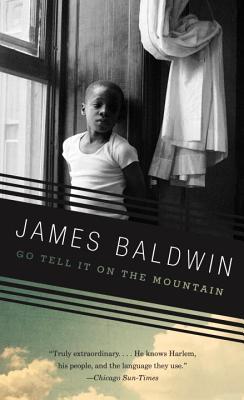
It is a coming-of-age story that depicts a range of thoughts, emotions and actions of this boy, while sharing the back stories of his family, culminating in a frenzied religious experience that appears to have set him on his true path.
The story is told in three parts, and though it follows the events of that one day, the three parts focus on the pasts of different characters connected to John’s family.
Part One, The Seventh Day, is about John, it is his fourteenth birthday and he spends the day thinking about the expectations the family has of him to follow in his father’s footsteps and that he is no longer a child.
He begins to worry that he doesn’t have the same conviction as young Elisha, he feels not only unseen by his father, he feels his wrath and returns it full force in his mind – it enters his dream-life with even greater violence than the looks of disapproval he receives daily.
The opening chapters are full of biblical language, religious fear and fervour, making it quite intense to begin with, though saved by the dialogue that brings us back to the present day.
“His father’s face, always awful, became more awful now; his father’s daily anger was transformed into prophetic wrath. His mother, her eyes raised to heaven, hands arced before her, moving, made real for John that patience, that endurance, that long suffering, which he had read of in the Bible and found so hard to imagine.”
An Act of Resistance
His mother gives him money and he uses it to attend the cinema. He begins to question his faith, and his father, noticing a rising desire for things he ought not to be thinking of:

“Broadway: the way that lead to death was broad, and many could be found thereon; but narrow was the way that lead to life eternal, and few there were who found it. But he did not long for the narrow way, where all his people walked; where the houses did not rise, piercing, as it seemed, the unchanging clouds, but huddled, flat, ignoble, close to the filthy ground, where the streets and the hallways and the rooms were dark, and where the unconquerable odor was of dust, and sweat, and urine, and homemade gin. In the narrow way, the way of the cross, there awaited him only humiliation forever; there awaited him, one day, a house like his father’s house, and a church like his father’s, and a job like his father’s, where he would grow old and black with hunger and toil.”
The Sins of the Father

Part Two, The Prayer’s of the Saints is told in 3 parts entitled Florence’s Prayer, Gabriel’s Prayer and Elizabeth’s Prayer.
This section focuses on the past, on Gabriel’s upbringing and life, his sister Florence, her escape North and marriage, a young woman Gabriel worked with named Esther, whose life would be forever changed by their encounter. We learn of Elizabeth’s past, how she meets Richard and also travels North, their tragic story and her meeting Florence, a turning point in her life.
“And this became Florence’s deep ambition: to walk out one morning through the cabin door, never to return. Her father, whom she scarcely remembered, had departed that way one morning not many months after the birth of Gabriel.”
Everything we read here begins to explain the depth of feeling John has, often driven by events he is not aware of, including his own being, his true identity, that he does not yet know. All that has been withheld from him, the secrets people have kept, impact the lives of everyone in this extended family, often without their knowledge.
In the final part, The Threshing Floor, John has a religious experience with terrifying hallucinations, but it is an event that appears to have propelled him out of childhood and towards his calling.
Love/Hate of Parents, Escaping Reality, Awaiting the Calling

This is the third book written by Baldwin I have read and while quite different from the others, it is equally compelling. The two I have read I have linked to my reviews below, also highly recommended.
It personifies the common experience of a confused adolescent, whose situation is magnified by the love/hate he feels from one or other parent and the guilt he takes on for it, the emotional roller coaster of new exciting friendship, and the desire to escape into another reality.
The stories of the secondary characters are informative and revelatory, as they contributed to my growing understanding of the unease of the young man.
John’s narrative was convincingly portrayed to the point of it feeling like you were in his shoes and in his mind, the relentless worrying, his paranoid and angry emotions that seemed to take over him, until they culminate in his heightened ‘salvation’ experience.
These heights are a reference to the mountain, a symbol of the ascent and descent through he must pass to move closer to his God, to his own salvation, to his becoming a worthy man.
He thought of the mountaintop, where he longed to be, where the sun would cover him like a cloth of gold, would cover his head like a crown of fire, and in his hands he would hold a living rod.
Life Informs Art
In The Fire Next Time, Baldwin’s essay that first appeared in the New Yorker as Letter from a Region of My Mind, talked of his developing self-awareness as he entered adolescence and the choice he made to seek both refuge and revenge by going into the Church.
“Shortly after I joined the church, I became a preacher – a Young Minister – and I remained in the pulpit for more than three years. My youth quickly made me a much bigger drawing card than my father. I pushed this advantage ruthlessly, for it was the most effective means I had found of breaking his hold over me. That was the most frightening time of my life, and quite the most dishonest, and the resulting hysteria lent great passion to my sermons – for a while. I relished the attention and the relative immunity from punishment that my new status gave me, and I relished, above all, the sudden right to privacy.” James Baldwin
Further Reading
If Beale Street Could Talk by James Baldwin
The Fire Next Time by James Baldwin
Thank you to Liz Dexter who blogs at Adventures in running, reading and working from home for the invitation to read this at the time time she was. You can read Liz’s review here.





 River Spirit is a unique work of historical fiction set in 1890’s Sudan, at a turning point in the country’s history, as its population began to mount a challenge against the ruling Ottoman Empire, only the people were not united, due to the opposition leadership coming from a self-proclaimed “Mahdi” – a religious figure that many Muslims believe will appear at the end of time to spread justice and peace.
 The change in perspective and the lack of a first person narrative keeps the characters at a slight distance to the reader as we follow the trials of Zamzam’s life and her dedication to being a part of Yaseen’s life. Like other readers, I wished at times that the story was told in the first person from her point of view, but the story is too important to be limited to one perspective.
 Once Akuany and her brother leave the family village, most of the story takes place in Khartoum, a city that is at the confluence of the Blue Nile and the White Nile, two major rivers that join to become the Nile proper, the longest river in the world, that continues on through Egypt to the Mediterranean.
 Leila Aboulela is a fiction writer, essayist, and playwright of Sudanese origin. Born in Cairo, she grew up in Khartoum and moved in her mid-twenties to Aberdeen, Scotland. Her work has received critical recognition and a high profile for its depiction of the interior lives of Muslim women and its distinctive exploration of identity, migration and Islamic spirituality.
 Though not an easy read, Pod is a work of inspired literary genius. A cetacean epic, it is a fictional account of dolphin tribe rivalry and a coming-of-age of story of one of the pod, created from real knowledge of environmental science and marine biology. Clearly, a lot of background research and animal behavioural understanding underpins the narrative.

 Later, Laura, to ensure pregnancy doesn’t occur accidentally, takes the drastic measure of having her tubes tied, forever removing that risk.
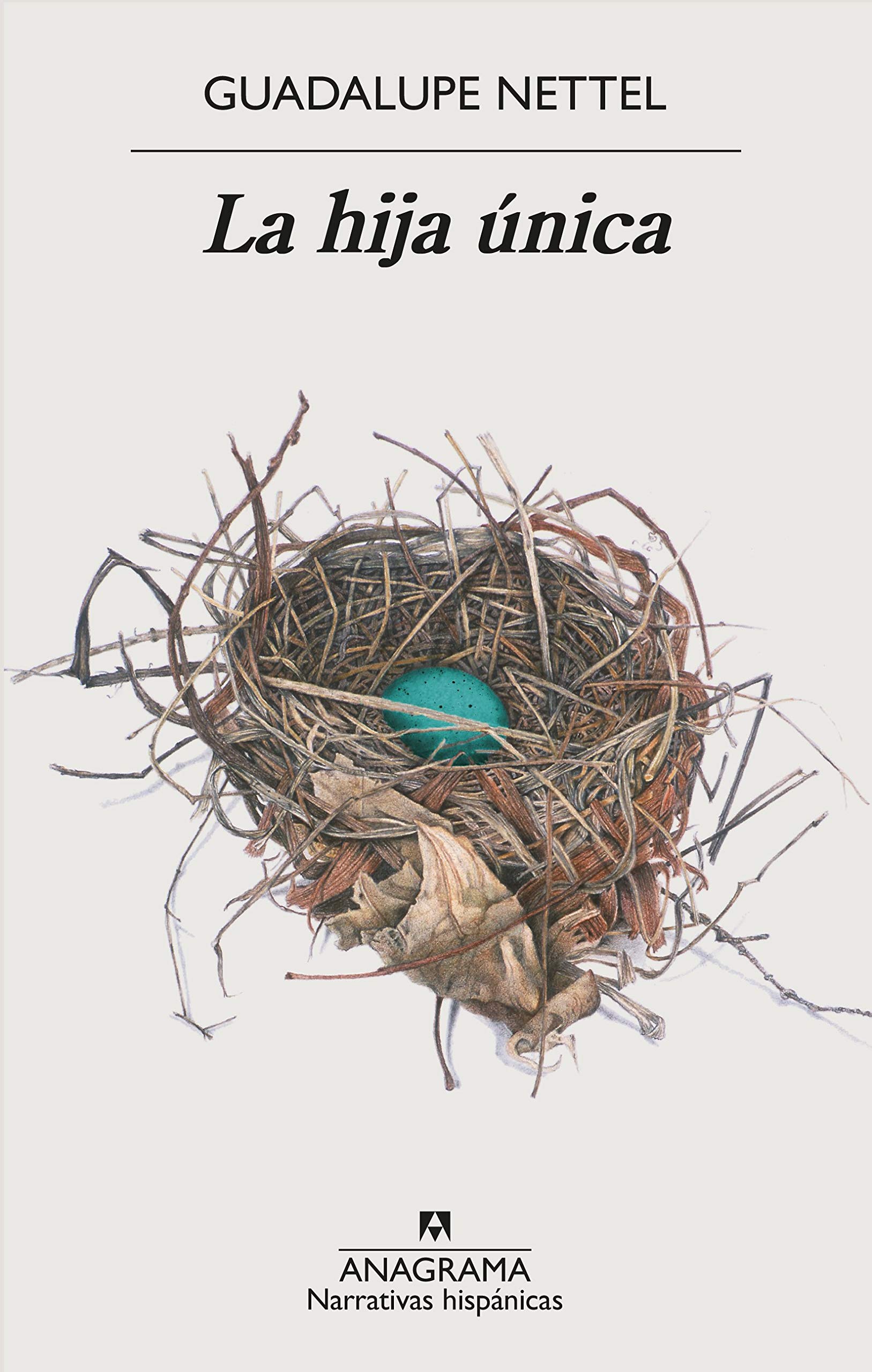 Meanwhile, outside Laura’s apartment a pair of pigeons with two eggs in their nest (a refuge she tried to destroy without success), appear to have been subject to a brood parasite.
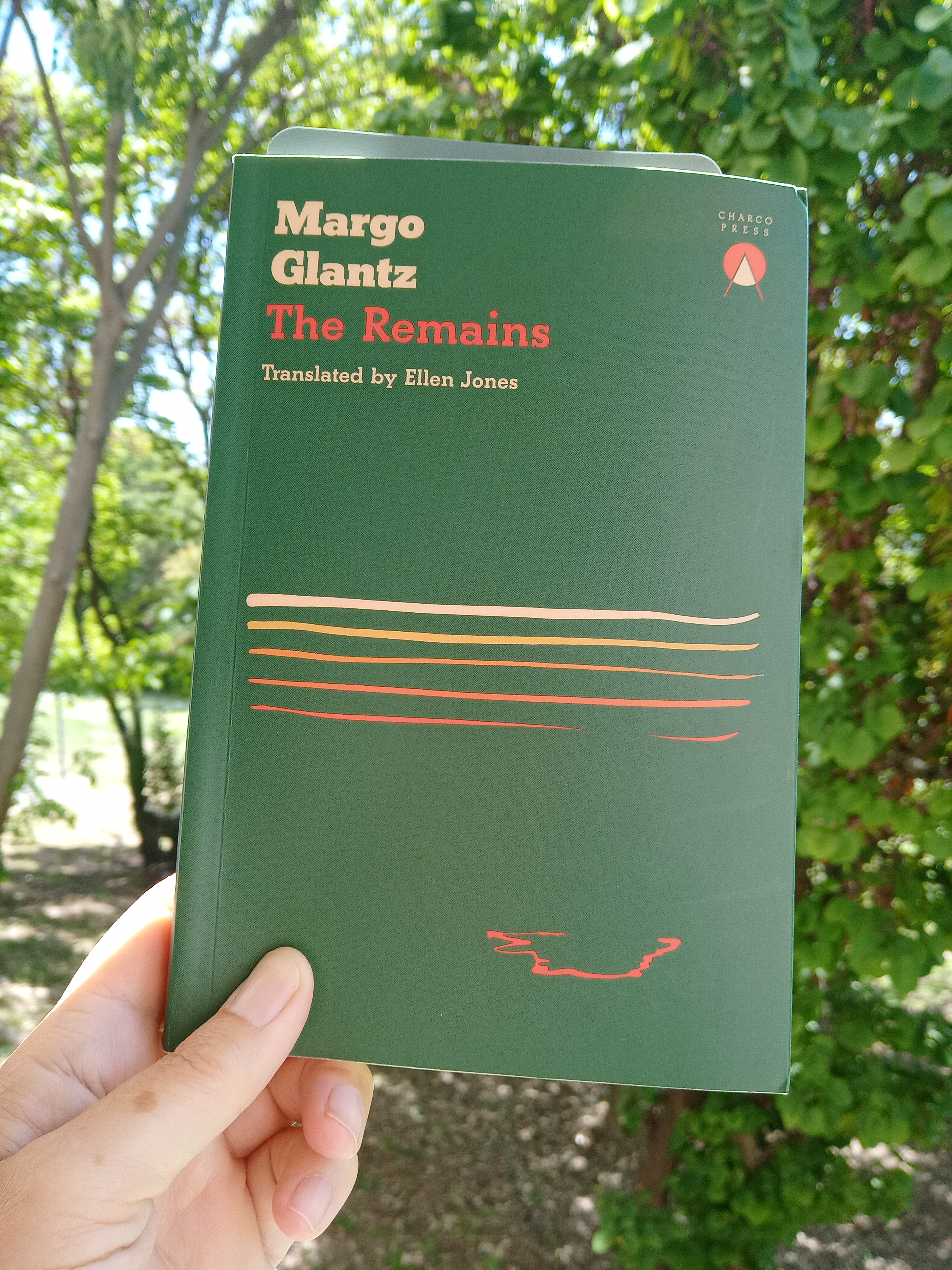 A divorced woman, Nora Garcia (a cellist), returns for her deceased ex-husband Juan’s, (a pianist and composer) funeral; back to a Mexican village from her past, through the art and music they played and navigated together.
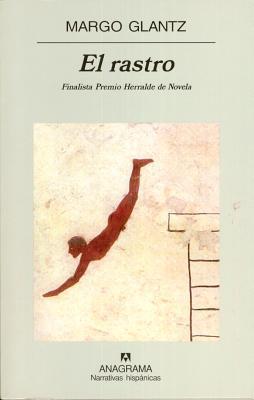 The novel is set in the present, on the afternoon that the body is displayed in the coffin in a room, and our narrator is a guest like many others, who aren’t sure to whom, they ought to offer condolences. She overhears snippets of conversations, adding to the cacophony of her own reflections.
 A prolific essayist, she is best known for her 1987 autobiography Las genealogías (The Family Tree), which blended her experiences of growing up Jewish in Catholic Mexico with her parents’ immigrant experiences. She also wrote fiction and nonfiction that shed new light on the seventeenth-century nun Sor Juana Inés de la Cruz. Among her many honors, she won the Magda Donato Prize for Las genealogías and received a Rockefeller Grant (1996) and a Guggenheim Fellowship (1998).
 It was the perfect choice for in-flight reading, as the stories were thoroughly entertaining and kept me gripped in between flight delays, air traffic control strikes, and would have kept me company on the Elizabeth Line had I not been engrossed in eavesdropping on a conversation between two captivating young men where they discussed how they create fashion insta stories, the merits of studying in Portugal versus London; a recent concert one of them performed in Cuba last week (as you do) and gossiping about their friend who found love after challenging himself to go on 100 tinder dates – not the kind of conversation one might overhear where I live, thus book aside and ears wide open!


 Birnam Wood itself is the name of a gardening collective, a group of people doing gently rebellious activism, planting sustainable gardens in places where they don’t have permission. There is a rivalrous friendship between the founder Mira and her flatmate, sidekick Shelley, who we learn early on has a desire to undermine her friend.
 The farm, nestled up against a national park, was inherited by Jill Darvish; her husband Owen, a self-made pest-control business man has just been knighted for services to conservation, though he is unsure exactly why.
 Word by Word