In the Springtime of the Year

I seem to have been reading through the seasons this year, starting with Edith Wharton’s winter read ‘Ethan Frome’ then Susan Hill’s ‘In the Springtime of the Year’ and finally Wharton’s ‘Summer’. I don’t know yet what will appear for the one season that is missing but I am open to suggestions, is there a title that comes to mind for Autumn, the Fall? I am sure one must exist.

‘In the Springtime of the Year’ is a metaphor for existence, growth and renewal; after one dreamy year of marriage in which no one else but her husband seems to exist for the young bride, 19-year-old Ruth has become a widow, after Ben is killed in a freak accident. The pages carry us through Ruth’s grief, the calm, dormant stillness where she is frozen in her grief, unable to cry or speak, or be comforted by anyone. She doesn’t understand why they don’t understand this. While her husband’s family pour out their grief vociferously, they judge her silence as showing no feeling. Slowly her awareness returns and rises to the surface, she begins to see beyond her own immovable pain, to appreciate anew all that is around her, she is able to revisit the scene without suffering.

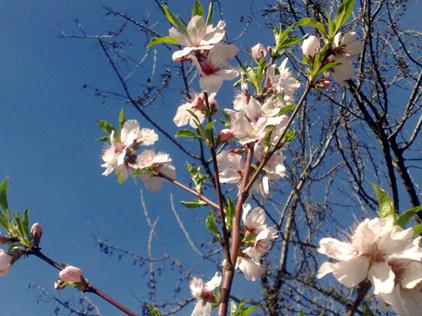
Susan Hill deftly captures each nuance of the young girl’s slow changing movement through her phases of grief, until like the branches of the tree that must eventually bud no matter how harsh the winter, she transforms and begins to emit a different vibe. She is witness to what she was and sees it anew; she develops an understanding for how others may have perceived her. She is able to make amends.

Rambling along in its quiet way, poetic line by line, Ruth’s perceptions change so subtly that when there is an actual event, it seems all the more dramatic for its contrast with the inner world we have been languishing within.

I first read of Susan Hill in a profile interview in Mslexia Magazine in January 2011, she had just published ‘A Kind Man’ and while visiting Daunt Books in London that same month, I spotted the slim hardback, which thanks to the lovely G and an approaching birthday came home with me along with Jenny Erpenbeck’sVisitation’. Since ‘A Kind Man’ I have equally enjoyed ‘The Beacon’ and ‘The Woman in Black’ and recognise that it is her style of writing that appeals so much.  This book was originally published in 1974 and has been rereleased in this Vintage edition.

All the books are situated similarly, in a small, poor village in rural England where not much happens except that we become witness to the inner transformation of characters after an event.  I would not suggest you read this however, if you’re looking for action, pace or plot, this is an inner journey. And it’s perfect as it is.
Summer by Edith Wharton

If ‘Ethan Frome’ is winter, so this, its companion novel is ‘Summer’, though ironically there is less a sense of the season and its metaphoric meaning; perhaps ‘The End of the Summer’ might have been a more apt title.

Edith Wharton was worldly and wealthy, speaking four languages and entertaining future American heiresses in her Paris home, her latter years lived in France. Yet as the range of her works testify, from rural Ethan Frome’  small town New England ‘Summer’ to the more social aspiring ‘House of Mirth’ and ‘Age of Innocence’ she understood and had empathy for those whose lives were lived at the opposite end of the spectrum of her own.

Charity Royall, an eighteen year old girl from the Mountain up there beyond, has been raised by a childless couple from town; she lives with her guardian Mr Royall, now a widow. She knows little and remembers nothing of her parents or that frowned upon community no one ever mentions.

Until the bold, young Architect Lucien Harnus appears, unafraid to ask questions. The more she learns while listening to Mr Royall respond to him, the more insecurity creeps into her being, though there is little outward sign of this change.

Initially we witness her wilful attitude, with which she succeeds in claiming the post of librarian against all other eligible girls in town, despite little interest in the actual job itself. She appears intelligent, adept at identifying opportunity, her questionable ancestry all but obliterated. However, she lacks a female role model and is barely on speaking terms with My Royall after his own near lapse with regard to the carnal instinct. In matters of love and the feminine, Charity is at a disadvantage. Her first experience with a young suitor is telling.

Her heart was ravaged by life’s cruellest discovery: the first creature who had come toward her out of the wilderness had brought her anguish instead of joy. She did not cry; tears came hard to her, and the storms of her heart spent themselves inwardly.

Without giving anything away of the story, the young man wins her over and she will have her summer of joy, but naïveté and a reluctance to assert herself in matters of the heart will compromise her position in this society that values and rewards tradition over love. She considers returning to her people:

There was no sense of guilt in her now, but only a desperate desire to defend her secret from irreverent eyes, and begin life again among people to whom the harsh code of the village was unknown.

It is a tragedy, as we have the impression that this is a young woman rescued from a life of little promise who could have made something of it, who should have, if she had been warned; she is as much a victim of the era she lives in as the lack of a female role model. I couldn’t help thinking about a possible sequel, one where she defies the odds and proves everyone wrong, because that is just the kind of girl she was.

In this respect the story differs from ‘Ethan Frome’ in which we are provided a glimpse into the future regarding what happens next, here Wharton has chosen to either leave that to the reader’s imagination, or her final act will be seen as sufficient evidence to predict a conventional outcome. You decide.

‘Summer’ has recently been adapted to the stage by Julia Stubbs Hughes and the play will focus on the three central characters of the novel, exploring the discovery of love and attraction in a society that restricts both.

It will be showing at the Jack Studio Theatre in South East London from 8 – 26 May 2012 if you happen to be in London. Further details can be found at ‘The Summer Project’.

Hotel on the Corner of Bitter and Sweet

Meet 'Noisette' our mischievous cat

This book was chosen by a local book club, although I didn’t make it to the discussion, but I like to read along anyway especially as they introduce me to books that I am often not aware of; so far it is thanks to this group that I read La Seduction – how the French play the game of life, and Abraham Verghese’s wonderful Cutting for Stone’
one of my favourite reads this year. Next month it is ‘Death at Chateau Bremont’, which is going to be a rather special read as it is set here in Aix-en-Provence. The author M.L. Longworth is from Toronto but now works between Paris and Aix, how she arrived in France is also an interesting story.

Jamie Ford’s debut novel ‘Hotel on the Corner of Bitter and Sweet’ is a wonderful story of childhood friends in Seattle, second generation immigrants caught up in the brutal reality of being perceived as untrustworthy, having the skin of an enemy. The discovery of personal effects of Japanese families in the basement of an abandoned hotel, stir up memories for Henry and lead him on a search into the not quite forgotten past.

It seems there is unavoidable suffering, whether due to ethic origin or some other thing that cast children as being different from their peers. Henry is one of those stuck in the middle, not like his parents and not like his peers; he’s an in between, a third culture kid. He wears a badge his father gave him that reads ‘I am Chinese’, what it really means is ‘I am NOT Japanese’ for it is 1942 in Seattle and anyone who looks Japanese is being sent away to a special ‘camp’.

This little badge actually existed and belonged to the author’s father; inspiring him to write this story after learning his father wore it following the bombing of Pearl Harbour. Equally, The Panama Hotel still stands today, at the heart of what was once the thriving community of Nihonmachi, Seattle’s Japantown.

Jamie Ford depicts Henry’s friendship with Keiko and the jazz player Sheldon with understanding and compassion. Whether it is facing bullies at school and in the street or the emotional demands of his well-wishing parents, Henry exhibits both courage and stubbornness, leaving the reader content that he is not to become one of life’s victims, he makes choices and will find his way.

An interesting insight into what how it is be from your own country but not look like your fellow countrymen and women. A fascinating and thought-provoking read.

Orange Prize Shortlist

From the longlist of 20 books, today a shortlist of five has been announced, for the 17th annual Orange Prize for women’s writing.

Set up to acknowledge and celebrate women’s contribution to storytelling the Award celebrates excellence, originality and accessibility in women’s writing throughout the world. It is awarded to a novel written by a woman in the English language.

Last year the award was won by Téa Obreht for The Tiger’s Wife and previous winners have included Barbara Kingsolver for The Lacuna, Andrea Levy’s A Small Island and Chimamanda Ngozi Adichie for Half of a Yellow Sun, which is currently being made into a film.

This year the shortlist includes:

Esi Edugyan                 ‘Half Blood Blues’           Canadian      2nd Novel

Anne Enright               ‘The Forgotten’                Irish             5th Novel

Georgina Harding      ‘Painter of Silence’             British         3rd Novel

Madeline Miller         ‘The Song of Achilles’         American      1st Novel

Cynthia Ozick              ‘Foreign Bodies’              American      7th Novel

Ann Patchett              ‘State of Wonder’             American      6th Novel

Short Synopses and Biographies can be read here.

The winner will be announced at an awards ceremony to be held at the Royal Festival Hall in London on 30 May 2012.

I haven’t read any on the list yet, but I have Ann Patchett’s ‘State of Wonder’ on the shelf and I have been eyeing up ‘Half Blood Blues’ for some time.

And you? Have you read any of the titles from either the short or the long list yet, or planning to?

India My Heart

Over the long weekend I read the lengthy ‘Shantaram’ by David Gregory Roberts set in Mumbai (Bombay). I have never been to Bombay, but I did spend a month travelling in India in 1995 and the experience remains imprinted in my heart and memory, for me the country and its people have no equal. I love it. It is at the very top of my list of destinations, experiences and insights.

The first pages of this extraordinary story are reminiscent of many travellers’ journeys to India, the assault on all the senses, the welcoming committee, the brick of rupees, the taxi rides.

the glimpse of the suffering street brought a hot shame to my healthy face.”

“The street at the front of the building was crammed with people and vehicles, and the sound of voices, car horns, and commerce was like a storm of rain on wood and metal roofs.”

“there were beggars, jugglers, snake charmers, musicians, astrologers, palmists and pimps and pushers”

India is where you are introduced to your wits. Until I travelled there, it was a mere expression ‘make sure you have your wits about you’. In India, they rise up within you from some deep, slumbering place inside and become a living, breathing extra sensory force, providing a necessary equanimity and alert, their reward, insight.

Shantaram’ is the story of an Australian fugitive, posing as a New Zealand traveller who arrives in Bombay and unlike most travellers who stay only long enough to experience the city and plan their next destination, he stays.

Without exception, those who stay are escaping something and what that is, seems to have a direct relationship to how deep they become involved in the city’s underworld activities. Roberts stays out of trouble to begin with and provides a delightful insight into his blossoming friendship with Prabaker, who truly does represent India’s heart. Due to misfortune he moves to a slum where he spends his days working from his well-stocked first aid kit, providing rudimentary medical treatment to the inhabitants as he becomes part of the fabric of the slum community.

The two friends spend some months in Prabaker’s home village with his family and these are chapters are my favourite, portrayed with humour, a sensitive understanding and compassion. It is the calm before the storm and a period that I didn’t want to end.

Prabaker told me that family and his neighbours were concerned that I would be lonely, that I must be lonely, in a strange place, without my own family. They decided to sit with me on that first night, mounting a vigil in the dark until they were sure that I was peacefully deep in sleep. After all, the little guide remarked, people in my country, in my village, would do the same for him, if he went there and missed his family, wouldn’t they?”

However Robert’s luck changes when he is arrested one night and discovers he has unknown enemies with unknown motives and the experience of prison will unleash the darkest aspect of his character. When he is finally released he goes to work with the Bombay mafia, delving into the world of black market drug, currency and false document dealings all the while awaiting that future moment where he can exact revenge against his enemy.

This book draws you into a frightening and fascinating world that I am not sure whether we are better off knowing of or remaining in blissful ignorance of. I guess it is no worse than being subjected to the news media every evening with its plethora of images and reports of violence, oppression, corruption and greed, something I waver between wishing to avoid (and often do) and needing to have a balanced and informed awareness of.

What I perceive is the oft dreadful consequence of a genetic predisposition combined with early life tragic event that leads to a kind of corruption of the soul, I am reminded of Jonathan Ronson’s dip into the characteristics of a psychopath in The Psychopath Test which describes someone charming and influential who lacks empathy, and has an intense need to be liked. I don’t think the character in this story is a psychopath, but many in his circle survive precisely because they are not beleaguered by the emotional constraints of sympathy or empathy whether they were born like that or have become that.
Chilling indeed, though more than offset by that other extreme, a city of people whose smiles are in the eyes which broaden to encompass their whole face and being to cross that divide between people of different cultures and leave us with a warm, perplexed feeling. How is it that among such poverty, despair and ruthlessness exist the happiest people on earth?

And to know the answer to that one can only go there, experience it and ponder it oneself.

Second Person Singular

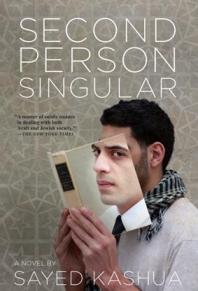
It is likely that there will be different perceptions of Sayed Kashua’s  ‘Second Person Singular’ not only due to the literary devices he uses, but on account of ‘where we are coming from’ and perhaps too, where we come from.

I am intrigued by the questions it raises, which require some discussion to make sense of, which may never be resolved or agreed upon because of that earlier dilemma, perspective. They concern how identity affects behaviour and opportunity, the interactions of and between people who possess subtle differences, some of which are merely perceived and not necessarily seen, a surname, religious preference, education.

The story concerns ‘the lawyer’, an educated and ambitious man regarded as one of the most successful Arab criminal attorneys in Jerusalem. One day he picks up a second-hand copy of Tolstoy’s novella ‘The Kreutzer Sonata’, recognising it as a volume his wife has mentioned in the past with enthusiasm, only to discover what he perceives as a love letter between its pages, in his wife’s handwriting. Discovering the name Yonatan on the inside cover, between bouts of violent and paranoid thoughts regarding his wife, he sets off to hunt the culprit down.

The unveiling of the truth behind the note, is revealed before the end and what follows is a dissection of the two male characters behaviours, as we await the final confrontation. The lawyer, whose name we never learn , lacks emotion and seems aloof, suited to his role, until the discovery of the letter when it is revealed just how delusional and extreme his emotions can be, left unchecked by reality. The culprit, in some ways is similarly deluded, but in a more intriguing and interesting way.

As a reader I found the characters of more interest through their observations of the city and society they worked within, the villages they lived in and the consequences of their identity. It is this that would generate an interesting discussion, particularly as the two characters the story follows represent different faces of that same society.

They are Arab-Israeli’s, non-Jewish Israeli citizens whose cultural and linguistic heritage is Arab. A matter of geography and politics, those who live in the Occupied Territories (otherwise known as the West Bank and Gaza) are of the same ethnic origin but refer to themselves as Palestinian, they of the same family as Arab-Israeli’s, they just carry a different legal status, which affects their education and employment opportunities and much more.
Creating strict country borders is a relatively modern idea and none more controversial than this ever-changing one, the enforcement of borders then gives rise to terms such as immigrant and refugee. The lawyer and other young educated men like him from villages in the North upon becoming doctors, lawyers and accountants in Jerusalem move to a suburban part of the city, where they were referred to by locals as immigrants, they are in fact the emerging middle class and we are given an interesting insight into what this means and how it manifests for this new generation of young people.

Perhaps it is a consequence of language and therefore thinking processes, but it reminds me that here in France the word for country ‘pays’ is the same word as region, so we can begin to understand how someone might be regarded as an immigrant in their own country.

Much of what this novel leaves me thinking about is how identity, borders and names can shape and influence opportunity and destiny, a universal dilemma for many or if we are fortunate, chances that we don’t even realise are so much more of an advantage than what some must confront by virtue of birth.

An interesting story and an exceptional insight into a world few really know or understand.

Note: This book was an Advanced Reader Copy (ARC), provided by the publisher via NetGalley.

Eden’s Garden (2012) by Juliet Greenwood

If you plan on taking a holiday in Cornwall or Wales in the near future I can think of no better accompaniment than Eden’s Garden.

If not, don’t hesitate to immerse yourself in this delightful, intriguing tale which unravels family secrets while celebrating women returning to the creative work they were born to do – and I refer not just to the female characters in the novel but to the author Juliet Greenwood who fulfilled a lifetime dream in writing this, her second novel, leaving the bright lights of London behind to immerse herself in gardening and writing projects in a country cottage nestled between the Isle of Angelsey and Snowdonia, Wales.

Eden’s Garden follows Carys in the present day, returning to her childhood village to attend her mother who is convalescing from a broken hip.  She has little choice being the unmarried sister, though the unplanned return stirs a long dormant memory in her, pulling her back towards the estate of Plas Eden, it’s garden, the mysterious statues, the old farm house and David Meredith, the young man she left for a career many years before.

The two become involved in researching a possible family link that takes them south to Cornwall to another garden, that leads them on a shocking search through a piece of Victorian history that will leave you grateful to be living in the 21st century (especially if you are a woman).

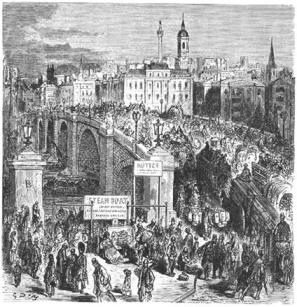
The character of Ann we meet in 1898, on a bridge overlooking the Thames at a low point in her life, seeking refuge at a Charity Hospital.
Greenwood keeps the mystery of this intriguing character just out of reach throughout the novel, we know there is a connection, she leaves a few clues to allow forward predictions, cleverly increasing the tension and desire to know both her past and her future.

Within the first few pages, we are drawn into Carys’ experience as if it were our own, that not so comfortable feeling of returning to a childhood environment as an adult, without the husband and/or children that society expects, and on the verge of heartbreak.

The suspense of a family secret soon replaces the discomfort of village gossip and Greenwood keeps up the pace and intrigue all the way through.

Driving through Wales

For me this was not only a wonderful and engaging read, but one that brought back fond memories of driving through the Welsh countryside and witnessing many of the memorable landmarks of Cornwall.

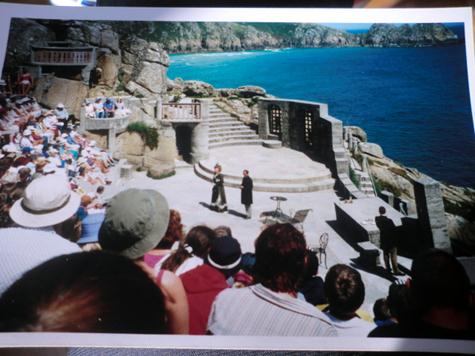
‘The Importance of Being Ernest’ at the open air Minack Theatre, Cornwall

Other People’s Stories

Recently someone asked as I live in France, was I reading any French authors, which prompted me to look on my shelves and reflect on this question. There were the two Irène Némirovsky books, ‘All Our Worldly Goods’ and ‘Fire in the Blood’ I read earlier this year and after discovering one of my French students was reading Dostoevsky’s ‘The Idiot’, one of my favourite classics and an excellent study of character, we exchanged books, he lending me Stefan Zweig’s ‘le voyage dans le passé’ (in French and an Austrian author so translated from German) while I gave him Paul Durcan’s epic poem ‘Christmas Day’.

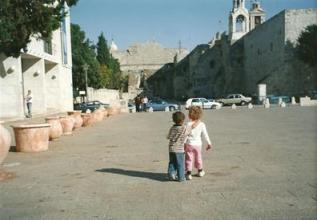
Manger Square, Bethlehem, Nativity Church beyond

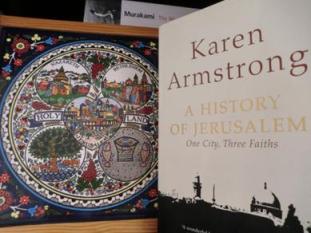
I have read a couple of Amélie Nothomb books, ‘Fear and Trembling’ a factional account of her year spent in Japan, which was very funny in an excruciating way and I adored Gustave Flaubert’s ‘Madame Bovary’, a book I’d put off reading for years and finally read it during a two month visit to Bethlehem, a welcome reward following Karen Armstrong’s
excellent but gruelling ‘A History of Jerusalem’
– One City, Three Faiths after which I had a feeling of absolute awe that there were ANY people left living in that part of the world, having endured one crusade after another as successive peoples carried out their quest to occupy that Holy Land. I also became more wide awake as to how this current generation of people carry the blue eyed gene.

I digress. Back with contemporary literature, my book buddy had mentioned Emmanuel Carrère’s ‘lives other than my own’ to me a few times and her creative writing class are about to be introduced to it, so I found a window of opportunity to read it this week. And what an extraordinary thing it is. Familiar with the phrase ‘truth can be stranger than fiction’; here I am left with the feeling that ‘truth can be as compelling as fiction’.

Emmanuel Carrère was on holiday in Sri Lanka with his girlfriend when the tsunami struck, they had been considering separating and then found themselves in a whirlwind period where the relative significance of these reflections was crushed by that incoming wave and the devastation it wreaked on others.

“Everything that has happened in those five days and was ending then, at that precise moment washed over us. A dam opened, releasing a flood of sorrow, relief, love, all mixed together.

I hugged Hélène and told her, I don’t want to break up anymore, not ever.

She said, I don’t want to break up anymore either.”

The couple return to France only to learn that Hélène’s sister is on a downward spiral with the return of a cancer that she had thought she was rid of when she was a teenager. Juliette, now in her thirties, is a juge d’instance (a judge of small claims and grievances) and has three girls, the youngest only fifteen months old. Through Juliette, Carrère meets her colleague Etienne, a cancer survivor, who shares with the author an insight into both the world of being a cancer survivor and their realm as judges in the small town of Vienne, where they strive and indeed succeed to make a difference.

What makes this recount all the more extraordinary is the sense of the author’s narcissism, long time chronicler of the tormented self, he readily admits this and while I wouldn’t say that being witness to these events resulted in an absolute cure, it certainly lead him, as the book title suggests, to explore and find some empathy in lives other than his own.

While on the French theme, I would like to mention Patricia Sands, author of ‘The Bridge Club’, another story inspired by the lives of others, Patricia is an advocate of the premise that everyone has a story to tell and she does this not only through her novel but via her blog. Each Friday she posts about France and this week, she has very kindly written a post about this blog, which you can view here. So thank you Patricia and do check out her book.

Growing up with a Wild Book

courtesy of Houghton Mifflin Harcourt Publishing Coy

Fefa is dyslexic. Reading makes her feel dizzy. She has never been a great fan of words, the letters get mixed up and make her feel anxious. The doctor has diagnosed ‘word blindness’.

    “Some children can see everything except words.

    They are only blind on paper” he says.

Fefa’s mother refuses to accept his verdict.

    “Seeds of learning grow slowly” she assures me.

She presents her daughter with a book and encourages her:

    “Think of this little book as a garden, throw wild flower seeds all over each page, let the words sprout like seedlings and then relax and watch as your wild diary grows.”

Fefa opens the book hesitantly, finds the pages blank within but wide open to her imagination, a place where she can write unobserved, in any way she wishes.

Soon Fefa is nurturing the slow transforming pages of her wild book as she would a precious flower garden, turning those awkward spiky, complex letters into words of beauty and importance.

Margarita Engle’s delightful ‘The Wild Book’ is a tribute in verse inspired by stories told to her by her maternal grandmother, a young girl growing up in rural Cuba, struggling with dyslexia. It will be enjoyed by readers of all ages, both those who struggle with and those who adore words and of course, lovers of the blank page journal everywhere.  It is a book to read and reread, silently and out loud.

“No one in my family ever throws anything away, not even an old story that can be told and retold late at night, to make the deep darkness feel a little less lonely.”

It is a magical story of a little girl coping with school, homework, older brothers, being left behind as the others go off to boarding school, of facing family threats and danger; all part of daily life on the farm and in the village, aided by a loving mother and uncle who love to recite poetry.

    “After my mother

    finishes her seascape,

    my uncle recites

    a long poem about the sky,

    where sun spirits


        ride glowing chariots,

    and there is someone

    who knows how to fly

    towards the truth

    of dreams…


        I don’t understand

    the whole thrilling verse but I love the way poetry

    turns ordinary words into winged things

    that rise up

    and soar!”

Now couldn’t we all do with a wild book…

Note: This book was an Advanced Reader Copy (ARC), provided by the publisher via NetGalley.

The Book of Lost Fragrances

A family steeped in the history and tradition of fragrance and essences, the son Robbie desperate to keep the flailing ‘House of l’Etoile’ alive, though he lacks the natural olfactory talent of his sister Jac, who is busy chasing the origins of myths (though unlike her brother does not believe in them), while trying to forget her one great love, the archeologist Griffin.

“Jac wanted to help people understand that stories existed as metaphors, lessons and maps – but not as truths.”

M.J.Rose’s The Book of Lost Fragrances’, brings all three to Paris on the trail of an elusive scent that may have the power to provoke memories of past lives, a holy grail for Buddhist’s whom Robbie is determined will have the fragments of a piece of pottery that retains some remnant of the transporting blend, at a time when there is the threat of Chinese regulations mandating the registration of all reincarnates. And it just happens that the Dalai Lama is in town on a low key visit, as is Xie, the kidnapped Panchen Lama.

His Holiness the 14th Dalai Lama of Tibet

Through episodes that take us from past through to present, we begin to understand what connects the l’Etoile family with Cleopatra, a French nun named Marie-Geneviève and discover what secrets lie beneath the city, navigating the catacombs of Paris.

I can well imagine it as a film, instant travel to some stunning, majestic locations many only dream of visiting, overlaid with suspense, adventure and exotic travel back in time, however for me the book skimmed hurriedly through passages, even to the point of multiple sentences beginning with past verb tenses, as if they were to be fixed later, I found this annoying and it interrupted the flow.

“He’d been moved from the intensive care unit to a regular room. Was sleeping. Had been since she’d arrived a half hour before. She was waiting for him to wake up. Because she needed him to do something.”

All the elements are there, it just didn’t engage me as much as I had hoped it would, also due to a tendency to over explain, it is an historical account but may have worked better if the characters had informed us of some of that history rather than the narrator.

After revelling recently in the joy of Eowyn Ivey’s exquisitely constructed sentences and reading Jhumpha Lahiri’s excellent essay on Sunday entitled ‘My Life’s Sentences’ which I wholeheartedly concur with, it could just be that I had unreasonably high expectations of this exotic historical, biographical mystery. That recent foray into the realm of magical literary realism with its own excellent dose of believable suspense, did mean that next reads were likely to suffer the after effect. The snowy wilderness of Alaska, Faina, Mabel and Jack and The Snow Child’ remain indelibly marked on my reading brain.

My Magic Elixir's on Show

I did love finding out what was in the mysterious elixirs, being someone who likes to mix and make essential oil potions myself in my work, I have an intense interest in essences, aromas, their energetic, spiritual, chemical and healing properties and the synergy of a personalised blend. Just like Cleopatra!

One of my Flairesse Personal Blends

Finding the perfect blend to help an individual maintain their equilibrium is one of my specialties. Past life regressions? No one has asked me yet and if they do, I may just refer them to a hypnotherapist.

Note: This book was an Advance Reader Copy provided by the publisher via NetGalley.