Thomas Jefferson – Lessons from a Secret Buddha

This is a delightful and simple novella that views the life and achievements of one of America’s great role models through the principles of Buddhist thought, a man who wished only to be remembered for three achievements, author of the Declaration of American Independence, of the statute of Virginia for Religious Freedom and Father of the University of Virginia. He was President from March 1801 – March 1809.

Suneel Dhand has created a Buddhist guru whom he connects to Jefferson’s mother, and who then begins to correspond with the young man when he is a discontented, overweight child. The letters introduce him to seven ancient principles of Buddhism and the Eastern way of life and we then witness Jefferson’s own lifestyle change as he becomes vegetarian, more interested in books and develops a greater awareness of how thoughts, actions and behaviours position a man.

When we take an in-depth look at all of his lifestyle practices we see that Tom practiced very Eastern ways of living, different from his fellow countrymen. In many ways he was a well-being guru, centuries ahead of his time.

Most of my knowledge of the role Thomas Jefferson played in American society comes from having seen the excellent HBO TV series ‘John Adams’ and the awe with which he was regarded by both John Adams and Benjamin Franklin as they encouraged him to pen the Declaration of American Independence.

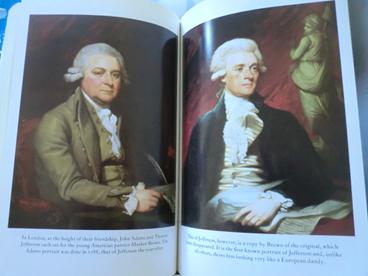
Portraits of John Adams and Thomas Jefferson by American painter Mather Brown 1788

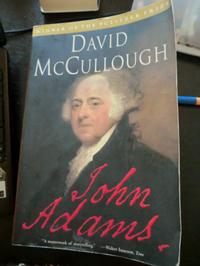
The series is based on David McCullough’s Pulitzer prize-winning biography ‘John Adams’, a volume I have on the shelf and will one day set to and read as well.

As Abigail Adams would confide to Jefferson, there had seldom been anyone in her husband’s life with whom he could associate with “such perfect freedom and unreserve” and this meant the world to her.  If you haven’t seen the series, here are some of Jefferson’s greatest moments played by the British actor Stephen Dillane.

A surprising little book, one that is full of good sense and relevant to today while reminding us of the extraordinary man Thomas Jefferson was and the major contributions he made not just to American history but also to humanity.

Today millions continue to be inspired by Thomas Jefferson, the genius who galvanized his people to freedom. A truly enlightened soul indeed – and that, without ever requiring any lessons from a Secret Buddha.

Note: This is an Advance Reader Copy (ARC) provided by the publisher via NetGalley.

The Coward’s Tale

Laddy Merridew comes to spend time with his Gran in an old Welsh mining town in Vanessa Gebbie’s ‘A Coward’s Tale’. Not happy with his lot, lost in the in-between, here where he doesn’t feel like he belongs so starts skipping school and there, the home he has come from that is breaking apart and will never be as it was and what’s worse, is requiring him to make decisions he feels incapable of making.

Laddy comes to the town statue outside the public library to listen to the local beggar Ianto Jenkins tell and trade stories for a coffee or a bite to eat and this part of his day passes pleasantly for hearing and learning about the descendants and ancestors of the town, all of whom have in some way been touched by the tragedy at the Kindly Light coalmine one September morning back then.

 ‘We’re meant to be doing coal mines in history.’

‘History, now, is it?’

‘They make it boring though. Not like your stories. You make it like it is still happening, in your head anyway.’

And the beggar shakes that head. ‘It is. And sometimes Maggot, I wish it wasn’t.’

Ianto Passchendaele Jenkins narrates the stories that link present day inhabitants back to their ancestors, two generations previous, showing that one is rarely ever completely free of the past and the sins of the fathers are often witnessed albeit in a new form, in the actions of those living today. From Baker Bowen to the Woodwork Teacher, Halfwit and the Deputy Bank Manager, the Deputy Librarian and the Undertaker and the Piano Tuner, Ianto shares their tales with warmth and compassion until finally one of his characters, the Collier, Peter Edwards share’s the beggar’s story, ‘The Coward’s Tale’.

Like young Laddy who no longer knows whether what his parents say is true or not, so too with the beggar’s tales, which captivate cinemagoers waiting in the queue, keeping him talking by topping up his coffee supply, the author making use of the words may and will to imagine what people may do and if so what that means they will do. Only Laddy searches for clarification, the others are happy to be mesmerised and encourage him with edible gifts.

‘For my breakfast? I will tell a story for breakfast? An egg. How about a nice egg?’

Once I got into the tales and understood the framework, I enjoyed the book, but I admit it took three attempts before the stories managed to carry me away with their rhythmic, poetic prose. However they are splendid tales and told with a unique captivating voice that puts the reader right in that square with all the other listeners, empathizing with each of the characters that the adored Ianto Jenkins brings to life for them.

Finally I am reminded of another set of tales of life in a small French village in Julia Stuart’s The Matchmaker of Perigord, which was a favourite a few years back, which I also recommend as a compelling, humorous summer read.

Note:This book was an Advanced Reader Copy (ARC), provided by the publisher via NetGalley.

Frieda’s Unlikely Inheritance

Suzanne Joinson’s A Lady Cyclist’s Guide to Kashgar, is a novel that intertwines the lives and stories of Frieda, in modern-day London and Eva, part of a missionary group with her sister Lizzie and their companion Millicent in 1920’s Kashgar, in the western part of China.

“Why do you want to bring it?” Lizzie asked, but I don’t think I answered her. I did not tell her that it was my shield and my method of escape; or that since the first time I pedaled and felt the freedom of cycling, I’ve known that it is the closest I can get to flying.

Eva has taken her bicycle and is penning a guide to cycling which seems to interest her more than missionary activities, excerpts of which grace the beginning of each Kashgar chapter and whose meanings could be interpreted to have wider meaning than just cycling.

What the Bicycle Does: Mounted on a wheel, you feel at once the keenest sense of responsibility. You are there to do as you will within reasonable limits; you are continually called upon to judge and to determine points that before have not needed your consideration, and consequently you become alert, active, quick-sighted and keenly alive, as well to the rights of others as to what is due yourself.

Eva and her companions have travelled to the ancient Silk route city of Kashgar in the hope of converting lost souls, but seem to find only trouble, not helped by the questionable motivations of each of the individuals that make up the group. Tolerated but unwelcome, they find themselves ostracized and seen as bringing bad luck during a time of political and religious unrest.

In London Frieda lives a solitary existence, her work demanding her to travel constantly which keeps her from becoming too involved in any social sense when she is at home – that and her choice of relationship which assists in putting a halt on her progression. But two things occur that may offer not just distraction, but a divergence in her life, with which she has a growing frustration and sense of wanting to change. The arrival of a young Yemeni artist on her doorstep with skills in drawing birds like the long-tailed variety he draws on her wall and the arrival of a letter informing her of her responsibilities regarding the death of a person who has named her next of kin.

The letter prompts her to consider making contact with her mother whom she has not seen since she was seven years old and Tayeb, the young artist is able to help her decipher the Arabic script in a notebook she finds that now belongs to her. He also knows how to take care of an owl that seems to have fallen into her care.

The book wasn’t quite what I was expecting, perhaps due to the title and the mention of the Silk Road, these things are mere markers which entice our interest while the story takes us on another journey altogether, the bicycle more of a metaphor for a journey and the things one is likely to encounter and is required to consider. I enjoyed the story and in particular the contemporary story which provides the framework.

Here the birds’ journey ends, our journey, the journey of words, and after us there will be a horizon for new birds. – extract from Mahmoud Darwish’s poem ‘Here the Birds’ Journey Ends’.


Note: This book was an Advanced Reader Copy (ARC), provided by the publisher via NetGalley.

Lucretia and the Kroons

Unsure quite I was pre-approved to read Lucretia and the Kroons’, published in July 2012, I was however curious to read Victor Lavalle’s novella, described by Gary Shteyngart as a master of literary horror.

After reading an audio transcript of an interview between Lavalle and Amy Minton on Narrative Voice, I decided to download his book and find out what it was all about, it being good to read outside what one would ordinarily choose.

It’s an adolescent literary horror of the tame kind and might even be considered magic realism depending on how you interpret it.  The world Lucretia enters can be seen as a metaphor for that which we either witness as an observer or experience as one who is mortally ill – that place somewhere between the living and the dead. Lavalle’s flourishing imagination takes two girls to a place that may or may not exist on an adventure of a zombie-ish kind.

Lucretia celebrated her 12th birthday without her best friend Sunny because she was too ill to attend. Lucretia is determined to spend time with her friend to make up for it and so arranges with much difficulty for Sunny to spend an afternoon with her, convincing her mother to leave them unsupervised for two hours.

Just before Sunny’s imminent arrival, Lucretia’s brother Louis tells her a story about the Kroons, the people who used to live two floors up and relishes warning her, as only older brothers can do, of the horrors that can happen to children. Lucretia is afraid for herself and especially for Sunny, who lives one floor up, so decides to take matters into her own hands with the intention of rescuing her friend.

The experience of reading Victor Lavalle is a little like Murakami for teenagers, unique multi-layered interpretations of reality or non-reality which require the reader to let go and read with an open mind. I found myself looking for and finding many parallel meanings, not necessarily those the author intended, but that is the magic of the book, that her entrance into this other worldly place can be interpreted in different ways. It did leave questions which a successfully written magic realism story inevitably does about what really did happen and the answer I find is always best when left to the reader’s interpretation rather than dictated by the author.

The author does offer an alternative interpretation in the final pages of the book, which really I almost prefer to ignore, because it was not required and added nothing to the story and might only serve to confuse younger readers and make it less likely to be something they could relate to.

The Tragedy of Lucretia Sandro Botticelli ca.1500-1501 via Wikipedia

I think this book and others like Neil Gaiman’s Coraline are interesting for young people who are drawn towards the much more imaginative, often dark, transformational kind of oeuvres. It is not what I read as a child, but it is what my daughter likes to read and create (graphic novels included) characters that are different from the norm, semi-gothic at times, avant-garde (not even sure of an apt word to describe it) and wonderful in a kind of ghoulish way, though the troubles they must overcome are no different to many others, who might read about them in a more conventional way. I think Lavalle is onto a good thing.

Note: This book was an Advanced Reader Copy (ARC), provided by the publisher via NetGalley.

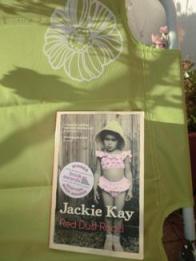
Red Dust Road by Jackie Kay

I discovered Red Dust Road after reading a feature about Jackie Kay in the Guardian’s A Life in Writing series coinciding with the release of her short story collection Reality Reality. Upon reading the interview I learned that she had also recently published a memoir focusing on the story of her adoption by a Scottish couple and her subsequent attempt to find her Scottish birth mother and Nigerian birth father. I ordered both books, keen to discover this writer’s work, particularly as she is also a renowned poet and I am drawn to writers who already have poetry resonating within their voice, and I couldn’t wait to jump into the memoir, more for personal reasons, since I have been on a similar journey myself.

While her brother Maxie said he couldn’t remember not knowing he was adopted, for Jackie, the realisation was one she remembered clearly after watching a cowboy and Indian film and feeling sad because the Indians had lost again and she wanted them to win. After observing that the Indians had her colouring which was not the same as her mother, she asked why. The revelation that followed came as a shock, she cried and worried that ‘not real’ meant her mother was somehow going to disappear or dissolve. But she had been gifted with a loving and sensitive mother, an honest, straightforward and intelligent woman, who clearly loved both her children unconditionally as Jackie Kay displays in her warm, appreciative depiction of the characters involved in this remarkable and exhilarating story.

My Friend’s Wedding in Lagos

‘Betrothed’, she told me ‘your father met your mother in the Highlands of Scotland and they fell in love. He was from Nigeria – look, here it is in the atlas – and she was from the Highlands – look, here’s where she was from, Nairn. They were madly in love and they made you, but he was betrothed and had to return to Nigeria to marry a woman he maybe had never met. They do that there, you know. Hard, Jackie, must have been hard’.

In no rush to piece together the puzzle, but knowing that she will, Jackie finds occasion with her work to be in certain places where she can do a little investigative work, she visits Nairn, where he birth mother grew up and Milton Keynes where she lives now; Aberdeen where her father was at university and Nigeria, that supposed foreign land of her ancestors that she had no connection to in her daily life, but has dreamed of and imagined and experiences a kind of coming home when she visits the ancestral village of her father.

Recounting her visit to the village and in particular meeting one of the family members, left pools of liquids in my newly prescribed reading glasses, tears of joy and recognition as acknowledgement is realised. I don’t want to say too much, because there is too much good in reading this for the first time and not knowing what will occur, but this is a wonderful story, narrated without sentimentality, putting the reader right in her shoes, almost experiencing it first-hand.

Hanging Out in Lagos, Nigeria

Like so many adoption stories and as depicted so well in Mike Leigh’s ‘Secrets and Lies’, there remains much mystery and secrecy around so many of the stories. For those who have buried that episode in their lives somewhere deep, there is a reluctance to risk the turbulence they perceive it may cause, and even when acknowledged by the parent adoptees are often kept from the rest of the family. This can be one of the greatest risks of pursuing genetic ties, the risk of rejection as an adult with full consciousness, unlike that of a baby; although much research suggests that a baby does indeed have awareness of the separation.

Many doctors and psychologists now understand that bonding doesn’t begin at birth, but is a continuum of physiological, psychological, and spiritual events which begin in utero and continue throughout the postnatal bonding period. When this natural evolution is interrupted by a postnatal separation from the biological mother, the resultant experience of abandonment and loss is indelibly imprinted upon the unconscious minds of these children, causing that which I call the “primal wound”. Nancy Verrier, The Primal Wound, Understanding the Adopted Child

The balcony from where the children sang to me

I laughed when she talked about the experience of being called Oyibo (white person) in the village, causing quite a sensation with her paler skin. She mentions returning to Lagos which she describes as more cosmopolitan and where one is unlikely to hear that word.

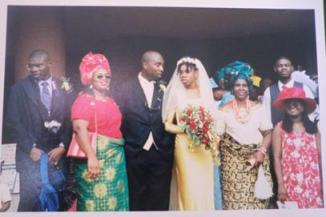
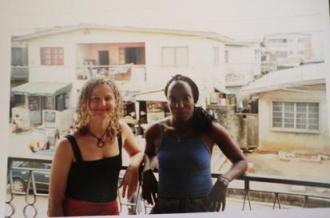
I have to say that I too know that word, from my visit to Lagos in 1999, when I visited for marriage of a very dear friend. In the quarter where I was staying, I was a bit of an anomaly and not only did the children come to stand outside the house in case they caught a glimpse of the Oyibo, they even had a song they sung, which my friend laughed at, remembering she too used to sing it as a child, something about ‘white man, eat more pepper (the very hot pepper soup for breakfast), make your face go redder’, I guess it’s true, we do have an unusual capacity to change the colour of our face when eating something very hot or becoming embarrassed!

There are so many extracts I could paste and talk about from Red Dust Road, the reaction of her own son, the discovery of names, the reading through old archives, visiting buildings from another past, the importance of the imagination and the importance of a true friend, but I would prefer that you read the book and enjoy your own journey and reactions to this wonderfully humane and important story that we are privileged to share.

*

Below, I share a few photos from my visit to Lagos, Nigeria in 1999, an unforgettable experience it was indeed.

Preparing for the Native Ceremony, bride wearing her family ensemble

View from a rear window

Bride with her brother, wearing an outfit from the husband’s family

The theatrical Native ceremony in full swing

Wild

Let me start by saying, I really enjoyed ‘Wild’ and admire the way Cheryl Strayed shared her story. It’s not exactly exciting to spend months hiking a trail, but the author writes about her journey in a way that is as gripping as any novel without being overly melodramatic. I was a little wary before starting, with the shoe falling off the cliff, wondering if she was some ill-prepared novice on a suicide mission, but that is not the case at all, the thing about the shoe probably the only time she does use an anecdote for overly dramatic effect, and to sell a book, why not – it worked.

Cheryl Strayed considers herself a bit of a stray. She changed her name in the process of finalising her divorce, gaining an apt description for how she felt at the time and profiting from the otherwise sad demise of her marriage by being able to offload a hyphenated name she held no sentimentality for.

Born in 1968, clearly intelligent and showing she had potential from a young age, ironically – getting married at the age of 19 was something of a rebellious act. Nineteen, an age of youthful idealism, where if not wary, we risk being fooled into taking the intensity of our feelings seriously and wind up wed. Or am I being just a tad cynical?

It’s a classic coming of age theme, girl with an absent father finds a wonderful man – and Strayed’s first husband Paul is a remarkable individual, who accepts the amicable divorce which Strayed sought by instinct more than knowing, missing a part of herself that she was fast learning couldn’t be fulfilled by another.

Being near Tom and Doug at night kept me from having to say to myself I am not afraid whenever I heard a branch snap in the dark or the wind shook so fiercely it seemed something bad was going to happen. But I wasn’t out here to keep myself from having to say I am not afraid. I’d come, I realised, to stare that fear down, to stare everything down, really – all that I’d done to myself and all that had been done to me.

The death of her mother at 45, knocked her off her straight and wedded course setting her on a side road to self-destruction, though fortunately something inside, perhaps the ever-present loving spirit of her mother (and a few of her sensible genes) mapped out an escape route from her self-destructive self by planning to hike the Pacific Crest Trail (PCT).

Despite the indulgent descent, she doesn’t come across as an addict, more a period of avoidance, indulging in destructive behaviour to avoid looking inward. This is a story of a woman heading towards a healing crisis, someone who needed to commit to a challenge in the extreme to provoke it.

The Pacific Crest Trail zigzags its way 2,650 kilometres from Mexico to Canada through California, Oregon and Washington, crossing desert country, passing forestland, mountain terrain and volcanic lakes. Strayed started her hike in Mojave, California, bypassed a section of the Sierra Nevada mountain range due to exceptional snow condition (very sensible) and ended it at The Bridge of Gods in Oregon.

Crater Lake by MBessey, Wikipedia

Strayed articulates with honest clarity all that brought her to the wilderness and the experience of being there. Writing a journal as she travelled, makes the day by day account as fresh as if it were a recent trip, subsequent years clarify her view, now a 44-year-old woman and mother herself, she recounts her 26th year with the wisdom of hindsight.

As difficult and maddening as the trail could be, there was hardly a day that didn’t offer up some form of what was called trail magic in the PCT vernacular – the unexpected and sweet happenings that stand out in stark relief to the challenges of the trail.

Bridge of the Gods by Cacophony, Wikipedia

As she walked, she was surprised at how the demands of the physical challenge and overcoming them become her sole focus, how she’d imagined dealing with her grief and loss, with days and days of free thinking time was nothing like the reality. On the trail, lapses in attention were on occasion broken by a rattle, warning her of a coiled predator on the path. It wasn’t necessary to think her way towards resolution, but to stride it out fully present allowing nature to knit together the broken bits inside.

Nature is a glorious healer and reading about it second only to getting out there in it. This book is a testament to that and the moments when the author fully embraces it and is filled with the wonder and energy of the natural environment are a pleasure to share. She epitomizes the reward of those who first conceived the idea of a nature trail in the wilderness for the public to provide “a lasting curative and civilising value” and I only hope this book, not only gets widely read, but inspires many others to get out on a nature trail themselves.
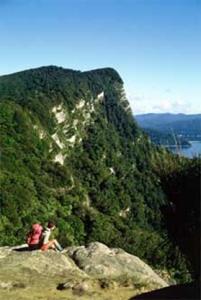
Panekiri Bluff, Lake Waikaremoana

Personally, I can recommend the hike around Lake Waikaremoana, in the North Island of New Zealand, I walked this with my family (there were 7 of us) when I was 14 years old, it is extreme wilderness and I’ll never forget the very fit Peruvian we met on the first night who asked us where the nearest shop was! He became the 8th member of our group and could shuffle a pack of cards like magic. We finished the trail in 5 days and took our new friend whom we all loved home to work as a willing farm hand, he stayed a couple of months until a letter arrived from a girl and off he went to follow her as free spirits do.

*

It was the thing that had compelled them to fight for the trail against all the odds and it was the thing that drove me and every other long-distance hiker onward on the most miserable days.

Titanic Revisited Part II

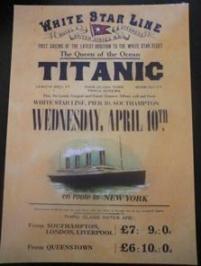
There are so many untold tales and now 100 years on from the Titanic tragedy, stories continue to be retold and others narrated for the first time, linked to the events that unfolded in the wake of the tragedy. Not only do we read accounts of those who were on the boat, but the event is used in fiction, a convenient device for eliminating a character such as the loss of the cousin and heir in Julian Fellowes Downton Abbey series, this event triggering the inheritance crisis that is at the centre of this drama. I read that if all the characters from fictional novels were indeed on the Titanic, it would more than triple the number of passengers she carried and sink it for sure.
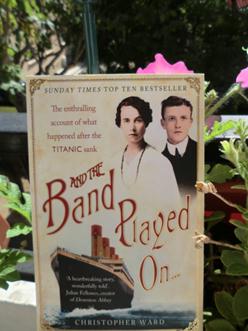
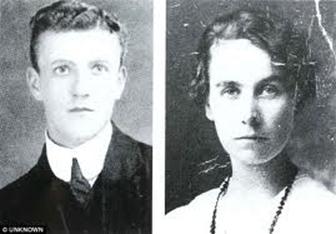
Christopher Ward’sAnd the Band Played On’ relates what happened after the sinking, the confusion and sometimes fictitious messages portrayed by the media, the arrival of the rescue ship SS Carpathia and the subsequent sailing and controversy surrounding the decisions made on-board the Mackay-Bennett, commissioned to return to the site to retrieve bodies. The author is the grandson of Jock Hume and Mary Costin; Jock was on the Titanic and his fiancé Mary awaited his return, three months pregnant with their first and only child.

The Daily Mirror assured its readers that all 2,209 passengers and crew on board the Titanic had been saved  and that ‘the hapless giant’ was being towed safely to New York.

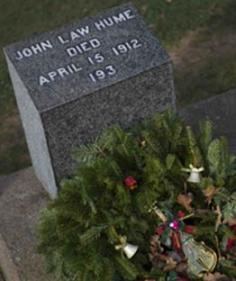
Jock Hume was a 21-year-old Scottish violinist who had made many sailings across the Atlantic; it is believed he lied about his age as he first went to sea in 1905, when he was 14 years old. On the Titanic’s embarkation list, his age is given as 28. He stood on deck with the other members of the band and they played music until it was no longer possible, the band knowing that their act of altruism would likely be the death of them. It is a memory that many survivors recalled, those who were fortunate enough to be waiting in a lifeboat, watching the tragedy unfold before them to tunes that would forever haunt them.

Jock Hume & fiancé Mary Costin

When it was no longer possible to stand, they strapped their instruments to their chests and jumped into the freezing cold waters together. None of the band members survived, however two of their bodies were recovered, Band Master Wallace Hartley (his violin case still strapped to him) and Jock Hume. Hours after the Titanic sank, White Star Line commissioned the Mackay-Bennett to recover the bodies of victims. Of the 209 bodies they brought back, 150 were laid to rest at three Halifax cemeteries. Jock Hume was buried in the Fairview cemetery, a site where visitors still pay their respects today.
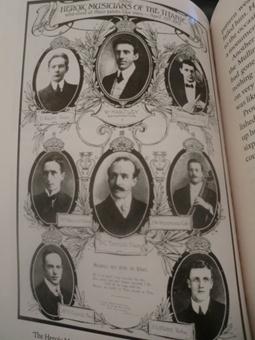
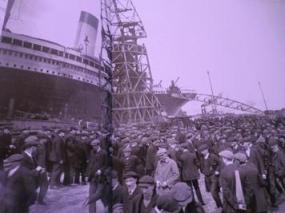
The book shares little of the lives of Jock and Mary and focuses more on Jock’s father Andrew Hume, who was also a violinist. He paints an ugly picture of Andrew Hume as a difficult father, a fraudulent businessman and profiteer of his son’s death who rejected Mary and made disturbing accusations against her and the unborn child.

Ward recounts the trial of Jock’s 18-year-old sister Kate who pulled a prank on her father and stepmother in the form of a letter informing them of enemy involvement in her sister’s death during WWI; this escalated into a national outrage and the risk of contravening a newly passed Defence of the Realm Act (DORA) which gave the government wide-ranging powers for the duration of the First World War. Anyone charged under the Act would face a military trial by court martial with a maximum sentence of death by hanging or firing squad.

Heroic Musicians of the Titanic

The account of well researched historical facts following the sinking of the Titanic, lend the story a credibility that kept me interested throughout the book. What left me somewhat bemused was the sense of judgement against the Grandfather Andrew Hume. True, he appears to have been less than the perfect father, but he was a successful and motivated businessman and musician, even if exaggeration and a few lies did assist him (doesn’t that continue today?). However, between these pages, there is little room for compassion for the man, we only see him in the most negative light, which I find a little sad in a story portrayed by his great-grandson. To lose a wife, a son and be subject to the murderous revenge of his daughter surely deserves an ounce of compassion, no matter how unscrupulous he was as a person.

Titanic Revisited Part I

The significance of the Titanic continues to intrigue, or I should say has begun to intrigue me more since a visit to Belfast, Northern Ireland, the city in which it was built, a city which itself grew on the back of the growing shipyards and connected industries associated with it. Between 1851 and 1901 the city’s population increased from 87,000 to 350,000 and was the fastest growing city in the British Empire during that time.

Abandoned shipyards

From the top floor of the apartment in the Titanic Quarter where we stayed, I looked down on a vast, empty space, a maze of square and rectangular footprints of buildings and thoroughfares, once a labyrinth of busyness, that filled with the more than 30,000 men and women who would cross the bridge and walk or cycle down Dee St to work.

I contemplate that wasteland with its perpendicular lines; the skyline still dominated by two tall, bright yellow Harland & Wolff gantry cranes, a symbol which continues to salute the past, and I try to imagine the hive of activity that it once was.

Turning the last pages of Walter Lord’s ‘A Night to Remember’ I read in the end chapter Facts About the Titanic that she was launched at the Belfast shipyards of Harland and Wolff on 31 May 1911. The date rings a bell and I look in my diary and see that my daughter and I arrived in Belfast on 31 May 2012, exactly 101 years on from that auspicious date.
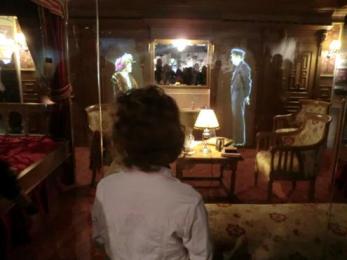
Julian Fellowes, creator of the series Downton Abbey and the film Titanic asks in the foreword why this tragedy still haunts us, as it does and certainly the opening of the significant Titanic Belfast museum is a testament to that. He suggests:

Maybe it is because the ship seemed, even then, to represent that proud, pre-war world in miniature, from the industrialists and peeresses and millionaires and Broadway producers who sat around the vast staterooms in first class, to the Irish and German and Scandinavian immigrants packed into third, carrying with them all they possessed, on their way to a new life in America….And as they headed for destruction, so did the larger world they represented, which would soon hit its own iceberg in the shape of the First World War.

Ist Class cabin on board Titanic

Walter Lord’s book is really just that, a factual account of what happened interspersed with the comments to create a narrative of various passengers and crew throughout the two to three-hour ordeal, from the moment of impact when the ship sideswiped an iceberg, until the Carpathia arrived in dock at New York and the truth about how few survived from the more than 2,200 who had been on board when she set out was revealed. He shares the reflections of many people from all classes, providing an overview of the atmosphere and a brief introduction to the individuals thrown together in this catastrophe.

One of the significant complexities which the Titanic represented, was the separation of the classes, the architectural blueprints clearly show the delineation between 1st, 2nd and 3rd class and the museum today exhibits perfect replicas of the rooms they inhabited, complete with holograms of talking passengers. This distinction also carried through to influence the evacuation of passengers, with 1st class women and children given priority, no children from 1st or 2nd class were lost, while 53 children in 3rd class were lost (23 saved).

Titanic Belfast Museum

Even as the Mackay-Bennett returned to the scene to retrieve bodies, similar principles were applied. There were too many bodies to cope with, so many were buried at sea, arbitrary measures were used to try to decide which bodies should be kept, those with tattoos were identified was 3rd class citizens and given a prompt sea burial. At the time it wasn’t criticized, but the sinking of the Titanic could be said to have been a turning point in this respect, it was the end of the Edwardian era, just before the outbreak of World War I and many things would change in the period that followed from a social perspective.

Looking at that period from 1900 to 1912, I noted that there were many exciting and exhilarating firsts, the Wright brothers first flight in 1903, the NY subway opening in 1904, the first European country to give women the vote in 1906 (Finland), and the first electric washing machine released in 1907. Ford introduced the Model T in 1908 and electricity was becoming more widespread.

Titanic Quarter

By contrast, in the years that followed the Titanic, personal income tax was introduced in the US in 1913, World War I started in 1914 which propelled women into roles they had never considered before and equality between the classes and the sexes began its long path towards some kind of rebalance.

Now that I have the context of the ‘Night to Remember’, I have started to read ‘And the band Played On’ an account written by Christopher Ward, grandson of the 21 year-old violinist Jock Hume, who together with the other band members of the Titanic, kept playing until the ship disappeared.

Prodigal Summer

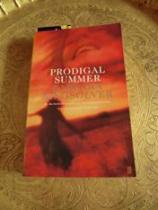
Animal nature, human nature, bugs and insects, forest life, their dependence and interdependence, habits good and bad and how the balance is affected when death, destruction or any kind of change is introduced; how species adapt, how human beings cope – or don’t – all of this we find in the juxtaposition of creatures assembled from the thoughtful poetic pen of Barbara Kingsolver in Prodigal Summer as she weaves three stories variously referred to in three alternating chapter titles, Predators, Moth Love and Old Chestnuts.

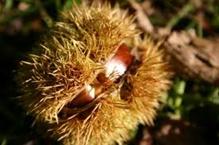
It may be due to the sound of the cicadas screeching outside while I read, or the richness of Kingsolver’s prose, but this book exudes the heat of summer and its associated sensations. It places you deep in the forest on the mountainside, heightening all the senses and bringing attention to every sound and movement, witness to the presence of all manner of wildlife pulsing just beyond what the eye can see.

Predators – Essentially the story revolves around three female characters, Deanna, the wildlife biologist living in a forest cabin working as her kind of conservationist, destabilised by the presence of a young hunter in her territory and her preoccupation with guarding a young coyote family that have returned to the forest wilderness.

She shares her environment with a snake, another predator and a metaphor for man, the snake is natural to the habitat and will expose Deanna for what she really is – not just a qualified biologist tending nature, keeping man and his hunting instinct out – but a woman with a suppressed but natural maternal instinct, depicted by her attachment to a family of chickadees. When the fledglings fall prematurely out of the nest, she puts them back, justifying her intervention in nature’s way, trying to alter the otherwise harsh survival odds nature has given the little birds, more in their favour. She succeeds in keeping them all alive, only to discover on her return from a walk, four telling bulges in the coil of the sleeping black serpent.

When the snake finally leaves she feels something shift inside her body – relief, it felt like, enormous and settled, like a pile of stones on a steep slope suddenly shifting and tumbling slightly into the angle of repose.

Moth Love by Nusio21

Moth Love – Lusa is a bug scientist, now local farmer’s wife, though still perceived as an outsider with her mixed cultural background and continued use of her foreign sounding maiden name. She is trying to adapt to her new role and changed circumstances while staying true to her beliefs and recognising her not so traditional, but well-founded knowledge and approach to farming.

In the summer after … Lusa discovered lawn-mower therapy. The engine’s vibrations roaring through her body and its thunderous noise in her ears seemed to bully all human language from her head, chasing away the complexities of regret and recrimination. It was a blessing to ride over the grass for an hour or two as a speechless thing, floating through a universe of vibratory sensation. By accident, she had found her way to the mind-set of an insect.

Chestnuts

Old Chestnuts – The third character(s) are the elderly and persistent Nannie Rawley and her equally aged, cantankerous, fixed in his ideas neighbour, the widower Garnett. They trade insults and unappreciated advice across their boundaries, but can’t seem to keep away from each other despite their polar opposite views.

Halal Goat

Not that it detracted from the reading of the book, but I did ponder the similarity in conviction of the three female characters, it is not clear whether or not they know each other for much of the book, but with such similar attitudes in their various fields, in a real community I would have expected them to have discovered each other and had some kind of interaction or at least knowledge of each other from the beginning. Sometimes this is a deliberate tactic by the writer to keep the connections between people vague until the end, to shape some kind of revelation. It just seemed like a bit of a coincidence that three such characters living in a traditional farming community had such little awareness of each other.

As much a study of nature, as a story of that which passes between these characters during this one summer, Prodigal Summer is indulgence of the satisfying, learned kind; it is compelling reading and a lesson in the wonder, beauty and balance of nature and humanity.

Summer Reads

I’m not one for compiling lists of what I am going to read ahead of time, because I value too much the freedom and spontaneity of a vast sea of choices each time I finish a book, and often the reading experience will lead me on to the next thing.

Like reading Barbara Kingsolver’s ‘Prodigal Summer’ straight after ‘The Namesake’. How could I know that after listening to the group discussing the book I would have a conversation with a local poet about the beauty of sentences and Jhumpa Lahiri’s essay and that she would tell me I must read Kingsolver’s book.  It was sitting on the shelf unread and thus I abandoned all other reading ideas and jumped straight into it.

100 years on, Titanic Belfast Museum

But I do love looking at the lists, always feeding into the mental TBR list, noting books I might wish to read or to keep an eye out for.

I could say I have intentions for summer, like the two Titanic inspired books I bought on a recent visit to Titanic Belfast, the excellent museum opened in March this year.

‘A Night to Remember’ and ‘And the Band Played On’ also seem appropriate companions to Charlotte Rogan’s ‘The Lifeboat’ which I have on kindle.

To help you decide, I wanted to share this excellent flowchart designed by Teach.com to encourage students to find a book of their choice, there are 101 books shown, inviting readers to consider fiction versus non-fiction, classic or contemporary and many other options.  I keep coming across it and there’s something appealing about viewing images of covers rather than just a list of titles, so enjoy and I hope you find something for your own summer read!


So do you plan your reads or are you open to the spontaneous?
Summer Reading Flowchart

Via Teach.com and USC Rossier Online