The Love Song of Miss Queenie Hennessy

Rachel Joyce’s debut novel The Unlikely Pilgrimage of Harold Fry told of the spontaneous walk that became a pilgrimage, by the unassuming and little-loved ex brewery salesman Harold Fry. He went out one day to post a letter to his former colleague Queenie Hennessy whom he had learned was nearing the end of her life in a hospice in Berwick-upon-Tweed, Northumberland.

Harold decided to keep on walking, wearing a pair of inadequate boat shoes, no money or warning to anyone, he walked for weeks, hoping Queenie had received his message to wait for him. We knew little of Queenie’s story or history and even less of what she was going through and how she perceived Harold’s act of spontaneity, until now with this second book, which takes us back to the beginning of the story, interpreted now from Queenie’s point of view.

Rachel Joyce brings us inside the mind of Queenie, who upon hearing from Harold decides to write him an extremely long letter, going right back to when she first applied for a job at the brewery where they both worked, including her first memorable glimpse of him, her undying and denied, unconditional love for him and her never spoken of relationship with his troubled son David.

As well as revealing her relationship and hidden feelings for Harold, we meet her fellow patients in the hospice, diminshed physically yes, but with their characters fully prominent, intact and proudly on display, from The Pearly King, Finty, grumpy Mr Henderson to the nuns who take care of them.

Queenie receives Harold’s letter which reads:

I am very sorry.

Best Wishes.

P.S. Wait for me.

and learns from Sister Catherine that he has called from a telephone box, in Kingsbridge, South Devon, something about waiting and that he was walking.

Harolds Journey“I knew your writing. One glance and my pulse was flapping. Great, I thought. I don’t hear from the man in twenty years, and then he sends a letter and gives me a heart attack.”


“I held tight on to your envelope, along with my notebook. I saw the dancing of crimson light beyond my eyelids as we moved from the dayroom to the corridor and then past the windows. I kept my eyes shut all the way, even as I was lowered onto the bed, even as the curtains were drawn with a whoosh against the pole, even as I heard the click of the door, afraid that if I opened my eyes the wash of tears would never stop.

Harold Fry is coming, I thought. I have waited twenty years, and now he is coming.”

The next morning Queenie wakes to find a new volunteer in her room who has observed her crying in her sleep, the nun, who introduces herself as Sister Mary Inconnu, reads Queenie’s hand scribbled message that said it was too late to wait for Harold and suggests she write him a second letter, that she will help her by typing up her notes each day.

She said, “I have a plan. We’re going to write him a second letter. Don’t forget, you opened this can of worms when you sent your first one. So now you need to finish. Only this time, don’t give him the sort of message he might expect from a gift card. Tell him the truth, the whole truth. Tell him how it really was.”

Harold’s walk is just one of the many journey’s represented, everything becomes a symbol of slow perseverance towards some kind of end; Sister Lucy and her jigsaw puzzle of England, the pieces placed progressively over the weeks of Harold’s walk revealing regions of England and Wales, racing towards the Midlands; Queenie’s own 20 year story of unconditional love, the evolution, growth and eventual destruction of her sea-garden; her friendship with David and the deathly progression of disease among the hospice patients, they who hold onto the very last threads of existence, their spirits given an additional and unexpected thrill in following the increasingly heard-of pilgrimage of this Harold Fry,  albeit alongside the less joyous symptoms of bodies in decline.

Despite the sad circumstances, it’s a fun book to read either alone or as a companion to Harold Fry, it is written as a second person narrative, using “you” just as she would have done in writing a letter, which has the effect of limiting the perspective, in a similar way that Colm Tóibín did in his 3rd person limited perspective of Nora Webster, reviewed here. Queenie’s narrative was less frustrating for me than Nora’s, possibly because she is reflecting on the past that can not be changed. I found it quietly compelling, tragic and humorous both, often surreal.

Love_song_by_ShinyLittleBird

Note: This was an ARC (Advance Reader Copy) kindly provided by the US publisher via NetGalley.

Baileys Women’s Prize Short List 2015

From a long list of 20 novels and from a collection of 160 original entries, the five judges have narrowed the field down to 6 novels vying for the Baileys Women’s Prize for fiction 2015.

Five of the authors have been shortlisted previously and one, my favourite (though I have only read two on the list) is a debut author, Laline Paull.

The shortlisted novels are:

It’s another excellent list from this worthy prize that celebrates hard-working, talented and inspirational women writers with a particular talent for creating life-like characters inhabiting believable worlds, whether it’s the smaller canvas of detailed family life in Anne Tyler’s fiction, or the imaginative hive of Flora 717, brilliantly conceived in Laline Paull’s The Bees.

Syl Saller, Chief Marketing Officer, Diageo had this to say about the shortlist:

“From a debut to a twentieth novel, this year’s shortlist celebrates exceptional female writers who display a rich and diverse talent for telling stories. Having always championed women, Baileys is thrilled to be working with the Prize to get these six novels by inspirational women into the hands of more book-lovers around the world.”

And the shadow jury (a group of blogging reviewers who are reading all the books and creating their own short list and winner) organised by Naomi at WritesofWomen, came up with their alternative shortlist below, having read and debated the 20 nominated novels.

Shadow Jury Alternative Shortlist

Shadow Jury Alternative Shortlist

One of the jury members, our much admired reviewer Eric of LonesomeReader had this to say about the prize:

“Whichever book ultimately wins, I am so glad this prize has introduced me to a range of unique books I probably wouldn’t have read otherwise. From Laline Paull’s outrageously original The Bees to Jemma Wayne’s ambitious take on the aftershock of war in After Before to Rachel Cusk’s fascinating chorus of voices in Outline to Grace McCleen’s elegant portrayal of madness in The Offering to Marie Phillips’ hilarious Arthurian tale The Table of Less Valued Knights to Sandra Newman’s challenging mighty tome The Country of Ice Cream Star. In my opinion, book prizes help us notice great literature we might have missed and the Baileys Prize has offered up a lot of excellence this year.”

I recommend visiting either of these blogs mentioned if you wish to read reviews of the books.

So, any predictions for a winner? We will have to wait until 3 June 2015 to find out!

A Spool of Blue Thread by Anne Tyler

Anne Tyler is an author that is well-known to many and A Spool of Blue Thread is her 20th published novel, said perhaps to be her last.

If like me you haven’t read Anne Tyler before (am I the only one?), you can get an idea of what she’s about from this succinct, sound-bite like feature 10 Things you Need to Know about Anne Tyler by Shelley Marks via The Pool, a hip, online writing, audio and video resource for women, that launched just before Easter. Click on the image below to visit.

The Pool

Anne Tyler writes about family and domestic life in suburban America (Baltimore) and this new novel opens with something of an anti-drama when Abby and Red Whitshank receive a confusing telephone message from their son Denny, who has left home but not exactly settled into whatever it is he intends to do. Abby swings between wanting to just leave him be and being over-anxious to find out what’s going on.

A SpoolThe novel dwells on certain periods when members of the family return home, the four children are all adults in the opening pages and as the back story is filled in, we observe petty grievances, old resentments, current mysteries and a family coming to term with changes as their parents age and may need to move on from the family home.

The book is separated into four parts, starting with Abby and Red in their later years in 1994, sliding back to 1954 just before they began dating, and then even further back to the period when the family home was built by Red’s father Junior, the most intriguing chapters of the book for me, where we hear about how he and his wife Linnie met, the book then returns to the present in Part Four.

The family home could almost be considered a character in itself, the novel concerning the minutiae of family life and events related to that house that was originally built by Red’s father Junior Whitshank, a home he constructed for Mr and Mrs Brill, but one he tended with a love and obsession to detail one would normally reserve for one’s own home. For deep inside, he knew he was building it for himself, he would just have to wait the necessary years – a patience he knew well, and sure enough the opportunity came around when he would indeed reclaim it.

“It was nothing but an architect’s drawing the first time he laid eyes on it. Mr. Ernest Brill, a Baltimore textile manufacturer, had unfurled a roll of blueprints while standing in front of the lot where he and Junior had arranged to meet. And Junior glanced first at the lot and then down at the drawing of the front elevation, which showed a clapboard house with a gigantic front porch, and the words that popped into his head were ‘Why, that’s my house!’ “

Over the years and generations that followed, that home became the repository of memories, events and upbringings whose recollections were as present as the fixings that held the structure together, every inch of the house infused with the presence of family past and present. It is not until we arrive at Part Three that we really understand the significance of the house and what it meant for Junior to have arrived there, thus allowing the next generations to live as they do, in blissful ignorance of their past.

This narration of the present before the past adds an unexpected surprising element to what is otherwise a fairly straightforward domestic saga, the Whitshank’s don’t know much about their origins and the reader too won’t learn what the family will never know until later in the book. It reminds us not to make assumptions about people, not to judge a family by the size of their porch, a book by its cover, and so many other outward appearances that make it easy to create a false image of what lies within.

Spool Blue ThreadA Spool of Blue Thread reminded me in some ways of Jonathan Franzen’s The Corrections, I guess that is the book that comes to mind, when I try to recall if I’ve read anything similar to this.

Ironically, after finishing this book, I read Anne Tyler’s Ladder of Years to get more of a feel for her work and about two-thirds the way through, came across another spool of blue thread, which although a causal reference, did make me wonder if this story had been gestating a long time.

A Spool of Blue Thread is long listed for the Baileys Women’s Prize for Fiction 2015.


The Autobiography of my Mother by Jamaica Kincaid

Jamaica Kincaid’s The Autobiography of my Mother is a book that was being discarded from our local English library that I pounced on when I discovered it in the collection of books that hadn’t been borrowed for years and therefore must make way for others.
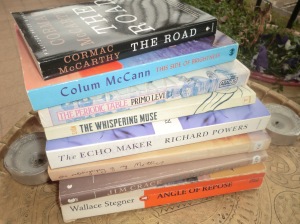
The 7 books I rescued from the Annual Library Sale!

The 7 books I rescued from the Annual Library Sale!

I already have two slim novellas by the same author that sit unread, but something about this novel, for it is fiction, despite the playful title, insisted it should be read at once. Not just a fabulous cover, which is repeated inside as chapter headings, each chapter reveals a section of the photo, until the last one revealing the entire portrait – but the comments from various publications and writers who sang its praise back in 1996 when it was first published.

“Writing in precise, lyrical prose that uses the repetition of images and words to build a musical rhythm, Jamaica Kincaid conjures up the world of Dominica in all its beauty and casual cruelty, a world in which the magical coexists with the mundane, a world in which the ghosts of colonialism still haunt the relationships between men and women. In doing so she has written a powerful and disturbing book.” NEW YORK TIMES

And let me say from the outset, I absolutely loved this book, its language, its voice, its poetry, the complexity of its narrator, who could be so distant yet simultaneously get so under your skin. There is a raw but brutal honesty to it, that disturbs and is to be admired at the same time, it is so full of contrasts and so compelling and beats its rhythm so loud, I almost can’t describe it.

Now that I have finished it, I want to read more by Kincaid and just now before writing this review I looked up a little about the author’s own life, and now I am even more intrigued, what an amazing story and experiences which are often at the heart of what she channels through her stories. A unique voice indeed.

So for those who, like me, knew little about this author, a little background before talking about the novel.

Jamaica Kincaid was born Elaine Potter Richardson in the capital city of St. John’s, Antigua in 1949.  Antigua is a small island in the West Indies (a region of the Caribbean basin), colonised by the British in 1632 that became independent in 1981.
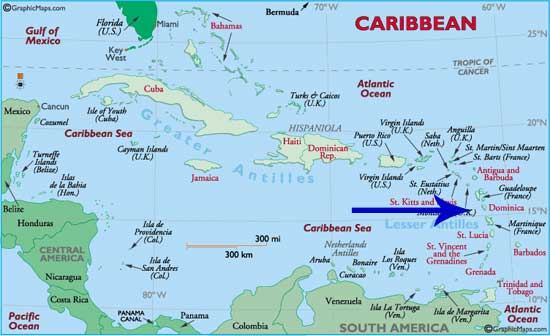
Caribbean


Her mother was from Dominica and her biological father, a West Indian chauffeur, whom she didn’t meet until her thirties.  Kincaid was an only child until she was nine, when the first of her three brothers was born. Until then she’d had the sole attention of her mother, so life changed dramatically thereafter and at 17 she left for America, severing ties with her family and did not return to Antigua for 20 years, though it resonated deep within her creativity.

She still lives in the US today and teaches at Claremont McKenna College in Claremont, California. Her most recent novel See Now Then was published in 2013 after a 10 year absence, depicting in her original style the unravelling of an interracial marriage.
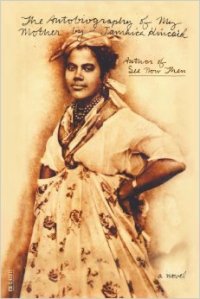
Autobiography MotherIn the autobiography of my mother, we encounter Xuela Claudette Richardson, who narrates her life looking back over seventy years, though the sense of her life reads as if it is being lived in the present, so vivid are the memories, so visceral the experiences. Her mother died in child birth and her father left her with his laundry woman until she was seven, when he remarried and came back for her.

She recalls the moment vividly through the senses and how it made her feel.

“I thanked Eunice for taking care of me. I did not mean it, I could not mean it, I did not know how to mean it, but I would mean it now. I did not say goodbye; in the world that I lived in then and the world that I live in now goodbyes do not exist, it is a small world. All my belongings were in a muslin knapsack and he placed them in a bag that was on the donkey he had been riding. He placed me on the donkey and sat behind me. And this was how we looked as my back was turned on the small house in which I spent the first seven years of my life…”

Through the narrator looking back over years and at events that she re-experiences as she recalls them, we see how it was then, that something, whether it is the lack of maternal love or the makeup of this character, nature or nurture, contributes to her way of being in the world in an emotionally detached way. She responds to instincts and observes acutely her own responses and is able to look back on them and describe and account for them, but there is a sense of something missing, that appears through the recurring dream of a mother climbing up and away from her and the questions she asks herself throughout her life.

“Who was my father? Not just who was he to me, his child – but who was he? He was a policeman, but not an ordinary policeman; he inspired more than the expected amount of fear for someone in his position…At the time I came to live with him, he has just mastered the mask that he wore as a face for the remainder of his life: the skin taut, the eyes small and drawn back as though deep inside his head, so that it wasn’t possible to get a clue to him from them, his lips parted in a smile. He seemed trustworthy.”

Yet nothing is ever as it seems and she depicts her father as dishonest and grows up in a culture and environment of distrust, discouraged from making friendships, made to see that no one can be trusted.

“We were not friends; such a thing was discouraged. We were never to trust each other. This was like a motto repeated to us by our parents; it was a part of my upbringing, like a form of good manners: You cannot trust these people, my father would say to me, the very words the other children’s parents were saying to them, perhaps even at the same time. That “these people” were ourselves, that this insistence on mistrust of others – that people who looked so very much like each other, who shared a common history of suffering and humiliation and enslavement, should be taught to mistrust each other, even as children, is no longer a mystery to me. The people we should naturally have mistrusted were beyond our influence completely; what we needed to defeat them, to rid ourselves of them, was something far more powerful than mistrust. To mistrust each other was just one of many feelings we had for each other, all of them the opposite of love, all of them standing in the place of love.”

Her father’s wife who is resentful toward Xuela and reminds her often that she can’t be her father’s daughter, soon bears two children, a boy and a girl. Though there is no love between them, Xuela doesn’t hate her, she has sympathy for her.

“Her tragedy was greater than mine; her mother did not love her, but her mother was alive, and every day she saw her mother and every day her mother let her know she was not loved. My mother was dead.”

At 15, her father removes her from his home and takes her to live with a business partner and his wife as a boarder. She develops a close friendship with the wife, Madame LaBatte, observing with the same acuity their relationship and way of living and enters womanhood herself, observing and experiencing changes in her own body and the effect it elicits in others.

She makes decisions about her own womanhood, about her body, about mothering. And she lives her life in accordance with those decisions. She marries, she discovers love and seems never to lose that ability to see through the illusions that surround all those things without sacrificing pleasure and contentedness.

“And this man I married was one of the victors, and so much a part of him was this situation, the situation of the conqueror, that only through a book of history could he be reminded of a time when he might have been something other, something like me, the vanquished, the defeated. When he looked at the night sky, it was closed off; so, too, was the midday sky, closed off; the seas were closed off, the ground on which he walked was closed off. He did not have a future, he had only the past, he lived in that way; it was not a past he was responsible for all by himself, it was a past he had inherited. He did not object to his inheritance; it was a good one, only it did not bring happiness; and his reply to such an assertion would be the correct one: What can bring happiness? At the moment the conqueror asks such a question, his defeat is secure.”

And at the end I ask, who is writing this story? Who is this mother who had no mother and no children? And in the dying pages, she will answer the question and we may realise we knew it all along.

the autobiography of my Mother plumbs the depths of maternal love and its lack, mother daughter relationships, self-love, absent fathers and the latent influences of enslavement and occupation, how they continue to distort reality even when they are no longer present.

I find it almost impossible to describe the reading experience, except that it left me asking “How did I not know about this book?” The voice is so unique and powerful and much more than an imagination, it is rooted in something strong and yet transparent and is utterly compelling.  Don’t read this for story, this is about writing and thus reading through the senses, Jamaica Kincaid creates prose that inhabits them all.

A 5 star read for me!

Click Here to Buy a Copy of The Autobiography of My Mother Now!


Literary BlogHop Book #Giveaway

blog-hop

Leave a comment, win a book… Open internationally

The literary bloghop hosted by  Melanie at My Book Self offers the chance to win a book at Word by Word and visit other blogs offering books, vouchers and bookish accessories. Anyone can enter, anywhere in the world, you don’t have to have a blog or follow anything, just leave a comment,

To be in to win a copy of:

Endless

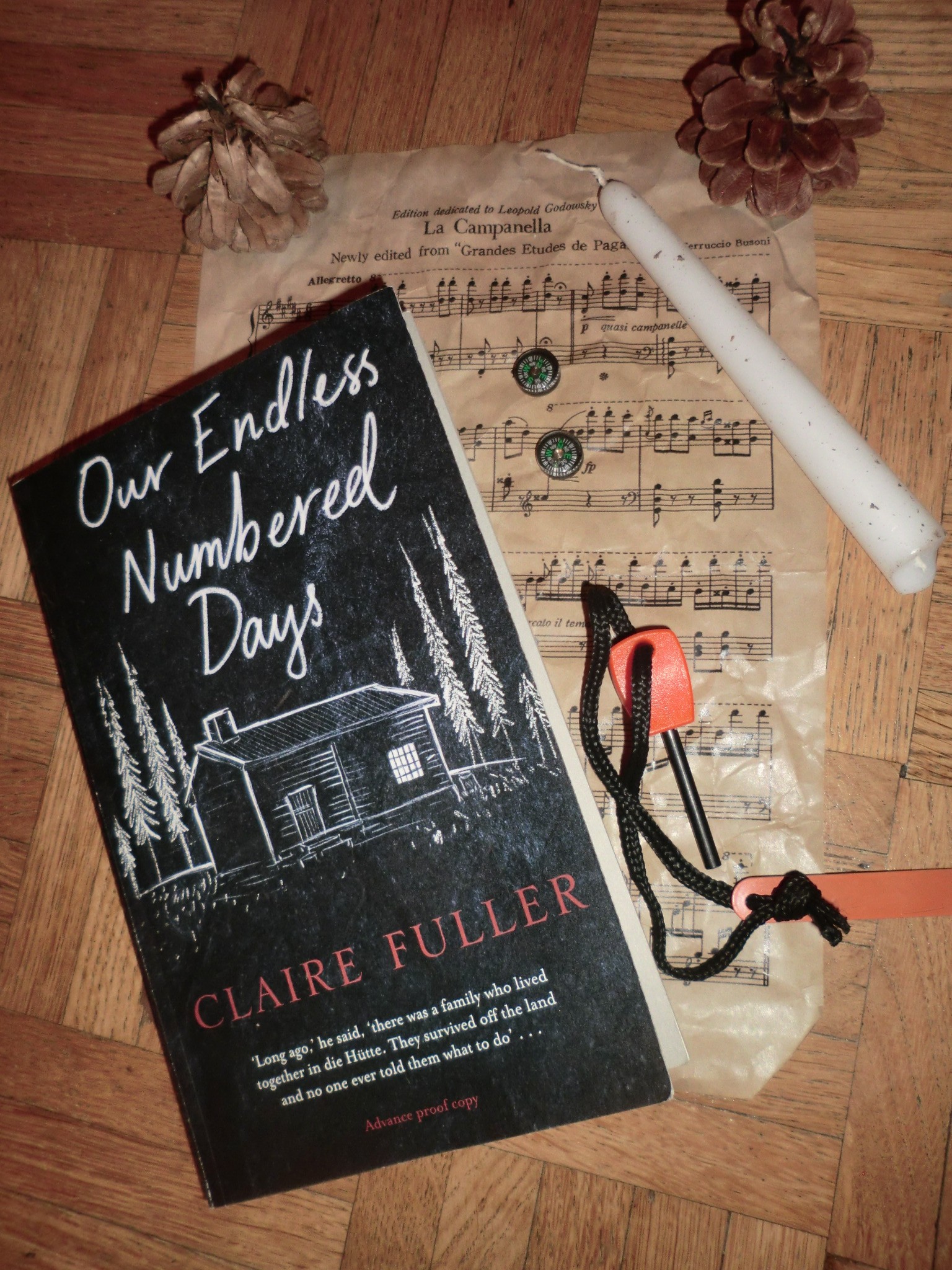
Our Endless Numbered Days

by Claire Fuller

– read my review here

Peggy Hillcoat is 17 years old and has been back in her family for 2 months now, everything is familiar and strange at the same time. Her father is no longer there, but in his place is an 8-year-old brother Oskar, she hadn’t known of until her return. He is the same age now that she was when she and her father disappeared, for nine years, without trace. – extract from Claire’s review

a) Leave a comment below with your email address (1 entry)

b) Follow me on twitter @clairewords  and ReTweet the offer (1 entry)

c) Follow Word by Word (1 entry)

Click Here to visit other participating blogs…

Thank you for stopping by at Word by Word and Happy Blog Hopping!

N.B. The giveaway closes 12 April, 2015. The winner will be notified by email.

This giveaway is now closed.

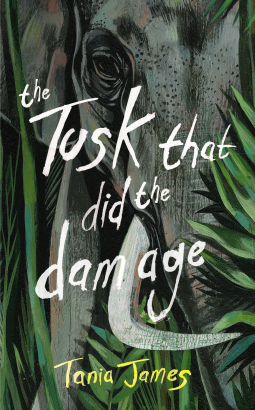
The Tusk That Did the Damage by Tania James

Elephants Ivory Poaching India Environmental LiteratureTania James’s The Tusk That Did the Damage is a story about a couple of very young American film-makers who travel to a  Keralan wildlife park in South India to make a documentary about a veterinarian they’ve heard of, who rescues orphaned elephants. One of those orphaned elephants is now on the loose and is being pursued by poachers.

The young elephant orphaned after the brutal death of its mother, initially seized as a baby by poachers earns the name Gravedigger after developing a reputation for covering his human victims with leaves and dirt after death. Having escaped captivity he is being pursued by poachers, a significant price on his head.

Manu is the younger brother of a poacher, disturbed by what he discovers his brother is up to and the lies he tells his wife to cover for his absences. For the sake of his mother, who pleads with him to watch over her eldest son, he follows his brother on this last deadly pursuit, to try to ensure his safety; he knows the danger very well as his best friend was one of the victims of Gravedigger, but he hopes to keep his brother out of danger and trouble.

It is a story of a tribe of elephants in South India, who have lost their ability to roam freely and live as their nature intended, forever changed by their interactions with humans, it is also about those who wish to care for and protect elephants, those who are willing to exploit them and outsiders looking for a sensational story to bolster their careers.

Remembering India

Remembering India

It is a clash of cultures, of people and species who have forgotten how to live in harmony and are having to live with the consequences of their behaviours.

The narrative follows the elephant they name Gravedigger, the film maker Emma and Manu, the younger brother of the ivory poacher.

“Fresh out of college, we’d been looking for a subject for our first documentary feature when I learned about Ravi from an inflight magazine. The photos of fuzzy elephant calves hooked me for the usual cutesy reasons; the description of the veterinary doctor glowed with dramatic potential.”

The story moves between the three narratives, following their lives, looking back at the events that have shaped them until now, leading them towards each other and the inevitable confrontations that beckon.

“The trouble began when my mother found a pouch of bullets in Jayan’s cabinet – thick and crude as if sawed from a steering rod – and thrust the pouch at my father. She felt it a father’s duty to straighten out a wayward son even if the father himself was wayward past hope.”

There is an authenticity to the narrative of the younger brother that has the effect of drawing the reader deep into the lives of his family and neighbours, that his story involves more than just himself may be one of the reasons I was captivated by these sections.

The insights into the perceptions from the elephants point of view are sensitively if briefly handled, I wished this narrative voice could have been even stronger.

“I had never stood in such intimate company with a wild bull elephant or felt its breath steaming upon my face, had never watched the ground beneath my feet fall away until all that remained was the small patch on which I stood trembling. How could a man survive such a thing unchanged? How could he glimpse that unholy omen, a warning as ancient as the oldest of fables, as obvious as a black-bellied cloud, and ignore it?”

An Outsiders Perspective

The film-makers felt unnatural in the environment, lacking understanding, empathy and not spending sufficient time to learn anything, they were the major weakness in the narrative for me. It is interesting having recently read Yasmina Khadra’s The African Equation, that both authors depict a similar stereotype of the Westerner entering into a foreign culture for a short period of time, insufficient to be able to able to understand it from the inside and this case, perhaps not wishing to see it in any other way that a sensational one.


It might be time for me to read  Tété-Michel Kpomassie’s An African in Greenland, brought to my attention by Ann Morgan, in her A Year of Reading the World project.

The author ran away from his native Togo, to avoid having to be initiated into a snake cult and after reading a children’s book about a place called Greenland that had no snakes, he made that his destination. For the next twelve years, he travelled overland working his way towards his destination, sharing his observations and experiences. Not just an adventure, his book published in 1977 in France won a literary prize and since Ann Morgan read and reviewed it, the story has been picked up by a film producer.

*

Note: The Tusk That Did the Damage was an ARC (Advance Reader Copy) provided by the publisher via NetGalley.

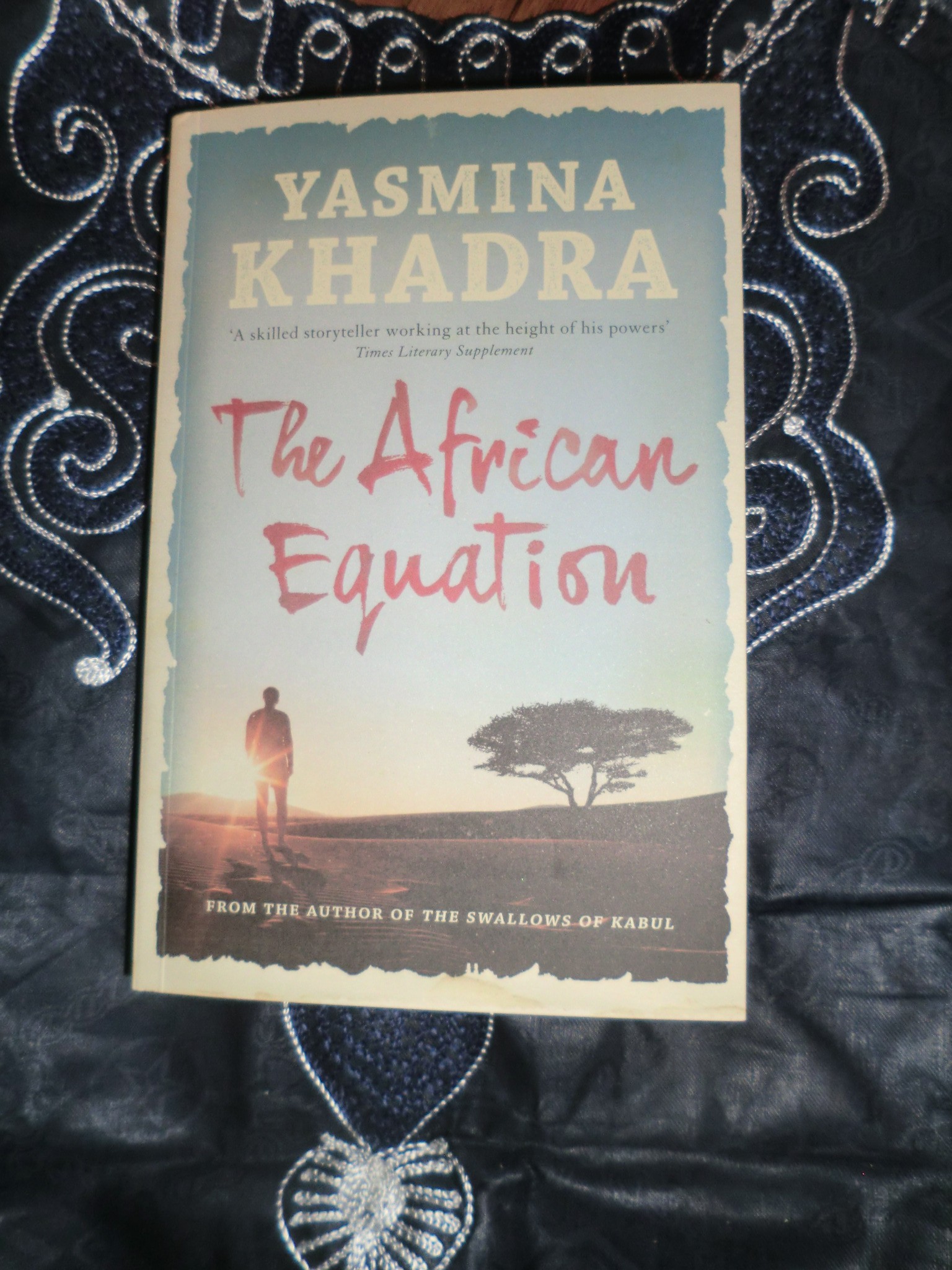
The African Equation by Yasmina Khadra tr. by Howard Curtis (French)

Yasmina Khadra is a name I have seen and heard mention often, here in France. At first, I too thought it was a woman writer. The real Yasmina Khadra is indeed a woman, but the author of the books is her husband, the Algerian writer Mohammed Moulessehoul, who created the pseudonym to deflect attention away from censors, as he was an officer in the Algerian army at the beginning of his writing career. His real identity was only revealed after he left the army and came to France to live in 2001.

He is known for offering an alternative narrative and perspective on the subjects he pursues in his fiction, a challenge to commonly held Western stereotypes. Whether he achieves that or not, his books fly off the shelves in France and now appear to be gathering an audience in the English language as well. It’s disturbing, compelling, likely to provoke much debate and makes me look forward to reading his next book.

KhadraFirst published in France in 2012, The African Equation was translated by Howard Curtis for Gallic Books and made available in February 2015. Two further titles will be published in late 2015 and 2016.

Kurt Krausmann, a doctor living in Frankfurt, Germany met a beautiful woman while in Paris, both were there for work purposes, attending different conferences in the same hotel, seemingly wedded to their careers, they found each other and if we are to believe the doctor narrator, 10 years of contentedness followed.

Moments from the past now arrive unbidden, a mocking assurance as his illusion of bliss is permanently scarred the evening he arrives home to discover the loving (though recently tormented by he knows not what) Jessica, has committed suicide.

The doctor’s ritualistic, clinical, predictable life is turned upside down and he experiences extremes of emotion, the like of which he would normally only ever encounter in the detached manner he has of observing patients, those symptoms he has so often downplayed in others threaten to overwhelm him.

‘Try to forget your dark thoughts, Frau Biribauer,’ I said. ‘You’re worrying unnecessarily. It’s all in your mind. Keep your spirits up. You’ve shown great courage and a clear head. You have no reason to give in now. With its joys and pains, life deserves to be lived to the end.’

His friend Hans Mekkenroth, a wealthy philanthropist throws him a lifeline, suggesting he travel with him on one of his regular humanitarian missions, they will sail across the seas in his yacht to deliver supplies to the Comoros Isles.

Hans lost his wife Paula some years before and though there isn’t a day when he doesn’t miss her, he appreciates that life doesn’t stop, he has found meaning in using his wealth to try and alleviate the suffering of others (while enjoying the element of adventure), whether it is the poor of Africa or the 1st world problems of his companion the Doctor, Kurt.

The Gulf of Aden

The Gulf of Aden

Kurt is about to discover a version of suffering and misery worse than he came with, when they are hijacked by pirates in the Gulf of Aden in the middle of the night and taken hostage. Transported inland, they are initially held in a cave, while their captors decide what to do with them and teach them a lesson or two in the meantime.

The men are moved and lose all sense of where they actually are, as they try to understand who is in charge and what is going on around them. When they meet fellow hostage Bruno, a Frenchman who has been living a nomadic existence in Africa for 40 years, they begin to understand the varying potential prices on their heads and fear for their survival. Despite his captivity, Bruno the ‘born again African’ Frenchman, refuses to let go of his love for Africa, countering every negative situation with an alternative view.

‘I don’t understand what goes on in these monsters’ minds.’

‘A goldfish can’t bring the complexity of the ocean back to the tranquillity of its bowl, Dr Kausmann,’ Bruno said with a hint of reproach.

‘I don’t live on another planet,’ I retorted, exasperated that he could still come out with these insinuations after all I had been through.

‘Neither does a goldfish. But what does it know about storms? The world has become colour blind. On both sides, everything is either black or white, and nobody cares to put things into perspective. Good and evil are ancient history. These days, it’s a matter of predators and prey. The predators are obsessed with extending their living space, the prey with their survival.’

‘You’ve been too long in Africa, Bruno.’

‘What is Africa, or Asia or America? he said in disgust. ‘It’s all the same. Whether you call it a brothel or a whorehouse, it’s the soul that’s in it that determines its vocation. Whether you say “it smells bad” or “it stinks” doesn’t change the air around you. The South Pole is only the North Pole lying on its back, and the West is only the East on the other side of the street. And do you know why, Dr Kausmann? Because there are no more shades of grey, anybody can rationalise anything, even the worst atrocity.’

The hostage experience awakens a once dormant, now seething rage in the Doctor, an equivalent madness that has been roused for some time in his captors, as they trade insults, tirades of hatred and contempt revealing how similar they all are, despite their intent to exert superiority and dominance, each striving to rise above the other. They have worn their societal labels, been perceived, and practised as a Poet(the African) and a Doctor(the Westerner) yet in this unforgiving environment, they are reduced to their despicable worst, seeing the other as their nemesis, representing the worst of those stereotypes, they reduce each other to in their respective forms of bigotry, showing themselves equally capable of the worst man can do, given the circumstances.

Yasmina Khadra

Yasmina Khadra

It is a compelling story that provokes as many questions as it answers, that at times risks falling into the stereotypical traps it seeks to avert. The Doctor had no desire to travel to the African continent, he is there by accident, thus he represents the perspective of those who come by their views through media and external cultural perspectives and his violent experience would seem only to strengthen those views, though they are challenged by some of his later encounters.

Without giving the plot away, I conclude he learns little from his experience, he reverts to his former self, seeks a form of escape from his reality, another version of the life he had before. Perhaps this is what Khadra is getting at, whether it’s a hostage experience, a safari trip or medical relief, that Westerners remain unchanged by their experience? Certainly tourism is rarely a life changing activity, but living in another country for more than 40 years might be.

We were puzzled by the suicide of the Doctor’s wife and though a reason is proffered, there is little introspection on his part to understand his role in it. Did his subsequent journey transform his character in any way? His reaction on his return and unwillingness to explore it, suggest not.

On the reverse side of this equation, we witness the horror of hostage taking and the keeping of prisoners in horrid conditions, the anger and violence of men, the arid landscape, civilian brutalities, villagers on the run and a refugee camp. They a significant contrast to the part of Africa I have been in recently through Wangari Maathai’s autobiography, Unbowed, One Woman’s Story she inhabited a woman’s world in the beginning and then through education, the Kenyan elite. Her story does more to dispel the myths and stereotypes than anything else I have read so far. She may have been an exceptional woman, but I have no doubt there are many more like her, who could teach us a lot more about the Frenchman Bruno’s favourite and frequent quote:

‘That’s Africa, Monsieur Krausmann!’


Our Endless Numbered Days by Claire Fuller

Highgate London, November 1985

EndlessPeggy Hillcoat is 17 years old and has been back in her family for 2 months now, everything is familiar and strange at the same time. Her father is no longer there, but in his place is an 8-year-old brother Oskar, she hadn’t known of until her return. He is the same age now that she was when she and her father disappeared, for nine years, without trace.

Claire Fuller’s debut novel Our Endless Numbered Days is the story of Peggy, narrated looking back from the present, when she has returned, slowly revealing the events that occurred that summer when her mother travelled to her native Germany and her father decided to take her out of school early, so they could camp out in the back yard, applying his obsessively learned survivalist skills, as if in preparation for the great Armageddon.

“When my father invited members of the North London Retreaters to our house for meetings, I was allowed to open the front door and show the half-dozen hairy and earnest men into Ute’s sitting room. I liked it when our house was full of people and conversation, and until I was sent up to bed, I lingered, trying to follow their discussions of the statistical chances, causes and outcomes of a thing they called ‘bloody Armageddon’.”

Peggy’s mother Ute was a young concert pianist and at 25-years-old, while on a tour of England, met her father, a stand-in page-turner eight years her junior.

Throughout the story and as witnessed in the quote above, there is a level of perceived inferiority surrounding the father, he is at pains to fulfil his ambition, even if it is only to complete the fallout shelter in the basement, a job he completes on the same day Peggy returns from school to learn that her mother had gone on a concert tour of Germany without saying goodbye or telling her.

The chapters unfold and we witness Peggy happily camping out in their backyard, which backs onto the leafy Highgate cemetery, with her father, learning survivalist skills and it almost feels like a natural extension of their fun that they will put their learnings into practice by packing items written on the endless lists they’ve been creating to depart on a journey into a larger version of the backyard.  But we embark with hindsight, already knowing this is a forbidden trip, one that required them to take their passports, traverse a river and seek out that cabin in the woods Peggy’s father had been telling her about for a long time ‘die Hütte’.

It is because we are forewarned that nine years have passed, that we read of the camping trip with mild horror, wondering how they are going to survive and what might have occurred during this eternity of days that will follow. Especially when her father tells her that they are the only survivors, that the world really has ended. There is no going back.

“Each morning since we had arrived, my father had cut notches in die Hütte’s door frame, but when he got to sixteen he decided to stop.

‘Dates only make us aware of how numbered out days are, how much closer to death we are each one we cross off. From now on, Punzel, we’re going to live by the sun and the seasons.’ He picked me up and spun me around, laughing. ‘Our days will be endless.’”

highgate-cemetery-grave

Highgate Cemetery

Ironically, though far from civilised society, Peggy learns the one thing her mother never passed on to her, how to play the piano. One of a number of obsessions that her father embarks upon, he fabricates a piano out of wood after Peggy who he has renamed Punzel expresses disappointment that the cabin doesn’t possess a piano as he had promised. He has brought the sheet music for ‘La Campanella’ with him, which she will learn by heart on an instrument incapable of making a sound.

‘Its going to take a lot of practice, Punzel. Are you sure about this?’

I knew it was a warning he thought he ought to give, rather than a challenge he wanted me to back down from. There was an enthusiasm bubbling inside him, like he hadn’t had since he started work on the fallout shelter. My father always needed  to have a project.

As the days pass, we become aware of the deterioration in stability of the father and the importance of every ritual to ensure their survival. Right from the beginning we read with a base layer of tension, as if waiting for something bad to happen, wondering what is going to tip the balance, who is going to survive and what the repercussions of these endless days will be.

Fuller keeps us on tenterhooks right until the end, even though Peggy has returned home on the very first page, right from that first page, when she cuts a picture of her father’s head out of a photo and hides it in her underclothing, we sense something not quite right. And by the end we too will be going out of our mind needing to know why.

Our Endless Numbered Days is an extraordinary debut and like Franz Liszt’s piece of classical music La Campanella, it draws us in, lulls us into its rhythm and carries us up as it builds to a crescendo, before crashing us down to experience its wild, unruly finale.

Note: This book was an ARC (Advance Reader Copy) kindly provided by the publisher.

Other Books by Claire Fuller (my reviews)

Swimming Lessons

Bitter Orange

Buy a Copy of Our Endless Numbered Days

Unbowed, One Woman’s Story by Wangari Maathai

WangariWangari Maathai was an exceptionally hard working, charismatic, altruist, who came from humble rural beginnings, toiling the land barehanded from a young age to become one of a group of young Africans identified as part of the “Kennedy Airlift”, provided the opportunity to gain bachelor’s and master’s degrees in the US, then completing a PhD in her native Kenya and using her education to work for the betterment of her country and people in terms of sustainable environmental practices social justice.

In addition to a senior role as a scientist and researcher at a university in Nairobi, needing to do something practical and far-reaching, she founded the sustainable tree planting initiative, The Green Belt Movement and would go on to become a responsible and practically minded activist, working to protect the natural resources and people of Kenya, through her knowledge of where to apply pressure, through her strong international network and above all the high regard in which she was esteemed by many, though sadly, that didn’t include the government of Kenya, who over many, many years continued to block her, plant obstacles in her way, arrest her and make it very difficult for her to continue in her role as an academic and to run her own business.

Wangari Maathai possessed a spirit that refused to lie down, with every setback, she gathered herself and whatever limited resources she still had, and at times this was nearly nothing and always looked towards the one step she could take, that first step towards a solution.

Wangari Maathai, Tree Hugger Extraordinaire!

Wangari Maathai, Tree Hugger Extraordinaire!

Planting a tree was both symbolic and life-sustaining. As more and more of Kenya’s forest was being deforested, underground water sources were drying up, land that had been planted with indigenous trees was being replaced with cash crops like tea and coffee, stripping the soil of nutrients and occupying land previously used to produce traditional foods for people to eat. As a consequence women began to feed their families more processed foods, requiring less energy to produce, less firewood and increasing the incidence of malnutrition.

“While I was in the rural areas outside Nairobi, I noticed that the rivers would rush down hillsides and along paths and roads when it rained, and that they would be muddy with silt. This was very different from when I was growing up. “That is soil erosion,” I remember thinking to myself. “We must do something about that.” I also observed that the cows were so skinny that I could count their ribs. There was little grass or other fodder for them to eat where they grazed, and during the dry season much of the grass lacked nutrients.”

And she took people with her, she made them part of the solution. To grow The Green Belt Movement required a large network of people to plant trees and to source and nurture seedlings. She went to the women, women like herself who grew up with their hands in the earth, she empowered them to create nurseries in their villages and tend the small trees and keep planting.

“Although the leadership of the NCWK (National Council of Women of Kenya) was generally elite and urban,  we were concerned with the  social and economic status of the majority of our members, who were poor, rural women. We worried about  their access to clean water,  and firewood,  how they would feed their children,  pay their school fees,  and afford clothing, and we wondered what we could do to ease their burdens. We had a choice: we could either sit in an ivory tower wondering how so many people could be so poor and not be working to change their situation, or we could  try to help them escape the vicious cycle they found themselves in. This was not a remote problem for us. The rural areas were where our mothers and sisters still lived. We owed it to them to do all we could.”

Tumutumu Hills nursery

Tumutumu Hills nursery

These women were already farmers, they knew how to nurture beans, maize and millet seeds, and Wangari and her team reminded them, they didn’t need a diploma to plant a tree. All they needed was their “women-sense”. These women succeeded, they showed other women what to do and became known as their “foresters without diplomas”. At every stage they looked to see if they could improve the way they did things and to overcome any obstacles the women encountered. It was a huge and sustainable success.

Unfortunately, the government for much of the 80’s and 90’s was against her, almost as if it were a personal affront, to witness a woman speak out and lead and inspire others to stand up to authority; Wangari Maathai was an advocate for proper governance and management of public resources and as soon as she heard about abuses of powers that threatened to remove public rights, she moved her supporters to action.

Through perseverance she won many battles, to save the last big public park in the middle of Nairobi, Uhuru Park from urban development, preventing Karura Forest from being given to friends and political supporters of politicians, the release of political prisoners and even the lobbying of the World Bank to forgive Kenya’s national debt which had escalated out of control. due to interest payments, despite the original loan amounts having been repaid .

“When I see Uhuru Park and contemplate its meaning, I feel compelled to fight for it so that my grandchildren may share that dream and that joy of freedom as they one day walk there.”

« Maathai and Obama in Nairobi » Source: Fredrick Onyango,  Nairobi, Kenya Wikipedia

« Maathai and Obama in Nairobi » Source: Fredrick Onyango, Nairobi, Kenya Wikipedia

Unbowed, One Woman’s Story, is an astonishing and important recollection of the life and work of Wangari Maathai. She applied herself to everything she did with vigour and heart, the opportunity to be educated, something that continues to be lobbied for so many girls in third world countries, was a major turning point and became the first of many open doorways she walked through and made the most of, not for own benefit, but always for the good of all.

It seems almost like a utopian fantasy, to imagine what the world could be like, if more women were given the opportunity to gain the necessary knowledge that could allow them to facilitate solutions to village and country problems, that allowed them to live sustainably and not in fear or poverty without understanding why. Wangari Maathai knew and practised that one person can’t change everything, it is through showing and empowering others that change happens.

She was an amazing, inspirational and practical woman, who responded to the call for help on many significant issues that would benefit all Kenyan’s and was an example to the world, rightfully acknowledged and awarded the Nobel Prize for peace in 2004. Sadly she passed away in 2011 from ovarian cancer.

“Throughout my life, I have never stopped to strategize about my next steps. I often just keep walking along, through whichever door opens. I have been on a journey and this journey has never stopped. When the journey is acknowledged and sustained by those I work with, they are a source of inspiration, energy and encouragement. They are the reasons I kept walking, and will keep walking, as long as my knees hold out.”

Wangari tells a wonderful story of how the hummingbird responds to a forest fire, in a delightful metaphor that describes exactly her attitude to life and the many challenges that surround us. It has been made into a 2 minute animated film, Dirt, narrated by Wangari Maathai and is a wonderful introduction to her faithful, persevering spirit. A wonderful short film and one of my Top Reads for 2015.

I will be the hummingbird…

Cider With Rosie by Laurie Lee

cider with rosieA nostalgic memoir of early boyhood in a Cotswold village, recalling memories from the age of 3-years-old, surrounded by older sisters and siblings, the father having long abandoned the family household, leaving the housekeeper who had become his wife, to raise the children of his first marriage and the four he had with her.

Rather than a tale of struggle and poverty that we might expect given the circumstance of being raised in a large single parent family, in Laurie Lee’s hands, family life is narrated as a bundle of daily adventures and anecdotes that celebrate village life, sibling love, old lady madness and an attitude of making the most of it.

Born in 1914,and writing this memoir in 1959, Lee’s style shares what he saw looking out at his view of the world, rather than looking within, it is a celebration of the time and a tribute to those he loved, respected, feared and was in awe of around him – including young Rosie, who makes the briefest of appearances luring him into the haystack, a significant turning point in his life no less.

Bank Cottages, the Family Home

Bank Cottages, the Family Home

It is unique to read an author recalling tales of his relatives and sparing a thought for their sensitivity to what he is about to make public, something that today might be glimpsed in the acknowledgements, but rarely in the text, where the current trend is to hold nothing back and share all.

“On my Mother’s side there were these five more uncles: squat, hard-hitting, heavy-drinking heroes whom we loved and who were kings of our youth. For the affection we bore them and the pride we took in them, I hope they’ll not be displeased by what follows.”

This reluctance to spill all, means that the one thing that modern readers are no doubt curious about, the absent father and Laurie Lee’s thoughts about him, rarely get a mention.

“The three or four years Mother spent with my father she fed on for the rest of her life. Her happiness at that time was something she guarded as though it must ensure his eventual return. She would talk about it almost in awe, not that it had ceased but that it had happened at all.”

Acceptance or denial, they all just get on with living, surviving, getting an education and taking care of each other. Certainly they are always entertained, if not by each other, then by the two eccentric Grandmother figures who live within the same building complex and whose mutual hatred for each other seems to be the thing that sustains their life force.

“For several more years the lives of the two old ladies continued to revolve around each other. Like cold twin stars, linked but divided, they survived by a mutual balance. Both of them reached back similarly in time, shared the same modes and habits, the same sense of feudal order, the same rampaging terrible God. They were far more alike than unalike, and could not abide each other.”

Slad ValleyLee paints a picture of village life that is vivid and alive with character and memory as if it happened today without compromising respect for any of the inhabitants; even at their most villainous, he narrates their stories with compassion and mild regret.

His narrative captures the passing of time, the slow encroachment of city life and innovation that will ultimately kill that old village way of life that encapsulated them all, from the Squire down to the struggling newborn. He does so by sharing the stories and anecdotes of others seen through his eyes, rather than turning his gaze inward.

“The last days of my childhood were also the last days of the village. I belonged to that generation which saw, by chance, the end of a thousand years’ life…Myself, my family, my generation, were born in a world of silence; a world of hard work and necessary patience, of backs bent to the ground, hands massaging the crops, of waiting on weather and growth; of villages like ships in the empty landscapes and the long walking distances between them; of white narrow roads, rutted by hooves and cartwheels, innocent of oil or petrol, down which people passed rarely, and almost never for pleasure, and the horse was the fastest thing moving. Man and horse were all the power we had – abetted by levers and pulleys.”

A wonderful narrative of a not so distant time, lost forever.

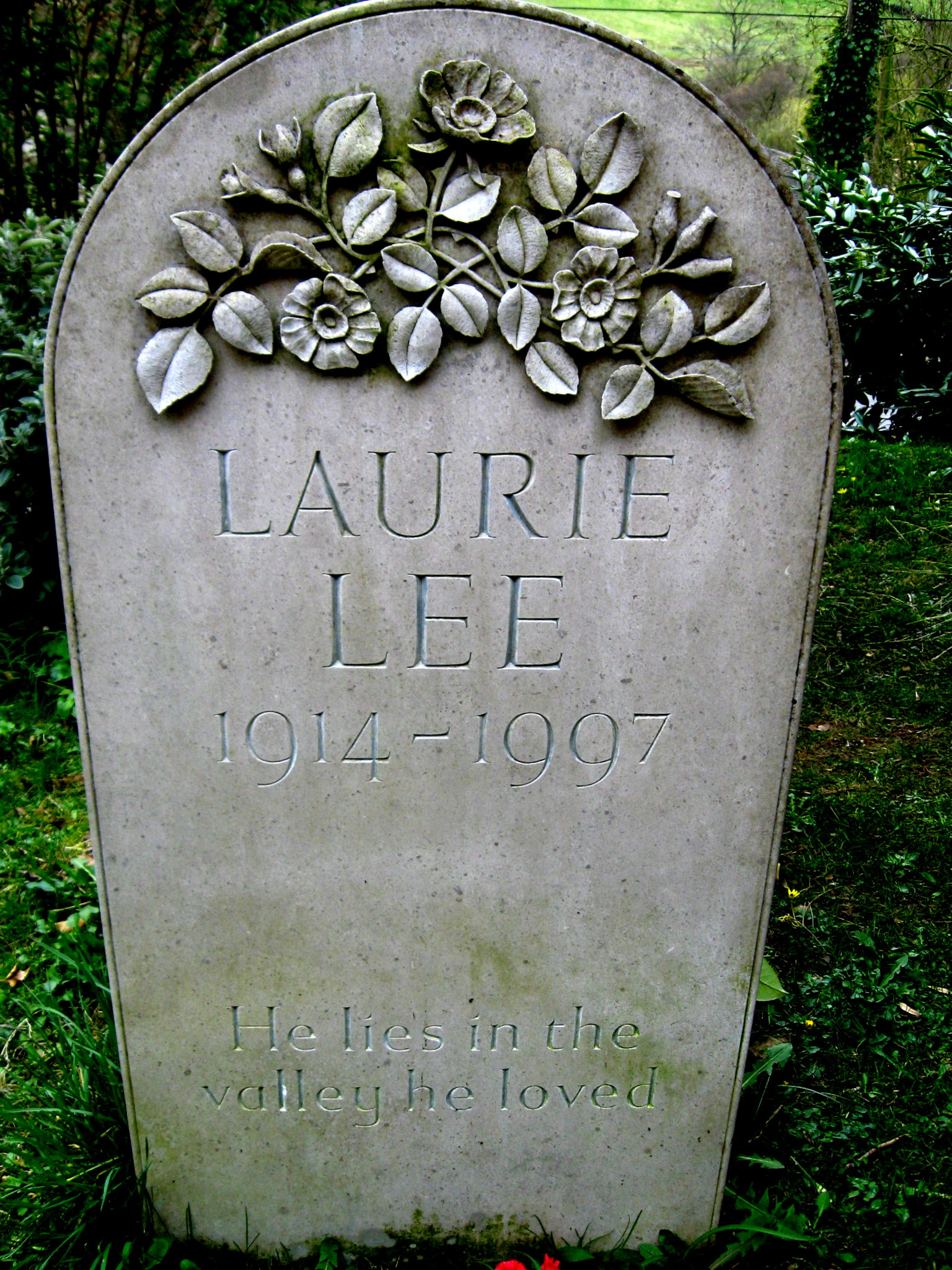
"LaurieLeeHeadstone" by Jongleur100 - Source: Wikipedia

“LaurieLeeHeadstone” by Jongleur100 – Source: Wikipedia

Note: This book was an ARC (Advance Reader Copy) kindly provided by the publisher via Netgalley.