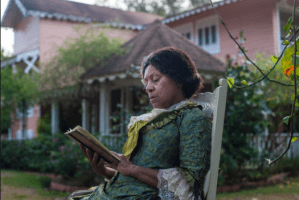
Love After Love by Ingrid Persaud

As soon as I saw that there was a book out called Love After Love, I was curious, then seeing it was written by a UK based Trinidadian author, I knew it was no coincidence.

Derek Alcott, Poet

Trinidad Literature Costa PrizeLove After Love is the title of one of my favourite poems by Derek Walcott (1930-2017) of St Lucia in the West Indies. A poet and playwright, he received the Nobel Prize for Literature in 1992. He moved to Trinidad after graduation when he was 23, having already published two volumes of poetry by the age of 19.

I first encountered his poem in the front of Audrey Niffennegger’s The Time Traveller’s Wife. It is a poem that elicits different feelings from readers, depending perhaps on when in their lives it is encountered; some relate it to rediscovering one’s cultural identity, others to grief, a broken heart or to the freedom of finding one’s true purpose.

For me it evokes a feeling of a partial awakening of consciousness, the discovery that one is able to self-nourish and expend love and energy inward, rather than expressing it or looking for it externally. It represents a form of liberation and freedom, a soul awakening, leading.

I was curious to see how Ingrid Persaud would write a story with such a bold and beautiful reference.  How would this story encapsulate the essence of that wonderful poem I wondered, and imagine if it succeeded.

Winner of Costa Book Award 2020, First Novel

Love After Love Ingrid Persaud Love After Love was shortlisted for the popular Costa Book Awards (annual literary awards recognising English-language books by writers based in Britain and Ireland) in the First Novel category.

I was quietly confident it would win this category, as I’ve followed category judge and highly valued reader/blogger Eric Anderson of The Lonesome Reader for years and I knew how much he loved this novel (it was in his Top 10 of 2020). It did win and the novel, The Mermaid of Black Conch: A Love Story by Monique Roffey also set in the Caribbean won the Novel Award.

Ingrid Persaud won the Commonwealth Short Story Prize in 2017 and the BBC Short Story Award in 2018. An author I’m sure we’re going to be reading more of in future.

Review

From the short opening Betty chapter I was riveted. Vivid, charged and terrifying, I felt like my heart was in my throat with my hand gripping it. And then, just as quickly, an immense relief followed it.

Costa Book Awards 2020 Love After Love Derek Walcott poemBy page seven there is a broken arm and a funeral as I gasp “Thank goodness” for I couldn’t bear to spend more time in the presence of Betty’s volatile husband Sunil. After five pages of tension-filled dialogue, the book becomes unputdownable.

In that opening chapter we read of a significant turning point in Betty’s life. There will be a further turning point later relating to the events of that day, one that the second half of the book and its characters will struggle with.

The book is structured into chapters told from the perspective of the three main characters, Betty, Solo and soon to become boarder Mr Chetan, Betty’s work colleague who calls her Mrs Ramdin, despite her insistence that he use her first name. The dialogue is written in the unique island way of speaking, a Trinidadian dialect, that I imagine is even more colourful to listen to on audio. It brings the text alive.

In Mr Chetan’s opening chapter he is late for work, waiting to catch a maxi taxi and getting more and more stressed as none are passing to flag down. He is a little mortified to see Mrs Ramdin’s car slowing down, instructing him to jump in quick, they’re holding up traffic.

Nothing’s wrong with Mrs Ramdin. She’s a little talkative. And you can see the girl she was in her big dark eyes and simple shoulder length hair. I just prefer not to be too friend friend with people in the main office. Next thing the whole of town all up in your business. I know she so so. Good morning, how you going, but never any big conversation.

That unexpected interaction lead to his learning she was looking for a lodger, and if he knew anyone suitable. Though he doesn’t present himself as a candidate then, because he knows she would prefer a woman, later he seeks her out and by the weekend is moving in.

The delightful, yet lost Mr Chetan is a sensitively drawn character, living in a country fearful of being himself, yet finds ways to make the lives of those around him better. Cast out from his own, he is everyone’s friend.

In the first half of the book we get to know these brilliantly portrayed characters, the new routines and life they create for themselves as a kind of family, the laughs, the loves, the conversations, the creation of a bond they’re hardly aware of as it entwines their lives together. Until the hunger to create a life for themselves results in both Solo and Mr Chetan moving away. All three of them will undertake an inner journey of discovery.

Betty is distraught. Solo takes such a tough line against his mother once he has left, too young to know what preceded him, she experiences the mother’s dilemma of not wishing to cast her sons father as a villain, while suffering the sons judgement of her, having cast her as the ‘baddie’ instead.

I must be call Solo a hundred times but he not answering. I don’t know if to stop calling or what to do. He have age so he could do what he want. I must accept that. You make your children, look after them and hope for the best. But oh gosh, man. Any fool knows that reaching adult age is not the same as having the sense and the experience. And if anybody needs some good sense knocked into them it’s that boy and his hard head. Who going to help him up there? Hari?

Solo is angry and not in the mood to listen, nor realises what he has lost in leaving. Betty’s calls go unanswered. She writes letters instead and we hear her thoughts, we hear his and we experience the frustration of a mother-son situation that endures.

Ingrid Persaud captures brilliantly the dynamic of both, the stubborn independence of the son, his inner pain and the torturous way he deals with it – hides it – and the perseverance of his mother, never giving up on her son, consistent in her love of him. Solo’s struggles are also external, the flip side of the American dream, the reality of creating a new life alone, where everything is unfamiliar and one doesn’t know who to trust, the shame that prevents a young man from admitting to his mother that he isn’t okay.

And Mr Chetan, always there for them both, with his quietly spoken, sound advice and his complex life.

Totally engaging characters and story line all the way through, sad to have left them all behind.

Highly recommend!

Further Reading

Review, The Washington Post: ‘Love After Love’ reminds readers why we go to books in search of answers to life’s great questions by Naomi Jackson

My Review: Cereus Blooms at Night by Shani Mootoo

L O V E   A F T E R   L O V E
The time will come
when, with elation
you will greet yourself arriving
at your own door, in your own mirror
and each will smile at the other’s welcome, and say, sit here. Eat.
You will love again the stranger who was your self.
Give wine. Give bread. Give back your heart
to itself, to the stranger who has loved you all your life, whom you ignored
for another, who knows you by heart.
Take down the love letters from the bookshelf,
the photographs, the desperate notes,
peel your own image from the mirror.

Sit. Feast on your life.
love after love Ingrid Persaud Costa Book Awards

I, Tituba Black Witch of Salem by Maryse Condé tr. Richard Philcox

A Maryse Condé FanGirl Moment

I Tituba Black Witch of Salem Maryse Conde

When I opened I, Tituba to begin reading, on the first page there was a quote from the author Maryse Condé that read:

Tituba and I lived for a year on the closest of terms.
During our endless conversations she told me things she had confided to nobody else.

It gave me such a good feeling to read that, knowing that Condé was doing here, what she did in Victoire: My Mother’s Mother, when the grandmother she’d never met, awakened her from her dreams, to chastise her from the corner of the room.

Sometimes I would wake up at night and see her sitting in a corner of the room, like a reproach, so different to what I had become.

‘What are you doing running around from Segu to Japan to South Africa? What’s the point of all these travels? Can’t you realise that the only journey that counts is discovering your inner self? That’s the only thing that matters. What are you waiting for to take an interest in me?’ she seemed to be telling me.

But that book wasn’t published until 20 years after Condé was listening to Tituba tell her story.

A Caribbean Writer Returns

I, Tituba is the first novel written after Segu and The Children of Segu, historical masterpieces that inform, disrupt and provoke, however the initial reaction was such that Maryse Condé declared she would never write about Africa again.

Tituba came to me or I came to her at a period of my life when really I wanted to turn toward the Caribbean and start writing about the Caribbean.

Who was Tituba?

Tituba existed, she was accused and ultimately set free, however, despite the shelves of history books about the Salem witch trials, there is little factual information about her, who she was, who freed her, or her life after release from prison.

I felt this eclipse of Tituba’s life was completely unjust. I felt a strong solidarity with her, and I wanted to offer her her revenge by inventing a life such as she might perhaps have wished it to be told.

If we look for her story in the history of Salem, it isn’t there. Condé too, looked for her history in the colonization of the continent and found silences, omissions, distortions, fabrications and fleeting, enigmatic insinuations. And so she wrote this novel.

Review

On a ship sailing for Barbados, young Abena was raped by an English sailor, then sold to a planter along with two male slaves. She was employed in the household until the pregnancy discovered whereupon she was banished to the cabin of a male slave Yao. Tituba was born.

In a short reprieve, they find comfort in each other’s company and Tituba would adored by a man more father to her than any other. The joy that now lightened Abena’s world was seen by the master and desired for himself. She struck back, died for it, and for his concubine’s crime, Yao was sold.

Driven off the plantation, Tituba was taken in by Mama Yaya; still grieving for two sons, she had cultivated the ability to communicate with the invisible.

People were afraid of her, but they came from far and wide because of her powers.

Mama Yaya taught her everything, in the ways of her people:

Mama Yaya initiated me into the powers of knowledge. The dead only die if they die in our hearts. They live on if we cherish them and honour their memory, if we place their favourite delicacies in life on their graves, and if we kneel down regularly to commune with them.

Ann Petry Tituba Salem Witch TrialsAnd so Tituba is given a past, skills and knowledge and might have remained in that life, had she not grown into a young woman with desires herself and fallen for the man who would become her husband John Indian.
He belonged to Susanna Endicott who I encountered in the memorable opening scene of Ann Petry’s Tituba of Salem Village.

After a short period in that household where John had lived most of his life, things deteriorated and in an act of revenge the mistress sold them both to the frightening Reverend Samuel Parris, who sailed for the Bay Colony the very next day.

From Island Life to Boston, Massachusetts

In Boston, with the mistress unwell in a room upstairs, Tituba spends time with the daughter Betsey and orphaned niece Abigail, who makes trouble that spreads like a contagion to other young girls in the community, as they fall prey to strange fits and mass hysteria.

I also recognized Abigail and Betsey’s companions in their dangerous games, those young girls whose eyes were shining with excitement. They were dying to roll on the ground too and to attract everybody’s attention.

And so the bad behaviours of girls given credence, turn into accusations of witchcraft against Tituba and others, they are jailed and many lose their lives, until the Govener writes to London for advice on legal proceedings concerning witchcraft resulting in a general pardon and Tituba is condemned to live.

Prison costs mean she can only leave if someone pays and a man with nine children who has lost his wife claims her. And it is through this relation that she will gain her freedom.

Freedom At What Price

If the first part is written from compassion, yet seeking revenge, the second part initially seems strange and challenges the reader, in its use of parody. I found it difficult to accept, the reader isn’t given the satisfaction of a gratifying ending, yet reading past the novel into the essay and interview at the end of the book, I’m confronted with my own subconscious bias and lack of understanding, in a clever and deliberate intervention by the author.

And so Tituba is granted her revenge. We are all complicit.

Reading the book and thinking about it after reading the interview resulted in a deeper reading experience and consideration. My feeling while reading was heightened by having read Ann Petry’s sympathetic version first, Condé takes a different approach, reckoning with the past.

I suggest that though Petry’s version was written 30 years before, it might be better to read her more optimistic version last.

What Is it About Witchcraft?

Magic witchcraft spells Tituba Isobel GowdieLike Condé, who said she knew nothing of witchcraft, I have decided to read a contemporary book next, published in 2020, to see what’s going on in the world of witchcraft today.
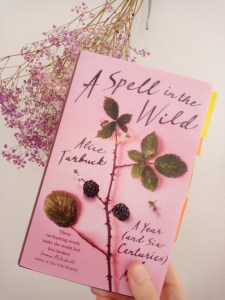
Next up A Spell in the Wild: A Year (and Six Centuries) of Magic by Alice Tarbuck.

Further Reading

Paper: Hesitating Between Irony and the Desire to Be Serious in I, Tituba by Sarah Barbour, Wake Forest University


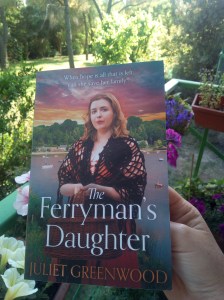
The Ferryman’s Daughter by Juliet Greenwood

Cornwall The Ferryman's Daughter Juliet Greenwood Historical FictionHester is the ferryman’s daughter, it is Autumn 1908 and she lives in a Cornish seaside village with her family, whose lives are soon to be forever changed when her mother dies.


Working Class Women

A working class family, her mother warns her against getting close to those living in the big houses, who employ but rarely befriend those deemed beneath them in status.

They are not like us. They will never be like us. However much they may try not to be, they see us as a convenience, the people who clean their houses and draw their baths and make their life comfortable. It doesn’t really enter their heads that we are as real as they are, with dreams and ambitions and a desire to also walk in the sun. And that can make them cruel, even if they don’t mean to be. You remember that and don’t ever be distracted from the path you wish to take.

Hester takes over the household domestic duties and then her father’s job becoming a ferrywoman, when he is invalided. Despite her ability to cope, her father is taken in by the wily Jimmy, who continually ignores Hester’s refusals and worms his way into the family and their business.

The Ferryman's Daughter Juliet Greenwood red fishing boat

Photo by Korhan Erdol on Pexels.com

After performing a rescue at sea, Hester experiences for one night what it is like to be waited on, to sink into a hot bath and rest, sleep, with nothing else to do.

Her eyes closed, savouring the stillness. ‘This is what I want,’ she said aloud. She had no hankering to be waited on like a queen, as she had been this evening. She just didn’t want to spend her life as a drudge, the one who got up first, who went to bed last. The invisible hand who did the cleaning and the cooking and the mending, along with the juggling of a meagre budget, the conjuring up of meals out of the barest of essentials.

She is a young woman working against the odds that would normally pull her towards accepting a fate confining her to care for younger siblings and a wayward father. She manages to keep alive her ambition to become something more than what society, her father and Jimmy expect from her, to develop independence without neglecting those who rely on her, finding those who see her for who she really is, even when she loses sight of that herself.

Dad saw reliance on a daughter as humiliating, a lessening of his manhood. Reliance on a son-in-law, particularly one who would, in turn, be reliant on his instruction and his expertise, would restore the natural order of things. Her feelings on the matter were irrelevant.

The Ferryman's Daughter Seaside cafe blue chairs flower pots Cornwall

Photo by Juany Jimenez Torres on Pexels.com

Women During the War

Eventually circumstances including the outbreak of war provide her an opportunity to pursue her first love, to cook wholesome homemade food from the abundance of the gardens of Afalon, the big house where her grandmother had been head cook.  She will be tested and confront challenges she thought she’d left behind, but doing so leads her towards a desire inherited from her mother she is determined to pursue.

A refreshing protagonist, living in an era where few women escaped the narrow role society decided for them, until war gave them a chance to show what were capable of. Hester paves the way in setting a new example for those who experience setbacks, showing how they can be overcome and the importance of working with and being supported by like-minded women.

Historical Fiction With Empowered Female Characters

Another captivating novel from Juliet Greenwood, set in her familiar locale of Cornwall, with her trademark, capable, independent woman protagonist exploring an alternative way of life than ‘the pursuit of a husband’ in an era where rejection of a man’s attentions was perceived as a mark against the character of a woman, who ought not to think so highly of herself as to be capable of surviving without him. A refreshing representation of the rise of the empowered woman.

N.B. Thank you to the author Juliet Greenwood for providing me with a copy of your new book.

Further Reading/Reviews

Review of Eden’s Garden by Juliet Greenwood

Review of We That Are Left by Juliet Greenwood

Buy a Copy of The Ferryman’s Daughter via Book Depository

Benediction by Kent Haruf

And finally, the third book in the Plainsong trilogy, Kent Haruf’s penultimate of his writing career, Benediction.

A man named Dad Lewis, owner of the local hardware store in Holt,  nears the end of his life. The stress of caring for him put his wife in hospital, so their daughter Lorraine returns home to help.

Next door Berta-May lives with her grand-daughter Alice whose mother died some years earlier. Lorraine takes an interest in Alice as do the Johnson’s, Willa and her 60 year-old unmarried daughter Alene.

The Reverend Lyle visits, new to Holt, sent from Denver after what happened there. His wife and son are having difficulty getting used to the place.

I doubt if he’s accustomed to small towns.
He better start getting accustomed to them, Dad said.
The women turned and looked at him. They’d thought he was asleep. Hi head was turned toward the window and he wasn’t looking at them when he talked.
Nothing goes on without people noticing, he said.

Haruf plants small seeds of intrigue in his books, one line that isn’t explained further, that suggests something that occurred in the past, we know eventually it will come out, just not yet. For all his plain talking and minimalist use of literary devices, he successfully hooks the reader early on.

He had some trouble in Denver, I heard. I believe that’s why he was sent here.

A young couple come to see him, all dressed up, asking if he could marry them, immediately. First they have a little talk about what love means to them, the girl gives her version, then the boy. The reverend is satisfied they understand and adds his thoughts to theirs.

Love is the most important part of life isn’t it. If you have love, you can live in this world in a true way and if you love each other you can see past everything and accept what you don’t understand and forgive what you don’t know or don’t like. Love is all. Love is patient and boundless and right-hearted and long-suffering.

Moved by the day he shares a little of his delight with his wife and teenage son that evening at dinner. Later, before bed, the boy comes to his mother. Others in the community will also be upset by the things the Reverend has to say, unable to understand his intent.

Why does he have to talk like that? It makes me sick.
Don’t talk about him that way.
He’s not preaching here. At the table with us. But he still sounds like he’s preaching or pointing up some moral.
He means well, you know that. He was trying to tell us about something that was important to him.
He’s full of shit Mom.
Don’t talk like that. It’s not true.
It is. I can’t stand it when he talks like that.

Photo by samer daboul on Pexels.com

There are the humorous dialogues I’ve come to expect, the laugh out loud moments, that catch you unawares and you just want to reread them because they’re so good.  It’s a novel that observes ageing from different angles, through different minds.

Willa asks her daughter if she’s not too lonely, she says she tries not to think about it and her mother tells her, oh but you will dear, but it’ll get better.

How will I get better?
It’s gets better. Everything gets better.
How?

And then you get your laugh out moment, which I won’t spoil by telling you what she says! When the women characters Willa, Alene, Lorraine and Alice come together, they’re bridging the deficit each of them has in their lives, opening up and allowing their personal stories to move forward.

Dad Lewis comes to the realisation that in order to let ago, he needs to make amends for some things in his life he realises he regrets. Where he is unable to, he makes certain spontaneous redemptive acts, paying it forward.

It wasn’t until I read this third book that I began to wonder about the titles and I realised I didn’t even know what plainsong meant. The titles seem symbolic despite the fact that Haruf avoids literary devices in his narrative. Haruf said of his prose in an interview, it includes “almost no metaphors or figurative language” because he was “trying to get at the thing itself without comparing it with something else.”

I learn that plainsong refers to ‘words that are sung, without any instrumental accompaniment’ which describes his style, a continuous melodic narrative, a work of austere realism, free of literary ornamentation.

Photo by Pixabay on Pexels.com

Eventide refers to evening, or the end of the day, the period of decreasing daylight from late afternoon until nightfall, the continuation of the story that started with Plainsong. These books are more connected to each other than Benediction, like the day and night of one story, whereas the third book could be standalone, with only the briefest mentions of past characters if at all.

Benediction is the double act, to give a blessing and ask for divine guidance, to both be thankful and to ask for guidance in the days to come. The book’s epigraph says ‘the utterance of a blessing, an invocation of blessedness’. Appropriate to the living and to the dying.

Haruf’s preferred aesthetic strategy is simply to present his characters from the outside, as we follow what they do, what they say, and how they interact with others. To an extent, the inner lives of these characters remain something of a mystery to us, but this also seems to be an intentional effect — we must infer motive from a character’s actions and at times allow emotion to remain implicit. Daniel Green, Full-Stop

The real draw to his stories then are the characters and their situations, their understated way of being with each other, the little that is said, the importance that something must be said, the situations that force that to occur.

Everyone has their underlying wounds, but rather than excavate their thoughts, Haruf creates examples of how people move on (literally) from their situations, often in small ways, to heal and find faith in humanity again. And suffer again, in that never-ending cycle of growth.

Overall, an excellent and thought provoking trilogy to have read during this quite time of confinement.

Further Reading

My review of Book 1 Plainsong

My Review of Book 2 Eventide

Kindred by Octavia E.Butler

I have been wanting to read Octavia E. Butler for some time, she was one of the most well-known African-American science fiction writers, with a reputation akin to the likes of Alice Walker, Toni Morrison, Maya Angelou who sadly passed away at the age of 58 in 2006.

I guess it was the science-fiction label that stopped me reading her until now, having read Kindred her best-known work, I understand why Butler refers to this particular novel not as science fiction, but fantasy. She uses that element of fantasy to transport a character back to that historical period.

The novel begins with a shocking revelation, that immediately puts the reader on guard. After reading the first line, I was ready for something brutal to occur. It did, but not what I expected.

I lost an arm on my last trip home. My left arm.

It is 1976 and Dana is remembering everything that happened leading up to that moment. She is a Black woman writer married to a white man, a writer named Kevin. On her 26th birthday, something strange happens, she feels dizzy and nauseated, the room blurs and darkens around her, symptoms she will come to recognise with horror, signalling she is about to be transported back in time.

I was at the edge of a woods. Before me was a wide tranquil river, and near the middle of that river was a child splashing, screaming …

Drowning!

The child is Rufus, it is 1815 in Maryland and Dana has time-travelled (without explanation) to an era where her liberties are severely constrained, to save the life of an ancestor. She must try and survive while she is there and figure out how to return to her own life. Until the next time his life is danger and she is called back again.

It’s a riveting account, putting a modern woman into an era where her attitude, education and way of being in the world are a danger to herself. It reminded me of Andrea Levy’s story of slavery in the Jamaican plantations Long Song both writer’s had a similar objective, to get inside the world of their ancestors, to imagine those voices that hadn’t been able to record their perspectives and feelings.
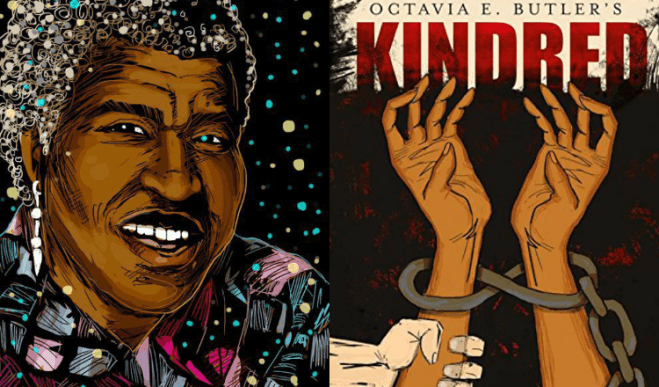
Levy looks at slavery through the eyes of a slave and does so with both humour and distaste. Butler transports a modern women, someone like her in fact, back in time, and makes us feel what life was like in 1815, showing us how someone from our own time might cope if sent back there, knowing what we know now. It’s an interesting predicament.

The longer Dana stays, the more she begins to feel part of the household, familiar and accepting.

That disturbed me too when I thought about it. How easily we seemed to acclimatize. Not that I wanted us to have trouble, but it seemed as though we should have had a harder time adjusting to this particular segment of history – adjusting to our places  in the householder of a slaveholder.

Rufus is the son of the plantation owner, the person Dana is connected to, as he ages and becomes more like his father, she struggles to rationalise her feelings towards him.

I looked at him again and let myself understand. It was that destructive single-minded love of his. He loved me. Not the way he loved Alice, thank God. He didn’t seem to want to sleep with me. But he wanted me around – someone to talk to, someone who would listen to him and care what he said, care about him.

And I did. However little sense it made, I cared. I must have. I kept forgiving him for things…

It’s a thought-provoking novel that uses that element of fantasy to place a woman of the 1970’s into the 1800’s to look at that life and legacy from the inside out. We can imagine how that would have stretched the imagination of the author and the challenges that created for her, grappling with what she discovered there, with what she was becoming aware of.

Highly recommended.

The Long Song by Andrea Levy

As you may know, Andrea Levy sadly passed away in February 2019 at the tender age of 62. She was a British author of Jamaican origin who became well-known when her fourth novel Small Island ( 2004) was awarded the Woman’s Prize for Fiction (then known as the Orange Prize).

Her novels explore the experiences of those connected British/Jamaican histories, gaining inspiration from her own family and heritage.  Every Light in the House Burnin’ (1994), is an intimate portrayal of family life that felt like I was reading about the author’s childhood, depicting the challenges faced by a Jamaican family in 1960s London. Semi-autobiographical, it was clearly inspired by experiences she’d had, growing up the daughter of immigrants in London.

In The Long Song, she delves deeper into her heritage, into the lives of slaves on a plantation in Jamaica, telling it through the voice of July, who we meet as she is birthed and follow as fate intervenes and snatches her from her mother, placing her in the main house, where she becomes the maid to the sister of the owner.

Levy wanted to get inside the world of her character in a way she hadn’t seen done before. To imagine those voices that hadn’t been able to record their perspectives and feelings, especially the women. To imagine what they were really thinking, how they would have been feeling, the emotions that were not safe for them to express, that we might imagine by reading between the lines of the slanted narratives that do exist.

What I wanted to explore isn’t in our history books. I wanted to put back in the voices of everyday life for black Jamaicans that are so silent in the record…When the time you are writing about is two hundred years ago, there’s no one to interview and so the individual  view has to come from the writer’s imagination.

Much of the research she encountered were accounts of perspectives that didn’t at all fit with what she sought to show, planters accounts “of negroes child-like ways” and their wives equally misconceived notions on their “defects of character”.

And what an astounding novel results, a natural development of the author’s work as she  claimed her ancestry and woke to who she was and where parts of her family had come from.

I loved it. It’s unique, she narrates from both the inside and the outside, being in the story and looking back on the story of the life of a girl named July, the daughter of a black slave and a white overseer on a plantation in Jamaica. It is at times crass, confronting and yet slightly tongue in cheek, daring you to continue reading through the discomfort.

Miss July narrates the story as a grandmother looking back at her life, committing it to paper at the request of her son, who every evening reads it and comments. She writes her account of that in the third person, interrupting it in the first person to complain about the demands of her son, or to clarify something she wants the reader to know. She’s having a conversation with you as you read, and I found it entertaining.

Now, reader, no matter what you may have heard Caroline Mortimer declare as the next act in this story, for she gave her  own fulsome account of that day to the militia, several magistrates, lawyers and indeed anyone who ever graced her dinner table, this that I am about to tell you, is the truth of what occurred next within that bed chamber. So not doubt me, for remember my witness still lies beneath the bed.

She removes the blinkers, stepping inside her characters showing them warts and all, making this uncomfortable reading at times, yet perhaps more realistic than most. For even those who have been depicted as well intended (white saviour narratives) were a product of their time and of white privilege.

Little writing or testimony has emerged that was not filtered at the time through a white understanding or serving a white narrative – whether it be the apologists for slavery and the West Indian planter classes, or their opponents, the abolitionists.

She shares the story with great humour and frequent distaste. No one is immune to her stripping characters bare and showing their true selves. So there’s no indulging flights of fancy, happy endings or gratuitous violence, although there is perhaps one character who manages to rise above the rest, but he was abandoned at birth so he deserves to shine a little brighter.

It’s sad to think her storytelling days have ended, but the three works I’ve read are a brilliant encapsulation of seeing through the lens of a life imagined and lived, the daughter of Jamaican immigrants living in Britain, who came to know and imagine the history and potential lives of her ancestors.

The Long Song was awarded the Walter Scott Prize for historical fiction, and was shortlisted for the 2010 Man Booker Prize. It was also adapted by the BBC into a TV series.

Buy a Copy of The Long Song via Book Depository

Maria in the Moon by Louise Beech

Maria in the Moon intrigued from the moment I looked at its beautiful cover and read the title, wondering what the significance of it was. This tender novel hooked me from its opening pages and never let go until I heard that chant ‘maria in the moon’ and understood.

We meet Catherine-Maria as she is recalling her beloved Nanny Eve who chose her name and used to call her in a sing-song voice, we read about the Virgin Mary statue passed down from mother to daughter, and become aware of a memory block in childhood.

But one day she stopped singing.
She stopped calling me the long, pretty name she’d chosen when I arrived.
I try now to remember why, but I just can’t.
I think it was winter; I think the sun no longer had the strength to kiss our heads.
I know I’d accidentally smashed the Virgin Mary.

Something stopped all the singing in their house and when she tries to remember all she sees are the shattered porcelain pieces of Pure Mary spread across the floor.

The story is set in Hull 2007, after their wettest summer on record, when 8,000 homes and 1,300 businesses were flooded.

Catherine has had to move out of her home into temporary accommodation and decides to volunteer at the local Flood Crisis helpline, an occupation she already has experience in. Here she remembers her first call at a Crisis Centre.

I’d learned well on the course; I was non-judgemental, patient, gentle. My first caller was a fifty-year-old man who’d been married for thirty years, but had always been desperately in love with his friend Jim.
‘What should I do?’ he’d asked.
It wasn’t for me to tell him, only to listen, ask the right questions, and let him figure out his own feelings. I was shaking when the call ended but felt empowered.

Going to work at the Flood Crisis Centre, taking calls and getting to know others who volunteer to do this kind of work through this novel was fascinating and felt real, it reminded me of reading Eleanor Oliphant and her work environment and interactions, there is a similar feeling of closeness to the characters and an awareness of the character’s underlying solitude, as expressed in this quote from Olivia Laing’s book, The Lonely City:

“…loneliness is hallmarked by an intense desire to bring the experience to a close; something which cannot be achieved by getting out more, but only by developing intimate connections. This is far easier said than done, especially for people whose loneliness arises from a state of loss or exile or prejudice, who have reason to fear or mistrust as well as long for the society of others.”

Her first shift at the Flood Crisis Helpline runs smoothly, and she begins to develop a close connection with her mentor Christopher, however something about this new experience triggers an awakening of her childhood memories, and more disturbingly brings back a recurring dream.

Over the weeks that follow, from the Sunday lunches with her extended family, her conversations with work colleagues and her flatmate Fern, she gains clarity around her own personal mystery and in a dramatic denouement confronts her past and puts a few ghosts plaguing her mind to rest.

Maria in the Moon is one of those books you want to get back to every chance you can, it was gripping until the end, and even the quiet and mundane parts I found riveting. I loved going to work with Catherine and listening to her handling calls, the characters were well formed and contributed to a deeper understanding of the dynamics surrounding her, but also raised questions.

There came a time – and I’m not sure when it was – that I fell out of love with her. Maybe it was after Dad died. She changed. But so did I. Where she had treated me well (but a little coolly) during his lifetime, she now grew impatient, was less willing to talk. Perhaps it was during my forgotten ninth year that I stopped trying to please her and no longer wanted to copy her elegant style. Instead, I did all I could do to oppose and annoy and argue.

I wanted to know more, to ask her how she coped growing up without knowing her Mum, her attachment to Mother (stepmother); there’s an unselfish compassion within her, masking the ache of losing both parents at a young age and her response to it is to stay close to the family she’s been left with, despite the friction, claiming it as her own.

With Louise Beech, there is always depth, there are layers to unfold, there are stories beneath stories. I have my own personal story of a mystical experience while reading her debut novel How to Be Brave (review linked below) and I learned that Maria in the Moon has also inspired a story song, created by singer Carrie Martin, you can read more about its creative inspiration here at Louise Beech – Making Magic With Words.

What more can I say, I’ll read everything Louise Beech writes, she’s entertaining and an inspiring author who writes from the heart and one who’s open to the magic and the mystical.

Buy a Copy of One of Louise Beech’s novels here

Further Reading

My review of her debut novel How To Be Brave

My review of her second novel The Mountain in My Shoe

The Island of Sea Women by Lisa See

A fascinating read, an insight into a unique way of life by women known as ‘haenyeo‘ on the coastal, volcanic island of Jeju, in South Korea and a well-researched, thought-provoking work of historical fiction.
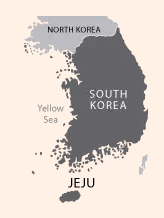
The novel is structured into chapters of time periods in four parts (Part 1 Friendship 1938, Part II Love 1944-1946, Part III Fear 1947-1949, Part IV Blame 1961), interspersed with chapters that cover four days in 2008, when a family of four from America come to Jeju Island and encounter a now aged Young-Sook, asking questions she turns away from.

The story follows the life of an elder daughter Young-sook, whose mother is the chief of their local collective of ‘haenyeo‘, women divers who harvest seafood (sea cucumber, urchins, abalone, octopus) all year round from the sea floor; they can stay underwater for sustained periods of time without breathing apparatus, wearing cotton garments that don’t protect them from the cold yet they don’t suffer hypothermia. As they rise to the surface, they emit a whistling noise ‘sumbisori’ an ancient technique to expel carbon dioxide from the lungs while also letting the other women know where they are.

The biggest risk is inattention, whether it’s abalone clamping down on a knife or a dangerous current sweeping them away (thus they always work in pairs). Before they enter the sea and when they return to land, they huddle around a fire in a seafront, stone enclosure called a ‘bulteok‘, share information, gossip, give advice and receive orders before going into the sea. Bulteok function as spaces for community life, changing of clothes by haenyeo, protection from weather, work activities such as repairs and storing their catch between dives and training.

In the 1960s, at their apex, there were 23,000 haenyeo women on Jeju, according to the island’s Haenyeo Museum. But now, only 4,300 haenyeo remain; many experts believe this generation will be the last, as young people flee to cities and pollution destroys the haenyeo’s place of work: the fragile aquatic ecosystem of the Strait. As of 2017, Jeju was home to only 67 haenyeo under the age of 50. In 2016, UNESCO awarded the divers a Cultural Heritage of Humanity designation.

A Typical Stone Bulteok Enclosure

They practice a form of Shamanism paying their respects to a Goddess, who helps them hold their breath and keeps them safe from danger. At certain times of the year, they hold ceremonies in honour of the goddess of the winds, launching mini straw boats out to sea, making sacrificial gifts of rice and other foods.

Although the Japanese had outlawed Shamanism, Shaman Kim, our spiritual leader and guide, our divine wise one, continued to perform funerals and rites for lost souls in secret. She was known to hold rituals to for grandmothers when their eyesight began to fade, mothers whose sons were in the military, and women who had bad luck, such as three pigs dying in a row. She was our conduit between the human world and the spirit world. She had the ability to go into trances to speak to the dead or missing, and then transmit their messages to friends, family, and even enemies.

Though the islanders live a simple life, they suffer the consequence of being a resting place for occupying forces, initially when the story opens, it is the Japanese military who occupy the island and create a bad feeling.

Young-sook’s best friend Mi-ja is an orphan, her mother died in childbirth and her father was believed to be a collaborator because he worked for the Japanese. She suffers from ‘guilt by association’, the villagers say she will be unlikely to find a good match in marriage despite her good looks. Young-sook’s mother teaches her to become a ‘haenyeo‘ and the two girls become firm friends.

A matrifocal society, it is the women/mothers who are the head of the household, who go to work, to sea, and the men who stay with the children and look after the home, or in some cases leave for the mainland to do factory work. When the girls are around 20 years old (in the 1940’s), they do ‘leaving-home water-work’ off the coast of Vladivostock. Apart from moving to Japan to do factory work, the only other legitimate way to leave the island was to work as haenyeo, diving from boats in other countries. The girls left for nine months at a time. They signed a contract for five years work.

During that time, the world – and not just our island – was shaken. For decades Japan had been a stable – if wholly hated – power on Jeju.

Back on their island, men and boys were being rounded up and conscripted into the Japanese army, sometimes without being given the chance to notify their families. At the end of WWII the Japanese occupying forces are replaced by American forces, and the country conducts it’s own elections, but people are preventing from voting and the incoming political party is mistrusting and treats people badly. Guilt by association leads them to kill indiscriminately, to burn villages, thus people leave in fear. The occupying forces don’t intervene.

This mid-section of the novel is subsumed by the changing political situation and the dire effect on the local population, nearly all of whom lose members of their family. Young-Sook’s family suffer severe tragedy, creating a deep resentment, causing her to abandon her friendship with Mi-ja.

We know that Mi-ja has an unhappy marriage, that she has one son, but with Young-sook’s unforgiving distance from her friend, the narrative around her life is full of gaps, we are witness only to Young-sook’s view, Mi-ja’s story is pieced together in patches until the end.

Rich in detail of the past and of the lives of Young-sook’s family, the story challenges the protagonist and the reader through the revelations of the interspersed four day narrative, when Clara, the young American great-grand-daughter of Mi-ja seeks out Young-sook. These short chapters drip feed the reader with insights into Mi-ja’s family after she left Jeju and bring the story to it’s thought-provoking conclusion.

It’s is a heart-breaking story of island women maintaining a unique tradition and way of life that has made them into unique humans, able to sustain the sea elements like no other and it is also a story of islanders at the mercy of inhumane political and military powers and policies, punished for expressing their opposition, for any form of protest and implicating everyone in their families if they do. It is a wonderful discovery and celebration of female partnership, collaboration and spiritual practice that has survived despite many setbacks, and a lesson in the necessity of forgiveness, and the sad consequence of stubbornly refusing it.

“To understand everything is to forgive.”

Highly Recommended.

 Further Information:

Haenyeo – a day in the life of a 12 year old Korean girl, learning to dive as a haenyeo on the island of Jeju.

Buy a Copy of The Island of Sea Women by Lisa See

via BookDepository

La Tresse (The Braid) by Laetitia Colombani (France)

This novel La Tresse by Laetitia Colombani was a birthday gift from a friend, at the time I was given it, it wasn’t available in English, however it has since been translated and published in 2019, available under the title The Braid.

It tells the stories of three women living different lives in three countries, each facing a monumental change, each determined to confront that change in their own way, once they overcome the obstacle that stands in their way, and the discrimination that exists in their society, that causes some not to support their efforts.

It’s written in simple language and has the air of a story being told, almost one I can imagine listening to, or watching on film, rather than being lived in the moment.

There is little description, little of the mundane, there is a superficiality to it – almost fable-like, they don’t seem like real lives, there’s an element of cliché in what they each represent. There is a symmetry to the stories, a correlation that creeps up on the reader as we become aware of the pattern that makes these three situations similar and the ‘tresse’ that will create a connection between them.

India – we meet Smita, a young mother from the lowest caste, who is determined that her daughter will not follow in her footsteps, in the disgusting job she and her mother before her have had to do, she has a plan to enable her daughter to obtain an education, that confronts the expectations of her caste.

Sicilie – Guilia left school at 16 to work in her father’s atelier, as he lies unconscious in hospital she discovers he was hiding something from them and it is she who must save the day – through an arranged marriage as her mother suggests – or by stepping up and being courageous, helped by an outsider the community doesn’t accept.

Canada – Sarah is an ambitious lawyer and mother, her private life exists behind a wall of her own making, one she attributes her success to, a wall that comes crumbling down when an illness breaks through it and exposes her.

All three women take on their respective challenges despite the discrimination and obstacles and each will find solace in something unexpected.

I hesitated to read this for some time, just because it was in French, but I was pleasantly surprised by how easy it was to read and how little I had to look up new vocabulary. I enjoyed it when I did as I discovered new words and scribbled them in pencil in the margins. And then how I come across those words in the external world, resulting in me thinking I really would enjoy to read more of these works that are available in French but not yet in English.

Despite the satisfactory linguistic journey, I’m not sure it is a book I would have picked up normally. It touches on subjects that warrant further exploration, that are a little too conveniently side-stepped or imagined to be easily resolved, which left a quiet discomfort in accepting the outcomes proposed. The author chooses not to delve into the significant issues raised and instead provides this three pronged tale that ties things up a little too neatly at the end.

Any one of these stories could have been developed, their issues explored to raise awareness and encourage discussion; ignoring them feels like a mild form of cultural appropriation. I tried to find out whether the author had a personal connection to any one of the cultures she uses in the novel, but apart from visiting the countries, there doesn’t appear to be.

Yesterday I was in Marseille and visited a number of fabulous exhibitions in the MuCem (Museum of Civilisations of Europe and the Mediterranean) and was inspired by what I encountered there to wish to read more French books, like Frères Migrants by Patrick Chamoiseau, La pesanteur et la grâce by Simone Weil though they may challenge my comprehension. It is a city with a rich history and a wonderful cultural offering that I shall explore more. Perhaps I may try to share some of that here.

Buy a Copy of Laetitia Colombani’s book in French or English


Crooked Grow the Trees by Carmel Hanes

Crooked Grow the Trees is an engaging, insightful and well-informed read that I remain in awe of since I finished reading it. I bought it not long after an online group conversation on Goodreads with Carmel Hanes about Bernice L. McFadden’s Praise Song for the Butterflies.
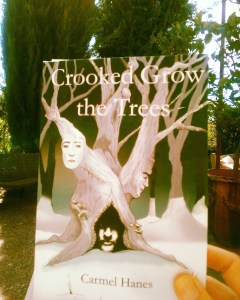
Since our connection is a little story in itself, I will share the comments that lead to my discovery that she had written a book and my desire to read it.

My comment on Praise Song for the Butterflies read:

Without resorting to a happy ever after cliche, I enjoyed the possibility that the experience of trauma didn’t have to equate to continual suffering, that one’s personal narrative does not have to continue to be that which happened in the past, that it is possible to change, to move on, to find community in another place, to rebuild, to have hope. Perhaps that is what happiness really is, a space where hope can grow, might exist, not necessarily the fulfillment of, but the idea, the expression.

to which Carmel replied:

What an eloquent and delightful summary of what happiness might be. “Hope” being the magnet that pulls one through life’s bitter shavings. Thanks for sharing that perspective….I love it.

What a beautiful, illustrative metaphor of hope being the magnet, pulling one through life’s shavings. I was enamoured by the ease with which her turn of phrase became a metaphor and wondered what else she had been reading, only to learn she was a published author, described as follows:

She hid among the likeable misfit toys she worked with in public schools and detention centers during a thirty year career as a school psychologist. The indelible imprint they left on her insisted on expression in this debut novel, exposing the struggles we all have to overcome early influences.

Well that combination of the spontaneous metaphor, a career of working with misfits and the promise of insights into dealing with young people who had been the victim of trauma was enough to make me curious. And what a find it was!

Review

Crooked Grow the Trees is an intriguing title, one I imagine refers to the impact traumatic events have on the growth and development of young minds, some children are unable metaphorically to grow as straight and tall as they ought to, depending on their influences and experiences during childhood.

The novel is a dual narrative between Sophia’s professional life dealing with the boys in the detention centre and her personal life, which has brought her siblings together as their father awaits death, awakening a past she has long buried.

The brilliant cover art depicts the main protagonist Sophia and her brother Marcus, whose way of being in the world has been significantly affected by memories and perspectives of childhood, in particular in relation to their father, the dark element seen in the base of the trunk. Nevertheless, they are survivors, they have used their experience to forge their way ahead (even if they face opposite directions), each attempting to consciously eradicate while subconsciously using to good effect, that which left a mark on them.

Navigating the complex relationship with her father had been like walking through an emotional minefield.  Explosion after explosion had blown so many parts off the relationship there was nothing recognizable left but a spongy mass of raw nerves and charred intentions.

Unfortunately that resulted in them having opposite views in many areas of life, a source of friction that kept them apart, rarely seeing each other, until now circumstances force them to be together again.

They had little in common other than shared ancestry. Marcus held strong opinions that bordered on bigotry, while Sophia was inclined to see people as complex and multi-dimensional, not categorizing as quickly as her brother. They were on different sides of the political divide and rarely agreed on how to solve the social and financial issues the country faced.

What seems like an irredeemable divide proves challenging when it comes to dealing with their father’s affairs, Marcus is inconsolable and Sophia wants to understand why he acted the way he did. Hanes cleverly puts the siblings in a room where unknown elements of their parents lives are revealed, they are able to talk about, clarify and recalibrate events from the past, in a way that helps them understand each other better, healing some of the latent trauma.

A foundational brick in her self-view had been flawed. Years of experience wrapped around this inner core, tendrils of assumptions and beliefs, unraveled as the core foundered. How do you reframe a lifetime of feelings? How do you rewrite decades of misunderstanding?

Similarly in the workplace, when there is disruption, she comes into conflict with the position of staff who take a more punitive approach to dealing with the young. Uninterested in investigating what happened, or any extenuating circumstances, some advocate for severe punishment.

I don’t care what the excuses might be; they simply have to follow the rules regardless of what is happening. WE are in charge not them. The more they get away with these take-it-in-my-own-hands decisions the more at risk we are, not to mention their families and the community when they finally do make it out of here.

Sophia and her colleague appeal for a different approach:

“I think it’s important to understand what led to their decisions and reactions in order to best support them and teach them,” countered Dr Blain. “One cannot separate their actions from their histories, and change only happens when we understand what drives them so we can help them understand that as well. That is our mission, not simply to punish them for wrong actions. We can only gain that understanding through investigating all angles and hear what each person has to say.”

It’s a captivating read, enriched by experience that succeeds in presenting multiple moral viewpoints, forcing the reader to indulge and reflect on all perspectives and attitudes in the various conflicts. The conversations with each of the boys and the situations they respond to are brilliantly depicted, the dilemma feels real, the reader desperately wants them to succeed in being transformed.

Crooked Grow the Trees shows relationships healing through understanding and how those with opposite views can find common ground and forgiveness when memories and events that formed them are shared and discusses. Sadly, it is often not the case that the cause is known or shared or that people have the chance to heal from those traumas that damage them.

I find myself rereading my comment above, seeing how it resonates here too.

Perhaps that is what happiness really is, a space where hope can grow, might exist, not necessarily the fulfillment of, but the idea, the expression.

Buy a Copy of Crooked Grow the Trees via BookDepository