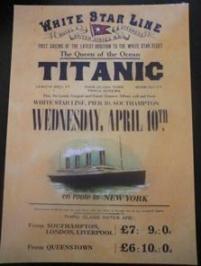
Titanic Revisited Part II

There are so many untold tales and now 100 years on from the Titanic tragedy, stories continue to be retold and others narrated for the first time, linked to the events that unfolded in the wake of the tragedy. Not only do we read accounts of those who were on the boat, but the event is used in fiction, a convenient device for eliminating a character such as the loss of the cousin and heir in Julian Fellowes Downton Abbey series, this event triggering the inheritance crisis that is at the centre of this drama. I read that if all the characters from fictional novels were indeed on the Titanic, it would more than triple the number of passengers she carried and sink it for sure.
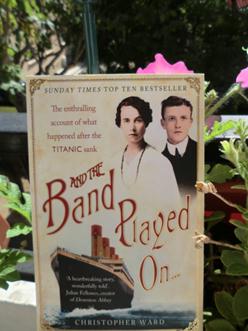
Christopher Ward’sAnd the Band Played On’ relates what happened after the sinking, the confusion and sometimes fictitious messages portrayed by the media, the arrival of the rescue ship SS Carpathia and the subsequent sailing and controversy surrounding the decisions made on-board the Mackay-Bennett, commissioned to return to the site to retrieve bodies. The author is the grandson of Jock Hume and Mary Costin; Jock was on the Titanic and his fiancé Mary awaited his return, three months pregnant with their first and only child.

The Daily Mirror assured its readers that all 2,209 passengers and crew on board the Titanic had been saved  and that ‘the hapless giant’ was being towed safely to New York.

Jock Hume was a 21-year-old Scottish violinist who had made many sailings across the Atlantic; it is believed he lied about his age as he first went to sea in 1905, when he was 14 years old. On the Titanic’s embarkation list, his age is given as 28. He stood on deck with the other members of the band and they played music until it was no longer possible, the band knowing that their act of altruism would likely be the death of them. It is a memory that many survivors recalled, those who were fortunate enough to be waiting in a lifeboat, watching the tragedy unfold before them to tunes that would forever haunt them.
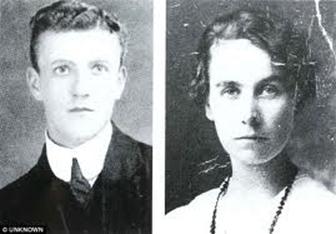
Jock Hume & fiancé Mary Costin
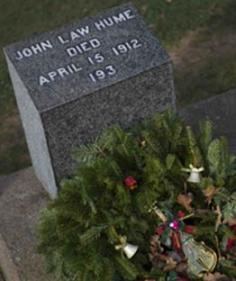
When it was no longer possible to stand, they strapped their instruments to their chests and jumped into the freezing cold waters together. None of the band members survived, however two of their bodies were recovered, Band Master Wallace Hartley (his violin case still strapped to him) and Jock Hume. Hours after the Titanic sank, White Star Line commissioned the Mackay-Bennett to recover the bodies of victims. Of the 209 bodies they brought back, 150 were laid to rest at three Halifax cemeteries. Jock Hume was buried in the Fairview cemetery, a site where visitors still pay their respects today.

The book shares little of the lives of Jock and Mary and focuses more on Jock’s father Andrew Hume, who was also a violinist. He paints an ugly picture of Andrew Hume as a difficult father, a fraudulent businessman and profiteer of his son’s death who rejected Mary and made disturbing accusations against her and the unborn child.

Ward recounts the trial of Jock’s 18-year-old sister Kate who pulled a prank on her father and stepmother in the form of a letter informing them of enemy involvement in her sister’s death during WWI; this escalated into a national outrage and the risk of contravening a newly passed Defence of the Realm Act (DORA) which gave the government wide-ranging powers for the duration of the First World War. Anyone charged under the Act would face a military trial by court martial with a maximum sentence of death by hanging or firing squad.
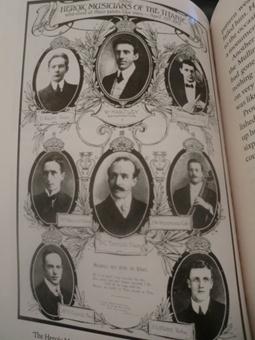
Heroic Musicians of the Titanic

The account of well researched historical facts following the sinking of the Titanic, lend the story a credibility that kept me interested throughout the book. What left me somewhat bemused was the sense of judgement against the Grandfather Andrew Hume. True, he appears to have been less than the perfect father, but he was a successful and motivated businessman and musician, even if exaggeration and a few lies did assist him (doesn’t that continue today?). However, between these pages, there is little room for compassion for the man, we only see him in the most negative light, which I find a little sad in a story portrayed by his great-grandson. To lose a wife, a son and be subject to the murderous revenge of his daughter surely deserves an ounce of compassion, no matter how unscrupulous he was as a person.

Man Booker Prize Longlist

Originally known as the Booker, it used to have just one criterion – that the prize would be for ‘the best novel in the opinion of the judges’. That remains one of the criteria and we know there have been some off years, it is a unique award, not what you would call popular fiction, it is what the organisers refer to as quality fiction to attract ‘the intelligent general audience’ – sounds a little book snobbish to me, but then  judging book prizes is subjective and often sparks a great debate and sometimes even bad behaviour.
The aim of today’s prize is said to be to promote the finest in literary fiction by rewarding the best novel of the year written by a citizen of the United Kingdom, the Commonwealth or the Republic of Ireland.

Last year’s winner was Julian Barne’s Sense of an Endingwhich I admit that I have not read yet, Barnes’ being a novelist I’ve started and stopped a couple of times, but will persevere and read before too long.
As an aside, I saw recently that the 2002 winner Yann Martel’s Life of Pi is being made into a film, directed by Ang Lee and today the film trailer has come out and it looks promising indeed.

And so, the Man Booker long list, announced by the judges today, from 147 submitted, the 12 novels are:

Nicola Barker, The Yips

Ned Beauman, The Teleportation Accident

André Brink, Philida

Tan Twan Eng, The Garden of Evening Mists

Michael Frayn, Skios

Rachel Joyce, The Unlikely Pilgrimage of Harold Fry

Deborah Levy, Swimming Home

Hilary Mantel, Bring Up the Bodies

Alison Moore, The Lighthouse

Will Self, Umbrella

Jeet Thayil, Narcopolis

Sam Thompson, Communion Town

Life of Pi

Six novels will be shortlisted and announced on 11 September and the winner on 16 October 2012.

So have you read any on the list yet, any predictions for the shortlist?

Happy Reading!

Titanic Revisited Part I

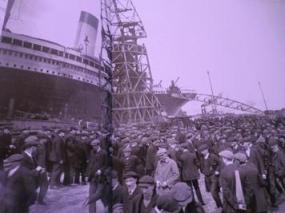
The significance of the Titanic continues to intrigue, or I should say has begun to intrigue me more since a visit to Belfast, Northern Ireland, the city in which it was built, a city which itself grew on the back of the growing shipyards and connected industries associated with it. Between 1851 and 1901 the city’s population increased from 87,000 to 350,000 and was the fastest growing city in the British Empire during that time.

Abandoned shipyards

From the top floor of the apartment in the Titanic Quarter where we stayed, I looked down on a vast, empty space, a maze of square and rectangular footprints of buildings and thoroughfares, once a labyrinth of busyness, that filled with the more than 30,000 men and women who would cross the bridge and walk or cycle down Dee St to work.

I contemplate that wasteland with its perpendicular lines; the skyline still dominated by two tall, bright yellow Harland & Wolff gantry cranes, a symbol which continues to salute the past, and I try to imagine the hive of activity that it once was.

Turning the last pages of Walter Lord’s ‘A Night to Remember’ I read in the end chapter Facts About the Titanic that she was launched at the Belfast shipyards of Harland and Wolff on 31 May 1911. The date rings a bell and I look in my diary and see that my daughter and I arrived in Belfast on 31 May 2012, exactly 101 years on from that auspicious date.
Julian Fellowes, creator of the series Downton Abbey and the film Titanic asks in the foreword why this tragedy still haunts us, as it does and certainly the opening of the significant Titanic Belfast museum is a testament to that. He suggests:

Maybe it is because the ship seemed, even then, to represent that proud, pre-war world in miniature, from the industrialists and peeresses and millionaires and Broadway producers who sat around the vast staterooms in first class, to the Irish and German and Scandinavian immigrants packed into third, carrying with them all they possessed, on their way to a new life in America….And as they headed for destruction, so did the larger world they represented, which would soon hit its own iceberg in the shape of the First World War.

Ist Class cabin on board Titanic

Walter Lord’s book is really just that, a factual account of what happened interspersed with the comments to create a narrative of various passengers and crew throughout the two to three-hour ordeal, from the moment of impact when the ship sideswiped an iceberg, until the Carpathia arrived in dock at New York and the truth about how few survived from the more than 2,200 who had been on board when she set out was revealed. He shares the reflections of many people from all classes, providing an overview of the atmosphere and a brief introduction to the individuals thrown together in this catastrophe.

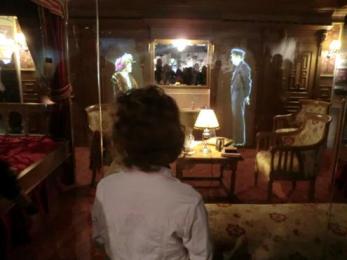
One of the significant complexities which the Titanic represented, was the separation of the classes, the architectural blueprints clearly show the delineation between 1st, 2nd and 3rd class and the museum today exhibits perfect replicas of the rooms they inhabited, complete with holograms of talking passengers. This distinction also carried through to influence the evacuation of passengers, with 1st class women and children given priority, no children from 1st or 2nd class were lost, while 53 children in 3rd class were lost (23 saved).

Titanic Belfast Museum

Even as the Mackay-Bennett returned to the scene to retrieve bodies, similar principles were applied. There were too many bodies to cope with, so many were buried at sea, arbitrary measures were used to try to decide which bodies should be kept, those with tattoos were identified was 3rd class citizens and given a prompt sea burial. At the time it wasn’t criticized, but the sinking of the Titanic could be said to have been a turning point in this respect, it was the end of the Edwardian era, just before the outbreak of World War I and many things would change in the period that followed from a social perspective.

Looking at that period from 1900 to 1912, I noted that there were many exciting and exhilarating firsts, the Wright brothers first flight in 1903, the NY subway opening in 1904, the first European country to give women the vote in 1906 (Finland), and the first electric washing machine released in 1907. Ford introduced the Model T in 1908 and electricity was becoming more widespread.

Titanic Quarter

By contrast, in the years that followed the Titanic, personal income tax was introduced in the US in 1913, World War I started in 1914 which propelled women into roles they had never considered before and equality between the classes and the sexes began its long path towards some kind of rebalance.

Now that I have the context of the ‘Night to Remember’, I have started to read ‘And the band Played On’ an account written by Christopher Ward, grandson of the 21 year-old violinist Jock Hume, who together with the other band members of the Titanic, kept playing until the ship disappeared.

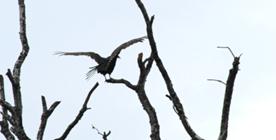
Buzzard

Friday Fictioneers is the brainchild of Madison Woods who posts a photo prompt each Friday to inspire followers to write a piece of flash fiction. After observing Rich participate I decided before I read his work, to see if anything was lurking in the depths of my imagination that wanted out, and Voila here it is, slightly longer at 150 words, but I’m ok with that.


A Man’s Best Friend

What’s she called?
Buzzard.

Buzzard? As in bird?
Yeh mate, Buzzard.

Bit strange for a dog don’t you think?

If I thought it was strange I’d have called her Bud, wouldn’t I?

Yeh, I guess.
Come on then, you gonna give me a hand or not. You get the front and take it slow down them stairs, I got the back. And no chat, I don’t want nosy neighbours asking stuff ‘ll give us more to do.

The two men lifted the long rectangular box off the table and walked towards the front door of the near empty apartment. Descending the stairs, they kept the deadweight container level until they got outside then slid it into the back of the waiting yute.

But where did you get Buzzard from?

Easy, wasn’t it. Last thing I saw before I picked up the body. That and the dog. So you gonna drive or me?

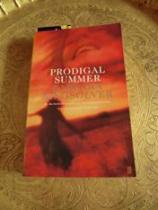
Prodigal Summer

Animal nature, human nature, bugs and insects, forest life, their dependence and interdependence, habits good and bad and how the balance is affected when death, destruction or any kind of change is introduced; how species adapt, how human beings cope – or don’t – all of this we find in the juxtaposition of creatures assembled from the thoughtful poetic pen of Barbara Kingsolver in Prodigal Summer as she weaves three stories variously referred to in three alternating chapter titles, Predators, Moth Love and Old Chestnuts.

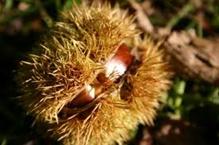
It may be due to the sound of the cicadas screeching outside while I read, or the richness of Kingsolver’s prose, but this book exudes the heat of summer and its associated sensations. It places you deep in the forest on the mountainside, heightening all the senses and bringing attention to every sound and movement, witness to the presence of all manner of wildlife pulsing just beyond what the eye can see.

Predators – Essentially the story revolves around three female characters, Deanna, the wildlife biologist living in a forest cabin working as her kind of conservationist, destabilised by the presence of a young hunter in her territory and her preoccupation with guarding a young coyote family that have returned to the forest wilderness.

She shares her environment with a snake, another predator and a metaphor for man, the snake is natural to the habitat and will expose Deanna for what she really is – not just a qualified biologist tending nature, keeping man and his hunting instinct out – but a woman with a suppressed but natural maternal instinct, depicted by her attachment to a family of chickadees. When the fledglings fall prematurely out of the nest, she puts them back, justifying her intervention in nature’s way, trying to alter the otherwise harsh survival odds nature has given the little birds, more in their favour. She succeeds in keeping them all alive, only to discover on her return from a walk, four telling bulges in the coil of the sleeping black serpent.

When the snake finally leaves she feels something shift inside her body – relief, it felt like, enormous and settled, like a pile of stones on a steep slope suddenly shifting and tumbling slightly into the angle of repose.

Moth Love by Nusio21

Moth Love – Lusa is a bug scientist, now local farmer’s wife, though still perceived as an outsider with her mixed cultural background and continued use of her foreign sounding maiden name. She is trying to adapt to her new role and changed circumstances while staying true to her beliefs and recognising her not so traditional, but well-founded knowledge and approach to farming.

In the summer after … Lusa discovered lawn-mower therapy. The engine’s vibrations roaring through her body and its thunderous noise in her ears seemed to bully all human language from her head, chasing away the complexities of regret and recrimination. It was a blessing to ride over the grass for an hour or two as a speechless thing, floating through a universe of vibratory sensation. By accident, she had found her way to the mind-set of an insect.

Chestnuts

Old Chestnuts – The third character(s) are the elderly and persistent Nannie Rawley and her equally aged, cantankerous, fixed in his ideas neighbour, the widower Garnett. They trade insults and unappreciated advice across their boundaries, but can’t seem to keep away from each other despite their polar opposite views.

Halal Goat

Not that it detracted from the reading of the book, but I did ponder the similarity in conviction of the three female characters, it is not clear whether or not they know each other for much of the book, but with such similar attitudes in their various fields, in a real community I would have expected them to have discovered each other and had some kind of interaction or at least knowledge of each other from the beginning. Sometimes this is a deliberate tactic by the writer to keep the connections between people vague until the end, to shape some kind of revelation. It just seemed like a bit of a coincidence that three such characters living in a traditional farming community had such little awareness of each other.

As much a study of nature, as a story of that which passes between these characters during this one summer, Prodigal Summer is indulgence of the satisfying, learned kind; it is compelling reading and a lesson in the wonder, beauty and balance of nature and humanity.

City of Love

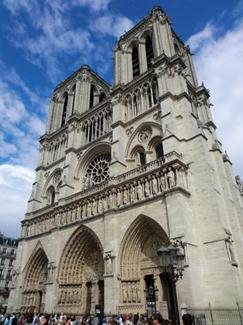
The immense and almighty Notre Dame de Paris

I have been busy retracing the many steps of the monuments of Paris these past few days, so not much time for reading, although I did manage to finish Barbara Kingsolver’s excellent ‘Prodigal Summer’ which I will write more of soon and following on from this glorious visit to Paris, I am now immersed in Hemingway’s ‘A Moveable Feast’ keeping me in Paris for a few more days yet, albeit the 1920’s.

If you need any more proof that Paris is indeed the city of love, check out this superb photo I took of that beautiful feminine monument ‘La Tour Eiffel’, is that not a beautiful heart shining down on the population?

We took an evening stroll up to the Sacre Cœur cathedral, two minutes from where we were staying.  In fact I was babysitting that evening while friends from New Zealand were at a Bruce Springsteen concert, I have to say it was the best night looking after 3 children ever, practicing french phrases during dinner and an impressive after dinner promenade to one of the city’s marvels.

Here is a detail from one of the tower walls of L’Arc de Triomphe. I love the dramatic detail of the sculptures and wall friezes.

Despite the beautiful blue skies you see, it did indeed rain every day I was in Paris, it reminded me a little of New Zealand, that rain, sun, rain, sun, beautiful green trees.

However, something that only Paris can offer, her history of monarchs, uprisings, revolutions and battles and 60,000 square metres of art works in one museum alone and then there’s the people watching, all chairs facing the street for the best view, it’s amazing what you observe and overhear during the downing of une noisette (small coffee with a dash of milk).

Now back in Aix-en-Provence where the temperatures are consistently hot and as I got out of the car, I am greeted by the incessant noise of the cicadas, who have long announced the debut of summer and witnessed the emergence of one of these gigantic insects from its chrysalis on the wall right next to me, the moment before he too joined that eternal cacophony of sound reminiscent of the season.

*

Au revoir Paris, je reviens bientôt.

Summer Reads

I’m not one for compiling lists of what I am going to read ahead of time, because I value too much the freedom and spontaneity of a vast sea of choices each time I finish a book, and often the reading experience will lead me on to the next thing.

Like reading Barbara Kingsolver’s ‘Prodigal Summer’ straight after ‘The Namesake’. How could I know that after listening to the group discussing the book I would have a conversation with a local poet about the beauty of sentences and Jhumpa Lahiri’s essay and that she would tell me I must read Kingsolver’s book.  It was sitting on the shelf unread and thus I abandoned all other reading ideas and jumped straight into it.

100 years on, Titanic Belfast Museum

But I do love looking at the lists, always feeding into the mental TBR list, noting books I might wish to read or to keep an eye out for.

I could say I have intentions for summer, like the two Titanic inspired books I bought on a recent visit to Titanic Belfast, the excellent museum opened in March this year.

‘A Night to Remember’ and ‘And the Band Played On’ also seem appropriate companions to Charlotte Rogan’s ‘The Lifeboat’ which I have on kindle.

To help you decide, I wanted to share this excellent flowchart designed by Teach.com to encourage students to find a book of their choice, there are 101 books shown, inviting readers to consider fiction versus non-fiction, classic or contemporary and many other options.  I keep coming across it and there’s something appealing about viewing images of covers rather than just a list of titles, so enjoy and I hope you find something for your own summer read!


So do you plan your reads or are you open to the spontaneous?
Summer Reading Flowchart

Via Teach.com and USC Rossier Online

Gogol, The Namesake

I picked up Jhumpa Lahiri’s first collection of short stories ‘Interpreter of Maladies’ from the library recently, I seem to have read her work in reverse order, starting with her most recent collection ‘Unaccustomed Earth’ a collection of stories of the experience of second generation immigrants and moving eventually to the book that won the prize.

As I mention in one of my first (and most read) blog posts ‘Why People Don’t Read Short Stories’, it is not my habit to read a short story collection straight through, I stop and start and read them at random and so it has been with both these enticing volumes.

I noticed the bookshop book club was reading ‘The Namesake’ this month and I had just read an excellent essay by Lahiri in the New York Times called ‘My Life’s Sentences’ relating to her love of certain paragraphs in books and the construction of a sentence, so I decided to read her only novel ‘The Namesake’ which had been on the shelf since seeing the Mira Nair directed film a few years ago, which I loved.

‘The Namesake’ refers to Gogol, the Bengali son of the Ganguli family who immigrate to America, a consequence of Ashoke’s (Gogol’s father) changed outlook on life following a serious train accident, a catalyst for change that impacts and shapes the lives of all his family, an event that he does not speak of to his son until he is an adult.

The train is used as a metaphor for change in the novel, many of the significant turning points in the lives of the characters take place during a train journey, which in itself transports people physically from the familiar to a less familiar location and is an environment that one usually cannot escape from.

Not speaking about things is common among these characters, aided by the distant third person narrative which skips from the present to the past, in particular the most dramatic events are seen through the prism of the past, drawing the reader into this protective shield from potentially harmful events.

Gogol, is American, but his Russian name, his Bengali family and their culture mark him as different to many in his community. His home life is different to the average neighbourhood child and he finds himself like many children of immigrants and third culture kids, living between two worlds.

Whether we are conscious of it or not, we all grow up seeking to affirm our sense of personal and group identity, absorbing those questions of Who am I? Where do I belong? Traditionally, the family and the community reflect that notion and it is not until we step outside those comfort zones that we might question it. But for children growing up among worlds and between cultures the awareness comes much earlier.
For most of his life once he becomes aware of the differences, Gogol does what he can to minimise them, seeking out the ordinary, trying to blend in. He tries to suppress his cultural links, portrayed through his choice of girlfriend and change of name.

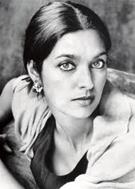
Jhumpa Lahiri

Like Lahiri’s short stories, which portray composites of life for immigrants of first or second generations from India, this book highlights one family’s experience, the dilemmas that each generation face which will mould their characters. We follow Gogol’s journey, try to understand it, imaging ourselves in the shoes of another, witness to the culture clash within this one family.

I consider briefly the clash of cultures within my own small family and understand the inclination to put it toward the back of mind. Writing is a good option for expressing the pathways of these experiences. I wonder if the presence of a large community from the parent culture assists or hinders integration. I find these stories leave many more questions than answers; there is no guide, just individual experience and the necessity to persevere, to survive.

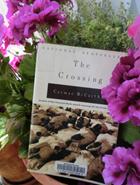
The Crossing

This is the second in the ‘The Border Trilogy’ series after ‘All The Pretty Horses’, that book being my first read of a Cormac McCarthy novel which turned me into a fan. The first book follows two young boys on their way toward Mexico to find work where they endure numerous perilous adventures including prison, first love, betrayal and death. Quite possibly the least bleak of McCarthy’s work, which may account in part for why I enjoyed it so much, but even his more downbeat work has much that I admire linguistically.

In ‘The Crossing’ we meet 16 year-old Billy who doesn’t intend to set out on an adventure, it happens almost by accident, he feels the need to put things right; three times he does so, each effort requiring him to cross the border into Mexico on a personal mission.

The first trip he attempts to return an injured, pregnant wolf he has trapped. Rather than kill her, he tries to return her to the mountains where she came from. The second journey with his brother Boyd is an attempt to retrieve stolen horses and the final crossing Billy makes alone to find his missing brother and bring him home.

To read McCarthy is to take a long, sometimes grim journey; a voyage that traverses rough terrain and encounters more evil than good ,while observing the character moulding experiences of its young male protagonist. But worthwhile for the linguistic pleasure of his descriptions and dialogue (some of it in Spanish).

What does the corrido say?

Quijada shook his head. The corrido tells all and it tells nothing. I heard the tale of the güerito years ago. Before your brother was even born.

You don’t think it tells about him?

Yes, it tells about him. It tells what it wishes to tell. It tells what makes the story run. The corrido is the poor man’s history. It does not owe its allegiance to the truths of history but to the truths of men.  It tells the tale of that solitary man who is all men. It believes that where two men meet one of two things can occur and nothing else.  In the one case a lie is born and in the other death.

McCarthy is no optimist, to take a journey into his imagination is tough and if this novel embraces anything, I think it is futility, the shadow that neutralises youthful exuberance and withers righteous intentions, that lingering threat that will keep an older, wiser man within reach of his homestead and away from the troubles that lie in wait of the restless, idealistic man on a dubious if well-intended mission.
But it is in his nature to make that attempt to set things right, not to let things be, to provoke a response and assert his rights, no matter how foolish they appear or dangerous they become.

I really enjoyed taking my time reading this novel, it is written in language I like to be immersed in and is thought-provoking along the entire journey and long after, I don’t need more than that from a good read and leave you with another favourite passage from near the end.

You look like you might have been down here a while, the man said.

I don’t know. What does that look like?

Like you need to get back.

Well. You probably right about that. This is my third trip.  It’s the only time I was ever down here that I got what I come after.  But it sure as hell wasn’t what I wanted.

A Piece of the Mosaic

Thank you to inspirational talent Kimberly Sullivan who lives in Rome and has written ‘In the Shadow of the Apennines’ set in the mountains of Abruzzo. She tagged me in the ‘Be Inspired’ blog hop hosted by ‘Page After Page’:

All of our stories come from somewhere, whether it be a dream, another book, a life event…So, I thought why not give people the chance to talk about their inspirations as well as their stories?

To participate, I should answer 10 questions about my novel and then tag 5 writer’s:

1. What is the name of your book?

‘A Piece of the Mosaic’

2. Where did the idea of your book come from?

It started with a prompt in a creative writing class at the Groucho Club in Soho; the tutor asked us to spend 5 minutes writing about a character. It was the scariest part of the class, that compulsory, time limited plunge into the unknown with others furiously scribbling away.

Paralysed, I had a vision of the back of a young man standing on a pier smoking a cigarette, gazing out to sea . He was wearing black trousers and a black leather jacket, observed by two schoolgirls giggling on a bench. After the class finished, I could not get that man out of my head.

3. In what genre would you classify your book?

I hate labels, I hope this book crosses as many genres as possible, but if I had to guess I would say it is contemporary, cross cultural fiction.

4. If you had to pick actors to play your characters in a movie rendition, who would you choose?

I don’t know any current Italian actors, so I would suggest a young man of Mediterranean origin to play Alfredo and because this question is too hard, I’m going to adapt it and say I dream of music composed by Ennio Morricone and the film directed by Giuseppe Tornatore director of Cinema Paradiso and Ba’aria. Authentic it must be.

5. Provide a brief synopsis.

Alfredo’s home village – Liguria

Angry with his father after his mother’s death, young Italian chef Alfredo, abandons the fishing village he has lived in all his life and travels to England, eventually finding a job in the seaside town on the South Coast. In return for low rent, he agrees to an unorthodox request from his spinster landlady Claudette, to help her find the sister she has not seen for 30 years since she and her husband immigrated to New Zealand.

Alfredo discovers more than a long-lost sister and the search soon becomes his own, to find Claudette’s niece Amber; the journey leading him towards everything he has tried to avoid in order to learn the truth.

6. Is your book already published/represented?

The synopsis and first three chapters have been read by 3 agents in London, with encouraging responses but declining representation and the full manuscript was requested by the fiction editor at Penguin NZ, who enjoyed it and suggested I seek representation in the UK.

 In order to establish some credibility with my writing, I decided to write a blog before I send it out again, so here I am blogging away, sharing my passion for the written word.

7. How long did it take you to write your book?

The actual writing part probably took about a year, but I wrote it in two bursts, the first half when I lived in London and on a whim travelled to Liguria to spend a week in a fishing village imagining and writing of lives other than my own.

I finished it in the first six months of arriving in France unable to speak French – the best excuse in the world not to have a proper job and to finish a first novel.

8. What other books within your genre would you compare it to? Or readers of which books would enjoy yours?

There are many books about people from the English-speaking world going to live in a non-English speaking country, both fiction and non-fiction, Alfredo isn’t leaving to see the world, he is escaping.  It is a story that questions identity and confronts issues of adoption and family.

I think it will appeal to people who like books that take them to places they dream of visiting and that introduce them to issues from different cultural perspectives, if anyone has any suggestions as to any other book this sounds like, let me know.

9. Which authors inspired you to write this book?

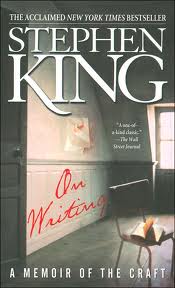
Two authors come to mind immediately, ironically Stephen King influenced this book, because I read his excellent slim masterpiece ‘On Writing’ midway through writing.  After reading it I changed a few things, I stopped writing longhand, I set a 1000 words/day word count (his is 2,000 words/day) and I stopped editing as I was writing, I just wrote it out until the end – terrified it would be crap, but discovered how to create pace.

The other author who spent some time residing in my subconscious was Italo Calvino, it took me a while to figure out what he wanted; now I know – but it’s a secret.

10. Tell us anything that might pique interest in your book?

Here are two extracts that survived that very first writing exercise, sitting in the Groucho Club in London, searching the recesses of my mind for inspiration.

Looking out over the swollen sea, Alfredo smiled knowingly at how her moods changed, one moment bright and sparkling in her refinery, phosphorescence glittering like sequins in the moonlight, the next as she was now, irascible, dark and brooding, like a young lover scorned, beauty transformed into bitterness. He watched a fish jump momentarily from her clutch, as if trying to escape her volatile and uncompromising mood, then witnessed the force of gravity, the sea’s ever-trusting accomplice, toss the cold-blooded vertebrae back into the maelstrom from which it had tried valiantly to escape.

He threw his half-finished cigarette into the sea and she hissed at him in reply. He had never been a regular smoker in Italy and wished he could kick the habit, cigarettes had become a comfort since he came to England, he liked to roll them as much as he liked to smoke them, it gave his hands something to do when his mind was restless. Thoughts extinguished, he walked down the length of the pier, eyes front, not looking at two giggling teenage girls to his right but sensing their eyes following his footsteps, over the wooden planks, where if one’s gaze was concentrated enough, you could see the pregnant swell of the waves below, as the tidal ebb carried them to and from the shore.

And now to tag 5 writers, all of whom are an inspiration to me:

  1. Brenda Moguez – Passionate Pursuits
    – Brenda is a prolific, unique and inspirational blogger with a rich family and personal history to draw on, not to mention a gigantic imagination, it’s just a matter of time before we will be reading her novel, now doing the rounds of agents.
  2. Juliet GreenwoodJulietGreenwoodAuthor – Juliet lives in a traditional Welsh cottage between the romantic Isle of Anglesey and the majestic mountains and ruined castles of Snowdonia, she is living the dream, a published writer and avid gardener; she is an inspiration.
  3. Patricia SandsEveryone Has a Story to Tell
    – Patricia has published a book about friendship, fun and the complexities of relationships among women, drawing inspiration from her own experiences. Every Friday she blogs about France and her current WIP (work in progress) is set here.
  4. Julie Christine Chalk the Sun
    – Julie is a Francophile, she is a reading writer, travels often and writes a fantastic book review. Just waiting for her to plunge right into writing that novel, a WWII star-crossed romance between a young French girl and a German POW, inspired by true events.
  5. Jen ThompsonChronicles of Jen
    – Jen is another writer who loves to read and shares her thoughts when she does, she’s a talented writer, lives in a caravan and is out there observing characters and seeking inspiration while serving hotdogs and popcorn. She may not be able to participate because her idea is so great, someone might steal it J
  6. Nelle NelleWritesI’m going to add one more, because I couldn’t have a list of writers without including Nelle, who not only is a great writer, but is a loyal follower and comments on all my reviews, even though her book budget is severely restricted.