The Warmth of Other Suns by Isabel Wilkerson (2010)

Inspiration in A Title
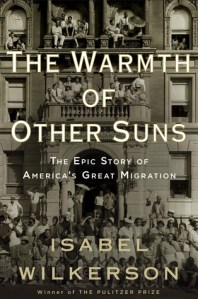
The book title ‘The Warmth of Other Suns’ is a line written by the novelist Richard Wright (1908-1960) who wrote about the plight of being African-American, most notably in his novel Native Son (1940) and autobiography Black Boy (1945). It provides the opening to this book. A migrant from Mississippi, he set out on his journey in 1927 for Chicago.

“I was leaving the South
To fling myself into the unknown . . .
I was taking a part of the South
to transplant in alien soil,
To see if it could grow differently,
If it could drink of new and cool rains,
Bend in strange winds,
Respond to the warmth of other suns
And, perhaps, to bloom”

Isabel Wilkerson is an American journalist and the first woman of African-American heritage to win the Pulitzer Prize in journalism. Both her parents were part of the migration North, as were many in the neighbourhood where she grew up. As a journalist she heard many stories of similar journeys and began to join the dots and see the bigger picture, which lead to the premise of this book.

Non-Fiction Personal Narrative

The Warmth of Other Suns: The Epic Story of America’s Great Migration is a factual account of the little acknowledged great migration of African Americans out of the Jim Crow* Southern states of America, beginning after WW1 in 1915 continuing until the 1970’s, a long continuous diaspora that had a significant impact on families, their culture and connections between their new home and old.

Who or what is Jim Crow?

Jim Crow is an adjective used to describe a set of laws that southern states devised regulating every aspect of black people’s lives, solidifying the southern caste system, prohibiting even the most casual and incidental contact between the races. They would come to be known as the Jim Crow laws, though it is unknown who precisely Jim Crow was or if anyone by that name even existed.

One Woman’s Personal Journey to Accumulate & Document History

After fifteen years of research, studying many reports and papers and archives and conducting hundreds of interviews and journeys, Isabel Wilkerson decided to focus the narrative of this great flux of humanity, choosing three people who left over three decades, for different destinations. Their stories provide specific and heart felt accounts of their journey’s and the life they created.

Historians would come to call it the Great Migration. It would become the biggest under-reported story of the twentieth century. It was vast. It was leaderless. It crept along so many thousands of currents over so long a stretch of time as to be difficult for the press truly to capture while it was underway.

The result of that research is this book documenting the experiences of those who are representative of the larger whole, essentially the defection of six million African Americans from the South to the North, the Midwest and the West, from 1915, World War I, until 1970 when the South began truly to change.

What binds these stories together was the back-to-the-wall, reluctant yet hopeful search for something better, any place but where they were. They did what human beings looking for freedom, throughout history, have often done.

A Historical Study

Isabel Wilkerson Caste The Warmth of Other Suns Great Migration

Isabel Wilkerson, Author

Intertwined with these personal narratives, Wilkerson shares historical facts, bringing together a history of the struggle of a vast group of American citizens who left their homes, their ancestral roots and memories for another part of the country where they hoped to find freedom and be treated as equals.

Though they would find opportunity, the search for equality would be somewhat illusory, the oppression taking a different form, the discrimination more clandestine, eventually erupting into the civil rights movement and the Civil Rights Act of 1964.

Three People from the South, Three Decades, Three Destinations

Of the three whose lives unfold in this gripping narrative, Ida Mae Brandon Gladney would leave first in the 1930’s and ultimately end up in Chicago; George Swanson Starling left in the 1940’s to live in New York and Robert Joseph Pershing Foster departed in the 1950’s headed for California.

Ida Mae Brandon Gladney

We meet Ida Mae in her hometown of Chickasaw County, Mississippi, in 1937, the wife of a sharecropper, working the land of a planter picking cotton. They were a young couple who worked hard and stayed out of trouble, who decide to leave after witnessing the terrible beating of a cousin, in a case of mistaken identity. Their vulnerability to false accusation was a catalyst to their decision to leave. The North was facing a labour shortage and actively recruiting workers from the South.

Oftentimes, just to go away, is one of the most aggressive things that another person can do, and if the means of expressing discontent are limited, as in this case, it is one of the few ways in which pressure can be put. John Dollard, Yale Scholar

Ida Mae and her husband struggled initially to find work, reminding me of the many who waited, Bernice McFadden’s Harlan raised by his grandmother while his parents sought their fortunes in the North and in Not Without Laughter, Langston Hughes and his mother waited for his father to send for them.

Competing with other immigrant groups, the increased cost of living, raising a family, they persevered in continual determination to keep bettering their situation.

She was the matriarch of her family. She was one of the wisest and most beautiful people I’ve ever met in my life. Doing this book changed me in so many ways. She had a way of – a kind of Zen perspective, if you can say – if you can imagine it, of accepting what was and recognizing what she couldn’t change, and moving on and not living in the past. And she was beloved by everyone who knew her.


George Swanson Starling

Photo by julie aagaard on Pexels.com

George held aspirations to further his education, doing well in school, but there was pressure on him to work in the orange groves like everyone else. He made a mistake that altered the course of his life, though not his underlying essence and ambition. Working in the fruit groves using his intelligence and ability to bring people together to collectively try and improve their wage, made his existence dangerous accelerating the need for him to leave.

Jim Crow had a way of turning everyone against one another, not just white against black or landed against lowly, but poor against poorer and black against black for an extra scrap of privilege. George Starling left all he knew because he would have died if he had stayed.

He would leave Eustis, the interior citrus belt of Florida and take the twenty-three hour train ride up the Atlantic coast to New York alone, not knowing when he’d be able to send for his wife Inez. That set something of a precedent for their relationship, though it was a wound that went back further than her marriage, for ironically George would spend his working life away from home, riding the rails up and down the East Coast as a railway attendant.

Robert Pershing Foster 

Photo by Jan Kroon on Pexels.com

Robert was the youngest son in a family of high achievers from Monroe, Louisiana, his brother Madison a doctor, encouraged him to go into partnership, but Robert had other aspirations.

The only way that someone as proud and particular as Pershing could survive in the time and place he was in was to put his mind somewhere else. He grew up watching his parents exercise exquisite control over the few things they were permitted to preside over in life.

Through marriage and his profession he aimed higher and further than most and had high expectations of himself and others in consequence. A proud man, he drove his way to California in his Buick Roadmaster, taking a circuitous route to Nuevo Laredo on the Mexican border, satisfying his craving for adventure and for doing what he did in grandiose style. Unsure whether he could make it in Los Angeles, he drove to Oakland before making his decision.

It was looking like Monroe, which was perhaps one reason why people from Monroe had gravitated there in the first place and made a colony for themselves. It was precisely what Robert was looking to get away from. It was not living up to his glamour vision of California. It felt as if he had driven all this way for the same place he had left. Los Angeles had seduced him. Oakland didn’t stand a chance.

The Structure, The Decades, The Fear, The Exodus, The Dream, The Reality

Though they leave in different decades, the narrative has been beautifully orchestrated to allow their stories to be read concurrently, so we learn about their circumstances in the South first, discover their personal motivations for leaving, their plans and then their departure. Each new section tells their three stories.

It’s a brilliant way to join the stories and see the mass migration for the terrifying, courageous yet exciting act it was. The departures, no matter which decade they were in, all carry within them an undercurrent of fear of the unknown, and it is with some relief that I recall I’m reading about people who will survive into old age, the danger surrounding their life-changing departure palpable nevertheless.
The stories are rich with detail and anecdote, the historical references are eye-opening and important to acknowledge. It is an excellent book, a thorough examination of the movement of people out of oppression towards equality, rights that continue to be fought for today. It’s impossible to do justice to the book, both it’s humanity and history, it’s an astounding accomplishment and well worth reading.

We cannot escape our origins, however hard we might try, those origins contain the key – could we but find it – to all that we later become. James Baldwin, Notes of a Native Son

Isabel Wilkerson’s new book Caste: The Origins of Our Discontents is published on August 11.

Have you read any novels that incorporate a character making this migration out of the South? Do let me know in the comments below.

Further Reading

TED Talk by Isabel Wilkerson: The Great Migration and the Power of A Single Decision

New York Times: Isabel Wilkerson’s Caste is an instant American Classic about our abiding sin by Dwight Garner

Chicago Tribune: Isabel Wilkerson’s Caste is is about the strict lines that keep us apart — lines that are more than race or class

The Sea Around Us by Rachel Carson (1951)

The Sea as Home

Exactly five years ago I came across and read Rachel Carson’s debut novel Under the Sea-Wind (1941), not the book she is most well-known for, that is Silent Spring (1962) but her own personal favourite and definitely one of mine.

It was the first in her Sea Trilogy a beautifully told narrative account of three creatures that live within the ecosystem of the sea, a female sanderling named Silverbar, Scomber the mackerel and Anguilla the migrating eel.

The Sea as Mother

The Sea Around Us Rachel CarsonIn The Sea Around Us Carson makes the sea her subject, addressing it in three parts, Mother Sea, The Restless Sea and Man and the Sea About Him.

Reading nonfiction books on marine biology or ecology isn’t something I would normally choose to do on holiday but Rachel Carson writes narrative nonfiction that turns science and observation into a thrilling and insightful pageturner. And this second book in the trilogy, a New York Times bestseller, is just as engaging as her debut was. I loved it.

Its potency lies in the charm and skill of the writing, its erudition and rich organisation of facts, and in its personal reticence – how quietly it captivates our attention. Before we know it we are charmed into learning about the wonders of the ocean, then into a deep awareness of  not only their health but how it affects that of the whole natural world. Through sharing Carson’s research, we become acutely sensitive to the interdependence of life. – Ann Zwinger , Introduction

The Sea as Teacher

Though published in 1951, therefore knowing our understanding of marine ecology has continued to develop, most of us likely won’t have read or studied too deeply about the sea, in fact, many remain (with good reason) in fear of it – not understanding her mood changes, dangerous rips, turbulent surf and the menacing creatures that live within her depths.

The Sea Rachel Carson Marine Ecology

Photo by Pixabay on Pexels.com

Here a casual reader with an interest in nature writing of a literary kind will learn and absorb much about the sea, the ocean, her characteristics, behaviours, secrets and influences with little effort, such is her mastery of narrating a serious subject in an engaging and memorable way.

Talking about the seasons, we discover the sea too experiences events that herald those forthcoming changes.

The lifelessness, the hopelessness, the despair of the winter sea are an illusion. Everywhere are the assurances that the cycle has come to the full, containing the means of its own renewal. There is the promise of a new spring in the very iciness of the winter sea, in the chilling of the water, which must, before many weeks, become so heavy that it will plunge downward, precipitating the overturn that is the first act in the drama of spring.

From Sea to Land, and the Moon Question

Taking us back to the beginning we learn how the sea might have come about, reading of a once believed theory that the moon may have been a child of the earth, born of a great tidal wave of earthly substance, torn off and hurled into space, leaving a scar or depression on the surface of the globe, that now holds the Pacific Ocean.

Whether or not that is true, we do know the moon affects the tides and cycles of many animals. Where the Moon came from continues to be debated today.

We familiarise with the evolution of tides, the moon effect, the significant evaporation of the Mediterranean which makes it excessively salty and more dense and learn of the rush of a current from the Atlantic that replaces it, lighter water that pours past Gibraltar in surface streams of great strength.

jellyfish sea life Rachel Carson

Photo by Artem Mizyuk on Pexels.com

It was not until Silurian time, some 350 million years ago, that the first pioneer of land life crept out on the shore.

When they went ashore the animals that took up a land life carried with them a part of the sea in their bodies, a heritage which they passed on to their children and which even today links each land animal with its origin in the ancient sea. Fish, amphibian, and reptile – warm-blooded bird and mammal – each of us carries in our veins a salty stream  in which the elements sodium, potassium and calcium are combined in almost the same proportions as in sea water.

Providing a succinct and easily readable account, we begin to understand the complexity of ocean currents, of streams within oceans, their discovery by sailors and captains, the reluctance of men to share their navigation maps, the effect on human migrations.

We read how interconnected everything is, the winds, waves, the currents, the deep abyss, the tendencies of schools of fish, explanations for their sudden disappearance and the effect on our livelihoods; the appearance of new land formations via underwater volcanoes, creating islands that emerge from the sea, we hear of airborne spiders riding high for miles, how life emerges on a protuberance from the sea and how easily it can be wiped out again.

It closes with the foretelling of the climate change we are already in, and the many that have been.

It is almost certainly true we are in the warming-up stage following the Pleistocene glaciation – that the world’s climate over the next thousands of years, will grow considerably warmer before beginning a downward swing into another Ice Age.

Rachel Carson had an incredible gift of writing the scientific complexity of the ecosystem of the sea and her creatures, sharing what was known at the time and hints of that which wasn’t in a captivating way, born of a great passion and love of the sea, the shore and all that lived within or depended on it.

Ideal Lake or Seaside Reading

Rachel Carson The Sea Marine Ecology

Rachel Carson, Marine Biologist (1907-1964)

I read this on holiday sitting next to a lake, watching on a micro level those same factors that move a body of water, that give it life, occasionally seeing the little fish who’ve made a home in it, the plant life in the water and beside it. And we humans, making it our playground for the summer. In much appreciation and gratitude.

“The shore is an ancient world. I can’t think of any more exciting place to be than down in the low-tide world, when the ebb tide falls very early in the morning, and the world is full of salt smell, and the sound of water, and the softness of fog.” Rachel Carson

Further Reading

New Yorker: The Right Way to Remember Rachel Carson

Brain Pickings: Why the Sea is Blue: Rachel Carson on the Science and Splendor of the Marine Spectrum 

Buy a Copy of The Sea Around Us

Writers and Lovers by Lily King

A thirty year old woman named Casey rents a tiny room and is soon to be evicted, she’s under a mountain of student debt, prone to crying, having lost her mother quite suddenly, is estranged from her father who tried to turn her into a golf pro as a youngster, an activity she now refuses to have anything to do with.
Casey is a waitress in a restaurant, on her last warning, is using her one month of being eligible for health insurance to have as many tests as possible and is paranoid about a lump in her armpit. And undecided about the two men she is simultaneously dating, both writers.

There’s a sense of life passing her by as she receives wedding invitations from friends, who judge her for not being able to afford to be part of their occasion (friends who’ve given up any attempt at independence or flexing their creative muscle for the safety and security of a man).

She’s spent 6 years writing a novel and is now on the verge of her fragile world crumbling on top of her. It is almost with relief that she contemplates the potential life-threatening lump that might be her escape.

I really struggled to stay with this one and persevered because I’d seen a number of good reviews, so I kept hoping it would improve. And it does towards the end. Although it does feel a little like a fairy tale ending. I guess it just wasn’t where I wanted or needed to be at the time of reading. I’ve long wanted to read Lily King’s earlier book Euphoria, which is in part why I jumped at the chance to read this.

I did enjoy the anecdote about Edith Wharton, scolded by her mother as a child for wanting to be alone to make things up and forbidden to read novels until after marriage. When her mother died, she sent her husband to the funeral and stayed home to write. She was 45 years old and published her first novel the following year.

And some thought provoking words about writing and fear:

All problems with writing and performing come from fear. Fear of exposure, fear of weakness, fear of lack of talent, fear of looking like a fool for trying, for even thinking you could write in the first place. It’s all fear.

And this aspect, more of a universal theme here perhaps:

If we didn’t have fear, imagine the creativity in the world. Fear holds us back every step of the way.

And that ultimately is what the journey of the protagonist is about, living in fear and allowing it, nurturing it, holding fast onto it, until she can no more. As she lets go of it, her life begins to change, until she realises, she has nothing to fear.

Passing by Nella Larsen (1929)

I really enjoyed Passing, but I might be in the minority when I say I loved Quicksand which I read first, even more. Quicksand adds into its complexity that little known element of being a TCK (third culture kid), Helga is not only of mixed race, but she was born and is growing up in a culture (America) that neither of her parents were born into or belonged to, there is no extended family for her to mould into, whereas in Passing, we meet two women who have a stronger sense of family and there is more of a focus on belonging to a race and by extension, its culture.

Passing Nella Larsen Harlem Renaissance ClassicBook Review

In Passing, we meet Irene who has just received a letter from an old friend, one who twice in her life she believed she would never see again and with distaste realises this letter is evidence of her reappearance in her life. Intending to resist seeing her, she ignores it.

The narrative then goes back in time to the earlier encounter when Irene was visiting Chicago where her parents live, doing last minute shopping for her children, overcome by the heat, she hails a cab and asks the driver to take her to a rooftop hotel. It is here that Irene practices her version of ‘passing’ as a white bourgeoise person, alone, unobserved, quietly taking tea by a window where no one is near, a moment to recuperate.

“It’s funny about ‘passing’. We disapprove of it and at the same time condone it. It excites our contempt and yet we rather admire it. We shy away from it with an odd kind of revulsion, but we protect it.”

To her horror, a man and woman appear and take the table next to her. The man leaves and the woman stares at her in an unsettling manner. Fear pervades her as the woman approaches, recognising her.

“About her clung that dim suggestion of polite insolence with which a few women are born and which some acquire with the coming of riches or importance.”

Passing is taut with tension beginning with this scene, Irene is careful, her old school friend Clare takes what to Irene  are unbearable risks, something she wants to distance herself from, doing all she can not to fall into her manipulative ways. But her charm is near impossible to resist, she is more practiced in passing and in getting what she wants, in ways Irene wouldn’t dare imagine.

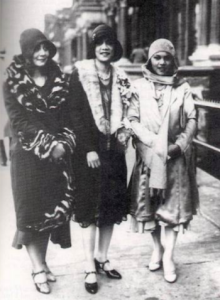
Three Harlem Renaissance Women 1925Irene has strong and angry thoughts on Claire’s predicament, but in her presence is unable to act in accordance with them. She is stuck between loyalty to her race and guilt at her ability to pass for the thing that so oppresses them.
“Mingled with her disbelief and resentment was another feeling, a question. Why hadn’t she spoken that day? Why, in the face of Bellew’s ignorant hate and aversion, had she concealed her own origin? What had she allowed him to make his assertions and express his misconceptions undisputed?”

The fear Irene has turns it into something of a psychological suspense novel, use of the word dangerous planting the seed of it early on.

“Her brows came together in a tiny frown. The frown, however, was more from perplexity than from annoyance; though there was in her thoughts an element of both. She was wholly unable to comprehend such an attitude towards danger as she was sure the letter’s contents would reveal; and she disliked the idea of opening and reading it.”

Neither woman is totally content with the life decisions they have made, each of them reaching for something that eludes now them, witnessing it in the other, living with a pervasive level of anxiety that threatens to disrupt their lives. Their predicaments provide an insight into the country’s turbulent feelings towards integration and race relations in the 1920 -1930’s

Further Reading

My review of Quicksand by Nella Larsen

My review of From Caucasia With Love by Danza Senna

Lapham’s Quarterly: Passing Through by Michelle Dean: Nella Larsen made a career of not quite belonging

Essay in Electric Literature by Emily Bernard: In Nella Larsen’s ‘Passing,’ Whiteness Isn’t Just About Race

New York Times: Overlooked Obituaries – Nella Larsen (1891-1964) Harlem Renaissance-era writer whose heritage
informed her modernist take on the topic of race by Bonnie Wertheim

Harlem Renaissance Titles Reviewed Here

Not Without Laughter by Langston Hughes

Their Eyes Were Watching God by Zora Neale Hurston

Sister Outsider by Audre Lorde

Bird Summons (2019) by Leila Aboulela

This is the first book I have read by Leila Aboulela, an author I have long wished to read, being someone who grew up in one culture and has experienced life in another, an observer perspective that interests me.

A New Exploration of Culture

There was a time when literary insights into other cultures came predominantly from male explorers of anglo-saxon cultures, now we are increasingly able to read stories from a viewpoint of a woman coming from an African or Eastern culture or country, living in the West. They are able to bring a richness in perspective and fresh insights of encounters with the place they have arrived in and people they live side by side.

Bird Summons is a tale of three women. They share in common that they belong to the Arabic Speaking Muslim Women’s Group, although they have all grown up in different countries. Within the group and from that common element, they will challenge and learn from each other.

We witness how attitudes shift and change as they transform, within this environment they have adapted to. One can not live elsewhere and stay fixed in the past and even when one adapts to a new present, it is necessary to continue changing and moving forward, no matter what challenges us from the outside.

The first British woman to perform the Hajj

Salma has organised a trip for the members of the group to visit the remote site of the grave of Lady Evelyn Cobbold, the first British woman to perform the Hajj pilgrimage to Mecca, to educate themselves about the history of Islam in Britain, however rumours of its defacement cause some to have doubts, whittling their numbers to just three.

“The attempt of the women to visit Lady Evelyn’s grave is a way of connecting more closely to Britain. Because Lady Evelyn was a Muslim like them, they see her as one of them and it gives them a sense of belonging.

She was also more independent than they are, stronger, more confident, more able. She was a Scottish aristocrat and therefore vastly more entitled than they would ever be. She represents the figure of a leader which is something that they need.” Leila Aboulela

Sometimes adversity offers a gift and rather than an overnight visit, they decide to stay a week at the loch, a resort on the grounds of a converted monastery, from where they can leisurely make their way to the grave.

A Contemporary Scottish Pilgrimage

Each of the three women has a pressing life issue that over the week consumes them, that the other women become aware of, leading them to have a strange, hallucinatory, spiritual experience. As their journey unfolds, they explore how faith, family and culture determine their lives, decisions and futures.

As they travel we get to know their characters, their lives, how attached they are to the place they now call home and the pressures and influences on them that come from the cultures they have left behind. They live at the intersection of a past and present, of who they were and who they are becoming. This holiday will be transformational for all three of them.

“Salma, Moni and Iman are weighed down by their egos, though it might not be apparent to them at first. Like most of us, they see themselves as good people, justified in the positions and decisions they have taken.” Leila Aboulela

Salma was trained as a Doctor in Egypt, leaving her fiance, for David, a British convert who would bring her to Scotland, something her family approved of and she was excited to do, despite being unable to practice her profession. Though successful in her current job as a massage therapist, when Amir starts messaging her, she begins imagining the life she might have had, obsessively checking and replying to the messages.

Moni left a high flying career, her life now revolves around caring for her disabled son Adam, consuming her and pushing her away from her husband who wants them to join him in Saudi Arabia, something Moni rejects because of how she believes Adam will  be perceived, an outcast.

Iman is young, beautiful, unlucky in love and a poor judge of character, the men she has married were stunned by her beauty but possessive.

Surrounded by adulation and comfort, like a pet, she neither bristled nor rebelled. She did, though, see herself growing up, becoming more independent.

The Hoopoe

Hoopoe bird Bird Summons Leila Aboulela
Photo by Magda Ehlers on Pexels.com

And then there is the Hoopoe. The wonderful bird that’ll take some readers on a side journey to find out more. The bird comes to Iman in a dream, recounting fable-like stories.

It spoke a language that she could understand.  It knew her from long ago, it had travelled with her all those miles, never left her side, was always there but only here in this special place, could it make  itself known.

It is one of only three birds mentioned in the Quran, and symbolises tapping into ancient wisdom, probing one’s inner questions for the answers being sought.

The appearance of the Hoopoe late in the novel heralds a period of magic realism, that reminds me of the experience of reading The Enlightenment of the Greengage Tree. It comes as a surprise when the woman’s reality shifts, as they shape-shift and are tested within the experience. It is disconcerting for the reader as we too experience the women’s confusion, but I recognise it as part of the cultural experience, of an aspect of traditional storytelling bringing a mythical message-carrying bird into contemporary social relevance.

“The Hoopoe in classical Sufi literature is the figure of the spiritual/religious teacher who imparts wisdom and guidance. However, the Hoopoe’s powers are limited. The women must make their own choices.”

It is a wonderful book of three international women, their journey, which they believe to be a pilgrimage to an important site, which becomes an inner voyage of transformation.

Highly Recommended.

Leila Aboulela, Author

Leila Aboulela was born in Cairo and brought up in Khartoum, the capital of Sudan. She lived for some years in Aberdeen, Scotland.

Her novels include The Translator (1999), Minaret (2005) and Lyrics Alley (2010) all of which were longlisted for the Orange Prize — and The Kindness of Enemies (2015). Lyrics Alley also won Novel of the Year at the Scottish Book Awards and was shortlisted for the Commonwealth Writers’ Prize.

“When I write I experience relief and satisfaction that what occupies my mind, what fascinates and disturbs me, is made legitimate by the shape and tension of a story. I want to show the psychology, the state of mind and the emotions of a person who has faith. I am interested in going deep, not just looking at ‘Muslim’ as a cultural or political identity but something close to the centre, something that transcends but doesn’t deny gender, nationality, class and race. I write fiction that reflects Islamic logic; fictional worlds where cause and effect are governed by Muslim rationale. However, my characters do not necessarily behave as ‘good’ Muslims; they are not ideals or role models. They are, as I see them to be, flawed characters trying to practise their faith or make sense of God’s will, in difficult circumstances.”

Further Reading

the punch magazine: interview: Leila Aboulela, Elsewhere, Love

Recollections of My Non-Existence by Rebecca Solnit (Essays)

Rebecca Solnit EssaysThe Circular or Spiral Memoir

Having read a few of Rebecca Solnit’s essay collections, I’m used to her meandering mind or circular style of narrative, so while this has a #memoir tag that might create an expectation of recounting an aspect of the author’s life, Solnit’s essays are rarely linear, less ‘slice of life’ and more like interconnected ‘thought bubbles’.

She starts out recalling her early adult life, eight years in a neighbourhood of San Franscisco, the people she came into contact with, the situations she avoided as a woman, pausing now from years afar wondering about her impact on that neighbourhood, her contribution to its demise, to its gentrification, removing its diversity, colour, vibrancy and ultimately affordability.

The title pays homage to and contrasts Diana di Prima’s Recollections of My Life as a Woman, a feminist beatnik poet I first came across earlier in 2020 when I was reading all I could about 1968, the year she wrote Revolutionary Letters, a series of poems composed of utopian anarchism and ecological awareness, scribbled from a spiritual, feminist perspective. All touch points within Solnit’s repertoire, however she writes in and of a different era, scratching at the wounds of our non-existence, how it has been actively contributed to by others and by her/our own hand.

Our NonExistence

Recalling a sensation of disappearing, as if on the verge of fainting; rather than the world disappearing she senses herself disappear, introducing the metaphor of nonexistence, discovering/exposing the many ways it is enacted.

In those days I was trying to disappear and to appear, trying to be safe and to be someone, and those agendas were often at odds with each other.

Because of the meandering style, it’s not easy to recall which particular vignette or essay has the most impact, however I note that I’ve highlighted 107 passages in the collection, her words provoke, recollect, ignite the reader’s memory, imagination and own experience.

Looking Back At Youth From Ripeness

She struggles writing poetry as a young woman, not doing it well but ferociously, unaware of what or why she was resisting, often resulting in a murky, incoherent, erratic defiance, something she observes today, as young women around her fight those same battles.

The fight wasn’t just to survive bodily, though that could be intense enough, but to survive as a person possessed of rights, including the right to participation and dignity and a voice. More than survive, then: to live.

And though we all know people learn from their own experience, there is something reassuring in reading or hearing of those who’ve trod a similar path; she expresses a desire that young women coming after her might skip some of the old obstacles, some of her writing exists to that end, at least by naming those obstacles.

Women Feminism Rebecca Solnit Silencing

Photo by Retha Ferguson on Pexels.com

Discussing harassment and violence towards women, particularly young women, she ponders how and what she is able to do differently being an older woman, compared to how she reacted and behaved in youth.

So much of what makes young women good targets is self-doubt and self-effacement.

Observing how we strengthen our purpose over time, gaining orientation and clarity, she recognises something like ripeness and calm flowing in, as the urgency and naiveté of youth ebb.

I think of her book The Faraway Nearby where she revisited childhood and a difficult mother, unrecognisable in the woman she then tended, neither of them who they once were, there being no longer any need in hanging on to the earlier version. Ripeness was a metaphor here too, one she desired to observe over days, a pile of apricots gifted from her mother, left on the floor of her bedroom, an installation, left to admire, to mature, rot, transform.

Conversation and Research Weave Patterns

Looking back at her evolution as a writer, she recalls the evening conversation that spawned the morningessay ‘Men Explain Things to Me’ that went on to become that new word, now mainstream ‘mansplaining’.

She rereads photocopies of letters in handwriting that is no longer her own, meeting a person who was her, that no longer exists, who didn’t know how to speak.

The young writer I met there didn’t know how to speak from the heart, though I could be affectionate…She was speaking in various voices because she didn’t yet know what voice was hers, or rather she had not yet made one.

Furnishing her mind with readings, they become part of the equipment of imagination, her set of tools for understanding the world, creating patterns, learning enough to “trace paths though the forests of books, learn landmarks and lineages.” She celebrates the pleasure of meeting new voices, ideas and possibilities that help make the world more coherent in some way, extending or filling in the map of one’s universe, grateful for their ability to bring beauty, find pattern and meaning, create joy.

Discussing patterns of how women were portrayed in novels by men she read in the past, she becomes aware of always relating to the part of the male protagonist, usually cast in the preferred heroic role, noting:

‘women devoured to the bone are praised; often those insistent on their own desires and needs are reviled or rebuked for taking up space, making noise. You are punished unless you punish yourself into nonexistence.’

Imagination Rules

It was Nella Larsen, author of Quicksand and Passing who said:

“Authors do not supply imaginations, they expect their readers to have their own, and to use it.”

Rebecca Solnit carries the thought further observing the astonishment of reading:

that suspension of your own time and place to travel into others’. It’s a way of disappearing from where you are…a world arises in your head that you have built at the author’s behest, and when you’re present in that world you’re absent from your own…It’s the reader who brings the book to life.

Photo by fauxels on Pexels.com

She finds research exciting, piecing together a nonfiction narrative like a combination of craft and medicine, of creativity and healing.

Research is often portrayed as dreary and diligent, but for those with a taste for this detective work there’s the thrill of the chase – of hunting data, flushing obscure things out of hiding, of finding fragments that assemble into a picture.

Even if some of this is familiar from previous works, it is the reworking of the landscape of her mind, the rearranging of those experiences, interviews, a more mature awareness and wakefulness that makes her work so readable, engaging and accessible and relevant to what is happening in the fast changing world we inhabit.

Nonfiction is at its best an act of putting the world back together – or tearing some piece of it apart to find what’s hidden beneath the assumptions or conventions…recognizing the patterns that begin to arise as the fragments begin to assemble.

For all it’s circular loops and spiral reasoning, its patterns and weaving, I appreciate the web Rebecca Solnit has created in this collection, threads linking across and around its intersections, leaving something fully formed at its conclusion.

Highly Recommended.

Rebecca Solnit Books I’ve Reviewed Here

The Faraway Nearby

The Mother of All Questions

Buy a Rebecca Solnit Book

Quicksand by Nella Larsen (1928)

As I read the last sentence, I shouldn’t have been surprised, because the end was coming, there was no time for another escape, for the pattern of Helga’s life to continue. “Oh, my” I uttered, as understanding of the meaning of the title, “Quicksand” sunk in. It had claimed her.

Quicksand Nella Larsen Identity Race BelongingVoice is Everything

What a unique voice and depiction of a rootless young woman searching for her place in the world, bereft, not finding a sense of belonging within family, when the world around her judged the two sides of her family as if they are different peoples because of the colour of their skin.

If you couldn’t prove your ancestry and connections, you were tolerated, but you didn’t belong.

Helga’s mother was a Danish immigrant, her father an African-Caribbean man of whom she had little or no memory or connection to his family. After her mother dies Helga (15) is sent to a boarding school, where life is a little easier for her, except for the growing awareness, like a hole inside her, that unlike her peers, she has no siblings, no family, no roots, no longing for home, no real happiness.

They had mothers, fathers, brothers, sisters, of whom they spoke frequently, and who sometimes visited them.

Her life becomes a search to fill the void, an attempt to purge herself from a self-loathing of having been exposed to both sides of her heritage and their disdain for each other, unable to fully embrace either one, as she is both. And from the opening pages you know you are in the presence of a woman who is on a quest to discover if this is all there is, this half life she’s been living until now.

In one sense, her ability to get up and change her circumstances is admirable, empowering even, her refusal to accept the status quo and take action, her departing words carry unexpected strength. When she resigns from her teaching job mid-term, she doesn’t hold back in telling the principal how much she hates the school and his misguided perception of who he thinks she is, with her conflicted feelings of her biracial and non-Southern lineage.

In the girl blazed a desire to wound. There he sat, staring dreamily out of the window, blatantly unconcerned with her or her answer. Well, she’d tell him. She pronounced each word with deliberate slowness.
“Well for one thing, I hate hypocrisy. I hate cruelty to students, and to teachers who can’t fight back. I hate backbiting, and sneaking, and petty jealousy.”

Revenge Against Rejection

When she encounters those who see her, like Dr Anderson, she feels the urge to abandon her selfish need to flee, responding to a mystifying yearning to serve, until he too says the words that will inflame her ego, pushing reason away, refusing it a place in her thought process.

“Someday you’ll learn that lies, injustice and hypocrisy are a part of every community. Most people achieve a sort of protective immunity, a kind of callousness, toward them. If they didn’t, they couldn’t endure. I think there’s less of these evils here than in most places, but because we’re trying to do such a big thing, to aim so high, they irk some of us more.”

Her loss and lack of rootedness creates an incessant restlessness, her education, beauty and even her bigoted relative provide her the means to be independent. But that which she wishes to escape from, continuously pursues her, seeking solace in the outer world, she avoids the one path that might bring her serenity, to look within.

Nella Larsen Quicksand Passing Harlem Renaissance

Nella Larsen

She leaves Nashville for Chicago, where she discovers the need for connections and references and is brutally rejected by her Uncle’s new wife, who can’t bear to harbour the thought they might be related.

She saw herself for an obscene sore in all their lives, at all costs to be hidden. She understood, even while she resented. It would have been easier if she had not.

She finds her way to New York and finds solace there, until the restlessness returns. The descriptions of her encroaching discontent are vivid, realistic, perhaps even a real memory, being the more “obviously autobiographical” of Larsen’s two novels.

A windfall from her Uncle provokes an impulse to seek out her family in Denmark, whom she has dim but fond memories of from a childhood visit. Again she begins life anew and initially revels in it, and enjoys being the object of attention, until the vague discontent returns.

She desired ardently to combat this wearing down of her satisfaction with her life, with herself. But she didn’t know how.

A Sign of Healing

We are lured into the belief she may have found the right path, as leaving Denmark signifies a return after hearing the wailing undertones of songs remembered in her youth strike her longing heart, remove her defenses, making her homesick for more than just the land of her birth.

For the first time Helga Crane felt sympathy rather than contempt and hatred for that father, whom so often and so angrily she had blamed for his desertion of her mother. She understood, now, his rejection, his repudiation, of the formal calm her mother had represented. She understood his yearning, his intolerable need for the inexhaustible humor and the incessant hope of his own kind, his need for those things, not material, indigenous to all his peoples’ environments.

Nella Larsen Passing Quicksand BiRacial Identity Belonging

Photo by Josh Sorenson on Pexels.com

A Surprise Twist

The plot then takes a significant and surprising turn and the ending too, contributing to what no doubt makes this an interesting novella for discussion, as to the origins and perpetuation of Helga’s difficulties, separation from the mother, from one’s lineage and family, identity, race, cross-cultural societal differences, what it means to belong and the expectations of being a woman.

I loved it. Even if it felt unfinished, like a young woman’s coming-of-age as she learns who she is, first from the outside, in terms of how others perceive her and also how she perceives the outside world, initially with each move, falling into the same trap of finding solace in that which is external to her. She is ripe for an inner journey of transformation, that which follows the realisation that who ones parents and family are, isn’t who “I am”. Instead she finds something else, a fork in the road and it is as if the author can not take us further.

Nella Larsen

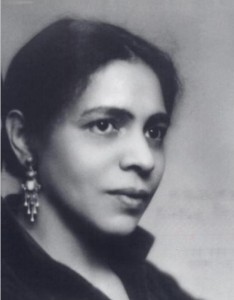
Nella Larsen (1891-1964), an acclaimed novelist of the Harlem Renaissance, became the first African American woman to win a prestigious Guggenheim Fellowship and won the Harmon Foundation Bronze Medal for Literature, celebrated as one of the bright stars of the Harlem Renaissance.

Famous for her two books Quicksand and Passing, she was the daughter of immigrant parents. Her father, Peter Walker, was a black cook from the West Indies, and her mother, Mary Hanson, was a Danish seamstress. Soon after Larsen was born, her father disappeared. Her mother remarried a white Danish man named Peter Larsen and they had a daughter. She spent four years living in Denmark before returning to the US where she worked as a nurse and a librarian.


Not Without Laughter by Langston Hughes

Langston Hughes (1902-1967) and The Harlem Renaissance

Although well-known as a poet and pioneer of the Harlem Renaissance movement – an intellectual, social, musical and artistic explosion centered in Harlem, Manhattan, New York City, from 1918 until mid 1930’s, Langston Hughes also wrote Not Without Laughter, a semi-autobiographical novel, now considered a classic.

Three Harlem Renaissance Women 1925During the Harlem Renaissance, there was an outpouring of creativity, an expression of how African Americans sought social, political, and artistic change in the US, also influencing francophone black writers from African and Caribbean colonies living in Paris. This movement turned attention to and invoked pride, in the lives of Black Americans.

An anthology of essays, poetry and fiction produced during this era, edited by Alain Locke, reflects the voice of middle class African American citizens who desired  equal civil rights like their white, middle class counterparts. Langston Hughes however sought to give voice to and remained a humble advocate for the lower, working class.

His authenticity, appreciation and ability to see beauty in simplicity, evoked through the power of his words, proved him to be one of modern literature’s most revered and versatile African-American authors.

Not Without Laughter, written while he was a student at university, and inspired by his own youthful experiences, provides us a privileged insight into the kind of characters who inhabited his world and imagination, giving us today this powerful, timeless novel.

Books That Connect Threads

As I began reading this I was reminded of Bernice McFadden’s The Book of Harlan, a story of another young man, in part inspired by the author’s grandfather and pulling on historical references of the time, both general to the population and specific to her own family.

Here it’s semi autobiographical, as Hughes writes of a boy named Sandy, like himself and like Harlan, raised by a grandmother who was more worldly and wise, women with ideas about raising grandsons to reach their better potential, while their daughters were off following husband(s) who liked the road and moved from place to place in search of their dreams. Being a young couple and trying to make a living was challenge enough, the grandmother, though often a working woman herself, was a wise and practical choice for keeping a boy on track towards a worthy future.

When I read more about Langston Hughes, I was reminded too of Audre Lorde and her essays in Sister Outsider, of her travels and observations in Russia, looking at that foreign country through the lens of being black and a woman; Hughes too was curious about the world beyond his home town, travelling beyond his home and country.

Hughes rode steamships to West Africa, toured the American South, traveled to Spain to cover the Civil War, rode the Trans-Siberian Railway, and saw his own reputation shift from Harlem Renaissance star in the 1920s to Communist activist poet in the 1930s to public figure in the 1960s…

Book Review

Not Without Laughter is a coming-of-age story that introduces us to Sandy Rogers who lives with his grandmother who everyone refers to as Aunt Hager and his mother Annjee, who works as a housekeeper for a rich white family, while his father Jimboy traverses the country pursuing a living as a musician.
He was a dreamy-eyed boy who had largely grown to his present age under the dominant influence of women – Annjee, Harriett, his grandmother – because Jimboy had been so seldom home.

It’s 1930’s in small town Kansas and Hughes creates a vivid portrait of African-American family life in a racially divided society, where some try to make the most of the way things are without changing it, some try to help others no matter their colour or creed, some aspire to be like what they perceive are successful white folk and Sandy observes all, in the process of making up his mind about all that he witnesses.

Eventually Annjee follows her husband, whom she only ever sees through rose-tinted glasses believing that one day things will change and their fortunes will change. Sandy gets his knowledge of a man’s world from his part-time jobs at the barber shop and as a bellboy in a local hotel.

Aunt Hager as they affectionately call her, is a great character and the one who truly formed Sandy into the quiet, highly observant child and teenager he becomes, a hardworking washerwoman she is always there for those who are ailing, and worked every day of her life to the last.

We follow Sandy through his opportunities and disappointments, his observations of how his people are treated and the strangeness of those who try to be what they aren’t, moving up in a world that makes some of them ashamed of their humble beginnings and the humble trying to stay good, not allowing themselves to indulge in certain types of disreputable fun should it corrupt them.

Racism is ever present, like the shadow that projects itself in full sunlight, unquestioned, accepted and quickly forgotten by white children whose psyche is undamaged by its selective vengeance. Sandy sees everything, choosing his revolutionary acts wisely, knowing when to run, where to find safety  and paying homage where it is due.

Even when he is at a loss, his new situation offers him the opportunity to learn anew, seeing more of the world his people inhabit, the consequences of the various choices they make, so that by the time he too must make a choice, he is as well informed as he can be.

In the home of the social-climbing Tempy, Sandy discovers a treasure trove of literature, which he eagerly consumes. Life  blossoms for Sandy, who, as he excels at school, grows both in stature and self-confidence.  – from the Introduction by Maya Angelou

Langston Hughes The Racial Mountain Not Without Laughter

Langston Hughes

It’s a heartfelt story that leaves a sense of regret as the last page is turned, when Sandy is deciding whether to leave school as suggested by his mother, to support her, or return to his studies as suggested by his Aunt, who like her mother wishes him to have that chance at bettering himself.

His observations of family dynamics, of the impact of race, community connection, the culture of music and the complications of young love are portrayed vividly and without judgement, leaving it to the reader to note the obvious.

Ultimately the title says it all, the way to cope, the example he admires, the man who finds something in his day to laugh about or someone to laugh with, finds joy right there.

A rich and important work, Hughes shines a light on the black American experience, paying homage to those who formed and informed him, enabling him to leave his own legacy for which we are fortunate to have insight into.

I, too, am America.

Further Reading

Poem: I, Too by Langston Hughes

Essay: Langston Hughes landmark essay The Negro Artist and the Racial Mountain

Article, New Yorker: The Elusive Langston Hughes by Hilton Als (2015)

An Introduction to the Author: Langston Hughes 101 by Benjamin Voigt

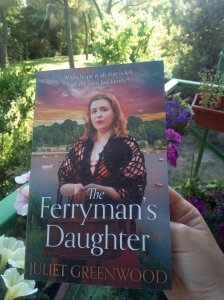
The Ferryman’s Daughter by Juliet Greenwood

Cornwall The Ferryman's Daughter Juliet Greenwood Historical FictionHester is the ferryman’s daughter, it is Autumn 1908 and she lives in a Cornish seaside village with her family, whose lives are soon to be forever changed when her mother dies.


Working Class Women

A working class family, her mother warns her against getting close to those living in the big houses, who employ but rarely befriend those deemed beneath them in status.

They are not like us. They will never be like us. However much they may try not to be, they see us as a convenience, the people who clean their houses and draw their baths and make their life comfortable. It doesn’t really enter their heads that we are as real as they are, with dreams and ambitions and a desire to also walk in the sun. And that can make them cruel, even if they don’t mean to be. You remember that and don’t ever be distracted from the path you wish to take.

Hester takes over the household domestic duties and then her father’s job becoming a ferrywoman, when he is invalided. Despite her ability to cope, her father is taken in by the wily Jimmy, who continually ignores Hester’s refusals and worms his way into the family and their business.

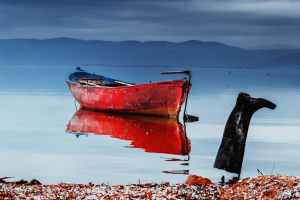
The Ferryman's Daughter Juliet Greenwood red fishing boat

Photo by Korhan Erdol on Pexels.com

After performing a rescue at sea, Hester experiences for one night what it is like to be waited on, to sink into a hot bath and rest, sleep, with nothing else to do.

Her eyes closed, savouring the stillness. ‘This is what I want,’ she said aloud. She had no hankering to be waited on like a queen, as she had been this evening. She just didn’t want to spend her life as a drudge, the one who got up first, who went to bed last. The invisible hand who did the cleaning and the cooking and the mending, along with the juggling of a meagre budget, the conjuring up of meals out of the barest of essentials.

She is a young woman working against the odds that would normally pull her towards accepting a fate confining her to care for younger siblings and a wayward father. She manages to keep alive her ambition to become something more than what society, her father and Jimmy expect from her, to develop independence without neglecting those who rely on her, finding those who see her for who she really is, even when she loses sight of that herself.

Dad saw reliance on a daughter as humiliating, a lessening of his manhood. Reliance on a son-in-law, particularly one who would, in turn, be reliant on his instruction and his expertise, would restore the natural order of things. Her feelings on the matter were irrelevant.

The Ferryman's Daughter Seaside cafe blue chairs flower pots Cornwall

Photo by Juany Jimenez Torres on Pexels.com

Women During the War

Eventually circumstances including the outbreak of war provide her an opportunity to pursue her first love, to cook wholesome homemade food from the abundance of the gardens of Afalon, the big house where her grandmother had been head cook.  She will be tested and confront challenges she thought she’d left behind, but doing so leads her towards a desire inherited from her mother she is determined to pursue.

A refreshing protagonist, living in an era where few women escaped the narrow role society decided for them, until war gave them a chance to show what were capable of. Hester paves the way in setting a new example for those who experience setbacks, showing how they can be overcome and the importance of working with and being supported by like-minded women.

Historical Fiction With Empowered Female Characters

Another captivating novel from Juliet Greenwood, set in her familiar locale of Cornwall, with her trademark, capable, independent woman protagonist exploring an alternative way of life than ‘the pursuit of a husband’ in an era where rejection of a man’s attentions was perceived as a mark against the character of a woman, who ought not to think so highly of herself as to be capable of surviving without him. A refreshing representation of the rise of the empowered woman.

N.B. Thank you to the author Juliet Greenwood for providing me with a copy of your new book.

Further Reading/Reviews

Review of Eden’s Garden by Juliet Greenwood

Review of We That Are Left by Juliet Greenwood

Buy a Copy of The Ferryman’s Daughter via Book Depository

Burn by Patrick Ness

I have read two books by Patrick Ness, the unforgettable, award winning YA (Young Adult) A Monster Calls and one of his two novels for adults The Crane Wife.

The first one was written with the help of a powerful presence, in that it was the brainchild of the writer Siobhan Dowd , who didn’t live long enough to write the story herself, requesting that Ness take over and do it for her readers. And what he accomplished as a result was extraordinary, a dark tale featuring a monstrous yew tree that torments a grieving boy.

I wanted to read more, so chose The Crane Wife a modern retelling of a Japanese myth he read as a child. And enjoyed it as well.

Burn Patrick Ness Dragon FantasyDragon Symbolism

Seeing that he had a new book out and being in a reading lull, I decided to read this latest YA novel Burn, a book that features a world where dragons are employed as farm workers and a cult of Believers reveres them, one of the members has been told by their leadership and foretold by a prophecy that he must stop certain events from occurring.

On a cold Sunday evening in early 1957 – the very day, in fact, that Dwight David Eisenhower took the oath of office for the second time as President of the United States of America – Sarah Dewhurst waited with her father in the parking lot of the Chevron gas station for the dragon he’d hired to help on the farm.

Featuring two dragons,  it reads more like realistic fiction than fantasy, I’d hoped the dragon presence to be greater, but it seems we only need a couple to be taught a lesson. We like dragon energy and symbolism here.

 Symbolically the dragon brings us a message of strength, courage and fortitude, they are messengers of balance and magic, encouraging us to tap into our psychic nature and see the world through the eyes of mystery and wonder.

The book is set in the 1950’s in America, racism and a mistrust of foreigners brings two young people together; the Russian blue dragon Kazimir (it’s set in the Cold war era) intervenes when the racist, trouble-making Deputy sheriff steps out of line.

“A Russian dragon,” the Deputy said. “In my town. With the way the world is today. You a Communist, claw?”

“I am a dragon,” the dragon said simply.

“You a threat to my country?”

“I do not know. Are you a threat to mine?”

The dragon might be friend or foe, depending on whether you believe Sarah, her father or the sheriff. But for sure, it has something to do with the prophecy that is driving everyone towards their farm for a bit of a showdown.

A couple of FBI agents are involved, creating an atmosphere of suspense as they pursue the person believed to be about to create chaos in their world across the country.

As we read, we are not sure whether the dragons are a force for good or otherwise and that aspect of the mystery carries through to the end and left me wondering whether there might be a sequel to the story as there were many elements and questions I had, that could have been explored, that may have been held back deliberately. Though the mystery is solved, there is a desire to explore further the world that has been discovered.

Teenage Reading and YA Fiction

Interesting for fans of fantasy teenage fiction, introducing historical-political elements about society in that era, the way foreigners and those of colour are mistrusted and maltreated, paranoid attitudes about communism, gay rights and cult fanaticism.

And the superheroes are those of our imagination, fire-breathing dragons and innocent not-yet corrupted children.

Do you like to read outside your normal genre occasionally? Have you read Patrick Ness?