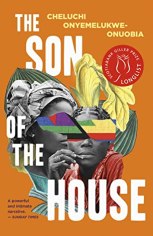
The Son of the House by Cheluchi Onyemelukwe-Onuobia

Described as a compelling novel about two women caught in a constricting web of tradition, class, gender, and motherhood and set in Nigeria, I requested this novel via NetGalley earlier this year immediately attracted by the premise and the setting.

Scotiabank Giller Prize 2021, Canada’s Literary Award

Scotiabank Giller Prize shortlist Nigerian literary fictionCoincidentally, the day I started reading it, I became aware it was one of the five shortlisted novels for the Canadian literary award, the Scotiabank Giller Prize on the same day the winner was to be announced.

It didn’t win – that award went to journalist/novelist Omar El Akkad for What Strange Paradise, a novel that examines the current refugee crisis and the lengths to which people will go to find home, safety and belonging – however The Son of the House is already an award winning novel and one that addresses important contemporary issues and one I highly recommend reading.

Review

I really enjoyed The Son of the House right from the opening pages; the intrigue set up by the fact that two women have just been kidnapped from within their car on a residential street, we know nothing about who they are or why this has happened. However, it is not the drama that takes centre stage, it is the lives of the characters, who we will come to know.

These two do know this kind of thing can happen and the woman who drove castigates herself for having taken that particular road.

We did not entertain the idea that the police might save us, guns blazing, as happened in the movies. The police themselves, people said, would sometimes tell the family of kidnapped persons to go pay the ransom so that harm would not come to their loved one. They had neither the resources nor the serious desire to pursue kidnappers. There was even speculation that the police might be complicit in some kidnappings. So our only hope, like many kidnapping victims in this country, was that our people would come up with the money.

Since they are going to be spending time together, they decide to share their stories. And thus the reader must wait while getting to know these two women and the circumstances that lead to this intersection of their lives.

Their lives are very different, and both equally fascinating and riveting to read about.

Nwabulu, Orphan, Housemaid, Mother

gender women expectations motherhood The Son of the House

Photo by Breston Kenya on Pexels.com

Nwabulu, lost her mother when she was born and her father remarried soon after.

From that day, the peace and joy of our home moved somewhere else; peace and joy could not stay in the same room as Mama Nkemdilim’s jealousy.

Her stepmother resents her and at the first offer, sends her away to serve for a family. Innocent, yet she seems to go from one terrible situation to another, no adult looking out for her, she is vulnerable to the outside world, even within the supposed confines of an employer’s home.

I had been a housemaid for nearly half my life when I met Urenna. My first sojourn as a housemaid began when I was ten.

She finds a situation finally that suits her, only to be disgraced and sent back again to the village. The situation that occurs is the first instance we become aware of the presence and significance of ‘the son of the house’.

I was a housemaid. He was the son of the house. He would not really know what it was like to work in a place and live and sleep there but still know that it was not home. He would not know and I could not put it into words.

Back in the village, an older woman who has lost her son, appears to offer solace to Nwabulu, but her life too revolves around this traditional symbol, and the lengths to which she will go to fulfill it are devastating.

Although this is a story of women, it is also about the intersection of women and the importance, presence and success of this symbol, ‘the son of the house’ to their society and how it impacts their lives as girls, sisters, young women, and as mothers.

Julie, Sister, Unmarried daughter, Second wife

parental authority expectations gender The Son of the House

Photo by Monstera on Pexels.com

The second woman Julie is single and contentedly having an affair with a married man. She has one brother and he is supposed to be the example and support of his family, according to how their father has raised them.

“By joining the church and getting an education,” he continued, “I brought light to my family. It is the duty of each new person in the line to bring something good to the family, to keep the family going.”

However, due to her brother’s problems, her father makes this her responsibility, on his death bed, that she will work to ensure the success of her brother in meeting his familial duties – here again we realise that these stories, these women’s lives revolve in some way around maintaining the tradition, the status of the patriarchy, in the elevation of and presence of ‘the son of the house’.

I would make a better son of the house, I sometimes thought. But what fell to me was not carrying on the family name but ensuring that the one who was to do so succeeded.

Unexpected Friendships, Synchronicity’s

Cheluchi OnyeMelukwe Onubia Europa Editions UKAs their stories unfold, we also discover the importance of these women’s friendships, both of them have been helped by their best female friend at a turning point in their lives and the mystery gradually unfolds as to what has brought these unexpected allies together.

It’s a riveting read and an insight into Nigerian culture and classism, into how two very different women navigate a traditional patriarchal society and not only survive, but the lengths to which they will go to both meet those cultural/societal expectations, to develop resilience, how they find ways to rise beyond it.

I loved the book and thought the characters were realistic and intriguing and the sense of place evocative.

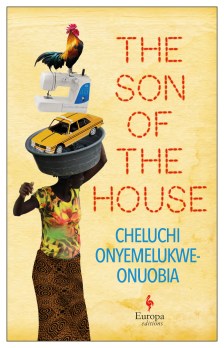
Here’s the fabulous UK cover version, it was published in the UK by my favourite publisher, Europa Editions in May 2021. Highly Recommended.

Further Reading

Review, Brittle Paper: Cheluchi Onyemelukwe-Onuobia’s The Son of the House reviewed by Ikhide Ikheloa

Interview, Olongo Africa: I am a child of the 80’s an interview with Uchechukwu Umezurike

Cheluchi Onyemelukwe-Onuobia, Author

The Son of the House Nigerian LiteratureCheluchi Onyemelukwe-Onuobia is a Nigerian-Canadian lawyer, academic and writer.

She holds a doctorate in law from Dalhousie University and works in the areas of health, gender, and violence against women and children.

Cheluchi divides her time between Lagos and Halifax.

The Son of the House was shortlisted for Canada’s Scotiabank Giller Prize 2021, winner of the Nigeria Prize for Literature 2021, and winner of the Best International Fiction Book Award, Sharjah International Book Fair 2019.

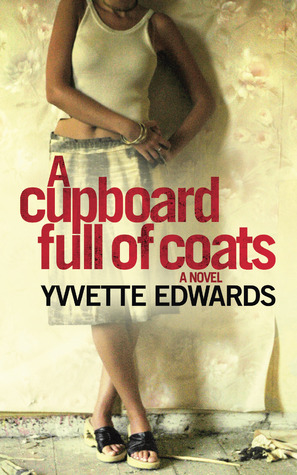
A Cupboard Full of Coats by Yvvette Edwards

Literary fiction that manages to be utterly compelling, thought provoking, intense and revelatory. Set in 1970’s East London. It was long listed for the Booker Prize in 2011 and nominated for The Hurston-Wright Legacy Award in 2013.

I read A Cupboard Full of Coats during October with Didi’s Read Soul Lit ReadAlong group on Goodreads.

A Visitation

Booker longlisted Black british literary fictionIt is 14 years since Jinx’s mother died and the knock on her door by a friend of her mother’s she hasn’t seen since then, initiates this weekend like no other, which will bring back all the emotion, rage, resentment, passion and sorrow that has been pushed down so deep for years.

It is an intense and provocative beginning that reveals just enough to pique interest and make the reader begin to ask questions, that we hope the story will reveal. Who was responsible for what happened back then and what part did each of them play?

When Lemon arrives at her door, his first words are “he’s out”.

There were changes around his face; the crow’s feet at the corner of his eyes were wider fanned, the bags beneath them full and heavy, and his old skin bore new lines. His eyes were red-rimmed, the whites yellowed, the expression intense as he looked at me, already asking questions, talking of things that should be whispered even when alone, and it was me that looked away, looked down, wondering if my own eyes were as eloquent as his, afraid that they might be speaking volumes, scared of the things they might have already said.

Jinx’s five year old son Ben arrives for the weekend, a shared custody arrangement; it goes badly, she is reactive, he is upset.

Effect of Unconscious Trauma

There is a sense of suppressed trauma that impacts her ability to mother. The son tries to reach out to her and is unable to connect. Her perceptions and behaviour are inexplicable. When she views her son interacting with Lemon, she can’t grasp the ease they demonstrate.

I was in shock. I had never heard my son like this before. I had simply thought he was a morose child, because morose was how he always was with me. I had never seen this side of him, this laughing chattiness, the non-stop outpouring of everything going on in his life, the pleasure he took from his accomplishments, such as they were. And I felt hurt. Really hurt. Wounded to the core just listening to how natural and happy he could be with a virtual stranger, when I had been trying for nearly five years to have a relationship with him and had come up against brick after brick after brick.

Throughout the course of the weekend, we learn about the lives of Jinx and her mother, widowed at a young age having married a much older man.

The one thing my mother always said about Mr Jackson was that he was a decent man, that he took proper care of things, including this mortgage-free house that he left to her, which she then left to me when I was sixteen and she was dead. Decent enough to ask no more of her than that she occupy it and dedicate her life to raising me, forsaking all other men till I had grown up. ‘Grown up’ she interpreted to mean when I was sixteen. It was ironic that I actually had grown up then. Sixteen and overnight my childhood was over.

Will We Ever Understand Domestic Violence?

rain weather London Black British literary fiction

Photo by Sourav Mishra on Pexels.com

We learn about the beginning of her mum’s relationship with Berris. Of his moving in and taking over, Jinx’s growing resentment and jealousy. His volatile nature and her mother’s acceptance of it, of those coats he gives her as apologies.

There are many different kinds of rain, and England is famous for all of them. There are showers that start with a light drizzle, then build up to a steady pour. Then there’s rain that begins drip, drip, gets heavy, then stops then starts and stops and starts again. Then there’s sudden rain that falls quickly when it’s sunny, like its only ambition is to make a rainbow and once it’s done that, it stops. If I had to describe Berris as rain, he was none of those, and the words ‘You won’t even know he’s here’ turned out to be the understatement of the year.

Friendship

A Cupboard Full of Coats Yvvette Edwards

Photo by Mary Taylor on Pexels.com

When the narrative moves back to her sixteenth year, Jinx is her final year at school, sitting O levels. We meet her best friend Sam and observe that she too is going through a transition, two girls that used to do everything together, begin to diverge.

Their relationship begins to change when after a few days of absence the teacher no longer calls Sam’s name in roll call.

It’s like the beginning of the application of a moral code, something stronger than friendship, when womanhood approaches and white lies creep in between friends, as they navigate the shifting status on that precipice between girl and woman, when boys and men begin to enter their lives.

Narrative Structure

The narrative is structured in alternate chapters of the past and the present, so as the weekend progresses, with Lemon’s visit, there is a gradual thawing out and opening up, on both their parts, as Jinx listens and begins to open up, remembering, recalling, each filling in the gaps of the other’s perception of what happened around the time of her mother’s death.

The past concentrates on those month’s leading up to her mother’s death, building suspense as the story closes in on that final day, that until now, no one really had the complete picture of what occurred.

Reading it, we ask ourselves, can healing take place over a weekend? What will Lemon’s visit reveal? What is Jinx hiding?

A Cupboard Full of Coats explores relationships, jealousy, independence, co-dependence and the transitions that happen as a girl becomes a woman, a mother a lover and the vulnerability of women.

The atmosphere she creates, the intensity, the adept characterisation, the confessions and revelations make for a compelling read. Though I read it over a week when I was busy, each time I picked it up, it gripped me and I highlighted thought provoking passages all the way through. The conversation the group had about the book was dynamic, there was a lot of outrage expressed against the characters, the live discussion was a rewarding way to end the book.

Highly Recommended. I’ll definitely be reading her next novel and hope to see more from this talented British author.

Yvvette Edwards, Author

Black British literary fictionYvvette Edwards is a British East Londoner of Montserratian origin and author of two novels, A Cupboard Full of Coats and The Mother.  Her short stories have been published in anthologies including New Daughters of Africa, and broadcast on radio.

Her work has been nominated for a number of literary awards including the Booker Prize. She is particularly interested in writing that challenges the single narrative, giving voice to characters who are absent or under-represented in contemporary fiction.

She was a judge for the inaugural Jhalak Prize for Writers of Colour and the George Floyd Short Story Competition. She is a Fellow of the Royal Society of Literature.

Further Information

OneWorld Publications: Yvvette Edwards discusses A Cupboard Full of Coats

The Independent: A Matter of Black and White

Warwick Prize for Women in Translation 2021 Shortlist

It wasn’t that long ago we saw the novels that made the longlist for this prize, but with the winner being announced on 24 Nov, here we are already with the shortlist out!

The 2021 competition received a total of 115 eligible entries of which 17 titles made the initial longlist. The eight shortlisted titles include four novels, two genre-defying works that blend history, essay and fiction, one work of social history, and one collection of poetry. Six source languages are represented: Chinese, French, German, Japanese, Polish, and Russian. The shortlist is dominated by independent publishers.

The judges had this to say:

“This powerful and eclectic shortlist spans a world of stories, from China and Japan to Russia, Rwanda and Algeria. It also salutes the formal boldness and originality of women’s writing around the world today, with books that range from innovative poetry and fiction of many kinds – from the fable to the saga – to works that take non-fiction narrative into exciting new territories. Together, the titles on the list celebrate the literary imagination without boundaries or constraints, served in every case by translations of the highest calibre.”

literary fiction memoir short stories novels women in translation

The full list of shortlisted titles, with their genre and descriptions, in alphabetical order,  below:

Mieko KawakamiBreasts and Eggs, (Fiction/Feminism) translated from Japanese by David Boyd and Sam Bett (Picador)

Breast and Eggs

Breasts and Eggs paints a portrait of contemporary womanhood in Japan and recounts the intimate journeys of three women as they confront oppressive mores and their own uncertainties on the road to finding peace and futures they can truly call their own.

It tells the story of three women: thirty-year-old Natsu, her older sister, Makiko, and Makiko’s daughter, Midoriko. Makiko has traveled to Tokyo in search of an affordable breast enhancement procedure. She is accompanied by Midoriko, who has recently grown silent, finding herself unable to voice the vague yet overwhelming pressures associated with growing up. Her silence proves a catalyst for each woman to confront her fears and frustrations.

On another hot summer’s day ten years later, Natsu, on a journey back to her native city, struggles with her own indeterminate identity as she confronts anxieties about growing old alone and childless.

Through the story of these women, Kawakami paints a portrait of womanhood in contemporary Japan, probing questions of gender and beauty norms and how time works on the female body.

Scholastique MukasongaOur Lady of the Nile, (Fiction/Rwanda) translated from French by Melanie Mauthner (Daunt Books Publishing)

Our Lady of the Nile Scholastique MukasongaParents send their daughters to Our Lady of the Nile to be moulded into respectable citizens, to protect them from the dangers of the outside world. The young ladies are expected to learn, eat, and live together, presided over by the colonial white nuns.

It is 15 years prior to the 1994 Rwandan genocide and a quota permits only two Tutsi students for every twenty pupils. As Gloriosa, the school’s Hutu queen bee, tries on her parents’ preconceptions and prejudices, Veronica and Virginia, both Tutsis, are determined to find a place for themselves and their history. In the struggle for power and acceptance, the lycée is transformed into a microcosm of the country’s mounting racial tensions and violence. During the interminable rainy season, everything slowly unfolds behind the school’s closed doors: friendship, curiosity, fear, deceit, and persecution.

A landmark novel about a country divided and a society hurtling towards horror. In gorgeous and devastating prose, Mukasonga captures the dreams, ambitions and prejudices of young women growing up as their country falls apart.

Judith SchalanskyAn Inventory of Losses, (Essays/Experimental) translated from German by Jackie Smith (MacLehose Press)

An Inventory of Losses Judith SchalanskyA dazzling cabinet of curiosities from one of Europe’s most acclaimed and inventive writers.

Each of the pieces, following the conventions of a different genre, considers something that is irretrievably lost to the world, including the paradisal pacific island of Tuanaki, the Caspian Tiger, the Villa Sacchetti in Rome, Sappho’s love poems, Greta Garbo’s fading beauty, a painting by Caspar David Friedrich, and the former East Germany’s Palace of the Republic.

As a child of the former East Germany, the dominant emotion in Schalansky’s work is “loss” and its aftermath, in an engaging mixture of intellectual curiosity, with a down-to-earth grasp of life’s pitiless vitality, ironic humour, stylistic elegance and intensity of feeling that combine to make this one of the most original and beautifully designed books to be published in 2020.

Maria StepanovaIn Memory of Memory, (essay/fiction/memoir/travelogue/history) translated from Russian by Sasha Dugdale (Fitzcarraldo Editions)

In Memory of Memory Maria StepanovaWith the death of her aunt, Maria Stepanova is left to sift through an apartment full of faded photographs, old postcards, letters, diaries, and heaps of souvenirs: a withered repository of a century of life in Russia. Carefully reassembled, these shards tell the story of how a seemingly ordinary Jewish family somehow managed to survive the myriad persecutions and repressions of the last century.

In dialogue with writers like Roland Barthes, W. G. Sebald, Susan Sontag and Osip Mandelstam, In Memory of Memory is imbued with intellectual curiosity and a soft-spoken, poetic voice. Dipping into various forms – essay, fiction, memoir, travelogue and historical documents – Stepanova assembles a panorama of ideas and personalities and offers a new and bold exploration of cultural and personal memory.

Maria StepanovaWar of the Beasts and the Animals, (Poetry/Experimental) translated from Russian by Sasha Dugdale (Bloodaxe Books)

War of the Beats Maria StepanovaOne of Russia’s most innovative and exciting poets and thinkers, though high-profile in Russia, her reputation has lagged elsewhere.

War of the Beasts and the Animals includes recent long poems of conflict ‘Spolia’ and ‘War of the Beasts and Animals’, written during the Donbas conflict, as well as ‘The Body Returns’ commemorating the Centenary of WWI. In all three poems Stepanova’s assured and experimental use of form, her modernist appropriation of poetic texts from around the world and her consideration of the way that culture, memory and contemporary life are interwoven make her work pleasurable and relevant.

This collection includes two sequences of poems from her 2015 collection Kireevsky: sequences of ‘weird’ ballads and songs, subtly changed folk and popular songs and poems that combine historical lyricism and a contemporary understanding of the effects of conflict and trauma. Stepanova uses the forms of ballads and songs, altering them so they appear to be refracted in moonlit water. The forms seem recognisable, but the words are fragmented and suggestive, weaving together well-known refrains of songs, familiar images, subtle half-nods to films and music.

Małgorzata SzejnertEllis Island: A People’s History, (Nonfiction/History) translated from Polish by Sean Gasper Bye (Scribe UK)

Ellis Island A Peoples HistoryA landmark work of history that brings voices of the past vividly to life, transforming our understanding of the immigrant experience.

While living in New York, journalist Małgorzata Szejnert would gaze out from lower Manhattan at Ellis Island, a dark outline on the horizon and wonder about the people, journeys and stories that passed through there. 

Ellis Island draws on unpublished testimonies, memoirs and correspondence from internees and immigrants, including Russians, Italians, Jews, Japanese, Germans, and Poles, along with commissioners, interpreters, doctors, and nurses — all of whom knew they were taking part in a tremendous historical phenomenon.

At the book’s core are letters recovered from the Russian State Archive, a heartrending trove of correspondence from migrants to their loved ones back home. Their letters never reached their destination: they were confiscated by intelligence services and remained largely unseen.

Today, the island is no less political. In popular culture, it is a romantic symbol of the generations of immigrants that reshaped the US. Its true history reveals that today’s immigration debate has deep roots. Now a master storyteller brings its past to life, illustrated with unique photographs.

Yan GeStrange Beasts of China, (Fantasy/Science Fiction) translated from Chinese by Jeremy Tiang (Tilted Axis Press)

Strange Beasts of China Yan GeIn the fictional Chinese town of Yong’an, human beings live alongside spirits and monsters, some of almost indistinguishable from people.

Told in the form of a bestiary, each chapter introduces us to a new creature – from the Sacrificial Beasts who can’t seem to stop dying, to the Besotted Beasts, an artificial breed engineered by scientists to be as loveable as possible. The narrator, an amateur cryptozoologist, is on a mission to track down each breed, but in the process discovers that she might not be as human as she thought.

Alice ZeniterThe Art of Losing, (Historical Fiction/Algeria) translated from French by Frank Wynne (Picador)

The Art of LOsing Alice ZeniterNaïma has always known  her family came from Algeria – until now, that meant little to her. Born and raised in France, her knowledge of that foreign country is limited to what she’s learned from her grandparents’ tiny flat in a crumbling French housing estate: the food cooked for her, the few precious things they brought with them when they fled.

Of the past, the family is silent. Why was her grandfather Ali forced to leave? Was he a harki – an Algerian who worked for and supported the French during the Algerian War of Independence? Once a wealthy landowner, how did he become an immigrant scratching a living in France?

Naïma’s father, Hamid, says he remembers nothing. A child when the family left, in France he re-made himself: education was his ticket out of the family home, the key to acceptance into French society. Now, for the first time since they left, one of Ali’s family is going back. Naïma will see Algeria for herself, will ask questions about her family’s history that till now, have had no answers.

Spanning three generations across seventy years, The Art of Losing tells the story of how people carry on in the face of loss: the loss of a country, an identity, a way to speak to your children. It’s a story of colonisation and immigration, and how in some ways, we are a product of the things we’ve left behind.

* * * * * * *

So what do you think? The Lady of the Nile and The Art of Losing are the two that stand out for me, though I could easily be tempted by a few others as well.

Watch this space for the winner in two weeks time on 24 November!

The Doctor’s Wife by Brian Moore (1976)

Brian Moore 100

2021 is the centenary year of his birth for Northern Irish writer Brian Moore (1921-1999), academically celebrated at Brian Moore 100 and by interested readers in the year long Brian Moore ReadAlong. I have read and reviewed two titles, Lies of Silence (1990) and The Lonely Passion of Judith Hearne (1955) and I have The Magician’s Wife (1997) plus No Other Life (1993) still on the shelf.

A Distrustful Reader

Brian Moore 100 Northern Irish Literature literary fictionI enjoyed Lies of Silence, however was completely wound up by his treatment of the character in The Lonely Passion of Judith Hearne, a feeling of indignation in his treatment of the female protagonist that was expounded on by Colm Tóibín who admitted:

“that Moore clearly knew that you could achieve certain effects by writing about a woman in the Ireland of his time which you could not achieve in writing about a man, the same behaviour would not bring disgrace, pity perhaps, tolerance certainly, humour most likely, incarceration – never”

I came to The Doctor’s Wife, another novel in which Moore again takes on the voice and attempts to get into the mind of a female protagonist, with significant caution and a not unreasonable dose of distrust.

The Plot: Awaiting her husband’s arrival on holiday in France, Sheila Redden, quiet, middle-aged doctor’s wife from Northern Ireland, suddenly finds herself caught up in an illicit affair with a young American ten years her junior.

The novel was shortlisted for the Booker Prize in 1976.

To Prelude or Not

Brian Moore The Doctor's Wife Paris Hotel

Photo by cottonbro on Pexels.com

In a short prelude to the first chapter, Shelia’s brother arrives in Paris and from what we glean Shelia has disappeared and there is a letter waiting for her at a friend Peg’s apartment, from a T. Lowry in the US. Shelia’s brother phones this man in America; he says is he is sorry, he can’t help.

The prelude creates an element of intrigue, an unnecessary addition reading it in 2021, though it may have affected readers differently in 1976, by what it implied. That no one knows where she is. That we know where she is not.

Backing Up to the Beginning

Due to his commitments as a Doctor, Shelia’s husband delays his departure for their holiday, they are returning to the Mediterranean  where they honeymooned sixteen years ago. Sheila travels on alone to Paris.

Staying in Paris with her friend Peg, Sheila’s emotions are overwhelmed by the mix of frustration at her husband and the nervous excitement of being in the city with her confident friend, who introduces Ivo, her lover four years younger than herself. Sheila is in awe of Peg’s way of life, the result of having continued her education, pursued a career, travel.

She lives like a man, free, having affairs, travelling, always in big cities, whereas, look at me,  stuck all these years at home, my M.A. a waste. I don’t think I could even support myself anymore. ‘You know’, she said to Peg, ‘it’s working and travelling that keeps a person young. It’s sitting at home doing nothing that makes you middle-aged in your mind. I was just thinking about it the other day. It’s as if the only part of my life that I look forward to now is my holidays. There’s something terribly wrong about that.’

It is through Ivo she becomes acquainted with Tom, the two keep each company while waiting for Peg. Tom is taking a year after his Anglo-Irish Lit studies at Trinity in Dublin to think about his next step. Sheila enjoys being able to talk with Tom on a subject she is virtually forbidden to elsewhere; speaking animatedly about literature to a man at a party has being the cause of reprimand by her husband in the past. Trying to engage with her husband in conversation fails every time these days.

While initially petulant and annoyed with her husband for putting his work ahead of their holiday, at a certain point Sheila begins to will him not to come. The distance and solitude heightens her feelings towards everything. She is at the beginning of developing a kind of resistance, even if that shows itself through what appears to be recklessness. Eventually she will embrace it, learn from it and change.

Before anything is even hinted at with this young man, while still in that isolated wonder of being alone in Paris, with her friend, engaging in a social life, and interesting conversation, she asks herself:

What about those men you read about in newspaper stories who walk out of their homes saying they are going down to the corner to buy cigarettes and are never heard from again? This is Paris. I am here. What if I never go back? page 42

Looking back at this now, it is clear that this thought indicated a turning point for Sheila, who throughout the novel is referred to as Mrs Redden, unless represented in dialogue when she is Sheila. From here she departs Paris to Cap Ferrat, knowing she has at least a few days until her husband may or may not join her. As she gets out of the hotel bath, the telephone rings.

The Objectification of a Man

Love Entrapment Escape The Doctors Wife Brian Moore

Photo by Andrew Neel on Pexels.com

The rest of the story portrays Sheila’s continued attempts to resist what is occurring, until she doesn’t. The focus is always on her, on her thoughts, her decisions, her mind. It is not a novel that looks into the mind of a 27 year old man.

Ironically, the young man is objectified, something more common to woman characters, but here Brian Moore diverges and flips the coin, reducing HIM to an object of sexual pleasure and gratification. Though he doesn’t go so far as to emasculate him, he risks the character of Tom being perceived as inauthentic, for the very reasons Tóibín above, referred to.

Men too, were expected to behave in certain ways, even while conducting illicit affairs. However, Tom is a post-war baby, a baby boomer, he is of a different generation and from another culture, it is quite normal that his behaviour will be perceived by some as childish, ill-considered, unrealistic. Personally, I could believe it. Sheila was born before the war, she was indeed a Traditionalist. In a sense then, her behaviour and responses are the more radical.

Moore however is clear, he elicits only her thoughts, provoking her to express them aloud, to hear herself speak. What she has to say is far more interesting.

‘I don’t know’ she said. ‘Some people never want to go outside the place they were born in. And others seem to want to run away from the day they’re old enough to walk.’

‘And which are you?’

‘A runaway.’

‘But you didn’t leave, did you?’ 

When it becomes clear what Sheila is contemplating, the men in her life, her husband and her brother will resort to the kind of tools that men in power, medical men were able to use to exercise control over what they considered a wayward woman. There’s a history of mental illness in Sheila’s family, something her husband doesn’t hesitate to consider using to his advantage. It is a scary moment.

Understanding Women

It is to his credit, that Brian Moore takes a different approach twenty years after writing about Judith Hearne. This time he pursues other perspectives, making thought provoking choices that engage the reader. 

Female empowerment Women

Photo by Jill Wellington on Pexels.com

It reads like a kind of thriller because she acts so out of convention and the longer she does so, the more likely it seems there is a possibility she might indeed be upending her life.  The reader can feel she is hovering between two choices. The detail with which her encounters are shared and the response of her family to them, increase this duality.

I really enjoyed this, perhaps because I did read it with that level of distrust and was therefore surprised to see how much the author’s perception of a woman character had developed. Although, here too, I had a sense of the author almost writing this in collaboration, I imagined him discussing and arguing this premise with his women friends, or was he reflecting on his own doomed affair? Who knows, but he left me wanting to know more, wanting to pursue Sheila further in her adventure towards liberation.

This one I definitely recommend!

Have you read any Brian Moore this year?


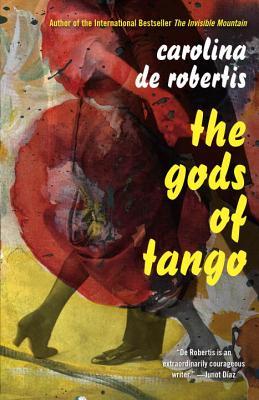
The Gods of Tango by Carolina de Robertis

Tango Milongas Buenos Aires Argentina UruguayAn Immigrant Story

This is the story of Leda, a girl from a small Italian village outside of Naples, who when she learns that her cousin Dante is taking the ship to Buenos Aires to seek his fortune and future, attaches herself to him in the months before he leaves, making him make her a promise, to wait for her.

To follow him means becoming betrothed to him and the story opens with their proxy marriage, Leda marries Dante in the village, with her father-in-law standing in the place of the groom. Thus she sets off two years after the promise is made to join her husband, her father’s parting gift, the violin that belonged to her grandfather, the instrument she was never taught to play, but longed to know its secrets.

She was restless, she didn’t want to wait; if migration was the only way to push open the confines of her world, then she wanted it to happen now, she wanted to embark right along with Dante, cross the ocean and begin scraping her destiny out of foreign rock.

An Unforgiving city, Buenos Aires

On arrival in Buenos Aires, she is met by Arturo, who informs her of the dreadful accident. She discovers she in this bustling, unforgiving city, alone, without friends or family, a melange of voices and languages, familiar and unfamiliar. And as a young woman, the work she can do won’t be enough to keep on the room Dante had kept for them.

All the buildings were tall old mansions that the rich had abandoned to the foreign hordes decades ago, during a legendary bout of yellow fever. Stately houses now crowded with the families of the poor. Bakers and grocers with their wares in wood crates on the sidewalk, and cafés shut down to sleep for the day.

Music and Dance, The Tango

The novel is about Leda’s desire and determination, to make a life for herself, to play the violin, to live without being observed, to be the observer, to walk a fine line between freedom and safety, as she finds a way to enter the world of music, a world forbidden to women, as a man.

And isn’t that strange she thought, the way one city can swirl inside another; the way you can be in one country yet carry another country in your skin; the way a place is changed by whoever comes to it, the way silt silt invades the body of the river.

violin tango milongas buenos aires The Gods of Tango

Photo by Felipe Lima on Pexels.com

She arrived in Buenos Aires in 1913, just as the music of the tango was transforming. After weeks of watching, an opportunity arises to join a group when an altercation leads to the stabbing of a violinist. From there she, who has become he, is spotted by Santiago, a bandoneón (a type of concertina found in Argentina and Uruguay) player, who puts together a quartet and is aiming for a higher class of establishment, the cabaret and dance halls. Because the tango has crossed the ocean and sparked a fire in the night establishments of Paris.

The Old World, Europe, ignited by songs from the grim conventillos of New Babel. To think she’d crossed the ocean to find this Argentinian music, only to find it sailing back to Europe, closing a vast loop around the world.

Transformation and Transgression

The transformation in her life and work, follows that of the transformation of the tango, the addition of the bass, the piano and finally the addition of a voice, some instruments were rising into prominence while others began to disappear.

The tango without the bandoneón was no longer considered the tango. That strange German instrument had been absorbed into the music,, altering its essential texture and slowing its pace.

Leda finds a way to be one of the guys, unveiling her own passion as she navigates a dangerous situation that must remain secret if it is to be sustained.

Haunts of the Past

Throughout the novel, her thoughts return often to her childhood friend Cora, Dante’s sister. Something happened to Cora that haunts Leda, that she keeps suppressed, but the unwilling memories rise up and have their own effect on the decisions she makes, as she navigates the tricky path chosen.

It’s an enjoyable read and an insight into what must have awaited those who left Europe for Buenos Aires at the beginning of the twentieth century, what a tough environment it was for women to survive in and the development of this music and dance that came with its own set of rules and transgressions.

Carolina de Robertis, Author

tango Carolina de Robertis Gods of Tango Argentina

Photo by Marko Zirdum on Pexels.com

Carolina de Robertis, a writer of Uruguayan origins is the author of two earlier novels,  Perla (2012) and The Invisible Mountain (2009), translated into 17 languages.

Her most recent novel Cantoras (2019), a novel about queer love, womanhood, and personal and political revolution was a finalist for the Kirkus Prize

“I wanted to explore the immigrant experience, and for a woman immigrant, the only way for her to fully access the underworld of the tango on her own terms without becoming a prostitute was to dress as a man.”

Further Reading

NPR Interview: An Outsider In Buenos Aires Goes Incognito, For Love Of Tango

Booker Prize Winner 2021

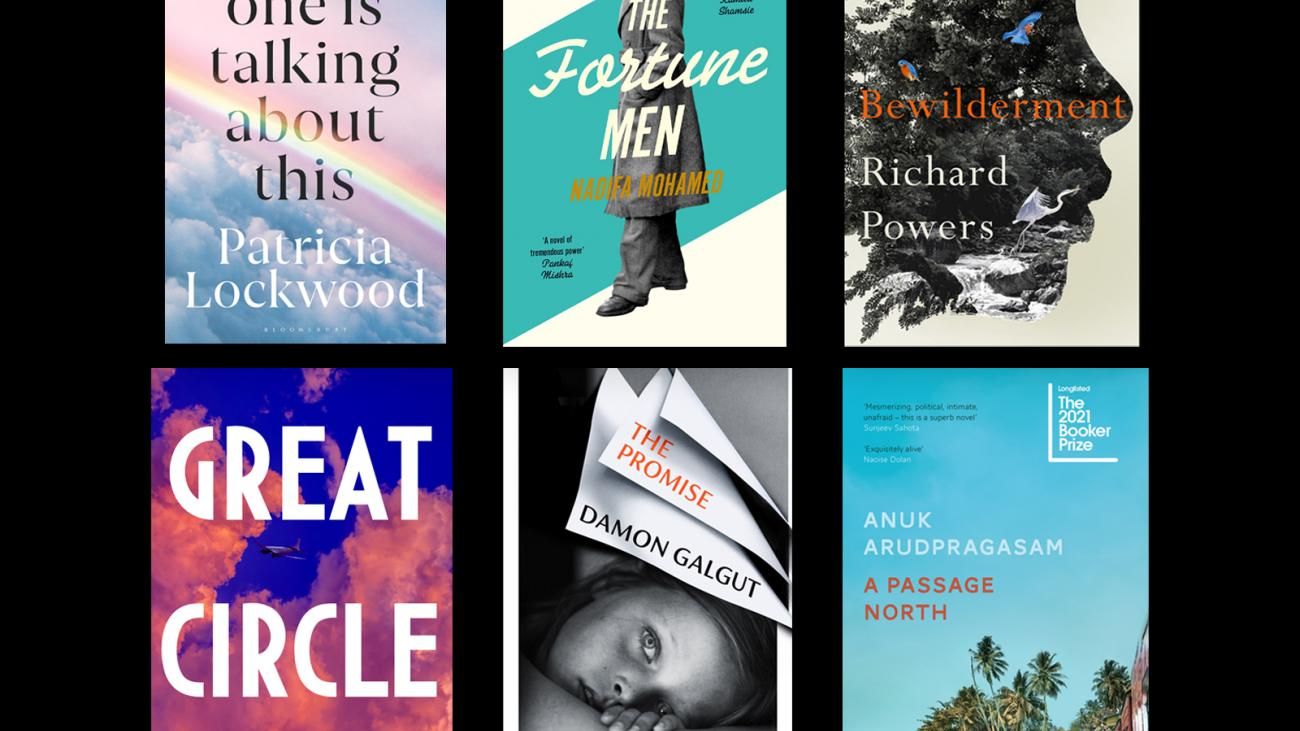
Today the Booker Prize winner for 2021 was announced from the shortlist of these six novels below:

Booker Prize Fiction Shortlist 2021

You can see all the titles and read mini descriptions of all the 13 novels that were longlisted here:

Having reread the entire shortlist three times the judges have decided:

The Winner

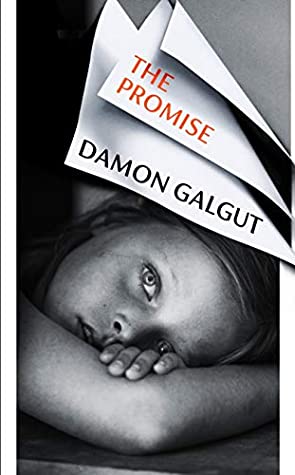
The Promise by South African writer Damon Galgut

The Promise Damon Galgut

Description

The Promise charts the crash and burn of a white South African family, living on a farm outside Pretoria. The Swarts are gathering for Ma’s funeral. The younger generation, Anton and Amor, detest everything the family stand for, not  least the failed promise to the Black woman who has worked for them her whole life. After years of service, Salome was promised her own house, her own land… yet somehow, as each decade passes, that promise remains unfulfilled.

The narrator’s eye shifts and blinks: moving fluidly between characters, flying into their dreams; deliciously lethal in its observation. And as the country moves from old deep divisions to its new so-called fairer society, the lost promise of more than just one family hovers behind the novel’s title.

In this story of a diminished family, sharp and tender emotional truths hit home.

Judges Comment

In The Promise, Damon Galgut makes a strong, unambiguous commentary on the history of South Africa and of humanity itself that can best be summed up in the question: does true justice exist in this world? The novel’s way of tackling this question is what makes it an accomplishment and truly deserving of its place.

Another author I haven’t read, I might have to check it out! Have you read this or anything by Damon Galgut?

Bewilderment by Richard Powers

A writer I’ve hesitated over before, but heard many rave about, I decided to read this purely because so many predict it to win the Booker Prize, (winner announced later today).

Environmental fiction Science Booker shortlistThe book is about Theo, a widower and astrophysicist, raising his nine year old son Robin alone, two years after the death of his wife.

Theo’s work is pure imagination, a science fiction fantasy, he creates models of imaginary planets, deciding their characteristics, populated with his own datasets, that one day he hopes can be substituted for real data – if they ever complete the trillion dollar machine/project that can go further than anything else ever has and discover the unknown planets out there that may contain life.

And all my simulated atmospheres waited for the day when the long-gestated, long delayed space-borne telescopes would lift off and come online, blowing our little one-off Rare-Earth wide open.

Robin likes to listen to his father speak of these planets as a bedtime story/game, but his own urgent focus is on planet Earth and her endangered species, and the terrible things humans are doing to her. His passion and enthusiasm for things elicits unwanted attention at school and he’s unable to control his responses.

Theo mentions the problem to a neuroscientist colleague who suggests an alternative treatment, a kind of training in an aspired emotional trait, something Theo and his wife had already contributed to, that Robin might benefit from.

“Are you afraid he might hurt someone? Has he ever come after you?”

“No. Never. Of course not.”

He knew I was lying. “I’m not a doctor. And even doctors can’t give you a reliable opinion without a formal consult. You know that.”

“No doctor can diagnose my son better than I can. I just want some treatment short of drugs that will calm him down and get his principal off my back.”

In essence that’s the story, Theo’s navigation of Robin’s equilibrium, the precariousness of his own career, Robin’s frustrated attempts to make a difference on planet Earth and their mutual grief and loss of his mother.

galaxy solar system planets stars Bewilderment

Photo by Pixabay on Pexels.com

In a sense Theo’s interest and career in imagining those lifeforms far, far away, external to oneself are a method and training to avoid any kind of inner reflection and growth – they are another form of distraction, escapism from what he perceives as a painful reality.

Theo’s only comfort is to be in the forest with Robin, something he too adores.

It’s written in a kind of spare prose that at times, semi-lectures rather than describes, the effect perhaps of a father talking to his son about science, but neglects to inform him about life, which can make the reader detach somewhat.

It’s an outer journey, not so much an inner one, ironically, this becomes one of Robin’s most thought-provoking questions, near the end of the narrative.

Which do you think is bigger? Outer space…? He touched his fingers to my skull. Or inner?

At the same time as the planet is in peril, so is humanity, not least in the manner of how this father is disconnected from support and community, taking on the care of his son in a way that isolates them.

It reminded me of the fallacy of man and the inclination of those in power, spending trillions in the pursuit of a curiosity out there, or more trillions defending man made territories here, while the concerns of caring, poverty, and nurturing what already exists, living in the present are rarely mentioned, valued or given concern.

It’s an interesting story and it touches on many familiar, contemporary issues and it will be of interest to anyone interested in the environment and space. Likely to provoke opinions, about what is present and what is missing.

Watch this space later today to see who wins the prize! Check out the Booker shortlist here and the complete longlist here.


Warwick Prize for Women in Translation Longlist 2021

This £1000 prize was established by the University of Warwick in 2017 to address the gender imbalance in translated literature and to increase the number of international women’s voices accessible by a British and Irish readership. The list includes titles published in the UK, translated into English.

In 2020, A Multi-generational Saga

Last year the prize was awarded to The Eighth Life (a family saga that begins with the daughters of a Georgian chocolatier, through wars, revolutions and generations), by Nino Haratischvili, translated from German by Charlotte Collins and Ruth Martin.

The 2021 prize is judged by Amanda Hopkinson, Boyd Tonkin and Susan Bassnett.

“These long-listed titles not only span cultures and continents from China to Georgia, and from Thailand to Poland, they also cover a spectrum of literary forms. The list includes poetry, fiction of many kinds – from futuristic fables to family sagas – as well as a range of imaginative non-fiction, from family memoir and biographical essay to social history.

In every case, the artistry of the translator keeps pace with the invention of the author. Each book created its own world in its own voice. The judges warmly recommend them all.”

The 2021 Longlist

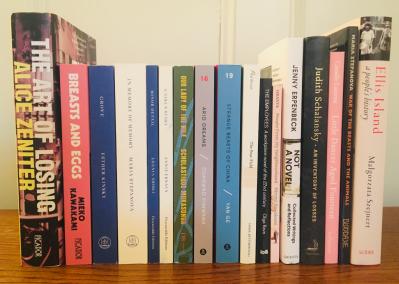
From 115 eligible entries representing 28 languages, seventeen titles have been longlisted for the prize. (Book descriptions below are extracted via Goodreads)

The longlist covers ten languages with French, German, Japanese and Russian represented more than once. Translations from Georgian and Thai are represented on the longlist for the first time in 2021.
women in translation prize 2021

Maria Stepanova and her translator from Russian Sasha Dugdale feature twice on the longlist with In Memory of Memory (Fitzcarraldo Editions) and War of the Beasts and the Animals (Bloodaxe Books). Also longlisted are previous winners of the prize Annie Ernaux and translator Alison L. Strayer who won in 2019 for The Years. Writers Jenny Erpenbeck, Hiromi Kawakami, Esther Kinsky and Yan Ge, and translators Elisabeth Jaquette, Frank Wynne, are all on the longlist for the second time.

The shortlist for the prize will be published in early November. The winner will be announced at a ceremony on Wednesday 24 November.

The Longlist

Nana EkvtimishviliThe Pear Field, translated from Georgian by Elizabeth Heighway (Fiction/Historical) (Peirene Press, 2020)
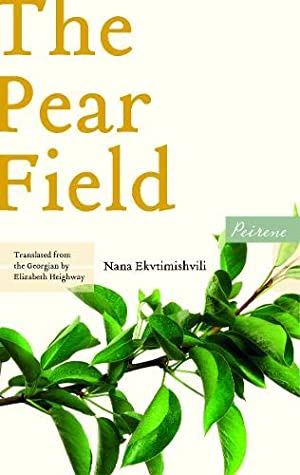
The Pear FieldIn post-soviet Georgia, on the outskirts of Tbilisi, on the corner of Kerch St., is an orphanage. Its teachers offer pupils lessons in violence, abuse and neglect. Lela is old enough to leave but has nowhere else to go. She stays and plans for the children’s escape, for the future she hopes to give to Irakli, a young boy in the home. When an American couple visits, offering the prospect of a new life, Lela decides she must do everything she can to give Irakli this chance.

Annie Ernaux, A Girl’s Story, translated from French by Alison L. Strayer (Fitzcarraldo Editions, 2020) (Memoir)
A Girls Story Annie ErnauxAnnie Ernaux revisits the summer of 1958, spent working as a holiday camp instructor in Normandy, and recounts the first night she spent with a man. When he moves on, she realizes she has submitted her will to his and finds that she is a slave without a master. Now, sixty years later, she finds she can obliterate the intervening years and return to consider this young woman whom she wanted to forget completely. In writing A Girl’s Story, which brings to life her indelible memories of that summer, Ernaux discovers that here was the vital, violent and dolorous origin of her writing life, built out of shame, violence and betrayal.

Jenny Erpenbeck, Not a Novel, translated from German by Kurt Beals (Granta, 2020) (Essays/Nonfiction)
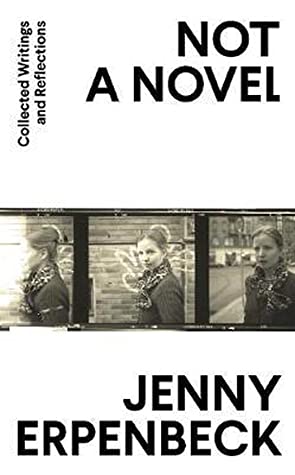
Not a Novel Jenny ErpenbeckA collection of intimate and explosive essays on literature, life, history, politics and place. Drawing from her 25 years of thinking and writing, the book plots a journey through the works and subjects that have inspired and influenced her.

Written with the same clarity and insight that characterize her fiction, the pieces range from literary criticism and reflections on Germany’s history, to the autobiographical essays where Erpenbeck forgoes the literary cloak to write from a deeply personal perspective about life and politics, hope and despair, and the role of the writer in grappling with these forces.

Yan Ge, Strange Beasts of China, translated from Chinese by Jeremy Tiang (Fantasy/Science Fiction) (Tilted Axis Press, 2020)
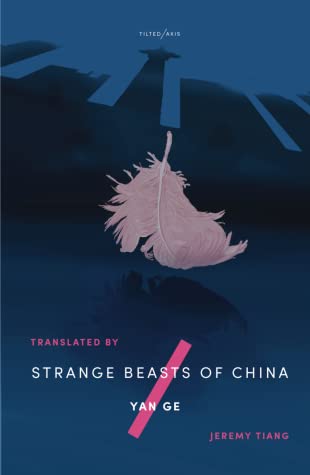
Strange Beasts of China Yan GeIn the fictional Chinese town of Yong’an, human beings live alongside spirits and monsters, some of almost indistinguishable from people. Told in the form of a bestiary, each chapter introduces us to a new creature – from the Sacrificial Beasts who can’t seem to stop dying, to the Besotted Beasts, an artificial breed engineered by scientists to be as loveable as possible. The narrator, an amateur cryptozoologist, is on a mission to track down each breed, but in the process discovers that she might not be as human as she thought.

Hiromi KawakamiPeople from My Neighbourhood, translated from Japanese by Ted Goossen (short stories/magic realism) (Granta, 2020)
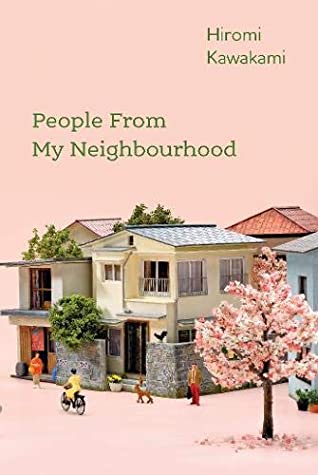
People From My NeighbourhoodFrom the author of the internationally bestselling Strange Weather in Tokyo, a collection of interlinking stories that blend the mundane and the mythical—“fairy tales in the best Brothers Grimm tradition: naif, magical, and frequently veering into the macabre”.

A bossy child who lives under a white cloth near a t­ree; a schoolgirl who keeps doll’s brains in a desk drawer; an old man with two shadows, one docile and one rebellious; a diplomat no one has ever seen goes fishing on a lake no one has heard of. These are some of the inhabitants of this neighbourhood. In their lives, details of the local and everyday—the lunch menu at a tiny drinking place called the Love, the color and shape of the roof of the tax office—slip into accounts of duels, prophetic dreams, revolutions, and visitations from ghosts and gods.

Mieko KawakamiBreasts and Eggs, translated from Japanese by Sam Bett and David Boyd (Fiction/Feminism) (Picador, 2020)

Breast and EggsBreasts and Eggs explores the inner conflicts of an adolescent girl who refuses to communicate with her mother except through writing.

Through the story of these women, Kawakami paints a portrait of womanhood in contemporary Japan, probing questions of gender and beauty norms and how time works on the female body.

Esther KinskyGrove, translated from German by Caroline Schmidt (Fiction/Travel) (Fitzcarraldo Editions, 2020)
Grove Esther KinskyAn unnamed narrator, recently bereaved, travels to Olevano, a small village south-east of Rome. It is winter, and from her temporary residence on a hill between village and cemetery, she embarks on walks and outings, exploring the banal and the sublime with equal dedication and intensity. Seeing, describing, naming the world around her is her way of redefining her place within it. Written in a rich and poetic style, Grove is an exquisite novel of grief, love and landscapes.

Camille LaurensLittle Dancer Aged Fourteen, translated from French by Willard Wood (Nonfiction/Art/Biography) (Les Fugitives, 2020)
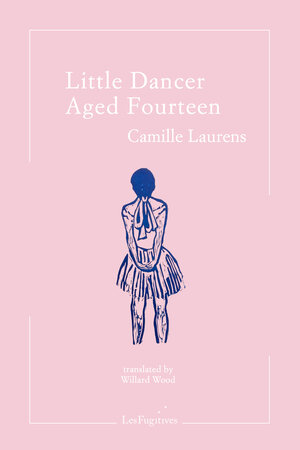
Little Dancer Aged FourteenThis absorbing, heartfelt work tells the story of the real dancer behind Degas’s now-iconic sculpture, and the struggles of late nineteenth-century bohemian life of Paris.

Famous throughout the world, how many know her name? Admired in paintings in Washington, Paris, London and New York but where is she buried? We know her age, 14, and the grueling work she did, at an age when children today are in school. In the 1880s, she danced as a “little rat” at the Paris Opera; what is a dream for girls now wasn’t a dream then. Fired after  years of hard work when the director had had enough of her repeated absences, she had been working another job as the few pennies the Opera paid weren’t enough to keep her family fed. A model, she posed for painters or sculptors, among them Edgar Degas.

Drawing on a wealth of historical material and her own love of ballet and personal experience of loss, Camille Laurens presents a compelling, compassionate portrait of Marie van Goethem and the world of the artists’ models themselves, often overlooked in the history of art.

Scholastique MukasongaOur Lady of the Nile, translated from French by Melanie Mauthner (Fiction/Rwanda) (Daunt Books Publishing, 2021)
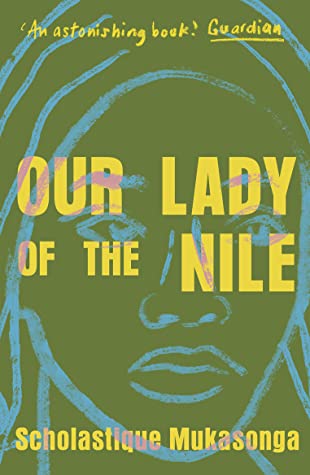
Our Lady of the Nile Scholastique MukasongaParents send their daughters to Our Lady of the Nile to be moulded into respectable citizens, to protect them from the dangers of the outside world. The young ladies are expected to learn, eat, and live together, presided over by the colonial white nuns.

It is 15 years prior to the 1994 Rwandan genocide and a quota permits only two Tutsi students for every twenty pupils. As Gloriosa, the school’s Hutu queen bee, tries on her parents’ preconceptions and prejudices, Veronica and Virginia, both Tutsis, are determined to find a place for themselves and their history. In the struggle for power and acceptance, the lycée is transformed into a microcosm of the country’s mounting racial tensions and violence. During the interminable rainy season, everything slowly unfolds behind the school’s closed doors: friendship, curiosity, fear, deceit, and persecution.

A landmark novel about a country divided and a society hurtling towards horror. In gorgeous and devastating prose, Mukasonga captures the dreams, ambitions and prejudices of young women growing up as their country falls apart.

Duanwad PimwanaArid Dreams, translated from Thai by Mui Poopoksakul (short stories) (Tilted Axis Press, 2020)

Arid Dreams Duanwad PumwanaIn 13 stories that investigate ordinary and working-class Thailand, characters aspire for more but remain suspended in routine. They bide their time, waiting for an extraordinary event to end their stasis. A politician’s wife imagines her life had her husband’s accident been fatal, a man on death row requests that a friend clear up a misunderstanding with a prostitute, and an elevator attendant feels himself wasting away while trapped, immobile, at his station all day.

With curious wit, this collection offers revelatory insight and subtle critique, exploring class, gender, and disenchantment in a changing country.

Olga RavnThe Employees, translated from Danish by Martin Aitken (Science Fiction) (Lolli Editions, 2020)

The Elpmoyees Olga RavnA workplace novel of the 22nd century. The near-distant future. Millions of kilometres from Earth.

The crew of the Six-Thousand ship consists of those who were born, and those who were created. Those who will die, and those who will not. When the ship takes on strange objects from the planet New Discovery, the crew is perplexed to find itself becoming attached to them, and human and humanoid employees alike find themselves longing for the same things: warmth and intimacy. Loved ones who have passed. Our shared, far-away Earth, now only persists in memory.

Gradually, the crew members come to see themselves in a new light, each employee is compelled to ask themselves whether their work can carry on as before – what it means to be truly alive.

Structured as a series of witness statements compiled by a workplace commission, Ravn’s crackling prose is as chilling as it is moving, as exhilarating as it is foreboding. Wracked by all kinds of longing, The Employees probes what it means to be human, emotionally and ontologically, while delivering an overdue critique of a life governed by work and the logic of productivity.

Judith SchalanskyAn Inventory of Losses, translated from German by Jackie Smith (Essays/Experimental) MacLehose Press, 2020)

An Inventory of Losses Judith SchalanskyA dazzling cabinet of curiosities from one of Europe’s most acclaimed and inventive writers.

Each of the pieces, following the conventions of a different genre, considers something that is irretrievably lost to the world, including the paradisal pacific island of Tuanaki, the Caspian Tiger, the Villa Sacchetti in Rome, Sappho’s love poems, Greta Garbo’s fading beauty, a painting by Caspar David Friedrich, and the former East Germany’s Palace of the Republic.

As a child of the former East Germany, the dominant emotion in Schalansky’s work is “loss” and its aftermath, in an engaging mixture of intellectual curiosity, with a down-to-earth grasp of life’s pitiless vitality, ironic humour, stylistic elegance and intensity of feeling that combine to make this one of the most original and beautifully designed books to be published in 2020.

Adania ShibliMinor Detail, translated from Arabic by Elisabeth Jaquette (Fiction/Palestine) (Fitzcarraldo Editions, 2020)
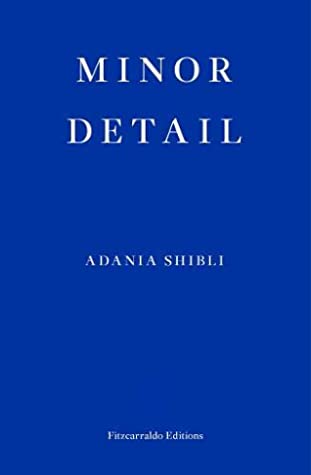
Minor Detail Adrania ShibliMinor Detail begins during the summer of 1949, one year after the war that the Palestinians mourn as the Nakba – the catastrophe that led to the displacement and expulsion of more than 700,000 people – and the Israelis celebrate as the War of Independence. Israeli soldiers capture and rape a young Palestinian woman, and kill and bury her in the sand. Many years later, a woman in Ramallah becomes fascinated to the point of obsession with this ‘minor detail’ of history. A haunting meditation on war, violence and memory, Minor Detail cuts to the heart of the Palestinian experience of dispossession, life under occupation, and the persistent difficulty of piecing together a narrative in the face of ongoing erasure and disempowerment.

Małgorzata SzejnertEllis Island: A People’s History, translated from Polish by Sean Gasper Bye (Nonfiction/History) (Scribe UK, 2020)
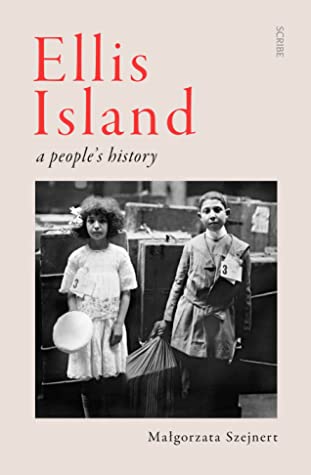
Ellis Island A Peoples HistoryA landmark work of history that brings voices of the past vividly to life, transforming our understanding of the immigrant experience.

Whilst living in New York, journalist Małgorzata Szejnert would gaze out from lower Manhattan at Ellis Island, a dark outline on the horizon. How many stories did this tiny patch of land hold? How many people had joyfully embarked on a new life there — or known the despair of being turned away? How many were held there against their will?

Ellis Island draws on unpublished testimonies, memoirs and correspondence from internees and immigrants, including Russians, Italians, Jews, Japanese, Germans, and Poles, along with commissioners, interpreters, doctors, and nurses — all of whom knew they were taking part in a tremendous historical phenomenon.

It tells many stories of the island, from Annie Moore, the Irishwoman who was the first to be processed there, to the diaries of Fiorello La Guardia, who worked at the station before going on to become one of New York City’s mayors, to depicting the ordeal the island went through on 9/11. At the book’s core are letters recovered from the Russian State Archive, a heartrending trove of correspondence from migrants to their loved ones back home. Their letters never reached their destination: they were confiscated by intelligence services and remained largely unseen.

Far from the open-door policy of myth, we see that deportations from Ellis Island were often based on pseudo-scientific ideas about race, gender, and disability. Sometimes families were broken up, and new arrivals were held in detention at the Island for days, weeks, or months under quarantine. Indeed the island compound spent longer as an internment camp than a migration station.

Today, the island is no less political. In popular culture, it is a romantic symbol of the generations of immigrants that reshaped the US. Its true history reveals that today’s immigration debate has deep roots. Now a master storyteller brings its past to life, illustrated with unique photographs.

Maria StepanovaIn Memory of Memory, translated from Russian by Sasha Dugdale (essay/fiction/memoir/travelogue/historical) (Fitzcarraldo Editions, 2021)

In Memory of Memory Maria StepanovaWith the death of her aunt, Maria Stepanova is left to sift through an apartment full of faded photographs, old postcards, letters, diaries, and heaps of souvenirs: a withered repository of a century of life in Russia. Carefully reassembled with calm, steady hands, these shards tell the story of how a seemingly ordinary Jewish family somehow managed to survive the myriad persecutions and repressions of the last century.

In dialogue with writers like Roland Barthes, W. G. Sebald, Susan Sontag and Osip Mandelstam, In Memory of Memory is imbued with rare intellectual curiosity and a wonderfully soft-spoken, poetic voice. Dipping into various forms – essay, fiction, memoir, travelogue and historical documents – Stepanova assembles a vast panorama of ideas and personalities and offers an entirely new and bold exploration of cultural and personal memory.

Maria StepanovaWar of the Beasts and the Animals, translated from Russian by Sasha Dugdale (Poetry/Experimental) (Bloodaxe Books, 2021)
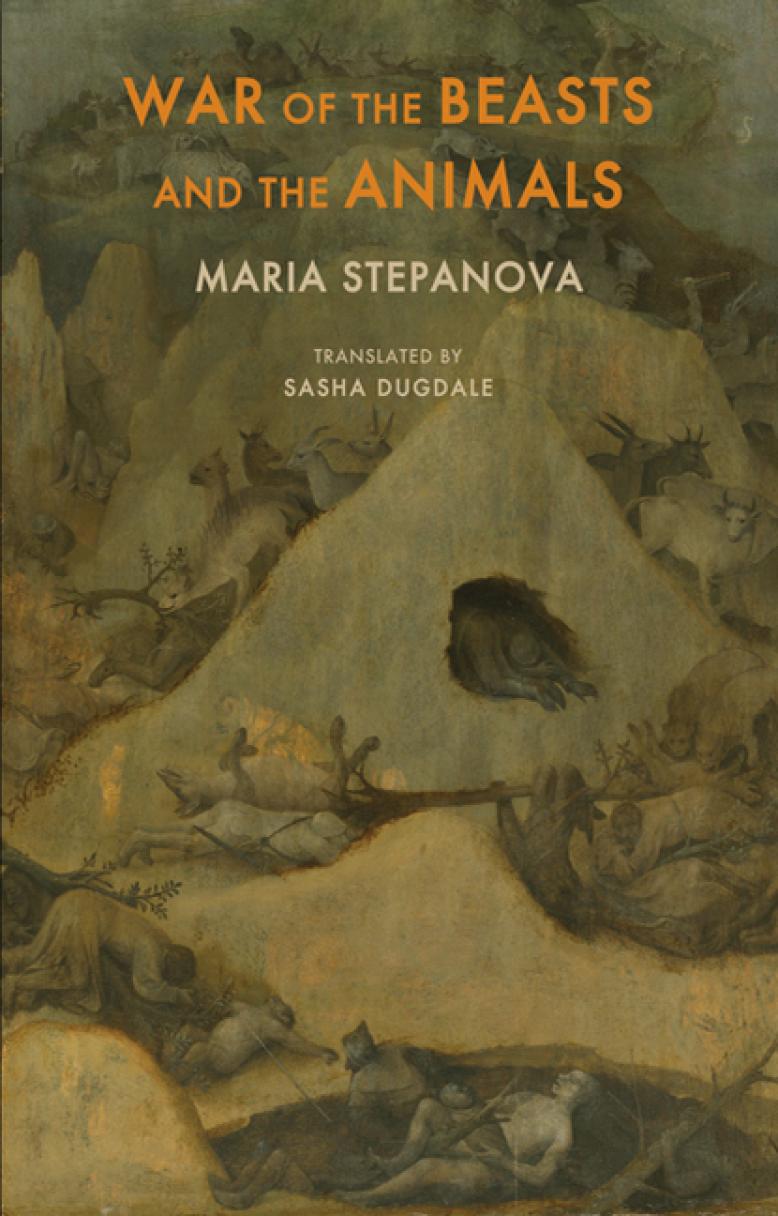
War of the Beats Maria StepanovaStepanova is one of Russia’s most innovative and exciting poets and thinkers. Immensely high-profile in Russia, her reputation has lagged behind in the West.

War of the Beasts and the Animals includes recent long poems of conflict ‘Spolia’ and ‘War of the Beasts and Animals’, written during the Donbas conflict, as well as a third long poem ‘The Body Returns’, commemorates the Centenary of WWI. In all three poems Stepanova’s assured and experimental use of form, her modernist appropriation of poetic texts from around the world and her consideration of the way that culture, memory and contemporary life are interwoven make her work pleasurable and relevant.

This collection includes two sequences of poems from her 2015 collection Kireevsky: sequences of ‘weird’ ballads and songs, subtly changed folk and popular songs and poems that combine historical lyricism and a contemporary understanding of the effects of conflict and trauma. Stepanova uses the forms of ballads and songs, but alters them so they almost appear to be refracted in moonlit water. The forms seem recognisable, but the words are fragmented and suggestive, they weave together well-known refrains of songs, familiar images, subtle half-nods to films and music.

Alice ZeniterThe Art of Losing, translated from French by Frank Wynne (Historical Fiction/Algeria) (Picador, 2021)

The Art of LOsing Alice ZeniterNaïma has always known  her family came from Algeria – until now, that meant little to her. Born and raised in France, her knowledge of that foreign country is limited to what she’s learned from her grandparents’ tiny flat in a crumbling French housing estate: the food cooked for her, the few precious things they brought with them when they fled.

Of the past, the family is silent. Why was her grandfather Ali forced to leave? Was he a harki – an Algerian who worked for and supported the French during the Algerian War of Independence? Once a wealthy landowner, how did he become an immigrant scratching a living in France?

Naïma’s father, Hamid, says he remembers nothing. A child when the family left, in France he re-made himself: education was his ticket out of the family home, the key to acceptance into French society. Now, for the first time since they left, one of Ali’s family is going back. Naïma will see Algeria for herself, will ask questions about her family’s history that till now, have had no answers.

Spanning three generations across seventy years, The Art of Losing tells the story of how people carry on in the face of loss: the loss of a country, an identity, a way to speak to your children. It’s a story of colonisation and immigration, and how in some ways, we are a product of the things we’ve left behind.

* * * * *

I haven’t read any of these, though many are familiar, as I have seen them reviewed and discussed. The range of genres is impressive, making it an eclectic selection. I’m interested in The Lady of the Nile, Minor Detail, and Annie Ernaux is an author I’m keen to read, though where to start, as she has seven short memoirs now in English and I keep thinking I ought to read a few in French.

Have you read or heard of any of these titles? Tempted by anything?

My Place by Sally Morgan

Originally published in 1987, this nonfiction title is both a mini biography (of Sally Morgan’s Great Uncle Arthur, her mother Gladys and her Nan, Daisy) and part memoir.

Sally Morgan, an Australian of Aboriginal descent, begins the book writing about her childhood from the perspective of not knowing her own identity. Thus the reader too, reads from this perspective as Sally recounts events in her life as they happen and as a child would, refrains from analysing or questioning them. Until she finds out.

autobiography memoir australia indigenousThe children at school ask about her skin colour and ethnic origin.
One day, I tackled Mum about it as she washed the dishes.

‘What do you mean “Where do we come from?” ‘

‘I mean what country. The kids at school want to know what country we come from. They reckon we’re not Aussies. Are we Aussies Mum?’

Mum was silent. Nan grunted in a cross sort of way, then got up from the table and walked outside.

‘Come on Mum, what are we?’

‘What do the kids at school say?’

‘Anything. Italian, Greek, Indian.’

‘Tell them you’re Indian.’

‘I got really excited then. ‘Are we really? Indian!’ It sounded so exotic.

‘When did we come here?’ I added.

‘A long time ago’, Mum replied. ‘Now no more questions. You just tell them you’re Indian.’

It was good to finally have an answer and it satisfied our playmates. They could well believe we were Indian, they just didn’t want us pretending we were Aussies when we weren’t.

At home, they live with their mother Gladys and father Bill, who is unwell and sometimes dangerous. He is a WWII war veteran of able body, suffering from what today would be diagnosed as PTSD.

Bill was a strange man, he wasn’t prejudiced against other groups, just Aboriginals. He never liked us having our people to the house. We had to cut ourselves off. I think it was his upbringing.

Bill had spent a lot of his childhood in country towns. I think that moulded his attitudes to Aboriginal people. Down South, Aboriginals were really looked down upon. Bill would have been brought up with that.

Sally Morgan My Place

Photo by Dan on Pexels.com

During those difficult years with her Dad, one of the few things Sally enjoyed about school were the Wednesday afternoon stories, listening to Winnie the Pooh, a character who lived in a world of his own and believed in magic, just like she did. While Pooh was obsessed with honey, Sally was obsessed with drawing.

My drawings were very personal. I hated anyone watching me draw. I didn’t even like people seeing my drawings when they were finished. I drew for myself, not anyone else. One day, Mum asked me why I always drew sad things. I hadn’t realised until then that my drawings were sad. I was shocked to see my feelings glaring up at me from the page. I became even more secretive about anything I drew after that.

Nan also lives with them and as Sally gets to know Nan’s brother Arthur, she learns that they are not Indian, they are of Aboriginal origin. Confronting her grandmother elicits no information at all, she refuses to speak of her past, nor of who her father was and suggests Sally forget about it.

Arthur agrees to tell his story and over a period of 3 months, in his 90’s, she records their conversations and learns about his life and a little more about his sister’s, her Nan. They are the children of an Aboriginal woman and the white stationmaster whose farm they lived and worked on.

They grew up in an era referred to as “living under the Act” when Australia had laws that not only dispossessed Aboriginal people of their land, culture and traditions, but forcibly removed their children from them, did not allow them to raise their children, in effect owned them and treated them similar to slaves. People like Nan grew up under this Act and lived their lives under the effect of the trauma it brought about. The only way they could see to protect their children was to lie about who they were and withhold their heritage from their children and grandchildren.

My Place Indigenous Voices Australia Aboriginal Heritage

Heritage by Sally Morgan (1990)

This story is Sally’s persistent endeavour to find that lineage, those lost family members and that heritage and to find out the story of her grandmother who was too scared to tell it and said she would take her secrets to the grave. To understand what it meant to belong to a heritage.

What did it really mean to be Aboriginal? I’d never lived off the land and been a hunter or gatherer. I’ve never participated in corroborees or heard stories of the Dreamtime. I’d lived all my life in suburbia  and told everyone I was Indian. I hardly knew any Aboriginal people. What did it mean for someone like me?

I absolutely loved every word of it, the way it is told, the close connection this family has to each other, the evidence of a spiritual connection to their ancestry and the spirits, even though they have not been raised with this knowledge.

The real life characters are vividly drawn, the dialogue authentic and the story’s of Arthur, Gladys and Daisy (Nan) beautifully recollected. Though it tells of a terrible time in Australia’s past, of children taken from their mothers, of slavery, abuse, fear and judgement because of skin colour, it is also a legacy for this family, a gift to the Australian nation and the world at large, to be given the opportunity to gain insight into a period of history, little known or heard from this important perspective.

Highly Recommended.

Sally Morgan, Author, Painter

Sally Morgan Indigenous Aboriginal AuthorSally Morgan is one of Australia’s best-known Aboriginal artists and writers.

For as long as she can remember, Sally wanted to paint and write but at school she was discouraged from expressing herself through her art because her teachers failed to see the promise in her individual style. It was not until she researched her family history and discovered her Aboriginal identity that she found meaning in her images and gained the confidence to pick up her paints again.

Sally’s widely-acclaimed first book, My Place, has sold over half a million copies in Australia. Sally Morgan’s second book, Wanamurraganya, was a biography of her grandfather.

My Place won the Human Rights and Equal Opportunity Commission humanitarian award in 1987, the Western Australia Week literary award for non-fiction in 1988, and the 1990 Order of Australia Book Prize.

In 1993, international art historians selected Morgan’s print Outback, as one of 30 paintings and sculptures for reproduction on a stamp, celebrating the Universal Declaration of Human Rights.

Her children’s picture story books include Little Piggies and Hurry Up Oscar. She has collaborated with artist and illustrator Bronwyn Bancroft on several picture books including Dan’s Grampa. Curly and the Fent was written by Sally in collaboration with her children Ambelin, Blaze and Ezekiel.

Sally is the Director at the Centre for Indigenous History and the Arts at the University of Western Australia and lives in Perth.

Voices of the Lost by Hoda Barakat tr. Marilyn Booth

Those Who Are Lost

Lebanese Arabic LiteratureWritten in three parts, this award winning novel by Lebanese author Hada Barakat, is composed of a series of six letters written in a stream of consciousness narrative that are interlinked.  The letters are read, but not by their intended recipient, found between the pages of a book, dug out of a bin or otherwise encountered. They prompt the finder to write their own letter.
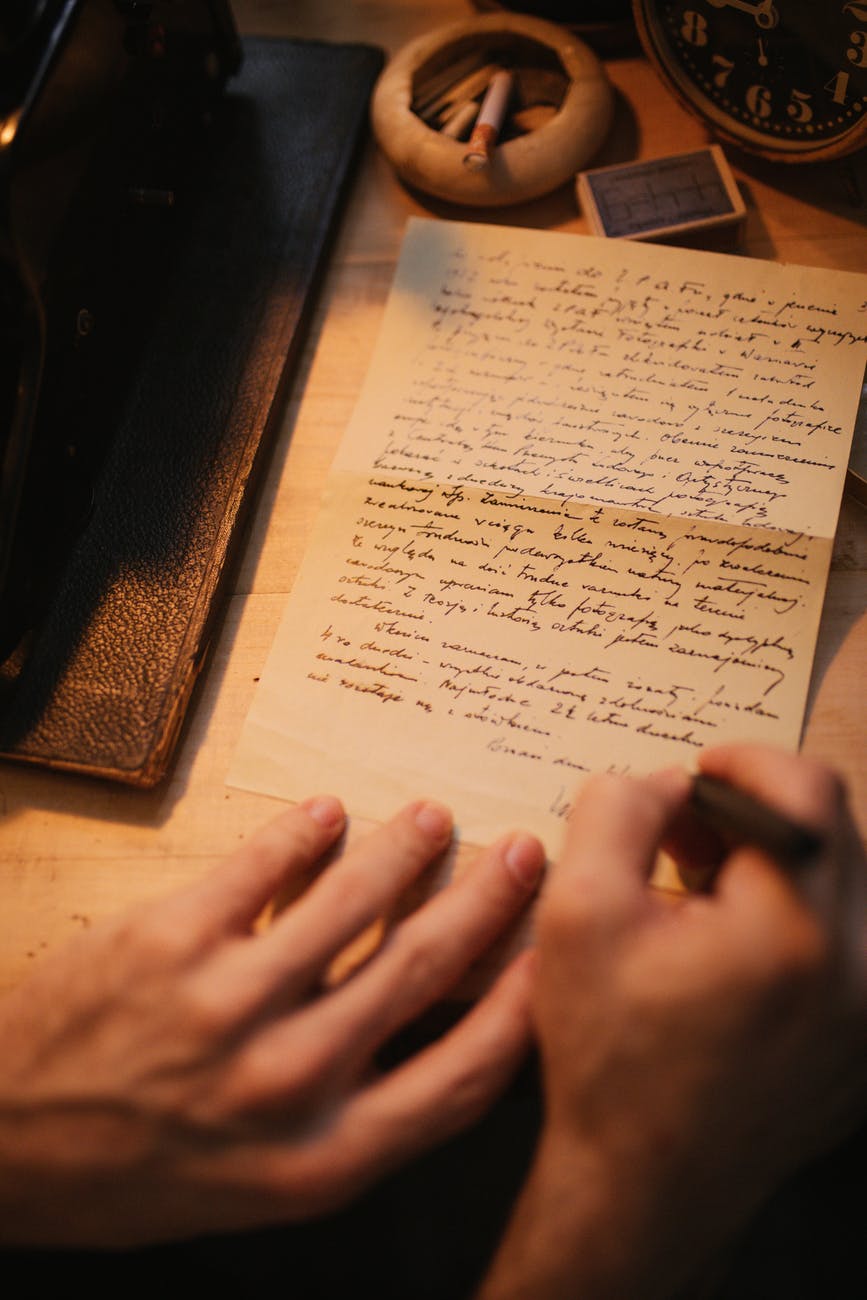
They are a kind of confession, written by the marginalised, floundering in exile. The letters excavate a depth of feeling that is raw, that traverses memory, hurts, an indifferent ability to cause pain, love, sorrow, longing, an abuse of kindness, a deterioration of the psyche.

“With this novel, I wanted to really listen to those millions of wandering souls who can’t speak for themselves: migrants. Their desperation to leave their country, no matter the cost, even if they know their lives will be at stake.”

Some of the letters are written to a family member, others to a lover, others to nameless recipients.

They are all experiencing deep loss having either been removed from all they’ve known or been connected to, or have been abandoned. Below, I’ve chosen a quote from each letter to give a sense of the narrative.

An undocumented immigrant writes to his former lover. He is unkind and doesn’t understand why she tolerates him. We learn that his mother put him on a train alone when he was eight or nine, effectively abandoning him, a sacrifice to gift him the education she never had. A man across from him is watching him through the window. Paranoia.

I’ve never written a letter in my life. Not a single one. There was a letter in my mind, which I brooded over for years, rewriting it in my head again and again. But I never wrote it down. After all, my mother could hardly read, and so I expect she would have taken my letter to one of the village men with enough education to read it to her. That would have been a disaster though!

a book in arabic writings

Photo by SafaPexels.com

A woman in a hotel room writes to a man from her past. She finds a perplexing letter in the pages of the telephone directory in the room. She wonders whether it was the man who penned it or the woman to which he wrote who left it there and why. It was clearly unfinished. She recalls the sweet succulence of the medlar fruits they ate walking the streets of Beirut.

This sweetness has nothing to do with the act of remembering. It’s not the delicious and sweet because it is linked to the past, to the time of our youth, where nostalgia for that time gives everything we can’t bring back a more beautiful sheen. Nothing in my childhood or my adolescence has ever prompted a longing for the past, a past that seems to me more like a prison than anything else. I am not here in this room in order to return to what was, nor to see you and thus see with you the charming young woman I once was, or how lovely and robust the springtime was that year, there in my home country. That country is gone now, it is finished, toppled over and shattered like a huge glass vase, leaving only shards scattered across the ground. To attempt to bring any of this back would end only in tragedy. It could produce only a pure, unadulterated grief, an unbearable bitterness.

flowers desk pen letter

Photo by KoolShootersPexels.com

An escaped torturer recounts his crimes to his mother. He got the idea to write a letter from observing a woman taking some folded papers from her handbag, read them, then tear them in half and drop them in a bin. He retrieves them.

You would say I deserve all this. You might even disown me, calling me the Devil’s offspring. And if I think of my father, I’d have to admit that you have a point. Still, after all that I’ve been through, is there any point in believing that if I asked you to pardon me, you might do it?

I know you won’t, I know there’s really no hope.

A former prostitute writes to her brother. She is on a plane that had been delayed due to the arrest of a passenger. She found a crumpled up letter shoved between the seat and the wall.

I know why security took him away in handcuffs, because I have a letter in my pocket that this man wrote to his mother. He must have tried to hide it before they reached him, because it’s not the kind of letter anyone would just forget about or be careless enough to lose.

A young queer man recounts to his estranged father his partner’s battle with AIDS. He stumbles across a letter written by a woman in a storage locker at a bar he worked in. That was two years ago, recently he reread it.

I read it again and again, as if I knew that woman personally. Or as if I could actually see her in front of me, asking someone’s forgiveness but discovering she could not get it. And not just because her letter would never arrive. It’s about the need we all have for someone to listen to us, and then to decide they will pardon us no matter what we have done.

Those Who Are Searching

In this second part, brief extracts focused on those who have some connection to the letter writers, those who are trying to find their place, searching, also at a loss.

Those Who Are Left Behind

Finally, the mailman leaves his own note, sheltering in the bombed out remains of the post office.

Neither the internet nor anything else would do away with the need for my rounds, not even after internet cafés were springing up everywhere like mushrooms.

Displaced, at a loss, rootless, untethered. Like the roll of the dice they were born into a place and era where stability, home and belonging would be denied them.

Haunting, at times disturbing, it is a compelling read, the rootlessness and isolation felt by the reader, due to the manner in which the letters are written. The edge of despair palpable. It’s as if the one who stayed, surrounded by destruction, is the only one left with a sense of belonging.

Further Reading

Article: The Return of the NonProdigal Sons by Hoda Barakat

Hoda Barakat

Winner International Prize for Arabic Fiction 2019Hoda Barakat was born in Beirut in 1952. She has worked in teaching and journalism and lives in France. She has published six novels, two plays, a book of short stories and a book of memoirs, as well as contributing to books written in French. Her work has been translated into a number of languages.

She received the ‘Chevalier de l’Ordre des Arts et des Lettres’ in 2002 and the ‘Chevalier de l’Ordre du Mérite National’ in 2008.

Her novels include: The Stone of Laughter (1990), Disciples of Passion (1993), The Tiller of Waters (2000) which won the Naguib Mahfouz Medal for Literature, and My Master and my Lover (2004). The Kingdom of This Earth (2012) reached the IPAF longlist in 2013. In 2015, she was shortlisted for the Man Booker International Prize, given (at that time) every two years to honour a writer’s achievement in fiction. Voices of the Lost won the International Prize for Arabic Fiction ((IPAF) in 2019.

N.B. Thank you to OneWorld Publications for providing me a review copy