
An Ode to Pope
How could I not love a miniature work of narrative nonfiction that the author quotes as having being in part inspired by the opening two lines of a poem from the 18th century English poet Alexander Pope.
The heroic rhyming couplets of Pope’s The Rape of the Lock (1712) were my optional choice for the fifth form School Certificate exam many moons ago, a memorable chapter of my own literary journey. Kerninon quotes from his Why did I write? what sin to me unknown.
Why did I write? what sin to me unknown
Dipp’d me in ink, my parents’, or my own?
Why and How I Write

A Respectable Occupation is a short nonfiction narrative about how and why the French author Julia Kerninon became a writer and the necessity of reading.
I came across this book in a photo on author Kerri ní Dochartaigh’s Substack g l i m m e r s where she wrote about her favourite books of the year for 2023.
Dochartaigh is the q u e e n of referencing creative nonfiction and nature writing in her own writing. Her second memoir Cacophony of Bone is full of literary references to little known, enticing contemporary works of narrative nonfiction.
Julia Kerninon had a unique upbringing in many ways, not least because she lived in multiple countries, Canada, England and France, but also because it is as if she were raised to become a writer, more of an expectation than a desire, so she pursues it in the same way many others might pursue a career that has been held in high esteem by their parents. Only writing isn’t like law, medicine or business.
I had an incredibly heavy electric typewriter my mother had lent me, and she had glued little labels with lowercase letters onto the keys because I found capitals confusing, and I wrote lots of stories about talking animals with my friend Pete.
The Legend of Writers
She recalls a kind of bohemian childhood and the first six years where she was an only child and the focus of her mother who she admired, and how her world tilted when they became a family of 4 not 3.
An identical monument of books had saved her as well, thirty years earlier, from a hopeless childhood, and so she spread her secret before me, she explained what she loved most in the world, in a gesture that was also a potlatch, an immeasurably generous offering, which I might be expected to return one day with an even greater gift.
Her mother had been born in a small fishing village, the eldest of four, the only girl, she had learned Russian at ten in boarding school and read everything she could lay her hands on. She passed on all she could to her daughter, who did everything in her power to satisfy her, to repair her, to recompense her for the enormous effort it must have cost her to make all this known to her first child.
I read books non-stop, in a panicked frenzy, trying to catch up on lost time, trying to catch up with my mother who seemed to know everything.
If I lost a manuscript and went crazy with panic, she would just shrug with no compassion at all and explain that in any case I would have to throw away or lose lots of books before writing a single good one. The best thing that can happen to you is a house fire.

At sixteen she had found a community of ‘old poets’ who met in an old biscuit factory in her hometown, a second education, after a house full of books.
At twenty she was reading Gertrude Stein‘s ill-conceived advice: If you don’t work hard when you are twenty, no one will love you when you are thirty.
She confronted her father and told him she wanted to take a gap year from her university studies. He agreed.
I thought that to be a writer, I had to train like an athlete, like a dancer, until it didn’t hurt anymore, until I didn’t ask myself any more questions. I wanted to possess that skill.
She takes herself off to Budapest for a year. Her life becomes a cycle of working hard, playing hard, then taking herself off somewhere for a year or six months to write.
She becomes a waitress in the summers, so she can write throughout the winter. She decides that to be poor is acceptable if she can be free instead and that she would learn to live alone, to be alone, to work alone, during those productive times of her life. That maybe these were not sacrifices at all, they were merely aspects of the life that she had created, that she loved.
Though she figures out how to live like this herself, she attributes this advice given to her by a much loved man:
the main thing is to have free time – you’ll obviously work out how to earn a crust somehow – but free time is something you’ll always have to scavenge, he told me earnestly.
It’s a wonderful little book, a digression of sorts, a reminder that the writing life comes in many shapes and forms, that the sharing of the various experiences can also provide inspiration to those who are on that path and that the pursuit of the occupation can also be a subject to write about, that people like reading about.
I write books because it’s good discipline, because I like sentences and I like putting things in order in a Word document. I like counting the words every night and I like finishing what I start.
A short introduction by Lauren Elkin is equally compelling, another writer whose book Art Monsters : Unruly Bodies in Feminist Art was in the photograph in Kerri Ni Dochartigh’s end of year essay.
I will leave you with one final quote from Julia Kerninon, one that applies as equally to reading as it does to writing.
I’ve been striding through literature like a field, where my footsteps flatten the grass for a moment, just long enough to see the path I’ve taken and the immensity of what is yet to be discovered.
Further Reading/Listening
An Interview with Julia Kerninon and Ruth Diver: A Respectable Occupation
#RivetingReviews: Jennifer Sarha reviews A Respectable Occupation by Julia Kerninon
Author, Julia Kerninon

Julia Kerninon is a French novelist from Brittany, whose first novel Buvard (2013) won the prestigious Prix Françoise Sagan in 2014.
Born in 1987, she holds a Ph.D in American Literature. She has been compared to French New Wave filmmaker Éric Rohmer for her sense of style and feeling for dialogue, and to Alain Resnais for the artful structure of her narratives. Most of all, her work stands out for its contagious joy, drive, exuberance.
Kerninon’s second novel, Le dernier amour d’Attila Kiss, won the Prix de la Closerie des Lilas in 2016, and her latest novel, My Devotion, won the 2018 Fénéon Literary Prize. She lives in Nantes.


 Dear Senthuran is a collection of letters to what we might call Emezi’s inner circle, past and present.
 Emezi writes about the experience and feelings of being unsupported during some of the challenges they faced and about their determination not to compromise when it became clear the debut novel was going to sell.

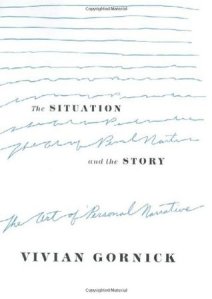 The Art of Personal Narrative
 We are in the presence, in each instance, of a mind puzzling its way out of its own shadows – moving from unearned certainty to thoughtful reconsideration to clarified self-knowledge. The act of clarifying on the page is an intimate part of the metaphor.
 In the first of so many I still owe thank you’s to, I would like to say a heart-felt public thank you to a woman who makes magic with words, author

 The shortlisted books are as follows:
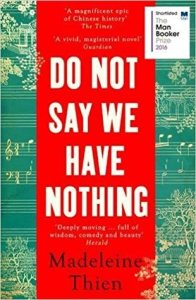
 The Dark Circle, Linda Grant

 Stay With Me, Ayọ̀bámi Adébáyọ̀̀
 The Sport of Kings, C.E. Morgan
 First Love, Gwendoline Riley
 Elizabeth Gilbert, author of the best seller Eat Pray Love and more recently in 2013, the historical, botanical novel

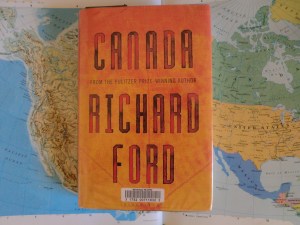 Ford went on: “I say this to you only because writing is clearly bringing you no pleasure. It is only bringing you pain. Our time on earth is short and should be enjoyed. You should leave this dream behind and go find something else to do with your life. Travel, take up new hobbies, spend time with your family and friends, relax. But don’t write anymore, because it’s obviously killing you.”
 Gilbert gave her a brief outline and asked Patchett what her novel was about and she repeated almost word for word the same idea – fitting into her theory that the idea had visited her and because she had put it aside for a couple of years, it left and had been passed on to Patchett to become


 Word by Word